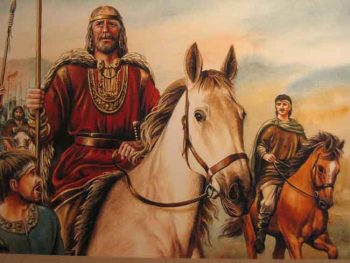
R6 Festuscato: 2 Cornwall, part 1 of 3

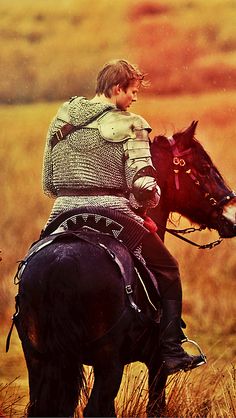
“So, what do you think of our new tag-along?” Festuscato spoke softly to Mirowen before he turned his head to eye the stranger.  Bran had yet to say two words over two days.  He just fingered his sword now and then as he rode.

“Big,” Mirowen said, without looking. Festuscato figured he, himself stood about five foot, nine inches tall, and that seemed big enough for fifth century Britain.  Bran had to be over six feet tall.

“Gerraint size,” Festuscato mused.

“As you say,” Mirowen responded before she added a thought.  “Not really a substitute for the four horsemen.”

“Constantine insisted,” Festuscato said.  “He was not going to let me go off to the wilds of Ireland without protection.”

“Dibs seems to be enjoying himself,” Mirowen pointed out.  Dibs rode beside the man and babbled away in his gregarious nature.

“But I bet he would be twice as interesting if he had someone to talk to.”  Festuscato turned his eyes to the front and spoke with a straight face.  “I’ve known husbands who have given more response than that.”  Mirowen almost smiled.
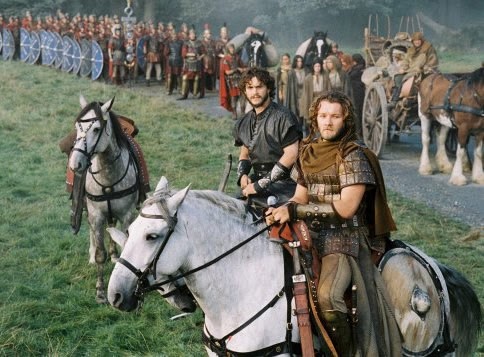
A soldier from the front of the column came rushing back calling out, “Lord Agitus.”  The man’s horse pulled up short.  “Tintangle is under siege.  Three or four hundred Saxons are charging the walls.”

“Fudge.  Well, there goes the surprise of riding above them and dropping down on their flank.”

“What’s up?”  Dibs pushed forward.

“Dibs.  Keep your men here and guard the priests.  Mirowen, stay.”  He pointed his finger between her eyes, but she just returned a pouting face.  “Bran, do you take orders?”

“Sometimes,” Bran admitted, noting Mirowen’s face.

“Well, you should come anyway.  You might as well learn now how all this works, assuming it works.”  Festuscato kicked his horse to get to the front of the column.  Julius and Hywel of Caerleon had dismounted, and hidden by the trees, eyed the enemy.

“A cavalry charge in their rear?” Julius asked as soon as Festuscato arrived.  Festuscato shook his head.  He noticed the Saxons had some ladders to put up on the wall, but they were not ready to make a serious charge.

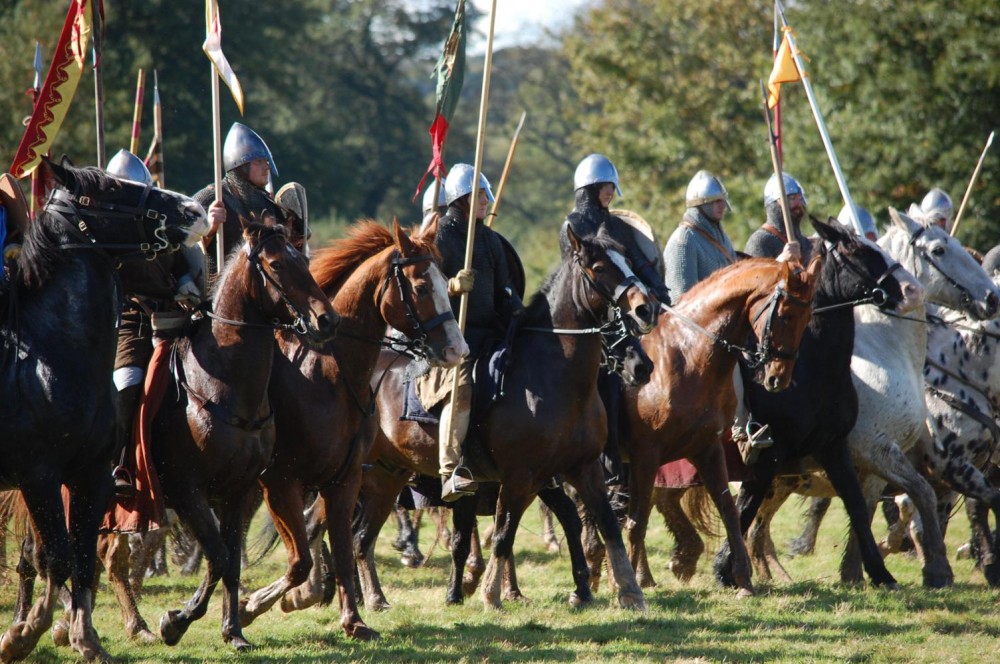
“Set your scouts by the open break in the forest and keep them hidden.  With luck, the Saxons will retreat in that direction and your scouts can follow them to the main body of the enemy.  Take two hundred men around to the distant hill, there.  When the Saxons get serious about using their ladders, I’ll take fifty men and sweep them off the wall.  We won’t be stopping to engage, but hopefully we will make them mad enough to mount up and chase us.  We will sweep and run to the hill where the bulk of your men will be ready to counterattack.  Then again, if they don’t chase us, we will be in a position to come crashing down on their flank.”

“What about the third hundred?”  Julius had his three hundred, the best horsemen in Britain, Wales, Cornwall and Amorica, along with his fifty Romans, all of whom wore the dragon tunic.

“The third hundred need to have horses at hand, but be dismounted, bows ready, here to the rocks at the edge of the trees.  If we have to charge down on their flank, or if there are any Saxons who are too slow to mount and follow us, or if there are any who might be tempted to escape under the shelter of the trees, they need to be turned back, and preferably dropped.”  Festuscato turned to Bran.  “Meet with your approval?”

Bran grinned slightly.  “Thorough,” he said.

All the same, things never work the way they are imagined.  It proved very difficult to get fifty horsemen, without being seen, to a place where they could ride along the castle wall and sweep away the Saxon ladders. When they executed the move, though they were determined to ride through without stopping, many got stuck in traffic, so to speak, and had to fight their way to the open field.  Then, while a majority of Saxons grabbed their horses and gave chase, when the men from the wall got to the hill, the two hundred were not yet on the hill.  The two hundred did top the hill before the Saxons caught the fifty, but it seemed close. To their credit, most of the Saxons recognized the trap and turned around to flee as quickly as they could. The Saxons left by the wall also abandoned the siege and many made for the woods, which made the archers happy. In the end, the majority of the Saxons imagined they no longer had the advantage and made it out by way of the gap in the woods where the scouts were waiting to follow them.

Festuscato, Bran and Julius met Hywel and Mirowen just out from the castle gate.  Mirowen led her horse and had her bow in her hand.  “Good target practice,” she said, as she mounted.  Gildas, Lord of Tintangle, came riding out from the castle all smiles.

“Gildas, my friend.  How about a nice supper?”

“I knew it was you,” Gildas said, when he got close enough.  “Even before I saw the dragon emblem.  I knew it when I saw how you killed the bastards.”

Festuscato sighed.  It was Gildas’ favorite expression.  Some things never changed.

“Now we will see how those scouts of yours do in locating the main body of Saxons.”  Hywel spoke to Julius and looked around at the dead and dying.
“Hopefully when we find the main body, they will realize they are surrounded and surrender without further bloodshed,” Julius responded. He did not object to the bloodshed. He was a soldier, but one that knew peace was always better.

Constantine brought fifteen hundred British and Welsh men from the east.  Exeter sent out a thousand from the west.  Cador, Dux of Cornwall brought another five hundred up from Portsmouth, and Julius with his three hundred and Gildas with another hundred came down on the enemy from Tintangle in the north.  The Saxons resisted briefly.  There were casualties, but the end became inevitable.  In fact, it felt a bit like overkill for a little over a thousand Saxon raiders; but the point was made, and would be told throughout the Saxon claimed lands.

Greta came in the afternoon, and Dibs and Mirowen followed her, to protect her, while she tended to the wounded.  Cador took a bad cut in his shoulder, but Greta told him if he kept it clean and left it alone, he should make a full recovery. Constantine took one Saxon head in ten of the survivors, and stressed the message that next time he would not be so merciful.  Festuscato spared the Saxon Chief Gorund, so he could underline, “There better not be a next time.”

After that, Festuscato and the others said good-bye to their friends and followed Cador to the south coast where they planned a short visit.

“So, what is with the Priests?” Cador asked, casually on the first evening while they relaxed and sampled the Cornish ale.

“I promised to make a delivery,” Festuscato confessed.  “It’s my own fault.”

“True,” Mirowen said.  “The gods don’t make promises.”

Festuscato could not be sure what Cador heard, or how he took that statement, so he quickly covered the thought.  “The Archbishop of Londugnum, Guithelm asked so nicely, how could I refuse?”

“Yes, I am finding that the church can be very persuasive,” Cador seemed to understand.  “So where is this final destination for this delivery of yours?”

“I’m taking Patrick to Ireland,” Festuscato said, and Cador jumped.

“What are you mad?”  Then Cador realized that he was talking to Festuscato and had a second thought.  “Strike that. That is a daft question to ask you.”

“Of course he is mad.  Has been for years.”  Mirowen could not resist clarifying the matter.  Festuscato just looked back and forth between the two before he spoke.

“I need a new shtick.”

R6 Festuscato: Caerdyf, part 3 of 3

Constantine, the Amorican native Festuscato dragged to Britannia and appointed to be the Dux Bellorum, leader in battles, and the first Pendragon of Greater Britain moaned on seeing Festuscato return from his travels. “Small annual contributions are coming in from all over the island, and it adds up well enough, but I am damned no matter how I spend it.  If I build up and strengthen the fort here, I am being selfish.  If I improve the roads in Britain, then Wales and Cornwall complain. If I start a coastal watch around Wales as you insist, Britain and Cornwall feel undefended, like I am playing favorites.  King Ban here says we should strengthen and rebuild Hadrian’s wall where it has fallen down. Damned, no matter what I do, and the money just won’t spread to cover everything.”

“Doesn’t need to,” Festuscato insisted.  “Ten percent of the cost will tell the Welsh they have friends, they are not forgotten, and in time of need you will come to their aid.  No reason you should pay for it all.  The Welsh should be quite willing to pay for the bulk of the coastal watch since it will be their homes and families directly affected by Irish pirates or Pictish coastal ships or Saxon raiders.  Same with the roads and Hadrian’s wall and the rest.  You are here to promote peace among the many Lords of Britain, Wales, and Cornwall, and to call out the troops when needed.  You are not a king.  Roads and such will help the army move faster and better when needed. They will also promote trade and help bring prosperity.  But if a local Lord doesn’t keep his road in repair, it will be his neck when the army gets bogged down trying to come to his rescue.

“That’s right,” Constantine brightened.  “I am not a king, thank God.”

“That is right.  And Ban, if he starts acting like a king you have my permission to sit on him until the swelling in his head goes down.”  Ban laughed, but Constantine just moaned.

“But how can I possible keep all the accounts and contributions straight.  I can’t hardly prepare to defend the land if I am bogged down in paperwork.”

“Find some honest men to keep the accounts. Rome depends on a whole class of accountants.”

“Use clerics,” Patrick suggested.  “They can read and write, most of them anyway.”

“Exactly,” Festuscato supported that idea.  “And most of them are honest as well, as much as any man can be honest.”

“Entice them with paper and ink,” Patrick continued with his thought.  “Let them make copies of the scriptures in their spare time.”  Festuscato just grinned and thought, one small step for man, one giant leap for Medieval kind.

“That could work,” Ban said before he got interrupted by the word, “Father.”

Ban’s daughter, Princess Ivy came in with the baby in her arms.  Constans, Constantine’s son followed not far behind.  Mirowen got up to see the baby, and Festuscato imagined Ivy and Constans were never more than a minute out of each other’s sight since they married.

“Little Ambrose wants to see his grandfathers,” Ivy said sweetly as she stepped up and slipped the baby into Ban’s arms.  The gruff old king began to talk baby talk before he had a thought.

“He doesn’t need to be changed, does he?”

“Father!”  Ivy protested and turned to hold Constans.  He looked happy to oblige.  Then Constans’ friend, Vortigen came in and Festuscato lost his smile. Vortigen irked him for some reason, and he thought to take Patrick outside for the promised talk.

“We go to Ireland by way of Lyoness,” Festuscato said up front.  “Cornwall is the only land I have not yet visited and I don’t want Cador to feel left out.”

Patrick nodded, but he had something else on his mind. “Your Four Horsemen are not welcome in Ireland.  My job is to convert the heathen, as Palladius said, not to chop them into little pieces.”

Festuscato nodded.  “I have already talked to Julius and the men of the Dragon.  They are assigned to Constantine and will not be joining us.”

“Dibs,” Mirowen said.  She had followed them outside and sat on the steps of the great hall. “You told him about Hermes and Greta, and he thought he could do that.”

“Eh?”  Patrick had not heard the story.

“A troop got assigned to protect Greta and ordered to stay with her at all costs.  Hermes was the sergeant in charge, and when Greta went off on her quest, he went with her. He let his troop return to their commander with the word that he kept following orders and stayed with Greta at all costs.”

“Did that work out for him?  I mean, military types can be thick headed when it comes to the rules.” Patrick got curious.

“I don’t know yet. I’ll let you know when I find out.”

“So Dibs,” Mirowen repeated.

“Only in plain clothes.  No Roman uniform and no Dragon.”  Festuscato shook his finger and Mirowen nodded.  She would see to it, only now Patrick stared at her.

“Don’t even think it,” she spoke before anything got said out loud.  “I go where he goes and that is final.”

Patrick shrugged as Festuscato took up the conversation.  “I will speak to the Four Horsemen.  They can be stubborn and will be disappointed, but they will follow orders. At the same time, you want to get to Ireland safely and in one piece so you can begin your work, and I intend to see that you do.  That was Archbishop Guithelm’s charge to me.  At some point, I may have to overrule your stipulations and limitations. My judgment.  And don’t think I am going to drop you on the Irish shore and go away, either.  I will be staying long enough to see you make a good start.  You want to succeed at this enterprise and I want to see you succeed, so there is no need to argue about that.”

Patrick slowly nodded.  As Gaius reported, Patrick was the only Bishop who seemed to have some common sense.  This work might eventually kill him, but he was practical enough to know he needed to make a good start, and for all his sins and foolish affectations, Festuscato seemed to be the best man on the island, or in the whole world as he might say, who might be able to insure that.  No doubt that was why the pope anointed Festuscato to come to Britannia in the first place.

It took a week to get ready to move.  Festuscato felt nothing near the same hurry Patrick felt, but the wait turned out to be fortuitous.  Lord Pinewood, the fairy Lord that came with Festuscato all the way from Rome, flew into Cadbury with a message.  A thousand Saxons had come out of Saxon lands.  They were burning and slashing their way across the countryside, headed for the old tin mines of Cornwall.  Someone told them that where there were mines, there had to be gold, and the Saxon chiefs wanted it.  Refugees were already pouring into Exeter to hide behind the strong city walls, but in abandoning their villages, the Saxons found easy pickings and that encouraged them to loot and pillage their way across Devon.

Julius blanched at the news.  He had hoped since the planting of the sword in the stone in Londugnum, there might be peace in the land.  No such luck.  Constantine looked equally unhappy with the news as he sent out messengers to bring in the troops.  This whole enterprise of having a Pendragon, a war chief still felt like a new and fragile arrangement.  Only Festuscato grinned at the turn of events.  He knew that every success in driving the enemies out of the land strengthened the ties and resolve of all the British, Welsh and Cornish Lords.  He went to bed happy, and only felt sorry he had another engagement.

************************

MONDAY

R6 Festuscato: Cornwall.  Tintangle is under siege.  The Saxons are out of their place.  The army gathers under the Pendragon to set things right before Festuscato, Patrick, and their companions trail into Cornwall and pick up a pixie passenger along the way.  Monday (Tuesday and Wednesday).  Until then, Happy Reading

*

R6 Gerraint: Shaking the Earth, part 2 of 2

The horses panicked.  Many stampeded with the mules, fortunately straight at the Saxons. Many men got stepped on, and many more Saxons got stepped on as well.  The quake felt strong.  Gerraint half expected the Earth itself to split wide open in a magma chasm and explosion. He could only picture bombs by the gigaton.   He tried to estimate the time in his mind, but the quake never stopped.  It seemed forever, and all the counting of seconds in Gerraint’s head meant nothing.  He lost track.  He rolled on the ground and tried to keep his face free from slamming into any rocks. He expected giant boulders of granite to strike up through the ground at any minute.  Then finally, the quaking subsided.

Martok, a lifetime Gerraint would not live until several thousand years in the future spoke into his head, like it was his own head thinking.  “An unbelievable four hundred and thirty-two seconds, and the epicenter was west…” Martok’s voice faded because Gerraint did not have time for that.  Ten of the twelve small catapults were salvaged.  The flammable balls were fetched from wherever they rolled.  All of his horsemen were now horseless, and some had lost all their weapons in the process.  Bows and arrows were the first concern.  A strong line, three deep was established against the Saxons in case they did charge.  Men were sent back to the hill camp to fetch whatever weapons they could find.  Some men had only the knife at their belt. Gerraint set the weaponless men to carting the wounded back to the camp.  Some of the men who were stepped on by horse or mule refused to leave the battlefield, but some had broken arms or legs and had no choice.

The Saxons were slower to recover since most of Gerraint’s men were trained to battle, while most of the Saxons were not. When the first flaming ball hit the Saxon line, some of them were still just standing up. Soon enough, balls of fire started splattering everywhere in the Saxon line, and the Saxons were near panic. Even then, their commanders refused to attack.  Most of the fires could be avoided and went out when their fuel was spent, but added to the Saxon broken arms and legs, some were badly burned, and this did not raise the Saxon morale.

The Saxon line backed up, slowly, determined to hold their ground and wait for the British to attack.  Gerraint took that opening to walk down the line and repeat his orders.  “On the signal, run forward a hundred paces.  Fire three volleys into the enemy and then return here.”  He said it about ten times as he walked down the four hundred men, three deep line.  When he got good and hoarse, he stepped to the front, raised his sword and yelled, “Now!” as he lowered his sword.  The men performed well, though not without flaws.  On the third volley, there were some arrows in answer, but not many.  The Saxons looked to be having a hard time getting organized, but they were perfectly capable of backing up further toward the trees that ran right up the ridge.

Gerraint’s eyes were distracted for a moment as the three thousand or so Saxons who filled the flat gap between the two ridges turned and attacked Bedwyr.  Whoever was in charge there clearly judged Gerraint as the lesser threat, or maybe he wrote off Gerraint’s Saxons as lost.  Arthur got bogged down at the top fighting on foot against the Saxon cavalry, also on foot.  He was in no position to protect Bedwyr’s flank with his horsemen as had been the plan. Meanwhile, the influx of as many new troops as the British started with would devastate the British, whether the Saxons were fighting uphill or not.

Gerraint could not worry about that just yet.  He suddenly got a clear picture in his mind, and he imagined that earthquake must have shaken something loose in his brain. He saw Deerrunner and a host of little ones right at the edge of the trees.  All he thought was now, and the Saxons in front of him started to fall as they were pelted by arrows from behind

“Spears in the center line,” Gerraint yelled. “Bedivere.”

“Here, Lord.”  The boy stood right beside him.

“Help get what spears we have to the men in the center line.”  He ran off. “Uwaine.”

“Here.”

“You take the other side.  The men need to walk in formation and hold the formation to be effective.”  Uwaine nodded but Gerraint felt unsure if Uwaine really understood.  “Spears to the center line and point them at the enemy. Swords in the front.  Bows in the back line.”  The men took a little time getting adjusted, and Gerraint waited as patiently as he could.  Then he shouted again.  “Walk.” He heard Bedivere and then Brian and finally Uwaine repeat the word down the line.  “Walk them into the woods.  They won’t escape from the woods.”  Walk them into the woods at least got repeated.

Gerraint heard a giggle by his feet.  The Little King imagined what might be in the woods.

“Stay in formation.”  Gerraint yelled that several times and it got repeated several times. Then Gerraint mumbled, “Where’s a good Roman phalanx when you need one?”  The Little King giggled again.

The Saxons, still with twice Gerraint’s twelve hundred men, did not like the look of that formation.  Some fought, and lost.  Some of the British simply could not wait and ran out to engage individual Saxons, and sometimes won.  Many of the Saxons broke for the woods, and as promised, they did not come back out of the woods.  Some of the Saxons finally surrendered and Gerraint heard a loud “pssst!”

Lemuel the gnome stood there, and his people had gathered and calmed five hundred of Gerraint’s horses so they were ready to be ridden.  “Last one up is a rotten egg,” Gerraint yelled and mounted the nearest steed.  The cavalry of Cornwall raced to the horses, but by then the foot soldiers had come up, picked up fallen Saxon weaponry where needed, and they could easily handle the surrenders, with the help of some dwarfs and elves who should have known better than to expose themselves.

Only then did Gerraint allow himself to look at the other side of the battle.  Bedwyr’s men were being driven back to the woods.  Arthur’s men appeared to be gaining the upper hand, but looked in trouble as some of the Saxons at the back of the pack down below decided to help out their horseless cavalry.  Two things happened then that would validate history for years to come.  Over that ridge came twenty-five hundred men from the north under Kai, Loth and Captain Croyden.  They swept over Arthur’s position and slammed into the Saxons, once again gaining the upper ground for the British.  Then Gerraint called for lances even as he took an arrow in the leg. He spied the archer, and that man became a pin cushion so by the time the man fell, it was hard to see the man beneath all the arrows.  The dozen Saxon bowmen who were with him instantly discarded their bows and fell to their knees, trembling.

“Ready.”  Gerraint yelled as he reached down and broke the shaft of the arrow in his leg.  He decided he had one more shout in him. “For Arthur!”  The riders responded.  “For Arthur!”  and that charge broke the back of the Saxons for good.

###

Very little quarter was given that day.  With Kai and Loth’s men added, some ninety-five hundred men fought for Arthur.  Roughly half of them would never go home, and a third of the ones who made it home, died in their beds from wounds sustained on the battlefield.  Of the twelve thousand Saxons who fought in the campaign, less than two thousand survived for any length of time.  The Saxons and Angles from East Anglia to Wessex were devastated.  Even with further immigration from the Germanies, it would be a generation before they could mount any sort of serious offensive.

After that generation, though, some enterprising Angles exploited the animosity between the Scotts and Danes and move into the wide land between the two.  That land was called Bernicia before they joined with the Saxons in Deira to form Northumbria.  The Danes stopped coming to Britain for a time, though when the Vikings started coming three hundred years later, they were surprised to find people who knew their customs and ways and who claimed to be of Danish descent.

Loth’s family moved full time to Edinburgh and ruled over many of the Scots there.  Kai’s descendants held on to Caerlisle and made a pact with some Scots in the west to form the kingdom of Rheged.  York stayed independent for a time as the Kingdom of Elmet before it became tributary to Northumbria or Mercia at one time or another.

The British Midlands became Mercia surprisingly quickly, as the Saxons finally moved out of the coastal fens and alluvium to farm the bountiful land.  Likewise, the Saxons in Wessex slowly took more and more of the west, taking Southampton, Dorset and Somerset, and finally swallowing a large chunk of Devon itself. But like the Romans, they never really went further west than the old Roman town of Exeter.  Cornwall remained proudly independent, if not entirely free. Wales also remained free of Anglo-Saxon influence for centuries.

Most of this is now in the history books, but not all. There were aftershocks from that devastating earthquake, but they only amounted to ten or fifteen seconds of mild tremors.  The damage had already been done.  On the day of the Battle of Badon Hill, Lyoness sank into the sea.  One part of the sea bed pushed up in a peninsula, but the main part of Lyoness, that great forest covered land. got swallowed by the ocean.  Her great wood-built towns and villages were broken up and floated off in every direction. The Scilly islands sank a bit more so some became too small for even a single small farm. The center of Cornwall itself pushed up with granite until it became like a spine through the land. But mostly, the people of Lyoness, including Geraint’s sister, did not survive.

Bedivere did not know about his mother when he fought on the battlefield.  He thought he was weeping only for his father, Melwas, who sustained a terrible belly wound and counted himself lucky to die in a few hours instead of lingering for days or even weeks.  Gerraint comforted the boy, as did Uwaine, even while Uwaine yelled at Gerraint for being so stupid as to get himself shot.  The Little King tended Gerraint’s wound and got the arrowhead out cleanly. He said he had done this many times for his own men, and was expert at it.

“You must keep it clean and with clean bandages,” he said.  “And it should heal without infection.”

“Yes, doctor,” Gerraint slurred his response through the alcohol anesthetic, now that his leg went completely numb, and for that matter, so was the rest of him.  He only felt able to smile when Arthur found him and yelled at him.  Then Percival did the same.  Last of all, he came face to face with Pelenor, his old master, and Pelenor lit into him.  Gerraint had only one thing to say to the man when the man paused to take a breath.

“Aren’t you getting too old for this?”  His smile broadened as Pelenor nodded.  “Because I am getting too old for this, so you must really be feeling it.”  Then Pelenor relaxed and joined Gerraint in a drink.

END

************************

TOMORROW

Don’t miss the preview of coming attractions…


*

R6 Gerraint: Shaking the Earth, part 1 of 2

Gerraint and his five hundred men arrived at Percival’s position by mid-morning where he found a crowd of men in his command tent, already gathered for lunch.  Gwillim reported a harrowing experience with a Saxon spear that pinned his cloak to a barn door.  Tristam extracted him, and his small troop, but he had to leave the cloak.

“And it was my favorite one, too,” Gwillim complained.

“Where is Mesalwig?”  Gerraint asked.

“Checking on the front line,” Percival answered. “He is very good at keeping the men on their toes.”

“Really?”  Gerraint teased.  “I figured he was still in Bath soaking in the steamy, medicinal waters.”  At least Gwillim laughed.

“I have a report,” Uwaine said, and everyone grew silent.  Uwaine so rarely said anything.  “First blood.”  He put his hand on young Bedivere’s shoulder.  Bedivere looked shyly away.  “Next time we’ll get credit for the kill.”

Everyone said good job and congratulations, but Gerraint thought again about chivalry and the Medieval ideal versus the reality of the times which was brutal and bloodthirsty.  Curiously, he never really noticed that when he was younger.  He felt like saying, oh I am so very sorry, but he said, “Congratulations,” and Bedivere smiled like he won the lottery.

Lionel made a point of introducing Bowen and Damon as the bravest of brothers, sent to woo Morgana’s daughters.  Everyone whistled and teased them and said they called that real bravery.

Lancelot told the tale of their battles on the mountain and Gerraint found it almost unrecognizable.  For the parts that Lancelot did not know, the Little King was present to brag about it, and that telling seemed even more difficult to believe.

Gerraint got up and walked to the tent door.  From there, he could look down on the distant enemy formation.  They were at the far end of an open field that appeared deceptive.  It looked like flat ground, but it slowly fell away from their position, and by enough gradient to tire the legs of any attackers, men or horses.  There, he saw a small but evident rise to the right that ended in a large lump of trees. Those trees continued along the back of that rise and rose to the top of it, looking like a bad haircut.  The Saxons were near the bottom of the rise, and it would be impossible for cavalry to get at them.  Even if they avoided the incline out front, cavalry from the rear would still have to climb through the trees to get over the rise, and the trees were a deterrent on their flank as well.  Horses did not charge well through trees.

On the left, there appeared another rise, a bit steeper, and it ended in an actual forest that went all the way to the village on the river.  The Saxon cavalry stayed at the top of the steeper hill where they could look down on the battle and know where to go as needed.  And there were eight thousand Saxon men on foot squeezed between those two little ridges.  The center did make a bit of flat space, but that got jammed full of men.

“Tough call,” Melwas, Bedivere’s father came up beside him and put a hand up on the shoulder of his younger brother-in-law. “In the old days, we attack with our soldiers and keep the cavalry in reserve.  In Arthur’s day, we attack with our lancers and follow with our footmen. But either idea looks like a losing proposition given their strong position.”

Gerraint looked at the man.  He retained his hair, but it had all turned gray, including the beard.  He had a bit of a belly, which Gerraint chalked up to stress, him being married to Gerraint’s sister and all.

“What about the distant village?”  Gerraint asked.  The church steeple was all that could be seen at that distance, even from the height they were on.

“I spoke to the elders.  The village is fortified and they strongly suggested hostility if we go there and thus bring the Saxons with us.”

“They want to hide under their bed sheets and hope it will all go away.”

“Something like that,” Melwas admitted.  “I don’t suppose there is any way we can entice the Saxons to attack us.”

“They have the numbers,” Gerraint said, flatly. “They can hold that position and send out all sorts of groups to ravage the countryside while we sit here and dare not thin our lines.”

“Just a thought.”

Gerraint nodded and went back to the table where he had the lunch cleared apart from the parts he used to represent the Saxon positions. By two that afternoon, when they got word that Bedwyr and the leading edge of Arthur’s men were only a mile back, they had a plan that no one liked, but everyone agreed it would be the best of the bad options.

Gerraint got Bedwyr to stop shy of linking up with Percival’s position.  “You are all badly strung out,” Gerraint said.  “Give Arthur and the rest of the men a chance to catch up.”  When Urien came up, angry that Bedwyr called a halt, Gerraint briefly explained for them what the other had come up with.

“We give tonight and tomorrow day for all the men to catch up and rest up.  Then tomorrow night we move into position.”

“I don’t know,” Bedwyr rubbed his jaw.  “You and your night moves.  That is very tricky, especially with so many men.”

“The path is already laid out. And it will be lit in a way the Saxons won’t see. Trust me.”  Gerraint said trust me a lot lately.  He would have to watch that, because sometimes things did not work out well no matter how well planned.

Arthur arrived about midnight.  Gerraint and Percival laid out the plan for him.  “Overall, as good as can be expected,” Arthur said. “I may adjust a bit, but I have to see it in daylight.”  That was understood.  They all slept poorly.

###

In the daylight, Arthur decided he needed more cavalry to better match the enemy numbers.  Gerraint, who wanted to lead the cavalry, got left instead in the hold position, and for that he had only his sixteen hundred from Lyoness, Cornwall and Devon.  He had Tristam and Melwas, and Arthur gave him the men from the mountain, so he had Bowen and Damon and the Little King who itched for a fight.  Gerraint instructed Uwaine to sit on the Little King if he had to in order to be sure he stuck to the plan.  Gerraint smiled for Bedivere who stayed right at his side, but he avoided saying anything stupid like, are you ready?  Or, are you scared?

Arthur moved the rest of the men along the edge of the hill to take up their positions in the distant forest.  He did not care what the village elders said.  The village and the river were his fallback positions.  He would use them if he needed them, but hoped he would not need them.  Pinewood and his fairy troop provided fairy lights for the men, lights that were shielded by strong magic so they could not be seen by the Saxons.  Bedwyr and the others got their thirty-three hundred men in position easy enough, but then he had the task of keeping them quiet in the night.  Arthur had further to go to lead two thousand horsemen to where they could reasonably charge the enemy cavalry.  Yet, even they had a few hours to rest themselves and their horses before dawn.

The sun cracked the horizon and the Saxons came out to stand and shake their spears at their enemy and scream unintelligible curses from a distance.  They had done this for two days, not knowing when to expect an attack, and might keep it up for weeks if necessary.  The yelling in the past stopped about the time the sun broke free of the horizon, and by mid-morning, the Saxons had dribbled slowly away until they were back at their own tents and by their own cooking fires.

The scene up on the hillside that greeted them that morning looked the same as before. There appeared no change in the array of tents and banners since the British took up the position.  This time, at daybreak, there were perhaps less men moving about, but that would not be something one would normally notice.

When the sun broke free of the horizon and the Saxons stopped yelling and started to relax, that became the signal to attack. Arthur broke free of the trees and got half-way up the back of the incline before the Saxons even noticed. That back end of the hill was like the front, a gradual incline that would tax the horses, but not too badly. Meanwhile, most Saxon eyes stayed riveted to the action down below.  The British attacked, but not across the field to run into a solid Saxon line, thirty men thick.  Instead, some three hundred men came out from the trees slammed into the side of that line with enough force to cause the whole line to waver.  Three thousand British troops did not even engage the Saxons, but ran instead to where they made their own line, above the Saxons.  Then they engaged, moving downhill on the enemy and effectively using the Saxons own heights against them.

The Saxon line on that side of the field began to crumple.  Many Saxons ran for safety, but then had to turn and fight their way back up the incline. The large number of Saxons left out of the fighting looked ready to run and join the fight, but Gerraint marched his sixteen hundred up the incline to within bowshot where they looked like they were waiting for a break in the Saxon line.  Saxon Chiefs could be heard running up and down the line telling their men to hold their positions.  Any movement to help their fellows on the other side would put Gerraint’s men on their flank, or their rear.

Gerraint had the twenty-four unloaded, and the men hurriedly set up the dozen portable catapults.  Dozens of balls of flammable material were dropped by the catapults so the mules could all be lined up to stampede the Saxon line should the lancers charge.  It seemed odd to Gerraint that seventeen hundred men could hold twenty-five hundred in check, especially if the twenty-five hundred charged they would be charging downhill.  Even the three thousand or so that filled the gap between the ridges appeared frozen, not knowing what to do.  All the while, Gerraint got prepared to turn and ride back to his own high ground, but the Saxons held the line.  That was apparently the order given and they were sticking to it.

Gerraint had a sudden memory flash or another hill full of Saxons.  It was 1066, and the Normans, under his command, slammed again and again into that line.  When the line of foot soldiers finally broke and charged down that hill, the Normans on horseback lead them on a merry chase to where William waited to demolish them. But William was not a very nice guy, not like Arthur, Gerraint remembered.  Then the ground began to shake.

“Dismount!” Gerraint shouted it over and over, until he needed to catch his shaky breath. Most of the men did.  The few who did not were taken for a ride and tossed when the full-fledged earthquake struck.  A few of those were killed.

R6 Gerraint: Mount Badon, part 3 of 3

Two days later, Gerraint, the boys Damon and Bowen and twenty-five men hand selected by Sergeant Brian gathered outside the next village at the top of the road.  It was dark, well before the dawn.  The Little King and twenty-five of his hand selected highway robbers joined them

Earlier in the evening, just after sunset, Gerraint sent dark elves into the town to map the town and the location of the Saxons billeted in town.  Gerraint naturally and rightly assumed those were the Saxon Chiefs, as the other six hundred or so camped on the fallow fields outside of the town itself.  With dawn, Lancelot and Lionel were prepared to rain fire arrows down on the Saxon tents.  When the Saxons roused and came out to escape the flames, the men were to ride through the camp and decimate the Saxon numbers.  They were assured the Saxons would not get to their horses, or find them useable if they did.  They had to trust.  Lionel looked skeptical, but Lancelot trusted implicitly.

One day earlier, their third day on the hill, Gerraint spent spelunking.  The Little King thought his caves in the cliff were just caves, and one abandoned tin mine.  Gerraint hardly took a moment to realize the caves were, in fact, an old abandoned dwarf mine.  The shafts went far deeper than the Little King knew.  What is more, as is often the case, down in the depths there sat a colony of dark elves, and that colony was still present.  He found some volunteers among the goblins and a band of pixies that lived in the caverns below.  The result turned out that now his makeshift spies had the village mapped and all of the Saxons pinpointed

When the men gathered, Gerraint thought to give some special instructions.  “Do not hurt the goblins, or the pixies.”

“I knew it,’ the Little King immediately interrupted. “I have seen the pixies twice in the night, as have others.  Some say we are imagining things.  The village has been roughly divided over the issue for years.”  He smiled to think he was on the right side.

“As I was saying.  If you see a goblin or a pixie in the night, do not stare at them. Go about your business and let them go about theirs.  They have agreed to ferret out any Saxons in the town.  Let them do their job and leave them alone.”

“Are they on our side?” Bowen asked what sat on many minds.

“Let me say, they are against the Saxons coming here. But we need to think of them like bumblebees.  If you leave them alone, they will not bother you.  Do you understand?”

Most of the men agreed, and the Little King nudged the big man next to him.  “I said he had an in with the spooky-bits.”  The man merely nodded and touched the scar on his shoulder where an arrow once knocked him off his horse.

“If any of you have a problem with that, there is no shame, but we need to find someone to take your place.  Listen, if you panic and harm one of the goblins, I will not be able to protect you from their terrible revenge.”  The men all said they were fine with it, but Gerraint suspected there might be incidents.  He hoped not many.  “All right. Now, here is what we are going to do,” and he got down to the details.

An hour later, still before dawn, fifty men moved into the village.  They stuck to the shadows and said nothing.  Groups of five men at a time broke off to go here and there to different houses.  Gerraint, Bowen, Damon, Brian and a man named Nodd went with the Little King and four of his cutthroats to the village inn.  Gerraint found the innkeeper’s daughter out back by the cooking fires. She took one look and ran to Gerraint. She hugged him and cried.  “I knew you would come,” she whispered.  The woman looked bruised and beaten.  No doubt she had been raped, likely over and over.

Gerraint pointed the Little King’s men to the upper windows.  Brian took Nodd around to cover the front door.  Gerraint and the boys planned to sneak in the back, but first they had to get the woman quiet.  She explained how the elders surrendered the village without a struggle.  The Saxons moved in and hanged the elders along with some thirty men who looked like they might put up a struggle. Then it became a hellish madhouse when the Saxons rampaged through the night.  “Drunks with swords,” she called them.  The Church got burned to the ground.  Some men and a few women and children were killed outright and others were grievously wounded.  In the morning, the Saxon chiefs finally restored order, but it was too late for some.  People were driven from their homes to make room for the Saxons.  I hid my husband Marcus in the barn, but he is wounded and has a fever.  I fear he is not getting better.”

“Hush.”  Gerraint finally succeeded when he put his hand over the woman’s mouth.  “One thing at a time.”  The Little King signaled and Gerraint threw open the back door.  They went in, swords drawn, and killed the half-dozen sleeping in the big room downstairs.  Only one got out his sword and Gerraint broke the sword with one swipe of Wyrd.  Brian then stabbed the man in the back and killed him, and Brian did not feel the least bit guilty about that.

One man escaped his bedroom and stumbled down the stairs, but Bowen and Damon were right there to stop him.  Then the little King called down that all was clear. They dragged the bodies of the Saxons to the yard, while the little King and his men tossed the upstairs bodies out the front windows.  Gerraint whistled, and the yard filled with pixies.  They were only two feet tall or so, but magically strong.  They picked up the bodies with their back claws and lifted them to where they disappeared in the night sky.  Dawn neared, but the pixies were not harmed by the light the way the goblins were.  They planned to bombard the Saxon camp at dawn with the bodies of their own chiefs before they flew back to their comfortable caverns.

Nodd stood on the front step and pointed. They saw a Saxon across the way who screamed as a goblin grabbed him.  The goblin, a big one, ripped the man’s hand off so the hand and sword it carried clattered to the ground.  Then the goblin bit the man’s head off at the neck.  Everyone turned away, and Brian said, “Now I understand the bit about if you see a goblin, don’t stare at it.”

“Check on the men,” Gerraint said to both Brian and the Little King.  “I’ll be here a while.  Boys.” Damon and Bowen came right up, smiling.  Now Bowen had a kill too, so he felt he could be the big brother again.  Gerraint looked at the woman repeatedly raped and the boys who in any other age would be called bloodthirsty and he felt disgusted with the times.  Yet, it was the times he lived in.  Not exactly chivalry and the Medieval ideal, he thought.

When they got out back to the barn, Gerraint took a hand from Damon and Bowen.  The woman waited as patiently as she could, and watched.  “Your job,” Gerraint said, “is to not let go.”  Gerraint did not ask for a promise.  He got used to giving commands by then.  He went away and Greta came into his place, dressed in her long dress and covered by her signature red cloak with the red hood.  She had a doctor’s bag, which she knew as technically the property of Doctor Mishka, but she felt grateful for the illegal drugs it contained.  Bowen let go and the woman shrieked, but that seemed fine since she had Damon’s hand to squeeze as she let out her smile.

“Now your job is to protect my person at all times.” She stared at the boys until she got non-verbal confirmation, then she took the woman’s hand. “Come Clara,” she remembered the woman’s name even if Gerraint had forgotten it.  “Let us see what we can do for your husband.”

That day became a bonus day before they were expected to rejoin Arthur at the bottom of the hill.  Gerraint spoke to whatever leaders the Saxons could produce from the rounded-up prisoners.  Between the two villages, there were five hundred weaponless men who sat in the fields and tried to be good.  They would stay in that field, receive one meal a day for probably no more than a week. They would be good, since they were made to understand exactly who, or what would be guarding them, particularly in the night.  Any misbehavior or attempted escapes and they could always be moved to an underground cavern where the goblins could watch them day and night.  “And I cannot guarantee that the goblins will not be tempted to play with their food,” Gerraint said.

At daybreak, the troop set out on the winding road back down the mountain.  Gerraint had lost a hundred men on the mountaintop, but he made up for it with a hundred new volunteers.   True, they were not lancers, and hardly the best horsemen, though they had plenty of Saxon horses to choose from, but they were men, and having now experienced what it meant to have the Saxons in charge, they would certainly fight.

Lancelot got happy.  He got to charge the enemy.  Lionel felt more worried about what might be happening down below. Gerraint had gotten word from Pinewood that Percival had pulled his fifteen hundred footmen and fifteen hundred horsemen back to a strong position at the bottom of the hill where the roads met.  They waited there for the arrival of Arthur.  The Saxons across the way, eight thousand footmen and two thousand horse also seemed content to wait.  They waited for their riders on the mountain and the ones sent to circle around Bath to get in position to attack Arthur from the rear.  Of course, the Saxons waited for an attack that would never come.

************************

MONDAY

R6 Gerraint: The battle for Britain in Shaking the Earth.  Don’t miss it.

*

R6 Gerraint: Mount Badon, part 2 of 3

Gerraint mounted, waved to those present, with a special wave to Flora who watched both her sons go off to war, and he took Bowen and Damon to meet Lancelot and Lionel.  It did not take long to plan what they would do.

Gerraint would take Damon and a hundred men down the forest path, to where they could hit the Saxons on the flank.  Bowen, the elder brother, would guide Lionel, Lancelot and the four hundred to the place of the fallen tree, as they called it.  Then they would cut straight to the mountain village from there and strike the Saxons from the rear.  The plan seemed simple enough, but Gerraint would arrive two hours ahead of the others, so he would have to remain hidden and quiet for a time, and wait.

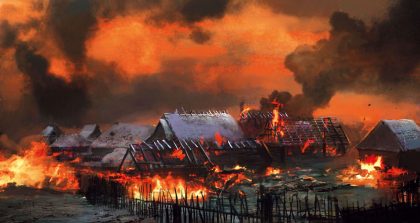
Gerraint and his men reached the edge of the wood around three that afternoon.  They could see the village from there, and saw it burning brightly.  The Saxons were on foot below a cliff face, their horses kept back in Gerraint’s direction, away from the fire and smoke.  There were several cave openings that could be seen in the cliff, some ten or twenty feet up the rocks.  It looked like the Little King gave up the village begrudgingly. Gerraint, with his fairy good eyes, counted more Saxon bodies than British ones.  Now, the Saxons were below the caves, but behind cover where the arrows could not reach them.  It looked like a stalemate, as long as the Little King’s supply of arrows held out.

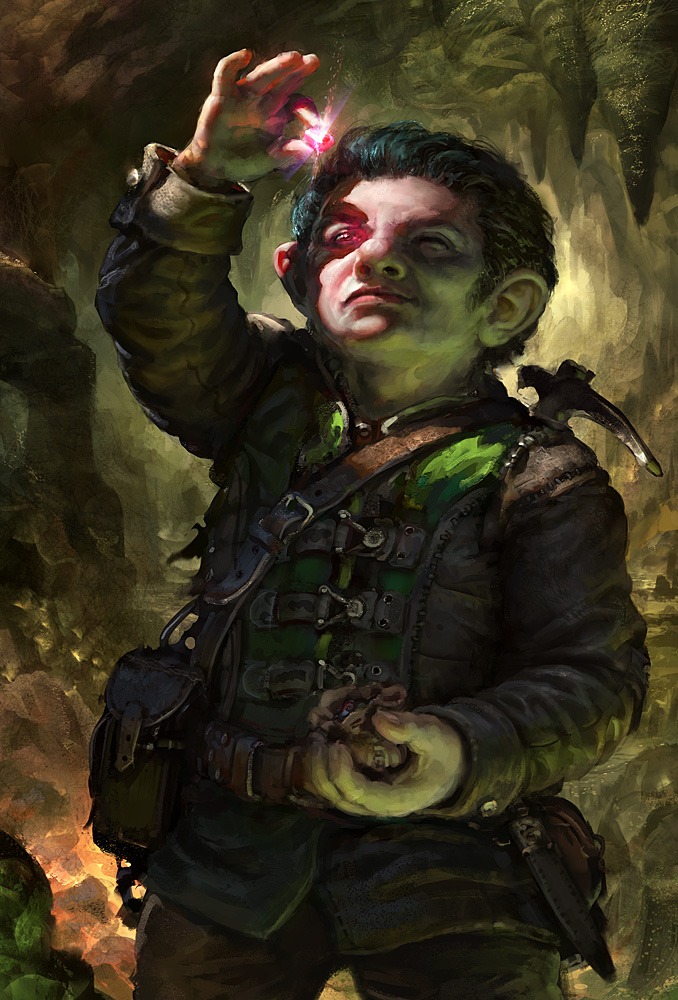
Gerraint, Sergeant Brian and Damon sat at the lookout spot, though Gerraint was the only one who could see clearly at that distance.  The others could only make out the gist of what was happening when Gerraint pointed things out to them.  They waited a half hour, which seemed an eternity, and a true little man came up to Gerraint, right out in the open, and removed his hat out of respect.  This man stood only two feet tall, what one might call a gnome or nature spirit, and Gerraint quickly realized the man had to be invisible to the others, so he did not let on that they had a visitor.

“Lord,” the gnome said.  “The Saxons are building ladders and are about done.  They have many men hidden behind the big building that is not burned, and plan to attack all at once with the ladders.  Some are going to places where they can hide behind cover and shoot arrows at the cave openings.”

Gerraint picked up his head for a better look, but the smoke and remaining buildings in the village made things difficult. “Thank you Lemuel.”  Lemuel was the gnome’s name. “You know what would be really good?  If those Saxon horses broke free of their binds and tethers all at once and stampeded right across the base of the cliff face.  It would be especially good if that happened when the Saxons came out with their ladders.  Do you understand?”

“The Saxons have ladders?”  Brian squinted his eyes.

Lemuel answered at the same time.  “I understand.  That should not be hard.”  He scooted off and vanished in the tall grass while Gerraint slapped Damon on the shoulder.  “All right, son.  Let’s get the troop up and ready to ride.”

“What?  Aren’t we supposed to be waiting?”

“Not if the Saxons have ladders,” Brian said.  “Fat chance those horses will stampede, though.”

“Trust in the power of positive thinking,” Gerraint said, and trust in luck, or Lemuel, he thought.  It felt like a lot to expect a gnome to get it right and not stampede the herd too soon or too late, but the edge of the herd was all he could see from horseback because the trees stood in the way.  He had to trust.

Gerraint separated Brian and thirty men from the rest of the troop.  They got torches and had special instructions to ride the back street of the village. They were to set the last of the buildings on fire, the ones that the Saxons were using for cover, in order to drive the Saxons into the open.  He gathered the rest of the troop and gave easier instructions.  He called for lances and then they waited.  It amounted to ten minutes sitting on the horse.  Brian began to think Gerraint had lost the nerve, but suddenly the Saxon horses broke free and they could hear them as they rumbled out of sight.  Brian grinned and went to lead his group while Gerraint yelled to the seventy.

“Ride along the cliff straight through to the other side to drive their horses out of reach.  There, we will turn and charge at them again.  Ready?  For Arthur.”

The men responded and charged.  When they came around the edge of the forest where they could see the battleground, they saw the last of the Saxon horses trampling along. Honestly, Gerraint did not have to ride through to drive the Saxon horses out of reach of the Saxons.  Most of the smoke and the smell of the fires being blown in that direction encouraged the stampeding horses that were not going to stop until they cleared that area.  Still, Gerraint had long since determined that men with lances had the advantage riding through the lines.  Once they stopped to fight it out, they became like an awkward Gerraint fighting the Little King.  The horseman had the height advantage, but the flexibility stayed all with the man on foot.

The Saxons, who had thrown themselves up against the foot of the cliff when the horses came, recovered what ladders they had left and renewed the assault.  More men came from the village, so they had a crowd at the base of the cliff when Gerraint and the RDF plowed into them.  Some Saxons thought the stampede was over and were surprised.  Some thought it was another group of wild horses from the same pack.  Some only belatedly realized that these horses had lancers on top.  For quite a number, it was the last realization they ever made.

Gerraint formed up his line while Brian finished and came to join him.  Brian lost six men somewhere among the fires and smoke.  Gerraint turned at the front to yell.  “We go straight through again and sweep the Saxons from the cliff. When we get to the other side, we turn immediately and charge to stay and fight.  Remember, you have height on horseback, but quarters are tight among the wreckage.  Do not hesitate to dismount if it is to your advantage.

“Straight through.”  Gerraint turned.  “Once more into the breach,” he whispered before he yelled, “For Arthur.”  Again, the troop responded and charged.  Some bright Saxon chief had gathered a few archers, but it seemed a pitiful thing.  The troop easily swept the cliff base clean of Saxons.  The Saxons had to run for the now burning buildings.  Some ran further into the charred remains of the rest of the village.  Some did not stop running when they reached the village edge.  Gerraint gave those last ones no thought at all, knowing that Dayrunner would not let any of them escape.

When Gerraint turned the troop for the final charge, he saw that his hope had not been misplaced.  Rope ladders came down from the caves and some fifty men followed the Little King into battle.  That evened the odds a bit, but Gerraint knew this would be where things got tricky. The RDF wore a virtual uniform and were easy to distinguish, but telling the men of the little King from the Saxons might not be so easy.  He told Damon to stay by his side, and then they charged.

The Saxons were already beaten in their spirit and it became only a matter of cleaning up the mess.  On a normal battlefield, more than a hundred would have escaped, at least on foot, but in this case, none made it out of the woods. Gerraint and his troop fought well, but the Little King and his fought with a raw vengeance.  They let none escape, even if they were trying to surrender, and Gerraint did not yell at them until the end.  There were fifty on their knees at the end, twenty of whom only escaped out of a building right before the burning roof collapsed.  The Little King counted his survivors apart from the women and children that were safe up in the caves.  Gerraint lost some men, but few when compared to the Saxon losses.

“Sorry I couldn’t get here sooner,” Gerraint said.

“Me too,” the Little King agreed.  He eyed their prisoners and wondering if the village had enough rope left to hang them all.  They paused when they heard the four hundred thundering across the fields. When they arrived, they slowed as Lionel and Lancelot quickly assessed the situation.  Lancelot bounded from his horse, ran up to Gerraint and complained.

“I missed it?”

“The Saxons had ladders,” Brian said gruffly. “We couldn’t wait.”

R5 Gerraint: Picts and Pirates, part 3 of 3

Meryddin was not on board with this plan.  As much as Meryddin knew the Picts and Scots needed to be kept in their place, he preferred action against the Saxons, or the Irish.  The Scots, and for the most part the Picts still held to the old ways.  They had and respected the druids, and they respected Meryddin as a master druid.  Meryddin often argued that as long as the Scots and Picts stayed above the wall, they should be left alone.  And if they should come down below the wall, they should be subject to mercy and forgiveness.  Gerraint thought the argument a curious one coming from Meryddin, since the druids thought of forgiveness as weakness, and they did not believe in mercy.

Thomas moved his fat and slow merchant ships into the mouth of the Clyde and lashed them together to form a wall.  Gerraint called it a blockade.  Thomas, who walked with a slight limp ever since the battle of the rebellion, had plenty of stout men and plenty of catapults that could heave stones or burning pitch and tar at any ship that tried to come downriver.  He kept Arthur’s swifter, more warship design out from the wall to pursue anyone who broke through and tried to run for it.

Arthur came up on the fort in the night and settled in quietly while he moved some men around to the back of the fort to attack the Saxon and Pictish ships in the dark.  There were eight Saxon long boats and more than twenty Pictish coastal ships anchored in the river or pulled partly up on the bank.  He knew ships could be rebuilt, that it was the men he had to worry about, but he also knew ships could carry men to safety and he needed to take away that option.

The guards on the river were few and not very alert.  Still, it took time avoiding them.  Confrontation risked one of them crying out and waking the fort.  Men swam out and crawled up on to the ships anchored in the river.  Others hid behind the boats on the bank, and waited.  When Arthur’s patience ran out, he signaled the three men in the trees. They lit their torches and waved them back and forth.  Moments later, the sound of chopping echoed up and down the river, and one by one, the ships became ablaze with fire.  The guards on the river were taken out, mostly with arrows, but the men in the fort came awake and began shouting, everywhere.

On the land side of the fort, Gerraint let loose the dozen specially constructed catapults.  They fired a great metal clamp attached to a long, knotted rope. Two fell short.  One made it over the wall but did not catch on anything, so it pulled away.  Two made it and caught.  After a quick tug, men began to climb the ropes.  The sixth stuck fast to the lumber that made the walls, the whole fort being made of logs.  The men who tugged on the rope to be sure the hook would hold them heard the sound of ripping wood.  Gerraint quickly grabbed a dozen men to help, and they all pulled, and pulled with all their might.  That log, and the three to either side of it began to pull away from the rest of the wall.

“Altogether!” Gerraint yelled, and one big final yank and the logs broke free and crashed to the ground.  The logs were pushed into a bog on that end and rotted.  Men still had to climb over the lower parts, but soon enough they flooded into the fort.  The Picts and Saxons put up a good fight, but they were not prepared and got killed at the rate of about three to one. When the men came pouring in from the riverside, the fighting did not last long.  Arthur lost some hundred and fifty men in the end; all the dead and dying. The enemy lost closer to four hundred and only about two hundred finally surrendered and begged for mercy.

Arthur did not show mercy.  He made sure Caw, the Pictish leader and Hueil, the Saxon pirate were dead.  Then he hung every last man in that fort, letting only the old Scottish woman who did the cooking go home.  He sent her off with the three babies he found.  Anyone twelve and over got hung, and so did the women who were not there to cook, the ones he imagined were the mothers of those children.

Last of all, Arthur left a note nailed to the main door of the fort’s version of a Great Hall, and a second copy nailed to the front gate.  It said, “Stay out of Britain, Wales and Cornwall.  No more warnings.”  He signed it and brought his men back south.

Thomas met him at fort Guinnon.  “Uncle Durwood is going to be upset at the loss of three of his best ships.”  A Saxon long boat and some six Pictish coastal craft broke through the blockade and headed for the sea.  Thomas damaged them all and sank three of the Pictish craft, and without losing one of Arthur’s ships, but the long boat and three of the Pictish ships managed to limp away.

“Maybe we can work something out,” Arthur said in a sour voice.  He had not been in a good mood since the battle.  The decision to hang all of those men, pirates though they were, came hard for him.  It was not like battle.  He found no glory in condemning prisoners.

“I have been thinking about that,” Thomas said with a bit of a grin.  “I got a good look at those Saxon long boats and I believe I can greatly improve the design of your warships.  As they become available, Uncle Durwood might be willing to take some of your older ones in exchange for his loses.  That way you can spend your money on new and better ships rather than compensating my Uncle.”

“Sounds like a good plan to me,” Kai said brightly.

Arthur said nothing.  That was what they did, but Arthur became convinced that now all he did was tempt the Picts to mount a real war.  When he sent his men home, he told them all, personally, to be prepared for a quick recall.

“Surely, they have learned their lesson,” the men said, but Arthur could only shake his head, sadly.

************************

MONDAY

Meryddn is revealed, just what part of him is not human, and Arthur leads his men north into the wild Pictish wilderness in Cat Coit Celidon.  Until Monday,

*

R5 Gerraint: York, part 1 of 2

“So, who is this sudden friend of yours?” Arthur asked.

“Lord Pinewood.” Gerraint said as he tried out the poor mattress on one of the slat beds originally made for legionnaires. The bed creaked, like one ready to fall apart any minute.

“We have met,” Pinewood said.

“I have that feeling,” Arthur looked at the man. “But I also feel a sudden chill on the back of my neck.  Goreu, please explain.”

“He goes hunting in his spare time,” Gerraint said, as he took the straw mattress and laid it on the floor.  Arthur’s eyes got big.

“I thought that was you,” Percival said brightly. “How are you?”

“It won’t be easy breaking out of here,” Captain Croyden interrupted, as he stepped away from the door.  “It has a deadbolt and probably guards.”

“I don’t think breaking out will be much of a problem,” Arthur said, and he decided to lie down as well so he could have the excuse to close his eyes.

The sun went down and Gerraint popped up from his nap.  Arthur and the RDF were discussing possible ways of escape from their prison room. They had to capture the gatehouse to open the gate, but they wanted to do so without being found out, if at all possible.

“What room is beneath us?” Gerraint asked first thing.

“A storage room for hay and straw for the horses,” Pinewood said from the corner where he and Percival appeared to be doing something.

“Like a barn,” Percival added.

“We can’t tear up the floorboards,” Croyden objected.  “This floor is solid.  Even if we had the equipment it would bring every guard in the fort down on our heads.”

“Then we use the escape hatch,” Gerraint suggested.

“Over here, Lord,” Pinewood called.  He and Percival struggled to remove a six by six trap door that had no lock or hinges but looked to fit perfectly into the floor.

“I think I don’t want to ask,” Arthur said, while Gerraint lowered himself into the dark space below.

“Alleluia,” Gerraint breathed as he let himself drop. He whispered back up, but it sounded sharp and plenty loud.  “Pile of hay. Soft landing.  Come on down.”  They came, one by one, and Pinewood came last of all so he could, somehow, close the flooring above them.

The room had only a small touch of light around the door, unlocked, of course, because no one would steal hay.  It let out on to the small courtyard by the back of the great hall.  “You know, the Romans built the same thing over and over.  Once they found a good design, they tended to stick with it.”

Arthur nodded.  “This way.”

Pinewood tapped Gerraint on the shoulder and kept back to be last.  “Get your men and meet us in the gatehouse.  Cornwall hunters,” Gerraint said, and caught up to Arthur.

The going got slow.  The moon had risen three-quarters full in a cloudless sky, so they had to avoid the open spaces.  They inched along the wall and Gerraint could not help himself thinking, “Louie.  I said the coppers would never hold me in Alcatraz.”  Fortunately, he held his tongue.

When they arrived at the gatehouse, the guards were all sleeping except one.  Word had evidently gone around not to expect any activity until morning.  Arthur insisted on taking out that one guard by himself, and he almost succeeded.  The man cried out, but in surprise, not in fear or death.  It sounded as if one of his fellow guards snuck up behind him and said, “Boo!” Even so, it got enough to rouse two sleepy men.  They barely got out the door to yawn before they were riddled with arrows.

Pinewood, and his half-dozen hunters came forward with a jar of anti-blue gel and different clothes.  “I stepped out and picked these up,” he said.  “We don’t want your own men mistaking you for the enemy.”

“Quite right,” Arthur said, and he dressed to receive the army.  Percival got the torches as soon as he changed, and he and the three men from the RDF climbed to the top of the wall.  Two of Pinewood’s men climbed with them, just to watch, they said, but everyone understood that meant watching up and down the wall to stop any unwanted intruders.  Arthur, Gerraint and Captain Croyden took care of the rest of the sleepers and then went to open the gate.  The rest of Pinewood’s men had their back.

Meryddin, the first one in, got loud.  Gerraint took a great risk when he wrapped his hand over Meryddin’s mouth.  “You will probably bite my hand off,” he said.  “But if you don’t be quiet you will get a lot of people killed.” Gerraint slowly removed his hand and then swore he could see the steam coming out of Meryddin’s ears.

The first third of Arthur’s army came in quietly, but then the impatient idiots in the back third began to shout war cries, which quickly ended the silent surprise.  Even so, many of the Saxons were caught in their sleep, and many others got killed or taken when they were still half-asleep.  Some fighting broke out on the main courtyard and in taking the Great Hall, but the defenders soon got overwhelmed with numbers and knew their cause had been lost.

Colgrin lost his head, though no one confessed. They assumed he lost it to a Saxon blade because someone thought Colgrin betrayed them.  When it was over, they brought up the Pictish prisoners and they and the Saxons were offered their lives.

“Hear me,” Arthur yelled at the Lords of the Saxons and the Chief men of the Picts.  “I destroyed two armies in two days, and you had no strength to stand against me and no way of stopping me.  You dared to set foot on British soil.  I should hang every one of you.  But I can be gracious.  Pledge, by your strongest pledge, that you will go home and never again set foot on British soil, because understand this.  If you come again to British soil to attack and do harm to the British people, I will set foot on your land and destroy your people.  You have failed.  But I will not fail.  I will so destroy your homes, not a child will be left to cry and your land and inheritance will be given to others.  So take heed and go, and do not come back.”
The enemy left, and Gerraint asked his little ones to please watch to be sure they went home.  He asked them just to watch, but he knew the Germans as well as the Picts and Scots would be harassed the whole way as incentive to keep their pledge.

R5 Gerraint: The River Glen, part 3 of 3

In the morning, Gerraint, Pelenor, Peredur and Meryddin accompanied Arthur to a parlay with Bearclaw and his lieutenants. Arthur spoke quietly as they rode out.

“Meryddin said you could come because you are an imposing sight.”

“What?” Gerraint joked.  “I’m now the big, dumb guy there to intimidate the enemy by my mean stare and bulging muscles?”
“Mostly, yeah,” Arthur went along with the idea. “Percival’s going to be upset at being left out, you know.”

Gerraint nodded, but said no more.

Once there, Arthur suggested the Saxons leave Britain and return to their own land in Essex.  “You’ve been sitting against this river for more than a month when you could have moved north.  Now that the army has arrived, moving north is not an option.”

Bearclaw laughed.  “You see, Goatlib, my son.  This British boy thinks he has us surrounded.”  He laughed again and his lieutenants laughed with him.  “The army I see is not nearly as big as the force mustered in the old days by Uther.  I heard some of your Lords were not happy with you and you wasted all your men fighting among yourselves.”

“And so you sat here for a month waiting to find out how strong my arm is?”

“Bah!”  Bearclaw spat.  “We don’t waste good men on arguments.  Brecca wanted to move to the shore and crawl up the coast like a coward.  Edgard wanted to slink away, back the way we came. But we settled things and only two men died.”

“Who died?”  Arthur had to ask.

“Brecca and Edgard,” Bearclaw gave the obvious answer and looked very pleased with himself.  “Now, you go away.  Have your partridge and mush and we will fight in the morning.  We have twice your number and good German steel.  The fight should not take long.”

Both sides went back to their lines, and Arthur laid out the battle plan in less time than it took to parlay.  Gerraint had a thought.

“You know, partridge and mush sounds pretty good.”

The Saxons came out from the river’s edge in the morning.  They had camped on the open field where they expected to do battle.  In those days, battles were always fought in the open air, where it was said, real men of fortitude could stand face to face.  The truth was, fighting over hills and especially in the woods, it became too easy for men to get lost and turned around, and maybe even cut or skewer their own.  Certainly, every group Bearclaw sent into the woods never came back.

Arthur dressed up his foot soldiers first thing, and made sure they understood their part in the drama.  Kai and Loth had both sent contingents from the north that arrived in the night.  That gave Arthur fifteen hundred regular men or about half the estimated number of Germans. He let the Celts and the Germans yell at each other for a time before he moved the horsemen to the front.

Arthur had four hundred and ninety-seven horsemen, all well armored and outfitted with lances.  More than half were trained members of the RDF, but behind them were the Lords and their squires.  Pelenor, Gerraint, Peredur, Arthur and Meryddin rode to the front.  When they stopped, they gave the horses a chance to settle down.  The Germans stopped yelling their war cries and watched.  When Arthur yelled “Lances,” they came to point at the enemy with far better unity than the first time.  The RDF let out one big “Ha!” and then fell silent.

Percival came riding up to stop beside Meryddin, and Ederyn, who failed to keep the young man at the back, came up beside him. Pelenor kept mumbling “relax, twist and yank,” over and over.  He got very good at hitting the targets dead center, but he sometimes forgot the follow up, in particular the relax part.  More than once, he found himself shoved off the back end of his galloping horse and deposited roughly on his rump.

“Drive them into the river,” Arthur yelled.  He got ready to call the charge when Percival and Gerraint interrupted, in unison.

“For Arthur!”

The RDF, the squires, and those Lords who were not caught off guard echoed, “For Arthur!”  And this time when Arthur yelled charge, it was barely heard as the horses went rumbling forward.  The foot soldiers did their best, but they would be a few minutes extra before they reached the enemy lines.

To their credit, about a third of the Saxons, or about a thousand, tried to hold their ground.  They got skewered, and those who were not killed outright, were finished as soon as the footmen arrived.  The rest of the Saxons did flee to the river and most of them swam for their lives.

Arthur stopped at the river’s edge where the trees lined the water.  He signaled, and Captain Croyden lead his RDF a half-mile up river to a point where they could ford across.  The good Captain had been charged to make sure the Germans went back to where they came from.  He later reported that a number of them hit the Essex border and still did not stop running.  That was a few days on foot, so there is no telling what could be believed.

“It won’t always be this easy,” Peredur told Arthur.  “They will find a way to counter the lances.”

Arthur nodded, but he had three things to keep him busy.  First, he needed to find Bearclaw, which was not hard.  The man lay among the dead in a large pocket of men that tried to stand up to the charge.  Unfortunately, Goatlib was not there, and Arthur imagined Bearclaw’s son might be one to watch.

Second, Arthur needed to choose a number of men for inclusion in the Round Table.  He started with Peredur and Ederyn, who were happy to be included, and Pelenor, who did not go in for those sorts of emotional moments, but also felt secretly happy to be included.  Captain Croyden and three members of the RDF that he singled out for extraordinary acts of bravery in defense of the locals against the Saxon raiders were given the title, “Sir,” along with several of the older Lords who were known to be stout believers and defenders of the church.

Mesalwig of Glastonbury appealed for inclusion, but he only turned twenty, and Arthur decided that a man needed to be twenty-one and fully grown to be joined to the table.  Mesalwig went away angry, but it could not be helped because he was still technically a squire.  Besides, his master, Badgemagus the Welshman, still held to many of the old ways and had no desire to be included.

Melwas got included, though Arthur said it was mostly for Gerraint’s sake.  “But hereafter,” Arthur made it clear.  “Just being in battle and fighting for the realm is not enough.”  Melwas fought bravely and did his duty, but no more than the rest on that day.  “We are looking for extraordinary men who perform as Gerraint has said, above and beyond the call of duty.”

“Still, it was good to include some of the most important Lords in Britain and Wales.  There are almost twenty now, and that should make the table attractive to any young men coming up in the ranks,” Percival thought out loud.

“And you knighted two second sons and a commoner among the RDF, and that will give your army something special,” Gerraint added. “Extraordinary valor will be honored, even among the common people.”

“What do you mean, knighted?” Arthur asked.

Gerraint put his hand to his mouth and spoke through his fingers.  “What is the third thing we have to do.”

“My turn,” Arthur said.  “Last time you dragged us off to Cornwall.  This time I am dragging you off to York.  We will take the younger members of the RDF with us, not to threaten Colgrin but simply to say we are watching.”

“I think I will bring Sergeant Paul and the men from Cornwall if you don’t mind,” Gerraint said.

“I could bring the contingent from Lyoness,” Melwas offered.

“No,” Arthur turned him down.  “We don’t want to look like an army.  We just want enough to guard against possible treachery, not that I distrust the Jute.”

“Besides, Sir Melwas” Gerraint grinned.  “You have to visit Thomas of Dorset.  Gwillim told me Thomas is joining his uncle and will Captain one of the family’s seven merchant ships out of Southampton.  Tell him I sent you and he will give you a special deal on something nice for Cordella.  Then you can perform that act of valor and charity and tell her that you love her.”

Melwas returned Gerraint’s grin.  “I can do that.”

************************

MONDAY

Colgrin the Jute, Lord of York, is charged to keep an eye on the Norwegian shore.  Instead, he makes a treaty with the Picts in the north.  He intends to take north Britain for himself, and Loth and Kai alone are not able to stop Him.  Monday, trouble with the Picts.  Until then, Happy Reading.

*

R5 Gerraint: The River Glen, part 2 of 3

Soon enough, Arthur found a number of young Lords who became interested in joining the RDF.  It often turned out to be the second and third sons, as Gerraint had originally suggested, and they came with their own horses and some equipment. That was a great help to the treasury, even if they had to be fed.   Gerraint also pointed out, “if one of these should prove themselves worthy of admission to the Round Table, granting them the title “Sir” should cause less consternation among the Lords than granting title to a bunch of commoners.”  Arthur nodded, but he clearly did not feel too concerned about that.

Arthur had plenty of lances made, though not nearly as long and heavy as they would be in the centuries to come.  This time he had the hand-guard built right into the lance and put no barbs on the point.  The straight point would be something that could put a hole in an enemy, be pulled out with a relaxed hand, a twist and a yank, and used again on the next enemy.  He also had armor made, strong chain on leather, and helmets all modeled after his memory of the armor and helmet of the Kairos.  Gerraint imagined it as the first military uniform in history, but deep inside he knew it wasn’t.

All of the Lords and their squires came to Caerleon now and then.  Pelenor thought it would make things easier when Arthur got old enough to take what he started calling the grand tour of the land.  The squires, of course, went straight for the lances and the practice grounds, and this time their lords were not slow to join them.  Arthur began to think that these men would form the backbone of his army, and he was not wrong.  Indeed, heavy cavalry would rule the battlefield until the invention of gunpowder.  But Ederyn always reminded Arthur that in war, the footmen would still be the vast majority of his soldiers—and the enemy soldiers, too.  There were not enough horses for everybody, and even if they had the horses, most men did not know how to ride.

In the spring of 497, Storyteller’s estimate, Arthur turned nineteen and got ready to be certified for claustrophobia if he didn’t get out in the countryside for some fresh air.  Gerraint, now eighteen, sat at the chessboard across the table and concentrated, because he thought he might be winning.  Pelenor and Peredur sat at the other end of the long table quietly catching up over a bit of beef and a tankard of ale.  Meryddin also sat quietly, mumbling to himself now and then, and staring out a window in the Great Hall.  He had been saying for some time that they had trouble in the East, and it appeared to be pointed north, but he could not pinpoint it exactly.  No one else presently disturbed the tranquility of the moment until Percival burst in the doors and yelled, his sixteen-year-old voice still cracking on the high notes.

“The Saxons are coming out of Essex.  They have their eyes on York and on cutting off the whole coast.”  Everyone jumped and said “What?” except Meryddin who said something like “I knew it,” and Arthur who said something completely different.

“Salvation!”  He threw the chess board up in the air and scattered the pieces everywhere, mostly because he was losing.  Ederyn arrived a moment later to explain.

That very evening, Arthur sent out the call.  The Lords prevailed on him this time to allow a whole three months for the force to gather.  Arthur was willing, but only because he had two hundred fully trained men in the RDF, and another hundred in various stages of the training program.  True, most of the trained men were home, working their farms, or in the towns and cities, but they were sworn to be in Caerleon within a week once the call went out.

In truth, it took three weeks to gather and supply the two hundred, but that still felt remarkable, considering.  After another week, they were in a position to harass and slow the enemy, and that happened a full two months before the rest of the army was due to gather.  When Arthur finally arrived with the army, now four whole months gone by, because it took an extra month just to get across the width of Britain, Captain Croydon had a most interesting report.

“We arrived in time to drive a raiding party from one village, only to find they were spread all over the countryside, looting and burning villages, towns and farms as they went.  They were not much of an army.  More like a loose collection of Saxon raiders.  We set patrols and a strategy of picking off the small groups one by one.  Soon enough, they began to run on sight of us, and like cattle, we were able to herd them together.  They united at last under the banner of a man named Bearclaw, a Saxon with a nasty disposition, and they are bunched up along the banks of the Glen River, here.”  He pointed to the crude map his men made of the area.  “Since that time, for the past month, or almost six weeks, they have been arguing. Any small groups sent out to get food and supplies have been dealt with, but for the last few weeks they haven’t even dared to do that.  They seem stuck, living off weeds and river fish, I guess, and the occasional horse meat which won’t do their cavalry any good.”

“Casualties?”  Arthur asked.

“We lost two-dozen, very fine and very brave men. Another dozen are out of action, being wounded, but we hope they may recover.”

“We must visit them,” Percival said to Arthur, but he looked at Gerraint, and wondered if there might be anything he could do, like let Greta the healer help.

“Before that,” Gerraint spoke up to avoid Percival’s eyes.  “What news of York?”

Captain Croyden had prepared for the question. “We have a squad of men, in rotation, that have kept a close watch on the fort there.  So far, Colgrin the Jute has made no move to link up with Bearclaw. He is pledged to you, so he may be loyal, but then he has made no move to stop Bearclaw either.”

“He has a good and large contingent of soldiers there watching the Norwegian shore, but he doesn’t have nearly enough to face down an army,” Pelenor said.  “Maybe he felt it best to watch the Danes and deal with Bearclaw if he had to from behind his stout walls.”

“Maybe.”  Arthur studied the map.  “Too bad we have no way into the Saxon camp and no way of knowing what has them bogged down for a month.”  He also looked at Gerraint, but it was only a glance before he turned back to the map with a shake of his head.

Arthur made his camp on top of a rise where he could look down on the Saxons and the river.  He had seventeen hundred men, which proved better than during the rebellion, but still not near the estimated potential.  The Saxons and Angles combined, even after their losses over two months, had closer to three thousand.  “As Melwas says, it is a challenge.”  Arthur spoke long with Meryddin, and for the first time, Gerraint heard them arguing.  He thought it a good sign that Arthur started gaining his own mind, but he supposed that depended on what the argument was about.

Gerraint felt tempted to get off his seat, enter the tent and interrupt, but he got distracted by the approach of Melwas. Melwas became the chief of Lyoness, now that his father had passed away.  He came prepared for this war with fifty good men who he said were all volunteers. Gerraint’s stepfather, by contrast, sent twenty under a grizzled old sergeant who had taken the Christian name of Paul.   It seemed a pittance, a token compared to what Cornwall could provide, but Gerraint satisfied himself by saying at least it was not nothing.

“Can I talk to you?”  Melwas looked uncomfortable.  Gerraint felt tempted to say something outlandish, something very Festuscato to lighten the moment, but he knew this would be serious.

“Of course,” he said.  “What about?”

“It is about your sister.”  Gerraint just listened.  Melwas took a moment to come out with it.  “She will be sixteen shortly,” he said.  “Your mother said I needed to talk to you, and not just her and Lord Marcus, you being her only sibling and all.”

Gerraint knew where this was going, but he needed to hear it out loud.

“You know, sixteen is considered an acceptable age to marry.”  Gerraint frowned ever so slightly, but Melwas felt sensitive.  “What?”

“A man is considered fully grown when he turns twenty-one.  You are what, Twenty-five?”

“Twenty-four.”

Gerraint nodded.  “A woman, on the other hand, is considered mature when she turns eighteen.”

“Cordella is very mature for her age.”

“So, you are asking me because I am eighteen? Do I look like a woman to you?” Gerraint stood six feet tall, more than big in a five-and-a-half-foot world.

“No,” Melwas admitted.  “But your mother seemed unwilling to make a decision.”

“Cordella is her baby.  Mothers cling to their babies.”  Gerraint stopped talking and waited, but Melwas did not appear to have anything to add.  “My opinion, but mother and Marcus have to decide, but my opinion is she should wait until she is eighteen.  She will hate me for saying that, but you are a mature man.  She should be fully grown as well.  Just my opinion.”

Melwas nodded slowly.  “I can understand your thinking.”

“Good,” Gerraint said and grabbed the man’s arm gently. “Maybe you can explain it to me. Oh, and just one more thing.”

Melwas smiled a little.  “Yes?”

“Tell me, does marrying my sister count as an act of valor or an act of charity or both?”

Melwas’ smile got big just before Meryddin came stomping out of the tent and tromped off to be lost among all the tents.  He looked red angry.  Arthur followed with a word.

“I told him I was leading the charge and nothing he could say would talk me out of it.”

Gerraint shaded his eyes against the sun as he looked up.  “So, we are charging?”