R5 Greta: The Little Mother, part 3 of 3

When they neared the house, Greta spoke.  “I am sorry for what I said.  I was angry and upset, but it was not fair to take it out on you.”

Hans grabbed that opening, turned, and exploded.  “I’ll say it wasn’t fair!  I won’t be able to go anywhere for a month without people laughing.  Beliona might get over it, but Vabona never forgets such things. He spoke in a baby voice, “Mama said!  Mama said…  It would have been kinder to kill me.  I will have to walk around with a sack over my head for the next ten years.”  Greta slapped him, and then she let it out.

“Hans!  I got caught by a soldier when I went looking for you.  If Drakka had not come along I might have been raped or worse.  I needed you, Hans, and you weren’t there for me!”  She quickly grabbed Hans by the lobe again, dragged him into the house and deposited him at the kitchen table where he could nurse his ear.  She went to the back and fell on her bed where she cried, and she decided if Hans thought she cried about nearly being raped, let him.  After a while, when Greta lay quietly, Hans came slowly into her little room.

“Greta.”  He spoke softly and cleared his throat.  “Greta.”

Greta sat up, turned around and hugged him.

“I’m sorry,” Hans said.  “If you ever need me I promise I’ll be there.  I promise.”

“Stop,” Greta said, and pulled away from her hug.  “You should not make promises that you might not be able to keep.  Just be my best brother and that will be enough.”

Hans hugged her again, and then went out front, but Greta decided she would just mope around for the rest of the day.

After a while, Hans got to go off somewhere with Papa.  Greta hoped that would make his birthday a little better.    Mama stopped in several times and on one of those times she told Greta that Yanda came to the door.  Greta felt crampy, though, and said she was not in the mood to go out. Papa and Hans finally came home. Mama had been cooking special things all day and only Bragi was missing to make it a real family gathering. Greta felt better for a minute or two, until Papa spoke up, even as he grabbed a hot sausage.

“Sorry, dear,” he said.  “I have to eat with the Romans tonight, dreadful as that sounds for the digestion, but things will get back to normal soon enough.”  He kissed Mama and sent Hans out to bring in the packages.  They were new dresses, and Hans got a new outfit, too.

Greta squealed, just a little, and went immediately to try it on.  The dress was soft pink, richly embroidered with white flowers all around the collar and sleeves, and cut well and fit well around her young figure. She thought it showed her off, nicely, and everyone else thought so too.

“Papa.” Greta felt thrilled, and she gave him a big hug and kiss.

Papa pulled back. “Now go take it off,” he said.  “You will need to wear that tomorrow.”

Greta started toward the back, but stopped and turned.  “Why?”

“I’ll tell you in a minute,” Papa said.  “Get changed.”  Greta hesitated.  “Go on.” Papa smiled.  It looked forced, but Greta went and changed.

When she came back, she saw that Mama’s dress also looked very nice, but very Mama-like. Han’s new tunic had been emblazoned with a bear and a raven, and he showed Greta every stitch; but he felt most excited about showing her the knife which hung from his belt.  It seemed a rather long and sharp weapon for a fourteen-year-old, but the knife was the thing he most prized.  Greta felt pleased to see that he could put it back in its’ sheath without cutting himself.
“Now Papa.” Greta spoke suddenly.  “You must tell me all that has been decided.  Not your daughter, but you must tell Mother Greta. And you must tell me before you go back to the Romans.”

That bit about Mother Greta caught Papa off guard.  He sat heavily, but he began without hesitation.  “All right,” he said.  “You already know about the two chiefs.  What you don’t know is the offer the Romans made to bring about the whole thing.”

“The Macromani, the Quadi, the Samartins.”  Greta said. “Neither we nor the Romans alone have the resources to keep them at bay forever.”  That took no great insight to see.  A little talk and a little logic was all that was needed.  Greta was still too young to realize how rare a little logic was in the human race.  Papa stared, so she shut-up.

“Essentially,” he said.  “The Romans have proposed that we join forces for mutual protection.  It is the Emperor, Antonius Pius’ idea to use the peoples along the border to help defend the border.”

“That is reasonable,” Mama said, trying to join in.  “If the Romans want to help us defend our villages, I say, let them.”

“And what did they offer us to fight and die for their empire?” Greta asked.

“Land,” Papa said. “They will be granting us the lush, productive land along the Old River itself.”

“And?”

“And some of the men have packed their homes already in anticipation of the riches. Others, however, mostly the young, claim to be insulted that their lives should be bought so cheaply.  They say we should see what the Samartins offer.  But the older men know better.  I still remember the rebellion and losing my father when I was Hansel’s, er, Hans’ age.”

“So?”

“So, the council elects a high chief to work the deal with the Romans, and a young war chief in Kunther, son of Kroyden, to raise and train what they are calling the Foederati troops to be used to defend the border.”

“But you don’t like the idea at all.”  Greta said. She started reading him, but he only laughed.

“I am the high chief.  Why should anyone listen to me?”  Greta stared at him until he confessed himself.  “I think it will truly divide and ruin us.  Some will pursue wealth in the lowlands.  Some will maintain their honor and live in pride in the highlands. Soon the Lowlanders will grow tired of feeding the Highlanders and the Highlanders will grow tired of defending the fight-less Lowlanders.  Then we will be fighting each other, and we might as well just give the land to the Quadi.”

“Draw lots to see who gets the rich lands,” Greta said.  “Then insist that they provide sons to fight in the first line of defense or their land will be given to a family that has sons.  Since they will have the best land, they should feel strongest about wanting to defend it.”

Papa visibly brightened.  He hardly had to think about it.  “That’s it!” he said, but then his face fell again.  “There are the young ones with Kunther.”  He leaned forward and whispered even though it was only the family in the house.  “They are talking outright rebellion and even joining the Quadi and Macromani against the Romans.”

Greta shook her head.  She had no suggestions for that one.   “One problem at a time,” she said.  “Meanwhile, there is more.”  She nearly asked where the cement was that would bind the agreement between the people and the Romans, but the hair rose-up on the back of her head and she grabbed her tongue.

Papa looked down. He began to twiddle his thumbs.  A deep sense of foreboding passed over Greta. “The Lords Marcus and Darius have taken a real liking to your brother, Hans,” he said.

“Darius gave me my knife.  He really is a great guy, ow!”   Papa kicked Hans under the table.  Greta turned toward Papa and the creepy feeling went all over her skin.

“In order to solidify our agreement and solidify our unity, the daughter of the new high chief will be betrothed in a special ceremony tomorrow at noon to the Tribune Darius.  The wedding will be in mid-summer.”  Papa stood and Hans stood with him as Mama drew in her breath.  Greta stared at Papa in shock as they left.  Then she closed her mouth.
Mama got up after a moment and fixed two plates with some of the special things she had been cooking, carefully picking out Greta’s favorites.  Greta told herself screaming would have been pointless.  She could not cry about it.  She had spent all afternoon crying.  Perhaps she could just hang herself.  Maybe Drakka could make something special with which she could hang herself, because, after all, he was such a very good friend.

Mama set Greta’s plate down and sat facing her.  “We’ll have to get straight to work if we are going to get your wedding dress ready by mid-summer,” she said.

Greta screamed. It wasn’t as pointless as she thought. When she went to bed, she was not sure if she had blinked yet, but her last thought was, well, at least he got a promotion out of the deal.

###

Greta cried in the morning on general principal.  Then Papa came in and they had to talk.  He hugged her first, but she had gone cold.

“Greta sweet.” He called her that sometimes.  “You have to try and understand how important this is.  In a way, it means the difference between war and peace.”

“Tolstoy.  I read that book,” Greta responded, without really thinking.  “I think it is about time you men fight your own fights or make your own peace without selling your daughters like cattle.”  Greta paused. She remembered Helen of Troy and realized that men used women as an excuse for all sorts of things.  She looked up at her father.  “What?”  She started to wonder what he wanted.

“Greta sweet.” He said that already.  “I was thinking, the people need their Woman of the Ways for counsel and help, especially in difficult times such as these.” He paused.  He was not sure what to ask so Greta helped him out.

“So, you want someone else to be the Woman of the Ways,” she said.  Papa nodded.  “Impossible. I did not pick this, as you know. I’ve been with Mother Hulda almost all my life and regularly for the last five years because she knew I was chosen to follow-after her.  There is no one else.”

“Mother Hulda?” Papa said, hopefully, though he knew better.

Greta shook her head and spelled it out.  “She is too old and there is not enough time for her even if there was someone else.” Greta did not say that Mother Hulda would die soon, but they both understood.

“You could pass on the gifts?”  He tried again.

“Not by mid-summer,” Greta said in a voice that was not to be questioned.  “And there is no one right now to pass them on to. Papa, I must be what I was born to be. I would cut off my right arm before giving this up.”

“I would cut off my right arm for peace,” Papa said.  “Worse, I have given my only daughter to the Romans for a pinch of hope.” He looked at the floor, ashamed of himself.  Deep inside, Greta understood, even if she despised her fate.  She kissed Papa’s cheek and spoke, though her heart was not in the words.

“I will do my duty,” she said.

Papa looked up. “I know you will.”  He kissed her forehead.  “I believe in you.”  And he rushed out the door, his cape fluttering behind.

************************

MONDAY

R5 Greta: Betrothed… but there are some twists and turns in this road.  Don’t miss it…

*
R5 Greta: The Little Mother, part 2 of 3

Greta got uncomfortable, so she changed the subject.  “Where’s Bragi?” she asked.

Papa shook himself from his thoughts.  “He has stayed in Ravenshold with the new war chief,” he said.

“There are two high chiefs!”  Greta blurted it out before she could stop her tongue.  She remembered what Mother Hulda said about how sometimes it would be best to keep silent.  Papa slammed his fist on the table and looked at Greta as if she had just confirmed his worst fear.  He stood and began to grumble as he paced the room.

“Two?” Mama asked.

“Two what?” Hans didn’t quite catch it.

Greta looked down at her lap where her hands were folded and her knuckles turned white. She had not intended to say anything, but she and Mother Hulda had figured it out.  Her hands began to sweat.  There were indeed times when it was best to say nothing at all.  She would let Papa explain.

Papa stopped pacing and faced the family.  “The council has decided to divide the leadership of the clan,” he said without any build up or preliminary explanations.  “I have been elected high chief, but Kunther, son of Kroyden from Grayland has been elected what they are calling the war chief.”  Papa paused, and that let Mama get a word in.

“My Vobalus elected high chief.”  Her eyes got big.  “Whatever shall I wear?” she asked.  Greta grabbed her Mama’s hand to bring her attention back to the point, but she laughed because she had thought much the same thing.

“I swear this was the Roman’s doing,” Papa continued.  “Divide and Conquer.  Especially that Lord Marcus.  You watch out for him.”  Papa pointed at Greta for some reason.  “I have never seen such political skill in one so young.”  He paused again.

Greta considered Lord Marcus and all at once her eyes rolled back and she became stiff. Papa got ready to speak, but he noticed and stopped.  Hans quickly grabbed his sister to keep her from falling.

Greta saw Marcus as an old man on a field outside Vienna.  Darius was with him and to her surprise, she was as well.  It would be the end of Marcus’ days.  “Ah!”  Greta let out a little shriek and came back to the table.  Then, she could not tell how much was the vision and how much had been a gift from one of her future lives, but she spoke what she knew before she opened her eyes.

“Marcus Aurelius,” she named the man.  “Son, or rather, adopted son of the Emperor, Antonius Pius.  He will be the next Emperor of Rome.”  She looked up and saw Hans smile, her mother with her mouth open, and her father in a fury.

“How can I do it?” Papa raged.  “How can I give such a gift to the Romans?  Hella’s breath!”  He added a few more disgusting and colorful phrases and stomped out of the house like a man on a mission.

Mama and Hans asked simultaneously.  “What was that all about?”

“I’m not sure,” Greta answered.  “But it has something to do with me.”  She smiled and took her mother’s hand because Mama looked worried.  “You know a seer is never good at seeing things concerning herself. But don’t worry.  In this case, I feel it will be all right.”

“I know your grandmother could not save herself in the last rebellion,” Mama said, thoughtfully. “She had no idea what was coming and ended up slaughtered right along with the rest of them.”  It did not exactly abate her worry, but it did turn Mama’s thoughts to her own loss and years of being without her mother.  Greta hugged her.

“Greta.” Hans interrupted, oblivious to the feelings being shared.  “Will you go with me to see the camp?”  He was being careful.  He knew he would never be allowed to go alone and if he snuck out it would be worse for him. Mama looked up, appeared to want Greta around all of those men even less, but Greta patted her hand.

“Son and daughter of the new high chief,” Greta reminded her.  They should be safe enough.  “And I should go to keep Hansel out of trouble.”  Mama agreed with that much.

Hans rankled at the name even as he jumped to the door.  “Come on,” he said.  A field full of warriors, weapons, armor, campfires, fights, drinking and stories. What more could a fourteen-year-old want for his birthday?

“All right birthday boy,” Greta said, and she followed after him.

“Keep out of the way, Hansel,” Mama shouted.

“Hansel,” Greta teased, but quietly.

“You promised!” Hans took that moment to protest, but he obviously did not feel too concerned.  He took off running, and Greta was not about to run after him.

Two hours later, Greta chided herself for not running after him.  She got angry that he took advantage of her good nature.  He had no intention of going with her.  He only told that lie to be allowed to go at all; and Greta thought the worst—he would probably swear that Greta was the one who got lost, and Mama would believe him.

“Hans! Hansel!”  She shouted.  Every time she walked between new tents, the men around that campfire would stop and stare. Still, she did not think that any of them would do anything until she came to a place where she knew no faces. One half-drunk man stood up to block her way.

“Lost your little boy, Hansel?” he asked.

“My brother,” Greta said.  She deliberately did not say little brother.  Let the man think what he would.

“Not married, eh?” He baited her.

“And not interested,” Greta said, as she tried to push passed.  He held his arms out to stop her even as his friends around the fire tried to hide their laughter.

“Aw, be kind to an old soldier,” he said, and Greta noticed he did not have many teeth left. “One kiss of those full, red lips and I could rip a lion apart with my bare hands.”

“Ugh!” Whatever made men think that sort of thing was a turn-on?  All Greta could imagine was a bloody, disgusting mess of a poor lion.

“Come on,” he said.  “One small kiss never hurt anyone.”  He began to circle his arms around her, but Greta’s hand came up into his chest and she stiffened her arms to keep him at bay.

“No,” she said, forcefully.  Something like a static electrical charge that ran up her arms and out of her hands. No white light of a goddess appeared, and no wolves caught on fire, but the man felt the shock and jumped back in surprise.  Greta felt nearly as surprised herself, but she stayed calm.  The men that sat around the fire also looked surprised.  They saw the sparks fly.

“Greta.” She heard Drakka’s voice.  “Greta.”  He came running up, leaving Sanger to follow with the cart.  Drakka quickly assessed the situation and began to whisper loudly in the man’s ears.  Greta heard the words “high chief,” and saw the man step back.  When she heard “Woman of the Ways,” and “Mother Hulda,” she watched the man move behind the protection of his fellows.

“Forgive me Little Mother.  I-I didn’t know,” he apologized, and it sounded sincere.  Every village and town had its’ healers and midwives, but the Women of the Ways were few.  Mother Hulda was the only one in the whole territory in Greta’s lifetime.  Everyone from Ravenshold to the north border and south to the Danube looked to her for many things.  Chiefs and high chiefs all called on her at one time or another. This was another part of the job that would take some getting used to.

“No harm done,” she said kindly to the man, but when Drakka and Sanger took her away in the cart, she whispered into Drakka’s ear.  “I should have turned him into a frog.”  She meant it in jest.

Drakka’s eyes got big.  “Could you really do that?” he asked, in all honesty, and Greta realized how stupid her joke had been.  She dared not say no, though that would have been the truth.  She dared not say yes for the sake of the truth, and for the future record.  She remembered Mother Hulda’s lesson about knowing when not to speak too late.  She had spoken foolishly.

“I would never do such a thing,” she spoke softly and humbly.

“Brother.”  Sanger wanted help with the cart and Drakka kept his thoughts to himself and put his back into it.  The cart had bread, meat and beer on it.  Some had been drafted to go around the camp and make sure everyone had shelter and something to eat.  Drakka spoke again at the next stop.

“Your father has appointed my father as one of his lieutenants,” he said.  “I guess that means we will be seeing a lot of each other. That will be nice.”

“Nice?” Greta did not want that word to sound the way it sounded, but Drakka did not notice.

“Sure,” he spoke frankly.  “Our fathers have always been close.  I always thought of you as one of my best friends, really, even when you were as small and pink as a newborn pig.”

Friends? This time Greta only thought the word as Sanger spoke.  “Hey!” They moved on.

At the next stop, Greta touched Drakka’s strong arm.  It made him pause, and Greta felt a kind of electricity there, too, but this kind made her heart thump.  “I’ve always liked you, too,” she said.  She looked hopefully into his eyes.  If he had any disinterest there, she could not read it.  He smiled, but quickly turned and went to work distributing bread and beer.  So, her position did not feel hopeless, Greta thought happily to herself.  Then the cart got emptied, and they went back to the main road where the supply wagons were parked.  Liselle worked there, helping-out, and Greta saw how Drakka and Liselle looked at each other and felt crushed all over again.  Then she spied Hans in a wagon with Vabona.  Too bad for him.

“Hans! Hansel!”  Greta yelled at him, insulting him in front of his friends. She trapped him in the wagon. He had nowhere he could go to escape.  He came to the wagon’s edge.

“What?” he asked, sheepishly, having a pretty good idea already.

“Your Mama told you that you could come here with me, not run off on your own.”  She got mean.

“Your Mama?” Beliona picked up on it right away.

“Get down here,” Greta yelled.  “I spent all afternoon looking for you.”  Hans looked once at his friends who were not even trying to hide their laughter.  He started to get angry as he climbed down, but his anger never had a chance.  Before his toes touched the earth, Greta had him by an ear lobe and she began to drag him off.  “You’ll be lucky if Mama doesn’t make you do the spring cleaning.”  It was the worst thing she could think of and it started some others laughing.

“Greta.” Hans found his voice.  “Go easy, sis.  It’s my birthday and you are hurting me.”

Greta felt mad and unfortunately Hans became the victim.  He got found in the wrong place at the wrong time.  She did let go of his ear, but only to grab him by the back of his neck.  He did not struggle.  He knew he had no choice.  Mama would only yell at him, but if he broke free and stayed out later, Papa would beat him or whip him for sure.  He came quietly.

R5 Greta: The Little Mother, part 1 of 3

Greta got up from bed as soon as she was allowed.  She busied herself with tasks to keep from thinking too hard.  Mother Hulda, patient all that time, did not say a word about it.  After three more days, Yani went into labor and Greta accompanied Mother Hulda to the house.  Under Mother Hulda’s insistence, Greta delivered the baby.  She had presided over other deliveries, to be sure, but never one where Mother Hulda went into the other room, closed the door and had tea. Yani had a beautiful baby girl. Later, Mother Hulda said Greta got everything just right, but then Greta knew she had help beyond what Mother Hulda had taught her.  About nineteen hundred years in the future from where Greta stood, she knew Doctor Mishka had delivered hundreds of babies.  Greta even heard the words, “Very nicely done,” echo in her head at one point. It sounded very much like talking to herself, but Greta knew she was not.  The Doctor praised her work, and after that, Greta thought that perhaps living all of those other lives might prove some benefit and not be the terrible burden she feared.

Yani looked up into Greta’s face when Greta handed her the baby.  “Thank you, Greta, dear,” Yani said, and with such genuine gratitude in Yani’s countenance and in her voice, Greta became temporarily speechless. Greta looked at Mother Hulda who nodded, and that reassurance helped.

“Get some rest.” Greta told Yani.  “Let your mother hold her granddaughter for a while when you are ready.”  She gave Yani a sisterly kiss and stepped away while Yani nodded, and Greta knew from that moment on she would be Yani’s doctor, and her baby’s doctor, and probably her mother’s doctor as well.

Still early morning, Greta and Mother Hulda left Yani’s house.  Mother Hulda said she had to go home.  Greta said she would accompany her.  She worried about Mother Hulda walking so far, uphill, alone.

“The question is,” Mother Hulda spoke, virtually reading Greta’s mind.  “Are you up to it?”

“I’m not sure,” Greta answered honestly with a laugh, and the two, like cripples, one old and one young, waddled up the hill.

“I saw more than you think,” Mother Hulda said, after a short way.  “The Nameless god is watching over you, even as he watches over the elves of light and dark.  If you ever needed help, I would not be surprised if he sent the spirits of life themselves to your aid.  I also saw Danna, and how Salacia is on your side as well, though that last connection is not so clear in my mind unless there is a young Roman man in your future.

“Please,” Greta protested.  “I would feel like a traitor to my own people.”  It sounded like a horrendous idea in her ears, but she considered Mother Hulda.  Mother Hulda had been taken to Rome, and some said she even took a lover there.  Greta decided that the idea did not sound nearly as horrible to her.

“All the same.” Mother Hulda said.  “I saw the powers watching over you.  I have had no such geis on my life.  My power is very small, but it has sufficed for my needs.”

“It has been sufficient for all that you have been authorized to do.”  Greta suggested.

Mother Hulda thought that through.  “A good way to put it,” she said.  “Still, it is good to have work in whatever way it comes.”  Greta waited for Mother Hulda to finish her thought.  “As for your magic, I do not know.”

“It is small,” Greta said, honestly.

“Bah!” Mother Hulda responded.  “You have two good feet and two good hands, sharp eyes, a well-ordered mind and a good heart.  You have everything you need to succeed.  Otherwise, I would not be giving my children to you, and most alive are my children, including Yani and you.”

“Giving them to me?” Greta said, innocently.

“Of course, child. I will not be here forever,” Mother Hulda said.  Greta nodded, but felt a little twist in her stomach.  She was not ready for Mother Hulda to pass on her magic wand, so to speak. Greta knew that someday she would be the village Shaman, the Witcher Woman, the Woman of the Ways, the keeper of the old ways in the knowledge of the old stories, the purveyor of wisdom, reading, writing and conversing in several languages, knowing herbs and salves, potions and medicines, being midwife and healer for the tribe and clan, the seer, and maker of magic for the benefit of the people.  It was a lot to expect, and Greta felt nowhere near ready.

“Oh, dear Mother,” Greta spoke, as she took Mother Hulda’s arm to help her over some rough spots. “You will be around for a long time yet.”  Greta felt glad Mother Hulda did not argue.  They both knew what Greta said was not true.

“And you have your task already laid out for you,” Mother Hulda said.  “The gods have been kind to you.”

“Task?” Greta questioned.  “I don’t understand.”

“Every woman who mediates the way of the gods in service to the people is given a task by the gods to prove their worth to take up the mantle of wisdom and healing.  I saw your Arabian and the wagons of weapons. I can tell you, the weapons of Trajan never made it to Rome.  I heard the goddess say it would be Greta’s task.  That is you, child.”

“But,” Greta began, but she saw no point in protesting.  Witcher Woman or not, Greta knew the job would still be hers, and every life she lived with whom she was presently in touch confirmed that feeling. Guns did not belong in the Roman Empire.  That was that.

“Well, I am sure with the gods in so generous a mood, they will also empower you to accomplish your task.  Then you will officially be the one for the people, though I feel in my heart you are already there, and you might be surprised to know that most of the people agree with me.”

Greta did feel a bit surprised to hear that, but curiosity ate at her.  “And your task?” she asked.

Mother Hulda smiled, as if she anticipated the question.  “To spend twelve years in captivity in a foreign land and not be enslaved, or worse.  To come home in one piece, free and safe.”  Greta nodded. She had guessed that, but Mother Hulda had not finished speaking.  “Do not shrink from whatever the gods may send to test you.  Obedience is better than words, and so is silence.  If there is one lesson left to learn, it is to know when to speak, when to humble yourself to refrain from more speaking, and when to keep silent.  It is a lesson, like most, that you will never master.  Only remember what you are supposed to do.”

They arrived a short time later at Mother Hulda’s door.  They kissed good-bye and Greta turned for home.  She had to go slow.  It was not easy making her tired legs take her back to bed.

###

After another two weeks, Papa finally came home.  He pushed himself to arrive on the day Hans turned fourteen.  Two days earlier, Greta caught her little brother holding hands with a thirteen-year-old girl.  The girl turned very red and ran away, but Hans made Greta swear not to tell anyone, especially the guys—as if she ever talked to them.  Greta promised, but then she could not seem to refrain from calling him Hansel all during his birthday.

During those days of waiting for her Papa, Greta discovered several things.  For one, she found it was not difficult to avoid the boys, and Drakka.  She felt a bit embarrassed by her recent, helpless condition.  Fortunately, she had no reason to hang out at the blacksmith’s shop unless she chose to do so.  Of all the boys, only Koren made the effort to catch up with her.  He seemed good about her experience, but after several sentences, Koren ran out of things to say.  They would stand awkwardly for a few minutes until Greta said she had to go. Then Koren would perk up.  He was very good at saying good-bye, but after a few such encounters, Greta felt sorry to say, she began to avoid him as well.

On the other hand, the girls seemed to always be around.  She saw Vanesca every day, and Yanda only a little less, because Yanda began to spend more time with Jodel at the blacksmith’s.  She saw Venice several times, and Venice seemed nice, but that was not surprising, because she had always been the nice one.  What felt surprising was running into Liselle twice and Karina three times.  On their own, they came across warm and friendly.  When she met them both together, Greta noted her treatment became more formal and cordial.  It reminded Greta that their friendliness came, not because she suddenly became one of the beautiful and popular people.  Rather, her position mattered.  It was always important to stay on the good side of the Woman of the Ways. Both would be needing Greta’s services in the future, and perhaps in the not-too-distant future.  They did not exactly butter her up, but Greta found her treatment far better than it used to be.  Clearly, they continued to snub Vanesca and Yanda without a second thought.

Papa came home at the front of a great column of men.  Some of the men lived in Boarshag, some came down with him from Ravenshold, and some, perhaps most, lived further down the hills, in the valley of the great river.  Some three hundred auxiliaries hailing from Dalmatia, Moesia and Gaul, and two hundred Romans, also came; almost half the contingent assigned to Ravenshold from the legion fort in Apulum.  The Lords Marcus and Darius, and another centurion named Alesander headed the columns. Greta saw them ride through town, laughing and talking as if on a hunt, or a friendly afternoon ride.  The Romans and auxiliaries took their men to camp on the hilltop south of town; the best defensive position around.  The people camped in Papa’s main field which had just been planted before the high chief died and the counsel got called.  Greta felt sure that after the camp they would not get much grain out of that field, but apparently, the men did not consider that, or they did not care.

Once the camps were set, Papa came bounding in to give Mama a big hug.  Wouldn’t you know, the first thing out of Mama’s mouth was the story of Greta’s visionary experience.  She told how Greta birthed Yani’s child, and about a couple of small healings Greta had performed in the last two weeks.  Mother Hulda made it clear to everyone that she had become too old to continue and they should look to Greta now as their Woman of the Ways. Mama sounded very proud.  She always felt her mother, Greta’s grandmother, should have had that honor.  But now, Greta being chosen seemed like vindication in her mind.  Papa, however, sat in silence at the kitchen table.  He came home dressed in his armor, like one ready to go to war, and he kept looking at Greta like one studying his enemy and searching for weak points to attack.

R5 Greta: Woman of the Ways, part 1 of 3

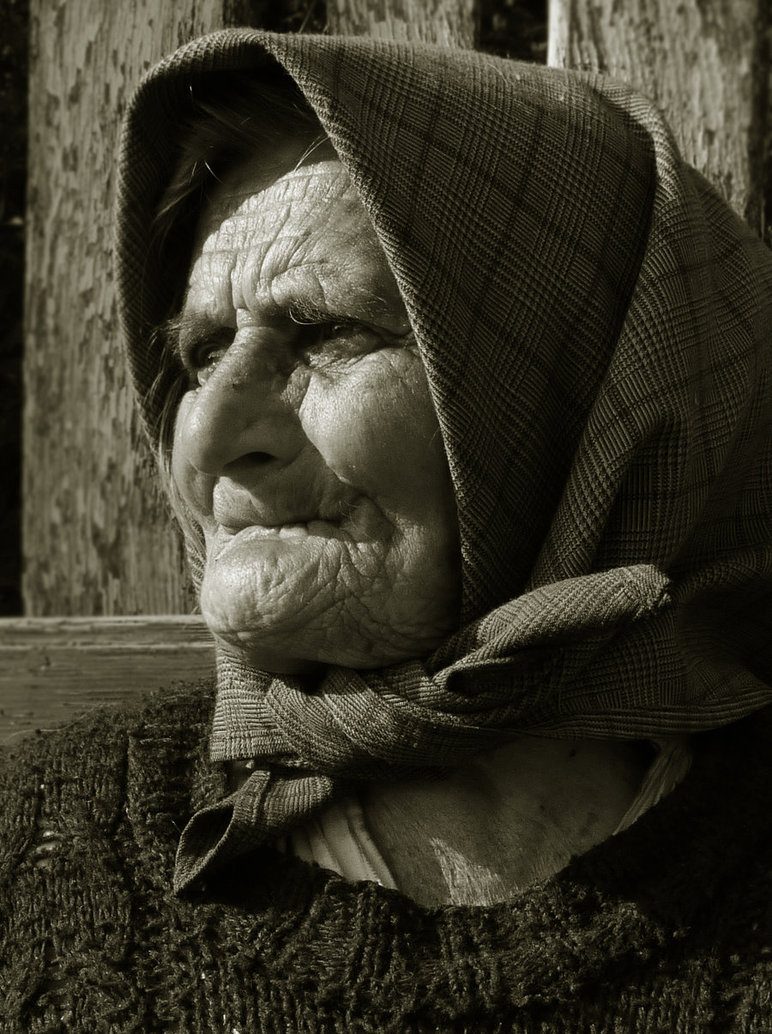
Mother Hulda sat quietly on her front porch, sewing something.  She appeared a bent and grizzled old woman, balding in a few small places where her white hair had given up.  Yet, despite her years, her eyes and ears remained sharp, as were her senses overall.  The way she could read the hearts and minds of people seemed astounding.

“I was starting to wonder if you would make it today.  The sun is already beginning to set.”  She spoke as if she had been expecting Greta.  Only an hour ago, Greta decided to come, but Greta said nothing. She did not question Mother Hulda’s sight.  Instead, Greta looked to the sun which was indeed beginning to redden in the west. She came up beside Mother Hulda and sat facing the southwest.  From there, with her back to the house and woods, she could see the long meadows and newly planted fields that stretched out to the horizon.  Some two miles off, she saw the billows of smoke sent up by all of the cooking fires in Boarshag, and beyond that the hills rolled gently into an indistinct gray line.  Greta thought it looked like the sea rolling away to a distant shore, or that was how she imagined it.  She had never been to sea.  Greta noted that she had been imagining a great deal of things lately about which she had no direct knowledge.  She decided it had to be something connected to the gift of sight.  She did not worry about it.

“Been crying about your boy?”  Mother Hulda interrupted her introspection.

“Only a little,” Greta answered.  “I’m seventeen today,” she added.  She had long since ceased to wonder how Mother Hulda knew such things.  She might have recognized the tear stains on Greta’s face, and what else would a young woman cry about?

Mother Hulda began to pick up her sewing.  “And how are our relations with the Romans these days?” she asked, fully expecting an answer.  Greta had to think about it for a minute and Mother Hulda always stayed patient.

“Lord Darius, the new centurion of this year, has escorted a young Roman lord to Ravenshold. I am not sure, but I suspect that the Romans have some offer in mind with which they hope to stall the rebellion.”

“All fine and well.”  Mother Hulda frowned.  “But what are you feeling?”

Greta paused again to search before answering.  “I feel the sparks in the air,” she said.  “They are hot and sharp everywhere.  There is much anger.  People are tired of giving tribute to Rome and deference even to the least Roman, soldier, merchant or otherwise.  There is the beginning of rage and a spirit of fighting back rising in the people which will be hard to quench without blood.”  Greta stopped for a moment though she clearly still considered things. Mother Hulda kept quiet.  “I feel the women, especially the older women, are fearful of the losses to come.  Too many still remember the last uprising in the years before my birth.”  Greta finished.

“Very good,” Mother Hulda said; but then Greta interrupted to continue with a thought of her own.

“I hope the council will trust the Roman offer and be satisfied.  Lord Darius, this new centurion, is one I feel I could trust.

“Ah!” Mother Hulda let out her breath, but she did not explain what she knew.  Instead, she side-stepped the issue.  Greta could tell.

“This is wise.” Mother Hulda said.  “See what the Romans have given us in turn.  The aqueduct that feeds Ravenshold, alone, is worth twice fifty years of the little tribute we pay.”  She stopped talking and packed up her sewing while Greta thought about Mother Hulda being taken to Rome along with many other men and women when the Emperor Trajan first conquered the land.  After twelve years, with the ascension of Hadrian, she, and many of the others, were allowed to return home; a decision that the Romans later regretted. True or not, though it came a good eight years later, the Romans blamed the uprising on that homecoming.

As for Mother Hulda, she learned a great deal in Rome about being a midwife and a healer, and about her other gifts and talents, and she came away from her twelve years of captivity with a far different perspective than most.  It was clearly different from the people who stayed here and only thought of the Romans as their oppressors and the Evil Empire. Though not in the least Romanized, Mother Hulda nevertheless had a great respect for Roman ways and knowledge. Evidently, she debated Tacitus more than once concerning his epic work Germania,which he had published barely seven years before her arrival. She also taught Greta both Greek and Latin, and taught her letters so Greta could read and write in both. Every now and then, Mother Hulda would drop into one of those languages so she and Greta could converse and keep up their skills.

The sun nearly set when Mother Hulda spoke again.  “You have had a new vision.”  She made it a statement rather than a question.

Greta nodded. “And it is getting very confusing. The present and the future are beginning to blend together in ways that suggest there is no truth in what I am seeing.”

“How so?” Mother Hulda prompted.

“I saw weapons,” Greta responded.  “Weapons that should not be for another thousand years, at least.  There is no way what I saw could be true.”

Mother Hulda paused.  “The weapons of Trajan,” she said, quietly, in her most introspective and thoughtful voice. She shook herself a little.  “Or perhaps the time has come when you will begin to know yourself, child,” she said, in a more hopeful voice, and she looked at Greta and nodded as if changing her perspective.  “You are becoming a true woman and no longer the child you were.  In any case, we must go in.  We will not be able to sit out tonight with the stars and see the face of the goddess rise-up in the sky.  The wolf has been prowling about the edge of the woods of late, so it is not safe to be out after dark.  Let us go in and cook those sausages you brought.”

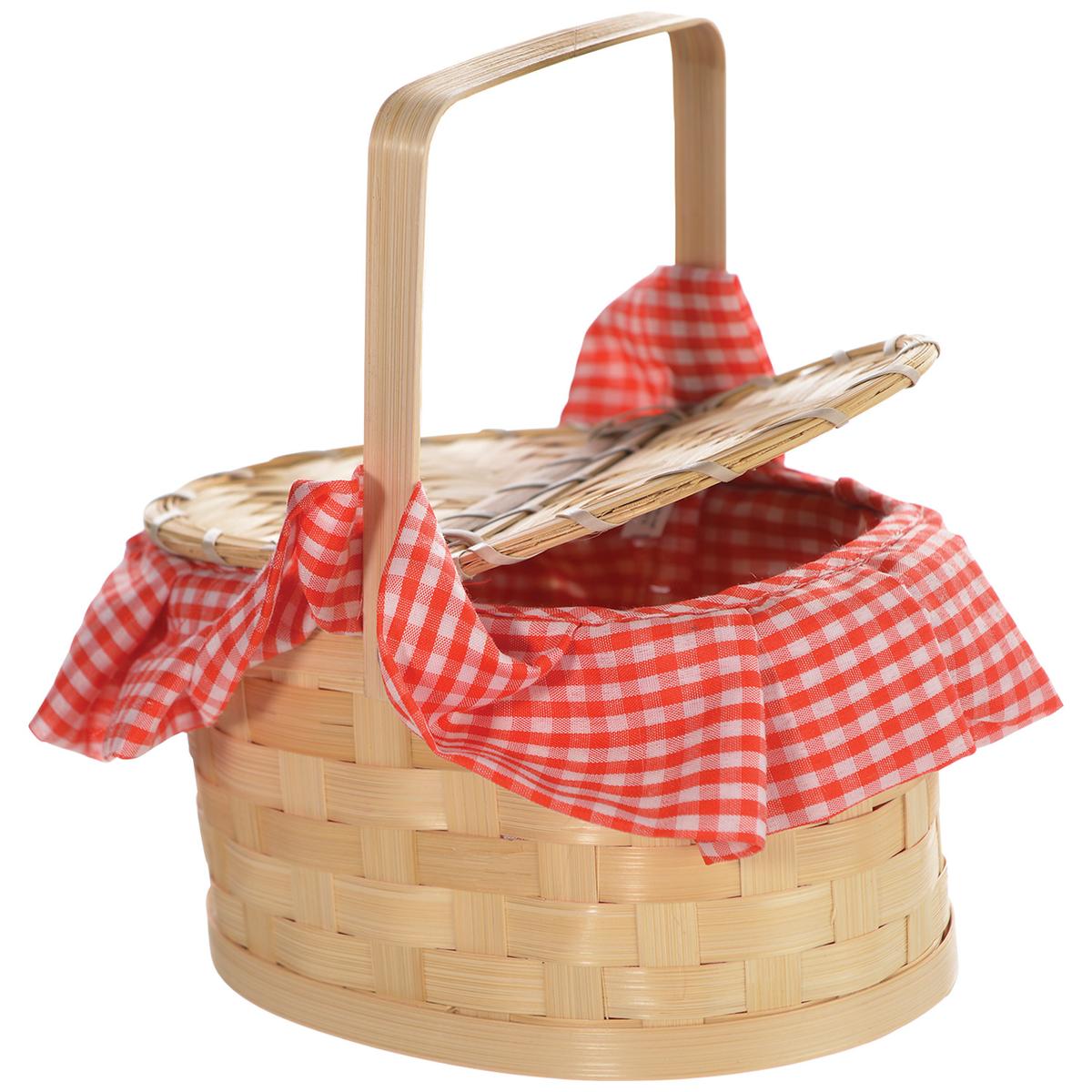
“How did you?” Greta stopped herself in mid-sentence. She knew better than to ask.  She looked at her basket still covered with its’ cloth.

“No magic.” Mother Hulda smiled.  “I smelled the meat when you came up, and now it is beginning to drive me crazy.  I have not tasted meat in a fortnight.”

Greta helped Mother Hulda to her feet and began to feel very guilty about not coming often enough and not bringing her things as often as she should.  She vowed that she would make a mental list of some of the things Mother Hulda might need and remember to bring them soon.

Once inside, the door secured, and the windows latched tight, Mother Hulda put the sausages in the kettle and turned it to the coals.  Then she added some wood and stoked up the fire.

Greta looked around.  “Mother!” She only scolded the old woman once and then she spent the better part of an hour cleaning and straightening out the one room house.  She knew it would never really be clean until she came during daylight hours and scrubbed the floors and ceiling and everything in between.

R5 Greta: Birthday Girl, part 2 of 3

By the time Greta got home, her attention turned back to her tasks.  She needed to sew the tear in her little brother’s pants.  This was not the first time she had to sew it, but Mama said the way he kept growing, he would need new pants soon enough. They needed to make the old ones last as long as possible.

Greta pricked her finger with the needle.  She made no sound, but tasted the blood when her finger jumped to her mouth.  She would be seventeen in only two more days, and she missed her father and her older brother, Bragi.  Father went to the council in Ravenshold and he said that Bragi, nearly twenty, could go as long as he kept his mouth shut.  The council got called to elect a new high chief, but Papa had been gone three weeks and the people could not imagine what might be taking so long—unless there was war talk.  That talk had been bandied about for some six years, ever since the people found out that Hadrian died and Rome had a new emperor in Antonius Pius.  No one, however, had spoken such words seriously. For one, there had been plenty of rebellious days since Trajan conquered the land some forty years earlier.  The last time, however, the people had been mauled so badly, some wondered if Ravenshold would ever recover.  And then, the last high chief would hear none of the rebellious talk, so people kept their opinions in check.  Now, with the ascension of a new high chief, Greta feared that might change.  Some people seemed convinced that only war talk could delay the council so much, and they were beginning to fear that the Romans might find out.

Greta did her bit. She learned that Lord Darius was escorting this Marcus to the capitol.  Unfortunately, they had left within an hour of her encounter, so there was not much more she could learn.  And she still did not know who this Marcus might be.

Greta mended Hansel’s pants and caught him as he came bounding into the house.  “Hansel.”  She stopped him.  “Try these on.”

“Not now, Greta,” he protested.  “The gang is waiting.”

“This will only take a minute,” she insisted and held the pants out to him.

Hansel rolled his eyes and huffed, but he dropped his one pair of pants to try on the others. “You will make a great mother someday,” he said, in his most annoying voice.  Greta imagined it was the worst insult he could think of.

“Thanks.” Greta took it as a compliment, and felt rather pleased with herself, as she sat down to check the stitching.

After another huff, Hansel spoke again in his most serious voice.  “Sis.”  Greta knew it was serious because he never called her that unless he wanted to lean heavily on the familial relationship.   “Could you maybe call me Hans and stop calling me Hansel?  It’s embarrassing.”

Greta smiled. “Mama will never stop calling you Hansel,” she said, and it was true.

“I know.” He understood.  “But it’s different for grown-ups.  You expect that kind of thing.”

“Why is it different?”  She teased a little.  “I’ll be seventeen day after tomorrow and that is practically all grown up.”

“And I’ll be fourteen in three weeks,” he said in a loud and exasperated voice.  “Please, Sis.  It makes a difference when it is someone who is close, I said, close to your own age.”

Greta stared at him for a moment. He had such puppy-dog pleading in his eyes it made her want to hug and squeeze him like she did when she was seven and he was four. Time seemed frozen in that moment. He waited ever so patiently for her response, and she loved him so dearly.

“All right,” she said to his relief.  She handed back the pants he had been wearing and took back her work.  “I will try to remember, Hans.”  She had to say it out loud because it sounded so strange to her ears.

“Thanks Greta. Pact?”

“Pact,” Greta said and she spit on her first two fingers while he spat on his.  They touched fingertips.

“And you will be a great Mama someday,” Hans said.  This time he meant it as a compliment.

Greta smiled. “You just be a great Hans, and everyone will be happy.”

“I will,” he spoke again in his flippant, teenage voice.  He let out a shout as he burst out of the door to join his friends.

But Greta could not be entirely happy.  She would turn seventeen and her Papa would not be there.

###

When that special morning came, Greta felt determined to make sure someone knew it was her birthday.  She had a certain someone in mind and because of that, she kissed Mama good-morning, had a hurried breakfast, kissed a sleepy headed Hansel, and left.  Hans, she corrected herself, as she slipped on her red cloak and went out the door.

“Greta.” She heard the voice but did not stop. “Greta, wait up.”  Greta stopped and frowned.  Vanesca and Yanda caught her; the ones she sometimes secretly, though not unkindly, thought of as Bubblehead and the Village Vegetable.

“Where are you going so early?” Vanesca asked.

“Market.” Greta gave a one word answer.  She turned and resumed her walk as the girls came up alongside.

“Going to see Drakka?”  Vanesca prodded.

Greta’s frown deepened.  “No,” she said.  “Mama wants some warm muffins and eggs that aren’t all picked over and cracked.”

Vanesca nodded to Yanda.  “She’s going to visit Drakka.”  The words were matter-of-fact.

“No,” Greta protested.  She pulled up the hood of her red cloak while she tried to think of something to prove her case.  “I am going to buy some sausages.”  It was the most outlandish thing she could think of.  Naturally, she had no money with her.  All she had was her basket, and as she thought of it, she was not sure her family had any money at all.  It did not matter.  Greta had made up her mind.  She would get some sausages.  Vanesca, however, took Greta’s outlandish statement as confirmation of her delusion.

“Oh, Drakka, definitely, and it must be important.”  Vanesca nudged Greta in the side.

Yanda’s words came from a half-step behind.  “Why would you visit the blacksmith’s son?” she asked.

Greta and Vanesca came to a complete stop.  Yanda bumped into them before she stopped herself.  The girls gave Yanda a look before Vanesca spoke.  “I’ll explain it to you when you are older,” she said, and Yanda screwed up her face.  They could almost see the water wheel working overtime, trying to pull the water all the way to the top.

“But I am older,” Yanda said.  “I’m eighteen and you and Greta are only sixteen.”

“I’m seventeen today.”  Greta smiled and turned to Vanesca.  “It’s my birthday.”  She said that to suggest that this was the real reason for her early trip to the market and for her sausage buying.  Vanesca did not quite buy it, but she said, “Happy birthday,” and they kissed like sisters.

“Ah!”  Yanda got excited.  “We have to get sweet sausage and some of those little cakes at the bakers.”

“Careful Yanda.” Greta spoke over her shoulder. “You will be eighteen and weigh a hundred stone.”

“What’s wrong with that?”  Yanda asked, and in some strange way it seemed a reasonable question.

R5 Greta: Birthday Girl, part 1 of 3

It was one of those blustery spring days when the wind grabs everything it can lift and scurries it half way across the village before it can be caught.  Greta purposefully braided her hair on both sides, tied both braids off with her heaviest ties, and pulled them in front just to keep her hair from whipping into her face and eyes with every turn of the wind.  That particular spring day was also wet and heavy from recent spring rains, so she pulled her dress up at times and watched where she put her foot to avoid the puddles and piles of mud.  It all made for very slow progress.

Even that early in the morning, there were others in the village square and the signs and sounds of life were all around.  Several horses paraded across the road on their way to hillside pastures, and several Romans grunted and groaned in some kind of physical exercise at the far end of the square, beyond the fountain.  Greta, though sixteen, felt sure the horses were more interesting than a group of sweaty soldiers.  She got upset when the wind caught her scarf and carried it right into the midst of the Romans.  She felt more unhappy with what she heard when she walked carefully from the fountain to retrieve her property.

“Hey, hey.” A man spoke and pointed and the two wrestlers stopped grunting to stand and watch her progress.  Greta felt glad that at least they had modest cloth coverings and did not wrestle in the naked Greek style.

“Here comes one now, Lord Darius.  She is not the most beautiful I have seen, but more than just pleasant to look at. Nice Tits.  Good butt.  I bet she squeals in bed.”

“Marcus!”  It felt hard to tell if Lord Darius was offended or just pretending.

“What?” Marcus defended himself.  “Hardly one of these barbarians knows a smattering of Greek.  I am sure none of them knows any Latin at all.”

“That may be,” Lord Darius responded.  “But that is still no excuse to be crude.  This is a young woman worthy of respect.  Note the downcast eyes, demure in maidenly virtue.  A virgin, I’ll bet.  See the slim waist of a youth not yet fully mature, and yet the hips are well rounded, awaiting only a child to carry, and the breasts are full and firm, awaiting the child’s cry to suckle him with the milk of life.”

“Waaa!”  One of the men in the crowd spoke up and most of the rest snickered.

Marcus had a grin on his face when he rebutted his friend.  “I say her downcast eyes are because she knows her place in the presence of her master and she knows where her pleasure lies should she please him. Her ample breasts are waiting her lover’s caress, and her slim waist and hips are surely designed to be a handle for a man’s hands.  Note the lips beneath the small, sharp nose, how full and thick and red they are. They await only her lover’s kiss to remove the pout so seductively formed there.  And the twists in her braids that adorn her golden hair, they say, tell how many lovers she has taken to her bed.”

“I’ve heard it tells how old she is,” Darius retorted.  “Nothing more.”

“Women lie about such things,” Marcus responded, still smiling.  “You can’t trust the braids.  Besides, I like my version better.”

Greta arrived and stopped.  Her eyes still looked down because she had them focused on her scarf which sat under Marcus’ feet, and she wondered how hard she would have to kick the man to get him to move.  Lord Darius put his hand to her chin and gently lifted her head to look into her light brown eyes.  Darius’ eyes were Roman dark, but his hair looked nearly light enough to pass for one of the people.

“What can we do for you, maiden?” Darius asked, in his best Dacian.

“Both of you poets lack grace,” Greta responded in perfect Latin.  “Though what you say, Lord Darius, may be nearer to the truth. My eyes were downcast, however, to avoid stepping in something unseemly, and otherwise I am simply waiting for your crude friend to get his fat foot off my scarf.”

Darien let go and he and the others present laughed, loud.  Marcus turned sunburn red, looked down and jumped back rather awkwardly.  He and Greta both began to reach for the scarf, but Greta pulled up sharply, not wanting to knock heads with the man.  Marcus brushed off the scarf and handed it over, still red, though the laughter had subsided.

“Pardon, m’lady.” Marcus spoke most humbly.  “It appears as if I have been clumsy in more ways than one this morning.”

“Thank you.” Greta spoke out of courtesy, but then she could not help herself.  “You big oaf.”

The men snickered again, but Greta turned toward Lord Darius.  “My Lord.”  She curtsied a bit.  It felt appropriate.  Lord Darius was the centurion and commander of the little troop that regularly camped at Boarshag, her home.  Besides that, he was reported to be a good man, never harsh with the people, and he kept his soldiers in line.  Greta appreciated that.

“My lady.” Lord Darius gave a slight bow and grinned, deeply.  Greta turned, then and lifted her dress above the mud, revealing her ankles, though she knew it would get a reaction from the men.  She kind of wanted a reaction, and she was not disappointed when one man whistled. It got cut off quickly by an, “Ow!” Greta did not know if Marcus or Darius hit the man, nor did she care.  She did glimpse Marcus slap Darius on the shoulder and heard what he said, his volume probably due to his embarrassment.

“Live and learn, eh Darius?”

“Yes, my lord.” Darius answered, and suddenly Greta wondered who this Marcus—this Lord Marcus might be.  He was certainly no ordinary soldier.  One recently arrived from Rome?  He seemed too young to be a high dignitary.

Boarshag, called Tibiscum by the Romans, was a small but important village on the Tibuscus River.  It rested on the main road half way between the Danube and the capital of Dacia at Ravenshold, a place the Romans called Ulpia Traiana.  On the maps the capital got called Sarmizegetusa, but no one locally, including the Romans, called it that, because the true Sarmizegetusa, the old capital of Free Dacia, was thirty miles away and razed to the ground by Trajan and his legions.  So, it became Ulpia Traiana to the Romans, but mostly it was Ravenshold.

The main road from the Danube wandered three days through the valley and into the lowland hills where it passed through rich fields of grain and luxurious pasturelands. It wandered, a very non-Roman road, even if it had been paved after the Roman style.  After that, the road began to climb, sometimes going around but often going over the low hills, three more days to Boarshag.  The fields around Boarshag were not nearly as rich and their pastures were rock-strewn, yet Greta had a good life, and in most years they had more than enough to spare; a reality not missed by the Roman tax collectors.

Above Boarshag, the road continued due east for two miles where it came face to face with the primeval forest.  The old Dacian road then turned abruptly south, as if the forest presented an impenetrable wall, and there followed roughly a seven-day arc along the main branch of the Tibiscus River south to east and north, to Ravenshold.  No one went into the old growth forest, much less through it. They said if you could walk due east, it would cut the trip to Ravenshold down to three days.  Some said two, but no one went into the woods to test it out.

The most recent story told about a century of Romans in the days of the last rebellion, when Hadrian was emperor.  The century, now often called a whole legion, went into the woods to make a swift, surprise attack on the capitol from an unexpected quarter, to catch the rebels unprepared and make a quick end to the rebellion.  The Romans never came out the other side, and the story said the Romans continued to wander aimlessly among the trees.  There were, of course, other stories about witches, goblins, ghosts and all sorts of devils who inhabited the darkness under the canopy.  Some were said to drink blood or feed on human flesh, or on the soul, or change luckless people into stone or stumps or mad animals of the darkness such as wolves or bears.  Though Greta would be seventeen in two days and no longer a child to be frightened by such stories, she figured even an ordinary forest full or ordinary wolves, bears, and perhaps even a few big cats would be dangerous enough for ordinary folks.  No one went into the forest.

R5 Festuscato: The Hun in the House, part 3 of 3

“Moran,” Festuscato spoke to the elf and the elf stood.  “Where is Macreedy?”  He and his Four Horsemen stepped aside to talk behind one of the makeshift barriers in the road.

“He has a thousand elves from the Long Meadow surrounding York.  Bogus the Dwarf has as many covering the roads.  King Wormwood has as many again from Dark-elf-home to cover the night.  And King Larch of the Fee has the Danish shore under observation.

“Trouble?” Constantine stepped up, followed by Hellgard and Ban.  Festuscato took a breath before he nodded and spoke.

“York has fallen to Wanius the Pict.  He has pulled up his four thousand men behind the walls of the town and the fort.  Much of the town and fort have been burned, but it is going to be hard to dig him out of there.  Emet’s family?”  Festuscato asked.  He had a good memory for names.  Moran shook his head.

“But what was this I heard about thousands surrounding the city?” Hellgard had good ears.

“They will hold Wanius in York and keep him from doing further damage to the countryside, this one time.  But when you all arrive, they will disappear.  You will have to face Wanius yourselves.”  Festuscato quieted them.  The Huns reached the ford.  The British across the way had backed up to hide in the trees.  The Jutes, British, Amoricans and Londoners on this side were hidden and quiet.  Then the Saxons all stood up as one and began shouting insults and screaming and waving their swords and spears as if daring the Huns to cross the water.  The Hun commander wisely got his men down and promptly surrendered as Julius rode up.  The Saxons looked disappointed.  Gregor stepped up and shared a thought.

“A quick surrender is better than spilling more blood, but many of my men don’t think so.”

“Wisdom from a one-eyed Saxon.  Who would have thought to hear it?” Hellgard said.

“Odin has but one eye.  That is good enough for me,” Gregor laughed.

“What is the Danish shore?”  Constantine heard something else.

“The Norwegian shore.  The settlement of yet another new people blown in by the winds of the North Sea. Let us be honest.  Britain north of York had been thinly populated since Roman times.  Too much struggle between Romans and Picts, and now the Scots have not helped. Instead, they have complicated things. They have overrun Guinnon, the fort on the western end of Hadrian’s wall, and they did nothing to stop Wanius from passing over.  You have a good family in Edinburgh on the eastern end, but they cannot hold things alone, and they have been unable to stop the Danes from grabbing chunks of the coast.  You need to drive the Ulsterites out and put someone you can trust in Guinnon to hold the wall.  And I think you need someone in York who can keep out the Picts, Danes and Saxons, no offense Gregor.”

“None taken,” Gregor said.  “I want to keep out the Saxons myself, and I am one of them.”  Even Moran the elf smiled at that one, though for what reason, no one knew.

“We know the Danes well, and find them no friends.  But they can be reasoned with.” Hellgard spoke up.  Festuscato heard, but did not go there.  Julius rode up and Cador and Gildas were with him.

“Gildas. Did you get the chance to kill the bastards?”  Festuscato asked, and immediately regretted it as Gildas quietly nodded.  “Everyone suffers first time,” he added more softly. “It proves you are human.”

“It wasn’t pretty,” Cador said.

Festuscato nodded. “We need horses,” he said.  “We will take some of the Hun’s horses and try to hold on, I guess.”

“Some escaped?” Jullius asked.

“About five hundred according to one eye here.”

“Just a guess,” Gregor said with a grin.

“Moran. Please ask Deerrunner if he will accompany Aidan and his Britons in escorting the prisoners to Londinium.” He paused to think.  “We are about sixty miles out which is a good two-day march, or so.”

“Constans,” Constantine called his son.  “Take your men and clean up these grounds.  Give the monks something to do, to perform the burial rites.”

“Julius. You better assign half of your men to help escort the prisoners.  Hopefully, that will be enough to discourage the Huns from attempting anything foolish.”  Festuscato said.

“Dibs and Tiberius can cover that duty.  We will take the better horsemen, about nine hundred.”

“Good.  With us that will make twice the reported Huns.”

“Double that,” Hellgard said, and he sent some men to gather up the horses of the Huns. “And some of my men will take care of their own.”  He sent others to tend the wounded and gather the dead.  Festuscato looked at Gregor.

“My men will gather their own and take them back across the river, but I wouldn’t miss it.” He whistled and took two men aside to instruct.

“I think you and Lord Constantine and King Ban and his men can take some of the horses from Dibs and Tiberius.  That should not change things much and you will have regular saddles to ride.” Festuscato nodded, but it became after lunch before they were ready to ride out.

They covered a good distance before they stopped for the night, but they saw no sign that the Huns slowed their pace.  Festuscato felt a bit afraid that Megla, on finding the gates of Londinium closed to him, might just ride straight on to the next port downriver.  He was sure the Hun had every intention of commandeering whatever ships might be in the dock and escape, and if he escaped unscathed, he might return with ten times the number of men.

The following afternoon, they found the wardens at one of the city gates had opened the gate for the Hun.  Fortunately, Megla did not get far.  The Amoricans that Constans left in the city and the Londoners who knew better had Megla and his men trapped in some buildings down by the river.

“Megla.” Festuscato called out.  He and Constantine stood just beyond bowshot, the Four Horsemen looking over their shoulders.  “Megla.  Come out and talk.  I have a message for Attila.”  That got him.

“What do you know about Attila.”

“He is getting too much gray in his hair and beard, and making alliances with the Vandals isn’t going to save him.  Come out and talk.”

“You are the dragon?”

“All of Britannia is becoming the dragon.  Come out and talk if you are not afraid.”

“That should rattle him,” Constantine said.

Six men came out of the main building.  They got about half way across the plaza before they pulled out bows and arrows. The bow remaied the basic Hun weapon that they could pull swiftly, even on horseback.  But the Four Horsemen reacted and responded with bows of their own and with enough speed so only one Hun got off an arrow, and it happened only because the Horsemen were busy killing the others.  It was a good shot to Festuscato’s chest, and it would have certainly penetrated any normal armor, but the armor of the Kairos was made by Hephaestos and the dark elves deep under Mount Etna.  The arrow bounced off.

“Megla.  You know it takes more than one stupid arrow to penetrate a dragon’s hide.  Come out and talk, and I will let you live.”

“What good is the promise of a great worm?”

“What choice have you got?  We already stopped your men who were sneaking out to grab a boat.  You are trapped inside, with your horses outside, and soon it will be dark.  The goblins and trolls come out after dark and they tell me Hun is a tasty snack.”

A man appeared at the doorway.  He made a show of putting down his bow and sword as he stepped out on to the plaza. Five more followed him and put down their weapons, while their eyes scanned the surrounding buildings and the roofs around them,

“I am Megla,” an older man said and eyed Festuscato.

Festuscato smiled. “Megla of the Huns, allow me to present Constantine, High Chief and War Chief of Britannia.”

“Attila told me about you, Roman.”

“Then you should know I am willing to be fair.  Tell your men to throw down their weapons and come out.  You will be kept here, in the open until the rest of your surviving men arrive.  Then you will be bound and sent out on the morning tide and returned to Belgium. Your horses and weapons will stay here, but you will have your lives.”

“If we refuse?”

“Thunderfist. Portents.”  An ogre and a hobgoblin appeared.  The hobgoblin bowed.  “Lord.”  The ogre wondered where he was.  “I can let my friends have you after dark,” Festuscato said, knowing that Megla likely saw a goblin and a troll, since he would have no way of knowing the difference. “There are plenty more where they came from.  Go home.” Festusato waved his hand and the two disappeared just as Thunderfist got ready to poke a Hun to see if he was real. “So, what will it be, a small indignity or a hundred years digesting in an ogre’s belly?”

Megla was no fool. He surrendered, and when the rest of his surviving troops showed up a day and a half later, they were all bound and shipped out on the morning tide, at no small cost.  Megla only said one more thing to Festuscato.  It was a question.

“You have a message for Attila?”

Festuscato nodded.  “What goes between him and the Empire is his business, but Britannia is off the menu.  I have been twice kind to the Huns.  Don’t count on a third time.”

************************

Next Monday: R5 Festuscato: The British North.  York is filled with wild Picts.  The town is burned.  The fort is taken.  But the Picts are soon surrounded with an unexpected army of British, Cornish, Welsh, Jutes, and Saxons, all miraculously working together under the dragon, and the first Pendragon…

Happy Reading

.

*

R5 Festuscato: The Hun in the House, part 2 of 3

The Huns arrived about mid-morning the next day, and were wary, but having seen no sign of the enemy other than a couple of scouts that they readily killed, they imagined their ruse worked.  They headed north before they turned west again.  They wanted to give the impression they were headed for Wales, but they cut again to the south when they were well hidden by the trees.  They knew right where the ford was as Festuscato surmised.  They either explored out the river or coerced the locals into revealing the location. In either case, there were men waiting, and Julius moving up from behind.

When the Huns arrived, Hywel perhaps jumped a bit soon.  A thousand arrows blackened the sky, and Huns fell before they backed out of range.  The Hun commander sent men twice to charge the open area that lead to the ford, but the trees around were thick, and they did not get very far.  On the second charge, he sent a hundred men west to try and get on the Celtic flank, but they were cut down quickly.  Pinewood and Deerrunner figured the Huns would try a run around the end, and were prepared, hidden by glamours in the tall grass. Surely the Huns were frustrated, but that condition did not last long.  Julius and his men attacked from behind, and the Huns scattered.  They only had one way left to escape, and that was east, back to where Megla studied the ford.


Megla came to the ford of the ox and the scouts out front found the way blocked.  Megla knew the big and boisterous army of the Celts would still be two days out at their current rate of travel.  He needed to know how many men he faced.  He thought to stay upriver, and follow the water to Londinium without crossing over.  There were swampy areas and other rivers to cross, but none so deep as the Thames.  Unfortunately, that way appeared blocked by the Saxons.  In fact, there were more Saxons in that place than he had seen for quite a number of years.  So he and his men eyed the defenses on the other side of the river and decided in the end the only way across would be a frontal assault.  He would trust his men to get him through, and he imagined once he got to Londinium he might be safe.  There, he could call up the Hun army.  Britain was going to take more effort than he thought, but ten thousand men ought to do it, or twenty thousand if necessary.

Pinewood brought the bad news to Festuscato when he relaxed with Constantine and Ban over a cup of Ale.  Pinewood came in dressed like a hunter, with a green cloak and tall, mud colored leather-looking boots.  He showed the dragon tunic beneath the cloak, so Ban thought nothing of it. Constantine looked twice, but only because the man was not Amorican and he did not recognize him as one of the Romans.

“Megla is preparing to assault Constans at Oxford, probably in the morning.  He is a brave young man, but his thousand will not be able to repel the Huns or prevent their crossing, even with my support.  I recommend you order him to withdraw to the monastery grounds to defend the monks and let Megla pass.  There are enough soldiers left in Londugnum, so with the sailors and ornery humans they should be able to prevent Megla from entering the city.

“We need to get to the horses.”  Festuscato put down his cup.  “Pinewood, tell him to do that very thing.”  He looked at Constantine who nodded.

“Tell him his father orders it.”

“Horses?” Ban asked as Pinewood bowed and stepped from the tent.

“He is a teenager, or near enough,” Festuscato said.

“Since when does a young man do what his father tells him?” Constantine asked, and after a thought, Ban nodded

It became a race through the late afternoon and the night, with the foot soldiers left in the hands of Baldwin of Exeter, Anwyn the Welshman, and Kenan, a British Lord from the Midlands near Caerleon.  They were to come along as fast as they could while the horsemen rode ahead. Constantine had gathered an additional two hundred men on horseback in his travels along the British lowlands between the Thames and the coast, but half of them were on plow horses and mules, so not much good.  They were mostly farmers, with the British Lords in that area, and their families, killed by Megla.  For the Roman influenced Celts, it was not so easy to decide which among the elders should take the leadership position.  Roman-British Celtic leaders were more or less elected, though sons often followed in their father’s footsteps.  The Saxons remained more tribal in nature.  It seemed much easier for the Saxons to choose a new chief, though he sometimes had to fight for the position.  Most of the Saxons who had settled on the southern coastland survived Megla’s cruelty in much better condition.  But then, they were not going to come out and fight for the British lords.

Festuscato knew they were not going to arrive at dawn.  The road alone became enough to make it slow going in certain places. But they would not be too late. He did not worry until Pinewood returned in the dark with another message.  It got his full attention because fairies did not go around much after sundown.

“A thousand Jutes under Hellgard are crossing the river in the dark near the swamps where the river turns, below Megla’s position.  They will be able to come up behind Constans and squeeze him between the Hun and the German.”

Fetuscato called up Constantine and explained.  Constantine looked about to shout, but Festuscato spoke first.  “We don’t know that Hellgard may be friendly at this point.  Megla did not spare the Jutes, Angles and Saxons from his sword.  Like the British who joined us, the German’s may be looking for a little revenge.  Pinewood, set up a delegation to get Hellgard’s attention and ask his intentions. Be prepared to fly and bring Costans back to the monastery grounds, but if he plans to support the British at Oxford, tell Costans and help coordinate the defense.”

“You ask a lot of my people,” Pinewood said.

“No.  I ask too much.  I am sorry.  I have no business asking you to get involved in a transient human event.  But you have the option to say no, honestly, and with no ill effect.”

Pinewood nodded slowly.  “I know this is true, and that is why we will help as much as we can.”

“Fair enough, and thank you.”

Pinewood left, and Constantine had a comment.  “You seem to have a remarkable relationship with the creatures, er, people of legend. How is this so?”

“I was made their god almost five thousand years ago, but that is a very long story,” Festuscato said, and spurred his horse up to the point.

The whole troop walked their horses when the sun began to lighten the horizon. Festuscato, Constantine and King Ban mounted without a word.  Now they had to ride, and the men joined them.  They rode flat out, not caring in that moment if their horses collapsed at the end of the trip.  They had three hundred men to add to the defense, or at least two hundred with the nags and mules trailing behind.

The sun looked fully up when they arrived, and most of the fighting was over.  There were over a thousand Huns taken prisoner, disarmed and on foot.  Hellgard looked covered in blood, but none of it seemed to be his own.  Constans and Vortigen were all but dancing.  Vortigen lost his helmet and Constans had a shallow cut in his arm, but they did not even look tired.

“Youth,” Constantine said as he got down, and Ban nodded in agreement.

Festuscato looked across the ford and saw Aidan the Lord from the British highlands, and Eudof from north Wales, his lieutenant.  They waved.  They hustled down the thousand and some odd foot soldiers, following right behind Megla the whole way, and they fought to prevent Megla from escaping back to the north. He also saw Deerrunner, whose people got there ahead of Julius, and he knew they filled the gap at a crucial point and made Megla’s doom certain.  He returned the wave, but wondered where the Druid Cadwalder was.

Festuscato stepped up to Hellgard when Pinewood arrived dressed as the hunter. Festuscato’s Four Horsemen accompanied him and Constantine.  Festuscato put out his hand and shook Hellgard’s hand before he spoke.

“Lord Agitus,” Hellgard said.  “I have heard about you.”

“Thank you,” Festuscato said, but then he paused to hear what Constans started saying.

“Lord Pinewood told me Hellgard, King of the Jutes was coming to reinforce our position, so we stayed where we were and passed that information down the line.  In the morning, Megla found twice the numbers he expected, and it became a real battle to hold the ford.  The Huns are smart.  They sent some men to test our line first.  When we surprised them, they ran and Megla tried to return to the north. His way got blocked by the British Highlanders, and I think he charged us out of anger and frustration.  Some broke through, and it looked like they might overwhelm our position.  Many of the Huns got down from their horses and they used our own walls against us, but just then, boatloads of Saxons showed up in the river and came ashore behind the Huns.  That was when the Huns began to surrender.”

“How many escaped?” Festuscato asked and pointed down the road toward Londinium.

“I don’t know,” Constans said, like a man who did not realize that might be important.

“I don’t know,” Vortigen echoed.

“My eyes were on the battle,” Hellgard admitted.

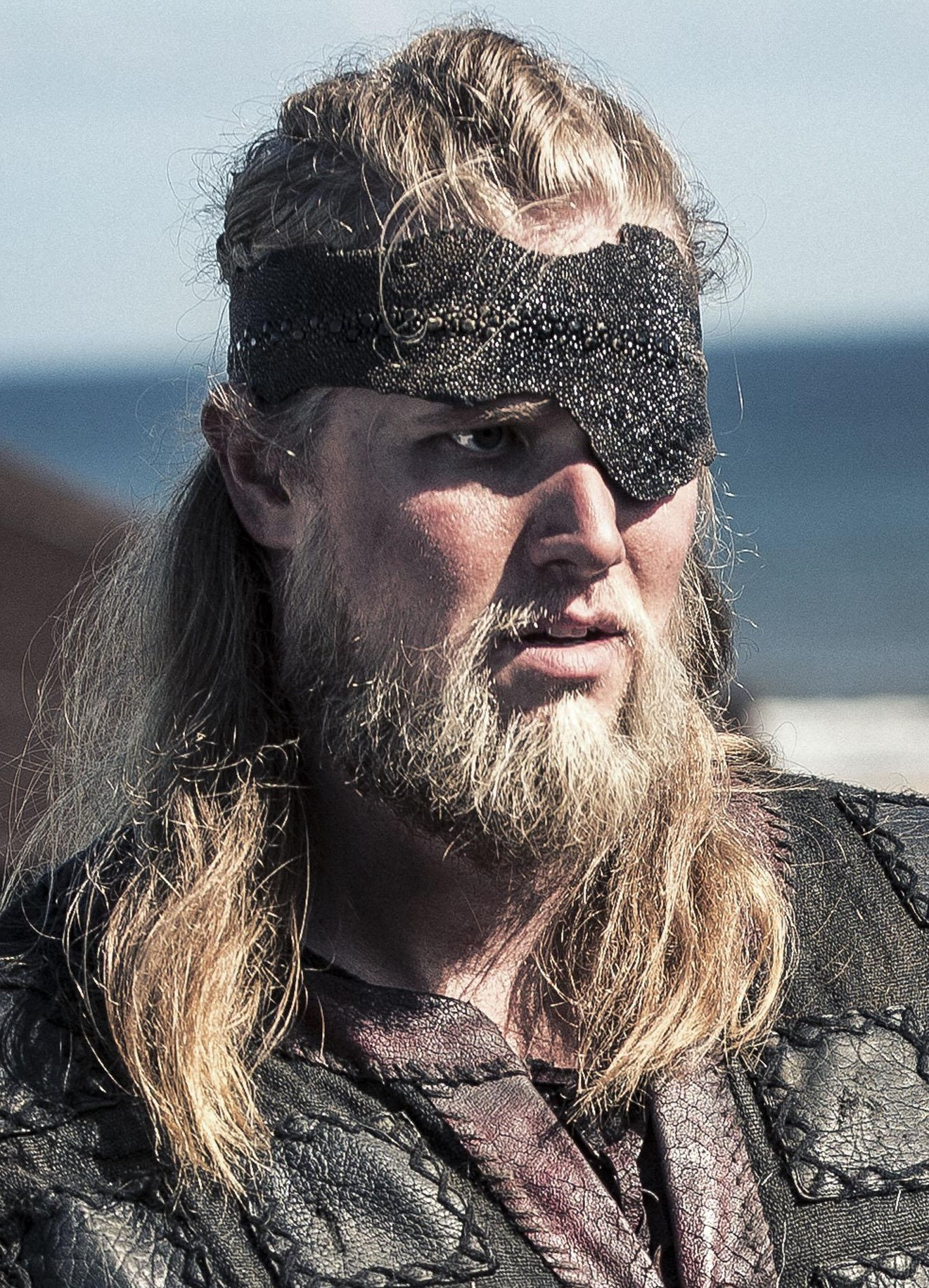
“About five hundred,” a big Saxon with an eyepatch said and he came up to join the group. “Gregor,” he gave his name with a big smile, but that was all he said before he got interrupted by one of Deerrunner’s elves who came racing across the water and up to Festuscato.

“Lord, the Huns are coming, Lord Julius driving them on.”

Festuscato looked to Constantine, and the man started to yell.  “Constans, get those prisoners on the road, away from the ford, face down and guarded.  Get the rest of your men behind the barriers.  Ban, take the monastery side.  Hellgard, the riverside.”

“You heard him,” King Ban yelled at his men and waved them toward the monks.

Hellgard paused only to look at Festuscato smile before he began to yell at his men to take cover.  Constantine looked at the Saxon, but Gregor spoke first.

“We hide real good,” he said, and he grinned an elf-worthy grin before he also began to yell.

R5 Festuscato: The Hun in the House, part 1 of 3

April fifteenth arrived, and Festuscato dared not wait any longer.  “Tax day,” he called it.  “Time to pay the piper.”

He had five hundred Amoricans on horseback and roughly five hundred each in the Welsh, British and Cornish contingents.  Two thousand men still did not match the Huns in numbers, and they came nowhere near matching the Huns in skills and experience.  Any direct confrontation would get Festuscato’s men slaughtered. He had to be careful.

When Megla first arrived in the fall of 438, he secured Londinium and the southern Thames. This not only gave him a quick escape route back to the continent, but it gave him a first-rate port to be supplied from the continent, and to bring in fresh troops as needed.  He still had a spare five hundred men there in reserve, and he spent that first winter there.  Then, the spring of 439 he spent burning the southern British coast from Southampton, all the way to Canterbury and east to where the Angles were building settlements. Megla did not seem to care if the people were British or German.  He became an equal opportunity oppressor.

In June, having brought the costal lands to their knees, he began to test inland.  A thousand men burned their way to the hills of central Wales.  A thousand men tore up Leogria and the Midlands.  A thousand men drove to the east coast and threatened York.  They returned in the fall to winter in the lands of the Raven, but they found some resistance along the way.  Julius did a brilliant job of disrupting supplies and communications.  Megla took a risk dividing his forces the way he did, and the dragon made him pay. Most of the summer, Megla had no idea what happened outside of his own little group.  The dragon kept turning up everywhere, draped over the dead bodies of his men, and when Gurt got returned to him, plummeting out of the sky, it about became the last straw.

On the first of April, Festuscato and Constantine risked the last of the storms of winter and sent the bulk of the Amorican troops, some fifteen hundred foot soldiers under Constans, by ship to crawl carefully along the coast to Londinium. Their objective was to drive out Megla’s men and secure the city and the port in time for Easter.    Festuscato’s personal communication network told him they were successful, and by the end of April, they began to move up, a thousand Amoricans and Londoners, to hold and fortify the southern end of the ford of the ox. A monastery complex, that Megla spared for some reason, sat there.  Those buildings became the headquarters, and the woods around the monastery provided the lumber for the walls, spikes and traps against the oncoming horses of the Huns.

On May first, Fetuscato, Constantine and King Ban, with a mere hundred men on horse, lead three thousand Welsh and Cornish foot soldiers along the inland road that followed the flow of the Thames.  They made a spectacle of themselves, and the British people on those lands and on the coast cheered, and many took up arms and joined them with dreams of revenge. The Huns, for their part had good scouts and spies, and they were first rate soldiers regardless of what history taught.  Megla quickly caught wind of the movement and scoffed at an army that would so broadcast its every move.  He knew there were a thousand British foot soldiers north of his position, but he counted them as useless.  He would go south and send a thousand secretly, as he supposed, to where the river could be crossed, behind the marching behemoth.  With his main force of two thousand, he planned to cross at the oxen ford and meet the enemy head on, while the other thousand struck from the enemy’s rear.  It was a good plan, as far as it went.

Festuscato had certain knowledge of the enemy movements, but he only shared what was vital with Julius.  Julius had the cavalry north of the Thames.  They left a few days after the foot soldiers, and they moved through the fields and woods with as much stealth as they could muster.  Julius had his original three hundred working well together by then, and they had some experience scouting out the enemy.  He did not get fooled when a thousand Huns headed in his direction, looking for an easy ford across the river.

Julius and Marcellus had assessed the horsemen and divided them in half.  He gave the men who were still relatively new to this horseback business to Hywel, the Welshman and made Weldig of Lyoness his lieutenant. He assigned Tiberius and Dibs to assist them.  They held their horses in reserve and stayed by the river, hidden in the trees, prepared to keep the Huns from crossing.  Meanwhile, Julius and Marcellus with the thousand best horsemen waited in the path of the oncoming Huns.  Cador of Cornwall went with him, and Emet of York became his lieutenant.  They stood at the edge of the trees just beyond a wide-open field.  Everyone trusted Julius, but he only hoped he rightly guessed the path the Huns would take.

After not too long, Lord Pinewood flew up to land in the mane of Julius’ horse.  “What news?”  Julius spoke first with a glance at Cador who kept his seat and stared.

“The Huns will be coming through the trees on the far side any time now.”  Pinewood saluted the Lord of Cornwall.  “Good to meet you.  I like the Lion.  Good choice.”

“Th-thank you,” Cador stammered.  “So, Festuscato?”  He looked at Julius.

“Strictly human,” Julius responded.

“Human, poor fellow,” Pinewood shook his head.

“But.” Julius continued.  “He has made it clear that we won’t always have Lord Pinewood and his people around to help us out and we have to learn to do for ourselves.  He said we need to fight our own battles.”

“Pinewood’s people?”

“Of course,” Pinewood said.  “What else would we be?  We aren’t animals.”

“Plants?” Julius teased.

“Your wife, maybe,” Pinewood responded as two riders came roaring up.

“Lord Julius.” The rider from Wales spoke.  The rider from Cornwall acknowledged his Lord. “The Huns are about a quarter mile in the trees across the field.  They should be coming out any time.”

“Thank you,” Julius said.  “Good work. Report to your group.”

“Sir.”  Both riders spoke and took off like two men in a race.  Emet of York came up alongside, and Marcellus trailed.  Pinewood excused himself and took off too fast for the eye to follow.

“News?” Emet asked.

“Yes,” Cador said. “We need to fight our own battles,” and Emet looked at him as if to wonder why it might be otherwise.

When the Huns began to straggle out from between the trees, Julius raised his spear over his head and shook it.  Word went quietly up and down the line to get ready.  Julius and Marcellus made sure there were Plenty of the three hundred spaced between the thousand to help keep the new men in line and focused on target, to await orders.  All it would take was a couple of overanxious fools to ruin the whole thing.  They waited some more, and Emet got antsy when the lead Huns got close enough to see their faces.

“We want them committed to the open field before we attack,” Marcellus risked a whisper to the man, even as Julius raised his spear again.  After another moment, he tucked it beneath his arm and shouted for the charge.  His immediate group were the first out, but the wave followed out from the center and the Huns were completely unprepared.  It did not take the Huns long, though, to get their own spears and some bows from horseback, and the battle was on.

A horn sounded out from the trees, and the Huns that were scattered across the field made every effort to get back to the woods.  Julius let them go.  His men were instructed not to follow the Huns into the woods.  Horses were only as good in the woods as the men riding them, and Julius had no illusions about the ridership of his men.  Several pairs of men split off to attempt to track the Huns, but even they were instructed to keep their distance.  “You are no good to us if you get yourselves killed,” Julius reminded them.

They stayed in the field long enough to gather horses and gather their dead.  They tended the wounded enough to staunch the bleeding, but moved as quick as they could to the south.  They had a small village up from the river where the wounded could receive better care and the dead could be prepared for burial.  The village had a Christian Priest and a chapel, and the priest assured them all would be taken care of.  The first pair of riders found them there while the men rested, and the second pair were not far behind.

“It was like you figured,” the Amorican said.  “They circled around to the north and are headed back to the river and the ford.”

“And they have scouts out,” the Briton added.  “It isn’t safe for a couple of yahoos to be out there.”

“Yahoos?” Cador asked.

“A strange sound that carries in the wilderness.  A signal of sorts,” Julius explained.

Cador nodded. “I was thinking we need to get something like that horn where we can signal and we can all understand and respond.”

“Bagpipes,” Emet said.  “British blue. plaid”

“Golden,” Cador argued.  “Like the Cornish Lion.”

Julius ignored them and sent a pair to tell Hywel and Weldig by the river to get ready and stay well hidden.

R5 Festuscato: Nudging the Future, part 2 of 3

The Huns charged the village, only to be stymied by the barriers.  Julius and his three hundred charged the Huns from the rear and killed about a third from behind.  The archers from the village, mostly hunters supplemented by a hundred elves with uncanny accuracy, killed more than a third of the Huns on the first volley.  Half of the survivors quickly scattered across the open fields to the left and into the forest vacated by Julius’ men on the right.  The other half of the survivors got caught up in the melee where the odds were three or four to one against them, so they did not survive for very long.  Julius lost eleven men, Welsh, Cornish, British, Amorican, and a couple of his Romans. Twenty more were wounded.  By the time Bogus the dwarf finished the ones in the woods and Pinewood and his fairies tracked and finished the ones in the fields, the Huns lost the full three hundred.  No Huns survived.

“Not bad,” Marcellus said as he rode up beside Julius and dismounted with him at the village edge.  “A couple more years under Lord Agitus and you may turn into a pretty good officer.”

Julius did not listen.  He found Drucilla, a bow in her hand, looking mighty humble.  “You!”  Julius yelled, and then he appeared to shrug, caught her up in his arms and got lost in her kiss.

Certain gnomes found Gurt and applied a tattoo to the dead man’s chest.  They dressed him in a white sheet with a dragon emblazoned on the front.  When the sun went down again, they got thirty pixies to sprinkle Gurt and some of his men with enough dirt to make the magic effective.  The pixies carried the bodies several miles to the village of the Raven and dropped them like they were dropping bombs over Dresden.  Gurt landed on Megla’s doorstep.  Megla and his chiefs were frightened by the dragon on the sheet and looked all around the sky for signs of a real dragon.  They shouted their fears, until Megla got them quiet.

“So, wise man.” Megla spoke to a druid who sat at the table.  The druid looked like a man in his forties with a beard to his chest that began to hint of gray.  He sat beside the Lord of the Raven who had been completely cowed by the Huns.  “I say this dragon is nothing but a woman,” Megla growled.  “I say in the spring maybe we will fight like the dragon and swallow this female dragon whole.”

The Druid looked up into Megla’s eyes and Megla looked away.  “I once saw two dragons fighting in the daytime sky.  They looked like old lovers, but the male started eating the babies and enraged the female who killed the male.  The female ate the male.  You can take that as you will.  I am only saying what I saw.”

Megla drew up his courage in front of his chiefs.  “Bah. We will eat this dragon come the spring.”  He tore the dragon sheet off of Gurt’s body only to find the dragon tattooed on the body.

Come April first, and Festuscato said two words.  “Two years.”

“But 440 looks like a good year,” Mirowen said, and reveled in the sunlight.  She twirled twice and her smile lit up the morning. Cador came riding in, followed by some twenty men all dressed the same, but to be sure, all of the eyes of the men at the gate and Cador’s men as well were fastened on Mirowen.  She could do that to men.

“I must say,” Constantine came up sporting his new dragon tunic.  “My wife loves her home.  My son has never been happier, says the whole world has opened up before him. But me, I am afraid to think of all the responsibility you have place on my shoulders.  I hope I don’t disappoint.”  Mirowen took a moment to straighten the man’s tunic, properly. “Thank you for the clothes, by the way. Especially for my wife.  You know women and their dresses.  She and Sibelius seem to be hitting it off very well, which saves me some headache at any rate.”

“There,” Mirowen stepped back and smiled.  “You look ready to receive the very court of Avalon itself.”

“Avalon.  I have heard it mentioned.  It is an island you say, off the coast?  By Iona, perhaps, or the Isle of Man?” The man had been studying his map.

“A bit further than that,” Mirowen said, with a look at Festuscato, but a look that never lost her sunshine smile.

Festuscato waved to Cador, even if he was not the person Cador kept looking at.  “You are full of words today,” he told Constantine.

“I am nervous,” Constantine admitted, and Mirowen took the man’s arm and lead him to the stairs to get down off the wall by the Great Hall.  Festuscato followed and imagined a woman that young and beautiful would likely make the old man even more nervous.

King Ban of Benwick stood in the Great hall with some new friends.  Emet came all the way from York.  King Ban’s wife and daughter were also present with some other British women.  Mirowen went straight to them to greet them and make them feel welcomed.

“We have five hundred horsemen with us, and a thousand men afoot in the woods just north of the land of the Raven.  Your spies tell you that Megla and his Huns are arguing about heading south, to Londinium. This would be good, but we are going to be prepared in any case. As a precaution, we brought our wives and children to this place for sanctuary, if you don’t mind.”  Festuscato shrugged and pointed at Constantine.

“Of course,” Constantine shook Ban’s hand.  “You and your families are welcome here anytime.  My wife and the girls will love the company, and we can always squeeze in one more.”

Ban stared and then let out the slightest grin.  “You have been taking lessons from the Roman.,” he said.

“Charity and kindness are never a bad idea,” Festuscato said, before he got interrupted by a big man at the back of the British pack.

“Your men wear the dragon.  You have no idea what a real dragon is like.  We have been plagued by one these past ten years and I was barely able to get enough men to make coming south worthwhile.”

“Prince Aidan of the Highlands,” Ban quickly introduced the man.  Of course, he meant the British Highlands.

“Forgive me, but she is feeding her babies, what there are left of them.  Find out where she is living and bring her some sheep, maybe some cows.  Then she won’t have to hunt and attack your homes.  They sleep for a time between feeding, like hibernating.  The sleep between each feeding will gradually increase as the babies grow older.  It takes patience, I know.”  Aidan had his jaw dropped.  “Oh yes. I know something about dragons, and your mama dragon in particular.  But here, lets meet the others.”

Hywel and Anwyn were there leading the Welsh, and very happy to be back in Cadbury.  They seemed very gregarious and shook hands with the British, the Cornish, the Amorican’s and the Romans, but decided to hold back from the Four Horsemen who stood, guarding the door.  That made Death grin under his helmet.