M3 Gerraint: Captives, part 3 of 3

Greta looked up and saw a big man carrying his little six-year-old daughter to the roundhouse.  The daughter cried because of the pain.  Her lungs sounded full of fluid.  The man cried as well.  Aw, hell, Greta thought Gerraint’s words.

Greta found her way to the fish house well after dark.  The others were already snoring, having spent a hard afternoon felling and trimming trees and without any sleep at all the night before.  It was not hard to find Uwaine in the dark.  She recognized his breathing.  She curled up beside him, not touching, but close enough to touch, and shortly went to sleep.  She felt tired.

The next morning, she threw the boys out and took over the fish house for a work space.  They would have to sleep outdoors.  They said they did not mind sleeping around the fire, but she knew the days were closing in.  She satisfied herself by thinking that they would be so tired after a hard day, they would probably sleep anywhere, and she collected Lucan and went to work.

Three days later, she threw her hands up in frustration.  No one had died or even gotten worse in that time, but no one had gotten better, either.  There were two new cases, besides, and more houses to burn.  For her part, Greta had no incubator, her Petri dishes were wooden bowls, her microscope was a roman magnifying glass she had in her bag, and she could not produce anything approximating penicillin to save her life.

“Manannan!”  Greta ran to the shore and cried out.  “Manannan!”  The god did not answer.  She called again and again, and Lucan stood by, shocked at first, but patient thereafter.  Greta opened her mind and her ears before she shouted herself hoarse, and then she had a thought; or perhaps Manannan gave her the thought.

“Pincher!”  Greta called, not knowing if the dwarf might even be alive yet.  “And Pincher’s mother,” she added.  “Runabout!”  The name came to her.  They were hers, after all, and she could command their presence, though whether they could help or not felt uncertain.

A mother dwarf and her young son appeared, sure enough.  The dwarf shrieked.  Lucan screamed.  Son of the Cow dropped his sword and ran for his life.  The dwarf child, Pincher, looked at Greta and smiled.

“It’s all right.  Don’t be afraid,” Greta said hastily to whoever listened.  “I just need your help for a little bit.”

“What.  Me?”  Runabout asked

“Me?”  Pincher echoed.

“Yes, both,” Greta said, and she coaxed them toward the fish house figuring Lucan would recover soon enough.  Greta explained what she was trying to do.  “If I can distill it to liquid form where it can be taken internally, it should kill the invading bacteria and the people could be healed.”

“Yes, I see,” Runabout said.  “But what makes you think that I can do anything you can’t do?”  Greta frowned before she answered, and then she had to choose her words carefully.

“Because I have a feeling about young Pincher, that he may be a healer one day,” she said.

“Why?”  Runabout asked.  “We never get sick.”  She spoke of the little spirits of the world, the dwarfs, elves, light and dark, the fee, and generally the sprites of the four elements, and for the most part, what she said was true.

“But he is not entirely a spiritual creature, is he?”  Greta countered.  Runabout said nothing.  She looked around, embarrassed to speak the truth.  “He is half human, is he not?”  Greta pressed.
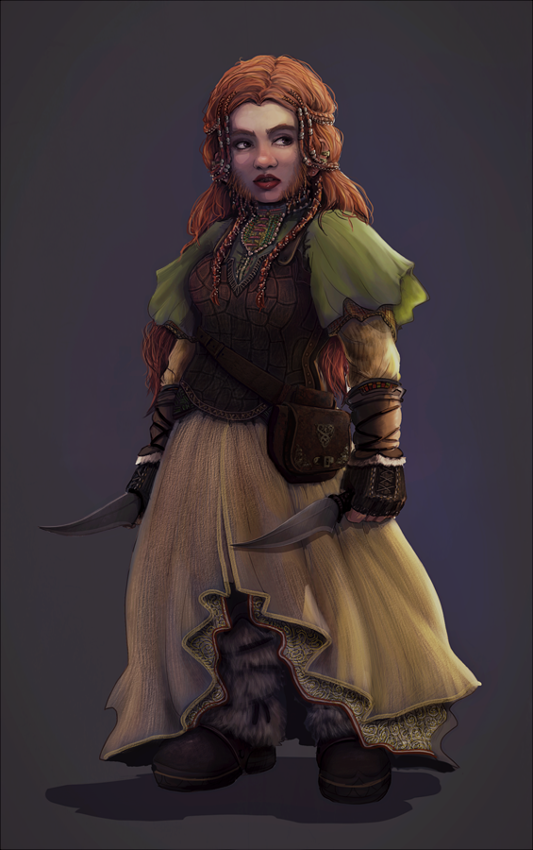
“He might be,” Runabout admitted sheepishly.  “But, how would you know that?”

“I also know what Runabout means,” Greta said.  “But that is not important right now.  Producing the right stuff to heal this pneumonia outbreak is.  People are suffering, terribly.”

“Well, I suppose it would not hurt to have a look.”  Runabout eyed Greta with great suspicion.

“Can we?”  Pincher asked with some enthusiasm, and Greta took the young one by the hand and dragged him inside.  Runabout became obliged to follow, and Lucan came in a short time later.

After three more days, they had a mixture which Greta thought might have a good effect.  One man died in the meanwhile, but word of the dwarf, and the assumption of magical help, stayed the anger of the Picts.  Then it would all be in the delivery, and Greta took the mixture to the little girl, personally.  After six days of waiting, the girl and a number of others were at death’s door.

It seemed touch and go at first, but not really more than a day or two before people began to breathe, literally.  Gerraint’s crew went happily to work after that, knowing they would live.  The Picts even began to smile now and then, and the women laughed a little.

Greta almost let Gerraint come home, but excused her staying on by saying she wanted to be sure there were no relapses.  No new cases had come forward once the houses were burned, however, so it was really to see the little girl back on her feet and watch the young Pincher at work.  He did, indeed, pinch his patients at times to get their attention.  Runabout stayed in the fish house, smelly as she said it was.  She claimed to be naturally shy in front of humans, as most little ones are, though Greta noticed she was not especially shy in front of Son of the Cow, once he got over his fright.

Pincher, on the other hand, became fascinated with this whole medical process.  He insisted on accompanying Greta and Lucan to the Roundhouse to administer the drug and watch its’ effect.  Fortunately, the people there saw him as a young boy, short, but not dwarfish in particular.  That grace, Greta allowed him, and in the years to come it would permit him to move freely between human and dwarfish worlds.

“But can’t I see the dwarf?”  Ellia, the little girl asked when she felt much better.  She had told Greta her real name and her father made no objection seeing as how Greta saved the girl’s life.

“But you do see him,” Greta said and set Pincher beside herself.

“Him?”  Ellia turned up her nose.  “He is just a grubby little boy.”

“Here.”  Greta took Ellia’s hand.  Suddenly, Ellia became able to see as if through Greta’s eyes and the little girl’s eyes got big as she took in Pincher’s dwarfish half.  “Now rest.”  Greta let go.  “Doctor Pincher and his mother need to go home now, and you need sleep.  Sleep is still the best medicine.”  She said that last to Lucan, but Lucan dutifully translated it anyway.

“What do you mean, go home?”  Lucan asked when she caught up.

“Do we have to?”  Pincher asked.

Greta merely nodded as they walked to the fish house.  Runabout sat there, waiting, and anxious for her own part.

“Something you should know first.”  Runabout spoke when they were ready.  She looked down as she added, “Son of the Cow told me all about it.”  Greta waited patiently until Runabout swallowed her embarrassment and got ready to go on.  “The chief, Moonshadow, is against making peace with the Scots.  He has been very strong about it and has won many chiefs to his way of thinking.  He says the Ulsterites, as he calls them, were not invited into the land, and yet they have spread like a plague until the whole of the lowlands are now in their hands.  He says if they make peace, more Scots will find a pretext to move north until there is no room left and the Picts will vanish altogether from the face of the earth.”

“This is true,” Lucan confirmed.  “Moonshadow is unbending on this.”

“Yes,” Runabout continued.  “But last spring the god of fire and water came here and spoke all kindly about peace and love between the two peoples.  When Moonshadow refused to listen, however, the god threatened.  He said Moonshadow called the Scots a plague, then so be it, and he vanished.”

“And the summer turned as dry and hot as fire,” Lucan picked up the story.  “And the fall has been as wet as the sea, and people began to get sick.  We feared.  We might have all died if you had not come along.”

“I do not like the idea of working against the god,” Runabout said frankly, and then she had a moment of complete honesty which was utterly uncharacteristic of her kind.  She almost came to tears as she spoke.  “I tried to ruin the cure, but my magic seems ineffective in this place.”

“Just a precaution,” Greta said, and she kissed Pincher on the forehead, squeezed Lucan’s hand and went home.  Gerraint returned, clothed in his armor, his weapons in their proper place at his back, and the cloak of Athena over all.  Lucan gasped.  She had forgotten.  “And now it is time for you to go home,” Gerraint said.

Runabout also gasped.  “No wonder,” she said.  She finally realized in whose presence she stood and tried to bow, but Gerraint spoke quickly.

“I will see you again, no doubt.”  He laid a hand on each head.  “Go home.”  And they did.

“Is it over?”  Lucan asked.  Her eyes were shut.  She had decided the magic would not be so shocking if she did not see it.  She shrieked all the same when she saw Gerraint face to face.  He seemed her age now, and surprisingly, she did not look as old as she did before.  He sighed and lead her back to the roundhouse, totally confusing poor Son of the Cow.

“Ellia,” he called the girl.

“How do you know my name?”  The girl asked.

“Oh, I know all about you,” he said.  “Even where you giggle.”  He tickled her a little and she responded.  The little girl paused, then, and looked deeply into Gerraint’s eyes.

“My lady.”  Ellia guessed at last.  “But where is she?”

“She has gone home, my dear, and so must I.”  He drew her smile to his heart.  “I have a little girl myself.  Her name is Guimier, and I miss her, terribly, and Enid, my love.”  Ellia suddenly bound up and threw her arms around Gerraint, much to Lucan’s surprise.

“Thank you for saving my life,” she said.  Indeed, she recognized him, and her lady in him.

“Use your life wisely,” he answered, and let her go.

Gerraint and Lucan went out to the woods where the chopping and shaping of the trees was in full swing.  He got a rousing welcome from his fellow travelers.

“Decided to pull your weight at last,” Urien said.

“She went home?” Uwaine asked.

“Where she should be, in her own time and place,” Gerraint answered.

Moonshadow and a number of Picts came running up then and they did not look too happy about the weapons at Gerraint’s back.  Gerraint merely shrugged and put out his hand.

“You’re welcome,” he said. Both Lucan and Dayclimber translated.

Moonshadow slowly put his hand out.  “Thank you,” he said, and they shook.  Then Gerraint removed his weapons and set them aside.  They had several houses yet to build.

************************

MONDAY

One potential disaster is averted, but that does not mean they are out of the woods yet.  It is still a long way to safe ground.  Next Monday, Gerraint and his company are Winter Bound.  Until then, Happy Reading.

*
M3 Gerraint: Captives, part 2 of 3

Greta stepped into the dark and faced the overwhelming smell of mold, too much mold in the rotting wood.  She immediately heard the coughing and wheezing in the corner.  Dayclimber found a candle to light, and Greta found an old woman in bed who looked worn, but who otherwise showed no outward sign of disease.  There were no red splotches, no pox, and no breakouts of any kind apart from a wart on one knuckle.

“More light.”  Greta demanded.  Dayclimber lit two more candles and then Greta made him wait outside.  She helped the woman sit on the edge of the bed and helped her disrobe.  She checked the woman’s glands.  They were swollen, but not badly.  The woman had a fever, but low grade at the moment.  Greta helped the woman dress.  About the only certain thing was the woman’s wheezing and coughing which sounded deep in the old woman’s lungs and rattled in her breathing, even when the woman was at rest.  Probably pneumonia.  Greta brought Dayclimber back in.

“How long since this came upon her?” she asked, while she found some water and a not-too-dirty cup.

“A week.  Less.  Some have just started.  Some have died.”

“And when did the first one start?” she asked while she sprinkled a sleep mixture into the water.

“A month.  A bit more.  It started when the fall rains came and it has not gotten better, though it has not gotten worse.”

“And was it wet this summer?”  She asked as she gently helped the old woman drink the mixture.

“The contrary,” Dayclimber said.  “It is always wet here, at least for many years, but this summer was unusually hot and dry.  Then the fall rains came.”

“Let her rest,” Greta said, and she stepped outside to get out of the moldy smell.  Dayclimber came out after he extinguished the candles.

“Do you know what it is?” he asked.  “Can you do anything about it?”

“Not yet,” Greta answered, though she had some good ideas.  A half-dozen more huts needed to be visited.  The sick consisted of the very young and the elderly.  And in each hut, the mold was ripe.  She concluded pneumonia, brought on by constitutions weakened by all the mold and filth.  By the time they returned to the roundhouse, her men were gone and only the chief and a few other Pictish men were present.  Greta did not ask or let them ask anything.  She just started telling.

“Clear this building.  I want beds in here and all the sick brought together in this place.  Burn the houses where people have gotten sick.  You will have to build new houses, but use clean wood.  No mold or fungus allowed.  Their belongings and furniture can be saved as long as they are not rotting with mold.  Once you have them here, I will do what I can.”  Greta marched right past the men and toward the cooking fires out back.  It turned mid-morning, nearly noon by the time she finished her last examination, and she was hungry.

The women out back treated her like royalty.  Most would not even look up into her face.  Most also wanted to touch her thick, blond hair, however, and she let them.  Real blond hair was rare if not unknown among the Picts.  Greta noticed that there were one or two of the women who seemed a little less afraid of her.  This was good, because she would need some helpers.

“Dayclimber!”  Greta shouted even as the man came out the back of the roundhouse.

“They have discussed it,” he said.

“And?”  She asked impatiently.

“They will do as you ask,” he said.  “But your friends will be expected to help in the new building.”

“To be expected.”

“And they had better do their fair share,” he added.  He did not exactly threaten them, but near enough.  Greta nodded.

“Where are they?” she asked.  He took her to them.  They were in a fish house by the sea.  They were not exactly prisoners, but there were Picts outside, watching.  It took Greta about twenty minutes to explain her plan, what with all the interruptions.  Curiously, they did not ask who she was, where Gerraint went, or anything that she expected.  She looked at Uwaine.

“We talked,” he said, sheepishly.  Long ago he had been told to keep his mouth closed tight.  The lives of the Kairos were not meant to be public knowledge.  “I figured in this case, some explanation was in order.”

“Quite right,” she responded to him with a smile.  Her hand went to his arm and she leaned up on her toes to kiss his cheek.  It felt like a perfectly natural response for her, even if Urien had to spoil it.

“If Gerraint ever kissed me like that, I would have to hurt him,” he said.

Greta lowered her eyes at the man.  “No fear of that ever happening,” she said.  Then she let go of Uwaine’s upper arm.  She felt self-conscious about still holding on to it.  “Got to go,” she announced.  “And you boys better get your axe hands ready.  As Arthur’s men, I expect you to do twice the work in half the time of these barbaric Picts.”  She really could not help sounding like Gerraint.  This was his life after all.

It did not take long for smoke to begin to rise into the night sky.  Greta gathered her women and set them to fetch clean water and clean cloths.  Some, she set to scrubbing the insides of the roundhouse.  Some did laundry and boiled the sheets.  She felt she could not say the word clean often enough.  She set some women to cooking broth and other high nutrient, easy to swallow and digest foods.  And the two helpers she had singled out earlier, she took with her, to teach.  They were going to be her nurses.

As the sick came in, she showed them how to wipe and cool them with the water and cloths, how to keep them warm and covered against the fever chills, how to take a pulse and judge a spiking fever, and sit them up and help them cough up whatever they needed without choking.  Greta knew the formula for a very good expectorant.  She only hoped that some of them did not start coughing up blood.

“Dayclimber!”  She called after a turn scrubbing and cleaning.

“He has gone to be with the men.”  One of the older women who cleaned the floor with a brush and hot water spoke in near perfect British.  “I can talk for you if you like.”

“I need to go hunting for medicines before nightfall,” Greta said.  “Please tell these women I will be back as soon as I find what I need.”

“Mughrib, that is, Heather Woman wants to know if you can describe what you need.”  Greta did, as well as she could.  Gerraint did not know some of the things and thus he did not have the British word to put on her tongue.  Then also, even with the proper British word, the woman did not know what it was to translate, so it still had to be described.  In the end, though, it turned out one or more of the women had what she was looking for, or they knew where she could find it.  This saved much time, and by the time Greta stepped outside, the woman who came with her to translate knew just where to go.

“Lucan.”  The woman said her name.  “It means “Southern Girl,” but my given name was Mesiwig, and yes, I grew up, sixteen years, not far from Hadrian’s Wall before I came to be taken captive.”

“Mughrib and Lucan.”  Greta said.

“Oh, please.  Not Mughrib.  I never should have used her real name.  Please, just Heather Woman.”  Lucan said.

“But why, if it is her name?”

“Because knowing a person’s name gives power over that person.  Spells, charms, curses can be brought against a person if you know their name.  Please.”

“All right.”  Greta would not argue.  “Heather Woman it is, but what is his name?”  She pointed behind them.  They were being followed by a young man with a large grin and a sword by his side, just in case.

“Son of the Cow,” Lucan said.  “I think he has been given to guard you.”

Greta laughed.  “He is so young.”

“Twenty, I think.” In turn, Greta guessed Lucan was around forty-five.  “About your age,” Lucan finished.

Greta laughed again.  “I know I look twenty-something, but believe me, I’m more like fifty-five or so, maybe sixty.  I’ve been through a regeneration process, not that you would know what that is.  And anyway, in another sense you might say I’m five thousand years old.”  Greta stopped and picked a few plants.  It started getting chilly.  She considered her Dacian outfit and decided a change was in order.  She adjusted her fairy clothing with a thought and a few small words to mirror the clothes Lucan wore, much like what all of the women wore.  Lucan quickly hid her eyes.  Son of the Cow’s jaw dropped.  Then Greta had another thought and she added a red cloak and hood as she was wont to wear in the winter back home.  It felt like the appropriate dress for the Woman of the Ways after all.

“It’s all right.”  Greta said, smiled at Lucan, and turned her eyes up to look on her.  “You see; it is still just me.”

“But such great magic,” Lucan said.  “I have never seen the like before.”

Greta’s smile faded as she decided to be honest.  “Actually, it is in the clothes themselves.  They are fairy made, plain and simple.  They will change their shape and even their color as you like, and they will always fit just right.  It is a marvelous gift, yes, but not magic in me.”

Lucan looked like she was not quite sure.

“All the same,” Greta went on to whisper.  “I would appreciate it if you kept this between us.  I feel a little healthy respect on the part of Son of the Cow would not be a bad thing.”  She pointed.  Lucan looked back and understood that well enough.

“Yes, I believe you may be right about that,” she said.

Once they had all that Greta needed, Greta faced the real dilemma.  Expectorant and pain killer might relieve a good deal of discomfort, but it would not cure anything.  For that she needed an antibiotic.  Greta knew she would live as a medical doctor at some point in the first half of the twentieth century.  She knew, because of that, she had some medical knowledge that no ordinary Dacian from the milieu of Marcus Aurelius would dream of having.  Unfortunately, though, she had no direct contact with that medical doctor at the moment, and no real knowledge other than scraps of information.  She had no way to access that life, though she would have preferred to trade places in time and let the good doctor decide the matter.

“Damn,” Greta said and put her hands to her head.

“Are you all right?”  Lucan was right with her.

“Yes, I just need a minute.”  Greta stepped away and thought.  Was it too risky to make an antibiotic more than thirteen hundred years before antibiotics were discovered?  Then again, this was not the first time this issue, or one just like it, came up.  Each time was unique and required independent judgment.

M3 Gerraint: Captives, part 1 of 3

“Weapons.”  The man spoke in an imitation of upland British.  He kicked the dirt in front of him.  All complied and set their sheathed weapons on the dirt while two more blue painted men came from the brush to collect them.

“Maybe if there are only a few,” Urien said in his own halting Welsh.  He made an open suggestion which everyone caught, but there were more than a few, being fifteen of them.

“Walk.”  The chief gave the order, but the trip seemed less like walking and more like climbing over to the other side of the ridge.  An elderly man met them at the very edge of town. His British sounded much better than the chief of the hunting party and he slid right up to Gerraint with a few questions.

“Dayclimber.”  The man introduced himself as they walked to a central building.  “Where are you from?”

“Britain.”  “Britain.”  Gwillim and Trevor spoke as one.

“Urien of Leodegan,” Urien groused.

“South Wales.”  Uwaine spoke.

“Cornwall.”  Gerraint spoke last.

“King in Cornwall,” Uwaine explained for some reason.

“You are Arthur’s men?  Learned men?”  Dayclimber asked.

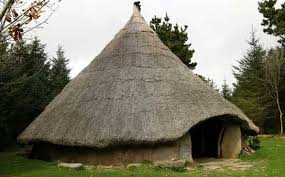
They nodded before they entered the roundhouse.  They expected to be set in a kind of preliminary trial with the Elders of the Picts standing around them to pass judgment.  What they found surprised them.  There were tables in the roundhouse set out with a rich variety of food.  There were women to serve, but little evidence of men apart from the hunters who brought them in, and Dayclimber.

Gerraint and his crew stood respectfully and tried to keep from drooling while the hunting chief had their weapons piled in a corner.  Then he and his hunters fell to the food and Dayclimber led the captives to a separate table.

“Sit.  Eat,” Dayclimber said.  They could not believe their ears, but even while Trevor suggested that their food might be poisoned, Urien and Gwillim started eating with the comment, “Who cares if it is.”

Dayclimber sat beside Gerraint.  “You are learned men?” he asked again.  “You have skills in healing?”  Gerraint looked up.  Ever quiet and observant Uwaine spoke up.

“There were maybe a dozen fresh graves near the place where we entered in.”

“Plague?”  Trevor was quick to ask, and his voice did not sound too steady in asking.

Dayclimber nodded.  “We have no way to combat it.  Our healer was one of the first to die and no other village will send help for fear of catching the disease.  You were spotted some ten days ago coming from the north.  It was decided if you came near to us, we would seek your help.”

Gerraint looked at his companions.

“What you call out of the frying pan and into the fire,” Uwaine said.

“Yes,” Gerraint confirmed.  “And I hate clichés.”

The chief spoke from the other table and asked how it was that they came to be in the land of the Picts.  Gerraint told the whole story, honestly, Dayclimber translating, and only left out his trading places through the time stream with Margueritte, and especially his brief time as the Danna.  The men quickly became engrossed in the tale, and the women stopped serving to listen as well.  Curiously, they had no trouble believing that Manannan had made them prisoners and seemed only surprised that Manannan had relented and set them free.

The chief of the Picts told them that they were aware of the madman in the wilderness.  “Now I understand,” the chief said.  “The spirit of the seal boy has taken the man’s mind, but it is madness for the boy neither to be able to return to the sea nor to live with his seal people.”

“You’ve said we are what we eat,” Uwaine whispered in Gerraint’s ear.  It was not funny.

“But you were not the one who convinced Manannan to let us go,” Trevor interjected in all innocence.  “That was the lady.”

Dayclimber translated for his fellows and then asked with eyebrows raised.

“Danna,” Gerraint said.  The Picts stood at the mention of her and there was mention of having seen her in the land some seventy-five years ago.

“But how is it that she would appear to the likes of you?  And intercede for you?” The Chief demanded an answer.

Gerraint did not feel shaken by their hovering over him.  He took a long moment of thought before he answered.  “When you see her, you will have to ask her,” he said at last. “I am a chieftain and a soldier.  Mine is not the mind to know the way of the gods.”  Curiously, that seemed to satisfy the Picts who resumed their seats, but slowly and with great questions still burning in the air.

Dayclimber spoke into the silence because there was another part of the story which did not satisfy him.  “And how is it this young seal girl was willing to speak to you, a warrior, when one of your kind just killed her brother, besides?”  The Picts, on hearing this question, looked up at Gerraint who sighed.  There was no avoiding it, in any case.  Besides, he had determined that the gods he had been were inaccessible at the moment, but Greta the Dacian Woman of the Ways and healer would be willing to look into this plague.  Someone had to do something, or their welcome would soon enough turn sour.

“Will the goddess come?”  Uwaine asked having read the resignation on Gerraint’s face.

“Not one of them,” Gerraint answered.  “But Greta may help, if you don’t mind.”  He knew Uwaine did not mind.  Uwaine was long in love with Greta.

“Dayclimber.”  Gerraint got the man ready to translate, and he told the rest of the story, about Margueritte and speaking as a young girl to a young girl.  The Picts said nothing at first.  Gerraint’s own crew stayed equally silent as Gerraint stood.  “And now, let the healer from the east and from long ago see if perhaps there is something that can be done for your people.”  He took Uwaine’s hand and one hand of Dayclimber’s in an age-old tradition.  “Do not let go, no matter what,” he said, and the dark haired, blue eyed, six foot tall Gerraint was not there anymore.  In his place stood a five foot, four-inch blonde with light brown eyes that sparkled with life.

Dayclimber shrieked and yanked back his hand.  Both Picts and Gerraint’s crew stood and stepped from the table with the shuffling and scraping of chairs and not a few gasps.  One Pictish woman screamed and dropped the clay pot she held.  It shattered on the ground and spilled milk everywhere.  Uwaine, alone, stayed unmoved.

“You haven’t changed a bit,” Uwaine said to her in Latin.

“But you have matured well,” she responded in the same tongue.

“That was you in Amorica,” he confirmed.

She nodded.  “Briefly.  But I suspect I may be here a while longer.”

“As always, I am your devoted servant,” Uwaine confessed, knowing better than to say more.  But she was a wise woman of the Dacians and Romans.  She could read his heart and mind no matter how deeply he tried to hide his feelings.  She saw his love and could not help the smile in return for the depths of her own feelings.  The lives of the Kairos could sometimes be very complicated.

“Hush, lest you make my husband jealous.”  She turned to Dayclimber as she let go of Uwaine’s hand and spoke in Gerraint’s British tongue.  “We have the sick to attend to,” she said.  “Tell your chief I will do what I can but I make no promises.”  Dayclimber said nothing until Greta stomped on his foot.  Then he blurted it out all at once.  The chief of the Picts slowly nodded.  He understood.  The gods never made promises.

As they walked, Greta checked her clothes.  The fairy clothes that had come to her had shaped themselves in the Dacian style of her home.  That only made her three hundred and fifty years out of date.  Still, she had sent her armor away with Gerraint.  She came as a healer, not a woman warrior of the Dacians.  Of course, her weapons also disappeared from the pile of weapons at the same time, but she supposed no one would really notice that except perhaps Uwaine.  In their stead, she called from her own island in the heavenly sea, her bag with everything she was used to carrying on just such errands of mercy.  With that on her arm like a woman’s purse, she was well supplied with the drugs, herbs and medicines she might need, that is, if this disease was anything familiar.

Dayclimber said nothing the whole way.  He kept staring back at her as she followed one step behind.  He nearly tripped several times before they reached the door of the first hut.  “Is your nose filled?” she asked him.  He did not understand, so she set her hand against his chin.  “Close your mouth,” she said.  He did as he opened the door.

M3 Gerraint: The Mainland, part 3 of 3

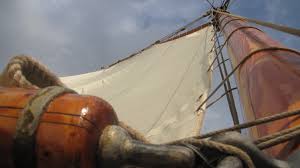
The morning proved bright and warm and they even had a little breeze that blew straight on toward the mainland.  Gerraint had little hope that their bit of salvaged canvass would do much good.  He imagined they would have to paddle the canoe most of the way, which was one more reason for the design.  It felt good to see the craft did not sink on entry into the water, but their boots got wet almost immediately.

“No sign of Arawn.”  Urien said and took one last long look up and down the shore and back up the hillside.

“Can’t be helped,” Gwillim said.  “Sad to say.  Raise the sail, Trevor.”

“Sir.”  Trevor responded, and Gerraint felt pleased to see the sail did better than he imagined, that is, if they were not getting secret help.

The opposite shore proved full of big rocks.  They had to lower the sail and paddle for a mile along the coast before the found a pebble beach where they could safely pull up.  When they did so, their craft collapsed.

“Three stooges,” Gerraint announced.

“Who?”  Gwillim asked.

“Three Stoojus,” Uwaine said.  “It was perfectly clear to me.”

“Urien!”  The call came from some distance inland.  “Urien!  Please.  Help!”  It did not take long to find the source.  Arawn was tied with his wrists behind his back and a long end of the rope wrapped around a tree and around him, effectively tying him to the tree.

“Urien, my friend,” Arawn said when he saw the man.  They let him loose of the tree but kept his hands tied securely behind his back and held the long end of the rope that bound him.

“Manannan doesn’t want him,” Uwaine announced.

“We’ll have to take him along,” Gwillim said.

Arawn smiled at everyone and did not worry his hands at the moment, though his wrists were severely chaffed and burned.  He came to look at Gerraint and his eyes went wide.  He took a big step away and a touch of the insanity crossed his face, but he said nothing.  Gerraint also said nothing.  He preferred to turn and set off toward the inland in a roughly southerly direction.  If they had been wrecked in the Hebrides as all suspected, it might take them two months to walk home.  At least they could try to cross the highlands before they got snowed in.

Two days later, they untied Arawn.  It was a risk, but he seemed to be behaving and more his old self, as Urien said.  As a precaution, they gave him no weapon and he took no turn watching in the night, but it was becoming impossible to continue with him tied and continually watched.  That very night he ran off into the woods.  Urien shrugged.

“There is no more we can do for him,” Urien announced.

“It does feel a little like leaving a wounded man behind on the battlefield,” Gerraint said.

“It does,” Gwillim confirmed.  “But we cannot help him.  He will come to his senses someday, or not.  We have no power to heal a man’s mind.”

“The night watch will have to keep an eye out for him as well as Picts and Scotts,” Uwaine said.  They all understood.

There were miles of sparsely inhabited wilderness to pass through.  They hunted when they could and ate any number of plants and roots to keep up their strength.  Fortunately, the hunting was easy enough at first.  It was pristine wilderness where the animals were shy of men but not deathly afraid.  A well thrown stone could do wonders.

After a week, they came to a great inlet of the sea.  They had to turn west-southwest down the shore.  Though it slowed them, Gerraint insisted they travel just inside the tree lined edge, and move even further inland where there were open fields to cross.  He did not want to run into a Pictish or Scottish village by surprise, and they went around several small villages of fishermen.  He also did not want to be seen by the Pictish coastal watch whose ships were fast and well-armed with men.

Another week and they were nearly frozen and famished.  There was a town just over the ridge so they dared not light a fire without shelter.  They found little roughage with the fall well along, and less in the way of berries than they had been finding, at least less berries that were not poison.  They had a pheasant, however, already plucked by Trevor, but without a fire, they were helpless.

“My Lord.”  Gwillim had gone back to calling Gerraint by that title nearly from the beginning of their time on the mainland.

“Can’t be helped,” Gerraint said.  “Not unless we can find a good hollow on the ridge to hide the fire light.  A cave would be better.”

“Besides, you could still lose a few pounds,” Uwaine teased Gwillim.

“More than a few,” Urien insisted.

“But look at Trevor.”  Gwillim was not for giving up.  “He is nothing but skin and bones.”

“I wouldn’t know,” Gerraint said.  “He looked skin and bones the first time I met him.”

“Over here!”  Trevor shouted too loud for Gerraint’s nerves.  They went quickly so he would not shout again.  They saw a small cliff face in the ridge, with a rock overhang.  Hopefully, that would keep the firelight from reflecting off the clouds.  A fire could be as bad as a searchlight in the wild.

They started the fire quickly.  They were all starving.  Trevor insisted on rubbing the bird in some greens and such that he had collected along the way, but the others did not care about that.  When it was minimally done, they would eat too fast to taste it anyway.  It was not a very big bird, and each of the five men had only a couple of bites before it was gone.

After that, it was get as warm as they could to try and sleep before it was their turn to watch.  Trevor had the first watch that night, but unfortunately, he did not know exactly what that meant.  He was a cook, in truth, and hardly a sailor, much less a soldier. After all too little sleep, Gerraint awoke to see a blue painted face, and the man held a knife to Trevor’s unmoving throat.

************************

MONDAY

Gerraint and company are taken captive by blue painted Picts, and to what end?  Come back Monday, and in the meanwhile,

*
M3 Gerraint: The Mainland, part 2 of 3

Gwillim whispered.  “I am so ashamed and embarrassed.”

“You should be,” Urien said.  “If you were in my brigade I would have you whipped.”

“Easy.” Uwaine said.

“No need to be so harsh,” Gerraint said.  “We are all exhausted and on edge.  There is nothing here that cannot be fixed.”

“It’s a nice day,” Trevor added.  “Maybe the weather is turning in our favor.”  Urien said no more.

The next morning, however, though the craft got repaired, the rain and wind returned just as before.  Gwillim, not especially a religious soul, nevertheless spent the day in prayer.  He said it couldn’t hurt.  Trevor, once again had his hands full with the fire and trying to keep them fed.  Urien walked off to sit beneath a tree and sulk. Gerraint nearly had enough, but Uwaine calmed him with his words.

“He can’t make it rain forever,” he said.  “I’m thirty-four, and God willing, I will live another thirty-four years.  At some point in those years, it will have to stop raining.”

Gerraint nodded.  “When it starts snowing,” he said, but he kept his seat.

The rain fell away again when it became too late to attempt the crossing.  That evening over supper only Urien spoke, and only one sentence.  “Obviously, the god has not accepted our pledge to give up seeking the cauldron.”

Gerraint did not respond, but he did think, that depends on how sincere the pledge was.  The gods read men deeper than men suppose.

Gerraint went on watch when he noticed the sea shifting.  It appeared a clear, cloudless night.  The stars shone bright since the moon set, but Gerraint had no illusions.  By morning, he knew the clouds could easily return with the rains and wind, and this might indeed go on until the snows came.

The sea began to billow then, like a cauldron beginning to boil.  The foam beat up even though the wind died down.  A figure rose slowly out of the deep.  It appeared to be the figure of a man, who glowed with moon glow and walked toward Gerraint, directly across the water.  The man looked to be a giant at first, but as he came to shore he slowly shrank until he stood no taller than Gerraint himself.  Gerraint stood, out of respect, but he had a thing or two to say.

“Why are you picking on these good men?” he asked.

“They would-be thieves,” the glowing man answered plainly.  He stared at Gerraint and Gerraint stared back at a man who had brown hair and green eyes and skin a bit too much on the pink side, like a half-cooked lobster.  The man appeared clothed in seaweed and there seemed an ominous sense about him.

“Thank you for guarding the Celtic Treasures, but all here have pledged not to pursue them any longer,” Gerraint said.  “With your leave, we will go now and not come back.”

The man from the sea squinted.  “Mother?”

“Of course, Manannan.  Didn’t you wonder?”

Manannan changed with that realization.  His frightening presence became tempered with the depths of love and hope.  “I knew I could not read your mind and heart like these others.”

“Guilty by association.”  Gerraint shook his head.  “All the same, we have pledged in the witness of each other not to pursue the treasures.”

“You never pledged.”  Gerraint heard Urien’s voice behind him.  They were all awake by then, watching.

“The treasures belong to her, or him, most of all,” Manannan said with a scowl returned to his lips.  “This quiet one I don’t mind.  He is loyal to you,” Manannan went on and talked to Gerraint as if the others were not even there.  “And these two fools I do not doubt.  The one is a soldier gone fat, thinking himself a ship’s captain as almost a joke.  The other is a cook who fancies a desire for the sea.  Let the first go back to soldiering and the second go to cooking or neither will ever be happy.  But as for this one.”  Manannan growled.  The men behind Gerraint trembled.  The growl of an angry god is the second most frightful thing in all creation.  “This Raven is a liar, simple.  He will try again.  His pledge is not worth the air with which it was spoken.  But the way to Avalon is denied to him and to seek it will be to seek his own death.”

“Then let me pledge to you, if Urien tries again to pursue the treasures, I will kill him myself.  Will this satisfy you?”  Gerraint spoke perfectly serious and Manannan gave it serious thought.

“Gerraint!”  Gwillim sounded shocked by the turn of events.

“Still the word of a mortal of uncertain future,” Manannan concluded.

Gerraint had no option, and Danna felt very anxious in his heart.  Gerraint sighed as he went away and Danna traveled over 3700 years to stand in his place.  She took two quick steps forward and laid her hand gently against Manannan’s cheek.  He lowered his head and eyes.

“I will make the pledge,” she said.  “Only let these men go.”  She stroked his cheek for a minute.  “I worry about you.  You and Rhiannon.  You should not be here.  Why have you not gone over to the other side?”

“I don’t know, Mother,” he said quietly.  “But I am not the only one.”

“I have already spoken to Rhiannon,” Danna said.  “But the time for us is past.”

She reached out and hugged the God.  “Iona will soon turn to the way and you will not receive the answer there you seek.  Only do not put your hopes against the words of one man.”  Danna backed up.  She felt a tear in her eye.  She left, and Gerraint came home.

“Well, son?”  Forty-seven-year-old Gerraint spoke as he might to Bedivere, his twenty-year-old squire.  “Can we have safe passage in the morning?”

Manannan no longer stood there.

Gerraint turned around.  “My watch,” Uwaine said as he got up to stand by the boat.  Gerraint stepped over to lie down and Urien and Trevor both made an effort to move away.

“We will see what tomorrow is like,” Gerraint said.

“Yes,” Gwillim said.  “We will see if a whole day in prayer has any effect.  What was that, anyway, some sort of mass vision?”  Gerraint did not hear what else Gwillim had to say as he went to sleep.

M3 Gerraint: The Mainland, part 1 of 3

It took five days to tear apart the hulk of the ship.  Everyone worked on that vital, primary task, except Trevor who greatly expanded Urien’s shelter and kept the cooking fire going.  There were precious few nails in the tool bag.  They were used for repairs at sea, but now they were needed to build and there were not enough.  Every board as well as every nail that could be salvaged became important to their survival.  Thus it took a long, slow five days, and always one eye stayed turned to the sky.  Another storm would have been a disaster, and in fact it did rain on the second and third days.  Fortunately, it only made a misty, annoying drizzle, and while it did not threaten their work, it did affect their mood.

On the fifth night, the skeleton of the ship finally broke apart and got carried out to sea on the tide.  Good riddance was about all anyone could say, but it appeared as if they had enough materials for their project.  Gwillim and Gerraint took the first turn lugging the lumber across the face of the island.  Uwaine insisted on partnering with Urien.  He said he wanted to keep an eye on the Raven, even if Urien’s survival depended on the raft.  They never left the lumber and nails unguarded, however, for fear of Arawn.  Madmen were known for perpetuating the hell in which they found themselves.  Any chance of escape might have been seen by Arawn as a threat to his penitent state.

It took four days, working in teams, to get everything over to the shore that faced the mainland, and then a fifth day got spent arguing about the design.  Gerraint won out in the end when Trevor switched his vote.  That made it three to one to one, because, of course, Urien and Gwillim were at opposite ends on everything.

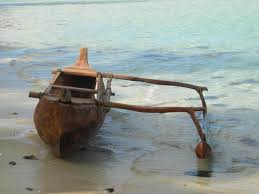
The design itself was that of a simple outrigger canoe such as one might find in the south pacific, though only Gerraint knew that.  Certainly, canoes were known, though none in Gerraint’s world would dream of taking one to sea.  What was not known was the extension off one side of the canoe and the long pole attached in parallel with the canoe, all of which could be lashed with rope and needed none of their precious nails, both increased the surface tension of the craft against the water, which made it far more stable in swells than a plain flat-bottom raft, and it allowed them to make a larger craft for seafaring than any other design.  The wood already had some natural warp which they were able to use for the sides of the canoe, however uneven in the final look, and this also took advantage of what they had.  It did not require them to cut and shape any of the lumber.  Gerraint imagined it might help protect them from the frigid water, though that last seemed unlikely since they had no good pitch to fill the gaps.  They used the natural heather they found in the woods, but they did not expect much help from that.

This work actually took another four days, to get the craft as good as they could get it.  More importantly, it took four days before they were all willing to try sailing the contraption.  They needed courage to even try.

“I believe it is going to work,” Gwillim said.  He had become convinced of the design on the third day.

“It should get us across this straight, do you think?”  Trevor said.

“I would settle for getting us near enough to swim,” Urien said, grumpily.  He seemed always to be in a foul mood.

“Not a good idea,” Gerraint said.  “You would not live long enough to swim, even from close.”

“What?  Drown?”  Urien sounded offended as if they should not doubt that he knew perfectly well how to swim.

“Freeze,” Gerraint said, and Gwillim spoke at the same time.

“Freeze to death.”

Gerraint thought to explain, but Trevor spoke up.  “It is nearly October now, we’ve been at this building.”

“Is October,” Gwillim interrupted, referring to his own internal calendar.

“It doesn’t take long after summer in these northern climes for the water temperature to return to its’ natural, half frozen state.  I would be surprised if you lasted a whole minute.”

“If the sharks did not get you first,” Uwaine added in such a soft voice the others had to strain to hear him.

After that, everyone looked alternately at the sea, each other, and their supper without another word.  It got late, and Uwaine became the first to lie down.

Rain came in the morning.  It poured, a hard driving rain with a strong wind that blew straight at them from the mainland.  There would be no attempt that morning, and though the rain slackened by mid-afternoon, by then it felt too late to try the crossing.  The next morning the same conditions prevailed, and again, by mid-afternoon, the hard rain died down.  Everyone and everything got soaked and cold by then.  The men started lashing out rather than talking, and Trevor could barely keep the fire going.  On that evening, however, the rain stopped altogether, and then they felt some hope for the following day.

It got late when they went to bed in a little better cheer.  Still later, Uwaine awoke to the sound of knocking.  He got up.  Gerraint woke with Uwaine’s movement.  They rushed to the canoe and heard an insane giggle in the dark. Gwillim had fallen asleep on his watch.  Arawn had damaged their work.  Luckily, nothing irreparable, but it would take all that next day to fix things.

Gwillim could not have been more apologetic.  Everyone was inclined to forgive him, except Urien.  “I’ve been a soldier all my life,” Gwillim said.  “I never even went to sea until three years ago.  I never fell asleep on watch.”

M3 Gerraint: The Isle, part 3 of 3

“Spooky, isn’t she,” the voice said.  Gerraint spun around and found Arawn.  The man looked haggard, like a man who had not eaten or slept in a week.

“Urien here?” he asked.  He guessed that something like a storm happened to them as well, and Urien might have been driven to these same rocks.  He guessed Manannan for sure.  The circumstantial evidence looked strong.

Arawn did not answer Gerraint’s question.  He would not take his eyes off the girl.  “She just sits and stares at the sea, like a ghost.  But she isn’t a ghost, is she?”  Arawn laughed in a way that sent shivers, like little needles through Gerraint’s mind.  “She had a brother once, she did.”  Arawn said and he backed toward the jetty, fretted his filthy hands as if trying to wipe something clean.

Gerraint looked again at the girl.  His immediate question concerning Urien was not answered, but he still needed information if he could get it.  He felt reluctant to ask Margueritte for help since she was so young herself, but Margueritte seemed more than willing and begged for the chance.  Gerraint reached out in time and they traded places, Margueritte appeared in her fairy clothes and added a shawl to it as help against the cold wind.

Margueritte looked back first, concerned about Arawn’s reaction, but the man had already gone, somewhere unreachable.  Without a word, she walked deliberately toward the other girl.  The girl stood and stared in Margueritte’s direction.  Seeing Margueritte, a young girl like herself, the green-haired, big eyed child no longer looked afraid.  When Margueritte got close enough, she stopped, still a good distance away, not wanting to press the point.  The girl’s   eyes were definitely too round and fully brown with hardly any white at all.  Her hair looked too thick, green and brown streaked, and she had little dots, like freckles, on her upper lip and cheeks where a cat might have had whiskers.

“Can you help?”  Margueritte asked at last in her best Welsh as Gerraint spoke it.  “I have no idea where I am.  The storm, you know.  I am lost.”

The girl looked up from staring at Margueritte’s shoes.  “Brother lost, too,” the girl said.  She lifted her chin to the sky and screamed, “Forever!”

Margueritte winced.  The girl began to bark like a seal pup, and a female seal transformed into a woman, dressed minimally in a dress that looked made out of seaweed.

“Forever,” the seal woman echoed.  “You are here forever.”  She stepped up beside her daughter, sniffed Margueritte’s fairy clothing with some appreciation for what she sensed.  “Lord keeps you.  Treasure for you is sea and stone.  No treasure, only here, forever.”  She took her daughter’s hand and turned toward the far rocks.  The other seals nearby also took that moment to transform into women and young boys and girls.  They climbed together over the rocks to get to the main herd without having to make the shark infested swim around the point.

Margueritte hesitated until the last of the pups disappeared over to the other side, then she ran to the rocks, but once she climbed up, all she could see was perhaps a mile of beach covered wall to wall with seals, big males, females, and young everywhere.  Those who had been temporarily women and children were indistinguishable from the rest.  Who knew?  Perhaps they were all seal people.

Margueritte went back to her own time and Gerraint returned in order to climb down from the slippery rocks.  His walk back to camp remained slow, despite his hunger.  “No treasure, only here forever,” he repeated.  Evidentially, Manannan drove them to wreck in this place and intended to keep them here, having judged them as would be thieves.

“Gerraint!”  “My Lord!”  The others called to him from the cooking fire.

“Trevor’s not a bad cook,” Uwaine said, in an unusual word of praise. That meant the fish was probably excellent, but Gerraint no longer felt hungry.

“The ship is in good shape,” Gwillim reported.  “At least the piece of it that is left.  There’s rope I left down by the cliffs, and some tools too heavy for even the waves to drag to sea, but that is about it.”

“There’s land in that direction.”  Uwaine pointed.

“I was thinking a raft,” Gwillim continued.

“Here.”  Trevor handed Gerraint half a fish with something on it that Gerraint did not recognize. Certainly, some sort of spice, he imagined.

“Manannan drove us here.”  Gerraint said in a flat voice that got their attention.  “The seals suggest he intends to keep us here forever, because we dared to try and steal the treasures of Britain.”

“The seals?”  Gwillim laughed.  He thought of it as a joke.  Trevor looked horrified, but Uwaine knew better on both counts.

“So how do we get off this rock?” he asked.

Gerraint sighed and tasted the fish.  It was very good and hardly tasted like fish.  Gwillim knew what he was doing setting Trevor to cook.  “The gods make the rules to try and test men’s souls, not to defeat men.  There is always a way left for men who are willing to try.  A little intelligence, some courage and determination are needed.  Good men get knocked down, but they get up again.  I vote for the raft.”

Uwaine merely nodded and went back to eating.  Gwillim let go of the thought of talking seals and appreciated the support for his idea.  Trevor went back to cooking, but his expression showed he had been at sea long enough to hear stories.

“How long do you figure the raft will take?” Uwaine asked at last.

“Well.”  Gwillim sat up.  “We’ll have to work fast and hope against another September storm.  It won’t do to have the ship break loose.  We should be able to break free enough lumber in a week or so, and then drag it across the island to assemble.  I would say two weeks, three tops.”

“So, by October, give or take,” Gerraint concluded.  “I would like to get home before the snows.  I suspect we are a long way north.”

“We would all like to beat the snow,” Gwillim said.

Uwaine and Gerraint jumped.  Gwillim and Trevor were just a little slower.  They heard rustling in the trees before Urien stepped out.

“Well, I’ll be,” Gwillim said.  “The Raven got grounded on these same cruddy rocks.”

“That smells very good,” Urien said.  “You gentlemen mind if I join you?”

“I don’t know.”  Gerraint eyed Urien closely.  “Are you as insane as your friend?”

“Oh, you’ve seen him.”  Urien stepped up for some of the fish without waiting for the formal invitation.  “Mad as an Irish hermit.”

“Arawn.”  Gerraint answered the questioning looks around him.

“What do you mean?”  Trevor asked.

“What happened?”  Gwillim wondered.

“A storm as like to yesterday’s storm as can be,” Urien answered while delighting in the fish.  “Arawn and I alone escaped with our lives by being foolishly washed overboard.  Or rather, Arawn got washed over and dragged me after him.  We came up on this place and fared well enough the first week.  We have a shelter of sorts across the island, facing what I believe is the mainland of Caledonia.  Arawn got tired of fish, though.  There are sharks out in the deep.  We could not exactly swim to the mainland, though it looks deceptively close.  While I studied the problem, he began to explore.  He thought where there were sharks, there had to be seals, and he was right.  Apparently, he clubbed a young pup and hid it from me, cooked it and ate it on the sly.  I found out when he woke me one morning.  He had already gone, you know, in the mind.  He babbled about eating a young boy.  He said the seals were haunting him.  They would not let him sleep.  They kept accusing him.  He ran off, screaming.  I have only seen him a couple of times since, and only from a distance.”  Urien finished his fish with the story, and everyone nodded except Gwillim.

“Don’t be daft yourself,” Gwillim said.  “Talking seals?  Accusing him?  What are they doing, pointing fingers at him?  They must be pointing flippers.”  He tried to make light of it all but stopped when he saw that the others took it dead serious.

“It is true, then,” Trevor said.  “There are people who live in the form of seals.  They say to see one in human form is an ill omen.  They say if by chance one should speak to you, you will lose your mind, altogether.”

“Old wives’ tales.”  Gerraint thought of Margueritte.  “Sailors imagine lots of things and stretch many stories when they are too long at sea.”

“This is true enough.”  Gwillim tried to get in with the tone, even if he still did not believe a word of the tale.

“Don’t worry Trevor.  I’ll protect you,” Gerraint said.

“Better protection than you know,” Uwaine spoke up.

Trevor smiled, grimly, but seemed willing to give it his best shot.

“But say,” Gwillim spoke up.  “We’ve got a part of our ship, grounded on the rocks, and rope and some tools.  What say you to a raft?”

“That would work.”  Urien did not hesitate to get excited by the idea.  “When do we start?”

“Now.”

“No.”  Gerraint stood.  “We have to get something straight first.”  He looked directly at Urien.  “You were after the Treasures of Britain, weren’t you?  You were hoping the old isle of Manannan would give you the key to finding Avalon.”

“Annwan?”  Urien said.  “Certainly.  We are after the Cauldron of inspiration, which is life.  We all saw it, didn’t we?”

“We all saw something,” Uwaine said softly.

“Yes, well, aboard your ship,” Gerraint continued.  “Who knew about your quest?”

“Just me and Arawn.”  Urien said in an offended voice.  “I paid the Captain for passage to the Isle of Man.  That’s all he needed to know.”

“And for us, it was myself, Uwaine and Gwillim,” Gerraint said.

“I told my mate,” Gwillim interrupted.  “He had to know something.  I did not imagine it was a secret, but he didn’t tell anyone, did you?”  Trevor shook his head.

“So everyone who knew is here, on the island, and we don’t know where the innocent might be,” Gerraint concluded.  The men all nodded.  “So you need to pledge that you will give up any quest for the treasures or no work we do will bear fruit.  Manannan will keep us here forever if we don’t.”

“But.”  Urien started to say something, but then thought better of it.

“It seems my own crew was not exactly pure in thought concerning the treasure.” Gerraint continued, and the three men bowed their heads.

“The tales say after the people came up into the land some of the gods went underground while some went to Avalon,” Trevor said.   “I would have liked to have seen it is all.”

“Well, I never thought it was likely to be found,” Gwillim admitted.  “But I did hear once that the very streets of Avalon are paved with golden cobblestones.”

“In my heart I knew better,” Uwaine said in his soft voice.  “I am ashamed.”

“Don’t be,” Gerraint assured him.  “If you did not think about it, you would not be human.  But let us pledge not to pursue the treasure anymore.”  The three did.  “Urien?”

“That is a hard thing you are asking,” he said.

“That, or you will have no part in our raft.”  Gerraint responded.

“Damn.”  Urien swore, but he pledged to give up his quest.  “But what about Arawn?”

“Yes,” Gerraint said.  “I think Trevor better stay armed while fishing and cooking, and we had better carry the lumber across the island in pairs, just to be safe.”

************************

MONDAY

Gerraint and his shipwrecked company try to get to the mainland, but it is a long way through hostile territory to get back to Cornwall.  Happy Reading

*
M3 Gerraint: The Isle, part 2 of 3

“Oars, too.  Ten to a side, maybe.”

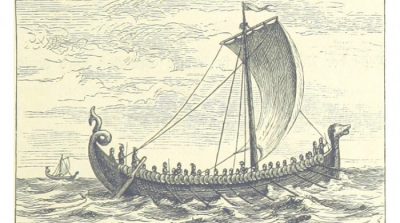
Gerraint grabbed Gwillim by the arm.  Something itched in the back of his mind.  “Sails full against the wind?”  He noticed that their sail looked full because they were with the wind.

“Yes,” Gwillim said, and then he paused as he thought about it.

“British?  Amorican?  Welsh?”  He asked the man up the mast.

“No,” the answer came back.  “Never seen the like.  Long boats, like old Roman ships, but shallow draft.  No rams.  No height fore or aft either.  No upper deck.”

“Norwegian?”  Gerraint asked.  The word Viking was not yet common, but Norwegian ships were not unknown.  Thus far, however, they had been confined to the North Sea and the people who colonized the East coast of Britain around the Humber River had been brought to submission under Loth and Arthur’s sister-in-law, Gwenhwyfach, and their sons, Gawain, Medrawt, and his cousins.

“Could be Norwegian,” Trevor said.  “I wouldn’t know.”

“Ready to come about.”  The crew looked impatient, but Gwillim and Gerraint were eye to eye in thought.

“Hold to your course,” Gerraint said at last.  Their ship was virtually round with a single main sail.  It had been built to crawl along the coast, not for speed, but the sail stayed taught.  The wind blew from their rear.  The sails of the oncoming ships ought to be useless.

“Their sails are full?”  Gwillim confirmed.

“Tight as a drum and coming on fast,” Trevor shouted down.

Gwillim nodded.  “Hold to course,” he commanded.

“Captain!”  The steersman wanted to protest.  The only normal recourse for a merchant ship in the face of pirates was to make for the nearest coast, to a safe haven if possible, but at least to drop anchor, run for their lives and leave the ship to be plundered.

“You heard the order,” Gwillim said, and they watched as the ships began to draw near.

“Put up your sword,” Gerraint told Uwaine.  Uwaine leaned on the railing, sword in hand.  He expected to be caught and boarded at any minute.

As the ships drew closer, they could see the oarsmen and make out faces that were both grim and bloodthirsty.  “Don’t look at them,” Gwillim ordered.  “Keep your eyes to your tasks.”

Gwillim himself looked away, but Gerraint and Uwaine could not help staring.

“Our death, no doubt,” Uwaine whispered.  Gerraint felt the same, but he gambled and his face was not going to show it.  Right before the lead Viking ship reached them, right when they began to hear the screams and shouts of men ready for the slaughter, it was over.  The ships vanished all at once, and several planks of some old merchant wreck floated by.  Uwaine looked up in wonder.

“Manannan.”  Gerraint named the god responsible for the illusion.  “It’s an old trick.”

“If I didn’t know you, it would have worked, too,” Gwillim said, as he came up beside them.  “But I’ve learned one thing.  The sea can play mighty tricks on the mind.”

Gerraint ignored the comment from his friend and pointed to the sky.  The clouds started coming up and darkening faster than possible.  “You better batten down the hatches or whatever you do,” he said.  “That’s no trick.”

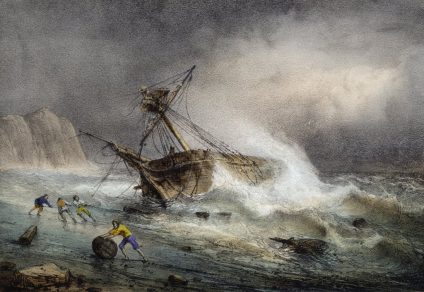
Gwillim’s jaw dropped.  “Come about!”  He panicked.  “To shore.  Tie down the rails.”  He ran off, and Gerraint’s advice to Uwaine was to hold on.  They barely got the sail down before the storm hit them with hurricane force.  The sun immediately got blotted out and their vision cut to half the distance of the ship.  They got lifted on a monstrous wave and spun around so fast and so many times, no man could tell which direction was the shore and which was the deeper sea.  Gerraint and Uwaine tied themselves to the ship in the stern, on the port side.  Gwillim and his mate, Trevor, were tied to the starboard side.  The rest of the crew tied themselves to the bow, except for the two men who were too slow and had already gone overboard.

It might have been half an hour.  It might have been half a day.  It felt impossible to tell how long it lasted.  Their only saving grace was the oak and hardwood construction of the vessel made it nearly impossible to sink, and the round design made it equally impossible to swamp or turn over.  They rode the waves like men on a roller coaster, lifted on mountains of water and sliding into impossibly deep valleys with mountains all around.  Surely, Uwaine would have gotten sick if he had not been so petrified.

Nothing they could do but stay tied, pray and ride out the storm.  They had no way to drive or direct the boat, and no one knew which way to go in any case.

“Rocks!”  One of the crew shouted back from the bow.  He saw the foam of the crashing waves and knew what to look for.

“Hold on!”  Gwillim and Gerraint shouted at the same time.  They slammed sideways into a boulder just beneath the surface.  The sea drew them back and they slammed again and again into the same spot.  They heard a terrible crushing sound which made several men scream.  The mast fell toward the bow, crushed a man and knocked another over the side.

Men screamed in earnest, now, and Gerraint was about to agree with them as a sharp pillar of stone rose right up in the center of the ship where the mast had been.  The waves began to crash down on them, and Gerraint felt sure they would all be drowned in a moment, but then the tearing of the ship ended.  The stern and bow became completely separated, and the stern was pushed by a giant wave to crash against a rocky shore while the bow got pushed to sea. Neither the bow, nor the crew tied to it were ever seen again.

“You all right?”

“Get free.”

“Inland.”

“Shelter of the rocks.”

“Hold on.”

Gerraint, Uwaine, Gwillim and Trevor all shouted at once.  Miraculously, none seemed terribly hurt and in a moment, they scrambled over the slippery rocks and held on to stone and each other for dear life.

“Incoming.”  Gerraint and the others yelled more than once as a giant wave came and tried to crush them against the stone or drag them back out to sea.  Gerraint lost his grip on the rocks once, and lost hold of Uwaine twice.  The second time he saved him by grabbing the Mate’s hand who grabbed Uwaine’s cloak.

There were taller rocks, deeper in, with coves in the rocks that offered some shelter against wind and wave, long ago carved out by just such storms on the relentless sea.  They huddled for a moment before Uwaine found a hole he could slither through.  It put the main part of the rocks between them and the sea, not that the waves were not crashing over the rocks, but at least they were no longer in danger of being carried back out into the deep.  Trevor, the mate wiggled right behind him, and Gerraint navigated the hole well enough.  Poor Gwillim got stuck around his middle, and he might have stayed there if a sudden burst of water had not pushed him through with a pop!  Gerraint and Uwaine, who each had one of Gwillim’s hands, fell on their backs, and Gwillim fell on top of them.  They got up quickly and put their backs to the rocks and shouted.

“Further in?”  Uwaine asked.  “Higher ground?”

“No,” Gwillim became adamant.  “Too risky.  Just hold to the shelter of the stone.”  Trevor shivered and stood wide eyed.  He was going nowhere.

The storm did not last much longer.  Those four had clearly escaped the storm’s wrath, so it seemed the storm decided to give up.  In a matter of minutes, almost as fast as the storm came up, it magically went away and left only a drizzle of rain against the night sky.

“Hours.”  The mate spoke at last.  They saw a three-quarter moon risen somewhere behind the clouds.

“Fire.”  Gwillim suggested the more practical matter, and they let go of their shelter and stepped inland in search of wood.  It seemed a difficult task, but the storm, for all of its violence, was quick enough to come and go.  It had not stayed around long enough to really soak the woods.  With the fire, Uwaine suggested they ought to reconnoiter, to see if they could find out where they were.  The other three stared at him, blankly, until Trevor began to snore.

Hunger came with the sunrise.  A cold wind swept along the beach in front of the edge of the forest in which they settled.  Gwillim immediately took charge, as a captain will.  He sent Trevor to search the shore and pools around the rocks for any fish which the water might have left behind while everyone else built up the fire.  Once they had food cooking, it was Gerraint who really pulled things together.

“Uwaine.” He pointed up the hill out of which the great rocks, near cliffs along the beach, had been carved.  Uwaine understood that he could get a good look at the lay of the land from there.  “I’ll head up the beach and around the rocks at that hedge.  Gwillim?”

“I think I’ll just see if there is anything salvageable from our half of the ship.”  He said.  Everyone said be careful, but then they started out because the smell of the fish cooking started driving them crazy with hunger.

Uwaine found the top of the hill cleared of trees.  From there, he easily saw that they were on an island, but in the dim light of dawn, he was just able to make out the glimmer of another land to the south.  Whether it was the mainland or another island, he could not say.

Gwillim found the ship caught handily on the rocks.  He did not find much inside to salvage, most having been gutted by the waves, but the lumber looked strong, and he already had in mind the idea of a raft, should it be needed.

Gerraint, by far, took the longest time.  Around the natural jetty of rocks, he found a seal colony.  He saw another jetty a hundred yards up the beach and most of the noise came from there, but on his side of the far rocks, he saw several females and their pups, and one little girl with long brown and greenish hair.  Even from that distance, Gerraint could see from her hair and her enormously round brownish-black eyes that she was not human.

“Hello,” he called.  Several of the females began to bark, and the girl looked startled, but she did not move. Gerraint walked up the beach.  He stopped when the girl appeared frightened and looked ready to run.  He had to think about this for a minute.  He heard a voice behind him.

M3 Gerraint: The Isle, part 1 of 3

Gerraint looked back until his family fell out of sight.  He told Guimier to watch after her mother and be a good girl.  It felt like a harder parting than before.  He was forty-seven, after all.  His wars were behind him.  He woke in the dawn with aches and pains and should not have to be forced into adventures at his age.  He wanted Enid.  That was all he ever wanted since the first time he saw her in the court of Ynwyl, her father.  He fought for her then.  He would fight for her a thousand times, and never look back.

“Your thoughts?”  Uwaine asked.  Uwaine had reached that delicate point where his stomach and the sea had a temporary truce, and Gerraint knew talking helped distract his mind.  Uwaine never talked much, except at sea.  That was one thing Gerraint liked about the man.

“Guimier.”  Gerraint said.  “I think she will be a real beauty, that is, if she continues to take after her mother.”

“Yes,” Uwaine said.  “I can see you will have your hands full with her.”

“And Enid,” Gerraint added.  Uwaine said nothing, but he knew.  He nodded.

“Poor Bedivere got upset at being left behind this time.”  Uwaine pointed out the obvious.

“Yes, but he needs to heal,” Gerraint said.  “And I have a bad feeling about things right now.  I wanted a good sword in the house, a watch dog if you will.  I don’t know.”

Uwaine nodded again.  He did not feel good, either, but he could not put it into words.  He also did not feel good in his stomach and needed to sit down.  Gerraint sat with him.

“I was wondering one thing,” Uwaine said.  “Lionel was wondering the same thing.”  Gerraint waited.  From the way Uwaine started, he could tell this would be a good one.  “What’s it like to be a woman?” he said at last.  Gerraint frowned.

“I’m sure I would not know,” he said.  “I have never been able to figure out women myself.”  He shrugged.

“But you’ve lived as a woman,” Uwaine said.  “Lionel swears he saw you become one and set his leg.  And I have seen, myself.”

“It doesn’t work that way,” Gerraint said.  “I may have some practical knowledge, some things I can describe as an outside observer, but what’s it like?”  Gerraint shrugged.  “It is like memory, sort of.  I was four years old, once.  I vaguely recall things when I play with Guimier, but I hardly remember what it was like being a four-year-old.”  He shrugged again.

“But what is it like, having lived more than once?”  Uwaine asked.

“Boring, mostly,” Gerraint said.  “Its’ plain life, not always adventure, you know.  The only thing that makes it worthwhile is the chance to live it with someone as wonderful as Enid.”  He sounded matter of fact about that, and Uwaine well understood.

“No, I meant you must know things, lots of things about which most people have no idea,” Uwaine said.

Gerraint shook his head.  “I said, it is like memory.  You know, things only come to mind where there is something, circumstances or whatever that triggers the memory.  It is not something I am normally even aware of.  Not something I spend time thinking about.”

“But, then you go away,” Uwaine continued his own thoughts.  “Where do you go?  And someone, some other life of yours shows up.  How do you do that?  And how do you decide who will take your place?”

Gerraint looked long at Uwaine.  The man was not normally this verbal.  He must be really sea sick.  “I don’t know how it works, exactly,” Gerraint admitted.  “I don’t know exactly where I go, or how some past or future life is able to take my place.  I suppose time and space are not entirely inflexible, maybe like a good sword.  I guess being the same person exchanging the same basic flesh and blood between one life and the next is not enough to throw time and space out of whack.”

“No, I mean—” Uwaine started, but Gerraint cut him off.

“As for the other life that comes in to temporarily fill my space, I suppose that too is like memory.  It depends on who is accessible, who comes bubbling up to the surface, so to speak.  It is generally triggered by the circumstances and it is someone who has some skill, talent, or power that can speak to the situation.  I suppose at this age I have some say in the matter.  I know a little about some of the lives I have lived.  But at first, when I was young, as a teenager, I was not always exactly aware of what was happening.  A couple of times, anyway.  Am I making sense?”

Uwaine nodded, but his hand went over his mouth.  That ended that conversation.

Gerraint sat and listened to the sound of the waves lap up against the hull.  The sky looked clear, and the day warm.  He wondered if they would have time to catch up with the Raven.  Urien had about two week’s head start, if Gerraint’s calculations were right.  If Urien and Arawn found a boat before the end of the week, they might already be at the Isle of Man.  It might already be too late.

He tried not to think that way.  They were ready to pull into the docks at Caerleon.  After a brief acknowledgement to Arthur and an updating on Urien’s progress, if any was available, they would ride hard across the roads that wound through the hills of Wales.  At least Uwaine should hold down his lunch.  They would deal with the next sea voyage when they got there, or as Bedwyr used to say, “We’ll build that bridge when we come to it.”

“Arthur got quiet,” Uwaine said, when they started to ride the next day.

“He’s concerned,” Gerraint explained.  “I’m not sure he quite realized how strongly the old ways and the old thinking are still holding on to people.  Right now, Christianity is like a warm coat, but there are layers underneath, and those are the ones closer to the heart.”

Uwaine nodded that he understood, but he was back on land and thus back to being a man of few words.

It seemed a long, hard ride to the northwest coast, but actually, as long as the Roman roads were kept up, it was quicker than sailing around.  When they arrived at the Port known as Branwen’s Cove, they would have to depend on luck and a little insider information to catch a willing ship for the Isle of Man.  Sure enough, Gerraint sighed in relief on their arrival.  He saw the British merchant in the bay, and now all Gerraint had to do was see if it was the one for which he had hoped.

He got his answer at the inn.  “Gwillim!”  He shouted for the Captain’s attention.

“My Lord!”  Gwillim recognized him right away, and nodded to Uwaine.  They had fought any number of battles together.  Gwillim even rode among Meryddin’s select crew that went with Arthur to fetch Gwynyvar from her father’s court, twenty-five years earlier.  That was back when the Irish had a great king and a backbone, Gerraint thought.

“Is that your ship in the bay?”  Gerraint got straight to the point as he sat at the table.

“It is,” Gwillim admitted, reluctantly.  “Family business.”

Gerraint nodded.  Quite a few men of war had found other things to fill their days since the peace.  The mercantile business seemed as good as any.  Some hardly knew what to do with themselves, and that started to be a problem in some places.  This whole quest for the Graal had been intended to fill the gap for many but it was a distraction.  Gerraint knew it would not sustain things for long.

“Let me buy you an ale,” Gerraint suggested, and he did just that.  “Though I see you have added a stone or two in these past three years.”

“Not much to do at sea,” Gwillim said.  “I read the charts, follow the shoreline, and eat.”  He shrugged.

“Your ship fast?”  Uwaine asked, conversationally.

“Fastest ship afloat,” Gwillim said with a Captain’s pride, but then he screwed up his brows.  “Why?”

Gerraint told him.  “Your brother, Thomas was in Cornwall when we left.  He thought you might be here about the time we arrived.”

“Leave it to Thomas,” Gwillim said.  “Anything to avoid an adventure.  I’m not surprised he did not offer to take you himself.”

“But?”  Uwaine wanted an answer.

“Of course I’ll take you,” Gwillim said.  “For old time’s if nothing else.”  He downed the last of his drink and stood.  “You rest up.  I’ll get my crew to unload.  Give us more speed.  Can’t leave until the tide, anyway.”  He left and Uwaine breathed a sigh of relief.

“No point in filling myself full of food,” Uwaine said, and he went immediately to find a bed.  Gerraint stayed up for a bit.  The time was getting on.  They were headed for September.  He could smell it in the noontime air.

Uwaine sat in the back as they rode the small boat to the ship.  The water came up, but the bay stayed calm and there would be enough sunlight left to get a good start.  Gerraint stood up front humming some tune about the mate being a mighty sailor man.  Somehow, though, he thought the mate’s name ought to be Gwillim.

“Realistically.”  Gwillim asked as they climbed aboard.  “What do you think your chances are of catching them?”

“None.”  Gerraint answered honestly.  “With two-weeks head start, I could have the whole island surveyed by this time.”

“So why the rush?”  Gwillim asked.

“Because they haven’t found the door to Avalon yet,” Gerraint answered.

Gwillim shouted the orders to get under way before turning back to his passenger.  “Annwn,” Gwillim said, giving another name for the fabled land.  “You seem very sure about that.”

“El Dorado,” Gerraint gave a name Gwillim did not know.  “I am certain.”  Gerraint did not explain.  “And I am also certain that they need to be stopped.  The old ways are gone.  The new ways have come and no good will come from dredging up the ancient Celtic treasures.  Arthur can only see civil war as a result, and to some extent, I agree with him.”

Gwillim nodded.  “I can see Arthur’s point.  The old ways do die hard.”  Then Gwillim had to get busy with running the ship, and that was the end of it until the following morning.

The anchor came up before the sun.  By daylight; they were headed into the Irish Sea and left the coast of Wales behind them.  Uwaine seemed to do very well and even commented once or twice that perhaps he was finally adjusting to the sea.  They were not far out of sight of the coast, however, before they spotted a sail in their line of passage.

“What do you make of it?”  Gwillim called to the man he sent up the mast.

“Not Scott or Pictish,” Trevor, the first mate shouted down.

“Thank God for that,” one sailor mumbled.

“Two, three sails,” Trevor yelled.

“Irish pirates?” one man asked.  The Irish might not have a strong king at present, but they remained notorious as thieves and pirates, quick to plunder at the first opportunity.

“Not Irish,” Trevor shouted to the relief of everyone.  “Six, seven sails.  Full out against the wind?”

“Prepare to come about,” Captain Gwillim shouted.  Men began to scurry.

M3 Gerraint: Revived Romans, part 3 of 3

They found plenty of lumber around the edge of the woods.  It proved easy to find some good pieces for a splint.  On finding some rope in his things, Gerraint remarked that Luckless had a way of thinking of everything.  He tore up Menw’s cloak to tie the splint.  Menw just stared and made no objection.  With the rope, he made a travois and carried the still dazed Lionel to where he could tie down both the man and the leg.

“Bedivere.”  Gerraint called out.  The young man came, his arm in a sling.  “You ride this horse.”  Gerraint said.  “You feel the bump in your arm, slow down or go around because Lionel will feel it ten times worse.

“Yes, majesty, and I really am sorry to have taken that blade,” Bedivere said.

“Howel,” Gerraint called.  “Will you tell this puppy he has done nothing to be ashamed of.”

“First time you’ve been bloodied?”  Howel asked.  Bedivere nodded.  “Well, don’t worry about it.  It happens to everyone.  In fact, I would tell you about my first time, but it was too embarrassing to speak of.”

“Thanks a lot,” Gerraint said.  That was hardly what Bedivere needed to hear.

Once they were set, they did not linger in that area.  They took their own dead, of course, and all of the horses that had not run off, but they left the Romans in the field.  Howel said they were headed to meet a larger force just south of the Lake and if they did not show up soon, there would certainly be scouts.

“But what can I do?”  Howel asked Gerraint.  “Much of our strength was spent in Britain over the past years.  Now that we are facing our own crisis, I do not know if we have the strength to meet it.”

“The Sons of Claudus do seem to be intruding,” Gerraint said.  “But I thought their hands were being tied up by the Franks in the East.”

“I am afraid they may make a treaty with the Franks, and then we would really have to struggle,” Howel said.

“Well then.  I guess you will just have to get there first.”  It seemed a common enough expression.

“I’m sorry?”  Howel did not quite grasp the idea offered.  “What do you mean?”

“I mean, you make a treaty with the Sons of Claudus first and offer your help against the Franks.  That way, they will be in your debt, and more importantly, their army will be in debt to your army and, if you play it right, they may even respect your army.”

Howel shook his head.

“Now, think.  It is very hard to get men to invade a land whose army they have come to respect.  Help is the best way to peace.  If your father’s father had not come to Uther’s aid, he might not have stayed long on the throne of the War Chief.  In return, Arthur came out against Claudus.”

“Yes, I suppose that is a point.  Way back then, Claudus was a real threat, and my father did have a fight on his hands.”

“Are you kidding?”  Gerraint said.  “We kicked Claudus so bad it took his sons twenty years just to climb out of the hole.  And for your information, it was not way back then.  I was there, too, and I’m only forty-seven, not an eighty-year-old dotard.”

Howel smiled before he turned serious again.  “But it still would not work.  There is too much bad blood between our families, and maybe because we beat Claudus so badly.  And, don’t forget, both Lancelot’s and Lionel’s fathers lost their lives in those battles.”

Gerraint shrugged and offered another cliché.  “Nothing ventured, nothing gained,” he said, then he made a sour face.  “And I hate clichés.”

Back at Howel’s castle, Gerraint let his armor go home and returned to wearing his comfortable clothes.  He spent a week being sure he did not miss one opportunity to soak in a hot, indoor tub.  It did his muscles wonders and he thanked the Romans, privately, for instituting the idea.

“We send Kvendelig, Gwarhyr and Menw home and see what has turned up in our absence,” Gerraint said, plainly enough.  Besides, he was missing Enid, and little Guimier, too.  He just wondered what it might be like to have a good, Cuban cigar to smoke, not that he ever smoked, or even knew exactly what tobacco was, when Uwaine summed it up in his way of few words.

“One down, one to go,” he said.  And so it appeared.

This time, the Channel crossing went uneventful.  Gerraint got promises from the three Welsh Lords that they would give up their quest and stop threatening the future by dredging up the past.  He did not feel entirely satisfied with their pledges, but they were men of the Round Table, and as such, he accepted that their word could be trusted.

Once home, Gerraint felt delighted to find that Enid missed him too, and so did Guimier.  Indeed, it was hard for him to decide which one hugged him longer and harder. Sadly, he also found a messenger waiting for him, even as he pulled into the docks.  Urien, the Raven and his sidekick Arawn had been seen and traced.  Weldig, Nanters, and Ogryvan had all noted their passage.  Only old Pelenor seemed to have missed them on this trip.  Perhaps their lack of a warm reception the last time around, when Peredur was there, made them avoid those lands.  Perhaps Pelenor was just getting old and just missed them, Gerraint thought.  In any case, they appeared headed for the North coast of Wales, and from there, Gerraint guessed they would head for the Isle of Man.

In the evening, while Enid lay peacefully beside him, Gerraint knew Manannon, the old son of Lyr, God of the Sea, still roamed around.  Rhiannon remained.  Manannon had been reported by sailors and fishermen from time to time.  He guessed Urien went on those rumors.  He imagined they headed for the Isle of Man on the strength of such gossip.  It made sense.  Surely a god would know the way to Avalon, or Annwn, as Urien of Leogria would call it.

Enid pulled up and laid her arm across Gerraint’s chest.  She threw her leg around his and he pushed the hair from her back to see her face.  Enid was not able to sleep, either.

************************
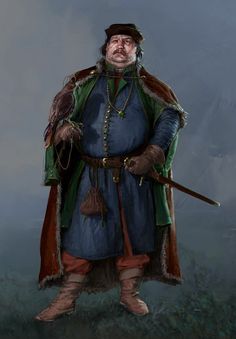
MONDAY

Gerraint is needed again.  Urien, the Raven is headed for the Isle of Man and Gerraint will have to stop him.  Until Monday, Happy Reading.


*