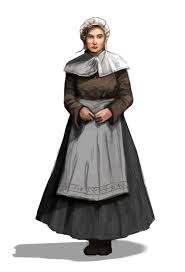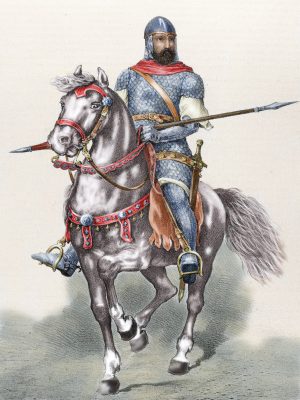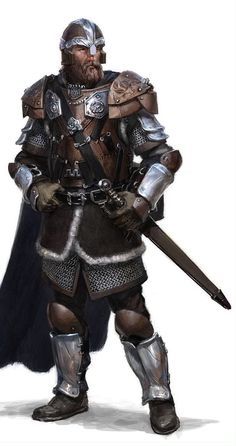
M3 Margueritte: Backed into a Corner, part 2 of 3

One little one did come up to Margueritte.  “We don’t hold with slavery neither,” he said, before he vanished into the woods.

“Of course,” Margueritte said.  That was one of her rules.  Then Roland got there to help her up while a whole crowd had gathered because of her cry.  They all laughed hard, with the great guffaws of her father sounding out above all.  Finnian, to preserve what remained of his dignity, pulled up his pants, only to hear them tear at the seam.  He had a smiley face painted on the butt of his slacks, and yes, the sign pinned to the back of his jerkin said, “Kick me”, in three languages.

Margueritte still giggled when she reached the inn to change for the night’s festivities.

The king’s house seemed festive, but on entering, she felt the air of tension underneath it all.  They had music, and though a couple of tunes were danceable, for the most part they were not.  Margueritte felt sure it was deliberate so as not to encourage the queen.  She thought it must have been nearly impossible for the musicians to fill a night with Breton music to which one could not dance.  They had food, also in abundance, and spread around numerous tables where one could help themselves whenever the urge might strike.

All felt wonderful, and Margueritte found herself quite shy despite being with Roland who became very gregarious and outgoing.  He seemed to know a lot of people for having been in town for all of a day and a half, and the ones he did not know seemed to know him.  They mostly knew Margueritte as well, but in part her embarrassment came from being called such a sweet girl and, “My how you’ve grown,” and “You’re quite the young lady now.”  She knew she was only fifteen, but they did not have to treat her that way.  When she had just about had enough, her mother became her refuge and for a minute she wished she was back at the inn with Elsbeth and Squire Tomberlain.

Roland, for all his desire to be with her, kept so easily being dragged away by the men.  She told him, at last, to go and enjoy, and he did until the time came and the chamberlain called for quiet.  Roland stood beside Margueritte when the people attended the king.  The king sat in his place on the dais, and the queen beside him, but a bit further away and a bit lower than before.  Finnian filled the gap to the king’s left, and at the moment, he looked around the room with his hardest stare in case anyone should be tempted to smile in his direction.  Duredain stood to the king’s right, and he leaned over to whisper and the king then remembered.

“Gentlemen,” the king said.  “My lords.”  He paused.  “And ladies.”  He added.  “I have received correspondence from Charles, Aid decamp of the Franks.  He has suggested that Lord Ahlmored may pose a threat to our fair country.”  The king laughed and most of the Breton lords laughed with him.  Ahlmored, most not knowing him dead, had become the butt of quite a few jokes since his sudden departure.  The king waved for silence.  “Nevertheless, Lord Durin has volunteered to take a ride to the south coast a week hence.  When he returns, having sighted no African sails, I will return correspondence that we have indeed had our eyes on the coast.”  Most of the Lords snickered again as Lord Durin stepped briefly into the center and waved to all.

Duredain whispered in the king’s ear and the king waved him off, like he did not need to be reminded.  “Now as for this dragon,” he began, and many in the court smiled but those who knew became still and serious.  “I am not convinced there is such a beast.  I believe rather it is a petty chief or robbers, cleverly disguised.  Dragon stories are all around these days what with Beowulf and the stories around George the Saxon.  I say, we leave the dragon stories to the Danes and Germans.  Let us be more sensible about these matters, and let my petty chieftains settle their own squabbles as they see fit.”

“But I’ve seen it,” one man’s voice rang out.

“No, my Lord,” the king countered.  “I am not sure what you saw was really what it was.  I did say, cleverly disguised intentions.  Mark me, someone is growing rich off your delusions.  You must find the real culprit, and not bother me with such nonsense.”

“But.”

“Enough!”  The king’s rage flared for a moment as he slapped the arms of his chair and rose to his feet.  He calmed and sat.  “I’ll not speak of it anymore, as it will merely distract from the real joy of this day.”  With this, the queen, even in her lowly position, sat up a little straighter in her chair.

“Judon,” the king called.  If someone stood in the wings, they did not respond.  “David!”  The king tried again, and slowly a young boy poked his head around the curtain.  One could almost feel the push his nanny gave him as he stumbled, recovered, and walked slowly like one overawed by the gallant lords and ladies that surrounded him.  At last the king grabbed the boy around the middle and pretended affection.  The boy did not resist, but he never took his eyes off the crowd.  He looked scared, and almost like a child who could cry at any moment, though surely, he was too old for that.

“His mother calls him David,” the king said patently ignoring the queen.  “I objected at first, but I understand this David was a great king in his day, and a valiant warrior.  His name, though, is Judon and by royal decree three weeks gone, Wednesday, I have declared him my son and heir.”  Many present were not surprised, and of those who were, most were accepting.  A short round of applause went up.  Margueritte thought it very short.

M3 Margueritte: Backed into a Corner, part 1 of 3

Chief Brian took a deep breath.  “Please understand.  I love our people and I expect the witch’s plans will not be in their best interest.  I assume, though I may be wrong, that you may have the power to undo her wicked scheme, whatever it may actually be.”

Margueritte paused once more to consider.  “But how do you know I am not also a witch, maybe worse than the other?” she asked.  Brian looked at her again, briefly before he looked away once more.  He seemed to laugh.

“Because I have seen you and know you, and your mother and family as well.  If there is anything in you, it is purity, not wickedness.  You have the Christ in you.  And you have shown no signs of wanting to take over anything or bend anything to your nefarious will.  Why, you are no more witch than I am.”

“But what of the king’s left ear?  Surely, he has some sense there,” Margueritte said, but Brian sighed.

“Alas, his left ear is occupied by Finnian McVey, and that Irishman is only in it for himself.  Lord knows his agenda, except he is nobody’s fool, not even for the witch. But you see, now, whether the king turns to the left or to the right it will not go well for us, not well at all.”

Margueritte had a lot to think about, though she was not sure there was anything she could do.  She hardly had time to think, though, because as she stood to walk, she found herself cornered by Finnian McVey himself.

“Young Margueritte,” he said and turned up his thin lips in what Margueritte imagined he supposed was a friendly smile.  “A weard, if you would be so kind.”

“Of course,” Margueritte said, curious enough after what the village chief just told her.

“Over here, if you don’t mind,” he said and took her by the elbow and lead her to the edge of the woods.  “What I have to ask is delicate and I would not have untoward ears listening in.

Margueritte extracted her arm before she was pushed into the actual woods, but she found herself well within the shade of the trees and her back to one great tree, while Finnian blocked her way back into the light.  “I am sure there is nothing I might tell you which is worth such secrecy,” she said.

“Ah, but there is.”  He pressed his hands together and put his fingers to his lips as if deciding exactly how to phrase things.  He stepped closer, and she took a small step back, and so he moved her more surely into the shadows.

“I have it on authority that around your home there are certain powers in the world and spirits of the darkness.”

“Then your authority is wrong.”  Margueritte said quickly even as she wondered who else knew the supposed secret.  “For I would entertain no darkness around my house, and neither would my mother nor my father who is Count of the Frankish Mark, lest you have forgotten.”

“Light and dark,” Finnian said with a step to force her back.  “These are relative terms.  They say there is a god, Abraxas, who bears the burden for both.  Of that, I would not know, but of the cratures that surround you, I am certain,” he drawled.

“Sir,” Margueritte said.  “I must return to the grounds before the others miss me.”  She was not really with others apart from Roland, Tomberlain, Owien and her father, and they were engaged in the games, though Finnian did not need to know that.  She started to walk, but he put out his arm and stopped her steps.

“Not yet,” he said.  “For I also know these powers worship the ground you walk on and will do whatever you ask.”

“Sir.  Even if that were true, it would be in the asking,” Margueritte said.  “Your spirit belongs to you and for that only you are accountable.  Would it be any different with any other spirit?  I think not.  Whatever you have heard, each one belongs to him or herself, not to me.”

“Ah, but if you were to ask, you could give one to me and then I could see what is what,” he said, and Margueritte took two steps back on that note.

“I am not one to endorse slavery, especially to the likes of you.”

His hand came very close to her face, but he withheld his slap.  “I am not asking you, missy,” he said instead.  “I am telling you to give me one of the little people, one with power in this earth, and you will, soon, if you know what is good for you.”

“Never.”  Margueritte charged toward her freedom, but Finnian caught her and dragged her deeper into the woods.  Her eyes yelled for help, but her mouth got covered by his hand.  She dreaded the taste but bit him all the same.  He yelped and she got out one “Help!” before he hit her, hard.  The smile appeared long gone from Finnian’s face as his thin lips turned down in a growl.

Finnian let go suddenly when a little one ran up his back.  He giggled, even as he caught something out of the corner of his eye.  He spun round and round and tried to get a good look, but the fee moved too fast and stayed always just in his peripheral vision.  When he fell over from dizziness, an impish lady gave him a wet, slobbering kiss right before the two below pulled on the string that held up his pants.  He fell, face down into the puddle of mud, not there a minute ago.  Finnian got up, angry, but his pants stayed around his ankles and there came a great roar, like a lion got right behind him, though it came thundering out of the littlest dwarfish creature.  Finnian screamed for his life and ran.  He tripped several times because of his pants as he ran back to the ground of the games.  Margueritte fell-down, laughing.

M3 Margueritte: Roland, part 3 of 3

Roland paid the gypsy woman before Margueritte could speak, but the woman’s practiced eye caught her reluctance.

“Little unbeliever?”  The woman spoke better Frankish than Breton.  “Do not be afraid.  Though the world is far greater than you could ever imagine, full of sprites and demons of all shapes and sizes, you need not fear them.  They will not touch you here.”  The suggestive speech had been designed to stir up anticipation and a little fright, even as the woman said, do not be afraid.  Margueritte did not get taken.  Besides, she had friends in all shapes and sizes, so she heard nothing new in what the woman said.

“Lord.”  She took Roland’s hand and he looked to Margueritte with a most silly look.  “You have a strong hand.  I see you have already known battle, but many more will follow after the first.  You will be well renowned and well respected and win great honor and praise for your deeds.  Great courage I see, and even kings will seek your counsel.  Such is a future to be desired.”

Margueritte took a breath.  The woman told him what she undoubtedly thought he wanted to hear.  Perhaps she was safe.  Perhaps the woman was merely a fake.  Good grief, Margueritte thought.  The woman could have said that much just by looking at his clothes.

“Five children.  No.  Only four will live, but they will follow you in honor, especially your two sons.  Great are the days ahead for you, and this, then is your young Lady?”

And why should a fortune teller have to ask such a thing?  Margueritte wondered.  The woman reached for her hand, but Marguerite still felt reluctant.  “Go ahead,” Roland said, quietly, so as not to break the spell.

At last Margueritte put her hand out.  The woman looked and turned the hand over and back again.  She reached for Margueritte’s other hand and stood, knocked over the stool she sat on, her eyes wide and her look far away.  “It is the one,” she said.  “It is,” and she spoke for a minute in a language neither Roland, Margueritte, nor Thomas had ever heard, and then she leaned in close and breathed garlic and onions in Margueritte’s face.  “The curse,” she said in her breath.  “The curse!”  She screamed and hurried out the back of the tent.

Margueritte felt in shock and near tears, not knowing why.  Roland picked her up by the arm and with Thomas they left that area.

“What could have come over that woman?”  Roland wondered out loud.

“I can’t imagine.  I’ve never seen the like,” Thomas said.

“And she was doing such a marvelous job of telling us just what we wanted to hear.”  Roland said.  Margueritte looked up and felt glad he had not been taken in.

“Just what I was thinking,” she sniffed, and took out her handkerchief to wipe her nose and dab her eyes.

“Strange, that,” Thomas said.  “But I would not worry about what a gypsy says.  They are a strange breed altogether.”

“Breedies.”  Margueritte remembered what Goldenrod had called them, and they went back to the inn where Thomas left them to attend to the king’s table.

Margueritte did not sleep well that night.  She never did just before that time of the month.  She felt glad that the morning would be filled with races, and the afternoon filled with games.  Likely, she would see little of Roland until that evening.  She felt excited about that, because for the first time she would be attending the king’s feast instead of waiting in the cold and dark inn for the fire to return.  With that thought she slept a little.  She still got up in the morning before most.

Lord Bartholomew won the race that year, and handily.  Margueritte did her best to congratulate her father, but he said it was a hollow victory since there was no Gray Ghost to beat.  In the afternoon there were indeed games, and she was thrilled to see Roland do so well at so many things.  Normally, she would have been at the fair with Elsbeth and Maven, but this year she decided it would be best if she simple sat quietly.  She would have done so, cheering on her quarterback, as she thought of him, and lamenting the fact that she was not more the beautiful cheerleader type, except for two interruptions.

The first came in the form of fat Brian, the village chief who sat beside her on the bench and looked over the field where they were pitching stones and trees.  She just started wondering if Roland might think the Breton went in for some strange sports when the chief spoke.

“Have you seen Curdwallah?” he asked.  It seemed a very strange question.

“No,” Margueritte said.

“Neither have I,” Brian responded.  “But you can be sure she is around.”  He got silent for a moment, watched the games and pretended that he was not talking to anyone at all.  Margueritte’s curiosity finally got the better of her.

“Why do you ask?”

“Because Duredain the king’s druid and Canto, my own druid, are both completely under her spell, as far as I can tell.  Canto I can handle, but Duredain has the king’s right ear, you know.”

“Why do you say they are under her power like that?”  Margueritte asked.

“Because they do not seem themselves.  Because they are mouthing words I have heard her speak.  Because that woman is a witch in the worst possible terms,” he said.  Another moment came of watching before Margueritte spoke again.

“So why are you telling me this?”

Brian looked at her for the first time, but only briefly.  He looked away again before he spoke.  “Because I know you have some connection with the powers in this world, yourself.”  He put his hand up quickly to stop her mouth and then pretended to wipe his chin.  “I have my sources.  I know there are spirits hanging around your home and I know they answer to you.  I have seen things through the touch of your own hand, in case you have forgotten.”

Margueritte looked down at her lap and worried her hands.

************************

MONDAY

Margueritte gets Backed into a Corner.  Don’t Miss It.  Until then, Happy Reading.

*

M3 Margueritte: Roland, part 2 of 3

Roland looked up and Marguerite turned, both having rather silly smiles, just as Hammerhead stuck all six potatoes in his mouth at once and chewed and announced.  “These are good to eat.”  Margueritte barely stopped him before he disgorged his chewed bits into the good bin.

She thanked the little ones and asked them to see if Luckless or Tomberlain might need their assistance.

“Always glad to be of service,” Grimly said, and Roland rolled up his sleeves and helped.

“That gnome still has a lot of imp in him,” Margueritte said, and that sparked a good discussion, but the kiss they both thought about never got mentioned.

When the evening came. Marta came to Margueritte’s room where she helped brush Margueritte’s hair.  That near black hair, when taken down, now fell to the floor which made it more than five feet long.  Marta had begun to help her care for it, though she also bore the brunt of nearly every other duty in the house.  Margueritte was grateful, and they were both rather giddy that night, though Margueritte became a bit miffed by bedtime.  She could hardly get a word in about Roland.  Marta kept talking about her Weldig, the potter, whom she called, Mister Potter.  And every time Margueritte did mention something, it only reminded Marta of something else.  Marta was not long for this world, Margueritte reminded herself, and she reconciled herself to having good dreams, which she did.

By the time they reached Vergenville that next day, Margueritte felt rather grumpy.  She knew what was going on, physically, but she thought the timing rather poor.  While she waited at the inn for Roland to deliver his letters to the king, all the talk around her was of the dragon.  The people hoped that now that the king had come from his western court, something might be done about this scourge.

“I heard it was as big as a tower,” one said.

“Big as the whole village,” another countered.

“I heard it ate a whole fishing boat in one gulp, fisherman and all,” one said.

“A whole fishing fleet,” yet another spoke.

“It’s big, but not that big,” Lord Bartholomew turned to the table.

“You’ve seen it then,” the baron concluded.

“I have,” Sir Barth nodded, and stopped Margueritte’s hand.  “No,” he said.

“Father.”  She complained, rolled her eyes, but acquiescing in the end.  She contented herself with unfermented cider, though she thought she ought to be able to try the harder stuff.

“Bartholomew.”  Lady Brianna called from the doorway.  Owien stood there, and Elsbeth was going, too.  Bartholomew stood and downed his drink at once.

“Coming,” he said.  “Time for the Fens.”

“But I thought the king said you were not supposed to do that anymore,” Baron Bernard questioned, with a smile.

Bartholomew shrugged.  “Young Owien has so been looking forward to handing out the soap, I hate to disappoint the boy,” he said.

“You’re not going this year?”  The Baron asked after they left.  Margueritte shook her head.  “Oh, that’s right.  Your young man.”

“I bet he gets to drink the real stuff,” she said, in an attempt to not turn red at the thought of her young man.

“You had better wish he doesn’t like the stuff,” the baron suggested, as Constantus came crashing in the door, all but swearing.

“Don’t bother,” Baron Bernard said.  “Bartholomew’s gone to the Fens.”

Constantus calmed down instantly, got a drink and took a seat with his friend.  “That dragon got my Gray Ghost.”

“Ah!”  The Baron smiled, knowingly.

“It didn’t.”  Margueritte felt concerned.  Constantus looked up and patted her hand reassuringly.

“It was the Gray Ghost number two,” he said.  “And really too old to be racing again.  The truth is Gray Ghost number three is not ready.  Still too young.”

“Too young?”  The Baron asked.

“Yes, and not a true gray in any case.”

“Too bad,” Margueritte said.  “Father has been breeding Arabians to get a winner, and now he’ll never know.”  They all had a little chuckle at that thought.

Not long after that, Roland returned with the bard, Thomas of Evandell.  Margueritte slid down the bench so Roland could sit comfortably beside her, and then he, the bard, the baron and Lord Constantus had a grand old time all around her.

At last, Marguerite sighed, and Roland got the hint.  “I think it would be good to see this fair of yours, Thomas,” he said.  He rose-up and put his empty tankard which had been full of ale on the bar counter, and Thomas rose with him.  “And would my lady like to accompany us?”  Roland added.

Margueritte rose immediately.  She said nothing but merely took Roland’s arm, and then Thomas’ arm as well for balance.  Together, they went into the market fair.  Thomas said, “Well I’ll be,” more than once, because as long as he held Margueritte’s arm, he saw what she and Roland saw.  Every little one, every sprite, elf, dwarf and fee in the market area, though otherwise invisible to the people, came and paid their respects to the girl before they began to pilfer their little bits.  Odd, though, that Thomas was not truly amazed, nor the least bit frightened by it all.  He said he could not tell all those stories for all of those years without believing at least some of them.  He did ask, however, why they could see the sprites when no one else could and why the little spirits were so careful to pay their respects to Margueritte.

“Isn’t it obvious?” Roland teased.  “Clearly my lady’s charms surpass those of other, ordinary mortals.”

Margueritte struggled and at last produced the littlest burp.  “Excuse me, Gentlemen,” she said, and Roland fell over for laughing.

When they came to the end of the royal fair, they found a small gypsy camp had been set up.  Margueritte thought it odd that there were no little ones among the gypsies, but she said nothing to the others.  She felt reluctant to enter the area herself, but with some persuasion she came along, and the first place they came to, was a tent with an older woman who claimed she could tell fortunes in a man’s palm.

M3 Margueritte: Roland, part 1 of 3

Three days before Samhain in that same year, Roland came riding into the Triangle, much to the surprise of everyone, especially Margueritte.  “I was invited.”  He professed and pulled Margueritte’s embroidered handkerchief from his pocket.  Lady Brianna just smiled and welcomed him, regally.  Bartholomew, though glad to see the young man again, looked at his daughter with a different eye.  He knew nothing about it.

“Are you returning my token then?”  Margueritte asked later.

“Not a chance,” Roland said.  “I’ll let you know, but I suspect you may never get it back.”

Margueritte hardly knew what to say, but the joy got written all over her face.

At supper, Roland explained his presence.  He was sent by Charles with letters to Urbon, king of Amorica.  After leaving the Breton Mark and on returning to Paris with Father Stephano, he dug up the letters Bartholomew and Baron Bernard wrote over the last several years.  He read all about the Moslem Ambassador and wished to convey his congratulations on Urbon having the foresight to throw the man out.  The letters discussed at some length the incursions of the Moors into Aquitaine and suggested that Urbon keep a careful watch on the coast, knowing the coastline to be full of nooks and crannies where a raiding party might easily find a foothold.  Should he need the assistance of the Franks, Charles assured Urbon of his friendship and support.  And that was about it.

“Such letters could have been carried by courier.  Nothing secret there to move you out of your comforts in Paris,” Lord Bartholomew said.

“Actually, I volunteered to bring them,” he said.  Margueritte looked at her food and her heart fluttered.  “I wanted to see how Tomberlain was getting along with his swordplay.”

She kicked Roland this time, and she meant to.

Sadly, for her, Roland did seem to spend a lot of time with her father, Tomberlain, and even Owien.  They rode once for an hour or so.  They had a picnic on the second day, but Elsbeth came along and Goldenrod distracted everyone.  They did walk by the stream, but not much got said.  It seemed like they both became suddenly very shy.  Then Margueritte had her chores to do before they could leave for Vergenville, and she did her best to see them done.

Margueritte worked in the barn, in the potato bins, when Roland came unexpectedly.  She wore her apron.  Her hands were dirty, and she even had a streak of dirt across one cheek put there by the back of her hand used to wipe away the sweat.  “Oh, Sir.”  She started to turn away.

“Oh stop.”  He said in her same tone.  “My mother and sisters sorted potatoes all the time, and likely more than enough for a lifetime.”

“It is important, you know,” Margueritte said.

“Absolutely.  One rotten one can spoil the whole bin.”  He looked up at Grimly, whom he genuinely liked, and Goldenrod for whom he had the deepest love and affection, and Hammerhead, whom he at least respected, even if he still found it hard to look at the fellow.  They lounged around on the hay while their mistress sweated at her labor.  “Say, though,” he said.  “Wouldn’t it be better to let these little ones of yours sort the potatoes?  You and I could maybe walk again by the stream before your brother and father find me.”

“Oh, I don’t know if that would be such a good idea.”  Margueritte started.

“Why sure.”  Grimly jumped up.  “We would love to sort the taters.  I’m getting bored just sitting around anyway.”

“I can help.”  Goldenrod assured them all.

“Er, okay,” Hammerhead said, not quite sure what was being asked.

Margueritte explained while she wiped her hands as clean as she could on her apron.  “You just need to go through them one by one.  The good ones go here.”  She pointed to the empty bin.  “Any that are especially soft or if they are rotten, or even if you are not sure if they are good to eat, put them in the bucket.  Oh, I don’t know.”  She said in one breath, turned to Roland, and nearly bumped into him.  He put his arm over her shoulder as he spoke.

“We can stay a minute to see they get started,” he said.

Margueritte reached both hands up to hold his and make sure his arm stayed around her shoulder, but she said nothing.

“Now, if I’ve got it, the good ones go in the bin and the rotten ones in the bucket.  Come on, then.”  Grimly climbed up on the bin.  Each little one took a potato.  At least Goldenrod tried to take one, but she could not quite lift it.  Hammerhead took about six by accident and stared at them in utter uncertainty.  Grimly made up for the other two by instantly going from one to the next.

“No good, no good.  Definitely no good.  Nope. No way.  Not a chance.”

“Ugh!”  Goldenrod tugged with all her little might.

“Nope. No good. Ooo, this one looks like Herbert Hoover.”

“Let me see.”  Goldenrod left off her tug of war.

Hammerhead, still unmoved, stared at his spuds.

“Who is Herbert Hoover?”  Goldenrod asked.

“I don’t know, but this looks like him.”  He looked at Goldenrod and they spoke in unison.  “No good.”  The bucket started filling rapidly and not one was yet in the bin.

“Nope. Nope. Nope.”  Grimly started shoveling toward the bucket and Goldenrod got back to tugging until Grimly made enough of a dent for her potato to roll and take her with it with a “Weee!”

Margueritte’s sides were splitting with laughter, and Roland laughed right with her until she turned toward him, and their eyes met.  The laughter vanished in an instant and he drew her up to him and held her tight.  Their lips touched, soft and warm, and they might have remained that way for some time if Grimly had not whistled.

“Woohoo!”

“Whaty?”  Goldenrod said and got her little head above the edge of the bin.

M3 Margueritte: Guests, part 3 of 3

Once in bed, Marguerite stayed awake half the night, convinced that Roland must think her the most backward, provincial child on the earth.  She had no idea how the ladies of Paris were.  What did they wear?  What carried their conversation?  Their behavior?  Were courtly manners the same as her table manners, or was she hopeless?  How did they wear their hair and their faces?  Poor Margueritte felt miserably filled with unanswerable questions.

She overslept in the morning.  The sun topped the horizon when Elsbeth woke her.  She had to dress quickly for the ride to Lady Lavinia’s and her Wednesday Latin.  Charles and Roland would be going with them, of course, and that caused her to pause at her little mirror to be sure her face and lips were at least as good as she could make them.  By the time she got downstairs, she only had time for a quick bowl of yesterday’s bread crumbled into milk, as was the common breakfast among the Breton.  Then she went straight to the barn where Elsbeth already sat up on her horse.

Margueritte breathed when she saw her own mare saddled.  Meanwhile, Sir Roland checked the straps on his horse and Charles’, as well as the one Bartholomew sent in the hope that Father Stephano could be convinced to return to Paris.  She also saw the mixed Arabian they would be taking.  A present, Margueritte gathered.

“Sir Roland.”  She got his attention.

“Margueritte.”  He looked up and brightened from his work.  “And just Roland, please.”  Marguerite turned to her own horse, embarrassed once more because she had forgotten.  “And where is that Goldenrod of yours this morning?”  Roland asked.

“Flitting hither and yon,” Margueritte said.  “That is what she always says.”

“She doesn’t hang around much.”  Elsbeth spoke up.  “And never comes in the house, she sets Father to sneezing so bad.  He has the allergies, you know.”

“A condition I am glad not to share,” Roland said.

“But where is Sir Charles?” Margueritte asked in return.

“My Lord is in the chapel with your parents, your brother, Father Aden, and that most remarkably beautiful creature.  Jennifer, I believe.”

“That isn’t her real name.”  Elsbeth spoke up.  “It’s Little White Flower.”

“What an unusual name.”  Roland said, and with a thought he pointed to Margueritte.  “One of hers?”  Elsbeth nodded.  “I suspected,” Roland concluded.

“She came from the other side of the world,” Elsbeth said.

“As far as Cathay?”  Roland asked offhandedly.

“America,” Elsbeth said.  “That’s what Marguerite calls it.  She says the world is round, like a ball, and all the land from here to Cathay does not even fill a quarter of the ball.  She says most of the earth is covered by oceans, but far over the Atlantique there is another world unknown to us which she calls America, not Amorica, mind you.”

“I see you found your tongue today,” Margueritte said to her sister.

“Yes.”  Elsbeth said.  “Here it is.”  She stuck it out and Roland laughed as Owien came outside and mounted his much-improved horse.

“Have you met Owien, Elsbeth’s boyfriend?”  Margueritte asked, in a moment of cattiness.

“He is not,” Elsbeth shouted and spurred her horse some ways out into the triangle.

“I am not,” Owien protested as well, but his eyes followed Elsbeth all the way.

Roland really grinned then.  “Sisters,” he said.  “How I have missed my sisters.”

Not long after that, Charles, Bartholomew and Lady Brianna came from the chapel.  The two Franks who escorted them in those days, having already arrived and taken to their mounts, waited with Elsbeth and Owien out front.  Margueritte mounted and joined her sister.  Tomberlain and Roland followed.  Lady Brianna gave her usual advice about being careful on the road and to keep their eyes open for the dragon.  Then Charles paused to shake Lord Bartholomew’s hand and he, and a servant to bring the spare horse and the mixed Arabian completed the party, and they were off.

It took two hours, a gentle ride to the home of Constantus, and they normally planned to arrive by ten; but with this crew and their slightly later start, ten–thirty was the best to be hoped for.

The two guards lead the way followed by Roland and Charles.  As most of the way was only suited to two abreast, Margueritte rode beside her brother.  Owien and Elsbeth straggled along in the rear, followed only by the man with the horses in train.  Owien felt honored to be given the rear-guard position, as he called it.  Elsbeth rode most of the way doing her best to ignore the boy.

The only time Roland dropped back, Tomberlain pushed in and Margueritte found herself riding beside Sir Charles.  They passed pleasantries at first before Charles surprised her.

“Roland is quite taken with you, you know,” he said.

She could not help taking one quick look back before answering.  “And I with him,” she admitted, and then covered her tracks.  “What young girl would not be taken with such a brave and handsome knight?”

Charles said nothing, so Margueritte went on.  She talked about her Latin, being fluent in both the Frank and Breton languages, and even a little Greek that she learned from father Aden.  She spoke of spinning, weaving, sewing and pointed out the tapestry that covered the wall right by the front door of the Manor House, if he saw it.  That was hers.  She told him she played the harp and could hold a tune well enough.  Then she paused and thought she might be bragging a little like a man, and perhaps that was unbecoming.

“You’ll forgive me,” Charles said.  “I am not really conversant with the conversation of women and maidenly virtues but do go on.”

“Oh, no, Sir,” she said.  “In fact, I just remembered a rather serious question I wished to ask you.”  She changed the subject.  “It seems to me if the Saracens found an easy raid and grew rich in Aquitaine, they may test the waters again, do you think?”

He looked at her and cocked one brow.  “I think that very thing,” he said.

“And is there no help we can send to the people there to shore up their defenses?” she asked.

“My Father won’t have it,” Charles answered straight.  “Duke Odo of Aquitaine will have to see to his own.”

“But why, if we have been such good friends with the people there?”  Margueritte asked, not meaning to press, but to give the man a chance to talk on more familiar ground.

He looked at her again and nearly tipped his hat before he spoke.  “Our king is so enamored with Christian piety he spends most of his days locked away in his apartments.  He has lost touch with the real world and has left the running of the kingdom in the hands of my father, Pepin, who is himself getting old and stuck in his thinking.  This is not a good thing, because some have filled in the gaps, as it were, and most of those others cannot see past their noses or their purses, and they see no reason to help anyone but themselves.”

“Ragenfrid,” Margueritte nodded.

“Among others,” Charles affirmed.

Then Roland pushed up again, and Margueritte felt forced to fall back beside her brother, and there they rode until they reached the house.

The home of Constantus, built in the Roman style with a great fountain in the central courtyard, had rooms all around, upstairs and down.  This, of itself, did not appear unusual since the Romans had ruled over the land for some five hundred years.  What was odd in the household was the fact that Constantus insisted that nothing be spoken there except Latin.  In fact, the letter he wrote to the Pope in Rome concerning questions about certain finer theological points, so impressed the Pope in its’ perfect grammar, construct and style, the Pope felt moved to send Father Stephano all the way to Brittany.  Now, Charles and Roland waited in the courtyard while Father Stephano got fetched.  The girls, Tomberlain and Owien retired to their room to wait Lady Lavinia and the beginning of their lessons before the noonday meal.  Among other quirks, Constantus had never quite taken to doors, and so many of the rooms off the walkway were closed only by a curtain.  Margueritte could not help overhearing the conversation in the courtyard, though she did not have to listen.

“I am not sure I approve or disapprove of your sentiments.”  Charles said to Roland.  “She is certainly bright, and will no doubt make a fine woman and a fine wife when she is older.  But you must remember she is still quite young.”

“She will grow,” Roland said.

“Yes, but she is also a farm girl, a county maiden, and not a true member of the genteel court.”

“And I am a farm boy, lest you forget.  I grew up on the Saxon Mark,” Roland countered.

“Yes, but she is cute now, however she will age fast in the country.  Soon enough she will look haggard and quite likely fat.”

“Not so,” Roland countered again.  “I have seen her mother do not forget, and she is a very striking woman for her age.”

“Yes,” Charles said.  “I will grant you that one.  But still, you must be sure.  This is not the kind of girl you toy with.  For her it will be marriage or nothing.”

“I have had enough of toys,” Roland said, and they wandered to another quarter of the court and their conversation got lost.  Margueritte hid her face in her hands.  The boys stayed quiet enough, and kindly showed no great expression on their faces, but she was not about to look at Elsbeth.

In a short while, Lady Lavinia came to fetch them, to take them to an upstairs room.  Father Stephano had also arrived with Constantus and the pleasantries and introductions seemed about over when Margueritte arrived at the staircase where she lingered behind.

“You were at the queen’s birthday celebration when the cake was set out, were you not?”  Charles asked the priest.

“I was indeed,” the priest said.  “And I did see the chamberlain sprinkle the dead flies on the cake.  He told me he did it because of some offence the queen had done to him, and I will swear to this before the king.”

“Lover’s quarrel,” Roland quipped, and Charles tapped Roland’s arm to shut his mouth.

“I appreciate your help,” Charles said.

Father Stephano looked to his host.  “The king kept me all but prisoner in Paris for six months before he allowed me to finish my journey, and though I have not been here but a few days, I will set the record straight and pray for a safe return to this haven.”

“And I will pray for you,” Constantus said.

Margueritte moved then, by she knew not what.  She took the clean handkerchief out from the sleeve where she kept it and stepped toward the men who naturally paused in their talk for the lady.  “Sir Roland,” she said.  “I have enjoyed our conversation.  Please take this to remember me.”  She handed him the handkerchief.  “Perhaps you may wish to return it to me someday, as you please.”  She curtsied quickly and mouthed the word, “Gentlemen.”  Then she turned and hurried up the stairs to where the others waited before Roland could respond.

In the upstairs room, she nearly fainted for thinking of what she had done.  To her surprise, Elsbeth took her arm and smiled broadly for her sake.  She really was a good sister.

************************

MONDAY

Margueritte has sweet dreams, and is surprised to find that dreams can come true when Roland returns for a visit, Next time.  Happy Reading.

*

M3 Margueritte: Guests, part 2 of 3

“My Lords,” Roland said as he rose.  “Lady Brianna.  Will you pardon me?  I had better see to the horses before I retire.”

“I will help Maven with the dishes,” Margueritte said, knowing it would let her outside as Roland was going outside.  Then her father had to ruin it all.

“Don’t mind the ogre if he’s back.  He really is a nice fellow.”

“Oh, yes.”  Roland had forgotten and needed to think a minute.

“It’s all right,” Tomberlain said.  “I’ll go with you and help.”

“Thank you.”  Roland stole a glance from Margueritte.

Margueritte took out the plates, knives and cups and set them in the water, not too gently.  Marta came back in time to help and ended up doing most of it because Maven’s back hurt.

“What’s the matter missy?”  Lolly asked, shooting for the core.  “You like that hunk of a young man, don’t you?”

“I wouldn’t know,” Margueritte said, sounding ever so frustrated.  “Tomberlain won’t let me get a word in edgewise.”

“There, there.”  Lolly said in her most motherly fashion.  “You don’t want to go falling in love, anyway.  All that will get you is the three “H’s.”

“What are those?”  Margueritte fell right into it.

“Heartaches, Headaches, and Husbands,” Lolly said.  “And that last, ungrateful, self-centered child is the cause of most of the first two.”

“I would like a husband.”  Marta spoke up from her work and honestly tried to join the conversation.

“Yes, Marta.”  Margueritte got curious.  “Why aren’t you married.”

“No one ever asked me,” she said.

Maven got up then, grinning, and came forward, rubbing her hands together.  “Well, well, well,” she said.

“Now, now.”  Lolly tapped her cooking spoon tenderly against Maven’s hands and eyed Marta with a strange look.  “I think you need to be leaving this one to the experts.”

Margueritte knew Marta would not be long for this world.  “I gotta go,” she said, and she slipped off toward the barn, but could not imagine a reason to go closer than the old oak.  Think, think.  She said to herself, but it was no good.  The moon came up.  The stars twinkled and she knew, like Elsbeth, she ought to be in bed.  At last, when she could think of no excuse to wander into the barn, and indeed, she felt she could hardly think at all, she settled on returning to the house and to her sleep.  She got near the door, however, and heard a word.

“Hello.”  The word startled her.  “That brother of yours is hard to lose.”

“Thick head, good heart,” Margueritte said, smiled and suddenly felt very giddy.

Roland smiled his perfect smile and it made Margueritte turn her head, slightly.

“What?”  Roland wondered.  “You should not hide your smile.”

“But my smile is not perfect like your own,” she said, honestly.  “You see?”  She showed him where the crooked was.

“Who would notice?” he said and reached to touch her, as if looking, but let his fingers linger on her lips.  Margueritte looked deeply into his blue eyes before she pulled back ever so little.  “All night I thought you had something to ask me.”

“Oh, yes.”  Margueritte had to pause to remember.  “I wanted to know if you really saved Lord Charles’ life.”

“Yes,” he said.  “I suppose I did.  But I grew up on the Saxon Mark so in a way I knew what treachery he would face, and he could not have known.”

“You are modest,” Margueritte said, and thought this was a rare and prized quality not found among the braggarts who surrounded her father or who called Tomberlain friend.  “But I feel that is very important.  I have a sense about your lord; that he has only begun to step into his greatness.”

“The same as I feel,” Roland said, in a more serious tone.  “Even though he has already done more in his life than most men ever dream of doing.”

Both looked at each other, and Margueritte wondered why she kept speaking of Charles when Charles was not on her mind or heart.  She got ready to ask another question when a little voice interrupted them both.

“What am I missing?”  Goldenrod fluttered up and hovered briefly in between them.  Roland seemed to take a good long look at the fairy’s face, and she looked at him with curiosity.  “Are you loving?” she asked.  Neither felt quite sure what she was asking.  Roland looked uncomfortable for the first time, and Margueritte answered for her little one.

“I do hope we may be friends,” she said.

“Yes,” Roland agreed.  “You know what friends are, don’t you?”

“Oh yes,” Goldenrod said with some excitement.  “My Lady, and Elsbeth and I are best friends.  And my Lady Brianna and Little White Flower.”  And she started a list.  “And Luckless, Grimly, Lolly, Maven and Marta, Tomberlain, and even Hammerhead, and Miss Blossom and Lady LeFleur, my mother.  She is queen of the fairies, you know.”

Roland interrupted.  “So that makes you the fairy princess.”  He tipped his hat to her.

“It does?”  Goldenrod widened her little eyes.  “Wow.  Wait ‘till I tell Elsbeth.  She’ll be so proud of me.”  She flew off as quickly as she came.  Roland looked at Margueritte.

“We have pointed this out to her many times,” Margueritte said.  “But retention of the facts is a fleeting thing for a fairy so young.  She is only about seventy years old; you know.”  Roland swallowed and looked again in the direction Goldenrod had gone.  Margueritte took a deep breath.  “I should be in bed,” she said.  “Goodnight, Sir Roland.”

“Just Roland, if you don’t mind.  I’m still getting used to the sir part.”  He smiled again, but she turned toward the door and stopped only before entering as Roland spoke once more.  “By the way, you did not have to kick your brother.  He is a good young man, and despite his questions, my attention was all yours.”

Margueritte’s hand went to her mouth.  She kicked the wrong leg.  She felt very embarrassed.

“Oh, don’t think of it,” Roland said quickly.  “My sisters used to do that all the time.  It reminded me of home.  And I found it very refreshing after all the stiff formalities of the palace.  I don’t believe the ladies in Paris even know how to kick.”  He tried hard to help, and Margueritte smiled for his efforts, but she felt embarrassed all the same.

“Goodnight then,” she said, went inside, and only paused to say goodnight to her mother who was waiting to escort Sir Roland to his room.

M3 Margueritte: Guests, part 1 of 3

Lady Brianna came home, greeted her guests cordially and hoped they had their fill of war stories before she arrived.  Soon enough, they were seated around the supper table, Maven and Marta serving.  Lord Bartholomew sat at the head of the table with Lady Brianna, Margueritte and Elsbeth to his left.  Charles, Roland and Tomberlain were to his right, and Tomberlain would hardly leave poor Roland alone.  By necessity, Margueritte paid some attention to the more adult conversation her father and mother had with Charles.  He explained the queen’s birthday trouble and the false accusation of Ragenfrid, though it was hardly necessary.  Sir Barth had already decided that Charles was in the right and Ragenfrid must be a “Turd.”  Naturally, Brianna scolded him for the word.

“Well, I’m glad I’m not in Paris,” Bartholomew said.  “I hate politics.  I wouldn’t last ten seconds the way those vultures circle around.”

“It is hard at times,” Charles admitted.  “But I try to remember our nation and the people.  I believe if men like us don’t step up and lead, then men like Ragenfrid will take over.”

“Leading.  That’s what I keep trying to get through my son’s thick head.  You have to be decisive and patient.  You have to decide which way to go and start right out.  But then you have to be patient enough to let the others catch up to where you are.  Isn’t that right, Tom?”

“Yes, Father.”  Tomberlain had long ago learned to keep one ear out for his name on his father’s lips and “Yes Father” was invariably the right answer.  Still, it made no difference in his monopoly of Roland, and Margueritte finally got mad enough to kick him under the table.  He did not even feel it!

“Pardon, m’lord, m’lady.”  Marta hated to interrupt.  “But with supper served I should take clean linens to the guest room?”  She usually addressed the lord of the manor in questions.

“Yes, Marta,” Lady Brianna affirmed.  “Please do so.”

“And so, my dear.”  Lord Bartholomew let his guest eat for a minute.  “How was your day?”

The lady shook her head.  “I do not like this cold or flu that has come on some of the people.”

“What are the symptoms?”  Charles asked.

“The usual,” Lady Brianna answered.  “Runny nose, cough, congestion.”

“And?”  Bartholomew knew there was more.

Brianna turned a little red.  “Loose stools.”

Lord Bartholomew started to laugh.  “Runny turds,” he joked.  Everyone smiled, a little, except Brianna who turned red but did not scold her husband this time.  He apologized all the same.  “I’m sorry, dear,” he said and laid his hand on hers.  “Gentlemen, I will tell you this woman is the best woman and wife a man could ever have.”

“Hush.”  Brianna turned a little red again, but this time the smiles around were genuine.  Everyone felt warmed by the sentiment and Margueritte rubbed her mother’s arm in support.  Finally, Charles spoke.

“This is quite a feast you have made.  Your cook is very good.”

“Excellent.”  Roland spoke his mind as Tomberlain paused briefly to stuff his face.

“A dwarf.”  Bartholomew admitted and pointed at Margueritte while Charles nodded that he understood.  “And worth ten times her weight in gold, only because she weighs so little,” he said.  He made a joke again.  “But to be honest, times have been good of late.”  He got vocal now that he entered familiar territory.  He could not help talking farm talk.  “We lost our eight sheep some years back now and I had to spring for six to start again.  Now we have twenty, and the cattle have increased as well.”

“All of the animals.”  Brianna interjected.

“We have more milk than we can use, and the fields have been prosperous, too.”  He pointed again at Margueritte.

“Bartholomew.”  Lady Brianna squeezed his hand.

“Now, he has seen them,” Bartholomew explained.  “I don’t mind giving credit as due.”  He turned back to Charles.  “I got some Arabians some time back and I have been breeding them with my chargers to see what they might produce.  So far, I must say I am impressed with the results, eh?”

On the word Arabians, Charles gave Roland a sideways glance.  “And how did you come by these?”

“The Moor.”  Bartholomew answered, and then said a bit more.  “The Saracens sent an ambassador to Amorica some years ago.  I wrote to Paris about it, perhaps you saw the correspondence?”

“No,” Charles admitted.

“But I bet Ragenfrid has,” Roland added.

“What happened?”  Charles ignored Roland’s comment.

“Well, he lasted about four years, exactly, before King Urbon threw him out of the country.  He was an arrogant, er, man.  Why?”

Charles hid nothing.  “The Moors invaded Iberia last year, and all the squabbling Visigoth kingdoms there will not be able to withstand them.  Earlier this year, the Saracens, as you called them, sailed into Narbonne and made a quick incursion into Aquitaine, all the way to Toulouse.  Many were killed and much loot got taken.  Pepin concluded that the people of Aquitaine can look after themselves, but I suspect the Arabs may be testing the waters, if you know what I mean.”

“Eh?”  Bartholomew thought hard.

“M’lord Charles always likes to think about ten steps ahead,” Roland added.

Bartholomew continued to think for a moment before he answered.  “Ten steps ahead is a good thing for a military man.  Baron Bernard on the south March in Atlantica always said Lord Ahlmored seemed more likely a spy than an ambassador.”

Charles nodded, but said nothing more about it.

Margueritte took that moment to rise.  With Marta upstairs, she would help with the dishes.  She picked up her own and then bent forward a little to touch Sir Roland’s plate.  She did not mind at that point what he looked at and was rather hoping he would look.  “Unless you would like some more?” she said.

Look, he did.  Then he pushed back his chair a little and sighed.  “No thank you.  If I ate one more bite, I could never ride that invisible horse of mine.”

Margueritte smiled and thought he had a wonderful sense of humor.  She took his plate and turned to see Elsbeth holding her plate up to also be taken.  “Not a chance,” she said. “You help, too.”

“Grrr,” came Elsbeth’s response.

M3 Margueritte: Visitors from the Real World, part 3 of 3

Bernard looked around at Redux and then the formidable little woman guarding the house and decided the barn made the best place to start.  They pushed passed Margueritte and bumped little Elsbeth out of the way, spilling two of the eggs she had so carefully salvaged and went in.

“You two, up the loft.  You search the hay.  You the horse stalls and you the bins. You look around for anything out of place.”  Bernard was good at giving orders, but not about to soil himself actually looking through a barn.  The man at the hay began to poke with his sword, but then the cavalry arrived just in time.

“What’s all this then?”  Lord Barth asked, almost before he dismounted.  Tomberlain, Owien and the sergeant at arms with two men from the fields came to the barn door and the intruders paused in their search while Bernard explained.

“Two escaped men are wanted for questioning by the king.  Lord Ragenfrid has ordered us to search the barn, the house and the tower while he has taken the main force on to Vergenville.”

Margueritte spoke up.  “I told them the men may have ridden on to Vergen while Elsbeth and I were at our chores, but they do not believe me.”  She tried to look forlorn.  Tomberlain thought she was serious.

“Are you calling my sister a liar?” he shouted, and only Sir Barth’s arm held him back.

“My Lord,” Bernard spoke quickly.  “These men can be dangerous.  It is for your own protection that we offer to search on the chance that they may have snuck in without the girls knowing.”

Bartholomew looked at his daughters and got quite a different message than Tomberlain.  “I’ll see to the safety of my home and my family.  You can move on.”

“My Lord.  A secret door.”  A soldier shouted and the soldiers gathered there.

“No secret.”  Margueritte thought fast.  “We keep preserves down there.  A root cellar.”  Bernard did not accept that.  He ordered, and two soldiers raised the lid and one started down the stairs and stopped when he heard a voice.  And what a voice it was!

“Hey!”  The thunder rolled up the staircase.  “Who is that to disturb my sleep?”

“Didn’t I mention the ogre,” Margueritte said.  “Much better than a watchdog, you know.”

Bernard went white and the soldiers were already headed for their mounts when the voice returned.  “I’m coming up!”

Bernard snapped his head at Lord Bartholomew.  “M’lord” and ran for his steed. Six men left as quickly as six ever left anywhere.  They did not even see Hammerhead rise like a monster from the deep.

“That was a good dream, too,” he said.

“It’s been two days,” Margueritte pointed out.  “I think you may be growing up.” Hammerhead straightened in his pride.

“After a good meal my folks can sleep a whole season,” he said, but then Sir Barth wanted some answers.  Elsbeth already started uncovering the men who appeared frozen by what they saw.

“Little White Flower saw the riders from the chapel, and she rushed to get me.  Now what is this all about?”  Bartholomew asked.  He looked at Elsbeth but spoke to Margueritte.

“Don’t worry,” Elsbeth said to the two strangers as she came over and patted Hammerhead on the thigh, about as high as she could comfortably reach.  “He won’t hurt you, much.”  She paused to let it sink in.

“Ha.”  Hammerhead blasted a laugh.  “Much.”

“Great Lady.  You put one over on them Franks,” Grimly said.  “Slick as an elf selling water to a drowning man.”

“Actually,” the short man spoke as he came out from behind the hay, but in a direction that would take him farthest from the ogre’s reach.  “That was the most courage and quick thinking I have seen in some time.  You are a lucky man, Lord Bartholomew, to have such a daughter.”  The short man took Margueritte’s hand and kissed it.  “It was the best case of misleading truth I ever heard, and not one untruth in a single word.  Have you ever considered politics?

“I think not, m’lord,” Marguerite said, and felt a little embarrassed.

“My sister’s not a liar,” Tomberlain said.

“Water to a drowning man,” Grimly repeated himself.

“May I ask what will become of our horses?” the young man said.  He followed his Lord’s lead in kissing Margueritte’s hand.  She rather did not mind that.

“A temporary spell,” she said.  “It will wear off soon.”

“That’s right,” Grimly said.  “Temporary.”

“And who are you?”  Lord Bartholomew got tired of waiting for his daughter to give him an answer.

“Charles, aid decamp to the king by order of my father Pepin.”  The short man spoke simply.  “And my hulking young friend is Sir Roland, knighted three weeks ago last Lord’s day by the king himself hard on his twenty-first birthday.  But the honor was long overdue.  Best man at arms in the palace.  Saved my life, twice now if we can find the priest Stephano.  Ahem.”

Roland still held Margueritte’s hand and they were looking, eye to eye.  “Er, yes,” Roland said and quickly let go.  “My Lord Charles is too kind in his praise.”  Margueritte, with a glance at her father, put her hand quickly behind her back.

“Well, come up to the house and let us straighten all this out.”

“Wait,” Charles said.  “We must first be sure Ragenfrid did not leave behind someone to spy us out.

“Oh, yes.”  Margueritte came to herself.  “Goldenrod, would you mind taking a fly about to see if there are any spies lurking?”  The fairy came right up, and Roland was glad he stood far enough from Charles not to have his arm grabbed again.

“Yes. A good wing stretchy,” she said, and vanished.

“You’re not the Charles of the Saxon campaign, are you?”  Bartholomew asked.

“The same,” Charles said, but before more could be said, Goldenrod already came back to report to Marguerite.

“I went all around the triangle and around the chapel and everything,” she said.  “There is one horse by the first road bend, and a man, sneaky, with his head around the tree there.”  She pointed to the back corner of the barn where, clearly, no one could see anything but barn.  Still, most looked.  Hammerhead, who had been having trouble following all the conversation to that point had a thought.  He spoke as quietly as he could.

“I think I’ll stretch my legs now that I’ve slept,” he said.  “I might just go down the road a bit and see what I might find.”  He excused himself, everyone gave him plenty of room to exit the barn, and he began a little sing-song chant.  “I love to bite a crunchy head and grind the bones to make my bread.  I sing the song that’s in my head, and grind the bones…no, I said that part.”  Hammerhead got silent for a minute, then he began to whistle as he walked.  If you have ever heard an ogre try to whistle, you will know why everyone in the barn had to hold their sides to keep from laughing out loud.

After a minute, all assumed the way was clear.  Lord Bartholomew had been thinking in the meantime.  “Father Stephano has gone to the house of my Romanish friend, Constantus,” he said.

“You know the way?”  Charles asked.

“Of course.  But it is getting late and it will be dark soon.  Come and have supper and stay the night.  For all their zeal, your friends will have to stop as well in Vergenville, at least to rest the horses, and even if they leave at daybreak, it will be noon at the earliest before they are back here.”  He put his arm around Charles’ shoulder.  “Now tell me about the Saxon campaign.  God, I’m sorry I missed it.”  They headed for the house.

“Sir Roland,” Margueritte invited him toward the house.

“Lady Margueritte,” Roland responded.  He took one more look into her green eyes before he caught up with the other men and got tackled by Tomberlain.  As Margueritte followed, he looked back once more, and Margueritte felt herself turn a little red.

Margueritte thought her figure seemed to be turning out very nice.  All the curves and bumps were exactly as they ought to be, and it seemed her best feature.  Apart from her figure, however, she imagined she might be pretty enough in her way, but hardly exceptional.  Her features were too big: her ears, nose, hands, feet, and lips as well.  Her face looked much too round.  Just then, Elsbeth, with her perfect, sharp, angular, beautiful face bumped past her with her pert little nose stuck straight up in the air and her hips wiggling like a tramp.  “Lady Margueritte,” she whispered.

Margueritte did not feel too grown up to make a face at her sister, even if Elsbeth was not looking.  Besides, she thought, Elsbeth has freckles.  She withdrew the face, and just in time, as Roland turned his head for one more look before he entered the house.

************************

MONDAY

Guests stay in the triangle, and Margueritte  feels especially interested in one of the guests.  Until Monday, Happy Reading.

*
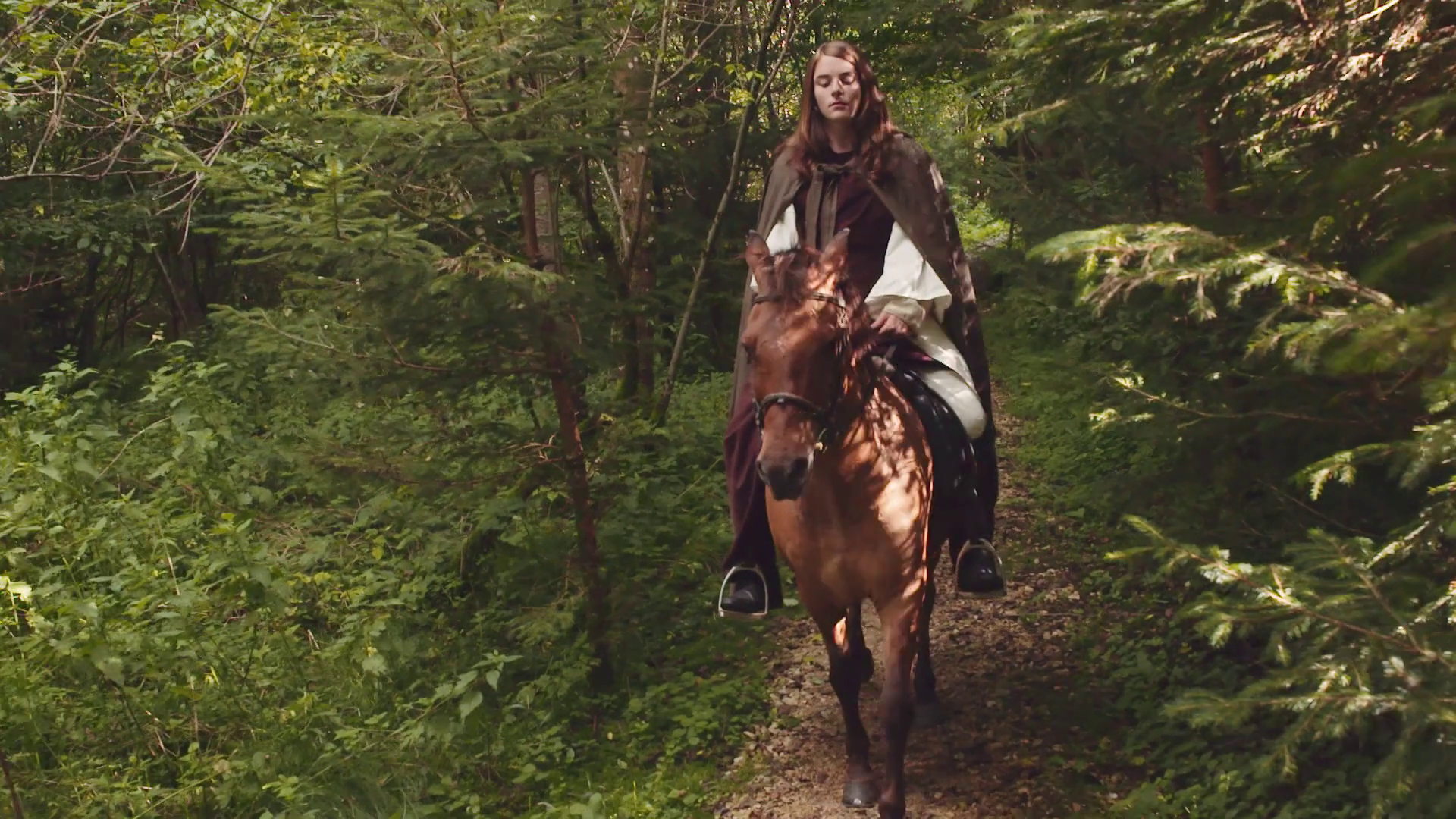
M3 Margueritte: Visitors from the Real World, part 2 of 3

“In the Hay.”  Margueritte and the short man spoke together.

“It will have to do,” the short man said

“I will cover you,” Elsbeth volunteered.

“I’ll hide the pitchforks,” Margueritte said, and the short man and young man stopped short.

“Thanks,” the young man said.

Margueritte moved quick and then she helped Elsbeth while the short man kept saying to move further back because a sword could poke as well as a fork.

There were riders coming into the triangle.

“M’lady.  I got all but the tails.”  Grimly said hurriedly, having caught the excitement in the air.

“Margueritte!”  Elsbeth fretted and put her hand to her cheek.

“Goldenrod.”  Margueritte did not hesitate and commanded the Fairy’s attendance.  Goldenrod appeared out of nowhere and flitted around once to orient herself before she curtsied.

“Lady?”  It sounded like a question.

Margueritte pointed.  “Make the tails invisible.  Quickly.”

“But what should I do?”  Elsbeth looked flustered.

“You pick up your mess in the doorway and try to save a couple of eggs,” Margueritte said, to bring her sister back down to earth.  “Nothing more natural than you having to pick up the mess you made.”

“Humph!”  Elsbeth grumped but got a basket and got to her knees.

The last of the horses seemed to have stopped and a man shouted.  “Check the house, the tower, the barn.  Look for signs.  Look for horses, hard ridden.”  Margueritte stepped out and there appeared to be two dozen soldiers in the center by the oak with at least one lightly armed but well-dressed Lord among them.

“Can I help you?”  Margueritte spoke very loudly to gain everyone’s attention.

The well-dressed lord whipped around to face her.  “Whose place is this?”

“Lord Bartholomew, Victor in Brittany and Count of the Breton Mark, and I am his Daughter, the Lady Margueritte.”  She continued to speak loudly.  Maven and Marta were already at the front door and Lolly stood between them, gently tapping her cooking spoon in the palm of her hand.

“You’re not coming in here.”  Maven muttered with enough determination to make the soldiers think.

Likewise, Redux, his apprentice Graham and Luckless the dwarf blocked the path to the tower.  The big blacksmith and his companions were enough, at least, to cause the soldiers to pause and await orders.

Margueritte spoke quickly into the developing silence.  “I would not recommend invading my father’s house, uninvited.”  Then she smiled for the Lord.  “But perhaps I can answer any questions you might have.”  She wiped her hands clean on her apron as a sign of casualness and friendly attention.

The lord assessed things quickly and decided some questions might not hurt.  “Two riders were ahead of us.  Have you seen them?”

“I heard riders.  There may have been two,” Margueritte said, sweetly.  “My sister Elsbeth and I have been busy in the barn.  Perhaps they have ridden to Vergenville hoping to gain the village before dark.”  She pointed down the road.  “There is an inn there and if they believe they have lost you, they may stop to rest and refresh themselves.”  She smiled again.

“And the priest,” the lord was thinking out loud.

“Father Aden is in the chapel, if you wish to see him,” she suggested, in all innocence.

“No.  This one came from Rome.  His name is Father Stephano.  Do you know him?  Do you know where he can be found?”

“Yes.”  Margueritte sounded hopeful.  “Father Stephano was here three days before he moved on.  As to where he may be, I would inquire of the king.  I would believe if the Pope sent him all the way from Rome, it must have been to the king’s court, don’t you think?  If he could turn King Urbon to the Lord, the rest of the country would follow, no?”  She smiled again, and then looked serious.  “I am sorry, though, the king’s court is much further away than Vergenville, but then anyone going there would have to come back through Vergenville eventually, wouldn’t they?”

“My Lord.”  An older man spoke up, one near him who was also still on horseback.  He spoke in Latin supposing to disguise his comment.  “This wench knows nothing.  Let us search so we may find them.”

“Quiet DuBarry.  Let me think.  What would Charles do?  Take refuge in an outland county?  Appeal for refuge from King Urbon?  Or hopelessly search for a Roman priest from among a thousand villages of the Breton?

“Appeal to the king?”  Margueritte guessed, in Latin.  “You may tell the rude man I understand more than he thinks.  I will overlook the word, wench, as one spoken by an ignorant fool, unless, of course, he believes the word true, at which point he should say so to my father who will be glad to point out his error with the point of his sword.”

The man nearly rose out of his seat, but the head lord held him down with a wave and smiled, and a nasty looking smile it was.  He returned to the Frankish tongue.  “Vergenville.”  He pointed down the road.

“Vergen to the Breton.  You must pass the road to the southlands and the road that runs south to the coast.  Keep straight on through the woods and you will find it.”  She said, with just the right amount of shy for her age.  “And between us, I hope you catch them.  They must be terrible men to be pursued by such a noble lord as yourself.  I am glad such men did not stop here.  I would be very afraid.”

The lord scrutinized Margueritte, and though she stood in a truly submissive pose and had her eyes lowered so he could not see into them, he came to a conclusion all the same.  “I don’t suppose you are afraid of anything,” he said.

“Bernard,” he shouted.  “Take six men.  Search the house, the tower, the barn and the fields.”  He paused for one last look at Margueritte.  “With the lord’s permission, of course.  The rest of us ride.”  Most of the men mounted and they were off to Vergenville.