R6 Gerraint: The Lady of the Lake, part 2 of 3

“But wait,” Gerraint frowned once again before he shouted, “Arthur!”  Then he leaned down, took Lancelot’s arm, and lifted him from his knees.  “Come along, Lancelot,” he said.  Lancelot stood, but looked like a man in a daze.

“But Sir, you know my name, but who are you that I may address you properly.”

“My name is Goreu, but Arthur and the others all call me by the British version, Gerraint.”  He lifted his voice again.  “Arthur.” Then he paused and sniffed, and he knew exactly which direction Arthur would be found.  Like a dwarf’s nose, he thought, good for finding your way underground amidst all those mines and tunnels, and he wondered what else he had been gifted with.

“Who is this Arthur?”  Lancelot asked.  “I have heard of an Arthur called the Pendragon, a war chief across the sea who is unequalled in battle…”

“That’s him,” Gerraint interrupted.  “Hush.  Come on.” Gerraint led Lancelot through the trees until they came to a place where they could watch.  Rhiannon, in all her splendor, stood on top of the waters of the lake and held out a sword.  She walked across the water and Arthur looked too stunned to move.  When she arrived, Arthur went to his knees.  He handed her Caliburn.  She handed him Excalibur.  “The big brother sword,” Gerraint whispered to himself.  Lancelot nudged him to say he should be quiet and more respectful.

When the exchange got made, a few words also got exchanged before Rhiannon stepped back.  Gerraint heard, though he tried to not listen since it seemed private.  He thought, elf ears to go with the dwarf nose.  He only hoped his actual facial features were not changed.

Rhiannon slowly became translucent, then transparent, until she vanished altogether.  “And she took my sword with her,” Gerraint mumbled before he waved.  “Arthur!”  Lancelot looked oddly at Gerraint, like he felt confused about how he should take this strange man.  Arthur did not help when he waved back and waved Excalibur.

“Big brother sword,” he shouted.  “Who is your friend?”

“Lancelot.”

”Hey.  I know a couple of cousins of yours that will be happy to see you.”

“I’m sorry?”  Lancelot shook his head against the confusion.

“Bohort and Lionel,” Arthur said, and Lancelot jumped, and for the first time he smiled.

“They’re alive?  I thought everyone got killed on that day.  How can they still be alive?”  He stopped walking so the others stopped.

“That happened almost five years ago,” Gerraint said. “You were much younger.  Do you remember that day?”

“I remember the battle,” Lancelot said firmly. “I remember the Romans in their phalanxes stretched across the plains from horizon to horizon, and our more ragged line of foot soldiers stretching out to be able to face the Romans one to one. I sat on horse beside my father, and Bohort and Lionel beside theirs, and all the Lords of Amorica sat on horse, the sons beside their fathers
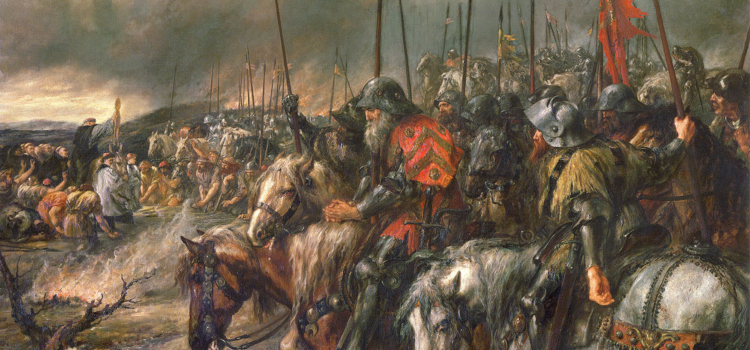
“The foot soldiers charged the phalanxes, but they held firm.  We charged the Roman cavalry and great blood was spilled that day.  It all felt so confusing.  I didn’t know what was happening, when my father took an arrow and fell from his horse.  I raced to him and got him up on a stray.  I pulled him back to the edge of the forest where he collapsed and lay dying in my arms.  Then three Romans rode up, and I ran into these woods by the lake.  They dismounted and followed me in, but I had my knife and my father’s old sword.  I caught them, one by one.  I—I—I am not sure what happened after that.

“I awoke in the Lady’s castle.  Lady Nimue is the bravest soul I know.  She healed my wounds and tended my heart, and taught me how to fight.  Every Sunday at dawn we rode to a nearby village where the parish priest schooled me in my letters and in the faith.  I learned as well as my mind and arms could learn.  The Great Lady told me I had to prepare for the last battle, the Armageddon for Arthur.  For a long time, I did not know what she meant.”

“Armageddon,” Arthur looked up at Gerraint.  “I don’t like the sound of that.”

“Rhiannon, the one he calls Lady Nimue.  All Celtic goddesses are a bit prophetic.  It comes from having a mother who is plugged into the future the way she is.”

Arthur pointed at Gerraint with a question written across his face.  Gerraint merely nodded an affirmative answer.

“But her name is Nimue, the Lady of Lake Vivane,” Lancelot insisted.  “She would never lie about such a thing.”

“How about we call her the Lady of the Lake?” Gerraint suggested.

“The Lady of the Lake.”  Both Arthur and Lancelot agreed.

“But Bohort and Lionel survived the battle? And what of Howel?”  Lancelot became eager for news.

“Alive and well,” Gerraint said.

“Let me see,” Arthur said.  He had spent the time they were standing attaching Excalibur to his belt.  He wanted to ask Gerraint if it had any magical properties, and looked a bit disappointed later when Gerraint told him that it was only as magical as the arm that wielded it, but for the moment he had to catch up Lancelot with five years of history, the first and main thing being the last time the people of Amorica faced the Romans.  He started them walking again as he spoke.
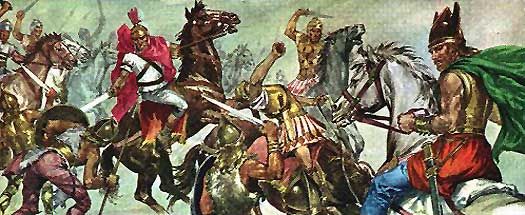
“As Hoel tells it, in the end, the Roman cavalry did not have the fight in them nor the numbers to sustain the battle.  They splintered and began to run, and many of the Amorican nobles and their retinue of horsemen were well suited to hunt them down. I assume the three that found Lancelot were like the others, trying to get away from the battle.  Anyway, it was Howel, Bohort and Lionel that rallied a large portion of the men to stick to the original plan.  They struck the flank and the back of the nearest Phalanx and slowly but inevitably, the Roman line crumbled.  The Romans who ran caused the other formations to come into disarray, and Hoel’s people were able to take the day.”

“Magnificent.  I am so glad, and my people are free.”

“It’s not that simple,” Gerraint said.  “Claudus waged a guerilla campaign these last four or five years, and just about overran the country.  Hoel appealed to Arthur, and here we are.  But Claudus is bringing up two full legions from Aquitaine, and I suspect these will be veterans of the Frankish and Visigoth campaigns.  These will not be so easy to turn.”

“The great battle,” Lancelot said with a faraway look in his eyes.

“I beg your pardon,” Arthur said.  “I am not ready for Armageddon just yet, if you don’t mind.”

They stopped at the sound of a horse.

R6 Gerraint: The Lady of the Lake, part 1 of 3

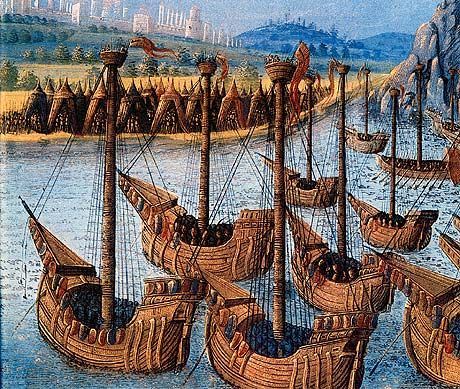
After lunch on a Thursday, Percival took Uwaine, Gawain, Bohort and his brother Lionel up the road to the port to check on the little fleet Thomas had assembled in case things went badly and Arthur needed a quick getaway.  They would spend the night in an inn and probably talk into the wee hours since they had a lot of stories and catching up to do.

Arthur took Gerraint across the road just before dark and dragged him into the woods.  Gerraint felt obliged to say he did not think it a good idea, but then he closed his mouth; because like Arthur, he had been anxious to see this mysterious lake ever since he first heard about it.  Neither felt the need for troops, because like the forest of Bringloren, the land around the lake had a reputation for ghosts and other bump-in-the-night things.  People avoided the lake, but for Arthur and Gerraint, that only made the pull that much stronger.

With the sun set, the moon came out and so did the owls. The forest did have a haunted feel to it, especially with the mist from the snow that looked to be finally giving up to the spring rains and warmer weather.  Neither talked, because the forest seemed to require silence and who knew what might be attracted by the sound?  When they saw the lake, it appeared shimmering, calm and crystal clear under the moon and stars.  The waters looked perfectly tranquil and serene, but somewhere out in the middle of all that splendor, there appeared to be an island, and on top of the island, they saw the first genuine stone castle in Europe.  The stones themselves glistened like the water in the moonlight and spoke of great mysteries beyond the gate.

Arthur and Gerraint found an enormous oak standing between them and a full view of the lake.  Arthur stepped around one side.  Gerraint stepped around the other, and he immediately noticed Arthur vanished. He called softly, “Arthur.”  He heard no response.  He turned toward the big, old oak, except it vanished.  Only a few saplings stood where the old tree should have been.  Gerraint raised his voice a little.  “Arthur.” No response.  He imagined that he must have been transported, somehow, away from the big tree, but when he checked his view of the lake, and especially his view of the distant castle, everything seemed the same.   He yelled, “Arthur!” and startled several things in the upper branches of the trees, birds and small animals, he hoped.  He took a couple of steps in the soft leaves and found himself getting dizzy.  Swamp gas, he thought, as he fell to the leaves, fast asleep.  His last thought was to wonder if Enid would have to come and find him and kiss him to wake him up.

A woman appeared and bent down to touch Gerraint’s cheek.  A host of little ones and lesser spirits along with the Naiad of the lake and the Dryad of the oak appeared with her.  “If he is the man of honor you say, he is not going to like this,” the woman said, but she duplicated some of the things the little ones willingly gave her and placed them gently in Gerraint’s heart.  Then the host vanished, all but one young man, and the woman stood back while Gerraint woke.

“What?  What happened?  Arthur!”

“Hush,” the woman said.  “Let the sleeper sleep.”

Gerraint stood up to get a good look at his visitors. The young man looked like a big one, about Gerraint’s size, and looked strong and well made.  He appeared dressed in armor that could only have been crafted by dwarfs, and the sword at his side had something of the dark elves about it.  All of this got taken in with one glance, since the woman took all of his attention. She looked far too beautiful for an ordinary mortal, and what is more, he saw something very familiar about her. It came to Gerraint after a moment, and what came out of his mouth even startled him.

“Rhiannon, what are you doing here?  You naughty girl.”

The young man reached for his sword.  “How dare you speak to the Lady Nimue in such a manner.  Apologize, or I will make you apologize.”

“Wait,” the Lady said.  “I think I may be in trouble.”  Gerraint had his hands to his hips and frowned.  The Lady Nimue was in fact the goddess Rhiannon, one of the multitude of ancient gods of the Celts.  “Mother?” she said.  And Gerraint indeed went away so Danna, the mother goddess of the Celts, could come to stand in his place.  Her hands were still on her hips and the frown still on her face.

The young man fell to his knees and looked down as Danna scolded her many times great-granddaughter.  “The time of dissolution came and went centuries ago. You should be over on the other side with your brothers and sisters.  What are you doing here?”

Rhiannon looked down humbly at her feet.  “I did not realize it was you, but Mother, I still have work to do.  I still have this young man, Lancelot, whom I have raised, and I am certain there will be another in a breath of years from now.  I feel there may even be one more after, and I have a part to play in the days of Arthur the King, though it is not fully known to me yet.”

Danna tapped her foot and paused before she reached out to hug her daughter.  “If you still have work to do, I will not interfere.  But Rhiannon, all of the others have gone.  I will worry about you being so alone.”

“Not all,” Rhiannon hedged.

“Yes, I know the stubborn offspring of Lyr and Pendaron is around.  He keeps telling me soon, but his is not an example to follow.”  Rhiannon shut her mouth.  “What?” Danna wondered as she took a step back.  “But Talesin does not count,” Danna said.  “That unfortunate offspring of a fee may be immortal, but he is mostly fairy by blood.”  She interpreted Rhiannon’s silence correctly, but could think of no others, and Rhiannon would not say.  Instead, she changed the subject.

“Oh, but Mother.  Your fee and dwarfs and elves dark and light prevailed on me to gift your young man.  They said like Althea of old watched over Herakles, so the Lion of Cornwall would have to watch over Arthur.  I should have guessed it was you.  Please don’t be mad at me.”

Danna went back to frowning and tapping her foot gently.  “What did you give him?”

“Only things your little ones freely offered. They said he was one human worthy of such gifts.  They said they were afraid for him because a terrible man with great power had evil plans for the future.  I’m sorry. I didn’t know.  Please don’t be mad at me.”

“Rhiannon, Rhiannon,” Danna said, and she left so Gerraint could return and finish the sentence.  “What am I going to do with you, you naughty girl?”  He stepped up and kissed the goddess on the cheek before she could stop him, and then spoke to her again.  “Please try to be more careful in the future.  You need to not be such a patsy for every sad and pleading face.”

Rhiannon dropped her eyes again.  “I know.  I will do better.”

“I know you will do better,” Gerraint said, and he added, “Soon,” with a smile. Rhiannon returned the smile before she vanished.

R6 Gerraint: Amorica, part 3 of 3

By mid-afternoon, the town looked totally in flames, and even the wall in some sections looked on fire.  The stream of refugees which became a river when the bombardment began, dried up around noon.  The brave men manning the walls kept waiting for the assault, but it would not come.  Gerraint packed up his catapults and lead his men east.  He left strong groups of little ones behind, the kobold, the brownies and Larchmont with his fairy troop.  They would be sure no soldiers or otherwise would attempt to follow, or go in any direction other than south.  After two days and several attempts, the defenders of the town went south by horse and by foot to catch up with the refugees and left the smoldering wreck behind them.

When Gerraint’s men reached the village on the inland road, they found a surprise.  A Frankish troop of about a hundred had moved in and they were enjoying the local ale and entertainment.  Gerraint and Lord Birch went alone to confront them.  There were arguments, not the least from Bohort and Uwaine.  Sergeant Paul wanted to send a troop of escorts, but in the end, Gerraint prevailed.

No one stopped them at the village edge.  The villagers were too busy cowering in their homes.  The Franks watched them, but did not interfere as they rode to the one inn in that village and dismounted.  Several Frankish soldiers greeted them there, or rather greeted their horses and began to discuss what fine specimens they were.  Gerraint ignored them and entered, then took a moment for his eyes to adjust to the dim light and his nose to adjust to the abundance of alcohol.

“Who is in charge of these soldiers?” Gerraint asked. Lord Birch repeated the question in the Frankish tongue.

“Who is asking?” a man said, rudely.

Gerraint went through the litany.  “I am Gerraint, son of Erbin, High Prince of Cornwall, Knight of the Round Table, sometimes called the Lion of Cornwall, and in the name of Arthur Pendragon of all Britain, Cornwall and Wales I ask again, who is in charge of these soldiers.”

The man stood, but Gerraint made an imposing figure and this man did not look nearly as impressive.  “I am,” the man said without giving his name.  “I have heard of this Arthur.”  Gerraint waited for no more information.

“You should not be here.  I am working here right now and I don’t appreciate the interruption.  You need to stay on Frankish lands.”

“This is Frankish land.”

“Not until I am finished.  Listen, and tell your king.  Arthur and Hoel have no designs on the Atlantique.  When we have forced Claudus to bring up his army and we destroy his army, you can play with the Atlantique province all you want, but not before.  You are just getting in the way.  You can kill any Romans who enter fully into your territory, or do what you like with them, but not here on the border.  Right now, you need to go away.  Am I clear?”

A man grabbed Lord Birch, but Gerraint raised his hand and an electrical charge sprang from his hand like lightning and threw the man hard against the men at the side table. The two who had gotten around Gerraint and were about to grab him hesitated, but then Gerraint went away and the Nameless god came to fill his boots.

“Lord Birch.”  Nameless tapped his shoulder and Birch reverted instantly to his true fairy form and took a seat on that shoulder.  “Let me repeat,” Nameless said, as if he was the one who did all of the talking, which in a sense he did.  “Go away until I am finished here.”  Nameless did not wave his hand like Danna or wiggle his fingers like Amphitrite.  He did nothing overt, but a hundred Frankish soldiers, their horses and equipment instantly found themselves deposited a thousand yards into Frankish territory outside of the village.  They rode off in panic, but the commander of the Franks had a thought.

“He did say we could kill any Romans who came on to Frankish lands, didn’t he?”  He heard an answer, out loud and in his face.

“Yes.”

He tried to make his horse run faster.

Gerraint returned with Lord Birch to the camp.  He did not say much as he turned his men to head back to the coast.  After that, he did not bother with the inland road.

Gerraint gave his men a week around Samhain.  It remained time in the wilderness, but the men started getting tired.  They took a village around the winter solstice, and Gerraint stayed for what he called Christmas week.  The only grumbling he got from his troops came because he made them all go to church on Sunday.

Things continued then until late January.  Long range reports said men started marching out of Vascon lands.  Close by, five hundred Roman cavalry got sent to find the Lion and his men.  It did not turn out fair, in a way.  The Romans camped in a large clearing not far from the main road.  It had snowed in the night and threatened more snow all day, so the Romans were not going anywhere for the moment.  Of course, Gerraint knew exactly where they were thanks to his fairy spies, and they had no idea where he might be.  So, it was not really fair, and in some sense too easy.

Gerraint mapped out where the lancers would reenter the forest on the far side.  Then he lined up two hundred of his men and they rode straight through the enemy camp at dawn.  Tents got burned, horses run off and men got run through the middle.  Some lances were lost and some got shattered, but Gerraint did not stop to fight.  He rode his men out the other side of the camp and back into the woods to be swallowed up by the deep shadows under the deep gray sky and the light fog that filtered through the trees.  Then he let his remaining men, all his best hunters, join with the elves in target practice.  As long as they kept to the woods and moved around so as not to be caught, they could shoot as many as they could reach.

One group of twenty Romans on horseback charged a section of the woods where the kobold stood.  One horse, devoid of rider, made it to the tree line.

At noon, the Romans abandoned their tents and equipment and rode hard for the main road.  Gerraint had his eyes watching, but on reaching the road, the Romans went south so Gerraint let them go.  He returned to the abandoned camp to count one hundred and thirteen Roman bodies. Gerraint had some wounded and lost three men in the charge.  They were the last casualties Gerraint suffered in the campaign, and they were remembered.

Uwaine had a comment as they sent out men to round up as many locals as they could find.  “Next time we need to bring more arrows.”  They put the locals to work digging a great trench beside the road. The Romans got buried there, laid out, but in a mass grave.  When they got covered, they made a nice little mound.  Gerraint had simple wooden crosses planted, one hundred and thirteen to mark the graves, and then he left the Roman armor and equipment laid out like it was ready to be worn by the dead.

“You are too kind,” Bohort said.  “You should have left the men hanging from the trees.  That would have sent a much stronger message.” Gerraint sighed.  Bohort was not particularly bloodthirsty, it was the age they lived in.  They had a chance to do that very thing when they caught several groups of advanced scouts from Claudus’ army.

Gerraint affected an orderly withdraw, giving up ground only as fast as the army approached.  He sent fifty men with Sergeant Paul to the inland road and sent Larchmont and his troop with him.  They had to watch ahead and behind, and also be sure the Franks stayed away. He had no trouble, but Gerraint wanted to be sure Claudus did not get the idea of sneaking up the back road in order to get behind him.

Gerraint sent a hundred men with Uwaine to the coastal road.  They found a few places where the locals snuck back to rebuild, but he left them alone. His job was simply to make sure Claudus did not send any more cavalry units in an attempt to get on their flank.

Gerraint kept the last hundred and fifty with him on the main road, though by then it had become more like a hundred.  They had taken some casualties over the year.  He backed up slowly.  Bohort called it terminally slow.  Gerraint understood that the army of Claudus did not feel motivated.

The Romans built the roads so they could move men and equipment quickly.  The men of Claudus were clearly not Romans, despite the publicity, and they despised the road because they did not want to move quickly.  They counted two full legions coming, roughly ten thousand men, though only about six thousand were actual fighters, the others being supply and auxiliary troops.  They were being led by Claudus himself, but even with all that preparation and leadership, they moved like snails.  Gerraint got to calling it the escargot army, though no one knew what that was.

Gerraint sent messages to Hoel and Arthur as soon as things were confirmed.  Apparently, Claudus also managed some messages to his men that were still in Amorica. Gerraint could not imagine how, except maybe by boat.  Arthur and Hoel had been having slow success all year and just about had the land cleared, but whatever Romans remained at that point withdrew and went beyond the Vivane forest to hide in the hills and knolls of the open land, as close to the Frankish border as they dared.  There, they no doubt planned to await the army of Claudus.  Gerraint wrote that they should be taken out, but Arthur and Hoel decided that would take more time and effort, and risk more lives than it would be worth.  So, the allies settled in on the edge of the Vivane forest and waited in the snow.

Hoel lost most of his army when the Romans vacated the land.  The men went home for the winter, but they would be back in the spring or when called. Arthur’s men did not have the luxury. They camped on the cutoff that came down from the north-coast road and skirted just below the mysterious Lake Vivane. That road met the north coast at a very good port where Thomas of Dorset was able to supply the men with many of the comforts of home in lieu of their actual homes.  Arthur kept the men busy with a building project they started in January.  He wanted a fort literally on the other side of the road from the lake to take advantage of the lake to help keep out any invading force.  They just about got the fort finished when Gerraint arrived.  Claudus came a week behind, and Hoel’s men still straggled in.  Gerraint guessed it would be another week to ten days before the deadbeats all caught up and the two armies settled in to face each other. In that time, Arthur had a notion, and he would not be talked out of it.

************************

Next Week: The Lady of the Lake

M T & W, 8 o’clock, EST

Lake Vivane, is not haunted, as the locals claim, but it does have its secrets, and Arthur and Gerraint can’t resist a look.  They recover a young man that everyone thought was dead, and Arthur sees his first real medieval castle as well as his first real knight.  MONDAY.

Until then, Happy Reading.

*

R6 Gerraint: Amorica, part 2 of 3

Two weeks later, Gerraint, Uwaine and old Sergeant Paul dismounted at the command tent which had been set up at the southern edge of the Amorican forest of Bringloren.  Bringloren was an ancient and more pristine wilderness than the northern forest of Vivane.  In Vivane, many apple trees had been seeded and large sections had been cut to build villages and for planting.  Uwaine wondered how the people could grow anything in that rocky, sandy soil, but the people managed.  The Vivane seemed user friendly, as long as one stayed away from the mysterious Lake Vivane.

The Bringloren got avoided.  They named it as the place where the old Celtic gods and ancient kings were buried, and said their ghosts still haunted the woods. They said there were wraiths and spirits who delighted in getting people hopelessly lost and then sucked out their souls.  The discarded bodies were left where the ogres and goblins could eat them and the trolls could suck the marrow out of their bones.  Gerraint did get wind of some ghouls and a few other nasty things in the woods, but they avoided the large, armed party.  He also found any number of little ones, and spent the last two days in negotiations.

He found a tree village of Kobold who came west with the Franks from the forests along the Rhine.  Heurst was the chief and happy to help.  They were also friends with a troop of brownies that migrated to the continent from the swampland of Somerset when the Romans pulled out of Britain. Their chief was Ringwald and he thought his troop might lend a hand.  The trouble was, neither Heurst nor Ringwald knew the Atlantique coast.  For that, they had to visit the fairies in the Glen of the Banner.

The fairy King, Lupen, proved old and grumpy. “Those humans can kill each other off as far as I am concerned,” he said.  But Queen LeFleur, and many of the young fairies knew the territory well, and not unlike some young humans back home, they were anxious to take on the adventure.  LeFleur herself, seated on Gerraint’s shoulder for safety, took him into the caves and burial mounds of the kings.  Gerraint left Uwaine and Sergeant Paul on the surface with Heurst, Ringwald, a middle-aged, sensible fairy male named Birch and a young one named Larchmont to watch over them.  He went to visit the goblins.

They met some Pixies in the caves along the way. They seemed nice enough to Gerraint, but LeFleur buried her face in Gerraint’s long hair and called them “batwings and corruptibles.”  Down in the deeps, the dark elves were the worst sort of goblins, having little to do other than steal sheep and scare any humans foolish enough to wander into the forest.  The land, not exactly being rich in minerals or metals, made the dwarfs move north long ago, though Gerraint did hear the sound of a distant hammer the whole time he was there.

The goblin chief, Manskin, said no way he had any interest in what the up-world people were doing.  “But, we will do one thing for you.  Any humans who try to run north won’t get very far.”  He grinned a grin full of teeth and bits of last night’s supper, but Gerraint stared hard in the goblin’s beady eyes until the goblin chief got very uncomfortable.  “We will turn them back south,” he added in a shaky voice.  “Just like you want.”

“You better,” Gerraint said, not that he expected any of Claudus’ people would escape to the north or dare the forest, and not that he expected the goblin chief to keep his word once Gerraint moved on. “You know my rule about eating people.”

“Yes Lord,” the goblins all said.  “Yes lord.”  Hats finally got removed and several goblins bowed.  “We’ll be sure to tell the trolls down the way as well,” Manskin added, as Gerraint left.

Gerraint whispered to LeFleur when they got near the surface.  “You can uncover your eyes now.”

When he picked up Uwaine and Sergeant Paul, they were more than ready and rode more swiftly than necessary back to the camp where Bohort waited.

“We will have help scouting the land ahead and guarding our flanks as we move,” Gerraint said, as he went into the tent.  Bohort looked at him and then looked at Uwaine because Sergeant Paul started laughing again.  He spent the last two days laughing.

Uwaine simply said, “Don’t ask.  You don’t want to know.”  As he spoke a bright spark of light zoomed past their faces and went into the tent.  “Trust me,” Uwaine added, and he went off to check on the disposition of the troops.

The troops entered the first three villages from the north, gathered the villagers and told them to flee south while the troop burned their homes.  “Tell Claudus he is not welcome in Amorica.”  That became the only message.  Since it turned mid-May, they could hardly burn the crops, but they could trample them.  They found the warehouses for the grain and barns for the sheep and cattle, and after taking what they wanted for their own needs, they slaughtered and burned the rest.

The fourth village brought them a distance inland, and it looked like the villagers were armed and guarding the north end of town. Gerraint brought his troop by secret elf paths so he could enter the village from the south.  Resistance did not last long.  One young man named Alden became the first casualty among Gerraint’s troops, and he was remembered.

Coming from the south worked well on villages five and six, but when they came to the seventh village, one not far from the sea, the found the ways north and south both blocked.  It turned to mid-summer by then and they had heard nothing from Amorica. Bohort worried a little, but Gerraint kept telling him that no news was good news.

In this armed village, Gerraint came up with Uwaine, Sergeant Paul, Bohort and Lord Birch, all on horseback.  They had discussed it.  When they stopped just outside of bowshot, Gerraint took hold of Lord Birch’s reigns.  The fairy got small and fluttered up to the north barricade.  He raised his voice for the gawkers.

“You have until tomorrow sunrise to be gone or die.” Gerraint felt no point in mincing words, and Birch flew back to his horse, returned to his big size which made him look like an ordinary enough man, and they rode back to the camp. Gerraint thought no telling how many of his soldiers caught a glimpse of Birch in his true fairy form, but no one ever said anything.

By dawn, the village had emptied.  That felt fine.  Gerraint did not like the killing part.

Things continued into the fall where they came upon the first true town complete with a city wall.  The architecture looked purely Roman, and though most of the people were Gaelic, they thought of themselves as Romans and that was what counted. The townspeople and soldiers that manned the walls wore Roman armor and carried Roman spears and bows and characteristic short swords, which were really only good in close combat in phalanx formation.  But this seemed where many of the people who fled south ended up, so the streets of the town were overflowing with refugees who had nowhere else to go.

Gerraint was not about to see his men killed trying to take the town.  He called for the six, an affectation from the Pictish campaign.  Six mules carried the halves of three small catapults.  Twelve other mules had been overloaded with the round balls of flammable pitch and tar tied up with strong twine. The catapults could only throw the balls about twice bowshot, but fortunately this city wall only stood about ten feet high.

Most of the town had been made of wood.  They had limited stone, some cobblestones, stone courts and columns, and even a bit of Roman concrete, but most of it had been made of wood, and even if it got covered in plaster, it would still burn. Gerraint thought it only fair to give warning.

“I feel it is my Christian duty and an act of charity to give warning to the innocents.  Move south before dawn, and you will live.  If you go west or east or north, you will be shot and killed.  Move south while you can.  In fact, I recommend you run.”  He went back to his camp and ordered the men to rest.  The kobold had the west and the brownies had the east, and Larchmont and his fairy volunteers, invaluable in scouting ahead and scouting the land, stood between Gerraint’s men and the town and would not let anyone pass.

By dawn, they saw a regular stream of people pouring out of the south gate and on to the main north-south road.  There were two main Roman roads in the Atlantique province and both were north-south.  The coastal road ended in the north at the southern edge of the Bringloren forest where it met up with the southern road through Amorica.  The main road went all the way from the Aquitaine up along the edge of the Vivane, near the lake, and to the north coast of the Channel.  There was a third road, an inland road, but it had not been well kept since Roman days.  It marked the boundary between the lands of Claudus and Frankish lands.  The poor villages along the inland side did not run at Gerraint’s approach.  They went straight to surrender, watched their homes burn, and set about rebuilding after Gerraint left.  Gerraint decided that at least it would keep them too busy to think about joining Claudus’ army.

The townsmen and soldiers in this particular town still stood on the walls when Gerraint started the bombardment. Flaming balls got lofted over the wall and splattered flame wherever they hit, and it made a grease fire, hard to extinguish.  The small catapults got moved regularly to be sure they hit every part of town they could reach.  Gerraint and Uwaine sat on a grassy knoll and watched.  Lord Birch, and eventually Bohort and Sergeant Paul came to join them

Uwaine sipped from a water skin before he asked his question.  “So, how do you tell the difference between a kobold and a brownie, or one of Deerrunner’s elves for that matter?”

Gerraint sat up a bit.  “It’s an art, not a science,” he said.  “But basically, the kobold are more rugged and the brownies more plain folk, if you follow me.”

“A fair description,” Lord Birch said.

“Deerrunner’s people are elves from the Long March out from Elfenheim.  They are generally a little taller than the others, the brownies being maybe the shortest on average, but in a real sense they are all elves.  None of them would get mad at you for calling them elves.”  Uwaine shook his head.  He still didn’t get it.  Sergeant Paul merely laughed.  Bohort had a different thought.

“Lord Birch.  What does the schedule look like?”

Lord Birch pulled out a small piece of velum to check.  “The inland road and then back to the coast.”

Bohort nodded.  “I wish Claudus would get his act together, as you Brits say.”

“Only Gerraint says that,” Uwaine said.  “But I agree.  This is getting boring.”

Sergeant Paul stood and yelled at the nearest catapult crew.  “A little more to the right.”

R6 Gerraint: Amorica, part 1 of 3

Gerraint came into the great hall at Caerleon wondering what was up.  Enid stayed in the nice home they bought in town, feeding one-year-old Peter and having all the fun.  Worse. She started making sweet little noises in the night and getting very touchy-feely, which suggested she might be pregnant again.  Gerraint did not want to miss that.  He hoped whatever this was, it would not be something that would send him far away from home.

“Gerraint!”  Several men hollered as he came in and he mumbled something about “Norm!”  He glanced at the door that lead to the back rooms and the now greatly enlarged room that held the Round Table.  Gerraint guessed this would not be Round Table business, which meant an appeal from someone not part of the club.  He could not imagine.  The world had been at relative peace for the last five years.

“What’s up?”  Gerraint got to ask his question.

“Sit.  Sit.” Arthur said.  “Hush.”

“Gwyr is about to read the letter,” Tristam said.

Gerraint looked at the table.  His old master Pelenor looked ready to nod off.  Peredur and Ederyn looked sprightly enough. Percival, seated beside them looked so serious.  Kai looked pensive.  Bedwyr grinned.  Gerraint sat next to Gwillim and Gwillim’s brother, Thomas the Sailor, but as he thought about it, he would have guessed Kai would be the grinning one.  Kai came all the way down to Caerleon from the north to show off his new, young bride, Lisel.  She was much younger than Kai and blonde in the worst cliché sort of way. Enid and Gwynyvar said spending time with the girl felt like going into battle.  Constance, Bedwyr’s wife, and a proper woman of grace who had eight years on Enid, said Lisel did not have enough brains to be stupid.  Gwynyvar and Enid professed they were shocked to hear their thoughts expressed aloud.

Gerraint looked again at Kai.  He definitely looked pensive, but then Gwyr started reading.

“You may not yet be aware of Claudus, a cruel and wicked man who is the latest to dream of reviving the glory of Rome. This one, unlike the host of others, may have both the military skill and cleverness to succeed.  Beginning in Provence, he has taken Septimania and Vasconia, carved out a chunk of Aquitaine including Bordeaux, and taken all of the Atlantique coast for his kingdom.  He has halted the Franks in their inevitable advance, and beat the Visigoths back over the mountains.  Now he has trained his eye on Amorica.  I believe it is his plan to swallow up our pleasant land before turning against the Franks in Paris.

“It was some years back when my father Budic gave sanctuary and comfort to your father Uther in the days of Vortigen the Usurper. What is more, he gave Uther the means and support to raise an army to return to Britain and remove the plague from your land.  Now, we are the ones in need, and I have sent my son Howel to you in the hope that you will remember the kindness my father showed to your father.  Furthermore, I request that you may seek out those men who fought for your father and stayed in your good land, and that you may tell them of our need and ask if they may be willing to come home to aid us in our fight. We are hard pressed, and I appreciate whatever help you may deem right and proper.”  Gwyr looked up from the paper before he finished.  “He signed it, your faithful friend and ally, Hoel.”

“Is Howel outside?”  Kai asked straight out.

“He is,” Arthur said.  “But I would hear your opinion first.”  Arthur looked around the table and no one especially had an opinion. His eyes ended on Gerraint, and the other eyes at the table looked as well.  Gerraint stood and threw his gloves to the tabletop.  He paced for a moment and made noises like a man in pain. Everyone stared at him when he yelled.

“All right!”  He lowered his voice and leaned on the table.  “Okay.”  He calmed himself.  “So, when do we sail for Amorica.”  All the men present tried talking at once, but Arthur just grinned like maybe he became the man with a trophy wife.  Kai looked distraught.

Things did not take long to straighten out.  But Kai mentioned that the Scots were getting above themselves, like maybe they defeated the Picts.  And worse, Loth in some ways appeared to be encouraging them. He thought he better stay at Guinnon. Bedwyr got prevailed upon to stay at Oxford as well.  Arthur told Pelenor, Peredur and Ederyn that they would have to keep vigilant while he was away.  Then Arthur decided to take only volunteers with Gerraint being the first lest he decide to stay home with that lovely wife of his.  Finally, Arthur instructed Gwyr to put something in the letter encouraging those who came from Amorica and fought for Uther, or their descendants, to consider returning to Amorica to fight for Hoel.

Once that got settled, Arthur called in their visitors.  There were many details to work out, not the least procuring the ships and supplies they would need, but the basics were done and he was able to greet the men as honored guests.

Howel, at eighteen or nineteen, got escorted by a mere six soldiers, one of whom at least appeared to be a well-seasoned sergeant named Grist.  Howel came accompanied by two brothers, both Chiefs in Amorica, called Bohort and Lionel. Lionel was Howel’s age, or maybe twenty.  Bohort, the elder at twenty-three or four, did most of the talking.  Gerraint felt suddenly old at twenty-seven.  Then he thought of being home with Enid and the baby. Then he thought of Enid being all touchy-feely.  And then he thought he better pay attention.

“It is worse than you may have heard,” Bohort said. “The Romans of Claudus are playing with us like a cat with a mouse.  They strike here, but by the time we arrive they have vanished to strike there.  They will not give pitched battle, but once. They are softening us up and wearing us out.  They have overrun two thirds of the land this way, by nibbling us to death.

“One battle?”  Percival asked.

“On the plains near the mysterious Lake Vivane, he tested our strength in battle.  That happened four years ago.  We won the battle and won the test, but I figure he just sent some expendable troops and did not really care who won, though I am sure he would have been happier with a victory.  I lost my father and his brother in that battle.  My young cousin, just sixteen got lost in the woods around the lake.” Bohort took a moment to shake his head before he continued.  “That was when Claudus hit on the strategy of eating us alive, piece by piece.  I don’t know how much longer Hoel may hold out.”

“It is settled,” Arthur announced, and that was that.

Gerraint stepped outside and Uwaine met him on the steps.  “About time,” Uwaine said.  “I was really going mad this time.  When do we go?”

“Preparations.”  Gerraint shrugged.  “Then I go, but where you go will be up to you.”  Uwaine raised an eyebrow, so Gerraint answered his question.  “I have prevailed on Arthur to knight you and Gawain before we sail.”

“So?  That changes nothing.  If you have taught me one thing, it is the safest place in battle is right next to you.” Gerraint made no answer.

###

Six months later, Thomas of Dorset contracted a hundred ships for a minimal fee to deliver a cargo of two thousand men and horses to Amorica.  Roughly a quarter of those ships would continue in the months ahead to supply the troops.

“We don’t want to beggar our hosts,” Gwillim said.

Gerraint stayed in Cornwall where he moved his wife so she could be around his mother, her own mother having died a year earlier. Marcus Adronicus started making noises like he had become an old man and Gerraint needed to be prepared to take over. Gerraint could not worry about that. All he wanted was a safe delivery of his second son, James, and the knowledge that Enid was in good hands. With that assured, he took three hundred of Cornwall’s finest, a good Festuscato number.  They were men all trained to the horse and the lance, and he sailed them out of Plymouth to catch up with Arthur.

Arthur was in the field, in a big tent with Hoel, and discussed things.  Percival sat out front, and his take was, “Don’t go in there.”  Uwaine also sat up front, but he only shook his head.

Gerraint took a deep breath.  “Wish me uck-lay.”  He explained before anyone asked.  “I’m practicing my Pig Latin for use on the revived Romans,” not that anyone understood what he was talking about.  He went in.

There were greetings and pleasantries before Arthur explained the situation.  “We are having limited success in driving the forces of Claudus back.  We have almost doubled Hoel’s numbers, and with the RDF, trained to move quickly and quietly, we have routed out a number of pockets of the enemy.  They have come up and overrun village after village, but then remain hidden in the wilderness.  They require the poor, decimated villagers to supply them with food, sending men from their hidden camp to collect it.  We have had some success in following those men back to their base and then we have gone in and finished the job.  But the men of Claudus, like Saxon raiders, are in many small groups and scattered all over the countryside.  Mostly, they simply hide whenever we come near with a large force and reappear after we have gone.”

“But we are succeeding, slowly, but succeeding,” Hoel said.

“Yes, but at this rate we may be bogged down here for two or three years.  Now, my plan is to take a third of our force and invade the Atlantique.  In that way, Claudus will be forced to call out his army, and we can finish this much more quickly.”

“But if you take so many, our efforts here will be badly hampered and we may soon be back to stabbing at ghosts,” Hoel objected.

Arthur looked at Gerraint and knew to wait while Gerraint thought.  Hoel fidgeted.  At last, Gerraint spoke as plainly as he could.

“So, I have come up with three hundred fresh troops, the veterans being mostly RDF trained and able to bring along the young ones. My men, one way or the other, will not be significant here, but I see no reason why Cornwall cannot turn the tactics of Claudus against him in the Atlantique.  I have people who know something of the province, and while it would not be an invasion, it may be enough to force Claudus’ hand.”

“How can you know the province?” Hoel asked. Gerraint saw that Arthur understood, but he had to give Hoel his best, human answer.

“Cornish sailors have been trading all along the coast for generations.  Amorica has been our chief trading partner after Wales and Britain, but many have also traded down the Atlantique and learned the area.”

“Not much portage there,” Hoel said.

“But some,” Gerraint answered and quickly changed the subject before Hoel thought too long about it.  “I said turn the tactics of Claudus against him, but I don’t plan to leave small groups hidden in the woods to keep the people oppressed. More like true Saxon raiders, I plan to burn the villages and their crops and food supplies and drive the people south as refugees.  Hundreds, hopefully thousands of refugees fleeing south out of the Atlantique province should force the hand of Claudus well enough.”

“A good plan,” Arthur agreed.  Hoel looked like he might object.  Gerraint could read the man’s mind, thinking that the addition of Gerraint’s men could speed up the success they were having in Amorica, but Gerraint got up to leave before Hoel could fully frame his thoughts.  Gerraint knew his three hundred would not hold the pass for long, but they might wreak havoc in Persia.

R6 Gerraint: Caerdyf, part 3 of 3

Enid started crying, so the priest got his question out before Enid threw herself into Gerraint’s arms.  Gerraint shuffled for a piece of velum in a secret pocket in his armor.  He started to hand it to the priest who looked at it curiously when Gerraint snatched it back with the word, “Can you read?”

“Of course,” Father Vespian said and stuck out his hand for the note.  It was a note that hinted at the great and heavy burden God placed on Gerraint in this life and it pleaded with whatever priest or person read the note to not hinder, but help in whatever way they could with whatever task with which Gerraint currently struggled.  It got signed and sealed by Dubricius, Archbishop of Wales, shortly before his death. The Priest looked to return the note, but Gerraint and Enid were currently too busy kissing.

Uwaine set himself to work with the city men, to keep an eye on the defeated Irish.  He also started asking around to see what sort of boat they might procure with the little bit of gold and coins Gerraint carried.  Uwaine would drive a good bargain, though he said more than once how Goreu had all sorts of wild ideas but was not the best on the details and follow-thru.

Gerraint took Enid by the hand and raced her to where her parents and Megalis were waiting.  The good Father had to catch up to return Gerraint’s note, but he waited because Gerraint started speaking again.  “Megalis,” He got in the trembling young man’s face.  “I intend to marry Enid.  Any objections?”  Megalis shook his head, rapidly.  Fenn scared Megalis.  Gerraint terrified him.  “Good.” Gerraint turned to Enid’s parents. “With your permission, I would like to ask for your daughter’s hand in marriage.”  Ynywl and Guinevak both nodded and smiled like doting parents should always smile, and Gerraint turned to Enid, thought a second, and dropped to one knee.  “Lady Enid of Caerdyf, good daughter of Lord Ynywl and Lady Guinevak, will you marry me?”

Enid still held his hand, but put her other hand to her hip and frowned.  “You could have asked me first.” she scolded softly.

“A pox on me for being a clumsy lout,” he said with volume.  After a moment of silence he added more softly, “Will you?”  Apparently, she thought he had suffered enough.

“Yes, please,” she said, and they had a time out while he kissed her again.  When he took a short step back, she held tight to his arm.

“You may yet change your mind.”  He patted her hand gently on his arm and turned to Megalis and Ynywl.  “Now, here is my judgment and also some of my reasoning.  Megalis, you claim the whole of the land because your father was the eldest. But, in my mind, your grandfather was older still and by virtue of his age and position, he outranks your father. Whether you like it or not, he divided the land between his two sons, and you have no right to deny that decision. Caerdyf and the surrounding land as your grandfather decreed belongs to Ynywl and his heirs, forever, and you have no right to claim another man’s land.  To that end, I gave the Irish two hours to get out, I graciously give you two weeks.  Go back to your own land and to the great house you have, and be content.”

A large number of city people still watched everything, and they took a moment to cheer.  No man is a great lord, and not many are good, but the people recognize and suffer under the bad apples, and soon enough will be happy with almost anyone else.  To be fair, Gerraint figured most of Megalis’ bad decisions were made by the Irish, but then he imagined Ynywl might have been one of the good ones, so putting him back in his place seemed an easy choice.

“Now, as for compensation,” Gerraint continued. “You stole seven years of taxes from these people.  You must pay it back out of your own pocket.  You may take seven years to do it, one year at a time, but Ynywl will need the funding to build roads, for new construction, to maintain the fort with men at arms, and build ships to defend the coast from things like Irish pirates. It will be like Pharaoh’s dream of the fat cows and the skinny cows.  Ynywl will have seven fat years and you will have seven lean years, but after that the debt will be paid and you can become good neighbors.  You are family, after all.”  And Gerraint thought, hereditary chieftains who are like vassals of the Pendragon.  All they need are titles like Duke and Earl.

“Forgive me, Lord Goreu,” Ynywl spoke kindly. “But who are you to be making judgments?”

Gerraint forcibly set Enid aside.  She had to hear this, unattached, to make up her own mind about things.  He cleared his throat.  “I am Gerraint, son of Erbin, High Prince of Cornwall, Knight of the Round Table and sometimes called the Lion of Cornwall.  Of course, you can always appeal any decision I make to Arthur.” He glanced at Enid.  To his delight she retook his arm and spoke softly.

“I guessed, you know.”

“Sir Gerraint,” Ynywl looked pleased, not the least for his daughter.  Megalis looked mortified.

“Lord.”  The parish priest finally got his attention and returned the velum note.  “How may I be of assistance?”

“Oh yes.”  Gerraint almost forgot.  “You heard Erin’s confession that she had already married Fenn when she took her vows to Megalis.  Why don’t you see if you can work out an annulment.  Megalis might want to legitimately marry someone someday.”

“A fair suggestion.  I will start at once.”  The priest also looked pleased.

Gerraint and Enid walked side by side.  “You know Goreu is my real name, I mean the one my mother gave me.  Gerraint is just the British version of the name.”

“You don’t have to explain yourself to me. Our marriage won’t mean much if I can’t trust you.”

Gerraint let out his best smile.  “I think I love you.”

“That is a good start,” Enid encouraged him.

************************

MONDAY

Arthur and Gerraint are invited to the continent for the first time.  Their Celtic cousins are backed to the wall and need help.  Until then

*

R6 Gerraint: Caerdyf, part 2 of 3

Fenn roared and rode to face the man, but he had no more success the second time than he had the first.  His spear got easily knocked aside, the way Gerraint had done a thousand times in practice, while Gerraint’s lance struck true.  He put a hole in the crack in the bottom of the Irishman’s shield and stuck the man in the gut.  It did not penetrate far, but only because Fenn lost control of his horse and went shooting off the backside to be deposited hard on his rump

Suddenly, the people watching began to cheer, and the cluster of Irishmen on the far side of the court could not stop them no matter how mean their stares.  Lady Erin, who stood on the steps of the great hall, watching, cried out when Fenn fell, and would have run to him, but the little man stopped her.  The fat thing beside the Lady had to be Megalis, but all the man could do was stare with his mouth open, and maybe drool a little.

Gerraint dismounted as Fenn grimaced and rubbed his gut. Gerraint gave him no time to heal as Gerraint spoke.  He called out to Avalon and the rusty chain, breastplate and helmet he wore became instantly replaced by his own armor, the chain mail of the Kairos.  His helmet looked more Greek than Roman, but who would know?  His blades looked sharp enough.  Defender stayed nestled across the small of his back, and slanted across his whole back, the older, big brother sword of Salvation, a sword called Wyrd.  Gerraint held out his hand and called to the sword, and it flew to his hand, like magic.  Everyone hushed.

“This is the sword called fate,” Gerraint said, as Fenn got back to his feet and pulled his own sword.  Fenn looked shaken and groggy.  “Now yours will be determined.”  Gerraint shouted and brought Wyrd down on Fenn’s shield with all his strength.  It finished the work of the spear and lance and shattered the shield and likely Fenn’s wrist besides.  Fenn looked afraid for all of a second before the rage came into his face and put some strength in his arm.

Fenn attacked with wild swings of his sword, but they were swings that Gerraint easily parried or avoided.  Gerraint slowly stepped back and to the side, eventually causing Fenn to make a complete circle.  Then Fenn appeared to tire and his sword dropped, but Gerraint was too much of a veteran to be taken in.  He knew better than to let his guard down in the face of his enemy.  He feigned a step forward and found Fenn’s sword rise up in his face.  Gerraint simply continued the sword’s direction until it flew out of Fenn’s hand altogether. Fenn never saw that move before, and looked stunned.  Gerraint sliced down Fenn’s armor with surgical precision and then he spun Fenn around before the man could react.  Wyrd sheathed itself while Gerraint reached from behind the Irishman and yanked open the man’s armor.  He continued to pull on it until it pinned the man’s arms behind his own back.

“Let’s see what you look like naked,” Gerraint said. Defender came to hand and he sliced through the rope Fenn used for a belt, even as Fenn wriggled free of his armor, going carefully around his broken wrist.  Fenn’s armor fell to the ground the same time as his pants fell to his ankles and he stood in a diaper and turned red enough to show through his harry chest.  He would not have minded being beaten, though he hardly expected to be beaten, but the humiliation felt like more than he could stand.  He tried to walk, but since he had his pants around his ankles, he fell face first to the dirt and looked like he never wanted to get up.

Lady Erin could stand it no longer.  She broke free of the little man and rushed to Fenn, wailing like the man was dead.  The little man followed.  Gerraint stepped back and found Enid at his elbow.  Ynywl and Guinevak headed toward the steps to the great hall, encouraged by the people from the city.  Megalis appeared frozen in time.

“Well, trollop,” Gerraint said, and he nudged the woman Erin with his boot.  The little man screamed and came at him with a knife.  Gerraint figured the knife had been dipped in poison and let defender fly. He pinned the little man’s leg to the cobblestones where the man cried out and repeated over and over, “My leg, my leg.”  He also complained mightily about the big man picking on the poor little man, but Gerraint ignored him.

“Whore.  Tart.” Gerraint nudged the woman again with his boot and she turned on him like a viper, but Gerraint was prepared.  He knew never to drop his guard on the enemy. He caught the woman by the throat and lifted her right off the ground, his arm extended.  She began to choke and could not breathe, but Gerraint only said, “Yes, I am talking to you,” before he threw her back down on Fenn’s prostrate, naked body.  “It seems you have a decision to make.  You are married to Megalis and can stay and be a good wife, if possible, or you can go with Fenn.  Choose.”

“I would never stay with that brainless oaf,” she spouted.  “I was married to Fenn long before I married that fat little weasel.”

“Then it is settled,” and Gerraint raised his voice. “You Irish, hear me.  You have two hours to collect Fenn, the tart, her stinky little man-dog and your things.  You leave your horses here, and you will be given a boat that you can row back to Ireland.  If you are still here after two hours I will introduce you to the headsman’s axe. Consider your lives forfeit, so I better not find you somewhere else on this island.”  The Irish did not argue.  There were fifty men from the city ready to tear them apart if they did.

Gerraint turned and found not only Enid, but the old parish priest there, holding up a cross like maybe Gerraint was some sort of vampire.  “Father Vespian,” the priest introduced himself.  “Your name?”

R6 Gerraint: Caerdyf, part 1 of 3

Enid glanced at the fire before she spoke in a whisper like one afraid she might be overheard.  “It is that Sir Gerraint, the one they call the Lion of Cornwall.  They say he traffics with spirits, fairies, goblins and devils and makes them do his bidding.  They say he can change his appearance, even to appear as a woman, and thus he can learn a man’s deepest secrets, to what purpose I cannot say. They say he is a giant that is best not angered.  And they say he is faithful to Arthur, the Pendragon, but I think he must be like a guard dog in need of a strong chain.”

Her words finally caught up to Gerraint’s brain and he sighed and responded.  “You must not believe everything they say.  The truth is often stranger, but better than you suppose.  Gerraint is a kind and loving man whose heart is as big as the rest of him.  If the little spirits of the earth sometimes are kind to him, it is only because he loves all the world as God made it and he loves all people, even the littlest spirits. And as for him changing his appearance, that is in fact a long and rather sad story that I may tell you one day.” Gerraint sighed and looked again in Enid’s eyes.  Her eyes said she believed him, or at least they said she desperately wanted to believe him.  Then he saw a flash behind those eyes, and she spoke.

“Do they make all men in Cornwall as big as you?” She did not sound bothered by that, just curious.

“Some,” Gerraint hedged.  “A few.  Not all, but some.”  Then he lifted his head and took a whiff of the air.  “It is getting stuffy in here,” he decided

Enid also sniffed.  “And smoky.”

“The Flue,” both shouted.  Both jumped for the handle and they banged their heads and fell to laughing.  Gerraint rubbed his head and thought Enid had the harder skull.  For some reason, he felt he should remember that for the future.

###

In the morning, Gerraint put on the rusty chain that fell loose to his knees.  He cinched it tighter to his body when he fitted the breastplate.  It proved a bit small, and the back plate would not fit at all, but he really did this for show more than anything else.  He kept his own boots, gloves and gauntlets which were fitted to him, but he took the helmet which fit with a little extra brick banging around the neck.  Last of all, he took the long spear in the corner of the room and made his way downstairs.

When Enid saw him, she put her hands to her mouth and began to cry.  Enid’s mother also cried, and Ynywl took a deep breath.  “May it serve you well,” he said.

“One condition,” Gerraint responded.  “You must come with us to Caerdyf.”  Enid had gotten up early with Uwaine and had all the horses saddled and waiting.  When Ynywl agreed, Gerraint removed his helmet and sat awkwardly at the table. He was never much for eating before a battle.  He was more the kind that ended up starving when the battle was over.

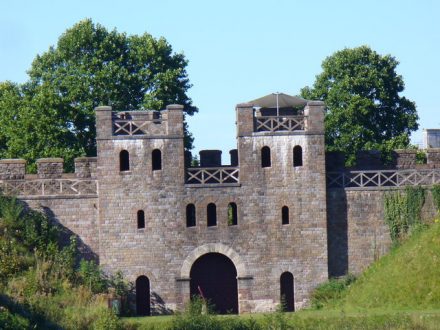
The ride to Caerdyf seemed uneventful.  People stared in disbelief, but no one moved to stop them.  When they came to the city, and Gerraint insisted they approach the fort from the city side, people came out from their homes and work to stare all the harder. Some cheered.  Many followed, so by the time they arrived at the fort, they had a great train of gawkers, watchers and more than one man who fingered a blade or another sharp instrument and stared where the Irish should be.

“What is this?”  A big, gruff looking man came out from the barracks building where he was no doubt ready to enjoy a good lunch.  He indeed looked as big as Gerraint, but a bit older and with a bit of a stomach, no doubt from the lazy life and too much lunch.  The men in the fort had certainly heard the commotion in town and knew what was coming, but the big man, in fact Fenn, played coy.

Gerraint spoke from horseback in clear and calm tones. “Your bitch yesterday suggested you might want to cut my heart out.”  Gerraint understood the score.  Erin had technically married Megalis, but she still slept with Fenn.

Fenn roared with laughter.  “You look like a chicken in that old armor, a right plucked rooster I would say.”

“This is the armor of the great centurion who built this fort to keep out you Irish scum.”  Gerraint raised his voice.  “Every true man of Caerdyf should rise up and throw you and your Irish dogs back into the sea.  You should swim home with your tails between your legs.”  Gerraint pointed his spear at the man’s chest and waited.

“Roman ass.”  Fenn got angry.  “The Romans are all dead.  You look like a dead man wearing that.”  Fenn slammed his fist into the innocent man beside him, the one with his mouth hanging open, and he knocked him to the ground, while he shouted, “My horse.  My spear and shield.  We have a guest who needs a lesson in manners.”

Gerraint inched over to one side of the open court while Uwaine, knowing how this worked, inched over to the other side. Fenn mounted and did not give Uwaine a second glance.  He started toward Gerraint without warning, and Gerraint started, expecting no warning. They crashed in the middle. Gerraint used his shield effectively to knock Fenn’s spear aside without letting him get a good hit.  Gerraint’s spear struck solidly on Fenn’s shield and everyone heard the explosion.  Fenn got shaken and his shield cracked, but Gerraint’s spear splintered and fell to pieces.

Fenn slowed, but then laughed, thinking he had his opponent.  He turned in time to see Gerraint take his lance from Uwaine and turn for a second run.

R6 Gerraint: Enid, part 3 of 3

Gerraint said no more.  It was not just the unfair treatment of Ynywl, Guinevak and Enid that bothered him.  Caerdyf should be free of Irish pirates; especially ex-slavers.  “Is there a place I can lie down?” he asked.

Ynywl pointed to his daughter.  “Enid will show you,” he said, and let out a deep breath like a man who got stuck in a tight place with nowhere to turn.

Enid got candles and escorted Gerraint and Uwaine to a fine room with a big double bed.  They had a chair beside the fireplace, and she went about lighting the fire and fluffing the chair cushions as well as they could fluff.  She pulled an extra blanket out of a cedar chest at the foot of the bed and laid it next to the one already on the bed.

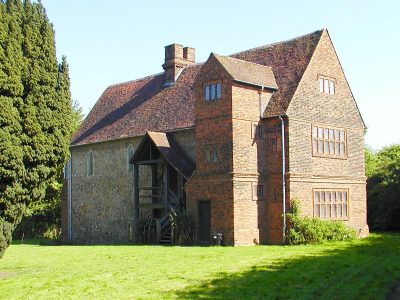
“You are going to fight Fenn, aren’t you?” she said, in a frank and forward way.  “You should not.” She turned to Gerraint who looked around at the high but well-worn quality of the room.  It looked much like the rest of the house.  There were no servants to keep things up and maintain the home, though it all appeared very clean and tidy.  He got especially taken with the bits of Roman armor on display over the fireplace.  The chain looked old and rusted, the helmet had a dent, but had been polished along with the breastplate.  A great spear sat in the corner of the room, though it looked more like a forgotten stage prop than a weapon.

Enid placed her hand gently on Gerraint’s chest to get his attention and looked up into his smiling eyes.  “He is a mean and evil fighter who shows no quarter.  You helped me in my time of need.  I would hate to see you get hurt in return.”

Gerraint covered her small hand with his big hand and smiled, deeply.  He wanted to keep her hand close to his heart.  “But tell me, whose armor is this?”  He let go and sat in the chair so as to not be such an imposing sight.

“My great-grandfather,” Enid said.  She had to take a second to remove the smile from her lips.

“The Roman?” Gerraint asked, though he knew the answer.  “Uwaine.” He made his squire get up from the bed where he already lay on his back.  “See if any of it is useable.”

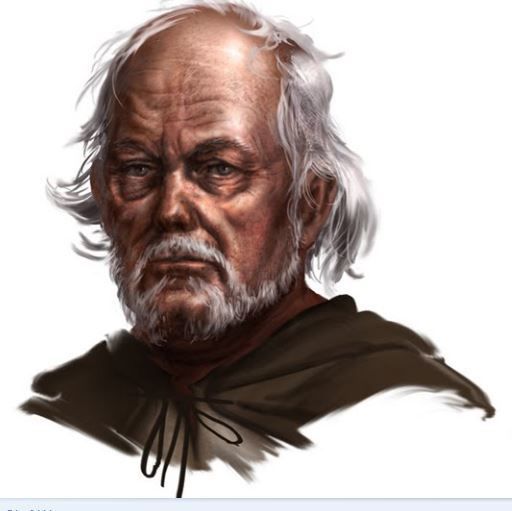
Uwaine got up slowly and looked close while Enid stirred the fire.  “I would not touch the chain,” he said.  “Too much rust, but the breastplate looks in fair shape.  No cracks.  This helmet needs work.”  He took it down, found a loose piece of brick from the fireplace and went to work, hammering out the dent.

“Sir?”  Enid looked up at Gerraint.

“I thought I might wear a bit of it tomorrow, with your permission.  It might remind the people who they are.  They came here to defend this coast, not to hand it over to a bunch of Irish scoundrels. The people might be willing to throw the Irish out, even if Fenn cuts my heart out.”

“Sir,” Enid shifted to sit at his feet and reached up to put her hand gently on his knee.  “I wouldn’t like to see that happen.”  She meant it, and a good bit more.

“I appreciate the affection,” Gerraint said. “But shouldn’t you save that concern for your husband?”

Enid hesitated, but finally withdrew her hand and placed it in her lap.  She looked down while she spoke.  “We have been prisoners here for seven years.  I was a child of fourteen when Megalis decreed that I would never marry unless Father gave him the treasure.  I had suitors.”

“Many, I imagine.”  Gerraint honestly felt stunned by her beauty and imagined he might never tire of such a sight.

“One in particular, but Megalis found out and had him executed.  That happened three years ago.  I turned eighteen.  Now I will be twenty-one in a month and that is getting too old for marriage.  I expect to die an old maid because there is no treasure.”

“I think you are your father’s best treasure,” Gerraint said, and he reached down, took her hand and returned it to his knee. They simply looked eye to eye to judge the measure of what they might be seeing and feeling.  Uwaine stopped banging and stood up.  “Where are you going?” Gerraint asked.

“I have to go outside to work on this,” he said. “I’ll never get it done with you two on about it.  It’s getting too stuffy in here.”  And he left.

Gerraint laughed which caused Enid to laugh and that temporarily broke the serious mood.  “I have every confidence in that boy,” Gerraint said.  “Percival himself taught Uwaine the value of a stone for taking the dents out of helmets.”

Enid looked shocked.  “Sir.  Once again you speak of such a noble man with the ease of familiarity.  I have heard of Sir Percival.  They say he is a great man of faith and learning.”

Gerraint cocked one eyebrow.  He was not sure how much actual learning Percival had done, unless she meant life learning.  “They are great men at the Round Table, each in his own way, I suppose.  But it is hard not to be familiar with such men when you have fought side by side with greatness.”

“Oh, but there is one at Arthur’s Round Table that frightens me, terribly.  I believe he may be a devil sent to test the faith of those other sainted men.” Gerraint nodded and thought of Meryddin. It was not yet well known that Meryddin had disappeared, but Enid had not finished.  “I only hesitate to say because you are from Cornwall yourself, and I mean no offense.”

Gerraint cocked one eyebrow.  “Please tell.”

Enid pulled up close like one afraid to speak too loud.  She raised her other hand to have both on his knee and pressed her full and firm breasts up against his leg, which he imagined she did in pure innocence, but which set his mind racing so he could hardly comprehend her words.

***********************

MONDAY

It appears Gerraint is going to fight the Irish pirate in the morning.  In the present, however, things in the room are heating up nicely, and it is getting a bit stuffy.  MONDAY (Tuesday and Wednesday), the story turns to the fort of Caerdyf.

Until then, Happy Reading

*

R6 Gerraint: Enid, part 2 of 3

Gerraint growled.  “Take care.  I have no compunction against killing men and you are a man, little though you be.”

The little man quieted.  The woman on horseback waved and the soldiers went to their own waiting horses.  She had a final word.  “We shall see what makes you afraid.  Come to Caerdyf,  tomorrow, and my champion will cut your heart out.”  She turned her horse and started off at a brisk trot.  The little man and soldiers were obliged to follow.  Only then did Gerraint realize he still held the young woman’s hand.  She grinned up at him and did not seem to mind in the least.  Gerraint thought she was lovely and did not mind either…so he immediately let go.

“I thank you for your kindness,” the old man said.  “But it will do no good in the end.”

“How so?” Uwaine became the one who asked while he smiled at Gerraint’s unease next to the beauty.

“My nephew,” he said.  “But it is a bit of a story.  My name is Ynywl, my wife Guinevak and my daughter Enid.”

“I am Goreu, and my young friend is Uwaine”

“I detect Cornish in your words, and you wear the lion.”

Uwaine held his tongue.  In those days, they were calling Gerraint the Lion of Cornwall.

“Yes,” Gerraint said.  “But my friend is from here, in South Wales, and I promised to take him home before I crossed the channel.”

“From this area?” Ynywl looked hopeful.  “I may know your parents?”

“Yes,” Uwaine started, but Gerraint interrupted.

“Probably not.  Simple farmers.  But tell me about this nephew.”

“It is a story.  Come inside.  Enid is a fine cook and we can put you up for the night, as you wish.”

Uwaine came in after caring for the horses, and sat to hear the story while Enid served boiled beef and bread.  She sat by her mother and looked suddenly shy. Gerraint tried not to stare, but he felt smitten by her looks and surprised that she seemed to have a brain inside that head.  Instead, Gerraint stared around the house.  It looked sturdy, but filled with furniture and decorations which were probably very fine twenty or thirty years ago.  At this point, it all looked rundown and used.

“My great-grandfather,” Ynywl began.  “He was a Roman, a centurion who came here with a company of men to build a fort to watch the coast.  Caerdyf became the result, and the town grew around it.  My Grandfather began the city wall and my father finished it.  The plague of piracy that Wales has suffered in these last fifty years did not get far here. My forefathers kept a strong watch on the coast.

“My own father had two sons.  My brother Dyfuss, the eldest, lived as a weak and sickly child. He married and had a son, but he was never strong.  So, my father left him the main part of the land, but he left me Caerdyf and some land surrounding it to support it and much on the coast.  Dyfuss felt happy with that arrangement, but he died young, and in time his son Megalis got greedy.

“Megalis heard the rumor of pirates, that I had a fortune in gold, secreted away and buried somewhere.  He wanted it, and if I had such a fortune, I would have given it to him.  But he did not believe me when I said it did not exist.  He raised what men he had and depended heavily on Irish mercenaries and prates.  Megalis is not what one would call a smart man.  The Irish controlled him through the rumor and the woman you saw, and in this way finally succeeded where the pirates always failed before in Caerdyf.”

“But how did they take the fort?” Gerraint asked. “It looks strong from this distance and surely you had loyal men.”

“I did.  But I surrendered the fort rather than see my own people killing each other and brother fighting against brother.  Now Megalis has abandoned his fine home and moved into the fort.  He has dug up most of the fort and large portions of the town and countryside looking for the treasure which I am convinced the Irish know is fake.  But they keep the thought alive because it maintains their power.  The woman, Erin, has come to believe their own lie.”

“Always a problem when you begin to lie, that in time you may begin to believe it,” Gerraint said plainly to Uwaine, who simply nodded and enjoyed the food.

Megalis has given us this place and kept us alive up to this point because we supposedly know where the treasure is. But after seven long years his patience is wearing thin.  I fear he will eventually be done with us.”

“And leave the Irish in control of Caerdyf? Does Arthur know about this?”

Guinevak looked at the big soldier and spoke her mind. “You speak of the Pendragon with easy familiarity.”

“It is hard to keep formalities on the battlefield,” Gerraint gave the obvious answer.

“No,” Ynywl answered Gerraint’s question.  “Why should I appeal to Arthur and his fine men of the Round Table.  Caerdyf is my nephew’s, by rights as son of the eldest son.”

“Megalis maybe.”  Gerraint got serious.  “But the Irish have no rights here and have been warned.  And how many are there in Caerdyf?”

“Only about twenty under Fenn, but they make the rules and the people have suffered.”

“Fenn is the Lady’s champion?” Uwaine asked, his appetite temporarily satisfied.

“Yes,” Enid said, and looked only once at Gerraint before she looked down.

“Yes,” Ynywl said at the same time.  “He is as big as Goreu here, but mean and cruel.  I heard before he came to Caerdyf, he trafficked in slaves to Ireland.  He is an excellent fighter.  No one has beaten him, and that is why I recommend you leave first thing in the morning. You should not risk your own injury and death on our account.”