R5 Gerraint: Rebellion, part 3 of 3

Finally, the army, such as they had, moved out of Caerleon and headed for Salisbury.  That got reported as the place where the rebels waited.  Arthur and Gerraint got the impression that the rebels hoped to come up and lay siege to Caerleon, but Arthur’s men began to show up much sooner than the rebels expected, thanks to the sixty-day deadline, so that idea got abandoned.

Meryddin explained for the boys.  “The way this game is played, the first army that is ready moves to a ground of their choosing and gets the advantageous position. They send messengers inviting their enemy to come out and play.  Sometimes, an army will come out, but choose a different place.  Then messages go back and forth, maybe for months, until the inevitable neutral ground is chosen.”

“But why do people tell the enemy where they are? Why don’t they try to catch them unprepared?” Arthur asked

“It saves two armies tromping around the countryside, destroying crops and stealing livestock for months, looking for each other.”

Arthur understood, but shook his head.  There had to be a better way.
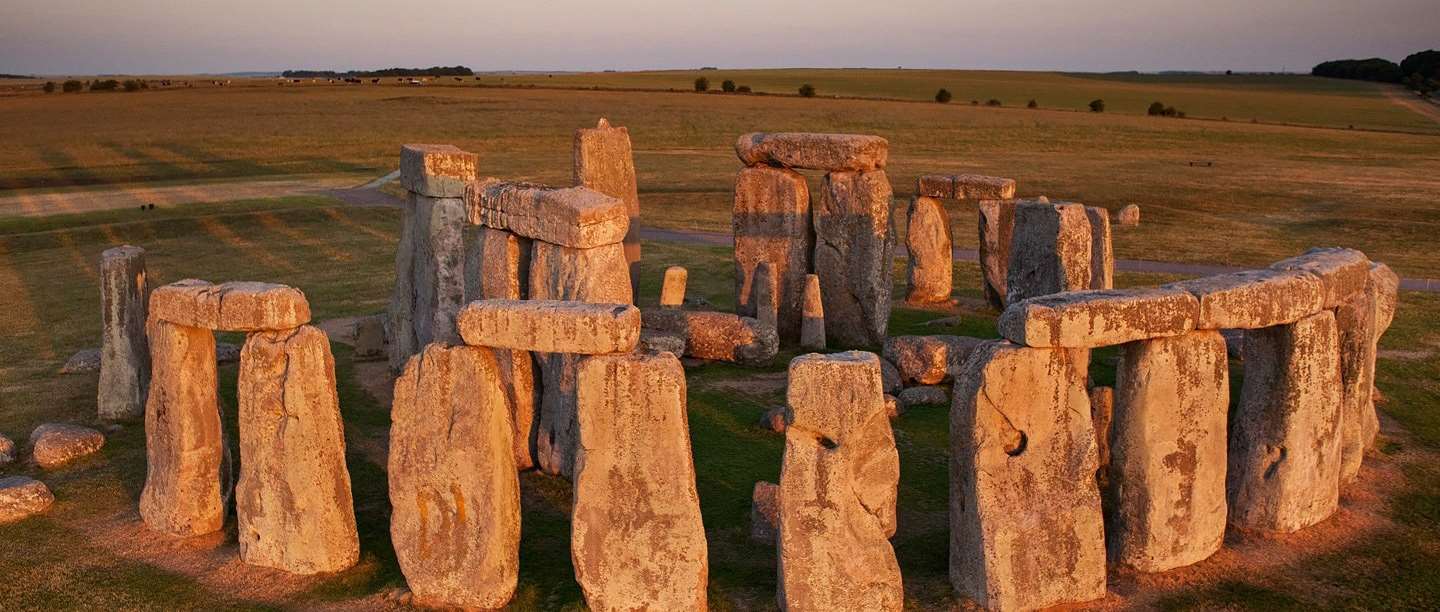
The plain of Salisbury was what it was called, mostly a flat, open plain; but there were still plenty of groups of trees here and there that punctuated the landscape, and they were covered with multi-colored leaves, it being autumn.  The eleven Lords set their camp at the top of a rise which appeared something like a shallow ridge with a gradual slope.  They brought their many men to the bottom of the rise for battle and stuffed them between the two woods that flanked the ridge on either side, making the battle line about ten men thick.

Pelenor pointed.  “They will have horsemen in both of those woods, I’ll bet, ready to ride out on our flank when we first touch the line in battle.  They likely have horsemen at the top, just over the rise as well.  They are the ones in reserve who can move rapidly to the line in case it should start to break down.  This is the way battle is done, and we have the attack position.  Now, our footmen will charge their line of footmen and our horses will try to keep their horses in the woods away from the flanks.  We will also have some in reserve to react and go to the place their reserves go.  After all, if our men are breaking through their line at some spot, we want to make that happen.  That can be the difference between victory and defeat.”

Gerraint only half listened.  His eyes turned back, searching for the men from Cornwall and Lyoness.  He wrote letters, personally, and spoke most kindly to Marcus, his stepfather, but no one came.  He felt depressed.

Gerraint looked at Arthur’s footmen arrayed in a line of their own, about ten deep.  He imagined the line would get rather ragged after charging across that long field. He looked at the horsemen around him and knew there were as many on the other side.  But as things were about ready to start, he said, “I have to go.”

“What?  Where are you going?  Gerraint! Boy get back here!”
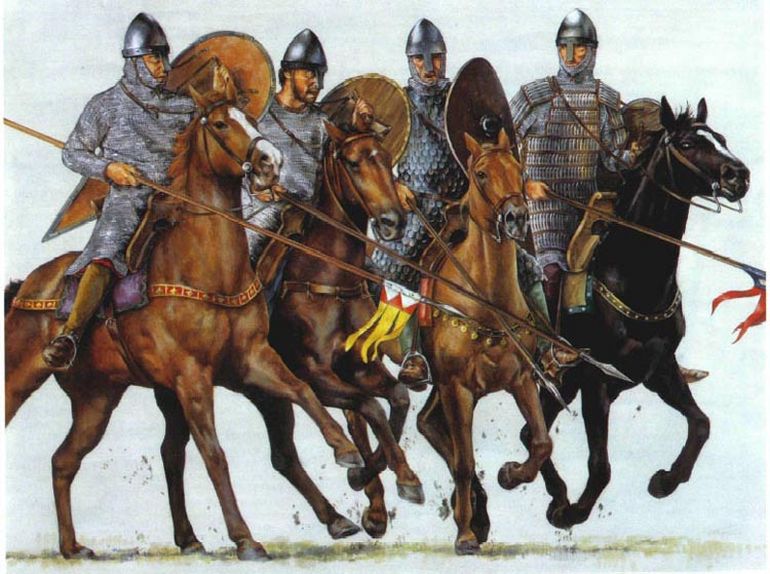
Gerraint felt bad for three seconds as he trotted up beside Arthur who waited out in front of the footmen.  Peredur followed Arthur and Ederyn came with Percival. “Pelenor is being stubborn,” Gerraint said, as fifty squires but few of the Lords showed up at the front.

“He will come around,” Arthur said with full confidence that this would work.

“Pinewood has the big group of horsemen in the woods on the right.  Bogus and Dumfries poisoned the horse feed in the smaller group on the left.

“Poison?”  Percival did not like the way that sounded.

“Not to kill them,” Gerraint assured him. “Just some mushrooms to make them sick to their stomachs so they can’t be ridden.”

“Not help to be counted on in the future, I take it,” Arthur said.  Gerraint said nothing.  “We do need to fight our own battles.”

“I hope none of the hunters gets killed,” Percival said, softly.  Gerraint felt the same, but again made no comment.  Instead, he actually stood up on the back of his horse like a crazy teenager and he shouted as loud as he could.

“Never let it be said that on this day, the squires showed more courage than their Lords.”  He plopped back down in time to hear Arthur yell.

“Lances.”  The movement looked pretty ragged, not exactly military precision, but it only took a moment for the boys to have the sharp end pointed at the enemy.  “Get a good grip,” Arthur added.

“For Arthur!”  Percival shouted, and the squires responded in unison

“For Arthur!”
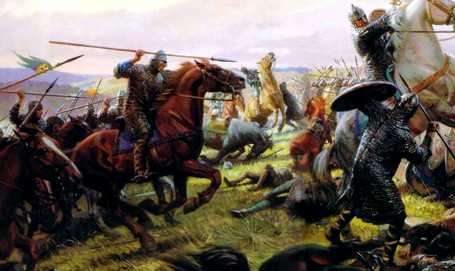
Arthur just said, “Charge!”  The boys screamed and shouted as the horses quickly worked their way up to full speed.

“What?  What?” To his credit, Pelenor became the first of the mounted Lords to follow, one step ahead of Meryddin, and he caught up with the boys on their slower nags.

Gerraint saw the enemy line of footmen waver. They were not sure what was coming, but when they saw all the sharp points headed in their direction, and not knowing that these were not full grown men, they broke and ran.  Some started to climb the rise, but they could not climb that shallow rise as fast as a horse.  Many men got cut down, some in the back, and mostly by the Lords who followed with their swords drawn; but most of the enemy ran for the trees to either side which made it impossible for any horsemen there who might have been thinking of riding out.  By the time Arthur’s foot soldiers arrived, there seemed little for them to do other than take prisoners, and more than one remarked on how good it was to see the horses go first for a change.

The horsemen in reserve put up no struggle, but a few of them tried to escape.  Pelenor and Meryddin were right on them, and it all happened so fast, they did not get far.

Arthur dismounted at the top.  Percival had the flag.  Gwillim and Tristam helped him plant it so the dragon could flutter in the wind.

“Victory!”  Arthur shouted.

“Arthur!  Arthur!” Percival started the chant again and the squires joined with a good will.  None of the squires had been badly hurt apart from Gwillim’s brother, Thomas of Devon, who took a nasty cut in his leg.  Arthur hugged Percival and swung him around like he did when Percival was little.  Percival dutifully pretended to get dizzy, but Gerraint interrupted the celebration with a word.

“Arthur.  You have to hold court.”

Arthur gave Gerraint a mean but happy stare, before he put on his serious face.  Bedwyr and Kai were there with some of their men, and they had Loth and seven of the rebel Lords captive.  The boys had discussed what Arthur might do if this circumstance arose, but it was mostly to present options.  Gerraint well understood that at this point, Arthur would have to decide things for himself.

When Arthur walked over to the men, Loth went straight to one knee and lowered his eyes.  “Pendragon, I was utterly wrong,” he said.  “By your ease of victory today, you have proved yourself more worthy to follow in your father’s footsteps than any man alive.  I owe you my head, but I swear by Almighty God, if you spare my life, I do hereby pledge my life, my sword and my land and people to you, whenever you may call and whatever you may need.”  Loth kept his eyes lowered and the other seven Lords fell to one knee as well in a sign of surrender.

Arthur looked at Kai who smiled and nodded.  He looked at Bedwyr who could not hold his tongue.

“You took a great risk charging the way you did.”

“Hell!” Loth said, without looking up.  “That was bloody brilliant.”

Arthur tried not to grin.  “I accept your pledge.  What say you other Lords.”

“We swear, I swear.”

“The round table we are building will be a Christian table.  When you have proved yourselves worthy by an act of valor and an act of Christian charity in defending the poor and the weak, then you will be welcome at my table. Remember your pledge.  In the meantime, the lives of the three Lords who fled the field are forfeit.  Their lands and positions will be given to men more worthy.  There will be no cowards at the round table.”

Gerraint nodded.  Some had to lose their lives.  It made the point that Arthur would not be a pushover.

“Please stand,” Arthur said, and the rebels got slowly to their feet.  “Bedwyr and Kai, please kneel.”  They did not knowing anything about it, but they complied.  Arthur pulled Caliburn and stepped up to the two.  When he raised it to their necks, a few gasped, but he simply tapped their shoulders the way Gerraint suggested and he practiced on Percival.  “A new title. For Bedwyr, who by his quick thinking saved my life and the life of my party in the wilderness, and Kai, who argued mightily on my behalf in the great north, I grant you the title, Sir.  Arise Sir Bedwyr and Sir Kai.  You are the very first members of the round table and are welcome in my house at anytime.”

The men with Kai and Bedwyr cheered, not that they understood, but because it seemed the appropriate thing to do.  Loth tipped his head to each of the men.  “Sir Kai.  Sir Bedwyr.  Someday I may be worthy.”

Arthur put Caliburn back and turned because Gerraint started walking away.  “Hey! Arthur called.  “Where are you going?”

“I’m going to Cornwall to see my mother and ask my stepfather why no one from my home came here today to fight.  That is unacceptable.”

“Hey, you can’t just go off like that.  Hey, wait up.”  Arthur and Percival both ran after him, and the collected Lords and men laughed softly and grinned a little.  For all the wisdom in Arthur, he remained a teenager.

Peredur and Ederyn caught Gerraint and made him stop. “You can’t just ride off like that,” Peredur said.  “At least not alone.”

“True,” Ederyn added.  “That would make Pelenor very angry.”

Gerraint frowned.  Greta could run off.  Why couldn’t he?  But then he was just a squire after all.

************************

MONDAY

The Saxons out of Essex decide to do some boy testing of their own.  Don’t miss The River Glen, Monday.  Until then, Happy Reading

*

R5 Gerraint: Rebellion, part 2 of 3

The twenty approaching riders slowed on sight of the campfire.  They let their horses walk forward while everyone stayed hidden.  The man out front turned twice in the road before he made his pronouncement.  “They have ridden on, back toward Caerleon.”  The enemy might have ridden on as well, but a squirrel startled a horse hidden in the woods and it neighed.

“Now.” Pelenor shouted and fired his first arrow. Five arrows followed.  Three missed, and the other two wounded two men, one in the arm and one in the leg.  Pelenor prepared to fire again when a half-dozen arrows came out of the trees beyond the camp.  Whoever those men were, they were dead shots.  Arthur’s crew got off one more arrow in the time the strangers fired three. When Bedwyr and his four men came charging back, swords drawn, war cries flying, they saw a few survivors riding away as fast as they could.

Six men, all dressed as hunters came from the trees and bowed to Arthur before they approached Gerraint.  They all wore the lion beneath their cloaks so the older men understood.

“Lord.”  The chief hunter bowed low.  “We do not forget.”

“Thank you, Pinewood,” Gerraint named him, just before the thunder took all of their attention.

“Arthur!”  They all heard the voice.

“Meryddin?”  Arthur looked up and all around, but of course Meryddin was not there.

“I see a hundred enemies bearing down on you. You must flee,” Meryddin’s voice said.

“Get the horses,” Pelenor shouted.  “Put out the fire.”

People jumped, but while they finished packing, Gerraint got to ask.

“Meryddin can sometimes see things and speak at a great distance,” Arthur explained.

“And hear?”  Gerraint did not really ask.

“And he can make people see and hear things that are not really there,” Arthur finished.

When they were ready, Bedwyr volunteered to stay behind with his men to delay the enemy.

“No, Lord,” Pinewood interrupted.  “We have our bows and plenty of arrows.  We might not delay them much, but we should be able to slow them down.”

Arthur looked at Gerraint and Gerraint nodded. “Lord Bedwyr, you need to ride with us.” Arthur sounded decisive.

“Your duty is to protect the Pendragon and see him safely back to Caerleon,” Gerraint suggested.

“Well said,” Peredur smiled at the squires, and Bedwyr made no objection

They rode hard, back the way they came the day before, and Gerraint had time to wonder who Meryddin was to have such special powers.  They rode all morning and into the afternoon, this time without stopping for a leisurely lunch, and they spotted the hundred, which Gerraint thought looked more like two hundred, when they came to the open fields outside the town.  The great gate looked open in the small city wall, and they passed through untouched.  The watchmen shut the gate as soon as they were safe, and then they all went up to the top of the short stone and wood wall to look down on the enemy.

They saw a number of soldiers from the fort alongside the watchmen.  Just in case, they said.  Meryddin also stood there.  He grabbed Arthur and dragged him off to the fort, and did not stay to see the hundred turn and ride back out of sight.

“They have decided not to test the walls,” Ederyn said.

Pelenor looked up and down the well manned wall. “Smart move,” he said.

In the evening, several scribes sent by Dubricius penned letters to call up the fighting men for war.  Peredur pointed out that it would not do to send a call to arms to a chief who might be in rebellion, “Like a call to fight against himself,” he said, and the others saw the wisdom in that.  So, while they worked on a list of men they knew were faithful, Arthur and Gerraint sat around the chessboard.

“How long before we can move to meet the enemy?” Arthur asked.

Pelenor looked up and spoke with a straight face. “Maybe six months.”

“He didn’t even blink saying that.”  Gerraint dropped his head to the table and banged his free hand several times.

“I suppose we could push it to three months, but we don’t want to go without the full complement of men and prepared,” Pelenor said more thoughtfully.

“Thirty days,” Arthur suggested.

“Your move.”  Percival tapped Gerraint on the shoulder.

They finally decided sixty days, because the rebels were already gathering, and had been for some time.  The older men insisted any less would be impossible. It would not give them time enough to gather the food to feed an army, or make the spears necessary for those who might come unprepared.  Meryddin argued on the side of the boys.  He said the way this game got played, often it was the first to gather the semblance of an army who won, and sometimes without ever getting to the battle.  He strained his far sight to try and discern what the enemy might be doing.  He also sent out Druids to spy and report back.  They were the ones who identified eleven Lords who made a pact, though really there were only ten that were certain because Kai kept trying hard to convince Loth to stay out of it.

“Mostly Welsh,” one man reported over supper in the Great Hall.  “Mostly Lords still committed to the old ways.”  He probably should not have said that part.

Meryddin held back his anger with the words, “This is not the time for that.”  But Arthur could tell Meryddin was not happy.  When he mentioned it, Gerraint wondered when might be the right time for the old ways.

Arthur, Gerraint and Percival spent those months drawing up rules for the round table and the RDF, which is what they were calling the rapid deployment force.  Gerraint told the others how the rapid cavalry of the Franks, Visigoths and Vandals, and especially the Huns ran right over and destroyed the great Roman legions. “The day of the foot soldiers would never end, but it would never be the same as it was,” he said.  “Horses are the thing, and lances.”  With that in mind, they drew up plans for battle, that is, if the Lords of the Pendragon and the rebels should ever happen to meet in battle.

“But the Lords and old men will want to control the order of battle,” Percival groused.

“Not if we move before they are ready,” Arthur said. He had a plan for that.

They visited Bishop Dubricius on Sunday, and in fact made it a regular habit.  Percival said they ought to always go to church.  Arthur wanted the excuse to get away from Meryddin for a time.  Gerraint was willing, but sort of in the middle on the issue.

One day, Percival went dressed in his new tunic, white with a big, red cross painted on the front.  Arthur said it looked silly.  Gerraint said Percival was making himself into a target for archery practice, and he poked the boy with his finger where the cross met.  Percival showed some steam.

“I am a Christian and so is my mother and my father,” he squeaked.  Peredur stood right there and he put his arm around his boy.  He and Ederyn often went to church with the boys, and even Pelenor went, sometimes.

The Bishop took that moment to walk up and offered his insight.  “Arthur. I’ve been thinking about this round table club of yours and I understand one of the key ingredients is to make sure everybody is on the same page.”  All three boys nodded.  “Well, I think you need to decide if the club is going to be Christian and support the ideals of grace, charity, and mercy and defend the poor, the weak and the needy, or if the club is going to be pagan.  You know very well that those two ideas do not get along.”

“Christian,” Percival said quickly.  Gerraint held his tongue and deliberately did not look at Arthur so as not to influence anything.  Besides, he got busy trying to imagine what a pagan and Druid round table might be like, and he did not like what he imagined.

“Christian,” Arthur said, and Gerraint never asked about that decision.

Gerraint had the carpenters build a protective, hand cup toward the end of the longest spears he could find.  He had gloves made in boy’s sizes so they could grip the spears tight, under their arms.  He dared not invent Velcro, but he thought real hard about stirrups.

When the Lords began to arrive, Arthur grabbed the squires for some rapid training.  Soon, there were as many as fifty young men racing around the huge open court of the fort, the place where a whole legion of Romans used to gather in ordered ranks before moving out.  The boys brandished their makeshift lances and struck at the targets Arthur had set up, mostly at man-eye level.  There were any number of near misses in those weeks, but fortunately, none of the actual men walking around got skewered.  Most of the men just sat back and watched the game and laughed.  By the end of that time, some were taking bets on which of the boys would hit the target and which would miss.

R5 Gerraint: Rebellion, part 1 of 3

Arthur spent a year at Caerleon, fixing up the fort which proved as large, though not in as good a shape as the Bishop reported. Most of the men there were stationed under Uther, and now were well into their age.  With Peredur to guide him, Arthur let the eldest go for a small tract of land and a smaller pension.  Meryddin did not worry about the old men.  He set about recruiting young, untrained men yearning for adventure.  Gerraint took credit for putting that idea into the Druid’s head, and barely avoided offering the phrase “Be all that you can be.”  To be sure, it fit with Meryddin’s thinking, which as far as Gerraint could tell looked like a strong central government with high taxes.  But a strong central government was not the world they lived in.

They brought the administration up from Cadbury where the clerks had been dutifully collecting and recording the receipt of tax money for the past twelve years.  Of course, many of the Lords stopped paying at some point, not seeing any reason to continue to support a Pendragon who did not exist.  Precious little money got collected over all those years, but then the accounts did not exactly match, so Arthur let a large number of those men go as well.

Arthur came into the great hall one afternoon wearing a brand-new tunic, white with a bold dragon on the front.  Everyone ignored him.

Meryddin stood in the corner arguing with Ederyn about the training of the recruits.  Meryddin wanted them on horseback as much as possible.  Ederyn kept saying the foot soldier remained the basic element of any army.  To his surprise, Gerraint agreed with Meryddin.  Cavalry swept across the old Roman borders at an alarming rate and crushed everything in its way.  Just as well that Ederyn had as much chance of winning an argument with Meryddin as a ship had sailing directly into the wind.  Gerraint then considered lateen sails, but dismissed them.  He was not there to mess up history.  Besides, Gerraint stayed too busy arguing with his Master, Pelenor.

“You will get more money with low taxes than with high taxes,” Gerraint insisted.

“Now son, that doesn’t make any sense,” Pelenor responded, and threw his hands in the air in frustration.

“Think about it,” Gerraint came back.  “A man will pay a reasonably low tax, but most of a high tax will end up in the barn, hidden under the hay.”

“Then we will check under all the haystacks in Britain,” Pelenor said with a sigh.

Gerraint let out his own sigh of frustration. Pelenor just didn’t get it.  He dared not get into the notion that lower taxes spurred economic growth.  Meryddin would have squashed that idea as soon as it escaped his mouth.  Meryddin did not want economic growth.  He wanted subservience and a population dependent on his whims.  The man had some Brunhild in him, and because of that, Gerraint smiled when he found something he disagreed with Meryddin about.

Meanwhile, Peredur and his son Percival looked at the dais and debated the relative merits of raising it another foot or so in height so Arthur could be sure to look down on all of his guests, and Arthur shouted.

“Hey!  I like cavalry.  Set the taxes half way between.  I don’t want to look down on anyone.  That would be offensive.  I’m just a kid.  Give me a big table on the floor where me and all the Lords can see each other face to face, like maybe a big, round table.”  Arthur grinned.  “Now, what do you think?”  He modeled his new tunic.

“Nice.  Okay. Cute.  Good.”  No one showed any enthusiasm, and they went right back to what they were arguing about.

So, after a year of that, having found an honest accountant, and one good man to Captain the fort and train the new men, Pelenor, Peredur and Ederyn wanted to go home.  Naturally, their squires accompanied them.

All three Lords lived in the British Midlands, not far from Caerleon.  Peredur and Pelenor had been good neighbors and good friends their whole lives.  Not many neighbors in Britain could say that. Ederyn lived just down the way from Peredur, technically in the province of Leogria.  He would be taking Percival there, but Percival would not be far from home.

“Why don’t we stop in my place first for a while?” Peredur suggested.  “It would give Percival’s mother a chance to see her son, and Pelenor, you always said you liked my wife’s dumplings.”

“There is that.”  Pelenor looked briefly like his mouth started watering.

Ederyn did not mind.  His wife died a few years ago from the flu, so he moved in no particular hurry.  He had servants, who were in fact slaves, who kept the place, and did so honestly no matter how long he stayed away.  Gerraint knew Ederyn was lucky in that respect, but that thought made him fear for the future.  He understood that Meryddin would eventually have his way all across Europe.  The Lords would be granted or buy or simply take more and more land and the free people in the big towns and cities would become peasants, and the people on the land would have no choice but to contract with the landowner for their service and become serfs.  Actual slavery would all but disappear as an unnecessary expense, but it would be small compensation.

Shortly after a long and filling lunch, the group came to a forest.  Gerraint only once wondered if this might be a haunted forest.  No such luck, he decided.  A mere half-mile in, and they came to a small clearing where Peredur suggested they spend the night.  It only turned three in the afternoon, but once the squires got the tents up and the fire blazing, they had the horses to rub.  Gerraint started in again on the idea of a rapid deployment force.

“We need a whole troop of men that can be called out on little or no notice.  They should be good at moving quickly and quietly to wherever the trouble may be. They should be trained to scout out the enemy without giving themselves away.  And most important, they should know when to engage the enemy and when to harass a large foe while regular troops are called up.”

Arthur put down his brush for a minute.  “You realize that would be a big expense.”

‘No,” Percival interjected.  “Let the squires do it.  We will all be young Lords eventually.”

“We would still need a small force at Caerleon to go out with whatever young Lord might be there at any given time.” Arthur mused.  “That expense might be manageable.  But the question is, how will we convince the Lords to do it, and at their own expense?”

“That’s easy,” Gerraint said.  “When they come of age and have proved themselves in some worthy deed, invite them to be members of the special club.  We won’t have to ask people to join.  No one will dare accept the shame of being left out.”

“I suppose the young Lords won’t have anything better to do than stay home and work as servants to their fathers for who knows how long.”  Arthur started thinking.

“And think how many second and third sons there are,” Gerraint added.

“Hey, I know!”  Percival got excited.  “You could use that round table idea of yours where all the young lords can see eye to eye.”

“Face to face,” Arthur corrected.  “But I think they will need more than an invitation, like when they join they should get a title of some sort.”

“Sir,” Gerraint said, but then he held his tongue because he realized he was in danger of interfering with history.

“Boys,” Pelenor came up from the fire.  “Give it a rest.”

The squires went back to rubbing down the horses before supper.

In the morning, the boys got up early and again they cared for the horses first and got them ready to travel before they started cooking for themselves.  That smell woke the men, and they stumbled out of their tents which the squires immediately took down and packed.  It looked like it would be a good morning.

While Pelenor contemplated thirds for breakfast, they heard the horses.  Everyone grabbed their weapons and hid as well as they could.  There came a moment of trepidation before they breathed relief. Bedwyr appeared with four soldiers from the Oxford fort, which sat right beside Bedwyr’s lands.

“Arthur!  Master Pelenor!”  Bedwyr shouted, even if they were all right there.  “We must ride.  There are rebels hard behind us.”

“Rebels?”  Peredur did not believe it.

“Some dozen Lords have secretly agreed they would have no Pendragon rather than a boy,” one of the soldiers said, while Bedwyr dismounted and tried to hurry the others.

“No time for that,” Pelenor said as they heard more horses coming on.  He sent Bedwyr and his soldiers down the road while his group got bows.  “Get those horses under cover,” Peredur helped. “Find good cover, but don’t fire until I fire.”

Ederyn bent down to Percival and said, “Just like we practiced.”

R5 Gerraint: The Test, part 3 of 3

Sometime later, Bishop Dubricius and Percival found Gerraint alone, sitting in the courtyard beside the stone of the sword. They sat on the cold cobblestones beside him.  Dubricius made a small grunt as he got his body down, but then they remained quiet until Gerraint spoke.

Gerraint thought about poor Greta.  He wondered if Darius would turn out to be a cad, like Festuscato.  He wondered how she would make it without Mother Hulda around.  Then he remembered how Nameless stepped in and saved her, too. Somehow, he knew that was not the way it was supposed to work.  He looked at the Bishop.

“I’m sorry,” Gerraint said.  “Nameless says he is sorry.  He no longer belongs here.  The new way has come.  The old way has gone.”  Gerraint let his voice trail off.

“I take it that young man was one of the ancient gods of the Germans,” Dubricius said with surprising ease and not the least bit of prejudice.  Gerraint nodded, and then he began to weep for reasons unknown.  Dubricius hugged him like a mother and said nothing. Percival looked over, with big teary eyes of his own.  It was not a long cry, and after a few good sniffs, Gerraint pulled back and the Bishop let him go.

“Sometimes, all I want to do is die and go to heaven,” Gerraint spoke, in a very flat voice.

“A good goal,” the Bishop responded.  “But I don’t feel you have to be in a hurry for that to happen.”

“But that’s just it.”  Gerraint felt exasperated.  “It doesn’t happen.  Every time I die, I feel all the pain, and terror, and sadness, but then the Angels won’t take me.  Instead, they stick me in another womb and I get born a baby all over again.”

“Angels?”

“Well, I usually call them friends—mysterious friends in the future, but I cannot imagine them being anything other than Angels. I mean, God has to be in charge of this somehow, don’t you think?”

“That he is,” Dubricius affirmed, and paused to think before he asked his question.  “And how many times has this happened?”

“I’m not sure, but the Storyteller has estimated I am a little less than a hundred times.”

“That many?”  The Bishop did not really ask.

“Who is the Storyteller?” Percival interrupted.

“Me,” Gerraint said.  “But he won’t be born for another fifteen hundred and, um, fifty-nine years, Storyteller’s estimate.”

Dubricius and Percival looked at each other before the Bishop blurted out, “The future?”

Gerraint nodded.  “I remember the future, but centuries from now.  I have no idea what is going to happen tomorrow.  I never know what is going to happen tomorrow.” He almost started to cry again, but the Bishop kept him focused with a question.

“But this time, Gerraint is just a regular boy, isn’t he?”

“Ordinary, average, stupid teenager,” Gerraint confirmed.

“I would not say that of the Prince of Cornwall and Arthur’s best friend, but what I am getting at is it seems to me that Gerraint needs to live the best he can and maybe not worry so much about yesterday or tomorrow.  Now is a good time to live.”

“That is what everyone keeps telling me,” Gerraint let it out.  “Everyone keeps saying this is my life and I have to decide for myself what to do and how to live, and they can’t keep stepping in and bailing me out every time I get into trouble.  Nameless says I have to fight my own battles, and Diogenes and Greta and the Princess and the Storyteller all say the same.”

“Fight your own battles,” Dubricius smiled. “You know, that is exactly what I told Arthur that one time I got him away from Meryddin.”

Something shuffled back in the shadows.  Percival turned the farthest.  Gerraint stood.  Arthur came slowly out of the dark.  His words were soft, almost repentant.  “Don’t tell Meryddin.”  He looked around once to be sure they were alone.  “I had to get away.  I needed to see you.”  Gerraint started forward but stopped when Arthur put up his hand.

“You have something to tell the young Prince?” the Bishop began things, and Arthur agreed.

“I was wrong.  I was totally wrong and beg forgiveness, and I pledge I will never ever do that to you again, ever.”

“Not even Greta?” Gerraint smiled.  “You said she was cute.”

Arthur returned the smile and the friends went to shake hands, but Percival jumped up between them and threw his arms around Arthur. He stood a head shorter, but the quintessential younger brother.  “I forgive you.”  he said, and finally let out a few of those tears.

For Arthur, Percival’s forgiveness almost felt worse than his scolding, but he took it graciously.  He wanted everything back the way it was, like it never happened, but he already knew that after being named Pendragon, nothing was ever going to be the same.

“So, cousin,” Gerraint said when they finally got to shake the hand of peace.  “What are your plans from here, or should I ask Meryddin?”

Arthur frowned, but he caught the word and asked, “Cousin?”

“I figured it out while I sat here.  Your mother was my great aunt, my grandfather’s much younger sister.”

“And Tristam?”

“He is a cousin too, on his father’s side.”

“Well what do you know?” Arthur mouthed his master Peredur’s favorite expression.  “I have a family.”

“You got me,” Percival said, and gave Arthur another hug.

“And a half-sister,” Gerraint added.  To Percival’s curious look, he named her, “Morgana.”

Arthur put a hand to his head.  “I’m trying not to think of her.”

“She’s a witch.”  Percival spelled it out.

“Now, son,” the Bishop said, as he tried to stand and Arthur and Gerraint helped.  “She is a fine wife and mother who lives with her Lord in a nice estate in the south of Central Wales.  You might visit her.”  Gerraint and Arthur looked at each other and made faces, and Percival looked back and forth between the two.  “In any case,” the Bishop said, as he headed toward the door.  “I will leave you boys alone to ponder the great mysteries of life. I was a boy once myself, you know”

Gerraint and Arthur watched the man go, but at the last minute, the Bishop stopped and turned.  “Have you given any thought to where you might hold court?”

Arthur made another face.  “Meryddin says we need to build a big fort in Salisbury near the great standing stones.  Master Peredur and others argue against that idea, saying the fort would just waste manpower and resources and serve no strategic significance.  They say the big fort beside the town of Cadbury is where Uther held his court.  But Meryddin is persuasive, and he says the nearness to the standing stones will remind the people of our common culture and heritage.”

“No,” Gerraint interjected.  “Those stones were up long before there were any Celts or even Druids in the land.”  The others all stared at him, and Gerraint backed off a bit.  “You’re just going to have to trust me on that one.”  He dared not tell them about Danna.

“All the same, Meryddin sees it as our common heritage,” Arthur looked at his feet.

Bishop Dubricius frowned.  Our common pagan heritage.  He did not say that.  He just thought it real loud.  “Have you considered Caerleon?  It got chosen by the Romans because the place gave quick access to Wales, Britain and Cornwall.  It has a very strong and very large fort, big enough to house a full legion and all the supplies.  I know Uther thought of moving to Caerleon just before he died.”

Gerraint nodded.  “That could work.  It is just across the channel from Cornwall, right in the corner between Wales and the Midlands.  And it has a port right there, which Cadbury and Salisbury do not have.”

They could tell Arthur liked the idea.  “Oh, but how can we convince Meryddin?”

“What convince?” Percival said.  “You are the Pendragon.  Just tell him.”

“Diplomatically, of course,” the Bishop suggested.  “But there is much to be said for telling. You are the decider, like it or not, and like fighting your own battles, which this may be one, it is not fair, and often not wise or for the best, to let others make your decisions for you.” He turned and left, and the trio of conspirators spent the next hour deciding how to break the news to everyone else.

************************

MONDAY

R5 Gerraint: Rebellion.  Sometimes, if it is truly a great thing, one test is not enough…

Until next week

*
R5 Gerraint: The Test, part 2 of 3

In the morning, the citizens of Londugnum came to Saint Paul’s looking for help.  It seemed the Angles had brought up a large force of men in the night and they camped outside the wall at Ludgate.

“Where are we?”  Pelenor asked by way of reference

“Bishopsgate,” Bishop Dubricius answered.  “We need to go west to talk to the Germans.”

“Eh?”  Meryddin raised his head at the suggestion, and all of the men around the head table that morning paused in their plans.  The men were planning the defense of the city and already planning a counter-attack.

“Bah!”  Badgemagus the Welshman threw his hands at the cleric.  “The only talk Angles understand is spoken by good steel.”

The men went back to their planning and the Bishop slipped out.  The squires had a horse waiting, and he rode west with the boys while the men argued. On arrival, the squires kept back, many climbing the wall for a good look.  Only Arthur, Gerraint and Percival stepped through Ludgate with the Archbishop right behind.  The brave city watch kindly closed the gate behind them, and locked it.  Gerraint waved the white flag, and they stopped short of the Angle camp.  It took no time for four representatives to come out from the other side.  They laughed at the children, and Arthur assumed they would not have come at all, except for the Bishop.

“Holy Father,” the German spoke in accented, but understandable British.  “We have no quarrel with the church.”

“And should the church have a quarrel with you?” the Bishop asked, while Gerraint stared at this evident leader of the Angles. He appeared a big dirty blond, dirty everywhere, with a few scars and a few teeth.  He wore a bearskin jacket which mostly hid the chain beneath, like a gambler who kept his cards close to his chest.  He carried a sword loosely at his side, Gerraint thought, like a gunslinger in the old west, and no telling what other hardware he might be carrying beneath the bearskin rug.  Gerraint saw the other three men as various degrees of smaller and uglier.  “This has been a city of peace and free trade between the many people who live on these shores,” the Bishop continued.  “Would you see all that destroyed?  Are you declaring war?”

The German stared hard at the Bishop, like he weighed alternatives and thought of many things before he shook his head. “We heard the Britons chose a new leader, a boy, and we thought it would be a good time to demand compensation for the way we have been cheated these past twelve years since Uther.”  The man rubbed his scraggly chin.  If he felt cheated, that only became the catalyst. Mostly, he looked like a man who wanted something for nothing, and thought a boy might be frightened into giving it to him.

“I am Arthur Pendragon, son of Uther,” Arthur said with as much dignity as he could muster.  He pulled Caliburn, slowly and carefully as he spoke.  “And this is the sword that was pulled from the stone signifying my right to speak for the Britons, the Welsh and the Cornish.  If you have a complaint against my people, you can send representatives to argue your case, but for now, this assembly of warriors is unlawful.  I demand you disband your army and leave this gate at once.”

The three ugly men looked surprised by the response and impressed with the sword from the stone, which they knew all about, but the big leader just laughed.  “Boy.  My steel and strong right arm argue my case for me.  We could settle this now, just you and me, but you are such a little thing, I would hate to take advantage of you.”

“I am young, it is true, but I accept the terms. You and I will settle this for all the people, but since you don’t want to take advantage of a young boy, you may fight my champion—the one chosen to fight for me until I come of age.”

“Eh?”  The Angle Chief rubbed his chin again like he might have to think about that.

Arthur took a step back.  “Okay Diogenes.  Beat him up.”

Gerraint’s jaw dropped.  “What?”  He went speechless.  Arthur looked smug.  “What?” Gerraint said it again, and his blood began to boil in anger.  All the same, he looked for Diogenes, not being able to think of a quick alternative, but when he traded places through time, it was the Nameless god who appeared dressed in the armor of the Kairos, and Nameless had a very big sword at his back, one made for a man.

One of the three uglies shrieked and ran off, screaming.  The other two stepped back, because while they may have been converted to the Christ, like with many of the Britons, the old ways and old beliefs were just a scratch beneath the surface.  Somehow, they knew they were looking into the judgment of Aesgard.  The leader looked uncertain, but he felt committed, and not willing to be thought a coward.  He tried to appear confident, pulled and lifted his sword in preparation for a fight.

Nameless, aware of the political implications of what was happening, made a glamour so anyone looking from the city walls would think he was Arthur and Arthur was Gerraint.  At the same time, he felt Gerraint’s anger at being put in this awkward position, and as the Angle leader lifted his sword, Nameless drew his sword and cut cleanly through the man’s middle, not pausing at bearskin, chain, flesh or bone.  It happened so fast, Percival blinked and missed it.

The German looked down at his middle and laughed, like maybe Nameless missed.  Nameless kicked the German in the chest.  The top half of the man’s body got deposited ten feet away.  The bottom half collapsed where the legs stood.  The other two Angles ran for their lives, and since most of the German warriors in the camp were watching, they also ran.  The little army had gone in less than two minutes. Their tents and equipment, simply abandoned.

Gerraint came back by then and Arthur smiled broadly until Gerraint punched him hard in the face, knocked him down and bloodied his nose.  “They do not belong to you,” Gerraint yelled.  “You swore a blood oath not to speak of them.  You get one warning.  Next time you try something like that I will walk away and you can get yourself killed.”

“Okay.  Sorry.” Arthur held his nose to try and stop the blood.  “I didn’t think.  I didn’t know what else to do.”  All the excuses went unanswered because Gerraint stomped back to the gate and did not listen.  The city watch appeared grateful.  The squires left inside the gate were chanting, “Arthur!  Arthur!” because that was who they thought had done the deed.

Arthur followed, and he went to tears by the time he arrived.  Bishop Dubricius held him and calmly told him there was room in God’s grace for forgiveness, and mercy, and everything would work itself out.  But the worst of it for Arthur came when Percival, who practically worshiped the boy as the ultimate big brother, looked so disappointed, turned his back on his brother, and accused him with two very sharp words.

“You promised.”

The men rode up at full gallop, having ridden hard once they realized what the squires were planning.  Meryddin and Pelenor raced from the front.  Pelenor jumped from his horse when he saw Gerraint. He ran up and threw his big arms around him and hugged him with a few tears.  Then he stepped back and boxed his ear.  “Don’t you ever do something crazy like that again,” he yelled.  Then he hugged him again and added softly, “without me.”

Meryddin took Arthur roughly from the hands of the Bishop, but then Peredur fetched his own squire with a possessive look.  Meryddin stayed right there, but did not argue the point.  It took some time after that for the Lords to get the straight story.

As Nameless designed things, Arthur got credited with cutting a man clean in half, and Caliburn looked unused.  Mesalwig, squire to the Welshman Badgemagus and something of an appendage to Loth during the gathering, spoke quietly.  “I said there was some magic in that sword.” Loth simply looked dour.

Kai and Bedwyr lifted Arthur on their shoulders and parade him around, chanting with the squires, and this time with the Lords and city people, “Arthur!  Arthur!” It did not take long, though, before Arthur begged to be put down.  He felt sick to his stomach.

“I would rather ride a plow horse,” he said. Kai laughed and ruffled Arthur’s hair while he called him cousin.  Bedwyr had to think before he understood and laughed as well.  They paraded back to Saint Paul’s, Arthur out front with Meryddin. The people cheered, what there were of people.  The city started dying since the Romans abandoned it.  Gerraint thought it looked like some sections of twenty-first century Detroit, but he said nothing.

R5 Gerraint: The Test, part 1 of 3

Percival started the cheer again.  “Arthur!  Arthur!” And this time a number of chiefs joined the chorus.  Still, for many there was one thing that bothered them.  It came out when the crowd quieted again.

“But we don’t even know the boy’s father.”

“I do.”  Meryddin stepped forward again and sounded like he waited for this very question. “This is Arthur, son of Uther Pendragon.”  He paused while the crowd gasped and then became silent once again.  “His mother was Isoulde, wife of Goloris, Duke of Cornwall. Isoulde and Uther were lovers for a time and Arthur was conceived on the night of the full moon.  Uther kept Goloris at the wars and away from Tintangle for a whole year so he might not find out, but when the child was born, they knew they needed to hide him, for his own safety.  They gave the baby into my hands and I brought him to Peredur to raise as his own son.

“Well, what do you know,” Peredur said.  Ederyn nudged his friend.  Pelenor stepped forward.

“Well, you are still a squire.  Don’t you forget that.  You still have a lot to learn.”  Just about everyone laughed even as Percival started again with “Arthur! Arthur!”  And this time nearly all of the crowd joined in.  Only a few walked out as the Bishop stepped up and virtually shoved Meryddin out of the way.

Meryddin looked at the stone and mumbled, “What did that Roman know that I don’t know?”

“On your knees son,” Dubricius said kindly, and Arthur, still in a state of shock, got down on his knees.  “In the name of the Father, the Son and the Holy Ghost…” The Bishop had a vial of oil in his pocket, like he came prepared, and he anointed Arthur then and there as Arthur Pendragon, High Chief and War Chief of all the Britons, the Cornish and the Welsh. Gerraint had to help Arthur back to his feet while the crowd cheered.

Then there might have been an awkward moment as the crowd quieted to hear what Arthur had to say.  Fortunately, Gerraint whispered in Arthur’s ear, “Lunch.”

Arthur looked seriously at the crowd.  “I am still a growing boy, it is true.  I will endeavor to become the man worthy of the trust you place in me.  But presently, in a word which is a favorite of growing boys everywhere, I declare, Lunch!” He raised Caliburn toward the sky and shouted with great enthusiasm.  The squires instantly cheered.  The Lords paused to think and then laugh, and then they decided that lunch, though still a bit early, would probably be a good idea.  They trooped into the monastery where the cooks were not nearly ready.

“Short and sweet,” Gerraint said.  “All your speeches should be like that.”

“Well said,” the Bishop praised Arthur.

Meryddin swooped in and slipped his arm around Arthur before the Bishop could take him; and he gave Gerraint a hard look as well when they went inside.  Meryddin sat beside Arthur like his guard during lunch and all afternoon.  He did most of the talking with the various Lords, some with their ladies, some with their sons, who came up to pledge themselves and give honor to the new Pendragon.  Arthur spoke only now and then in a very noncommittal way, things like, “Yes we must see to the price of corn in Londugnum,” and “We must look into Piracy in the Irish sea”

Every now and then Arthur said, “Bogart, are you getting this?”  Meryddin had introduced a Druid named Bogart who had an excellent memory and was there to later recall all of the day’s discussions.  Arthur wondered how much of that excellent memory might be tampered with by Meryddin before Arthur heard it again.  Quickly on, though, Arthur realized the monk who appeared to be focused on lunch and facilitating the movement of people around the room, also listened in.  Arthur imagined the monk as a master of memory himself, assigned by Dubricius no doubt, and Arthur looked forward to comparing the two versions, later.

Arthur did not play dumb.  That would not have been good because certainly Meryddin knew the boy was bright.  But Arthur understood far more of what got discussed than Meryddin may have realized, and he kept that to himself.  It was Meryddin’s own fault, because the man had a way of speaking where sometimes he would say only a short phrase or mumble something, like about what the Roman knew, which would go right passed people or over the heads of most men, but which Arthur caught.  He had been tutored by Meryddin, after all, and by age fifteen, he had become very good at reading the Master Druid.

When supper arrived, Arthur actually felt relieved that Peredur came and got him.  He found himself back in the kitchen with Gerraint and Percival, serving at his master’s table.  Pelenor, Peredur and Ederyn kept a close watch on Arthur, but Gerraint assured him it was because they felt the need to protect him at this point from undue pressure, which might move him to make some bad decisions.  Then Kai, who still called him cousin as he called Peredur uncle, and Bedwyr at least did their best to keep the young Lords at bay. They also tried to convince Loth that this could be a good thing, but Loth got hard-headed.

That evening after the squires had their late supper, everyone had questions.  Arthur had no certain answers, but he freely admitted he would need the help of all of them in the days and years ahead.  Every squire present swore a blood oath to follow Arthur to the gates of Hell if called.  Urien, to everyone’s surprise, actually proposed the blood oath, and then cut his finger first. Gerraint said he hoped the gates of Hell would not be necessary, and several young heads nodded, and a few let out a soft, nervous laugh.

Then came bedtime, but Arthur and Gerraint stayed up a bit longer.  “So now you have a sword of your own,” Gerraint said.  “Caliburn is a fine sword.”  Gerraint felt something beside him.  It seemed to appear out of nowhere, or Gerraint could not say where, but he did not get startled by it.  In fact, his only thought was the hope that Arthur did not see.

“Not like Salvation,” Arthur responded.

“Much like Salvation,” Gerraint responded.  “By the way, here is the sheath.”

Arthur took it but stared hard at Gerraint.

“Did I tell you Salvation was made for a woman’s hand?”

“Yes.”  Arthur examined his present.  “Greta?”

“No, not the Wise Woman of the Dacians.  She would just cut herself.  No, it was made for Candace, Princess of Nubia who kicked the butt of Augustus Caesar.”  Arthur looked skeptical.  Gerraint continued.  “Caliburn also got made for a woman, a Greek Princess who lived some two hundred years before Christ.”

“You’re making it up”

“You want to meet her?”

Arthur paused before he shook his head.  “Do you have any swords made for a man?”

Gerraint nodded.  “Caliburn’s brother sword is Excalibur.  It got made for Diogenes.  You saw him”

Arthur nodded.  “And that was the strangest thing I ever saw, until you topped it with Greta.  She looked very Saxon, but she was really cute.”

“Greta says thanks.”

Arthur smiled and nodded again before he caught himself.  “Gerraint, you are weird.”

“Goreu.  Remember? When I get weird you have to remember my real name is Goreu.”

“Boys.”  Arthur nodded once more as the voice of Kai sounded out in the dark.  “Go to bed.”  Arthur and Gerraint did not argue.

R5 Gerraint: The Sword in the Stone, part 3 of 3

“Friends, and sometimes enemies.”  The people laughed, but not very loud, and they looked around at their neighbors.  “We have gathered because there is too much fighting and bad blood being spilled in our land.  No one is safe and nothing is getting done.  Worse.  The Germans, Picts in the north, even the Irish are taking advantage of our squabbling. A man works hard on his land to build something only to see it stolen by a neighbor or an invader.  It is not right.  It has to stop.”  He paused while the gathered Lords nodded their general sense of agreement.

“The Roman had been right about one thing. Things worked better when we had a high chief, a Pendragon to judge the right and wrong of it between us, and to call us to arms to defend the borders against the invaders that surround us. Things were better under Uther.” Pelenor had to pause then while the people shouted, “Uther!  Uther!” and cheered the idea of a new high chief.  When they settled down, Pelenor continued.

“Now, many of you are here because you understand. You have had your crops burned, your homes attacked, your wives and children threatened and in danger.  Many of you have come at the urging of the church.” He nodded at the Bishop.  “The church understands and prays for us who are like sheep who have lost our way.  Then, some of you are here on the invitation of Meryddin who fought beside Uther and Ambrosius before him, and had foreseen the trouble of these days. Here then, in the courtyard of the stone, we must choose a new man to lead us in battle.  We will all give a little when we answer the call to arms, but we will gain a lot in the peace and security we win for our homes and families.” The crowd cheered again and strongly approved of that plan.

Meryddin stepped forward and called for quiet before he spoke.  “When the Roman placed the sword in the stone, he claimed to be no prophet.  But he also claimed the hands of the true high chief would be the only hands able to draw the sword.  Caliburn, which by my art I have discerned to be the sword’s true name, is not a sword to trifle with.  But it would save us much trouble if the matter can be decided simply, in the way the Roman designed it.  I have tried the sword and cannot draw it.”

“Nor I,” Pelenor mumbled.

“But I say, let all who wish now try the sword first, and let even the squires take a turn.  It may be one of the young will be chosen to grow into the Pendragon.”

People objected, and the noise got loud.  Most common sounded something like, “I’ll not take orders from a boy or a squire or someone who is not full grown.”  Meryddin had a time quieting the crowd.  Then he shocked everyone as he turned to the Bishop.

“What says the church?”

Dubricius stood, stared at Meryddin and wondered what the Druid might be scheming, but he spoke what he knew because he had seen the Pendragon in a vision and could not deny it.  “Young men grow.  Let the squires take a turn.”  The crowd looked stunned to silence.  It was nowhere near the truth, but common wisdom said the clerics and Druids were total opposites and never agreed on anything.  The silence remained until one man pointed out that the squires were all in the courtyard the day before and all tried the sword, and failed.

“Not all!”  Gerraint’s voice rang out from the back, and he grabbed Arthur’s arm and dragged him forward.  “Arthur didn’t try it,” he said, as the crowd parted to let them through.

“Gerraint didn’t try it either,” Arthur yelled when they broke out into the open court.

“Yes I did,” Gerraint lied.  “I tried it when no one was looking.”

They came to the stone and both Meryddin and Dubricius smiled, knowingly.  Gerraint raised one eyebrow at that, but pushed Arthur forward.  “This is Arthur,” he shouted for whatever Bogus or Dumfries might be listening.

“Don’t laugh,” Arthur said.  He put his hands on the hilt and pulled a little.  The sword moved.  He felt as shocked as anyone as he pulled it cleanly from the stone.  The crowd erupted, and at first, it did not at all sound positive.  Percival at the back got the squires all yelling, “Arthur!  Arthur!”  But the Lords just made noise until one thought stood out.

“Put it back.”

Arthur turned to the stone.  He did not look sure of what to do, but Gerraint felt glad he did not tell Bogus and Dumfries to demagnetize the sword.  Meryddin looked disturbed at the development, but Dubricius continued to smile as Gerraint yelled.  “Putting the sword back in the stone.”  Arthur looked.  He found a slot in the stone where the sword had been.  “Go ahead,” Gerraint said.  Arthur did, and felt the sword slip from his hands when it got half-way in. Loth stepped forward from the crowd.

“By my father who died fighting Danes and Jutes, who died defending your homes from dreaded invaders, I say we need a man to lead us in battle, not a boy.  I will pull the sword myself, and that will settle it.”  He reached for the hilt and tugged, but the sword was stuck fast. Several other men stepped up and gave it a try, bringing more and more frustration to the crowd.  At the last, Loth drew his own sword and hacked at the rock and the exposed hilt until something like lightning shot out from the stone and deposited Loth ten feet away, shaken, but not badly damaged. That quieted the crowd again.

“Arthur’s turn,” Gerraint shouted, and shoved Arthur in the direction of the sword.  “Arthur’s turn,” he said again, and Arthur easily drew the sword cleanly from the rock.

************************

MONDAY

No good fortune comes without responsibility, and no human promise goes without testing.  Next week, R5 Gerraint: The Test.  Happy Reading.


*

R5 Gerraint: The Road to Londugnum, part 3 of 3

Gerraint turned.  The Bishop had a small cut in his arm where his robe had been torn.  He held Percival in front of him, his hands tight across the boy’s chest.  Percival had a big dent in his pot-helmet, and he had his eyes closed.  Arthur had his own knife and Gerraint’s long knife and faced a man who appeared to be toying with him.  He swung slowly with his sword and Arthur desperately tried to parry.  It looked like a lesson for a schoolboy, and the Saxon laughed.  Gerraint stood behind the Saxon, and again he did not hesitate. He brought Salvation down on the back of the man’s head even as Arthur realized his advantage would be in getting close.  The man howled and reached for his head as Arthur stepped in and thrust up under the man’s breastplate.  The man cried out again and fell to join his companion in the dirt.

“Ugurt?”  One of the Saxons in the camp yelled in response and then rattled off a whole string of words in a language the boys did not know.  Suddenly, a half-dozen Saxons stood at the forest edge, growling, with their weapons ready.

Arthur backed up, horrified by the knowledge that he killed a man.  Gerraint would have felt the same way, now that he had a chance to think about what he did, except he no longer stood there.  Instead, a man, with golden brown hair, hair which appeared nearly blond in the sun, looked at the Saxons through sparkling blue eyes under strong brows. He wore a formidable suit of leather and chainmail that reached to below his knees. He wore tall boots that disappeared into the skirt of the armor, and studded gloves that came up to his elbow. He had a helmet which looked ancient, like something Greek, where only the eyes and mouth remained uncovered. He put it on and reached out his free hand and called.  “Defender.” Gerraint’s knife wriggled free of Arthur’s hand and jumped to the hand of the man.  The man still held salvation in his other hand, and he raised it for battle.

The Saxons hardly hesitated, but as they charged, there came a sudden whizzing sound in the air.  All six Saxons became target practice for some unseen archers, the last of whom fell a scant two feet from the man.  The man spoke in a strange tongue which only the Bishop understood. “Th – thank you,” he said in his native Greek, and went away, taking his armor and the sword called Salvation with him. Gerraint returned holding only Defender which he returned to the sheath he wore strapped to his thigh.  Arthur looked shocked.  Percival still had his eyes closed.

Three men came out from the deeper woods and went straight to Gerraint.  They might have been hunters, but there had a hint of the lion on their tunics.  They all went to one knee before Gerraint and the eldest spoke.  “Your Highness.”

“You are a long way from home,” Gerraint said. “Don’t tell me, you have been secretly following since Caerleon.”

“Yes, your Highness.”

“Wait a minute.”  Gerraint got some insight from somewhere.  “You’ve been following me since my stepfather threw me out.” The hunters chose not to answer that accusation.  “Well, what Diogenes said, thank you, but now you better disappear before Lord Pelenor and the others return.”

“As you wish,” the elder said, and the three, without a look at the other people present, got up and disappeared among the trees.

Arthur held a stiff upper lip.  “Nice to have some extra friends.”

Gerraint nodded and thought, stiff upper lip, how British.  Then he spoke.  “I have wings to fly that you know nothing of, eyes that see farther, ears that hear better, and a reach longer than ordinary men.”  Arthur could only nod as Gerraint disappeared again and a young woman came to stand in his place.  She came dressed in a long dress with long sleeves and had a red cloak with a red hood over all.  Her hair was blond, her eyes were soft, rich brown, her skin looked milky white, and she had more than enough freckles.

“Your grace,” she said to the Bishop, and curtsied, which showed the silver cross that hung from a chain and swung with her movements.  “I am a healer, now let me see that cut.”

Many men would run at seeing her appear out of nowhere, and would be wary of such an offer, but the Bishop just smiled. Percival fetched water and cloth with which she could clean and bandage the wound.  Arthur just looked over her shoulder and pretended to admire her work.

When she was done, she stood and faced Arthur. “Greta.  I am a Dacian, which is Germanic, so not a good choice.  I am also older than you.”  She reached out and kissed Arthur’s cheek.  “You did your duty.  You must always do what is right and good and true.”  She vanished and Gerraint returned.  “And for the record, neither Greta nor Diogenes were here, and we were helped by simple hunters.”

Percival had retrieved and cleaned Arthur’s knife, and he used it to prick his finger.  Gerraint borrowed it, pricked his finger, and handed Arthur back his weapon. Arthur paused only a second before he pricked his finger and agreed.  The boys touched, and were surprised to find the Bishop’s finger over them all.  He had touched the bit of blood from his wound.  He looked at their surprised faces and laughed.

“I was a boy once,” he said.  “I know about blood oaths, and I agree.  What happened here is not for tale telling.”

Arthur nodded, but as he put his knife away, he began to cry.  Gerraint joined him, and he never did look at the man he killed.  The Bishop put an arm over their shoulders, carefully in Arthur’s case because of his wound on that side, but then he walked them back to the roadway.  There they heard all about forgiveness and mercy, and received absolution in the Roman way.  Arthur said he understood something then that he never understood before.  Gerraint simply said, “Thanks.”

The last thing that got said before Pelenor and the troop returned was a question by Arthur.  “I saw the lion on their tunics, but if they were not hunters, who were those men?”

“Fairies,” Gerraint answered.  Arthur laughed, but he was not sure what to believe.  The Bishop merely nodded before Percival got them all to laugh when he grabbed a rock and tried to take the dent out of his pot-helmet.

************************
MONDAY

Gerraint: The Sword in the Stone.  If you read the story of Festuscato, Last Senator of Rome, you know he put it there.  Now, Gerraint needs to make sure the right hands pull it out again.

Until Monday, Happy Reading.


*

R5 Gerraint: The Road to Londugnum, part 2 of 3

They crossed the Thames at the ford of the ox where a fort first got constructed by Constans, son of Constantine, the first Pendragon.  Ambrosius, son of Constans was the one who defeated the usurper Vortigen and got proclaimed Pendragon before he got poisoned, and his brother Uther took the reins of the War Chief.  The fort had been built to protect the easy ford across the Thames and keep the road to Londugnum open, but in recent years they were doing well to keep themselves from being overrun.  The fort got burned once by Saxon raiders since Uther passed away in battle.  The local Lords made a temporary alliance to drive the Saxons back and rebuild the fort, but it became then more of a British outpost than a real line of defense.

The river crossing at Oxford was as easy as reported, and they spent the night feeling secure behind strong walls.  The Bishop visited the local Monastery, and stayed with the monks with strict instructions that the group not leave without him.  In the fort, the squires had little time for pleasantries.  They had to care for all the horses and equipment and only finished in time to eat and pass out from exhaustion, while their Lords stayed up drinking and talking about nothing important.

In the morning, Gerraint felt surprised that along with two guards, which was all the fort commander said he could spare, they picked up three new young Lords.  Kai and Bedwyr were the youngest at twenty-one and twenty-two.  Loth seemed the old man of twenty-five.  By contrast, Pelenor, Peredur and Ederyn were in their thirties and fought for Uther when they were squires and young Lords.  Of the three, Ederyn was perhaps the youngest at about thirty.

First thing, Pelenor, flanked by Peredur and Ederyn, strictly charged the three young squires to guard the Bishop at all costs. Arthur asked about Meryddin, but got assured the Druid was more than capable of taking care of himself. Gerraint looked at young Arthur and wondered what exactly the relationship might be between him and the Druid, but he held his tongue.

The group stopped for lunch before noon, and used some of Percival’s pots and pans.  Even so prepared, it became a three or four-hour ordeal, with the squires doing the lion’s share of the work.  Gerraint had something to say, but quietly to Arthur so as to not insult his masters.

We have been moving this slow since Caerleon. I don’t know how we can be expected to hold our lands against encroachment at this pace.  If the Romans moved this slow, Boadicea would have kicked them right off the island.”

Arthur looked like he had not thought of that. “We have been on the road from Leogria for three weeks, a distance people might have walked in six days.”

“We have been a whole month,” Gerraint agreed. “I could move a whole army in less time.”

“I could join your army,” Percival said, and Gerraint paused to lay a hand on the boy’s shoulder.

“For better or worse, you are part of Arthur’s army, and I have a feeling I may be too, someday.”  Gerraint paused then as he caught a brief and unusual glimpse of things to come.  “This land needs a friendly dragon,” he concluded.

“And the lion,” Arthur said, kindly.

“I’m going to paint a cross on my arms,” Percival said.  “You can forget the lemming.  I don’t even know what one looks like.”

“A good choice,” the Bishop said softly.  As usual, he had been listening in and keeping his own counsel.

At that awkward point, when lunch started being packed and people started preparing to move out, a dozen horsemen appeared on the road ahead.  They charged the group, but then, whether they thought better of it or decided the odds were too even, they turned and rode off.

“Saxon raiders.”  Peredur said it out loud.

Pelenor said, “Mount up,” and all the men hurried.

Ederyn alone thought to remind the squires to protect the Bishop, and then the men rode away in pursuit of the enemy.

Gerraint immediately grabbed the Bishop’s hand and started to drag him into the woods.  “Get under cover,” he yelled.  Percival, who was still young enough to trust his elders, grabbed his pot-helmet and followed.  Gerraint found a sword in his hand and gave his long knife to Percival.

“What are you doing?” Arthur yelled at them and scoffed.  “We have to clean up.”

“It is obviously a trap,” Gerraint yelled back, and eight or nine Saxons took that moment to come out of the woods.  Arthur ran and pulled his own knife, which might have been a pretty good hunting knife, but not much against a sword.

The boys and the bishop backed up while most of the Saxons went for their supplies to see if they might find anything of value or at least useful.  Two of them went to take care of the boys and the cleric.

Gerraint looked big for fourteen, being five and a half feet tall, which made him as big as any number of men in those days.  He held his sword with two hands, at the ready, so at least it appeared as if he knew how to use it, even if he did not have much practice with it yet.

“A good-looking weapon.”  The Saxon who faced him grinned and showed only a couple of missing teeth.  “I’ll just have that.”  He drew a weapon that also took both of his hands, but only because it looked huge. He grinned again and swung straight for Gerraint’s legs.  Gerraint parried and barely held it off, but they heard a loud crack and the Saxon said, “Maybe not such a good weapon after all.”

“It is Salvation.”  Gerraint named his sword as he took a step back.  It was one sword which was not too heavy for him.  The Saxon grinned again and swung at his legs from the other side, the Gerraint parried easily with a strong backswing and the crack sounded louder than before.

“One more swing and you will be disarmed,” the Saxon said, and he lifted his broadsword to prepare a swing at Gerraint’s head, but as he lifted his heavy steel, the top half of his sword fell away. Salvation had shattered the Saxon’s more primitive steel

The Saxon looked dumbly at his useless weapon, and Gerraint did not hesitate.  He thrust the point of his sword through the Saxon’s neck, just above the armor, and it stuck out a little from the back.  Gerraint yanked on his sword with all his strength, and it came out as the surprised Saxon’s head lolled forward and his body collapsed to the dirt.

R5 Gerraint: The Road to Londugnum, part 1 of 3

Gerraint kept close to his master, Pelenor.  His bright blue eyes peeked out from beneath long, curly dark brown locks with the attention of an eagle on its prey, while his right hand gently stroked his charger’s neck.  His horse wanted to run at the sound of approaching horses.  He held tight to the reins and waited, and good thing because Lord Pelenor’s horse jolted when the approaching men came into view. Dubricius, the Right Honorable Bishop of Caerleon nearly got dumped in the mud by his startled horse.

“Peredur!”  Pelenor shouted and waved.  “And Ederyn.”    Pelenor trotted out to meet them.  Gerraint and the Bishop stayed where they were.  The Bishop looked at the water that still dripped from the trees after the early morning rain.  Gerraint looked at the Bishop who Lord Pelenor charged him to guard at all costs. At fourteen, Gerraint the squire had learned to pay strict attention to what his master told him.

“Boy,” Pelenor called as he rejoined them with five riders in tow.  He presented the Bishop, and all of the others, except the old one with the long white beard, nodded their heads in a kind of bow.  “And this is my squire, Gerraint, son of Erbin, High Prince of Cornwall.  Gerraint puffed out his chest a little to show off the lion emblazoned on his tunic. To be sure, Gerraint did not know how long he would remain high prince since his father died.  His mother remarried a Roman named Marcus Adronicus.  She said she wanted a husband to raise Gerraint’s little sister, Cordella, but who knew if Gerraint might have more brothers and sisters and he might be cut off from his inheritance.

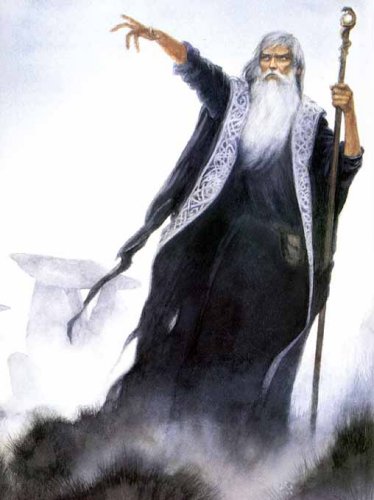
“My son, Percival,” one of the Lords said. “He is only twelve, but Ederyn here has agreed to take him on.”  Gerraint guessed the speaker was Peredur.  Percival removed the cooking pot from his head.  He had plenty of other pots and bags tied to his saddle and appeared more like a traveling merchant’s son than a proper squire. Peredur continued.  “My squire is Arthur, son of we don’t know who, because Meryddin here who brought the boy to me as a baby still won’t tell.”  He pointed last to the one with the long white beard.  The Bishop gave the man a hard stare.  Gerraint’s head shouted, “Merlin!  Gandalf! Dumbledore!”  Fortunately, Gerraint kept his mouth shut.

“Good running into you.”  Ederyn seemed a pleasant fellow.  “The closer we get to Londugnum, the more nervous I get, I don’t mind telling you.”

“Saxons to the west?  Angles to the east?”  Pelenor laughed.

“I think he sees Germans behind every rock and tree,” Peredur confessed.

Arthur came up to Gerraint and interrupted his concentration on the small talk.  “Hi, I’m Arthur, the dragon.”  He pointed behind to Percival who trailed, clinking and clanking.  “This is my younger step-brother, Percival the lemming.” Percival looked like he did not appreciate the nickname.

“He only chose the dragon because he has bad breath,” Percival said, but in a very quiet voice.  Arthur showed a fist and Percival quieted altogether.

“Goreu, the lion,” Gerraint said.  “That’s my name back home.”

“In Cornwall,” Arthur said.  “Goreu the Cornie”

“Cornish,” Gerraint corrected.  “You’re not a Brittie”

Arthur nodded.  “But Percival might be.”  He pointed.

“I’m a Christian, like our mother,” Percival spoke up again.  Gerraint noticed the Bishop listened in, and he looked like he might say something, but Arthur interrupted.

“Go on.  I’m fifteen, and that is plenty old enough to make up my own mind about that junk. I don’t know what I am.”

“I’m fourteen and a good squire, I hope.  My master, Pelenor is pretty strict.”

“Ha!”  Arthur spouted.  “I’m the eldest.  That means you have to do what I tell you.”

“Not a chance of that happening,” Gerraint said, with a sly grin.  Arthur studied that grin for a bit before he returned the same.

“I think I like you,” he said, but then Pelenor called them all to attention and they started again down the so-called road to Londugnum.  Percival put the pot back on his head.  It served as his makeshift helmet.  Gerraint kept his eyes and ears as open as he could.

Pelenor and Meryddin took the front, followed by Peredur and Ederyn.  They kept up a spirited conversation about who might be called on to fill the shoes of the Pendragon.  Uther had died some twelve years earlier and the Germans, the Irish, and the Picts in the north were all becoming bold in looking to extend their territory at British and Welsh expense.  Even the Scots, first invited by the Romans to live between the Antonine and Hadrian walls as a hedge against the Picts appeared dissatisfied with their lot and greedy for more, the ever-independent Ulster also feeling the pressure of the Irish and being overpopulated as it was.  Bishop Dubricius appeared willing to listen in from behind.  Gerraint thought that a sign of wisdom.  The three Lords thought it wise to keep Meryddin, the High Druid of the Britons and the Archbishop of Wales well separated.