Medieval 5: Elgar 3 Hingston Downs, part 3 of 3

Early the next morning, Elgar met with Deerrunner and a dozen elves who agreed to lead the army through the moors. “I looked at the map last night,” Elgar said. “I figure the Celts are about a day ahead of us.”

“About that,” Deerrunner said.

“Secret elf paths are fine,” Elgar continued. Such paths could take people from here to there in less time than humanly possible. “But I want to catch up, not get ahead of them. If we catch them in the downs on the other side of the moors, well before the Tamar River, that would be fine. Men in this world often have to fight, but better they have solid ground under their feet.”

Deerrunner said, “I understand, catch but not surpass.” and he added, “Pinewood and his people will be keeping an eye on the Celtic army. They can slow them down a bit if necessary, like finding an unexpected marshy area where they have to backtrack and go around. He will keep us apprised of their progress so they will not get too far ahead of us and we will not get ahead of them.”

“Good. Don’t forget we have wagons full of supplies so we need a solid route level enough to bring them through,” Elgar said. Deerrunner understood, so Elgar went to saddle his horse while Eanwulf, Osric, and Athelwulf showed up to cross-examine the elves one more time. Elgar was not worried. Eanwulf already met Deerrunner and would vouch that he was one of the three that came to tell them about the Celts and Danes in the first place. That spoke much in Deerrunner’s favor. Deerrunner would reassure them for the rest of it and introduce his “cousins” who were all disguised to look like grubby men who lived in the wild and who would not say much more than yes sir and no sir.

It took only two days to cross Dartmoor. They never had to backtrack, and there always seemed a safe way for the wagons and horses. They had to work some to get up and down the granite hills, but that was expected. It would have been suspicious if the elf guides made it too easy.

In the early morning, the West Saxons arrived in the Tamar River valley. They came out from Dartmoor at the Tavy River where it was wide and shallow and easy to cross. King Mordaf and the Celts stopped there for the night and were still there for some reason. In fact, Lodbrok the Dane caught up with the king and they were in a heated argument about the man being paid for nothing.

Lodbrok easily overran Plymouth and Saltash in a day, left half of his men there and traveled upriver with four or five hundred men searching for the elusive abbey where he hoped to find gold and silver and precious relics of the saints that the people might pay to safeguard. He got to the hamlet of Tavistoke and found Mordaf instead of a payday. Lodbrok just agreed to abandon his quest for the non-existent abbey and return to Saltash. He  agreed to leave Cornwall alone but he did not tell the king that he planned to go back down the river to ravage Saltash and Plymouth for everything he could get before he left. All of that became moot when the West Saxons arrived.

The army of Dumnonia hastily formed ranks. Mordaf had some good officers even if all he could do was complain. “How can they be here? How can they possibly be here?”

Lodbrok hurried back to his men who were camped well below the hamlet, out of sight, and closer to the Tamar River. He considered staying out of it, but then he considered if he helped the Celts in the right way, he might get the two armies to ruin each other. That would make the coasts of Cornwall, Devon, Somerset, and Dorset, and possibly even Hampshire accessible to raiding, and the kings might not have the manpower to stop him.

King Ecgbert and his son Athelwulf got the ealdormen to set their men in battle order. Eanwulf stayed close to his father and made Osric of Dorset, his brother-in-law fight beside him. Wulfheard of Hampshire took the other end of the line where he readied his men and the men from Berkshire and Wiltshire. It was twenty-three hundred from Wessex against eighteen hundred from mostly Cornwall. The outcome was not in doubt, especially since King Ecgbert had an additional three hundred men in his so-called cavalry.

Lodbrok the Dane waited for the two armies to meet in the middle before he hoped to hit the Saxons on their flank and totally disrupt their line. He thought his men were hidden well enough to be a complete surprise. He did not fool the little ones.

The Danes stood up to charge and immediately they began to fall to elf and fairy arrows. The Danes stopped before they started and tried to form a shield wall against the deadly projectiles. Elgar’s eyes were drawn to the area. He grabbed a spear, shouted, and began to ride in that direction with his friends and a few of the guards that rode with him.

Eanwulf saw and yelled, “Where are you going?” Then he, Osric, and Athelwulf all saw the Danes, and in no time, the big half of Ecgbert’s cavalry were headed in the same direction.  Elgar was concerned that some of his little ones might be hurt or even killed. Eanwulf, Osric, and Athelwulf knew what four hundred plus men crashing into the side of an army could do. They might collapse the whole line.

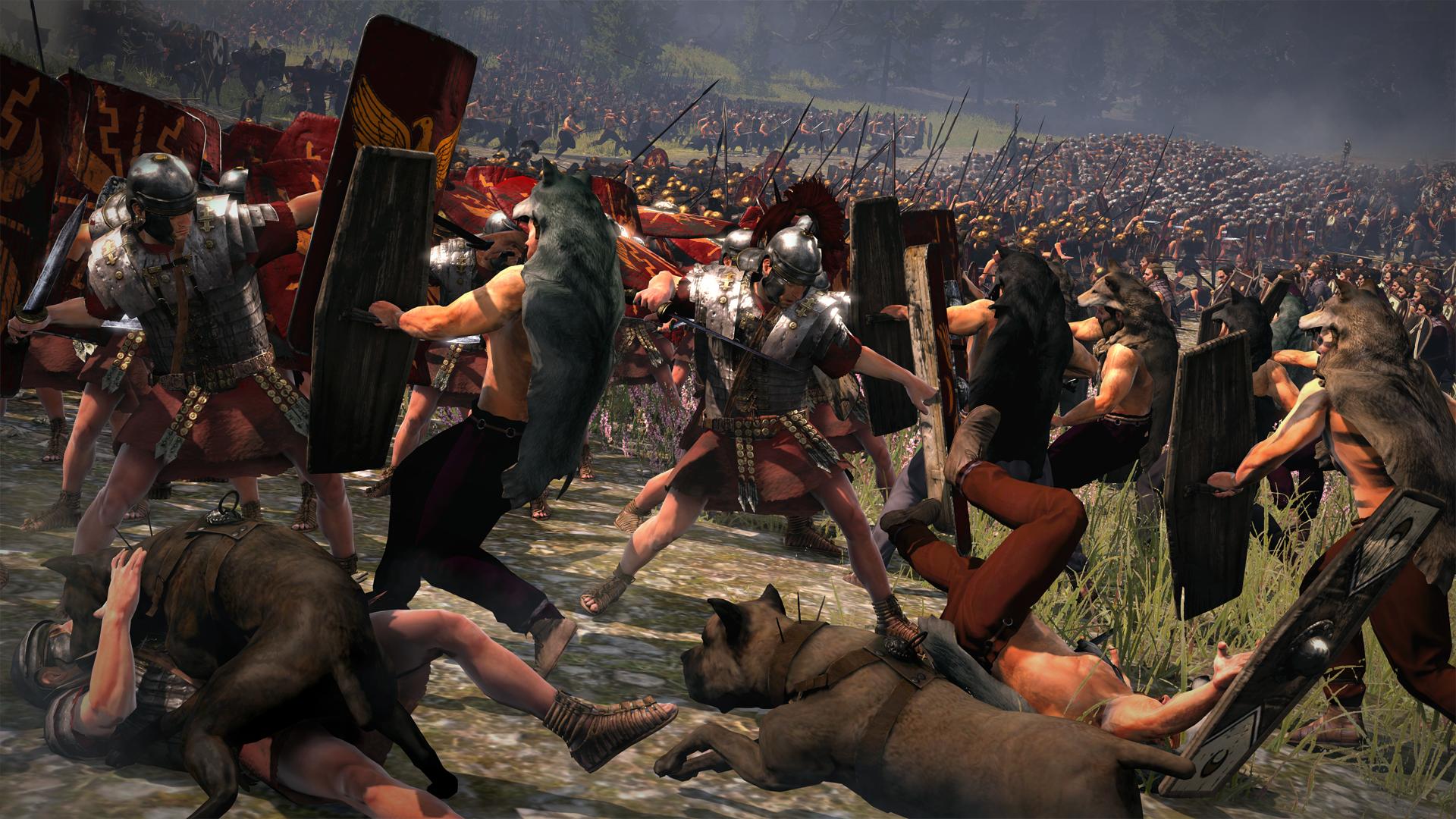
When the Danes got the shield wall up against the archers, the gnomes and dwarfs popped out of the grass both directly in front and behind the Danes. They were much better at hiding in the grass than the Danes could ever hope to be, and the little ones had their bows, long knives, and axes ready and sharpened. The shield wall quickly fell apart and the Danes began to run back toward the river. By the time the cavalry arrived, that battle was already over. Elgar knew the dwarfs and some others would chase the Danes all the way to the water. They would catch some, and pity on the ones they caught. But meanwhile, Eanwulf and then Athelwulf had the same idea.

“Circle around to hit the Celts in the rear,” they shouted, and the men followed them, though they did not have to hit the rear very hard. Mordaf was already beginning the surrender. What most of the cavalry ended up doing was chasing those Celts who imagined they could race to the Tamar River and swim to safety on the banks of the Cornwall side. A few succeeded, but most were caught or killed before they reached the water.

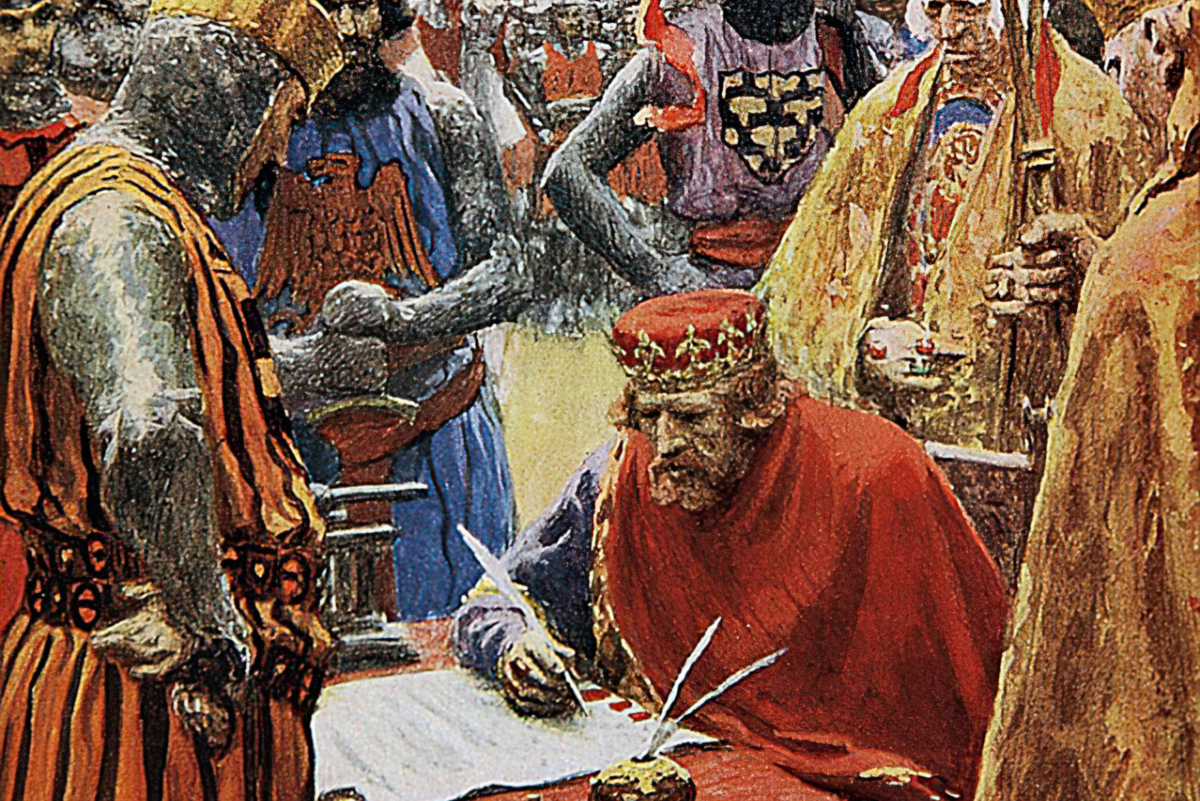
King Ecgbert brought King Mordaf to a table he had set up in the field and King Mordaf explained. “These are the Hingston Downs, though the village of that name is some distance from here.”

“Lovely land,” King Ecgbert said. “You can keep it, and Dartmoor with the big mosquitoes.” He had little patience in his old age. He called for a map that showed the western end of Somerset, Devon without too many details, and almost nothing of Cornwall. “Here is the new border,” he said and started at Pilton, and making sure the city was on his side of the line, he drew a line down the Taw river, cut across the land to the Exe, again making sure that he got both Crediton and Exeter, and ended the line at the Exe River delta. “I get the north and east of Devon for my trouble. You can keep the west and south.”

“And the big mosquitoes,” King Mordaf mumbled.

“By all means. keep as many of them as you want.” King Ecgbert smiled and King Mordaf recognized that he had no choice. King Ecgbert softened a little. “I was reminded just recently that there is no reason why two Christian kings should not sit down and peacefully work out their differences. So, let’s talk about compensation.”

King Mordaf did find some backbone and raised some objections when the amount and frequency of the payments came up, but they eventually worked it out when King Ecgbert reminded the man that he ought to pay at least as much as he paid those heathen men to fight for him. “Unbecoming of a Christian king,” King Ecgbert concluded.

When they got back to Exeter, the king found that Godric had things well in hand. the king congratulated the man and right then made him Ealdorman of Devon, handed hm the map, and went home because he was tired. Elgar figured Godric would not live long, but neither would the king, or his own father for that matter. They were of the generation that was dying out. Oslac of Dorset was already on his deathbed. Eanwulf, Osric, probably Ceorle, and King Athelwulf would soon be taking over. That reminded Elgar of something, and he asked Deerrunner.

“So, where is your son, Marsham?”

“He is over in Northumbria tracking the Flesh Eater ship. The Flesh Eaters have been watching the humans fight each other. They may have been involved in triggering the civil wars in Francia. They also sent a shuttle across the sea to Danish lands. They are most certainly planning something.”

“Thanks,” Elgar said with all the sarcasm he could muster. “I had forgotten about them.” Deerrunner let out the kind of elf grin that would cause humans to be frightened and wonder what the elf might be thinking. It just made Elgar frown and change his thoughts. He would much rather think about Osfirth’s sister, Alfpryd.
Medieval 5: Elgar 3 Hingston Downs, part 2 of 3

An older man named Godric led a thousand West Saxons from Carhampton and crossed the Exmoor to preemptively invade Countisbury and north Devon before the Celts and Danes could invade the coast of Somerset. The old man would have taken his time and ruined the surprise attack if he did not have his two lieutenants, Ceorle and Odda pushing him. When they arrived outside the city of Countisbury, the Danes, who had just arrived, simply turned around and marched back to Pilton and their ships. The outnumbered Celts began the long trek to Crediton and Exeter where they expected to find the king.

Godric left enough men in Countisbury to make the city a Saxon controlled city while he and Ceorle led most of the army to follow after the Celts. They did not feel the need to catch the Celts as long as the Celts kept moving out of the area. Godric was not in a hurry, even when Ceorle figured out the Celts were going to link up with their king and his much bigger army. “We will be the smaller claw of the crab,” Godric said. “King Ecgbert will be the big claw and we will crush the Celts between us.” He was not going to hurry.
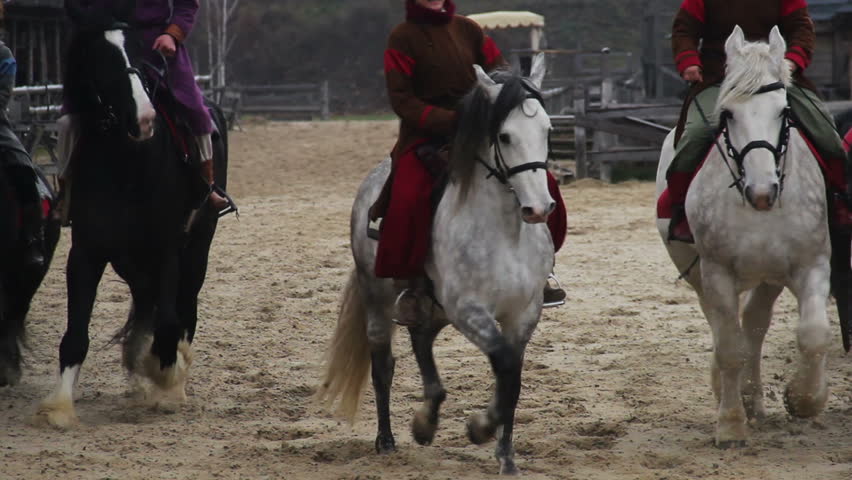
At that same time, King Ecgbert and the main force of Wessex moved two days down the road between Somerton and Exeter. He had about twenty-three hundred foot soldiers, an additional three hundred men on horseback that he called his cavalry, and a dozen wagons full of tents and the supplies they would need for a war. The king of Cornwall did not know they were coming.

When the twelve-hundred men of Cornwall and Devon were gathered, along with nine hundred Danes, they left Exeter with high hopes. One day down the road, and they saw what was coming to face them. King Mordaf stopped his men, and when he estimated the opposition, he started to turn the men around and put his men behind the Exeter city walls. To be fair, the king saw the elves, gnomes, dwarfs, and ogres along with the rest of the army, and he saw the little ones as men, so his count estimate was much higher than King Ecgbert and Eanwulf or Osric of Dorset knew about.

Lodbrok the Dane complained about turning around. “So, they are more than us. It will make it a good fight, but we can take them.” He knew about the fight at Carhampton and did not think much of the Saxons on the battlefield.

Mordaf did not listen. He led everyone back to Exeter and shut the gates. By noon, they brought in the last of the families from outside the gates who came with as much food as they could carry. The West Saxons arrived around four and set their camp on the east side of the Exe River. They did not try to surround the city on that day. The six hundred Celts from the north arrived by six that evening and claimed they were being followed by twice the number of West Saxons, and the Danes abandoned them and sailed off from Pilton.

The king began to panic, but it did not become acute until Lodbrok the Dane said he had no intention of getting trapped in a city where the enemy could just starve them out.

“But you have been paid to fight,” the king objected.

“Yes, but you won’t fight,” Lodbrok shouted back. “You just want to run and hide.” He took his nine hundred Danes and left by the back gate. They made a wide arc around the west side of the river to avoid contact with the Saxons and headed back to their ships in the Exe delta. At least they got paid first, though Lodbrok decided it was not enough. He figured while the king and his army were off fighting elsewhere, he might sail to the long delta of the Tamar and see what Plymouth and Saltash might have to offer to supplement his earnings. He might even sail up the Tamar a bit. He heard there was a great monastery at Hingston Down, and they were always good for gold and silver relics.

Poor Mordaf. He had eighteen hundred men and the city could only produce another three hundred worth anything. Altogether, he figured the Saxons outnumbered him two to one. Even with the Danes they would have been outnumbered, but they might have had a chance to defend the city walls. Without the Danes, however, King Mordaf of Cornwall knew he would eventually have to surrender. He decided his only option was to abandon the city, head out across the Dartmoor, and hope the Saxons would not try to follow him through that dangerous ground. They left about midnight and the city decided to surrender as soon as the king of Wessex came up to the gate.

Pinewood immediately found Elgar out behind the tent and told him that the Cornish were sneaking away in the night. Elgar paused for a time to stare at the fairy who hovered before him. When he spoke, it was neither what he nor Pinewood expected.

“You have gone gray,” he said. “Gerraint and Festuscato hardly recognized you.”

“It is with us as you know,” Pinewood responded. “We mature in our first hundred years or so, then we age very slowly, hardly noticeable over as much as eight hundred years, until the last hundred years or so. Then we age rapidly, and gray hair is often a sign of that.”

Elgar nodded. “I will miss you when you are gone, and Deerrunner.”

Pinewood smiled and looked down. “I only hope I have served well in my time here.”

Elgar nodded. “But now you need to get big and tell Father and the king about the Celts escaping the city.”

Pinewood got big, dressed in his hunters green, and Elgar led him to the main tents. When Pinewood relayed his information to the gathered lords of Wessex, everyone was happy except the king.

“If we let Mordaf escape with his army intact, he may just rethink and try again. We have Irish and Welsh pirates and pirates from Brittany. With civil wars in Francia, our trade is severely hampered. And now, we have Danes knocking on the door of our land. All these live across the sea and so far away, there is little we can do about them. Cornwall, old Dumnonia, on the other hand, is right next door. They are one threat we can deal with, but we must deal with them while we can. I want a solid border agreed to by both sides. Then, maybe we can focus on building a fleet of ships to protect the coasts.”

“That is what the people of Kent want,” Athelwulf said. “They are building ships.”

King Ecgbert nodded to his son and turned to Godric. “I want you and your men to hold Exeter in check. The army with me will chase Mordaf to the Tamar River, or all the way to land’s end if necessary.”

“But Lord,” Godric spoke up. “Mordaf is no fool. His men know Dartmoor and know the ways through. It is dangerous ground, full of bogs and marshes and difficult to traverse. An army could get lost in there, or anyway, take a long time to get through it when you don’t know what paths are safe to take.”

King Ecgbert paused to think before he turned to Elgar’s father. “Eanric. Your land is full of swamps and the like. You have men familiar with Exmoor. Might they be able to guide us through the swamps of Dartmoor?”

Eanric thought a moment before he looked at Eanwulf. Eanwulf did not think at all as he turned the stare on Elgar. Elgar did not feel surprised and spoke right up. “Your majesty. I believe my friend may be able to help with that problem.” He pointed to Pinewood who was also not surprised.

“Majesty,” Pinewood said with a slight bow. “Exmoor is like Dartmoor in some ways, but not in some ways. Even so, you still need to know which way to go to get through the unfamiliar ground. Fortunately, I have cousins who live in Dartmoor. They say the hunting is good because not many people live there. I am sure they would be glad to guide your troops safely through the moors rather than have you stumbling around disturbing their herds and hunting grounds.”

“And will you and your family fight for your king?” King Ecgbert asked.

Pinewood glanced at Elgar before he answered. “It is not our place to choose sides between two Christian kings. It is sad that Christian men cannot sit and make peace, but I will say this. If the Danes should show up, we can call up more fighters than you might think. We will fight the heathen men. We want no Danes ruining our land.”

The king thought for a minute before he said, “Fair enough. We leave first thing in the morning. Get some rest. Godric stay, and your lieutenant…”

“Ceorle,” Eanwulf named his friend.

“Sounds Frankish,” Athelwulf said to Eanwulf.

“Maybe Frisian,” Osric of Dorset suggested.

Eanwulf could only shrug.

************************

MONDAY

The army moves through Dartmoor. They surprise the Celts, and the Danes who happen to be there looking for loot. They fight. Until then, Happy Reading.

*

Medieval 5: Elgar 3 Hingston Downs, part 1 of 3

While the men of Wessex gathered and Father with Eanwulf became too busy to pay much attention, Elgar snuck off to confront the Flesh Eaters. His friends Osfirth and Gwyn would not let him go alone, wherever he was going. That complicated things. Elgar had to spend most of the journey explaining what Flesh Eaters were. Fortunately, Deerrunner’s son Marsham the elf and Pinewood’s son Pinoak the fairy went with them into the swamps. Marsham and Pinoak went disguised as hunters and men of the wilds who knew the area and could keep them out of the worst of the bogs. Besides that, they led them by secret paths which turned a four day trip into two days.  With luck, they would finish their errand and be home by the end of the week.

As near as Elgar could tell, the Flesh Eaters landed in the swampy land of the Severn Estuary, north of Axbridge and Wrington, by the Avon river and the border with Hwicce. They only had the one mothership, but one big enough for over a thousand Flesh Eaters. The ship carried six 8-12 man shuttles, ten 3 man bombers, and twenty single man fighters. Their technology was formidable and more advanced in many ways than the technology of their sworn enemies, the Apes. They also bred fast which was a great threat if they gained a foothold on the earth. Fortunately, their numbers in space and coming out of their home planet were not great, primarily because they were one species, like the human species, that fought wars among their own kind. They were known to kill and eat their own as readily as they ate every other species of carbon based flesh and blood. Humans looked especially tasty to them. Humans were not covered in hair like the apes.

Elgar, Osfirth, and Gwyn found a company of Marsham’s people roughly a half-mile from the ship. The elves all dressed like hunters and people of the wilderness, and they wore glamours to make them appear human.

“We walk from here,” Elgar told his friends and got down from his horse.

“You say these people are from the stars?” Osfirth asked again as he and Gwyn joined Elgar on the ground. Osfirth could not quite grasp the idea and had low tolerance for the strange and different. No telling how badly he might react if he saw the elves and fairies in their actual form. Fortunately, when they got close and caught up to Pinoak’s company, Pinoak had his men dress like wild men of the woods which was scary enough for both Gwyn and Osfirth.

“But they are people.” Gwyn needed that reassurance.

Elgar nodded. “But not human people. They don’t exactly look like us. They are tall and skinny, with heads too big for their bodies. They have wide eyes, almost no nose or ears, no hair, and a tongue from their big mouths that darts out regularly to taste the air, like a snake, looking for something edible.”

“They don’t look like us?” Osfirth asked.

Elgar shook his head. “They look strange and alien. You should be prepared for that.”

Marsham and Pinoak brought the three men around a particularly swampy area and all at once they arrived at a clearing. The Flesh Eater ship rested a hundred yards out, and it appeared as if the Flesh Eaters were waiting for them. As soon as they stepped out on to that clearing, they got assailed with an energy wave that caused them to fall to their knees and scream.

VrE, Vr energy, Velocity Redaction, or Velocity Replication Energy, commonly called Very Real Energy is a natural byproduct of faster than light travel. It makes faster than light travel impossible for flesh and blood until the people learn to screen it out. It triggers the electrical impulses in the brain and nervous system. It causes pain, dizziness, anxiety and fear, hallucinations, commonly referred to as your life passing before your eyes, and with enough exposure it causes paralysis and death.

The humanly disguised elves and fairies put up a screen to reflect back any of the expected energy weapons of the space aliens, but they knew nothing about Vr waves, and while they were not affected by the energy, they were at a loss as to what to do. Fortunately, some internal prompts from Alice of Avalon prepared Elgar for this possibility. He immediately traded places with the Nameless god. He set a screen against the deadly rays and let the fairies and elves around him know what he was doing so they could do the same in the future.

Nameless looked at Osfirth and Gwyn who immediately, though very slowly began to recover from the attack. They were not exposed for long and would easily make a full recovery, but they were presently incoherent. It would take a few minutes before they regained their equilibrium. In that time, Nameless called the captain of the Flesh Eater ship, along with his first officer and the head Flesh Eater military and science officers. They appeared before him, though on the other side of the elven screens, and he scolded them.

“This world is marked do not go. You do not belong here and must leave immediately.”

The Flesh Eaters ground their many rows of teeth and shot their tongues out, which Nameless interpreted as a rejection of that idea. Nameless read as much in their minds. He answered first by waving his hand and breaking their Vr projector as well as their main weapons system. They still had missiles and secondary systems, but they would be at a serious disadvantage in a space battle until and if they could make repairs.  Nameless did not check internally with Martok, his mathematical engineer lifetime from the far future, to see if they could repair their primary weapon or not. He did crush the Vr generator so it could not be repaired. He even sent the scrap into low earth orbit where it would serve as a warning beacon to any other space faring race thinking about coming to earth, at least for a while before it fell and burned up on reentry. These Flesh Eaters would not be able to turn their Vr energy on any other group of humans, though he supposed they could build a new one from scratch. He spoke to that point.

“The use of Vorcan Energy on defenseless people is outlawed by every civilized space faring race. It is universally considered cruel and unusual punishment, the epitome of evil. I understand you are predators being hunters and carnivores by nature. This world has plenty of animals, including large animals to hunt and consume. Please refrain from eating people. I will give you a reasonably short time to gather your people and leave this world. Don’t make me come and speak to you again.” Nameless waved his hand and the Flesh Eaters went back to wherever they were and whatever they were doing.

Elgar returned in time to help Gwyn to his feet. “Ugly brutes,” Gwyn said about his glimpse of the Flesh Eaters. He paused to squeeze his eyes to get the water out of them.

Osfirth stood groaning and holding his head. “I didn’t see them,” Osfirth said. “Just as well. A good scream and I would probably scream my head right off my shoulders right now.”

“It does sort of feel like I had way too much to drink,” Gwyn agreed as Elgar turned both men to walk back to the horses. It was a slow walk, though eventually they got curious.

Osfirth began the conversation. “I heard what you said about carnivores. They eat people?”

“Like land sharks,” Elgar responded. “We look fat and juicy to them with little or no hair.”

“At least they are not giants, or dragons,” Gwyn said.

“Hopefully, they will fly away back to the stars and that will be it,” Elgar responded, but he had to think about it. “They have a natural enemy, the Apes.”

“Apes?” Osfirth asked and added an aside to Gwyn. “I’m trying not to think about trolls and dragons.”

 “The Apes are herbivores,” Elgar explained. “Think of nature. It is meat eaters versus the plant eaters, but in this case, the plant eaters are fighting back. No telling how that fight will turn out, but hopefully that fight will not come here. We need these Flesh Eaters to return to the stars and if they want to hide, they need to hide somewhere else.”

“Hopefully,” Gwyn repeated Elgar’s word with some sarcasm while Elgar took Pinoak aside.

“You need to establish a fairy network around the globe,” he whispered to Pinoak. “I need to know where they go and what they do. I may have to counterattack.”

Pinoak looked at Elgar. “At the risk of sounding like a dwarf, not without us.”

Elgar smiled for the fairy. “I appreciate the offer, but let’s see what they have in mind. Information first.”

“Lord,” Pinoak agreed and turned back toward the forest to catch up with the rest of his people.

“Where is Pinoak going?” Gwyn asked. It was not a hard question for Elgar to answer.

“His people agreed to keep a watch on the Flesh Eaters to see that they leave this world. I am sure we will catch up with him, probably by the time we get to wherever we are going with the army.

“Devon.” Osfirth said his father shared that much. Elgar, Gwyn, and Marsham all nodded to say they heard, but by then they reached the horses and headed back two days to Somerton. Elgar had plenty to think about while they traveled. He had to get in touch with Alice of Avalon and did not like the information he got.

“The Apes have discovered the Flesh Eater home planet and have begun a well-planned and coordinated attack. The Ape home world was destroyed when the Flesh Eaters first went there. The Apes were already moving slower than light into space and already had a few colonies on nearby star systems. To this day they remain a few clicks behind the Flesh Eaters in their technology, but they learned a lot when they were invaded, including faster than light travel, and they had enough strength even in their limited way to throw the Flesh Eaters off their planet. The Apes lost about half their population, but they were able to move the rest to their colony worlds. Of course, that was when the war began.”

“So the Flesh Eater home world gets attacked and this ship escapes and comes to Earth,” Elgar whispered to himself so as not to disturb the others. “Can you explain?” Alice continued.

“Besides the do not go designation, Earth has been designated a sanctuary planet for five thousand years, since the days of the Agdaline.”

“Yes,” Elgar understood. “But temporary sanctuary, like to make emergency repairs, or for refugees until other arrangements can be made, and with strict restrictions, like don’t interfere with the native human population. Better not to even be seen.”

“Yes but sanctuary is interpreted differently by different peoples. In this case, we can assume one of two scenarios. There may be more. One is they are a rogue ship, like pirates who have no intention of fighting the Apes. Rather, they might go back after the fighting is over and see what they can find or steal that might be valuable. Meanwhile, they are on a world with plenty to eat, so they will not be leaving any time soon. The second option is they are a ship of cowards—call them deserters. In which case they will have no intention of going home ever. They will probably stay here until the food source runs dry.”

“So, they will stay here until it is safe to go home, but that could be years. Or they will stay here until they have eaten the human population and probably all the animals as well, and that could be centuries.”

Elgar spent most of the ride home shaking his head.

Medieval 5: Elgar 2 Things Worth Knowing, part 2 of 2

“Elgar,” Eanwulf came around the corner. “I should have guessed you would be here. Where is Gifu Two and her puppies?”

Elgar shrugged. “Out chasing rabbits?” He guessed as his eyes got suddenly captured by another sight. Two old men dressed in hunter green and one young man dressed in light armor, like a soldier or thegn might wear, walked lazily across the field toward the house. Elgar thought he recognized them, but he was not sure, never having seen the older ones with gray hair, and maybe never having seen the younger one at all. But he had a good guess. He thought to ask Eanwulf a different question. “How are Ceorle and Odda? Aren’t they living over by Carhampton, since the Danes tried us there, I mean. I thought Father put them there to watch the coast.”

“Fine,” Eanwulf said. Elgar looked at his brother while Eanwulf focused on the men in the distance, like he was also wondering who they were.

“So, why are they here?”

Eanwulf shook his head, like he did not know the men in the distance and turned for the moment to his younger brother. “How did you know they are here?”

“I saw them in town,” Elgar admitted as he took a moment to wipe the dirt from his hands. “They started in on the tease the baby brother routine. I gave them the slip.” In truth, he ran into the stables to retrieve his horse, but they followed him in. He had no choice but to trade places through time with Margueritte. He was thinking about Festuscato when Festuscato ran into the stables to escape the Visigoth prison. He remembered Margueritte came into his place and dressed as a washerwoman, a Roman-Celtic servant in the house. When Elgar went away, Margueritte came, and she came dressed as that servant in her best washerwoman outfit, just as he remembered her.

She was too young and pretty for Ceorle and Odda not to notice her. They asked her a question, and she responded in her Welsh-rooted language from Brittany as they spoke it roughly a hundred and forty years ago. It was not that she could not understand the question or answer it in their own language, which was Elgar’s native tongue, but she figured her response in the Gaelic tongue completed the disguise.

“Not that they would recognize me as a woman,” Elgar scoffed in her thoughts. “You don’t even look like me.”

The men smiled for Margueritte and she returned their smile, an automatic response, but then they left saying it was not worth rooting around in the hay to find the boy. The urge to tease Elgar had left them.

When they left, Margueritte sat down and asked, “Are you okay?”

She traded places back with Elgar and he answered, “I’m not sure.” This was the first time he ever traded places with a past life, or any life. This was also when he first really understood something about Avalon and Alice, and specifically how to call things from Avalon, like fairy weave washerwoman outfits, and that included calling the armor and weapons of the Kairos as needed. He looked up and saw a gnome working in the stables, making up for the poor work of the lazy stableboy. The gnome bowed.

“My Lord Kairos. It is most good to know you.”

Elgar grimaced and waved off the gnome with the words, “Don’t tell anyone,” but he knew it was too late. Every gnome would hear about it in almost no time, and soon every little one in Wessex would know. Sometimes he had to do things that were better done incognito. The little ones did not need to automatically know which human might be their god or goddess. It was better that way for as long as it lasted. They would mind themselves around the humans for fear that they might play a trick on exactly the wrong human.

“But we have never been able to keep that knowledge from the little ones for long.” Elgar heard from the Storyteller for the first time just that afternoon.

Elgar acknowledged he was probably right. He mounted his horse and rode home, thinking, what did he know about elves, dwarfs, and sprites of every shape and size. He would not think much of himself as a god, but then he figured a fallible, stumbling dolt who got killed once in a while was probably the only kind of god the little ones would accept, and put up with. He began to search through the lifetimes of the Kairos that he knew, not for information, but just to get to know them, to know himself. He stabled his horse when he got home, picked up a handful of pebbles and went to sit at the side of the barn where they could not see him from the house. He needed to think.

So now Eanwulf found him, and Eanwulf grinned while all these thoughts raced through Elgar’s mind. Ceorle was a couple of years older than Eanwulf, being around thirty-four. Odda was a couple of years younger, maybe not quite thirty. They were both part of Eanwulf’s gang, as Elgar thought of them. They were also married and had young children, like his brother. Eanwulf had two girls ages seven and three and a one-year-old boy. He had another boy between the seven and three-year-old, but that boy only lived two months.

“But what are Ceorle and Odda doing here?” Elgar could not contain his curiosity.

Eanwulf nodded like he did not mind answering that question. “They are concerned about the people moving into Devon. The pace has picked up since Carhampton got attacked. Devon is relatively good farmland. Somerset, especially around Exmoor, is full of fens, marshes, and floods. Even the dry land, the islands, and hills, while they may be fertile soil, they are full of rocks and hard to plow. So far, it has been mostly peaceful migrations into Devon. The West Welsh have made room all the way to the Taw River and down to Crediton, which I could show you on the map. But with the pace of families moving to Devon increasing, Ceorle and Odda are afraid hostilities may break out. They are going to need some guidance as to how to handle it. Personally, I think hostilities are inevitable.”

“And you would be right, young prince.” One old man spoke to Eanwulf. The two old men and the young soldier arrived without Eanwulf noticing. “There will be hostilities.”

The other old man spoke. “What your father is likely right now explaining to the two young lords from Carhampton is families have been moving into southeast Devon as well and filling the whole eastern portion right up to the River Exe and the city of Exeter. Most of them have not come from Somerset, but from Dorset, Hampshire, Wiltshire, and as far away as Berkshire. I believe some in Wiltshire and Berkshire have become tired of living on the Mercian border where the armies come and fight.”

The first old man spoke again. “That is what we have come to warn you about. The king in Cornwall has decided that now is the time to take back the ancient lands of Dumnonia. He is raising an army to push the Saxons out of Devon and all the way back to the Parrett River if he can.”

“King Ecgbert is old now and not likely to fight like a young man, and your father is not much younger,” the second one said.

“On his own, Mordaf of Cornwall would not have a great chance for success, but he has made an alliance with the Danes such as you faced at Carhampton. Lodbrok the Dane has thirty-five ships and fourteen hundred men. A thousand will land at the mouth of the Exe River below Exeter. The rest will sail to Pilton at the estuary of the Taw. Those men will nearly double the strength of the Celts.”

“Why would they divide their men?” Elgar asked, and Eanwulf looked at his little brother like Elgar asked a good question for once in his life.

The first old man continued. “The Danes and Dumnonians in the north will gather at Countisbury and attack the coast to the Parrett, beginning at Carhampton. They hope to sweep the coast clean before they push down into Somerset. King Mordaf of Cornwall and Lodbrok the Dane will meet in Exeter and follow the path of the old Roman road that was laid between Exeter and Caerleon. They also plan to stop at the Parrett ford where they hope to negotiate a treaty and set the Parrett as a boundary between Celtic and Saxon lands.”

“How do you know this is so?” Eanwulf asked the obvious question.

“Our people have fought for the British since the days of Gerraint in the time of Arthur, the Pendragon. But now that you Saxons have come to the faith and support the church, we have stayed out of the fighting. The Saxons and the Celts you call the West Welsh are now part of the same family, even if you don’t see yourselves that way. But the Danes are something different. They are heathen men who need to be driven back to their own place and made to know that they are not welcome here.”

“We know what the court of Dumnonia and Cornwall have planned. Trust us,” the second old man said, and Elgar thought he better introduce the men to his brother before they went any further.

“Deerrunner,” he said of the first old man and pointed to the young soldier. “His son, Marsham. Their people live in the wilds and marshes of Somerset, Dorset, and Devon. We have met before.” He turned to the other old man. “And Pinewood and his people are found in the woods as far away as Dartmoor and Selwood. They keep mostly to themselves. Only great trouble brings them from their place.”

“You have met?” Eanwulf asked, and Elgar nodded as Eanwulf, still not entirely trusting these men, asked for clarification. “So, tell me this. Why are you telling us this? Why would Mordaf come out of his place at this time, besides the pact with the Danes?”

“It is as we told you. Mordaf has even used the words now or never.” Deerrunner turned to Elgar as he spoke. “Your father is old, is he not?”

Elgar nodded again and said, “He yells a lot.”

“King Ecgbert is in his last days, and the ealdorman of Dorset has taken to his bed.” Deerrunner turned to Eanwulf. “Mordaf does not dare wait until young Athelwulf, Osric, and yourself bring in young blood and revitalize Wessex.”

“Besides,” Pinewood added. “We do not want the heathen Danes in our land any more than you. We will help you fight the Danes.”

Eanwulf finally nodded like his brother. He rubbed his beard and decided. “You need to come up to the house and tell father all that you have told me.”

They did that very thing, and in the morning, riders went out from Somerton to Dorset, to Wiltshire, and to the king in Hampshire at Winchester.

Medieval 5: Elgar 2 Things Worth Knowing, part 1 of 2

Two years later, Elgar and his friends turned eighteen and felt grown up, even if they were still kept back from the face to face fighting the men on foot engaged in. They were not kept back simply because of their ages, however. They were on horseback, and all the horsemen were kept back, including the King’s retinue which he had beefed up to a hundred men. The king learned all about the importance of cavalry during his time in exile at the court of Charlemagne. He did not think that would matter so much in his Anglo-Saxon kingdom given the fens and marshes, the number of thick forests, and the many hills and rock-strewn highlands. He got reminded at Carhampton how valuable horsemen could be, even given the obstacles. Thus, between his beefed-up retinue and his thegns (king’s men) including his ealdormen and their sons and guards, he had over three hundred men on horse that he kept back until he determined how best to deploy them.

The year was 838, and both the king and Father were getting rather old to be out fighting a war. Athelwulf, the king’s son came over from Kent, and Eanwulf led the men from the north, from Bath and around Wedmore. They were both in their early to mid-thirties and helped carry the load for the old men, but to be honest, they did not listen very well. They certainly did not listen to Elgar.

The Celtic king in Cornwall, who still held most of the authority in Devon, thought he had a chance to take back some land where the Saxon settlers had encroached on his territory. He thought if he made a pact with the Danes, together they could secure Devon and might even drive the West Saxons back to the Parrett River. It was a slim but real hope, provided that in the end the Danes did not turn on the Celts and bite the hand of Cornwall. It was a risk.

Of course, the West Saxons knew none of this before Elgar’s father sent out the call to arms, and that did not happen until after two strange events occurred on the same day. The first event was brief and brought Genevieve to mind.

Elgar sat quietly in his usual spot by the barn, only making sure first that he was not sitting in the mud. He learned that much. He had a pile of pebbles that he tossed one at a time into a small pool of water that had filled a depression a few yards away. He had much to think about, and he named them in his mind.

He thought about the Princess, the premier hunter and archer in her generation, and the Storyteller, who was always available to look things up concerning the history of Elgar’s time and place, what he could find of it. They go together for some reason, he thought, and threw one pebble into the pool.

Diogenes, the best warrior, cavalry commander, and chief of spies for Alexander the Great, seemed partnered in the same way with Doctor Mishka, the doctor who struggled through two world wars. He had not had any need to call on the good doctor thus far in his life, and hoped he never would, but that seemed unlikely given the culture he lived in and the advent of the Danes. He tossed another pebble to splash in the water.

He sighed, and heard Mishka speak through time and into his mind. “We go with our strengths,” she said, and Elgar nodded as he tossed another pebble.

For some reason, those four seemed to be available to every lifetime. He figured it was because the Storyteller was tasked with keeping track of his many lifetimes and the Princess was his partner in time. He did not know what else to call it. Partners in time. Likewise, Mishka and Diogenes were also partners and genetic reflections of the Princess and the Storyteller, so it was like they came with the package.

Beyond that, there were four others to complete the set. Alice of Avalon. She went with the Captain in the far future. Elgar thought, maybe Alice stood right beside him and infinitely far away at the same time. She lived in Avalon, in the Second Heavens, that dividing line between Earth and the Throne of God. Avalon was that mysterious island in the sea of eternity where the Kairos made a home for all the little spirits on the earth, a place where they could rest from their labors. He shook his head at the mystery of it all and considered Martok and Gallena. They were the last two. They were two alien lifetimes he did not like to think about. They lived so far in the future he could hardly imagine it.

Elgar pulled his thoughts back to his own time. He wondered who his partner in time might be. He decided it had to be Genevieve of Breisach, Margravine of Provence, his immediate past life. He smiled at a couple of memories before he found himself drawn back a bit earlier when there were several in the most recent past with only a couple of gaps in his memory between the boys and the girls. The boys that he lived back-to-back were Festuscato, the last senator of Rome, and he called himself. He was the one who put the sword in the stone. And Gerraint, son of Erbin, King of Cornwall, who was there when Arthur pulled the sword out of the stone. He threw another pebble into the water, but this one did not make much of a splash.

The girls were Greta, a healer in her own way, from the mysterious land of Dacia, a place where haunted forests were the rule, and Margueritte, a friend of Charles Martel. Genevieve came immediately after Margueritte, and she was a friend of Le Martel’s grandson, Charlemagne. Genevieve was more than just a friend of Charlemagne, but Elgar did not want to think about that. He much preferred to think of his friend Osfirth’s little sister, Alfpryd, even if she was just fourteen and hardly old enough to think of in that way. But she was nice. She was developing nicely, and in a couple of years she might be the kind of girl he might like to marry. He smiled again and then backtracked with another pebble in the water. Not that he planned on getting married any time soon. Maybe when she is sixteen, he thought, and his eighteen-year-old imagination ran away with him.

“Ha!” Genevieve’s laugh echoed in his head. “You have no business giving me a hard time. At least I was seventeen.”

“Do you mind?” He snapped at her. “I would appreciate some privacy when I’m thinking my sinful and utterly human thoughts.”

“I am sure,” she responded.

Elgar picked up the last few pebbles and planned to throw them all at once, but something in the sky caught his eye. He squinted, before the thing zoomed up close and stopped to hover close enough to read some symbols on the outside of the craft, and he thought, Please be Apes. He thought about the visitors in Genevieve’s day, and repeated, Please be Apes. The Apes were kind and friendly and cooperative and vegetarian.

He heard a voice in his head, probably Alice of Avalon. “They are not apes.”

“Then maybe some other species, some new and different people, one not given to conquest or wanting to eat the human race…”

“Flesh Eaters,” Alice named them.

“Damn!” Elgar cursed with several words and threw his handful of pebbles at the craft, though it was impossibly far away. He thought, at least the Danes don’t want to eat us. The Flesh Eater ship flew off rapidly to the east before Elgar heard his brother’s call.

************************

MONDAY

Eanwulf, Elgar’s brother catches up with him and they watch men coming from the distance. They bring bad news. Until Monday,

*

R6 Greta: Cleaning Up, part 2 of 3

When Greta woke, she did not want to move. She rested in Darius’ arms, and she wanted to just stay that way forever.  Sadly, they were in Kurt’s small bed, so they had no room to move. One move of her arm, and Darius woke, and Mavis woke from her place on the floor.  Greta considered that at least her bed was bigger than Padme’s bed where Hans and Berry were sleeping.  Berry slept on top as Han’s blanket, which she would not be able to do much longer, when she began to show.  Kurt and Padme squeezed into bed with Bragi and Karina.  Father slept in the chair, which he did not mind since he often slept sitting up to reduce his snoring.

“My family,” Greta sighed softly, and got up. Darius wanted to hold her some more, and that made her smile and kiss him before she killed that thought.  “We both have work to do,” she said, and he reluctantly understood.

Pincushion, in the other room, had already started cooking things that smelled wonderful.  That was what woke her, and Greta knew the others would come stumbling out of the back room soon enough.

“I have work, I don’t know about you,” Darius said. “We will probably spend the next week burying the dead, and Hadrianus and the elders of Porolissum have plans to turn our temporary battements into a permanent city wall.  They want it big and made out of stone.  I have to write letters to Marcus and the emperor telling them everything that happened here and about our plans.  I am going to ask for a second legion in the province since we are sticking out the way we are into enemy territory and have the longest, most indefensible border in the whole empire.”

“I understand,” Greta said as she sat beside him and took and squeezed his hand.  “And the enemy?”

“We watched and got reports in the dark that they all moved off.  I suspect by this point there won’t be one in sight.  They had orders to wake me if that was not so.”

“Just as well,” Greta said, and pecked at his lips.

Greta paused while Darius seriously kissed her.

“I got that feeling that you were about to go somewhere,” he said.

Greta nodded, but Pincushion interrupted.  “Not before breakfast.”

Then Mavis interrupted. “Not without me.”  And Greta sat and waited as others came out to join them, and they all ate wonderfully well, and too much.

After breakfast, Greta took Darius out the front door, Mavis following, and Greta explained her intentions.  “I may be gone a few days.  I don’t know how badly the Wolv transport may be broken.”

“All right.  But come home as soon as you can.  I am going to need your wisdom to craft the letter concerning General Pontius and his followers.”

Greta shook her head.  “Mithras will probably keep the cult alive as long as he is alive, but it won’t be the same.  The rituals will become just that, rituals, and the compulsion to devotion will be gone. I hope he will find the courage and be willing to end his journey in the next hundred and fifty years or so.”

“You were shaking your head?”  Darius knew her.  She had something else in mind.

Greta smiled and tapped on his chest.  “You, Mister Governor who is not yet retired, need to work on turning the Goths and Slavs into serious friends and allies for the future.”

“Not the Celts?”

Greta shook her head again.  “I have a feeling the Lazyges may become ornery in the next twenty or thirty years and the Celts may try to blend in with the Latin population of Dacia, and maybe extend the western border a little to include them, for their own protection.”

“So they should be like citizens of the Province?”

“Ask Rhiannon if you can catch her, but I think so, more or less.”

Darius nodded and stepped back, ready to move out when they saw Alesander, Briana, Hermes, Vedix and Bogus coming down the road, a loaded down Stinky trailing along behind.

“No, no,” Greta said.  “Not this time,” and she went away so Danna could take her place, and Danna grabbed Mavis’ hand and they vanished from that place altogether.

###

Danna was able to make sure no one watched when she and Mavis appeared just outside the Great Hall of the Governor’s residence in Ravenshold. Danna traded back to being Greta before anyone noticed, and Mavis let go of Greta’s hand so she could carry Greta’s red cloak.

“Mother,” Greta called as she stepped into the hall, and for one moment it felt like she never left.  Mother was right there, feeding Marta, and Gaius sat on the floor with Selamine, playing with his wooden soldiers.  That moment ended with shouts and running

Greta had to kneel down to hug Gaius, who got there first.  She felt sure she could not lift the big five-year-old in her condition. Fortunately, Selamine scooped him up so Greta could stand and hug her mother who wept.  Then she picked up Marta with a word.

“Careful.  Ugh. You don’t want to hurt the baby.”

“Greta!”  Mother noticed.  “Boy or girl. Oh, but now you are home, and just in time I would say.”

“I hope it is a boy,” Gaius piped up.

“I hope it is a girl,” Marta said, just to be contrary.

“Sibling rivalry?  But they have gotten so big.  Mother, I have missed so much and I will never get it back.”

“Hush,” Mother took Greta’s hand and helped her to the table where she returned Marta to her chair and took one for herself. “You are home now.  That is all that matters.”

“But I am not home now,” Greta said.  “I am not really here.  There is still unfinished business, but I missed my children so much.” Gaius wriggled out of Selamine’s arms so he could come up and put his hands on his mother’s thigh and look up into her face.  She tussled his hair.  “He is starting to look like his father.”

“I look like you,” Marta said and reached her hands out for another hug.  She was dark haired like a Celt or Roman, not very light blond, and she had a skinny face instead of Greta’s round face, and she had clear skin without a freckle, so the truth was she did not look at all like Greta.  Greta imagined Marta would grow up to be a beauty, but Greta hugged her and she scooted Gaius up on to her lap and only moaned a little.

“What do you mean you are not really here?” Mother was thinking.

“I mean word has not reached here yet, but in a couple of days, riders will arrive from the north and say Porolissum is under attack. Well, it already happened and everyone is all right.  Hans and Berry are home safe, and Bragi, Karina and their children are all safe. The legion from Apulum with some help from our Celtic friends and others defeated the enemy and drove them off.”

“Your father?”

“Father is fine,” Greta smiled.  “And I hope we will all be home soon, safe and sound. and you know what?”

Gaius knew enough to say, “What?”

Greta talked to him. and poked his little nose. “Your aunt Berry is going to have a baby too.”

“What?”  Mother sounded surprised.  “But they are just children.”

“They are growing up, and so are my children. Gaius is getting to be a big boy.” Gaius squirmed for a more comfortable seat and Greta moaned and smiled at the same time.

“Now, that’s enough.  Selamine.”  Mother spoke and Selamine picked up Gaius again.

“Mother, I really have to go,” Greta said as she stood. She kissed Marta, her mother, and Gaius, though Gaius turned shyly from the kiss and buried his face in Selamine’s shoulder.  Greta started toward the door, Mavis on her heels, and she thought to distract her mother with a question.  “How is that new tutor, P. Cassius Andronicus working out?”

Mother had to stop walking to think a minute. “Not much for him to do, so far,” she said, but by then she came a dozen steps behind.  By the time she got out the door to the Great Hall, Greta had vanished with her handmaid and her red cloak.

R6 Greta: The Sun Runner, part 3 of 3

Gerraint put away his sword, and when the titan fell dead on his face, he leapt up on the titan’s back, grabbed the lance, and finished pulling it all the way through.  He thanked Hephaestus for the fingerless gloves that protected the palms of his hands, because the lance felt as hot as fire itself.  Grassly had a bucket of water, as Rhiannon instructed him, and Gerraint stuck the point in the water and watched it steam for a minute.

By the time Stinky arrived, Manannan also arrived, and he had a pouch in his hand.  “Poppy seeds,” Manannan said.  “To help it sleep.”  He tied the pouch around the lance point and held it until the lance stopped wiggling.

“Don’t go far away,” Gerraint commanded as was his nature as a king and a knight of the Round Table.

“Never far,” Manannan insisted, before he and the lance vanished.

“Lord,” Grassly shouted to him as Gerraint mounted the mule.  “The knights and the enemy are about to meet.”

Gerraint said nothing, but he did not want to look. He felt sorry for the Sarmatians being, by comparison, such amateurs.  Gerraint heard the titan deflate and saw it start to liquefy.  He saw the spark of life leave the titan body and shoot up to the man-made ridge where the Pater, Mithras undoubtedly still stood.  He thought about the thousands of men on each wing that were about to press the attack, but in the center of the field, with the gnomes all but invisible, it looked like only one man stood.  One woman, he thought, and traded back to Greta’s life.  He brought back her dress and red cloak, and she reached out to pet her mule.

“Walk gently, Stinky,” Greta said, though Stinky seemed inclined to do that very thing, and several of the gnomes accompanied her to help.

Greta almost got back to the Roman lines when she had company.  A man appeared out of thin air.  He rode on a plain horse and said nothing.  Greta knew who it was without having to look, and for all of her efforts, she still did not like the man.  It was a personality thing, she decided.

“I wonder if this was how Mary felt riding into Bethlehem,” Greta said.  She shifted to ride side-saddle, and that relieved a bit of the pressure.  Lucius made no response, but Greta knew Lucius had no doubt to whom she referred.

Greta had to dismount when she reached the ridge fortification.  No way she could force her mule to climb that.  The gnomes brought Stinky.  Greta held her belly as she climbed.  The man beside her dismounted when she did, and he saved the horse by letting it vanish and go back to where it came from.  He offered to help Greta up the hill, but she withdrew.  She did not want him to touch her.

Up top, Greta found the women standing to one side, Rhiannon out front.  The men all stood on the other side, with Darius, Manannan and Alesander keeping a wary eye on the man in their midst.  Mithras stood alone, in the same spot where he had been when he first arrived. The whip had gone, but his staff remained, and he leaned heavily on it.  He looked every bit like a very old man who suddenly felt his age.  Greta stopped, said nothing, and looked at the man as he spoke.

“Apollo prophesied that the seven pieces of Mithras would not be made as one until time herself lifted her hand against them. For a while, at first, I though the seven pieces meant I would have seven children.  Even when I became shattered and I guessed Apollo was talking about you, the Kairos time, that did not make sense.  You were a man, turning back an invasion of Wolv and fighting against Trajan and his weapons in Mesopotamia.  Early on, when Mithrasis and I trapped each other in the north, I managed to persuade a young man to come north in search of his grandmother. I thought, just in case you came this way, you might make the effort to free your half-spirit of the earth, and him being only a half spirit, I knew I could hang on to him and force you to come. But then Mithrasis brought down a Wolv transport and I became forced to turn that man into a dragon for my own protection.

Suddenly, you were born a woman in this place, and I started to put it together, but I was trapped in the ancient dome and it seemed impossible to reach you.  Then, entirely by chance or as you Christians would say, by providential grace, I discovered that my soldier-self, my Mars, felt ready to rebel.  He tried to hide among the Romans, but I got word to him.  He is the one who told Mithrasis about the leftover guns of Trajan that were hidden in the Temple Mount of Ravenshold. But when I saw how her plans failed so spectacularly, I truly began to despair.  Then my soldier-self told young Hans and Berry where Berry could find her father.  The rest you know, except let me say this, that I have never known such love or good company than I had these last two years with Hans and Berry, Fae and Hobknot. You, my dear, are a very lucky woman to have such a family to love.”  Mithras wiped one eye where a tear wanted to fall.

Greta said nothing as Lucius stepped forward to face the man, Mithras.  “It is time for us to go,” he said.  “As was made clear to me often enough on our journey north; the old way has gone.  The new way has come.  The time for the gods is over and we must go over to the other side.” Lucius said no more as he reached out and hugged the old man.

“No, no.”  Greta understood right away, and she felt awful about it and wanted to protest. She looked at her faithful Centurion, Alesander, but he could only look away.   Darius would have done it for her, but he could not.  Only she could do the deed.  Manannan and Rhiannon showed no expression.  Mavis cried.

With one hand on her belly and tears in her eyes, Greta called to her long knife, Defender.  It appeared in her hand, and she shoved it into Lucius’ back where his heart ought to be.  Neither Lucius nor Mithras made a sound.  Greta pulled Defender back out, and Lucius began to crumble.  They saw a flash of light, and Mithras stood alone on the ridge top.  Greta cried great big tears while Darius ran to her, to hold her and offer every ounce of comfort he had.

“I am whole again,” Mithras said quietly.  “I must think about the other side.”

“You can do it,” Greta interrupted her cry.  “You have the courage.  I have seen it.”

Mithras made no answer.  He simply faded until he vanished.  Curiously, Danna’s disobedient children who themselves had yet to let go of this life had also gone from sight.

Darius still cooed when Greta pushed back.  “Oh, but Darius,” she pointed.  The enemy on the wings were starting the attack, and though the Sarmatians withdrew completely from the battle, perhaps because they concluded the magic turned against them was too great for victory, there were some seven thousand Scythians determined to get some revenge for their beating the day before.  That still added up to some twenty-one thousand men attacking some sixteen thousand human defenders.  Greta knew, if it was not for the addition of her little ones, the defenders in their bunkers and behind their make-shift walls and ridge would be hard pressed to fight off such an attack.  Greta buried her face in Darius’ chest.  She did not want to watch.  She did not do well in panic situations.

The Goths on the left, with their Roman and Celtic allies fought like the berserkers Greta called them.  As they showed no quarter and drove back the Lazyges and Outsider Dacians with their fury, the Romans and Celts were impressed that these men were serious about war, and very good at it.

On the right, the Slavs, with their Celts and Romans had a bit more difficulty, in part because the Slavs kept attacking, like they were the aggressors, not the defenders.  Small pockets of Slavs kept getting surrounded by the enemy, and it took some serious work to rescue them.  When they did, they usually found a pocket of Slavs surrounded by dead bodies, and the Slavs laughing and ready to do it again.  Indeed, Venislav seemed to laugh the whole time, even when he hacked an enemy in two.  The Romans and Celts came away from there thinking that these Slavs were warriors and great fighters, but also insane.  Eventually the enemy figured this out as well, and when they withdrew, no doubt some felt they were lucky to get away from those mad men.

In the center, Drakka, Bragi and the men of Porolissum were backed up by the Romans and Celts.  Nudd and his brothers fought there, and Hans finally got to use that sword. Father was in charge, and when the Scythians dismounted outside the trenches and spikes, he charged, Slav style. The Scythians were not ready for that turning of the table, and they withdrew.  Father ran his people back to their wall and bunkers, before the arrows started to fly again.

Father pulled that off twice, but by the third time he figured he might be pushing his luck and kept his men back to await the attack. It proved wise, because the third attack came with less men on foot and more men still in the saddle firing arrows to keep the Roman and Celtic heads down.  Once the Scythians on foot got near enough to be in the way, the Scythians had to hold their arrows, and many of them dismounted and joined the attack. They got close, too close for many of the defenders, but this time, Father used his advantages.  He let loose the goblins, the trolls, ogres and dwarfs with their big axes and their most frightening aspect.  Most of the Scythians screamed, turned and ran to be picked off by elf and fairy archers, who rarely missed.  Those who did not run right away became meat for the grinder. By the time the Romans moved out in formation, backed up by the Celts and Bragi’s locals, they only had some cleaning up to do.

Greta yelled at her father the minute she heard. How dare he put her little ones in that kind of danger.  They were there, kind enough to back up the humans.  They were not there to take the lead.  Some of them got killed, and Greta did not talk to her father for a whole day. The only thing that made it palatable was the fact that the little ones all praised her father for what he did, and thought things like it was about time they got the chance to really fight, and said things about how they hated to always have to be in the background.

“You’re all crazy,” Greta shouted.

“So I keep saying,” Venislav agreed.  “Your sprites are hard to trust and all crazy in the head.”  Coming from Venislav, that did not help.

************************

MONDAY

Greta is angry and upset, and the Scythians refuse to leave the battlefield, even though they know the tide has turned against them.  Greta dreads what she will have to do to clean up the mess.  Monday: Cleaning Up.  Until then, Happy Reading.

*

R6 Greta: The Elect and Her Cousins, part 3 of 3

One of the Wolf Clan men turned out to be Nudd, and after minding his own business all day, he cornered Greta when they stopped to camp for the night.  Nudd could not say how happy he was, and he could not thank Greta enough for removing what he called the curse around his mother and his home.  Nudd came across as a very agreeable fellow, and Greta realized that being agreeable was what Nudd was best at.  Nudd began to tell all about the women Devon and Hyfer were seeing, and that turned to farm life and the oft repeated refrain that one day Nudd hoped to find a good wife, too.  He only punctuated his one-sided conversation with occasional glimpses at Mavis.  He did not seem to notice how Briana covered her grin every time that happened.

Greta got rescued when Dunova and a few of his men came over to request a story. She gladly told the story about how Beauty in the ancient days found her cousin Raini in this very wilderness with the help of an old dwarf named Bain.  She told how they sheltered from a terrible storm in the house of a Troll, and lived to tell about it.  She told how they came safely home and Raini met Beauty’s birth-mate and fell in love.

“His name was Koren,” she said with a glance at Briana.  She saw Briana listened, but her attention was all for Alesander.

“Tell us how you and your brother made it safely through the forest of the Bear Clan,” Dunova said.  And with a look at Nudd, for once Greta did not mind telling the tale. After seven years, it had become what Mavis called an elf perfected story so it was a good one, punctuated in all the right places.

On the second day, they passed an invisible line into what Dunova called Raven territory.  The hamlets and farms all looked the same to Greta so she would never know.  At the end of the day, they came up to the expected stockade, behind which lay the village of the Raven Clan.  Like before, word had somehow gone ahead, and the whole village, and many from the countryside turned out for yet another feast in Greta’s honor.

Greta’s only comment was, “I really should get out more often.”

Dunova and a chief man of the Raven Clan, brought the women straight to the house of the woman healer.  They had a man in the village by the name of Gwydden, who they called the village healer.  The woman Eofach was the midwife, and presently, she seemed too busy to talk.

Greta stopped in the doorway to give a blessing before entering, but her nose added a thought.  “I smell pain killer and a sleep aid.”

Eofach looked up from her mixing and cooking.  A right good chemistry set, Greta thought.  “If you can tell that from the aroma, you may be the druid they say,”

“I have some drugs already prepared.  How far along is the patient?”

Eofach stopped and appeared to concede something in her mind.  “Ardwyn is in labor, but her mother ran long so I expect her to do the same.  Her husband Meloch will fetch us if we are needed. Gwydden the healer is with her to watch, though I would not expect the man to deliver the baby.”

“You are concerned because there has been distress with the mother and child,” Greta surmised.

Eofach nodded.  “I fear the baby is turned the wrong way, and if that is so we may lose both mother and child.”

“So, let me help you here, and then we will go see what we might do,” Greta said, and Eofach nodded again before she turned back to her brew.

“Lady, there is a feast for you and for the goddess tonight,” Mavis spoke in her soft way.

“Briana.”  The young woman still stood in the doorway, basking in the late afternoon sun and watching. “Tell the men I will be along once this matter is settled, one way or the other.  You will have to stand in for us until we can get there, whenever that might be.  No promises,” Greta sent her armor away and recalled her dress, her red cloak and hood, and a medical bag that she wore on her shoulder like a purse.  She turned to Eofach.  “I carry no miracles.”  Eofach closed her mouth and nodded again.

“The baby’s heart is erratic,” Mavis said as they entered the home.  Meloch paced and worried outside of the bedroom.  Apparently, Gwydden the healer threw him out.  Greta pulled the stethoscope from her medical bag.  It had been a gift of her little ones in ancient days.

“She is not full sized yet,” Gwydden said, referring to Ardwyn’s state of dilation. Eofach nodded as the three women entered the bedroom.  Mavis went straight for the towels and took them out to get the water boiling, not that Greta had any hope they might be made sterile.  The cleanest ones she would keep dry to wrap and warm the baby after birth.  Mavis had done this work before.

Greta took Eofach by the hand and helped her listen through the stethoscope, first to Ardwyn’s heartbeat, and then the baby’s heartbeat while Greta checked the woman’s pulse.  Then she let Gwydden listen and insisted he stay when Eofach wanted to throw him out.

“If a twelve-year-old boy got injured in battle, which of you would seek to help him?”  Greta spoke as she helped Ardwyn turn to her side.  Gwydden and Eofach looked at each other before Gwydden answered.

“We both would.”

“And so you should work together and stop this his-work, her-work business.  One day, Gwydden may be needed to save a life of a young mother and Eofach may save an old warrior from certain death, even if not today.  Today, the baby has turned, but there is compression on the umbilical cord.  Pray it isn’t wrapped around the baby’s throat, because Doctor Mishka is prepared to perform a caesarean if necessary, but it is not preferred.”

“I once saw a baby cut from the mother’s stomach,” Eofach said.  “But the mother had already died.”

“It can be done so the mother and baby both have a chance for survival, but it would be better not to risk it.  Sometimes, just changing the mother’s position can relieve the pressure on the cord.”  Greta listened again with her stethoscope as Mavis came in with cups of very strong tea.

************************

MONDAY

After things get settled in the village of the Raven Clan, the crew heads toward the last Celtic village in the north, the Dragon Clan, but they find they are not alone.  The Wolf and the Wolv.  beginning Monday.  Meanwhile, Happy Reading.

*

R6 Greta: Briana, part 3 of 3

Fae held Berry from one side and Hans held her from the other as she covered her face and cried great sobbing tears.  They sat on a big stone block that looked deeply weathered by age.  Fae also looked teary eyed, and Hans looked ready to cry with them both.  Hobknot stood there, too, shuffling his feet and looking uncomfortable with this great display of emotion.

“The dragon is your father, or was.”  Greta heard a man’s voice, but only saw him when Fae turned her head to look.  He looked like an elderly man, with gray hair and some small wrinkles around the eyes, but his concern for their distress seemed genuine.  “Mithrasis transformed your father, and she uses him to go where she cannot go.”

“How are there places she cannot go if she is a goddess?” Hans listened.

“Ah, because this whole land is surrounded by a field of force first made by the Gott-Druk and enhanced by the old god Loki and by myself.  It would be death for her to attempt to leave.”

“I have heard of such a place where those who enter cannot escape.”  Fae spoke up as Berry turned to cry more securely on Han’s shoulder.  “I had not realized we came this far.  I should have known.  The Land of the Lost.”

The old gentleman shook his head.  “Your hearing is from recent history, about a hundred years. That is how long I have been trapped here.  This dome, or rather these ragged stones and the opening where the great door once stood are thousands of years old.  At the dawn of history, a Titan ruled from this place, and the people in all the land around here were lost, you might say, cut off from the rest of the world. They were enslaved, and worse. They were eaten.  The Gott-Druk and Loki helped the Titan so even the gods were powerless to end his reign of terror.”

“What happened?” Hobknot asked since Hans stayed busy comforting Berry.

“Young hobgoblin, that is a long story, but I hope the same one who ended the terror of the Titan will come here now and save us all.”  The man turned to look at Fae and Greta thought he looked directly at her.  “It will be a long journey.  I will send help when I can, but Mithrasis will try to stop you. Do not underestimate her.”

“Old man.”  Mithrasis stood in the doorway, fuming, hands on hips, but she looked unable to come in.  “Send the people back out to me.”

“Nymphus,” the old man called her.  “We have guests.  Be nice.”

“Greta.”  Greta heard her name, but oddly, not one of the people present spoke.  “Greta.”  She heard it again coming from outside her vision and it impacted her actual ears. She opened her eyes.  She saw Mavis.  The women hovered around her.  Greta grabbed Aowen’s frail arm.

“Fae is not dead, but she is a prisoner far in the north.  I am going to try and set her free.”  Greta caught her mouth.  “Don’t tell anyone.”  But Aowen began cry, and like Mother Hulda used to cry, she cried as though she saw something of the vision.  Unlike Berry, Aowen was an old woman so the tears came soft, but Berry came there to comfort her—or, no it was Briana offering comfort, and Mavis stood right there with her too, crying in empathy, as so many little ones tended to do. Greta sat up slowly so as not to interrupt, but they had a party to attend before they could go anywhere.

###

At dawn, Mavis helped Briana pick out a horse for the journey.  Within an hour, the group had saddled and got ready to depart.  Briana would lead them to the village of the Dragon Clan.  That was a long way, at the top of the plateau on the edge of the Carpathian Mountains.  The men all said it would be safer on foot.  On horseback, they had to cross several places where the Lazyges might be lurking, but with luck, horseback would be quicker.  Greta gave a choice, but everyone, including Briana said they would stick with the horses.

Alesander rode out front with Briana to show the way. Greta stayed beside Lucius and let Mavis ride beside Hermes who tied Stinky’s reigns to his saddle so the mule actually brought up the rear.  They moved better that way, as long as the wind didn’t blow from behind.  Greta kept her eyes open, but she figured it was already too late if Mavis had any ideas.  Meanwhile, she wanted to keep one eye on Lucius since she just could not convince herself to trust him.  It was not his few words and naturally sour disposition, but the fact that came to her in the middle of the night.  Lucius was a follower of Mithras.  Many in the Roman army were.

Greta took Alesander aside, Briana and Mavis being right there, and she talked about her suspicions.  Alesander said Lucius was foremost a top ranked soldier and not a devoted follower.  “All the same,” Greta responded.  “Don’t let your admiration of the man cloud your vision.  If he says go left, don’t be surprised if we go right.”  She considered sending Lucius on an errand back to the legion fort, but at last she decided he might be useful.  If Mithrasis had his mind, Greta might be able to feed him misinformation about their path and intentions.

On the second day, they came to the first stretch of flatland.  They saw a party of some thirty or forty Lazyges camped right in their path. Greta felt naturally suspicious by then, having ridden so long beside Lucius.  She thought hard about it and remembered that Mitra, Varuna’s brother began in India but took up residence in Persia when Vishnu, Shiva and Brahma invaded the Indus.  Mitra or Mita, sometimes Mica and then Mithras moved out of Iran with the Scythian people.  She concluded that any tribes with roots in the Scythians would be tied to Mithras and thus Mithrasis.  That put a lot of people in her path.  Besides the Lazyges, there were the Costoboci, the Carpi, and the powerful Sarmatians.

“They are all Scythians,” Alesander suggested.

“Different battle tactics,” Hermes advised.  “Scythians, like the Lazyges fire massive amounts of arrows from horseback.  Sarmatians armor their men and horses and have big lances on horseback.”  The others looked at him in wonder.  “We served in several Roman outposts on the north shore of the Black Sea before being assigned to Dacia.  It was rough duty, let me tell you.”

“Yeah,” Greta still thought out loud.  “Horsemen with lances.  Not a pretty sight, and three hundred and fifty years before King Arthur, I might add.”  The dumbfounded stares shifted to her, but she did not explain.  “I guess we have to wait until dark and make a run for it.”

“No, wait.”  Alesander and Briana were both paying attention.  They saw some commotion in the trees on the hillside across the open ground.  “Get ready to ride,” Alesander said, and they scooted down off the small rise they were hidden behind to where Lucius and Mavis held the horses.

Alesander moved them into a small copse of trees by the grass and pointed them toward that hillside and waited.  Greta squinted, but it looked to her like the Were people were back in business.  It looked like bear and great cats and wolves moving through the trees.  Then the arrows came from the trees on the hill, and the Lazyges got surprised.  Three men went down before the Lazyges could scoop them up and ride out of range. Alesander did not wait.

“Now,” he said, and at least Greta hoped the bears in the woods would not turn their arrows on her.  Greta left that place and the Princess returned to get a good grip on her bow.  Alesander, Lucius and Briana each fired two arrows as they rode for the hill. Hermes, who swore he was not so good at shooting from horseback rode hard with Stinky’s reigns in his hand. The Princess and Mavis each got off three arrows, and they struck home.  The Lazyges now had eleven dead or wounded men and several horses were injured as well. If they thought of a counterattack, it came too late when the group squirted into the trees and kicked their horses to get them up the hill.  The Lazyges made one half-hearted attempt to follow, but many of the men in animal skins remained behind to discourage pursuit.

Greta returned right away when the Princess went home, and she got down from her horse to face their rescuers.  The others joined her on foot as a big man in a wolf skin came to her.  “Mother Greta?”  He was not sure.

“You were warned we were coming, and thank you for all your help.”  It became her way of asking how the men knew they were coming, but clearly the men knew so she did not turn it into a question.  The man grinned as a few others came to stand beside him.

“It is not my place to question how a druid knows what they know, but I will tell you it was the goddess that warned us and told us you would need help to cross the long field.”

Which goddess?  Greta thought that did not sound right.  She figured Mithrasis sent the Lazyges to stop her and would not have sent the Celts to help her unless Mithrasis was seriously psychotic.   She thought hard for a moment, but she said something else.  “We best get moving before the Lazyges get reinforcements and follow.”

************************

MONDAY

The troop moves north to the next village where they discover the elect and her cousins.  Until Monday, Happy Reading.

*

R6 Greta: Briana, part 2 of 3

A head popped out of a bush, startled Alesander and spooked Lucius enough to make him jump back.  “It’s Mother Greta,” the man shouted, and twenty men came slowly up on to the road from all directions.

“Was it me or the armor?” Greta asked coyly, as she stepped up and made sure Lucius did not react in the wrong way.

“Both,” the man said.  “I remembered from the road.”

“Peace, everyone.  Put up your weapons,” one man shouted to the rest of the group.

“We have been watching the low road since the Lazyges came through two weeks back,” another man confided to Greta.

“But what brings you to our land?” a third asked.

“I’ve come to see my good friend Cecil, and to offer Danna’s blessing on your homes and fields.”

“We are honored,” the first spoke again, and the group lead their horses as they walked up the hill to a path in much better shape than the old road.  It took less than an hour to get to the village itself which rested behind fields, harvested in the fall, and flocks of sheep that grazed lazily on the hillsides.  The village sprang up suddenly on the mountain, hidden behind a well-built wooden stockade and butted up to a tall cliff. They no sooner entered the gate when all sorts of noises split the air.  People ran and shouted and a ram’s horn got blown from the town hall.  Word had evidently gone ahead of them, and a crowd gathered around them, but Greta held one man’s attention so he led them to Cecil’s house.  Mavis stayed close to Greta’s side, like her shadow, her eyes lowered, not being entirely comfortable in the midst of all these strange humans.  Greta assured her that it would be all right, and she watched Alesander, Lucius and Hermes.  They gaped at everything that happened around them, and pointed here and there to both familiar and unfamiliar things.

“Looks like we’ve returned to Gaul, if you ask me,” Lucius said.  “I even recognize some words, or at least the sound of them, though I couldn’t tell you what anyone is saying.”

“Ancient history,” Alesander told Greta.  “A brief tour before we were moved into Dacia.”

“They are a lively people, I must tell you,” Hermes said, and they arrived.  They found a woman in the doorway.  She looked young, maybe Greta’s age of near twenty-four, or a little younger, and dressed in a leather jerkin and britches.  She had a bow over her shoulder and a sword at her side.

“Father is not here,” she spoke right up.  “Our home is small and our meat is no great bounty, but you are welcome to share in all that we have.  My name is Briana.”  Briana’s Latin sounded passable.

“Maybe we should set our own camp and not burden the young woman,” Hermes suggested in his native Greek.

“That would be rude,” Greta responded in the Greek before she turned to Briana and spoke in Briana’s native Gaelic.  “Thank you for your hospitality.  If you be willing, the men may wish to sleep outdoors.”

“Nonsense,” a young man stepped up on the porch to stand beside Briana.  The young people shared a glance that only best friends can share, but they did not touch in any way like lovers.  Greta decided they were probably birth-mates like Beauty and Koren of old.  Briana even had a bit of red in her auburn hair. Of course, Beauty had been fire red.

“Koren,” Briana introduced the man and Greta just nodded at the name.  History did tend to repeat itself.

“I will take the men, and we will see to their needs,” Koren said as other men came up to take the horses and the mule that Greta had taken to calling Stinky.  Lucius and Hermes were reluctant to part with their animals, but with a nod from Greta, Alesander insisted so they had no incident.

“Gentlemen,” Greta turned to the soldiers.  “Follow this young man.  His name is Koren and he will see you bedded for the night.”

“Bedded, yes.”  Koren’s Latin sounded better than Briana’s.  “But the elders are planning a feast tonight so there might not be much sleeping.”

Greta listened to what Alesander said in response before she followed Briana into the house.  He said they were old soldiers, certainly older than the young man leading them.  “And after our journey, please don’t be disappointed if we sleep more than the elders planned.”  Koren laughed and took it with a good will, just as the other Koren would have taken it.

Greta shook off the visions of history and paused in the doorway.  “Blessings be upon this house and all who dwell herein.”  She stepped into the little two room house and it reminded her of Mother Hulda’s house by the woods, and it looked just about as messy.

“Father went south on an errand,” Briana said, while Greta sat at the table and Briana hung her bow, arrows and sword in their places on the wall.  “I must dress.”  Briana got ready to go into the back room when she paused.  They saw a shadow at the door.  “Aowen,” Briana named the old woman.  “Aowen is our healer, now that Fae is gone to us.”  Aowen scowled and leaned heavily on her cane, a sure help in her advanced years.

“You were close to Fae?” Greta asked.  “She was such a dear and lovely woman.”  It was not the time and place to mention that Fae still lived, only transformed into a dwarf wife as her half-fairy blood finally had a chance to express itself.

Aowen grunted and stepped into the house. Apparently, Greta said something right, and it helped when Greta stood and offered her seat.  Aowen grunted again and sat heavily.

“Mavis, fetch a cup of water.  Aowen has something to tell us.”  Mavis smiled at having something to do, and Aowen stared at Greta while Greta took another seat at the table.

“You are the wise woman of the Dacians?”  Aowen prodded.

“I am a woman of the Dacians,” Greta responded.  “Whether I am wise or not remains to be seen.” Greta reached out to touch Aowen’s hand, to show friendship, but her hand did not get that far.  She stiffened, and Mavis grabbed her, knowing the signs.

Briana came from the other room, dressed in a long tan dress with a green apron.  Now she looked like every other woman in the village, except for being young and pretty in a certain Celtic way that Festuscato would have loved.  She noticed nothing at first, but Aowen spoke sharply and got her attention.

“Put her on the cot.”  Mavis did and Briana asked what was the matter.

“She is having a vision,” Mavis explained.