M3 Festuscato: To the Hall of Heorot, part 3 of 3

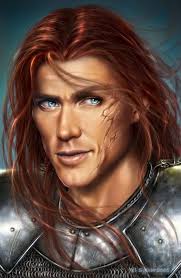
Aschere’s thin lips curled a little.  “Wulfgar.”  He introduced the man who was every bit as big as Bran.  “The king’s herald.”  He gave the title.

“Mirowen.”  Festuscato said, and she stepped to the fore and in perfect Danish, introduced the group.  Wulfgar took it all in and only asked one question before he signaled them to follow.  Soldiers kept their horses.

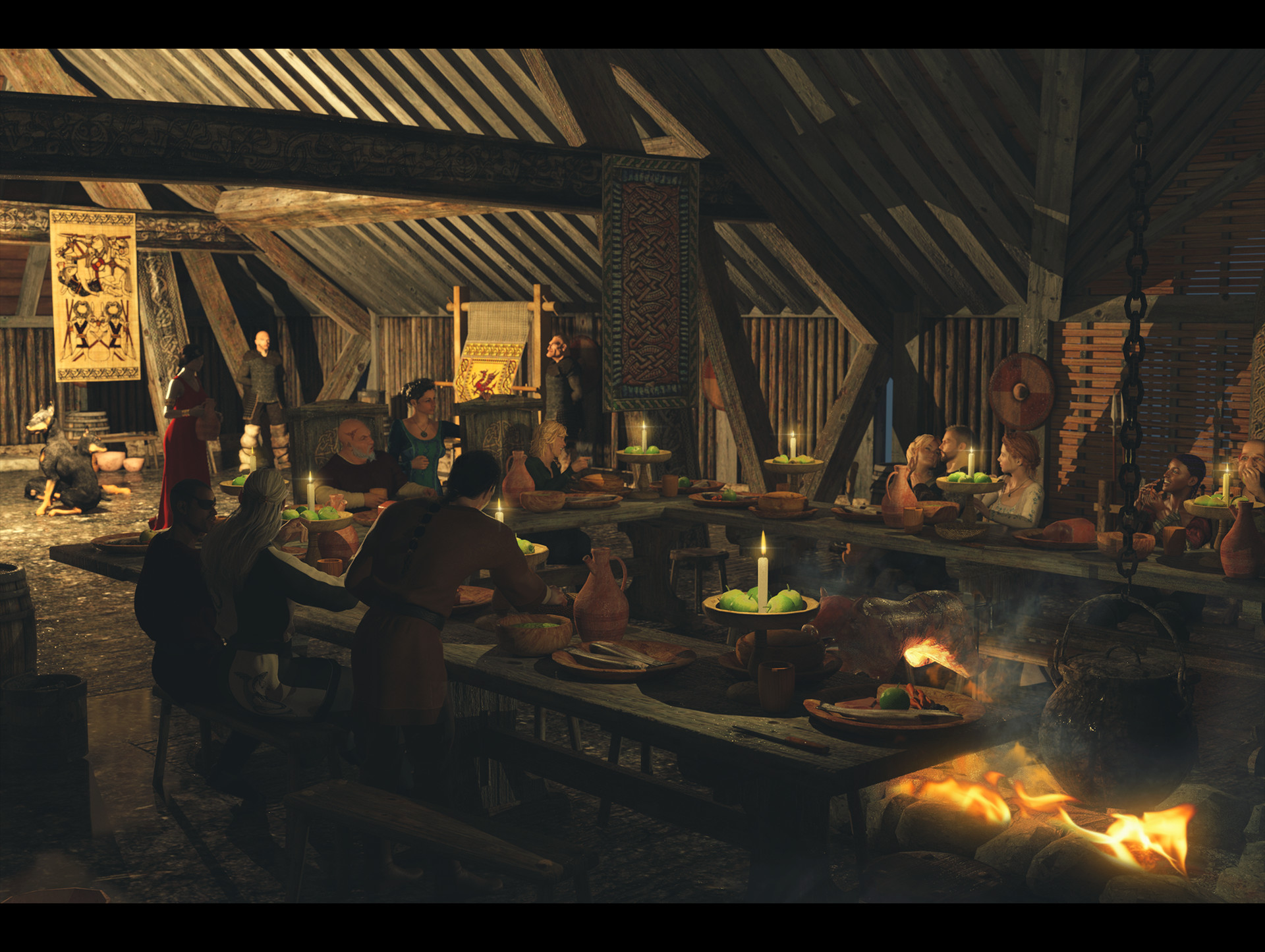
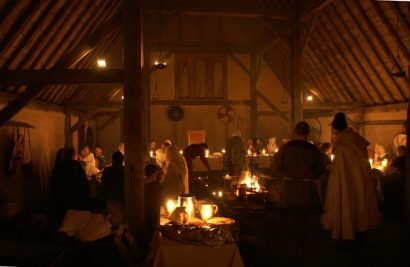
The walk to the Hall of Heorot proved not far from that gate.  Indeed, the hall did not appear to be far from any gate, as it dominated the city more like a palace than a simple hall such as they found in the countryside.  They were told to wait in the entrance-way while Wulfgar went in alone.  They did not wait long, before the double doors swung open and they were invited to an audience with the king.  Mirowen stayed close to Festuscato’s ear and only just told him Wulfgar’s comment by the gate.

“He said he hoped Hrugen and his father might become reconciled, but he doubted it.”

“Come.”  The clear, but old voice rang out from the podium.  “Welcome.  Let me see.”  The man said, and he squinted hard as the crew walked within view.  “Yes.  I see the midget and the boy.  Yes, she is a remarkable beauty, isn’t she?”  Several voices quietly agreed while the king went on.  “I am Hrothgar, king of the Danes.  What brings you to my hall?”  He got direct.

Festuscato bowed.  “We are admittedly a strange crew, but we were bound for the Germanic shore when a terrible storm arose.  Our ship was wrecked off the shore near the place of Ingut the shipwright.  He sheltered us and guided us to this place, and told us of the great generosity of the king and how he does good for strangers and wayfarers in the land”

“Those belly boats of the British are useless on the real sea,” Wulfgar interrupted.  “You were bound to wreck.”

“No, it was taking the woman on the ship.”  Another man spoke up.  “There’s a real curse for you.”

Festuscato merely smiled.  “Would you leave her behind?” he asked, knowing all eyes were on her.  Mirowen’s ears turned red as she translated the words, and purple when, after a pause to consider and some little laughter, the man conceded the point.

“And the boy?”  The king asked, staring like he saw something more than the boy.

“My cabin boy.”  Festuscato designated him with a title unfamiliar to that day and age.  “A whiz with numbers.  Better than a dwarf.  The keeper of my accounts and something like a son to me.”

“Aw.  What do you know,” a man said, rudely, and staggered to his feet.  “Who are these fools?  I thought we were done with the days of fools daring to face the Grendel.  I get tired of hearing screams in the night.  A man can’t sleep.  Say, who are you?”  The rudeness of the man at the very feet of the king startled Festuscato a little.  He had been raised, thanks to Mirowen, to maintain proper respect wherever and whenever possible, but the king said nothing.  He had his head in his hand as if struggling against a terrible headache.  Wulfgar looked disgusted with the man, but said nothing.  Aschere appeared ready to explain, but gave way when Mirowen took a half step forward.  She repeated the introductions given at the gate, word for word, until she mentioned Hrugen, son of Unferth and the man’s eyes grew wide and turned wild.

“Hrugen?”  The man shouted and struggled mightily against the alcohol that flowed so liberally through his veins.  “That no good, runaway, coward.”  He reached the table and found a sword which he pulled and spun around almost too fast.  “Where is he?”

Hrugen stood in the back, trembling for fear of the moment.
“Now, Unferth,” Wulfgar stepped between the drunk and the crew, but Aschere pulled him back.  He wanted to see what would happen.  No other man in the hall moved, and even the king seemed transfixed by the scene, alternately squinting and rubbing his eyes.

“Boy!”  Unferth shouted again and brandished his sword.  “Did you come home with a wife to care for me in my age?  Did you bring children?  Did you get gold?  Treasure?  I better not find you an empty-handed loser!”

Unferth struggled to focus himself and could not seem to find his son who stayed mostly hidden behind Gregor and Bran.

“He brought something more precious than all of those things,” Festuscato spoke and gained the man’s attention with Mirowen practically shouting the translation.

“What!  What?”  Unferth said.

“Friends.”  Seamus responded and Festuscato took a step toward the drunk who unknowingly took a step back from the confrontation.  Gregor smiled and stepped forward with Bran beside him.  Seamus pocketed his quill for once and joined them, though the cleric proved rather useless in a fight.  Luckless came up.  No one noticed where he got his axe, but they all noticed how well he cradled it in his arms.  With a little judicious staring, Unferth dropped his sword which clattered to the ground, but then, in a moment of stubbornness, he pushed forward.

“My son,” he said and squeezed between Festuscato and the Saxon who did not stop him, now that he went unarmed.

Hrugen did not tremble anymore.  He looked at his father, and the man looked back at him.

“Loser.”  Unferth said and raised his hand to strike his son, but Hrugen shoved him and the man fell to the floor.

“Drunk,” he said.  “Sober up if you want to talk to me, otherwise I have nothing to say to you.”  Hrugen stepped to a table on the opposite side of the room from where his father drank, and he sat, and after a moment, all but Mirowen and Festuscato joined him.

“No.”  The king pushed away some tonic that a young man tried to force on him.  The king knocked the drink with his hand, though accidentally due to his eyesight.  “I have had enough of treatments and medicines,” he said, while the cup fell to the ground and spilled its’ contents.  “Ragnard, get back to the kitchen,” he commanded the young man, who looked embarrassed, like all in the hall were watching him, and laughing, while he retrieved the fallen cup and retreated from the hall.

“Now dear.  You must take your remedy.”  An elderly woman spoke from a back door as she entered the room.

“Queen Wealtheow,” Wulfgar announced, and every man in the room stood briefly to pay their respects.  The old woman walked up beside the king and leaned forward to kiss his cheek, but she did not actually touch her husband except with the sentiment as he waved her off and grumbled.  Then he raised his head to look at the Roman.

“Have you come to try your luck against the monster?” he asked outright.

“Gods forbid!”  Mousden squeaked from the table, and not too quietly.  A few men laughed lightly.

“We have only just heard of the plague on your magnificent hall,” Festuscato said.  “If it was in my power.  I will do all that I can, but alas, my ragtag crew would hardly be a match for this beast as I have heard tell of him.”

“Cowards, all.”  Unferth said, having resumed his seat and his drink.

“On the contrary,” Festuscato responded.  “Rome has always been practical about such matters.  Rushing headlong with promises is folly, and I am no fool.  I will wait until the opportune moment, until the time is ripe.”

“Wisely spoken,” the queen said, and Festuscato nodded his head as a slight bow to her well-aged beauty.

************************

MONDAY

Festuscato and his crew figure out what it is, and have an encounter with the monster.  Until then, Happy Reading’

*

M3 Festuscato: To the Hall of Heorot, part 2 of 3

Festuscato called a halt to their progress before they reached the first house.

“Lord?” Mousden asked as he flitted back and forth between the trees.

“I was thinking,” he said.  “It is one thing to parade through the halls of a king, but quite another to have you traipsing through the countryside with the plain folk of this world.  A party like ours is bound to attract a lot of attention.”

“This is a bad thing?” Gregor asked with a smile.

Festuscato nodded. “The sightings of little ones is becoming a rare and special event, something relegated to the ancient days.”

“And that is how it should be,” Bran spoke up

“Indeed,” Seamus added.  “Rare enough that I hardly know what to put in the journal.  Who would believe me?”

“Mousden, get big,” Festuscato commanded.

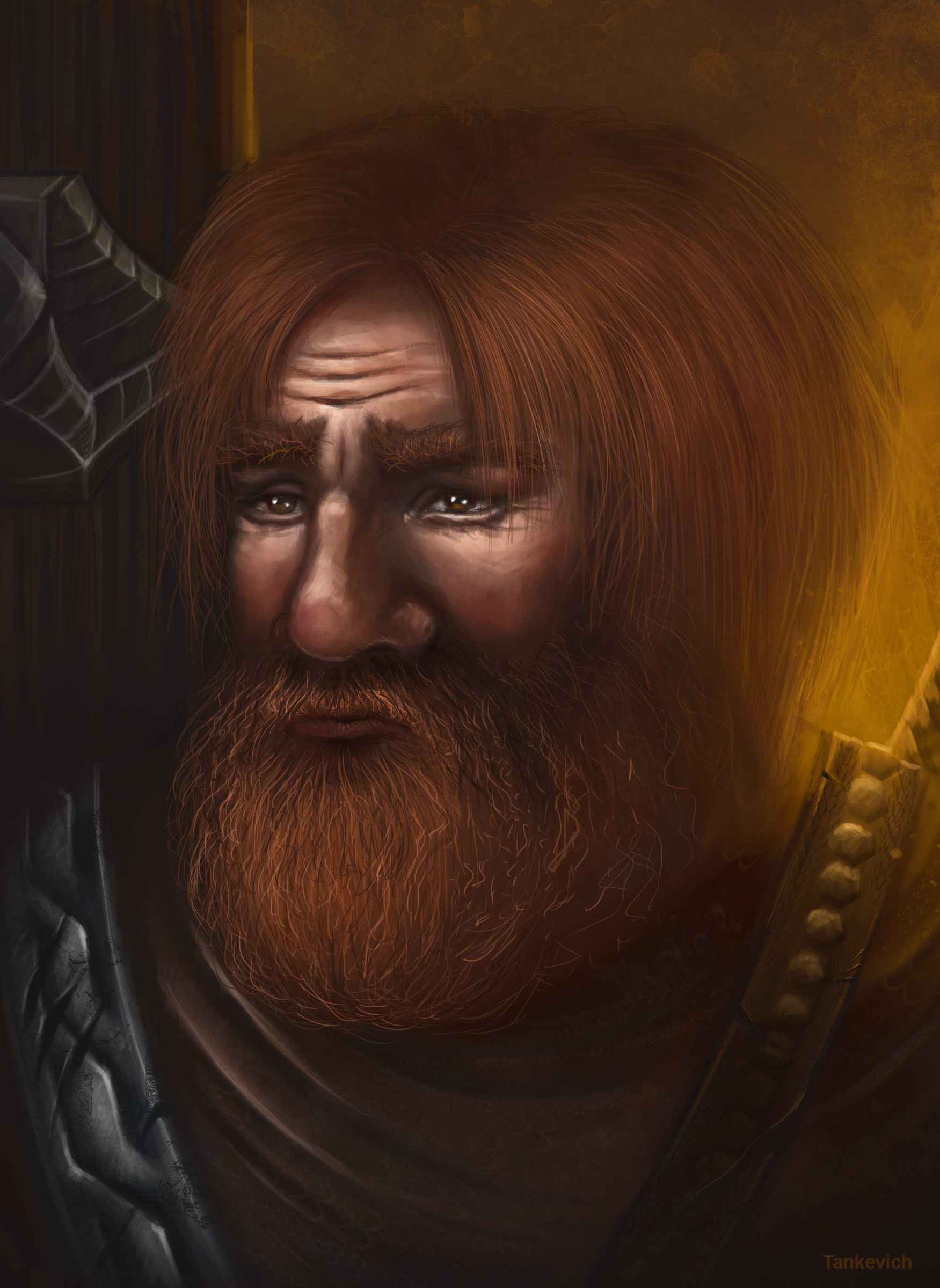
Mousden looked clearly reluctant.  He flew in a circle before he settled down and landed beside the horses.  He did not look at his Lord, but took a deep breath and changed.  His wings vanished and he stood around three feet tall, his mottled skin turned into a ruddy complexion, with a few freckles.  For all practical purposes, he looked like a nine or ten-year-old boy, and he growled when Gregor laughed and let down a hand to take him on as a passenger.

Mirowen did not need to be told.  She effected glamour to make herself appear like a mortal woman and Luckless as a more ordinary little person, and in this way, they would walk among the people of the land, still a strange enough group, but not one beyond the pale. Ingut said nothing while they took on their disguises, but when they were set, he led them into the village.

All day, they had traveled the inland road, which Ingut said would be faster.  It was not faster, of course, but everyone knew he wanted to keep Festuscato away from his daughter, Inga.  Festuscato felt sorry about that.  That young woman had a real future on the rescue squad.

In this village, there were wild, unverifiable rumors about the monster that haunted the halls of Hrothgar.  Some thought it was the ghost of a man seeking revenge on the house of Hrothgar, and they could name several dead men that fit the bill.  Some, however, imagined it as a troll, or an ogre as Mirowen had guessed at first; but then a few thought it might be something worse, something which they would only identify with a whisper.

Festuscato stopped listening after a while.  He would get no real information there, or probably in any of the places they might stop along the way.  He would have to wait until they arrived to hear the truth, and maybe see with his own eyes, if he could figure out how to do so safely.

By evening, Festuscato got back to being his normal, slightly impish self.  When the chief of the hall apologized profusely for not having any bard or singers to entertain his guests, Festuscato volunteered his crew to provide the entertainment, and in this way, they paid their way, so to speak, all the way to the Danish capitol.

Festuscato told the story of the three dwarfs at the bottom of the well, Mirowen translating perfectly.  It seemed a little awkward waiting for two sets of laughter, but even Luckless laughed more than once, and he had heard the story countless times.  Bran twice told the story of King David cutting the tassel from King Saul’s robe, and both the Jutes, and later the Danes were very impressed with David.  They judged him a king worth following.  Luckless once tried to sing the dwarf work song, the song often heard in the deeps, but it sounded so strange and alien to human ears, he chose not to sing it again. Mousden, on the other hand, had a sweet tenor, and delighted the people with his rendition of the cradle song.

When they came to their first Danish village, the reception felt less warm at first, until they discovered Hrugen as one of their own.  After that, their reception turned very welcoming, until they found out who Hrugen’s father was.  The chief of the village became quietly angry to the point where the crew began to fear for their companion.  The chief had been friends with one of Hrugen’s uncles, and he still bore a grudge against Hrugen’s father who, all these years later, remained under a cloud of suspicion of having killed both of his brothers.  Though the chief had a poet and myth-teller in the hall, and a very good one, Mirowen herself stepped up that evening.

All of the eyes of the men remained on the elf, that is, the woman, wherever she went. The glamour she wore did nothing to diminish her beauty, so it became no hard thing for her to gather everyone’s attention as she stepped to the center of the room.  The harp from nowhere came to her hand, and she stroked the strings like a mother might caress her child.  Everyone, Dane and Britain, understood her every word without the need for translation as both the words and melodies contained great magic.  She sang the tragedy of the lovers, and everyone in the hall cried, bitterly.  She sang the comedy of Raven’s Fall, and everyone laughed so hard, they began to cry again from the laughter.  Last, she sang the elfish lullaby so well-known and imitated, but never duplicated by the bards of the British Isles, and everyone in the hall, but Festuscato himself, fell into a deep, peaceful sleep.  Without a word, Mirowen laid down on one side of Hrugen, and Festuscato laid on the other side.  Thus, they slept well until morning.

With the light, they quickly went on their way to avoid any trouble.  Festuscato even relaxed a little, knowing that Bran ahead, Gregor behind, and Mousden overhead kept a sharp eye out against being followed and for any signs of treachery until they were well out of that territory.

When at last they came to the sea and the edge of the city which would one day be called Copenhagen, Ingut began to make noises that he had to be going home.  His job was done.  He said the king would expect his ship and payment was not yet due.  He said he should not enter the city because there was still a year and a day before the agreement concluded.  At last, he pointed to a gate, instructed Mirowen in some way, and wheeled around and rode off at some speed.

“I wonder what’s the matter with him?”  Festuscato mused out loud.

Mousden, who had been agitated during the whole journey, and not simply for being made to get big, chose that moment to finally speak what was on his mind.  “Do the words “bite sized pieces” mean anything to you?” he shouted.

Festuscato laughed.  “I did not say we were going to stay.  Just have a look.”  Of course, he had every intention of staying.  He had read the book several times in the future, and if things worked out, he should be seeing the young Beowulf within the week.

“Halt.” They were stopped at the gate. “What business have you in the city of the Danes?”  The guard at the gate looked sharp enough.  Festuscato responded in a straightforward way.

“I am Festuscato Cassius Agitus, Senator of Rome,” he said and let Mirowen translate.  “And these are my traveling companions. Gregor One-eye of the Saxons, Bran the Sword of Britannia, Seamus the Cleric from Eire’s emerald shore, Luckless the Tinker of Wales, young Mousden of Cornwall in the West, the Lady Mirowen from the heather highlands, and Hrugen the Dane, son of Unferth.  As a member of the Imperial Senate of Rome and Ambassador of his most August Emperor, Valentinian III, I have come to pay my respects to your king.”

With that little speech, the guard at the gate no longer looked as sharp.  It seemed as if he had some difficulty trying to make all of that information fit inside his brain.  Fortunately, a well-dressed gentleman stepped out of the guard house and he appeared to have no such difficulty.  He ate a piece of fruit, and took a moment to look carefully at everyone.

 “I am Aschere, counselor to king Hrothgar.” The man said, in very imperfect Latin. “We have been expecting you. Indeed, I have been waiting all morning. Where is Ingut?”

“He mumbled something about the ship not being ready yet and left.”  Festuscato said in all honesty, not even attempting to disguise his thoughts.

The normally stoic Bran got blatant about it.  “Coward,” he said.  Gregor chuckled.

Aschere shared the chuckle.  “Yes, he is,” he said.  “But I take it you are not.”  Bran shrugged ever so slightly.  Festuscato could see Gregor was dying to say something, but his Latin was not nearly good enough.  Then all eyes turned as two men rode up quickly to the gate.  They dismounted, and Festuscato took the cue, dismounting himself, and his crew followed his lead.

M3 Festuscato: The Jutes, part 3 of 3

Shortly, a new target got brought into the room and a Jute stood up with two spears in hand.

Gregor leapt at the chance.  “Gods I love this,” he said.  He really enjoyed the sport, like a football addict with seats on the fifty-yard line.

The man holding the spears looked at his king as if wondering if it would really be fair to contest with a one-eyed man.  The king merely sat back, shrugged and nibbled on a piece of fat from the deer set before him.

The Jute went first, and like the huntsman, he made a fair throw that landed in the target, not on, but near the center.  Gregor picked up the other spear and examined it as if he was not sure how to hold it. He fingered the point and winced as if it felt really sharp.  “Forgive an old man.”  He said, luckless translating for him.  “With one eye my aim isn’t what it used to be.”  He waggled the spear like practice throws all around the room.  Men ducked for their lives until he lost it.  He started laughing, loud, and some joined his laughter when they realized he was just having fun, until he suddenly turned deadly serious.  He bellowed a Saxon war cry and heaved the spear toward the target.  It hit dead center and split the target in two where the boards had been fitted together.  The rest of the target splintered and fell apart, and Gregor started to laugh again, paused on his return to the table to slap a Jute hard on the back.

King Hroden who had sat straight up and stopped chewing, squinted at the end of the room. “Can’t tell where it hit, exactly. Another draw,” he decided.  Again, Festuscato did not argue, but the Swede began to laugh, embarrassingly for the king.

“Axes.”  The king roared.  His anger started rising.  A new target got hustled into the room and a new man stepped to the line. Luckless came up to take his turn.

“No magic.” The king reminded the contestants of the rule.

Luckless looked at his opponent.  “Won’t need any,” he announced.  He threw first, and his throw proved as perfect as the arrows of Mirowen and Gregor’s spear.  The axe man of the Jutes just stared for a minute, and then angrily hit the dwarf on the head with the butt of his axe.  Luckless went down.

Festuscato leapt out of his seat and over the table before most people knew what happened. He reached out to the second heaven and called to his armor, cloak, helmet, sword and long knife and he became instantly clothed as one ready for war.  The sword called Fate jumped to his hand, and he slid on his knees to Luckless’ side. Mirowen stood on the table, another arrow at the ready.

Everyone in the room came to their feet, and two angry looking Jutes stepped forward to defend their Axe man, but discovered nothing they could do about Mousden.

Mousden flew around the axe man fifteen or twenty times before the axe man could turn a quarter turn.  But Mousden just built up steam.  In the next moment, the axe man rose a few inches off the ground and started spinning uncontrollably to the point of throwing up, carried along by his own little tornado.  He slammed into the wall, hard, and slid to a seat, unable to hold anything in his stomach.

The other two men came at Festuscato and the dwarf, but the first hit a wet spot and slipped, his arms flailed in the air as he fell back and banged his head, hard on the edge of the table.  It would have killed him, surely, if his head had not been harder than the wood.

“Perpetual!” Gregor’s gleeful voice rang out from behind.

The last angry Jute drew his sword as Luckless shook his head and came back to his senses. Most men backed up.  Festuscato grabbed Fate’s hilt with both hands and when the two swords met, though the Jute’s sword looked much bigger and meaner, it shattered like a piece of rotten wood against a grinder.  Festuscato then stood and slapped Fate sharply against the stunned Jute’s shoulders.  Immediately, the Jute’s chain and leather harness slipped to the floor and Festuscato pressed Fate hard against the Jute’s nearly naked heart.  The Jute looked to his king to plead for his life, and the king responded.

“Halt,” he shouted, nodded to Mirowen slightly before she got tempted to shoot one of those illusion arrows at one of his people.  “I told the Roman we have no quarrel with Rome.  That goes for his people, too. Is that understood?”  He did not really ask.  “Roman, you are my honored guest.”  The king pointed to the seat beside himself.  “And I have a proposition.”

Festuscato sheathed his sword and with everyone watching, brought his comfortable clothes back from the second heavens and sent his war suit home.  He deliberately took his time returning to sit between Mirowen and the king.

“Neat trick, that,” the king said.  “Though I would have gotten a better look at that sword of yours.”

“A gift of the gods,” Festuscato said.  That was all he intended to say.

“Made by the gods?”  He got that much.  “And how did you come by it?” he asked.

“It was a going away present,” Festuscato said.  “I’ve had it for about four hundred and some seventy years.”

Hroden looked serious, but only for a minute.  He decided Festuscato was joking and had a good laugh.  “You are everything friend Ingut declared you to be,” he said.  “And I think there is something I would discuss.”

Festuscato became all ears, but both his and the king’s eyes were where the gold had been. The king looked away, thinking someone had snitched it in the confusion.  Festuscato felt pretty sure Mousden had taken it back, or at least that the Pixie would get it back.

“It is the monster,” King Hroden said, to get his guest’s attention.  After all, the Roman won the competition fairly, even if it was one point to none.  “Grendel is the name, and he has been like a plague on the Danes for these past twelve years.  The ranks of their brave and strong have been decimated by the beast who they say is stronger than ten men and who cannot be cut by any blade forged by men.”

Festuscato nodded. The sword of the gods had not been made by men, but he decided for the moment to just listen.

The king downed his drink, but when he heard no response, he continued.  “You live with monsters, begging the good Lady’s pardon, eh?”

“Not exactly,” Festuscato said, quietly.

“Still, I have a feeling about you.  You know about these things.  I can tell. If anyone can help the hapless Danes, I believe you and your strange crew can do it.”

Festuscato finished his own drink and turned to stare.  “And why would you worry about the poor Danes?” he asked, flatly.

King Hroden slammed his open hand on the table.  “Because they are weak.”  He shouted and got some attention from the room.  “Surely you, a Roman, understand that.  Isn’t that the Roman way?”

“Not exactly,” Festuscato said, still flat in his voice.  “Rome understands when her enemies are weak, but she always finds an ally, a local people who have a grudge against the weak ones and Rome moves in to help.  Once the help is given and the weak one is easily overwhelmed, Rome never moves out, and the result is invariably two kingdoms for the price of one.  This is the way empires are built.”

King Hroden looked grim for a minute and then laughed.  “And here is Olaf, the Swede.”  He announced before he suddenly lost his laugh and turned his grim look on the hapless Swede, who shrunk in his chair.

“I will go south,” Festuscato announced to regain the king’s attention.  “For a comfortable stay for me and my people this evening and good care taken of my horses.  If in the morning, we are well fed and well rested, I will go.”

“Good, good.”  King Hroden said.  He put his hand on Festuscato’s shoulder.

“Of course, after Ingut’s daughter, it will be rather hard to sleep without some distraction,” Festuscato added.

“What? You?”  He looked at the shipbuilder who was fortunately just out of earshot, and back again at the Roman before he laughed at last, like Gregor, while Mirowen’s pointed ears turned deep red.

************************

MONDAY

The the Hall of Heorot.  Ingut the shipbuilder gets roped in for further duty, to guide the Roman and his crew to hall of the king of the Danes, where the monster haunts the night.  Until Monday, Happy Reading.

*
M3 Festuscato: The Jutes, part 2 of 3

Mirowen went on to whisper the king’s response.

“He is thanking the fine ship builder for his thoughtfulness and is offering him a ring of gold for his trouble.”  The king stood and gave the gift.  “He is telling Ingut to stay and be refreshed.  He will get the finest rooms to spend the evening and can make a fresh start home in the morning.

“Ingut says his poor dear daughter will miss him in the night, and how he hates to be away from his only living kin.”

“The king says, here.  This inlaid necklace should soothe her fears.  Now please be seated and say no more about it.”  The king sat back down while men at the table to the king’s left moved down to make room for the shipwright.  Festuscato took Mirowen by the wrist and stepped forward.

“Festuscato Cassius Agitus, Senator of Imperial Rome and Ambassador of his most August Emperor, Valentinian III, the Divine Caesar, ruler of the Western World, it is an honor to be at your table,” he said, Mirowen translating.  The king slowly grinned.

“Ruler of the Western World?” he questioned.  There were a couple of muffled laughs at that.

“The civilized world,” Festuscato said, eliciting a very loud burp from a man at the back. “And many a man has underestimated the power and reach of Rome.”  He spoke plainly, not threatening.

“We have no quarrel, Roman,” the king said.  He made no other comment and looked over the crew, instead.

“Lady Mirowen.” Festuscato began the introductions with her.  “The big Britain is Bran the Sword, and these other good men are Gregor One Eye, the Saxon, Seamus the cleric, is Irish, Luckless from the mines of Wales, Mousden, the Pixie from Cornwall, and of course you know Vingevourt, king of the sprites of the Baltic.”  Festuscato began to look around.

“I was not aware they had names,” King Hroden said.

“And ah, there he is.”  Festuscato pointed.  “And Hrugen the Sailor.”  He knew better than to name the Dane, as a Dane, but then Hrugen surprised them by stepping forward.

“I am Hrugen son of Unferth, grandson of Edglaf of the Danes,” he said, proudly.  Several benches got shoved back and several men reached for their weapons, but the king stopped them with his hand.

“I have heard of your father,” Hroden said.

“I fled my home twelve years ago when my father killed his two brothers,” Hrugen said. “I feared for my life, but I have conquered that fear and I am returning home to confront my sire, once and for all.” He sounded far braver and more confident in that assembly than he really was.

“He is a stinking drunk,” Hroden said.  “He sits at Hrothgar’s feet in Heorot and fears the monster that assails them.  He is a drunk and a coward.”  The king baited Hrugen, but Hrugen did not bite.

“What you say may be true,” Hrugen said.  “I have not been home in all these years.”

The king frowned at his lack of success, so he broadened his jibes.  “Still, I suppose we can encourage enmity between Danes. You may stay.  As for the rest of your crew, however, they seem no threat. Even the big one looks docile enough. Stay and eat.”

“I thank the king for his generosity,” Festuscato said.  “But before you underestimate Rome, may I suggest a friendly contest or two?”

“Eh?”  The shrewdness returned to the king’s eyes.

“Something to entertain and pass the time,” Festuscato shrugged.  “Perhaps archery to start, if you have a target.”

The king nodded. He indicated to a man who called for the target.  “But what if you lose?” the king asked.

“Mousden.” Festuscato called.  The Pixie came forward and produced a small leather purse out of nowhere.  He handed it to Festuscato and flew back to the others.  Festuscato took out a couple of pieces of gold as if judging how much to bet.  He looked around, and then smiled, dumped half the bag of nuggets on the table before the king and set the rest of the bag beside it.  “But what if we win?”  Festuscato countered.  The king’s wide eyes looked up at the Roman.  “Rome is a fat cow,” he reminded the king.

“Enough,” the king promised.  “I will give enough.”  He stood. “But my men will not lose.”  He roared to be sure everyone got the message.  A table, one back from the front, was cleared for the strangers, but the king stopped Festuscato.  “You sit with me,” he said.  “And the Lady of Light.”  He literally threw a man out of his seat to make room at his own table.  When he sat back down, the man beside him whispered in his ear.  He laughed. “Olaf the Swede has bet on you and your crew.”  He laughed again.  “Yonstrom!” He called out.  The king’s hunter stepped forward, arrow already on the string. A line got drawn on the floor and the target set across the room far enough away to not make it too easy. Yonstrom shot, and it appeared a good shot.  It was not centered, but close enough to take down a stag.  The king smiled and looked at Festuscato.

“Mirowen.” That was all he said, without looking. She jumped on the table itself, adding another twelve yards distance to the target, produced a bow seemingly out of thin air and shot, not once, but two arrows so close together the second was away before the first one hit the target.  The first hit dead center and the second one hit so perfectly on the end it drove the first nearly all the way through the hardwood, but without splitting the first shaft.

Mirowen got back in her seat, the bow gone, and she looked demure and sweet before the men could hardly react.  Then they broke out.  Some hooted. Some hollered.  All praised her, in amazement, and only Festuscato noticed that she turned a little red.  When the king bent over to say something, she spoke first to cut him off.

“My Lord Agitus is far better than I am,” she said.  Festuscato shook his head.  He knew his reflection in the past, Diana, his genetic twin, had been graced by both the goddess Justitia and the goddess Diana, her namesake.  He reflected her sense of justice and power of negotiation as well as her ability to hunt and use the bow, to fire the arrow of justice as he called it, but Mirowen remained the best he had ever seen.

“Perhaps,” the king said.  “But he did not shoot.  Magic does not count.  I will have the target examined in the morning to see if the arrows are still there or if it was all just illusion.”  He looked at Festuscato and considered whether or not he might be better than the elf.  “We will call it a draw,” the king concluded.  “Swords.”  He announced.

Mirowen wanted to protest, but Festuscato held her hand down.  He looked.  Bran did not have to be called.  His opponent was a big Jute, though not quite Bran’s size.  Neither was the Jute’s sword as big as Bran’s early broadsword. They did not wait for the word, but went at it evenly at first.  When Bran looked to be gaining the advantage, and the Jute appeared to be tiring, a man at the table stuck out his own weapon, and Bran lost his grip.  The broadsword clattered across the floor and king Hroden looked pleased.

Festuscato showed no emotion as the big Jute moved in for what he believed would be the deciding blow, but as he moved in close to strike, Bran did the opposite of what was expected.  Instead of backing away, Bran stepped in even closer and hit the Jute with a wicked uppercut followed by two jabs and a right hook that slammed the Jute against the wall, unconscious.  Bran rubbed his knuckles a bit before he retrieved his broadsword and laid it at the Jute’s throat.

“One for me.” Festuscato said to the king’s great displeasure.  He called for food and thought quietly while everyone ate and drank.  He called a man close and whispered to him.

M3 Festuscato: The Jutes, part 1 of 3

The so-called city of Thorengard sat on the bank of a broad river that emptied into the sea. It got surrounded, more or less, by a stockade, which had been partly built of stone and partly of whole trees planted deep in the earth, lashed together with rope, and caulked with mud. Ingut called them to halt on a small hill which gave a good view of the city below, and he pointed out certain features including the docks, the market area, and the roof of Yut-Heim, the hall of the king.  Festuscato noted that the man did not speak like a proud native.  He said it all just matter of fact.  As they began to descend toward the main gate, Luckless turned to the Roman.

“And what is on your mind?” he asked.

Festuscato turned up one corner of his mouth.  “I was just understanding once again why people like these would fall on their faces in fear and trembling at the sight of the city of Rome with her tremendous walls, broad avenues and thousands of alleyways, dozens of great ships in the harbor from all over the Mediterranean, and a half million people all bustling about on important business.  This city should barely be called a town, and even that word is generous.”

“Rome must really be something,” Luckless said.

“It is,” Festuscato confirmed.  “But even Londugnum would give these people pause and it is nothing compared to the Great City.”

“So you have said,” Luckless reminded him.

“Yes, but your Rome has become like a fat cow.”  Gregor nudged into the conversation.  “It may be great in size and beauty, but it is subject to the butcher knife.”

Festuscato grew silent.  He knew in his heart that Gregor was more or less right.  He had a commission from the Emperor and the Imperial Senate which stated that after he established peace in Britain, he was to seek out the reason the Germanic tribes were pushing so violently and permanently into the west. He was to resolve the problem, or at least find a way that Rome could counter those migrations and thus preserve itself.  Such thinking, however, was foolishness.  Before he even arrived in Germany, he understood that all he would likely find were people who were glad to take advantage of Roman weakness.

To discover the reason Roman power was waning and collapsing in the West, the Emperor Valentinian III needed to look in the mirror.  Indeed, all Romans needed to look in the mirror, but this they would never do.  One of the surest signs of civilization’s collapse was when the prevailing wisdom turned away from personal responsibility and toward blaming others for every ill.  When people stopped depending on themselves to make their lives as good as they could and hand to their children better than they got, and they turned instead to government to give it to them, as if government acted like some living god independent of the people governed, then civilization became doomed.

“What ho!” Vingevourt’s pipsqueak voice came up from the ground ahead.  “I came up the river and have waited here a long time for your arrival.”

“And here we are.”  Mirowen smiled for the little one.

“Ungh!” Ingut grunted at him.

“Good to see you,” Festuscato said to turn his mind from his depression.

“Come aboard, Majesty,” Gregor said with a big smile.  “See?  I have set a clean cloth just for you to leak on.”

Vingevourt climbed up.  “I will say, you are a thoughtful mudder.”

Gregor guffawed. “No.  I’m just an old fart.”

“Smells like a new one if you ask me,” Mousden mumbled before he flew ahead to get a closer look at the city.

When they came to the gate, they found a half dozen men laying about in the late afternoon. They came somewhat to attention on the sight of such a big party, but any semblance of order fell apart when they saw the contents of the party.  The men were strange enough in their dress, though they probably recognized the German and perhaps even the Britain.  The Roman and the Irish cleric might as well have been from China, but then the little ones really grabbed their attention.

Dwarfs were not yet strangers in the world, but they were not common, while elves, like trolls and gnomes were often heard of, but rarely seen.  Fairies had always been shy of humans, but this Cornish pixie with the slight greenish tint to his skin, his bat-like wings and claw-like hands and feet with their prehensile toes hardly fit the pattern.  They did not know what to make of Mousden, but Vingevourt they knew, at least in type.  They were astonished, however, to see the water sprite out of the water.

If Ingut had not been leading them into the city, there might have been some question as to whether or not they would have been allowed in.  Some believed the sighting of any little one was a sign of good fortune to come, but many more firmly believed they were an ill omen, and Festuscato felt sure he heard Odin’s name used as a curse as much as in prayer.

The trip through the town and its’ terribly muddy and garbage-laden streets did nothing to raise Festuscato’s impression of the place.  He found the royal stables hardly worth the name.  The hall of Yut-Heim at least appeared to be well built, a solid log construction with a kind of shingled roof found on a number of buildings and houses in the town.  It looked to be a marked improvement over the thatch they found elsewhere.

“Ingut.” His name came easily to the group of men inside the hall.  Everyone knew the ship builder, and because so much of their lives and livelihood depended on their ships, whether for fishing or war, Ingut seemed to have the run of the place.  In this instance, his first duty was to march up to the king’s table and nod his respect for the king before he spoke.  Mirowen quietly translated for the group who followed in Ingut’s train.

“He’s telling the king about your wreck at sea during the great storm and how he found you washed up on his shore.”

“His shore?” Festuscato mouthed, but listened.

“You are the Roman, and we are your companions, sworn in allegiance to you, and there is great power of magic in us all, as can plainly be seen in the Roman’s choice of companions.  When the ship got driven to the rocks of Heyglund, Ingut realized it must be because the gods decided we must be a gift for the people of this war-torn land.”

“Didn’t know I was a magician.”  Gregor muttered.  Mirowen kicked him to be quiet.

“Naturally, Ingut thought of his great king, Hroden, and brought the Roman here first of all, knowing that the king would understand these things far better than the lowly ship maker.”

King Hroden eyed them with an eye of serious consideration and another eye of amusement. A couple of men at a table laughed at the sight of the strangers, but the king quickly raised his hand for silence.

M3 Festuscato: Saved, part 3 of 3

It did not take long before they began to pass people—the huts of the workers.  Women were fixing the leaks while children ran amok. A group of children ran and played alongside the train for a while, but they gave it up when the travelers came to a hill.  The house of Ingut stood on the high ground, but when they reached it, it hardly looked like the house of a prosperous and successful man.  In fact, it hardly looked different than the huts of the workers.

The old man sat outside on the front stoop, whittling with a wicked looking knife, and having a rather wicked look on his face.  That he had been there most of the night seemed evident from the number of wood chips piled around.

Luckless got down, and the old man did not even bat an eye in the face of the dwarf. Vingevourt raised the man’s brows a little, but he knew and respected the sprite, even if he did not particularly like him.  It seemed hard to say exactly what their relationship might be.  It also seemed hard to say what he thought Mousden might be. He batted at the Pixie like Mousden was a giant insect or bat until Mousden confronted him, face to face.  The man blinked and took a step back.  Seamus came up, having fallen to the back of the pack, and Mirowen slipped off the back of the beast and stepped straight for the door.  At this, the old man took a big step out of the way, and bowed.  He might not care for Dwarfs, or Vingevourt, or giant insects, but he knew a light elf when he saw one.

Bran, Gregor and Hrugen kept a wary eye on the workers who appeared at the top of the hill. Mirowen opened the door, followed by Seamus, Luckless, Vingevourt, and Mousden.  Festuscato still lay in bed with Inga, and though covered, it was evident that both were stark naked.  Inga let out a little embarrassed peep and covered herself further.  Festuscato put down his plate.

“I can’t eat another bite,” he said.  His clothes were dry, but he could hardly stand naked in front of the ones staring, open-mouthed.  He let his heart and spirit reach out to his place, the place of the Kairos, the island that stayed forever in the Second Heavens.  He caught hold of his armor, the chain and leather which had been the gift of Hephaestus, and the elf spun cloth that shaped itself to whatever life he was living.  In an instant, he became clothed in that glorious armor and stood, even as Mirowen spoke.

“He is only human, after all,” she said, meaning it as a simple fact and not entirely as an insult.  All the little ones bowed, to Ingut’s surprise.  Ingut had been watching from the doorway.  He pushed his way into the room and stepped up to Festuscato with a most curious expression.  He held one hand over one of Festuscato’s eyes.  Perhaps Gregor had given him the idea.

Festuscato shook his head, hid his left hand behind his back and pointed to his wrist as if his arm ended there.  Ingut’s eyes got wide as he imagined which god Festuscato might be, until Festuscato revealed his hand with a broad grin.  Then Ingut guessed.  He spat.

“Loki,” he said.

“Loki!?” Festuscato felt insulted, while Mirowen giggled.

“Who is Loki?” Seamus asked.

“Trickster,” Luckless said.  “Not a nice fellow, I understand.”

“He wasn’t,” Vingevourt said, as he pushed himself forward while Ingut stepped back. Vingevourt fell to his wobbly knees and begged forgiveness for his inaction and innocence in not knowing who was aboard the fateful ship.  He said the whole little speech in the language of Jutland, reverting from the British without thinking; but Festuscato understood it all, though he did not speak the tongue of the Jutes, because he heard it in the heart.

“Do not worry, great king,” he said, and resisted the urge to kneel which would have insulted the little one.  “You have no power over the storms, and I did not call out for help.  Perhaps it was my time to die.”  Festuscato had to pause on that thought.  “You never know.”

“All the same,” Vingevourt began, but Festuscato cut him off.

“Will you travel with us for a time?” he asked.

“I will,” Vingevourt said, without hesitation.  “But where are we going?” he asked.

“Thorengard.” Ingut said.  He had been listening in.  “Yut-heim.  Thorengard.”

Festuscato looked at his host and lifesaver.  He pulled a big ruby ring from his finger and gave it to the man.  “Would you tell him thanks for saving my life.”  Vingevourt hesitated.  Mirowen told him.  Ingut looked at Festuscato with some shrewdness in his eyes.

“And where is Yut-Heim?”  Festuscato asked.  Mirowen asked Ingut and then translated the response.  “In Thorengard.”  She shrugged.

Ingut stepped outside and began to bellow orders to the gathered crowd like a man accustomed to being obeyed.  Some of the men peeled away and came back in a very short time with two saddled horses and some bread, cheese, some smoked fish and watered down mead.  Bran, Gregor, Hrugen, Seamus and the little ones had little time to eat, however.  Ingut said something to Festuscato who had come outside with the others while Inga dressed.

Vingevourt translated this time.  “He says he assumes this is your horse he found wandering down by the beach.” Festuscato looked and nodded.  He mounted as Inga came running out of the house, calling his name.  He leaned over and gave her a long kiss and lifted her gently off the ground to do it, but then he set her down.

“Thorengard?” he asked.  Ingut pointed, and Festuscato started out without waiting for the others.

“But I’m not finished eating,” Luckless complained.

“So what else is new?”  Gregor said and nudged the dwarf as he got back on his horse to follow.  Fortunately, Vingevourt had run back to the sea as fast as the gingerbread man could run.  He promised he would be waiting for them in the city.

“For a small one, you eat more than anyone I’ve ever known,” Seamus said to the dwarf.

“High metabolism,” Festuscato shouted back.

“I’ll explain,” Mirowen promised, as she took her place behind the cleric.

“But I’m not done!”  Luckless shouted and realized he was last.  He grabbed as much bread and cheese as he could carry and climbed up on his pony.  “Wait up!” He kicked the animal to a trot and cursed for dropping half his booty.

************************

MONDAY

The Jutes.  Ingut, the ship builder, takes Festuscato and his crew to the Jute capital to meet the king.  No telling what kind of reception they might get.  Until Monday, Happy Reading.

*

M3 Festuscato: Saved, part 2 of 3

“The Kairos is sometimes female, except then he is our goddess,” Mousden said, confusing poor Hrugen further who shook his head in bewilderment.

Gregor asked a serious question.  “I thought, didn’t you say there was only one God, or three?  Unless you count that devil, too.”

“The jury is still out, as Festuscato would say, on who in fact Lord Agitus serves.” Seamus looked serious.

“The almighty, surely.”  Bran needed no convincing.

“Judging from these little ones, I would guess mostly himself.”  Gregor stirred the pot.

“Well, where is he?  I must apologize.  It would have been a black mark on my family for generations to drown my own god.” Vingevourt ignored the Saxon and sneered at Luckless.

Hrugen mumbled. “How can you drown a god?  It doesn’t make sense.”

“He’s not here.” Mousden said, right before Luckless shouted.

“My tools!” Luckless danced.  “Blessings, Master Sprite.  Please let me beg your pardon for misjudging your character and motives.  If there is anything you want, do tell.  I would gladly make goblets of gold for your banquet table, if I had any gold.”

“No need.” Vingevourt became gracious in return. “The only thing metal is good for in the sea is rust.  So which one is he?  What do you mean, not here?”

“I fear he may yet be dead,” Bran said.  “And I will have failed in my mission.”

“Not dead, master swordsman.  Do not be dismayed,” Mirowen told him.

“Not dead, I know it,” Mousden said, as he flew around in several circles and tasted the air. Everyone looked at Luckless as he contained his joy for a moment.  Dwarfs have an unerring sense of direction from living most of their lives in an underground warren of caves and mines more complicated than any labyrinth ever conceived by men.  They can also find any other given dwarf in that place with a sniff of the air and a sense that humans don’t have.  Luckless sniffed, closed his eyes, turned three times in a broad circle and finally pointed up the coast and slightly inland.

“And that’s not easy out in the open air,” he said in search of a bit of praise, if not sympathy.

“Easy or not, we should move,” Bran said.  “If the Lord has moved off the coast, he may be a prisoner in this strange land, or in other danger and in need of our help.”  Bran immediately rose and began to remove the ropes from his improvised raft. He would need them to tie their things to the backs of their horses and pony.  Gregor and Hrugen helped by saddling the beasts.

They were off soon enough, Luckless on the pony, leading the way.  Mirowen rode behind Seamus the Cleric while Gregor, Bran and Hrugen rode the other three horses.  Mousden flew most of the way, but landed occasionally on one horse or another.  Gregor, good heartedly invited the water sprite to ride in front of him.  His horse bucked once when Gregor mounted.

“Settle down, supper,” he said to the horse.  He called all horses supper.  “You stood around half the morning getting fat on scrub grass.  Now it’s time to work.”

The water sprite seemed reluctant to ride at that point, but Gregor stared him down with his one eye.  “It will be fine,” he said.  “It’s a horse, not a plow mule.”  When Vingevourt got up, Gregor added, “Won’t likely buck more than a dozen more times.” He laughed, and then regretted his invitation.  “Master Sprite, you’re leaking.”

“It’s perpetual,” Vingevourt said, having turned his words to the British spoken by the rest of the party.  He was a well-traveled sprite.

Gregor thought about that, but he did not really understand the word.  “Aren’t you afraid you’ll leak out eventually and disappear?”

“No.  It’s perpetual.”  The water sprite repeated with some annoyance.

“Magic.” Mirowen turned her head back to explain in terms Gregor could understand.  “No matter how much water appears, Vingevourt will not get any smaller.”

“Oh,” Gregor said, and he asked the sprite to please perpetual on the horse as much as possible.

“Easy for you. You’re nothing but mud.  A little water might clean you up if it doesn’t melt you,” Vingevourt said.  “More than likely I’ll be the one who will get filthy.”

“Huh!” Gregor huffed, but he said no more.

The trail seemed easy enough as they came quickly out of the rocks and to a sandy shore. There were three ships there, well up on the beach, all in various stages of building.  One appeared just a skeleton.  One looked nearly finished.  The third, somewhere in between.  There were two other ships as well, like ships in dry dock, being in various stages of repair.

“Easy,” Bran whispered loud enough for them all to hear.  He nudged a quick finger toward one ship in dock.  There were a dozen men, some standing around, but most examining the ships in the morning light for signs of damage from the storm.  The men watched the strange procession, but they neither said a word nor did anything to stop their progress.  The danger soon passed, and Hrugen spoke as soon as they were clear

“Ingut, the shipwright,” he said.  “I would bet this is his place, unless he died in the last twelve years, then it would be his descendant’s place, or another like him.”

“Ingut,” Vingevourt nodded.  “I know him well and his silly splinters of wood he floats across the surface of my realm.”

“This tells us nothing,” Gregor said.

“He is a Jute, but he owes allegiance to no one in particular,” Hrugen explained.  “He will build for any king or lord who will meet his price.  Jute, Thane, Dane, Swede, Norwegian, Geat, Frisian.  It doesn’t matter.”

“So, Lord Cato might be safe, or in trouble?” Bran asked for clarification.

“Safe, I would imagine,” Hrugen said.  “His clothes speak of money, and his shipwrecked condition speaks of needing a ship.”

“Sharp thinking.” Gregor complimented Hrugen.

“Let’s hope Ingut thought of it.”  Luckless shouted back from the front.  Dwarves had good ears as well as noses.

M3 Festuscato: Saved, part 1 of 3

It did not take long for Mousden to have the driest wood he could find stacked in a neat pile. Unfortunately, no one could get it started until Luckless came along from the opposite direction.  Dwarfs can nearly always get a fire started.

“Unless I’ve lost my tinder, too,” Luckless grumbled.  He had not, and in a moment, the flames rose with the sun.  The rain was over.  “I see you saved your books,” he added, with a nod to Seamus.

“It was Bran,” Seamus explained.  “We were able to stay aboard ship until there was nearly enough light to see.  The pounding of the waves made the ship lean more and more terribly to the weak side, where the hole was.”

“List,” Hrugen interrupted.  “Ships list, they don’t lean.  I don’t know why.”

“Yes, well, all that time, Bran kept tearing up boards and lashing them together with what rope he could find.  In the end, he said we were in danger of turning over altogether and he dropped the raft on the side closest to the water.  I got down with the books and Bran dove in and hauled the raft free of the ship, which by the way did turn over shortly after we escaped.  We came to shore, and it was a miracle the books are not more soaked.”

“Common sense.” That was all Bran called it.

“I don’t suppose you saw my tools?” Luckless asked.  The poor dwarf was still wringing buckets of water from his clothing. Dwarfs were not good swimmers in calm water.  Their legs and arms were too short.  They had a tendency to sink like stones.  The others all shook their heads, but Seamus turned and pointed to the sea.

“You’re welcome to take a look,” he said.  “The ship is not very far out.”  He pointed, and sure enough they could see the hull just above the water line in the distance.  It could not entirely sink, being grounded there on the rocks, but in time it would be broken to pieces by the relentless sea and become driftwood for someone else’s fire.

Luckless warmed his hands.  “What’s the point?” he asked.  “All is lost and it is all my fault.  If I hadn’t come along, you would have had clear sailing to the Danish coast where the Lord wanted to land.  I’m such a jinx.”

“No.” Everyone spoke together, but Luckless felt convinced.  The only reason they hit that storm had to be because he was a jinx, and he lost his precious tools as well, the last gift of his father, and now he would just sink into the rock until he was no more.  He felt miserable and he would not be talked out of it.

A couple of hours later, they caught sight of Mirowen.  They were hungry and just about to give up waiting and go in search of food, when she appeared, meandering sweetly down the coast.  She looked perfectly dry, her long black hair flowed in the light breeze, every hair in place, and her dress looked like it had just been cleaned and pressed.  By contrast, the men looked disheveled in their muddy, damp and wrinkled clothes. Hrugen’s blond head looked brown from the mud.

Gregor one eye was the first to notice that she was talking while she walked.  “I can’t hardly make out what it is, though, she is talking to,” he said.

Luckless squinted. His eyes in the day were barely better than Mousden’s.  “Water sprite.  I think.” He did not sound sure.

“Be back.” Mousden announced and flew off to greet the Lady.

Mirowen arrived with not one, but a whole train of water sprites in her trail.  They were true little ones, from eight to twelve inches tall and looked like a gelatinous mass roughly in the shape of a person, with a shimmer along the edge, which made a casing, like a nearly transparent exoskeleton that held them together.  The chief walked beside the elf and had a voice high pitched like a mouse, but sounded sweet as a baby.  The others, what Festuscato might have called liquid gingerbread men, carried all of the boxes and personal things that could be salvaged from the ship.  They also brought two more horses and a pony.

“Gentlemen.” Mirowen spoke when she got close enough. “May I present Lord Vingevourt, king of the water sprites and ruler of the Baltic.”

“The whole sea?” Hrugen asked, and looked ever so uncomfortable.

“No,” Vingevourt squeaked in Danish.  Mirowen had to translate.  “I’ve got a nephew in the North Sea, and a third cousin in the Channel.  I don’t know about the Arctic, what ice blob has that at present.”  Luckless and Mousden, of course, understood every word.  The little ones had the uncanny ability to understand each other regardless of the language, but even as Mirowen translated, the rest of the crew looked at Hrugen who shook his head.

“Not proper Danish,” Hrugen said.  “Jutland dialect which is difficult and has some strange soundings.”

“Odd pronunciations.”  Seamus returned the favor.  “Words are pronounced, not sounded,” he said.  “I don’t know why.”

Vingevourt continued while his train set down the cargo and dove back into the sea to disappear. “Imagine my horror when I came to discover through this fine Lady that I nearly drowned my own god in that storm.”

“Your god?” Hrugen asked.  He was the new member of the group and didn’t know the full story of Festuscato.

“Sure,” Gregor said with a sly grin.  “Didn’t you know your captain was one of the gods?”

“God only for the sprites of the earth,” Luckless said.

“God for us, too,” Vingevourt responded.  “Many sprites of the waters, the air, and the fires under the earth belong to him as well.”

“Mostly, you might think of him as the Watcher or a Traveler.”  Mirowen explained before the argument hardly started.  “But he is just an ordinary human to you.  That is inevitably how he or she is born.”

“She?” Hrugen raised an eyebrow.

“Of course.” Mirowen nodded.  “You don’t suppose he should always be born a male, do you?”

M3 Festuscato: Shipwreck, part 3 of 3

Festuscato knew it was swim or die.  He knew no way to get back aboard the ship as the waves would not let him.  Still, he tried until a great swell lifted the ship from its place and swirled it away.  In the dark and rain, Festuscato might have never found his way, but he spied something white that moved not far from him.  With a tremendous effort, he leapt through the waves and grabbed hold of the horse’s mane.  The horse acted in such panic, it might have been heading further to sea, but Festuscato did not care, and he imagined if anything other than Luckless’ nose could find land, it would be the horse.

He got kicked, and kicked again, but he held on for a good long time until with one great buck, his fingers finally gave up their strength and grip and he slipped back into the waves.  He kept on, then, in the horse’s wake and tried desperately to time his breathing so he took in air and as little salt water as possible.

Aboard the ship, another half hour passed, though they were very low in the water and clearly sinking.  Every board creaked and groaned by the battering and the pressure of the sea. It sounded horrifying enough, but then that other sound returned, that sickening, scraping sound against the bottom, and the little ship ran aground.

Bran let go of the tiller.

“Everyman for himself!  Abandon ship!”  Hrugen shouted, and the tiller snapped at the rudder point, and he and Gregor went over the side.

Not long after that, a man dragged himself up on a sandy beach.  The rain had slackened.  The worst of the storm was over.  He panted and heaved water when a strong pair of hands grabbed him and beat him on the back.  He threw up, and fainted as the strong hands lifted him from the shore.

Festuscato came around enough to recognize a man’s voice.  He called for Inga, whatever that was.  Then he got brought into a cabin; a warm, dry cabin where the fire burned brightly in the night.  The man, that is, the old man put him in his daughter’s lap by the fire.  She stroked his forehead, tenderly, and he struggled to wake up.  He cracked his eyes open and saw a buxom young blond girl mothering him.  He could not speak.

“Sanka vurden marsda, Inga.  Kerdurmen hans gurt.”  The man said, or at least that was what it sounded like in Festuscato’s ears.  No doubt the water.  The old man had Festuscato’s shirt off in a minute, Inga assisting.  Then his boots and pants were put by the fire.  Last, his underthings were removed and he got helped naked into a warm bed and under several blankets.  “Gustevirden wyrd Inga.  Degaben.” The old man said something like that and went out into what had become a gentle rain.

Festuscato looked more closely at his savior.  She looked about eighteen, quite blond and buxom indeed, and not at all bad when she smiled.

“Geslemen da toot,” she said and showed her soaking wet dress where he had sat, dripping all over her.  Naturally she took it off, and everything else besides.  Then she followed the time-honored tradition of Norse women who find a half-drowned, half-frozen sailor on the beach.  In fact, she saved his life several times that night.

The sunlight began to crack on the horizon when Gregor climbed the rock and found Bran and Seamus trying to dry out the books.  “Here they are.”  Gregor shouted behind.  “And they’ve found a couple of the horses.”  Hrugen said nothing, but looked slightly red as he pushed past the old, one eyed Saxon.  Mousden fluttered ahead and greeted his shipmates with tales to tell.

When Gregor arrived, he interrupted.  “Enough pixie exaggerations,” he said.  “Let me tell you what really happened.  Pixie can do us all a favor by finding some wood and getting a fire going.”

“Sure,” Mousden said with a touch of sarcasm.  “It’s my story, but you just want me for firewood.  No good it will do without Mirowen.  Wood’s all wet.  I ought to fire your butt one day.  Probably blow us all up, you old fart.”

“Shark!” Gregor gasped and pointed. Mousden moved so fast, for all practical purposes, he vanished.  Gregor barely had time for a good laugh.

“And what’s with our Danish friend?”  Seamus changed the subject and noted Hrugen looked ready to cry or spit.

“Not so fast.” Gregor laughed again.  “It started when I reached the shore.  I was so worn from swimming, I thought I would die on the ground.  But then I heard the cry of distress and so I made these creaking old muscles move.  I looked and nearly cried out myself.  I thought the wind, rain and sea water had made me blind.  Seems the swim shifted my patch from my bad eye to my good one.”  He paused for a long laugh at himself.  “But then I looked again and I saw Hrugen, still well out in the waves, struggling like he was going down for the last time.  I would have rushed to him, but you know, I can’t see distance well with one eye.  I could not say how far away he was in the dark and rain.  Then I saw a sight to wonder.  Strike me if old Mousden had not grabbed our sailor by the shoulders and held him up.  They struggled a little.  I think poor Hrugen might have been a bit heavy for the little one, but he flapped his wings mightily for about three lengths of a man, and then he dropped him.

“Ahh!” Hrugen screamed as if he would drown for sure, and he began to slap the water like a man who does not know how to swim.

“What ya screaming for?” Mousden asked.  “It’s shallow here.  You can walk.”

“Oh,” Hrugen said when the words penetrated his mind.  He put his feet down and walked to shore.”  Gregor had to stop for a long, hearty laugh and a slap on Hrugen’s back. It must have been a sight.

************************

Monday

Saved.  Festuscato and his crew are saved, maybe, as they are taken to the king of the Jutes.  Until then, Happy Reading

*

M3 Festuscato: Shipwreck, part 2 of 3

“Mousden!” Festuscato shouted to the top of the mast where the last member of the motley crew spent most of his time. “What do you see?”  The light seemed to be fading too fast and Festuscato started becoming concerned about the possible storm.  He wondered if he should turn the ship toward the shore to seek shelter.  Certainly, the sea began to turn rough.  Fortunately, the Cornish Pixie’s eyes were very sharp in the dark.

“I see the usual collection of lazy layabouts on the deck,” Mousden shouted down.

The men looked up. “Hawk!”  Gregor shouted and suddenly pointed.

“Hawk?” Hrugen looked up, but Mousden had already shrieked and flown to the deck faster than an eye could see.  He crawled under a coil of rope to hide, being only a foot and a half tall, altogether.

Gregor laughed with the others, and after a moment, even Hrugen thought it was funny. Mousden, however, got mad.

“How would you like a hot foot,” Mousden threatened Gregor for the millionth time, but everyone knew the old, one eyed Saxon really cared for the little winged man. Even Mousden could see that much.

“Ahem!”  Festuscato cleared his throat.  “I meant, what can you see at sea?”

“Oh.” Mousden nodded.  “Just some monsters spouting water and headed right for us.”

“Whales on the whale road.”  Hrugen jumped to the railing and Bran caught him before the pitch tossed him.  All the men, carefully strained in the growing darkness to catch a sight of the wonder.

“Ahem,” the captain said.  “I meant the clouds.  Is there a storm coming?  Should we seek the shelter of the shore?”

“Oh, yes, Lord,” Mousden said, frankly, but without the least comprehension of what he was saying.  He was just not very used to moving among men and did not fully understand human needs in the face of a hostile universe.  For that matter, most of his life got spent in caves and such, and he still just started learning about things like bad storms.  “There’s a big storm coming.  A monster storm.”  Festuscato had already turned toward the shore.

“When?” Festuscato asked.

It started to drizzle.  “About now. Why?”

At that moment, a giant swell washed the front of the boat, nearly swamped the whole bow. Mirowen held to her place, like a magnet to iron, but she got soaked head to foot and reacted as any woman would. Festuscato had one moment to view her glorious water soaked figure and the sheer vulnerability of her in her state, and the heavens opened up.

“Hrugen! Gregor!  Tear that sail.  Bran! Seamus!  Loose the horses.  Mousden to Mirowen.  We need your eyes in the dark.  Mirowen! Call out direction.”

“To port.” She spoke right from the beginning. “There are rocks to starboard.”

The lightning began and rapidly came in sheets like the driving rain.  It took only moments before Gregor and Hrugen cut the chords of the sail and the ropes began whipping in the wind.  They still had enough tension in the canvas to give the ship some real impetus and direction, but not enough to cause the mast to snap. That would have been a real danger. As for direction, Gregor and Hrugen quickly joined their captain at the tiller.

“To Port. We’re drifting,” Mirowen said.

“I see the land. I see it,” Mousden shouted, excited, though how the men at the tiller imagined he could see anything was beyond them. He bobbed up and down about a foot above Mirowen’s head, barely able to stay aloft in the wind.  He got hard blown toward the sea twice before a particularly close lightning strike made him quit his post and seek out his hiding ropes.  Luckless had already come back on deck with his precious bag of tools.  Seamus also came back up, his precious books in hand. He held the ropes across the deck from Luckless and hunkered down over his papers.  Bran came last, rubbing his shoulder where a terrified horse kicked and grazed him.  All the same, he joined the men at the tiller.

“More to port.” Mirowen shouted, her words somehow got through against the rain.  The swells came, and the little ship began to bob up and down like a cork in water. They began to take on water, but there seemed no point in bailing.  Everyone had to hang on for dear life as the sea took them for a ride.

For three hours Mirowen shouted, “To port!”

And Festuscato shouted back.  “She’s hard over already.”

For three hours, Mousden shivered under the ropes, Seamus and Luckless protected their priceless cargos and four men kept the ship turned hard to port, though whether they went to port or were driven to starboard in spite of everything, none could say.

“There are rocks to starboard!”

The lightning flashed, and the rain and thunder crashed, near deafening.

The sail ripped altogether in the third hour.  It flapped in the wind and the ropes flailed about and became dangerous for those amidships. That condition did not last long as the mast cracked in a snap as loud as the thunder.  When it broke altogether, it fell into the sea right over Luckless’ head.

“Luckless!” Seamus shouted.  The dwarf did not answer.  Leaving his books to the wind and rain, Seamus crawled toward the spot.

“I’m okay,” came the call.  “Mousden snatched me away in the nick.”  Seamus crawled quickly back to his spot by the railing.

“More to port! We’re getting too close to the rocks.” And they did get too close, first to hear the horrifying sound of an underwater ridge scrape up against the bottom before a boulder, taller than the rest, crunched into the ship’s side and caved in a portion of the deck below.  The ship jerked to a stop and Festuscato got thrown overboard.  He barely missed the rock itself as he plunged headlong into the cold waters of the Baltic.