R5 Gerraint: The Test, part 2 of 3

In the morning, the citizens of Londugnum came to Saint Paul’s looking for help.  It seemed the Angles had brought up a large force of men in the night and they camped outside the wall at Ludgate.

“Where are we?”  Pelenor asked by way of reference

“Bishopsgate,” Bishop Dubricius answered.  “We need to go west to talk to the Germans.”

“Eh?”  Meryddin raised his head at the suggestion, and all of the men around the head table that morning paused in their plans.  The men were planning the defense of the city and already planning a counter-attack.

“Bah!”  Badgemagus the Welshman threw his hands at the cleric.  “The only talk Angles understand is spoken by good steel.”

The men went back to their planning and the Bishop slipped out.  The squires had a horse waiting, and he rode west with the boys while the men argued. On arrival, the squires kept back, many climbing the wall for a good look.  Only Arthur, Gerraint and Percival stepped through Ludgate with the Archbishop right behind.  The brave city watch kindly closed the gate behind them, and locked it.  Gerraint waved the white flag, and they stopped short of the Angle camp.  It took no time for four representatives to come out from the other side.  They laughed at the children, and Arthur assumed they would not have come at all, except for the Bishop.

“Holy Father,” the German spoke in accented, but understandable British.  “We have no quarrel with the church.”
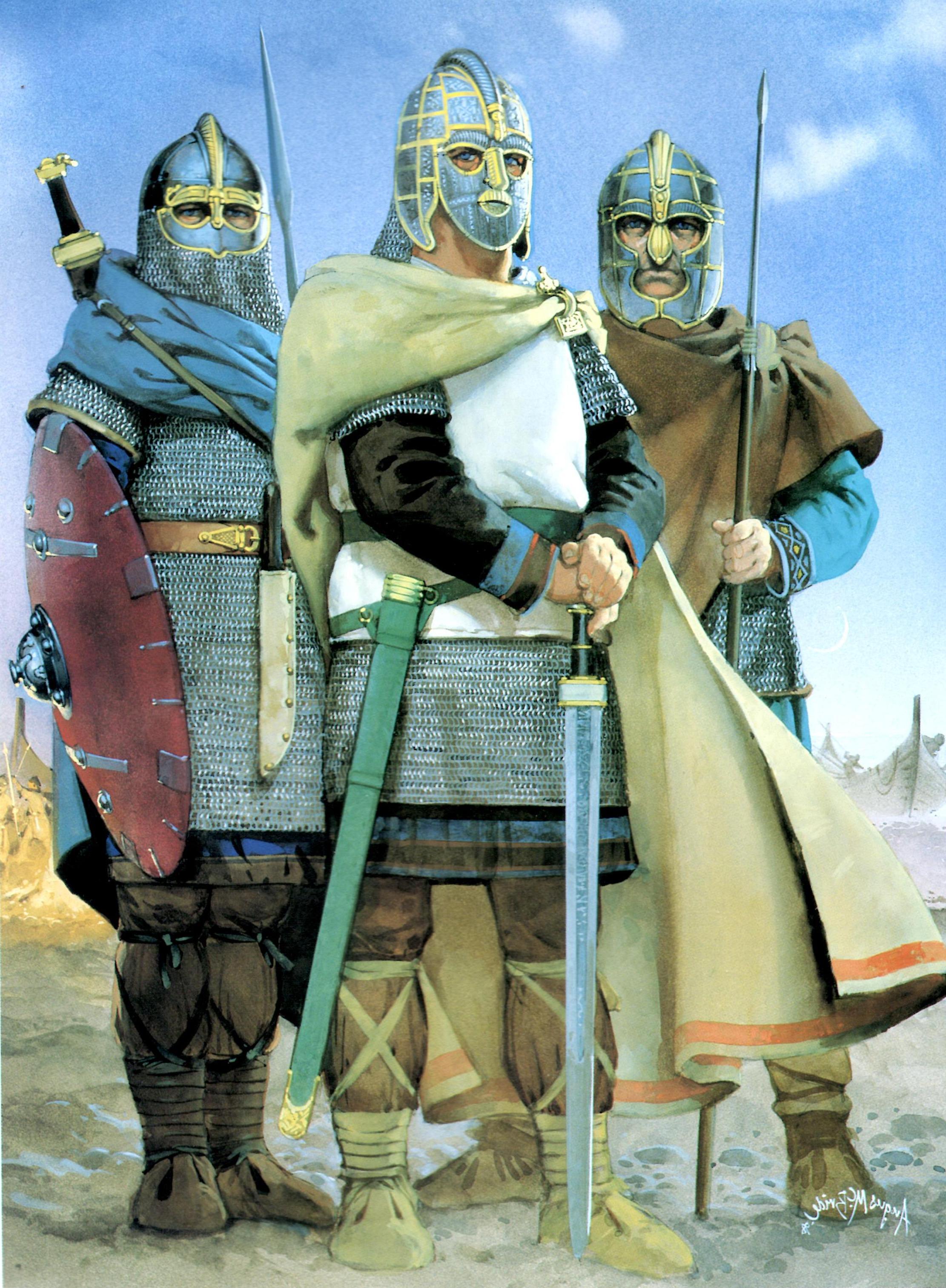
“And should the church have a quarrel with you?” the Bishop asked, while Gerraint stared at this evident leader of the Angles. He appeared a big dirty blond, dirty everywhere, with a few scars and a few teeth.  He wore a bearskin jacket which mostly hid the chain beneath, like a gambler who kept his cards close to his chest.  He carried a sword loosely at his side, Gerraint thought, like a gunslinger in the old west, and no telling what other hardware he might be carrying beneath the bearskin rug.  Gerraint saw the other three men as various degrees of smaller and uglier.  “This has been a city of peace and free trade between the many people who live on these shores,” the Bishop continued.  “Would you see all that destroyed?  Are you declaring war?”

The German stared hard at the Bishop, like he weighed alternatives and thought of many things before he shook his head. “We heard the Britons chose a new leader, a boy, and we thought it would be a good time to demand compensation for the way we have been cheated these past twelve years since Uther.”  The man rubbed his scraggly chin.  If he felt cheated, that only became the catalyst. Mostly, he looked like a man who wanted something for nothing, and thought a boy might be frightened into giving it to him.

“I am Arthur Pendragon, son of Uther,” Arthur said with as much dignity as he could muster.  He pulled Caliburn, slowly and carefully as he spoke.  “And this is the sword that was pulled from the stone signifying my right to speak for the Britons, the Welsh and the Cornish.  If you have a complaint against my people, you can send representatives to argue your case, but for now, this assembly of warriors is unlawful.  I demand you disband your army and leave this gate at once.”

The three ugly men looked surprised by the response and impressed with the sword from the stone, which they knew all about, but the big leader just laughed.  “Boy.  My steel and strong right arm argue my case for me.  We could settle this now, just you and me, but you are such a little thing, I would hate to take advantage of you.”

“I am young, it is true, but I accept the terms. You and I will settle this for all the people, but since you don’t want to take advantage of a young boy, you may fight my champion—the one chosen to fight for me until I come of age.”

“Eh?”  The Angle Chief rubbed his chin again like he might have to think about that.

Arthur took a step back.  “Okay Diogenes.  Beat him up.”
Gerraint’s jaw dropped.  “What?”  He went speechless.  Arthur looked smug.  “What?” Gerraint said it again, and his blood began to boil in anger.  All the same, he looked for Diogenes, not being able to think of a quick alternative, but when he traded places through time, it was the Nameless god who appeared dressed in the armor of the Kairos, and Nameless had a very big sword at his back, one made for a man.

One of the three uglies shrieked and ran off, screaming.  The other two stepped back, because while they may have been converted to the Christ, like with many of the Britons, the old ways and old beliefs were just a scratch beneath the surface.  Somehow, they knew they were looking into the judgment of Aesgard.  The leader looked uncertain, but he felt committed, and not willing to be thought a coward.  He tried to appear confident, pulled and lifted his sword in preparation for a fight.

Nameless, aware of the political implications of what was happening, made a glamour so anyone looking from the city walls would think he was Arthur and Arthur was Gerraint.  At the same time, he felt Gerraint’s anger at being put in this awkward position, and as the Angle leader lifted his sword, Nameless drew his sword and cut cleanly through the man’s middle, not pausing at bearskin, chain, flesh or bone.  It happened so fast, Percival blinked and missed it.

The German looked down at his middle and laughed, like maybe Nameless missed.  Nameless kicked the German in the chest.  The top half of the man’s body got deposited ten feet away.  The bottom half collapsed where the legs stood.  The other two Angles ran for their lives, and since most of the German warriors in the camp were watching, they also ran.  The little army had gone in less than two minutes. Their tents and equipment, simply abandoned.

Gerraint came back by then and Arthur smiled broadly until Gerraint punched him hard in the face, knocked him down and bloodied his nose.  “They do not belong to you,” Gerraint yelled.  “You swore a blood oath not to speak of them.  You get one warning.  Next time you try something like that I will walk away and you can get yourself killed.”

“Okay.  Sorry.” Arthur held his nose to try and stop the blood.  “I didn’t think.  I didn’t know what else to do.”  All the excuses went unanswered because Gerraint stomped back to the gate and did not listen.  The city watch appeared grateful.  The squires left inside the gate were chanting, “Arthur!  Arthur!” because that was who they thought had done the deed.
Arthur followed, and he went to tears by the time he arrived.  Bishop Dubricius held him and calmly told him there was room in God’s grace for forgiveness, and mercy, and everything would work itself out.  But the worst of it for Arthur came when Percival, who practically worshiped the boy as the ultimate big brother, looked so disappointed, turned his back on his brother, and accused him with two very sharp words.

“You promised.”

The men rode up at full gallop, having ridden hard once they realized what the squires were planning.  Meryddin and Pelenor raced from the front.  Pelenor jumped from his horse when he saw Gerraint. He ran up and threw his big arms around him and hugged him with a few tears.  Then he stepped back and boxed his ear.  “Don’t you ever do something crazy like that again,” he yelled.  Then he hugged him again and added softly, “without me.”

Meryddin took Arthur roughly from the hands of the Bishop, but then Peredur fetched his own squire with a possessive look.  Meryddin stayed right there, but did not argue the point.  It took some time after that for the Lords to get the straight story.

As Nameless designed things, Arthur got credited with cutting a man clean in half, and Caliburn looked unused.  Mesalwig, squire to the Welshman Badgemagus and something of an appendage to Loth during the gathering, spoke quietly.  “I said there was some magic in that sword.” Loth simply looked dour.

Kai and Bedwyr lifted Arthur on their shoulders and parade him around, chanting with the squires, and this time with the Lords and city people, “Arthur!  Arthur!” It did not take long, though, before Arthur begged to be put down.  He felt sick to his stomach.
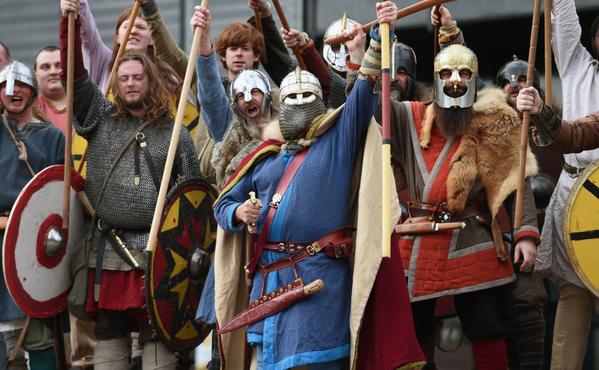
“I would rather ride a plow horse,” he said. Kai laughed and ruffled Arthur’s hair while he called him cousin.  Bedwyr had to think before he understood and laughed as well.  They paraded back to Saint Paul’s, Arthur out front with Meryddin. The people cheered, what there were of people.  The city started dying since the Romans abandoned it.  Gerraint thought it looked like some sections of twenty-first century Detroit, but he said nothing.
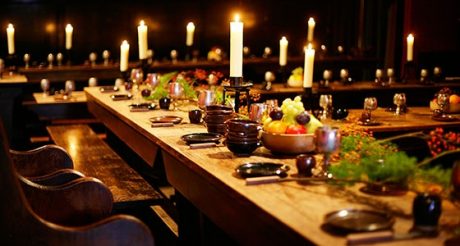
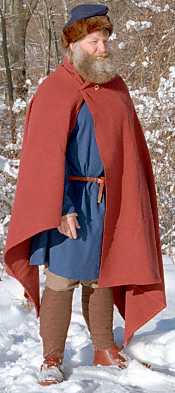
R5 Gerraint: The Test, part 1 of 3

Percival started the cheer again.  “Arthur!  Arthur!” And this time a number of chiefs joined the chorus.  Still, for many there was one thing that bothered them.  It came out when the crowd quieted again.

“But we don’t even know the boy’s father.”

“I do.”  Meryddin stepped forward again and sounded like he waited for this very question. “This is Arthur, son of Uther Pendragon.”  He paused while the crowd gasped and then became silent once again.  “His mother was Isoulde, wife of Goloris, Duke of Cornwall. Isoulde and Uther were lovers for a time and Arthur was conceived on the night of the full moon.  Uther kept Goloris at the wars and away from Tintangle for a whole year so he might not find out, but when the child was born, they knew they needed to hide him, for his own safety.  They gave the baby into my hands and I brought him to Peredur to raise as his own son.

“Well, what do you know,” Peredur said.  Ederyn nudged his friend.  Pelenor stepped forward.

“Well, you are still a squire.  Don’t you forget that.  You still have a lot to learn.”  Just about everyone laughed even as Percival started again with “Arthur! Arthur!”  And this time nearly all of the crowd joined in.  Only a few walked out as the Bishop stepped up and virtually shoved Meryddin out of the way.

Meryddin looked at the stone and mumbled, “What did that Roman know that I don’t know?”

“On your knees son,” Dubricius said kindly, and Arthur, still in a state of shock, got down on his knees.  “In the name of the Father, the Son and the Holy Ghost…” The Bishop had a vial of oil in his pocket, like he came prepared, and he anointed Arthur then and there as Arthur Pendragon, High Chief and War Chief of all the Britons, the Cornish and the Welsh. Gerraint had to help Arthur back to his feet while the crowd cheered.

Then there might have been an awkward moment as the crowd quieted to hear what Arthur had to say.  Fortunately, Gerraint whispered in Arthur’s ear, “Lunch.”

Arthur looked seriously at the crowd.  “I am still a growing boy, it is true.  I will endeavor to become the man worthy of the trust you place in me.  But presently, in a word which is a favorite of growing boys everywhere, I declare, Lunch!” He raised Caliburn toward the sky and shouted with great enthusiasm.  The squires instantly cheered.  The Lords paused to think and then laugh, and then they decided that lunch, though still a bit early, would probably be a good idea.  They trooped into the monastery where the cooks were not nearly ready.

“Short and sweet,” Gerraint said.  “All your speeches should be like that.”

“Well said,” the Bishop praised Arthur.

Meryddin swooped in and slipped his arm around Arthur before the Bishop could take him; and he gave Gerraint a hard look as well when they went inside.  Meryddin sat beside Arthur like his guard during lunch and all afternoon.  He did most of the talking with the various Lords, some with their ladies, some with their sons, who came up to pledge themselves and give honor to the new Pendragon.  Arthur spoke only now and then in a very noncommittal way, things like, “Yes we must see to the price of corn in Londugnum,” and “We must look into Piracy in the Irish sea”

Every now and then Arthur said, “Bogart, are you getting this?”  Meryddin had introduced a Druid named Bogart who had an excellent memory and was there to later recall all of the day’s discussions.  Arthur wondered how much of that excellent memory might be tampered with by Meryddin before Arthur heard it again.  Quickly on, though, Arthur realized the monk who appeared to be focused on lunch and facilitating the movement of people around the room, also listened in.  Arthur imagined the monk as a master of memory himself, assigned by Dubricius no doubt, and Arthur looked forward to comparing the two versions, later.

Arthur did not play dumb.  That would not have been good because certainly Meryddin knew the boy was bright.  But Arthur understood far more of what got discussed than Meryddin may have realized, and he kept that to himself.  It was Meryddin’s own fault, because the man had a way of speaking where sometimes he would say only a short phrase or mumble something, like about what the Roman knew, which would go right passed people or over the heads of most men, but which Arthur caught.  He had been tutored by Meryddin, after all, and by age fifteen, he had become very good at reading the Master Druid.

When supper arrived, Arthur actually felt relieved that Peredur came and got him.  He found himself back in the kitchen with Gerraint and Percival, serving at his master’s table.  Pelenor, Peredur and Ederyn kept a close watch on Arthur, but Gerraint assured him it was because they felt the need to protect him at this point from undue pressure, which might move him to make some bad decisions.  Then Kai, who still called him cousin as he called Peredur uncle, and Bedwyr at least did their best to keep the young Lords at bay. They also tried to convince Loth that this could be a good thing, but Loth got hard-headed.

That evening after the squires had their late supper, everyone had questions.  Arthur had no certain answers, but he freely admitted he would need the help of all of them in the days and years ahead.  Every squire present swore a blood oath to follow Arthur to the gates of Hell if called.  Urien, to everyone’s surprise, actually proposed the blood oath, and then cut his finger first. Gerraint said he hoped the gates of Hell would not be necessary, and several young heads nodded, and a few let out a soft, nervous laugh.

Then came bedtime, but Arthur and Gerraint stayed up a bit longer.  “So now you have a sword of your own,” Gerraint said.  “Caliburn is a fine sword.”  Gerraint felt something beside him.  It seemed to appear out of nowhere, or Gerraint could not say where, but he did not get startled by it.  In fact, his only thought was the hope that Arthur did not see.

“Not like Salvation,” Arthur responded.

“Much like Salvation,” Gerraint responded.  “By the way, here is the sheath.”

Arthur took it but stared hard at Gerraint.

“Did I tell you Salvation was made for a woman’s hand?”

“Yes.”  Arthur examined his present.  “Greta?”

“No, not the Wise Woman of the Dacians.  She would just cut herself.  No, it was made for Candace, Princess of Nubia who kicked the butt of Augustus Caesar.”  Arthur looked skeptical.  Gerraint continued.  “Caliburn also got made for a woman, a Greek Princess who lived some two hundred years before Christ.”

“You’re making it up”

“You want to meet her?”

Arthur paused before he shook his head.  “Do you have any swords made for a man?”

Gerraint nodded.  “Caliburn’s brother sword is Excalibur.  It got made for Diogenes.  You saw him”

Arthur nodded.  “And that was the strangest thing I ever saw, until you topped it with Greta.  She looked very Saxon, but she was really cute.”

“Greta says thanks.”

Arthur smiled and nodded again before he caught himself.  “Gerraint, you are weird.”

“Goreu.  Remember? When I get weird you have to remember my real name is Goreu.”

“Boys.”  Arthur nodded once more as the voice of Kai sounded out in the dark.  “Go to bed.”  Arthur and Gerraint did not argue.

R5 Gerraint: The Sword in the Stone, part 2 of 3

Gwillim interrupted.  “I thought the Norwegians were completely new, like only in the last ten years or so.”

“And don’t forget the Irish threat in those days,” Tristam added on the side.

“No, the Norwegian shore has been invaded for some time,” the Bishop said.  “Our own Loth knows the trouble there very well.  And yes, we should not forget the Irish.  In fact, when Ambrosius died and Uther became Pendragon, he built many forts along the Welsh coast to defend against that very threat.  But now, Uther has been gone for twelve years, poisoned, like his father.  And neither Ambrosius nor Uther had sons, and there are no more brothers.”

“So, will they find one to pull out the sword of the Roman?” Gwyr asked.

“I fear they will not,” the Bishop answered. “I fear they will choose one at random, and like the people of Israel who demanded Saul for king, the choice will most likely be a bad one.  All of the Lords here have squabbles and grudges.  It is inevitable that no matter who is chosen, some will be unhappy.”

“But isn’t that always the case?” Gerraint asked.

“Perhaps so,” the Bishop said, and he stood with a final word.  “Sorry to interrupt.  Go back to your important meeting.  I was a boy once, too.”

The boys looked at each other in silence for all of a second before they ran to the courtyard of the sword in the stone.  The next hour got spent tugging on the sword, though Gerraint and Arthur only stood back and laughed.  Urien said he wiggled it and Arawn supported him.  Gwillim said he also wiggled it, but his brother Thomas laughed and denied it.  It did not take long before the game became two sides playing at war, but with sticks instead of swords.  Arthur’s group always won because Thomas was not much of a leader.  Gerraint avoided the game at first because he wanted to check something out.

Gerraint snuck out to the alley beside the church where they had a garbage dump and several perpetually brown bushes.  It looked sheltered and secluded enough for him to try something.  He called softly, “Hunters,” but nothing happened and no hunters appeared.  So he thought hard about his experience on the road. He grabbed what he imagined was a name. “Lord Pinewood,” he whispered, but the alley remained empty.  Finally, he put some command in his voice, though he still tried to keep the volume down so as to not attract attention.  “Pinewood.”  He got ready to give up when the elderly hunter appeared from behind a bush in the alley.

“Trouble young Lord?”  The elder grinned, while Gerraint shook his head

“I’ve been thinking,” Gerraint started right in, and stopped.

“And a good thing for a young man to do,” Pinewood encouraged, and his grin became a smile.

“Just now, when we were playing around the sword in the stone, I noticed something.  I don’t know if anyone else noticed.  But I saw something that made me think.”  Pinewood stayed patient.  Gerraint continued.  “I saw, whenever one got near to the stone, anything metal, their knives and such, I think iron, it did not seem to affect silver or gold, but the iron looked like it pulled toward the stone.  So I was thinking the stone is some kind of load stone.  It must be magnetized, and that is why the sword is impossible to pull out.”

Pinewood nodded.  “The sword, Caliburn, your sword is finer steel than can be made in this day. It is by virtue anti-magnetic. But it got specially treated, if I can say that, so the magnet could hold it fast.”

“Can it be demagnetized?”

Pinewood shook his head.  “Bogus and Dumfries have been arguing about that for fifty years. I believe the current thinking is to temporarily disrupt the magnet when the right hands are on the hilt.  Once the person intended has the sword, it can be demagnetized later.”

“Bogus and Dumfries?”

“A dark elf and a dwarf,” Pinewood said, and Gerraint knew he spoke true, even as Pinewood said it.

“Good.  That will be good.”  Gerraint was still thinking.  “But I better get back before the others miss me.”
“My lord.”

Gerraint paused.  “Is there something else?”

“We must know which hands are the right hands.”

“Of course.”  Gerraint laughed at himself for forgetting the main part.  “Arthur.  It has to be Arthur.”

Pinewood smiled again.  “I guessed, you know,” he said, and became fairy small, with wings and everything, and flitted rapidly out of sight.  Gerraint headed back inside, but ran smack into Meryddin who rushed around the corner with two men following.

“Move, boy.”  Meryddin shoved Gerraint, but only a little to get him out of the way, and Gerraint paused to listen.  The men turned into the alley.  “There is magic and fairy dust in this place,” Meryddin said.  “I can smell it.”

“They usually don’t come so close to a church,” one of the men responded; but then Gerraint felt it best to run so he did not hear any more.

All of the Lords, which is to say, chiefs of the many tribes and nations of the Gaelic peoples of Britain, Wales and Cornwall gathered in the courtyard of the stone first thing in the morning, along with the young Lords, and the squires, who were pushed back to the outside edges where they could barely see anything over the heads of their fathers.  The older ones knew the basic story.  Peredur said that anyone who was alive when the Roman planted the sword in the stone had to be a baby and could not possibly remember the deed.  Pelenor said this whole thing could have been avoided if Uther had a son.  His daughter Morgana, dabbler in the mystical arts though she may be, hardly qualified.  Then everyone grew quiet while the Bishop Dubricius said a short prayer for guidance and wisdom.

Dubricius stepped back to where he got surrounded by some twenty monks and clerics.  Meryddin stood on the other side of the yard with a dozen Druids to back him up.  This was a land where the new had come, but the old seemed far from gone.  Pelenor acknowledged that when he stepped up to the stone and addressed the crowd.

R5 Gerraint: The Sword in the Stone, part 1 of 3

The company trooped into Londugnum just after noon on the third day.  That seemed about as fast as they could hurry things up.  There were signs of decay everywhere, with plenty of buildings that had been abandoned.  Trade with the continent was not what it used to be.  Outside the city walls, there sat a large Saxon settlement that Pelenor called Londugwic.

“This is one of the only places where Britons and Saxons can trade peacefully,” Pelenor explained.  “As long as they keep the wall between them, and as long as one side or the other does not feel cheated, which always happens.”  He laughed, but Gerraint imagined not many British goods were coming into town in his day, and most of what came got floated down the Thames, outside the wall, the road being as unsafe as it was.

They made for the church and monastery that had been dedicated to Saint Paul, where they found a great number of men, Lords and squires, who all but displaced the monks for the time being.  People slept on the floor, everywhere, but then many more took rooms in neighboring houses for the season so it was not as bad as it might have been.  Gerraint found Tristam early on.  Tristam turned thirteen last winter, and being from Tintangle in Cornwall, he helped Gerraint feel closer to home.  Sadly, Tristam started hanging out with Urien, a twelve-year-old from the British Midlands, who had a big raven emblazoned across his tunic and who seemed to share the same attitude and manners of the carrion eater.  The eldest squire among the monastery dwellers was Mesalwig, a stuck-up sixteen-year-old from Glastonbury who fortunately, wanted to hang out with the young lords.  Kai and Bedwyr ignored the fellow, so he attached himself to Loth.  Thomas of Dorset was the next eldest at sixteen, and he stayed with the squires and kids, and seemed the nicest fellow.  He was so nice, in fact, he had no martial instincts at all, unlike his younger brother Gwillim, who made a chubby ten, and a handful.

There were many Lords, young and old in attendance. Melwas, who just turned twenty-one, came all the way from Lyoness.  Badgemagus, near fifty, hailed from Northern Wales.  Kai and Loth were from way up north where the Scots and Picts were always a worry, and now where they faced a new intrusion of Danes, though they were more often called Jutes, a name the people knew, or Norwegians, which meant nothing but sounded foreign and strange.  There were also Lords who brought their sons, even if the sons were too young to become squires.  Along with ten-year-old Gwillim, there was Gwyr from the Midlands at eleven, Arawn at nine, attached to the Raven’s elbow, and there were three Welsh troublemakers of Menw at ten, Kvendelig at nine and Gwarhyr at seven.  Gerraint made a point of getting to know them all, and as many others as he could, and so Arthur and tag-along Percival did the same.

“These will be the men we will have to deal with on a regular basis, ten and twenty years from now,” Gerraint said.  Arthur saw the wisdom in making their acquaintance, and from the start showed great insight on the kind of men they might become.

“So, why are we all meeting in Londugnum?” Urien asked one afternoon.  He disguised none of his contempt.  He thought this a poor excuse for a town.  Percival and Tristam both thought the Raven had no business complaining, but they were wondering the same thing.

“Good question,” Thomas of Dorset, the eldest spoke, but then he looked away because he had no answer.  Gwillim’s young friend Gwyr, who at all of eleven spoke up.

“Because this is the place the Roman punched his sword into the stone and said the true war chief for the people will be the one who can pull it out.  I think the Lords are just going to choose someone and ignore the stone, because they have all tried it and none of them could pull it out.”

“That is almost right.”  They heard a voice and all looked up at the Bishop, who smiled for them.  He came into the room, pulled up a chair, and invited the squires to sit at his feet while he explained.

“It was ninety or nearly a hundred years ago when the Romans left the land.”  Some looked surprised because the way that Rome and the Romans were spoken of, they thought the leaving was much more recent.  “In those days, the people were all left to fend for themselves.  Soon enough, all the petty Lords and chiefs began to squabble and fight.  It became like the days of chaos before the Romans ever came.  The Germans the Romans had contracted to guard the shore from invasion, became the invaders.  The Scots they invited to fill the land between the walls as a human wall against the wild Picts, began to join the Picts in raiding the lush southlands. Everything started falling apart, rapidly.

“Then what happened?”  Thomas of Dorset asked, like he was the youngest instead of the eldest.

“After about thirty years, now some sixty years ago, a Roman Senator came to see how the free province was doing.  He saw the chaos, so he called all of the chiefs of the Britons, Welsh, Cornish, Saxons and Angles to Lundinium, which is what the city was called in those days.  He selected and anointed the first Pendragon, a man named Owen who went by the Roman name of Constantine.  The Germans did not acknowledge his overlord status, but understood what a war chief would be and pledged peace.  With that, Owen became able to satisfy the Scots with land and drive the Picts back to the Celidon forest.  Then, when the Germans broke the promised peace, he also became able to drive them back to their shores.  A good time of peace followed, and though Owen got old, he had a good son whom he called Constans.”  The Bishop paused for a moment to think things through, and the boys waited, as patiently as they could.

“Owen died, and Constans became Pendragon, but then he died by poison and his friend and counselor, Vortigen took over.  The sons of Constans, Ambrosius the elder and Uther the younger, fled to Amorica and the court of King Budic who granted them sanctuary where Vortigen could not reach them.  Vortigen contented himself with rule, but it came in the most terrible way.  His rule caused trouble rather than resolving things.  Vortigen hurt rather than helped, and no one liked the man.  After five years, Ambrosius and Uther returned, and all the Britons, Welsh and Cornish flocked to them.  Vortigen looked finished, but he had secretly made a pact with the Saxons and he brought them into a great battle by Badon Hill. Ambrosius won that battle, Vortigen got overcome, the Saxons decimated, but Ambrosius Pendragon got mortally wounded. He lingered for almost three years, and in that time, Uther became the one who led the people against the Picts, the Angles, and the new threat of the Danes.

R5 Gerraint: The Road to Londugnum, part 3 of 3

Gerraint turned.  The Bishop had a small cut in his arm where his robe had been torn.  He held Percival in front of him, his hands tight across the boy’s chest.  Percival had a big dent in his pot-helmet, and he had his eyes closed.  Arthur had his own knife and Gerraint’s long knife and faced a man who appeared to be toying with him.  He swung slowly with his sword and Arthur desperately tried to parry.  It looked like a lesson for a schoolboy, and the Saxon laughed.  Gerraint stood behind the Saxon, and again he did not hesitate. He brought Salvation down on the back of the man’s head even as Arthur realized his advantage would be in getting close.  The man howled and reached for his head as Arthur stepped in and thrust up under the man’s breastplate.  The man cried out again and fell to join his companion in the dirt.

“Ugurt?”  One of the Saxons in the camp yelled in response and then rattled off a whole string of words in a language the boys did not know.  Suddenly, a half-dozen Saxons stood at the forest edge, growling, with their weapons ready.

Arthur backed up, horrified by the knowledge that he killed a man.  Gerraint would have felt the same way, now that he had a chance to think about what he did, except he no longer stood there.  Instead, a man, with golden brown hair, hair which appeared nearly blond in the sun, looked at the Saxons through sparkling blue eyes under strong brows. He wore a formidable suit of leather and chainmail that reached to below his knees. He wore tall boots that disappeared into the skirt of the armor, and studded gloves that came up to his elbow. He had a helmet which looked ancient, like something Greek, where only the eyes and mouth remained uncovered. He put it on and reached out his free hand and called.  “Defender.” Gerraint’s knife wriggled free of Arthur’s hand and jumped to the hand of the man.  The man still held salvation in his other hand, and he raised it for battle.

The Saxons hardly hesitated, but as they charged, there came a sudden whizzing sound in the air.  All six Saxons became target practice for some unseen archers, the last of whom fell a scant two feet from the man.  The man spoke in a strange tongue which only the Bishop understood. “Th – thank you,” he said in his native Greek, and went away, taking his armor and the sword called Salvation with him. Gerraint returned holding only Defender which he returned to the sheath he wore strapped to his thigh.  Arthur looked shocked.  Percival still had his eyes closed.

Three men came out from the deeper woods and went straight to Gerraint.  They might have been hunters, but there had a hint of the lion on their tunics.  They all went to one knee before Gerraint and the eldest spoke.  “Your Highness.”

“You are a long way from home,” Gerraint said. “Don’t tell me, you have been secretly following since Caerleon.”

“Yes, your Highness.”

“Wait a minute.”  Gerraint got some insight from somewhere.  “You’ve been following me since my stepfather threw me out.” The hunters chose not to answer that accusation.  “Well, what Diogenes said, thank you, but now you better disappear before Lord Pelenor and the others return.”

“As you wish,” the elder said, and the three, without a look at the other people present, got up and disappeared among the trees.

Arthur held a stiff upper lip.  “Nice to have some extra friends.”

Gerraint nodded and thought, stiff upper lip, how British.  Then he spoke.  “I have wings to fly that you know nothing of, eyes that see farther, ears that hear better, and a reach longer than ordinary men.”  Arthur could only nod as Gerraint disappeared again and a young woman came to stand in his place.  She came dressed in a long dress with long sleeves and had a red cloak with a red hood over all.  Her hair was blond, her eyes were soft, rich brown, her skin looked milky white, and she had more than enough freckles.

“Your grace,” she said to the Bishop, and curtsied, which showed the silver cross that hung from a chain and swung with her movements.  “I am a healer, now let me see that cut.”

Many men would run at seeing her appear out of nowhere, and would be wary of such an offer, but the Bishop just smiled. Percival fetched water and cloth with which she could clean and bandage the wound.  Arthur just looked over her shoulder and pretended to admire her work.

When she was done, she stood and faced Arthur. “Greta.  I am a Dacian, which is Germanic, so not a good choice.  I am also older than you.”  She reached out and kissed Arthur’s cheek.  “You did your duty.  You must always do what is right and good and true.”  She vanished and Gerraint returned.  “And for the record, neither Greta nor Diogenes were here, and we were helped by simple hunters.”

Percival had retrieved and cleaned Arthur’s knife, and he used it to prick his finger.  Gerraint borrowed it, pricked his finger, and handed Arthur back his weapon. Arthur paused only a second before he pricked his finger and agreed.  The boys touched, and were surprised to find the Bishop’s finger over them all.  He had touched the bit of blood from his wound.  He looked at their surprised faces and laughed.

“I was a boy once,” he said.  “I know about blood oaths, and I agree.  What happened here is not for tale telling.”

Arthur nodded, but as he put his knife away, he began to cry.  Gerraint joined him, and he never did look at the man he killed.  The Bishop put an arm over their shoulders, carefully in Arthur’s case because of his wound on that side, but then he walked them back to the roadway.  There they heard all about forgiveness and mercy, and received absolution in the Roman way.  Arthur said he understood something then that he never understood before.  Gerraint simply said, “Thanks.”

The last thing that got said before Pelenor and the troop returned was a question by Arthur.  “I saw the lion on their tunics, but if they were not hunters, who were those men?”

“Fairies,” Gerraint answered.  Arthur laughed, but he was not sure what to believe.  The Bishop merely nodded before Percival got them all to laugh when he grabbed a rock and tried to take the dent out of his pot-helmet.

************************

MONDAY

Gerraint: The Sword in the Stone.  If you read the story of Festuscato, Last Senator of Rome, you know he put it there.  Now, Gerraint needs to make sure the right hands pull it out again.

Until Monday, Happy Reading.


*

R5 Gerraint: The Road to Londugnum, part 2 of 3

They crossed the Thames at the ford of the ox where a fort first got constructed by Constans, son of Constantine, the first Pendragon.  Ambrosius, son of Constans was the one who defeated the usurper Vortigen and got proclaimed Pendragon before he got poisoned, and his brother Uther took the reins of the War Chief.  The fort had been built to protect the easy ford across the Thames and keep the road to Londugnum open, but in recent years they were doing well to keep themselves from being overrun.  The fort got burned once by Saxon raiders since Uther passed away in battle.  The local Lords made a temporary alliance to drive the Saxons back and rebuild the fort, but it became then more of a British outpost than a real line of defense.

The river crossing at Oxford was as easy as reported, and they spent the night feeling secure behind strong walls.  The Bishop visited the local Monastery, and stayed with the monks with strict instructions that the group not leave without him.  In the fort, the squires had little time for pleasantries.  They had to care for all the horses and equipment and only finished in time to eat and pass out from exhaustion, while their Lords stayed up drinking and talking about nothing important.

In the morning, Gerraint felt surprised that along with two guards, which was all the fort commander said he could spare, they picked up three new young Lords.  Kai and Bedwyr were the youngest at twenty-one and twenty-two.  Loth seemed the old man of twenty-five.  By contrast, Pelenor, Peredur and Ederyn were in their thirties and fought for Uther when they were squires and young Lords.  Of the three, Ederyn was perhaps the youngest at about thirty.

First thing, Pelenor, flanked by Peredur and Ederyn, strictly charged the three young squires to guard the Bishop at all costs. Arthur asked about Meryddin, but got assured the Druid was more than capable of taking care of himself. Gerraint looked at young Arthur and wondered what exactly the relationship might be between him and the Druid, but he held his tongue.

The group stopped for lunch before noon, and used some of Percival’s pots and pans.  Even so prepared, it became a three or four-hour ordeal, with the squires doing the lion’s share of the work.  Gerraint had something to say, but quietly to Arthur so as to not insult his masters.

We have been moving this slow since Caerleon. I don’t know how we can be expected to hold our lands against encroachment at this pace.  If the Romans moved this slow, Boadicea would have kicked them right off the island.”

Arthur looked like he had not thought of that. “We have been on the road from Leogria for three weeks, a distance people might have walked in six days.”

“We have been a whole month,” Gerraint agreed. “I could move a whole army in less time.”

“I could join your army,” Percival said, and Gerraint paused to lay a hand on the boy’s shoulder.

“For better or worse, you are part of Arthur’s army, and I have a feeling I may be too, someday.”  Gerraint paused then as he caught a brief and unusual glimpse of things to come.  “This land needs a friendly dragon,” he concluded.

“And the lion,” Arthur said, kindly.

“I’m going to paint a cross on my arms,” Percival said.  “You can forget the lemming.  I don’t even know what one looks like.”

“A good choice,” the Bishop said softly.  As usual, he had been listening in and keeping his own counsel.

At that awkward point, when lunch started being packed and people started preparing to move out, a dozen horsemen appeared on the road ahead.  They charged the group, but then, whether they thought better of it or decided the odds were too even, they turned and rode off.

“Saxon raiders.”  Peredur said it out loud.

Pelenor said, “Mount up,” and all the men hurried.

Ederyn alone thought to remind the squires to protect the Bishop, and then the men rode away in pursuit of the enemy.

Gerraint immediately grabbed the Bishop’s hand and started to drag him into the woods.  “Get under cover,” he yelled.  Percival, who was still young enough to trust his elders, grabbed his pot-helmet and followed.  Gerraint found a sword in his hand and gave his long knife to Percival.

“What are you doing?” Arthur yelled at them and scoffed.  “We have to clean up.”

“It is obviously a trap,” Gerraint yelled back, and eight or nine Saxons took that moment to come out of the woods.  Arthur ran and pulled his own knife, which might have been a pretty good hunting knife, but not much against a sword.

The boys and the bishop backed up while most of the Saxons went for their supplies to see if they might find anything of value or at least useful.  Two of them went to take care of the boys and the cleric.

Gerraint looked big for fourteen, being five and a half feet tall, which made him as big as any number of men in those days.  He held his sword with two hands, at the ready, so at least it appeared as if he knew how to use it, even if he did not have much practice with it yet.

“A good-looking weapon.”  The Saxon who faced him grinned and showed only a couple of missing teeth.  “I’ll just have that.”  He drew a weapon that also took both of his hands, but only because it looked huge. He grinned again and swung straight for Gerraint’s legs.  Gerraint parried and barely held it off, but they heard a loud crack and the Saxon said, “Maybe not such a good weapon after all.”

“It is Salvation.”  Gerraint named his sword as he took a step back.  It was one sword which was not too heavy for him.  The Saxon grinned again and swung at his legs from the other side, the Gerraint parried easily with a strong backswing and the crack sounded louder than before.

“One more swing and you will be disarmed,” the Saxon said, and he lifted his broadsword to prepare a swing at Gerraint’s head, but as he lifted his heavy steel, the top half of his sword fell away. Salvation had shattered the Saxon’s more primitive steel

The Saxon looked dumbly at his useless weapon, and Gerraint did not hesitate.  He thrust the point of his sword through the Saxon’s neck, just above the armor, and it stuck out a little from the back.  Gerraint yanked on his sword with all his strength, and it came out as the surprised Saxon’s head lolled forward and his body collapsed to the dirt.

R5 Gerraint: The Road to Londugnum, part 1 of 3

Gerraint kept close to his master, Pelenor.  His bright blue eyes peeked out from beneath long, curly dark brown locks with the attention of an eagle on its prey, while his right hand gently stroked his charger’s neck.  His horse wanted to run at the sound of approaching horses.  He held tight to the reins and waited, and good thing because Lord Pelenor’s horse jolted when the approaching men came into view. Dubricius, the Right Honorable Bishop of Caerleon nearly got dumped in the mud by his startled horse.

“Peredur!”  Pelenor shouted and waved.  “And Ederyn.”    Pelenor trotted out to meet them.  Gerraint and the Bishop stayed where they were.  The Bishop looked at the water that still dripped from the trees after the early morning rain.  Gerraint looked at the Bishop who Lord Pelenor charged him to guard at all costs. At fourteen, Gerraint the squire had learned to pay strict attention to what his master told him.

“Boy,” Pelenor called as he rejoined them with five riders in tow.  He presented the Bishop, and all of the others, except the old one with the long white beard, nodded their heads in a kind of bow.  “And this is my squire, Gerraint, son of Erbin, High Prince of Cornwall.  Gerraint puffed out his chest a little to show off the lion emblazoned on his tunic. To be sure, Gerraint did not know how long he would remain high prince since his father died.  His mother remarried a Roman named Marcus Adronicus.  She said she wanted a husband to raise Gerraint’s little sister, Cordella, but who knew if Gerraint might have more brothers and sisters and he might be cut off from his inheritance.

“My son, Percival,” one of the Lords said. “He is only twelve, but Ederyn here has agreed to take him on.”  Gerraint guessed the speaker was Peredur.  Percival removed the cooking pot from his head.  He had plenty of other pots and bags tied to his saddle and appeared more like a traveling merchant’s son than a proper squire. Peredur continued.  “My squire is Arthur, son of we don’t know who, because Meryddin here who brought the boy to me as a baby still won’t tell.”  He pointed last to the one with the long white beard.  The Bishop gave the man a hard stare.  Gerraint’s head shouted, “Merlin!  Gandalf! Dumbledore!”  Fortunately, Gerraint kept his mouth shut.

“Good running into you.”  Ederyn seemed a pleasant fellow.  “The closer we get to Londugnum, the more nervous I get, I don’t mind telling you.”

“Saxons to the west?  Angles to the east?”  Pelenor laughed.

“I think he sees Germans behind every rock and tree,” Peredur confessed.

Arthur came up to Gerraint and interrupted his concentration on the small talk.  “Hi, I’m Arthur, the dragon.”  He pointed behind to Percival who trailed, clinking and clanking.  “This is my younger step-brother, Percival the lemming.” Percival looked like he did not appreciate the nickname.

“He only chose the dragon because he has bad breath,” Percival said, but in a very quiet voice.  Arthur showed a fist and Percival quieted altogether.

“Goreu, the lion,” Gerraint said.  “That’s my name back home.”

“In Cornwall,” Arthur said.  “Goreu the Cornie”

“Cornish,” Gerraint corrected.  “You’re not a Brittie”

Arthur nodded.  “But Percival might be.”  He pointed.

“I’m a Christian, like our mother,” Percival spoke up again.  Gerraint noticed the Bishop listened in, and he looked like he might say something, but Arthur interrupted.

“Go on.  I’m fifteen, and that is plenty old enough to make up my own mind about that junk. I don’t know what I am.”

“I’m fourteen and a good squire, I hope.  My master, Pelenor is pretty strict.”

“Ha!”  Arthur spouted.  “I’m the eldest.  That means you have to do what I tell you.”

“Not a chance of that happening,” Gerraint said, with a sly grin.  Arthur studied that grin for a bit before he returned the same.

“I think I like you,” he said, but then Pelenor called them all to attention and they started again down the so-called road to Londugnum.  Percival put the pot back on his head.  It served as his makeshift helmet.  Gerraint kept his eyes and ears as open as he could.

Pelenor and Meryddin took the front, followed by Peredur and Ederyn.  They kept up a spirited conversation about who might be called on to fill the shoes of the Pendragon.  Uther had died some twelve years earlier and the Germans, the Irish, and the Picts in the north were all becoming bold in looking to extend their territory at British and Welsh expense.  Even the Scots, first invited by the Romans to live between the Antonine and Hadrian walls as a hedge against the Picts appeared dissatisfied with their lot and greedy for more, the ever-independent Ulster also feeling the pressure of the Irish and being overpopulated as it was.  Bishop Dubricius appeared willing to listen in from behind.  Gerraint thought that a sign of wisdom.  The three Lords thought it wise to keep Meryddin, the High Druid of the Britons and the Archbishop of Wales well separated.

R5 Gerraint, son of Erbin: born in the days of Arthur Pendragon.

Kairos and Rome 5: Rome Too Far

R5) Gerraint, son of Erbin: born 479, in the days of Arthur, Pendragon.
10 weeks of posts

Gerraint, son of Erbin, with Percival and Arthur, romp through the early days of Arthur, Pendragon.  They fight off a rebellion and beat back the Saxons, Irish, Jutes and Picts, and rescue Gwynyvar.  Sadly, as the boys become men, the fighting never seems to stop.  And Meryddin, a fly in the ointment, appears to be on his own agenda.

Following the end of the Kairos and Rome 5: Rome Too Far, the story of Gerraint and Arthur will continue in the last book in the series:

Kairos and Rome 6: The Power of Persuasion

R6) Gerraint: Love and War   12 weeks of posts

Gerraint, son of Erbin wins Enid, his love before he is called to the continent to help Brittany (Amorica) stay free.  After a time of torment, Gerraint and Arthur continue to fight off Picts, Scots, Danes, and Angles, before the final battle of Mount Badon.  And still, Meryddin has his own agenda working, subversive in the background.

************

If you read with us the story of Festuscato, Senator of Rome (The story before Greta), you saw the sword being put in the stone.  Festuscato installed Constantine of Amorica as the first Pendragon, (war chief) of Britain, Wales, and Cornwall.  Now Gerraint, Prince of Cornwall, walks beside Constantine’s great-grandson Arthur, the last Pendragon.

Don’t miss it.

************

Meanwhile

Avalon Season 6 is in the works.

As of now, R6 Festuscato, The Dragon in Ireland will follow Gerraint.  Festuscato is charged to escort Patrick to Ireland and see that he begins his work safely. (Good luck with that).  R6 Greta, To Grandfather’s House We Go  will complete the posting of the book The Kairos and Rome 6.

Then, according to plan, I hope  to post Avalon season 6 before beginning the Kairos Medieval book 3: Light in the Dark Ages.  As if things ever go according to plan…

Hopefully, by then, I will have three good book covers and be able to put Avalon seasons 4, 5, and 6 up on Amazon and wherever E-books are sold.

For the present, the prequel: Invasion of Memories, Avalon The Pilot Episode (which is free) and Avalon Seasons 1, 2, and 3 are available for purchase and your reading pleasure.

The new adventure, the story of Gerraint begins MONDAY, and as I say:

*

R5 Greta: The Quest, part 2 of 2

“Fae, dear.  I made a small bag for you.  It has salves, physics, bandages and potions in it.  Everything is labeled, and since you served your people for seventy years as their wise woman, I know that you know the good they may do.”

“Thanks, my Lady,” Fae said, as Greta fitted the bag over her shoulder.

“I do not know your future,” she told her.  “I don’t know what all you will face.  I had to guess what you might need.  There are no miracles in the bag.”  Greta felt very inadequate.

“Quite all right, Lady,” Fae answered graciously. “You would think after all of those years I would have thought of this for myself, but I didn’t.  So, you see?  I had nothing, but now I have everything.”

“Hans.”  She made him repeat his three words again.

“But what do they mean?”  Hans asked.

“Stop.  Do no harm. Friend.”  Greta told him.  “They are Agdaline words.  Very hard for the human tongue.”  Greta paused to look at the fading stars above.  She supposed they did not need to know who the Agdaline were, nor that those strange beings never expected their little pets to get loose, get big, and go wild. She spoke again.  “They are Dragonspeak,” she said.  “They are in the ancient tongue to which all dragons are bound to obey,” she said, hopefully.  Sometimes when dragons went wild, they were mighty slow in the obedience department.  Still, it had been bred into the beasts.  It was genetic, and even if they only paused on the words, it might be enough to let the quest get to safety.

Hans said the words once more and Greta felt satisfied that he said them well enough.  Agdaline was not easy.  Then she gave Hans a gift.

“Here,” she said.  “Take good care of it.  It is the sword of Avalon.”

“You have more than one sword?”  Hans sounded surprised, though when he thought about it he decided he should not have been surprised.

“I have had several,” Greta said.  “My very first got broken, though, when Sakhmet took it and started to wipe out every living thing in Egypt.  Then I lost one up the nose of the wolf.”

“The wolf?” Berry asked.  She slid closer to Hans.

“Fenrus.”  Greta nodded like it was no big deal.  “Loki’s son. Then there is Wyrd, and Salvation, you know.  This one is special, though.  It usually hangs over the fireplace at home and has not been used very much since the days of Alexander the Great.”

“Why is it special?”  Fae asked.

“It was made by little ones, not actually by the gods, but under contract, if you know what I mean.  The same crew that made Thor’s hammer.”

“Does it have a name?”  Hans asked.

Greta nodded again.  “Excalibur,” she named it.

Hans drew it out and even in the dim light of the dawn, it glowed and glistened, almost as if it had a fire of its’ own. “Wow.”

“Don’t cut yourself,” Greta intoned.

“We must go,” Berry said, stepped up then and took Greta’s hands.  Berry had become a strikingly beautiful woman.

“You are very young,” Greta said.  “As is Hans.”

“Older than you when you stepped into the haunted forest,” Berry reminded her.

“Yes, but I had encouragement and help that you do not have.  I am only twenty-two even now, but in a special way I may be the oldest person presently on this earth.  You, on the other hand, have only your hope, faith and wits to guide you.”

“We will find him,” Berry said, squeezed Greta’s hands, and firmly believed what she said.

“I believe you,” Greta said.  “But here, let me give you my heart.”  Greta wore a small, Celtic cross on a simple gold chain. She had two made four years earlier in anticipation.  Vasen never took his off, but now she gave hers to Berry.  “Let my God be your God.  Look to the source to guide you and be your shield.  He is an ever-present help in time of trouble.”  Berry placed it around her own neck and then hugged Greta.

“I love you Mother,” Berry said.

“Oh look,” Greta interrupted and placed Berry’s hand on her tummy.  “Little Marta is saying good luck.”

“I feel her moving,” Berry said, with delight. Her eyes went straight to Hans. He did not catch it, but then everyone crowded in close.

“Tight in there,” Greta said.  “Not much room to move around.”  Greta looked once more at the four.  “Go on,” she said.  “Before I change my mind.”  She turned without looking again and went into the inn to rest.  Alesander waited for her there, and Darius sat with him. She had not told Darius, but somehow, he found out.  He always did.

“Will Berry be all right?” he asked.  He had become like a father to her, and Greta smiled because she knew he would be a good father to all of their children.

“I pray that she will,” Greta said.  “But who can know the future.  It isn’t written yet, more or less.”

Darius hugged her and they kissed.  “And you,” he said.  “You should not be running off this close to delivery.  I worry about our son.”

“Daughter,” Greta said.  “And there is another month yet, at least.”

“And how is my son today.’  Darius spoke to the baby.

“Daughter, Marta,” Greta said.

“Son, Marcus,” Darius said, and Greta let him have the last word because she knew a month or so later she would have a little girl, and she did.

END

************************

Tomorrow

A preview of the story of Gerraint in the time of Arthur, Pendragon.

Tomorrow

*

R5 Greta: The Quest, part 1 of 2

Four years later, Greta left the Governor’s mansion alone in the early morning.  She just entered her eighth month with child number two.  A daughter to go with her son.  Faithful Alesander led the cart.  He would follow her to Hell if that was where she was going.

They went slowly because the new road through the forest was still rough in many spots.  They arrived late the next afternoon at the village of the Bear Clan. Greta rested at Baran’s house as was her custom.  Several men came to pay their respects, but then Baran’s wife turned the rest away. She knew what the eighth month could be like.

In the wee hours before dawn, Greta got up and went out to the new stables beside the new inn.  The Dacian who ran the place made a home brew beer which became very popular with his Gaelic patrons.  This was a good thing, Greta thought.

She made herself as comfortable as she could, sitting on a small stool.  She waited, but she did not have to wait long.  She heard a bang.

“Shhh.  Hush.” She heard a woman’s voice that Greta knew very well.

“Oh shush yourself, you old biddy,” the response came out of the dark.

“Old goat,” the woman came right back.  “I hope that was your head and it knocked some sense into you.”

“It was my toe,” the man responded.  “And if it wasn’t hurting I would use it to kick your butt.”

“Quiet, both of you.”  A young woman spoke.  “If you two don’t stop making love we’ll never get anywhere.”  She called it right, and Greta heard a young man laugh.

“Ahem!”  Greta cleared her throat.  “Over here,” she said.  She just turned twenty-two, a young mother in her prime.  She could have easily gone to them, eighth month or not, but why?  Let them find her.  “Over here,” she repeated.  They knew her voice, too.

Berry and Fae were the first to come out of the shadows.  They came timidly, holding hands.  Hans and Hobknot came behind with Hobknot’s mouth running.

“I told you it was no good sneaking off,” he said.

“And I told you I was not going without saying goodbye to my sister,” Hans said.  “But I was not worried.  I knew I would see her.”

“Oh, you did?”  Greta got up slowly.  Hans came quickly to help her to her feet.  She hugged him and whispered three words in his ear.  She made him repeat the words over and over until he could say them perfectly.  Meanwhile, she hugged all of the others, including Hobknot who turned a perfect red and covered his face with his hands in case she thought of giving him a kiss.

“So, where is your father?” Greta asked Fae and Berry.

“She knows,” Berry said with surprise.

“Of course she knows,” Fae said with certainty.

“From the dragon village we go north.”  Berry spoke as if repeating a lesson.  “We must go over the Toothless Mountain and beyond the Way of the Winds.  Through the pass called the Ogre’s Jaw which is the only way through the Rumbling Ridge. Down the other side, we go through the Forest of Fire and pass the Lake of Gold which must be on our left hand. We must go through the Swamp of Sorrows until we reach the River called Heartbreak.  From there we travel down the river beyond the Giant Rock and the Troll’s Eyes until we see the Mouth of the Dragon.  The Mouth will take us under the Heart of the goddess by the Road of Dreams and at last, at the end of the road, we will find the Broken Dome of the Ancient Master.  It is there that a secret door leads to the Land of the Lost, and our Father is there, still living among the lost.

North over the Transylvanian Alps and plateau to the Ukraine.  How far, then?  To Kiev? All the way to Moscva?  Greta translated.  “Sounds exciting, and complicated,” she said.  “You will remember all that?”

“Oh, yes, Mother Greta.  I will not forget,” Berry said.

“We will remember,” Fae insisted.  “We seek our father’s blessing on our marriages.”

“You and Hobknot,” Greta teased, and Hobknot spun around several times in embarrassment before settling on a spot with his back to them all.  He probably looked scarlet.

“You didn’t have to tell her that part,” Hobknot protested.  “Make me sound like a love-sick puppy.”

“But you are.”  Fae, Berry and Hans all said more or less the same thing in near unison, and then laughed a little.

“Hobknot.”  Greta called him and gently compelled him to come to be sure he did not run away and hide for the next fifty years.  “You are also the eldest,” she said.  “And a little one with a good, sensible brain.  Use it.  I expect you to think clearly if the way gets muddled and speak sense, even if the way appears nonsense.”  Greta took off the ring of Avalon.  It had the seal of the Kairos.  She put it on Hobknot’s thumb and it fitted itself snugly there so it would not come off. “I am trusting you to speak in my name. Just make sure it would be words I would actually say.  I want you helped, not hindered along the way.”

“Hear that, all of you?” Hobknot said, proudly. “My lady says you got to listen now when I talk sense.  I speak for the lady.”

“Fae.”  She called her over.  “Don’t let it go to his head.”

“Never worry,” Fae said.  “If his head swells up, I’ll just knock him down and sit on him until the swelling goes away, I will.”

“Listen everyone,” Greta said.  “Don’t forget Fae knows truth from lies.  Listen to her carefully, especially when she warns that someone is lying.”

“I wish I was there when the messenger came,” Fae said.  Greta agreed.