Avalon 6.5 Zombies, Murder, and Mayhem, part 1 of 6

(In case you are a new reader) we return now to our regular schedule of 3 posts per week on Monday, Tuesday, and Wednesday, and 6 posts (2 weeks) for the whole episode.  Enjoy.

************************

After 643 BC Babylon. Kairos lifetime 77: Labash, Gardener

Recording …

“Labash, male, 643-588,” Lincoln read on the first night.  “He is a gardener.”

“The Kairos?” Evan asked, still not quite understanding, thinking that the Kairos would not be anything like a lowly gardener.

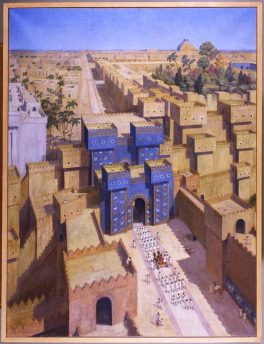
“Apparently, he built the hanging gardens of Babylon,” Lincoln said.

“Oh…” Evan imagined that as better.

“You did not meet Labash?” Boston asked.

“No.”  Evan shook his head.  “We avoided people where we could.  We avoided Babylon in both directions.”

“Both directions?” Lockhart asked.

“Wait,” Katie said.  “Start at the beginning.  What did you see in your travels.”

“A good question,” Elder Stow said, as he shook his scanner, and only half-listened.

“Well…” Evan began.  “We left through the time gate in Italy and found ourselves in Palestine, or maybe I should say Israel.”  He paused Alexis in mid-breath.  “Whatever it is called.   It was similar to the land in the time zone we just left.  We did not go to any of the cities, and especially avoided Jerusalem. We learned to shape our fairy weave clothing to local styles, to blend in as much as we could with the local people.”

“What did you eat?” Decker asked.

“Food doesn’t move well through the time gates when you jump fifty years into the future with one step,” Alexis said. “Or into the past either, I suppose.”

“We found that out,” Evan said. “But that was why we could not avoid people completely.  We asked for bread, and always managed to find someone willing to share, and usually some olive oil, and fish or something besides.”

“Wow,” Boston said.  “You just went up to people and asked them for food?”

“News flash,” Alexis said.  “No internet in 1905.  No video games, television, on-line purchases, e-mail, or any way of isolating yourself from the human race.  People still knew how to talk to people in 1905.”

“I know that,” Boston retreated.

“Anyway, we traveled through that time zone without causing a ripple.  Only two things of note.  One was personal.  I was always interested in the Hasmonean revolt.  I kind of thought I might go back there one day to check it out.  Second, that was when we first noticed something seemed wrong with Nanette.  Millie said it felt like she became a different person, and not Nanette at all.”

“The evil twin,” Boston said.

“Come to think of it, she was the one who most strongly urged us to avoid Jerusalem, which is odd, since she was such a strong believer.  I would think a visit to Jerusalem would be high on her list.  Anyway, we moved from there and came into the Greek countryside. I didn’t mind that so much either. We crossed the Peloponnesus and traveled all the way up to Byzantium.  I did not mind that trip, and we met more people, mostly nice ones.”

“How could you talk to them?” Lincoln asked.
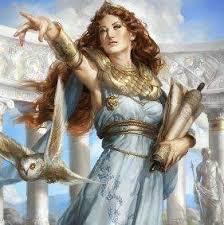
Evan nodded.  “Athena.  When Bodanagus gave us the fairy weave clothing, and she gave us the green and red chestnuts that point to the time gates, she also laid hands on each of us, one at a time.  She said she was giving us the little one ability to understand and be understood, no matter the language.  She also said she was setting a hedge around us, and a message so that when we moved from time zone to time zone, other gods might add to and strengthen the hedge. Funny, I did not understand what she was saying, but I did not question any of it at the time.”

“The gods have a way of clouding the mind when they want to,” Boston said, and Alexis agreed.

“Yes,” Evan seemed to understand. “But I have been speaking in English with people all this time, and hearing English, and it never occurred to me that there was anything odd about that.”  He paused to consider.  “What did she mean, hedge?”

“It is a partial block on your mind,” Katie explained.  “So even the gods cannot read your thoughts and learn about future things.  It also lets us talk about things freely, and no god can overhear us unless they are here, with us.”

“What if they go invisible, like Elder Stow?” Evan asked.

“No,” Elder Stow answered for himself. “I asked about that.  No tricks will work.  The gods or spirits themselves have to be present so we know it, and we have to deliberately include them and tell them something or they hear garbled noise.”

“Bodanagus said Salacia put the first hedge around us when we appeared in Rome, his time period.  He said he felt a disturbance in time, and traced it to us.”

“Amphitrite,” Katie reminded the others. “The Kairos,” she said for Evan, who nodded that he figured out that much.

“Professor Fleming thanked Athena for the languages.  I think he may have known who she was, hard as that may be to believe.  She said, she was glad to help a true scholar and man of knowledge, as opposed to Bodanagus who only pretended to know things.”

“I bet he had a comeback,” Decker said.

Evan nodded. “He told her to go suck a sour olive.  But, if that was truly the goddess, wouldn’t that be a very dangerous thing to say?”

“They have a history,” Lockhart said, and left it at that.

“So, who was in the Greek countryside?” Alexis asked, wanting to get back on topic.

“Three armies.  Romans, Aetolians, and Macedonians; but I think the first two made a pact against the Macedonians.  Two men and two women explained it all to us.  They were a strange group.  The Greek was a Roman tribune.  The Roman was a Greek magistrate.  One woman was a priestess of Olympus and for the Amazons, or so she said.  The other woman was an amazing beauty, if I may say so. But she wore armor, very similar to Bodanagus, come to think of it.  She had a sword over her back and a long knife across the small of her back, and I, for one, did not doubt she knew how to use those weapons expertly.  She gave us gold, silver, and copper coins out of her bag, for Wallace and I to stuff in our pockets.  She said the bag would disappear, but gold would not.  She also said they were the oldest coins she could find. An odd statement, don’t you think?

“Not if you are traveling into the past,” Lincoln said.  “Young silver will also disappear and go back into the ground before it got dug up.”

“So you think…”

“The Princess?” Lockhart asked. Lincoln nodded.

“Another time zone I might like to return to someday.,” Evan said.  “Anyway, from there, we came into China.  We did not fit in and moved on as quick as we could.  That was where Millie noticed some strange behavior in Nanette, but she said nothing at first.”

“Point,” Lockhart interrupted.  “If you notice anything strange or unusual, you have to tell us all right away.”  Evan stared, and then laughed.  Everyone laughed a bit.  Everything they were going through was strange and unusual.  Lockhart conceded the point when he said.  “Just don’t keep secrets.”
“All right.  So, then we got to Sicily, and there is not much to tell other than what I said.  Nanette chased us out of that time zone, and back into the Greek countryside, only this time, we came in around Megara and found the exit somewhere out on the Black Sea. When we went around Pella, you know, the Macedonian capital, we ran into a young man named Diogenes.  He gave us a few more coins and said to buy a boat.  I don’t know if he was a rich man, or what. I don’t know how he knew we would need a boat.  But we used the coins and rowed to the time gate.  We appeared in the river, and got out of the boat before it disappeared.  I suppose it went back to the tree from whence it came.”

“Where was that?” Katie asked.

“Italy, well north of Rome, at last. We hurried to the city where we were found by a wonderful woman, and her ward, a young blind girl.  The woman called herself Diana.  She said it was her name from a child, when Diana visited her on several occasions… Now, come to think of it, I suppose she meant the goddess, Diana.”  He paused to swallow before he went on.  “The last time was when Diana brought her the blind girl to raise.  Poor Justitia had no parents who would raise her, is what I was told.  She was a very sweet girl.  But the best part came when I found out Diana was actually Marcia Furi Camilla, daughter of Marcus Furius Camillus.  Isn’t that incredible, to have stumbled upon her?”

“If anyone other than you and I know who that is,” Katie said.

“I could look it up,” Lincoln offered.

“Never mind,” Katie said.  “How long did you stay there?”

“About three months.  A bit more,” Evan said.  “Wallace is still there.”  He sounded a little disappointed that they were not overly impressed with his discovery. “Finally, Millie agreed to go with me to resolve the debate about the founding of Rome.  But first, we had to land a third time in the Greek countryside. The Peloponnesian war was raging and the Athenians and Spartans were busy destroying each other, and dragging all the others into the war on one side or the other.  We did not stay there, though we got stopped and delayed several times.”

“Something to look forward to,” Decker said.

“The next time zone was hard travel. I don’t know about horses.  I think we landed somewhere in the Himalayas. There was plenty of snow and slippery rocks.  Then we came here, and we traveled in this direction, around Babylon, and then the same place, but traveled in the other direction, around Babylon again. Then we ended up where we got separated, and I almost got eaten.  Then I found Valencia, and you found me.”

“That covers it,” Lincoln said.

“That is why I think it is best that you don’t read ahead,” Lockhart pointed at Lincoln, but did not explain.

“Not much help,” Decker summed it up.

“Well, I’m sorry,” Evan said.  “We felt it best not to get involved.”

“And you were right,” Alexis encouraged him.

“Something we might consider from here on out,” Katie said.

“No way,” Boston said.  “I’m not going through any time zone without finding the Kairos.  And if that puts us in the middle of the hurricane of whatever is going on, too bad.”

Avalon 6.4 Stories, part 4 of 4

Boston and Sukki had the early morning watch.  They often built up the fire, put whatever substitute for coffee they had on to boil, and watched the sun rise.  On that morning, Boston, with her good elf ears, heard some sounds near the horses. The leaves ruffled, and a few twigs snapped.  Just when she got Sukki to go with her, to investigate, they heard Elder Stow’s alarm go off.  It sounded loud.

The immediate response came, even as people roused from their sleep.  Several streaks of white light energy dissipated short of the horses and the campsite.  Boston saw Elder Stow’s scanner on a log, outside his tent.  She figured he set it before he went to bed, just in case they had visitors in the night.

Elder Stow came out of his tent, rubbed his eyes to wake up, and stared at his scanner readout. “As I suspected,” he said.  “They are basically still working off Anazi weapons.  I see no signs of personal screen technology yet.  I read one humanoid and a dozen wolv.  A scouting party, I imagine.”

“You need to make your screens one sided,” Decker said.

Elder Stow grumped, even as two of the wolv came tooth and claw against the screens in a futile effort to break through.  “That is ship to ship technology, so we can shoot them and be protected against their weapons.  It is not meant for personal screens.  In a case like this, one might call it cheating.”  He made a grumpy face, but Decker simply stared at him.  Elder Stow finally said, “The screens are one-sided, even if that is not a proper technical description.”

“Thanks,” Decker said, and he took his fancy military rifle and killed the two trying to scratch and claw their way through the impenetrable screens.  By the time he turned on the rest of the wolv, Katie joined him with her own rifle.  Lincoln and Boston pulled their handguns, though they only fired a couple of shots each. Lockhart grabbed his shotgun and blasted one wolv that tried to sneak around to the other side of the camp.  It took three shotgun slugs to put him down.

Katie saw the humanoid officer half hidden behind a tree.  He appeared to be hopping mad, and yelling to whomever might be listening.  She shot him, figuring they did not need him to call in reinforcements.  Then she felt bad about it.  She knew better; but by outward appearance, the humanoids did appear to be human.

Decker had a comment when the firing stopped.  “Don’t be surprised if one or more wolv plays possum.”

“I see no more life signs,” Elder Stow said.  “But now having seen the wolv, I agree, caution is in order.”

People stopped when they heard a sound. They heard distant explosions before they saw a good-sized ship come to the grassland just beyond the start of the forest where they camped.  When the ship settled down, they saw a number of people come out from the inside.  They recognized these people as androids, and watched as the androids hustled to make sure the wolv were all dead.

“Lockhart.”  A big black man in the doorway shouted.  “Boston.”  The red-headed streak ran into the hug.  Bring the horses.  We have to get everything loaded and out of here before the Lingling send more troops.”

“Tobaka?”  Lincoln asked first before he got busy breaking camp and bringing the horses to the ship.  “Lingling? Not Hungdin?” Lincoln asked the second question as soon as he had the chance.

“Different house,” Tobaka answered. “But part of the empire.  This is really not a good time, though I suppose it never is.”

“Artie?” Katie asked when she had a chance.  Lockhart paid attention as one of the androids perked up.

“The queen is home, safe and sound,” the android said, but Tobaka gave a sad little shake of his head.  Katie cried a little, and Lockhart held her.

They flew a short way and set down in an android camp, where they powered down and pulled camouflage nets over the ship. The camp included two warships, like frigates, and three merchant vessels, none of which were as big as the Gott-Druk freighter.  There were local humans there, mostly young women, no surprise, but some soldiers in skirts that might have been Egyptian.  Tobaka called them Assyrians.

“So, Evan,” Tobaka began as he guided everyone to lunch under a big tent.  “How did you like flying?”

Evan nodded.  He swallowed, and grinned, but said nothing.

“Couldn’t see much,” Lincoln said.

“Decker,” Tobaka turned next to the major.  “I am not American, African-American, or even a black man. I am African, specifically Nubian, though you can call me an Egyptian.  My family ruled in Egypt until the Assyrian a-holes came and killed them all.” Tobaka appeared ready to growl, but held his tongue.  “These Assyrian soldiers are part of the king’s penance, but that is a long story I will not go into right now.  Suffice to say, Decker.  You and most of your companions are Americans.  That is your tribe and nation, and the color of your skin or the color of my skin is irrelevant.  Believe me. It is cosmetics.  I have had many skin colors, if you haven’t noticed, but necessary to fit in where I am born.”

“No,” Decker said.  “I get it.  Being an American has nothing to do with a person’s outward appearance.”

“Evan?”  Tobaka turned on the man.

Evan nodded, slowly.  “I understand.  My wife explained it to me more than once.  Nanette, the real Nanette, is an especially good person, and she would be no matter what she looked like.”

“Your road is harder,” Tobaka told him. “1905 is before the equal rights amendment, the voting rights act, and lots of important things in your future.”

“My heart understands,” Evan said. “I hope Major Decker can forgive me if my mouth gets stupid.”

Decker nodded, but Lockhart changed the subject.  “Lunch was great…”

“Edible,” Lincoln suggested.

“With actual fruits and vegetables,” Alexis said with a smile, and Elder Stow, Sukki, and Boston all agreed.

“But what are we doing here?  Are we supposed to be hiding?  Should we unload the horses?”

“I am waiting to see if the humanoids picked up our journey to get you.  I figure three hours is safe.  If they saw us and traced our energy trail to know where we are, they will attack.  If they don’t come in three hours, we are probably safe.”

Everyone looked to the sky, though the tent blocked most of it.

“Story,” Tobaka said, and stood. “This convoy originally had three escort warships, one being bigger, more destroyer size, to escort seven merchant ships and freighters.  They had a trade agreement with another world where they provided grain and sheep for certain metals, like coper, tin, and iron among others.  That world was rich in metals, but beginning an industrial revolution.  In human terms, like around 1800.  Their population started growing rapidly, and they were having a hard time keeping everyone fed.  It was a good deal.  The androids got the metals they needed, and the people on that world got fed.”

“It was an equitable arrangement,” DLN 28579-Dolan, the android commander spoke up, before Tobaka continued.

“The convoy got intercepted by a light cruiser and two destroyers of the Chantar house, a smaller house in alliance with the powerful House of Lingling.  It seems the humanoids have targeted the androids as competitors of a sort. That is why the androids fly in convoy, with escort ships.  The battle was fierce.  The humanoid cruiser got too heavily damaged to continue, and one destroyer got destroyed. The androids lost their destroyer and four of the seven merchant ships, though they left two behind that were only damaged.  Hopefully, they repaired and escaped before the cruiser affected repairs.  The frigates and three remaining merchantmen came here for repairs, not expecting to be followed, but the Chantar destroyer traced them to this world.”

“We hid,” Dolan said.  “Though many of my officers thought with our two ships, we could take on the single enemy.”

“The androids learned the stealth technology, and are using it against the humanoids that invented it,” Tobaka said.

“As long as we stay powered down, and they do not put another satellite in orbit, we don’t believe they can find us,” Dolan added.

“You are saying cruiser and destroyer, using human terminology for the ships,” Alexis pointed out.

“For the marines,” Tobaka said. “To show relative ship size and firepower.”

“I understand the human terms,” Dolan said.

“Anyway,” Tobaka continued.  “Evan came through, and shortly after that, I convinced the Chantar destroyer to leave.  The androids made what repairs they could on this planet and also prepared to leave.  The minute they powered up, they found a satellite in orbit that signaled someone. They destroyed the satellite, but came back to see who showed up, in part thinking the Chantar destroyer might be hiding behind the moon or in the asteroid belt.  Three days ago, the Chantar destroyer came back with a Lingling battleship, a Lingling heavy cruiser, and two Lingling destroyers, all overflowing with wolv troops.  It is a mess. It appears the Chantar captain did not heed my warning, or the man got overruled.  In either case, this is not a good time for you to be here.”

“Commander,” one of the android officers came into the tent, her eyes glued to a device, even like Elder Stow, who presently had his eyes fastened to his own screen device.  “There is no evidence of activity on the long-range power scans.”

“I am also not seeing anything in the sky,” Elder Stow said.  “Their ships are at the outside edge of my small equipment, but I see no movement there, either.”

‘Good,” Tobaka said, but they still waited several more hours.

When the sun began to set, so the light, including infra-red and ultra-violet would be in the enemy eyes, Tobaka made them get on the merchant ship again.  He said, good-bye, and they got flown to the next time gate, where they got dumped along with their horses and equipment.

“That was rude,” Alexis said.

“Camp,” Lockhart said.  “We go through in the morning.”

************************

MONDAY

The Travelers head to Babylon where they run into Zombies, Murder, and Mayhem.  Next Time.

Until then, Happy Reading

*

Avalon 6.4 Stories, part 3 of 4

“Millie agreed to go with me into the past, to see if we could piece together how the Republic got started.  Wallace insisted on coming with us when Nanette showed up at the time gate.  Wallace wanted to stay with Nanette.  Tony talked about heading into the future, but he said he could not leave the professor to fend for himself.  Of course, I don’t believe the Nanette who went with us was actually Nanette.”

“What do you mean?”

“Well, all went well enough until we arrived in Sicily.  But Nanette seemed changed from the start.  She did not talk to us.  Her warm and friendly personality changed into a sour personality.  She got plain rude, and mean to Millie.  But when we got to Sicily, she began to be able to do things—impossible things.  I don’t know. Like magic or something.  Like she had powers all of a sudden.  It was just little things at first, but her personality got worse with everything she learned she could do.  It was like the magic made her turn evil.  Millie said she noticed some things earlier, when we were traveling through China, somewhere in there.”

“Sicily?” Katie interrupted.

“That was the time when Pyrrhus of Epirus got invited to drive the Carthaginians off the island.  I guessed the year at 279 or so.  Millie and I discussed making the long trek to Rome. This would be on the eve of the Punic wars.  But Nanette forced us through the next time gate, and after a while, she followed us, or so it seems.”

“But why do you say it was not Nanette?” Lincoln asked.

“Because of the way she acted, and many things she said.  She talked about still being there with Professor Fleming, and how she would never leave him.  But there she was with us.  She talked about being in two places at once, and how hard that was.  And she talked about Janus, the two-faced god of the Romans, you know, one face comedy and one face tragedy.”

“One face good and one face evil,” Katie said.

“We met him, once, in the Alps,” Lockhart remembered

“So, maybe Janus split her into two Nanettes,” Boston blurted out.

“You mean, the god?” Evan had to ask.

“Don’t underestimate what the gods can do,” Lockhart said.

“We met the wicked witch, briefly,” Alexis said.

“Nanette?”

“Yeah,” Lincoln said.  “She’s taken up with some cowboys.  1870s?”  He looked at Boston.

“!870s,” Boston nodded. “I got shot.”

“Same age our horses came from,” Katie added.  The others had not realized that.

“Benjamin,” Alexis did not spell it out.

“Just coming to it,” Lincoln said, and after a minute he reported from the database.  “The Other Earth reaches half full in 525 BC, and is good until 225 BC.  Then we go into dark moon until 75 AD.  We are in a dark period right now, since 825 BC.  Now let’s see…”  Lincoln fell silent for a minute.  “Interesting…”  more silence. “I put in Sicily.  Umma from Carthage.  323-267 BC.  After her, Meng Shi in China.  267-228 BC. They both live in days when magic is possible.”  They had to explain for Evan, and Sukki, since it had not come up before.  Once again, they all looked to Lockhart to explain.

“The Other Earth fills the same relative space as our own earth, but in another dimension.  As it has been explained to me, it is what they call a physics universe, not a parallel earth.  As I understand it, the further you travel across the physical dimensions, the more the laws of physics that we know break down or cease altogether.  You don’t have to go far before life itself becomes impossible.  In the case of the Other Earth, it may be closer to the core than our own universe, because all of the laws of physics we understand function there too, but it has an additional force or energy like gravity or magnetism that we don’t have.”

“It is called creative and variable energy,” Alexis interrupted.

Lockhart nodded.  “We common folks call it magic.  Magic energy.  And some people, not many, can somehow tap into it and do miraculous things.”

Alexis spoke up again.  “Even in our day, we have not determined the genetic component, but it does tend to follow bloodlines.  It sometimes skips a generation, like grandmother and granddaughter, but not the mother.  It shows up about two-thirds in women and one-third in men.  No one knows why.”

“So, Nanette is a witch.  She can tap into this magic power…”

“…Creative and variable energy,” Alexis corrected.

“But what does this Other Earth have to do with her?” Evan wondered.

“Camp first,” Lockhart said, and pointed to the next group of trees, which looked like the edge of a forest. “I know it is early, but there are too many eyes in the sky.”  He pointed back; the way he had to look to be able to explain things to the others.  People looked.  A larger ship moved slowly across the sky, and Lockhart finished his thought.  “They are either surveying the area or looking for something.”

“Or someone,” Katie agreed, and she headed out to find an acceptable, defensible campsite.

Once the camp got set up, and the horses got their fair share of time, the people settled in around the fire, hoping the deer Katie bagged would be more edible than the goat Decker provided for lunch.

“Okay,” Lockhart began.  “The Other Earth has two differences to our earth, besides the magic energy we told you about.  One is, the Kairos never got born on the Other Earth.  At some point, the gods went to war with one another.  The landscape got shoved around pretty good and most of life got wiped out.  As for the humans, there were no survivors.  One of the gods who survived over there was Poseidon.  Somehow, he got the other surviving gods on that earth to agree to try and merge the two earths.  It did not work, for several reasons, as the Kairos explained it to me.  For one, Poseidon and the gods in our earth were not keen on the idea of merging with another version of themselves from another universe.  Second, the Other Earth existed as a mirror image of our own, with Europe pointing east instead of west, and so on.  And third, as the two worlds came into what they called conjunction, all this magic energy began to leak into our universe and caused all sorts of problems.”

“You mean, the people in our world suddenly became witches and warlocks.”

“Wizards, not Warlocks,” Boston said, and turned up her nose.

“Not many.  Never many, but some,” Alexis said.

Lockhart coughed.  People quieted.  “When the worlds got close, the Kairos Amphitrite figured out how to make a hole between the worlds and travel from one to the other.  The gods on the Other Earth wanted people, and life restored there, so they could have someone to be gods over, I suppose.  Amphitrite made the agreement.  Plenty of ordinary people crossed over, but especially those who were gifted to use the magic energy that world offered.  The gods of that earth set it in motion, relative to ours. Every six-hundred years, the worlds come into conjunction, and some people cross over.

“Not many come into our world,” Alexis said.  “But some went there, especially in the ages when witches get burned at the stake.”

Lockhart continued.  “The best way I have been told to picture it is to look at the moon.  Between the half to half-moon, through the full moon, we get close enough to the other world, so like increased moonlight, we get magic energy leaking into our world. That is when travel becomes possible between worlds, though it takes considerable magic to do it.  From half to half through the dark of the moon, the leakage really is not enough to activate any magic potential.”

“Right now, we are in a dark time,” Lincoln said.  “We should go through the light time from 525 to 225 BC, which would make the full moon in 375.  You said Nanette began to show signs of magic after entering the Chinese time zone. That had to be after 228, up to 323 BC, so well within the light time.”

“I see,” Evan said, whether he saw exactly or not.

“It sounds like Nanette had the potential,” Alexis said.  “The world went light around 1875, but by 1905 she maybe did not have enough light to bring out her potential.  Going back in time to where the light started in 225, and you landed about 279or 280 in Sicily, that sounds like light enough to bring out her magic.”

“If you were traveling with evil Nanette,” Lincoln said.  “You are probably lucky to have escaped.”

“But that is not the only way magic can happen,” Alexis added, and waited for Evan to look at her before she explained. “Most of the spirits, such as greater, lesser, and even most of the little spirits have natural magic inside them. Also, half-breeds can do things, though lesser and lesser, even down to the seventh generation. The blood is not considered fully human again until the tenth generation, for example…”

Evan looked at Boston, the elf.

“Mine is mostly fire magic,” Boston said.

“I guessed from the red hair,” Evan smiled, then looked at Alexis again.  “Don’t tell me you are a witch.”

“Lincoln only calls me a witch on my bad days,” Alexis admitted. “Boston and I are not dependent on how close or far away the Other Earth might be.  My magic is in the wind, and healing magic.  I used to be an elf.  Boston used to be human.”

“From Massachusetts.  You know, Salem witches and all that.”

“But how can that be?  What do you mean you used to be an elf?”

“Boston became an elf to marry my brother, Roland,” Alexis admitted.  “I became human to marry Benjamin.”

“I didn’t know you could do that,” Evan said.

“It isn’t done, except in special cases.”

“The Kairos?” Evan asked.  Everyone nodded.  Then they quieted to give Evan some room to breathe.  It was a lot to take in.  They ate.  Finally, Alexis became concerned about the look on Evan’s face.

“What are you thinking about?”

“Wondering if Millie made it to safety,” he said.  “I pray for her every night.”

“I pray for Roland,” Boston said. “He disappeared.  We are believing he got a free ride back to the future. But there was a wolf.  Not a wolv, but a real werewolf, and he may have gotten torn up.  We don’t know.”

“Same,” Evan said.  “Except mine was a Wolv.”

“I can pray for Millie, too.”

“And Roland?”  Evan was not sure of the name, but Boston nodded.  After that, Evan seemed to relax around Boston, even if she was an elf.

************************

Don’t miss tomorrows post for the end of the story.

*

Avalon 6.4 Stories, part 2 of 4

“Nanette was his maid?” Alexis asked.

“Sort of.  Her mother served as a maid to his brother’s family.  Her mother’s mother served as a maid to his mother. Nanette was young, but the third generation serving the Fleming family.”

“You say was,” Lockhart pointed out.

“I mean is.  I hope she still is, but I don’t know where she might be.”  He held up his hands to forestall any further interruptions.  “The professor calls Nanette his personal assistant and secretary.  She has lovely handwriting, and the professor is rather absent minded.  She is as sharp as a whip.  I don’t imagine he would function well without her.”

“I can accept personal assistant,” Decker said, and cut a small piece of goat, though it really had not cooked well yet.

“So, there were four on the trip?” Lincoln asked.

“Six,” Evan said.  “We had two graduate students with us.  Charles Wallace Dodd, who goes by Wallace.  He fell madly in love with Nanette.  The other was Anthony Carter.  A good man.  Tony had an Italian mother, so travel to Rome felt like a trip home for him.  It was an exciting time for all of us.  There were several digs around the Roman countryside, and we had been invited to examine the artifacts and inscriptions and all that had been uncovered.  Plus, the church, Saint Peters, had an archive with documents dating to the third or fourth centuries that they were willing to let us see.”

“Point of information,” Katie interrupted.  “In 1905, knowledge was not fragmented like it is in our day.  All sorts of things, like history, ancient languages, archeology, sociology, political science, anthropology, and more, came simply under the heading antiquities, or often just history.  What was Professor Fleming’s area?” Katie asked.

“Theoretical.  But he was looking for evidence.  He wanted to understand how a functioning republic could devolve, as he called it, into a dictatorship so quickly and absolutely.  He claimed the fall from republic to empire made no logical sense.  I had to agree with him, in theory.  He is concerned about the United States, but especially concerned about Europe, where monarchy was not so long ago, and the fledgling democracies are not yet strong. He is looking to catalogue the warning signs.”

“Hitler,” Lockhart suggested.

“Mussolini,” Katie did not disagree.

“Does Nanette have a last name?” Decker asked, his mind on a different subject.

“Miss Jones,” Ethan responded. “She was a great help to all of us. I hope she is still out there and all right.”

“But, how did you get to be here?” Boston asked, betraying a bit of impatience in her question.

“We were all in the house we rented, one afternoon.  Lunchtime, in fact.  Professor Fleming was talking about his theories.  Mildred and I, and his students, and Nanette all listened intently, as you might expect, though he does tend to go on a bit, like a lecture, I suppose.  Then the whole house started moving.  We thought earthquake, but when the shaking stopped and we looked outside for the damage, we saw a real Roman marketplace, and plenty of people pointing and screaming. You see, we moved, and the whole house moved with us, to the exact time in history that Professor Fleming was talking about.”

“Ashtoreth experimenting with the Heart of Time,” Lockhart concluded.  “She must have looked back a hundred years, listened in to what these folks were saying, and moved them to the very place they were talking about.”

“Not to be benevolent,” Alexis said.

“No,” Katie agreed.  “She probably hoped these people from the future, with their knowledge and all, would start interfering with history and screw it all up.”

“Oh, no,” Evan said.  “Once we realized where we were and what had happened, Professor Fleming made us all swear to observe and take notes, but not interfere, or reveal anything about the future.  We all understood how dangerous that could be to future events.”

“Well, good for that,” Lincoln said, and Boston nodded vigorously.

“So, you lived in ancient Rome for nearly seven years before coming into the past?”  Alexis wanted to get it straight.

“Five years,” Evan said.  “We have been on the road for nearly two years, well, about eighteen months on the road and near four months in the last time zone.”

“You are wearing fairy weave,” Lincoln remembered.  “Where did you get that?”

“King Bodanagus,” he said.

“Lincoln,” Lockhart pointed, and Lincoln turned straight to the database to look him up.

“I’ll explain,” Evan said.  “We lived in the house for five years. People got used to us soon enough. Millie had some training as a nurse, since she was sixteen.  She and I made some small living working with the local physics.  Though I admit, I was not much of a chemist.  I am better now.  Tony found a potter’s wheel in the house, and made some good pots.  We built a working kiln out back, and he experimented with different glazes.  We opened the front room to be a small shop, since we were right there in the marketplace. Poor Tony was more interested in how the Roman Empire collapsed than how it came into being; but he said if he did not have the chance to study at the University, he always wanted to be an artist, so he seemed happy.  Wallace was not good for much.  He did some labor over the years.  He tried several things, but he never brought much into the house other than the occasional prostitute.

“Nanette?” Decker asked.

“Nanette became the toast of the town. The wealthy, even some senators, paid her to attend their parties, so they could hear her wisdom, and get their sons to propose to her.  She always brought Professor Fleming.  They were all a bit afraid of the professor.  He got credited with being a great magician, and soothsayer.  He fudged the rule about not talking about the future.  He said he was the only one who knew what would be safe to say, and what would not be safe.  He flat out broke the rule when he told Pompey and the senate that Caesar would not stop at the Rubicon.”

Lincoln interrupted.  “Bodanagus. About eleven zones in the future, after this one.  A king of the Nervii.  He fought Caesar to a standstill before they made peace.  He went with Caesar to Egypt and prophesied there about Egypt’s fall. He came to Rome and tutored young Octavian in the way of kings.”

“The Kairos gets in the middle of everything,” Katie said, and the others could not tell if she meant that as criticism or praise.

Boston defended her god.  “Only to make sure things turn out the way they are supposed to.”  She checked her instincts, in her mind and heart.  Some were different from her old human instincts.  Some were new, but one of the strongest told her she needed to not mess with history.

“Anyway,” Alexis made the conversation pause before she turned to Evan.  “Go on.”

“Not much to tell.  We survived.  We met Bodanagus after the first year, when Caesar came to town, briefly.  Bodanagus strongly underlined Professor Fleming’s rule about not revealing the future, but then he left us to our own devices. He made a contribution, so we wouldn’t starve.  He helped me join the physician’s guild, after he examined my chemistry and Millie’s medical knowledge to be sure, as he said, that we did not know anything dangerous. He got Tony into the potter’s guild, so we would not have to worry about some guild members coming and breaking all our pots.  Caesar himself signed the appointments.  Then he left us alone.  He went off with Caesar to Spain.  Then he came and said hi, but went off again to Illyria, and then Egypt.  I don’t understand.  Who is he?”  Everyone looked at Lockhart.

“The Kairos is a person,” he began, and stalled, so Katie picked up the story.

“A person born over and over, sometimes as a man, and sometimes as a woman.”

Lockhart continued.  “Sometimes, he says it is like being on a treadmill…or she. Sometimes he/she calls himself/herself just an experiment in time and genetics.”  Evan shook his head.  He had no idea what genetics were.

“The point is,” Katie said.  “The Kairos gets born as a know nothing baby, but inevitably at some critical historical point.  And like Valencia, she has to keep history on track, like it’s her job.”

“To make history come out the way it is supposed to come out,” Boston interjected.

“But how does the Kairos know how it is supposed to come out?” Evan asked.

“He remembers the future, or some future lifetimes anyway,” Lockhart concluded.

“Remembers the future?” Evan still shook his head.  “But you said the Kairos is born a know nothing baby.”

“Yes,” Katie said.  “And grows, and fits in with family and community, and becomes a solid member of the society, and learns and develops talents and skills, and has her or his own personality.  At some point after puberty, as the Kairos says, the walls of time begin to fall and memories of at least one past life and one future life begin to return.”

“The Princess and the Storyteller are nearly always there,” Lockhart said.  “Maybe always, and Doctor Mishka and Diogenes are often there as well.”

“Wait,” Evan said.  “I met a Diogenes coming here.  And I remember Bodanagus mentioning a Doctor Mishka.  I did not know who that was.”

“The Kairos,” Katie said, and they waited, while Evan thought it through.

“So, you are saying Bodanagus and Valencia are the same person, just different lifetimes.”

“Deep inside, the same being in two different persons,” Alexis encouraged him.

Another ship flew overhead, or maybe the same ship returned.  Lockhart said time to move, and everyone packed up lunch and headed out.

Back in the saddle, Lincoln had another question.  “So, you didn’t say how you came to be here.”

“Bodanagus, or rather a friend of his, Athena.  She seemed a fine Greek lady.  When Caesar went to Africa, as he said, to clean up the mess, Bodanagus came back to Rome to oversee young Octavian’s education.  I don’t know if he and Caesar had a falling out, or what.  But at that time, Bodanagus explained to us about the time gates and the time zones, and Athena gave us all chestnuts.  One side was green, and the other red, though we were the only ones who could see the colors.  Now that I think on it, that was rather odd.  Also, he asked Athena to stabilize the gates in their present location for us.  He called her Minerva once.”

“The goddess,” Boston interrupted with a smile and a nod.

“Hush,” Alexis shushed her.  “Go on,” she told Evan.

Evan took a deep breath.  Calling the woman a goddess almost made sense when it came out of the mouth of an elf.  “Anyway,” he continued.  “The green side always pointed to the past time gates, and the red to the future gate. It worked a bit like a compass, pointing green ahead and red behind.”

“What about the professor?” Lincoln asked.

“Professor Fleming did not plan on going anywhere.  He said he had to be there to tell Caesar to beware the ides of March.”

“Funny,” Lincoln said, though no one laughed.

Avalon 6.4 Stories, part 1 of 4

This episode is in four parts.  Don’t miss the final post on Thursday of this week.  Enjoy.

************************

After 702 BC The Levant. Kairos lifetime 76: Tobaka, Nubian Prince of Egypt

Recording …

The travelers moved five long days through Etruscan held territory to get to the next time gate.  They were seen, and sometimes watched, but not bothered, as long as they moved on in the morning and did not settle.

People left Evan alone to his thoughts for most of that time.  In part, because he told them about his wife, Mildred, and how they became separated in the time zone to which they were headed.  He got captured by the aliens, and their soldiers that he called wolves.

“Wolvs,” Lockhart said, pronouncing the word a bit differently, and shivering a little as he said it.

“Damn,” Lincoln used his word, and Alexis agreed with him.  They at least read, in the so-called Men in Black records, about the one they found in New Jersey after two thousand years in cryogenic sleep.  One Wolv shredded a dozen people and would have eaten the nearby town if the Kairos had not showed up and stopped it.  They would explain it later to the others.

Evan felt sure he would have been eaten, if a group of strange looking men had not rescued him.  He only just found out they were not men, but were creatures of fantasy, elves, dwarfs and an ogre, when they forced him through the next time gate.

“Where Millie ended up, I cannot say.” Evan wanted to cry, but forced himself to finish the story.  “The Etruscan lords and kings are not a tolerant bunch, but the ordinary people in the countryside were nice enough.  They slowly moved me south, over about a month, until I came to Rome, or what would one day be Rome.  Lord Tarquin said if I didn’t work, I didn’t eat.  But I met Valencia, a person I do not understand, and she gave me hope.”

He did cry.  They figured he wept mostly for his wife who he felt surely must be dead. So, they mostly left him alone with his thoughts.

The other reason they left him alone, and stayed generally quiet over those five days, is because they knew that he, and his companions, came from 1905, not 2010, like the travelers.  To that end, they did not know what might be safe to say in front of him, assuming he could one day get back to his own time. They feared every word they uttered might be too revealing about his future.

Alexis and Lincoln stayed with him. They taught him to build his fairy weave tent by commanding it into the right shape.  They found he already dressed in fairy weave clothing, so the tent did not surprise him.  Lincoln decided not to ask about that until everyone gathered to hear the answer. Then he forgot to ask for a couple of days.

Alexis taught Evan how to complain about the deer, deer, elk, and deer diet, though Evan said he did not mind the meat, even if he did not care for the gamey flavor.

“You get used to it,” Decker told him.

Evan and Decker went off for one long talk.  No one intruded, but the result seemed to be that they came to an understanding.  Evan only later confessed one thing privately to Lincoln and Alexis.

“I don’t know why he said to call him a black man.  We don’t call people white men, though I have heard the term used as a general description. But we don’t call Chinese people yellow men, or Indians red men, though I have heard those terms used, unkindly.”

“Native-American, not red men,” Lincoln said.

“You are right,” Alexis said.  “And you better not call Boston pointy-ears either.”

Evan looked.  He freaked, as they say, when he found out Boston was an elf.  But Lincoln got his attention back when he concluded, “People have a right to decide their own self-designation.  If Decker wants to be known as a black man or an African-American, that is his choice.”  That was where they left it.

On the third day, Evan asked about Elder Stow and Sukki.  “What kind of people are they?  Do they come from somewhere in South America or something?  I have never seen the like.”

“They are Neanderthals,” Lincoln said, plainly.  He waited for Evan’s eyes to get big before he said more.  “They call themselves Gott-Druk.  Elder Stow and Sukki are not related by blood, but they have adopted each other in their own way.  Sukki comes from the before time.  That is, before the flood.”  He had to wait again.

“You mean, n-Noah and all?” Evan stuttered.

Lincoln nodded.  “As I understand it, she is what you might call a true cave-woman.  The Gott-Druk at the time were still working in stone, and just using some soft metals, like copper and tin.  During the time of the flood, they got whisked off world and given a new home world.”

“Whisked off.  You mean like in the spaceship we saw?”

Lincoln nodded.  “Since that time, over thousands of years, they learned to build their own spaceships, like the one you saw.  Elder Stow is really just Stow, I suppose.  I don’t know if he has a second, family name.  He doesn’t talk about it.  Elder is a Gott-Druk designation, like an officer of a ship. He isn’t the Captain, which in Gott-Druk terminology is Mother and Father for co-captains.  You might hear Elder Stow or Sukki refer to Katie and Lockhart as Mother and Father now and then.  Elder is one step down from captain.  Elder is a ship’s officer, but to us, he has always been Elder Stow.”

“Wow.”

“I might add, after thousands of years, since the flood, the Gott-Druk have learned a bunch of things, not just about spaceships.  He has, what you might call, a bunch of gadgets with which he can do some pretty remarkable things.”  Lincoln waited until Evan appeared to get his thoughts in order. Then Lincoln had a suggestion.  “You should go talk to them.”

It took Evan a whole day, but eventually, he did.

By the time they reached the time gate, Evan settled on Lincoln’s horse, Cortez.  Lincoln rode behind Alexis on Misty Gray, where he said he could pull his handgun if needed, an idea she did not like, but where he could also read from the database without worrying about where his horse wandered.

“So, read,” Lockhart said.

“The Kairos is Tobaka.  A male.  A Nubian.  I assume he is black.”

“’bout time,” Decker said, as they came through the gate and he and Elder Stow split off to ride on the wings.  They understood less than four month ago, the area was full of Humanoid officers and Wolv soldiers.  They would be extra careful, and watch the skies as well as the land.

Sadly, the land offered little cover. It appeared arid and hot.  The travelers moved up and down little scrub-grass and prickly-bush covered rises in the ground, and only had occasional trees and groves of trees here and there to offer shade.

Evan offered a reminder, since he already told them about the wolv.  “My brief time here happened nearly four months ago.  I understood there were two competing space races here, but both in small numbers.  I imagine that trouble has been cleared up by now. At least, that was what my escort suggested.”

Lincoln nodded, and turned to the database.  He spent several hours of quiet just reading.

Major Decker and Elder Stow rode out on the wings and sometimes a little up front in order to guard their travels and extend their eyes further into the wilderness.  They could not hear what Lincoln reported from what he read, but Lincoln had gotten good at giving a summary of the information over lunch or supper, depending.  Katie and Lockhart rode in front and tried to keep one ear on Lincoln’s report.  Boston and Sukki rode behind, and as long as they kept up, Sukki could hear as well.  Of course, Boston, with her good elf ears, could hear perfectly well, even when they straggled out behind.

“The Levant,” Lincoln finally said, and explained for Lockhart.  “That’s Lebanon, Syria, Jordan, and Israel to us.  We are somewhere in there.”

“Yes,” Lockhart said.  “I figured that out.”

“I believe the British call it Palestine,” Evan said.

“Let’s not go there,” Alexis suggested.

Evan didn’t understand.  “But we are there, aren’t we?”

“Well, this isn’t Egypt,” Lincoln said. “But she meant that was a subject she did not want to talk about.  You see, in our day, the area is still in turmoil, with Jews and Arabs claiming the same land.  It’s a mess, and most people can’t talk about it without choosing sides, so plenty of people would rather not talk about it.”

“I see.”

“But you came this way before,” Alexis said.  “What did you actually see when you were here?”

They all paused, as a ship of some sort zoomed overhead.  It did not look very big, and it soon disappeared over the horizon.

“Apparently, things have not been cleaned up, yet,” Lockhart said.

“Remarkable,” Evan said.  “When we arrived in Rome, I read in the paper where Mister Wright from Ohio kept an aero-plane in the air for thirty-nine whole minutes.  I thought that was remarkable, at the time.  Somewhere in North Carolina, as I recall.”

“Yes, but what about this place?” Alexis asked.

“It might help me pinpoint the location of the Kairos,” Lincoln added.  “And maybe the more accurate time frame, here.”

“Hold up,” Lockhart said, and then spoke into his wristwatch communicator.  “Lunch.”

They came to a grove of trees fed by a small spring that made a stream, which soon petered out in the arid conditions. Someone planted an olive tree there, and Alexis found some ripe ones. That was at least something other than the dead goat Decker bagged and carried over the back of his horse.

When the goat started cooking, and the olives proved sour, Evan opened up.  “To be honest, there is not much I can tell you about this place.  Just plenty of scrub grass and occasional trees. My wife, Mildred, and I, avoided people as much as possible, especially when we came into a time zone that was not part of the Greco-Roman world.  Wallace came with us, at first, and Nanette followed Wallace, or the other way around, or so we thought.  It turned out it wasn’t Nanette, exactly.”

“Nanette?” Katie asked.

Lockhart added, “Who?” at the same time.

Evan waved off the questions, took a deep breath, and began again.  “We left New York at the beginning of the semester and arrived in Rome after fifteen days.  I turned twenty-four, just married, and just got my first job.  Professor Fleming kindly made room on this trip so I could bring my wife.  She just turned nineteen in August.  Oh, it was a wonderful time.”  He got lost in his thoughts for a minute, and people kindly waited.  “Anyway.  Professor Fleming liked a paper I wrote on the days of the Roman Republic, and how they reached the height of Roman civilization, and how the empire was doomed to fall apart from its inception.  I think I got hired on his word, and he insisted I come on this trip. It was a great opportunity.”

“Nanette,” Lincoln reminded him.

“Yes, sorry.  She was Professor Fleming’s darkie.” He paused to look at Decker and apologized.  “Sorry. Major Decker.  I guess things are different in the future.”