M3 Margueritte: Backed into a Corner, part 3 of 3

The king spoke again.  “I know he is young, having only turned twelve on the day of his declaration, but he has been given to be page into the hands of our faithful Bedwin.”  Bedwin bowed to his king and prince.  Lady Brianna and Margueritte looked quickly at the knight.  Margueritte could not tell, but Lady Brianna became convinced in her heart that this man belonged to Owien, son of Bedwin.

“Thomas.”  The king called quickly for the bard, mindful of his son’s discomfort, though not looking very happy about it.  “Tell us a tale of kings of old.”  And Thomas did in story and song.

He told the story of mighty King Bodanagus and his great love, young Esoulde the fair.  In her day, she was said to be the fairest of women, but she loved her king, and he loved her as men and women rarely do.  All this happened ages and ages ago, when the kings and great Lords of Gaul fought forever amongst themselves like dogs fighting over a bone.  They never had peace in those days, and the people suffered in grief for their fathers, husbands, brothers and sons taken by war, and great was the poverty and oppression that ruled over them.  Still the great lords and kings fought in Gaul and king Bodanagus among the mighty.  He won great honor and glory in battle, but never did he see the agony of the people.
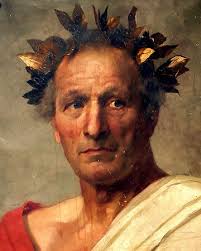
Finally, in Bodanagus’ day, the people could fight no longer.  Their spirits had fallen to the lowest, and there was no more strength in their bones.  It was then, by the three fingers of fate, that a man came from the south like an all-consuming fire, like the whirlwind.  It was the man named Julius Caesar.  None could withstand him and the power of Rome.  Those who took up arms against him were quickly put to the sword, and in almost no time all the Lords and kings of Gaul bowed knee to Caesar.  All, that is, but the Lord of the Nervii, King Bodanagus, the mighty.  He had never bowed knee to man nor beast, and he vowed himself to fight this Caesar and win great glory in battle.

When the two worthies met, they fought for three days and three nights without stop, first one giving way, and then the other.  At last, exhausted, they agreed to a truce of one month to rest and tend their wounds.  Never before had Caesar faced such a mighty foe as the king of the Nervii.  The outcome of it all remained uncertain.  But even as the truce began, fate intervened once again, for fate had decreed the victory for Caesar and became angry at the valor and might of the king.  Under the dark cover of the new moon, the arrow of fate struck and Esoulde the young and fair fell, declaring her love for her king with her last breath.  All at once, mighty King Bodanagus, warrior without equal, saw the world as if for the first time.  He wandered from the battlefield, saw the misery of the people, and his heart went out to them in his grief.  He took all the treasure, both his and his forefathers and placed it around Esoulde, that she might forever be covered in gold. And he built a mound around her and so cleverly disguised it, that to this day, though it contains treasure more than a thousand kings could bear, no one has ever found the place.  They say, though, it lays somewhere near the place where I was born, which is why this tale is so near to my heart.
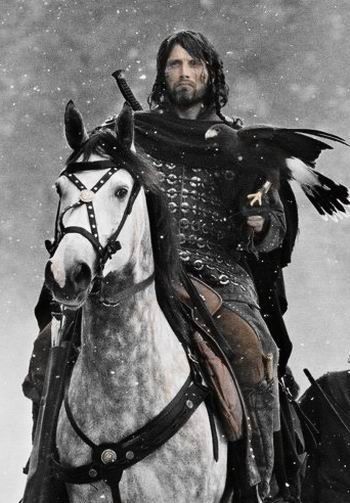
It was in the darkest part of the night, right before dawn, when mighty King Bodanagus came to the tent of Caesar.  They say he asked only for peace, that his people be secure in their homes and have a chance to prosper without fear of threat from Rome or their neighbors, and in return he granted to Caesar all of Gaul, Albion to the Firth of Fourth and the coast of Iberia, even inland to a certain degree.  Caesar agreed, and Bodanagus released his army and turned the crown to his beloved brother.  Then he wandered through the world.

That he went to Rome we know for certain.  It is well known that it was Bodanagus who tutored the young Octavian in the ways of men and kings.  Octavian was the one who followed after Caesar and was called Augustus.  Some say King Bodanagus wandered all the way to Egypt where he refused to place the crown on Cleopatra’s head and prophesied only doom for Egypt and the Egyptians under the queen.  Much is uncertain, but in his day, it is known that he did many mighty deeds and saw many wonders.  It is also known that under the new moon, he never failed to shed some tears for Esoulde, the fair and young.

Margueritte fell to tears.  The story made her ever so uneasy, but the tears she could not help.  Her father’s words did not help, either.

“Cheeky man,” Lord Bartholomew said.  “Giving away Gaul and Albion and Iberia as well, as if they were his to give.”

“Oh hush,” Lady Brianna said.  “That was always one of my favorite stories.”
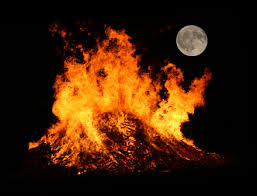
“For the young Lady.”  A servant came and held out a cup to Margueritte.  “Soft cider.”  The servant assured Lady Brianna, and Margueritte decided she was indeed thirsty after her cry.  She drained the cup, and then turned her attention to the festivities because Thomas had finished, and the torches were being extinguished.  The great double doors at the side of the courtroom were flung open and the king’s great fire could be seen ready to burn.  The king lit it by his own hand, and then Duredain began the interminable ceremony which included several sacrifices like two young rabbits thrown into the open flames.

Margueritte put her head down.  She could not watch.  Besides, her head felt a little like it was spinning.  She did not feel quite right.  Suddenly, she felt a strong hand guiding her away from the light and she thought it was Roland.  She felt grateful because she felt like she might get sick.  They went outside, and she got lifted into a cart.  Then she did get sick.  Then she passed out.

************************

MONDAY

A bit of the story of Bodanagus before Margueritte wakes up in a tower not even knowing her own name.  Until Monday (and Tuesday and Wednesday, as always) Happy Reading.


*
M3 Margueritte: Beltane, part 2 of 3

With great care, and all the quiet they could muster, they went down the stairs and out the front door.  Luckily, Father began to snore, and that racket helped hide the sound of the creaky floor.  Once outside, they straddled the broom, Tomberlain in the back and Margueritte up front.  Goldenrod could fly on her own, of course, without help.  Grimly could hover, but not move fast in the air.

“Come.”  Margueritte called him and set him in the middle between her and her brother.

“But what if we fall?” Tomberlain asked

“I just thought of that,” Grimly said.  “I’ll make sure we keep our seats.  That much I can do.”

“Okay now.”  Margueritte addressed the broom which shuttered and shook, but finally rose to a height just above the house and trees.  It could go no higher because of the weight and she would have to steer around the tower and any big trees, like the old oak in the triangle, but it was a great deal faster than walking and much easier on the feet.

“Come on, come on.”  Goldenrod fluttered about, impatient.

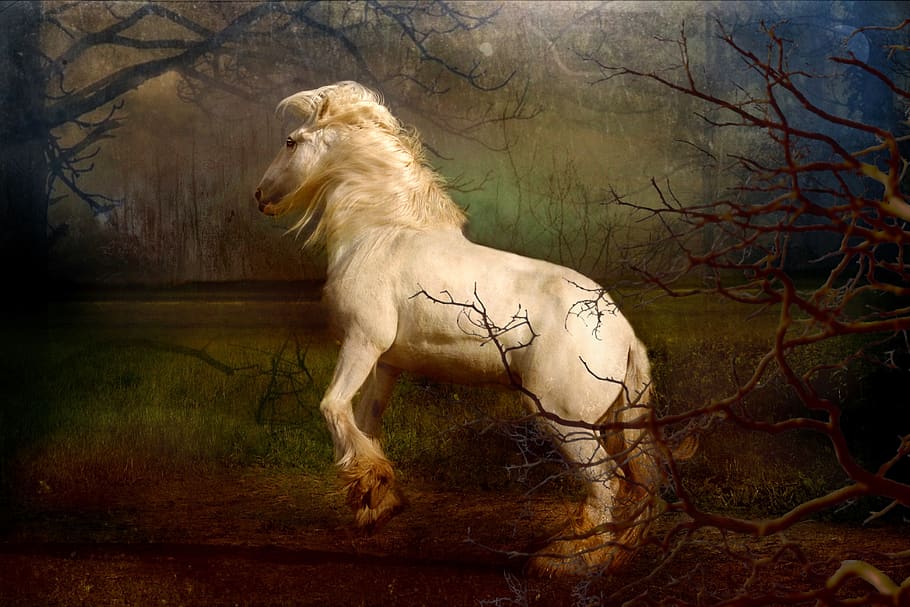
They started out slowly and Margueritte almost lost control right at the start as they heard a horse whinny and saw it raise its’ front hooves briefly in their direction.  They saw two riders, hidden down the road, back behind the near trees.  Both rushed off quickly on being spotted.  They headed toward Vergen and the roads to the south and the coast. Margueritte very much wanted to know who it was.  Tomberlain said so.

“No time to find out who the spies are,” Grimly said.  Goldenrod started tugging on the end of the broomstick.

“Come on, come on,” she kept saying.

They flew, barely fast enough to feel the breeze in their faces.  Margueritte wished then that she had changed from her nightgown, or at least taken the time to get her cloak.  The wind felt cold and a little damp.

Goldenrod lead them past the fields and out over the deep woods of the Vergen.  There were miles of trees, leaves green now in the freshness of spring and many an apple blossom could be seen.  People did not often go into the depths of the forest unless they were hunters, and even they tended to keep to familiar trails and favorite spots for fear of getting altogether lost.  They traveled for several miles before Margueritte heard the first wisps of music.  Then she saw the light of the great fire, and at last, the clearing where great stones, taller than a man, had been set up on a small hill in a perfect circle.  She began to guide the broom toward the ground.

“But why are we falling?”  Tomberlain asked in his voice too loud against the wind.  “I see nothing but a clearing of sorts in the moonlight, but it looks cold and empty to me.”

“Shh.”  Margueritte hushed him.  “I’ll show you when we get there.”  And Tomberlain appeared willing to wait, though he felt anxious for Elsbeth’s sake.

Once on the ground, the children walked slowly to where they could see.  Grimly stood out front, ready, just in case.  Margueritte took her brother’s hand and he drew in his breath, sharply as a whole scene, not entirely in this world, opened up in front of him.  The enchanted music that he heard made him want to tap his feet, and run, and fight, and become delirious for joy in the night

“No!”  Margueritte cried and barely held on to Tomberlain’s hand.  “You are my brother.  You are not to be enchanted by the little ones.”

Tomberlain stopped tugging for his freedom after a moment.  He rubbed his eyes and shook his head like one who had tried to stay awake but nearly fell asleep.

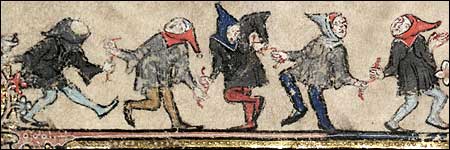
“Of course,” he said.  “What was I thinking?”  And he turned to take in what he could see.  The fire blazed in the center of the circle and shot sparks higher than the stones and deep into the night sky where they looked like little stars. There were creatures feasting and dancing all about, and there, in the midst of them, Elsbeth smiled as broadly as she could, and danced in sheer joy.

Margueritte stopped Tomberlain short of the circle.

“Aren’t we going to get her?” he asked.

“I don’t know how, yet,” Margueritte answered.  “The magic here is much greater than just the magic of my little ones.  They participate, but do not originate.”  She knew what she meant.

“This is the fire of strength,” Grimly explained.  “It is thousands of years old and was set to honor the god of the North, the son of Thor who became the third husband of the Don and whose children became the great gods of the Celts and all the people in this land.

“But the Breton call it the fire of peace,” Tomberlain objected.

“A later name,” Grimly said.  “There is strength of peace in the flames, but also strength of war, for the god was strong to do all things well.”

Margueritte sighed.

“And Samhain then is not just a village thing?”  Tomberlain asked.  He remembered something vague from his youngest years before his mother Brianna came to Jesus.

“In truth,” Grimly said.  “It is the fire of healing, lit in honor of the Don’s second husband, the god of the sun and of life.”

“But he was not allowed to follow her north of the Pyrenees,” Margueritte said, as she remembered more clearly.  She had remembered Danna in Gerraint’s time, and now she remembered that she lived Danna’s life those thousands of years ago.  Danna came north on the urging of all the gods to confront the Titaness who had stolen the most western lands and was becoming a threat to all.

“But what then of her first husband?” Tomberlain asked in all innocence.

“We don’t speak of him,” Grimly said, but Marguerite spoke all the same.

“He was a god of the dead who wrongly abused Danna as a young child.  She bore him twin son, who grew tall and strong, but then that one son married Morrigu, a wicked, evil creature who bore him the daughters of fury.  Those girls could set a man’s blood to boil and go berserk for the killing of war.”  She confused her stories a little, but Grimly did not correct her.

“Only a mother-in-law would remember her in that way.”  A woman’s voice took their attention.  Margueritte and Tomberlain looked up to see the fairy queen, and Goldenrod who had vanished for a time came with her.  Grimly bowed once before looking.

The fairy queen and Goldenrod curtsied to Margueritte who curtsied in return and named the little one.  “Lady LeFleur,” she said.  “Majesty.”  And she nudged her brother who bowed, though he never lowered his eyes.  Lady LeFleur was queen of all the fee in that region, and as two and two came together in Margueritte’s mind, she knew that the queen was also Goldenrod’s mother.

“If your majesty may help,” Margueritte said.  “I cannot think of how to get her out of there.”

“Nor I, exactly,” Lady LeFleur said.  “There are too many lesser and greater spirits at the feast, and most have no interest in being reasonable, but if we do not get her out of there, she may well dance forever.  If the fire is not extinguished before sunrise, she will be trapped, and you might not see her again until next Beltain.”

At that moment, one beautiful and utterly naked woman came to the edge of the circle and stared at the watchers.  Fifteen-year-old Tomberlain’s blood got the better of his tongue.  The woman laughed, seductively, and reached for the boy.  His hand started to rise, but Grimly slapped it down.

“All hollow,” he said, and the woman, with another short laugh, turned and danced away, and, in fact, from the back she did appear to be hollow, like no more than a woman imposed on a piece of bark that had been stripped from a tree.

“Woodwife,” Grimly named her.

“Not mine,” Margueritte said frankly.  And the more she looked around, the less she saw of her own little ones.

“Fauns.”  Tomberlain pointed.  Sure enough, several goat-hooved creatures came dancing into the circle, adding their pipes to the never-ending music.  Margueritte felt her own feet tap a little at that, until one of the fauns twirled Elsbeth like a ballerina, and then all Margueritte felt was anger.

“It is getting too strong,” Lady LeFleur admitted.  “There is one chance, but I have hesitated because I will face consequences, and it is very dangerous.”

“I will defend you.”  Tomberlain spoke up too quickly.  He became keen to play a part and win some knightly honor.

“And I am sure you will, good sir, but perhaps not this evening.”  Lady LeFleur smiled for his sake.

“Unsavories.”  Goldenrod whispered in Margueritte’s ear, though Margueritte did not feel sure what that meant.  All at once, Lady LeFleur let out a great cry.  She let out a call that echoed all through the woods, and with such force, if not volume, Margueritte wondered if it might wake her parents, miles from there.  The music stopped and a hush fell on the crowd in the circle.  Then, there came an echoing cry, near to hand, and it came with such evil intent, Margueritte screamed.  The fire went out.  The feasters all vanished.  Elsbeth collapsed to the ground and Grimly and Lady LeFleur rushed to her side.  Tomberlain got distracted by the sound of horse hooves on the rocks, and fortunately for him, Margueritte got distracted with him.

“What a magnificent beast,” Tomberlain breathed.

“No!”  Margueritte shouted once more, having some idea of what the horse was; but the enchantment fell very strong on Tomberlain.  The beast drew him in like an insect to the light.  There was nothing Margueritte could do but rush ahead of her brother and leap on the horse’s back.  Immediately, the horse took to the air and headed at great speed toward the sea.

M3 Margueritte: Tales, part 1 of 3

Samhain in the fourth year came only two months after the trouble with the ogres of Banner Bein.  Margueritte found that some garbled word of her and Elsbeth’s exploits had already reached the ears of people so when they arrived at Vergenville, there were more than the usual number of people that watched the Franks parade in.  A few even pointed at the girls and whispered.  Elsbeth, surprised, pointed back at the people, but Margueritte took it all in stride.  In her world, there were precious few entertainments apart from malicious gossip among the women and unendurable bragging among the men.  When a real adventure happened, that was worth holding on to and telling, and retelling, even if no one ever got the story quite right.

Lord Bartholomew found the ambassador from Africa, the Lord Ahlmored, at the door to the inn in anticipation of their arrival.  Both men appeared willing to pick up where they left off four years earlier.

“Lady Brianna.”  The Lord Ahlmored spoke with an air of slime about him.  “I must say, you look even lovelier than when I last saw you.”  He offered his hand to help her down from the cart, but she wisely refused it.

“I see your grasp of the Breton tongue has improved.”  She tried to keep to pleasantries.

“I see your manners haven’t,” Sir Barth mumbled rather loudly.  “Tomberlain.  See to the men.”  He waved off his son.

“Yes, Father,” Tomberlain said, and turned his horse to ride a little too fast back to the open field.

“Now, Lord Bartholomew.  I had hoped any un-pleasantries from the past might be forgotten,” Ahlmored said.  “Let us make a fresh beginning.  I came only to welcome you to the king’s court, sorry as it is.  I have prayed to Allah in the Holy Prophet on whom be all peace, that you Franks might bring a finer wit, a keener intelligence, and a more graceful beauty into our midst, even if only for a short time.”

“Bygones be bygones.”  Baron Bernard spoke up from the doorway where he held a flagon of hard cider and had clearly already started on the festivities.

“At least the beauty has come.”  Ahlmored bowed in his Arabic style to Lady Brianna.  Sir Barth, now dismounted, thought nothing of butting in and shoved the Saracen a couple of steps back.  Lady Brianna quickly grabbed Bartholomew’s hand before he could make a fist.

Ahlmored stayed ever the diplomat.  “Your pardon, but I was speaking of your most beautiful daughters who I hear have ridden on the purity of Heaven and mastered the very demons of the earth.  Why, your eldest with her long, dark hair nearly to her ankles and her skin as white as the cream from a goat, were it not for her fascinating green eyes, I would call her the very model of an Arabian princess.”

Margueritte grabbed Elsbeth’s arm just like her mother who held tight to her father’s arm and she poked her nose straight to the sky.  “They’re ogres, not demons,” she said. Elsbeth imitated her sister’s haughty stance, though stuck out her tongue first before the two marched into the inn.

“Your pardon, Lord Ahlmored.”  Brianna spoke quickly before anyone else could speak.  “But we have duties to attend to and gifts to distribute.”

“Ah, yes.  The Prophet Mohamet who is worthy of all praise, speaks highly of those who care for the poor and the wretched.”  He bowed again and backed away before he turned to walk off.

Lord Bartholomew relaxed, a little.

“So, I would guess then the worthy Prophet never speaks highly of Ahlmored,” Bernard quipped from the doorway.

“Damn African can insult you even in the form of a compliment,” Sir Barth said.

“He’s a diplomat,” Lady Brianna pointed out, but Bartholomew was not so sure.  They went inside.

“You, I will defend with my life,” Sir Barth said, and Brianna smiled and laid her head to his shoulder.  “But if he is beginning to have such thoughts about my daughter, I’ll kill the child molester.”  Brianna removed her head and slapped her husband’s shoulder instead.

“I understand they marry very young in that land.”  The baron spoke between sips of cider.

“Oh!”  Lady Brianna shot him her sharpest look.  “You’re not helping.”  But Baron Bernard already started laughing.  He knew full well he was not helping.

That year, Margueritte and Elsbeth got to go with their father and mother into the fens where the miscreant serfs, criminals, and debtors worked off their debts, by scraping a living from the rocks and sand.  The normal hard life got made nearly impossible, with never enough to eat, particularly for the women and children who went into purgatory with their men, and who often went without so their working men could have the strength to go on.

Brianna felt loathe to bring the girls into that place, not the least for the diseases that often raced through the fens and kept the population in check, but Bartholomew insisted on keeping his daughters with him.  He did not like the girls being pointed out and secretly vowed to find out which of his own serfs or peasants opened his or her big, fat mouth. Most of all, he felt terribly disturbed and almost violent at the sight of Ahlmored’s eyes all over Margueritte.

“Good timing.”  Aden the Convert met them.  “There has been a birth today and you’ve come just in time for the celebration.  Most of the people have already gathered.

“That will simplify things.”  Sir Barth commented, always being practical about such matters.  Lady Brianna said nothing, but Margueritte believed there was something about going from home to home and from woman to woman that she would miss.

For all the bad reputation, the Fens was really a tight-knit community.  Most of the folks were good and decent folks who simply fell on the wrong side of life.  In those days, the real, hardened criminals were put to death, so at least they had no chance of running into some murderer or the like, and as long as you held on to your purse, you would probably be all right.

Lady Brianna got right up into the cart and began to hand out packages.  The women all seemed to know her and respect her, and she knew most of them by name.  She apologized for the lack of woolen things, but with glances at Elsbeth and Margueritte, they all said they understood.

Father Barth rolled out a barrel of hard cider and tapped it for the men, most of whom he also knew.  It felt like Christmas, and a celebration indeed.

“Elsbeth!”  Margueritte suddenly scolded her sister who stood by a young lad to measure her hand against his.  “He may be diseased or something,” Margueritte said in the Frankish tongue, so as not to offend.

“He is not,” Elsbeth shot back in Breton.  “Just dirty.”  She turned to the boy.  “Don’t you ever take a bath?”  The boy shook his head, not sure what a bath was.  “I do.”  Elsbeth said, sweetly.  “Mother bathes us every Saturday night before the Lord’s Day.  I hate the water and all that soap, but I must say it feels good after it is over.”  She backed up to the boy to judge their heights.

“Oh.”  The boy understood.  “But we haven’t got any soap.”

“Mother?”  Elsbeth looked up to where her mother was not unaware of what her children were doing.

“Given out,” she said.  “But I will save a bar next time for your friend?”  She made it a question, and Margueritte saw that the boy was at least not without wits.

“Owien, son of Bedwin,” the boy said.  Then he remembered to take off his cap and added, “m’lady.”

“Yes, I believe your mother has some soap.  Perhaps she will give you a sliver, Owien, son of Bedwin,” Lady Brianna said.

“Yes.  Thank you m’lady,” Owien said, and he turned and gave Elsbeth a look so cold and hard it made Margueritte laugh.  Elsbeth did not look fazed at all as the boy ran off.  Margueritte laughed again and took her sister over to be under the watchful eyes of their father.  Then again, she was not altogether sure if perhaps she did that as much for herself—the way some of the older boys seemed to be looking at her.