M4 Margueritte: Trouble All Around, part 1 of 3

Come the first of January, Margueritte went to Captain Ragobert with the intention of sending his troop home for the winter, since the men all lived in the general area.  The men camped by the barn and had sufficient supplies of their own so as not to burden the family.  Ragobert said his men would gladly volunteer to help around the farm, but they were charged by the Mayor Charles himself with protecting her, and they were not going to be found negligent in their duty.

Margueritte would not hear his objections, but she eventually compromised.  Half of Ragobert’s men would go home for thirty days.  The other half would take the second thirty days, so they would all get a good visit home and be back to full strength by the second week in March, well before Charles was expected.

Grandma Rosamund went wild when she heard Roland and Charles were coming.  Spring cleaning started in January, and everyone was expected to help.  Margueritte noted that Ingrid did a lot of work around the house, and Aduan acted a lot like Margueritte’s younger sister, Elsbeth.  She did not do much, messed up much of what she did, and please don’t let her cook anything, because it would likely be inedible, she would make a big mess, and then not clean up after herself.

One morning in early January, Ingrid went out to the barn to gather eggs.  Margueritte grabbed a basket and followed.

“What are we doing?” Margueritte asked.

Ingrid huffed.  “Someone has to keep this family fed.”

“Eggs,” Margueritte said.  “You know; I grew up on a farm much like this one.  I have a sister who does not do much, so I had to do many things by myself.  I remember once they kept Elsbeth by the oven for a whole week and tried to teach her to make a pie worth eating.”

Silence followed, for a minute, until they reached the chicken coop and Ingrid asked, “What happened?”

“They failed.  Please don’t let her near the oven.”  Margueritte smiled and went to work before she added a note.  “Or near the dishes, or near the laundry, or near the broom.”  Her voice trailed off and Ingrid looked back at the house and laughed.

Margueritte helped and worked around the farm, and she and Ingrid got along just fine from that morning.  Aduan was the type to get along with everyone, and even Geoffry lightened up when Sigisurd came around, Margueritte noticed.  In fact, Margueritte never felt so welcomed in her life.  In part, it might have simply been the joy of being around a farm again—the smell of the barn, the animals, the grain in the bins.  She felt at home, and they all treated her like family.  It felt wonderful, to the point where it made her homesick.

Margueritte loved Rosamund, a large and hugging sort of a woman, and she loved grumpy old Horegard in his way, but she missed her mother, Brianna and her father, Sir Bartholomew, and she worried because she knew father was not well.  Greta called it hardening of the arteries.  Doctor Mishka said he started showing signs of arterial blockages and she would have to watch for a possible stroke or heart attack.  Her older brother, Tomberlain went home, despite his protests about wanting to fight with the army.  He was needed to maintain the farm and the Frankish presence on the Breton border.  Owien was there as well, Father’s squire, though more probably Tomberlain’s squire at this point.

Deep into February Margueritte paused her thoughts to figure the year.  She decided it was 719, and she started getting ready to turn twenty-two, still young.  Owien turned nineteen.  He was easy to figure.  Tomberlain was Aduan’s age and would turn twenty-five in the summer. That meant Elsbeth had to be eighteen.  Margueritte wondered how that could be possible.  The last time she saw Elsbeth, her sister had a runny nose, still looked like a child in her fourteen years, and stayed busy spending all of her time and energy ignoring Owien.   Margueritte smiled at that thought.  She wondered if Elsbeth was still ignoring Owien now that he was nineteen and she was eighteen.  They might be married and Margueritte would have no way of knowing.  She wondered if Tomberlain ever found a good woman.  She paused.  She wondered what those men were doing, fighting down by the blacksmith shed and around the cooking fires.

“Relii,” she called.  Relii had gone to the barn with her, Sigisurd, and Geoffry, though Margueritte was the only one sifting through the potatoes while the others sat around and tried to keep warm.  “Keep everyone here,” she said.  “And if the big ugly men come, do what they say.”

“What is it?” Sigisurd asked.

“Saxon raiders,” Margueritte answered, before she slapped Geoffry and stole his knife so he could not get himself killed.

Margueritte pulled her cape around her shoulders and stepped out of the barn and into the snow.  She tossed Geoffry’ knife into a snowbank and yelled.  “Where is the chief of the Saxons.”  She shouted a second time using the Saxon words Festuscato and Gerraint gave her, though they were two or three hundred years out-of-date.  “Saxons, where is your chief?  I must speak with him now before he does something stupid.”

One of the Saxons sheathed his sword and stepped away from where two of Ragobert’s men lay dead and two were wounded and, on their knees, surrendered.  Two Saxons also looked dead; but the other six of Ragobert’s men were somewhere out in the fields with the men and the mules, despite the snow.  The Saxon stepped up to Margueritte, no weapon in his hand as if the woman posed no threat.  He looked her over, and even though she stood wrapped up in plenty of clothing, like wearing a tent, he grinned a half-toothless grin of approval.  He looked ready to do something stupid when Margueritte raised her hand and shouted, “Defender.”  The long knife appeared in her hand and went to the man’s throat before he could react.

“I am not asking,” Margueritte said.  “Are you the chief?”

“I am Chief,” a voice came from a big man on the porch outside the front door of the manor house.  He appeared, chewing on a leg of lamb leftover from last night’s supper.  “I am Gunther, and I have thirty men here, little witch.  What can you do against thirty men?”

Margueritte stepped a few feet away to be out of arm’s reach.  “I am not a witch, and you don’t really want to know.”  She held up her hand and Defender disappeared.  “But here, I just realized I am not properly dressed.”  She called for her armor and it replaced all of her layers in an instant.  With the fairy weave under her leather, she felt the cold in her knees and elbows, but that was it.  The weapons came as well, with Defender attached to the small of her back and the sword called Salvation slanted across her back.  “Now listen carefully, Saxon Chief Gunther.  You have thirty minutes to pack up your thirty men and get back across the river, and if you harm anyone here, there will be no place in the whole world you can hide.”

Gunther did not look impressed, despite the quality of what he thought were magic tricks.  Clearly, he had something else on his mind, and he spoke it.  “I had thought you were the one to be wife for my son, but you are not her.  I do not know why I thought to find a wife for my son among the Franks.”

“I know why, but the sorcerer’s life would have been in danger if he followed through.  You now have twenty-nine minutes.”

“You are still little, and yet you make jokes.”

“Maywood.”  Margueritte called, and the fairy came and circled once around the Saxon’s head before he became full sized, a fairy dressed for war.  He fell to his knee before Margueritte.

“Lady, I have men here who have been watching you, and my troop gathered as soon as we saw that the Saxons intended to cross the river.  My troop is now here.   What is more, Prince Oswald of the Elves of the deep wood has a troop that followed the Saxons when he wisely figured out their intended target.”

“Twenty-eight minutes,” Margueritte said.  “Oswald,” she called, and the Elf appeared, and like the Fairy King, he went to one knee before Margueritte, and spoke.

“Lady, it would be my pleasure to rid this world of all these Saxon men.”

“Not yet,” Margueritte said.  “Being a woman, I know how hard it can be on a woman to lose her man, and how she will weep.  On the other hand, twenty-seven minutes.”  Margueritte did not wait for the man to reply, this time.  “You better tell your people not to harm any more of my family and friends here.  Defender.”  She held out her hand and let the chief watch the long knife vacate its place and fly to her hand in case he missed it the first time.  She stepped up to the man without too many teeth who still stood there with his mouth open.  “Don’t kill him yet.”  she shouted to the wind and used the knife as a pointer.  “Here, in the leg.  One arrow to make the point, please.”  There were three arrows and they all struck more or less in the same place.  the man cried out and fell to the snow, and the other Saxons that had gathered around looked briefly toward their chief before they started toward the river.

“Twenty-six minutes,” Margueritte said nice and loud before she spoke in a more normal voice to the two little ones who were still on their knees.  “You really must teach your men to count.”  She looked up at the chief.  His mouth stood wide open now, but he wasn’t saying anything, so Margueritte turned.  “You two.”  She got the attention of two of the Saxons.  “You better help this one.”  She pointed to the man in the snow, holding his leg and crying.  The two men picked him up by the arms and carted him off, while Margueritte turned one last time to the chief.  “Twenty-five minutes,” she said, sweetly, and Gunther, the Saxon chief left without a word.

M4 Margueritte: The Saxon March, part 3 of 3

A time of silence followed, while Relii stared at the fairy, and Tulip tried to hide in Sigisurd’s long blond hair but did not entirely succeed because it was wispy hair.  After a bit, Relii looked ready to speak, but Margueritte got there first.

“So, your job was to convince me to become a nun and be locked away from the events of the world?”  It came out as a question, but Margueritte said it more like a statement.

“I guess,” Relii said.  “I didn’t know that was my job, but I think you are right.  That was what was in the back of my mind the whole time, pushing me.”

“Just so you know,” Margueritte said. “Herlindis and your father were feeling the same compulsion, and that is probably why they encouraged you to go on this little trip.”

“Yes, now that you mention it.  Father is still angry with Aduan for deceiving him.  He wants me to have nothing to do with that wicked girl, as he calls her.  And Herlindis is reluctant to let me out of her sight unless I have two nuns with me to guard me at all times.  But when the opportunity came up to go with you on this journey, they both insisted I go.  That doesn’t make sense.”

“They were enchanted,” Margueritte said.

“You were enchanted,” Tulip spoke to Relii with only her head peeking out from Sigisurd’s hair.

“I must have been,” Relii said.  “But how?”

“Like a bad cold spread from one person to the next, but you are all free now, and so is your father, so we will see if your father decides to come after you.  Meanwhile, I have something to run by you so you can keep your eyes and ears open.  Please don’t talk about this with others, but someone, some great power wants to remove me from this time and place.  I suspect great events are planned for the future and they don’t want me around to mess things up.”

“Seriously?  What can you, a woman, do to mess things up?”  Relii asked.

“Roland said you were responsible for making Charles into a hard taskmaster,” Sigisurd offered a thought.  “He said you kept annoying Charles about training the men to follow orders and hold their position at all costs, and after the defeat at Cologne, he finally took you seriously.  He said you were the one who first suggested the need for a standing army that was there all year to train and be the best, instead of a called-up army of untrained farmers and fishermen.  Roland said you told Charles to select his battleground, to take the advantageous position, to add the element of surprise to his bag of tricks, as you called it.  He said you told Charles about that eastern trick of pretending to retreat and pulling an enemy into a trap.  Roland said you are the reason Charles prevailed in this civil war.”

“These things are just common sense,” Margueritte said, with a shake of her head.  “But I will admit common sense has always been in short supply in the human race.  But here is the thing.  I don’t know what the future holds, exactly, or what my part in it might be, but the fact that someone wants me out of the way is clear.”  She gathered her thoughts and began at the beginning.  “First, it was probably not an accident that Ragenfrid’s men picked me up outside of Cologne.  As far as I know, Ragenfrid did not send any men around to the hill, but suddenly, there they were.  I think whoever is behind this hoped Ragenfrid would just kill me and be done with it, but Ragenfrid thought hostage and Radbod encouraged that thought, and I feel Boniface argued mightily on my behalf, I should say on our behalf, so we survived.”  Relii looked embarrassed so Margueritte asked, “What?” 

“I know the bishop argued several times for us.  I spoke with him several times while we were there, you know.  I was not always sneaking off to get into someone’s bed.”

Margueritte nodded as if not surprised.  She continued.  “Then I think the castor seeds were meant for me, but maybe they were too easy to trace and point a finger, so at the last there came a change of mind.  Something blunted my appetite that night, and Sigisurd’s appetite, so we didn’t have any soup, but then plan B was to have us captured by soldiers from Aquitaine.  If the Neustrians and Frisians failed to kill me, maybe the men from Aquitaine would.  That did not work either, because the hostage idea was too good an idea.  So now whoever it is has to get creative.”

“If you went into the Abbey, you would leave the word behind,” Relii nodded.

“But wait, before the Abbey idea, he tried to get me into a Muslim harem.”

“What is a harem?” Sigisurd asked, not having understood the full story when it was going on.  Margueritte explained and Sigisurd and Relii both got big eyes and said, “Oh.”

“But why are you speaking of this now?” Relii asked.

“Because I want you to look out for whatever the next attempt might be.”

“Why doesn’t this power just kill you himself?”  Relii wondered.

“Oh no,” Tulip joined the conversation.  “To kill the Kairos is very bad Karma.  A sin of all sins.  Even the gods of old were prevented from killing the Kairos outright.  Our Lady might die of natural causes, and those causes might even include an enemy sword, but for any power it would be an invitation straight to Hell for the killer.”

“So, they are trying to manipulate me into a position where someone does the killing for them, or where I voluntarily remove myself from the playing field, like to the Abbey, or involuntarily get removed, like to a harem.”

“So, what will be the next move?” Sigisurd asked.

“So, what is the big coming event where you will play such an important part?” Relii asked.

They were both good questions.

###

Near the end of December, about the twenty-fifth, Captain Ragobert, his twenty men and two overloaded wagons showed up at a farm which sat on a rise above a wide river.  Margueritte thought the manor house looked huge, almost as big as the barn.  An elderly man with a limp came out of the house, stopped when his leg would not go further, and he frowned.  An elderly woman came up to the captain, spoke briefly, and then ran to the wagon.  Grandma Rosamund took baby Brittany in her arms and looked very happy.  Martin went with his mother to confront the old man.  A woman, only a couple of years older than Margueritte came running out of the house and gave Relii a big hug and kisses.  Margueritte thought it looked more than just friendly, but what did she know?  A younger man also came out of the house and stopped to stare at the strangers and imitate his father’s hard glare.  Margueritte guessed the woman was Aduan, Roland’s younger sister, and the young man, about nineteen, was the baby of the family, Geoffry; but first Margueritte had to confront Grandpa Horegard.

Margueritte said nothing.  She had no doubt this was Horegard since he had been described to her in such detail. She stepped up and kissed the man on the cheek, and then brought Martin up to her hip, though at two, he started to get big and heavy.  She spoke to Martin and pointed at the frowning face, turned curious.

“Martin.  This is your grandfather.”  Martin took his cue from his mother and reached out for the old man.  

Horegard looked at Margueritte and asked.  “Margueritte?”  She nodded, and he put his hand out for the boy.  “Let’s go inside.”

Martin took his grandfather’s hand and at two years old, he walked about as well as the man limped, and as long as his mother was right there with him, they went inside to the big open rooms, downstairs in the manor.  Festuscato and Gerraint both said it looked a bit like a great hall in a Roman fort, and the table looked big enough for a family of twenty, which they nearly were.

Ingrid, the eldest, about age thirty, and with her husband Theobald, had two girls and a boy.  Clara was eleven, Thuldis was eight, and the boy Childebear was six.  Roland came next in line at twenty-seven, going on twenty-eight, and Margueritte had two and already started thinking about three of her own.  Aduan and her Gallo-Roman husband Cassius also had three; boy, girl, boy.  Dombert was six, the girl Corimer was three, and Lavius was one.  Then there came Geoffry.  He was not married and said he was not going to get married.

Theobald and Cassius came in from the fields at dark, exhausted.  They welcomed Margueritte almost in passing and reported that they got a good start on clearing the far corner, wherever that meant.  Horegard said they better get it cleared by spring, the way the family kept growing.  Margueritte got an idea of the land in her mind, where the serf houses were, filled mostly with some combination of Gallic and Roman people, and where the dependent free Franks lived, the ones who would make the bulk of Horegard’s fighting force if they should be needed.

Supper became a madhouse.  The kitchen, out back, included two big brick ovens and a fire pit for the pig, lamb or occasional deer or beef.  Most of the time, they ate vegetable stock soup with some eggs, with chicken, or fish from the river.  Not a bad diet overall, but everything had to be cooked in bulk and the washing up took forever.  After supper, as the children slowly dropped off to sleep, the exhausted adults went with them.  Every family had their own room, and they were big rooms, like families were anticipated in the building, and there were eight bedrooms in that big house. Margueritte and her children got Roland’s room, and it felt more than adequate.  They even moved in a small bed for Martin, though he preferred to sleep with his mother.

After the Master bedroom, Ingrid, Roland, Aduan and Geoffry all had rooms.  The sixth room, one of the biggest, was for the servants, which presently consisted of only one very old woman named Oda who did not actually do much of anything as far as Margueritte could tell.   Margueritte guessed the woman might be something like Grandma Rosamund’s nanny, and that had to make her very, very old, like close to seventy if not already arrived.

Relii got the seventh room, with Sigisurd, though Sigisurd got offered a bed in the servant’s room with the old woman.  Sigisurd slept mostly in the room with Relii, though occasionally she preferred to stay with Margueritte and the children.  She said sometimes Relii got carried away with her prayers and devotions and more devotions, and Sigisurd was more comfortable with the children.

************************


FREE

Between today and the end of the year, you can get Avalon, the Prequel, Invasion of Memories, Avalon The Pilot Episode, and all six seasons of the Avalon series in e-book format for free.

The free e-books are only available from Smashwords year end sale:   https://www.smashwords.com/shelves/promos

They can be formatted to your needs, including for the Kindle.  Look for the author M. G. Kizzia (mgkizzia).

Happy Holidays, and Happy Reading.

************

MONDAY

Margueritte settles in, but it is not so easy. There is trouble all around. Until Monday. Happy Reading

*

M4 Margueritte: The Saxon March, part 2 of 3

The women said nothing, but there was a noise at the door.  A man spoke.  “Brilliant.”  Another man stepped in with another nun at his side.  Margueritte looked and named the man who stayed by the door.

“Boniface!”  That was all Margueritte got out, because the nun who came in wept and hugged her, and then went to hug and weep on Relii, and Margueritte guessed it was Herlindis.  The man with her had to be their father, Count Adelard.  He gave Margueritte the odd look of a man who did not like strangers much.

Boniface stepped over and gave Margueritte a kiss on the cheek and then introduced her.  “Count Adelard, this is Margueritte, wife of Roland, son of Horegard.”  The Count’s visage changed instantly.

“And these children?”

“Horegard’s grandchildren,” Margueritte said, with an excuse me.  Poor Brittany started struggling.  Margueritte stepped to the other table where she could have some privacy.  Martin began to object, but Sigisurd picked him up and held him, and let him bury his head in her shoulder to get away from all the strangers.  Too much talk and too many strange faces stood around for him to be comfortable.

###

Margueritte had to spend one evening at a difficult dinner party.  Count Adelard, a mean and grumpy old man in his fifties, sat at the end of a long table with his Major-Domo, Gerold and Captain Ragobert to his right.  Ragobert came from Count Adelard’s land and left as a young man to fight for Pepin of Herstal, the former mayor and Charles’ father.  He and Gerold were friends of a sort and in their forties.  The thirty-year-olds were to the Count’s left, his daughter Herlindis and Boniface.  Margueritte spent some time studying the faces and conversation of the local men, and decided they were all like Ragobert, not too bright and with no sense of humor.

Margueritte sat at the other end of the table, like the children’s end, next to Boniface, but with Sigisurd to her left hand, and Martin squeezed between them.  Martin had the good sense half-way through dinner to crawl down and go to the blanket where Brittany slept, so he could also lie down.  Sadly, Margueritte did not feel she had that option.

At the actual end of the table, Hildegard sat and said nothing all night, and indeed, she hardly lifter her eyes from her plate.  Hildegard was wife of Thierry, the Count’s only son, who had gone off to fight for Charles, and who Margueritte believed she met once.  A dull knife, like his father, if she remembered.  Squeezed between Hildegard and Relii, who sat opposite Margueritte, were Hildegard’s two children.  Bertrand was seven and seemed a fine girl, but quiet as her mother, or as Margueritte figured, cowed to know her place, keep her mouth shut and mind her own business, or in other words, she was a girl.  Her brother, Poppo, was a four-year-old brat.  He sat between Bertrand and Hildegard and liked to make noise and throw food.  In fact, the only time Margueritte ever saw the count smile was when Poppo got exceptionally loud and behaved especially bad.  While Martin still sat at the table, eating, Margueritte put her hand over Martin’s eyes several times to keep him from watching Poppo and getting any ideas.  Hildegard almost smiled to see that, and that told Margueritte a person might still be inside that shell somewhere.

Relii also stayed exceptionally quiet during supper.  She said she was being good.  Sigisurd stayed her natural quiet self, and also seemed to want to lie down with the children and escape the table.  It was not because of the tension at the table, exactly.  It felt more like a permanent pall that smothered anything approximating joy and good fellowship.  Margueritte heard all about it the next day when Relii accompanied them on the journey to Roland’s family home.

They camped half-way to the Rhine, and the soldiers under Ragobert made a separate campfire for the women and children at the door of their big tent.  Relii waited until they had eaten, but then Margueritte and Sigisurd could not wait to hear what Relii had to say.  Curiously, she did not talk about the difficult dinner and the forced silence of the women, or the behavior of Poppo, or the attitude of the men.  Mostly Relii shared about growing up, though in a way it helped explain those other things. 

“My best friend is Aduan, Roland’s younger sister.”  Relii said.  “Herlindis and Ingrid, Roland’s older sister, were cordial friends, but I don’t think they were ever close.  I turned nine when Mother got killed by Saxon raiders, and Aduan was ten.  Herlindis, at seventeen, had a boyfriend, sort of.  Father did not approve of the boy, so Herlindis got packed up and shipped off to a monastery in Reims, the old capitol.  There, she took her vows and became a nun, so Father, not wanting her so far away, built the Abbey of Aldeneik for women, and brought Herlindis home to be the Abbess.”

“Good for her, I suppose,” Sigisurd responded.  “But how did you end up a camp follower?”

“I got told from the age of thirteen that I was going to follow my sister into the abbey.  It was not what I had in mind, but I did not have any choice.”

Margueritte looked up from Martin who had fallen asleep beside his baby sister.  “You were to be the virgin sacrifice.”

Relii screwed up her face.  “Sort of,” she said.  “But in those days, Father and Horegard, Roland’s father, met all the time and discussed what to do about the Saxons.  They said even with Pepin taking the best for the army, they could raise a solid company of three hundred men and maybe another three hundred that were not so solid.  They played at soldier, and even talked of invading the Saxon lands.  They went over maps and scouted out the blacksmiths and workers to equip the men, but nothing ever came of it.  The only good thing was Aduan and I got close, being near the same age, and as we grew, we talked about boys a lot.”

“Not much else to talk about in this age,” Margueritte said, quietly.

“Yes, well, when I turned sixteen, Herlindis started to school me in the ways of Benedict, and I was not a very good student.  Herlindis thought she had to take Mother’s place and treated me like a child, but I was almost ten when Mother died, and not grown up, but not a baby.  Besides, I did just fine without Herlindis mothering me for three years while she was away in Reims.  I was thirteen when she returned, and I thought I was all grown up by then.”  Clearly, Relii still had some issues there.

“Father was the worst,” she continued.  “He turned hard, if you know what I mean by that word, and not at all like I remember him when I was young.  I think the loss of Mother changed him, but anyway, I put up with the schooling for a while, and snuck out often to visit my friends and boys, and got in plenty of trouble, but when I turned seventeen, I hatched a plan.  Pepin’s army camped near, planning a campaign against the Saxons to push them back to the Wesser River.  Aduan made it look like she and I got taken by Saxon raiders.  She went to stay with her boyfriend, Cassius, and his Gallo-Roman family down the road.  I went to Pepin’s army and attached myself to Mother Mary, who was younger in those days, and not called Mother.  I made up some story about my family being killed by Saxons, and she took me in.  I stayed with the army ever since.”

“But your father and Herlindis, didn’t they think you were dead?”  Sigisurd asked.

“I suppose, for a while, but Aduan eventually confessed herself.  Cassius made her confess before they got married, and good thing they got married because Aduan already got pregnant.  Aduan did not know where I was, of course, but Father and Herlindis kept hope that I was still alive, and so now I am going to be a nun.”

“Good for you, I suppose,” Margueritte paraphrased Sigisurd’s words, and she and Relii both looked at Sigisurd.

“Don’t look at me,” Sigisurd said.  “My family really all got killed, except by Alemans instead of Saxons, and I escaped because I was out tending the sheep at the time.  I cried for a long time, and my neighbors helped me in my need, and offered to take me in, but then I also ran away.  I have a distant cousin in Cologne, and I thought if I could find him, I could be safe.  But Mother Mary found me when Charles first arrived outside Cologne, and she took me in for my own safety.  We were all by the stream, washing clothes when we got captured.  Then I met you, Margueritte, and you saved me for real, and we had children.”

“And now you want children of your own,” Margueritte guessed.

“Yes, please.” Sigisurd smiled and she looked back at Relii, who shrugged.

“If I could have children, I would have a handful by now.  No telling who the fathers might be.”  Relii smiled before she got serious.  “The Lord saved me for himself, but it took me a long time to see that.  If I become a nun now, it will be by my own choice.  If Father and Herlindis agree, that is nice, but not important.  Freely, the Lord has given me his heart, and freely I return it to him.”

The women sat quietly for a while.  Martin and Brittany slept, so Margueritte imagined she could continue the conversation.  “Haven’t you seen Aduan since you have been back?” she asked Relii.

“Yes, and all is good, but I came on this trip for you, and Sigisurd if she wants.”

“What do you mean?”  Margueritte’s suspicious gland, as Festuscato called it, started to throb.

“I have come to tell you about the glory and wonder of life at the Abbey.  I see wars ahead, and so much killing.  But you will be safe at the Abbey.  We pray all day and have wonderful fellowship, and the outside world has no hold on us.”

“Hold it,” Margueritte practically growled.  “Just stop talking for a minute.  Who told you to talk to me about becoming a nun?”

“Why?  No one told me,” Relii said, and she sounded sincere.

“Tulip.” Margueritte called, and the fairy appeared.  Sigisurd remembered her instantly.  That was the way the spell worked.  Relii reacted like a person being attacked by some horrible monster.  She raised her hands, ready to unleash her magic, but she stopped there and remained unmoving when Margueritte stood.

“Lady?” Tulip asked.  Margueritte did not stand there.  Danna, the mother goddess of the Celts came through history to take her place.

“Tulip.  There is a great enchantment here.  It looks like a virus, transmitted from hand to hand.”  Danna traced it back to Herlindis, to the count, to one of the soldiers of Ragobert, to a man in Paris, to a captain in the army of Ragenfrid, and to Marco, servant of Abd al-Makti, the sorcerer, on whom she saw something like a fingerprint, and she sighed.  Danna easily removed the virus from all the carriers, and she sent an unmistakable message to al-Makti.  “Leave Margueritte alone.”  Then Danna left, so Margueritte could return to her own time and place and think about what she knew.  Relii moved again, dropped her hands in a moment of confusion, and promptly threw up.  Sigisurd and Tulip helped her recover.

M4 Margueritte: The Saxon March, part 1 of 3

FREE

Between today and the end of the year, you can get Avalon, the Prequel, Invasion of Memories, Avalon The Pilot Episode, and all six seasons of the Avalon series in e-book format for free.

The free e-books are only available from Smashwords year end sale   https://www.smashwords.com/shelves/promos

They can be formatted to your needs, including for the Kindle.  Look for the author M. G. Kizzia (mgkizzia).

Happy Holidays, and Happy Reading.

************************

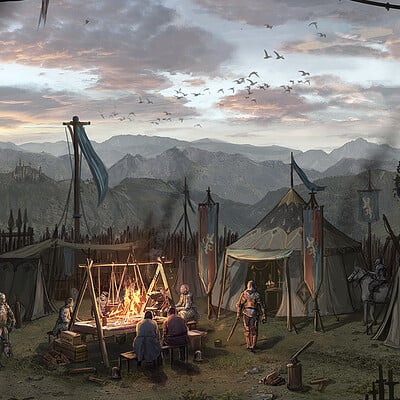
By the time everything got settled in Paris, and Margueritte understood what Gerraint said about the women in Paris only having one brain which they took turns using, the autumn weather hinted of winter.  Roland wanted to leave Margueritte in a comfortable home over the winter, but she insisted on going with him.  If he left without her, she would follow him as soon as the baby got born.  It became their first real argument, but in the end, they had no say in the matter.

Charles would head for Frisia before the winter set in.  He planned to trim Radbod’s mustache, permanently.  He also wanted to be in a position to confront the Saxons as soon as the spring came, because they were raiding into Frankish territory and that had to be stopped.  The Saxons had to be told the in-fighting among the Franks was over, so they raided at their own risk.  And Margueritte would deliver in a couple of weeks at most.  She could not go anywhere, and she could not delay the men.

Charles and Roland rode off and Margueritte’s delivery went without complications.  Sigisurd kept Martin who would be two years old in a mere three weeks.  Margueritte called that recovery time, but the truth was she got little time to recover.  As soon as she was on her feet, one noble after another came to call.  Word had gone out that she had Charles’ ear, and every man and woman in Paris had some beef or gripe or cause to support.  The worst were the bishops and priests, and even the archbishop paid his respects.  It became tiring, not the least because she had to remain pleasant and positive, not promise anything, yet not send them away dissatisfied.

Roland really did understand.  He left a company of men under a Captain Ragobert from his home province on the Saxon March and suggested if Paris got impossible, she should go visit his family and he would find her there in the spring.  Margueritte waited three whole weeks.  Martin turned two and they had a private celebration.  The very next day she packed, and against doctor’s orders, she set out in December for the other side of Austrasia.

Once again, Margueritte had to ride in the wagon, but this time they kept to the roads.  They were mostly old Roman roads, and not that badly kept, so the black and blues were not too bad.  Ragobert was not much of a conversationalist, but he seemed a competent military officer, and this time she had plenty of private time that the soldiers from Aquitaine never allowed.  With that time, she called Tulip, Queen of the Fairies in what was Frisia, and sometimes she called Marigold, Maywood’s wife and Queen of the fairies in east Austrasia and Saxony, around the Rhine, between the Meuse and Wesser Rivers.

On the thirteenth of December, they arrived in Verdun and took rooms at a local inn on the Meuse River.  Margueritte’s baby girl, Brittany turned one month old and already owned her brother Martin’s heart.  Between the children and the fairies, Sigisurd never seemed so happy, and so sad.  She turned eighteen and wanted a good husband and children of her own.  She did not say as much, but Margueritte and Tulip were not fooled.

Baby Brittany caught a little cold in Verdun, but the sun came out the next day and the snow rapidly melted.  “But we shall have a white Christmas,” Margueritte announced, and then she had to explain.

From Verdun, they took a flatboat and traveled for days down the Meuse, always headed north toward the Frisian and Saxon border, with the soldiers riding parallel to their course on the eastern bank.  They finally came to a little village called Aldeneik where they departed and took once again to the wagon.  They did not go far.  They found an inn, though it proved more of a tavern with a couple of rooms at best.

Captain Ragobert went in first.  He had the purse and proposed a warm and comfortable night or two before they moved two or three days across country to the Rhine.  “It’s a one-day trip to old Horegard’s place,” he said, “but your wagon does not exactly move fast where the roads are bad.”

“Great,” Margueritte practiced her sarcasm.  “We will arrive looking like you and your men have been beating us up.”  Ragobert knew enough by then to know she was joking, and he nodded when he went in, but his face seemed frozen in serious thoughts.

“Not so much as a smile,” Sigisurd whispered.

“I bet he doesn’t cry, either.” Margueritte whispered in return.

There were two nuns and a novice inside the tavern, speaking with the tavern keeper.  Nuns were not an unusual sight in those days, even in a tavern, but there seemed something familiar about the young one.  When she turned, and looked at the newcomers, Margueritte knew and shouted.

“Relii!”

“Margueritte!” Relii shouted back and they hugged around Brittany who was in Margueritte’s arms.

“What are you doing here?” both asked before Relii hugged Sigisurd and bent down to see Martin.  Sigisurd held Martin’s hand and Martin held his mother’s dress.  He turned his shy face into his mother’s dress when Relii spoke to him and said how big he was getting.

“Martin, you remember Relii don’t you?” Margueritte said, but Relii shook her head as she stood.

“He was very young.  But what are you doing here?” Relii guided them to a table to sit, and Margueritte spoke plainly.

“I am taking the children to visit Roland’s family.  Now that Charles has taken charge over all the Franks, he has turned first on Radbod and the Frisians before he goes after the raiding Saxons.  The plan is for them to be here by spring.  We shall see, knowing how rarely plans go according to plan.  But you?  I thought you were dead.”

“I knew you weren’t.  After I recovered, a man told me at sunrise he saw soldiers outside the inn and two women, and a baby being forcibly loaded into a cart and taken out of town.  I figured out who it was when they did not find your bodies.”  Relii reached out and covered Margueritte’s hand as the two older nuns came over and sat quietly to listen.  “They all died, Mother Mary and Rotunda, and that nice older couple.”

“Did you have any of the soup?” Margueritte asked.  “The poison was in the soup.”

Relii’s eyes got big.  “I knew it wasn’t witchcraft.  I told the people you would never do such a thing.”

“Me?” Margueritte felt shocked at the suggestion.  “I keep telling people, I am not a witch.”

“You can’t always tell a witch from her looks,” Relii said, and looked down at the table and worried her hands.  Margueritte understood that Relii had some power that was not normal.  Now it made sense why Abd al-Makti the sorcerer never came around at the same time Relii stayed in the camp.  She wanted to ask Relii her impression of Abd al-Makti, but with the nuns there, she thought it better to avoid that subject.

“Anyway,” Relii continued.  “Poison makes sense.  I know I was deathly ill for three days, and everyone died, but somehow, I recovered.  It could only have been a miracle, by the grace of God.  I was in the village, in a home when Charles and Roland came.  The villagers told them what they knew, and I know they looked in on me.  I don’t know if Roland recognized me.  You know, I always avoided him seeing me.  But anyway, they burned the inn to the ground and left.  I recovered, truly a miracle, and I felt then and there it was time to go home and follow my destiny.”

“But you?  A nun?  That is about the last thing I would expect.”

Relii turned a bit red and looked at her fellow nuns.  “It is my destiny.  Father built the abbey for his daughters who he said were never going to be defiled by wicked men.  My sister, Herlindis is the Abbess.  My real name is Relindis, but you can call me Relii.  It is what my mother called me when I was really young.  Of course, Herlindis was always Herlindis, full name.  Did I mention she is the Abbess?”

“Yes, you did,” Sigisurd interjected.

“Your father?” Margueritte asked.

“Count Adelard.  All of this land is his.  We are in the second line of the Saxon Mark, as he calls it.  If the Saxons ever break through the Mark, we need to be prepared.”

Margueritte had a moment of insight.  “It must have been hard for you in the camp, trying not to be recognized.”

Relii nodded.  “There were certain men I had to avoid.”

“I was not aware you avoided any men,” Sigisurd said, and Margueritte pinched her to get her to shut up.

“I was grateful for the way you and Sigisurd took care of me when I was with child and helpless, and the times you helped Rotunda with the cooking and Mother Mary with the washing and the errands,” Margueritte said.

“I didn’t do much,” Relii admitted.  “But I saw your example and I learned.”

“Please,” Margueritte looked down at Brittany and uncovered enough so she could nurse.  “I am no saint.”

“But you are, more than you know,” Relii said, and Sigisurd nodded vigorously.  “And you can do things, such blessings as most people cannot imagine.”

Brittany settled in and Margueritte looked up and got serious.  She looked also at the two nuns to be sure they were paying attention.  “I only do things that are perfectly natural for me.  If I walk or talk, or nurse my baby, no one calls these things miracles because they are perfectly natural things.  If I can do something most people cannot, it does not make it a miracle if it is natural for me.  As much as I love him, Roland would not nurse our baby very well.”  She smiled and the others smiled with her.

“But this is the important thing,” Margueritte continued.  “It has nothing to do with what you are able to do.  It has everything to do with what you are authorized to do.  If I can do some things most people cannot, it is only because I have been gifted, you might say.  But of those who have received much, much will be expected.  Like your sister, Herlindis, who has been given the authority to be Abbess.  She must make good and wise decisions and only do what God authorizes her to do.  She must not overreach her authority, even if she is able, because that would be the essence of pride and sin.  So, I try only to do what I am authorized to do, and it is not always easy to determine.  Just because I am able to do something, that does not mean I am authorized in a given circumstance to do it.  Sometimes I fail.  Sometimes I just plain mess up.  But I thank the Lord every day that I am a forgiven sinner, and I get up every morning and pray that today I may be a good and faithful servant and a good steward with all that God has given me.”

M4 Margueritte: Prince of the Franks, part 3 of 3

The first evening across the border, they had a visit from a rider.  He caught the captain by the fire, and Margueritte sat right there, listening.  The rider said the duke had moved on to get behind the stout walls of Bourges and they were to meet him there.  From Bourges, he had plans to send word to Languedoc and to Bordeaux and Poitiers to call up the army.

“So, you expect the Franks to follow?” the captain asked.

“I don’t know what to expect,” the rider answered honestly.  “But the duke has the Neustrian king with him, so someone is bound to follow.”

“What happened?”  The captain missed all the action.

“It was a complete disaster,” the rider answered with a heavy sound.  “The king and his mayor were only able to raise six thousand men, and I think they were only the ones dependent in some way on the mayor.  They were able to double that number with conscripts, but you know militia doesn’t always fight well.  The numbers were more even when we got there, but still.”  The man paused to sip his drink.  “It was an utter defeat.  Charles, the Austrasian and Ragenfrid the mayor stared at each other for three days, and Ragenfrid blinked.  That is the only way I can explain it.”  He shook his head.

“So how did the duke end up with the king?”

The rider shrugged.  “I assume the king asked for protection, maybe sanctuary.  All I know is the duke said he was lucky to get out with as many of his men intact as he did.”

“How many?”

“About a thousand.  Nearly three thousand of our men ended up dead, wounded or captured.  It was a disaster.  And I don’t think the king of the Franks saved that many.  Ragenfrid appears to have fled.  Who knows where?”

“And now Duke Odo thinks Charles may be coming here?” Margueritte asked.  The two men turned to stare at her, the rider with his jaw open.  “What?  I’m sitting right here.  You didn’t think I was listening?”

“I heard she is a witch,” the rider said, calmly.

“Hello.  I’m right here.  Are you asking if I’m a witch? I may become one if you don’t answer my question.  Does Duke Odo think Charles is coming here?”

The rider shook his head and spoke plainly.  “I don’t know what the duke thinks, but I think Charles is bound to come, for you if not for the king.”  He turned again to the captain.  “When the duke heard who you captured, he got bad angry.  When he calmed down, he said maybe she would make a hostage, but he said to tell you if Charles or his advanced scouts catch you, don’t harm the woman.  Give her back, unharmed.  He said, no point in pissing off Charles more than necessary,” The rider took another sip.  “I tell you the duke was badly shaken by the way the battle went.  He said Charles was like a cat playing with a mouse.  It was bad.”

“So, wait a minute,” Margueritte interrupted.  “If the duke did not send you to take me prisoner, who sent you.  And how did you know it was me?”

The captain stared at her again and the rider kept looking back and forth between the two of them.  The rider looked for an answer, but in the captain, Margueritte could just about see the millstone grinding away at the wheat in the desperate attempt to make flour.

“I don’t know.  I don’t remember.”

“Well, someone sent ground castor seeds to spice the soup.  Deadly poison.  My friends at the inn where you found me are probably all dead, and I want to know who did it.”

The captain nodded and fingered his lips, like it might magically help him remember.  Margueritte could just about see the water wheel this time going around and round but not getting anywhere.  “So do I,” he said.

###

Captain Gilbert and his men stuck around for three months.  They watched the army gather in May, escort the duke, the king and Margueritte to Toulouse in June, and get bored in July.  It started to look like everyone guessed wrong, and Charles was not coming.

Margueritte staved off the boredom by playing chess with Odo.  He seemed a nice enough man, and she did her best to keep the conversation pleasant.  She wanted to be clearly distinguished from Chilperic II, who was an annoying and demanding sort of person that no one would ever guess used to be a monk.  Margueritte, by contrast, got Odo to talk about his favorite subject, himself.  She asked about his people and his land, his staff and counselors and such.  She asked nothing about his army, so he had no reason to be suspicious.  But in all that time she got no indication that anyone might have sent the captain and his men to kidnap her, and she found out nothing about castor seeds.  It seemed like whoever stood behind the crime simply vanished, or maybe they vanished.  She admitted the poison and the kidnapping might have been two different people. 

She heard nothing to indicate it was not Abd al-Makti, but nothing said it was, until an ambassador from Cordoba showed up in Toulouse and became smitten with Margueritte.  All he could talk about for four days was her hair, her fascinating green eyes, her figure.  Good grief, she had gotten four months along and began to show.  Apparently, that did not matter.  The fact that she was married did not matter either.  He got overheard saying unbeliever marriages were not real marriages.

On the fourth night, he offered Odo a great deal of gold for ‘the girl’.  Odo stayed strong and refused.  In fact, everything the ambassador did and said seemed to offend the duke.  The duke prepared to escort the man back to the border, when the ambassador tried to steal Margueritte in the dark.  The man would not settle for no.  All he could talk about was putting her away in his harem.  He said he had to lock her away where she could be safe and not get into trouble.  Captain Gilbert had to kill the man.  His company had to make sure none of the Ambassador’s people, mostly Visigoth slaves, escaped.

The duke went into a tizzy.  Naturally, Charles showed up.  The duke tried to stay strong with Charles, but he mostly worried about what he could possibly say when the Iberians came looking for their ambassador.  He suddenly felt surrounded by strong enemies, and at this point, due to recent experience, he feared Charles more.  He only knew the Muslims by rumor.

Charles made it easy.  He offered to confirm Odo as Duke of Aquitaine for life, as long as the duke did not make any outside alliances with anyone but the Franks.  He also offered to take Chilperic off the duke’s hands, which the duke was eager to allow, so in all, it became an amenable discussion until Charles brought up the issue of money.  Duke Odo got testy.  He had an army of his own.  But then again, he saw what Charles’ army could do, and the money was not worth the risk of losing everything.

“What about the ambassador’s gold?” Margueritte whispered in Odo’s ear.  “That leaves no evidence that the ambassador ever arrived here.”  Odo smiled at the thought and said he could do that.  As a result, the down-payment for Charles’ standing army got paid for by the Caliph.

Roland carried Margueritte out of Toulouse, talking the whole way.  “Charles gave Chilperic a choice.  He could proclaim Charles Mayor of his palace in front of the assembled Neustrian nobles, and Charles would proclaim him King over all the Franks.  Then Chilperic could stay in the palace or go back to the monastery, his choice, as long as he shut up and kept his opinions to himself.  The alternative was to go and meet his maker.”

“He didn’t really say that did he?” Margueritte asked.

“Basically.  Those were his words.”

Margueritte wondered when she stepped into a grade B western movie.  She laughed, then she told Roland about her experiences and concluded with, “That is twice now.  Someone wants me out of the way, and it is getting serious.”

“Poison is serious,” Roland agreed.

“I almost went into a harem,” Margueritte objected.  “If I ended up there, I would look for poison myself.”

************************

MONDAY

Battles and the political struggle for dominance is nothing. What is hard is Margueritte birthing child number two and them traveling all the way to the Saxon March to introduce herself to Roland’s family. Until then, Happy Reading.

*

M4 Margueritte: Prince of the Franks, part 2 of 3

Margueritte imagined she would be at the inn for a couple of days.  She tried to make it as comfortable for everyone as she could.  The innkeepers were a nice older couple who spent most of their time doting on Martin like a couple of grandparents, and frankly were not good for much else.  Rotunda took over the kitchen.  Mother Mary kept the beds and everything else clean.  Sigisurd kept up with the crawling machine, having assigned herself the position of Nanny.  Even Relii did dishes, and Margueritte thought this was very different from the Storyteller’s day.  Three days at the Holiday Inn in his day and the women would be ordering the staff around, complaining about everything, and gossiping about everything else.  This seemed almost pleasant, and she wanted to get a good book and lay around the pool and would have if they knew what a pool was.

“But pools haven’t been invented yet,” she told Sigisurd, who learned to ignore her when she said things like that.

By the third night, Margueritte became a wreck for worry.  She felt sure she should have heard something by then.  She paced, did not feel hungry, stayed in her room, and refused supper.  Sigisurd shared a scrambled egg with Martin, but otherwise she said she was also not hungry.  Sleep came as a fitful thing, and in the morning, Margueritte felt no better.  Sigisurd had Martin on the little balcony just off the room.  She said Martin slept through the night but got up with the sun.

“Sorry if we woke you.  We just got up, but I tried to get him out here to let you sleep.”

“That’s all right,” Margueritte responded, as she got dressed.  “I don’t think I really slept all night.”  She considered calling for Tulip or Larchmont to see if she could learn about the battle, but she had been good so far, as she thought of it, and maybe she could wait a little longer.  “Let’s see what’s cooking.”

Margueritte picked up Martin and walked down the stairs, but on the last step she handed Martin right back to Sigisurd.

“What is the matter?” Sigisurd asked.  The old couple and Mother Mary were all at the table, probably from the night before, and there were signs of diarrhea and vomiting and bowls of what may have been soup.  Margueritte glanced at the door to the back kitchen but did not want to find Rotunda and maybe Relii back there. 

“Don’t touch anything,” Margueritte ordered and Sigisurd looked like she had no intention of touching anything.  Margueritte crept close and heard Mother Mary moan, but she still did not dare touch the woman.  Mary never opened her eyes, but she had something clenched in her hand, and her hand opened to reveal a bean of some sort.  Margueritte took out a handkerchief and picked it up.  She put it right back down and grabbed Sigisurd and dragged her and the baby to the door.

“What is it?” Sigisurd repeated herself.

“Castor bean,” Margueritte said, having heard that from Doctor Mishka all the way in the twentieth century.  “If Rotunda crushed them to add them in powder form to the soup, thinking they were like a spice.”  Margueritte shook her head.  “Castor oil doesn’t taste good, but the shell is deadly ricin.”

 “Deadly?”  They went outside.

“No known cure.”  Margueritte confirmed, and she let out a few tears for her friends and from fear.  Sigisurd tried not to join her, but Martin picked up on the sentiment and made his weepy face.  Margueritte took Martin and hugged him when they heard horses approaching.  Margueritte wiped her eyes to look but took a step back when she did not recognize the uniform.

“There she is.  How convenient.  Get her in the wagon.  Bring the girl and the baby.  Careful with the baby.  Tie them so they stay put.  There isn’t much time.  Move out.”  And Margueritte, Sigisurd and Martin got dragged off by strange soldiers with curious accents.

Margueritte knew these men were not Muslims, but they were not from Austrasia or Neustria either.  They were certainly not Frisian.  She imagined they might have been Burgundian, but she would have to wait and see.  Meanwhile, she considered the castor beans.  Those beans were not native to France, except maybe the Mediterranean coast, like around Septimania.  Otherwise, they had to be imported from Iberia or Africa.  That thought shouted Abd al-Makti loud and clear, but she admitted the evidence was circumstantial.  Then she had another thought.

“Oh, you’ll be safe here,” she mumbled with only a small touch of sarcasm.  She considered how easily she got captured by Ragenfrid’s men after the first battle outside Cologne.  She ran from the camp and exposed herself, so she figured it was her own fault.  But now, here she sat, a prisoner again, and this time she did nothing to give herself away. What is more, these men seemed to know just who they were looking for, and just where she could be found, though she was supposedly secretly hidden away in a small village inn.  Yet they knew exactly where she was.  

Margueritte considered her predicament.  Chivalry owned Great Britain, thanks to Arthur, and it had slowly begun to take over the mindset of the Franks as it worked its way into Christian Europe through the stories told about Arthur and his Round Table.  Margueritte thought that taking women hostages was not standard procedure, even at this early point in Medieval history.  “Something smells,” she said out loud.

Sigisurd checked Martin’s diaper.

###

Margueritte got forced to ride in the wagon for the first five days, and became black and blue all over, since the two men driving the wagon seemed talented at hitting every rock, hole and bump they could find.  More than once, Margueritte suggested those men should be flogged.  At least they untied her after the first day, so she and Sigisurd could take turns holding Martin.  Finally, she figured she complained loud and long enough to where the captain relented and let her walk.  The truth was, they had left Frankish lands and entered the domain of Odo, Duke of Aquitaine.  Also, they came to an old Roman road that appeared well kept, and the captain figured not knowing where she was, she had no choice but to be good, her being a woman.  Just for that, Margueritte had to fight mightily to keep herself from running off.

M4 Margueritte: Prince of the Franks, part 1 of 3

Charles marched his army in their units to Cologne, rather than soldiers strung out for miles along the road.  Any stragglers were met with a swift boot.  He found some older men among the Austrasians and Neustrians who fought with him or for him when he fought for his father.  They knew him and believed to a man that he should be Mayor of all the Frankish lands in the place of his father.  These veterans were given the responsibility to integrate the new men and the Neustrians who pledge themselves to Charles, and by the time they arrived at Cologne, Charles had a working army of more than fifteen thousand.  He thought to himself if he could get a good grip on Neustria and he could hold Burgundy as well, he might double his numbers.  That would be an army to reckon with.  But he kept that thought to himself for the time being.

Charles asked first to speak to the city fathers in Cologne.  He told them straight out if they resisted, he would kill them all.  If they let him into the city and turned over Plectrude and her son, they would live.  “I am not Ragenfrid.  I am not here for treasure, to be bought off.  And I am not Chilperic, claiming rule where I have no authority.  You knew my father, and I have Austrasia supporting me.  I would like to have the support of Cologne.  I would rather not burn your homes to the ground and kill your families, but the choice is yours.  Life or death?”

“A little harsh, don’t you think?”  Margueritte complained when Roland told her what Charles said.

“It worked.  I think Charles feared they outlasted Ragenfrid and paid him off.  They were maybe overconfident.  He wanted to be sure they understood that this was a completely different situation.”

“But he slammed them with trebuchets and boulders from catapults.  They got holes in their walls and some crushed houses before they had a chance to surrender.”

“He gave them until sunup and kept the deadline.”

“Men died,” Margueritte complained again.

“It worked,” Roland repeated.

Margueritte fell silent.  She considered her life.  Festuscato reached out to Merovech, father of Childeric, grandfather of Clovis, the first and greatest of the Merovingian kings, as they were named after the grandfather, Merovech.  Clovis would one day rule over all of Gaul.  He became a great and powerful king.  How sad to see his descendent, Chilperic II, reduced to a figurehead while other men fought over the land.  Margueritte prayed for peace in the land, and she thought if the Merovingian line had finished, maybe some new leader could take over and bring peace. She believed in Charles.

She recalled there was a Charles that was important to the Franks somewhere in history.  Sadly, the next hundred years or so always appeared shrouded in shadows of uncertainty.  The further she looked into the future, the clearer history became, but for the present, it made her God-given job of keeping history on track impossible, not knowing what tomorrow would bring.  She normally lived with a deep fear in the back of her mind that she would mess up and irrevocably change the future.  Then again, it helped her stay human, her own person, in her own time and place.  In this lifetime, she was wife of Roland, Viscount of the Saxon March, mother of Martin and maybe more children, and she smiled at Roland.  He had no idea what she was smiling about.

Margueritte argued mightily for Plectrude and her son.  After a time, Charles gave in, or he simply got tired of hearing it.  As a result, Charles made peace with Plectrude and her son, his half-brother.  They would retire to a quiet, private life and live.  They acknowledged Charles as the rightful Mayor of the Franks in front of many of the Austrasian nobility, so there was no taking it back.

Charles took that surrender as the end of the Ragenfrid chapter as well, or it would be soon enough, and now he needed something to counter the claim of Chilperic.  He sent to Metz, and in the same way Daniel-Chilperic got fetched from a monastery, Charles got Clothar, a nephew of sorts of Theuderic III, and had him proclaimed Clothar IV, King of Austrasia.  It was all show, but important show.

Now with the support of the nobles and royal blessing, Charles drilled ten thousand men until they cried.  In the early spring, he raised an additional five thousand militiamen by levies and marched his men for the second time into Neustria.  He made his point at Vincy, the first battle in Neustrian territory, but since then he got no word from Ragenfrid or Chilperic.  They did not offer to discuss peace or to find an equitable solution to their differences.  They did not even send him a threatening message, as Margueritte said.  Thus, Charles decided the time came to end this.  He marched on Paris, but he doubted he would get that far.

Charles was right.  He only got as far as Soissons before Larchmont brought word that Ragenfrid and Chilperic were coming out to meet him, and they had indeed enticed Duke Odo of Aquitaine to join them.  Odo’s force seemed small, a token of three or four thousand men, but it was enough to make the sides more or less even, and Ragenfrid overall had more horsemen.

Charles had figured this, planned for it in advance, and set his troops, again taking the advantageous ground for his army.  He had his militia to gather food for the veterans and to hold the camp so his seasoned and trained fighters could all be in play on the battlefield.  The enemy would have to come to him and fight on his terms if they had any hope of driving him out of the country.  In fact, Charles planned things so well, he even paid an innkeeper just outside of Soissons in advance to take Margueritte and her women.

“You will be safe here,” Roland kissed her.

“Sorry you won’t be able to critique my performance,” Charles said, and he did not sound sorry at all.  He turned to ride off.

“Really,” Roland said.  “I worry about you and Martin.  I want to be sure you are safe.”  He turned and galloped off to catch up with Charles.

“That was nice of him to think of us,” Mother Mary said.

“Maybe we can help-out around here and get some of the money back,” Rotunda suggested.  She liked money almost as much as she liked eating.

“If the innkeeper is cute or has a cute son, I could volunteer to help-out,” Relii said with some cheer in her voice.

“You and Festuscato,” Margueritte said, without explanation.  She had Martin up on her hip.  Sigisurd kept making faces at him and he kept hiding in his mother’s shoulder, like in the last month he suddenly got shy.  He turned a full thirteen months old, but now Margueritte started feeling sick again in the morning.  But this time she did not say anything to Roland.  He had enough to worry about.

M4 Margueritte: Strike Back, part 3 of 3

Gertrude the midwife got out of the city just before things got bad.  She fretted for her family, but she expressed gratitude for the bread.  What is more, she took her duty seriously, which encouraged Margueritte to relax.  When Gertrude examined Margueritte, Sigisurd always stayed there and watched, Rotunda always stayed near, making food, Mother Mary came to supply the clean linens, and even Relii stopped in to encourage her.  The result was a frustrated Abd al-Makti.  Margueritte felt it in the air.  She had no idea what nefarious plans the sorcerer had in mind, and honestly did not want to know.  She just felt glad the man was unable to do anything or get her alone.

The siege lines broke up in early November when Margueritte calculated she had about six weeks.  Gertrude said four, but at least she was not due that day or that week.  Over the last month, she spent most of her time missing Roland.  She wondered why circumstances always seemed to work in their lives to keep them apart.  Now, Margueritte had to move, and she got the option of riding in the wagon or walking.  She walked most of the time, she said for the exercise, but in truth the wagon hit every bump imaginable, and she got tossed around like a proverbial sack of potatoes, and bruised everywhere, so it felt safer to walk.

Boniface said good-bye when the army packed to leave.  He had three monks with him, and on Chilperic’s insistence, a dozen men at arms to protect him on his journey to Rome.  Margueritte wished him the best, said to call her when he got back so they could do lunch, without explaining what she meant, and waved for half the morning.  Then it came time to move.  Fortunately, the army moved slow.  They ambled along about three or four hours in the morning, took a four-hour mid-day break to let everyone catch up, and shuffled off another three or four hours in the afternoon before making camp early in the evening, before the sun went down.  At that pace, Margueritte wondered how any army could come to the rescue of any city, but she decided in this case, they were feeling victorious, like they conquered the city, and inclined to take it easy.  Besides, she figured Ragenfrid needed the time off to count his ill-gotten gains.

Margueritte and the camp wagons stopped for lunch near the town of Malmedy on the top of a rise where they could look down on the majority of the army.  She sat, holding her belly and feeling a little pain, when the rear guard came in.  The whole camp would sit and relax for another two hours yet before the first units started out and the army strung out like a slinky.  She pictured a well-timed charge at the middle when the worm spread out, and that would leave the rear guard cut off and easy pickings.  For some reason, a picture of Roncevaux Pass entered her mind, and she objected.  That was not her Roland, and not her Charles.  That was her Charles’ grandson, she imagined.  She missed her Roland.

“Lady.” Sigisurd interrupted Margueritte’s melancholy thoughts and pointed down below.  “Whose men are those?  Where are they coming from?”

Margueritte shrugged and squinted to see in the midday sun.  “They are not Ragenfrid’s friends,” she said, and they watched as a battle broke out.  It appeared all one sided at first, as the oncoming men caught Ragenfrid’s army literally napping.  Men, unaware, got cut down by the dozens, but eventually, Ragenfrid and Chilperic formed up the lines and counterattacked.  The men who fought without mercy when they had the advantage of total surprise, suddenly started to flee, and Ragenfrid followed.  He gave chase into the woods, and then Margueritte lost sight of them all.

Gertrude came up when Margueritte moaned a little.  She felt bloated and crampy.  “Aha,” Gertrude said.  “I told you four weeks.”

“What?” Margueritte got stupid.

“Come, get in the tent.  Sigisurd, help her so she can come lie down.”

Sigisurd grinned, but Margueritte did not get it.  “What?” she asked again.

Margueritte could not see the open field beyond the woods, and the slight rise in the field that lead up to a hillside meadow, still covered by tall grasses in the early winter.  The retreating men, some three thousand, ran through the trees and up the rise and over, but there they stopped and turned.  The Neustrian Franks chased the men with abandon, without proper leadership, and only their anger for fuel.  When they got to the top of the rise, they found ten thousand Austrasian Franks waiting for them, and it became the Neustrian’s turn to be slaughtered.

Margueritte stayed in labor all afternoon.  She still labored when Roland and Charles arrived.  Margueritte managed a yell.  “Roland.  We are having a baby.”  Then she needed to save her voice for a good scream.  She had a boy, Martin, who went to her breast, and when Roland stood there sweating, like he was the one who just gave birth, she spoke to him.  “Now we have to have a girl.”

###

Charles kept the men in training all winter long.  He let them go home to plant in the early spring, but he spent those weeks talking about the need for a standing army, like the Romans had.  “A permanent standing army,” he said.

“Yes, but you need to make a phalanx,” Margueritte said.  “That box thing you formed up outside Cologne was bound to fall apart, even if your commander didn’t turn stupid.”

Charles grunted.

Roland held Martin and tried to get him to stop chewing on the little wooden five-inch sword Roland carved for him.  Martin seemed determined to chew on something, going on four months old, but he found his father’s finger just as good.  Charles tried to help distract the child, but every time Martin saw Charles, Martin laughed out loud.  It was the cutest thing.

“I think he needs to be changed,” Roland finally admitted.

“So?” Margueritte said.  “Are your arms broken?”

“I’ll take him,” Sigisurd volunteered, and Roland gladly let her.

“So, we need a phalanx,” Charles said.

“Gerraint says you need heavy cavalry, and I am allowed to show you the lance and stirrups, since the Arabs and Moors are using stirrups in Iberia.”

“We have lances,” Roland said, now wanting in on the conversation.

“We have fancy spears and better saddles, so we don’t knock ourselves off the horse so easily.  We have what they have had in Great Britain for two hundred years, and ours are just as good, but it is not the same thing as lances and stirrups.  If we run into some Muslims, you will see what I mean.”

“Yes, I had been looking forward to meeting that Abd al-Makti fellow.  What happened to him?” Charles wondered.

Margueritte shrugged, but she knew the snake was slinking around somewhere, and no doubt up to no good.  “You are still worried about Septimania?”

Charles nodded and Roland spoke.  “It is even as you called him.  He’s a Septimaniac.”

Charles got serious.  “We are surrounded by annoyances, Saxons, Alimani, Frisians, Thuringians, Swabians, Bavarians, Lombards and Goths, but none of those are real threats to the realm, provided we can stop fighting ourselves.  But the Muslims of this Caliphate thing.  Who knows what kind of resources they can bring?  They have already threatened Narbonne.  From there, they can threaten us, all those I named, plus Aquitaine, Vascony, Greater and Lesser Britain and maybe even Rome itself.”  Charles got hot.  “We need a permanent standing army.”

Martin made some noise from the tent.  “Excuse me,” Margueritte stood.  “To quote my husband, this is where we started.”  She stepped into the tent because Martin was hungry.  Having a clean diaper always made him hungry.

###

Charles moved his army in the early spring.  With word of his victory over Ragenfrid and Chilperic at Ambleve, Charles found his ranks growing.  He hoped Ragenfrid’s support might be dwindling, but he doubted it.  He chose Vincy as the location and settled into the advantageous position to take advantage of the natural terrain.  Vincy sat just inside Neustrian territory, and a victory there would send a strong message to all the Neustrian Franks.  The show-down occurred on March 21, 717, when Martin got ready to have his four-month-old birthday party.

Ragenfrid and Chilperic attacked like they had once before, but this time Charles had prepared for them.  His long line box that Margueritte refused to call a phalanx stayed disciplined enough to hold formation and not break.  The Neustrians attacked three times in the morning and were soundly driven back all three times.

On the third attack, near the noon hour, Charles sent word to Roland who had twelve hundred men on horse, waiting.  While the main force under Ragenfrid and Chilperic engaged Charles’ infantry, Roland moved into the enemy camp, easily took prisoners, women and soldiers, and had a thousand men set behind a barricade of wagons when the foot soldiers came trudging back.  The Neustrians were tired and ready to take a break, as armies did at midday in those days. They got close before a volley of arrows found them.  Their ranks were unformed, they were unprepared, and they did not have the training of the Austrasians.  What is more, after driving off the third assault, Charles counted to a hundred and then sent his ten thousand to counterattack.  The Neustrians were strung out and half-beaten already after their third failure to break the enemy line.  Fortunately for them, Charles wanted prisoners.  Otherwise, not many would have survived.  

Roland could not hold the enemy camp for long.  The sheer numbers of enemy soldiers eventually overran the position, but Roland had the horses handy and made an easy escape.  He had not been expected to stick around.  What had been expected was that Ragenfrid and Chilperic would take their horsemen, abandon the field, and leave their army of footmen to face their own fate.  Roland followed the horsemen, or more nearly chased them all the way back to Paris.

There were plenty of Neustrian soldiers who escaped, including many in the camp who had the good sense to get themselves untied.  But there were also plenty of prisoners, and among them were quite a few who were willing to fight for Charles once they found out he intended to go back and deal with Cologne and Plectrude.  After all, they spent all that time there and saw nothing for it.  They certainly did not get any of the treasure.

“Besides,” one commander said.  “I can see how this whole thing is going and I don’t want to be on the wrong side when it is settled.”

From an enemy, Charles might have thought twice, but these were Franks.  They were his people.  “Cologne first,” Charles said.  “Then we end it with Ragenfrid and his allies.”

************************

MONDAY

Charles has to clean up the mess and then meet Ragefrid one more time. Third time is the charm. Until Monday. Happy Reading.

*

M4 Margueritte: Strike Back, part 2 of 3

On the first day of the siege, when some soldiers set up two tents for Margueritte and her women, other men dug a great pit in the woods and constructed two wooden seats and a wooden covering with a curtain so the women could go in private.  Sigisurd knew what went on there, besides sitting and thinking, but no one else knew.  After her first conversation with Abd al-Makti, Margueritte knew she could not trust anyone, and even Sigisurd’s memory got deliberately blunted to be safe.

Abd al-Makti came to her tent after giving her a week to settle in for a long wait, as sieges often become.  “If the Lady is at liberty, I would ask a few questions about things of the Franks and such.  I am a stranger here, and I do not understood as I should.”

Margueritte would have corrected the man’s grammar, but presently she felt something like a fly speck against her mind, and she tried not to laugh.  When she became invested as the Kairos in ancient days, given the responsibility for the little spirits of the earth, air, fire and water, and counted among the gods as the god or goddess of history, the gods understood her mind contained too much information about the future; information that would be dangerous in the wrong hands.  Therefore, it was decided to establish unbreakable barriers around her mind.  Even the gods could not read her mind.  This Islamic sorcerer had no chance, but in trying, he gave himself away.  She would have to be careful whom she trusted and with what information as long as this man walked around the camp reading people’s minds.

“Can I help you?”  Margueritte finally spoke and watched the frustration cross Abd al-Makti’s face.

“Indeed.  I thought a lady such as yourself might offer a more pleasant conversation than these men of war.  It appears we will be here for a long time, and full of much boredom.  I hope things are settled before the diseases begin.”

“As I think.  Cholera, dysentery, and such are not to be hoped for.  I say, the things I have seen in long sieges would make you shudder.  I suppose it is a good thing you cannot read my mind.”  She could not resist the jab.

“Indeed.”

The conversation continued for a time, but Margueritte represented herself well as a paragon of Christian virtues, and otherwise just the ordinary Frankish woman that she was, well, half Frankish, half Breton.  And Abd al-Makti kept saying indeed until he had enough.  He would not get anything out of her by direct questioning.  If she was a witch, or worse, the power his Lord and Master insisted, he could not prove it.  For her part, Margueritte saw no other signs of the man’s power, though she did not doubt he was a powerful wizard.  She suspected there was more to it, something more behind this man of power, but she caught no indication of what or who that might be.  This man appeared to be a genuine Muslim missionary, well versed in the Koran and his faith.  She checked with her Storyteller who studied all that and could look things up.

“I must be off,” Abd al-Makti said at last.  “My servant Marco has much to be watched, but I may return, and we will speak again.”

“We may speak again, another time,” Margueritte said with a smile, and thought, then again, we may not, God willing.

“That was interesting,” Sigisurd said.

“Don’t be fooled,” Margueritte responded.  “Christ is the way of life.  The Prophet is the way of death to all who will not submit to their greedy ambition.  Besides, they treat women like cattle.”

“And how is that different from the way we are treated now?”

“Trust me, you have no idea.”

When they reached the toilet, Margueritte called out.  “Tulip.”  The fairy appeared and immediately sprinkled Sigisurd with dust.

After a moment, Tulip announced, “She’s clean,” and Margueritte checked to be sure Tulip was clean as well.

Margueritte called, “Maywood.  Larchmont.”  Both fairies appeared, and Maywood spoke first.

“Plectrude is still in isolation, but she has spoken with a local midwife.  The feeling I get is she has heard about your situation and is willing to send help if Ragenfrid will let the woman through the lines.”

“We shall see.  That is good news.  I know Doctor Mishka and Greta can only do so much, being me, if you know what I mean, and I am sure Ragenfrid does not have a midwife in the camp.”

“Mother Mary checked on that,” Sigisurd said, and shook her head.

“And how is my husband?” Margueritte asked Larchmont.

“Impatient.  Every time I tell him you are fine; he keeps saying he is missing it all.  He wants to go yesterday, but Charles keeps saying, not until they are ready.  I get the feeling if this siege goes on much longer, they will get ready.  Charles has twice as many men as before, and he is pushing them hard to prepare.”

“Good for him.  Please tell him I had a talk with the bishop today.  His name is Boniface, and they should meet one day.  Remind him if he will support the Church, the Church will surely support him.  Then tell him Abd-al-Makti the Sorcerer has plans and is gathering information on our strengths and weaknesses, which I have no doubt will be shared with the invading Islamic generals in Iberia.”

“I do remind him of this and will again.  Charles is worried about the south coast of Septimania, it being in Visigoth hands.  He says the Visigoths in Iberia have put up little struggle against the invading Muslims and he feels sure they will not stop at the Pyrenees.”

“And I agree,” Margueritte said.  “Thank you.”  She waved her hand, and Larchmont and Maywood went back to the place from which she called them.  Then she went behind the curtain and left Sigisurd with Tulip because she really did have to go.

“What is the news from the coasts?” Margueritte asked from behind the curtain.

“All is quiet, and lovely,” Tulip reported.  She was in love with a fairy named Waterborn and had been for going on three hundred years.  Tulip now neared seven hundred years old.  But everything was lovely when a fairy was in love, so Margueritte asked.

“Tell me about the Christians in Frisia.”  Tulip was certainly old enough and mature enough to not ask, “What about them?”

“The priests and churches are mostly gone,” Tulip said.  “But the people are mostly good neighbors, and families that have been friends for generations remain friends, and what one family believes does not make them bad neighbors.”  

Margueritte considered Abd al-Makti.  Muslims could also be good neighbors until they got the upper hand.  Islam spread, not as a religion of gentle persuasion, like Christianity for the most part.  Christians had their convert or die moments, but they were rare.  Convert or die became standard practice for Islam, from the beginning, and Margueritte decided if that made her prejudiced, then so be it.  Boniface was right about that.  She felt driven to save life, not take it.

“Thank you, Tulip,” she said, as she came out from behind the curtain.

“Can I stay this time and be friends with Sigisurd?” Tulip pleaded sweetly, and Sigisurd looked hopeful, but Margueritte shook her head.

“Not this time.  Not as long as the sorcerer-spy is around, but some day things will be better.”  Tulip vanished as Margueritte sent her back to her troop that lived and worked along what would one day be called the Dutch coast.  Sigisurd looked sad, but understood, and in short order she forgot all about the fairies.  It was safer that way.

###

Summer became autumn and the leaves began to change.  Ragenfrid saw that the local harvest got brought in and took the lion’s share for his army.  No siege is perfect, especially when the General wants to own the city, not destroy it. The trick is to let just enough food inside the city to keep the population near starvation, but not too little so the people are not forced to survive on rats.  Ragenfrid sat on the fence about that with Cologne.  He would destroy the city if he had to.  Chilperic had been declared king of the Neustrian Franks, not the Austrasian Franks, and Cologne was a very Austrasian city.  Both the king and Ragenfrid assumed if the people turned from Plectrude and her son, they might just as easily swear allegiance to Charles rather than to him.

The city had the normal supply of foodstuffs until the harvest, but after that, they were at the mercy of Ragenfrid, and instead of standing watch on the walls, the people began to protest in the streets.  Rat was a dish not to be taken lightly, no matter the sauce.

Plectrude came out of her isolation when things in the city began to turn.  She had to do something before hunger caused a revolt and the people handed the city and her life to Ragenfrid.  To be sure, surrender seemed her only option, but she was not above haggling.  When her husband Pepin died, she brought much of his treasure, the treasure of Austrasia, with her to Cologne.  She trusted in Chilperic, a man who once went under the name of Daniel, who got dragged out of a monastery and given a crown, and trust in his forgiving Christian nature, that Plectrude turned over the treasure and renounced the mayoralty of her son on condition Ragenfrid go away and leave Cologne, and her, alone.

Chilperic agreed, and after great arguments, Ragenfrid and Radbod agreed, especially after Radbod got paid off.

M4 Margueritte: Strike Back, part 1 of 3

In a week, the army got settled into a siege around Cologne.  They cut the city off from the countryside and took the food that would have gone to the city residents.  Cologne had a strong garrison, and the population augmented the troops, at least at first.  It seemed enough to discourage Ragenfrid from taking the city by straight assault.  Besides, he wanted to talk with Plectrude and see if something might be worked out.  Unfortunately, he waited all spring and all summer while the woman locked herself in her rooms and saw no one.

Margueritte got along with her new friends, for the most part.  Rotunda liked to cook, she said, because she liked to eat.  That explained a lot, as Margueritte thought.

Gray haired Mary stayed out front, in closest contact with the soldiers and officers of Ragenfrid’s army.  She ran errands and did the laundry when she could, and the women began to call her Mother Mary to remind the enemy that they were good Christian women who deserved their consideration, if not their respect.

Sigisurd acted like Margueritte’s handmaid.  She was a shy and quiet soul who said little as she tried to anticipate Margueritte’s wants and needs.  Never far away, she even slept at Margueritte’s feet.  It could get annoying, but most of the time it was nice, as long as Margueritte did not let it spoil her.

Then there was Relii.  As far as the others could tell, her talents included eating and sleeping late.  Fortunately, she was not around much.  Margueritte had the good sense not to ask where she went, and she volunteered nothing, so they kept a conspiracy of silence for as long as no one came asking for her or complaining about her.  Margueritte did confess to the bishop once that she found Relii in a brothel in Orleans, having learned that Relii came from that area, and she thought to save her from that environment.

“I felt it was my Christian duty,” she said, and the bishop bought it.  He seemed willing to buy about anything she said, because he felt worried.  He saw the pagan priest with the Frisians, and worse, the teacher Abd al-Makti from Iberia as real threats to his flock.  He very much wanted Margueritte and her ladies to be Christians, and models of piety, which for the most part, they were, except maybe Relii was not so pious.

Margueritte talked often with the bishop, and she got the feeling that he ran interference for her with the powers in the camp, and she felt grateful.  It got to where she could see King Chilperic II, and pass pleasantries without him shrieking and running away, so that seemed a plus.  True, Ragenfrid continued to snub her when she walked about, but Margueritte figured that might be a plus as well.

King Radbod of the Frisians came to visit her on three separate occasions over the spring and summer and his pagan priest, Org came the third time.  They believed she was a very powerful witch, which proved good, because they stayed respectful of her person the whole time, and the king instructed his troops to stay away as well.  But to be sure, there was not much she could tell them, even on the third visit when they asked about the spirits of the earth.

“I have spoken to Neustrian men who know your father,” Org said.  “They say there were spirits that lived at your farm when you were growing up, and those spirits answered to you.”

“Rumors, and hear-say,” Margueritte said.  “Soldiers, like sailors, often see things that are not there, and superstitious men, like drunks, see all sorts of things.  Life is such a wonderful mystery, but I know some people need to explain everything and if there isn’t an easy explanation, they make one up.”

“No.  These are steady men, not superstitious or drunk as you suggest.  My sources say you can call up the earth spirits and compel them to do your bidding, and I would see if this is so.”

“Org.  King Ratbot,” she said, deliberately mispronouncing the man’s name, “If I have ever seen a little spirit, it is only because I love them as I love all of the great mysteries of creation.  And if they should ever do anything I ask, it is because I ask out of love, and they do it out of kindness, and I am always grateful.  Spirits though they be, I imagine they have their own minds and their own hearts and like people, they cannot ultimately be compelled without affecting some great evil upon them, which I would never do.”

Radbod twirled his moustache while Org thought for a minute and Margueritte smiled a kind, cooperative smile, and waited patiently, as was her womanly duty.  She often had to wait patiently for all of the ideas, multi-faceted notions and ramifications to work through the morass called a man’s mind.  Org spoke at last.

“So, we will not be seeing any sprits of the earth around here, and you will not be cooperating.”

“I would be glad to cooperate if I knew how.  All I can say is if you come across a spirit of the earth someday, I suggest gentle persuasion.”

“Thus says a woman,” King Radbod said, and they left.

Sigisurd took a breath.  “That was close.”

“Close to what?” they heard from the tent door.  The bishop stood there.

“Close to accusing me of something for which I am not guilty.  They seem to think I have some power over creation, but I have only prayer.”

“Ah,” the bishop came in and sat while he raised a knowing finger.  “But prayer is the greatest power in the universe, and that is something those pagans fail to understand.”

“Indeed,” Margueritte said.  “And I have prayed for you because I know you are deeply troubled by the pagans in the camp.”

The bishop shifted in his seat and looked down for a moment before he opened-up.  “When Lord Pepin died, many people were quick to take advantage of that, not just Plectrude wanting her son to be recognized as Mayor over the Austrasian Franks, though he is just eight years old, and not just Ragenfrid holding King Chilperic by the neck until he recognized Ragenfrid as Mayor over the Neustrian Franks.  King Radbod took the liberty to throw out every Christian priest in his land and burn every church.  Poor Wilibrord had to flee to an abbey on the edge of Frisian land.  The Frisians are reverted to paganism by royal decree, and Christians there are suffering terrible persecution.”

“Worse than the Bretons,” Margueritte nodded.  “But as I told Charles, the old ways have gone, and the new ways have come.  I told him if he strongly supports the Church, the Church will strongly support him and the Christian Franks, Austrasian and Neustrian both will flock to his banner.”

“It is true.  I have heard many Neustrians whisper support for Charles, and I understand there are many Austrasians who feel the same way.  Some real sign of support for the faith and he could win the whole Frankish nation, and no doubt Burgundy besides.”

Margueritte stood before Sigisurd could help her.  “These are glad tidings for my ears,” she said.  “I will pray that he does this very thing, but now you must excuse me.”  She stepped to the tent door but paused there to ask him a question.  “All this time you have not given me your name because you said you were still thinking about it.  I wonder if you decided.  You see, back home we had two Breton servants who came to the Lord.  One decided right away his Christian name would be Andrew.  The other could not decide between James and John.  One week he was James and the next he was John.  I have not yet heard his final decision, but most people call him John-James or James-John and leave it at that.”

“Yes,” he said.  “I have decided, I think.  I have been so impressed by your beneficence with regard to your love for life, your saving these women who were not originally known to you, as I well know, and in the way you so openly give all that you have to encourage others to save life in these days rather than take life.  I have considered how you put yourself in danger to save the lives of these women and joined with them in their plight when you might have remained silent and had comforts.  You confessed yourself in front of pagans and men of questionable faith, even as Boniface of Tarsus confessed himself to persecution.  I have decided the only name I can take is Boniface.  It must remind me to save life and not remain silent, even though it may bring me suffering.”

Something in Margueritte’s head echoed down through time and went, ding!

“I was born Winfrid, in Britain,” he went on.  “And right now, I should be at Nursling, teaching, but my heart won’t let me rest.  The Frisians and Franks and especially the Saxons are all my cousins, my brothers and sisters, and they deserve to be saved.  They need to hear the good news of life.”

“You have my blessing, for what it is worth.” Margueritte smiled.

“You have called me Bishop, and the others have begun to do the same, though I have no such authority in real life.  I am a plain priest, not long ordained, truth be told.”

“So, go to Rome.  Meet the Pope.  See if the Pope will confirm the name Boniface.  Apply for a Bishopric and be what we might call a minister without portfolio.  Go convert the Saxons and the Alemani, and maybe the Frisians, but watch out for them.  Org does not seem the friendly sort.  Build the church, an organized church.”

“You seem to have my whole life planned out for me.”

“Just a guess,” she said.  “But now you have to excuse me.  I really have to go to the bathroom.  But I tell you what.  When you come back from Rome, if things go as I hope and pray, I will introduce you to Charles and maybe you and he can work something out.”

“I would be pleased to meet him.”

Margueritte nodded and stepped out, Sigisurd one step behind.  Margueritte saw Abd al-Makti slinking around in the shadows, and she yelled at him.  “I don’t have time for you right now.  I have to shit, and you don’t want to be part of that.”

Abd al-Makti looked terribly embarrassed by the conversation.  It took him by surprise, and he shook his head.  By the time he got hold of his thoughts, Margueritte had going into the woods, holding her belly.  She was six months pregnant, after all.