Medieval 5: K and Y 2 Gifts of the Gods, part 3 of 3

Kirstie turned in the doorway and smiled. “I have a whole week.” She paused. Inga tried to return her smile but looked worried. “A week,” Kirstie said softly before she shouted, “Only a week! Where is Mother Vrya?”

Inga shook her head as she answered. “In the big house with Chief Birger and the men deciding what to do about the Vanlil.”

“Only a week,” Kirstie repeated and this time she grabbed Inga’s hand. “Come on.” She started toward the big house and Inga did not resist. Inga had too many questions and decided to stick with Kirstie until she got some answers.

When they burst into the middle of the meeting, Kirstie shouted, and the men paused to listen except for one man who said, “You girls don’t belong here right now.” Mother Vrya looked ready to say something, but the room quieted to utter stillness when Kirstie called and instantly got clothed in her armor, weapons included. Then Elgar urged her to let him speak to the men, and Kirstie, not entirely willingly, stepped away and let Elgar take her place. Kirstie knew the men would not really listen to a girl, and she was only ten years old besides.

When the young girl disappeared and a full-grown man, and a fighter by the look of him arrived in her place, most of the men in the room imagined it was one of the gods. They grew silent, and many became too frightened to talk.

Elgar started right in, giving the men little time to adjust to his presence or what just happened. “I am Elgar the Saxon,” he said in Kirstie’s Nordic language, and he paused to let them swallow. “I have come to tell you we only have a week to come to the aid of the king’s house and the town on the Nid River. The exiled chiefs and men, together with their Jamt-Vanlil allies, are gathering and will be attacking the king’s place and the town in a week.”

The room erupted with voices and questions. The men had assumed the Vanlil raided the villages on the eastern shore and raced back over the mountains with their plunder. They were talking about setting a watch in the hills and maybe gathering men to invade Jamtaland. They were not thinking this was an army invading them. Finally, one voice rose above the others and the rest quieted to hear the answer.

“How do you know this?” the man asked.

“This word comes from the god Fryer directly to Kirstie’s ears.” He looked at the faces around him. Curiously, he saw Mother Vrya and the men of Strindlos had no trouble believing him. The outsiders were not convinced.

“No god would lower himself to appear as a Saxon,” one man said rather loudly.

“Are you a goder?” a different man asked if Elgar was a priest.

“Who is Kirstie?” a third man asked.

“Yes, where did that girl go, anyway?” Captain Kerga asked at the same time.

Elgar answered the questions as well as he could. “No, I am not a priest, and where Kirstie went is a very complicated question. Let us just say she left the building.”.

“If not a goder, are you some kind of messenger of the gods?” One man tried to make sense of the conflicting ideas in the room.

“Elgar,” Mother Vrya interrupted everyone, and the men quieted out of respect for the Volva. “These men are from Varnes. That captain is from Oglo. Those two are from the Frosta peninsula, and those two have come all the way from Olvishaugr if you saw the karve in the dock. What is it you recommend?”

Chief Birger thought to interrupt to clarify the discussion up to that point. “We have been discussing gathering our men to strike back at the Vanlil in some way.”

Elgar shook his head. “Not and leave an enemy at your back.” He moved a bench and a chair and explained his makeshift map. “This bench is the Nid River. The town is here at the mouth of the river. The king’s house is here. Mother Vrya is standing in the fjord. I propose we take our footmen and whatever horsemen we can gather and cross the land on the afternoon six days from today. We set a camp and be well fed and rested in the morning while we scout out the enemy positions. If the town is holding out against them, we may have to adjust things, but my guess is they may be around the king’s house, if they have not burned it to the ground by then.”

The men in the room tried to grasp the ideas, and one of the outsider captains asked a pertinent question. “Why don’t we attack them at sundown and catch them by surprise?”

“Men who are hungry and tired do not fight well,” Elgar said, giving the answer he had given more than once in the past to other kings and chiefs. “If we are careful in the night, we might still surprise them at dawn. We will look for where they are vulnerable and attack at sunup. Our job will be to drive them to the sea. I expect every karve and longship we have to arrive in the third hour. No later than the fourth hour. We will have the enemy surrounded and some of them may choose to surrender. That’s okay. Let them surrender. Let the king decide whether to chop off their heads or not. After we protect our own, we can talk about an attack on the Jamts of Jamtaland if you will.”

Men stood around quietly staring at the bench and chairs. No one raised an objection to what he said, so Elgar spoke up again. “The ships need to be full of fighting men, but we need as many men here on foot and horseback to assault the enemy and drive them to the docks by the sea.” He waited another moment before he turned to the men from other towns. “Well? You best get going. Today is day one and that does not give much time to gather your men and get them here by the morning of the sixth day.”

Chief Birger grunted and nodded and made no objection. He waved like giving permission, and the foreign men hurried from the big house. The local men stayed a bit longer while the chief asked. “So, Saxon. I hope for your sake your information is correct.”

“The gods have been known to mislead people at times,” Elgar admitted and saw Mother Vrya nod in agreement. “But not this time. This information was unsolicited. Kirstie did not ask for this. Rather, the god Fryer dumped it on her and said she only had a week, and good luck.”

The men there all knew Kirstie, and they knew and respected her father and mother. They did not really doubt the veracity of the god, or that he might select someone like Kirstie to speak with, but at the same time, Captain Kerga had another question. “And what will you be doing while we prepare for battle?”

Elgar smiled and said, “I intend to get well rested.” He traded places with Kirstie, which looked like the man vanished and the young girl took his place, the armor instantly adjusting to Kirstie’s slim, beanpole body. “I’m going to sleep. I have a lot to think about,” she said, and added, “Weapons go home.” Her weapons vanished and she grabbed Inga’s hand. “Come on.”

Inga had no intention of going anywhere else. She stepped up beside Kirstie and said, “So, Fryer?”

Kirstie simply nodded.

************************

MONDAY

Kirstie finds a little help for the coming battle, and Yasmina is scared to death and worried about a ten-year-old going to war. Until then, Happy Reading

*

Medieval 5: K and Y 2 Gifts of the Gods, part 2 of 3

Kirstie

Inga kept an eye on Kirstie over the next three days. Kirstie did not appear changed in any noticeable way. She seemed to be grieving and Mother Vrya said that was healthy. Sometimes she wandered the village streets, watching the vendors in the marketplace. She mostly avoided both Hilda and Liv for the first couple of days. Sometimes she watched the boat builders. They were building a karve for the village to trade with other villages up and down the fjord. They were also nearly finished building a longship for Rune Stenson who had gathered a crew to sail with him to distant ports.

On the third day, she finally visited Hilda in her home in the afternoon. She stayed long enough to have supper with Hilda and her family, and Hilda’s father Haken walked Kirstie home in the dark, what with Vanlil and other enemies about. On the fourth day, Inga saw Kirstie head for town and thought nothing of it, but Kirstie felt the need to be alone for a while, so she veered off the path as soon as she was out of sight. It did not take long to make her way to the long field.

Kirstie wanted to go home, but she did not want to go. She stood for a long time looking in the direction of home, but eventually she moved to the edge of the trees. Something called to her, and she had to find out what. When she touched a tree, it began to burn.

Kirstie quickly pulled her hand back and stared. The burning tree was not her doing. She wondered what could cause a perfectly good tree to suddenly catch fire like some form of spontaneous combustion. She blinked and a whole section of woods right in front of her turned to ash, hardly having time to burn. The light came with the heat and Kirstie blinked, shielded her eyes, and complained.

“Please. Whoever you are. Can you tone it down a little? My fair skin is going to turn red as a lobster.” He did. It was one of the gods as she suspected. The light and heat lessened, and the man appeared, but up close he had a ghost-like quality she could not describe except to say he never fully manifested. She recognized him right away.

“Fryer,” she said, before she added, “Father.” Fryer had been her father, the father of Beauty who in Beauty’s language was called Faya. That was nearly five thousand years ago. Then Kirstie had a thought. Fryer was Njord’s son, so she should not have been surprised to see him. She wondered if Fryja the goddess of love and war was around. Fryja was Fryer’s twin sister, daughter of Njord. “What are you doing here?” she asked the same question she asked Njord.

“I am not really here,” he gave the same answer. “I am just a beam of sunlight able to break through the canopy and touch the forest floor.”

“My night owl,” Kirstie said, remembering something of Faya’s life. “My al-Rahim. My guardian.”

“My daughter,” he said. “A different daughter, but all the same. I have a gift for you.” Kirstie said nothing. She did this before. She closed her eyes and opened her mouth. “No, no,” Fryer said, and he took her hands. Kirstie caught fire. She flashed bright as the sun, and then the fire receded. The flames quickly became less as the man spoke. “I am sorry I was not a very good father to you.”

“Oh, no,” Kirstie said. “You were a wonderful father. You watched over me and kept me safe when no one else could, and I love you very much.” Without realizing it, Kirstie went away, and Faya came all the way through time from the deep past to stand in her place. She hugged her father, and Fryer tried to be as solid as he could so he could return her hug.

Faya pulled back, smiled for him, and went back into the past, letting Kirstie come home. Kirstie had a question. “What did you give me?”

“Enough,” Fryer said softly and lowered his voice against listening ears. “You must set the fire and put it out with the water to break the empowerment. They should fall apart.”

“Like the Wizard of Oz.” Kirstie giggled. “Fire the scarecrow and splash the mop bucket in her face. I’m melting. I’m melting.”

Fryer caught the images and grinned. “Something like that. But now you must listen.” He gave her a second to settle down and focus. “After you were my daughter all those millennia ago, I learned some about how you function. Time does not normally open for you early, and you learn you are the Kairos only after you reach puberty, or later. That way you make a firm foundation of who you are in each life before you become aware of the others. You really are too young for this.” He shook his head.

“I’m ten.” Kirstie stood up as straight and tall as she could. “I’m old enough. Besides, I already know about Yasmina, Mother Greta, and the good Doctor Mishka.”

Fryer nodded. “Rarely, maybe sometimes you open to other lifetimes earlier. Necessity is the driving force, and right now the Kairos is needed. First you must learn to call for your armor and weapons. The fairy properties in the material are such that it will always fit you no matter your shape and size.” He taught her right there how to call for her armor and how to call again for her regular clothes, which was important to know. She only made one side comment.

“Those weapons are heavy.”

“I am sure you will master them in time, though I hope you will not need them,” Fryer said. “But now, I am able to tell you this, that the exiled men and the Vanlil will meet in a week at most and assault the king’s house and the town on the Nid River. Kairos, you only have a week. You know if the exiled chiefs and men are able to retake the Trondelag area and kick out the king and the king’s men, history will be impacted, badly. And more than that, the hag that is driving the Vanlil—the Jamts from Jamtaland—will have gained a foothold to the sea, and Abraxas will be able to return to the northlands.” He paused to place a gentle hand against Kirstie’s young cheek. “I am sorry I cannot be there for you. It is up to you to do what you will.” He smiled, though he looked sad. “There are little ones near if you wish to call on their help. You know, I agree with some of the others. This is too much responsibility for one person, even with a hundred lifetimes to call on.”

That small place in the forest flashed as bright and hot as the sun for an instant. Kirstie did not even blink this time. She thought of calling to her father, Faya’s father, that he might stay a little longer. She did not want to be alone, but she said nothing. She had too many things to think about.

Kirstie walked slowly back to Mother Vrya’s; her mind preoccupied so she hardly looked at where she put her feet. What did she need to fire first and put out with the water? The Wicked Witch? What water? Those weapons were heavy, but that armor was cool… awesome… far out.” She heard a male voice in her head. “We don’t say far out anymore.” Kirstie nodded and continued with her own thoughts. What did he mean little ones? “Hey,” she said out loud as she arrived at Mother Vrya’s where Inga was stacking some freshly cut logs for the fire.

Inga stopped to look at Kirstie, but Inga said nothing, so Kirstie mumbled, “Let me help.” She was still thinking about shining bright as the sun and the fire in her hands. In fact, she looked at her hands as she picked up a bundle of sticks and the wood caught fire. Inga shouted, but Kirstie just looked at her hand holding the burning wood. She lifted her other hand and saw it burst into flames. Then she came to herself. “Sorry,” she said in a very unconcerned voice which stopped Inga in her tracks. She was coming to knock the burning wood out of Kirstie’s hand and try to put out her hands, but the hands stopped burning. “Sorry,” Kirstie said again, but when she opened her mouth, a stream of water came pouring out from her insides. It put out the bundle, soaking the wood, but it also splashed on Inga, soaking her all down the front.

“Sorry. Sorry,” Kirstie said again. “Maybe I should go inside.”

Inga nodded and dripped before she raised her voice. “Don’t set the house on fire.”

Medieval 5: K and Y 2 Gifts of the Gods, part 1 of 3

Kirstie

On the third day of Kirstie’s stubbornness, Inga herself brought a small morning meal. Chief Birger, Captain Kerga, and Mother Vrya walked up to the short ridge above the docks that separated the fishing boats from the actual village. It was the place people came to look out on the fjord in search of the sails of loved ones. They talked about the exiled chiefs and the men with them, and what they could do about the Vanlil invasion. Knud and the others might have found men willing to turn to them against the harsh rule of King Harald Fairhair, but they made a grave mistake in attacking the outlying farms to feed their men. Some could not get over the killing of women and children. Instead of supporting those chiefs, the men were angry and ready to fight against those chiefs. Chief Birger sent men north and the word he got back was that the same raiding happened in Varnes, Oglo, and all the way up the Frosta peninsula.

Inga and Kirstie knew none of this. They had a pleasant breakfast filled with small talk and not too much gossip. Inga began to clean up. She just reconciled to the idea that Kirstie would sit there and wait for her father if she had to wait a month or six months, when suddenly the sea began to boil in that spot. Kirstie stood and stared at the churning water. Inga stood and took a step back. She quickly looked but saw no one around in the immediate area.

The water began to lift into a waterspout that slowly shaped itself into the watery figure of a twelve-foot giant. Kirstie blinked. Inga took a couple more steps back but stopped when the giant spoke.

“Kairos.” The giant spoke to the girl as if speaking to a good friend. “Traveler.”

“Njord,” Kirstie named the giant and then shocked Inga with her next words. “Once Grandfather.” Kirstie offered the slightest bow as if the Lord of the Seas deserved no more. “But why are you here? Did you not cross over with the others, ages ago?”

“More than eight hundred years ago,” Njord said.

“Yes, and I bet Old One Eye wasn’t too happy about it,” Kirstie said.

“Frigg had to drag him,” Njord admitted with a slight grin, and Kirstie giggled. Poor Inga did not know what to think.

“But what are you doing here?” Kirstie asked again.

“Where the Waters are, my Spirit will always linger and never be far away,” Njord said. “But I am not really here. I am just reacting to the fire still loose in the world that is seeking to harm my grandson, though at the present you happen to be my granddaughter.”

“I don’t understand,” Kirstie looked down.

“Kairos. I can tell you this. You father will not be coming home. He fought bravely in Normandy and died a hero’s death. I am sorry, but now you have greater concerns.” He whispered and directed his words to Kirstie’s ears so Inga would not hear. “That Abraxas who should have gone over to the other side has sent emissaries to all the coasts. He awaits only an invitation to return to the continent where you forbade him to go. His schemes must be ended. His days are over.” Njord appeared to clear his throat and spoke up again. “I am here to give you a gift. It will be enough.”

“But grandfather. What gift are you talking about? Enough for what?”

“Just open your mouth and close your eyes and you will get a big surprise,” Njord said, and she did, trusting him with a complete trust. Njord changed into a mighty river, then a roaring stream, and last a gentle fountain of water that filled Kirstie, entering her mouth, and vanishing away.

Kirstie opened her eyes and saw that Njord was gone. She panicked and called to him. “Njord. Grandfather.” She took three quick steps and dove into the cold water. They were fully into spring, but the water was still cold with some ice in places along the shore. Inga worried when she did not see Kirstie come up right away. She began to panic.

“Kirstie,” Inga called, thinking the girl must have come up behind a skiff or fishing boat where she could not see. “Kirstie.” She got ready to jump in to look for the girl, but Kirstie popped her head out of the water right where she jumped in. She stood and walked back to shore, dripping wet.

“That was warm,” Kirstie said. “But the air is cold.” She had a blanket and wrapped herself. Poor Inga did not look like she knew what to say, do, or think. Kirstie let out a sigh. She sniffed. “We might as well go to Mother Vrya’s.”

“What about your father?” Inga asked.

Kirstie sniffed again and lifted her head as high as she could. “He won’t be coming back,” she said, and collapsed in another fit of tears. They passed another night of no supper and Kirstie crying herself to sleep.

Yasmina

Yasmina walked in the garden with her friend, al-Rahim. He was her guardian even as he guarded her father when he was a young prince, but in his way, he was also something of a grandfather figure. He always watched out for her.

Yasmina loved the garden. She drew in the sweet aroma of the flowers before she had to sit. She began to cry, though it was not as bad as when Kirstie lost her mother.

Al-Rahim knelt beside her. “Are you well? Do you feel ill?”

Yasmina shook her head. “I’m fine. It is my friend Kirstie.”

“The one with the yellow hair,” al-Rahim clarified, though he knew who she was talking about. When she was five, he followed her all around the harem looking for the girl her age who had yellow hair. She wanted to go out in the street to look for her, but of course that was not allowed.

“The one I can only meet in my dreams,” Yasmina affirmed and sniffed to hold back her tears. “First, she lost her mother, and her sister, her thralls, and her puppy. They were killed by men from over the mountains come to invade the great fjord. But her father was not there. He sailed off in his longship in search of trade and adventure, but now it seems he got caught in a fight in a foreign land and got killed. Kirstie is all alone. She is an orphan, like Inga. I wish I could be there for her.” She cried some more.

Al-Rahim thought it through and came up with a valid question. “How did she hear about her father? What evidence did she see? Maybe it isn’t so.”

Yasmina shook her head. “She was told by the ancient god Njord, the god of the sea in that place. Njord would not be mistaken about a thing like that, and he certainly would not mislead her, her being something like family and all.” Yasmina did not explain what she meant by all that, but al-Rahim caught something in what she said and quickly looked around to be sure no others might have overheard her.

“Princess. You must not talk about the ancient gods like that as if they were alive. They are dead stone and wood to be destroyed. They are not to be worshiped. If others should hear you, you might be accused of being a pagan and an infidel. Such idolatry is to be condemned by all.”

Yasmina looked around even as al-Rahim looked and she nodded her head that she understood, but then the tears came again.

Medieval 5: K and Y 1 Twins not Twins, part 3 of 3

“Where are we going?” Kirstie asked.

“You need to tell Chief Birger what you just told me.”

Kirstie nearly stumbled. She did not get dragged willingly, but she did not really resist. When they got to the big house Inga did not think twice about butting into the middle of the men. “Tell them,” Inga insisted. “Tell them what you just told me.” The older men were polite enough to listen.

Kirstie noticed the looks of sympathy that covered the men’s faces, but she quickly looked at Inga and repeated what she said, beginning with the idea that there must be a power driving the Vanlil to come and fight or otherwise they would have no reason to risk their lives for strangers. When she finished, the men nodded, like they may have been thinking something in that direction but maybe did not spell it out quite so clearly. Then Chief Birger said something to Kirstie that struck home.

“I’m so sorry.” That was all he had to say.

Kirstie felt the tears come into her eyes and she shouted for her mother. She ran out of the big house, Inga on her heels, yelling. “No. We have to go to Mother Vrya. We are supposed to stay with the Witcher Women. Kirstie! Come back.”

Kirstie ran all the way home. Inga gave up at last and walked the final leg. When Inga arrived, she found Kirstie on her knees, weeping. The house still burned. The livestock had scattered. The dead littered the ground. A dozen men, including Captain Kerga stood around staring at the destruction and talking softly about getting shovels to bury the bodies or maybe building a funeral pyre. The spring was full on, but the ground might still be too hard to dig deep. Kirstie’s mother and baby sister were gone. Dorothy was dead, her arms wrapped around Kirstie’s dead dog, Toto. The three farmhands, the lion, the scarecrow, and the tin man all died, but they took a half dozen of the enemy with them, so it was a battle.

“To make war on women,” one man yelled. “These Vanlil have no honor.”

Captain Kerga responded in a loud but calmer voice. “Their ways are not our ways.” He kicked the boot of a dead man. “But I remember this one from so many years ago. He lived in Haudr above the Skaun before King Harald came.”

“Captain,” a man interrupted. “It looks like the women picked up weapons. I would guess they tried to defend themselves.”

Kirstie sat and cried for a long time, but eventually, Inga got her to move.

Inga took Kirstie to Mother Vrya’s hut where they had a cot already made for her. The Witcher Women on that farm consisted of three older widows of the sea and the Viking lifestyle where the men lived with the constant threat that they might die on some distant shore. Sometimes, such women had no prospect of remarriage, and had no offspring to care for them. Younger women always had a chance to remarry, but some older women had nowhere else to go, and often died before their time. The Witcher Women cared for one another and stayed alive, farming a little, and making textiles for the village.

Mother Vrya was the Volve, which is the seer and something like a shaman. She had chosen Inga to teach and pass on her knowledge and skills, and Kirstie got to sit in on some of the lessons. Mother Vrya built a place on the edge of the village and invited the widows to live on her land. Kirstie was not the first orphan child the Witcher Women cared for, and she would not be the last. Caring for the orphans was another way they helped the village, and the village respected the women in return.

When Kirstie was shown where she would sleep, she fell to the cot and curled up under the blanket. She refused to get up for supper and spent most of the night in tears, eventually crying herself to sleep.

In the morning, Inga found Kirstie down by the docks. “My father should be coming home soon,” Kirstie said. “I will wait here.”

Inga frowned. “That could be months from now.”

“I will be safe here, by the fjord. There are farms and mountains with cliffs to my left. The Vanlil will not come from that direction. To my right are the docks.” She pointed to where Captain Kerga’s longship and a Karve, a fjord trading ship rested, and some men were milling about. “And beyond the docks are the ship builders. The exiled chiefs and men may come for the ships, but there are men there, workers and such to fight them while I escape. I will be safe here where the skiffs and fishing boats come to land.”

Inga put her hands to her hips and deepened her frown. “And what will you eat? And how will you shelter from the storms?”

“I will be fine,” Kirstie insisted. “You have lessons to attend and much to learn from Mother Vrya. Don’t worry about me.” Kirstie turned her head to look out on the fjord. She did not want Inga to see her tears.

Inga may have wanted to reach out and grab Kirstie’s wrist again to drag the girl back to Mother Vrya’s place, but she kept her hands to herself and opted to bargain instead. In the end, Kirstie agreed to let one of the Witcher Women bring her food in the morning, and she agreed to come to Mother Vrya’s at sunset for supper and to sleep on her cot. But otherwise, Kirstie insisted on staying by the docks and waiting for her father to return.

Yasmina

Yasmina stood by her mother looking out from the upper floor window. Yasmina waved to her father who was going to Medina, a whole host of soldiers following him. She never saw much of her father, but he was always nice to her when she did see him. She never saw much of her mother, ether, for that matter. She had plenty of duties of her own. Mother was more strict, but she generally hugged Yasmina and genuinely cared about her.

Suddenly, Yasmina began to weep great big tears. She practically wailed, and her mother was right there to say, “Yasmina, your father will be back. He has made this trip before. He is going for thirty days, and he will be right back. Why are you crying?”

Yasmina reached out and hugged her mother. “Just don’t leave me,” she said between her tears. “Don’t ever leave me.” She held on to her mother thinking Kirstie could never do that again.

************************

Monday

Kirstie is gifted by the gods and Yasmina does not know what to think about that. Meanwhile, Kirstie is told something important. It is a matter of life and death. Until then, Happy Reading.

*

Medieval 5: K and Y 1 Twins not Twins, part 2 of 3

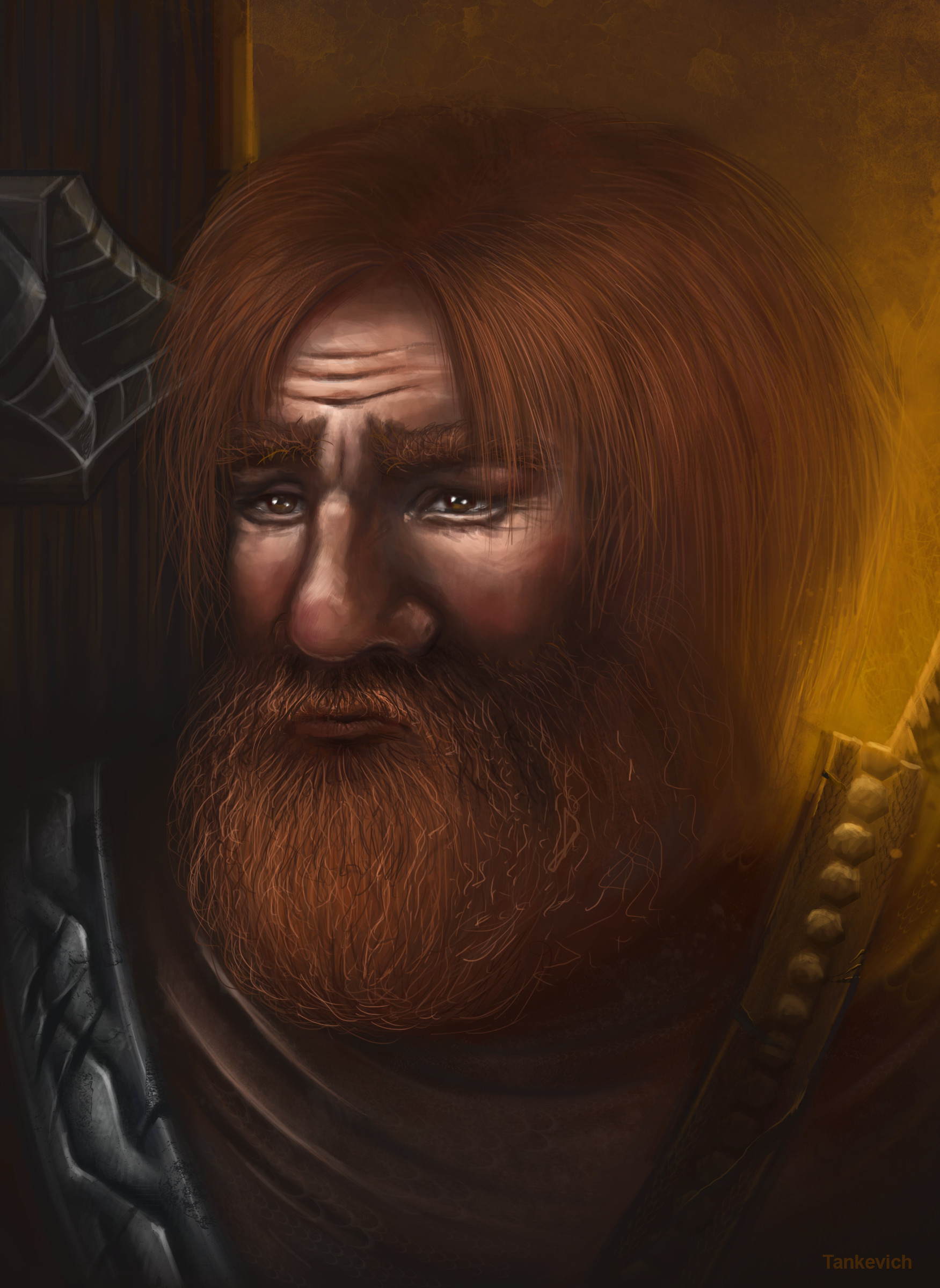
Kirstie was raised in a well-to-do situation in a house situated on a fine piece of property connected to the village of Strindlos in Trondelag on the Trondhjemsfjord. Strindlos meant loose thread. Located south of Varnes and Oglo (igloo) and across the fjord from the Frosta peninsula that Kirstie called Frosta the Snowman when she turned five, Strindlos was not exactly on the main trading route. Most trading ships stopped in the town that would become Trondheim, where the king’s lodge was located, or went further up the fjord to some bigger villages in the north. Strindlos, along with Varnes, the village on the Varnes River, required a side trip down a branch off the main fjord. People needed a reason to go there.

All the same, they lived well. Kirstie’s and her family had three men and one woman in the house who were thralls, which is slaves. They worked the land and kept the house and farm in good condition. That was especially necessary when Kirstie’s father went to sea to explore, trade, or raid. The thralls were well fed, clothed, housed, and treated almost like family, so they had no complaints. Kirstie never really thought of them as slaves. She called them farmhands, and when she turned six, she called them the scarecrow, the tin man, and the cowardly lion, even if she had no idea where those thoughts came from. The woman she called Dorothy, though it was not her name. At least she was able to name her puppy Toto, and she would not be talked out of it.

They had cows for milk, fowl for eggs, and pigs that ate all their garbage and spoiled leftovers, and eventually made bacon and sausage. For supper, they mostly ate fish of one kind or another that they picked up in the market, though they had good hunting in the forest, so they hardly had to eat fish every evening. They also had good fields to grow their grain and some cash crops they could sell in the market. And they grew their own vegetables and picked the fruit from the trees and bushes in season. Mama ran the farm, especially when Papa went to sea. But it was a good life, even if Strindlos did not get much in the way of fancy trade goods.

One thing Strindlos did have was a good forest and good lumber with which to build the longships and trading ships the people were famous for. Several shipwrights lived in the village, and by the time Kirstie was born, they had stripped the forest back nearly a quarter mile and created what they called the long field. The forest itself appeared endless, stretching all the way up into the mountains. Of course, no one thought about conservation back then. They just used whatever came to hand.

Because of the ship building and the ship repairs in an easily accessible dry dock, the village did get some traffic. They also built ships for the village men to go and get their own trade goods. When Kirstie was a child, they had three longship captains in the village. One never returned. Another ship returned, but under the guidance of Kirstie’s father. He was an excellent navigator, and if not a ship captain, he was the next best thing. The third captain, Kerga, eventually became the village chief. He was a hard man, not one to put up with any nonsense, but he willingly listened to what people had to say and was not against taking good advice.

When Kirstie was grown, there were four captains, old man Harrold, Jarl the Younger, Rune Stenson, and Kare Bronson who married Kirstie whether she liked it or not; but that occurred later on. First there were the ordinary and strange events.

~~~*~~~

Kirstie, Hilda, and Liv were in the village market one day looking for something special to celebrate Hilda’s twelfth birthday. Kirstie was ten. Liv just turned eight.

“I know. We should get some sweet sausages,” Kirstie suggested. “That is what Greta liked for her birthday.”

“Your invisible friend, Greta had a birthday?” Liv asked and smiled. Everyone supposed Greta was Kirstie’s imaginary friend, but the way Kirstie talked about her, Hilda was not so sure. She also wondered if there was more to it.

“What about Yasmina?” Some were concerned, not that young Kirstie had an imaginary friend, but that she had more than one.

Kirstie shook her head. “She eats things like goat and sometimes camel, and they are always very spicy.”

“So, Yasmina has birthdays too,” Liv said, and tried to sound serious, not scoffing. “So, how old is Yasmina?”

“She is my age. She is ten.”

“Of course. And Greta?”

Kirstie curled her lip and moved in close to whisper. “She died about seven hundred years ago. I remember.”

“But she had birthdays?” Hilda asked.

“Of course. She had many birthdays. When Greta got older, she liked lamb, or beef stew, but when she was young, she especially liked the sweet sausages.” Kirstie dragged Hilda to the table where the meat was set out to buy. Liv followed. They had to wait. Old lady Sif was there delivering the latest gossip to Frida, the meat vendor. Frida showed a frown on her face but said little as Lady Sif tended to babble.

“I tell you the Stenson farm was attacked not two nights ago. Rune is at sea, you know. Sigrid barely got her children out in time. The house and barn were burned to the ground, and all the livestock was stolen.”

“Who would do such a thing?”

“They say the Vanlil have come down from the mountains. They say old Chief Knud Lefthand is leading them. Gertrude by the Varnes says she saw him on a ridge leading a dozen men in arms either hunting or scouting, though her husband is not sure. He says it might have been the chief. What are we going to do? So many men are at sea. We only have the old men and boys to defend our homes.”

“Vanlil?” Hilda interrupted the woman to ask. “Who are they?”

“Vanlille,” Frida explained like to a child. “The little Vanir. They are the people of the mountains who do not know the sea or how to sail on it. They live in Jamtaland over the mountains…”

“Little Vanir?”

Frida nodded, but Inga arrived. She ran to join them. She looked at Kirstie like she had something important to say or do, but she heard the question, and Frida looked to the Volve in training to answer the question. Even old lady Sif kept her mouth shut to hear what Inga had to say. Inga glanced at Kirstie once more before she took a deep breath.

“The Vanlil are the old people who first came into the mountains in the days of water and ice, long before our ancestors came to this place. Some say they were driven into the mountains when the Aesirs and Vanir were at war. That was long, long ago. The Vanlil know the Aesir, but they worship the Vanir we know as Fryer of the sun, his sister Fryja of love and war, and their father Njord of the sea, with others. The odd thing about the worship of Njord is Jamtaland is landlocked. They have no access to the sea.”

“But it was not always so,” Kirstie said softly, and Inga nodded and continued.

“The gods of the Vanir are the Vanstor, and the people are the Vanlil. When the waters pulled back into the sea and the ice giants returned to the north, the Vanlil moved to the east, down into the hills, forests, and fields of Jamtaland. They have a few towns, or permanent villages where they grow their grain and keep their animals, but mostly they move about and hunt. For us, the rite of passage for young men is to be in battle, to kill an enemy. For the Vanlil, I heard the rite of passage is to kill the moose. I do not know that for certain.”

“But why would they leave their homes and come over the mountains to attack us?” old Lady Sif whined.

“You said it yourself,” Frida answered her. “They are being led by Knud Lefthand and probably the other chiefs and men who fled when King Harald Fairhair came to claim the great fjord of Trondelag, and all the people around.”

Inga and Kirstie both shook their heads, and it raised Hilda’s eyebrows, but her mouth stayed closed.

“That does not explain why the Vanlil should fight and maybe die for a people not their own,” Inga said, and turned her head to look directly at Kirstie. This was no glance. This got every head to turn to Kirstie. Just like Inga, Kirstie had to take a deep breath before speaking.

“There is another power driving them. Knud and the former men and chiefs of the Trondelag may themselves be pawns in the game, though they have been quick to take advantage of so many willing fighters.”

“What?” Liv scoffed in her best preteen voice. “Is this something you dreamed or just something you imagined?”

“But what is to be gained by attacking us?” Lady Sif could not hold it in. “We are a small, insignificant village off a branch of a branch of the sea.”

“We are not the target,” Kirstie said and looked at Liv, Hilda, and the women. She spoke when her eyes landed on Inga. “My guess would be they are gathering to fall on Hladir, the king’s place, and the town that built up beside it at the delta of the Nid River. From there they can easily cross the fjord, assault, and take Stadr, to control the narrow place and access to the sea. Then, I imagine they expect all the chiefs north and throughout the Trondelag will come over to their side. After that, it should be easy enough to push to the sea, if they are not invited. The people have had eighteen years of Harald Fairhair lording it over them, and some are not happy. I imagine Knud and whoever is with him believe now is the time to strike.”

They all paused to watch old Chief Birger and several old men trudge past them, headed for the big house, the Storthus, the place of meeting. Inga grabbed Kirstie’s wrist so she could not escape. She turned to Hilda and Liv. “Go home and make sure your family is safe.”

“Happy birthday,” Kirstie managed to say.

“Yes,” Inga agreed. “Happy birthday,” she said before she dragged Kirstie off after the men.

Medieval 5: K and Y 1 Twins not Twins, part 1 of 3

Kirstie

After 883 A. D. Trondelag, Norway

Kairos 104 Lady Kristina of Strindlos

Early in the 870s, a Norwegian chieftain by the name of Harald Fairhair defeated his enemies at sea and proclaimed himself King of Norway. Asserting his claim on land was not quite so easy. Eventually, the chiefs and petty kings who refused to submit, or simply did not like the man who would be king, were killed or driven out and sent into exile. Many emigrated to Danelaw or took refuge in the island ruled by the Angles and Saxons, or the Island kingdoms of the North Sea. Norsemen by the boatload fled to the north coast of France, and in such numbers the coast would one day be called Normandy or the land of the Norse. Plenty fled over the mountains to Jamtaland, and while that came back to haunt Kirstie’s village when she was young, some strange and some ordinary things happened first.

Three young men fought for Fairhair aboard the ship of Captain Birger of Strindlos in the fjord called Trondelag. They were Haken, Thorbald, and Arne the Navigator. Haken was pledged to a woman in Strindlos and after the war, he settled down to his farm and in 881 they had a daughter, Hilda. Arne brought home a wife Helga, from a trading expedition among the Swedes. She was a lovely woman and eighteen months after Hilda was born, in 883, Arne and Helga had a daughter that Helga, a secret Christian, named Kristina. They called her Kirstie. Two years later, Thorbald came back from a journey to Northumbria with a wife and baby girl named Liv. The men were disappointed at all having daughters instead of sons, but they loved their daughters well.

Yasmina

After 914 A. D. The Hejaz and North Africa

Kairos 105 Yasmina, Princess of Mecca and Medina

Curiously, at the exact same time Kirstie was born, another girl was born. It happened thirty-one years later and on a different day in a different month, but it was at the exact same time as far as the babies were concerned, as odd as that sounds.

Two men marched into the audience hall at the same time. One was a bearded warrior, well built, dressed in a fine uniform, a sword at his side. The other was a blubbery mess in a diaper and covered in sweat that his toga or big towel could not hide. They were both eunuchs come from the harem, but like night and day to look at them.

The soldier said, “My lord,” when he stepped up to the throne. He tipped his head like something between a bow and a salute. The Lord and the men he conversed with stopped talking to hear what the soldier had to say. The soldier smiled and nudged the man at his feet with his foot. The blubbery men who had prostrated himself lifted his head from the floor and spoke.

“Your blessed wife has delivered a child, a girl, you have a daughter. Your most fair wife has instructed me to remind you of your promise. I do not know what that may be, but your blessed wife seeks a name for the child. I was sent to ask that I may bear the name to her. I am yours to command.” He returned his face to the floor and shivered a little, not that he was cold in the ninety-degree heat and all that fat, but because he feared his Lord’s anger at not having a son.

The Lord of Mecca and Medina who ruled the Hijaz in the Caliph’s name smiled ever so slightly. “Tell my wife the child’s name shall be Yasmina, as we agreed. Perhaps next time she will have the good sense to have a son.”

“My lord,” the blubbery one said. He got slowly to his feet while he bowed and bowed. He backed out of the room before he turned and ran without ever looking up. The lord paid him no mind as he turned to the soldier.

“Captain Muhammad al-Rahim, my old friend and mentor. Now you have a princess to guard. Keep her safe above all.”

“My lord.” The soldier offered a full, formal bow, turned, and marched back to the harem.

Kirstie

Of course, neither baby had a conscious thought about each other, but in the back of their infant minds there seemed to be some kind of connection. Kirstie dreamed about Yasmina now and then, even about being Yasmina in a very strange and different world, but they were only dreams, weren’t they? She did sometimes wonder if maybe they were something more.

Kirstie and Hilda became best friends, and when older, Liv joined the group. Kirstie and Hilda sometimes treated Liv like a tag-along, but they were never mean to the girl, it is just that nearly four years difference between Hilda and Liv made it hard when they were growing and changing from girls to young women. Kirstie often had to mediate between the two, and Liv’s generally bad attitude did not help. Still, they did plenty of things together, and not just for the friendship of their fathers. In truth, Strindlos was a small village and there were not many options for friends.

One of the ordinary events happened when Kirstie’s mother had a son. The boy was born in 885, about the time Thorbald brought home his wife and daughter, but the boy died in his first winter. An all-too-common occurrence. A baby sister got born in 890, but by then, seven-year-old Kirstie was making her own way in the world. Her best friend Hilda was nearly nine, as Hilda said. “Nearly nine.”

Kirstie’s babysitter, or the equivalent in that day, was the orphan girl Inga. Mother needed the teenager to help when she had her son and then lost her son. That was a hard time for her. She needed the teenager again to watch Kirstie when she had another daughter because Arne was away guiding his ship and Kirstie was still too young to be left on her own. Inga did not mind, and it gave Mother a chance to slip the orphan girl a few coins, so it worked out.

Inga spent most of her time studying with Mother Vrya. Mother Vrya was the gray-haired Volve and village Skald, that is, the wise woman and storyteller. She was the old wife who told the proverbial old wives’ tales, and generally acted as the village pharmacist, healer, and all-around fountain of knowledge and wisdom, consulted by chiefs up and down the fjord which at least brought the occasional ship to Strindlos.

Kirstie got to sit in on some of Inga’s learning sessions and found Mother Vrya’s teaching fascinating. She also showed remarkable and sometimes spooky insight into many things she should not have known about. She claimed it was the good Doctor Mishka and Mother Greta from Dacia who told her about these things. Of course, she could not exactly explain who those women were because at age seven, eight, and nine she did not understand it herself. About the best she could do was say those women were in her heart along with her dream girl, Yasmina. At the same time, she said she was not a Volve, and she did not want to become one of the Skald. Her poetry was terrible. Kirstie said she would probably become a Shield Maiden and there was not anything they could do about it.

A Moment of Your Time

Thank you for reading.

Authors don’t get to say that much, but since I have this little platform I thought to say thanks, I hope you enjoy the free stories, and I would rather have them read than wasting away on some digital cloud.

I have several works, mostly Middle Grade or Young Adult SFF, that I still hope to publish commercially, but most of the stories posted here over the last 12 years are up (or being put up) on Amazon and D2D/Smashwords and are available to purchase.

It is hard for an independent and mostly unknown person to reach any sort of audience. I am told reviews make a big difference in visibility on the bookseller sites. If any of you who have enjoyed the stories on this site would be willing to take a few moments to leave a review on Amazon or D2D/Smashwords, that would also be much appreciated, but this post is not about selling anything. It is honestly just to say thank you to all you readers out there, You know, without readers an author is just whistling in the wind, or maybe talking to myself.

I have spent the last 15-20 years (depending on how you count it) writing the books I wish I had when I was growing up. It is good to know there are other people in this world who also enjoy them.

Peace, MGK

************************

MONDAY

Kairos Medieval book 5, Medieval Tales, ends with the final story. It tells the tales of two persons of the Kairos. Though separated by years, their stories overlap so in a real sense they grow up together. Kirstie is a Viking. Yasmina is an Arabian princess. For all the differences in their cultures and upbringings, there is a real sense that they are one.

Until Monday, Happy Reading

*

Medieval 5: Elgar 10 Guthrum and Alfred, part 2 of 2

Alfred sent out the word on April fifteenth to raise the army, what Elgar called tax day. The word was to gather at Egbert’s stone on May the first, or as Elgar yelled, “May day! May day!” Men came from all over Somerset, the largest army Somerset ever raised. Osfirth brought a thousand men from Devon alone. A large contingent came from inland Dorset, especially around Sherborne. Dorset and Hampshire did not strip their coastal defense, but the men from Hampshire, and Wiltshire for that matter were angered by the raids, and some in Wiltshire were doubly angry for being under Danish occupation.

Guthrum pulled his men in from Bath, Chisbury and the Malmesbury-Braydon area around Chippenham. He left his men in Wallingford and Oxford thinking to distract any army coming from further afield. Alfred, however, did not pick up many men came from eastern Berkshire, eastern Hampshire, Surrey, Kent, or Sussex, but in truth he did not need those men. With just the men who gathered between May first and fourth, Alfred’s men outnumbered the Danes three to two.

Alfred waited to make sure Guthrum came fully out into the field before he moved on the tenth. They met at Eddington where Elgar’s nephew Ian held the field with three hundred men on horseback. When the two great armies actually met, it was no contest. The Saxons routed the Danes at every turn. In the end, Guthrum had to take his decimated army back to Chippenham where Alfred followed and laid a near perfect siege.

Over the next two weeks, the eastern army out of eastern Berkshire, Surrey, Sussex, and Kent drove the Danes from Wallingford. The Danes in Oxford planned to fight until they saw the size of the opposing force. They agreed to peacefully abandon Oxford and return to London on Akeman Street and Watling Street so as not to disturb Berkshire and to stay away from Surrey. After those two weeks, when the eastern army showed up at Chippenham, Guthrum surrendered. Chippenham might have held out against the West Saxons for a couple of months, but Guthrum knew Alfred could just wait them out. Better to talk.

When Alfred, his ealdormen, and Elgar, Osfirth, and Gwyn representing the old men entered the room with Guthrum and his commanders, Alfred would only accept unconditional surrender.

“You think I am trapped here between my men and your men?” Guthrum growled. “You have no idea how trapped I am.” He took another chair and slammed it against the wall and broke it. “I am trapped between Heaven and Hell.” He unbuckled his sword and threw it after the chair before he fell to his knees and wept.

Elgar nudged Alfred, and Alfred got down beside the man and hugged him, which made him weep even harder. Elgar whispered to Osfirth and Gwyn, “Well, my work here is done.”

In good old man fashion, Gwyn responded, “What?”

~~~*~~~

Elgar helped Alfred pick out the locations for his thirty-three forts or Burghs that would defend Wessex against Mercian Danes or further intrusions. He helped Alfred design and build a fleet which could finally defend the coast of Wessex. Then he retired to his son’s house.

Alfred claimed Athelney Fort as an important place for the remembrance of the people of Wessex. It was from Athelney that Wessex, and maybe all of England was saved. And also, Alfred said, “Just in case.”

Eanwulf’s eldest son served Alfred faithfully as ealdorman of Somerset. The younger son got Watchet and took Elgar’s duty of the coastal watch. Elgar’s son finally got the house in Wedmore, so Elgar ended up living where Alfpryd did not want to go. Sadly, Alfpryd died several years earlier, but all their daughters made good marriages, so there was that.  Elgar’s daughter-in-law treated him like a dottering old fool. Elgar did not mind, though, he liked being pampered.

In his last year, Elgar had two visitors of note. The first was Pinoak who caught him up on the doings. Pinoak’s mother May passed away and Pinoak cried a little when he said his father Pinewood, and his great friend Deerrunner would not live much longer.

“It’s okay,” Elgar said and hugged the fairy. “We are all passing away, but life goes on. You just need to step up to lead. Your sister Heath, and your friend Marsham have moved to Northumbria where they are trying to keep an eye on Abraxas, the scoundrel. If you would not mind helping Reed keep an eyes on Alfred, all will be well.”

“I pray for my mother. Is that the right word? I pray that the source may find her time on this earth acceptable in his sight.”

“I am sure he will,” Elgar said. “And I pray for my old friends Gwyn and Osfirth, both of whom passed away recently.”

“I understand the king of Cornwall is looking at Osfirth’s son and thinking about getting Devon back. Osfirth’s son and Alfred are looking at Cornwall and agreed that if the man wants to start something, they will finish it.” Pinoak smiled. “As you once said, they may chase the man all the way to Land’s End. Alfred is talking about taking the rest of Devon and setting the border at the Tamar River. He is also saying Cornwall should be a client state, and maybe doesn’t need a king. Maybe an ealdorman would be better.”

Elgar nodded. “That sounds about right.” He chuckled, but just a little.

The other visitor came just a few days before Elgar finally passed away. It was Abraxas, and the first words out of his mouth was typical. “I am finally going to be rid of you.”

“Careful,” Elgar responded. “Don’t piss me off as long as I am alive, and I would not recommend it after I am gone, either.”

Abraxas stared at the ground for a moment before he confessed. “I can finally do what is in my mind to do.”

“It better not be trying to disturb history.”

“Not fair. Only you know what the future says.”

“Yes, and by the way, I was not happy that you put the fear into the Danes at Eddington. Alfred had things well in hand and did not need your help. I did not say anything sooner because that was the way things were supposed to go, so you guessed right for once… Don’t do it again.”

Abraxas looked at the ground again and looked like a child scolded. He vanished. He came to gloat but it did not work out that way.

Elgar thought it only fair to send a message to the future. Whoever I am in my next life, man or woman, sorry about that. I did get rid of the Flesh Eaters, not that they won’t be back, but sorry about leaving you with Abraxas. Maybe you will be lucky and be born on the other side of the world.

Medieval 5: Elgar 10 Guthrum and Alfred, part 1 of 2

As expected, Guthrum moved men into Chisbury, Wallingford, and Oxford, so along with his contingent in Bath he effectively controlled the northern half of Wiltshire and the western half of Berkshire. From there, he could raid Somerset, southern Wiltshire, northern Hampshire, once reaching all the way to Winchester, eastern Berkshire, and as far as Farnham in Surrey. While his ships continued to raid the coast, he expected Wessex to fall apart. All he did was make people mad.

His raiding parties were continually ambushed and came straggling back with nothing or did not come back at all. By April, it became hard to find men willing to go out from the protection of the towns. Guthrum’s men were frustrated, and not the least with Guthrum himself. The man did not seem to care what his army did. He locked himself away for days at a time and took his books with him because, unlike most of his army, he could read, being of the kingly line and having been educated in the court of the Danish king. He did not even seem surprised when he heard about the disaster in Devon and the death of Ubba. He simply returned to his room, slammed the door, and did not eat any supper.

When Guthrum first arrived in East Anglia with the Great Summer Army, late in the year of 871, he set himself to find out all he could about the people he faced, the Angles and Saxons as well as the Celtic people on the land. He read about the victories and defeats, especially the Danish failures in Northumbria and Wessex, and he gathered and talked to men who had been there. He knew Wessex would be hard to take and hold. He understood it took time to gather the army of Wessex and planned to move straight to the shore, at the root of the country where he could be supplied from the sea. He would work his way inland from there.

At the same time, and maybe it was inevitable, he wanted to understand who these people were. To that end, he got and read what sections of the Bible he could find. He spent days and weeks talking with the priests in East Anglia to get a firm Idea of what this faith was all about. He was a confirmed son of Thor, but this Christ began to eat at him.

When he argued with Halfdan Ragnarson and Halfdan took half of the army north to Northumbria, Guthrum warned him not to interfere with the work of the bishop in York and above all, leave Lindisfarne alone, not that he expected the man to listen. To be fair, Guthrum was not sure why he said that.

Guthrum burned his way to Wareham and got settled in the fortress there before Alfred could arrive with his army. Guthrum had taken hostages all across Wessex, but Alfred’s people had captured some of Guthrum’s men including a couple of ship’s captains from failed raids along the coast. It seemed reasonable to sit down and talk, at least about the exchange of hostages.

Guthrum learned that Alfred was building ships. They were presently in the east around Southampton, Portchester, and the Isle of Wight. Guthrum also noticed that unlike Athelred, Alfred was willing to listen to the men who knew about such things. The siege was well laid. Guthrum had no chance of breaking out of Wareham, much less raiding up into Hampshire or Wiltshire. And if the English were building ships, he knew his time in Wareham would be limited.

Alfred drew up a treaty to exchange hostages and where the Danes promised to leave Wessex, and Guthrum signed it. Guthrum talked to his English hostages, one of whom was a deacon that kept talking to him about the way of Christ, the importance of keeping one’s word and how it was the way of the strong to defend the weak and protect the innocents. It is fair to say Guthrum lashed out in anger when he killed the hostages and ran away to Exeter. For the first time, he fully understood what he did was wrong and worthy of hellfire.

Guthrum stayed in Exeter because of his indecision. Alfred followed and again laid siege to the town to force out the Danes, but Guthrum waited. He had relief ships on the way, a whole fleet of a hundred ships, and all the fighting men to go with them. When Alfred’s pitiful few ships arrived and blocked the Exe River, Guthrum scoffed. But when he learned that a storm in the Channel wrecked his relief fleet and scattered them all along the north coast of Francia, he yelled at his men and threw a chair across the room, breaking the chair.

“They could at least have had the decency to wreck on the shore of Wessex.

Once again Guthrum felt he had no choice but to sit down with Alfred and hammer out a peace treaty. This time, Alfred did not let him leave by sea. He forced Guthrum to march his men up the road nearly a hundred miles to Bath. There, the road would follow the border of Wiltshire and the Mercian client kingdom of Hwicce. Guthrum would be welcomed at any time to cross back into Mercia and leave Wessex alone.

Guthrum settled in Hwicce, including placing a contingent in Pucklechurch that could move on Bath when the time was right. Unfortunately for Guthrum, Hwicce was the most thoroughly Christian nation on the whole island with the believers making up almost one hundred percent of the population. For nearly a year, he could not go anywhere or talk to anyone without the word of God in Christ impacting his ears. He tried to focus on his mission, the conquest of Wessex, but he found it hard.

When Alfred came to Chippenham where he could keep his eye on the Danes in Hwicce, Guthrum thought of it as a gift. Turning the ealdorman of Wiltshire, Wulfhere, was not a hard thing. Dealing with Alfred’s spies took more finesse but it did not take long. He wanted to move on Chippenham over Christmas, but something told him to leave the Christian celebration alone. He broke another chair but waited.

When he finally moved on Chippenham, he was amazed Alfred escaped his hands. He quickly had men in Braydon and Malmesbury on the north end of the Avon River. His men met little resistance in Bath on the other end of the river. He decided for all his planning, Alfred must have been warned and escaped the city, but he had nowhere to go. He would soon be caught.

Guthrum sat in his room and stewed. He actually prayed but it took a long time for him to realize that was what he was doing. The Ubba disaster honestly did not surprise him. The lack of success of his raiding parties out of Wallingford, Chisbury, and Bath also did not surprise him. He figured out almost as fast as Alfred that they would have to meet on the battlefield and settle things once and for all. He fully expected that either he or Alfred would be killed, and that would end it.

Medieval 5: Elgar 9 Odda and Ubba, part 2 of 2

With the dawn, Ubba’s  commanders urged him to overrun the town, but at the same time, Ubba’s spies returned and reported. “They did not lay in any supplies and food. They don’t have any fresh water in the fort.”

Ubba turned to his commanders and smiled. “Why waste our men and blood? We have the gates blocked. We can wait a week and starve them out. Meanwhile, we can send out scouts to survey the area, west, south, and east. Let us see which way we can most easily move to enrich ourselves.”

“We had a good thing in Dyfed.” A man named Carlson complained. “Why did we come here?”

“Because.” Ubba retorted. “Guthrum has some five thousand men in his army. I am told Wessex can just about match that number. But an army cannot be in two places at once and right now they are focused on Guthrum. We can pick Devon clean and maybe Somerset, at least the western half of it and leave before Wessex can send any serious opposition. Then again, if Guthrum succeeds, we are safe here in the west end of Wessex to do as we please.”

“We have much to gain and little to lose if we play it smart.” One commander understood.

“Devon has not been in West Saxon hands for very long. They probably can’t raise much of an army. If we are patient, the men in this place will surrender when they get hungry enough and then Devon will be ours for the taking.” Ubba set about securing the siege on Countisbury and the fort while he selected the men to send out to scout and get a good grasp on the lay of the land. Those plans got interrupted when they saw men coming from the east.

Ubba’s men hurried to fortify that side of his camp. When he managed a count, he decided they only had three or four hundred men. “Probably the coastal watch from west Somerset,” Ubba said. “I don’t know how they knew we were here to come running, but it is a gift for us. We still have twice their number if you count them and the men in the fort together, and they are divided. It should not be hard to kill off one and then the other, and the coast of both Devon and Somerset will be ours for the taking.”

It sounded good in theory, but the dwarves picked up a second hundred coming through the Brendon Hills. Somehow, they got around Gwyn and his men and headed toward the coast and the twenty-three longships there. They had in mind first to make sure the Vikings had no means of escape. They figured with the ways east and west blocked by men, the Vikings only had the south as an escape route. They and their axes would happily chase the Vikings all the way to Dartmoor if necessary.

The Dwarfs with some judicious arrows from Pinoak’s people made short work of the hundred Danes Ubba left to guard the ships. Then they turned their axes on the ships themselves, though they mostly cut the anchors and shoved the ships out into the water. The water sprites in that area dragged the ships into the deep water where Ubba’s men could not get at them, and the dwarves were able to turn and face the Vikings in case Ubba sent his men to save the ships.

Ubba quickly turned his eyes toward the south, but he found no escape in that direction as the main force from Devon, about nine hundred men formed a wall and moved slowly forward. Ubba yelled. “Form up. Form the line. Make the wall. We can win this.”

“I hope,” Carlson mumbled.

Gwyn and Osfirth linked up and between them, they matched the Danes in numbers. it was a bit over twelve hundred Saxons and Celts versus a bit under twelve hundred Danes, and the Danes did not have time to set their order and keep any in reserve.

Copperhand yelled at the Vikings but he kept his dwarfs back from the men. Pinoak got the word that the Dwarves had come out of their place and what they were doing, and he told Elgar. Elgar yelled, but then he settled down and gave himself a massive headache, projecting his thoughts all that distance to Copperhand and whatever other dwarves might be listening.

You had your fun. You can stay back and prevent any Vikings that may try to escape down the shore or maybe try and swim to the ships, but let the men fight their own battle. Most of your people can’t tell the difference between Saxons and Danes, and if you start killing my Saxons I will be very angry.

Copperhand yelled back, but he kept two long ships intact as enticements to Ubba’s men, and in the course of the battle, there were some that made the attempt, so Copperhand and his got to chop up some Danes. They were not entirely disappointed.

Gwyn and Osfirth had mostly farmers and fishermen in their ranks. That just meant they had strong arms, backs, and legs. They could push a spear of swing a sword as well as any man, and hold their shields up all day long, but the Danes had mostly veterans of many battles. They had all the battle experience on their side and had learned some lessons the Saxons hardly imagined. Though the sides were about even in numbers, there seemed little doubt that the Danes would win the day, that is, until Odda moved.

Odda picked up another hundred men in Countisbury, plus he had a hundred or so men in green that he knew were Elgar’s people. They were in fact Pinoak’s fairies and a contingent of local fee, elves, gnomes, and such that manifested to help out. Odda knew if the Danes won the battle, he would be stuck with no food or water. He did not imagine he had any choice. He and his men charged out of the fort at the back of the Danes and hit them in the rear with five hundred new swords and arrows, The Danish line shattered.

Three men in their fifties ran with Odda and knocked him down. They knocked him down three times before the old man did not have the strength to get up again. He laid there in the grass and threatened the men. Those men understood, but they hovered around the seventy-year-old to protect him from the battle. In the end, Odda sat up and asked.

“How did we do?”

“Complete victory,” one of the men said. “Our losses were light. They lost their whole army. We have about four hundred prisoners.”

“Ubba?” Odda asked.

“Found. Dead,” the man said. Odda nodded, and two of the men helped him back to his feet.

************************

MONDAY

The story of Alfred and Guthrum comes to a different conclusion. Until then, Happy Reading

*