R6 Gerraint: Fort Guinnon, part 3 of 3

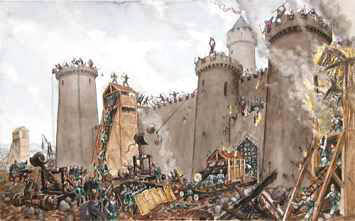
The Scots had plenty of archers to fire cover as men dragged up a great battering ram.  They tried to use their shields to protect themselves from overhead, but had limited success.  Arthur’s men wasted some arrows and soon turned to rocks.  They had some success with rocks.  Mostly, the fairy archers who crowded at the corners of the fort where they would not violate the orders to stay at the sides of the fighting, found a very easy shot into the side of the men on the ram.  It took some time and a hundred or more dead Scots before someone figured out to bring in a line of men with their shields held out to protect the sides.  They, of course, were then vulnerable from overhead, so it did not make the perfect solution.

The bang inside the fort sounded horrendous.  Men had to be forced to stay at their posts at the rear of the fort, because that was where the real action was going to take place.

The men at the back had three more catapults, and these dispensed with the pine and went straight to stone.  Every time a great stone hit the wall, some of the trees or a tree would chip away and that whole section of wall would shake, but the fort had been well built and would take some serious pounding.

The men at the back also had a battering ram, but the men there had much more trouble than they did out front, just getting it to the door.  Pinewood got his people to strike from the sides as soon as it rolled within range, and the men on the wall learned from the front and had big stones stockpiled by the time they arrived.

The difference between the front assault and the assault at the back seemed the numbers of men involved, and the ladders. The three towers got brought up on sleds over the mud and thin snow that covered the ground.  Pelenor confessed he had not thought of that.  And the men charged, and they had twenty-foot tall ladders, easily tall enough to reach the top.

Arthur’s men became hard pressed to keep the men and their ladders off the wall.  Some Scots broke through in a couple of places, at least temporarily.  Some made it down into the fort, but they did not last long.  Arthur had the men from the town, mostly farmers, merchants and craftsmen standing in reserve to defend their own women and children who were cowering in the Great Hall, the barn and barracks.  Kai’s young wife, Lisel, showed great courage in keeping up everyone’s spirits.  They sang hymns and spiritual songs and prayed.

Pinewood finally could not help himself.  He gathered his people on the back wall, facing the three towers.  As soon as they came within range, Pinewood sent barrage after barrage of flaming arrows into the green wood structures.  One burned and collapsed before it reached the wall. Men jumped for their lives.  One reached the wall, but it became a burning, unusable husk.  All it did was set that portion of the wall on fire.  The third reached the wall and spewed out some men, but it had also been set on fire and would not last long.  Some brave Scots climbed up the ladders and followed the first out of the tower door, but soon enough, that became impossible.  Pinewood and his fairies got small and zoomed back to their posts on the side, at the corners, only now they had to fire sometimes down into the fort itself, when they found a good target.

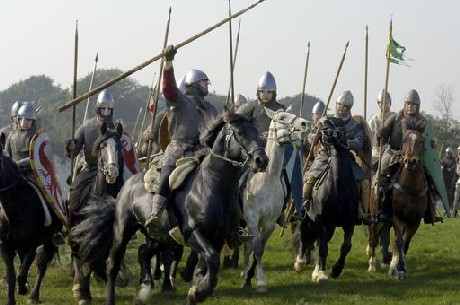
Gerraint waited until the main force of Scots charged. He had eight hundred men on horseback, ready.  Pelenor swore, ready to attack the Scots from the rear, but Peredur and Tristam kept him in check.  Gerraint took the three hundred footmen in their group and charged the catapults. It did not take long to end the resistance, and then he turned the Scottish catapults against their own men who got all bunched up beneath the wall, trying to scale ladders and get up the towers.

Boulder after boulder smashed into the Scotts while the majority of Gerraint’s footmen erected some quick entrenchments against footmen and possible cavalry, as the Scottish horsemen finally figured it out. They were holding back, ready to rush the gate once the gate got broken, so they had a more objective look at the whole battle.  They turned as a group, about five hundred, and prepared to rush the catapults.  They only had a second thought when they heard a resounding shout, “For Arthur!” and eight hundred lancers came pouring out of the woods.

Up front, the wood walls of the fort were in flames everywhere, and despite the years of weathering and flame retardant stains, the flames looked to be spreading.  The front wall had to be abandoned in most places.  With that, it looked certain that the Scots would break down the gate.  Kai got his men ready for the inrush of the enemy, and he rounded up as many horses as he could, not an easy task.  The horses were in a panic over the flames and smoke.  The great stables were untouched, but the barn was burning and there looked to be holes in the roof of the Great Hall where the fires got put out. When Arthur met Kai at the stables, he looked excited.

“Tristam is out back with maybe a thousand riders.”

“But I fear they may break in the front door,” Kai countered even as a fairy zoomed up to their faces with a message.

“Percival is out front.”

Kai danced for a moment before he gathered what horsemen he could.  Arthur did not dance, but he gathered his own.

Percival, having seen the smoke, charged from nearly two miles down the road.  He never stopped, sliced through the line of Scotts waiting to charge the fort once the front gate opened, trampled the Scottish archers who were drawn up originally to keep Arthur’s men pinned down on the wall but who were being picked off one by one by the fairy archers in the corners, and stopped, temporarily, when he sent the men on the battering ram running off in panic.  In fact, the whole thousand Scotsmen in the frontal attack decided that escape would be preferable to death, and ran.  Death looked certain with Percival’s arrival and no one stopped to count and see that they outnumbered the lancers three to one.
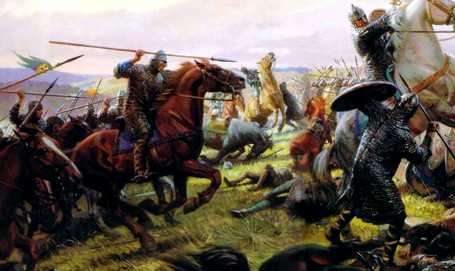
The front and back gates opened at once. Arthur and Kai rode out with more than a hundred each at their backs.  While a band of RDF rode to shut down the catapults out front and accept the surrender of whatever remained of the Scottish command group after the Elves finished with them, Kai and the rest joined Percival in driving the Scots back toward the wall, and they showed no mercy to any Scots who were slow.

Out back. the Scottish army started to withdraw, but it became a route when they saw their horsemen downed everywhere they looked.  They lost their towers, made little progress with the ladders, the gate held up to their pounding, while they were being pounded from above.  Now, with their cavalry destroyed, and Arthur and more enemies pouring out of the fort, they gave up.  Out back, it became nearly a thousand men on horseback chasing almost three thousand on foot, and they also showed no mercy on the slow.

Gerraint, meanwhile, had figured out where the Scottish commanders were.  They were on horse, at the back of their cavalry where they could keep an eye on the progress of the battle.  When Deerrunner got contacted by the fairy scout Gerraint had assigned to Percival’s traveling troop, he sent word to Bogus, lest the dwarf be upset at being left out of the fun.  Deerrunner and his elves knew it was not fun.  It was serious business, but dwarfs were strange ones.
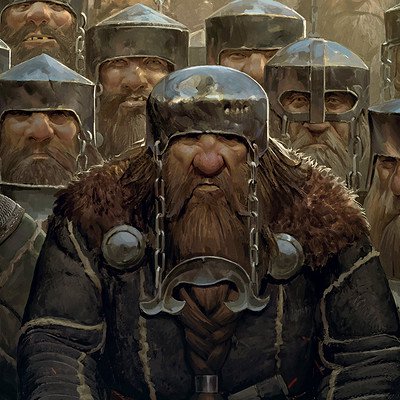
Once Gerraint ascertained where the commanders were, he set Bogus and his dwarfs to encircle them, using whatever glamours and disguises they needed to get in close.  He did not want the Scots to get away, and became willing to use the phrase, dead or alive.  When the Scots began the withdrawal that became a route, the commanders were the first who tried to ride off and escape.  Bogus sprang into action.  Dwarf axes chopped off most of the horses at the knees, which Gerraint later called a great waste of horse flesh.  He felt less concerned about the twenty men who died to those same dwarf axes, and actually felt pleased with the five that the dwarfs let surrender.  He never knew how dead or alive might be interpreted, but he suspected goblins and ogres and trolls would rather interpret that as dead.

When Ederyn and his foot soldiers showed up around four that afternoon, he set his men immediately to help put out any remaining fires, check on the survivors, and in small groups, scour the immediate countryside for any lingering Scots.  Arthur, Kai, Percival, Tristam, Bedwyr, Pelenor and Peredur would not return until the following evening.  When they did, they found everything in as good an order as possible, and Gerraint and Ederyn had almost a hundred prisoners, including the leaders of the Scots. Fort Guinnon had sufficiently burned to where Arthur suggested tearing it down and starting over.  Kai agreed, and then he found Lisel among the dead. Three Scots broke into the Great Hall, and she stood in the way so the women and children behind her could escape into the back rooms and out the back door.

Arthur considered several ways of dealing with the prisoners, but in the end, he left that decision in Kai’s hands, knowing full well what Kai would do.  Kai had them hung and left on the one standing wall of the fort, the wall that faced north, and the Scots stayed there for weeks for any Scots who might be tempted to know what happened to their commanders.  Then he said he was going to build a true Caer, like Caerleon, big enough to hold a whole legion.  And he was going to build it out of stone, not like the wooden disaster the Saxon pirate Hueil built at Cambuslang.  He went to a growing port on the bay made by the Clyde river, and he thought he might name the Caer after his wife.  That building would take him the rest of his life.

************************

MONDAY

A misunderstanding with the Saxons need to be settled before the challenge of meeting the Scots and Danes, who appear to be working together.  Until then, Happy Reading

*
R6 Gerraint: Fort Guinnon, part 2 of 3

Things were going along so well by the late fall, when the first snows fell, Arthur thought to take a trip out of York.  He went guarded by five hundred men, so the journey moved rather slow, but he needed to get out, not the least from under Meryddin’s gaze.  Curiously, it was Meryddin who suggested the visits.

Arthur visited Loth first, and Loth made a grand show of welcoming him.  Loth declared how pleased he felt that things with the Scots appeared to be settling peacefully, and without bloodshed—though there were a few minor incidents.  Arthur accepted Loth’s praise, but he did not stay long.  Seeing Gwenhwyfach and Medrawt made him uncomfortable.

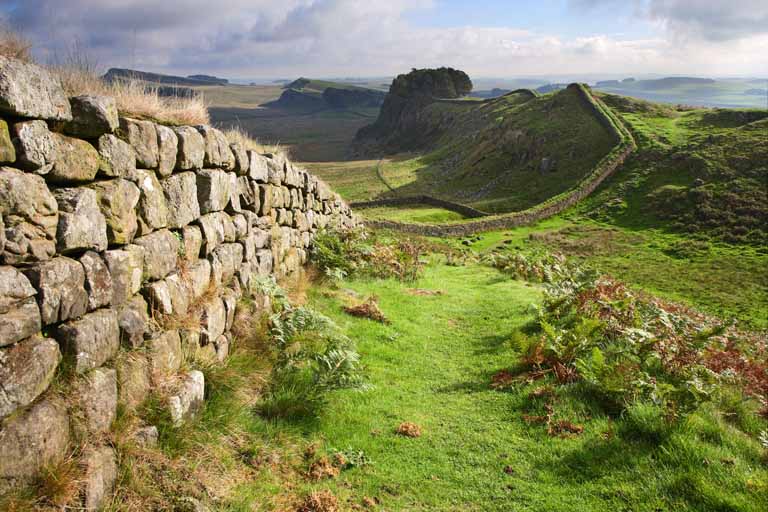
He brought his five hundred along the wall itself until he reached Kai’s home in the Fort called Guinnon.  Kai said he felt uncertain about what might really be happening among the Scots.  He said there seemed to be something else going on besides the families peacefully emigrating into Britain.  Arthur did not want to hear that, but Kai’s worry proved valid when they awoke one morning to find the fort surrounded by several thousand Scottish warriors. Arthur had telegraphed where he headed by moving along the wall, and the Scots concluded if they could get rid of Arthur, Britain, or at least north Britain might be theirs for the taking.

Kai had three hundred men stationed regularly at the fort, and with Arthur’s five hundred, that made a considerable force. But eight hundred men was not exactly a fair match against several thousand, even if the eight hundred had fort walls to hide behind.  Arthur knew he got in a bind.  His army remained scattered all over the countryside in small groups.  There were an additional eight hundred foot soldiers at York he could call on, but he had no way of sending them word of his predicament.

The assault on the fort that first day was not serious.  The Scottish commander tested their defenses, and the Scots were soundly beaten back. After that, it looked like the Scots appeared in no hurry.  They must have figured they had a couple of weeks before word of what was happening reached York, and probably a couple of weeks after that before all of Arthur’s men could be gathered.

As it turned out, on that first morning, Lord Pinewood found Gerraint with his troops traveling slowly up a back road. Gerraint immediately sent fairy messengers to all the other troop commanders and to Captain Croydon in York. He made a command decision not to gather all the troops back at York and then make a long march to Fort Guinnon. He told everyone to ride to Arthur’s relief as soon as possible.  He feared the time might be short.

Peredur and his troops were the first to arrive, and they made a dash for the front gate.  They found too many Scots outside the gate.  Peredur got part way to his goal and stalled.  It would have been worse if Arthur had not seen.  He hobbled together two hundred men and made a dash out of the gate to come to Peredur’s relief.  It became enough to break the hold around Peredur’s men, but the sheer numbers of Scots soon began to tell, even if they were initially caught by surprise. Peredur and his men were able to make a break for the open countryside and escape.  Arthur had to withdraw again behind the strong fort walls.  But Peredur lost nearly a quarter of his men, and they accomplished nothing.

The Scots did not chase Peredur out into the wilderness.  The Scottish commander may have concluded that one of Arthur’s wandering groups got closer than his scouts reported, but the numbers of any given group would be small. They would watch, but not worry about it.

Pelenor arrived and found Peredur licking his wounds. “We need to wait for one or two others,” Pelenor concluded.  “Let’s watch first and see what their plans are, and then see if we can disrupt them.” So, they set in to watch while the Scots felled lumber and built great siege towers they could push up to the wall.

The towers were built in the woods where they could remain hidden from the fort, but Peredur and Pelenor watched closely. Peredur argued for a quick strike to set the towers on fire before they could be used.  Pelenor insisted in this late fall mud the contraptions would never reach the walls before they bogged down or fell apart.  They were still watching when Tristam arrived and almost rode to the relief of the fort before they could stop him.  Since Peredur’s attack on the front gate, the Scots had entrenched their position and would have shredded Tristam’s men.

Tristam also argued in favor of destroying the towers before they could be completed, and Pelenor conceded to being out voted. They were just in the process of drawing up plans when Gerraint arrived and changed the plans again.

“You are focused on the wrong thing,” he said.  “We need to strike at the workers and drive them off, but leave the towers standing as a temptation for more men to come and continue the work.  Then we hit them again.  They suffer enough casualties and they won’t be able to convince enough men to finish the job.”

“I see that working twice, maybe.” Tristam said. “Then they will post a large guard on the work.”

“So we burn the towers on the second strike,” Pelenor said.

“Yes,” Peredur agreed.  “But Gerraint has a point.  Our effort needs to be focused on disrupting the army, not their building project.”

They argued for a time before they were set, and in the process, they realized that the main force of the enemy collected outside the small, back gate rather than the front.  Gerraint offered the obvious conclusion.

“They strike the front gate at dawn with enough men to draw the fort defenders to the front.  When the fighting gets fierce, they bring up their main force with the towers to the back and break in against light resistance.”

“Like a fox,” Pelenor said.  “But considering where they are building the towers, I have no doubt what you say is true.”

Arthur was not about to be fooled, especially after word arrived via fairy messenger.  He could see the Scots gathering by the front gate, but he could not really tell what might be happening out back.  He might have been taken in by the ruse if Gerraint had not warned him.  Even so, he realistically had to split his forces, with half up front to repel the attack there.  He felt sure, given the overwhelming numbers of Scots, all eight hundred might not be enough to repel the frontal assault, much less the bigger assault on his rear.

Lord Pinewood came to the fort with his fairy archers, flying over the wall in the dark, and that became some relief for Arthur.  But Pinewood told Arthur he had been commanded only to watch the walls on the sides, the one overlooking the farm fields and the one overlooking the village, long since burned to the ground.  He was not allowed to participate in the fight at the front and back gates, and had strict instructions to leave if the Scots broke in.

“I’m grateful for whatever you do,” Arthur said. He understood.  He did not want to see the fairies killed any more than Gerraint.

Pinewood had not finished.  “Of course, a square has a front side and a back side too, you know.”  Arthur wisely said nothing.

When the expected dawn came, and it felt hard to tell because the sky turned so grey and overcast, the attack got delayed.  Out back, the Scots managed to save three of the seven towers they were building and decided that was enough.  Three thousand men were chomping at the bit, wondering what might be wrong up front.

Up front, the commanders of the attack were being pinned down by elf archers.  Percival had prevailed on Gerraint’s fairy messenger to seek out Deerrunner and his troop to meet them at the fort.  He picked up Bedwyr on the way, and with Ederyn only a half day behind, he only hoped to arrive in time.  The only trouble was two of every three men were foot soldiers.  When Ederyn caught up with a forced march, that gave Percival three hundred on horseback.  The six hundred foot soldiers would need rest, even those not on the forced march, but Percival became determined to waste no more time.  He and Bedwyr rode off into the night.  They imagined the footmen might arrive sometime late the next day.

Deerrunner managed to pin down the commanders for the frontal assault.  No amount of circling around was able to fool the elves, though the Scots did not know who they were.  The Scots imagined they were some of the men who harassed the tower construction and sent a troop of horse men to roust them out.  But the horsemen were slain with inhuman skill, the elves rarely needing more than one arrow to finish the job, and the Scots still could not move.

Somehow, word went out to the line officers, and the attack began, but things did not go as well for the Scots at the front gate as they might have gone.  The fort, built like many forts in the day, had stone six feet high and whole logs rising another ten feet above that with a walkway on the back, also wood, four feet from the top.

The Scots had three catapults, not the small, portable ones Arthur and Gerraint so cleverly devised, but good old fashioned clunkers.  They might have done some real damage heaving stones into the fort.  They might have been a real problem heaving stones against the wooden part of the wall.  But the Scots were so impressed with the damage and terror caused by Arthur’s pitch and tar mix, they tried to do the same.  They did not have Arthur’s formula for the oil and grease mess that spattered fire and could not be put out with water, but they did their best with pine branches full of tars and resins.  Most shots hit the wall, whether intended or not, and they did set sections of the wall aflame.

R6 Gerraint: Fort Guinnon, part 1 of 3

Arthur caught up with Gerraint while he healed from his wounds.  Percival, Uwaine, and a whole troop from Caerleon came with him, and they escorted Gerraint to Cornwall where they saw him vested as high chief of the land. All of the lords of Cornwall declared their allegiance, along with the lords of the northern province of Devon; but then, like Tristam at Tintangle, they were mostly cousins of one sort or another. More telling were the towns, ports, and small cities like Exeter who did not hesitate to declare Gerraint their protector.

Gerraint moved things in a medieval direction by requiring men at arms from all the lords, towns and cities when the need arose to defend the land.  He levied a small tax, most of which got used to maintain the forts against pirates and keep the roads passable.  In this way, Cornwall became something of an independent kingdom, a condition that would remain for several centuries.

When Marat, the Irish prince, moved a force into the land and laid siege to Tintangle, Gerraint gladly accepted help from Arthur in a large contingent of the RDF, but he told Arthur not to mobilize. Gerraint raised the troops from his own people, a kind of test, and they broke the siege, and Tristam killed Marat, and that was it.  Arthur felt pleased that it did not cost him.  The people of Cornwall felt pleased and proud to accomplish the defense of the land, as Gerraint told them.  Everyone seemed winners, but from that day on, Cornwall began to move in its own direction.

Marcus died early in those days.  Cordella and Melwas came up from Lyoness and all but pledged their loyalty to Gerraint’s leadership.  Melwas was not the strongest leader.  In fact, Cordella ran their lands, as far as Gerraint could tell. And though this happened a good ten years before the disaster that hit Lyoness and sank most of the land into the ocean, from that point, Lyoness became like a third province in the Cornish kingdom.

Gerraint’s mother held on, but contented herself with her grandsons and avoided all the politics.  Gerraint found that despite his mixed feelings about his stepfather, the man had been an excellent and well organized high chief.  That made Gerraint’s job easy, and left him little to do. Those few years were good years overall. And Gerraint and Enid became like new, young lovers, and were very happy.  They had a third son giving them Peter, James and John, all named by Gerraint. Enid insisted she be allowed to name their daughter, if they had one.  But she did not feel disappointed with another boy.

Love, in those days was never so sweet, but of course, it did not last.

In the late spring of 512, word came that the Scots had broken the line of Hadrian’s wall.  Most of the Ulsterites moved into the north country, but those Picts that remained banded together to defend the eastern coast and the high country.  The north became a struggle, and while Gerraint wondered why any Scots would think British soil would be easier, he finally decided the rich land and warmer climate would be enough for some.

Loth sent no word.  His lands included the fort at Edinburgh, technically in Scottish territory.  Kai claimed Loth encouraged the Scots, but Arthur did not believe him.  What Arthur did believe was he would have to call in some men and head north.  He did not send out the general alarm because Croydon at York reported no army.  Some were raiders, after a fashion, but many came as migrants with women and children.

Gerraint called only the three hundred, which got back up to full strength.  Melwas sent a hundred and Tristam raised twice that in Devon.  Together, they rode for Cadbury, where Arthur called the men to gather.

In Cadbury, Gerraint first saw the attention Lancelot paid to Gwynyvar, and the affection she so evidently returned.  He never thought they had anything like a love affair.  Gwynyvar loved Arthur and was one who took that vow seriously, and Lancelot, the younger man, was all about honor and devotion to one’s duty; but they were very familiar with each other, or one might say, very close friends.  Arthur never said anything.  He let it slide, and once again Gerraint imagined guilt. Medrawt was a growing boy.

“The Welsh are an independent minded lot,” Arthur said in council.  There were hardly six hundred men to match Gerraint’s offering where they could have supplied two or three times the men.  There were a hundred from Caerdyf, another hundred from Morgana and her immediate neighbors, a third hundred from Ogryvan, Gwynyvar’s brother who was well aware that his other sister, Gwenhwyfach, lived in the north of Britain and thus presumably in danger.  That meant only three hundred men came from all the rest of Wales.

“Still tied too much to the old ways,” Percival suggested.

“Listening to Meryddin,” Gwillim translated.  “Not inclined to make war on the Scots and their druids whom they think of as cousins.  It would be a different response if we were after Angles or Saxons.”

“Maybe.”  Gerraint did not commit.  He knew that some were talking about Amorica where the old ways still held strong and the church was small.  The church started growing in Wales, like in Ireland, and that made some uncomfortable. Indeed, the church started making headway everywhere in Britain, Wales and Cornwall, but some were resistant.

“Well, good old Bedwyr sent a healthy group from Oxford even if only a handful from Londugnum,” Arthur said.

“I’m not sure there are more than a handful left in Londugnum,” Gerraint spoke up.  “Most of the trade between there and the continent is now run through Saxon and Angle hands, like it or not.”

“I can vouch for that,” Gwillim said.  “Brother Thomas says it is hardly worth running ships from the Thames the way the Angles tax everything.  He constantly reminds me that most of the Angle-Saxon people are just ordinary merchants and farmers, like us.”

“Anglo-Saxon,” Gerraint interrupted.

“Anglo-Saxon,” Gwillim tried the word.  “But he says their tax on the transportation of goods is too high.”

“I am inclined to agree with Bedwyr.  It isn’t the common people, it is the lords and warriors among the Germans who want to expand their lands,” Percival said.

“Anglo-Saxons,” Gwillim and Uwaine corrected him in unison.

“That makes sense to me, too.”  Someone spoke from the doorway.  Arthur’s old master Peredur came in, and Ederyn and Pelenor were with him. Peredur and Ederyn smiled and looked glad to see everyone.  Pelenor remained stoic.

“Seems to me, we have the Scots to worry about right now,” Pelenor said.

“Our men are gathering on the road to the north,” Peredur said.  “We should be able to pick them up on the way.”

“On the way,” Arthur mumbled, as Meryddin came in. Arthur called for Gwyr to give his report on the numbers.  There were eighteen hundred Britains gathered by the time they reached York, and with the twelve hundred from Cornwall and Wales, it was a pretty sizeable force for a limited call.  It was far more than a young and inexperienced Arthur could raise, but since then, Arthur had proved himself a winner.  People were more inclined to come out and support a winner.

###

Arthur formed seven groups of roughly three hundred men each.  Gerraint took two hundred of his own and the hundred from Lyoness.  Tristam took his two hundred and a hundred from Cornwall. The other five groups were more mixed, but Arthur made sure each of the other groups had at least one hundred trained RDF men.  Routes were devised, and all summer and well into the fall, the Scottish immigrants got tracked down.  North Britain had become fairly depopulated after the sons of Caw ravaged the land. Many Scots were found rebuilding abandoned villages and sewing abandoned fields.

All that time, Meryddin stayed in York, to advise Arthur and keep contact with the groups in the field.  He wrote regular letters, and while later, many suspected he wrote to the Scots and passed along information, nothing could ever be proved.

All of the Scots found in northern Britain were given a choice.  First, the leadership had to confess Christ, build a church, and bring in a priest. Second, they needed to submit to the laws levied by whatever British lord in whose territory they lived, and become good British citizens.  Third, they had to acknowledge Arthur, son of Uther as their high chief and war chief and submit to his judgment on all matters pertaining to the common defense of the land.  If these three conditions were willing to be met, the Scots could stay and rebuild the land. Rejecting any one of these conditions meant safe escort back north of Hadrian’s Wall.

The Scots were not unfamiliar with Christianity even if they were not sure exactly what it was all about, but many were willing, and the church quickly found volunteers who would be glad to instruct them. In the north, Kai and Loth more or less split the land between them, but there were many lesser chiefs who answered to them and helped in the defense of the wall.  The Scots had to find out whose land they were actually on and make peace with their lord, but again, most were willing.  As for Arthur, most of the Scots were glad enough to have him on their side.  So most stayed, though some did take the escort back across the wall.

R6 Gerraint: Over the Mountain, part 3 of 3

Gerraint awoke in a tent, or maybe a pavilion, it seemed hard to tell, lying on his stomach the way he was.  He knew it was red, but he imagined some rather odd things for Britain in that age—namely silk.  He wondered very briefly if maybe he died and this was his next life, but he really only had one thought.  “Enid?” He could not speak loud.  “Enid?”

“I am here.”

Gerraint heard, but could not see her.  He tried to turn his head, but his shoulder felt immobilized.  His leg also seemed to be in some kind of traction.  And every part of his body hurt, except his little toe on his right foot, he decided.  “I’ve been having bad dreams, really nightmares.”  He tried to turn his head a little more, but she stood out of sight. “Really, I would be ashamed to tell you what I dreamed.  I was awful. I doubted you.  I’m sorry.” He began to cry softly.  “I love you, and I will never doubt you.  Not for real.”  He began to weep and found his head cradled by Enid who also wept.  She kissed his head and then very gently moved to an angle where she could touch her lips to his.

“And I will never doubt you,” she said, and they cried together until exhaustion took Gerraint back into a deep sleep.

“Mother.”  A woman stood in the doorway.  Enid stayed seated in a high-backed chair at the woman’s insistence.  Lord Pinewood stood beside the woman dressed in his hunter’s green.  “Mother.” the woman called again, and Gerraint woke up just enough to offer no objections.  Danna came, and the goddess slipped out of the braces that had Gerraint immobilized. She stood and acknowledged Rhiannon and commanded one thing.

“Explain.”

Rhiannon stood with something in her arms that looked like a giant, translucent caterpillar.  She petted the beast like one might pet a kitten, and she talked.  “It was Meryddin.  He told me about a good young couple he was very concerned about. He said the man was upright, but the wife had a wandering eye for the men.  He asked to borrow the incubus for only a short while and convinced me if the woman could only see herself and the harm she was doing she might be cured and become faithful and they might be a happy couple.  I knew the incubus was a danger.  Given time, it will drive a person to madness, insanity and death, but Meryddin was persuasive, and I thought if only for a short time it might do what he proposed.”

Danna interrupted.  “But he lied to you, and you believed him.  He meant it for Goreu all along.  Goreu came to believe Enid was the one who had the wandering eye and the wandering hands and that she was betraying her wedding vows and betraying him in the worst sort of way.  Yet he still loved her and would not give up on her though he was conflicted about what to do.  He considered locking her away, and at the same time he threw himself into combat, thinking if he was killed, Enid might be happy.”

“After months alone and then months keeping innocent Enid prisoner, with no one the wiser, Lord Pinewood found him on the first day of their journey.  He flew without rest to Lake Vivane to plead with me, saying Gerraint had something on his back.  I thought it nothing, but his pleading was so earnest, at last I thought to see for myself. Thus I found him, the incubus on his back.”

“Merlin.” Danna spat the word and turned to Enid.  “A djin is a creature that delights in torturing and tormenting humans.  They feed off the fear and pain and in the end consume the poor human soul. Meryddin is one quarter djin.  The chance to ruin Gerraint’s happiness in just this sort of demented way says to me that he has made peace with that quarter of himself.”

“I helped,” Rhiannon admitted in a moment of full confession.  “He came to me in agony, and I helped him see that he was not to blame for his birth and he need not give in to the evil.  He is gifted, and can use those gifts for good.”

“Oh, Rhiannon.  When will you stop falling prey to every sad face with big puppy-dog eyes?”

“But we got it in time,” Rhiannon said.  “Gerraint held out for a long time.  I am sure he had help through time, and he loves Enid so very much.”

“Not the point.  The point is what to do about Meryddin, and I think for now we do nothing. We watch him, but don’t let on that he is being watched.  If he learned and does good, we leave him alone.  Goreu may have been an isolated case.  He does not know who Goreu is, but he has an instinctive fear of him.  For now, we wait and see.”

“I made all that happened seem like a bad dream, a nightmare for him,” Rhiannon said.  “I had to do it while the incubus was still attached.  You know even a goddess cannot touch the mind of the Kairos in that way.  But hopefully the bad dream will fade in time.”

“I, on the other hand, will not be able to hide the truth of what happened forever.  He will remember sooner or later, and then I suspect there will be some decisions to make.  Rhiannon, you understand some of it will fall on your head.”

“I will accept my punishment, only don’t be mad at me.”

Danna stepped forward and gave Rhiannon a kiss on the cheek.  “Just stay away from the wrong sorts of men.”  She turned to Enid.  “Did you understand all this?”

Enid nodded.  “It was not Gerraint.  It was that incubus telling him stories that were not true and making him believe the stories.  But now I have him back to me and he thinks it was all just a bad dream.  Yes?”

“Yes, and Meryddin?”

“He has always scared me.”  Enid shivered.  “As long as I don’t have to watch him.”

Danna was glad to hear no desire for revenge.  “You need not watch him.  Pinewood?”

“Day and night,” Pinewood said, with a slight bow.

Danna nodded and got back into the harness and braces. She went away and Gerraint came back to mumble that he felt thirsty.  Enid gladly rushed to bring him some water.

************************

MONDAY

Arthur, Percival, terrain and Uwaine are called to the north.  The Scots are acting like maybe they overcame the Picts and are now looking south.  They want control of Hadrian’s wall, and maybe a good slice of fertile, sparsely populated British soil as well.  Don’t miss it.  Happy Reading.

*

R6 Gerraint: Over the Mountain, part 2 of 3

They traveled through occasional woods that punctuated the meadow grass at this altitude.  Enid concluded this poor excuse for a road Gerraint had chosen led them high through the hills.  She imagined, in better days, this could have been a pleasant ride, out among the wildflowers.  But she did not let her imagination take her from reality.  The sky turned gray and overcast, and so did she.  She had long since given up wondering what she could have done.  She concluded that all she had done was love him, and that was all she was going to do.

At noon, she stopped because a tree crossed the road as an effective roadblock.  She felt uncertain what to do, to speak or not.  Gerraint came up and she held her tongue.  He got a bit of rope he carried with him, tied it to the small end of the tree and to his saddle and his horse pulled until the tree got moved enough to make a path at the side of the road.  He waved at Enid to go around and continue to ride out front while he retrieved his rope. but she did not go far before she called out.

“Gerraint.”

Gerraint hurried, and he got surprised when he saw a man in the middle of the road.  Enid stood on her feet and to the side of the road, worrying her horse’s nose.  He wondered why Enid did not just ride off with the man, but then he saw that this man appeared richly armored in fine chain mail, and sported a long spear such as the Romans used to carry.  Another attempt to see him killed?  He wondered.

“This is my road,” the man said from beneath his helmet. “You cannot pass unless you pay the toll.  I must see all that you have to determine how much you should pay, so please be good enough to empty your bags on the road.”

Gerraint said nothing.  He put on his own helmet, mounted and grabbed his lance.  Then he spoke.  “This is Arthur’s road.  Toll tax is forbidden.”  He charged. The man started a little behind, like this was not the usual response, but he did not start far behind.

They crashed.  Gerraint did not get the best hit on his opponent.  The man was much smaller than he first appeared in the saddle. The man did get a good hit on Gerraint, but his spear splintered on Gerraint’s shield and those two hits combined were enough to unseat the little man.  Gerraint’s shoulder got bruised from the blow, but he appeared to have the upper hand until he looked and saw his lance had cracked.  He threw it to the ground and pulled his sword as he leapt to his feet.

The little man got to his feet and began to bob and weave around the road, sometimes ducking under Gerraint’s sword hand. He got a couple of good blows into Gerraint’s side, not enough to break the chain, but sure enough to leave a mark. Then he ducked under Gerraint’s backswing, and Gerraint put out his gloved hand.  He hit the little men right in the face hard enough to knock him to the ground and bloody his nose.  He tried to rise, but Gerraint brought the pommel of his sword down on the man’s helmet. He left a big dent and left the little man on his knees.  Before Gerraint could do anything else, the little man pulled a knife and stabbed Gerraint in the thigh.  Gerraint howled but used that leg to kick the little man in the chest.  He flew several feet before he landed hard and he lost hold of his sword.  Gerraint stepped up to finish things when the little man cried out.

“Mercy Lord.  Mercy, please.”

Gerraint paused while he pulled the knife out of his own leg with a tremendous cry.  He turned the blade so the point would be in the little man’s face, but the man had his eyes closed like he might be praying.

“On condition,” Gerraint said.  “Henceforth the road is free.  No more travel tax, and you respect the travelers who come through here.”  He stepped over to take the little man’s sword.  “And don’t make me come back here to enforce the rules.”  When he looked up, he saw Enid crying again.  She looked overjoyed at his victory, but terribly worried about the wound in his leg.  She looked to be suffering from holding her tongue.  Gerraint thought she was play acting, and might have said something except he heard something else.  It sounded like twelve or fifteen horses riding hard across the fields, skirting the woods.

When the little man heard, he grinned ferociously. Gerraint figured the man’s gang rode to finish the job.  Enid heard and covered her eyes in her fear, but then Gerraint heard something else. It sounded like bowshot followed by men shrieking and screaming.  Then the sound of the horses stopped, and Gerraint had a comment.

“Probably Deerrunner and a pocket of elves, or maybe Pinewood and his fairies.  In either case, do I need to ask some of them to stick around and make sure you keep the conditions?”

“No, Lord.”  The little man looked horrified by the thought, and twice terrified by the fact that his men were likely all dead.

Gerraint said no more to the little man.  He turned to Enid with the word, “Ride.”

Enid rode, but looked back.  Gerraint strapped up his cracked lance and got on his horse, but it looked hard.  He felt pretty banged up from three would-be rapists and now the little man.  What was more, he did nothing for the wound in his thigh.  He did not even wash it, and that would be a sure risk for infection.

All afternoon they rode.  When the rain finally came mid-afternoon, their pace hardly slackened.  Enid felt sure they had traveled over the heights by then and were headed down toward some distant valley.  She desperately wanted to stop and be allowed to tend his wounds, but he would not stop. After sundown, they entered a village and procured a room.

This time, Gerraint made Enid stay with him while he tended the horses.  Then he took her upstairs and told her to stay in the room.  He would have locked her in if the door had a lock.  He went downstairs and had a very plain supper of bread and meat.  He tried not to drip too much blood on the furniture.  When he felt satisfied, he took a chunk of bread and a jug of water for Enid.  He found her already on the floor and the fire well lit.  They did not need it.  The weather had warmed, but they were still rather high in the hills.

“Here.”  Gerraint gave her the bread and water and went immediately to lie down on his back. His leg throbbed, but all the same, he did not stay awake long.  He awoke when she ripped his pants leg and began to wash his wound.  She had a strip of cloth from the bottom of her own dress to use as a bandage.  Maybe he lost too much blood so he did not have the energy, or maybe he just felt too tired, but he made no move to stop her.  He imagined she might be cleaning his wound with poison.  At the moment, he did not care and went back to sleep.

###

In the morning, they began their journey again, now clearly down the hill that Gerraint guessed was Mount Badon.  They were not far from Bath.  Gerraint ached for the first two hours before his muscles worked out the kinks.  He thought when they arrived in Cornwall in two or three weeks, he would kill the first man that talked to her.  It had been a long time since his childhood days of exploring the fort in every nook and cranny, but he remembered a dungeon cell that might be cleaned up and fixed up with furniture.  That seemed like the only place he could think to keep her where she would not have a chance to get her hands on another man.  He meant her no harm, but she should take her vows more seriously, instead of being such a harlot, which by then he felt convinced she was.

By mid-morning, Gerraint’s ears picked up a call for help. Though Enid rode up front, he galloped right passed her and she had to catch up.  No doubt the sound of horses scared off the robbers.  They found a young woman in the woods by a gentle stream, just off the road, and a young man on the ground, not moving.

“Three giants,” the woman said, and pointed in the direction they fled into the woods.  “They killed him.”  She appeared hysterical.  “They killed him.”

“Stay with her,” Gerraint told Enid, and he rode straight into the woods after what seemed an easy trail to follow.  Apparently, the so-called giants were not worried about being followed.

Gerraint unstrapped his lance and yelled, “For Arthur,” but it became the only warning he would give.  They were not giants, but they were as big as Gerraint, and one looked bigger.  They turned around at Gerraint’s shout, and good thing because he was not one to stab people in the back.  The lance stayed together well enough to run through the first, but then it became so many splinters.

The biggest man appeared lightly armored, and Gerraint thought that broad chest would be a good target for his long knife, Defender. The man yelled and fell off his horse when Defender penetrated several inches.  That left the third man alone, but that man had a spear, so Gerraint leapt out of his horse and tackled the man.  The spear fell out of reach.

They wrestled for a moment and shared their fists before swords came out.  The man knew his business with a sword, but it had been learned.  Gerraint had all the experience in the arena of kill or be killed and soon enough he crippled the man in the legs and followed through with a clean cut across the man’s middle.  Then his shoulder caught fire with pain as the big man brought his big sword down on Gerraint from behind.  He may have been aiming at Gerraint’s head, but he caught the shoulder with a powerful blow.  It broke through the chain mail, broke several bones and cut a big, gaping wound.

Gerraint called for Defender, and his knife, of its own volition, vacated the big man’s chest and flew to Gerraint’s hand.  The man howled and lost the grip on his sword. The sword fell out of Gerraint’s shoulder as he turned, and in one powerful backswing, sliced through most of the man’s neck so the head lolled back and dragged the rest of the body with it.

Gerraint managed to wipe and sheath his blades, though it felt like agony to do it.  He dragged his broken body up into the saddle, his arm hanging all but useless at his side.  The wound in his leg broke wide open again and he had a struggle holding on to his horse. But he became concerned about the women being left alone beside the road with only a dead body to protect them. When he found them well, he slipped off his saddle and fell to the ground.

R6 Gerraint: Over the Mountain, part 1 of 3

Gerraint felt reluctant to go home.  He kept thinking how beautiful Enid was, and how much he loved her, but he feared that maybe she turned from him when he went away. She certainly had the young men interested wherever she went, and Gerraint feared that one of those men might have turned her head during his long absence. It ate at him, and at times he became enraged, even at simple things.

Enid spent most of her lonely days at Caerleon in the company of Gwynyvar, but that summer she received word that Marcus Adronicus became ill.  He sent word searching for Gerraint, because Gerraint would need to be chieftain for Cornwall as Marcus became convinced he was dying.  Gerraint’s mother, who had grown close to Enid and her children, pleaded for her to return home, saying Cornwall would be her home as Queen for the people.  Enid came, but they still heard no word from Gerraint.

That fall, Gerraint returned to Caerleon and took his anger out on the practice fields.  By then, he felt sure Enid did not return his love and only coveted his position.  He felt certain she had a secret lover, and maybe more than one.  And as he knocked man after man from their horses in the practice field, he began to wonder if even his sons where his.

Enid found him in Caerleon, and she sent for him, but he did not come.  Word came from Gwynyvar that said Gerraint was fighting some kind of madness and neither Arthur, nor Percival, nor Uwaine, nor any of the others were able to reach him in is fevered state.  She suggested that maybe Enid could reach him and bring him back to sanity, not knowing Enid as the source of his madness.  Enid needed no other invitation.  She left her boys in their grandmother’s good hands and crossed the channel to Caerleon.

When she arrived, Gerraint took her to his home in town and locked her in.  He stayed in the home, often sitting alone in the front kitchen, and fretted and stewed in his anger.  She cried every day, not knowing how to reach him.  Every night they lay there, side by side, but he would not so much as touch her or let her touch him.

Gerraint hired an old woman to cook and clean.  At first, he let Gwynyvar and some of the ladies visit, but he soon got the notion that they were carrying messages from Enid’s secret lover, so he ended those days.  Arthur came once with Gwynyvar to try and reason with him, but he would not let them in the front door.  He almost said something about Arthur’s infidelity with Gwenhwyfach, but by some internal grace, he managed to close his mouth as he closed the door.

He sat for months, until he finally got the notion that even the old cook might be acting as a go between for Enid’s lover, and he let her go.

###

Word came in the late spring that his step-father was indeed dying and Gerraint would be expected to take on the responsibilities of Cornwall.  He said nothing.  He saddled two horses, made Enid ride on one while he followed behind.

“Ride out front, far enough away from me where I don’t have to hear your weeping.  Those tears aren’t going to work on me.  And don’t talk to me unless I talk to you first.”

Enid rode, but slowly, and all she could think was this was not her husband and she wanted her husband back.

From the beginning, Gerraint turned them off the main road and on to some back trails and farm paths that hardly qualified for roads. He did not want to be followed out of Caerleon, and in the back of his mind he thought he might run into some thieves who might kill him and then Enid would get what she wanted.

When he got to the top of a hill, he saw Enid talking to a hunter on horseback who had just come out from the woods ahead.  Enid made the hunter wait there while she rode back to tell Gerraint.

“The kind gentleman has invited us to sup with him,” Enid reported.

Gerraint’s anger flared and he lowered his lance and charged.  The hunter turned and rode quickly back into the woods where he would not be caught, and Gerraint stopped and turned back.  “I told you not to talk to me,” he yelled at her.  “Ride out front.”  Enid turned, did as asked, and wept some more.

They were still among the trees when it got dark. Gerraint pulled them off the road and told Enid to watch the horses.  He went to lie down, and slept.  At dawn, Enid still dutifully watched the horses.

Around noon, they came out of the woods and into some fields where people were working, tending the crops.  A fine-looking village lay nestled on the hillside far in the distance, and a young woman with a large basket came up the road.  Enid passed pleasantries until Gerraint caught up. She turned and told him this young woman was bringing supper to the men in the fields and would be glad to share what she had.

Gerraint acted gracious to the young woman and gladly received what she offered in the way of bread and meat.  He asked about the village, still some distance ahead, and learned that there was indeed an inn, though there were not many travelers on this road.  Gerraint said thank you, and as the young woman walked toward the field and the workers, he said to Enid, “You just can’t shut-up, can you?”

Enid wanted to say something more, but held her tongue when he said, “Ride.”  She continued out front but felt for the moment devoid of tears.

Gerraint got a room at the inn.  There were a few other guests despite the word to the contrary. He saw the horses taken care of, and entered the downstairs room in time to see Enid sitting quietly by the fire and a big, ugly man walk away from her to sit with two other men.  He almost hit her for entertaining the man, but instead they ate and went to the room where he knocked her to the floor.

“You sleep on the floor and tend the fire,” he growled and took himself to the bed to sleep.  Enid fretted for a time.  She dared not speak to him.  She felt afraid, but in the end, she became more afraid for him than of him.  If need be, she would die for him, but she was not prepared to watch him die.  She woke him and spoke.

“That man by the fire said if I would not go with him, he would come in the night and take me by force.”  Gerraint made no answer, but rose and dressed.  He dragged Enid down to the horses which he saddled. He gathered his equipment and told her only one thing

“Ride.”

She rode out front, far enough to not be able to speak to him.  She prayed as she rode, a bit faster than before, and she kept looking back to be sure he kept up.  Fortunately, the moon came up and the stars were bright, and they rode between the fields so there were no long shadows to interfere with her sight.

Gerraint heard the horses long before they became visible.  He knew it was his elf ears.  Then he saw the three riders long before they could see him.  That was his dark elf eyes.  He put on his helmet and pulled his lance to be ready before they were on him. He charged, and that took the riders by surprise.  He ran the big old man straight through the middle, and the man made a sound of death, but he grabbed the lance as he fell from the horse so Gerraint had to let it go and pull his sword, Wyrd.

The man who ended up beside Gerraint had his sword out as well, but looked confused.  He swung wildly in the dark and struck Gerraint’s side below his arm, but Gerraint’s chain armor stopped the weapon, making only a bruise. Gerraint’s swing was more accurate. He sliced above the man’s chain, easily slicing through the man’s neck.

The third man kept trying to get around the big man’s horse, and cursing, but when he saw his comrade fall, he looked ready to bolt.  Gerraint got his horse in the way.  They traded sword swipes several times before the seasoned soldier in Gerraint took over and he cut the man’s arm before he cut his neck as well.  This man fell to the ground.  The other still pranced around, a dead body on horseback.

Gerraint got down, cleaned his sword and returned it to his back.  He pulled out his lance, noted that it had not cracked or broken and strapped it again to his saddle.  Enid came running up.  She threw her arms around him and cried.

“Gerraint.  I was so worried about you.”

Gerraint stepped back.  “You are not to speak to me unless I speak to you first.  Your job is to ride.”  He shoved her toward her horse and got up on his own.  He had wondered why Enid did not offer herself to those men at the inn, since she could not keep her hands off other men. He decided it had been a ploy to entice the men to kill him.  Her life would be easier without a husband.

They left the dead where they lay and rode well into the night.  Enid began to weave in the saddle.  This had now been two nights when she had not slept, and Gerraint had not become completely heartless.  Indeed, that seemed the trouble.  He loved her, and he could not be a monster.  He would never hit her or harm her, or see her harmed no matter how much he might feel like it.  He caught up to her and took the reins of her horse.  He lifted her sleeping body out of the saddle and laid her in a field. He watched over her and the horses, and sat to contemplate just how cruelly his life had turned.

By dawn, he imagined she had slept four hours. The sky threatened a late spring rain, and he felt anxious to get going.  He woke her and made her get back in the saddle while he spoke one word to her.

“Ride.”

This time she said nothing.  She merely lifted her chin and rode out front, alone.

R6 Gerraint: Claudus, part 3 of 3

They had serious casualties on both sides, but by far the Romans took the worst of it.  Among the footmen, the Roman short sword, while good in phalanx formation, proved no match for the Celtic early broadsword in one on one combat.  The Celts took a toll of almost three to one. The horsemen did even better, likely topping four to one, and the archers better still.  Barely one in ten made it to the top of the rise, thanks in no small part to the elves.  At the top, the Romans either surrendered or quickly fell prey to a dwarf ax or some other hobgoblin sword.

Uwaine, who got lost in the confusion of battle, found Gerraint again even as Lord Birch gave the score.

Gerraint lost a few little ones and he wept.  He lost some brave men from Cornwall, and he doubly wept.  But it was not long, and he looked at Lord Birch, he realized he saw things on the battlefield he had no business seeing—things that were much too far away for normal eyes, like seeing Claudus in his chariot.  He got angry before he put Fairy eyes on the list with his dwarf nose and elf ears, and eyes that could probably see even if he had no light at all. He sighed and sniffed, and quickly took Uwaine to find Arthur among the troops.

“Nothing ever goes to plan,” Arthur said, as he walked among his own men cut down in battle.

“No, but sometimes it works well enough,” Gerraint agreed.  He dismounted to walk and Uwaine held the reigns of all three horses.

“Your knights gone?”

“Yes, and most of the little ones back to the Lady of the Lake’s castle or the Bringloren forest.”

Arthur merely nodded.  After a minute he said, “Excalibur is an excellent sword.  It sliced a Roman sword in two.  A bit heavier than Caliburn though.”

“Diogenes always liked it.”  Gerraint paused to picture one of those short swords cut in two. Couldn’t have been much left.

Arthur and Gerraint halted when Percival and Hoel rode up.  Hoel smiled, and while not unaware of the serious nature of the moment, he just could not help himself.  “Remind me to stay on your good side,” Hoel said, as he got down from his horse to join them.  Arthur did something unexpected.  He hugged the man, and suddenly there were a few tears in the old man’s eyes.

Lionel came up next, and he came in a hurry.  “Howel is wounded,” he shouted, and they made him calm down enough to tell what happened.  A Roman planted his spear in the dirt and struck Howel in his shield. He knocked him back, right off his horse.  The spear nicked his shoulder, no big deal, but he fell on a sharp rock and bruised and cut his bum.  He is lying on his stomach on a stretcher and the only thing he keeps saying is “I am so embarrassed,” and, “How embarrassing.”

“He said nothing else?” Percival asked.

“Ouch?” Gerraint suggested.

Lionel grinned sheepishly and whispered.  “He said don’t tell anyone.”  He raised his voice.  “But I said I would tell his father.”  He returned to a whisper. “But I can’t help it if other people overheard.” He tried not to laugh.  Hoel tried to look stern, but he couldn’t.

“Better go comfort the boy,” he said.  They heard the laugh as he rode off.

“Before I go,” Gerraint took Arthur’s attention. “When my small troop went after the auxiliaries, Lancelot saw and sounded the horn.  Bohort saw and lead some five hundred to join us.  Two-fifty on three thousand would have been rough. They are good men here in this country.”

Arthur agreed but asked, “Where are you going?”

“Greta can help a small number of those good men,” he said.  “I’m sorry there is only one of me.  Percival and Uwaine.”  They were ready to protect her with their lives.

Greta sewed up Howel’s butt and kept telling him to shut-up.  She imagined he never got a good look at her, being on his stomach and all.  Urien, the Raven, had a cut in his arm, but not a bad one. Gwillim took an arrow in his shoulder, and that proved a bit tricky.  Both of them were drunk when she found them, so she felt certain their eyes could not have been in focus.  “Old Celtic cure,” Uwaine called it.  Greta felt the fewer of Arthur’s men who got a good look at her, the better.  Not that they would ever put her together with Gerraint, but on principle it felt better not to give such big hints.

By far, the wounded she treated were cut in their legs, the only place a foot soldier could reach a man on horseback.  Some might lose their legs, some might never walk well again, or run or ride well, but some would heal.  There was only so much she could do, and at last she got worn to a frazzle.  “I am done,” she said.  She pushed the hair and sweat from her eyes, splashed cold water on her face, took off her red cloak and opened the top button of her dress to fan herself.  Her breasts became only slightly exposed, but Percival stared and Uwaine turned away.  She thought they were being silly, but when she came to the tent door, she said, wait here a minute, sweetly.  She went in and hardly a second later, Gerraint came out.  “She only said wait a minute,” he said and walked off.  They caught up.

There were five thousand not only beaten, but broken Romans who walked back to Provence.  Arthur buried his dead by the fort, and stayed to finish the building. Hoel sent most of his dead home for burial and then took Arthur on a tour of the land.  Hoel still felt concerned about the Franks, even if Claudus was history.  Hoel found excuses.

Meryddin showed up shortly after the battle, and he seemed his old affable, nasty, and overprotective of Arthur self.  He may have been part of the reason Arthur got delayed.  Amorica still overflowed with believers in the old ways.  The church made few inroads in the land, and it seemed to Gerraint that Meryddin kept looking for ways to drive the church out altogether. Gerraint thought that Meryddin worked on Arthur to show him the value of keeping to the old traditions, but he felt confident Meryddin would not get far with that.  It never occurred to Gerraint that Meryddin might be working on him as well.

Arthur stayed all spring, even after most of his men went home.  Bohort, Lionel and Howel stayed busy taking Lancelot to the port to see the British off.  They delighted in getting Lancelot drunk and introducing him to what they called a nice young woman.  Lancelot accepted the challenge, as he accepted all challenges, but then he stayed with that nice young woman for several months and did not play the field, and he respected the young woman who did not know how to take that. When that young woman became pregnant, she refused to burden Lancelot with that knowledge.

Arthur stayed all summer, but come the fall he convinced Hoel to let him take some of the young men including Bohort, Howel, Lionel and Lancelot and train them to the lance and in the way of Rapid Deployment. Hoel agreed, and they set sail on a blustery day for Caerleon and home.

************************

MONDAY

Gerraint returns home after months away.  He loves Enid, but he wonders how she managed to keep those months.  He begins to doubt.  Don’t miss next week’s chapter, Over the Mountain.  Until then, Happy Reading


*
R6 Gerraint: Claudus, part 2 of 3

Gerraint found he could see better than he used to in the dark.  He imagined it like the dwarf nose and the elf ears.  He tried not to let the thought bother him, and turned to Manskin who stood beside him in the dark.  He had come up from Bringloren with the complaint that he did not know Gerraint planned to have so much fun toying with the humans.  His goblins and the few trolls they brought with them wanted in on the action.  Gerraint allowed it on the condition that they be gone by dawn.  He let them haunt the Roman line and keep them awake, especially at the end of the lines where the attacks would come.  He knew the Romans would be half broken by the time the attack came, and Manskin just kept grinning like the cat who caught the mouse.

Numbknuckles, the dwarf chief, Ringwald and Heurst came up to report that the elves and dwarfs were ready.  Gerraint already knew that Lord Birch and young Larchmont had the fee in the trees on the edge of the Vivane, ready to fly to whatever point on the line they might be needed.  More effective than reserve cavalry, he thought, and suddenly doubled over from guilt. He despised putting his little ones at risk, even if they were happy to do it.  Percival came over when Gerraint moaned.  The little ones vanished as Percival expressed his concern.

I’m all right,” Gerraint responded.  “I just don’t like the killing part.”  He tried to smile.  “Twelve thousand years, past and future, and I pray I never get used to it. Now I have a special task to discuss with my two-fifty.”  He mounted his horse and rode to his men.

When the sun began to rise, the horsemen came out from behind the line of archers and bunched up a little on the edge of the plains. Clearly, the Romans expected an infantry charge and set themselves to defend the field.  Also, clearly, they expected the Celts to be tired after charging across that long field, thus adding to their advantage.  A cavalry charge appeared unexpected and the Romans did not know what to make of it.

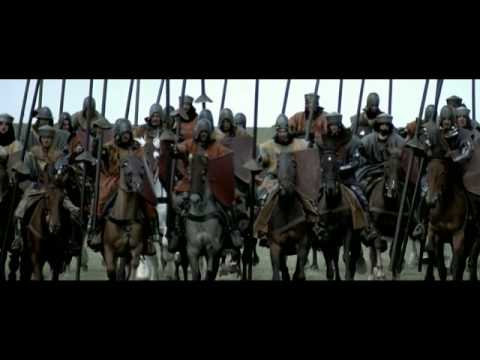
The knights of the lance came last to the field and formed a perfect arrow head shape.  They appeared an incredibly imposing sight, reflecting back the sunrise into the eyes of the Romans.  Each Knight sported a symbol on the small flag at the top of their lance, on their shield and on their tunic.  Every knight sported a different symbol—no two alike, and Gerraint surmised it would be the only way to tell one from another.  The Knights did not wait for the horsemen to fill the space.  Gerraint and Percival barely got to shout. “For Arthur!” and hear it echoed by Arthur’s men before they started at a brisk walk.

A third of the way across the field, and the knights stepped it up to a brisk trot.  Two thirds of the way across, they began the charge and every lance came down in unison.  The Romans did not like it one bit, disciplined or not, and the whole center of the Roman lines on both sides broke and ran.  The knights and their fifteen hundred followers did not make nearly the noise at impact Gerraint expected.  He looked for a thunderclap, but the sound did not overwhelm the sound of running, screaming Romans.

When the horsemen broke through, they divided well enough.  The RDF set ahead of time which men would go which way, and they divided fairly evenly, taking their lances as close to the front as they could.  Arthur’s men went left to support Arthur.  Hoel’s men went right for Hoel.  Both Arthur’s and Hoel’s foot men charged the flanks.  It came late according to the plan, but Gerraint imagined they were in awe of the cavalry charge and probably did not think to move sooner.  It hardly mattered.  The flanks quickly fell apart, especially when the horsemen charged from their rear, and that left only one way for the Romans to run, across the field and up the rise toward the waiting bowmen.

Some of those Romans did make it to the line of archers, but they were so beaten and tired, they put up little fight, all except one man and his followers.  The man had to be seven feet tall and looked broad in the shoulders besides.  He swept Arthur’s and Hoel’s men aside with a sword altogether too big.  It looked like he and his followers might make it to the shelter of the forest and escape, but an eight-foot ogre came bounding out of the trees.  He tore the man’s sword out of his hand, along with his hand, and hit the big man on the head with his fist, crumpling the man’s helmet and the top of his skull as well.  Then he knocked the man down and stomped on him until he became mush.  A number of Arthur’s and Hoel’s men ran on sight of the beast, but some had the good sense to cheer and renew their efforts.  At that same time, young Larchmont and his fairy troop arrived, assumed their big forms, and shot every Roman in the area, so in the end, none escaped.

Gerraint knew none of this.  He held his two-fifty back from the fray and watched the knights of the lance.  The Roman cavalry had not moved, like men stunned to stillness, and the knights of the lance took advantage of the moment to form four long lines.  They charged the Romans, and Gerraint caught a whiff of divine wrath in their charge.  The Romans fled with all speed, and did not stop at the Frankish border.  Gerraint noticed the Franks brought up a small army, no doubt to watch and critique the battle, and he knew the Roman cavalry would not last long.

Gerraint turned his eyes to the camp and auxiliaries. Claudus was there in his chariot, a fine Roman affectation, but useless on the modern battlefield.  He looked busy arming and rallying his auxiliaries to charge the back of Hoel’s horsemen.  All those cooks and teamsters were slow to get organized, but Claudus had some Visigoths in his auxiliaries, and it began to look like Claudus might bring a credible force to bear.  Claudus watched his army be destroyed.  For him, it seemed an unparalleled disaster.

Gerraint turned and got his two hundred and fifty lancers ready to charge, but the knights of the lance got there first. They slammed into the auxiliaries, cracked shields, knocked men down made men run in absolute panic.  They tore up tents, knocked over wagons and threw everything into such disarray and confusion it would be impossible for Claudus to mount a charge.  Gerraint watched the knights pop out the other side of the camp and disappear, going back to Avalon from whence they came.  Gerraint also noticed that the knights killed no one.  They had not killed the Roman cavalry.  They just drove the enemy into waiting Frankish hands. In fact, Gerraint doubted they killed anyone in the initial charge.  They likely went through them like ghosts, the way they stood on men and tents that the men never noticed the afternoon before.

Gerraint turned to his men and said, “We must fight our own battles.”  Then he turned toward the Roman camp and yelled, “For Arthur!”  They charged on the echo from the men.

Two hundred and fifty men against roughly three thousand auxiliaries did not make good odds, even if the auxiliaries were not the best soldiers.  Fortunately, Lancelot saw and pulled a great horn from his belt.  He let out a blast which got Bohort’s attention, and he charged, Bohort and roughly three hundred men and half of the RDF on his heels.

They fought, faced plenty of resistance, but soon enough the auxiliaries surrendered in droves.  It may be because many of them saw Claudus’ chariot dancing around the battlefield with Claudus shot full of arrows.  Surrender was accepted.  And in fact, by then, Romans were surrendering and pleading for mercy all over the field.

R6 Gerraint: Claudus, part 1 of 3

Gerraint got an arrow and set it down on the table that held the chess pieces they were using to represent the enemy formation. He set the point right at the space between the two legions.  “Greta says we need a flying wedge.  Look at the shape of the arrowhead.  The knights of the lance can hold that shape.  All we have to do is stay between the lines.  We will break through and divide and circle back to hit the Romans from the rear.  Even the vaunted Roman phalanx cannot stand up to heavy cavalry, especially when attacked from the rear.

“Claudus has kindly left us this rise and these woods. He expects a dawn attack, but we should have no trouble rearranging our men under cover of darkness.  Hoel’s footmen will move here, to strike the Roman left flank.  Arthur’s footmen will move here, by the lake to strike the Roman’s right flank.  With attacks on their sides and rear, the Romans will crumble, but they will have only one place to run.”

“Yes,” Hoel said with a slight touch of worry.  “Right up this rise to where we are presently standing.”

“That is why we leave a thousand of our men, all our best archers, hunters here between the two groups of foot soldiers.  I have a thousand more, excellent archers, with axe men and men good with a blade to back them up.  Do not ask where they come from.  Do not ask about the knights of the lance.  Just trust they are on our side.”  Gerraint took a breath.  “I want this over.  I miss my family and I want to go home.”

“Where are these men of yours?” Grummon immediately asked.

“Trust me.  I have wings to fly that you know nothing of.  Eyes that see further, ears that hear better,” Arthur and Percival joined him at the last.  “And a reach longer than ordinary men.”

“Aha,” Feswich imagined the flaw.  “But you have forgotten the Roman cavalry.  As we fall on the backs of the Roman foot soldiers, they will fall on our backs to great harm.”

“You let the knights of the lance take care of the Roman cavalry.  When we divide to attack the Romans from behind, the knights will continue straight at the Roman horses.  I expect that struggle will not take long.”

“I have seen three of your knights,” Hoel said.  “Show me what you are talking about.”

Gerraint nodded toward the tent door and Arthur said, “Come.”  They stepped out and found two hundred horses standing in perfect rows and so perfectly still and quiet, everyone gasped, audibly, except Gerraint, and maybe Arthur. The Knights dipped their lances to the ground as the one knight had to Gerraint, Arthur and Lancelot in the forest. Then, without a word, they dismounted and fell in unison to one knee, holding tight to their shields, and their huge horses did not budge one inch.

“They will hold the formation,” Gerraint said. “All we need to do is ride between the lines.”  Gerraint smiled before he jumped.  Feswich started to reach for a Knight’s visor to see what lived inside all that metal. “No!  Don’t do that.  You don’t ever want to do that.  It is a great sin, and certain death to look upon a knight.”

Feswich paused.  The church presently only had a foothold in Amorica so the concept of sin was not widely understood, but the words certain death sounded plain enough. He wanted to say something, but Gerraint spoke over him.

“Please go prepare for the dawn attack, and ask Yin Mo to meet us in Arthur’s tent.  We will be there as soon as we can, and thank you.”

“Yes, thank you,” Arthur echoed.

The knights said nothing.  They mounted again in unison, peeled off row by row and headed back into the woods.  Only Gerraint seemed to notice, but it appeared that the knights had been standing on top of some other soldiers and tents with no affect and without those soldiers seeming to have noticed.  But by then Arthur began to lead the others back into Hoel’s tent to finish the conversation and finalize their plans.  Gerraint said nothing.

Two hours later, Gerraint, Percival and Arthur returned to Arthur’s tent and Arthur said it was a good thing they had the fort as a fallback position, if needed.  Percival started on an entirely different track.

“You know, now having seen real knights, every young man in Britain, Wales and Cornwall will aspire to be knighted. Probably everyone in Amorica, too.”

“I assume that was where the word knight came from,” Arthur picked up the thought and directed his non-question to Gerraint.”

“Yes,” he said.  “And history.  Soon enough every young man in Europe will want to be knighted.”  And he entered the tent and yelled.  “I said a hundred, like in Greta’s day.”

Yin Mo, now an elderly elf with a long white beard and hair reminiscent of Meryddin, looked unfazed.  “You said no more than Greta’s day, and there will be no more.”

Gerraint frowned.  He remembered Greta in the Temple when the battle took place, so she was not in a position to complain about there being more than a hundred. Gerraint wanted to yell again, but he figured he got committed, and Yin Mo was the expert on the Knights and their capabilities.  Gerraint decided not to pry.  He said simply, “Thank you,” and the elderly elf gave a small bow and faded slowly from sight until he disappeared.  Percival spent the rest of the evening squinting.  He did not mean anything bad by it.  He just tried to understand, but Gerraint had forgotten Yin Mo had such oriental features, and that was a very strange sight in Arthur’s part of the world.

Arthur’s men and Hoel’s men moved like union garbage men at four in the morning.  Bing, bang, crash.  Surely, they were telegraphing their plans, Gerraint thought. The archers had all been selected and they took up their position.  The horsemen saddled up and stood around, Hoel’s men in particular talking in uncertainty.  Many said this would not work.

R6 Gerraint: The Lady of the Lake, part 3 of 3

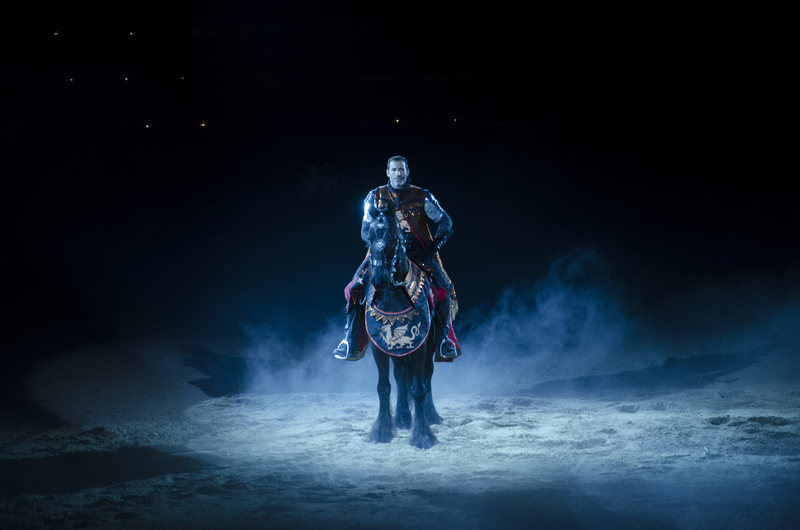
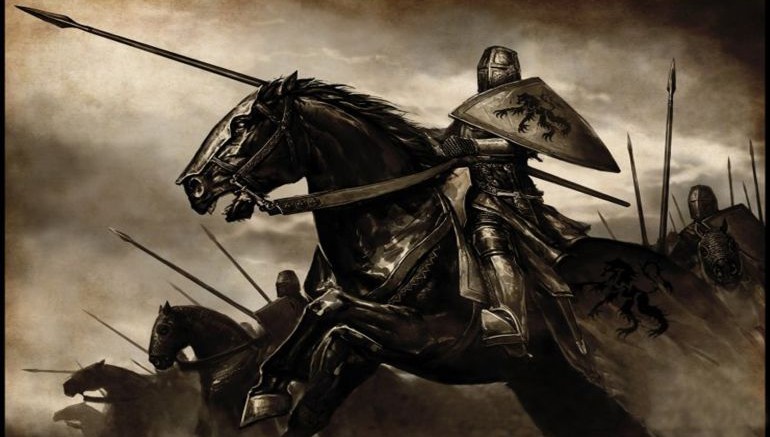
The horse looked bigger than any horse they had ever seen, its nostrils flared, and its breath came in great puffs like mist in the dawn of early spring.  The horse looked covered in a blanket that sported great crosses embroidered in the fabric.  The rider appeared covered head to toe in plate armor so that no part of his flesh could be seen.  He sat on a saddle with a high front and back, and stirrups for his armored feet. And he sported the biggest, longest lance they could imagine, with a simple flag tied to the lance that showed a figure eight on its side, the symbol for infinity.

“About eight hundred years ahead of yourself, wouldn’t you say?”  Gerraint was the first to speak.  The Knight lowered his lance and touched the ground in Gerraint’s direction.

“Who is this magnificent looking warrior?” Lancelot seemed enthralled.

“One of the knights of the lance from Avalon, the same place Excalibur came from,” Gerraint answered.

“Good sir knight,” Arthur started but Gerraint interrupted.

“No.  They don’t talk.  A vow of silence.”  He added that for Lancelot and took a step forward.  “And the answer is no.  No way. Tell Yin Mo no way.”

“No way what?” Lancelot asked.

“Is he volunteering to help?” Arthur, who had been around Gerraint for some time and knew better how to read his shorthand speech, guessed.”

“Yes,” Gerraint answered roughly.  “And a thousand more just like him if I let him.”

“But that would be perfect.”

“No.  It was bad enough endangering the kobold, brownies and fee under Lord Birch, but they were just scouts and kept their bows in the background.  They didn’t attack the enemy directly.”

“But.”

“No.”  Gerraint hesitated.  “Tell Yin Mo I will think about it.  Now please, if you don’t mind.”  He waved off the Knight who raised his lance, turned his horse, and in a few paces disappeared into the trees and the mist.  Even the sound of the horse crunching through the leaves vanished.

###

When Percival and his crew returned in the afternoon, there were six riders instead of five.  Bohort and Lionel went straight to Lancelot.  They had a lot to catch up on.  Gawain and Uwaine still talked about something.  Gerraint did not pry.  The sixth horse took his attention.  It was Meryddin, but he looked old and drained.  Gerraint greeted him normally, and he returned the greeting, but Meryddin made no indication that he thought Gerraint might be anything other than the fourteen-year-old boy he first met outside of Londugnum.  Arthur would barely talk to the man, and when he did it came out in cold, short words.

Percival, not really knowing why Arthur would not be overjoyed to see the old man, sought to reassure Meryddin.  “Be patient,” he said.  “Arthur will come around.”

Meryddin sighed and said he had an appointment. He took the big staff he sometimes carried and stepped into the woods of the lake.

“I wonder how the Lady of the Lake will find him,” Arthur whispered.

“Maybe she will keep him out of our hair for a while,” Gerraint whispered back and said no more about it.

Two days later, the horsemen of Claudus and his advance troops arrived.  It took all that day and all the next for the rest of the legions to catch up.  They immediately took up a defensive position across the open fields, dug trenches and built fortifications around their camp and auxiliaries, but left the field free so the legions could form up and move freely in phalanx formation.  Looking at the way they camped, it became clear they would form up in a kind of upside-down “V” shape, one legion to either side, like the open jaws of a great lion, one man called it.

“More like the paws of a great bear,” Hoel said, when they went into conference.  “The weak point is at the top of the formation where the majority of their troops angle away from each other.  That is the temptation, to attack the center only to have the paws of the great bear close and crush us.”  Hoel had two old men with him, Lord Feswich and Lord Grummon.  Both were in their late forties, Hoel early fifties, and they spoke like they were old and wise and well-seasoned warriors.  Arthur, by contrast, had not yet turned thirty. Gerraint, a year younger, and Percival three years younger at just twenty-five.

“This time, when we hit the enemy from the side and rear we will only drive them to cut deeper into our own men,” Lord Grummon added.

“Excuse me,” Gerraint said.  “But as I understand it, last time you abandoned the plan and went chasing after pockets of Roman Cavalry.”

“That was important,” Lord Grummon defended himself. “We had to make sure the Romans did not regroup,” he said, but then fell silent.

“Maybe we could have the men attack only one legion head on,” Feswich tried thinking.

“And leave the other legion at our backs?” Hoel rejected that idea.

“Well, at least this time we have the advantage in horses,” Feswich said with a nod to Arthur.  “We should be able to deal with the Roman cavalry well enough.”

“That is not what the horsemen must do,” Arthur finally spoke.  “And the foot soldiers need to do something different as well.”

“What?” Feswich shook his head.  “Footmen fight footmen and horse men fight horse men. You are young, but I tell you that is the way it is done.  The stronger arm gains the victory.”

Arthur ignored him and looked at Hoel who looked willing to listen.  “Chieftain, you invited me to your company to take advantage of my experience.  You know we have fought Saxons, Angles, Picts, Scots and the Irish, and we have never lost a battle.  That is because we have not followed the old way of doing things. Listen, and I will tell you how we must fight this battle.”  Arthur paused.  Hoel nodded and kept his men quiet.  Arthur returned the nod and turned to Gerraint.  They had discussed it, but Gerraint could best explain it.  Besides, it would be his knights of the lance out front, and Arthur could step in if needed to negotiate any objections.

************************
MONDAY

Claudus:  Arthur and Gerraint order the battle formation.  The Knights of the Lance are ready.  Claudus and his revived Romans await the attack.  The fighting will be fierce.

Until then, Happy Reading

*