M3 Festuscato: The Jutes, part 2 of 3

Mirowen went on to whisper the king’s response.

“He is thanking the fine ship builder for his thoughtfulness and is offering him a ring of gold for his trouble.”  The king stood and gave the gift.  “He is telling Ingut to stay and be refreshed.  He will get the finest rooms to spend the evening and can make a fresh start home in the morning.

“Ingut says his poor dear daughter will miss him in the night, and how he hates to be away from his only living kin.”

“The king says, here.  This inlaid necklace should soothe her fears.  Now please be seated and say no more about it.”  The king sat back down while men at the table to the king’s left moved down to make room for the shipwright.  Festuscato took Mirowen by the wrist and stepped forward.

“Festuscato Cassius Agitus, Senator of Imperial Rome and Ambassador of his most August Emperor, Valentinian III, the Divine Caesar, ruler of the Western World, it is an honor to be at your table,” he said, Mirowen translating.  The king slowly grinned.

“Ruler of the Western World?” he questioned.  There were a couple of muffled laughs at that.

“The civilized world,” Festuscato said, eliciting a very loud burp from a man at the back. “And many a man has underestimated the power and reach of Rome.”  He spoke plainly, not threatening.

“We have no quarrel, Roman,” the king said.  He made no other comment and looked over the crew, instead.

“Lady Mirowen.” Festuscato began the introductions with her.  “The big Britain is Bran the Sword, and these other good men are Gregor One Eye, the Saxon, Seamus the cleric, is Irish, Luckless from the mines of Wales, Mousden, the Pixie from Cornwall, and of course you know Vingevourt, king of the sprites of the Baltic.”  Festuscato began to look around.

“I was not aware they had names,” King Hroden said.

“And ah, there he is.”  Festuscato pointed.  “And Hrugen the Sailor.”  He knew better than to name the Dane, as a Dane, but then Hrugen surprised them by stepping forward.

“I am Hrugen son of Unferth, grandson of Edglaf of the Danes,” he said, proudly.  Several benches got shoved back and several men reached for their weapons, but the king stopped them with his hand.

“I have heard of your father,” Hroden said.

“I fled my home twelve years ago when my father killed his two brothers,” Hrugen said. “I feared for my life, but I have conquered that fear and I am returning home to confront my sire, once and for all.” He sounded far braver and more confident in that assembly than he really was.

“He is a stinking drunk,” Hroden said.  “He sits at Hrothgar’s feet in Heorot and fears the monster that assails them.  He is a drunk and a coward.”  The king baited Hrugen, but Hrugen did not bite.

“What you say may be true,” Hrugen said.  “I have not been home in all these years.”

The king frowned at his lack of success, so he broadened his jibes.  “Still, I suppose we can encourage enmity between Danes. You may stay.  As for the rest of your crew, however, they seem no threat. Even the big one looks docile enough. Stay and eat.”

“I thank the king for his generosity,” Festuscato said.  “But before you underestimate Rome, may I suggest a friendly contest or two?”

“Eh?”  The shrewdness returned to the king’s eyes.
“Something to entertain and pass the time,” Festuscato shrugged.  “Perhaps archery to start, if you have a target.”

The king nodded. He indicated to a man who called for the target.  “But what if you lose?” the king asked.

“Mousden.” Festuscato called.  The Pixie came forward and produced a small leather purse out of nowhere.  He handed it to Festuscato and flew back to the others.  Festuscato took out a couple of pieces of gold as if judging how much to bet.  He looked around, and then smiled, dumped half the bag of nuggets on the table before the king and set the rest of the bag beside it.  “But what if we win?”  Festuscato countered.  The king’s wide eyes looked up at the Roman.  “Rome is a fat cow,” he reminded the king.

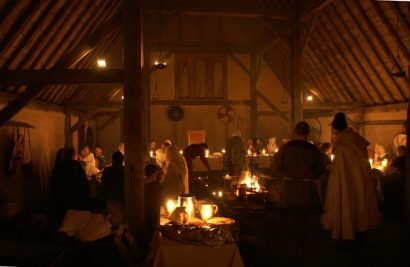
“Enough,” the king promised.  “I will give enough.”  He stood. “But my men will not lose.”  He roared to be sure everyone got the message.  A table, one back from the front, was cleared for the strangers, but the king stopped Festuscato.  “You sit with me,” he said.  “And the Lady of Light.”  He literally threw a man out of his seat to make room at his own table.  When he sat back down, the man beside him whispered in his ear.  He laughed. “Olaf the Swede has bet on you and your crew.”  He laughed again.  “Yonstrom!” He called out.  The king’s hunter stepped forward, arrow already on the string. A line got drawn on the floor and the target set across the room far enough away to not make it too easy. Yonstrom shot, and it appeared a good shot.  It was not centered, but close enough to take down a stag.  The king smiled and looked at Festuscato.

“Mirowen.” That was all he said, without looking. She jumped on the table itself, adding another twelve yards distance to the target, produced a bow seemingly out of thin air and shot, not once, but two arrows so close together the second was away before the first one hit the target.  The first hit dead center and the second one hit so perfectly on the end it drove the first nearly all the way through the hardwood, but without splitting the first shaft.

Mirowen got back in her seat, the bow gone, and she looked demure and sweet before the men could hardly react.  Then they broke out.  Some hooted. Some hollered.  All praised her, in amazement, and only Festuscato noticed that she turned a little red.  When the king bent over to say something, she spoke first to cut him off.

“My Lord Agitus is far better than I am,” she said.  Festuscato shook his head.  He knew his reflection in the past, Diana, his genetic twin, had been graced by both the goddess Justitia and the goddess Diana, her namesake.  He reflected her sense of justice and power of negotiation as well as her ability to hunt and use the bow, to fire the arrow of justice as he called it, but Mirowen remained the best he had ever seen.

“Perhaps,” the king said.  “But he did not shoot.  Magic does not count.  I will have the target examined in the morning to see if the arrows are still there or if it was all just illusion.”  He looked at Festuscato and considered whether or not he might be better than the elf.  “We will call it a draw,” the king concluded.  “Swords.”  He announced.

Mirowen wanted to protest, but Festuscato held her hand down.  He looked.  Bran did not have to be called.  His opponent was a big Jute, though not quite Bran’s size.  Neither was the Jute’s sword as big as Bran’s early broadsword. They did not wait for the word, but went at it evenly at first.  When Bran looked to be gaining the advantage, and the Jute appeared to be tiring, a man at the table stuck out his own weapon, and Bran lost his grip.  The broadsword clattered across the floor and king Hroden looked pleased.

Festuscato showed no emotion as the big Jute moved in for what he believed would be the deciding blow, but as he moved in close to strike, Bran did the opposite of what was expected.  Instead of backing away, Bran stepped in even closer and hit the Jute with a wicked uppercut followed by two jabs and a right hook that slammed the Jute against the wall, unconscious.  Bran rubbed his knuckles a bit before he retrieved his broadsword and laid it at the Jute’s throat.

“One for me.” Festuscato said to the king’s great displeasure.  He called for food and thought quietly while everyone ate and drank.  He called a man close and whispered to him.
M3 Festuscato: The Jutes, part 1 of 3

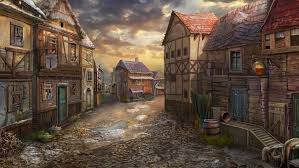
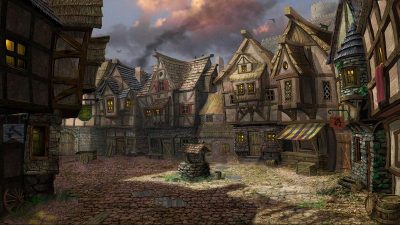
The so-called city of Thorengard sat on the bank of a broad river that emptied into the sea. It got surrounded, more or less, by a stockade, which had been partly built of stone and partly of whole trees planted deep in the earth, lashed together with rope, and caulked with mud. Ingut called them to halt on a small hill which gave a good view of the city below, and he pointed out certain features including the docks, the market area, and the roof of Yut-Heim, the hall of the king.  Festuscato noted that the man did not speak like a proud native.  He said it all just matter of fact.  As they began to descend toward the main gate, Luckless turned to the Roman.

“And what is on your mind?” he asked.

Festuscato turned up one corner of his mouth.  “I was just understanding once again why people like these would fall on their faces in fear and trembling at the sight of the city of Rome with her tremendous walls, broad avenues and thousands of alleyways, dozens of great ships in the harbor from all over the Mediterranean, and a half million people all bustling about on important business.  This city should barely be called a town, and even that word is generous.”

“Rome must really be something,” Luckless said.

“It is,” Festuscato confirmed.  “But even Londugnum would give these people pause and it is nothing compared to the Great City.”

“So you have said,” Luckless reminded him.

“Yes, but your Rome has become like a fat cow.”  Gregor nudged into the conversation.  “It may be great in size and beauty, but it is subject to the butcher knife.”

Festuscato grew silent.  He knew in his heart that Gregor was more or less right.  He had a commission from the Emperor and the Imperial Senate which stated that after he established peace in Britain, he was to seek out the reason the Germanic tribes were pushing so violently and permanently into the west. He was to resolve the problem, or at least find a way that Rome could counter those migrations and thus preserve itself.  Such thinking, however, was foolishness.  Before he even arrived in Germany, he understood that all he would likely find were people who were glad to take advantage of Roman weakness.

To discover the reason Roman power was waning and collapsing in the West, the Emperor Valentinian III needed to look in the mirror.  Indeed, all Romans needed to look in the mirror, but this they would never do.  One of the surest signs of civilization’s collapse was when the prevailing wisdom turned away from personal responsibility and toward blaming others for every ill.  When people stopped depending on themselves to make their lives as good as they could and hand to their children better than they got, and they turned instead to government to give it to them, as if government acted like some living god independent of the people governed, then civilization became doomed.

“What ho!” Vingevourt’s pipsqueak voice came up from the ground ahead.  “I came up the river and have waited here a long time for your arrival.”

“And here we are.”  Mirowen smiled for the little one.

“Ungh!” Ingut grunted at him.

“Good to see you,” Festuscato said to turn his mind from his depression.

“Come aboard, Majesty,” Gregor said with a big smile.  “See?  I have set a clean cloth just for you to leak on.”

Vingevourt climbed up.  “I will say, you are a thoughtful mudder.”

Gregor guffawed. “No.  I’m just an old fart.”

“Smells like a new one if you ask me,” Mousden mumbled before he flew ahead to get a closer look at the city.

When they came to the gate, they found a half dozen men laying about in the late afternoon. They came somewhat to attention on the sight of such a big party, but any semblance of order fell apart when they saw the contents of the party.  The men were strange enough in their dress, though they probably recognized the German and perhaps even the Britain.  The Roman and the Irish cleric might as well have been from China, but then the little ones really grabbed their attention.

Dwarfs were not yet strangers in the world, but they were not common, while elves, like trolls and gnomes were often heard of, but rarely seen.  Fairies had always been shy of humans, but this Cornish pixie with the slight greenish tint to his skin, his bat-like wings and claw-like hands and feet with their prehensile toes hardly fit the pattern.  They did not know what to make of Mousden, but Vingevourt they knew, at least in type.  They were astonished, however, to see the water sprite out of the water.

If Ingut had not been leading them into the city, there might have been some question as to whether or not they would have been allowed in.  Some believed the sighting of any little one was a sign of good fortune to come, but many more firmly believed they were an ill omen, and Festuscato felt sure he heard Odin’s name used as a curse as much as in prayer.

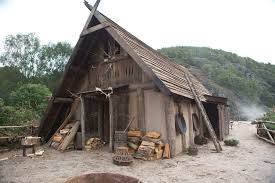
The trip through the town and its’ terribly muddy and garbage-laden streets did nothing to raise Festuscato’s impression of the place.  He found the royal stables hardly worth the name.  The hall of Yut-Heim at least appeared to be well built, a solid log construction with a kind of shingled roof found on a number of buildings and houses in the town.  It looked to be a marked improvement over the thatch they found elsewhere.

“Ingut.” His name came easily to the group of men inside the hall.  Everyone knew the ship builder, and because so much of their lives and livelihood depended on their ships, whether for fishing or war, Ingut seemed to have the run of the place.  In this instance, his first duty was to march up to the king’s table and nod his respect for the king before he spoke.  Mirowen quietly translated for the group who followed in Ingut’s train.

“He’s telling the king about your wreck at sea during the great storm and how he found you washed up on his shore.”

“His shore?” Festuscato mouthed, but listened.

“You are the Roman, and we are your companions, sworn in allegiance to you, and there is great power of magic in us all, as can plainly be seen in the Roman’s choice of companions.  When the ship got driven to the rocks of Heyglund, Ingut realized it must be because the gods decided we must be a gift for the people of this war-torn land.”

“Didn’t know I was a magician.”  Gregor muttered.  Mirowen kicked him to be quiet.

“Naturally, Ingut thought of his great king, Hroden, and brought the Roman here first of all, knowing that the king would understand these things far better than the lowly ship maker.”

King Hroden eyed them with an eye of serious consideration and another eye of amusement. A couple of men at a table laughed at the sight of the strangers, but the king quickly raised his hand for silence.

M3 Festuscato: Saved, part 3 of 3

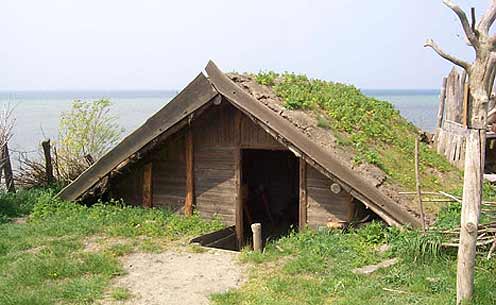
It did not take long before they began to pass people—the huts of the workers.  Women were fixing the leaks while children ran amok. A group of children ran and played alongside the train for a while, but they gave it up when the travelers came to a hill.  The house of Ingut stood on the high ground, but when they reached it, it hardly looked like the house of a prosperous and successful man.  In fact, it hardly looked different than the huts of the workers.

The old man sat outside on the front stoop, whittling with a wicked looking knife, and having a rather wicked look on his face.  That he had been there most of the night seemed evident from the number of wood chips piled around.

Luckless got down, and the old man did not even bat an eye in the face of the dwarf. Vingevourt raised the man’s brows a little, but he knew and respected the sprite, even if he did not particularly like him.  It seemed hard to say exactly what their relationship might be.  It also seemed hard to say what he thought Mousden might be. He batted at the Pixie like Mousden was a giant insect or bat until Mousden confronted him, face to face.  The man blinked and took a step back.  Seamus came up, having fallen to the back of the pack, and Mirowen slipped off the back of the beast and stepped straight for the door.  At this, the old man took a big step out of the way, and bowed.  He might not care for Dwarfs, or Vingevourt, or giant insects, but he knew a light elf when he saw one.

Bran, Gregor and Hrugen kept a wary eye on the workers who appeared at the top of the hill. Mirowen opened the door, followed by Seamus, Luckless, Vingevourt, and Mousden.  Festuscato still lay in bed with Inga, and though covered, it was evident that both were stark naked.  Inga let out a little embarrassed peep and covered herself further.  Festuscato put down his plate.

“I can’t eat another bite,” he said.  His clothes were dry, but he could hardly stand naked in front of the ones staring, open-mouthed.  He let his heart and spirit reach out to his place, the place of the Kairos, the island that stayed forever in the Second Heavens.  He caught hold of his armor, the chain and leather which had been the gift of Hephaestus, and the elf spun cloth that shaped itself to whatever life he was living.  In an instant, he became clothed in that glorious armor and stood, even as Mirowen spoke.

“He is only human, after all,” she said, meaning it as a simple fact and not entirely as an insult.  All the little ones bowed, to Ingut’s surprise.  Ingut had been watching from the doorway.  He pushed his way into the room and stepped up to Festuscato with a most curious expression.  He held one hand over one of Festuscato’s eyes.  Perhaps Gregor had given him the idea.

Festuscato shook his head, hid his left hand behind his back and pointed to his wrist as if his arm ended there.  Ingut’s eyes got wide as he imagined which god Festuscato might be, until Festuscato revealed his hand with a broad grin.  Then Ingut guessed.  He spat.

“Loki,” he said.

“Loki!?” Festuscato felt insulted, while Mirowen giggled.

“Who is Loki?” Seamus asked.

“Trickster,” Luckless said.  “Not a nice fellow, I understand.”

“He wasn’t,” Vingevourt said, as he pushed himself forward while Ingut stepped back. Vingevourt fell to his wobbly knees and begged forgiveness for his inaction and innocence in not knowing who was aboard the fateful ship.  He said the whole little speech in the language of Jutland, reverting from the British without thinking; but Festuscato understood it all, though he did not speak the tongue of the Jutes, because he heard it in the heart.

“Do not worry, great king,” he said, and resisted the urge to kneel which would have insulted the little one.  “You have no power over the storms, and I did not call out for help.  Perhaps it was my time to die.”  Festuscato had to pause on that thought.  “You never know.”

“All the same,” Vingevourt began, but Festuscato cut him off.

“Will you travel with us for a time?” he asked.

“I will,” Vingevourt said, without hesitation.  “But where are we going?” he asked.

“Thorengard.” Ingut said.  He had been listening in.  “Yut-heim.  Thorengard.”

Festuscato looked at his host and lifesaver.  He pulled a big ruby ring from his finger and gave it to the man.  “Would you tell him thanks for saving my life.”  Vingevourt hesitated.  Mirowen told him.  Ingut looked at Festuscato with some shrewdness in his eyes.

“And where is Yut-Heim?”  Festuscato asked.  Mirowen asked Ingut and then translated the response.  “In Thorengard.”  She shrugged.

Ingut stepped outside and began to bellow orders to the gathered crowd like a man accustomed to being obeyed.  Some of the men peeled away and came back in a very short time with two saddled horses and some bread, cheese, some smoked fish and watered down mead.  Bran, Gregor, Hrugen, Seamus and the little ones had little time to eat, however.  Ingut said something to Festuscato who had come outside with the others while Inga dressed.

Vingevourt translated this time.  “He says he assumes this is your horse he found wandering down by the beach.” Festuscato looked and nodded.  He mounted as Inga came running out of the house, calling his name.  He leaned over and gave her a long kiss and lifted her gently off the ground to do it, but then he set her down.

“Thorengard?” he asked.  Ingut pointed, and Festuscato started out without waiting for the others.

“But I’m not finished eating,” Luckless complained.

“So what else is new?”  Gregor said and nudged the dwarf as he got back on his horse to follow.  Fortunately, Vingevourt had run back to the sea as fast as the gingerbread man could run.  He promised he would be waiting for them in the city.

“For a small one, you eat more than anyone I’ve ever known,” Seamus said to the dwarf.

“High metabolism,” Festuscato shouted back.

“I’ll explain,” Mirowen promised, as she took her place behind the cleric.

“But I’m not done!”  Luckless shouted and realized he was last.  He grabbed as much bread and cheese as he could carry and climbed up on his pony.  “Wait up!” He kicked the animal to a trot and cursed for dropping half his booty.

************************

MONDAY

The Jutes.  Ingut, the ship builder, takes Festuscato and his crew to the Jute capital to meet the king.  No telling what kind of reception they might get.  Until Monday, Happy Reading.

*