Medieval 5: K and Y 18 Unexpected Meetings, part 2 of 4

Kirstie

“Come on Yrsa,” Kirstie said. “Let’s find a soft place to sleep tonight, provided it does not rain. It will be at least another day before Ulf and Odger show up.” She raised her voice to the captains. “If they do not come here in three days, we assume they are not coming at all.”

“What do we do in the meantime?” Someone asked.

“Go fishing. Build fires and camp where we won’t be seen from the mainland. Send spies to the near islands to try and see what is going on in Bamburgh. Put the Scaldi to work. Relax. Smoke if you got ’em.”

“Smoke what?” Yrsa asked as they climbed over a small hill to the sea on the other side of the island. Kirstie did not answer, but she called to her blue dress and Yrsa matched her in green. It was not that her dress was warmer than her armor in the spring sea breezes, but because right then, she did not feel much like murder or mayhem.

Kirstie spoke again when they got to the other side of the island, well away and out of sight from the men. Kirstie looked back once but did not see their shadows of Kare and Thoren. “Looks deserted,” Kirstie said. “In fact, all these islands may be deserted.” They stood at the top of short cliffs and looked down on the sea, and Kirstie had an idea. “Vingevourt,” she called. “Are you there?” She did not want to make him appear before her. She sensed he was busy doing something. She looked up. “Cloud babies, are you able to speak?”

Yrsa stood still and seemed just as fascinated and thrilled as a human would be in the circumstances. The sea churned for a second, and the overcast sky produced two very small puffs of gray cloud that flew straight to her. One little green gingerbread man blob of the sea came shooting out of the breakers and landed softly on the clifftop.

“Lady,” the blob said in his squeaky baby voice. “The sea king is busy with the whales in the north, but I am here. How can I help you.”

“Lady,” the word came from overhead.

“And friend,” another word came from the cloudy puffs that came down to face her, floating gently over the sea cliff.

Kirstie had to think for a second. She turned first to the water sprite. “Fardlevan,” she named the sprite. “What can you tell me about the islands? Are there any people here or on one of the other islands?”

Fardlevan had to think a minute. “There is a family of gnomes that travel from island to island. They are nice people. They help keep the islands green and care for the birds that mostly live here. There is also a small band of fairies on the big island over that way.” He pointed. “They have been very busy in the spring since the wildflowers started to bloom and all the trees went to bud.”

“I think she meant human people,” Yrsa said.

Fardlevan looked like he pulled off the top of his head, but Kirstie imagined it was his hat. He tipped it for the elf before he let it blend back into his body. No one would guess he had a hat. There is one mud person on this very island, but he is hiding in the cave in the cliffs close by here. I think he is afraid. Is that the right word? Afraid?”

Kirstie nodded and turned to the sprites of the air. They blew with the winds, scattering the seeds, whistling through the leaves, lifting the birds into the air, but mostly they picked up water on their journey. When they manifested, they always took cloud form, and they always came in pairs, one male and one female. They said it helped keep the sky in balance and hold the sky to the earth, like the sky might otherwise blow off into the sun. They stayed in balance like their god or goddess, who presently happened to be a goddess for them. “So, Flitter and Flutter, what weather can we look forward to?” Kirstie asked the sprites.

‘Rain.”

“Some drizzles.”

“Some lightning.”

“Some thunder.”

The two sprites sounded like children, not like the cherub-like water babies, but young enough to where sometimes it was hard to tell which was the male voice and which was the female voice. “I hope it won’t rain too hard on the men,” Kirstie said.

“Just a good spring rain.”

“On and off all night.”

“Just enough to annoy them,” Yrsa said softly.

“We can push some away.”

“But only some.”

“And make the lightning strike the sea.”

“The water sprites like the lightning.”

“We do,” Fardlevan said. “It energizes us so we can make really big waves.”

“But we can’t push it all off.”

“Not all of it.”

“It is too heavy.”

“Very heavy and ready to fall.”

“Gonna fall.”

“Thank you very much,” Kirstie interrupted them. The little cloud babies would otherwise go on like that for a long time. “You can go back to your play now. Sorry to interrupt your good work.”

“Not a problem.”

“No problem at all.”

Fardlevan spoke over top. “Glad to do it.” He saluted, jumped off the edge of the cliff, and shattered into a million droplets that blended back into the sea.

“Good-bye. So long. Farewell. Good-bye.” The sprites of the air kept up the litany until they got beyond where Kirstie could hear them. Yrsa probably heard them longer, given her good elf ears, but eventually they blended back into the gray overhead and disappeared.

“Lady,” Yrsa got Kirstie’s attention. She pointed with her head and eyes and Kirstie turned to see a gray-bearded old man walking with a staff along the clifftop. He came straight to them and asked a question. “Are you angels?” The women shook their heads, and Kirstie responded.

“Why would you ask such a question?”

The man put his hand to his beard and looked down for a second before he looked at them and answered. “Because you are both as beautiful as I always imagined angels to be. And second, because I saw you talking to the sea and the clouds as if they were your very good friends.”

“A water sprite and two sprites of the air, and they are good friends, but that does not make me less human,” Kirstie said. “I am Kristina Arnedottir from Strindlos in Norway. My maid is Yrsa.”

“Father McAndrews of Lindisfarne. And I really suspected you were with the Vikings, though you hardly look like thieves and cutthroats.” He looked around to make sure they were not being watched.

Medieval 5: K and Y 16 Going Again, part 3 of 4

Kirstie

Kerga looked around the room and said, “The ships can sail separately and meet up in the cove above Howick, maybe in the night.” He looked at Kirstie and she frowned and thought good luck timing that. They would be seen no matter what they did.

“You can at least minimize their suspicion by traveling separately. Seeing only one or two ships together should not raise any serious alarms.” She added, “You know Fairhair will be blamed for the raid even if he has nothing to do with it. He won’t be happy. At the least he will demand the lion’s share of what you are paid.”

“We will deal with the king after the deed is done. First, let’s get paid or there won’t be any shares,” one of the strangers said.

“So, what have you planned?” Kirstie asked. The men looked at each other, but at least the men of Strindlos and Chief Kerga were not against sharing.

“Here,” Harrold said and pointed to the map. “Howick is a small village by a great cemetery and there is a manor house, wooden, like the king’s house used to be beside the growing town of Nidarosss. North of Howick is a sheltered area where we can bring our ships and hope to hide so the people of Howick are not alerted.” He paused to look around at the men before he continued. “We have mostly agreed that attacking a village on the shore will not bring out the army. That would just be a raid, and a terrible shame, but nothing the king can do about it. We need to march about a day inland and attack the village of Eglingham. An inland village will make it look more like an invasion, or at least like we are the vanguard of an invasion. That might move the army to come out.” He looked around at the men and saw no objections, but Kirstie shook her head.

“You think not?” Chief Kerga said to her.

“You have the right idea, making them think you are scouting the land for a possible invasion, but one village will still be seen as a simple raid, or maybe a clever raid where you go inland to a less well defended village. But you don’t want to kill the people. Invaders don’t necessarily kill the people they plan to rule. Better to chase them off so they run to the king in their panic.”

“But if an inland village will not be enough, what do you suggest?”

“Two inland villages,” she said, and did a quick head count. “You have six longships.”

“Maybe eight or more,” One of the other captains said.

Kirstie nodded to that. “Land in two places. Maybe the second place can be the mouth of the Coquet River. Leave ten men from each ship to guard the ships. A hundred raiders in each group should be enough for a typical village. March north in the night. Find a secluded place in the wilderness where you can rest and eat well before the action. The southern group can strike Edlingham. The northern group can strike Ellingham, right under the king’s nose. That should get his attention. Burn a few houses. Take whatever gold and silver you find. Run the people off, and quickly leave. Any soldiers will assume you marched straight from the shore. They will look for your ships here, along the coast below Bamburgh. and here, maybe at the mouth of the river Ain.”

The men were smiling, but Jarl asked, “Why leave so many at the ships?”

“Ten men per ship will be enough to defend the ships and maybe scare off the locals. In the worst case, ten men is enough to take the ships out to the safety of the sea. You can arrange a way to signal the ships at sea so they can come back in to pick you up if necessary.”

“Clarify again. Why chase off the people?” Rune asked. He was not objecting to the idea. He obviously wanted the other captains to understand, especially any who might let their men run wild and slaughter the whole village.

“You don’t want to get your own men killed fighting for a foreign king unless you are being paid extra.” She paused to let the captains think about that. “Besides, you want panic among the people. Survivors run in every direction and spread the word of an invasion. Some will no doubt run to Bamburgh to fetch the army and sew fear among the people there. Nobody will run anywhere if you kill them all. Burn a few houses, take some things, and chase off the people.”

“What about Rothbury? That is a good-sized place not far from Edlingham. They might send soldiers.”

Kirstie shook her head. “As I recall from my father’s notes, the Rothbury area is mostly Danish settlements. They will probably hesitate, and that is all you will need. Once the inland villages are ruined, the groups hurry back to Howick and the Coquet where your ships are located and sail off. You can rendezvous in the Farne Islands and regroup. From there, you can watch what happens in Bamburgh. If the army does not empty the city, we can relax and rethink. If the army moves out, as we hope, we can do some damage to the city and Cnut should be happy with that, and maybe generous. I would not try to take the city unless you have hundreds more men in mind than are presently represented here. Even without the army, the city will still be defended and will still have strong walls. But we might harass them and burn enough to disturb them.”

“Allow me to swallow my words,” Captain Ulf said. “That is exactly the plan we will follow.”

One of the other captains spoke. “I understand King Cnut plans to negotiate with King Eadwulf II of Northumbria and offer certain protections from Norse raids and an alliance against another invasion, like the invasion of Halfdan Ragnarsson. He hopes for certain concessions, to take half of the northern kingdom, in particular the coastal areas without ever engaging in a fight.”

The man’s number one finished the thought. “Once Cnut gathers his army at Rothbury, which is a strong Danish area as you say, he hopes to march to Bamburgh without resistance through the Anglo-Saxon areas that we have frightened so badly. He is hoping then King Eadwulf will bow to the inevitable and surrender his throne with a minimum of bloodshed. That way King Cnut can save his army for the future.”

Kirstie nodded, but said, “I am not concerned about the politics for now. As long as you understand that nothing ever goes exactly to plan, and it will depend on the leaders keeping their men in line. Now, I have an inevitable delay. I need a month. Two would be better.”

“King Cnut wants us to have accomplished our mission by the end of spring.”

“Fair enough. We sail on May first, and you better not leave without me.”

“You will be coming?” Harrold asked, though he knew she would come. She was the one who wanted to go to Northumbria.

“Another hag?” Jarl asked.

“No, the god of the hags,” she said. “And I may have to kill him.” She nodded to Inga, and they left the men to chew on what she said and do whatever it was that men did.

The only thing Inga said on the way back to Kirstie’s house was, “I see you tried to minimize the fighting and bloodshed.”

“These men were planning to go no matter what I said,” Kirstie agreed. “I tried to suggest the advantages of letting people live on both sides of the fight. It was the least I could do.”

************************

MONDAY

Yasmina seeks refuge in Egypt, but the situation is delicate. Meanwhile, Kirstie has agreed to be part of a genuine Viking raid as her only way to get to Northumbria. Happy Reading.

*

Medieval 5: K and Y 12 Time to Go, part 3 of 3

Kirstie

Jarl and Leif met them at the ship. Frode also came with a boy and holding a puppy. Kirstie wondered about that, but first she had to get her things loaded. The dwarfs kindly put the things where they belonged and then sang a bit of a tune and danced their way back to the dock.

“What was that?” Leif asked. Kirstie noticed Leif kept his distance from the dwarfs and stared at them with wide eyes.

“Nothing bad,” Booturn said. “Just a good luck song and dance so you have a successful voyage.”

Kirstie had to cover her mouth, but Alm laughed. They were singing an old dwarfish song about being freed of their burden and about needing a good, stiff drink before they went back to work.

When Leif and Jarl faced Kirstie, she had something to say. “We need to leave on the morning tide. You better not sneak away this evening with all my goods.”

Jarl and Leif looked at each other, and Jarl spoke. “You know, I really am a nice person, and mostly an honest tradesman. You have to trust me if you are going to be part of my crew.”

Kirstie nodded. “I do trust you, but there are sticky fingers around here, and my dwarf friends have to get back to Svend and Fiona. They can’t stand here on guard all night.” She put her fingers to her lips and let out a great whistle. A big wave came up to the side of the boat and broke into hundreds of water sprites that clung to the railing and splattered on the deck. They looked like gelatin forms of gingerbread men. They all looked alike to human eyes, and many sounded the same, saying the same phrase in squeaky, baby-like voices.

“Lady needs us. Lady needs us.”

Leif let out a shriek. Jarl blinked, twice. Frode just smiled, and the boy next to him said, “Wow,” sounding much like Oswald and Edwin used to sound.

“Vingevourt,” Kirstie called the head sprite who stepped forward and gave the humans a mean look. “I am asking. Would you and your wave makers please keep a watch on this ship and all the goods, like the amber and the ivory, so it is all here safe and sound when I come back before the dawn?”

“It will be our pleasure to guard all these things.” The sprite saluted and several sprites saluted with him.

“Thank you. I will sleep well tonight knowing my treasures are in good hands.” She turned and began to walk away without another look. The men followed her.

“How will they stop a determined thief? Jarl asked.

“Men drown.” That was all Kirstie planned to say.

“See you in the morning,” Leif said that much and the captain and his skipari walked off on some last-minute errand.

Kirstie turned to Frode. She petted the puppy in his arms. “He is lovely,” she said, and smiled for the boy.

“She,” the boy said.

“Our buhund had a litter of puppies. My wife thought you might like one. You could use one to help herd the sheep and keep them out of the grain fields. They are also good with cattle, and boys.” He paused to smile at the boy beside him. “This is my son, Knud. I don’t know if you have met.”

“We have,” Kirstie said and also gave the boy a smile. “Let me see,” she said and reached to take the dog.

“They are wary of strangers,” he said before he realized the puppy seemed willing. “They have lots of energy and can be well trained. Unlike some people, they seem to prefer to have something to do. They can get ill-tempered if they are bored.”

Kirstie nodded that she heard but stayed focused on the puppy in her arms. Yrsa, who walked behind holding Alm’s hand poked her head forward and noted, “He likes you,” she said, even as the puppy gave Kirstie a wet lick.

“I would not worry about the puppy getting bored,” Kirstie said. “We have two overactive boys at the house, Fiona and a giant.” Frode stopped walking, but then started right away again. “Birdie, the dwarf wife keeps the clothes patched and clean. The dwarfs mostly eat and sleep. Alm, here, keeps everything together.

Frode gave a nod behind him to what looked to him like an ordinary young man. “That must be hard.”

“It is not always easy,” Alm admitted, and Yrsa leaned over to kiss his cheek.

They walked quietly for a while, and Kirstie made soft noises to the puppy who seemed happy in her arms. She thought about a baby when she talked to Yrsa about having a Yrsa baby. She thought about it again while holding her puppy baby. She tried really hard to not think about Kare, but sadly there was not anyone else she was interested in and at least he seemed interested in her.

“Ours is not a big village,” Kirstie said. “When I was growing up, Hilda was the only girl near my age. Liv, Thorbald’s daughter came along later. Fortunately, we became friends, but honestly there was not anyone else.” She leaned over a bit to speak to Knud. “Oswald just turned eleven. Edwin will be nine soon.”

“Knud is ten,” Frode said.

Kirstie nodded and asked. “You don’t mind him being friends with thralls?”

Frode answered honestly. “I hope they may become friends. Knud spends too much time alone.”

“Not true,” the boy protested. “Brunhild plays with me, and now that she has had puppies, I have my hands full.”

“Understand,” Kirstie told Frode. “I hope they may become friends, but if he treats them like thralls, like less than human, he will be sent home and not invited back.” She did not glance at Knud, but the boy heard, and he heard his father’s response.

“I would expect no less,” Frode said. “We have done our best to raise the boy right.”

“Fair enough,” Kirstie said, and they arrived.

“Lady. Lady.” Oswald and Edwin came running to see what the wiggling thing was that she held in her arms.

Kirstie held the puppy out to the boys. “This is Flika,” she said, and then she added something the others did not understand, but she was honestly answering one of her own lifetimes. “I know it is the name for a horse, but I haven’t got a horse and I like the name.” She continued. “Flika, meet Oswald and Edwin. Oswald and Edwin, this is Flika.” The dog barked. “And this is Knud Frodesson.

Frode spoke right up to the boys. “I thought Knud and I might stick around this afternoon to help Flika get adjusted to a new home.”

“The puppy is ours?” Edwin said in his excited voice while Oswald and Knud sized each other up.

Kirstie set down the puppy who was wiggling up a storm. “Why don’t you start by showing Knud and Flika the sheep pen.”

The puppy paused and looked up at Kirstie. She said softly, “Go on,” like she was giving the dog permission. The three boys and the barking puppy ran off with Alm and Frode following.

“We need to get ready to sail in the morning,” Kirstie said to Yrsa’s nod. “I hope Alm will stay with Frode in case the dwarfs or Vortesvin shows up.

“I am sure he will,” Yrsa said, and they went to the house to put a few things in a shoulder bag.

~~~*~~~

In the dark of the night, well before the dawn, Yrsa woke Kirstie with the word, “Time to go.” Yrsa yawned. She was an elf of the light and did not normally get up in the dark time.

Kirstie sat up and petted her puppy who chose to sleep in her bed. She dressed in her armor. Her weapons attached themselves and she picked up the curious puppy. They went first to the cooking fire which had been banked for an easy restart in another hour. They found some bread and water along with some leftover roast in the oven.

“I can’t imagine the dwarfs did not eat everything available,” Kirstie said.

“Oh, Fiona stole a bit and hid it in the oven for us. She knew we would be leaving early,” Yrsa answered.

“Not like the dwarf noses could not have found it,” Kirstie countered.

“She told them to stay away from it and Birdie threatened them.”

Kirstie nodded. “A threat from a dwarf wife would do it, but I imagine Toodles is watching even now to claim what we don’t finish.” Yrsa smiled as she heard the sound of shuffling in the bushes with her good elf ears.

After a bite to eat, Kirstie picked up her puppy again and went to Fiona’s house. Vortesvin slept outside by the door. He opened one eye to see who it was, but Kirstie just told him to go back to sleep. They went in. Fiona slept in the front room, and she stirred, but did not wake. The boys slept in the same big bed in the back room. Oswald did wake. Edwin almost woke. Kirstie put the dog down between the boys with a word. “Now, go to sleep.”

The puppy panted at her. Oswald laid down and closed his eyes, a smile plastered on his face. Edwin mumbled something unintelligible and slung an arm around the puppy. Flika licked the boy’s face, and that brought out his smile while Yrsa and Kirstie backed out of the room and out of the house.

Medieval 5: K and Y 2 Gifts of the Gods, part 3 of 3

Kirstie turned in the doorway and smiled. “I have a whole week.” She paused. Inga tried to return her smile but looked worried. “A week,” Kirstie said softly before she shouted, “Only a week! Where is Mother Vrya?”

Inga shook her head as she answered. “In the big house with Chief Birger and the men deciding what to do about the Vanlil.”

“Only a week,” Kirstie repeated and this time she grabbed Inga’s hand. “Come on.” She started toward the big house and Inga did not resist. Inga had too many questions and decided to stick with Kirstie until she got some answers.

When they burst into the middle of the meeting, Kirstie shouted, and the men paused to listen except for one man who said, “You girls don’t belong here right now.” Mother Vrya looked ready to say something, but the room quieted to utter stillness when Kirstie called and instantly got clothed in her armor, weapons included. Then Elgar urged her to let him speak to the men, and Kirstie, not entirely willingly, stepped away and let Elgar take her place. Kirstie knew the men would not really listen to a girl, and she was only ten years old besides.

When the young girl disappeared and a full-grown man, and a fighter by the look of him arrived in her place, most of the men in the room imagined it was one of the gods. They grew silent, and many became too frightened to talk.

Elgar started right in, giving the men little time to adjust to his presence or what just happened. “I am Elgar the Saxon,” he said in Kirstie’s Nordic language, and he paused to let them swallow. “I have come to tell you we only have a week to come to the aid of the king’s house and the town on the Nid River. The exiled chiefs and men, together with their Jamt-Vanlil allies, are gathering and will be attacking the king’s place and the town in a week.”

The room erupted with voices and questions. The men had assumed the Vanlil raided the villages on the eastern shore and raced back over the mountains with their plunder. They were talking about setting a watch in the hills and maybe gathering men to invade Jamtaland. They were not thinking this was an army invading them. Finally, one voice rose above the others and the rest quieted to hear the answer.

“How do you know this?” the man asked.

“This word comes from the god Fryer directly to Kirstie’s ears.” He looked at the faces around him. Curiously, he saw Mother Vrya and the men of Strindlos had no trouble believing him. The outsiders were not convinced.

“No god would lower himself to appear as a Saxon,” one man said rather loudly.

“Are you a goder?” a different man asked if Elgar was a priest.

“Who is Kirstie?” a third man asked.

“Yes, where did that girl go, anyway?” Captain Kerga asked at the same time.

Elgar answered the questions as well as he could. “No, I am not a priest, and where Kirstie went is a very complicated question. Let us just say she left the building.”.

“If not a goder, are you some kind of messenger of the gods?” One man tried to make sense of the conflicting ideas in the room.

“Elgar,” Mother Vrya interrupted everyone, and the men quieted out of respect for the Volva. “These men are from Varnes. That captain is from Oglo. Those two are from the Frosta peninsula, and those two have come all the way from Olvishaugr if you saw the karve in the dock. What is it you recommend?”

Chief Birger thought to interrupt to clarify the discussion up to that point. “We have been discussing gathering our men to strike back at the Vanlil in some way.”

Elgar shook his head. “Not and leave an enemy at your back.” He moved a bench and a chair and explained his makeshift map. “This bench is the Nid River. The town is here at the mouth of the river. The king’s house is here. Mother Vrya is standing in the fjord. I propose we take our footmen and whatever horsemen we can gather and cross the land on the afternoon six days from today. We set a camp and be well fed and rested in the morning while we scout out the enemy positions. If the town is holding out against them, we may have to adjust things, but my guess is they may be around the king’s house, if they have not burned it to the ground by then.”

The men in the room tried to grasp the ideas, and one of the outsider captains asked a pertinent question. “Why don’t we attack them at sundown and catch them by surprise?”

“Men who are hungry and tired do not fight well,” Elgar said, giving the answer he had given more than once in the past to other kings and chiefs. “If we are careful in the night, we might still surprise them at dawn. We will look for where they are vulnerable and attack at sunup. Our job will be to drive them to the sea. I expect every karve and longship we have to arrive in the third hour. No later than the fourth hour. We will have the enemy surrounded and some of them may choose to surrender. That’s okay. Let them surrender. Let the king decide whether to chop off their heads or not. After we protect our own, we can talk about an attack on the Jamts of Jamtaland if you will.”

Men stood around quietly staring at the bench and chairs. No one raised an objection to what he said, so Elgar spoke up again. “The ships need to be full of fighting men, but we need as many men here on foot and horseback to assault the enemy and drive them to the docks by the sea.” He waited another moment before he turned to the men from other towns. “Well? You best get going. Today is day one and that does not give much time to gather your men and get them here by the morning of the sixth day.”

Chief Birger grunted and nodded and made no objection. He waved like giving permission, and the foreign men hurried from the big house. The local men stayed a bit longer while the chief asked. “So, Saxon. I hope for your sake your information is correct.”

“The gods have been known to mislead people at times,” Elgar admitted and saw Mother Vrya nod in agreement. “But not this time. This information was unsolicited. Kirstie did not ask for this. Rather, the god Fryer dumped it on her and said she only had a week, and good luck.”

The men there all knew Kirstie, and they knew and respected her father and mother. They did not really doubt the veracity of the god, or that he might select someone like Kirstie to speak with, but at the same time, Captain Kerga had another question. “And what will you be doing while we prepare for battle?”

Elgar smiled and said, “I intend to get well rested.” He traded places with Kirstie, which looked like the man vanished and the young girl took his place, the armor instantly adjusting to Kirstie’s slim, beanpole body. “I’m going to sleep. I have a lot to think about,” she said, and added, “Weapons go home.” Her weapons vanished and she grabbed Inga’s hand. “Come on.”

Inga had no intention of going anywhere else. She stepped up beside Kirstie and said, “So, Fryer?”

Kirstie simply nodded.

************************

MONDAY

Kirstie finds a little help for the coming battle, and Yasmina is scared to death and worried about a ten-year-old going to war. Until then, Happy Reading

*

Medieval 5: K and Y 1 Twins not Twins, part 3 of 3

“Where are we going?” Kirstie asked.

“You need to tell Chief Birger what you just told me.”

Kirstie nearly stumbled. She did not get dragged willingly, but she did not really resist. When they got to the big house Inga did not think twice about butting into the middle of the men. “Tell them,” Inga insisted. “Tell them what you just told me.” The older men were polite enough to listen.

Kirstie noticed the looks of sympathy that covered the men’s faces, but she quickly looked at Inga and repeated what she said, beginning with the idea that there must be a power driving the Vanlil to come and fight or otherwise they would have no reason to risk their lives for strangers. When she finished, the men nodded, like they may have been thinking something in that direction but maybe did not spell it out quite so clearly. Then Chief Birger said something to Kirstie that struck home.

“I’m so sorry.” That was all he had to say.

Kirstie felt the tears come into her eyes and she shouted for her mother. She ran out of the big house, Inga on her heels, yelling. “No. We have to go to Mother Vrya. We are supposed to stay with the Witcher Women. Kirstie! Come back.”

Kirstie ran all the way home. Inga gave up at last and walked the final leg. When Inga arrived, she found Kirstie on her knees, weeping. The house still burned. The livestock had scattered. The dead littered the ground. A dozen men, including Captain Kerga stood around staring at the destruction and talking softly about getting shovels to bury the bodies or maybe building a funeral pyre. The spring was full on, but the ground might still be too hard to dig deep. Kirstie’s mother and baby sister were gone. Dorothy was dead, her arms wrapped around Kirstie’s dead dog, Toto. The three farmhands, the lion, the scarecrow, and the tin man all died, but they took a half dozen of the enemy with them, so it was a battle.

“To make war on women,” one man yelled. “These Vanlil have no honor.”

Captain Kerga responded in a loud but calmer voice. “Their ways are not our ways.” He kicked the boot of a dead man. “But I remember this one from so many years ago. He lived in Haudr above the Skaun before King Harald came.”

“Captain,” a man interrupted. “It looks like the women picked up weapons. I would guess they tried to defend themselves.”

Kirstie sat and cried for a long time, but eventually, Inga got her to move.

Inga took Kirstie to Mother Vrya’s hut where they had a cot already made for her. The Witcher Women on that farm consisted of three older widows of the sea and the Viking lifestyle where the men lived with the constant threat that they might die on some distant shore. Sometimes, such women had no prospect of remarriage, and had no offspring to care for them. Younger women always had a chance to remarry, but some older women had nowhere else to go, and often died before their time. The Witcher Women cared for one another and stayed alive, farming a little, and making textiles for the village.

Mother Vrya was the Volve, which is the seer and something like a shaman. She had chosen Inga to teach and pass on her knowledge and skills, and Kirstie got to sit in on some of the lessons. Mother Vrya built a place on the edge of the village and invited the widows to live on her land. Kirstie was not the first orphan child the Witcher Women cared for, and she would not be the last. Caring for the orphans was another way they helped the village, and the village respected the women in return.

When Kirstie was shown where she would sleep, she fell to the cot and curled up under the blanket. She refused to get up for supper and spent most of the night in tears, eventually crying herself to sleep.

In the morning, Inga found Kirstie down by the docks. “My father should be coming home soon,” Kirstie said. “I will wait here.”

Inga frowned. “That could be months from now.”

“I will be safe here, by the fjord. There are farms and mountains with cliffs to my left. The Vanlil will not come from that direction. To my right are the docks.” She pointed to where Captain Kerga’s longship and a Karve, a fjord trading ship rested, and some men were milling about. “And beyond the docks are the ship builders. The exiled chiefs and men may come for the ships, but there are men there, workers and such to fight them while I escape. I will be safe here where the skiffs and fishing boats come to land.”

Inga put her hands to her hips and deepened her frown. “And what will you eat? And how will you shelter from the storms?”

“I will be fine,” Kirstie insisted. “You have lessons to attend and much to learn from Mother Vrya. Don’t worry about me.” Kirstie turned her head to look out on the fjord. She did not want Inga to see her tears.

Inga may have wanted to reach out and grab Kirstie’s wrist again to drag the girl back to Mother Vrya’s place, but she kept her hands to herself and opted to bargain instead. In the end, Kirstie agreed to let one of the Witcher Women bring her food in the morning, and she agreed to come to Mother Vrya’s at sunset for supper and to sleep on her cot. But otherwise, Kirstie insisted on staying by the docks and waiting for her father to return.

Yasmina

Yasmina stood by her mother looking out from the upper floor window. Yasmina waved to her father who was going to Medina, a whole host of soldiers following him. She never saw much of her father, but he was always nice to her when she did see him. She never saw much of her mother, ether, for that matter. She had plenty of duties of her own. Mother was more strict, but she generally hugged Yasmina and genuinely cared about her.

Suddenly, Yasmina began to weep great big tears. She practically wailed, and her mother was right there to say, “Yasmina, your father will be back. He has made this trip before. He is going for thirty days, and he will be right back. Why are you crying?”

Yasmina reached out and hugged her mother. “Just don’t leave me,” she said between her tears. “Don’t ever leave me.” She held on to her mother thinking Kirstie could never do that again.

************************

Monday

Kirstie is gifted by the gods and Yasmina does not know what to think about that. Meanwhile, Kirstie is told something important. It is a matter of life and death. Until then, Happy Reading.

*

Medieval 5: Elgar 7 Second Chances, part 2 of 4

While King Athelwulf, Eanwulf, and Osric were off helping the Mercians beat down the Welsh, the king’s wife, Osburh caught a cold. As sometimes happened in those days, she died before Athelwulf got home. The king went into a time of seclusion. For some months, they could hardly get a word out of him.  Eventually, he would only speak to the priests and so perhaps it was no surprise when after two years he decided to make the pilgrimage to Rome. He took his younger sons, Athelred and Alfred with him.

Athelwulf’s eldest surviving son, Athelbald took the reins of the kingdom, though he was not the sharpest knife. Athelwulf made his next eldest son, Athelberht, subking over Kent, Surrey, and Sussex, though Athelbald did not allow Athelberht the same grace to rule that his father allowed him. Eanwulf and Osric liked having Athelbald in charge. He was easy to manipulate. And they supported Athelbald when Athelwulf returned and found his throne occupied.

While in Rome, Athelred and Alfred were tutored under the watchful eye of the pope. Alfred took to the learning and reading like the proverbial duck to water, in particular the histories, though he was only nine years old. He became fascinated to learn how Rome built such a mighty empire and organized itself to last a thousand years. He read about the saints and martyrs who struggled and sacrificed so much for the gospel and to convert the heathen. He read and received instruction about many things, and even at that young age, he recognized how the people of Wessex and the church in Wessex were hampered by the inability to read and the lack of books worth reading. He took a vow against his enemy, ignorance.

Athelred, by contrast, had little interest in the lessons. It is not that he was lazy, but his interests went more toward the martial arts. He did not mind learning about Caesar and hearing all about the battles. His was more of a romantic view of empire, of battles and conquest, not necessarily ruling. All the same, their father Athelwulf had both young boys invested in a way that proved their worthiness to rule. Athelwulf figured when he died, the older boys could not shave the younger one’s heads and stick them in a monastery somewhere to be forgotten.

When they left Rome after a year, they returned to the Carolingian court of Charles the Bald. Alfred, now ten, brought his trunk full of books. Athelred, fourteen, carried a sword with which his father hoped he would not cut himself.

Charles the Bald spent those days building alliances with outside kings and rulers as a balance against his own nobility that did not like him very much. Athelwulf, king of Wessex, certainly fit the bill. No one can say how Charles’ twelve-year-old daughter Judith came into the negotiations except to say Judith was a witch who had no intention of becoming a nun. She was beginning to chaff under the strict rules of her parents and wanted out. At her young age she had no business considering marriage, but it was all she could think of to escape. Besides, she figured the old man would not give her any trouble. He still loved his first wife, Osburh, and he would not live that long. She prepared herself to make sure of that.

When the family returned to Wessex, they found the throne taken and Athelbald would not be giving it up. Much to Athelwulf’s disappointment, his old friends Eanwulf of Somerset with Ealhstan, Bishop of Sherborne supported Athelbald, while Osric of Dorset sat on the fence between the two. Athelwulf, who was already not feeling well, was reluctant to start a civil war. He had the support of Hampshire, Wiltshire, and Berkshire, so he made a deal with his son. Athelbald took the western provinces of Somerset, Dorset, and Devon where Eanwulf’s friend Odda took the reins after his other friend Ceorle died in the 851 battle against the Danes. Athelwulf kept the central shires under his hand. Basically, Athelbald got the bishop of Sherborne while Athelwulf kept the bishop of Winchester. Athelberht in Kent, who refused to take sides, kept the bishop of Canterbury while the bishop of London was still technically claimed by Mercia, and by the Danes.

The agreement only lasted about a year. Athelwulf got sick and died just after the new year, 858, in Sussex, where he was buried. Athelbald moved back to Winchester and to the throne of Wessex. Then he did one thing that Elgar, Eanwulf, Osric, and the Bishop of Sherborne all agreed and advised against. He married Judith, now fifteen, his father’s widow. He did not know she was a witch.

It certainly was not Judith’s intention to be saddled with the son, but she saw no other way to power. At one time, she imagined after she got rid of the old man she might take the crown for herself, but that would never fly with these rude and ignorant Saxons. They called her queen, but in Saxon terms, the queen was no more than the king’s wife. Judith ruled through Athelbald for two and a half years, but it soon became too taxing to continue. The man was terminally stupid, and stubborn once he got a thought in his head. She controlled things well enough to get what she wanted, but he got on her every nerve. Athelbald was already sick with the same mysterious disease that killed his father when the Vikings under Weland burned Winchester. That happened in 860.

Charles the Bald originally contracted with the Viking Weland to drive out some other Norsemen that were threatening Paris from the north shore of Francia. Weland sort of succeeded. He gathered his army and put those Norsemen under siege until they paid him an ungodly amount of gold to go away. He thought this was a good thing. He heard about Athelwulf in Rome, how he lavished gold everywhere he went. He thought Wessex was just across the Channel. He imagined if he brought his army there, they might also pay him off to go away.

To his credit, Weland got all the way to the walls of Winchester before the army of Wessex gathered. He burned parts of the town, but he did not take the town before three times his numbers came from outside the city to confront him. Weland could not run fast enough. They fought, and Weland lost badly before he made it to his ships and escaped. The people of Wessex did not pay him off. They just got mad, and it was a mistake that got echoed in the halls of Denmark and Norway. The Vikings lost badly at the Parrett River. They lost again in 851 near Kingston in Surrey. Now, Weland had to tuck his tail and run. The message was don’t mess with Wessex.

Without knowing it, Weland did three things that might have proved troublesome in the future. His army managed to kill two ealdormen, the leaders in Berkshire and Hampshire. Poor Wulfheard of Hampshire was the father of Eanwulf’s wife, so he was family in a sense. And he had no sons, so the position stayed vacant for a while. For the hat trick, Weland’s army drove Athelbald from the city and nearly caught him in a skirmish outside the city walls. Athelbald received a cut in his arm which was not life threatening, but he was already weak from being sick.

Athelbald ran to Sherborne, to where he imagined his friends lived. The Bishop, Ealhstan, received him as the king, but he did not show any great friendship. Eanwulf did not even bother to visit. Instead, he sent Elgar.

Elgar spent the last seven years at home where his wife finally gave him a son to go with his four daughters. He felt it was about time since he turned forty in 860. In those seven years, he only drove off two Viking raids, and he figured one landed on his shore by accident. He guessed they were headed toward Glywysing in Wales and got turned around in the storm. It would have been nice to think he spent those years in peace and quiet, but no such luck.

Some of that time got spent receiving reports about the would-be god Abraxas. The god settled in Northumbria, on the opposite side of the island from where Elgar was located in Somerset. Marsham the elf and Pinoak’s fairy sister, Heath, both moved into the area where they could watch the god closely. Both married into the local elf tribe and fairy troop and settled in to do their duty. Abraxas seemed to be moving quietly around the area, though he brought in more Danes and Norsemen than Elgar imagined was healthy. Elgar guessed Abraxas wanted the pagan Vikings and English Christians to clash in their culture and faith and cause uncertainty in many minds. Elgar concluded that Abraxas could take advantage of that uncertainty. He would have to watch it.

The rest of the time, he kept one eye on the Flesh Eaters who abandoned the Earth only to land on the moon. From there, they regularly sent shuttles back to earth to pick up whole herds of animals, sometimes including cattle and sheep, and the occasional farmer and rancher. More concerning was the three-person bombers being used as scout ships and to deliver Flesh Eater counselors to the Danish throne.

Elgar’s elf spies suspected the Flesh Eaters were using their mind control devices on certain chiefs, counselors, and elders throughout Scandinavia. It was impossible to tell, or prove, because the elves knew nothing about that level of advanced technology, and the men behaved perfectly normally, as far as the elves could tell, even if their instructions came from the moon.

Elgar hoped the Flesh Eaters left Earth and were only hiding out on the moon until things settled down in deep space. Once the battles between the Apes and Flesh Eaters quieted down out among the stars, Elgar hoped these local Flesh Eaters would leave the solar system altogether. He was willing to let them visit and gather food as long as that food consisted of deer, cattle, sheep and the like. He was not happy about the occasional rancher or farmer they took with the herds, but at least they stopped eating the Geats on a regular basis.

Elgar talked to Reed, his house elf, the one who gathered all the information brought in by the elf and fairy spy networks. “Hopefully, when the fireworks in deep space settle down, these Flesh Eaters will leave altogether.”

“Hopefully,” Reed agreed, but all they could do was watch and wait. “It has been fifteen or sixteen years. How long will this war in space continue?”

“Eighteen years since the Apes found the Flesh Eater home world,” Elgar said and shook his head. He thought to explain what he could. “It takes a week, or two with bad winds, to travel from Denmark to England. But in space, the stars they travel to are not necessarily next to each other. To sail from Copenhagen all the way around to the Mediterranean to raid in Provence, Italy, or get to Constantinople takes months, maybe a year or two. In space, the distances are vast. Even at faster than light speed, it can take months or years just to get to an Ape colony or Flesh Eater colony. The actual fighting does not last long. It is the travel to get to the battlefield that takes forever. It is not much different on Earth. Armies gather, and most of the time is spent just getting there.”

Reed nodded that he understood.

Medieval 5: Elgar 6 Wessex, Take Notes, 1 part.

In the year 850, the first wave of the Danish invasion of England began off the coast of Kent where King Athelwulf’s son, Athelstan, ruled as sub-king over Kent, Sussex, and Surrey. With his ealdorman from Kent, Athelstan defeated a Danish fleet. It was a pyrrhic victory. Athelstan died shortly after the battle, and a few months later, an ungodly number of Norse ships landed in the Thames estuary. Kent no longer had the ships to hold them off. The Danes sacked Canterbury, besieged Rochester, and overran London.  This was no simple raiding party.

When London fell to the Norsemen, King Berhtwulf of Mercia brought out his army. Berhtwulf lost. The army of Mercia was devastated and they appealed to Wessex for help. Kent, which at that time was nominally part of Wessex, also appealed to King Athelwulf. As soon as the Norsemen overran London, even before the Danes pushed up the Thames, Athelwulf sent out a call to arms. He only hoped men would come in number to at least match the reported five thousand Danes. It would have been more Danes, but Ragnar, the son of Lodbrok wanted no part in the invasion of Wessex. He took part of the army north to invade Northumbria instead.

Elgar gathered his three hundred and accepted an additional hundred from Odda in north Devon. When they joined Eanwulf’s six hundred that made a thousand men out of Somerset. The whole sub-kingdom in the east, Kent, Sussex, and Surrey only added a thousand to the number, though to be fair, Kent was already struggling for control of Rochester, Faversham, Canterbury, and Dover. For the most part, everything east and north of Watling Street was in Danish hands.

The rest of the army, the three thousand had to come from what had always been the heart of Wessex: Hampshire, Berkshire, Wiltshire, Dorset, and the Isle of Wight. Athelwulf and his Ealdormen managed it but they needed the three hundred Ceorle was able to bring from Devon to do it. They only hoped the Danes did not come up with any surprising, uncounted men at the last minute.

Elgar, now age thirty, led the men of Somerset. Eanwulf stayed home with his wife, Wulfram, who was pregnant in her mid-thirties and having a hard time of it. She was confined to her bed on doctor’s orders and Eanwulf was afraid to leave her for fear that he might lose her. It worked out, even when Elgar appointed his friends Osfirth the Saxon and Gwyn the Celt as his chief lieutenants.  They were also over thirty and a majority of the army was younger, war being a young man’s game. Besides, the older men in the army, in particular those who fought at the Parrett River knew it was Elgar who engineered the victory. Men did not mind following a winner. It gave them confidence that they would get home alive.

King Athelwulf was not entirely happy that Eanwulf stayed home, but Osric of Dorset convinced the king that he got the better of the deal getting Elgar in Eanwulf’s place. He told the king, “We matched the Danes the way they fight and our good men beat their good men.” That was not exactly true, but it sounded good.

The Danes built their line between a forest and a bend in the river so the West Saxons could not use their horsemen to strike their flank or rear. Clearly, some of the leaders of the Danes had been at the Parrett River and saw how affective a cavalry charge could be. Elgar prepared for that. He filled the forest with his men in green, all excellent archers. Then he struck the Danish line in a way to turn them, so their backs would be toward the woods. It sort of worked. Mostly the men on the riverside got pushed back, creating a space between the lines and the river.

This time, the Danes also had about two hundred horsemen. No doubt they stole the horses on their way through Kent, London, and up the Thames. They were learning. The men of Wessex also had about two hundred men on horseback, but Elgar only counted a hundred and forty worth anything. Most of the rest were servants, monks, and priests not there to fight. Elgar had to charge his men to fight the Danish horsemen in the first real cavalry fight almost since Roman times. The Saxons got the worst of it, being outnumbered, but they did keep the Danes from crashing into the Saxon line in payback for what happened at the Parrett River.

Once the back of the Danish line came within range of the woods, they began to be devastated by Elgar’s archers. They would not last long if something was not done. The Danish commander had to send his reserves into the woods to rout out the enemy there, but not many of them would come back out of the woods. There were dwarfs there, and even some dark elves in the shadows just itching to use their axes on the enemy, and the archers disappeared only to reappear as soon as the Danish reserves passed them by.

After that, the Danes very quickly began to surrender. King Athelwulf with his son Athelbald and his ealdormen deserve the credit for restraining their men, a bunch of wild Saxons filled with blood lust.

Osfirth rode up to Elgar and pointed across the river. It took a minute to see what Osfirth was pointing at. He just caught it when Gwyn rode up and turned his eyes in the direction Osfirth pointed. Then everyone looking in that same general direction caught it as the Flesh Eater mothership rose up from where it parked and no doubt watched the battle. It did not hover for long before it shot off to the east, toward Kent, East Anglia, or across the water to Danish lands. It happened so fast less men saw it than one might think.

“If you blinked, you missed it,” Gwyn mouthed the old expression.

“Where do you think they are going?” Osfirth asked.

Elgar shrugged. Reed, Pinoak, and Marsham would all find out and report.

The men of Wessex marched many prisoners to Kingston on the Thames where they would hammer out a peace treaty with the Danes. Thus, the first wave of invasion by the Norsemen petered out, though many Danes stayed in the land and settled in places like Mercia, Essex and East Anglia, and southern Northumbria, in the old kingdoms of Lindsey and Deria around York.

As it turned out, the Northumbrians also found a way to victory. Ragnar Lodbrok and his men ravaged the countryside for a time, but eventually the Northumbrians built an army that won the day. Ragnar was captured and legend says he was thrown into a pit of snakes. The legend also says he issued threats even as he died. He swore he had sons who would avenge him, but the Anglo-Saxon kingdoms would have to wait for that. In fact, they had to wait fifteen years for those sons to get old enough to make good on that threat.

~~~*~~~

Elgar went home to Watchet and his girls where he worried less about the Norsemen and more about the Flesh Eaters and what they were planning. They had been good, relatively speaking. They were not eating many people, but rather using people to further their aims of bringing the world into their orbit where they could feast at their leisure. They were experimenting, and the Norsemen were their guineapigs.

“The men around Rochester in Kent were fitted with mind control devices,” Pinoak reported. “It did not work out too well.”

Elgar understood. “Men controlled in that way, or by some enchantment, don’t respond well to changing situations. They are slow to react and in a battle situation that is a quick way to die.”

Pinoak also understood. “I believe the Flesh Eaters may abandon that idea. They brought their mothership to watch and take readings to see the results.”

“I saw,” Elgar said and turned to Marsham. “So, Northumbria…”

“Nothing I could do to stop it,” Marsham said right off. “Warthog was determined to get in on the action.”

“The son of Piebald the dwarf,” Elgar frowned.

“The same,” Marsham said. “And Hassel and Heath brought their troop to observe, but I know they got in some target practice.”

“My sister, Heath,” Pinoak said proudly before he got quiet seeing that Elgar was not pleased.

“And some of your own elf troop came up from the Coquet River, don’t tell me… They could not help themselves.”

“Lord,” Marsham said and looked down like one prepared to be punished.

“You all know the rule,” Elgar thought hard and projected his thoughts so he could include Warthog and Hassel in the message though they were miles from the Somerset coast. “You are not to mingle with humans or get involved in human squabbles or wars without permission. Lucky for you, history has accounted for this, though creating a snake pit so the humans could throw the Danish leader into the pit was unnecessarily cruel. Don’t do it again.” He cut the message and mumbled to himself. “It’s like Serket all over again.”

“Lord, your brother’s friend Ceorle, ealdorman of Devon was killed in the cavalry struggle,” Reed said to change the subject.

Elgar nodded. “Odda has been given the job. I talked with him and with Osfirth. Osfirth has been trained in the coastal watch and he has agreed to take Odda’s place between Countisbury and Pilton so Odda can move to Exeter. I am going to miss Osfirth on the Parrett River, but I have good men in Combwich since we drove out the Danes from that place, and he will have Gwyn in Carhampton as his neighbor, so all should work out well.”

“You hope,” Reed said.

“That is all we can do,” Elgar said. “Keep me informed as far as the Flesh Eaters are concerned. If they don’t soon figure out that the human race will never unite and submit to being eaten and leave this world of their own accord, I may have to pay them a visit and force the issue.” He paused and thought a moment before he added, “I especially want to know if they start breeding. We don’t need them to start a colony here.”

He walked into his house and thought he should bring Genevieve to talk to his wife and daughters. She could at least follow along with all that prattle.

“Hey!” Genevieve protested.

************************

MONDAY

Second chances matter, and the sons of King Athelwulf begin to show some promise. Untl Monday, Happy Reading.

*

Avalon 8.6 Standing Still, part 6 of 6

They untied the three men and Lockhart was the one who named the wounded one.  “Engelbroad,” he called the man.

The man coughed and spit.  He would not live long.  “Engel,” he said.  “Engel Bronson, king’s man.  I fixed their tank after they crashed. Ungrateful…”  He began to cough up some blood.  “I strengthened their screens and enhanced their photon canon.  I warned them about you, but I see I did not enhance their weapon nearly enough.”  He had to stop talking.  He moaned and seemed unable to stop the bleeding.  “A mistake I will not make again,” he said, and it was the last thing he said.

Meanwhile, the Ape commander asked Kerga what he would do with the Eater bodies.  “Bury them, like the Christians,” Kerga said.  “They do not deserve the flames.  We will give them a good Christian burial, and as they say, may God have mercy on their souls.”

“Hey!” Decker shouted.  One of the freed men started to scream and ran off.  Nanette pulled her wand to stop the man, but Decker lowered Nanette’s hand.  “Let him go.  I don’t know if we can help him.”

Harrold came to look.  “He is Vanlil,” Harrold said.  “A man of the mountains.  We fought them when I was young.  He has no welcome here.”

“Come,” Kerga shouted generally to everyone.  “We must celebrate.”

The Ape commander shook his head.  “We are under strict instructions not to mingle.  Though I do not understand why the Gott-Druk is here.”  He stared at Elder Stow.

Lockhart answered.  “The Gott-Druk and the Elenar are native to this planet tens of thousands of years ago.  They are allowed to visit if they do not draw attention to themselves.  I don’t know if that explains it.  Lincoln has the database.  He could explain it better.”

“This is the world where my people began,” Elder Stow said.

“And another reason why this world is supposed to be off limits to outsiders.  The Gott-Druk, The Elenar, the Imuit all began here and keep an eye on this world.”

The Ape commander understood something, anyway.  He took his crew back to his ship.  They would probably be a while before they lifted off.

The travelers went through their camp and picked up Lincoln, Alexis, Eric and Astrid, and from there they went to the big house to celebrate.  That consisted mostly of the men drinking, bragging, and showing how strong, or as Alexis called it, how stupid they could be.  The travelers did not stay long.  Katie only asked one question to Captain Jarl.

“Where did that third man go?”

“He said nothing the whole time,” Nanette agreed.

“He said he had to take the king’s ship out that evening,” Jarl said.  “You might still catch a glimpse of the sail, but he said he had to get back and report to the king.  Now that Engel died, it fell on him to bring the bad news.”

“Come on,” A man interrupted.  “They are sending Engel off in old man Knute’s ship.  The old man will have to make another ship for when he dies, if he ever dies.”

Katie insisted on witnessing a real Viking funeral.  Tony and Nanette went with her, but Lockhart took the others back to the camp.

###

Kirstie arrived the very next morning.  She started out happy to see her friends.  She hugged her son, Soren, and added a hug for his friend Hodur.  She hugged Inga and introduced her husband Wilam to the group.  “Wilam is from Danelaw.”  Boston stood the whole time turning her toe in the dirt and trying to be patient.  But at last, Kirstie opened her arms wide and yelled, “Boston,” though Boston was only a few feet away.

Boston grinned a true elf grin, and Wilam came close to matching it on his human face.  “I started to think you forgot me,” Boston said.

“Never,” Kirstie responded and gave an extra squeeze before she let go.  “So, what have you all been doing while waiting for me?” she asked.  “Inga’s note talked about, murders?  It was rather vague.”

“Flesh Eaters,” Lockhart got her complete attention and he told her the story, beginning with their arrival, and ending with Engel’s funeral.  Kirstie’s face turned more and more sour as he talked.   “The Ape warship moved out a few hours ago,” he said.  Then he told her in the end that Engel, the king’s man was Engelbroad, physicist and servant of the Masters in Genevieve’s Day, and Kirstie let out a war cry.

“That is it.  My life is over.  Bieger?” she asked Inga who nodded.  “He will report to the king quick enough. They have been looking for me, for the Kairos since I was a teenager.  Now they will know who I am and where I am and have proof.”

“We can move to Northumbria,” Wilam suggested.  “They will never find you.”

Kirstie shook her head.  “Can’t.  Not yet.  I have to get all the pieces of a crashed ship, and a tank, and all the bodies and weapons to the Avalon isles and off this earth.  I have to help these people move on in their journey.  It is a good thing you stayed here.  Much of the inland road you would have to follow is hardly suitable for horses, much less a wagon.  I have to think about that.  Then I have to scour the mountainsides for Flesh Eater survivors and get rid of them.  They can be worse than Bluebloods, and they breed like rabbits.  God, I sound like Genevieve.”

“How can we help?” Inga and Katie asked more or less at the same time.

Kirstie put a hand to her head.  “Alexis, got any aspirin?”

###

The following morning, first thing in the morning, Kirstie made the travelers get up and saddle up, prepared to move.  The sky turned overcast, but the rain had the kindness to stay away.  Besides Wilam, Inga, Eric, and Astrid, Kirstie’s son Soren, his friend Hodur, and Hilde, who was both Hodur’s and Eric’s mother was there.  She was always kind enough to be like a mother to Soren when Kirstie was away.  Kirstie instructed them all, sternly.

“The gate will stay active for a bit after the travelers go through. Do not follow them under any circumstances, and do not let anyone else follow them.  The travelers belong in the future, and they are trying to get home, but anyone else who goes through the time gate will age as many years as they advance through time.  That could be fifty or more years all at once.  Soren, you would become a wrinkled old man of sixty without having lived any of the years in-between.  All of your friends would be lost to you, and who know where you might end up.  Probably in the desert where it never rains.

Kirstie looked up.  The sky began to produce a wet mist. It would surely begin to rain shortly.

“But how are you going to move the time gate to us?” Sukki asked.

“Amphitrite has agreed to help this one time,” Kirstie said.  “Pardon me Wilam.”

“All right,” Wilam smiled, and he smiled for Boston who he knew to be an elf.  Boston returned the smile.

“Amphitrite?” Astrid asked.  She did not understand what Kirstie was talking about.

“The goddess,” Eric told her and lowered his eyes out of respect.

“But… where is she?” Astrid asked, even as Kirstie went away so Amphitrite could take her place.  Kirstie wore her armor—the armor of the Kairos which automatically adjusted to Amphitrite’s size and shape.  Astrid’s eyes got big, and she quickly dropped her face as she shut her eyes, tight.  Hilde gave a knowing look to Hodur and Soren.  She glanced at Eric and Inga, who apparently knew all about it, and lowered her eyes as well.

“Lockhart,” Amphitrite spoke.  “I will go out to sea to the point where the time gate should appear in this place.  It is early morning if not first thing.  Please go through quickly.  Kirstie has a lot to do before she and Wilam can go anywhere.  I cannot say she will get it all done before she is found.  You know, I cannot say… Lincoln, don’t you dare look it up.  Wilam, please make sure no one follows the travelers.”  With that, Amphitrite vanished, leaving a small misty spray in her place, but one that smelled of salt water and the sea.

“Boston and Sukki,” Lockhart said.  The time gate appeared literally in front of their faces.  Boston and Sukki had taken to going through first.  When they did, Soren and Hodur jumped up and shouted.

“Good-bye.  Bye.”  Inga grabbed Soren and Hilde grabbed Hodur, just to be sure.

As Lockhart and Katie went through, Katie remarked.  “Funny to mention the Elenar.  We haven’t seen them in a long time.”

Elder Stow, who came behind them said, “Please no,” nice and loud.  Then he appeared to think about it and said, “Sorry.  What you call a knee-jerk reaction.”  Decker laughed.

Tony drove the wagon and Nanette sat beside him on the buckboard.  Nanette waved and spoke.  “Lovely to meet you all.”

Lincoln and Alexis came last.  Lincoln had out the database but waited to say anything.  What he actually said when he went through was, “It is hot.”  Then he talked to Alexis, Nanette, and Tony while Boston and Katie compared directions on their amulets. Elder Stow, Decker, and Sukki fanned out to get the lay of the land, and Lockhart wondered where they ended up.

“Kirstie does not make it,” Lincoln said.  “She dies that year, near as I can tell.”

“She is still quite young,” Nanette objected.

“Thirty-one,” Lincoln agreed.  “Don’t tell Boston.  She will want to go back and warn her.”  He stopped thinking about it when he heard Lockhart shout.

“Lincoln.  Where are we?”

************************

MONDAY

The travelers find themselves in North Africa where Yasmina, the Arabian princess is trying to get away from the soldiers who have accused her of murder.  Monday, 8.7 Escaping  Don’t miss it.  Happy Reading


*

Avalon 8.6 Standing Still, part 5 of 6

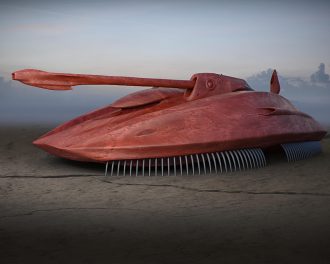
Elder Stow waited while the Flesh Eater tank blasted through the last few trees that stood between them and the camp of the travelers.  Lincoln and Boston had Elder Stow’s screens on full power, though Elder Stow said half power might be enough.  Boston was not taking any chances.

The military meeting took place outside the camp, so the ape men, Vikings, Decker, Katie, and Lockhart were not protected by the screens, but as the travelers figured out, the Flesh Eater tank came first for the travelers.  They knew the ape warship was there but figured the ape main weapon on full power would take a long time to break through their screens.  They had to deal with the unknown element of the travelers first, then they guessed they would have time to take care of the warship.

Boston shouted when she saw the tank.  “It looks like the Kargill weapon we decompressed back at the Men in Black headquarters when the Vordan attacked us.”  The others looked at Boston with curious faces.  “Lockhart would know.”

The screens skipped through red and orange and settled on a light yellowish tint that hardly showed any green, much less blue or purple.  At the same time, the screens around the tank showed two places where they went immediately to a sharp, deep purple glow and appeared to strain against burning out altogether. It did not take long for two holes to appear in the Flesh Eater screens.  The screens around the tank fizzed, popped, and went out altogether.

The tank exploded in several small explosions.  Sukki backed up temporarily, but the explosions were not big enough to put her in danger.  Elder Stow, protect by his personal screens, used his handheld weapon to fry the engine and power source.  Sukki returned quick enough to melt the canon in the front of the now dead tank.

Sukki also fried a couple of Flesh Eaters she found out in the open and did not feel nearly the gilt or sorrow she felt when she fried the Vikings in the last time zone.  She knew that was not right.  As horrifying as the Flesh Eaters might be, they were still people, and should be treated as such. She understood what the others and the Kairos taught her, that people came in all kinds of shapes and sizes, the good and the bad living side by side.  There might be millions of species in the universe.  She did not know how many.  But they were still people and should be respected as such, or as Boston told her, people were people no matter how small.

Sukki backed off as she lectured herself.  She still did not feel bad about frying a couple of Flesh Eaters, but maybe she hoped the rest would stay hidden in the trees where she could not get at them easily.  Besides, she was tired.  That took a lot out of her.  She flew back to the military meeting.

When Elder Stow joined her, the two became visible again.  Elder Stow reached for his scanner and took a moment to study and report the results.  “There are a half-dozen in the woods, still alive.  They have three humans that appear to be prisoners.  Wait a moment.”  Elder Stow touched a spot on his scanner. People waited, though nothing appeared to happen until all heads turned toward the popping sound in the forest.  It sounded a bit like firecrackers.  “I have remotely burned out the Flesh Eater personal screens, which were not very good in any case.”  To the Ape men he said, “Now, when you find them, your weapons will be affective on their unprotected flesh.”

“You flew…” the Ape commander said.  “Invisible… and now burned-out Eater personal screens, remotely, using something only the size of your hand…”  The awe in the Ape commander’s voice could easily be heard, even by the humans, a different species.

Elder Stow turned to explain to Lockhart and Katie.  “I analyzed the Flesh Eater screens in the last time zone and allowed for fifty years of improvements.  My scanner has been working on the necessary alignment frequencies to burn them out.  The scanner does not have much range, you know.  If there are some still in the hills, or maybe in a lead or iron lined cave, they will likely still have functioning screens.”

“Wolv all over again,” Lockhart said.

“Not far from true,” Elder Stow said.  “The Humanoids had very primitive personal screens which the Wolv spread all over this edge of the galaxy.  These Flesh Eater screens appear to be built using the same technology and principles, so they must have come across the Wolv at some point.”

“And we missed it?” Decker said with a straight face.  “It must have been a battle, seeing Wolv and Flesh Eaters go toe to toe.”

“Colonel,” Katie spoke up.  “The Humanoids ate flesh raw as well.”

“Yes,” Lockhart said.  “I had forgotten.”

“Can we go help those people?” Sukki interrupted.  “They have prisoners.”

The others nodded and Elder Stow asked.  “You still have your discs to protect you from ambient Vr energy?”  People nodded again as they headed toward the woods.  The Apes had big helmets that did the same thing.  The Vikings had no such protection, but at least Lockhart imagined any attack on the Viking minds would simply enrage them and send them, at least temporarily, into berserker mode.

They found Boston, Nanette, and Tony on the edge of the woods awaiting their arrival.  Boston turned off Elder Stow’s screens, left the device with Lincoln, and left Lincoln and Alexis with Astrid and Eric to defend the camp.

“You don’t have to do this,” Decker told Nanette.

“Neither do you,” she responded, a bit snippy, and pulled her wand.

“You are going to make my job a lot harder,” he said.

“Good.”  She would not let him go off and get killed on his own.  He stared at her.   She reddened a bit but did not care about that.

“Come on,” Boston urged. “I can smell them.”

Lockhart looked at Tony who had his M1911 handgun in his hand.  Tony answered the look.  “I was not going to let the women go alone.”

“Fair enough,” Decker said as he pulled his eyes from Nanette.

“They are about thirty yards straight in,” Elder said and pointed.

Kerga pointed left and right.  Jarl and Harrold took men left and right to circle around.  The Ape commander sent one Ape with each group of Vikings.  They waited a minute while Boston bit her tongue before she spouted again.

“Come on.”

“Keep your eyes and ears open,” Lockhart said as he stepped forward.

Three Flesh eaters opened fire as soon as the group got close enough to show clear targets.  One Viking got a hole in his chest.  One Ape soldier got hit in the arm.  Decker anticipated the ambush and went to the ground. The shot went over his head while he and Katie both returned fire and put that Flesh Eater down.  At the same time, Nanette raised her wand and the Flesh Eater weapons got yanked from their hands and floated ten feet up in the air.  Jarl, Harrold, and their men charged from the sides and the other two Flesh Eaters got run through by multiple spears and swords.

Boston raced passed the flesh eaters at elf speed.  Sukki followed, almost as fast.  They found the three humans tied beside a big tree.  One screamed. One would not look at them.  The third looked barely alive.  He had a piece of shrapnel in his chest, probably from when the tank exploded.

They found five Flesh Eaters on the ground in various degrees of life.  If not caught in the tank explosion, they probably got wounded when their personal screens blew.  One held a Vr projector, and he grinned as his tongue shot out and in, like he was tasting the smell of their blood.  He turned on the projector, and the Vikings shouted and put their hands to their heads, but Elder Stow ended that problem.  With his hand weapon, he fried the projector.  Then he fried the head of the Flesh Eater.

The Vikings, enraged, as Lockhart imagined they would be, did not let the remaining Flesh Eaters live, though most of them would have died soon in any case.  No Ape needed to draw his weapon.

Avalon 8.6 Standing Still, part 4 of 6

The apes lost two drones that day but gathered the information they needed.  They counted ten Flesh Eaters in the woods, and they appeared to be burning a path ahead of them to bring in something like a tank.  They did not bring the main gun from their crashed ship, which would have been useless without the energy source of the ship’s engines, but this portable weapon was not far down the power scale from the ship.  The ape warship was screened, of course, a necessity for space travel, but they feared their screens might not stand up to the power of the tank.

“We may have to abandon you, temporarily, to bring in our main battleship.  The Eaters surprised us with such weapons on another world.  We lost the battle for that world.”

“Your missiles were ineffective?” Decker asked. He came to this meeting on the sixth day as they met over primarily military matters.  Captain Jarl Hagenson came to represent the village, and Inga came with him to explain if she could.  Jarl was younger than Kerga and the others on the council.  It was hoped he might better understand these strangers.

The ape commander shook his head.  “Whatever their power source, the tanks, as you call them, are shielded against our normal weapons.  This is why we may need to bring in the battleship, and even it alone might not be enough.”

“These Flesh Eaters appear to be very good at discerning energy sources and converting them to use,” Elder Stow said.

“They had handheld Vr projectors some fifty years ago.  What you call Vorcan energy,” Lockhart said.

“What is Vorcan energy?” Jarl asked.

“It is a by-product of faster than light travel,” the ape commander began, but paused when Elder Stow held up his hand.  Elder Stow tried to simplify the explanation.

“When a ship—a people learn to travel at the speed of light, which is very, very fast, they discover several side things that come with breaking the light speed.  One is Vr or Vorcan energy.  It can kill people.  Eventually, the people learn to screen out or block that energy so they can fly very fast, safely.  These Eaters have figured out how to recreate that energy in a box they can carry.  It is no good against people who are normally screened, like the big invisible screen we have around our camp at night, you know?”

“Yes,” Jarl said.

“But these Eaters see no reason why they should not use it on people who have not learned the secret to protect themselves.  In that case, it is a powerful weapon that can cause madness, seeing and hearing things that are not there, and eventually making people unable to move before the heart stops and they die.  Do you understand?”

Jarl nodded but did not look too certain.  Inga spoke for him.  “It is like a spear that can be thrust into a woman who has no armor and no shield to fend off the blow.”

“Something like that,” Katie said, and Jarl appeared to understand better.

“But what is the energy source for this tank, and can we disrupt it?” Decker asked.

The ape commander looked like the question did not occur to him, but Elder Stow spoke again.

“My analysis suggests photon energy, though it may be some early form of anti-matter.”

“Photon?” Katie spoke up.  “But even we have lasers.”

“That is the beginning of the circle,” Elder Stow responded, and looked once at Jarl and Inga.  “People begin with natural sources such as wind, water, and animal power.  Fire is a great step.  Then steam and fossil fuels are exploited—still natural fuels.  Eventually atomic energy is discovered, fission, plasma drive, and fusion power.  Following that come experiments on gravity and magnetism—gravometrics, graviton bombs a hundred times more powerful than an atomic explosion, but without the ambient radiation.  If the people survive those days, they eventually find anti-gravity.  This leads directly to faster than light travel, but there are other obstacles to overcome.  One brings people back to the wave-particle nature of light itself.  Here, the circle is completed, and photon energy is a powerful source of energy for a long time before anti-matter, and eventually, anti-photon or dark energy.”  Elder Stow looked at the crew from the ape ship and shook his head.  “But that is as far as I need to go.  Maybe too far.  Let me just say, it appears to be photon energy driving the tank.”

“I understood the basic thrust of that,” Inga said, even as Jarl went back to head shaking.

“I got most of that,” Katie said.  “I’m sure Boston and Sukki would have understood better.”

“I understood well enough,” the ape commander admitted.  “But I have no idea what photon energy is or how to counteract it.  We were using plasma drive and learning about fusion energy when the Eaters first came to our planet.  We thought to learn from them and advance ourselves.  We nearly lost the planet as they ate through the population.  We gained knowledge from them and now fight them wherever we find them.  We help protect primitives where we can, but the Eaters remain about two steps ahead of us.”

“Can we pull down the shade, somehow, and cut off their energy source?” Decker asked, but Elder Stow shook his head.

‘I read about your Superman, being powered by your yellow sun.  But Superman does not become incapacitated every time he steps into the shade.  Photon energy is not exactly light energy—not exactly.  I’ll say no more.”

“So, what can we do?” Katie asked.

Elder Stow thought a long time, and everyone waited as patiently as they could.  He spoke at last.  “Every space civilization has benefited more or less from those that came before them.  The Anazi gained faster than light travel from the Sevarese and Bluebloods.  The Humanoids learned advanced robotics and artificial intelligence from the Anazi.  The Wolv stole the improved screen technology from the Humanoids, so they rampaged through the galaxy with primitive, but personal screens for protection.”

“We have a legend about Wolvs,” the ape commander said.  “That was a thousand years ago.  Most call it a myth. The stories from that time inspired us to fight the Eaters…”  He paused before he added, “They are not a myth, are they?”

Heads shook as Elder Stow spoke.  “They were real.  They ruined most civilizations in this part of the galaxy.  Fortunately, those elder races, such as we who had no interest in conquering anyone, survived and increased in knowledge, if not understanding.  Now, I see that these people and the Flesh Eaters have gained from the Pendratti, Anazi, Humanoids, and such before them.  They have faster than light travel, highly advanced computer driven equipment, and personal screens of a sort.  The Flesh Eaters may be a step or two ahead, but I cannot help you catch up.  One thing all elder races agree on is people have to learn things for themselves.  There have been several incidents where people have been artificially advanced, but the consequences, as far as I know, have always been disastrous.”

“So, you can’t help us,” the ape commander concluded.

“I did not say that.”  Elder Stow put up one hand.  “I have already told you and your young friend there much more than I should.  I will not go further by introducing you to photon technology.  But I will remove the tank for you.  After that, you will have to fight your own battles, as I heard Gerraint, and King Arthur once say.”

Elder Stow turned to Sukki and Sukki stood right up.  “Ready, father.”

“You don’t have to do this,” Elder Stow told her.

“We already covered this, many times,” Sukki responded generally to everyone before she focused on Elder Stow.  “I am not going to let you go off and do something stupid without me.”

Elder Stow merely nodded as the two of them lifted from the ground.  The ape men shouted their surprise.  When the two became invisible, the shouting increased in volume, and Jarl joined them, before people got quiet.

“You did not seem surprised,” Katie turned to Inga.

“I think I have used up my quota of surprise for this life,” she responded.