
The travelers crossed Cunigsworth Ford and entered the forest proper, as Father Tucker called it. He told them it was the king’s preserve and poaching deer and other game animals was strictly prohibited and carried the stiffest penalties. They promised to be careful.
The road, which had become hardly a path, took them through several hamlets and by midafternoon they arrived at the new village of Wellow. Wellow did not have so much as an inn.
“Quite all right,” Father Tucker said. “We can spend the evening on the grounds of Rufford Abbey. They are not far from here. Cistercians, but nobody is perfect.”
The travelers purchased some foodstuffs for the next two days they would be traveling through the woods, so they would not have to poach in the king’s preserve. The man in the market said he was astounded by the old Roman silver the travelers used. Lincoln shared a gold piece with the man, and he said he might bury it for future need and to keep it out of the hands of the tax collectors.
Katie came up to the priest at one point, with Boston beside her. Boston blurted out, “Helen is west from here. We have to go through the forest.”
Katie quieted her. “I wanted to say it is nice of you to lead us to where we need to go, but I believe we can take it from here. You said yesterday we passed the turnoff to Sheffield. No one would be upset of you decided to go home.”
Father Tucker shook his head. “After a short way, the road to Sheffield, as I named it, divides and one branch goes straight south, right through Warsop and through the woods to Nottingham. That road is patrolled by soldiers who are regularly sent out to protect travelers against the woodland thieves. But it is the thieves that I wish to meet. The Lord has burdened me with a heart for these hoodlums. They need spiritual guidance, not to mention a good moral compass. But there is a different road from Rufford Abbey that crosses the forest to the west—one not patrolled by troops and said to be full of thieves. It will take us to the west, to the River Maun and the village of Maunsfeld. From there, the road turns south again, to Newstead Abbey, a good Benedictine Priory, and down the River Lean to the village of Lenton, right near Nottingham.”
“And you thought to put us all in danger by taking us on this road?” Boston said, but she was not complaining. She smiled.
“Posh,” the priest said. “Given what you folks can do, I imagine the thieves will be the ones in danger.”
 Rufford Abbey proved to be harsh place. The Abbot left them alone after he squeezed a donation out of them, and the monks completely ignored them. They did not offer so much as a bit of bread and water for their supper. Without saying good-bye, the travelers took their leave early in the morning and started out across Sherwood Forest. In fact, Lincoln, who had the wagon that morning, was about the only one who said anything.
“I thought you said this was a road,” he said it several times, along with, “Not much of a road.” By lunchtime, they crossed the main highway to Nottingham and found a dozen buildings there, including a brick longhouse for about twenty soldiers. They were warned of the dangers of the road they traveled on, but Father Tucker insisted they were headed for Maunsfeld, and this was the only road they could take. The soldiers did not argue.
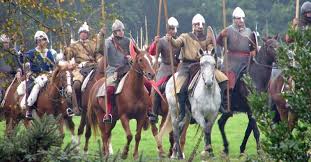
Less than an hour after lunch, the travelers heard horses behind them, coming up fast. Father Tucker got excited, thinking it might be the thieves. The travelers imagined it meant trouble and they armed up, just in case.
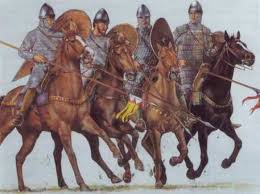
When the men arrived, they turned out to be soldiers, about twenty, though not from the crossroads blockhouse. The man out front claimed to be Sir Guy of Gisborne, special agent to the sheriff. He got personal and demanded answers from the travelers, which they willingly gave, as much they could. It did not matter how kind and open they were. The man was a jerk. Finally, Father Tucker stepped up and got in the knight’s face.
“Look here,” he said. “These good people are under the protection of the church and deputy to the sheriff or not, you have no right to stop them and prevent them from making their lawful journey.”
Sir Guy grinned, and while affective, it did not reach the level of Decker’s full-on crocodile grin. “I do if they are scofflaws who have not properly paid their taxes.” he looked behind and waved to a group of his men. “Search them for coins and contraband and search the wagon.”
About half the men dismounted, but most of the travelers stayed on horseback, including Boston who got a good look at all the faces in that moment with her good elf eyes. Only Lockhart, Katie, and the priest got down to talk to Sir Guy.
Lockhart took a step forward where he could look down on Sir Guy. “Sorry,” he said. “We can’t let you do that.” Katie and Decker raised their rifles. Boston and Alexis pulled their wands. Tony and Lincoln got out their handguns. Nanette held the reigns to the wagon while Sukki and Elder Stow prepared themselves, and Sukki prayed she would not have to kill anyone. Lockhart cocked his shotgun and blasted the nearest tree. The buckshot cracked a branch, tore off chunks of bark, and the Norman horses jumped at the sound of thunder. The soldiers stopped where they were, except the few who turned to go back to their horses.
 Lockhart turned the shotgun to Sir Guy’s face, but before he could say anything, he got interrupted by one of the soldiers in the back still sitting up on his horse. “Guy. Let them go. We have what we need and maybe they will kill some of the thieves in the woods.”
Sir Guy gritted his teeth like he wanted to say something, but he waved his men back to their horses and spun on his heels. When he mounted, they rode off, back the way they came and the travelers all relaxed.
“I don’t think he has given up,” Katie said it first.
“No,” Father Tucker agreed. “He will be back as soon as he figures out the best way to disarm you.”
“Keep moving,” Lockhart said.
“Wait. Boss,” Boston interrupted, and everyone paused to listen. “Back in the group. The one who talked to Sir Guy. That was Hoffen, Sir Hubert from Normandy, and Budman was with him.”
“Are you sure?” Lincoln had to ask.
“Yes. I didn’t see Englebroad or the Doctor, but Hubert and Sir Bernard were definitely there.”
“That explains what I was feeling,” Katie said softly.
“Keep moving,” Lockhart spoke up and looked at Elder Stow.
“I’ll set the scanner,” Elder Stow said. “They should not be able to sneak up on us.”
Lockhart nodded and the group began to move down the road. They mostly walked their horses for fear of the uneven ground, and because Ghost had a hard enough time pulling the wagon over the rough terrain, road or not.
After another hour, they came to a crossroad. South looked like a farm road or maybe a hunting trail. Father Tucker explained. “It heads toward Rainworth Water, the same little river that runs beside Rufford Abbey. The north trail comes to a ford on the river Maun at the king’s lodge. Our better road goes straight to Maunsfeld. We are about an hour away from there.”
“Better Road?” Lincoln said, though Tony presently had the wagon. Father Tucker nodded before he realized Lincoln was being sarcastic.
“Wait,” Elder Stow yelled. “There are three soldiers in the woods to the south.” He paused to look in that direction, and an arrow came, not quite to the road, but it thunked into a tree near enough. They all heard it and saw it, and Boston shouted.
“I hear the horses approaching fast.”
 “Tony,” Lockhart yelled to the group. “Tony, get the wagon to Maunsfeld. Decker, guard Father Tucker. Katie…” He started down the south hunter’s trail at a good clip, and Katie followed. Lockhart imagined outflanking the men in the woods, or at least taking their attention so the others could get away. He was not the best man for the job, but Katie was, and he did not exactly have time to think it through.
 Boston and Sukki rode ahead to clear the way for the wagon. Tony got Ghost up to a good trot, Lincoln and Alexis helping. Elder Stow rode right behind the wagon. He wanted to pull out his screen device and set a screen wall behind them, but he had no time to work on the device.
Decker wanted to follow Lockhart, but he hesitated as he watched the wagon move. It turned a corner when the soldiers became visible behind. He thought to give the soldiers a chase. “This way,” he said to Nanette and Father Tucker, and led them up the horse trail toward the king’s lodge.
When the soldiers arrived at the crossroads, they saw the wagon tracks on the road ahead, watched Decker, Nanette, and Father Tucker disappear up the north road and heard Lockhart’s shotgun in the south. Sir Guy cursed.
************************
MONDAY
The travelers and thieves meet and the travelers find Helen in the middle of it all, but then, as is standard for the Kairos, things turn strange. Something has fallen from the sky. Until Monday, Happy Reading.

*



 Storyteller Tales & Thoughts