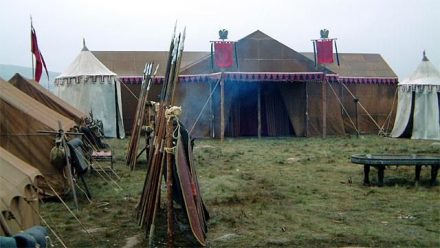
Medieval 6: K and Y 7 Unexpected Guests, part 1 of 2

Kirstie

The next three days were spent keeping Soren covered, wiping his sweaty brow, and feeding him soup. Inga came by every day for a visit and Mother Vrya also came on that first evening and brought all the medicine the Witcher Women had gleaned from nature over the centuries. Nothing much helped. Kirstie guessed Soren had a flu bug of some kind, and it would pass; but then again, such diseases could be serious, especially in the days before antibiotics and antivirals. She grew very concerned the evening his fever shot up and he complained that his ear hurt him.

It got late, and she had very little sleep. In her mind, she reached out into the future to Doctor Mishka, seeking advice and solace against Soren’s suffering.

“I could take a look.” Mishka’s voice spoke clearly in Kirstie’s mind. Kirstie decided that would be good. She had done this before, and she knew Mishka could do much more with her own eyes and hands than she could do by looking through Kirstie’s eyes. Kirstie settled herself. She traded places through time. She became Mishka, or rather Doctor Mishka came to take her place while Kirstie went to the place of waiting where she would stay for however long Mishka stayed in her time. “This won’t take long.” Mishka told her.

Mishka bent over Soren and did her best to look in his ear and throat. She called for the bag she kept at Avalon since ancient times, but it did not come. “I would have liked to give him some pain killer at least,” she said, and sneezed.

“I don’t know what the trouble is.” Kirstie spoke into the doctor’s mind.

“Something,” Mishka said and rubbed her watery eyes. “But it may only be that I have a bit of a virus right now, myself.” That did not sound right. Generally, when the Traveler traded places with one of her other lives, that life arrived in the prime of health and condition. Mishka looked once more at Soren. She suggested a certain bark and herb combination and instructed Kirstie in the method of distilling the product down to drops which should relieve some of the pain and pressure in Soren’s ear.

“That’s about all I can do without my bag,” Mishka said. “For the most part, the medicinal herbs of your Witcher Women are about as good as anything against a virus.” She sneezed again.

“Is this because he fell in the water?” Kirstie asked.

Mishka shook her head. “Triggered, maybe, but the virus must have already been in his system.” Mishka put a hand to her own head, and though she knew full well that she could not tell, she felt sure she had a fever of her own. Mishka traded places and Kirstie returned.

“Thank you, Doctor,” Kirstie said out loud as she set about making the ear drops. “Mishka should not have been sick,” she said to herself. “And the things I keep safe at Avalon should come to me when I call,” she added. Well, whatever the trouble was, it was a mystery that would have to wait. After Kirstie applied the drops, Soren seemed to fall into a more restful sleep. She curled up beside her boy to keep him warm. She quickly fell asleep herself and only woke in the morning when Inga touched her shoulder.

“Wake up, sleepy,” she said.

Kirstie sat up and rubbed her eyes. Normally, no one could sneak up on her like that, but her throat was dry and her eyes crusty. She wondered if perhaps she was catching Soren’s flu. That must be it, she decided. “Morning?”

“And a sail in the bay,” Inga added with a smile.

“Wilam?” Kirstie asked without a pause.

Inga nodded as Kirstie jumped out of bed and ran to the brass mirror. She looked frightful, and the brush could do little with her hair. She had not slept much in the last three days and now she needed some work to pull herself together. Inga looked first at Soren, sleeping peacefully, and then she helped brush some of the knots out of Kirstie’s hair.

“Go on,” Inga said at last. “Or he will be at the dock before you.” Kirstie looked again at her son, but Inga turned her toward the door. “I am sure Yrsa will come by in a little bit. Meanwhile, I think I can watch a sleeping boy just fine.”

Kirstie decided Inga was right. “Thank you,” she said, and she ran, before she walked. She did not want to appear too anxious.

Mother Vrya stood there on the dock, waiting patiently. Kirstie stopped beside the old woman. It would have been unseemly to run out ahead of her like a wild child. “Good morning,” Kirstie said, softly.

“See.” Mother Vrya said, pointing with her walking stick in the direction of the big house. The men were just coming, and there were strangers among them. It was only then that Kirstie noticed another, smaller ship had already docked. It flew the king’s flag and she looked at Mother Vrya with real curiosity on her face.

“You may recall, the one with the red hair is Lind,” the old woman said. “You may remember him from your youth. He is as smooth a talker as I have ever heard. And the dark-haired giant who trails in his steps is Gruden in case you have forgotten. He is as strong a right arm as you will find and clearly one who has killed men. They came here years ago looking for Elgar the Saxon.”

“I remember. Why are they here now?” Kirstie asked. They were the men who came after the trouble with the Vanlil.

Mother Vrya shrugged. “They are still looking for certain people,” she said. “The king heard about Lindisfarne, and he wants to know who was involved. They came here to begin the search starting here in Strindlos.”

“But that was four years ago.” Kirstie said. “Who can they be looking for?” She had a feeling that she knew who they were after, and it scared her a little. “They can’t still be looking for me.”

“How well I remember when the hag drove the Vanlil to invade our land,” Mother Vrya said. “That was more than ten years ago. You were a mere girl of ten. Your parents were slain along with many others in the attempt to defend our homes. I, myself, was crippled in that day. But then, Elgar the Saxon came to our aid, with Mother Greta of Dacia, the Doctor Mishka from the land of the Volga, and from whom I learned a great deal, and the others. These are whom they still seek, no matter what they say.” Mother Vrya concluded.

Those people were all Kirstie from other times and places, other lives she had lived or would live in the future. It felt right that she should ask. “But why would they be seeking them, especially after all these years?”

Mother Vrya shrugged again. “Who knows?” she said, flatly. “But do not be afraid, dear. No one will betray you.”

Kirstie looked again as the men came close. She did not share Mother Vrya’s confidence. Some in Strindlos would betray their own mothers if the price was right. She tried not to think about it. The ship from Northumbria started tying up, and Wilam had already jumped to the dock. He came quickly, as anxious as Kirstie, but Kirstie waited until Mother Vrya touched her hand in a kind of sign of permission, and then she met Wilam halfway. Her arms wrapped around him, and her head turned to lie against his chest. Wilam wrapped her up in his strength, and it was exactly what she needed. A tear fell from her eyes, but Wilam did not see.

They kissed.

“I missed you,” he said. Kirstie sensed his joy in the moment, and she knew he was terribly understating his feelings.

“I love you, too.” Kirstie spoke for both of them. “And right now, I need you.” She needed his arms, his care, his love, and she was reluctant to let him go, but the men were arriving. Wilam needed to renew other friendships.

************************

MONDAY

Kirstie is surprised by unexpected guests, but the people disappoint her. The guests are not treated well. Until Monday, Happy Reading

*
Medieval 5: K and Y 9 Hiccups, part 3 of 3

Kirstie

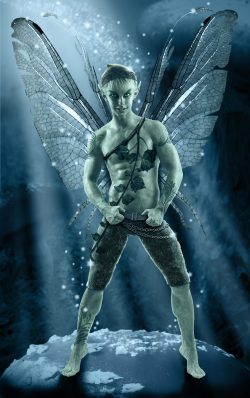
When they returned to Strindlos, Kirstie told Mariwood to vacate the sack of grain he had lived in for the past month while they made their way home. He made a hole in the sack where he could slip out to exercise his wings flying around the outside of the ship beneath the rail so he could stay hidden from the crew. Some crew members swore they saw something flying around from time to time, but they all assumed it was a seabird of some sort and Kirstie did not tell them otherwise. Of course, she knew he was there, but she did not bother him. Yrsa also knew he was there and slipped him a bit of fish or herring now and then when the crew ate. Yrsa did not need a full man’s portion, and Mariwood was small enough not to need much at all. It worked out.

“How did you know?” Mariwood asked, and then corrected himself. “Of course, you knew.” Kirstie just nodded and let him come to her shoulder where he could hide in her hair while they went ashore.

Inga stood on the dock waiting for her, Buttercup hiding in Inga’s hair. Surprisingly, Hilda also stood there beside a young man. Hilda knew nothing about the fairies and elves, but she was Kirstie’s old friend, her best friend, and Kirstie felt curious. Hilda was sixteen, and Kirstie imagined she wanted to introduce her boyfriend. She found out differently. Hilda married the nineteen-year-old Troels, and the girl was already pregnant.

“Married?” Kirstie shouted and hugged the girl. Kirstie was nearly fifteen, but she could not imagine herself getting married. No one but Kare showed any interest, and he was not an option in her mind. She imagined she did not have time for a boyfriend, though she also admitted the Vanlil invasion and her part in it may have scared off some of the boys. Her proclaiming herself a shield maiden and sailing off with a shipload of men did not help either. Though she also wondered if maybe Kare threatened others to stay away. That would not have surprised her. He did have some sway over the fifteen to twenty-five age group of young men. That was not necessarily a good thing for those young men.

“You must come and see our home,” Hilda said with a smile for her husband.

“I will. I promise,” Kirstie said. “But first I have to go to the big house for the dividing of the loot, and then I need to check my own house. You cannot imagine how tired I am. How about tomorrow morning? I can come for a visit tomorrow, and we can spend the whole day if you don’t mind shopping a bit. It could be just like the old days, you know, sweet sausages and all.”

“She likes to shop,” Troels said about Hilda in a noncommittal way.

Hilda looked a bit disappointed that Kirstie did not want to run and see her house right away, but she really did understand. They hugged, and Hilda took her husband off before Kirstie turned to Inga and whispered. “Married?”

Inga shrugged. “It is in the air,” she said, and as they began to walk, she added, “Buttercup wants to know who your friend is.”

“Mariwood. He came all the way from the Frisian shore,” Kirstie said. “I made the mistake of mentioning Buttercup and he said she sounded nice, and he would like to meet her,”

Inga nodded slightly so she would not knock the fairy off her shoulder. “It is in the air,” she said without explanation.

When it came to dividing up the loot, Captain Stenson said Kirstie deserved the lion’s share since it was her honey, ivory, and amber that made them rich. Kirstie insisted that she get her fair share, like any other crew member, and no more. Yrsa also got a share which she later gave to Kirstie because she said elves did not use coins or care about such things.

First, after they all marched to the big house, Captain Stenson offered a share to Chief Kerga on behalf of the village. He also set aside four shares for the four families who lost men in the battle of Bremerhaven. Finally, Captain Stenson took a share for his ship, which he paid for out of his own pocket. The rest got evenly divided under the watchful eye of the village elders. They had four pieces of silver left over at the end and gave one to Kirstie. Captain Stenson kept one and gave one to Frode.

“And the last one,” he said, and handed it to Inga. “For the Witcher Women. A contribution.”

“Here,” Kirstie said. “You can have my extra too.” She handed it to Inga and looked at Frode. Frode handed over his extra without a word, and they all looked at Captain Stenson. He gave them all a hard stare before he raised his eyebrows and sighed, an expression that became all too familiar around Kirstie. He handed Inga his extra and declared the division of the goods to be over, though it was not exactly over.

Most of the men left the big house, happy, even as Mother Vrya came in, followed by several strangers. A few men stuck around to pay Captain Stenson for the plows and farm implements they got in Frisia. Captain Stenson felt it only fair to give Kirstie another ten pieces of silver, since it was her amber, but Kirstie had another thing in mind. She divided her ten pieces in half and gave five to Frode and the other five back to Captain Stenson. “This is payment for a dozen sheep from each of you, and they better be good breeding stock, not just the old and the lame.”

Frode looked at her and could not resist asking, “So what do you have in mind for the rest of your money?”

Kirstie paused before she answered. “I need to hire a couple of men,” she said, and changed it to something understandable in her culture. “I need to buy a couple of thralls. I’m thinking there is no telling what condition my house and property are in right now since I have been away. I am going to need some help I can depend on to keep the land when I go off on the next voyage.”

“You plan to sail again?” Inga asked, though she did not really sound surprised.

Kirstie looked at Inga and glanced at Mother Vrya. “It is inevitable.”

Mother Vrya nodded, stood between the strangers and Kirstie, and turned to introduce Engel Bronson, the king’s representative, to Chief Kerga. The others with him were Bieger, Lind, and Gruden. Engel started right in.

“Since talking to you, we have spoken with the men of Varnes, Oglo, and on the Frosta Peninsula. All have said they gathered here in this meeting house, and Elgar the Saxon came here to draw up the plans to defeat the exiles and their allies.”

Kerga nodded. “We are the closest to Hladir, the king’s house, and the Nid River. We attacked the enemy from here.”

“Yet you say you do not even know where he came from.”

“I do not recall, exactly,” Kerga said, and tried hard not to look at Kirstie who stood with Inga beside Mother Vrya. Yrsa stood behind the others.

“Wessex,” Mother Vrya spoke up. “From the big island in the west. That was where he said he was from.”

Lind quickly spoke to the women. “There was a girl as well, a young blonde. She and Elgar were never seen together at the same time.”

“The child,” Mother Vrya nodded. “She traveled with Elgar. She was just a young child.”

“Her name?” Lind asked, demanding an answer. “Did she have a name?”

Kirstie interrupted and lied a bit. “Her Christian name was Katherine, why?” Everyone stopped to look at Kirstie who wore her armor with all her weapons. They glanced at Inga and Yrsa, what they could see of her, but Kirstie clearly stood out, dressed as she was, like one ready for battle. Engel Bronson stepped forward with another question.

“Several women went with the army, did they not?”

“I went with the army, with one of the Witcher Women,” Mother Vrya said. “We cared for the young child and healed what men we could. When men fight there is always so much blood.” The king’s men nodded, but Engle kept staring at Kirstie until she spoke.

“Don’t look at me. I went to fight. I am the daughter of Arne Carlson, the Navigator. Perhaps you heard of him? He died in Normandy, but you see, the sea is in my blood. In fact, I just returned from guiding my ship to the Frisian shore. We had a successful journey.” She lifted her bag of coins and rattled it. “And, yes,” she added. “I killed a man.”

“Do you remember the girl?”

“Katherine?” Kirstie appeared to think. “I remember Chief Birger and Captain Kerga here. I remember my captain Rune Stenson and Frode, his skipari. I remember being scared. It was my first battle. I’m not scared anymore.” Kirstie smiled and said, “Come on Yrsa. Let’s go home.” And they left the big house.

************************

MONDAY

Kirstie need to build her home to have a home, and she needs to get help around the house for when she hears of another hag and has to go away again. Until then…


*

Medieval 5: K and Y 6 Getting Ready, part 2 of 2

Kirstie

In those days, Inga and Buttercup visited regularly to where Kirstie’s house became like a second home, and they spent the night often enough.

“But there was so much yelling,” Buttercup explained about Captain Harrold’s visit. She fluttered down to the table where Kirstie made a soft cushioned stool just her size. “It was scary.” she finished and settled down.

“But it turned out all right,” Inga said.

“I heard the yelling all the way up here,” Yrsa said whether that was true or not.

They all looked at Kirstie, but Kirstie had something else in mind. “Buttercup, come here.”

“Come where?” Buttercup asked. “I am here.”

“No, here,” Kirstie said and used her hands to show where she meant. She thought there would be enough space in that spot. The fairy complied and everyone looked curious before Kirstie said, “Now, get big.”

Buttercup fretted and swayed a little back and forth in the air until she made up her mind. She got big and lost the points to her ears and the wings at her back. Of course, her fairy weave clothes grew with her, so she did not appear naked in her big size. She looked down, like one embarrassed, but as Kirstie thought, she never got big before for Inga.

Yrsa let out a little gasp at how beautiful the fairy was, as all fairies should be. Buttercup looked to be about eighteen, the same as Yrsa, and Kirstie nodded to say she understood in human terms they were a smidgen younger than Inga, though Buttercup was actually one hundred and fifty-seven and Yrsa was one hundred and thirty-three. Of course, Inga saw Svator get big in the big house war meeting, but for some reason it never occurred to her to ask Buttercup to get big.

“Is this okay?” Buttercup asked without looking up.

Inga stood and hugged the girl. “You look beautiful,” she said. Yrsa and Kirstie passed a glance and got up to join the hug, and Buttercup’s small voice came out from the midst of all those huggers.

“Now I am going to get happy-weepy.”

Kirstie let go and Yrsa followed, wiping her own eyes a bit. Inga backed up and Kirstie spoke. “You can get little again if you like.”

Buttercup thought about it and shook her head. “I can stay big for a while,” she said and wiped her eyes on her sleeve. Kirstie found her a regular chair and said that now she could get big when she wanted to help Inga or Mother Vrya in their work.

“I don’t know,” Inga said. “She already helped in the birth of Bodil’s baby. Poor Bodil was in terrible pain, screaming pain, and even Mother Vrya was at a loss as to what to do. Suddenly, Buttercup came racing in and hovered over the bed, hands on her hips and shouting. “Quiet. You are not having a leg chopped off. You are having a baby and that is a wonderful thing. You keep screaming and you will just scare your own baby. You don’t want to scare you own baby.” Bodil looked up at the voice and said, “Oh, a fairy.” She reached up, but Buttercup kept back. But after that, Bodil delivered her baby without another sound. It was like magic, like a miracle, like you talk about.”

Kirstie reached down beneath her shirt. She had a small wooden cross made and wore it around her neck on a leather string, but she said nothing at that time. Instead, she said, “Can’t count on that response from every human. Some might see the fairy and scream louder.”

“I know,” Buttercup said. “That is why I stay hidden in Inga’s hair.”

Inga turned to Kirstie. “I’ll never be able to braid my hair again.”

Kirstie smiled. About half of her hair was loose, but about half was beautifully braided in two long strands that fell down her back.

When Kirstie was not learning about weapons or visiting with Inga and Buttercup, she went to the village center. That happened regularly enough, and Yrsa often went with her. They always found the people in the village warm and friendly. It was not just that they knew Kirstie all her life, or even that they knew Kirstie’s parents and like them well enough. It was because they credited Kirstie with saving their village and saving so many of their lives during the Vanlil invasion and the rebellion of the exiles, all of whom eventually had their heads chopped off by the king.

Often enough, Kirstie went to the village to keep up with her friends. She met with Hilda regularly, and Hilda took her to the marketplace to look at things such as a wife and young mother might want. There was no disguising what was on Hilda’s mind. Yrsa went with them occasionally. Hilda expressed a little jealousy toward Yrsa’s closeness with Kirstie, but oddly enough, she never asked where Yrsa lived. Somehow, she got the impression that Yrsa might be from Varnes, though maybe she lived on this side of the river.

“What I honestly don’t understand is your obsession with weapons and fighting,” Hilde said. “I mean, look. Isn’t this cloth just beautiful?”

“Silk,” Kirstie named it. She knew Captain Harrold brought it back from Kent at the cost of a few men’s lives. “I’m not obsessed. I am sure when I am older, I will agree. It is beautiful. But right now… My father had a son, you know, but he did not live. I feel it is my duty to carry on the family tradition for the day when I have a son.”

Hilda did not exactly buy the explanation. “So, you plan to marry someday and have a son?”

“Kare keeps threatening me.”

Hilda smiled at that. “Liv says she is never going to marry.”

“Liv’s father might have something to say about that.”

Hilda shook her head. “Liv’s father and mother are not around much. There is something strange there. Liv is strange. She is getting stranger and stranger the older she gets.”

Kirstie nodded. She saw Liv a few times over those years. and while the girl seemed normal enough in a way, Kirstie could not disagree with Hilda that in some ways the girl seemed stranger and stranger.

One time when she got to the village, she found the king’s ship in the dock. Two men in particular, Lind and Gruden, seemed especially interested in finding Elgar the Saxon. They heard in other villages how Elgar organized the counterattack that defeated the enemies of the king.

“We just want to honor him for his help,” Lind said, though he was not a convincing liar.

“Being a Saxon, I am sure he went back to Saxony, or West Saxony, or wherever he came from,” Chief Kerga told them, and they left, not entirely happy. Kirstie sighed her relief. The people in Strindlos would not betray her, even if the king offered a reward. Well, at least that would depend on how much of a reward he offered.

Another time in the village, she ran into Kare and Thoren. In fact, she saw them several times over those years, and each time they seemed creepier than the time before. Fortunately, they sailed in Rune’s ship twice before they found a place in Harrold’s ship. Captain Harrold lost a few men in the encounter in Kent, and since Kare and Thoren had some seasoning, and since they wanted to make a change, he took them for his crew.

Thoren said, “Rune and Frode could not find their way out of a sack of grain.” Kirstie heard that as out of a paper bag. She smiled at the time and ran home to get out her father’s charts and things and review everything she could remember about navigation, as her father taught her.

After Kirstie turned thirteen, and she began to show that she might not be a skinny little blonde beanpole her entire life, Kare started in on the drumbeat that he was going to marry her. It got annoying. He said he was saving all his money, and Thoren’s, too. He said he was going to get his own ship someday soon. “Just you watch.” She watched. Granted, he was something of a leader among the boys in his generation, about Inga’s age. But he was roughly eight years older than her, which made him twenty-one to her thirteen.

To be honest, eleven, twelve, and thirteen was when girls did start thinking about marriage. If Kirstie’s father was alive, that was the age when he would start looking around to make a good match. The presumed quality of that match depended on his wealth, power, status, and standing in the community and region. It had nothing to do with what she wanted. Kirstie imagined she would have been married at sixteen or seventeen to some stranger, and it would have been up to her to make it work. But then, her father was gone, and that liberated her in some sense.

Kirstie thought about Inga, who turned twenty and almost qualified for the term old maid. Inga was pretty enough and would have made an excellent catch for any man, but her parents were also gone. Her father died at sea. His ship got caught in a terrible storm and he got washed overboard to never be seen again. That happened often enough. Then, her mother caught the winter flu and died despite the best efforts of Mother Vrya. Mother Vrya took Inga at that point to be her pupil, and Kirstie’s mother somehow convinced the girl to help watch over her wild child, Kirstie. Mother Vrya encouraged that situation, because it gave her pupil some income and a stable home environment she could count on in time of need. It also gave Inga a chance to provide a steadying influence on the wild one in her charge.

And Kirstie did settle down, some. But Inga did not marry, though she may have had a couple of offers. Kirstie got the feeling Mother Vrya ran interference for Inga with Chief Birger and others to see she did not get roped into a relationship she did not want. From time to time, Kirstie thought Kare would not be a terrible choice. At least she knew the boy—the man, creepy as he could be at times. He was not a stranger. Still, at thirteen to his twenty-one the age difference seemed insurmountable. Kare was serious. Kirstie had some words for him.

“Pervert,” she called him. “Pedophile.” Mostly, she had no interest in marriage, so it was just as well she did not take his comments seriously. She normally laughed in his face when he brought it up. At that time, she had far more important things to worry about, like where she needed to go.

Medieval 5: K and Y 4 Battle Plans, part 2 of 2

Kirstie

Elgar called. “Stovelurne.” That was the chief dwarf’s proper name in the land, though when the dwarf chief appeared out of nowhere, and the men shouted, and the dwarf shouted with them, Elgar reverted to his native Old English to name him. “Booturn, your people will behave when we camp in the night, won’t they?”

Booturn shook his head to clear it and took a quick look around the room before he answered. “We will keep to our own place in the night. We will even feed Vortesvin, the mountain troll, so he won’t go looking for a snack in the night.” He grinned. He just could not help himself. “But I must say this.” He turned serious. “When the fighting starts, the mudders better stay away from the king’s house. Truth is many dwarfs can’t tell the difference between one human and another, so you best leave us alone to do our work.”

“Maybe we should give the king’s house a wide berth,” one man said.

Svator spoke to the men, which surprised some of the men. “They know we are coming. As long as you are with Lord Elgar, the dwarfs will behave.” He looked at Elgar as Booturn sighed and nodded.

Elgar continued. “We will camp in the king’s south field tonight to be ready to assault the south end of the town at first light. Just remember, we are not there to engage them in battle, just drive them to the water. God willing, that will be where they think to go in order to escape aboard whatever ships they are able to capture. Svator and his people will fly cover. They will route out any attempt to gather the enemy forces to counterattack, so do not be surprised if you see fairies land on a roof, get big, and use their bows expertly.”

“But look,” Chief Birger was thinking. “What if they don’t go for the ships? You said the Vanlil are not sailors. What is to prevent them from slipping out of town to the east and west as soon as we begin our attack on the south? They can then gather in the wilderness and come up with a new plan, as you said, and we will be right back in the same mess.”

Elgar shook his head. “Lord Amber,” he called, and the elf lord appeared beside Svator, not entirely disoriented at first. The shouts were a little less this time. “The elves of light have positioned themselves in the east and west to prevent that very thing.”

Lord Amber bowed to Elgar. “Lord. My people are in position. We will not let any escape into the wild even if we have to chase them down.”

“I still think we should be allowed to chase the ones on our side,” Booturn spoke up. “You can trust us not to let any escape.”

“Yes,” Elgar said. “And leave bits and pieces of chopped up humans all over the woods. I don’t think so. Besides, there are dark elves just itching to be part of the action. If any should escape Lord Amber’s people, it will be much worse for them in the woods at night.” Elgar paused and let that thought settle among the men in the room. He saw from the horror painted on several faces what the men thought about that. “You stick to your assignment and stay off the King’s ship. If they escape to the skied, the longship, you need to let them surrender.”

Booturn sighed again. “It won’t be easy,” he said, but he nodded.

Elgar looked around the room and spoke to his little ones. “Thank you for helping these men understand that we have a good chance to stop these exiled chiefs and their Jamts in their tracks. Please go back to your people,” he said. “Svator, you need to get small and keep your eyes on the proceedings.” Svator got small, and when Elgar waved his hand, and Booturn and Lord Amber disappeared, Svator sped back to hide in the rafters at such a speed, it looked to the men that he disappeared too. “Please tell the ones outside that it is safe to come back in.” Elgar said. “Only humans here now, and we need all-hands-on-deck to prepare. And I’ll not hear any bad talk about men who acted in a perfectly natural human way. Save that coward talk for any who might run away in battle. I hope no one will.”

Captain Kerga appeared sensitive to the few who came back into the big house and sat in the back. He spoke right away, “So, now all we have to do is figure out the timing, so we bring our ships in at the right time to block the port.”

“The timing will be difficult,” Elgar said. “If the ships arrive before the enemy is backed to the water, they may yet find a way to slip out from our fingers. On the other hand, if the ships arrive too late, the enemy may grab the ships in the town dock and slip out into the fjord.” Elgar thought for a second when he heard Yrsa speak up, contrary to all etiquette where women only spoke in the council when given permission.

“Perhaps we can help.”

“Of course,” Inga understood what Yrsa was suggesting. “The three of us can ride in Captain Kerga’s ship and the other ships can follow his lead.” She stood to speak so Yrsa stood with her, and Captain Kerga asked an obvious question.

“The three of you?” Kerga glanced at Mother Vrya, but Mother Vrya shook her head.

“Buttercup, show yourself,” Elgar insisted.

A little head poked out from Inga’s hair. “Do I have to?”

Elgar smiled. “You have to,” he said. “In fact, I think you should come over here and face me.” Elgar made it a command, but he tried hard to not smile as he said it.

Buttercup came but stopped out of arm’s reach. “But I like Kirstie,” she said. “You’re too scary.” Several men around the room snickered.

Elgar looked at Captain Kerga, who stared at the fairy as he stared at all the little ones. He opted to call Kerga’s number one, what some might call the first mate. “Jarl the Younger,” he called, and the man came. He looked delighted to see the fairy. “This is Jarl, Buttercup. When your father or Svator, or Eik, or one of the other Fee send you word to go, will you tell Jarl to go. Shout it nice and loud when that happens. Your friend Inga can remind you. Would that be okay?”

Buttercup took a moment to fly around Jarl. It got him to turn once all the way around, but Buttercup, in that annoying fairy habit, stayed always barely in his peripheral vision until she faced Elgar again. “He seems nice. I can do that.”

“Very good. Thank you. You can go back and visit Inga again.”

“Goody,” she said, and fast as a bolt of lightning she hid once again in Inga’s hair. Elgar saw the smile that colored Inga’s face and turned to Yrsa.

Yrsa did not need to be prompted. “I can also say go when Father sends word to my heart.”

“Your father?” Jarl asked, young man that he was.

Yrsa stared at Elgar. Elgar lifted his hand briefly, so everyone caught a glimpse of the elf under Yrsa’s glamour of humanity. “Don’t go there,” Elgar told Jarl. That was one complication he did not need, or rather, Kirstie did not need it, young as she was.

“Well, Saxon,” Chief Birger rubbed his hands. “You seem to have covered all the angles.”

“No pun intended, I am sure,” Elgar mumbled, when Mother Vrya stood and spoke.

“Not all the angles. What do you propose we do about the hag, the power behind this Vanlil invasion?”

Rune Stenson also stepped forward and had something to say. “And these spirits of nature. We have all heard terrible stories. Can they be trusted?”

“More than most men,” Elgar answered Rune and went away from that place to let Kirstie come home in case any of the men present had forgotten. “The hag will be my responsibility,” she said. “And concerning the little ones, they don’t like their word and loyalty questioned, so Rune, you and your crew better stay with me. You can keep me safe when the fighting starts. And as for the rest of you, if any of you hurts a fairy, elf, or dwarf, even by accident, I dread to see what punishment will await you. Remember, they are on our side. Normally, they would not be permitted to interfere with a human conflict, even with a power on the other side. In this case, we do not have enough men to assault the town and block the port at the same time. So, they are allowed to be part of the action as long as they… as long as we all stick to our assignments.”

Inga spoke up into the silence that followed. “You will not be going with us in Captain Kerga’s ship.” She made a statement, but it was really a question.

Kirstie shook her head and said, “Come on.” She headed toward the door. “I want to have a snack and gather my things before I have to walk all the way to the king’s field.”

Medieval 5: K and Y 4 Battle Plans, part 1 of 2

Kirstie

Word came from the fairies Eik and Svator that the enemy overran the king’s house on the sixth day, even as the ships from Olvishaugr arrived in Strindlos Bay with a hundred men from the north. The enemy burned the king’s house to the ground. Svator was surprised that even at that distance the people in Strindlos could not see the great cloud of black smoke that wafted into the sky.

 Chief Birger’s spies arrived in the morning. They traveled through the night to get back first thing in the morning and reported that there were about four hundred men gathered to attack the town. By the fourth hour, about ten o’clock, the chiefs from Oglo, Frosta, and further north arrived in the big house and Captain Kerga took the lead in explaining the situation as well as he knew it. They began to argue about the best way to attack the enemy and drive them back into the mountains.

When the women arrived outside the big house, Inga asked. “Are we ready?”

Yrsa and Buttercup both nodded. They spent the night avoiding the widows, though Mother Vrya saw Buttercup fluttering around twice, and saw Yrsa once. Mother Vrya did not appear surprised on seeing the fairy in Kirstie’s company. Yrsa, of course, wore a glamour that made her appear human, and there were plenty of strangers in Strindlos by then, though not many women. In any case, Mother Vrya said nothing and left before dawn to take her place in the big house council chamber.

Kirstie thought to say something. “Buttercup. You better ride on Inga’s shoulder. I’m going to have to let Elgar talk to the men.”

Buttercup did not mind, and Inga positively smiled, like she got excited. Kirstie thought that was odd. She was not sure she ever saw Inga excited before. Buttercup and Yrsa knew Inga by then. Kirstie could hardly avoid introducing them to her watcher. They all seemed to get along well and talked into the night about many things. Kirstie mostly kept quiet and worried when the word came that the hag had moved down from the mountains to join the men.

If the Vanlil got a foothold on the Nid River, it would not be hard to cross over the fjord and overrun the hamlet of Stadr on the narrow place. They could block the whole fjord from there and cause the villages all the way up to Steinker to surrender. At least that was likely what they had in mind. Kirstie imagined them pushing west from Stadr to Hof, the place where the fjord and North Sea met. Kirstie also imagined the hag had some of the Vanlil and maybe some of the exiled men primed to invite the god Abraxas to come to their shores. Abraxas got told that putting his foot on the ancient land ruled by Aesgard would be instant death, but an invitation by the people might negate that threat. In fact, once he got a foothold in Norway, he might easily arrange an invitation to Denmark, and anywhere on the continent where the Danes and Norwegians went would be open to him. Abraxas was supposed to be confined to the British Isles, but it seems he found a way to get off the islands. He probably already had Jutes, Angles, Saxons, and Danes working for him, and they all had cousins on the continent.

Kirstie shook her head and said, “Ready,” and the four women trooped into the big house totally interrupting the argument. Kirstie yelled, in case any of the men were not paying attention. “How many men do we have to march and how many ships have we gathered?” When most of the eyes glared at this rude young girl, Kirstie traded places through time with Elgar, and he came dressed in his armor and decked out in weapons. He spoke to Chief Birger in a softer voice. “I said, how many men do we have to march and how many ships have we gathered?”

Chief Birger smiled, having seen Kirstie change into this man before. Most of the outsider chiefs shouted from surprise before they quieted to listen. Captain Kerga answered the question.

“We have three longships, one of which is mine, and seven karve which are smaller but perfectly good transports in the fjord.”

“Saxon,” Chief Birger said. “What have you to say?”

“They attacked and burned the king’s house to the ground and captured the king’s monstrous ship you call a skied. They are preparing to attack the town, and I expect them to concentrate on taking the docks, which is good for us because we want them to back up to the fjord. They will try to capture the longships and karve in the docks. They will need all the ships they can get to cross over and take Stadr and to block the narrow place. We will need our ships to block the town docks and not let them escape on whatever ships they capture. Fortunately, the Jamts are not sailors, though they are excellent horsemen. How many horses do we have?”

Men began to shout until Chief Birger and some of the older village men got the others to be quiet. Captain Kerga picked up the telling. “We have two hundred and fifty men ready to cross overland to the king’s place. Not many on horseback. We have about as many that will sail to block the port in the third hour tomorrow.”

“Yes. Why wait?” Chief Birger asked. “We could block them in tonight.”

“No.” Elgar shook his head. “If we move before the men on foot can get there, they can escape with their whole army intact, and hide in the wilderness where they will just come up with a new plan. We have to trap them in the town and push them to the water. Some will have to engage face to face, but we mostly need our bows and arrows to drive them to the shore. When our ships come up, they will be surrounded and will only survive if they surrender.”

One of the northern chiefs stepped forward with a question. “How do you know they burned the king’s house? The spies we sent only returned a few hours ago. They said some four hundred are gathering outside the town but made no mention of any attack on the king’s place.”

“My spies,” Elgar said. “They have more recent information, but I hesitate to introduce them because I don’t want to frighten you.”

Men grumbled angrily at the implication that they might be afraid of anything, especially having that suggestion come from a Saxon. but Chief Birger asked, not too sharply, “What spies?” At least he could imagine.

Elgar nodded and called to the rafters overhead. “Svator, please come down here. The chiefs here want to know the source of my information.” Svator fluttered down from above but stayed facing Elgar the whole time. The men gasped, a few screamed, but only one ran screaming from the big house. “Please get big,” Elgar said, knowing that men, on first meeting a fairy, found it more palatable meeting them in their big size. When big, fairies lost their wings and appeared human enough. Svator obliged, appeared dressed in hunter green, and grasped tight to his excellent bow. He offered Elgar a bow.

“Lord.” he said. “There are five hundred Jamts—Vanlil, and fifty exiled men who once took refuge in Jamtaland. Fifty and five have been left to guard the longship in the king’s dock. Five hundred face the town, which is as many as live in the town, men, women, and children. They are negotiating a surrender, but some in the town want to fight. They have seen that the Vanlil are under the sway of the hag and are slow to react when confronted in a battle situation.”

“To be expected,” Elgar said and looked around the room to hear objections or thoughts. Only one man spoke, and not too loudly.

“They have twice our number on foot.”

“Not twice,” Elgar responded. “I have mountain dwarfs who will keep the men they left at the king’s house busy, so we won’t have to worry about them. When the Jamts-Vanlil and exiled men came over the mountains, they disturbed the dwarf home, and a dwarf child was killed. The dwarfs are anxious for pay-backs, as you might imagine.” Elgar paused and saw heads around the room nod. The men there likely never saw a real dwarf, but they all heard stories from their childhood and understood revenge was what they did when disturbed. He hated to bring a living nightmare into their midst, but the chiefs needed to see the reality of what they were dealing with, and they needed to be warned.

************************

MONDAY

Kirstie, Elgar, and the Vikings settle some details but some decisions about the coming battle will have to wait until they get there. Until then, Happy Reading.

*

Medieval 5: K and Y 2 Gifts of the Gods, part 3 of 3

Kirstie turned in the doorway and smiled. “I have a whole week.” She paused. Inga tried to return her smile but looked worried. “A week,” Kirstie said softly before she shouted, “Only a week! Where is Mother Vrya?”

Inga shook her head as she answered. “In the big house with Chief Birger and the men deciding what to do about the Vanlil.”

“Only a week,” Kirstie repeated and this time she grabbed Inga’s hand. “Come on.” She started toward the big house and Inga did not resist. Inga had too many questions and decided to stick with Kirstie until she got some answers.

When they burst into the middle of the meeting, Kirstie shouted, and the men paused to listen except for one man who said, “You girls don’t belong here right now.” Mother Vrya looked ready to say something, but the room quieted to utter stillness when Kirstie called and instantly got clothed in her armor, weapons included. Then Elgar urged her to let him speak to the men, and Kirstie, not entirely willingly, stepped away and let Elgar take her place. Kirstie knew the men would not really listen to a girl, and she was only ten years old besides.

When the young girl disappeared and a full-grown man, and a fighter by the look of him arrived in her place, most of the men in the room imagined it was one of the gods. They grew silent, and many became too frightened to talk.

Elgar started right in, giving the men little time to adjust to his presence or what just happened. “I am Elgar the Saxon,” he said in Kirstie’s Nordic language, and he paused to let them swallow. “I have come to tell you we only have a week to come to the aid of the king’s house and the town on the Nid River. The exiled chiefs and men, together with their Jamt-Vanlil allies, are gathering and will be attacking the king’s place and the town in a week.”

The room erupted with voices and questions. The men had assumed the Vanlil raided the villages on the eastern shore and raced back over the mountains with their plunder. They were talking about setting a watch in the hills and maybe gathering men to invade Jamtaland. They were not thinking this was an army invading them. Finally, one voice rose above the others and the rest quieted to hear the answer.

“How do you know this?” the man asked.

“This word comes from the god Fryer directly to Kirstie’s ears.” He looked at the faces around him. Curiously, he saw Mother Vrya and the men of Strindlos had no trouble believing him. The outsiders were not convinced.

“No god would lower himself to appear as a Saxon,” one man said rather loudly.

“Are you a goder?” a different man asked if Elgar was a priest.

“Who is Kirstie?” a third man asked.

“Yes, where did that girl go, anyway?” Captain Kerga asked at the same time.

Elgar answered the questions as well as he could. “No, I am not a priest, and where Kirstie went is a very complicated question. Let us just say she left the building.”.

“If not a goder, are you some kind of messenger of the gods?” One man tried to make sense of the conflicting ideas in the room.

“Elgar,” Mother Vrya interrupted everyone, and the men quieted out of respect for the Volva. “These men are from Varnes. That captain is from Oglo. Those two are from the Frosta peninsula, and those two have come all the way from Olvishaugr if you saw the karve in the dock. What is it you recommend?”

Chief Birger thought to interrupt to clarify the discussion up to that point. “We have been discussing gathering our men to strike back at the Vanlil in some way.”

Elgar shook his head. “Not and leave an enemy at your back.” He moved a bench and a chair and explained his makeshift map. “This bench is the Nid River. The town is here at the mouth of the river. The king’s house is here. Mother Vrya is standing in the fjord. I propose we take our footmen and whatever horsemen we can gather and cross the land on the afternoon six days from today. We set a camp and be well fed and rested in the morning while we scout out the enemy positions. If the town is holding out against them, we may have to adjust things, but my guess is they may be around the king’s house, if they have not burned it to the ground by then.”

The men in the room tried to grasp the ideas, and one of the outsider captains asked a pertinent question. “Why don’t we attack them at sundown and catch them by surprise?”

“Men who are hungry and tired do not fight well,” Elgar said, giving the answer he had given more than once in the past to other kings and chiefs. “If we are careful in the night, we might still surprise them at dawn. We will look for where they are vulnerable and attack at sunup. Our job will be to drive them to the sea. I expect every karve and longship we have to arrive in the third hour. No later than the fourth hour. We will have the enemy surrounded and some of them may choose to surrender. That’s okay. Let them surrender. Let the king decide whether to chop off their heads or not. After we protect our own, we can talk about an attack on the Jamts of Jamtaland if you will.”

Men stood around quietly staring at the bench and chairs. No one raised an objection to what he said, so Elgar spoke up again. “The ships need to be full of fighting men, but we need as many men here on foot and horseback to assault the enemy and drive them to the docks by the sea.” He waited another moment before he turned to the men from other towns. “Well? You best get going. Today is day one and that does not give much time to gather your men and get them here by the morning of the sixth day.”

Chief Birger grunted and nodded and made no objection. He waved like giving permission, and the foreign men hurried from the big house. The local men stayed a bit longer while the chief asked. “So, Saxon. I hope for your sake your information is correct.”

“The gods have been known to mislead people at times,” Elgar admitted and saw Mother Vrya nod in agreement. “But not this time. This information was unsolicited. Kirstie did not ask for this. Rather, the god Fryer dumped it on her and said she only had a week, and good luck.”

The men there all knew Kirstie, and they knew and respected her father and mother. They did not really doubt the veracity of the god, or that he might select someone like Kirstie to speak with, but at the same time, Captain Kerga had another question. “And what will you be doing while we prepare for battle?”

Elgar smiled and said, “I intend to get well rested.” He traded places with Kirstie, which looked like the man vanished and the young girl took his place, the armor instantly adjusting to Kirstie’s slim, beanpole body. “I’m going to sleep. I have a lot to think about,” she said, and added, “Weapons go home.” Her weapons vanished and she grabbed Inga’s hand. “Come on.”

Inga had no intention of going anywhere else. She stepped up beside Kirstie and said, “So, Fryer?”

Kirstie simply nodded.

************************

MONDAY

Kirstie finds a little help for the coming battle, and Yasmina is scared to death and worried about a ten-year-old going to war. Until then, Happy Reading

*
M3 Margueritte: Guests, part 2 of 3

“My Lords,” Roland said as he rose.  “Lady Brianna.  Will you pardon me?  I had better see to the horses before I retire.”

“I will help Maven with the dishes,” Margueritte said, knowing it would let her outside as Roland was going outside.  Then her father had to ruin it all.

“Don’t mind the ogre if he’s back.  He really is a nice fellow.”

“Oh, yes.”  Roland had forgotten and needed to think a minute.

“It’s all right,” Tomberlain said.  “I’ll go with you and help.”

“Thank you.”  Roland stole a glance from Margueritte.

Margueritte took out the plates, knives and cups and set them in the water, not too gently.  Marta came back in time to help and ended up doing most of it because Maven’s back hurt.

“What’s the matter missy?”  Lolly asked, shooting for the core.  “You like that hunk of a young man, don’t you?”

“I wouldn’t know,” Margueritte said, sounding ever so frustrated.  “Tomberlain won’t let me get a word in edgewise.”

“There, there.”  Lolly said in her most motherly fashion.  “You don’t want to go falling in love, anyway.  All that will get you is the three “H’s.”

“What are those?”  Margueritte fell right into it.

“Heartaches, Headaches, and Husbands,” Lolly said.  “And that last, ungrateful, self-centered child is the cause of most of the first two.”

“I would like a husband.”  Marta spoke up from her work and honestly tried to join the conversation.

“Yes, Marta.”  Margueritte got curious.  “Why aren’t you married.”

“No one ever asked me,” she said.

Maven got up then, grinning, and came forward, rubbing her hands together.  “Well, well, well,” she said.

“Now, now.”  Lolly tapped her cooking spoon tenderly against Maven’s hands and eyed Marta with a strange look.  “I think you need to be leaving this one to the experts.”

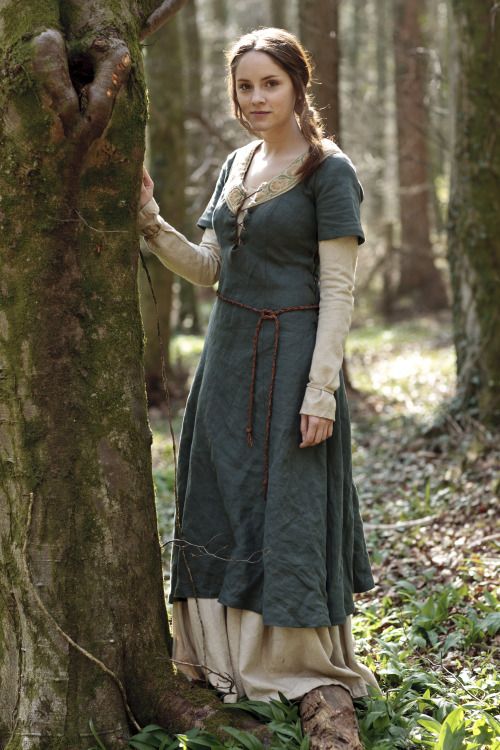
Margueritte knew Marta would not be long for this world.  “I gotta go,” she said, and she slipped off toward the barn, but could not imagine a reason to go closer than the old oak.  Think, think.  She said to herself, but it was no good.  The moon came up.  The stars twinkled and she knew, like Elsbeth, she ought to be in bed.  At last, when she could think of no excuse to wander into the barn, and indeed, she felt she could hardly think at all, she settled on returning to the house and to her sleep.  She got near the door, however, and heard a word.

“Hello.”  The word startled her.  “That brother of yours is hard to lose.”

“Thick head, good heart,” Margueritte said, smiled and suddenly felt very giddy.

Roland smiled his perfect smile and it made Margueritte turn her head, slightly.

“What?”  Roland wondered.  “You should not hide your smile.”

“But my smile is not perfect like your own,” she said, honestly.  “You see?”  She showed him where the crooked was.

“Who would notice?” he said and reached to touch her, as if looking, but let his fingers linger on her lips.  Margueritte looked deeply into his blue eyes before she pulled back ever so little.  “All night I thought you had something to ask me.”

“Oh, yes.”  Margueritte had to pause to remember.  “I wanted to know if you really saved Lord Charles’ life.”

“Yes,” he said.  “I suppose I did.  But I grew up on the Saxon Mark so in a way I knew what treachery he would face, and he could not have known.”

“You are modest,” Margueritte said, and thought this was a rare and prized quality not found among the braggarts who surrounded her father or who called Tomberlain friend.  “But I feel that is very important.  I have a sense about your lord; that he has only begun to step into his greatness.”

“The same as I feel,” Roland said, in a more serious tone.  “Even though he has already done more in his life than most men ever dream of doing.”

Both looked at each other, and Margueritte wondered why she kept speaking of Charles when Charles was not on her mind or heart.  She got ready to ask another question when a little voice interrupted them both.

“What am I missing?”  Goldenrod fluttered up and hovered briefly in between them.  Roland seemed to take a good long look at the fairy’s face, and she looked at him with curiosity.  “Are you loving?” she asked.  Neither felt quite sure what she was asking.  Roland looked uncomfortable for the first time, and Margueritte answered for her little one.

“I do hope we may be friends,” she said.

“Yes,” Roland agreed.  “You know what friends are, don’t you?”

“Oh yes,” Goldenrod said with some excitement.  “My Lady, and Elsbeth and I are best friends.  And my Lady Brianna and Little White Flower.”  And she started a list.  “And Luckless, Grimly, Lolly, Maven and Marta, Tomberlain, and even Hammerhead, and Miss Blossom and Lady LeFleur, my mother.  She is queen of the fairies, you know.”

Roland interrupted.  “So that makes you the fairy princess.”  He tipped his hat to her.

“It does?”  Goldenrod widened her little eyes.  “Wow.  Wait ‘till I tell Elsbeth.  She’ll be so proud of me.”  She flew off as quickly as she came.  Roland looked at Margueritte.

“We have pointed this out to her many times,” Margueritte said.  “But retention of the facts is a fleeting thing for a fairy so young.  She is only about seventy years old; you know.”  Roland swallowed and looked again in the direction Goldenrod had gone.  Margueritte took a deep breath.  “I should be in bed,” she said.  “Goodnight, Sir Roland.”

“Just Roland, if you don’t mind.  I’m still getting used to the sir part.”  He smiled again, but she turned toward the door and stopped only before entering as Roland spoke once more.  “By the way, you did not have to kick your brother.  He is a good young man, and despite his questions, my attention was all yours.”

Margueritte’s hand went to her mouth.  She kicked the wrong leg.  She felt very embarrassed.

“Oh, don’t think of it,” Roland said quickly.  “My sisters used to do that all the time.  It reminded me of home.  And I found it very refreshing after all the stiff formalities of the palace.  I don’t believe the ladies in Paris even know how to kick.”  He tried hard to help, and Margueritte smiled for his efforts, but she felt embarrassed all the same.

“Goodnight then,” she said, went inside, and only paused to say goodnight to her mother who was waiting to escort Sir Roland to his room.

M3 Festuscato: Shipwreck, part 1 of 3

Festuscato:  The Halls of Hrothgar

After 416 A. D., Outside the Western Roman Empire

Festuscato 1:  Shipwreck

The clouds gathered, gray and dark on the eastern horizon, but the evening was near and Festuscato was not sure if the darkness got caused by a storm or the slowly fading sun. He considered the problem when his eyes became utterly taken by another vision.  Mirowen came up from below where the seven horses, and two ponies sounded restless, even against the sound of the wind and the waves.

“Lord.”  She acknowledged him in the way she did ever since they left Rome on this impossible journey.  Long gone were the days of his childhood when she called him sweet names, and his teenage years when she called him spoiled brat.

“My Lady.” He responded and watched her walk to the bow to stand, statue-like; her habit of the past seven days.  Everyone else watched as well and only returned to their various distractions after she came to a stop.  Festuscato, held the tiller dead on and had nothing better to do than stare.

Mirowen’s long green dress flowed out beside her with the wind and made it seem as if any moment, the beauty might take to flight.  She appeared, not so much a beauty one could point to, Festuscato decided, but more of an unearthly kind of something that made her impossibly attractive. It could be seen in the perfection of her form and figure, in the grace of her every gesture, in her long black hair and pitch black eyes, in her elvish ears with those perfect little points. Festuscato decided she needed a mate, if one could be found to match her perfection.  Sadly, at present, all he could do was sigh for her and turn his eyes away.  Besides, Hrugen seemed much more interesting.

Hrugen claimed to be a great Danish sailor.  He volunteered to guide them safely through the waves, once he found out their proposed route would take them near his homeland.  He said he had nothing against living in exile in Britain, but secretly, Festuscato imagined the man just got homesick.  As Festuscato suspected, the man proved to be no sailor at all.  In fact, Festuscato had started calling the man Gilligan, from time to time, even if that made himself the Skipper. Presently, Hrugen tried again to tie down the sail in the corner where it came loose and flapped, furiously. Gregor One Eye, the old Saxon, finally got tired of watching him and did it himself.

“I was about to do that,” Hrugen said, defensively.

“Nothing compared to what I was about to do,” Gregor said.

“Yes,” Festuscato thought.  “Seven days at sea could be interminable.”

Gregor sauntered over to where Seamus, the Cleric and Bran the Sword sat quietly.  Seamus wrote in his book, and Bran leaned on his sword, contemplating the cross.  The first was a cleric in the true sense, a priest of the Irish, a present from Patrick. Bran was a puritan through and through, and also a present, given by Constantine whom Festuscato anointed as the first Pendragon to rule Britannia in the name of Rome until such time the Romans returned, if ever.  Bran had been charged to defend the Senator’s life until Festuscato could safely return to his home along the Appian Way.

“What is it you write in that book of yours, anyway?”  Gregor asked as he sat on the cleric’s other side where he could keep watch with his good eye.  “You’ve been writing for seven days now and I have not heard a word except out of that other book of yours, that Bible thing.”

“I am keeping a record of our journey and adventures,” Seamus said.

“Adventures?” Gregor let out a hearty laugh. “Haven’t had any yet.”  Bran, craned his neck a little as if to take a look, though he had not yet shown anyone reason to believe he knew how to read.

“If you must know.”  Seamus spoke fast, corked his ink and set it and his quill in the pouch he always carried. “I have just written how we came into the Baltic from the outer sea yesterday morning, rounded the height of Jutland and came within sight of the coast which ran from horizon to horizon.”

“That’s all there is at sea.  Just horizon every way you look.”  Hrugen spoke as he joined the group.  The others paused.  For one minute, it appeared as if Hrugen might be sick, again.  “I try not to think about it.”  He finished, and looked down at his shoes.

Bran still craned. “It’s poetry,” he said.  “It’s not supposed to make sense.”

Seamus shut the book even though the ink was not quite dry.  “It makes sense,” he said.  “It’s just poetic.”

“Latin?” Gregor asked.

“Of course,” Seamus said.  “Just because we were wise enough not to get entangled with Roman overlords, doesn’t mean every Irishman’s an uneducated lout.”

“Quite true,” Gregor said with a big, friendly grin.  “Well, partly anyway.”

Bran stifled a laugh and stood up for the cleric.  “David was a poet.  I’ll grant you that,” he said.

“A barbarian of high esteem?”  Hrugen asked.

“A king for God’s people,” Seamus said.

“God’s chosen,” Bran said, almost at the same time.

“Which god?” Gregor asked, and then relented.  “That’s right, you only have one, so you say.”

“The Danes know of the Alfadur.”  Hrugen suggested.

“Can he protect my tools from salt water?”  A new voice joined the group.  Luckless the dwarf had come up from below where he hourly checked on his precious possessions.  “Pray that they don’t all rust.  Some of them were my great-grandfather’s, brought all the way from the mines of Movan Mountain.”

“But I thought your father was in the thick of it when the dwarf lords drove you out?” Seamus said.

“I don’t blame him,” Luckless said, with half a heart.  “Got to seek my fortune.  Besides, what would you do with a bad luck charm?”

The two Christians shook their heads.  The other two, however, looked like they would throw the dwarf overboard in a minute if he was not under Lord Agitus’ protection.

R6 Festuscato: 10 Londugnum, part 2 of 2

Festuscato and Mirowen, with Mousden holding on, rode side by side over the many days it took to get to Londugnum, as the Brits called it.  Luckless on his pony and Seamus on horseback followed.  Bran rode beside Dibs and said almost less than he said when they first met. Julius and his men, along with the four horsemen, agreed to stay and defend the Pendragon; but Dibs’ men felt obliged to follow their commander now that he came back from his special assignment in Ireland, and Dibs was technically still guarding that Imperial rogue, Festuscato Cassius Agitus, Vir Ilistrus and Comes Britannia.  Dibs could not be sure if the imperial governor remained under house arrest, but if he was, Dibs understood that concept needed to be liberally interpreted to let Festuscato do his job.

Once in town, Festuscato rented out an inn by the port. The men slept downstairs in the common room.  Dibs and the travelers got rooms upstairs.  The first thing Festuscato did was find a young woman who kept him happy in the night.  The second thing he did was run into a man he did not expect to see.

“Gregor,” The man reintroduced himself.  He stood a big blond Saxon, almost Bran size, but older, and he had and eye-patch over his missing eye.  “I heard about your errand, and I waited your return from Ireland. Patience does not fit my temperament, you know, but here you are at last, and here I am.”

“You waited?”

“Aye.  I got the Dane on a short leash and can fetch him on short notice, then we get a ship and take him home, no?”

Festuscato only thought for one second before he took Gregor outside for some private conversation.  When he came back into the inn, Mirowen met him at the door.

“I don’t like the plan,” she said bluntly, but they had a bigger interruption to deal with.  Festuscato, Dibs and Gaius ran into their long-lost childhood friend, Felix. Last they heard, he started selling silk in Rome.  Apparently, he ran afoul of some rich patron and had to run.  He made it all the way to Frankish territory where he bought a ship, most likely with the lady’s money, and he had now been reduced to dealing in wool.  Reduced was how he described it.

“A long way from silk,” he admitted over a tankard of ale, but the others encouraged him, and Gaius even suggested he talk to the church.  If his stuff was any good, the church was always interested in quality cloth, even better if he still had some contact with the silk merchants.  Felix thought that might be possible.

###

One week later, a big British belly boat slipped out of Londugnum on the evening tide.  Dibs found a note that said, “Sorry.  Not this time.  I’ll be in Tournai in a few years.  Meet me there.  First I have a side trip, another delivery, then a good look around.  Blessings on Gaius and keep Felix honest with the church. From Tournai, I plan to return to Rome, so be prepared.”  Festuscato just reviewed some fond memories of his childhood friends when he got interrupted.

“Common sense says we should turn around,” Mirowen said, when she stepped up to the tiller.  The three sailors they hired to help them sail the ship took the longboat and deserted in the estuary.  Festuscato kept the ship headed toward the deep water.

“I assume they could not handle the company,” Festuscato said.

Mirowen nodded.  “An elf, a dwarf and a pixie do make a strange crew.”

“No.”  Festuscato shook his head.  “I was taking about Seamus, the Priest.”  Mirowen scoffed, but Festuscato had not finished.  “Honestly, at sea there is not much to do, as long as we keep the wind pointed in the right direction to keep the sails full.  I may ask for a little elf magic if things go contrary, but otherwise, what is there to worry about?”

“How about docking the ship without crashing it into the dock?”

“We will build that bridge when we come to it. Meanwhile, Bran, Gregor, and Hrugen all claim to know about sailing.  You and Seamus can tend the cargo, the important thing being the horses. Luckless can repair about anything, and Mousden can keep his eyes open up top.  Trust me.  I can follow the stars and the sun well enough.  We will be in Copenhagen before you know it, isn’t that right Hrugen?”

The Dane coiled a rope nearby and listened in.

“We must make for Heorot, hall of Hrothgar, King of the Danes.  Did I tell you about the monster?”

“Figures,” Mirowen said before Mousden screamed from above.  Apparently, he was listening in, too.

************************

Tomorrow: A preview of Greta’s continuing saga: To Grandfather’s House We Go.

*

R5 Festuscato: The British North, part 2 of 3

That evening, Festuscato had three visitors to his tent, and all he wanted was a sip of ale and a good night’s sleep.  The first, a Dane brought in by Gregor the Saxon.  “I was taking a shit away from the camp and I saw this skinny fellow sneaking around in the woods.  I thought there might be a reward, though I don’t suppose he is worth much.”  He laughed a loud, hearty laugh.

“Do you speak any language I know?” Festuscato asked.

“I speak the British.  I was on one of the first boats that came to settle on the shore.”

“Are you a sailor then?”

The skinny man looked at Gregor, who appeared a big man in every way.  “I am an excellent sailor.  You might say my ship never would have crossed the North Sea safely without my help.”

Festuscato sat back in his chair while Gregor took an empty tankard and filled it without asking.  “What can I do for you?”  Festuscato was curious.

“You are the Roman.  I have heard you do not plan to stay on this island.  I was thinking if you take a ship anywhere near the Norwegian shore and my homeland, I could help you sail it.”

“Homesick?” Festuscto asked.

The man dropped his head.  “My name is Hrugen, son of Unferth, grandson of Edglaf, and I came here more than ten years ago when my uncles were foully murdered.  I feared for my life, but now I fear more that my father is old and I am not there for him as a good son should be.”

“I see.”

“He has my vote,” Gregor said.  “I say we take this sailor home.”

“We?” Festuscato got ready to ask what Gregor meant by that, but Death stuck his head in the door and indicated he had another visitor.  Festuscato excused himself and stepped out.  He found Cadwalder, the druid.

“My master wishes to speak with you, but he does not wish to disturb you if you are in a time of Christian meditation, er, prayer.”

Julius stepped up with curiosity on his face.  “You better go in,” Festuscato waved at his tent.  “Keep an eye on Gregor and meet Hrugen the Dane, son of, grandson of, and so on.”

“A Dane?” Julius went in.  Festuscato waved for the druid to lead on.  Death started to follow, but Festuscato assured him he would be fine in the camp.  Besides, Death and Pestilence would probably be needed to fetch more ale and cups.

The man Festuscato found looked near forty, with the gray just beginning to color his beard and hair.  He was a druid, a master druid.  Festuscato knew him right away, of course.  “Merlin,” he said.  “Meryddin. Good to meet you again for the first time, but I wonder why looking at you always reminds me of Loki.”

Meryddin appeared confused.  “You are a seer?  You are a prophet?”

“Neither one. I spoke to the Raven.  I am just an observer, you know.”

Meryddin accepted the explanation, though it really did not make sense.  “You are not in the midst of any Christian activities?” Meryddin was being polite.

“Moi?  I was drinking.  What is it you wanted?”

“I have heard from several that you have certain friends…”

“No.  You can’t have one.  You can’t even see one.  They are shy you know.  And I am friends with lots of people, all different kinds of people too.  I just made friends with a Dane, I think.  I’m not sure.  I have to get back to my drinking.  Anything else?”

“About these priests…”

“All priests are to be respected, as far as it goes.  Killing a priest, christian, druid or pagan is a crucifixion offense.  No burning churches or temples or deliberately desecrating sacred spaces.  That is a quick way to get yourself killed.  And no, you can’t go around the island designating every square inch a sacred druid space, so forget it.  Now, I am going back to my ale.  Wake me up if you have a serious question.”  He walked off quickly.

The third visitor stood outside his tent, not quite ready to join the party going on inside. Hellgard the Jute, had questions. Festuscato did his best to be up front with the man.

“General Aetius in Gaul has some seventy thousand Romans and more than two hundred thousand Fedoratti of one kind or another.  He even has some Huns working for him, and maybe some Jutes.  Anyway, I might be able to borrow some of his men and could probably kill every Pict on the island, man woman and child.  The thing is, I will never do that.  I believe that men of good will, Celts of different sorts, Jutes, Germans of all kinds, Picts, and even Danes can choose to live in peace with one another, support one another, and prosper. Everyone wins.  Maybe I’m a fool, but I say it is worth a try.”

“It is an interesting idea.  My people came to this island as Fedoratti to you Romans two generations ago.  We left the continent because it became impossible to live.  Everyone hated everyone, and war never ceased.  Since you Romans left, I have seen this island break down into the same troubles.  There is too much anger, hatred, pride, revenge.”

“You have to start somewhere.  I’ve spoken to Constantine.  We survey the land and establish borders.  Let the disputes be settled by vote of the Peers rather than fighting. That way if one man is unhappy with the vote and chooses to fight, he will know the whole rest of the island will get together and crush him.  That should stop most of the fighting, anyway.  Once people agree to stay to their own land, then trade can happen. Taxes can be low because fighting costs money as well as men.  Free trade, low taxes, suddenly everyone prospers.  Peace is a good thing.  Our women can grow fat and our children can grow strong.”  Hellgard nodded.  He liked the idea.  “Now, lets join the party.  Come meet Hrugen the Dane.  Gregor says he is a skinny little thing, and maybe not terribly bright, but we have to start somewhere.”  Hellgard nodded again as they went in.

Noon the next day saw no answer from Wanius so Constantine called his counsel together. Many ideas were discussed, and Festuscato only said, “You probably like your idea, and will argue strongly for your point of view, but don’t be wedded to it.  The counsel may decide otherwise, and I will expect you to give your full support to whatever the counsel decides and the high chief approves in the end. Whole-hearted support, too.  No dragging your feet.  Maybe next time your idea will be the one that carries the day. Besides, I once knew a man who could only think, “Kill the bastards.”  When he finally got the chance, he did not find it as easy or as much fun as he thought.  So, argue your point, but don’t marry it.”