R5 Festuscato: Nudging the Future, part 1 of 3

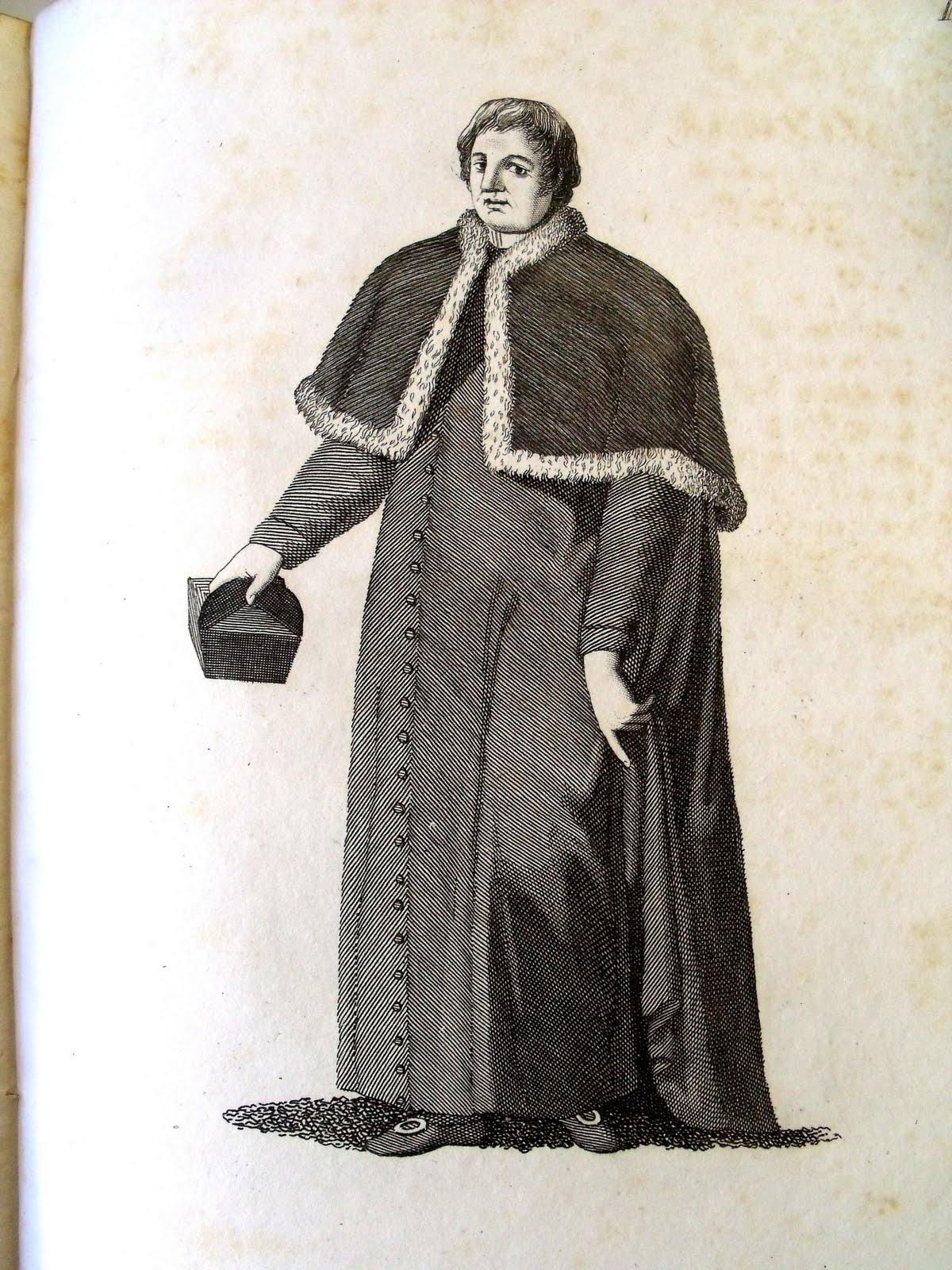
By late March in the year 440, men began to return to Cadbury, most after the spring planting. They came from Wales, Britain and Cornwall.  Many had gone home for the winter, but Festuscato had them and trained them until near the end of October when they had to go and help bring in the harvest. This time they did not appear the same straggling, uncertain gaggle of men that came in last July.  Some Welsh, Cornish and Britons seemed to have developed a camaraderie during the training and looked for each other upon return.

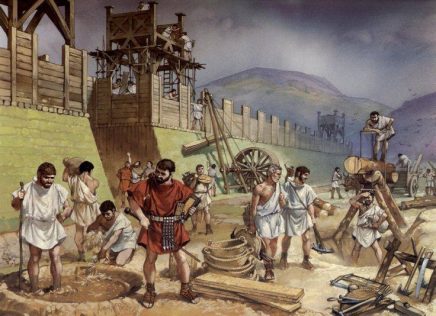
“This is good,” Festuscato told Constantine.  “This needs to be encouraged.”  Constantine was above all his number one target for training, and he spent every day pointing things out to the man, all the minute details of how to rule, while his men fetched their wives and families, built a town with a wall around it, and rebuilt the fort, almost from scratch.

Julius had done a fine job keeping the Hun off balance all summer, and not being caught. When Megla settled on the land of the Raven in Leogria for the winter, many of the scouts and patrols the Hun sent out never returned.  Julius and his riders did the grunt work, but this worked mostly thanks to Pinewood and a whole troop of fairies who were much better than the Huns at keeping track of the enemy’s location.

There came a point in Late February where things might have gone badly.  One of Megla’s lieutenants, a man named Gurt, snuck three hundred men out of the Hun camp in the night.  They had figured out where Julius and his men had to be quartered, and the Huns were very good at that kind of figuring.  They were also used to military operations in the winter, and even in deep snow.  That seemed a necessity in the Hun Empire, which covered the steppes from the future Moscow to the future Budapest.  Plenty of snow and long winters there.

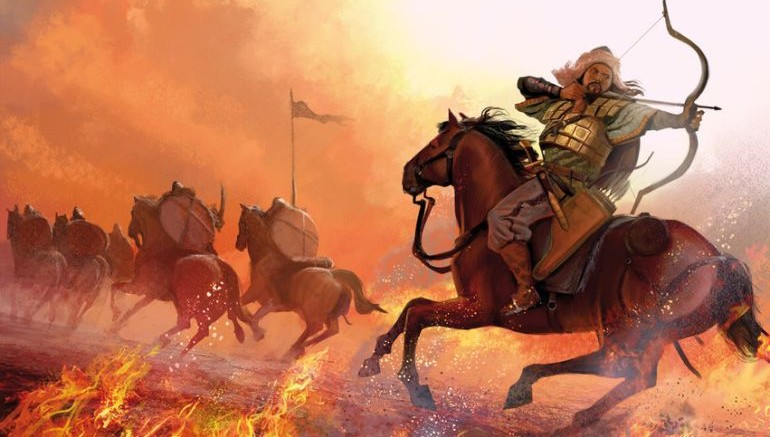
The Huns wore white against snow and rode swiftly, with the idea of catching the Romans unprepared.  Their tactics were sound, but Julius did not get fooled.  For one, this being his first real chance at command, he got a bit over zealous and had men out checking the approaches to the village day and night. Even without his fairy spies, he probably would not have been taken unaware.  As it was, he became able to set a trap.

The village sat north of Leogria, on the lands that Festuscato figured would one day be divided between Pelenor’s and Peredur’s families.  They had open fields on the rolling landscape, but not far to the forest.  Gurt did not worry so much about the trees, as he wanted to get his men in position to charge the village at dawn.  He imagined it would be a surprise attack and put an end to the Romans.  But being warned, the village put every wagon, box and barrel they could find to block the road, and set up other obstacles and men to block every other entrance to the town.

Julius took his men to the edge of the trees.  When the Huns got in position, Julius was prepared to come up behind them, and he got excited to think the surprise would be turned on its head.  Thus far, Julius felt proud of his men, all of them, he admitted, but he felt especially proud of his troop of misfits and throw-aways. The Huns were the terror of the western world, challenging and often destroying whole armies of Romans.  They had reduced whole tribes of Germans to subservient status, and it started to look like they might take over the Roman Empire itself, at least in the west.  In the east, the emperor decided to build bigger walls around Constantinople. But here, the men with Julius, who were deemed useless as far as the regular Roman army was concerned, had come head to head with the dreaded Huns, and came out victorious.
Julius wondered about Festuscato.  He seemed such a rich man’s son, and came across with the worst sort of gluttonous, could not care less attitude about life.  But Julius knew appearances could be deceiving.  Maybe it was all a game to him, but Festuscato took it as a game he intended to win.  Where he learned about the military, and how he came up with the idea of training the men on horseback in that way remained a mystery.  But not too much of a mystery, he thought, as Pinewood chose that moment to fly down and land in his horse’s mane, between his horse’s ears. Julius’ horse barely flinched.

“They are in position, as we figured, just below the last dip in the land before the village. They are marvelously trained soldiers. Even their horses are quiet, waiting for the signal.”

“Are the men in the village ready?”  Julius asked.

“Yes, but.” Pinewood looked all around at the humans ready to hit the Huns from the rear.  “Your wife didn’t evacuate.”

“What?” Julius struggled to keep his voice down.

“Lady Drucilla contacted a distant cousin, an elf Lord named Deerunner, and he has brought a hundred bows to stand with the villagers.”  Pinwood rose into the air.  “I better go see that my men are ready,” he said and zoomed off before Julius could react.

“I like your wife,” Marcellus said, as he nudged his horse up beside Julius.

“Stupid and stubborn.”  Jullius shook his head.

“She has a mind of her own, and doesn’t nag you to do everything for her, like she’s a helpless child.”

“You sound like you are speaking from experience,” Julius smiled.

Marcellus changed the direction of the conversation.  “What do you think Lord Agitus will say when he finds out you are married to an elf?”

“You think he doesn’t already know?” Julius asked, and Marcellus shrugged.

“They are mounting for the attack,” a voice came up from around Julius’ feet.  Julius looked down and imagined it was a barrel-chested boy, but for the long beard.

“Thank you,” Julius said, and he raised his spear and shook it in the air.  The men who were not ready, got ready.  The dwarf disappeared.  “Quite a world Lord Agitus has brought us into,” he said calmly.

Marcellus grinned. “Kind of makes living worthwhile.”

R5 Festuscato: Cadbury, part 3 of 3

Down on the plains of Cadbury, beneath the hill of the fort, two streams of men came warily forward.  Both had about a thousand soldiers with one in five or one in four on horseback. Festuscato sighed, but it was what the Romans taught.  Their legions fought on foot in phalanx formation, and they only had a small number of horsemen in reserve.  The world had changed since then, as Rome herself found out in the west. Festuscato knew the Western Empire was gone.  It became only a matter of time.

Festuscato went straight to the gate and bounded happily down the hill with Julius and the Four Horsemen, Cador and Constantine following.  Constantine’s son, Constans and his friend Vortigen trailed behind with Gildas who was probably judging the best way to kill the bastards.

Festuscato made the introductions.  “King Ban of Benwick in Britain, and I see you were able to convince some of your neighbors to join the party.”  Some of the men introduced themselves.  “And on this side, we have Lord Hywel of Caerleon and Lord Anwyn of Caerdyf, both in Wales.”

“My father was a centurion,” Anwyn said to Julius.

“My father was a plain farmer, and a hard-working man,” Julius returned the compliment.

“Come in, Gentlemen.  Set your camp on the plain.  Cornwall is over there and Amorica is over there.  Rome, what there is of it, is in the Cadbury fort.  We were just planning the destruction of the Huns.”  Festuscato rubbed his hands together and walked swiftly, like a child ready for Christmas morning.  But once inside, there were questions which almost ruined everything.

Cador held his hand up.  “Constantine, I understand.  Amorica has been a good friend and trading partner since before the Romans.  He and his people have an interest in bringing peace to our land.  Obviously Kernou, Wales and Britain need to be represented here.  But what I don’t understand is why you?  I don’t understand why, after thirty years, Rome should suddenly be interested in a province it abandoned.”

“Rome is not as callous as you may suppose.”  He got loud. “The emperor probably feels guilty hearing how stupid you have become, to kill and attack one another on the least excuse.  The church wants protection as well, and in case I need to say it again, burning churches and killing priests is a crucifixion offense.”  He made an effort to calm his voice.  “But why me?  Because my father, Lucius Agitus grieved when he was forced to leave this place.  I have come for him.  Because I have friends from here who wanted to come home and see their families before they died.  I have come for them.”  He raised his voice again.  “Because the western empire is falling apart and chaos is spreading, and I believe we can stop that from happening here.  Because I made a pledge to myself to see if the human race is hopelessly moronic, or if reasonable men can come together and behave like intelligent, reasonable men. so that, if I cannot get you to stop fighting, just maybe I can get you to fight together.”  He stopped to breathe.

“Quite an oration,” Gaius said as he stepped into the room.  Dibs came with him to report the practice field was set up.

“Gentlemen.” Festuscato took another breath. “You have common foes who will eat you alive unless you join together.  Cador, you have to deal with Irish pirates and slave traders, especially down in Lyoness.  Well, guess what?  Hywel and Anwyn are facing the same Irish pirates in Wales.  Hywel and Anwyn also have Pictish raiders coming down from the north in their coastal watch ships.  Well, guess what?  Ban and the British are facing the same Picts.  Ban, you are dealing with German immigrants coming to the southern shore of Britain and taking more and more land.  Well, guess what?  Cador is facing the same thing in the lands of the Dumnonii.  Don’t you get it?  Don’t you see?  Who cares if Teppo took your cow?  Teppo hits Zeppo, Zeppo hits Deppo.  You can’t get anything done.  You need a syndicate.  You need to pledge to work together.  By yourselves, you don’t stand a chance, but together, you can beat back the tide of chaos that is sweeping across the continent.  You can kick the Hun right off this island, but only if you work together.”  Festuscato took one more deep breath.  “I need some fresh air,” he said, and walked out.

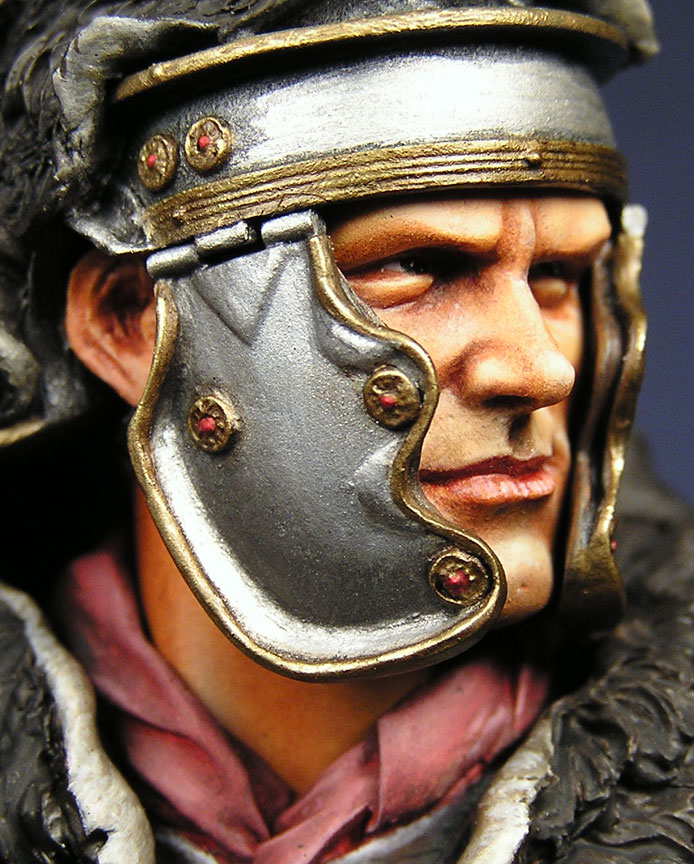
The following morning, Julius had several hundred horsemen down at the practice field. They made an obstacle course full of straw men.  Marcellus showed them how to run it, riding and weaving between the figures, stabbing with his spear, fending off the enemy spears with his shield, or ducking under them. On the third to last straw man, his spear stuck fast in the straw.  He let it go as he had been taught and whipped out his bow.  The last two targets got arrows.  It was not the plan, but it looked impressive.  No one claimed they could do that, but one by one they tried their best.  Father Felix got the name, where they were from and kept the tally.  With luck, by the end of the week they would have three hundred men ready to ride.

Gaius found Festuscato on the wall of the fort, watching.  “You know, they are arguing about everything,” he said, as he turned to take in the action.

“Stubborn, pig-headed mules and morons.  What did you expect?”

“I expected my Senator not to just yell at them, but maybe show them a better way.”

Festuscato frowned and sniffed.  “I suppose.” He sniffed again.  He started to walk toward the Great Hall.  “Where is Mirowen?  And Pinewood?  Conspicuously absent.”

“Checking on local resources, they said.”  Festuscato nodded.

Festuscato took one more deep breath before he entered the room.  “Gentlemen.  I hope you have gotten all the arguing out of your system, and maybe made yourselves hoarse so you can’t talk and have to just listen.”  He looked around.  A few smiled, but most looked embarrassed, like they got caught with their hand in the cookie jar.  “You need to all get your horsemen over to the practice field by tomorrow to see who will qualify for the special assignment.  We shall see who has the best men on horseback, the Cornish, the Welsh or the Britons.  Meanwhile, first things first.  When I am not here, Constantine is in charge.”

“What?  Why him?”

“He stayed out of the arguments so far,” Cador said.

“Exactly. He is Amorican.  He is not invested in your petty squabbles.  He has no idea who stole the cow, or the land, or who insulted who, and if he is smart, he won’t care.  Now, I am going to invest him.  Constantine, you get Cadbury, the fort, and enough land around it to grow your daily bread.  That’s it. I talked to the town elders and they like the idea.  And listen, Cadbury is henceforth a sanctuary city.  You know what a sanctuary is?  Good. If any of you, or any of the Welsh or Britons or Cornish who are not presently here have a case of wrongdoing to present, you can bring it here and present it to your peers.  Constantine, you need to look at hard evidence, not just he said-he said.  And let the jury of peers decide things.  End of story.

“But—” Constantine wanted to say something.

“You have a month to bring your family here and as many horses as your father and brother are willing to send.”

“Cadbury was claimed by Cornwall.”  Cador said flatly.

“And by Somerset, and by Bath and Badon, and several others places.  Now it is settled.  Otherwise, you all would squabble over it until the fort fell down. Then it wouldn’t be worth anything to anyone.”  Festuscato stepped over and kicked a pillar.  It cracked.  “It is going to cost Constantine a bit of money to get this place back in shape as it is.”

Cador made no further argument.  “Sanctuary city,” Festuscato repeated.  “Open to any British, Cornish or Welsh Lord at any time, day or night.”  He shook a finger at Constantine but Constantine started looking around and seemed to be figuring the cost.  “Maybe the chiefs of Britannia can contribute some small annual contribution to fix up and maintain the sanctuary, and to arm and maintain a small force to act as a front line defense force when the Irish, Picts or Saxons get out of hand.  Something to try and minimize the damage while the call goes out to arms.  And the call to arms means you all need to come to arms.” He shook his finger at the rest of the men in the room.  “But I am getting ahead of myself.  We have Huns.”  He paused and looked around again.  “So, what did you come up with while I was gone all yesterday afternoon and all this morning?”

The men looked at each other until King Ban finally spoke.  “The Hun never came up.”

Festuscato went over to the cracked post and banged his head once against it.  “We got a lion in the house and you want to argue about whose pigeon pooped in the soup.”  He came back.  “All right. Here is how we are going to start this, anyway.  We’ll know more when we figure out what force we can train and put together by next spring.”

************************

Monday: Festuscato, Nudging the Future

Julius keeps the Huns busy, while Festuscato prepares the first pendragon…  Happy Reading

*

R5 Festuscato: Cadbury, part 2 of 3

“So, we hurry up and wait,” Festuscato said, and they made camp.  Festuscato spent the time writing letters and finding ways to send them across the channel.  He spoke to a number of little ones from the island so he knew who needed to receive the letters.  He had no idea what kind of response he might get, but at least he learned something of the lay of the land.

It got closer to a month before riders were seen coming from the Kernow province.  Some were counted from Damnonea, but many were of Cornish descent rather than native Amorican.  Festuscato remembered how the usurper Magnus Maximus brought a whole army out of Britain, decades before he had been born, and he tried to take the western empire for himself.  When he failed, his troops were reported to have settled in Amorica.  More recently, Constantine III, originally a common soldier in Britain, tried the same stunt, and he just about depopulated the Roman presence on the island.  Amorica became the last resting place for two great Romano-British armies.  There were whole cities full of Cornish, Welsh and British people, and the language slowly changed because of it.

In this case, it looked like quite a number of men.  They were led by Aldrien’s younger brother, another Constantine, a man well enough into his forties.  His son Constans who came with him was in his twenties, but probably still older than Festuscato.  “I have five thousand men,” Constantine happily reported.

Festuscato looked at Father Lavius.  He had discussed this with the priests.  “There is one important piece of this puzzle that maybe was not explained to you.” Constantine listened because he saw an opportunity here.  Being the younger, he had little future in his own land.  “Amorica is well known for holding to the old ways, the wisdom of the druids and the festivals of the gods.  But for our part, in Britannia, our task includes defending the churches. We will land in Cornwall and make our way to Londinium to meet with Archbishop Guithelm.  There will be no burning of churches, no killing of Priests. Those will be crucifixion offenses. I do not know how many of your men may be Christians and how many may decide not to join us on this journey, but you need to make this clear.”

Constantine rubbed his beard.  He looked at the ground before he spoke.  “I have struggled with this, myself.  I know many minds are closed.  But I figure it is not my place to say what may or may not be taught to the people, and I believe if a man keeps an open mind, truth will out in the end.  I will go with you.  I cannot say how many of the men will join us.”

“We will wait,” Festuscato assured the man.

After a week, more than half of the men rode away before Constantine returned to the camp. The first thing out of his mouth was, “I see what you mean about Amorica holding to the old ways.  Still, we have two thousand men who may not be Christians, but who have pledged to hold to the conditions.  Mostly, like me I suppose, they are second sons who want a chance to make something of themselves.  That is the gist of it.  Now, all you have to do is pay them.  One solidus per day”

“Three per week,” Mirowen bargained like a true elf, but it eventually became five per week because she did not push too hard.  “We can manage that for the next year,” she said.  The Romans were getting seven per week, which was one per day, the sergeants ten per week, and Julius two Miliarense plus four per week, which was the equivalent of twenty-eight Solidus or four per day.  “The real expense is going to be for the boats to cross the channel, but I have friends working on that,” Mirowen said.

“I know two thousand men isn’t much,” Constantine continued, still on his original track. “Twenty years ago or more, I was a teenager, Gracianus Municeps crossed with two whole legions.  Dionotus was the Dux Britannia at the time and trying to hold things together, but he needed help.  Municeps helped, but then he got greedy.  There was civil war.  Dionotus disappeared and Municeps took over.  He was a bad one, though, and the people removed him, if you know what I mean.”

“He was a greedy ass, as you say.”  Festuscato had read what little he had to read about it.

“Yes, but now the whole island is still in a kind of civil war footing since, and that has been for nearly twenty years.”

“That was when the Lords and Bishops began to appeal to Rome for help,” Festuscato said. “I have a couple of letters that were held and ignored by Honorius before Valentinian even came to the office.” He brightened.  “But here we are, and now we go.”  He smiled for Constantine, but he frowned in private. The Amoricans had two hundred and fifty horsemen, which was only one out of eight men on horseback.  By contrast, the Huns under Megla were reported to be tearing up the countryside with three thousand men, all on horses.

The army crossed the channel on about June sixth, at Festuscato’s insistence, and they arrived in Bournemouth, the main port on the edge of Dumonii territory.  Cador, Chief of the Cornovii, and self-appointed Dux of Cornwall, met him there with enough troops to double their numbers.  He brought five hundred men on horse, an improvement, but that still left over three thousand men slogging along on foot.

“Cadbury to begin with,” Festuscato said.  “I expect to stay there about six months to gather our troops and supplies for the following spring.  Come October or so, Megla will have to hold up somewhere to winter.  This summer I only want to keep him running.  We are nowhere near ready to confront him.”

Festuscato repeated himself when they got to the Great Hall in Cadbury fort.  That spawned a response.

“What?” Gildas served as Cador’s right arm, no doubt ferocious in battle, but he was not the swiftest in the bunch.  “We gather our men and we go fight the bastards.” It would be a tug-of-war to counter the man’s ignorance and keep everyone else on track.

“Gildas. You have three thousand men on foot. What do you think they will do when they have three thousand Huns on horseback charge them with great, long spears aimed at their gut?”

“Kill the bastards,” Gildas said.  He did not think about it at all.

“Die,” Cador got it.

“Run away, most likely,” Constantine understood even better.

“And the people of Britain have been running away from Megla since he arrived here last fall. And many of them had swords in their hands.  No.  We need to train horsemen to counter the Huns on more even ground, or we might as well give them the country and be done with it. Now, there are ways we can use infantry to our advantage, but we will need the horses to entice the Huns into making the mistake.

“I have fifty men. I need fifty from each of you, only your best horsemen, and only volunteers.  Right now, my men are setting up targets to test the men’s skill. The assignment will be hard and require every ounce of skill and brains your people have.”  He looked briefly at Gildas and the others understood, even if Gildas did not get it.  “I will not send men out who have no chance for survival.”

One of the Four Horsemen came in and whispered to Festuscato, which made him grin. “Gentlemen, we have guests.”  He followed the Horseman out while Cador turned to Constantine.

“Was that one Death or Plague?”

Constantine shook his head.  “Pestilence, I think. They all look alike to me.”

Cador nodded. “All I know is any reasonable, intelligent man would be afraid to face one of them.”

“Then your Gildas must truly be the man without fear,” Julius said, and the men laughed.

R5 Festuscato: Cadbury, part 1 of 3

Winter in Orleans seemed long, but not too cold.  Festuscato put Dibs and his men on horseback and put them through the ringer as he had his own men.  Julius and the company housed in the city, were good for the most part, and soon enough he had his men and Dibs’ men working together.  Marcellus and Dibs got along well, which seemed a big plus.  It mostly involved Dibs looking up to Marcellus and his military background and experience.  Dibs also accepted the authority of the Centurion Julius, since his own centurion decided to winter in Paris where his tribune claimed to be deathly ill.

Festuscato spent the cold months dreaming about Greta and Gerraint.  At least it seemed like dreaming.  Gerraint and Arthur made the lances, which meant Festuscato got limited on that score.  He had taken his men about as far as they could go without interfering with history. That felt frustrating in a way. He preferred to dream about Greta tromping through the haunted woods.  Somehow, though, he imagined Danna would not make it easy for him.  It was not her place to protect the church, and her appearance might actually make matters worse.  He would have to figure out how to bring the stupid and stubborn Lords of Britain, Wales and Cornwall together himself.  And when he thought about that, he began to get anxious to go.

Early March brought rains to the area which busted up whatever ice and snow still wanted to cling to the land.  By late March, everything turned to mud and Festuscato started to get itchy to move.  By April first, 439, they were a year away from home, and still in Gaul.

“Well, he could not have anticipated being arrested,” Gaius said cheerfully over his glass of wine.

“Oh yes he could,” Mirowen corrected the Priest.

“That’s it.” Festuscato burst into the inn and called for a drink.  He had a letter in his hand and smiled.

“But you would not be deserting,” Pinewood said as he came in a moment later, chasing after Dibs.

“If they catch me, they will chop my head off,” Dibs responded.

“What?” Gaius spoke up.

“Pinewood says Festus wants to leave and I should go with you.  But that would be desertion, and my men would all be deserters.  It would mean our life if I abandon my post, or if I let you go.”  He threw his hands up in the air like a man faced with an impossible dilemma.

“But, your men can be reassigned.  Lord Agitus has the authority, and you will still be serving the Empire.”

“Yes.  The kind of technicality that is so often ignored by senior officers.”  Dibs got a drink of his own.  Marcellus and Julius came in, and wisely sat down beside Mirowen and Father Gaius. This was something Dibs would have to decide for himself.

“Ah, Dibs, my old buddy,” Festuscato said, and Gaius covered his grin.

“Why do I find the look on your face so frightening?” Dibs asked.

Festuscato shook off the implications.  “I hold in my hand the answer to all our problems.  It is a letter from the Magister Militum.  It says…”  He cleared his throat.  “Winter is over.  Why haven’t you had the good sense to escape?  The Vandals are in Africa as you said, and threatening Carthage.  I will be going to Italy to meet that threat. Meanwhile, Attila has made some alliances with the Vandals through marriage and so on.  This is not good for the Empire.  After you straighten out Britannia, you may have to come back and straighten out Italy.  Before you do that, you never explained about your governess.  This is later.”

There was silence for a minute before Gaius asked, “What does that mean?”

“Very simple,” Festuscato smiled.  “Paper.” He looked at Father Felix who sat in the corner, watching, and who always had some velum and some ink handy. “Aetius.”  Festuscato spoke as he wrote.  “Both your centurion and your tribune have wintered in Paris, so they are not here to give their advice.  I hope your tribune is feeling better, being as sick as he claimed.  I am, in fact, ready to leave, but I thought to let you know I will be taking Sergeant Diboronicuous and his men with me.  They were strictly charged to guard this notorious prisoner and the only way they can continue to do their duty is to come along and guard my person.  As for my governess…”

“No.  You can’t tell him that.”

“But I must keep my word.”  Festuscato smiled for Mirowen as she looked away, embarrassed.  “Mirowen is an elf, and she will continue to be young and beautiful long after we are dead and gone, even if we manage to survive long enough to die of old age.  Godspeed in Africa.  I know you wish the same for Britannia.  Agitus.” He thought a minute before he added, “P. S.  Watch out for Attila.  My impression is he is as sly as a fox and a capable liar.”  Festuscato rolled the letter and Felix handed him a bit of wax which he melted onto the edge to seal it.  He set his ring in the seal and called for the horseman who brought the message.  One gold coin and he yelled.  “Free!” People laughed and everyone got a drink to celebrate, except Mirowen who decided she was not talking to Festuscato.

Once out of the city, Festuscato headed his six wagons, his seventy men and his passengers toward Amorica.  “Not the coast?” Julius asked.

Festuscato shook his head.  “Don’t expect Aetius to not change his mind.  The sooner out of his territory, the better.”  Julius nodded and kept things moving.  They only stopped when they reached the border of Amorica.  They found a small army blocking their way.

Festuscato, Julius, Pinewood and Father Gaius went forward with two of the four horsemen. Five hostile looking men came from the other side.  Festuscato hardly let them dismount before he spoke.

“I am Senator Festuscato Cassius Agitus, the newly appointed Imperial Governor of Britannia. We will not be staying in Amorica. I was hoping to have a talk with your King Selyfan, before we cross the channel.  I know you have good relations with Cornwall, Wales and Britain, and I thought you might have some more up-to-date information.  The letters I have appealing to Rome for help are more than two years old.”

“Do not be put off by the armed men that travel with us,” Gaius interrupted.  “His Holiness, the pope was concerned that Lord Agitus be protected on his long and hazardous journey.”

“That is, unless you have turned your back on Great Britain.  I did hope that we would continue to be good trading partners for years to come.”  Festuscato finished.

“My father is ill.”  A man in his late forties stepped forward and the other Amorican’s seemed to take a step back.

“I take it I have the honor of addressing one of his two sons.  May I ask which?”

“Aldrien. And I will be King after my father.”

“Pleased to meet you.  I take it Constantine; the younger son is elsewhere.”

Aldrien looked at the priest before he glared at the centurion.  “In Kernow.  You seem well informed enough.”

“I spoke with Lady LeFleur, the queen of the fairies, but she could give me no details since she pays so little attention to human events and she knows nothing of events in Britannia”

Several of the men laughed and Aldrien got in Festuscato’s face.  “Do you think I am a fool.”

“Not at all. Lady LeFleur,” He called, and the fairy appeared because she had no choice.  She took a moment to get acclimated to her new location, but then curtsied in mid-air.

“Yes, my lord.”

“Your Majesty, this is Aldrien, the elder son.”

“Very pleased to meet you,” she said.  “I only heard of you, but now I have seen you with my own eyes.”  She curtsied again for the prince.

“Thank you for your information.  Apparently, what you told me is true, but I understand King Selyfan is ill.”

“Oh, I am sorry to hear that.  I hope he gets well soon.”  The queen’s concern sounded genuine.

“Now I need to talk to these men some more.”

“Of course. Only men may know how the minds and hearts of other men work.  It is something which is quite beyond me.”

“Sorry to interrupt.  Please go back to what you were doing.”  Festuscato waved his hand and she disappeared.

“I don’t think I will ever get used to that,” Gaius said.  He pointed to the Amorican noble who got so scared, he grabbed his horse and started riding away at full speed.

“So now, Aldrien. I understand you don’t like Romans very much.”

“Or at all,” one Amorican freely admitted, while Aldrien reached up as if trying to touch the air where the fairy hovered.

“But I assure you, I have no interest in Amorica other than as a friend to Britain.  In fact, let me see if this helps you.  I know the Vandals have invaded Africa at the far southern end of the empire.  General Aetius is talking about returning to Rome to counter that threat, so there is no way he will be around Gaul to bother you, at least for a time.”

“You know this to be true?”  A man asked, and Festuscato nodded.

“It is true. What Aetius will actually do, I cannot say.  But at least you are not his present concern.”

“Good. Don’t be surprised if we send you your administrators and clerics.  We have had enough of tribute and taxes.”

“Don’t send them to me.  What do I want with a bunch of bureaucrats?  Besides, I’ll be in Great Britain.”

“So Governor. Where is your legion?” a different man asked.

“Alas.  What you see is as much legion as I have.” Festuscato waved back at his men who were patiently waiting.

The man laughed and the others got ready to join him when Aldrien cut them off.  He seemed back to himself.  “Your men wear the dragon.”

“They do.”

“I heard you faced down Thorismund, son of Theodoric the Visigoth and he took his two thousand men and ran away.”

“You could say that.”

“I heard you captured the King of the Huns and let him go, like a cat playing with a mouse.”

“True enough.”

Aldrien looked again at Julius.  “Your men don’t seem so tough.”

“They are men, but I do have friends if you know what I mean.”  Festuscato answered for Julius.

Aldrien nodded. He saw one of those friends. “Wait here.  I will go talk with my father and be back.”

“Wait for how long?  Things are not getting better in Britain.”

Aldrien eyed Festuscato once more.  “Couple of weeks,” he said, and with a nod to the Priest, he mounted and his nobles rode with him.

R5 Festuscato: To Orleans, part 1 of 3

“I would really like to make Paris before the fall rains turn to snow,” Festuscato suggested. It was September first or so and they were stuck in the town of Saint Somebody or Other, one oxen shy of a compliment. Both of their spares had been used crossing the Alps and now one more collapsed.  “What did you pack in your wagon, anyway?” he asked Mirowen.

“Things,” she said.  “Girl things and some of your things as well.  And not heavy things, so you can get that smirk off your face.”

“Okay.  We probably need a couple more spares.  This time, I suggest getting a gnome who knows the animals.  Take two of the Four Horsemen and drive a hard bargain for three new oxen.”

“I’ll take Death and Pestilence, if you don’t mind.  You can keep Plague and Famine.”

Festuscato squinted.  “I suppose I really should not call them that.”

“On the contrary. They enjoy the names and the reputation it gives them.”  She scooted off to sit with the women.  Mirowen, Sibelius, Drucilla, May in her big form, and Mascen’s wife Eselt, were all sitting together and giggling.  Festuscato, Marcellus, Mascen, and Mister March were at the big table in the inn, sampling the local wine.

“Where is Julius?” Festuscato asked.

“Out checking on the men,” Marcellus said.  “You know, I have worked for a number of different Centurions in my time, but you have turned Julius into just about the best of the lot.  Most Centurions don’t care what their men are doing outside the battlefield, and even then, it is the sergeants who work the men.”

“Come now, you’re not that old,” Mister March said.

“Thirty-four, I think.  That’s well old enough to have been around.”

“Child,” Mister March set his glass down.

Mascen let out a chuckle and spoke when the others looked at him.  “Over forty,” he said.  “And my wife, but hanging out with those women, she says they keep her young.”

“I don’t see why not.  She is the youngest one in the group,” Festuscato remarked.  Mascen looked curious.  Mister March did not even blink.  Marcellus nodded, vigorously, like he understood something but said nothing. The Priests Gaius, Felix and Lavius took that moment to join the group.

“Any good?” Gaius asked about the wine.

“Leaves a dry aftertaste,” Festuscato complained.

“Not bad,” Marcellus said, as the lady of the house brought another bottle and three more glasses.

“What’s on the menu?” Lavius asked.

“Mutton and potatoes,” Festuscato said.  “And something that used to be green.”

“Now, don’t be hard on these people.  They are poor, but good people and fine Christians, many of them,” Lavius said.

“You are right.” Festuscato sat up straight.  “At least I bet Eselt is glad not to have to do all the cooking this week.”

“Yes and no,” Mascen responded.  “She really enjoys cooking.  Why do you think I married her?”  Everyone smiled for him, except Marcellus who looked suddenly sober.

“I am married,” he admitted.

“No. Really?  Congratulations.”  People around the table said something while Marcellus downed his wine in three gulps.

“Why do you think I joined the army.”  He stood. “Excuse me.”  He went out to check on Julius and the men.

When they left the town of Saint Somebody or Other and headed for the town of Saint What’s-his-name, they were back up to full steam.  The horses and oxen were rested.  The new oxen were groomed and ready.  They had fresh water in the barrels and full bags of grain for the animals and flour to bake their bread.  They picked up a couple of sheep which Mascen, Mister March, Sibelius, and Drucilla drove with the wagons, and Pinewood presented the company with a knee length tunic that was all white with a golden dragon on the chest.  They were not wool, but a thick linen that would be valuable once the weather changed further into the fall.

Festuscato knew he had to talk to Julius because Julius and Drucilla were getting to be such good friends.  But he kept putting it off.  Often, such romances were brief, and he hoped that might be the case here.  He dwelled on it when Marcellus and his six came riding in hard from the flank.

“Huns,” Marcellus shouted, and the elf who had the horn blew it loud and long.  The men on the point and the rear guard came racing up. They were on the edge of a forest where the trees grew on both sides of the road, but ended on Marcellus’ side not far from the road.

“Tiberius,” Julius yelled.  “You and your men get the horses and passengers into the woods and defend them.”

“Dismount,” Festuscato shouted over top.  “Bows and keep your spears handy.”

“Get those sheep off the road,” Marcellus added, and six men did their best to get all of those horses into the quiet of the woods, while the rest of the troop found cover. There were about twenty soldiers charging, and Festuscato could not imagine how Marcellus knew they were Huns.

“Wait for the signal,” Festuscato shouted as Julius came up beside him.

“Here we go,” Julius breathed as Mirowen, Sibelius and Drucilla stepped up alongside the four horsemen, bows ready.  Festuscato frowned.

“Now!”

Sixteen of the twenty attackers went down with the first volley.  Two broke through the woods to the road, but they got surrounded by so many spears, they did not last long.  The other two turned and ran, and Festuscato did not like the thought that they might fetch more.  “Horses,” he shouted.  “Bring your spears but hold your bows.  Shields ready.”  He found his horse and mounted.  When most of the men were up he shouted again.  “We want prisoners, not bodies.  Pursuit!”  They had practiced this.  They were Festuscato’s own little RDF.

They did not ride that far behind the Huns, though maybe they had first class horses and the Huns had steppe ponies that were not as swift.  The two men ran into a camp of Huns, yelling the alarm, but Festuscato and his company were right there, bows drawn and arrows ready to let loose.  The Huns who stood around their tents and campfires got taken by surprise.

“A hunting party,” Marcellus named the group.  He guessed about fifty.

“Hunting Romans?” Festuscato quipped and dismounted at what looked like the big tent.  A man with dark hair and dark angry eyes came out of the tent with something to say. Festuscato looked around once at his Romans and saw twice his numbers.  Pinewood hurried up to his side to translate, and Festuscato assumed all the extra men in helmets and dragon tunics were elves and fairies in their big size. Festuscato did not feel happy about that, but at the moment, he was not going to quibble.

“What is this?”

“Are you the chief?  Your men attacked my wagon train.  You now have eighteen dead men and two cowards who ran away.  I want a good reason why we shouldn’t just kill you all where you stand.”

The short, broad shouldered man had some grey in his curly black hair and beard, and he growled at the word coward.  He turned to one of the two who ran away and slapped him hard enough to knock him down.  “It was not by my orders,” the man shouted.  “I said watch them, not attack them.  I suppose you will want compensation, Roman.”

“I don’t see why. We suffered no loss, just a temporary inconvenience.”

The man looked at the two who returned and then took a good look at the Romans who sat on obedient horses with bows ready to fire.  “Eighteen men?”  He looked to the sky.  “You are the dragon?  Who are you?”

“Festuscato Cassius Agitus, Vir Illustris of Rome, Comes and Imperial Governor of Britannia, and you?”

“Attila, King of the Huns.”  Attila grinned for some reason.  “And you have General Aetius waiting for you.”

“I am sure I will run into him, why?”

“Nothing,” Attila said, but he did not lose the grin.  “But tell me, Roman.  I heard you abandoned Britain years ago.”

“A special appeal from the Pope through the Emperor, Valentinian.”

Attila’s eyes widened and his mouth mocked.  “The Holy man and the mother’s boy.  I am surprised they have the time to consider such a far-away place.  I hear the Vandals have invaded Africa.”

“Indeed, but I am sure you have bigger fish to catch than a poor Senator on the road to an impossible task.”

“Somehow, I have a feeling for you it may not be so impossible.”

“Give me your word that we may proceed unmolested.”  Festuscato said, and Attila thought about it.  He looked again at the men and their arrows.  He twisted his hand to a man who was near.  The man roared and drew his sword.  He became a pincushion of arrows and collapsed before he got more than two steps.  Festuscato did not flinch.

“Nineteen men dead,” Festuscato said, sadly.

“He was not a man. He was a fool.”  Attila lied without blinking.  He did not see which archers fired, and they all looked to have another arrow in the string.

“Fair enough. Nineteen fools and two lucky ones that ran away.  Now give me your word.”

“Given.” Attila shouted to the camp.  “Let the Roman and his dragons go in peace.”

Festuscato nodded. “Here,” he said.  “A token for your losses.”  He took a ruby ring from his right hand and held it out.  “You might wish to return it to me the next time we meet.”  He mounted his horse.

“We will meet again?”

“You can count on it,” Festuscato said, and he started out.

“Marcellus,” Julius called and joined Festuscato at a walking pace.

“Back to the wagons,” Marcellus yelled at the men and waved his arm.

“Father. You aren’t going to let them go,” Attila’s son had recovered from his slap down, and raised his voice.

“His fate is already decided,” Attila said.  “Let them go.”  He shouted to his camp again.  “Let them go.”  All the same, the little ones who joined the troop waited for all of the Romans to leave before they came last in line, just in case.  They did not disappear until they were well away from the Hun camp.

R5 Festuscato: Over the Alps, part 3 of 3

Gotlieb proved a dull wit, but that actually proved good, because he took the job seriously. Heinrich did steer the company away from several troubling places where Brigands were known to frequent, so all in all, those months were positive.  Heinrich and Gotlieb were found, on several occasions, rifling through the wagons, no doubt looking for where Festuscato kept his gold.  Mirowen, backed up by the Four Horsemen always stopped that before it got too far.  It got to where all Mirowen had to do was cough and Gotlieb would jump and run back to his tent.

“Old habits,” Heinrich would smile, and confess, and try again a few days later.

“Thank you, not.” Mirowen said, as they moved down into Gaul and Heinrich became obsessed with finding the gold.

“Now then.” Festuscato patted her hand.  “It can’t be worse than looking after four eight and nine-year-old boys.”

“Here, here,” Father Gaius said.

“And they were a handful,” Mister March added, with a big grin rooted in his memories.

“Still are,” Mirowen said.  “But at least I could bathe them.”

“Right,” Festuscato said, but he had stopped listening.  Julius and the elf maiden, Drucilla were getting to be on much too friendly terms.

The day came when they left the hills.  It was still August hot, and Festuscato felt pleased they made such good time. “Heinrich,” he called to the man, and Gotlieb trailed right behind like a faithful puppy dog.  “I was thinking if you plan to go back over the mountains before winter sets in, I should pay you for your service and let you go.”

“You know the way from here?” he asked.

“North. That about covers it.”  Festuscato reached into his saddlebag and pulled out a rather large pouch of coins. “Let’s see. It has been four or five months.  I believe you will find this generous.”  He opened the bag and pulled out a few gold coins. He smiled, dropped them back into the bag and handed the whole bag over to Heinrich.  “And you won’t have anyone chasing you to take your head,” he said with a smile.  “But now, I should say, you better watch out for highway robbers.”

Heinrich’s jaw dropped.  In his time, he found Festuscato to be a man of his word, and more than generous, and he still did not know how to take that.  Everyone he knew was a selfish, self-serving thief.  He really struggled, but found the words, “Thank you.” Gotlieb just grinned.  Julius yelled in the distance.

“Form up.”

“Look for me when I come back this way in a few years,” Festuscato said, offhandedly, as he rode over to see what might be on Julius’ mind, his ever present Four Horsemen trailing behind.

“Visigoths,” Marcellus pointed.

“Spears,” Festuscato said quietly.  Then he raised his voice.  “Tiberius, I want the eight best bowmen to stay here to protect the passengers.”

“Spears,” Marcellus shouted while Tiberius called off the men.

Julius counted. “I estimate two hundred.”

“Let’s wait and see what Heinrich does.”  Heinrich and Gotlieb rode out to face the Goths.  Scarface and another man rode to meet them.  It looked like they had a meeting with plenty of yelling.  Festuscato yawned.  He could not help it.

Tiberius came back with his eight and joined the ranks.  “Lady Mirowen told us to stay with you.  She said to tell you Dumdiddle and his band of merry men have the passengers well covered, whatever that means.”

“It means I hope they don’t attack.  The little ones have no business getting mixed up in human stupidity, and maybe getting killed because of it.”  Festuscato noticed the enemy starting to relax as the argument went on.  “Smoke if you got ‘em,” he said, and kicked his horse toward the meeting.  “Four horsemen stay here,” he heard the grumbles, but Julius went with him, and surprisingly, Father Gaius caught up.

“I’ll take talking over fighting any day,” Gaius said.

“And Lord Agitus is good in the talking department,” Julius confirmed.

When they arrived, the four men were standing and staring, until Heinrich stepped forward. “Lord Agitus.  This was not my idea.”

“I understand. Pinewood,” Festuscato called, and again Pinewood fluttered up like he had not been very far away.  Like last time, he got big and dropped to one knee.

“Lord.  The elves of the Marsh have their bows ready, and you know they don’t miss, and I have a hundred of my people in the grass waiting to spring out on the enemy.  And there are others.”  He looked up and grinned a true elfish grin, just in case they blinked when he flew in. “I know at least one ogre who is looking forward to crushing some bones.”

“Hardly fair,” Julius complained.  “Hardly leaves anything for my men to do.  They do need the practice, you know.”

Festuscato waved them both off.  “Scarface, who’s your friend?”

“I am Thorismund, Eldest son of Theodoric, King of the Visigoths.”  The young man had an attitude problem.

“I am Festuscato Cassius Agitus, Vir Illustris, Comes and Imperial Governor of Britannia. Good to meet you.”  He put out his hand but Thorismund declined.

“You have legions?”  Thorismund wondered.

“I do, but you cannot see them.  I take it Scarface did not tell you about my friends.  Oh, get up Pinewood.  Here, you can sit on my shoulder.”

“Thank you, Lord.” Pinewood got small and grabbed a seat without tugging too much on Festuscato’s hair.

“I’ll tell you,” Festuscato continued before Thorismund could frame his thoughts into words. “Britain is going to be a hard nut to crack, what with all those warring Celtic tribes.  But then, I bet your father is pretty hard to work for, too. Eh?  Am I right about that?”  Thorismund looked at the fairy and rolled his eyes.  “Still, at least you have a father.  Mine got murdered when I was just eight years old.”

“Murdered?” Thorismund asked.

“Oh, my little ones here,” he pointed at Pinewood.  “They drove the murderer mad, haunted him day and night.  I still haven’t decided if I am going to forgive them or not.  But let’s not dwell on my problems.  How can I help you?”

“Help me?” Thorismund asked, now confused and not quite sure what Festuscato suggested.

“How about safe passage back to Visigoth land, and I promise I won’t let any trolls or goblins eat your men along the way.”

“It is a fair offer,” Heinrich said, having seen enough over the last five months to not doubt it.

“And a piece of advice for free.  You need to surround yourself with honest men like Julius, Pinewood and Father Gaius, my old friend.”  He turned to stare at Scarface.  “And you need to get rid of those who don’t tell you the whole story and are only interested in furthering their own ambition.”

Thorismund looked at Scarface who tried to keep a straight face but dared not speak for fear of digging himself deeper into the hole.  Thorismund took his horse and rode back to his men.  Scarface followed, but Heinrich had a last word for Festuscato. “You have ruined me, you know.  I think you made me an honest man.”

“Good thing. I would guess Thorismund could use an honest man.”

He nodded and Gotlieb said, “Good-bye,” so he actually got in the last word.

“Pinewood,” Festuscato spoke softly.  “A hundred fairies in the grass?  Elves of the marsh, and others?”

“I should check on May,” Pinewood, said and flew off.  Julius and Gaius shared a laugh.  Festuscato watched the fairy fly and thought of Gerraint who might need some fairies in the grass.

************************

Next Monday:  Festuscato: To Orleans.  There are bumps on the road, but meanwhile…

*

R5 Festuscato: Over the Alps, part 2 of 3

Every few days they stopped to hunt or fish.  Most of the company had been made up of men from the Italian countryside, not from Rome itself.  Many of them were raised hunters and fishermen, where winters could be lean, even in sunny Italy.  A few of them were very good, like Tiberius who first picked up a bow and arrows at age seven, though he admitted he never saw anyone as good on the hunt or as good with a bow as Festuscato.

Early on morning, the sun just having cracked the horizon, Festuscato, Tiberius and Julius found themselves in the woods, on the trail of a deer.  Festuscato complained that he did not have a haunted woods, like Greta.  He wanted a haunted woods, but he did not explain himself at that time.  They came to an upland meadow full of spring flowers and Festuscato hushed his companions.  He saw the deer.  It turned out to be a small herd, contentedly munching away.  The others did not see them until a couple of them moved. Festuscato pointed to the two easy targets and got ready to take down a third.  It took a lot of food to feed fifty-seven people.

“Now,” Festuscato spoke softly.  His deer fell.  Tiberius crippled his and finished with a second arrow.  Julius shot a bit off.  The deer would die in time, but it could run.  Fortunately, Festuscato anticipated this and had a second arrow ready. The herd ran off, of course, but they had three good kills, and what they did not eat that day or the next, they could smoke and chew on all week.  “Good thing Mirowen has people out gathering greens, berries and tubers.  I would hate to have everyone down with scurvy, though I don’t mind Atkins so much.  Tiberius.”

“On my way,” Tiberius said.  He would go back to camp and bring men and horses to carry the meat, while Julius and Festuscato defended it.  He did not get very far.  A dozen rough looking men, Goths more than likely, moved up to surround them.  They were on horseback, and the obvious leader, a tall blond, triggered Festuscato’s mouth.

“Riders of Rohan. We have been tracking a party of orcs. They have two hobbits with them, little people.  They would look like children in your eyes.  Have you seen them?”  The blond and several others got down from their horses.  About half of the Goths remained mounted.

“Orcs?” the blond asked with a playful look.  He felt confident that he had the upper hand.

“What you would call goblins.  They will have gone to ground come daylight, but they can’t be far.”

“Goblins?” The man certainly knew the word, and he scoffed.

“Of course. This is the haunted forest, or about as good a one as you can get around here.”  Festuscato complained again.  A couple of Goths laughed, but the blond shot them a hard look.  He got tired of this foolishness.  “Just a minute,” Festuscato interrupted the idea of getting down to business.  “Pinewood,” he called.  Pinewood fluttered in, which made the Goths all take a big step back.  The fairy changed to his big size and went to one knee.

“Yes, Lord.”

“Please inform Mirowen that we may be a bit late for lunch, and remind Marcellus that he has passengers to defend.”

“Yes, Lord. I believe Dumdiddle and a number of locals are watching from the woods.  I am sorry, though.  The goblins did go to ground with the sunup.”

“Quite all right. I’ll catch up with them at a later time.”

“Very good, Lord.” Pinewood immediately got small again and flew off with some speed.

“Now, I believe you were about to tell me something.”

The blond Goth gave Festuscato a much closer look.  This did not appear to be your typical rich Roman, lost in the woods.  He spoke, but it came out loud and not without some fear in his voice.  “This is our hunting ground.”

“Excuse me,” Festuscato interrupted again.  He shouted. “Don’t kill them.  I’ll let you know if I need you to hurt them.” Festuscato noticed the eyes of Julius stayed steady as if the appearance of Pinewood in his fairy form simply confirmed what he guessed; or maybe Mirowen, or worse, Drucilla told him. Tiberius had his eyes as wide open as any Goth, but he held his tongue.  “I am Senator Festuscato Cassius Agitus.  My centurion is Julius and my archer here is Tiberius.  Do you have a name?”

“Heinrich,” The man said, while his eyes carefully scanned the trees.

“Good to meet you.”  Festuscato reached out and shook the man’s hand before Heinrich knew what was happening. “Now, I apologize.  We had no idea this was a claimed hunting preserve.  You are welcome to our kill, though one to share with my men would be very nice.”  He gave his warmest, friendliest smile.

Heinrich saw nothing in the trees.  He pulled his sword and the men on foot with him pulled theirs as well.  “What I want is your gold.”

Festuscato never lost his smile and he patted himself down.  He had taken to living in the armor of the Kairos because he said it made dressing in the morning so easy, and the fairy weave he wore beneath the leather could be cleaned and freshened with a thought.  “Sorry.  No gold with me.  But I’ll tell you what I can do.  Why don’t I hire you.  We are heading over the alps and could use a good guide.  Do you know the mountains?  It would be good if we avoided any highway robbers or brigands or that sort of thing, and I pay well.”

“Lord Agitus?” Julius did not like that idea, but Festuscato hushed him.

“Maybe you and your lieutenant.  I have a big enough troop as it is to try and keep fed.  But, as I said, your men are welcome to these deer.  Oh, but I don’t know if you can trust your men to keep things while you are away.  Still, it is a fair offer, I can pay in gold if you like and no one will follow after you to try and take your head, if you know what I mean.”

Heinrich clearly thought about it.  He stepped back to confer with his men, one in particular who Festuscato would remember by the scar down the man’s cheek.  When he turned, he smiled, but it looked a bit fake.  “Gotlieb and I will show you the way over the mountains,” he said. “Two,” he shouted to his men and they took two of the deer, mounted and rode off, Scarface last of all.  Heinrich and Gotlieb grabbed their horses while Julius helped Tiberius get the last deer up on his shoulders.  “Gotlieb was born and raised on the other side of the mountains and I know this side and the passes very well.”  Heinrich started exactly in the direction of the camp and said, “So where is this camp of yours?”

“Not far,” Festuscato said, as Pinewood met them at the edge of the meadow in his big form, to walk with them.

“Dumdiddle is happy things worked out, but he says he has a very disappointed ogre that didn’t get to pound anyone.”  Pinewood spoke freely, but he spoke in Greek assuming that the Goths did not speak Greek. Julius did.  Festuscato nodded, but did not respond.  Pinewood spoke again after a moment.  “The Lord under the Mountains says he will watch the camp in the night.”

“Very good.” Festuscato thought about it.  “But Julius, tell Marcellus he needs to set up a regular watch through the night.  At least four men per shift, three shifts in the twelve hours.  They need to guard the perimeter and keep at least one other in sight at all times. Maybe five men, middle shift, in the dark of the night.  They need to keep their eyes open for Goths that may be following.  This night watch needs to become routine, from now on, Goths or no Goths.”  Festuscato reverted to Old German so Heinrich was sure to understand.  “Oh, and Pinewood.  Please tell the Lord under the Mountains that his people are not to eat any Romans or any passengers as well.  What he does with outsiders is up to him to decide.”

“Very good, my Lord.”

Festuscato and Julius had no illusions and imagined that Scarface and the rest of Heinrich’s men would follow them, but they never came close enough to the camp to be a bother.  In part, that may have been because Festuscato and Julius halted the group everyplace they found level ground.  There, they spent a few days going through their lessons before moving on.  No telling how the company might perform in battle, but at least they were proficient enough at their tasks to be impressive to any observers.  “The chief object is to not have to fight,” Festuscato said, and Julius agreed.  Father Gaius added an Amen, just to be clear.

R5 Festuscato: Over the Alps, part 1 of 3

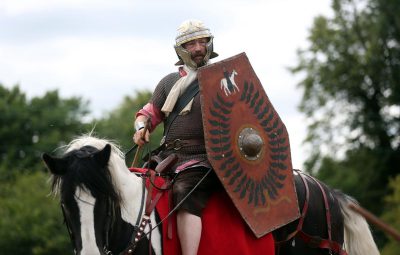
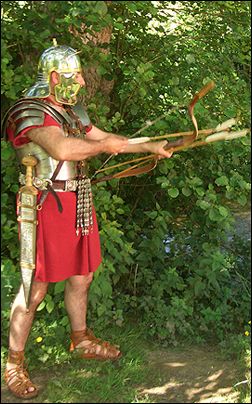
Festuscato spent six months at home, getting ready to travel, which moved the calendar into 438. Britannia would be a long way.  He bought horses and put the entire troop on horseback first thing.  He made them ride every day, and encouraged them with the notion that they did not want to have to walk to Britain.  He got every man a spear, and made them practice stabbing at targets from horseback. He also bought a wagon load of arrows, and long swords like the barbarians used.  They had to practice with those, too.  He made it as much fun as possible, kept it competitive, and felt relieved to see Julius at the top of the class with Marcellus.  It would not have done to have the officers lagging behind.

After twelve weeks of what he called basic training, he started to push them.  In the second twelve weeks, he taught the basics of judo and karate.  He talked a lot about the vulnerable points.  He gave them round shields with dragons painted on them for their left arm while on horseback.  The shield protected their center, could be used to knock away an enemy spear, and yet they were small enough not to impede their horsemanship, such as it was.  Then he got creative and made them learn to fire arrows from horseback.  Not everyone mastered that, but the result was, after six months he had forty men ready to conquer the alps, and just in time.

Spring came due, and Festuscato gave Mirowen April first as an absolute deadline, “No foolin’,” he said.  True, he had properties throughout the Italian peninsula that she had to get squared away.  She had to make sure she had accountants to collect rents and pay taxes and in general watch things without skimming off the top.  She found gnomes, and Festuscato said it could not be safer at Gringots. She didn’t ask.

Come April first, Festuscato started itching to leave, and so did the men, believing that once they hit the road they could get some rest.  Father Gaius came riding up at the last with two fellow priests, Lavius, a large fellow, and Felix, a shy scholar and a far cry from their old friend Felix, the smooth-talking silk salesman.

“The Pope sends his blessing,” Gaius said, and handed over some papers to that effect. “Privately, he said you will probably save everything or break everything, being the scoundrel that you are.”

“I may save a soul or two, but I save my breaking for hearts.  Don’t tell him I said that.”

“No problem,” Gaius said.  “We are going with you.”

“What? Mirowen,” Festuscato put just the right amount of whine in his voice.

“I heard. Hello Gaius.  If you would follow me.”

“Good fathers,” Julius came up.  “Problem?”

“No.  The Pope sends his blessing and three tag-alongs. I assume they are headed for Britain.”

“The road, being what it is these days, I don’t blame them for tagging along where there is some chance of protection.”

“Why do you think I beat you and your men so badly these last six months.  At least now I feel we have a chance of reaching our destination.”

Julius looked serious.  “You don’t give yourself enough credit.”

“Oh?”

“You beat the hell out of the men.”  Julius grinned.

Festuscato responded with a straight face.  “Well, that should make the priests happy,”

There were always four, on rotation, that scouted and served out front on the point, and four who also served in the rear-guard position.  Four more drove or rode with each of the four wagons, which counted for sixteen men.  The wagons were the bulk of what kept them at a slow and gentle pace.  Oxen would only move so fast.  The first wagon carried weapons, tools and spare wagon parts. The second got stuffed with food, though every wagon had some emergency food and a barrel of water.  The third wagon had tents, blankets and whatever else would be necessary to make camp.  The fourth wagon carried Mirowen’s stuff, though to be honest, it was not all fluff stuff.  Among other things, she remembered to pack a good medical kit.

There were six men who rode on each side of the column, and rode out from the column when they could, to protect the flanks.  One side got led by Sergeant Marcellus and the other by Tiberius the archer, though he was not really any more experienced than the others.  The final four men stayed with their commander, Julius, and they got followed by Festuscato’s Four Horsemen of the Apocalypse. Those were, in fact, four elves who volunteered to make the journey to Britannia.

The ten passengers, as Festuscato called them, rode in and around the wagons.  Besides the three clerics, there were five from the household.  Mister March, an old man, wanted to go home to die.  Mascen and Eselt were a middle-aged couple who claimed to have no ties in Italy, but said they had family in Britain.  The fact that Mascen was a wagon-master and Eselt was a great cook made including them a real plus.  Two were house elves, the maidens Sibelius and Drucilla.  Festuscato was not thrilled with putting them in danger, but the Four Horsemen liked the idea, and Festuscato really had no option.

“We came to keep Mirowen from going human,” Sibelius said, in all seriousness.

“You are a bad influence, you know,” Drucilla agreed.

“And you are not the first to say that,” Festuscato admitted, with a sigh.

The last two so-called passengers were a fairy couple who spent most of their daylight hours scouting ahead or doing who knew what, as Festuscato thought.  They were Pinewood and May.  May claimed to be from Gaul.  Pinewood said he had been raised in the alps.  Festuscato appreciated the scouting and whatever knowledge they might be able to provide concerning the areas ahead, but he mostly left them to their own devices.  He also said nothing about Gerraint and Pinewood’s days to come.

They made good time overall.  By Mayday, they were already up into the hills beneath the mountains.  Festuscato hoped to cross the continental divide in early July, to give them two whole summer months to make it down the other side. By September, he wanted to be solidly in Gaul. and on route to a place where they could comfortably winter.