Medieval 5: Elgar 10 Guthrum and Alfred, part 1 of 2

As expected, Guthrum moved men into Chisbury, Wallingford, and Oxford, so along with his contingent in Bath he effectively controlled the northern half of Wiltshire and the western half of Berkshire. From there, he could raid Somerset, southern Wiltshire, northern Hampshire, once reaching all the way to Winchester, eastern Berkshire, and as far as Farnham in Surrey. While his ships continued to raid the coast, he expected Wessex to fall apart. All he did was make people mad.

His raiding parties were continually ambushed and came straggling back with nothing or did not come back at all. By April, it became hard to find men willing to go out from the protection of the towns. Guthrum’s men were frustrated, and not the least with Guthrum himself. The man did not seem to care what his army did. He locked himself away for days at a time and took his books with him because, unlike most of his army, he could read, being of the kingly line and having been educated in the court of the Danish king. He did not even seem surprised when he heard about the disaster in Devon and the death of Ubba. He simply returned to his room, slammed the door, and did not eat any supper.

When Guthrum first arrived in East Anglia with the Great Summer Army, late in the year of 871, he set himself to find out all he could about the people he faced, the Angles and Saxons as well as the Celtic people on the land. He read about the victories and defeats, especially the Danish failures in Northumbria and Wessex, and he gathered and talked to men who had been there. He knew Wessex would be hard to take and hold. He understood it took time to gather the army of Wessex and planned to move straight to the shore, at the root of the country where he could be supplied from the sea. He would work his way inland from there.

At the same time, and maybe it was inevitable, he wanted to understand who these people were. To that end, he got and read what sections of the Bible he could find. He spent days and weeks talking with the priests in East Anglia to get a firm Idea of what this faith was all about. He was a confirmed son of Thor, but this Christ began to eat at him.

When he argued with Halfdan Ragnarson and Halfdan took half of the army north to Northumbria, Guthrum warned him not to interfere with the work of the bishop in York and above all, leave Lindisfarne alone, not that he expected the man to listen. To be fair, Guthrum was not sure why he said that.
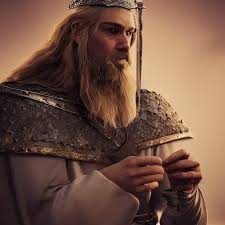
Guthrum burned his way to Wareham and got settled in the fortress there before Alfred could arrive with his army. Guthrum had taken hostages all across Wessex, but Alfred’s people had captured some of Guthrum’s men including a couple of ship’s captains from failed raids along the coast. It seemed reasonable to sit down and talk, at least about the exchange of hostages.

Guthrum learned that Alfred was building ships. They were presently in the east around Southampton, Portchester, and the Isle of Wight. Guthrum also noticed that unlike Athelred, Alfred was willing to listen to the men who knew about such things. The siege was well laid. Guthrum had no chance of breaking out of Wareham, much less raiding up into Hampshire or Wiltshire. And if the English were building ships, he knew his time in Wareham would be limited.

Alfred drew up a treaty to exchange hostages and where the Danes promised to leave Wessex, and Guthrum signed it. Guthrum talked to his English hostages, one of whom was a deacon that kept talking to him about the way of Christ, the importance of keeping one’s word and how it was the way of the strong to defend the weak and protect the innocents. It is fair to say Guthrum lashed out in anger when he killed the hostages and ran away to Exeter. For the first time, he fully understood what he did was wrong and worthy of hellfire.

Guthrum stayed in Exeter because of his indecision. Alfred followed and again laid siege to the town to force out the Danes, but Guthrum waited. He had relief ships on the way, a whole fleet of a hundred ships, and all the fighting men to go with them. When Alfred’s pitiful few ships arrived and blocked the Exe River, Guthrum scoffed. But when he learned that a storm in the Channel wrecked his relief fleet and scattered them all along the north coast of Francia, he yelled at his men and threw a chair across the room, breaking the chair.

“They could at least have had the decency to wreck on the shore of Wessex.

Once again Guthrum felt he had no choice but to sit down with Alfred and hammer out a peace treaty. This time, Alfred did not let him leave by sea. He forced Guthrum to march his men up the road nearly a hundred miles to Bath. There, the road would follow the border of Wiltshire and the Mercian client kingdom of Hwicce. Guthrum would be welcomed at any time to cross back into Mercia and leave Wessex alone.

Guthrum settled in Hwicce, including placing a contingent in Pucklechurch that could move on Bath when the time was right. Unfortunately for Guthrum, Hwicce was the most thoroughly Christian nation on the whole island with the believers making up almost one hundred percent of the population. For nearly a year, he could not go anywhere or talk to anyone without the word of God in Christ impacting his ears. He tried to focus on his mission, the conquest of Wessex, but he found it hard.

When Alfred came to Chippenham where he could keep his eye on the Danes in Hwicce, Guthrum thought of it as a gift. Turning the ealdorman of Wiltshire, Wulfhere, was not a hard thing. Dealing with Alfred’s spies took more finesse but it did not take long. He wanted to move on Chippenham over Christmas, but something told him to leave the Christian celebration alone. He broke another chair but waited.

When he finally moved on Chippenham, he was amazed Alfred escaped his hands. He quickly had men in Braydon and Malmesbury on the north end of the Avon River. His men met little resistance in Bath on the other end of the river. He decided for all his planning, Alfred must have been warned and escaped the city, but he had nowhere to go. He would soon be caught.

Guthrum sat in his room and stewed. He actually prayed but it took a long time for him to realize that was what he was doing. The Ubba disaster honestly did not surprise him. The lack of success of his raiding parties out of Wallingford, Chisbury, and Bath also did not surprise him. He figured out almost as fast as Alfred that they would have to meet on the battlefield and settle things once and for all. He fully expected that either he or Alfred would be killed, and that would end it.

Medieval 5: Elgar 7 Second Chances, part 3 of 4

Athelbald died from his mysterious disease in July of 860 and the kingdom passed to his brother Athelberht of Kent. Once the way back to the capital was clear, Judith returned to Winchester, packed her bags, and went home to her father in West Francia. She was not about to be married again to yet another brother. Athelberht, like Athelbald had not married and had no children, so he was eligible to fall into Judith’s web, but Judith was done with that, and done with Wessex. In her mind, the whole kingdom was stupid and stubborn, and she would never be allowed to rule or gather all the power to herself. Even so, despite her bad attitude, she had matured over the years and now felt she could handle her father’s court and look for a more reasonable solution to meeting her desires.

Alfred was thirteen by then, and he corresponded with Elgar. Elgar got him books to read. Athelred was seventeen, so still too young to rule anywhere. The result was Athelberht moved to Winchester but took the throne of Kent with him. He integrated the nine shires for the first time and ruled the whole as the kingdom of Wessex. As it turned out, he had four years to rebuild Winchester and sew the pieces of the kingdom together.

 For Berkshire, he selected a thegan who carried his father’s name, Ethelwulf. The man had Mercian roots, but Berkshire had been under the Mercian thumb for a time so the rest of the king’s men in the shire raised no objections. Besides, since the army of Wessex helped Mercia keep the Welsh in line, Mercia had come to accept Wessex as something of an overlord, so a man of Mercian background seemed no problem.

For Hampshire, Athelberht looked to Osric in Dorset. Osric straddled the fence when Athelbald and his father Athelwulf argued about the Wessex throne, but Athelberht took it as his position. Athelberht refused to take sides. In truth, Osric kept switching sides based on what was most advantageous to him. In any case, Athelberht appointed Osric as ealdorman of Hampshire and let Osric’s son, Osweald take Dorset. Besides, Athelberht’s mother was Osric’s sister, so Athelberht imagined Uncle Osric would do right by him.

Elgar talked to Eanwulf and Bishop Ealhstan of Sherborne and asked them to support, encourage, and teach young Osweald to do a good job in Dorset. Eanwulf did nothing. Ealhstan figured Osweald was like Athelbald, easy to manipulate. Nothing Elgar could do about that. At least Osric did not abandon his son.

Athelberht succeeded in his tasks over the years he ruled. The eastern shires of Kent, Surrey, and Sussex were fully integrated into the larger kingdom of Wessex. Winchester and the whole land of Hampshire were rebuilt and strengthened against the Danes. Everything was settled by 864 when the east coast of Kent became ravaged by the Danes, almost a repeat of what happened fourteen years earlier in 850. Dover, Canterbury, Rochester, and London were raided, and everything east and north of Watling Street fell to Danish hands.  This was a year before the landing in East Anglia by what modern scholars call the Great Heathen Army. Some might suggest the actual invasion of England started in 864.

Two other things of note happened in 864. First, the Flesh Eater fighters and three person bombers strafed the major population centers in Wessex, from Kingston on Thames to Carhampton in Somerset. Some buildings burned, some collapsed, and some people died. It was not devastating, but like warning shots to not resist or fight back without suffering consequences. Second, Athelberht was wounded in one fly-over. He limped for a number of months, well into the new year, before he lost his leg. He seemed to do well enough after that for a one legged man, but six months or so down the road the leg got infected. Gangrene. He died sometime at the end of August, early September of 865, and was buried in Sherborne next to Athelbald. That left twenty-two-year-old Athelred to be king.

By the grace of God, as Elgar’s priest said, the Viking Great Army first turned north in 866 after they got settled and got their bearings. The death of Ragnar Lodbrok being thrown into a snake pit needed to be answered. The Danes devastated Northumbria and installed a puppet king in York. Then they turned on Mercia and ravaged eastern Mercia, wintering in 867-868 in Nottingham. In 869 they returned to conquer East Anglia and killed King Edmund who held the line against them when they first arrived. This left Wessex isolated with only western Mercia free and still in the hands of Athelred’s and Alfred’s sister whose husband, King Burgred of Mercia, still had some say over the land. With all that, the Danes were not ready to try Wessex again until late in 870. Thus far, the Danes had not been successful in Wessex. That gave Athelred time to reach out to his thegans and ealdormen and settle matters in the kingdom while gathering his forces. It also gave Elgar time to act.

When the Flesh Eater fighter ship flew over Watchet, Elgar knew he had to do something. The fighter dive bombed the town several times but did little damage before it moved on down the coast. The fortress, which was Elgar’s home, and the church were untouched. That allowed him the opportunity to speak with the priest again before he acted foolishly. He found things changed a bit.

“I am having a hard time holding on to Mercy and Forgiveness,” the priest admitted. “Two of the church widows were caught in the open and burned. How these creatures can fly and rain fire from the sky is beyond my understanding, but with such great power there is supposed to be great responsibility.”

“People,” Elgar said. “They are not human people like us, but they are people, not creatures. And you make me afraid to act at all.”

“I don’t understand.”

“I am one of those great powers that must act with great responsibility,” Elgar said plainly.

“Yes, I understand that much,” the priest responded. “But you have given these strange people sufficient chances, have you not?” Elgar nodded, so the priest concluded. “In Christ we have forgiveness of sin and the promise of Heaven. He will not hold our actions against us in eternity. But in the here and now, that does not leave us off being responsible for our actions, and often we must suffer the consequences.”

Elgar nodded again. “The law says for every action there is an equal and opposite reaction. To put it in Biblical terms, as you sew, so shall you reap.”

“I would think so,” the priest said.

As soon as the Vikings began to land in East Anglia where they cowed King Edmund and gathered horses and equipment for their invasion, Elgar moved. He asked Lady Alice of Avalon to reach out into space. She found three Ape ships in a patrol group not that many light years away. She fed them the coordinates and informed them of the Flesh Eater ship located on the Genesis moon where they did not belong. Those Ape ships started out right away, but it would be well over a year before they arrived.

In place of his brother Eanwulf, who was ill, Elgar went with King Athelred, and twenty-five hundred men of Wessex to help King Burgred of Mercia route the Danish army that wintered in Nottingham. They intended to drive the Danes from Mercia altogether and thus liberate the eastern half of the land. Sadly, Burgred was not a military man and Athelred knew nothing about how to lay a successful siege. The two king together could not force the Danes to budge. It seemed to Elgar that the Danes were laughing at them. Elgar was twice Athelred’s age, but somehow they were back to the days where they did not listen to anything Elgar had to say. Burgred’s wife, Athelswith, Athelred’s older sister painted Elgar as the baby of the family. That is how Burgred saw him, so Athelred agreed with his sister. In the end, King Burgred paid the Dane to leave and stay away. The Danes waited until the weather cleared before they pulled out and headed back to York.

Only one thing of note happened at that time. Ealhstan, Bishop of Sherborne died in a skirmish with the Danes. No one knew how he managed to be in the area when the Danes came out to forage for food. He was generally a person who ran away when the fighting started, but he got himself killed and a man named Heahmund, a bit of a militant bishop, so quite the opposite of the coward took over.

Just as well, Elgar thought. He had his hands full with what was happening in space. The three Ape ships arrived and immediately engaged with the Flesh Eater ship somewhere out toward Mars. The battle was not so swift. The ships maneuvered all over space to get a clean shot on their enemy. Two Ape ships prevented the Flesh Eater ship from escaping into the asteroid belt. one of the Ape ships was destroyed, but the Flesh Eater ship had its screens taken down. It tried to escape, but the third Ape ship caught it and it exploded, spreading dead Flesh Eaters all across that section of space. One Ape ship was gone. One Ape ship was seriously damaged, but the third ship survived well enough to where they could guide their damaged ship to a place where they could repair.

Unfortunately, the Apes did not see the Flesh Eater shuttle head for Earth, escorted by two fighter ships and a three person fighter-bomber. Double unfortunately, someone else did see that shuttle. At first it headed toward the coast of Norway, but at the last minute it skirted across the North Sea like flying under the radar and headed toward the Scottish highlands. The shuttle had all thirteen fertile females and several litters of infants. As promised, once they left earth their fertility was restored, even if they only went as far as the moon.

************************

MONDAY

The Kairos confronts Abraxas and cleans up the last of the Flesh Eater mess. After that, things with the Danish army begin to heat up. Until then, Happy Reading


*

Medieval 5: Elgar 7 Second Chances, part 1 of 4

“Are you sure you don’t want me to go with you?” Elgar asked. The year was 853. Eanwulf’s six hundred men were gathered and ready to move out, though honestly this time it was closer to four hundred and eighty.

Eanwulf shook his head. “You went the last time. Pray that I have as much success as you had. Besides, all we are doing is helping Mercia against the Welsh and all the Welsh know how to do is attack like wild men, no line or formation of any kind.  As long as our line is solid, the outcome is decided before the two sides even meet.”

“I’ll keep an eye on things here in Somerset, and your sons,” Elgar said. but Eanwulf just shook his head again.

“We have kept the Danes from our land over these past five years since the Parrett River, and it was quiet for five years before that.”

“We have had a couple of raiding parties.”

“Small raids. Insignificant. And you handled them well,” Eanwulf smiled down from where he sat on his horse. “You just need to keep your eye on the coast and keep the Danes, the Welsh, the Irish pirates out of the Somerset and the rest will take care of itself.”

Elgar nodded for his brother and backed away from the horse. He stood for a while, watching Eanwulf and the army ride off in support of the king, then he mounted up and headed slowly back to Watchet on the coast. He had to think. The last report he got said the Flesh Eaters were beginning to eat the uncooperative Geats.  The Danes, Norwegians, and Swedes raised no objection. No doubt they all planned to move into Geat land once the Geats got removed. The morons did not realize that they might well be the next item on the menu.

Elgar felt he had to do something, but as usual, he was not sure what he could do.

Worse than eating the Geats, the Flesh Eaters appeared to be building a settlement in the mountains just south and west of Harjedalen in Scandinavia, roughly between Swedish and Norwegian lands. He feared they would start breeding soon enough, and then they would be very hard to get rid of. They produced children by the litter full.

Elgar stopped in Athelney, the fortress in the swamps. He remembered the path and how to get there safely through all the obstacles. He encouraged the monks there in the small abbey that held the island. He got workmen and their families to move to the island. They made a small hamlet and farmed the ealdorman’s land, what could be farmed. They also kept the fortress in prime condition. Elgar could not be sure, but somehow he felt the fortress at Athelney would come in handy at some point in the future.

“Wait and see,” he said to himself, and after a week, he finished the trip to watchet. He loved his wife, Aelfpryd. She was surprised and pleased at his attention and kindness toward her. She would be thirty soon enough and officially middle aged. But Elgar had been born to a middle aged mother, and despite his complaints about being raised by the girls, he imagined in the long run it had not hurt him. Aelfpryd might eventually have a son but even then, Elgar knew he could only love his daughters Wynn, Swip, Swith, and Flaed, though he might try to keep them from utterly spoiling the boy.

Aelfpryd found Elgar up on several nights. He stared at the moon as it grew to full size over those days, and when it was fully round, he commented to his wife.

“Round like a woman. I wonder what the moon may birth.”

“I’m not that old yet,” Aelfpryd responded, knowing what he was thinking. She stood beside him and slipped her arms lovingly around his middle while he continued to look at the sky. “We can still have a boy.”

Elgar looked at her. “Sadly, there are some that are not permitted to have children.” He turned again to look at the stars. “I feel in a way that I will be committing genocide, though it is not. There are still plenty out there. They still have plenty of opportunity to survive as a people.”

“You sound as if you are going away again.”

“I must,” Elgar said. “But only for a day. Maybe a week.”

“I will miss you when you are gone, and I will be waiting quietly for your return.” She planted a kiss on his cheek an turned to go inside to bed.

“Quietly? In a house full of girl? Ha!” He ran to get ahead of her. She let him win that race, but she would not let him steal all the covers.

~~~*~~~

Elgar met with the priest in Watchet for three whole days. It took him that long to confess himself and to give the priest an idea of who he was and what he was talking about. He was not sure why he went to the priest with his confession, but he had to talk to someone. He did not want to burden his family and friends and since confession was becoming a thing, the old priest got the call. After fifteen years since his first contact with the Flesh Eaters, Elgar was considering genocide. Fifteen years was more than enough time to leave the Earth, but before he acted rashly he needed a second opinion. In the end, the old priest did not really understand, but he said the thing Elgar needed to hear.

“In the beginning, everything was perfect. God said simply don’t eat the fruit of this one tree. That was all. But we did not believe him, or we did not trust him, or we wanted to see what would happen, or we wanted to decide for ourselves. We stepped off God’s path and into the bushes and thorns to hide ourselves. We really messed up, and what happened was we found there was no going back. We doomed ourselves by our disobedience, by our unbelief. Thank God that God did not abandon us to Hell. In the fullness of time, Jesus came and through him we have a second chance. God’s way is the way of love, joy, and peace. It is the way of Heaven and God will not mislead you. He has given us a guidebook to help direct our steps. Walk on God’s path, narrow as that path may be. Any alternative leads only to destruction, and there is a whole world full of alternatives. Just remember this. Everyone needs a second chance.”

“I will remember,” Elgar said, and he walked out the back door of the church He promptly traded places with the Nameless god and appeared in Scandinavia where the Flesh Eaters were building their colony. Of the nine hundred and eighty-seven Flesh Eaters on the mothership, twenty-six were female, but only thirteen were able to bear children. Of course, given that they had litters of three to five children at a time, it would not take many years to double that nine hundred number, and their numbers would increase exponentially after that.

The first thing he did was gather all of the Flesh Eaters from the settlement in the meadow where they parked their two transports, three fighter ships, and two three-man fighter-bombers. He made the Flesh Eaters stand still while he reduced the wooden structures they had built to sawdust to be blown away on the wind. He closed up the wombs of the females so they could not bear any children, though he made clear to them the restriction would be lifted once they left this planet. Then he transported the Flesh Eaters and all their ships to the supposed secret hiding place of the mothership.

Nameless had to think for a minute. Not everything was easy, even for a god. In this case, though, Nameless figured it should not be too difficult. In his mind’s eye, he reached back long before the Kairos was first born, hundreds of thousands of years to a different genesis planet, and he learned how to shape himself into a god of the Flesh Eaters, now no more than a distant myth in the Flesh Eater minds. Once satisfied, he called the captain, first officer, chief scientist, and chief military officer of the Flesh Eaters to appear before him. They all screamed and tried to hide themselves which is about what Nameless expected. Nameless spoke and made sure these flesh eaters heard.

“You have been told to leave this world. The time to gather your people is now over. You have been told not to eat the people. The Geats are people. No more eating them. Now, you must leave this world and not come back. This is your second chance. There will not be a third chance.”

He vanished from that place and appeared again in the back yard of the church. The priest came out and drew his breath in sharply on sight of a Flesh Eater god. Nameless quickly changed back to himself, then he traded places again with Elgar and the priest commented.

“I see what you mean, not of this world. I thought you were a demon.”

“They are not far from demons,” Elgar said. “They have a second chance and I hope and pray they will take it. I will be sorry when I have to kill them all.” He walked home, kissed his wife and his girls, and went to bed early.

Medieval 5: Elgar 1 Baby of the Family, part 1 of 2

Elgar

After 820 A. D. Wessex, England

Kairos 103 Thegan Elgar of Somerset

At four years old, nearly five, Elgar sat by the barn contentedly making a mess in the mud when a monster of a dog came roaring around the corner of the barn, barking, growling, and showing all of her teeth. Elgar tried to make himself even smaller than he was, but he looked behind him. A rabbit perked up its head and scurried away as fast as it could hop.

“Gifu!” Elgar yelled at the dog several times before the dog decided the rabbit was not worth the chase. It trotted back and plopped down beside the boy and Elgar slung one arm around the beast. “I’m glad you are watching out for me,” he told the dog. “Mother is inside, and my sisters are learning stuff about cooking and sewing and all that stuff.”

Gifu licked his face before she let out a little bark and stood up. Elgar looked behind again and thought he might stand up as well. The big boys were coming up to the house. Elgar wiped the mud from his hands and stared at his brother. Eanwulf and his friends, Ceorle, Odda, and the rest were all around eighteen, and they looked like men in Elgar’s eyes but he was getting tired of everyone treating him like a baby. He picked up his wooden toy sword and pointed it at his brother.

“Defend yourself,” he said.

Eanwulf threw his hands up and made a pretend scared face. “Oh, I surrender,” he said, and his friends laughed. He got serious for a second. “Isn’t it time for supper? You better not track mud into the house.” He turned to say goodbye to his friends. they went into the barn and got their horses for the ride home.

“Where are you going?” Elgar took that moment to ask. “You and Father?”

Eanwulf looked at his little brother, the wooden sword in Elgar’s hand, and smiled. “Mercia,” he said. “The king is taking us into Mercia to fight old King Beornwulf of Mercia.”

“But you just got back from Devon,” Elgar complained.

“The West Welsh needed to be put in their place,” Eanwulf agreed.

“But Mother and the girls…” Elgar paused and looked at Gifu who sat patiently beside the boys and panted. Eanwulf waved to his friends as they rode off before he turned Elgar to walk up to the house.

“What about Mother?” he asked.

“They treat me like a baby when you and father are not here,” Elgar admitted.

Eanwulf’s smile grew, and he let out a small laugh. He looked down at his brother like his brother was a baby, and Elgar thought to change the subject.

“You better not get killed.”

“Not planning on getting killed. Why?”

“I don’t want to be ealdorman. Not ever,” Elgar answered.

Eanwulf laughed again, and made Elgar take his muddy boots off before going inside. Father met them at the door and spoke to his elder son. “Eat up. We leave in the morning.”

Elgar got trapped by his sisters. “You are a mess,” Thirteen-year-old Eadburg scolded him, like she was his mother. She took one of Elgar’s hands. “You need a bath right after supper.” That was something Elgar was not looking forward to.

“Did you roll in the mud?” eleven-year-old Eadswip clicked her tongue and took the other hand. They practically carried him to the table and sat him in the highchair he hated where he had to sit still and wait for the servants to bring the supper. He considered wiggling and being uncooperative, but that would just get him in trouble with Mother. Mother thought it was lovely the way his sisters took care of the baby. Mother called it lovely. Elgar thought of it as repugnant. Even if he was not old enough to know the word, repugnant, that was what it was.

Father named him Eangar, using the Ean from his own name, Eanric, and the gar from his grandfather, Garric, and his own father, Edgar. But his mother called him Elgar and so did his sisters, and in time, so did the rest of the family and friends so father got outvoted.

When Elgar was old enough to make some friends of his own in Somerton, where he lived, he got some respite from being mothered to death by his older sisters. He did not escape their attention, however, until his older sister, Eadburg, married a thegn from Eddington in Wiltshire when she turned nineteen, and his other sister, Eadswip married Osric, son of Oslac, the ealdorman of Dorset in the next year when she turned eighteen. Osric got the job when his uncle, Oslac’s brother Ealdorman Ethelhelm, being childless, was killed by Danes in Portland early in the 840s. Elgar was twelve when Eadswip married. He felt relieved, though he did actually miss his sisters once in a while.

Mother was getting old. Elgar had been a surprise and unexpected child in her middle age, which in those days was around thirty-five. By the time the girls married, she turned forty-seven. Most of the time, the house was quiet and peaceful, but only because Father was away most of the time. When he came home, nothing was ever right. He yelled a lot. Fortunately, he still treated Elgar like a child, so Elgar was not the recipient of most of the yelling. He did occasionally yell that the boy’s name was Eangar, but everyone imagined that was just because he wanted something to complain about and not something to take personally.

Eanwulf escaped the house when he married two years before Eadburg married. Wulfrun was the daughter of Wulfheard, ealdorman of Hampshire. Eanwulf was twenty-four. Wulfrun was seventeen, and they joked about having a child and naming it Wulfwulf. They moved to Wedmore where they built a fine house on a very large farm and were happy. Their farm, like all the property around Somerton, was worked by some Saxon, but mostly British tenants, serfs in all but name, even as it had been worked since Roman times.

In some ways, things changed drastically when great-great-grandfather, King Cynewulf overran the southern end of Somerset, but in some ways things stayed the same. The big farms, the many islands, and the noble properties came under new Saxon ownership, though a few British families who joined the Saxons in the fight against their West Welsh cousins were allowed to keep their land. Some places, like Glastonbury and Muchelney were given to the church and the new bishop in Sherborne, but in all of the Somer Country, the British peasants continued to live and work the land as they had for generations, so much stayed the same.

Garric, one of Cynewulf’s sons who would never be king, spent his life driving the West Welsh from the hillforts around Exmoor at the east end of the fens and marshes that made up Somerset. He strengthened the border with Devon and established Carhampton, a watch town on the coast fortified to protect against West Welsh raids coming over the hills. The next town down the coast, Countisbury, remained firmly in West Welsh hands at that time. This was in the days when Beorhtric was king, back in the days when sons did not follow their fathers to the throne. Living a life on the front lines and in battle was not the way to live a long life, but Garric had a son, Edgar who took up the cause when his father died, and his son, Elgar’s father Eanric followed after him.