Kairos Medieval 5: Genevieve 1 Cinderella, part 1 of 2

Genevieve

After 755 The Rhine to Provence

Kairos 102: Genevieve of Breisach

It is curious how things work out, like the number of times the lives of the Kairos have paralleled certain fairy tales; and it is not because the Kairos has a special relationship with the little spirits of the air, fire, water, and the earth, including the fairies. It is just the way things sometimes work out.

Once upon a time, the Kairos Faya, the word for Beauty in her language, actually fell in love with a beast and also pricked her finger on a sewing needle. She fell asleep and there were thorns and everything until she was awakened by a kiss. Of course, in those very ancient days the gods of Asgard and Vanheim were at war and Faya got caught up in it. And her beast was actually the king of the Were people you know, like werewolves, werebears, and such, but why quibble about the details? The story did take place on the Transylvanian Plateau, so there is that.

Likewise, Greta, the wise woman of Dacia under the Roman Empire, had to travel through the haunted forest to stop another war. Greta and her younger brother Hans first found the old woman, Mother Hulda, who lived alone in the cabin by the woods. The woman had been shredded by a wolf who had such big eyes and teeth. Of course, in this case, it was an actual werewolf, you understand, not one of the Were people. Greta and Hansel went into the woods to do their thing with the hag and the really big oven before they got separated. Greta, a platinum blonde, found another cabin deep in the woods. Yes, the cabin was empty, so she ate some food left on the table, being half-starved, broke one of the chairs—just because—and got caught napping in the loft. You understand, Papa, Mama, and their son were not actually bears; but they were members of the local Celtic Bear Clan, so maybe that counts.

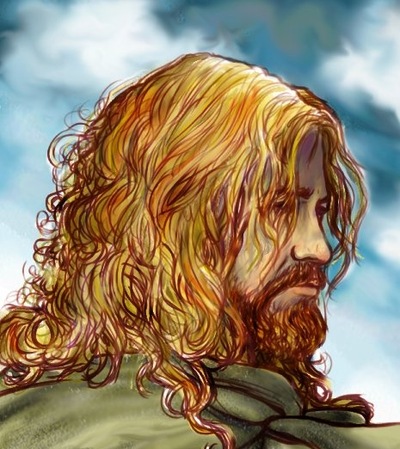
In the case of Genevieve, another blonde, she was the firstborn of a petty Frankish noble. Her mother, an Alemani, seemed a kind and gentle soul from what Genevieve remembered of her. The man went happily to war which was sometimes safer in those days than staying home. His happiness abruptly ended when Genevieve’s mother died giving birth to Genevieve’s baby brother. Genevieve was four. What could the man do? He had obligations to fight for Pepin, King of the Franks. He had been given land in the town of Breisach, on the Burgundian border, where he had to watch the Bavarians in the east and the Swabians in the south, the Thuringians in the north, and sometimes the Burgundians at his back. He was a soldier. What did he know about babies? But that was not the end of his sorrows.

Two years later, Genevieve’s baby brother died of complications from the flu. That was the way life went in those days. The man came home from war unscathed while his wife and son died in the house. It put the poor man in a difficult place. He knew nothing about raising a girl.

As you may have already guessed, about the time Genevieve turned six, her father married a widow who had two daughters of her own, one who was seven and one who was four. He imagined the three girls would be good sisters together, and his new wife would mother them and raise them to be ladies. He went happily back to his war and promptly died on the battlefield. I did not mean to suggest that war was a safe place to be.

Poor Genevieve.

You know the story well enough. Mother Ingrid spent all the money lavishing gifts on her daughters and spoiling them rotten. Genevieve got the leftovers and hand-me-downs, which she soon had to learn to take in because her sisters got fat. One by one, the servants in the house had to be let go, and Genevieve was forced to do the work the servants once did, until she became like a servant in her own house. And make no mistake. Even though Mother Ingrid claimed the house on the hill and all of the property in the county, the house was Genevieve’s. Father made sure of that before he left. Mother Ingrid and her daughters, Gisela, and Ursula had no claim. It was something like a prenuptial agreement Mother Ingrid signed, and it got kept in the town hall, in the hall of records where Mother Ingrid could not get at it. And just to be sure, the Church had a copy.

The house was a big house, too. It sat on the hill at edge of town with some property attached, including a barn and stables, now empty, of course, because Mother Ingrid sold off the horses and livestock long ago. They had farmland well away from town that tenants, something like serfs farmed. That produced a reasonable yearly income every summer and fall. Genevieve, which meant Mother Ingrid, also had the right to levy certain taxes in the county which came in over the summer. The household generally had plenty, or at least enough until about mid-March. After that, Mother Ingrid’s cry became, “Wait until May. The tax money will start coming in May. Things will get better when the summer arrives.” That was not always the case, but Mother Ingrid did go over the tax accounts carefully. At least the man who collected the taxes did not cheat them.
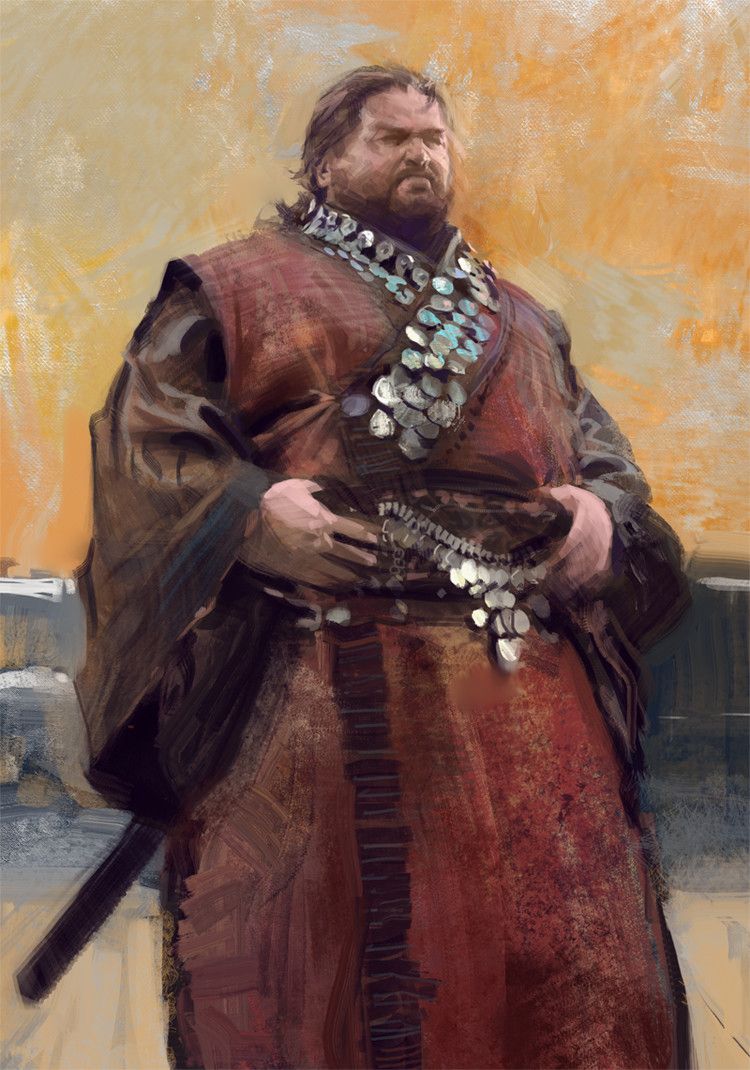
For seven years, life became more and more difficult for Genevieve, and the worst of it was when they had visitors, or rather one visitor who came four times over those years. Signore Lupen’s family in Lombardy and Mother Ingrid’s family in the alps apparently knew each other. Signore Lupen was a merchant of some sort and since Mother Ingrid had gained some position, he wanted to take advantage of that by opening up a new market. To be honest, Genevieve never did understand what goods the man marketed outside of some Tuscan wine which he freely supplied to the house. He stayed at the house, usually for a month, and treated Genevieve like the lowest of servants, making constant demands and criticizing everything she did. Mother Ingrid just laughed at the criticism.

The man was like the worst sort of uncle, and worse than that, he always came with three workmen, all ugly and mean, that left their barge and big wagon on the Rhine and stayed in the barn. She had to clean the place and feed them, too, and they were never nice to her. Worst of all, Signore Lupen always brought his son with him. The boy, Antonio, was a year older than Ursula, or two years older than Genevieve. He treated her worst of all. He touched her once, and she screamed. He hit her twice, though he swore he only slapped her. He shoved her once hard enough to push her to the floor and almost down the stairs. And he always got away with it.

R5 Greta: Nowhere to Run, part 2 of 3

Greta knocked, but since she got no answer, she poked her head inside.  “Hello?”  There did not seem to be anyone home.  The table nearby, however, had been set with roast goose, boiled potatoes and three big jugs of beer.  She did not feel particular at that moment about what might be too hot or too cold. She just helped herself until she became stuffed.  She had been starving, and now she let out a little burp.

She felt guilty afterwards.  This would not make a good first impression.  She decided she had better wait for her hosts to return and apologize for helping herself.  She found three chairs in front of the fireplace, and she fought the urge for the longest time.  She really did.  But at last she surrendered and stood up on the little chair until it broke, just as it should, and she knew she would be in big trouble.

Greta stood there for what seemed like the longest time.  Then she knew the story, and chided herself for wasting time.  Her rough sleep under the oak and all of her upset at losing Hans now combined with a warm home and a full stomach.  She really had no choice.  She climbed up to the loft, found the right bed, but opened the window just to be ready, before she fell asleep.

Greta saw the romans in her sleep.  The roman governor in Ravenshold looked besieged in the tower.  The fort had already fallen, and Kunther had placed men with rifles on the walls, facing the tower.  Lady Brunhild stood there, and that seemed what she saw.

“Mother. Too much of the powder has degraded, and too many of the weapons are rusted and useless.”  That had to be Kunther.

“All the same.” Lady Brunhild spoke with authority. “You must take some of the good powder and force an opening in the tower.  The romans and their traitorous allies cannot be more than two days behind. We must have the romans cleaned out of Ravenshold and the governor in hand by the time they arrive.”

“It would not be good to have an enemy at our backs.”  It looked like Bragi who spoke!  Her own brother Bragi, betraying papa!

“Listen to Vobalus’ good son,” lady Brunhild said.

Kunther banged his fist on the table.  “but we must save as much of the powder and weapons for when the full legion arrives. We must be able to destroy their legion. Without their army, we will be able to sweep the romans out of Dacia and beyond the old river.

“Time for that, later.”  Lady Brunhild insisted.  “We must secure Ravenshold and deal with the roman cavalry and the traitors.”  That appeared to be how they were portraying the people riding with the romans, as traitors.  It made Greta’s heart sick to think of it.  The people were divided and fighting each other, just as papa had predicted.

“You take care of the tower and take the governor alive.  Thuldores has set the defense of the road against the cavalry, yes?”

Bragi nodded, but another man verbalized.  “Yes.”

“Good, then Gareth.”  That was the other man.  “Take the message to Eldegard.”  Forget Kunther, Greta thought.  Lady Brunhild gave the orders.  “You will have to hide and wait until they pass to make it appear as if you are chasing them from behind, from Boarshag.”

“What’s in the message?”  Kunther wanted to know.

Lady Brunhild merely smiled, wickedly.  “The traitors, many of them, may yet be turned.  We may not have to waste any of your precious powder or bullets on the roman cavalry.”

“Ugh.” Greta said in disgust and turned away. She did not want to see any more, even in her sleep.  She saw Hans. He appeared to be dancing and having a lovely time.  She turned again, believing that for the moment he was in no immediate danger. The stars came out and the moon came up full.  It was her Artemis moon.

Greta found herself standing at the bottom of a path which looked cleared of trees.  It ran a hundred yards straight up a little rise to where the moon rested low on the horizon.  She got ready to walk to the moon when a man appeared at the top of the rise.  He stood between her and the light so she could not see his face.  All she could see was the shimmering outline of his figure. He howled.  It was not a man.  It was the wolf.  He got down on all fours and charged.  Greta heard berry scream.  Greta wanted to run, but her legs felt like lead, so she screamed, too.

Greta sat up in bed and all was quiet.  Then she heard a voice downstairs.  Someone started coming in the door.

“They have taken three for the sacrifice, but the other one escaped.  They will catch him, though, or the wyvern will have him. They have taken the dogs out.”  It sounded like a very gruff voice.

“Father, can’t we go search, too?”  A younger man spoke.

“Son, you know it is not safe at dark with the wolf about.  The men with the torches and dogs should be safe enough, but we are too few here.  The wolf would have you for supper.”

“I wish you would not talk about my brother that way.”  A woman’s voice spoke.  “Even if it is true.”

The door closed. “Someone has been here,” the woman said. “Liam?”

“Not your brother,” the gruff voice responded.  “He even used a cloth to wipe his mouth, and the house is still in one piece.”

“My chair is broken,” the young man said.

There came a moment of silence and Greta felt afraid to move for fear of making a sound. “In the loft!” the gruff man shouted. She heard a scramble for the stairs and Greta had to move.

“Yellow hair,” the young man yelled, but Greta popped out the window and slid down the barn roof in the dark.  “It’s a girl.”  She heard the young man say, as she ran into the woods.  She would not be another one for the sacrifice, she told herself.  And when she had run as far as she could, and had to stop to catch her breath, she thought, bear clan, indeed.  They came dressed in fur against the cool of the night, and with their dark and wild looking hair, they looked very much like actual bears.

Greta got lost again in the dark, and very afraid.  Even the trees around her felt hostile, no doubt due to the cutting, and they were not at all kindly disposed toward her like her great, old oak.  She became teary-eyed, but she refused to start crying again.  She began to walk.  She had no idea where she headed, but she went away from the cabin and that felt like all she could do.

After a while, she heard a voice in the back of her mind.  It was not her, or any other lifetime as far as she could tell, and so she decided it was really not there at all, except in her imagination.

“The boy is lost, the maid will weep, but fairy dust will make her sleep,” the voice said.

Greta sneezed and kept walking.  She felt miserable, and wondered if she might be coming down with a cold.

“The sun has gone into the ground and will continue round and round.  A hundred times its’ days to keep, and still the maiden lays asleep.”

Greta sneezed again, twice.  She brushed away what felt like gnats in her face.  The voice became stern and determined.

“The boy is lost, the maid does weep, ‘till fairy dust makes her to sleep!”  Greta held her breath and brushed the dust away.

“I heard you the first time,” she said out loud, without really thinking of anything but her misery.

“Run!”  She heard, and then it struck her that this was not just her imagination.

“Hey!” she shouted.  “Wait a minute.  Don’t leave me!”  But it was too late.  The spirit or imp or elf had gone and she got left alone.  Then Greta began to cry for her ignorance and foolishness.  She had been so preoccupied with her own troubles she missed a great opportunity.  She felt the earth should swallow her up for her stupidity.  Then she stepped out of the trees and came to a green path which might have been an old road of some kind.  It rose gently for a few hundred yards and over the top of the rise she saw the moon.  It looked full enough.  She paused and remembered her dream even as the man stepped to the top of the rise. For a moment, she thought it might be one of the bear clan in his fur out chasing the fourth sacrifice, but then the man howled and she knew.

“Nameless, you promised,” she screamed.

That was not strictly true, but nameless took her place all the same.  “So I did,” he said.  He came dressed in his armor and he already had his bow strung and in his hands with an arrow on the string.  The first shot caught the beast in the shoulder and the wolf reared up. With superhuman speed, nameless grabbed a silver tipped arrow, a gift from Artemis herself in ages past, and fired. The arrow clipped the beast’s heart. The beast fell to the ground, writhing in agony.  It screamed and howled, and finally fell silent.

Nameless called the silver tipped arrow back to his hand, and blood began to squirt from the wound.  Even then, Nameless felt that he could heal the man, take away the terrible curse, and return him to his sister, but the half-man, half-beast looked up and spoke one last lucid thought.

“Kill me,” he said.  “I don’t want to remember.  Please kill me.”

Nameless saw the wound around the heart already healing over.  He strung the silver arrow and shot more accurately.  The heart of the beast exploded, and he died.  It happened quickly, but made a bloody mess.

With a wave of his hand, the nameless god opened a pit twenty feet deep.  The beast, and all of his blood floated down into the hole. Then he laid a boulder on top before piling on the dirt.  He did not want anyone digging the man up and becoming infected with the micro-virus. He imagined the man’s sister carried the gene and also her son.  They might already be infected, but not active.  Surely one touch of this one’s blood would trigger their condition to active status.  That did not need to happen.

Nameless took two pieces of lumber, cleaned and treated the wood with a thought and used stone to nail the pieces together in the form of a cross.  He burned the name “Liam” on the cross piece and set it up to mark the grave.  Then he paused to consider.  He knew it would not be long before men came up from the south in evangelistic zeal for the one raised on the third day.

Nameless floated to the top of the rise and looked up at his Artemis moon.  He saluted, “Thank you for the gift of the silver arrows.” For a moment, he almost heard a response from the other side.  “I am sorry I am not there to give you more.”  Nameless knew his day, and the day of the gods was over.  They were all gone, now, mostly.  A few pretenders hung around, like this Abraxas fellow, whoever he was.  He knew what Greta had not realized.  The hurricane of Salacia put Abraxas, and perhaps others on notice.  They would not bother or interfere with Greta and her mission again.

“Meanwhile.” Nameless spoke out loud.  “That will not prevent flesh and blood interference.” He made a hedge around the spot so at least Greta would not be disturbed in the night, and he caused soft heather to grow up for a bed.  When all was ready, he traded places with Greta, but left the armor with her.