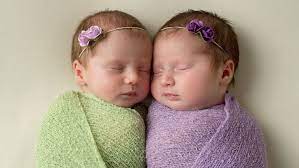
Alfpryd had twin girls she named Alfswip and Alfswith, she said to honor her friends, Athelswith and Elgar’s sister, Eadswip. Elgar complained with the thought Doctor Mishka put in his head, though he was very glad the doctor had been there to help. Twins were not easy.
“I’ll never be able to tell them apart,” he said before he came up with his own complaint. “And about the names…”
“Now, we agreed,” Alfpryd interrupted. “I name the girls and you name the boys. Besides, Reed and Violet like the names.”
“I’m not surprised,” he said. They were elves and probably inclined to like any name that began with the word Elf, or Alf. Violet served as Alfpryd’s maid, and her husband, Reed, kept Elgar updated on the progress of the Flesh Eaters. “What does Poppy think?” Poppy was the local fairy Elgar sometimes mistakenly called Edelweiss.
“Poppy loves Alfwynn, and says she loves Alfswip and Alfswith already, and they are just babies.”
Elgar nodded. “You are such a lucky woman.”
“I know. I love my husband so much.”
“I meant, that you are loved by so many. Even the very spirits of the earth love you.” he gave her a kiss and left the room so she could rest. He found Reed waiting for him.
“What news?” he asked, and Reed understood his mood and skipped the niceties.
“The Flesh Eaters appear to have completed their survey of the earth and the civilizations presently that cover the globe. I feared briefly that they might settle in northern Tang, but the Tang have become like the Eastern Romans, past their prime. Likewise, the Hoy Romans and the Caliphate are falling apart due to internal squabbles. The Flesh Eaters have chosen the place where the warrior culture has become paramount even though unity has not yet been achieved.”
“The Danes,” Elgar understood. “My friends in the future, or whoever is controlling my rebirths, tends to put me where I am most needed.”
Reed nodded. “They hope to unify Danish and Norwegian lands very soon. Then they can work on uniting with the Swedish and Finish lands, and eventually the Baltic and Rus lands. That would make a substantial, young, vital, and ambitious empire that might conquer the world.”
“You think they are after world domination?”
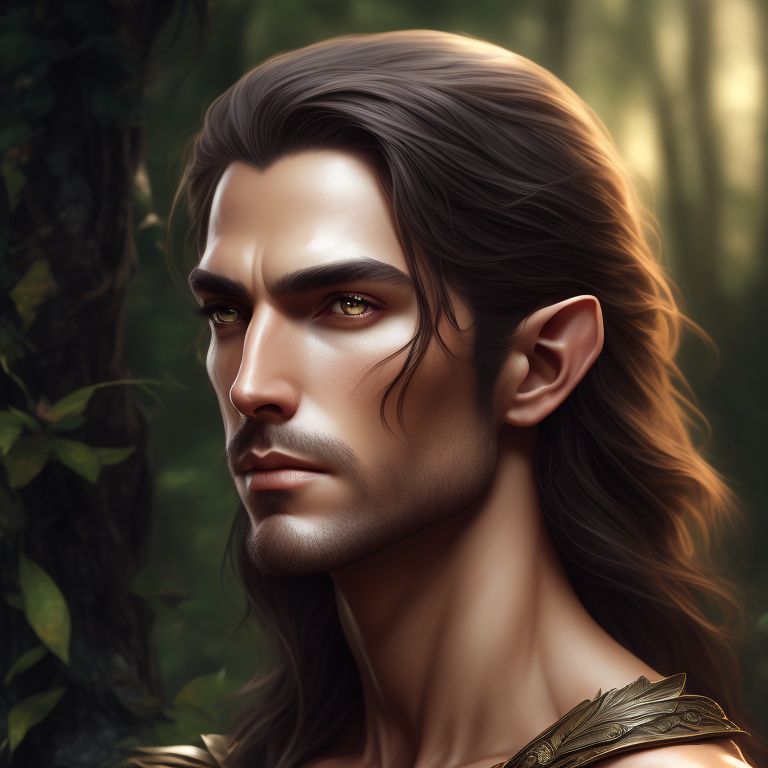 “That has been much discussed among those who are watching. They have only one mothership and nothing in the way of support vessels. They do not have the resources to conquer the lands themselves and do not appear to have access to more ships and more Flesh Eaters. They may be renegades of some sort. Coming to a planet clearly marked Do Not Go suggests that possibility, though many say the Flesh Eaters would not care about that. But they are either renegades or their fleets and Flesh Eating people are occupied elsewhere and unable to help.”
Elgar shook his head and relayed what once he heard from Alice of Avalon. “Their home planet has been discovered by the Apes. There is a massive war going on in space right now.”
“As some suspected,” Reed said. “In any case, the Flesh Eaters here appear to have settled on the Danes as their servant intermediaries. Once the world is under control, without the Flesh Eaters having to fight and risk their own lives, then the Flesh Eaters can rule over all from behind the curtain and feast on human flesh for many, many centuries to come without fear of the humans rising up and rebelling against them. They are beginning to experiment with mind control devices but are several years, maybe a couple of decades from being ready.”
“Keep me informed,” Elgar said, with his thanks. “I suspect the reason I was born here is because England will be the test case. I imagine the Danes will first invade this island with the idea of conquest before they invade the continent. I think that will be the case even if Denmark and Germany share an easy land border.”
“First, the divided kingdoms of the Anglo-Saxons. Then the more powerful Franks and Germans. Then third, the Eastern Romans and divided Muslims. Then I don’t see anyone stopping them.” Reed concluded.
“Unless the Turks and Mongols miraculously pull themselves together a couple of hundred years ahead of schedule.”
“Turks and Mongols?” Reed asked.
Elgar waved him off. “Forget I said that.”
Reed nodded.
843 was a busy year. First the twins were born. Then Wulfrun reached her last month and everyone seemed happy when they got interrupted. Odda sent word from the Devon coast that a large number of Danish ships were seen sailing for Carhampton. Riders were sent out, but Wulfrun delivered a boy before the army gathered. Athelwulf hurried with four hundred men from Hampshire. He only had fifty on horseback, however, because he decided the expense of a full hundred was not worth it. Osric brought six hundred from Dorset, this time some coming from the north and from Sherborne. Eanwulf had his six hundred, but most came from the north where he rode. Few came from the west side of the Parrett, or from the Devon border area. Eanwulf was disappointed with his brother. Elgar simply complained.
“At this rate, the Danes will not only burn down the churches, they will have time to build big pagan shrines in their place.”
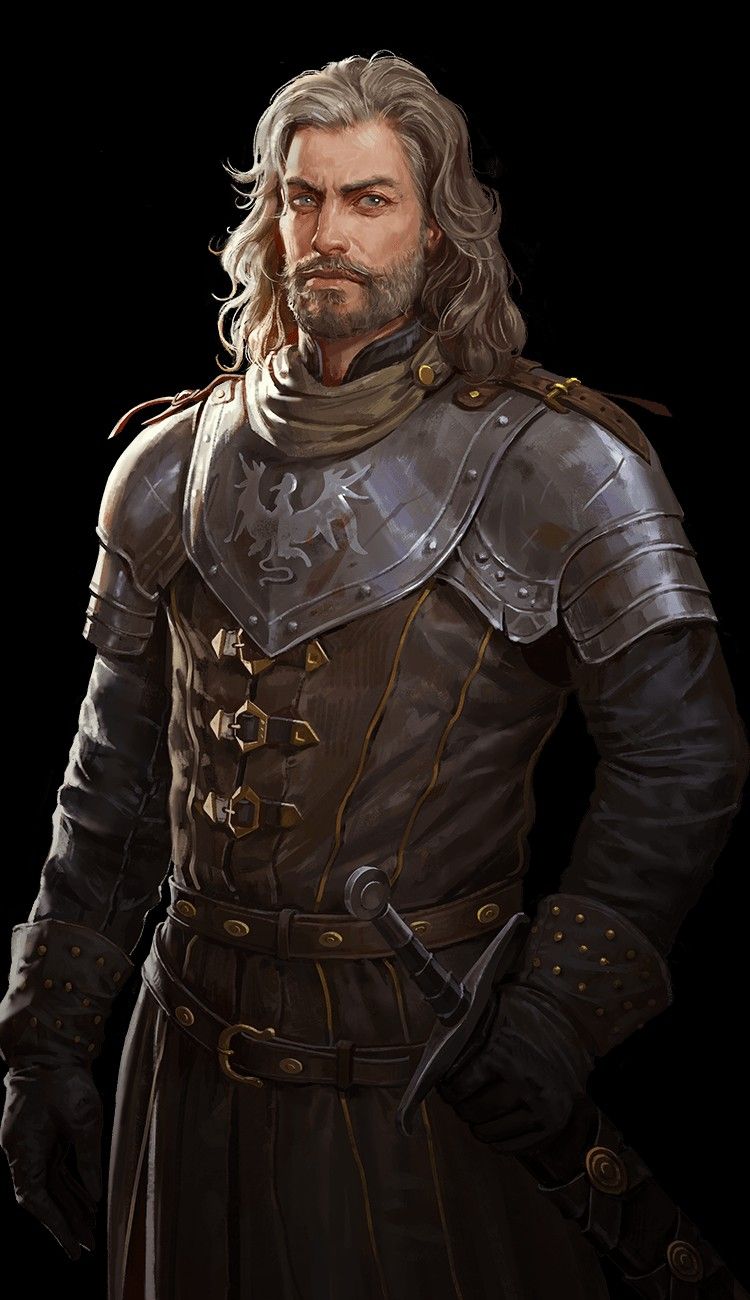 The king, Eanwulf, and Osric ignored the young man, as usual. When they arrived at Carhampton and camped in the same place King Ecgbert camped seven years earlier, they found a surprise waiting for them. A hundred and fifty men gathered from the coastal towns and another fifty from in and around Exmoor jointed them. They said what they were told was correct. If the Danes got a foothold on the coast, their homes would be the next to be burned. Apart from the two hundred men from Somerset, they also found a hundred brought by Odda from the coast of Saxon Devon.
“We have to stick together,” Odda told Eanwulf. “Otherwise, Devon may be next.”
Those three hundred men kept the sixteen hundred Danes in Carhampton bottled up for a month while they waited for the army to arrive.
“We have the numbers,” King Athelwulf thought, and proceeded to make the same mistake his father made. He threw his full force of roughly eighteen hundred foot soldiers, mostly farmers and tradesmen at the Danish line of twelve hundred. The Danes fought bravely and held the line for a long time, but when cracks began to appear in the Danish line, the Danish commander threw his fresh four hundred reserves in and that was enough to cause the exhausted Saxons to crumble. The Saxons had nothing in reserve.
Elgar looked around the camp. They had about a hundred and thirty men on horseback at most, and some of those were monks and priests surrounding the Bishop of Sherborne. They did not have enough men to attack the enemy. About all they could do was stand about and look mean to prevent the retreat of the Saxons from turning into a rout.
The Saxons fell back to their camp. They would fight again if they had to in order to prevent the Danes from breaking out of the town and into Somerset, but unless they needed to fight, they preferred to lick their wounds. The Danes, for their part, probably decided it was not worth the sacrifice to push inland. Instead, they gathered what treasures they stole and headed back out to sea.
Elgar yelled at his brother, and Osric was there to hear. Fortunately, the king was not there. “You have twice seen how the Heathens fight. You have seen how they hold some men back from the fight and when our men are exhausted, even if they are winning, the Danes throw their fresh men into the line and twice they have broken us. Twice we have come without horsemen, and twice we have been lucky the Danes have had no men on horseback. If they had, our men would have run for their lives and been cut down one after another. You saw how affective it was when our horsemen charged the Danes at Hingston Downs, and when we circled around and came up behind the Celts, we forced them to surrender and they had nowhere to run. Twice now at Carhampton we have handed the victory to the enemy by our foolish tactics. Learn something, for God’s sake.”
Elgar stomped off to his tent and did not wait for a response.
One result of the second battle of Carhampton was Elgar got promoted by his brother, and he was forced to move. “From the Parrett river north to the Severn Estuary, most of the coast is marshland and not suitable to bring many ships to shore,” Eanwulf said. “I surveyed the area in this last year when we went about. But from the Parrett River to the border of Devon, even on the coast of Exmoor, there are many places to land, especially the long, skinny, shallow draft ships of the Danes. I am making you the Dux of the coast from the Parrett River to the border with Devon to five miles inland so you will have the towns and villages there to watch the coast. I expect you to keep the heathens out of Somerset. Maybe you should live at Carhampton since the Danes seem to like that place.”
 Elgar shook his head and hardly had to think about it. “Watchet,” he said. “The old Celtic fort there needs work since Grandfather Edgar tore it down, but it is near the center of the coast. From there, we can hold the Danes in check until you can get there with the army. We can set up a coastal watch like Odda has set in North Devon, and we can drive off simple raiding parties. But any substantial landing, you better back me up with the army or this won’t work.”
Eanwulf did not like to have to be bothered with that, but he agreed because he knew his little brother was right. “And maybe Osric and the men of Dorset can help. I think Osric’s uncle was right. The king does not need to be disturbed with every Danish landing. That is what he expects us to take care of to keep the kingdom safe.”
Great in theory, Elgar thought, but if the Saxons don’t learn anything, they will lose every time on the battlefield. They need cavalry, and to keep some fresh men in reserve to reinforce the line where it may be weakening. Saxon brute force might have been enough against the Welsh, but not against the Danes.
************************
MONDAY
The Danes come in force to the Parrett River, as predicted, and the Flesh Eaters come to watch. Until Monday, Happy Reading.

*





















 Storyteller Tales & Thoughts