Avalon 9.7 Revolution, part 5 of 6

As it turned out, the travelers and the rifle company arrived just ahead of the barges.  Several hundred hungry men stood on the banks of the river ready to unload the supplies when they docked.  The supply wagons stopped to unload at the artificers.  The wagons would be taken by the teamsters to the blacksmith shops for repairs before being sent back to Reading for another load.  The artificers included everything from candlemakers to gunsmiths.

“The actual engineers for the army,” Tony called them, though most of the eyes and ears of the travelers were on a squad of well-turned-out dragoons who spoke with Colonel Morgan.

“This way,” Colonel Morgan gathered the travelers.  “Lieutenant Brinkman will accompany you while I report to the general. He will keep the guards and others from asking too many questions.  Meanwhile, I am sending my officers with the men to set a temporary camp between the guard and Sullivan’s Brigade, across the road from a rifle pit where they can practice if they can’t stand still.”  They did not go far, crossing only a shallow, ice-covered stream before they got down near a house.  They saw two guards on the porch and more dragoons who watched them carefully, so they appreciated Lieutenant Brinkman’s presence.

Colonel Morgan spoke again to Katie and Lockhart.  “Lieutenant Colonel Hamilton and the rest of the men fetched from the northern department should arrive in two or three days.  With the artillery, we should be up to full strength, but it looks to me there are too many ragged and naked men to give a good account. I would not be surprised if half of the men deserted in the next two months of winter.  Please excuse me.  I have to report.”  He walked up to the house and the guards let him inside.

“The patriots will stay,” Lincoln said, hopefully.  Then he turned with the others to look more closely at their surroundings.  From that place, they could see much of the camp, and Katie and Tony talked.

“The housing is being built by the soldiers themselves,” Katie said.  “You can see, most of it is unfinished, but it gives the men something to do to keep their minds off the cold and their empty bellies.”

“It is a much bigger camp than I imagined,” Lockhart admitted.

“As I recall, there are eleven to fourteen thousand men in the camp, or more,” Katie said.  “A few claim the actual number is around twenty thousand.”

Tony pointed out several things to Decker and Lincoln as well.  “They are building forts, like redoubts against being overrun by the enemy.”

“I see most of their artillery is on that small hill,” Decker said.

“Mount Joy,” Lincoln named the hill and got out the database to be sure.
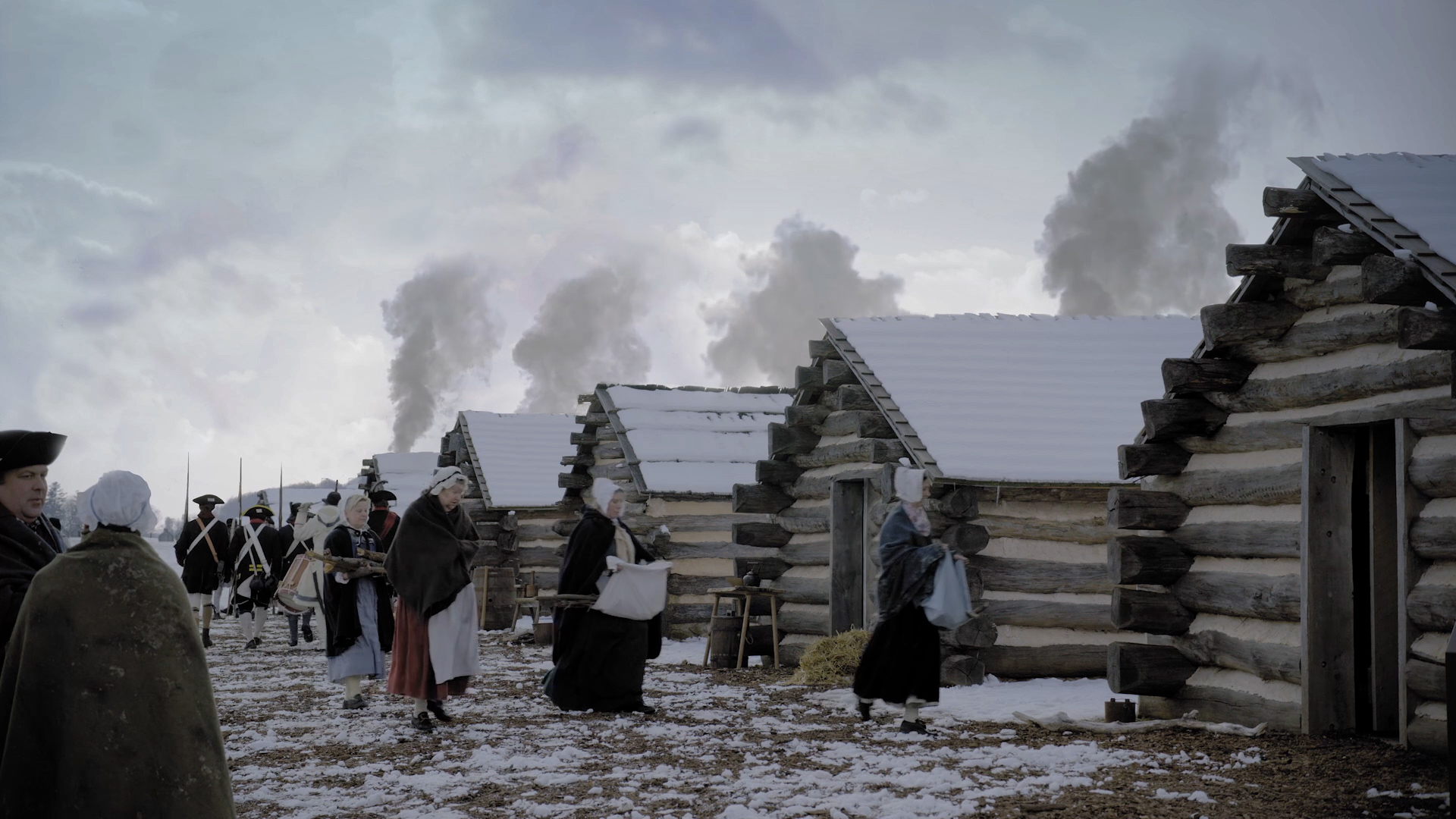
“They are also digging entrenchments in case the British try something,” Tony finished his thought and pointed to several places where the men were working.

“They should not put all of their artillery in one spot,” Decker said, seemingly stuck on that idea.  “Hills are great to screen the camp against enemy spies and all, but they should have men up all along that ridge.  The hills are only good if you keep the enemy off the high ground.  Once you surrender the high ground, the valley risks becoming a death valley.”

“I’ll make a note,” Lieutenant Brinkman said.  “But I am sure the general has piquets in the hills.”  He pointed to the ridge behind the small hill.

While they waited, Sukki and Nanette wandered over to the cooking fires which were outside the main house beside the road.  Elder Stow went with them to watch them.  They found a black couple there cooking enough for a regiment.

“Hannah.  Get your bread out of the oven.  The roast has to go in.” The woman nodded and went to do that very thing while the man stepped up to the visitors.  He looked at Nanette, Sukki, Elder Stow, and once more at Nanette before he spoke to Elder Stow.  “How may I help you?”  He looked surprised when Nanette answered.

“I am Nanette, Missus Lieutenant Colonel Milton Decker.  This is my sister Sukki and her adopted father, Elder Stow.”

“Isaac Till and my wife Hannah.”  The man smiled and pointed at the woman.  The woman, Hannah, acknowledged everyone with a nod while she carried the steaming hot bread inside the house.

“Are you cooking for the whole command staff?” Sukki asked as she saw Hannah come back out carrying a large cut of beef in a roasting pan.

“General Washington and his staff.”  Isaac nodded while a second black man stepped up.  This man looked exceptionally clean and well dressed.

“Isaac.  The general would like some tea.”

“Of course, Mister Lee,” Isaac said, and turned to the visitors.  “I always keep the kettle near hot for tea.”  He moved the kettle to a hotter spot on the fire and got a pot and some tea leaves from a small tent.

“I see you have met some of our visitors,” Mister Lee said and turned to the three travelers with a smile.

“Nanette Decker, my sister Sukki and her adopted father Elder Stow,” Nanette spoke up and stuck out her hand.

“William Lee, a pleasure,” the man said and shook that hand.  “General Washington’s left-hand man.”

“Not the right-hand man?” Nanette asked.

Mister Lee shook his head.  “That would be Colonel Meade, his aid-de-camp.”
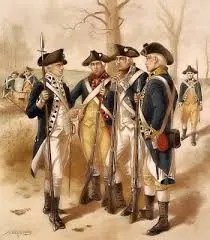
“Of course,” Elder Stow said, and at that moment, Colonel Meade was introducing himself and Major Gibbs, commander of General Washington’s guards, to Katie and Lockhart.  Katie even offered a small salute.

“My wife is a major in the Marine Corps,” Lockhart said.

“And you?” Major Gibbs asked, not liking the idea of being the same rank as a woman.

“Assistant Director of the Men in Black,” Lockhart admitted.  The men stared at him with eyes that seemed to understand something.  Lockhart decided to take the next step.  “We are from the year 2010.  We have a quicker way to get home than living through the next two hundred and thirty years, though it will likely be the end of 2015, or early 2016 by the time we get there.  That is all I can say about that.”

Colonel Meade looked at the sky and mumbled.  “That is one complication we do not need right now.”  He looked again at Lockhart.  “We have enough trouble right now getting the men properly sheltered, dressed, and fed.”

Katie kicked the snow at her feet.  It was honestly half snow and half mud.  “It is not as cold here as history remembers,” she said.

“Cold enough,” Major Gibbs said.  “But we were helped greatly a couple of days ago when Missus Lancaster and the women of Philadelphia rode in with ten wagons of shirts and other clothing.  The wagons all had a false bottom, and she got the shirts out right under the nose of the British.”

Colonel Meade added a note. “The general has written to Henry Laurens and the Continental Congress for help.  I hope they do something soon.”

“Missus Lancaster,” Lockhart said.  “Michelle Marie?”  He wanted to be sure who they were talking about.

Major Gibbs nodded and Colonel Meade spoke.  “She calls herself the camp mascot.  She travels around to the various brigade camps with her violin and her voice.  She is a great help with morale.”

Lockhart and Katie nodded as they got interrupted.  A carriage came up the road that ran beside the creek.  A black-haired, green-eyed beauty stuck her head out of the carriage window and waved.  “Lockhart,” she shouted.  When she pulled her head back inside, the man she rode with asked.

« Amis à vous ? »

« Oui.  J’ai beaucoup d’amis, » she answered.

Before the carriage could arrive, Colonel Morgan and General Washington came out the door with another general officer not readily recognizable.  A rifle fired from down the road toward the guard camp.  The bullet creased General Washington’s arm and he fell to the ground.

Colonel Morgan and Lieutenant Brinkman ran to their horses to arm themselves.  Katie and Decker grabbed their rifles, their horses not yet being in a panic.  Lockhart and Tony pulled their revolvers, and Lockhart grabbed his shotgun before the two of them shooed the horses toward the side of the house by the river to get them out of the way.

“Stay down,” Katie ordered Colonel Meade who knelt by his general with the other unidentified general.

“Stay down,” Decker echoed, as the two guards on the door ran up to the general, their eyes down the road, trying to identify who fired that shot.  They all heard yelling as some men not far away got behind the trees and the bushes left along the road or laid prone on the road itself to make themselves as small a target as possible.
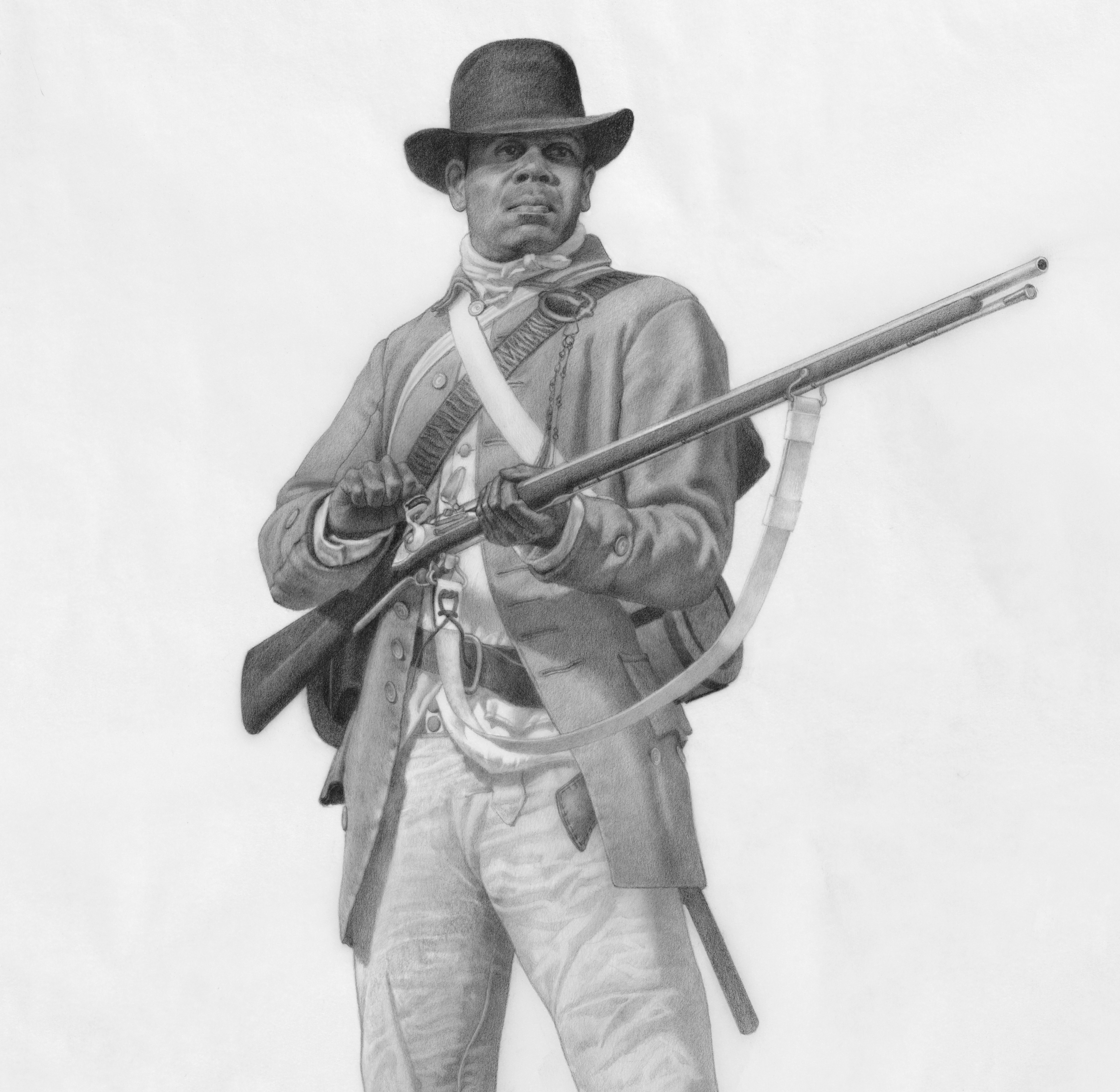
Out by the kitchen, Isaac grabbed the rifle he had leaning against the tree there.  He had to load it, which took time.  A dozen men dressed like workers came from the artificer camp carrying rifles sporting bayonets.  Nanette recognized one of the men.

“William,” she yelled, even as she reached into her purse.  She had taken to carrying the medical bag the way Alexis had, but unlike Alexis, she was not against using the Beretta Boston gave her.

Elder Stow immediately pulled up his scanner to look at the house and grounds.

The workmen, who were either British soldiers or loyalists opened fire from the road.  Nanette fired twice.  William Lee and Hannah both came out of the kitchen preparation room and had weapons that they fired.  Isaac fired last.  None of the people in the kitchen area got hit, but one British man went down, and another caught a bullet in his arm.

“Sukki, help out,” Elder Stow ordered as he took to the air.  They were being attacked from all sides, but the ones out front or by the kitchen did not know about the ones coming up from the river.

Avalon 9.7 Revolution, part 4 of 6

Nanette and Sukki watched the British and Loyalist prisoners closely.  Colonel Morgan got a wagon and mule from the locals who were grateful for Captain Price’s timely intervention.  The colonel put the prisoner wagon behind the riders and scouts, at the front of the line of foot soldiers.  Two lieutenants paced the wagon on either side while Sukki, and sometimes Nanette dropped back to help make sure the prisoners had no plans to escape.  Sukki, being warned by Decker and Nanette, also made sure the prisoners had no contact with William Talbert and his gang.  Nanette, having served for years as administrative assistant to a college professor, got curious.

“So, William, did you know the determination of the colonies to break free and be independent?”

“Mostly,” one soldier said.

“Rabble,” another soldier said, but William shook his head.

“Our officers were rather vague about that.  They suggested some unhappy people were in rebellion, like riots in the streets.  We were sent to calm things down.  We were not prepared for armed rebellion.”

The colonial Lieutenant Novak who rode on that side of the wagon butted into the conversation. “What did you expect?  We work hard and face all the danger on this frontier, trying to make a good home and life for our wives and children, only to have the English take most of it in taxes.  We have no representative in the court of English justice to argue our case.  We are like slaves while Parliament grows rich.”

“Everyone serves the nation in one way or another,” William said.  “We are all subjects of the king.”

“Maybe we would rather not have a king and his greedy ministers over us,” Lieutenant Novak responded.  “Maybe we would rather chart our own course and keep the fruits of our labor.”

“You are not slaves.  Ask your slave girl, here.”

“We do not have the same rights as an Englishman,” Lieutenant Novak raised his voice, and his odd accent came out.

“Gentlemen,” Nanette interrupted before the argument got out of hand.  “Lieutenant Novak.  William.  First of all, I am a free woman, and have been free for three generations.  I am an historian, and my husband is a colonel in the marine corps.  I know nothing about actual slavery.  And second, I understand you have disagreements enough to start a war, but now is not the time to fight.  There is no reason why this should not be a pleasant journey.”

Both men got quiet for a minute before William had a question. “Novak?  Are you Polish or something?”

“Czech,” Lieutenant Novak responded.  “Many of my cousins are peace-loving Moravians.  I was an early settler in Lancaster, in the colony of Pennsylvania, and I found I had to defend my home from wild natives.  The town is built up now and not so dangerous a place, so I thought to lend my support to the patriot cause.  Colonel Morgan needed riflemen, so here I am.”

“You are Czech,” William said.  “You are not even English.  Why do you think you should be subject to the rights of an Englishman?”

“Czech, Polish, German, Dutch, English, and Irish.  I have an Italian neighbor.  A good man.  In this place, we all came here willing to live under the English crown as free and equal men.  We did not expect to live under the English thumb.”

“Lieutenant,” Nanette scolded the man and turned back to William.  “As I understand it, taxation without representation is a big issue.  Benjamin Franklin argued with the English Parliament for years over the lack of colonial representation.”

“Franklin was supposed to be killed by now,” William said, and one of the other red coats knocked him to get him quiet.  Nanette would have to think about that.

When they got to Reading, they took another day to relax before they escorted a train of supply wagons to Valley Forge.  Some of the supplies would be floated on barges down the Schuylkill River.  Colonel Morgan assigned Captain Price’s company to go with the barges that would likely arrive first, though not by much because of the ice in the river.

While in Reading, Colonel Morgan transferred his prisoners to holding cells where some other British prisoners already stayed.  Nanette said good-bye to William and then went to Tony to get his opinion.  Something bothered her, and eventually, they took it to Katie and Lockhart where the others all listened in.

“He did not say he hated Mister Franklin, or he wished he would die, or he wanted to kill him.  He said Franklin was supposed to be killed by now, like he knew something was supposed to happen, but the plan did not succeed for some reason.”

“The Masters?” Lockhart immediately jumped to the conclusion.

“Maybe not,” Katie said.  “Franklin spent some time in England making some members of Parliament uncomfortable.  One of those men may have simply wanted to remove the source of discomfort.”

“Wait,” Lincoln interrupted.  He pulled out the database. “There was an attempt on Franklin’s life.  Young Michelle Marie was with her father on a French diplomatic mission in London at the time.  Michelle Marie—the Kairos saved Franklin’s life.  It is where they met.  When she came to America, she stayed with Franklin in Philadelphia.  He introduced her to William Lancaster, her husband.”

“So, there has already been an attempt on Benjamin Franklin’s life,” Nanette said.

“And probably others as well,” Tony said, and looked at Lincoln.  Lincoln nodded but said no more.

“So, the Masters?” Elder Stow picked up Lockhart’s assumption.

Katie still shook her head.  “William Barnes may have been drawn into the assassination plot, or maybe he just heard about it.  That does not prove a connection to the Masters.”

“Circumstantial evidence,” Lockhart called it.

“There is William Talbert,” Decker said and repeated what they had heard.  “He used the term firefight which is a modern term.  I checked with the colonial officers.  They understood the term well enough but never heard it before.”

“And the Mohawk,” Katie added.  “The ones who appeared to know Talbert and waved off his riflemen.”

“But it is all circumstantial evidence, as Lockhart said.” Tony looked again at Lincoln, but Lincoln was not forthcoming with any more information.

“So, how do we tell who is a servant of the Masters, and who is simply a loyal servant of the English king?” Sukki asked.

No one had an answer, but Decker added a thought.  “William Talbert might not be working for the Masters, but he is friends with the Mohawk who are on the British side, so he needs watching.”

###

Michelle Marie stopped at the British lines.  A cheeky young lieutenant wanted to examine her wagons.  He said they looked at all the wagons leaving Philadelphia, and she had ten wagons besides her carriage.  He also wanted to know her business, so she slapped him as she swore at his rude behavior, in French of course.  Apparently, the young lieutenant and some of the soldiers who stopped to watch knew enough French to get the gist of it.  The men tried not to laugh.  Michelle Marie switched to English.

“I have my pass, signed by General Howe himself.  I had to suffer through a dinner party with the general and von Knyphausen just two days ago.  I hate the military and all the killing.  I am still suffering from indigestion.”  She caught some movement out of her eye.  One of the soldiers looked ready to climb up on the first wagon.  “Hey!  You there. Don’t you climb up there.  My spinning wheel is there, cushioned by all that cotton.  It was a gift from King Louis the Fourteenth and is nearly a hundred years old.  If you so much as scratch it, you will pay for it with more than your life.” That made all the soldiers pause.

Two other women, one older and one maybe sixteen came out of the carriage to stand and stare at the soldiers.  The lieutenant got stubborn.  “I need to know your business for leaving Philadelphia or you need to turn around and go back to the city.”

Michelle Marie gave the young man a mean look.  “I am building a house in Norristown, on the river.  It is by the land of Isaac Norris, in a place they call Bridgeport, and I am leaving all of you soldiers and this stupid war behind me.  Right now, I have a colonel and his whole entourage living in my house in town, and I want no part of it.  I am taking all the furniture that his soldiers do not need, like my spinning wheel.  Should I go back and tell the colonel he cannot have my house because some young lieutenant would not let me leave the city?  Maybe I should complain directly to General Howe.  Maybe I should write a letter to my friend George.”

“George?” the lieutenant asked.

Michelle Marie poked a finger in the young man’s chest.  “Your king, my friend.”

The lieutenant took a step back as several red coated men rode up to the post. One of the men, a Major spoke.  “Marchioness.  What seems to be the problem?”  On recognizing Michelle Marie as a member of the nobility, the lieutenant took another step back.

“This stubborn lieutenant is doing his duty, but I have assured him we pose no threat.  I am simply taking my furniture to my new home in Bridgeport so your colonel can have my house in town, and I don’t want his soldiers crawling all over my things and scratching them or breaking them.”

“Let her and her servants go,” the major ordered without hesitation, knowing that the generals liked her and the colonel in the Lancaster house loved her fiery spirit, though perhaps like a daughter.

Michelle Marie stepped up to the lieutenant and stared hard in his eyes.  The man stood at attention, prepared for the worst.  She pinched the cheek she slapped and smiled.  “He is a cute one,” she said, and the Major chuckled.  “Molly. Mother Lancaster.  Back in the carriage.”  Michelle Marie ordered and turned to shout to the wagon men and women.  “We go.”  As she stepped up into the carriage she added, “Drive on.”

Avalon 9.7 Revolution, part 3 of 6

It took half the night to ferry the men and horses across the Hudson.  Colonel Morgan chose to spend the next day in Kingston, and some of his riflemen even helped the locals with their rebuilding projects.  The British did a pretty thorough job of burning the town.

The travelers did not mind, apart from the cold and snow.  Ghost and the horses certainly did not mind a day off.  The horses and soldiers were fed well in Kingston.  The travelers discovered that some of the people who were on the British side, or at least uncertain about the revolution came to the American side when their homes were burned.

“Most people are fickle and don’t care until they are shocked and dismayed when it becomes personal,” Decker said.

“A bit cynical,” Tony said, but Decker shrugged.

The following morning the travelers and colonials started down the long road to the Delaware River.  Colonel Morgan again explained himself.

“We keep the Gunk between us and the British.  We take the road to Homans Eddy and cross over on the ferry.  Once in Pennsylvania, we move away from the Delaware and head south to Valley Forge.”

“Move away from the river?” Katie asked.

Colonel Morgan nodded.  “Since the British took Philadelphia, they took ownership of the Delaware to the Delaware Bay where they can ship in plenty of supplies and reinforcements.  My reports say in the meanwhile, they have been sending companies up the Delaware as far as Trenton, maybe further.”

“The Gunk?” Lockhart asked.

“Shawangunk Mountains,” Colonel Morgan answered.

“Shawangunk Ridge,” Lincoln called it at the same time.

Lockhart still shrugged.

Colonel Morgan folded his map.  “I think the British scouting up and down the river is what convinced Congress to let General Washington camp at Valley Forge.  They hope he will minimize the damage the British may do to the Pennsylvania countryside over the winter and spring.”  Colonel Morgan stepped to his horse.  Lunch was over.

Twenty-five miles was a good day as the column traveled up and down through the south end of the Catskills.  When they reached Homans Eddy, they were surprised to hear gunfire across the river in the few buildings there.

“Homans Eddy got so-called because it is where the river narrows,” Colonel Morgan told Tony, Nanette, and Sukki.  “It gets narrow, but deep.  There is some ice along the riverbanks, but not anything I would step on.  I can see the landing where the ferry arrives, but it is obviously not running at present.”

They got interrupted by Captain Price and the Green Mountain Boys followed him.  One of William Talbert’s men fired his rifle.  The captain spoke while the rifle went off.

“Colonel.  Is there a way we can cross the river?  It sounds like a firefight over there.”

“No, but the river is narrow enough here.  Get some men up in those trees and shoot at anything in red, or any loyalist, if you can tell who is who.  You can keep your company here for the rest of the day and see if you can find a way across.  There are some farms, I think the Homan farm and maybe a small settlement downstream on the New York side. They might help you cross over.  You know the route through Pennsylvania.  We may meet up there.  I’ll take the regiment north and cross at Skinner’s Falls tomorrow morning.  We will likely stay there the rest of the day in case you follow us, but on the following day we will leave whether you are there or not.  Even if you have to come behind us to Skinner’s Falls, your company without the wagons and women should be able to catch up to us on the north-south turnpike.”

The captain agreed, but then William Talbert offered a thought.  “My men and I can stay, and you can keep your command together.  General Washington is not expecting us, and we could use the target practice.”

“No.”  Colonel Morgan’s word was loud and clear.  “Get your men back in the formation.  We are headed north.”  He signaled one of his officers and checked the sun to gauge the time.  “Get the men started up the river road toward the Skinner place.  I’ll catch up shortly.”

Decker and Nanette listened in with Sukki and Tony, and as soon William Talbert moved out of earshot, Decker got the colonel’s attention.  “You don’t want to get rid of Talbert and his crew?” he asked.

Colonel Morgan shook his head.  “I don’t honestly trust him.  Half of his men are Canadians down from Quebec.  I am not convinced they would shoot the right people.”

Decker nodded and handed the Colonel his scope so the man could get a closer look at what was going on across the river.  “No,” Decker said in as strong a way as Colonel Morgan’s word.  “You cannot borrow it for Captain Price or your men.  Lockhart says we are not supposed to get involved.  I pointed out that Katie got us involved with the Mohawk, but Lockhart said that was to prevent unnecessary killing.  There is nothing we can do about people who are already shooting at each other.”

“Fair enough,’ Colonel Morgan said and went to Captain Price to set a few more ground rules before he got the travelers to catch up with the column.  “I do want to get there before dark, if we can,” he said.

They arranged with the Skinner family to cross the river in the morning.  It took all morning and cost one of the two gold sovereigns Lincoln had squirreled away—a gift from Lars.  They made camp and waited the rest of the day, but when Captain Price did not arrive that day or in the night, they packed up and left on that next morning.

They stayed as close to the river as they could and got all the way down to Homans Eddy on the Pennsylvania side.  They discovered Captain Price managed a river crossing downstream from a village of sorts.  He came up behind the red coats, native Seneca, and loyalists.  The defenders were militia, but some militia men were persuaded by the half-dozen red coated British and stayed out of it.  Most of the attackers were loyalists, ten from much further west, and three Seneca guides and scouts.  The Patriots, about twenty good townsfolk, had a barricade that stretched between a house and the Church.  They were hard pressed.  The loyalists had the big barn and farmhouse in the south, and they appeared to be mostly hunters and fur trappers hardened by life on the frontier.  With their natives, the frontier marksmen were slowly gaining the upper hand.  The advent of Captain Price’s company of riflemen tipped the scales in the Patriot favor, and the fighting was soon over.

“I have four red coats, two loyalists, and three Seneca tied up in the church,” Captain Price reported.

“Good, good,” Colonel Morgan said, and asked, “What do you plan to do with them?”

Captain Price opened his mouth, but quickly caught on.  “I intend to turn them over to my commanding officer to determine their deposition.”

Colonel Morgan nodded.  “An admiral idea.  The natives we can release if they promise to not raise arms against the colonies again.  The red coats and loyalists we will take with us to turn over to my commanding officer.”

“Most of the loyalists ran away into the wilderness when we arrived,” Captain Price admitted.

“Understood,” Colonel Morgan said.  “Less baggage for us to carry.”

“I can keep my scanner on to see if they turn up as we move on to the valley of the forge,” Elder Stow said.

“Valley Forge is the name of the town,” Tony corrected the Gott-Druk.

Colonel Morgan simply nodded.  “Much appreciated, but I would be surprised if they stopped running this side of Fort Duquesne.”

“I understand now why you wanted to move away from the Delaware River,” Lockhart said.

Colonel Morgan nodded.  “Red coats on the river.  It does not take much to stir up trouble among the citizenry.  About a third of the population in some places seems determined to stay out of it, but nearly half are patriots or support the patriot cause.  The rest, maybe a quarter or twenty percent of the people have sympathy if not loyalty to the King, and some of them will fight with the British.  Every town on or near the river is a potential hornet’s nest and the British seem determined to whack that nest.

************************

MONDAY

There is trouble at Valley Forge. Washington’s headquarters is attacked from all sides. Until Monday, Happy Reading.

*

Avalon 9.7 Revolution, part 2 of 6

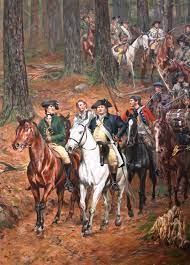
At Colonel Morgan’s insistence, the travelers moved out front with the colonel, Captain Price, and a half-dozen colonial officers who had horses of their own.  It was a pleasant day even if being surrounded by soldiers put a damper on the conversation.  Katie and Tony got Lincoln and the others to agree that certain topics were off limits.  Some things they were allowed to talk about, mostly things in the past, but they needed to limit their conversation to Colonel Morgan, and maybe Captain Price if they could.

When the party neared the Hudson in the late afternoon, Colonel Morgan explained his reasoning.  “The British out of New York City came north up the Hudson.  They captured several forts up to Newburgh.  They have scouts, mostly from the five nations up to Poughkeepsie.  They sent a ship and soldiers to Kingston, the capital of the New York Colony.  They burned a bunch of houses and buildings, including the government house, but then they withdrew.  The people of Kingston are back rebuilding. We will cross the Hudson there…”

He stopped speaking and pointing.  They heard rifle fire and saw three of their scouts racing back to their position.  Elder Stow stepped forward and pressed a button on his screen device.  People heard a couple of trees or rocks snap, but mostly he accounted for the flora and fauna.  He called it a Decker Wall and waited for the scouts to get behind the line before he threw the switch.

“After all this time, I finally started to anticipate what might be on the horizon,” he said.  “It only took me six thousand Earth years or so to figure that out.”  He set the screen device and held it to the ground as the leading edge of Native warriors ran up and smashed into the wall.  They mostly bounced off, though some appeared to hurt themselves. Some stopped and fired their flintlocks at the soldiers and travelers they saw so conveniently crowded together on horseback, but the travelers ignored them, so the colonials waited, nervous but patient.

Katie noticed something and trotted up to the wall, Lockhart and Decker following.  “Mohawk,” she shouted.  “You are on the wrong side.”  Sukki and Nanette came up with Colonel Morgan.  The Colonel told the others to stay where they were, and the others held back the foot soldiers.

Some Mohawk helped their fellow warriors back from the invisible wall.  Others put their hands to the wall to gauge its strength and size.  A few listened and one responded.

“You colonials are on the wrong side.  This is native land, and you keep taking more and more without compensation.  Soon, there will be no land left for our people.”

“And you think the British will treat you differently?”

“They have promised,” the Mohawk said, which triggered some laughter from both Decker and Lockhart.  Katie quieted them before she spoke again.

“We walked with Louis, a Mohawk chief, and friend.  We walked with him in the days of Moonwalker of the Lenape who you may have heard of as the Big Swede.”

One man pushed to the front and shouted.  “Louis was my grandfather.”  The man’s eyes got big as he realized what he was seeing.  “He often told the story of the people from the future and their great and powerful magic.  I know the invisible wall.  The flood waters came, and the wall laughed at the flood.  The whole side of the mountain came crashing down, great stones and big old trees, and it just slid off the wall and fell in the river.  I know the stories.”

“Did he get home with his horse?” Nanette asked.

“Yes.  We have many horses now from that first one.”  The man smiled for Nanette and Sukki.

Lockhart looked over at Sukki.  “Would you mind floating up about ten feet and taking aim at the tree, the big one there that looks isolated from the other trees around.”

“The big oak?”

“Yes,” Katie answered for her husband.

“I’ll tell you when to turn the tree to ash, and hopefully we won’t set the whole forest on fire.”  Lockhart turned back to the Mohawk, all of whom were now listening, especially when they saw Suki take to the air.  “Choose your side carefully.  That is up to you.  But for right now, these colonials are under our protection.  You need to let us pass in peace.  We will be crossing the river and headed toward the Delaware River, so out of your territory soon enough.”

“We have been friends with the Five Nations.  Please do not make us your enemies,” Katie added.

“Sukki,” Lockhart said, and Sukki let the power flow out of her hands.  The stream of white light, visible in the daytime, looked bright as the sun.  It put a hole right through the tree mid-section and the tree made a great Crack! sound, like it got struck by a bolt of lightning.  The top half of the tree teetered before it fell to the ground.  The Mohawk scrambled to get out of the way.

Four men jogged up to the front, but one held the other three back.  “Now is not the time to start a firefight,” he seemed to decide.  He tried to say that without undue attention, but Decker, Nanette, and Colonel Morgan all heard.  The man had to push down one of the flintlocks one soldier wanted to point at the Mohawk.

“Now is not the time, William Talbert,” Colonel Morgan scowled at the four men.  Talbert, the leader of the four did not appear to disagree, though he stared mostly at Decker and Nanette, and did not appear surprised when Sukki floated back down to her horse.

At the same time, Lockhart noticed one of the Mohawk wave off and shake his head at Talbert and his crew.  Lockhart got the impression the native dressed man and the actual native knew each other.  He thought it odd that they would be on opposite sides.  He would have to think about that.

“Come,” Talbert said, and they wandered back to get lost in the crowd of foot soldiers and riflemen.  One of those men said, “The only good Indian is a dead Indian,” and he said it with enough volume, so everyone heard.  The travelers looked at each other and wondered at the cliché being so easily mouthed, but decided that far in the past, perhaps it was not a cliché yet.

“Come,” the chief of the Mohawk said to his people, and they all headed off to the north where they vanished among the trees.

“About sixty or seventy in the war party,” Decker guessed.

“At least,” the colonel agreed.  “More than we could see.”

“So, who is this Talbert and his men?” Decker asked, casually.

“Green Mountain Boys,” Colonel Morgan responded.  “They don’t follow orders well.”

Katie and Lockhart went to where Elder Stow stared at his scanner.  “My Mother.  My Father.” Elder Stow acknowledged them with a word.  “They appear to be leaving, but I recommend twenty or thirty minutes before we lower the wall and move.”

“Colonel,” Lockhart called for Morgan.  They all dismounted and came to where Elder Stow stood.  He called up a holographic image of the area.  It covered a wide area, so it was hard to distinguish the blob of yellow dots moving away from them.

“Blue is for the colonials. Red dots for us,” Elder Stow said.

Colonel Morgan looked at the image and swiped his hand through it before he said, “This is the river?  Closer than I thought.”

“It is three-forty,” Katie said with a glance at her watch.  “I suggest we move at four o’clock as long as the Mohawk do not turn around to come back.”

“They appear to have stopped,” Lockhart pointed out.

“They have some injured,” Katie said.

Colonel Morgan agreed.  “Give them the twenty minutes, to be safe.”  He looked at the travelers but spoke to Katie and Lockhart.  “As I thought, it is best to limit contact with you folks, no offence.”

“None taken,” Katie said.

Avalon 9.7 Revolution, part 1 of 6

After 1755 A.D. Valley Forge

Kairos lifetime 117: Michelle Marie Lancaster

Recording …

People walked through the streets despite the cold weather.  The town square appeared full of revelers.  They had plenty of guns in the street as well.  Men shot at targets or just up into the air making a loud bang every so often.  Booths held all sorts of food and beer.  And music sounded like an undercurrent to the revelry.  A dozen-piece orchestra played, and a choir sang on the steps of the church.

Katie grabbed one woman’s attention to ask what it was all about, but before she could frame her question the woman shouted, “Happy New Year.”

“What year?” Katie asked instead.

“Seventeen seventy-eight, of course,” the woman said and hurried off on her errand.  The sky looked overcast, like it might snow in the frigid weather, but for the present, the people were out in the square celebrating the turn of the year.

Lincoln, having read up on the subject, carefully asked two men what colony they were in.  He mentioned they had been traveling through the wilderness for some time.

“The great state of Massachusetts,” the man said.  “We are smack in the corner with the wilderness of New York in that direction and Connecticut below us.”  He pointed to the west and south to show what he meant.

“Connecticut is always beneath us,” another man interjected, slapped his friend hard on the shoulder, and laughed, like he made a great joke.  The first man rubbed his shoulder as they walked off.

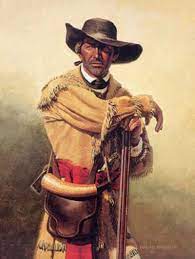
“Where are you headed?”  A different man walked up and asked as he eyed them suspiciously.  The man wore deerskin clothes and a bearskin coat.  It made him appear Native American, though he was clearly European.

“Pennsylvania,” Lincoln answered.  Katie and Lockhart began to pay attention.  Tony spoke up to get between Lincoln and the questioner.

“We heard General Howe and the British took Philadelphia.  General Washington is going to need all the help he can get.”

“I don’t imagine your black boy and his woman will be much help,” the man said, pointing at Decker and Nanette.  Nanette had to put her hand out to keep Decker from responding, though she could not prevent Decker’s growl.

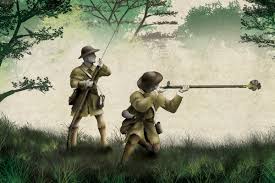
“None of your concern, William Talbert,” yet another man said as he entered the conversation.  He shooed off the suspicious one and turned to the travelers.  “Colonel Daniel Morgan,” the man, dressed in something like a uniform, introduced himself.  ‘My regiment of four hundred riflemen, are camped east of town.  We are always looking for new recruits.  I see you have some unfamiliar weapons.  Are they any good?   Are you any good with them?”

Lockhart looked at Katie and she nodded in a kind of permission, like she knew this colonel by name and knew he was one of the good guys.  “Decker,” Lockhart said, knowing Decker had some steam to vent.

“My pleasure,” Decker responded.  He lifted his rifle and aimed at the clay pots men had set up on a fence rail with a barn wall twenty paces behind it.  Decker sat on his horse so he could see and aim over the heads of the men.  He sat about a hundred yards further away than the line the men used for their rifle practice.  He considered getting out his scope, but it was not that far.  One shot, and a clay pot busted to pieces.  He shot three more times without reloading, and the three other pots on the rail broke.  Two got knocked off the rail.  The third cracked in half.

“Huzzah,” Colonel Morgan said in his surprise.  He turned to Decker and said, “That is a remarkable rifle.  May I see it?”

Decker shook his head.  “Not allowed,” he said, and looked at Lockhart to explain, or not.

“That rifle comes from about three hundred and thirty years in the future,” Lockhart said honestly enough.  “It is not our intention to change history.”

Katie spoke up.  “But we are headed to Valley Forge in support of General Washington if you are going that way.  There is safety in numbers and maybe we could share some thoughts with you privately on the road.”

“The future you say.” Colonel Morgan looked at Lockhart and took a minute to look at the others as a new uniformed man jogged up to join the group.  The new man looked carefully at the travelers before he spoke.

“Your rifle demonstration was most impressive.  May I see the instrument?”

“Not allowed,” Colonel Morgan said as he introduced his subordinate.  “Captain Price.  General Washington sent him and his men to fetch us from the Northern Department after Burgoyne surrendered.  George, I need you to move a few of your tents to make room beside the headquarters tent.  These people have valuable information, and I don’t intend to let them far from my sight.”

“Colonel?”

“An order.  Run.”  Colonel Morgan turned to the travelers who dismounted to walk their horses.  He waited until Captain Price was out of earshot.  “The future you say,” he repeated.

“You seem easily convinced after one simple rifle demonstration,” Lockhart said, some old police suspicion creeping into his voice.

Colonel Morgan nodded and confessed.  “Before I took the rifle company north to join Gates, I had a long talk with Missus Lancaster, General Washington himself sitting right there, listening to it all, not blinking an eye at a word she said.  She said she had friends from the future that might show up in time for what she called the Battle of Saratoga.  She did not explain what she meant by that, but she said lately you have been showing up at critical points in history.  I understand basically what she meant by Saratoga now, and how important to the war effort the British surrender is.  But now I wonder why you are here… now.”

“Michelle Marie Lancaster,” Lincoln interrupted.  “The Kairos in this day.  Her husband is gone.  A Shawnee raid in the western territories out by Fort Duquesne, that’s Pittsburg.  Just before the start of the Revolution.  Sorry.”  Lincoln honestly tried not to say too much.

“She is a beauty, and French besides,” Colonel Morgan said with a smile spreading across his face.  “I imagine she can have any man she wants.”  He coughed and looked serious again.  “She did say to look for you, and described you a bit, just in case.  And you are from the future?  She said the dark man was a colonel?”

“Lieutenant colonel, sir,” Decker said.  “And it is African American.”

“So she said,” Colonel Morgan answered.  “She did not explain that either, though it was a designation I never heard of.”

Katie butted in. “Like Polish American or German American.  Like Asian American or Native American.”

“So you say.  I would guess as many as one out of twenty, maybe one out of ten men in Washington’s command are African American.  Some are free men.  Some are slaves fighting for their freedom.” Colonel Morgan shrugged. “I understand the darkies, being men, wanting to fight, especially if they are fighting for their freedom.  What I don’t understand is how a woman becomes a major, and marine besides.”

“We work with the navy,” Katie said.

“I know what a marine is,” Colonel Morgan said.  “I know some ship captains who believe it is bad luck just having a woman on board.”  He paused before he said, “This way.”  He began to walk, and the travelers followed.

“We learned a few things in the future,” Katie said.  “Times change.”

“They must,” Colonel Morgan agreed.  “Don’t get me wrong.  Though I only spoke with her a couple of times, I don’t imagine there is anything Missus Lancaster could not do if she set her mind to it.”

“You would be surprised at some of the things she has done,” Lockhart said.

“I am sure I would,” Colonel Morgan agreed, and slowed as they came to the place where the road left the town.  “I don’t suppose you might tell me how this war turns out.  Missus Lancaster appears to be working hard for the patriot cause, so maybe that says we get something out of it.”

“Can’t tell,” Katie said.

“Dare not tell,” Lockhart echoed.

Colonel Morgan nodded again.  “She said I was not supposed to ask, but I thought it was worth a try.”  They came to a stop at the edge of a camp where three men were taking down a tent to move it.  Some tents were in among the trees.  Most of the tents were spread across a field, no doubt a farm field in winter.

“This is more than enough room,” Tony said as he brought Ghost to the front and people got their tents to set up the camp.

Colonel Morgan had to think a minute before he spoke.  “We travel roughly twenty-five miles a day.  We might make thirty on our own, but sometimes we hardly do twenty because of the wagons and the women.  I suppose your women can travel with the wagons…”

“We need to stick together,” Elder Stow interrupted.

“We carry our own tents and necessities,” Tony added.

“But we can maybe share a cooking fire in the wilderness.”  Katie suggested., “Along with the stories and things that we are allowed to tell you, if you want.”

  Colonel Morgan agreed, and on his own he decided it would be best to limit contact between these people and his riflemen.  He watched Sukki put her hand over the fire that had been allowed to dwindle while the men moved their tents. The fire sprang up almost too much and too fast, but Sukki managed a couple of logs before the whole fire became ash. He watched Nanette toss a cloth ball at the ground and say the word “tent.”  The cloth ball expanded and shaped itself into a tent for two, and Colonel Morgan went into his own tent thinking, Yes.  Limit contact.