Avalon 6.11 Shipwreck, part 4 of 6

Petracles took the travelers straight to the king, though they had to wait a few minutes to see him.  The king had to confer with his generals first. When he finally came from the tent to meet them, he paused to watch his generals scurry off to their assignments. The generals all but bowed, though bowing to superiors was not a natural Greek trait.  Pyrrhus looked like a hardened general himself, more than a king. He had an aura of a man that had advisors, but rarely listened to them.

“So, these are the merchants?  Did you save any of your wares?  I’m sorry for your losses.”  Pyrrhus made a lot of assumptions in his words.

Lockhart answered straight, and Pyrrhus paused at having to look up at the big man.  “We are travelers, not merchants, and thanks to the intervention of the gods, we all survived.”

“Travelers?”  Pyrrhus frowned, but he had something in mind.  “And you suffered no losses?”

“We lost two horses,” Katie said, and watched Pyrrhus’ face turn sour.

“Over here,” one of the young soldiers waved to the travelers.  “We found your horses.”

Pyrrhus looked mad, but paused to watch.

“Honey,” Boston yelled, and ran faster than humanly possible—faster than the horse ran to her.  She hugged her horse and the horse responded.

Lockhart merely called.  “Dog.”

The horse broke free of the soldier holding it and trotted up, exactly like a faithful dog.  It might have licked Lockhart, but Katie grabbed and kissed Dog’s nose.  “Where did you find them?” she asked.

“Porus found them.”  Pyrrhus waved at the young soldier who spoke.

“They wandered right up to the camp. I figured they came to shore and came inland to escape the storm.”  He smiled for the group.

Pyrrhus frowned, but admitted the truth. “Obviously, your horses.  I might buy them.  Your horses are bigger than my own, and they seem steady and strong.  I could get some good stock out of those horses.”

“Sorry,” Lockhart said.  “They are a gift from the gods for our journey.”

“Hera’s Butt,” Pyrrhus swore.  “Why does everyone credit or blame the gods for everything?  We have to make our own way in this world, and damn hard it is, too.  But we win or lose by our own hand, not because of some mystical gods.”

“I beg your pardon,” Galatea spoke nice and loud and stepped forward.  Boston, Sukki and Millie all wanted to say something, but decided it would be safer not to get in her way.  “I’ll have you know these travelers are friends with all of the gods.”

“Not all,” Lincoln mumbled, and Galatea heard, and nodded.

“Well, most of them, anyway.  They are my friends, and they are honest and good people.  I’ve been following their travels for nearly four-thousand years, and maybe the gods get too much credit and too much blame for life, but that doesn’t mean they just sit around doing nothing.”  Galatea snapped her fingers in Pyrrhus’ face and floated up three feet in the air.  Her legs got replaced by her mermaid tail. “Now I am hot and bothered.  I need a swim.  I need to get my tail wet.  Good-bye.  See you later, Boston.”  She snapped her finger again and disappeared, leaving a splash of sea water in her place.

“See ya later,” Boston shouted.
“I guessed, you know,” Petracles said. “No mortal woman could be that beautiful.”

“Careful,” Alexis said.  “Sukki mentioned that Galatea thought you were cute.”

“That could be really good,” Petracles said, but as he thought about it, he added, “And really dangerous.”

“Pyrrhus.”  A woman in the distance shouted as she came up with several men. “Did you forget we had an appointment this morning?”

“What?  No.” Pyrrhus said.  “I’ve been busy.  We had a storm, in case you failed to notice.  There was a shipwreck.”

The woman got close and opened her arms. She shouted, “Boston.”  Boston raced into the hug, again, faster than humanly possible.

“The red-head gets singled out a lot,” Petracles noted.

“She is an elf,” Lincoln said, and left it at that.

“So…” the woman stepped up, nodding to Lincoln who named her as Umma.  “What did you have to offer?” she asked Pyrrhus.

Pyrrhus looked around at his generals, her generals, the travelers and their horses.  He closed his eyes, raised his head and hands, shook his hands and said a very loud, “No,” like he tried to make it all go away.

Umma took the moment to speak to the side.  “Lockhart. As usual, good or bad timing, depending. I don’t know where the witch is.”

“No, no,” Pyrrhus yelled.

Umma turned to the young soldier, Porus. “Hello son.  Thank you for saving the horses.  Your mother loves you.”

“Mother…” Porus objected at being singled out.  He walked behind the tent and no doubt disappeared.

“Proteus,” Katie whispered in Lockhart’s ear.

“Yes, thanks,” Lockhart whispered to the wind.

“No,” Pyrrhus seemed to get hold of himself, and he turned on Umma.  “You need to open the gate and let me come in.”

“Not by the hair on my chinny-chin-chin,” Umma responded.

Pyrrhus’ face turned deadpan.  “You are a woman.  You don’t have hair on your chin.”

“That can be worked out,” she responded.

“Diogenes?” Millie whispered, not really having had a chance to talk to the young man.

“No,” Evan told her.  “Alexander made his soldiers stay clean shaven. Now, having met them, I think it is because Alexander could not grow a good beard.”

Millie nodded, while Umma spoke, sharply. “I thought you said you had something to offer to end the siege.”

“I tried negotiating with your people, but you are all as stupid and stubborn as the Greeks; but the Greeks want Carthage gone.  So, once again, I am stuck choosing between bad and worse.  I should just break your walls and crush your city.”
Umma nodded, and spoke sweetly. “You have had several victories since coming to Italy, and lost most of your men, and your best men.  I figure one more such victory and you won’t have any army left.”

“Not funny.”

“So then, offer something realistic so we can make peace.”

Pyrrhus paused to look down on the woman, remembering how he felt when he had to look up at Lockhart.  “I don’t like negotiating with a stupid and stubborn woman.”

“I beg your pardon,” Umma said, sounding very much like Galatea.  “My family is keeping the city fed and happy.  My ships, my food, my city.  I’m what you get.  Besides, the city elders decided if you get really stupid, my life is expendable.  I told them even you are not that stupid.”

“So, what good is talking to you? Your city elders will make the decision.”

“My city, remember?  They do what they are told.  Besides, I was not about to let you talk directly to them.  They would negotiate away the whole city and get nothing in return.  City idiots, I call them.”

“She does call them that,” one of the generals with Umma sat beside the travelers who had already taken seats to watch the fireworks show.  The older general sat beside him, and two of Pyrrhus’ generals sat on the other side.

Pyrrhus and Umma spent the morning yelling at each other, until Umma held up her hand and said, “Lunch break.”

Pyrrhus watched the sailors stack wood, some of it still wet, in the place set aside for a fire.  He stared when Boston pulled out her wand and started the fire with a little flamethrower action.  Two soldiers cooked some onions and leeks, while others brought over a whole pig that had been cooking all morning.  The soldiers brought some fruit, and it made a very fine meal, and the conversation around the fire was both cordial and warm.  Though, mostly that was because Pyrrhus spent most of his time in his tent planning for the afternoon argument.

Pyrrhus started the conversation with, “You are the most formidable enemy I have ever faced.  You give no ground, and keep trying to sneak up on my flanks where you think I am unprepared.”

“Nice lunch,” Umma said.  “Did you get enough to eat?”

The afternoon ended with Pyrrhus yelling. “I will get my own ships and block your port and sink your ships.”

Umma said something like the Carthaginian version of “Nyah-nyah,” and added the fingers wiggling on her nose and in her ears, and the butt wiggle besides.  She marched her generals back to the city, and Pyrrhus threw things for a while.  Fortunately, Porus came back by then and moved the travelers out on to the open field where the horses contentedly grazed.  They set their camp near some soldiers, and did not have to deal with Pyrrhus until the morning.

###

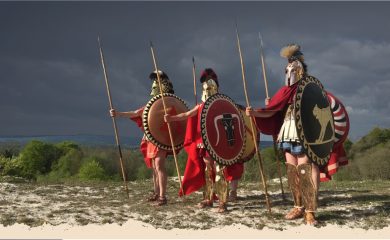
When the morning came, Petracles spoke for his king. “Pyrrhus wants you off his land as soon as possible.  He is lending you enough horses so you can all ride, to speed the journey.  He will get his horses back when you take ship in Messana.”

“Boston,” Lockhart yelled, though she was not far away.

“The time gate is around Mount Etna. Lincoln and I checked it in the database,” Boston shouted back, just to be even.

“That is closer than Messana,” Katie said.  “We can get out of the king’s land sooner than expected.”

“Somehow, I believe you,” Petracles said, as Galatea showed up.

“Do I get a horse?”

“Please,” Petracles said without blinking.  “Take mine.”

Galatea smiled and stepped right up to the man.  “We could ride together,” she said, and placed on gentle hand against the man’s cheek while she stood within a hair’s breadth of him.

Petracles swallowed.  “You know how to ride?”

“Only on a seahorse, or in a chariot, but it can’t be hard.”

Petracles nodded.  “Can you hold on?”

“I would love to,” she said, and Petracles swallowed again.  Of them all, maybe Decker laughed the loudest.

Galatea turned to the women in the group. “When my sister rides in her husband’s chariot, she always scrunches down in the back and covers her eyes.  I hope I don’t have to cover my eyes.”

“Mostly road between here and Etna,” Petracles said, as he reached down to help Galatea up behind him.  “We might make it in two days, maybe morning of the third.”  He spoke over his shoulder. “Sister?”

“Trite,” Galatea said.  “I do have ninety-nine sisters.”

“Trite?”

“Amphitrite,” Lockhart said.  “Her husband, Poseidon.  I guess Neptune in this part of the world.”

Petracles laughed, nervously. Galatea did not help when she held him around the middle, snuggled up tight against his back, sighed, and put her head gently against the back of his shoulder.

Avalon 6.11 Shipwreck, part 1 of 6

Sorry.

I do try to keep my reading posts advertising and spam free, but we are coming to the end of FREE book days.  Now, through May 31, Avalon, the Prequel and Seasons One Two and Three are all FREE, and, of course, the Pilot Episode is free everyday.  This is something Smashwords set up during the stay-at-home time, so help yourself.  You can get all of these books for absolutely zero money, hopefully read and enjoy them, (and maybe leave a good review).  Thanks.  Happy Reading.

https://www.smashwords.com/profile/view/MGKizzia

************************

After 323 BC, Sicily. Kairos lifetime 83: Umma of Carthage.

Recording …

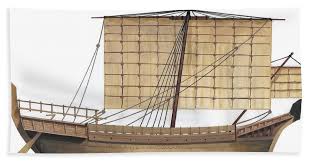
Despite their best hopes, the time gate appeared to be in Thermaic gulf, directly out from Mount Olympus. Harpalus found them a ship with some of the coins that Phillip paid them for saving his life.  He got them a crew as well, but they told him the crew could not go where they were going.  It would be a death sentence.  The crew, however, could teach them well enough so they might actually make it to the time gate without sinking.  They stayed a week to learn all they could.

Decker already knew something about sailing.  No one asked where he picked up the skill, but being a marine, no one felt surprised.

Lincoln and Alexis knew the basics. They had a small sailboat, a twenty-five-footer that they used to take out on the Potomac and sometimes along the shores of Chesapeake Bay.  Of course, it had a small engine, but they sailed enough to know some.  Lincoln paid close attention to the instructions offered by the sailors.  Alexis spent the week trying to get in touch with Fair Wind.

“I know we are not Ibelam, but it would save me a great deal of effort if you might be willing to help.”

Evan traveled on the PS Cumberland Gap when his family moved from Boston to Baltimore as a child.  That was about 1888.  He called it the most exciting and wonderful trip in his life.  Evan confessed they moved mostly by the paddles, but at one point he watched them set the sails, and he asked lots of questions.

Millie said the big steamship they took to Rome didn’t even have any sails as an option.  She worried if the engine broke down, they would be dead in the water.

Katie said, despite being a marine, she had little chance to go sailing behind her desk at the Pentagon.

Lockhart, who knew nothing about sailing, asked what the sailors did in bad weather.

“Well,” an old sailor said.  “If it rains, we get wet.  If there is thunder and lighting, we ask Zeus to please not strike the boat.  I once saw a lightning strike that split the mast right down the middle.  It took us a week to limp into the nearest port, half-starved and severely dehydrated because our water stores all got contaminated…”

Another sailor interrupted the story. “When the waves get big, we use the rope to tie ourselves to the boat so we don’t fall overboard.  The steersman lashes himself to the paddle.  Then we pray, mostly to Poseidon.  Personally, I ask his wife, Amphitrite, to calm her husband, if you don’t mind.”

“She could do that,” Lockhart said, like he knew.

“Unless he is upset because she is mad at him for some reason,” Katie countered.

Lockhart nodded.  “They have been known to fight.  But, usually she is off somewhere else and very busy.”

“Usually,” Katie agreed

“Diogenes,” Harpalus mumbled, before he looked up and waved off the questions.  “Don’t ask.  It is a long story.”

By the time they got the horses and wagon loaded, and felt ready, though scared to risk the wind and waves, Katie and Lockhart went to say thank you and good-bye to Harpalus.  They found him talking to a middle-aged man who limped, just like Harpalus.  The man said hello, and seemed to know them.  It only took a second.  Lockhart figure it was one of the gods, even if he did not know which one.  Katie knew.

“Vulcan,” she said as she shook his hand. She used his Roman name, thinking Harpalus would not know.

“Good name choice,” Vulcan affirmed, and he proceeded to say what he wanted, but also used the Roman names instead of the Greek ones for the various gods.  “I talked to Salacia.  I am sorry to say, Fair Wind remains in the Indian Ocean, but Salacia talked to Neptune, and he has promised to provide clear sailing out of this time zone.  No guarantees on what you might run into on the other side.  I have taken the liberty of giving your ship a hundred-year stain, so it will age a bit, but still be a solid, sea-worthy craft on the other side of the time gate.”

“You talked to Salacia?” Lockhart grabbed at the one thing he understood.  He knew Salacia was the Roman name for Amphitrite, the queen goddess of the sea. He met the Kairos, Amphitrite.  He grasped that the god talked to the Kairos, Diogenes.

“Concerning my ex-wife, Venus,” Vulcan continued.  “You know, we were married a long, long… Long time.  I was not happy with her on and off affair with Mars, but then I had a rather prolonged relationship with Bastet, the Egyptian, and even had a daughter and a son.  I really don’t mind the young man.  She can even marry Diogenes if she wants, since after all, she will be marrying my daughter, Danna.”

Lockhart looked confused again.  Katie said she would explain it later.

Poor Harpalus also looked confused that whole time, until the end when Vulcan said his ex-wife might marry Diogenes. His eyes got big when he realized his fellow cripple was the god Hephaestus.

“By the way,” Vulcan said, and held out a coin filled saddlebag.  “Here are the remains of the coins Phillip gave you.  Young Harpalus has what you folks call sticky fingers.  They may get him in trouble one day.  I might have let it pass, but the bag doesn’t belong here. It belongs in the future.”

“Thank you,” Katie said, as she accepted the bag.

Vulcan gave Harpalus a hard, but kind look before he spoke again.  “If you ever get to Mount Etna, look me up,” he said, and vanished.

Harpalus grinned, sheepishly, as he handed over Elder Stow’s sonic device.  The travelers laughed about it as they boarded the ship and headed out to the sea, Alexis only magically helping at first with the wind.

###

The day proved wonderful, as promised, with a perfect wind and a calm sea.  Lockhart and Decker took turns on the tiller, and Katie stood with them in the stern, checking her prototype amulet to make sure they stayed on course for the time gate.  Boston stayed in the bow where she could feel a bit of the sea spray as they plied through the water.  She only checked her amulet once in a while.

Sukki did not feel comfortable getting that close to the edge.  She stayed amid ship with Elder Stow, who spent most of the day double-checking his equipment and grousing about how his sonic device got stolen without him knowing it. Lincoln and Alexis were there most of the day, seeing to the horses, and they laughed at some of the thoughts Elder Stow expressed.  They assured Sukki, at least, that Harpalus was not an irredeemable son of perdition.

Evan and Millie stayed with Wallace, to comfort him in his distress.  Wallace was still upset that Nanette did not wait for him to find her and save her. He said, when he caught up with that cowboy, he would kill him.  He would take a gun and shoot that cowboy.  Nanette was innocent, like a sweet child, and clearly that cowboy turned her head.  She needed Wallace to save her and protect her.  No amount of sense or reason could get through to Wallace, so mostly Evan and Millie just sat with him, and listened.  Millie hugged the man now and then.

Late that afternoon, everyone gathered by the tiller so Lincoln could share his insights from the database. Only Boston stayed in the bow.  She said she could hear well enough without having to vacate her spot.

“We need to do this while we can,” Lincoln said.  “Last time we waited until we found Diogenes, and after that, there was never a convenient time when others were not around, listening in.”

“So, Umma?”

“Yes,” Lincoln said, and he paused to get his bearings.  “She has a bunch of names, and a very big family.  A merchant family that owns a bunch of ships in Carthage.  She is Carthaginian; Phoenician rooted.  A different jurisdiction of gods from the Greco-Roman jurisdiction.”

“Does that matter?” Millie asked.

Lincoln shook his head.

“Persia tried to invade Greece a few times,” Katie tried to piece it together, and maybe explain.  “I got the feeling the gods sort of backed off by then.”

“The Persians were Zoroastrians. They did not really worship the gods, per se, or they had a very different take on the gods,” Evan inserted.

“The Persian Empire held land in several jurisdictions,” Lincoln said, and looked at the database.  “Anatolia, the Levant, Egypt, Mesopotamia, Persia, and central Asia.  In the old days, that would not have been permitted.”

“Right,” Katie continued.  “The Phoenicians settled North Africa, at Carthage. Trojans from Anatolia settled among the Etruscans.  The Gauls, that is, the Celtic people invaded and sacked Rome.  Maybe the gods figured the human race started growing up, or at least advanced to the point where hard and fast jurisdictional lines were no longer realistic.”

“It says here…” Lincoln spoke, and took back the conversation.  “Alexander received a special dispensation, of a sort.  The geis of Alexander said whatever territory he could take, he could keep.  We know he took the near east, the middle east, a big chunk of central Asia, and Egypt. The Persians also took that, more or less, but none of that counted the Greco-Roman land of Alexander.  He also invaded and took a chunk of India, so he captured land in several jurisdictions, and the gods did not prevent him.”

“So, how is that important to Umma?” Lockhart asked, to get back to the subject at hand.

“Pyrrhus of Epirus invaded southern Italy… Okay, Greco-Roman and Greco-Roman, but by 277, he was facing the Carthaginians in Sicily.  Carthage is North African, or Phoenician.  Anyway, Pyrrhus opens the door for the Punic wars, a cross-jurisdictional struggle, and Umma gets in the middle of the whole thing, both with Pyrrhus and with Rome.”

People stared at Lincoln for a minute, before Elder Stow said, “So?”

Lincoln waved his hand, like they should all understand.  “So…,” he said.  “Wherever we land, there is likely fighting going on, so we will have to be careful going forward not to get caught up in it.”

People nodded a little, until Decker turned the conversation with a question. “So how old is Umma?”

Lincoln did some quick math in his head based on the time Millie and Evan were there.  “She should be forty-seven, or maybe forty-eight.”

“Forty-eight is like sixty in twenty-first century terms,” Decker said.  “I doubt she is swinging a sword.”

“We should be able to avoid the Greeks, or the Romans and Carthaginians well enough, between Boston’s natural elf radar and Elder Stow’s scanner device,” Katie said.  “Whatever is going on, we should be able to skirt around it.”

“Better to keep our eyes open for the witch,” Lockhart said.

People nodded at that when Boston shouted back from the front.  “Here we go.” She had her amulet in her hand. They snuck up on the time gate without realizing it.  The whole ship began to creak and moan.  The ship shook like the wood might splinter and fall apart any minute as the ship aged more than sixty years in a Nano-second.