Avalon 9.1 Johanne, part 6 of 6

When the six hundred- and fifty-foot soldiers of Wendomme were ready, the travelers and Jobarie’s fifty started out for the farm.  The charge came, and Elder Stow and Sukki, both invisible and flying at tree-top level, gave the enemy something to think about and maybe softened them up.  They burned the ground, the trees out front, and no doubt some of the archers in those trees all along the line.  Those men were already retreating when Lionel’s pikemen arrived.

Sukki flew back to the travelers who quickly got out of range of the melee, but Elder Stow had another idea.  As long as he was invisible, he thought to get out his sonic device.  The squeal sent the enemy horses into a panic.  Many ran off, but even the ones that did not run were too panic stricken to be ridden right away.  The enemy had no way of making that quick getaway, and with Jules and his two hundred coming up from their rear, they would do well to surrender.

When Elder Stow rejoined the travelers, they had just made it to the farmhouse.  The house was empty, but the archers fought with a dozen men out by the barn.  Those men fought with a fanaticism rarely seen on a medieval battlefield.  They took about twice their number of archers before they died, even with Decker, Katie, Lockhart, Tony, and Lincoln all taking shots when they had a clear target.

“Check the barn,” Lionel yelled, upset with the loss of his good men.

“Wait,” Lockhart also yelled, and Lionel amended his command to “Wait.”

Decker, Katie, Lockhart, and Tony went to the barn door.  Lockhart and Tony each grabbed a handle to the door and Decker and Katie raised their rifles to the ready.  Lockhart nodded as a signal, and he and Tony swung the double door wide open.  They saw people.  Two men had their arms up, showing no hostile intent.  One big red-headed man looked unsteady on his feet, but he shouted.

“Lockhart.”

Decker and Katie lowered their rifles.
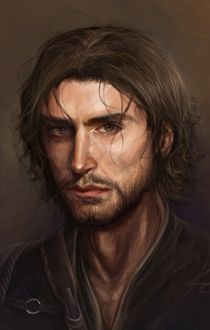
One soldier sat on a horse, and it took a moment for the travelers to realize it was the girl, Joan.  She handed her banner to the big red-head and said, “I won’t be needing this now.”  She walked her horse forward and the travelers got out of the way.  She stopped just outside the doors.  “To whom have I the honor of speaking?”

With the girl’s voice identifying the rider, Jobarie rushed up and said “The Masters,” and they would have their way with her.  He shouted something about rape and death.  He reached up and dragged her off her horse, but the big red-headed man was right there.  He whipped out his sword, fast as a gunslinger, ready to remove Jobarie’s head from his shoulders, but Decker pulled the trigger.  Jobarie grabbed his chest and collapsed.

“Quentin?” Lincoln asked.

“Hold,” Lionel shouted at the same time to keep Jobarie’s men from acting as any man would.  “Stay where you are and put down your weapons.”  He saw the travelers turned their guns to the archers and he knew the archers would not stand a chance.  He spoke to the travelers.  “A servant of the Masters?”

“Yes, Lincoln,” Quentin said.  “And yes.  I smelled the masters even if he did not open his mouth.  There is a deeper, spiritual struggle going on here than just your French and the English all fighting each other over a perishable crown.”

He let his hand down to help Joan up.  Joan brushed herself off but refused to look at the now dead body.  She turned to Quentin as he sheathed his sword.  Quentin also whispered, “Ouch by the way,” and that made Joan smile between her tears.

“The man may have had a wife or children,” Quentin spoke to Lionel, the only one still on horseback.  “They should be helped but watched.  They are probably clean.”

“I will compensate the man’s family,” Lionel said.

“I return this to you,” Joan interrupted, her eyes only on Quentin.  “Will you return it to Saint Catherine’s?”  She removed the sword from her side, thus disarming herself.  She handed it to Quentin.

“I will see it gets to where it belongs,” Quentin said, and the sword turned ghost-like before it disappeared.  Several of Jobarie’s archers saw and took a step back, uncertain now what to think.

Joan turned away so Quentin would not see her tears. She remounted her horse and faced the man still up on horseback.  “To whom do I have the honor of addressing?” she repeated.

“I am Lord Lionel of Wendomme,” he said, and expressed genuine surprise.  “Why, you are just a child.”

Jules trotted up with four of his men in his trail, even as the rest of the travelers, having dismounted, brought their horses and mule toward the barn.  Quentin took another step forward and almost collapsed.  Katie quickly grabbed him to help hold him up as he spoke. “She is a maiden, and a child, pure, and she better remain so under your hand.  If any defile her, there is nowhere on God’s green earth where they can escape my wrath.”

“And who might you be?” Jules asked.
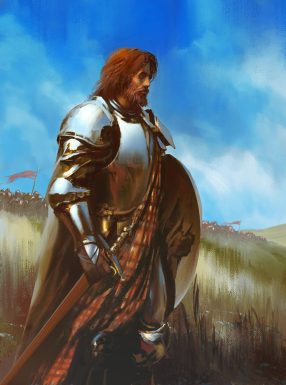
“Quentin the Scott.  Of late, the Highlander from Lord Bedford’s inner circle.  Your Philip calls me the dog that won’t let go once I’ve got my jaws on my prey.  So, you better hear me.”

“Do not be afraid,” Lionel said to Joan.  And to Quentin he added, “I pledge on my honor I will do all that I can to keep her safe for as long as I can.”

“And I,” Jules added before he turned to Lord Lionel.  “The men are coming up with prisoners.”

“Lockhart?” Quentin asked without detailing his question.

“These last few days we traveled together.  He seems a fair and honest man who will keep his word.  He knows who we are, and who you are, so he knows what you speak is true.”

Quentin nodded and sniffed.  Joan returned the nod and had a sniff of her own before she spoke to Lionel.  She lowered her eyes appearing most humble.  “As the Lord wills, I give my life into your hands, Lord Lionel of Wendomme.  I am your prisoner.”

“I accept your surrender and pledge myself and my men to your safety and security,” Lionel said, graciously, before he turned to Jules and the men with him.  “Let the archers stay here and turn any of the enemy they see.  Let the two hundred escort us and the prisoners to Lord Jean’s camp.  We need to deliver the prisoners to him.”  He turned back to Joan.  “Might you ride with me?  I have so many questions.”

The travelers chuckled, as Joan moved up to ride beside the man.  Jules and his few fell in behind, like an honor guard.  The remains of Jobarie’s men turned their backs on Quentin and the travelers.  It was an uneasy peace, the tension in the air felt thick, but the men saw what the travelers could do and had time to think about it, much as they might have liked Jobarie.

“Sukki,” Quentin said, as he opened his arms for a hug.  Sukki came, tentatively, but hugged Quentin with a good will.  Quentin said, “The hug is for you with as much love as my old heart has left to me.  But you must also give my hug to your sister, Boston, when you see her again.”

“I will,” Sukki said, a big smile etched across her face.

“Good, now come,” he told the travelers.  “I will introduce you to Bertrand, de Metz, and Henrietta, the cow, then I think it wise for us to get out of here.”

###

Three days later, when the travelers were well on their way to Saint-Catherine-de Fierbois, the English and Burgundians drew their troops up on one side of a wide field.  They figured with the capture of the Maid, the French would be demoralized, and the city would fall.  The French, for their part, were not exactly happy, and some did say the war was lost.  But Quentin would not have it.  He gathered the Scotsmen from among the French troops and put them in the center when the French lined up to face their opponents.

“The question is, who will charge first and expend all their energy crossing this wide field?”  He knew the English commanders would wait in the hope that the French would tire of waiting; but Quentin had another idea.  He had Joan’s banner, and with de Metz and Bertrand, he walked out, the three of them, all eyes watching.
Quentin stopped at what he judged to be the outside limit of where the Welsh Longbowmen could reach.  He planted Joan’s banner in the soft mud.  Then he took two steps out in front of the banner.  De Metz and Bertrand knelt to each side, like men in prayer, one step back from where Quentin planted the banner.  Quentin drew his sword and planted the point in front of himself. The message was clear.  He was taunting the English and Burgundians to come and take it.

Everyone watched.  Several attempts were made to shoot the men around the banner, but Quentin judge the distance right.  The arrows, even from the vaunted longbows, mostly fell short.  One appeared to strike Quentin in the chest, but the ancient armor of the Kairos, made under the watchful eye of the god Hephaestus himself, repelled the projectile.  It did not penetrate, and while Quentin whispered “Ouch,” to his companions. he remained unmoved.

Finally, three knights and a dozen footmen came out from the English line.  They had to know who he was, and they had to be steaming mad.  Quentin had no doubt their orders were to kill him and get that banner.   He heard noise begin in the French line behind him.  The closer the enemy came, the more noise he heard.  De Metz and Bertrand stood, picked up their shields, drew their swords, and prepared to fight and defend the banner.  Quentin did not move.

When the enemy arrived, the sound from the French line sounded fever pitch.  Quentin cut down three of the pikemen in quick succession.  De Metz and Bertrand both faced English knights, but the third knight thought he was smart.  He grabbed Joan’s banner and began to wave it like a conquering hero, no doubt for his own side, but the effect cannot be overstated.  The entire French line charged screaming death to the English.  This was not a typical inspired group of soldiers.  This was wrath of God stuff, and the English and Burgundians knew it.

Quentin killed the foolish knight and grabbed the banner before it touched the ground.  He risked getting stabbed in the back to plant the banner again in the mud.  Fortunately, the Englishmen who attacked the banner ran away as fast as they could.  The French went right around the banner, screaming madmen.  The English and Burgundian lines almost immediately began to disintegrate.  Quentin knew some French soldiers would continue to follow the enemy well into the night.  It would take that long for the tempers to cool.

“That was quite a risk,” Bertrand said after the screamers all passed them by.

“It was,” Quentin admitted, but the Siege of Compiegne was finished as of that day.

************************

MONDAY Episode 9.2 The Called

Castile is divided and Aragon and Portugal are fighting to decide who will rule the country, but of course, the Kairos Catherine has a bigger problem being broadcast into space. Until then, Happy Reading.
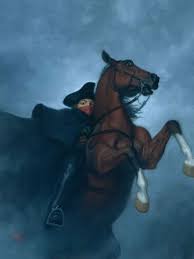
*

Avalon 9.1 Johanne, part 5 of 6

De Metz and Bertrand carried Quentin, arms around his shoulders and waist.  He hopped on one leg and then the other.  Both hurt, though he did not imagine either was broken.  They brought him into the barn where a cow bellowed at them.  They ignored the cow and found a place where Quentin could lie down, making a kind of cot out of a bin, using plenty of straw for bedding.

Joan came in followed by three of her personal guard—men who hovered over her to protect her and would not leave her alone no matter how much they were threatened.  The cow bellowed again, and Joan responded.  “Which of you knows how to milk a cow or must I do it myself?” she asked.  One of the men volunteered, so she said “Good,” followed rapidly by, “You stupid idiot,” as she turned on Quentin.  “Now you have finally given yourself away.  Some of my men know, including Bertrand and de Metz, but now the whole English army knows.  You will never be able to go back to England, to your wife and family.  What possessed you to do something so foolish?”

“It was a lovely young girl I once found standing in a meadow.  Angel said I had to watch over her and take care of her until her time arrived.”  Joan’s face contorted and she rushed forward to kneel by his makeshift cot.  She threw her face down to cry on his chest.  “There.  There,” Quentin said, patting her gently on her back.  “I’m an old man, the grandfather you never had, I think.  And you are the most courageous young woman in the history of ever.”

Joan lifted her head.  “You are not allowed to die before me,” she ordered in a tone of voice as strong as she could muster.

“Not dying,” he said and lifted both hands like he surrendered.  “Just banged up here, and here, and there.”  He ended by pointing at his chest and Joan quicky lifted her arms and looked at him.  The two smiled for each other.

“I love you so much,” Joan said.

“And I love you, more than you can know.  But you have no business worrying about one old soldier.  You have ordered the withdrawl, and there are many soldiers that need to see you.  Show them you are not afraid, even if you are.”

“Fear is a foolish master.  Trust God instead and leave your life in his hands, as he will.”  Joan and Quentin said the phrase together as Joan stood up.  She turned her face away as she heard from the cow.  “Gentle.  Obviously, the cow has not been milked in a couple of days.  You must be gentle.”

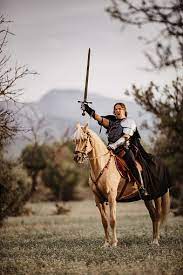
“Yes Johanne,” the man said, and Joan nodded to the man, to De Metz and Bertrand, and last of all to Quentin, and she told him, “I will hold my banner high.  The men falling back will see me, that I am not afraid of sixty-thousand Burgundians.  They will see me and take courage.”  She took her banner from the man who held it and stepped outside to where another man held her horse.  She mounted and walked her horse to the road, followed by a dozen men.  Every soldier who made it to the road would see her as they passed by.

Quentin mumbled.  “Six thousand, not sixty thousand.”  He spoke up to Bertrand.  “I have to teach that girl her numbers.”  He shouted.  “De Metz stay here.  Now, that is an order.”

“But…”

“She is in no danger,” Quentin said.  “She is just showing herself to the troops, that is all.  When it starts to get dark, she will be back and we will leave this place before the Burgundians get here,” and he thought, I hope.  “Meanwhile, leave her alone.  Bertrand, why don’t you fetch the horses.  They can join Henrietta, our cow in enjoying the hay left scattered about.”

“Yes.  What do you think happened to the family?” de Metz asked as Bertrand went out to bring in their three horses.

“I think they got scared off when the English set up their outpost.  They probably count the farm as lost, but I can see the English never came here.”

“How so?”

Quentin smiled at the obviousness of the answer.  “The cow.  What army group would leave a prime bit of beef walking around untouched?”

“Oh, of course,” de Metz nodded and also smiled at the obvious answer.

“Lord,” the soldier with a bucket of milk looked at de Metz, Bertrand in the doorway, and finally at Quentin.  “What should I do with the milk?”

“Take it to the cook,” Quentin said without hesitation.  “He can boil the beef in it, or if he wants to get fancy, he can make a cream gravy, whatever he thinks best.  Just make sure Joan and the soldiers with her get some supper.”

The soldier looked at Bertrand, but Bertrand simply underlined Quentin’s place in the grand scheme of things.  “You hear what the lord said.  Just don’t spill it.”

De Metz shook his head.  “We could use a commander like you.”

“Bah,” Quentin said as he laid his head down and decided a good rest might be for the best.  “I’ve been ordering soldiers around since Agincourt.  Even Bedford jumps when I get riled, and my red hair gets the better of me.”

“You consider yourself like her grandfather?” Bertrand had to ask about the word Quentin used.

“Near enough,” he said.  “I’m fifty-six years old, a stonecutter by trade.  I cut my teeth building Westminster Cathedral.  Both Henry V and Charles VI said I was made of stone, unmovable.  As far as I know, that was the only thing those two sovereigns ever agreed on.”

“I bet you could tell some great stories,” de Metz said with a look at Bertrand who seemed to nod.

“You bet.  And I might even tell you one if you let me rest my eyes for a bit.  Bertrand, send a couple of men down the road to see if there is anything coming that we should know about.  Then come back here.  I need you both to be here when I wake up.”  He did not explain why he needed them, but at that point, they did not question the order.

###

Jules and his men took the front.  In fact, he brought thirty men to the front.  After the German roadblock, they were not inclined to take chances with their Liege Lord.  Lionel and the travelers still led the procession, and talked liberally, but hurried as best as they could.  Their little army skipped lunch.  Katie warned Lionel that tired and hungry soldiers did not fight as well, but Decker pointed out that the enemy was withdrawing from a battle and would likely be tired and hungry as well.

“And even if it is an orderly withdraw and not the result of a defeat, the common soldiers will feel like they have been defeated,” he said.  “Any pull back from an engagement can feel that way even if it is not true.  It is not good for their morale.”

About an hour before sundown, Elder Stow’s alarm went off.  He set the alarm on his scanner to give warning before they stumbled into another roadblock.  Jules stopped his men on hearing the sound, and he came back to the group.  Jobarie and his troop of foot soldiers and archers walked on the heels of the travelers since the roadblock.  He came jogging up to hear what was being planned.

Elder Stow had his holograph pulled up to show the area.  Decker said, “Here.  There is a dirt path the locals probably call a road.  It goes right to the farm and the big barn I saw from above.  The enemy appear to be concentrated on the Paris Road to block any army like ours from interfering with the withdraw.  They don’t imagine an approaching army would be interested in a farm set back from the road, but that appears to be the funnel all the escaping troops are going through.”

“So, the troops holding the road are about a thousand feet from the funnel,” Lockhart said.

“About eight hundred feet,” Katie said.  “And here?”

“Another farm road,” Elder Stow named it.

“It is just where we stopped,” Jules said.  “I was just looking at it when the alarm went off.”

Katie nodded.  “I recommend Jules take his horse soldiers down the farm road.  They can hurry and get back to the Paris Road behind the enemy.  By then, the foot soldiers should be here and ready to charge the front.  The enemy appears to have horses, but they are dismounted and in the trees.  The horses are probably there for a quick getaway, which they will not be able to do if our horsemen are coming up behind them.”

Lionel grinned.  “We will catch them napping.”

“Colonel?”  Katie turned to her superior officer.

“Basically good, Major,” Decker said.  “But I think we need to ride down the first road, here, and take the farm that is acting like a funnel.  That will keep any stragglers pulling back from the battle from stumbling into our position, or the horsemen we send around to the rear.”

“Decker?” Nanette asked whose side he was on to be helping the Burgundians so much.  But Decker shook his head and seemed to understand her concern.

“I am not on anybody’s side.  I’m just trying to minimize casualties if I can.  I’m not saying we ambush the retreating soldiers.  Just maybe encourage them to take a wide loop around to avoid running into the action and turn a skirmish into a real battle.”

“I’ll send the point men with you,” Jules said.

“No,” Lionel insisted.  “You need all your men for the encircling move.  I’ll take Jobarie and his archers.  They are the right ones to turn any retreating Armagnacs and keep them from interfering in your battle.”

“Are you going with us?” Katie asked.

“I wouldn’t miss it,” Lionel said with a genuine smile.

Avalon 9.1 Johanne, part 3 of 6

Lord Jean de Luxemburg greeted Lionel gruffly with the phrase, “You’re lucky.”  He explained.  “DuBary is due to arrive this afternoon with a thousand Flemish, so you are not the last one.”  Lionel said that was good to know, and he wanted to also know where Lord Jean wanted them in the marching order.  It was a practical question and would determine where his men would set their camp.

“Stick to the Paris Road.  I want you on the flank in case any of those Charles sympathizers in Champagne decide to come up and help the traitors at Compiegne.  If the Armagnac faction sends a force from the city or the fortresses around, I expect you to hold them long enough for the rest of us to reach the main Burgundian camp.”

“Do we have any reliable information about what we may be facing?” Lionel asked.  It seemed a natural question since his group would be exposed.

“We do not,” Lord Jean responded. “That is why as soon as DuBary arrives, I will be taking two hundred ahead up the road to Rouen to survey the area and look for weaknesses in Bedford’s and Philip’s lines that we may have to reinforce.  We may have to move up on sudden notice, so be prepared.”

“Lord.”  Lionel gave a slight bow.  “And in our rear?  I understand many towns from Troyes to Reims have come out for Charles.”

“Soissons has come out for Philip and the Burgundian cause.  They repulsed the advances of the Maid, so our immediate concern is your flank, not the rear.”

A bishop who stood quietly that whole time, interrupted.  “I believe Soissons is more afraid of retribution, being surrounded by English and Burgundian territory.  Who knows where their actual sympathies lie?”

Lord Jean grunted and suggested he might tell DuBary to guard the rear, just in case.  Katie, who stood beside Lockhart, a couple of steps behind Lionel, wondered why the bishop would sew distrust in the circumstances.  Soissons declared for the Burgundians.  Why suggest they might not be sincere, unless the bishop was secretly working for the French?  She listened as Lord Jean frowned and spoke.

“My guest is Pierre Cauchon, Bishop of Beauvais.  He just returned from England with the young Henry VI.  Henry is at Rouen where Bedford hopes to declare him King of England and France, in accord with the Treaty of Troyes.”  Lord Jean shook his head like he was not sure if that would help or hurt the cause against Charles.  He shrugged a bit.  He came across as a man who made his choice.  He allied with the English, and there was no turning back.

“Good to meet you,” the bishop said, and stared at Lockhart and Katie.  The rest of the travelers stayed with the captains and Lionel’s army on the road, but Katie, Lockhart, and Captain Jules accompanied Lionel to meet with Lord Jean.  Lionel got the message and introduced his companions.

“Robert and Katherine Lockhart.  They are German and Swedish and are with a group of Slavic pilgrims headed toward Paris.  They have two black Africans with them as well—good Christians, not Muslims, I assure you.  I found them at Wandomme and let them travel with my men.  They had no idea what they were walking into.  I thought it my Christian duty to bring them safely, at least as far as I was going.”

“Good to meet you,” Katie said.

“God morgen alle,” Lockhart said, having struggled to find the right way to say good morning in mostly German to properly confuse things.

“God?” Lord Jean asked.

“Sorry,” Lockhart said.  “Guten is German.  God is Swedish.  I sometimes mingle them the way my people back home speak.”

Lord Jean shrugged with his eyebrows and turned away to holler.  “Liebulf!”  He said more softly.  “My second. He will bring the main body of troops while I survey the area ahead.  Liebulf.”  He walked off yelling.

“Good to make your acquaintance.” Bishop Cauchon tried to smile and step up, but everyone saw something crooked in that smile.

“And you,” Lionel said.  “But right now, I need to set my camp for the night.  Perhaps we will catch up later.  Come friends.”  As they headed off, they all kept looking back, like they were waiting to be out of earshot.  Lionel spoke first.  “Something wrong about that Bishop.  Jules?”

The captain spoke softly.  “It is not my place to judge a cleric, but just to look at him, I felt something dark. Do you know what I mean, dark?”

“Creepy,” Lockhart explained it with his own word and looked at Katie.

Katie walked quietly for a moment while she sorted the feeling she got from the man.  “Masters,” she said at last.  “Or demons, but I am beginning to think they are the same thing.”

People quieted when they reached their army from Wendomme.  They got busy.  Lionel divided his horse soldiers into three groups.  He had three captains.  One group served as a rear guard.  One served behind the center of the strung-out line where they put the wagons that carried all their supplies.  Lionel did not want the wagon to form their own train where they might drag out behind for miles.  One served near the front, but behind a group of veteran foot soldiers.

Roughly half of Lionel’s foot soldiers were either veterans or members of various night watches that served a few of the larger villages and couple of towns in his area.  These were men who knew enough to stick together and keep up with the army.  He tried to sprinkle them throughout the train where they could encourage the young and untried men to keep up.  Some of the green ones might otherwise have been tempted to string out like men on a Sunday stroll, and get there eventually.

At the front, he had a company of his best veterans under a captain-sergeant Jobarie.  They set the pace for the whole army, and while they did not exactly march in well trained lines, they at least looked something like soldiers.  At the very front, of course, Lionel, Captain Jules, and a dozen of the best horse soldiers rode.  They served as the point guard and protected their Liege Lord.  Lionel insisted the travelers ride with him.  He did not expect they would run into any trouble, and in fact, he spoke otherwise.

“If the forces of Charles set a trap on the Paris Road, they will let the point guard pass them by and wait to spring their trap on the actual army.  It is the way it is done.  A trap is not very good if you surprise a dozen men and let the army escape, or at least be forewarned.”

“Good to know,” Lincoln said.  “You know, we could help with the wagons.”  He pointed back toward the center of the train, but people ignored his suggestion.

Once the people got shifted around so they camped where they needed to be for the morning, it was mid-afternoon, and fires were already being lit for the night.  Jobarie came up with a dozen more men who would supplement the horse soldiers in keeping the night watch.  One man even admitted it was what he would be doing back home.  Jobarie went back to stay with his men, and the dozen horse soldiers, on foot, escorted the cooks from the wagons to the front, so they could prepare a feast for Lord Lionel and his guests.

Naturally, that was when Bishop Cauchon showed up with a “Hello friends,” that put Katie’s nerves on edge.  Nanette took one look at the man and blanched.  Something about him, his personality or something, felt wrong.  Lionel immediately came roaring up.

“No, no,” he yelled.  “We have been charged to guard the flank and move out front.  I don’t have men to waste providing an escort for your grace.  The road behind us is clear, but if you follow, it will have to be at your own risk, and at your own expense.  I have barely enough to feed this army and for these travelers I have agreed to escort.  There isn’t anything extra.”

One of the priests that rode with the bishop leaned over and whispered in the bishop’s ear.  The bishop pushed the man away and spoke out loud.  “Yes, I see the two Africans, but the rest look normal enough, including the blonde I met earlier.”  He smiled for Katie who did not smile back.  “I must say, though I am disappointed. I expected something more exotic, like maybe red hair, or something strange.”

“Well?” Lionel pushed forward in the face of the horses. “What is it going to be?  Will you go back to Lord Jean, or shall we escort you to the end of the line?”

“Calm yourself, Lord Lionel.  We are headed back to my diocese of Beauvais now that Charles’ army has passed by.  I thank you for clearing the Paris Road for us. I just wanted to stop and say hello before we set out.  We have a few hours and will make it to the village I can’t remember the name of by nightfall.”  He turned to Lockhart.  “You are headed to Paris, and where will you go from there?”

Katie and Nanette both covered Lincoln’s mouth as Lockhart spoke.  “Saint Martin’s, and then maybe toward Rome.”

“I see,” Bishop Cauchon smiled, but the look on his face said he knew Lockhart was not telling the whole truth.  “Too bad you will miss seeing how the siege of Compiegne turns out.”

“I am sure we will hear about it,” Katie responded.

Bishop Cauchon let out that wicked smile again and turned his horse to the road.  “Good luck in your journey, travelers or pilgrims as you may be.”  He started down the road followed by a handful of priests and clerics and another handful of soldiers.  When he was out of range, Katie finally opened up.

“Servant of the Masters.”

“A bishop of Christ?” Captain Jules felt the wrongness in the man but looked surprised all the same.

“He knows who we are,” Decker said.

“He mentioned red hair, like maybe he expected to see Boston and maybe some little ones in the camp,” Lockhart said.

“He called us travelers,” Sukki pointed out, but Lionel made her pause.

“I used the word travelers instead of pilgrims,” he said.  “I am sorry for that.”

“He appears to be demon possessed,” Nanette said, and shivered.

Captain Jules repeated himself.  “A bishop of Christ?”

One of the captains rode up with a report.  “I have the scouts ready to go out all along the line first thing in the morning.  Hopefully, we won’t be surprised by anyone sneaking up on our flank.  Um, do you know a bishop and his clerics stopped and talked with Jobarie?”

Lockhart’s and Lionel’s eyes met, and both showed the same suspicion.  Katie interrupted their thoughts before they could speak.

“Bishop Cauchon is the one who will try Johanne for heresy, for the English.  Of course, they will condemn her and kill her.  Years later the church will recognize its terrible mistake and the improper nature of the whole trial.  They will declare Johanne a saint.”

“Saint Joan,” Tony said.  “But that is the future we should not be talking about.  Sorry to burden you with that.  You should not say anything about that, ever.”

Lionel and Jules simply looked at each other.

************************

MONDAY

The travelers head into a  war zone where they are forced to choose one side or the other. Don’t miss it. Happy Reading

*

Avalon 9.1 Johanne, part 2 of 6

The travelers arrived at an army camp just outside a small village.  Lord Lionel dismounted and excused himself for a few minutes while various soldiers came to him and asked what they should do.  The travelers also dismounted.  The soldiers did not bother them, so Lockhart took that moment to turn on Lincoln.  “Joan of Arc?”

“She gets captured this month by…”  He pointed at Lionel but did not say anything out loud.  “She is a prisoner of the Burgundians for a time before she gets sold to the English to be tried for heresy.  Burned at the stake.”

“Stop,” Lockhart said.  “Just don’t say anything more.  Just keep your mouth closed unless it is something we need to know in private…”

Lord Lionel returned.  “Sorry.  My poor excuse for an army.  We will be joining my Lord Jean de Luxembourg, and then move to reinforce the army that has Compiegne under siege.  With luck, the city will be taken shortly.  You may find Johanne there.  There are rumors that she has come to defend the city.”

“Sukki?” Lockhart asked.  Both Sukki and Katie pointed in the direction they would head.

Lionel nodded.  “The Paris Road.  You might as well travel with us since that is the way we are going.  Eh?”  He stopped speaking when Sukki got Lockhart’s attention.

“The Kairos has moved out of the big city and is headed in our direction.”

“If they came from Paris, he is with English or Burgundian troops,” Katie said.  Lincoln shook his head but kept his mouth closed, like he might have gotten the message, for once.

“We, that is Lord Jean and I are with the Burgundians, who are with the English, in case you did not know,” Lionel said.  “I would appreciate you traveling with us.  We get an hour of contact with the enemy, but all the rest of the time, days and weeks, is traveling and waiting for something to happen.  It is very boring.”

“I don’t know,” Lockhart said.  “Armies tend to move pretty slow.”

“A week is all,” the man said.  “You could tell me about Charlemagne and about your travels.  I would be most interested.  And we may stay out front and let the army follow, so no other ears need to hear.”

Katie looked at Lockhart, but he only shrugged.

“We are in a war zone,” Decker pointed out.  “Traveling with the army will be much safer.”  Lockhart did not disagree.

###

In the evening, they set their tents next to Lionel’s big tent.  The travelers, Lionel and his captains had their own campfire, but they let Lord Lionel’s men work overtime to feed everyone.  Lionel insisted.  Lionel’s three captains for his horse soldiers camped with them, but they seemed nice.  No one told the captains on that first night that the stories they told around the campfire were true stories.  They tried to humanize the stories as much as they could, but it was often not possible.

Lionel had a hard time believing in elves, dwarfs, fairies, and the like.  His captains, however, and one in particular more than made up for his skepticism.  The man’s eyes got big every time they got mentioned.

Lionel, on the other hand, surprisingly had no trouble believing in space aliens, or the Masters trying to change history by introducing things like guns and gunpowder before their time.  He knew about cannon, and at least could imagine handheld rifles.

“As for the other,” Lionel said.  “I look at the stars at night and cannot imagine they serve no purpose.  I have imagined God is very practical.  You say they are suns very far away, and they have earths as well.  I see no reason to disbelieve you, or to think that the people on those earths would have to be exactly like us.  No offence to Decker or Nanette, but the first time I saw a black African, I thought surely this man was from another world. I suppose if God can make such variety on this earth, there may be infinite variety out among the stars.”

“There are more things in heaven and on earth than are dreamt of in our philosophy,” Tony said.

Of course, they all believed in witches and the like.  It fit with their worldview.

“I believe your Johanne is a witch,” one captain said.  “She has power to twist the minds of men so they become afraid and run away when they might fight and win.”

“No such thing,” Elder Stow said. The Burgundians all respected the elder man like an elder statesman.

Decker spoke up.  “As I understand it, she is a virgin, pure and holy.  She is uneducated, poor, and no doubt innocent.  I heard she refuses to draw her sword against her enemy.  She just stands in the front line, waving her banner for all to see.  Honestly, she sounds more like a mascot than a general.  Like a living banner, and the French see the courage of this child willing to stand up for what she believes.  I imagine they are inspired by that, and maybe find some courage in themselves.”

The men nodded some, and Lionel said, “You may be right about that,” but one captain chose to be stubborn.

“She dresses like a man.  That’s unnatural.”

Katie let out her exasperated voice.  “She dresses like any other soldier when she goes into battle.  How would you expect her to dress?  In a bright pink frilly dress so she stands out, an easy target for enemy archers and with no protection at all?

“That wouldn’t be a bad choice,” the man said, and he smiled at that point like he knew he was just being ornery.

Lionel thought to change the subject.  “Charlemagne,” he said.  They had stuck to stories from the deep past, some of which Nanette and Tony did not even know because they happened before those two joined the travelers, but they figured it was safer to stick to ancient history.  Lionel wanted to hear something more contemporary, so he asked about Charlemagne, which Lockhart once mentioned.  Lockhart and Katie looked at each other, and the rest of the travelers were good to keep their mouths closed.  Without a word between them, Lockhart spoke.

“Fair enough.  But it is late, and the story is long.  We can save it for tomorrow.  Give you something to look forward to.”

Lionel agreed.

The next day, the travelers got the impression that Lionel kept slowing things down.  He admitted as much when they camped for the night.  “We will meet up with Lord Jean de Luxembourg and the rest of the army in the morning, and I did not want to miss the Charlemagne stories.”

“Fair enough,” Lockhart said, and he began the story when Decker first saw the ape-aliens in the woods.  Decker and the others only added a little here and there.  Lockhart, of course, had to explain about the guns again.  The Burgundians had their cannon, but they had a hard time imagining guns reduced to a size where a man could carry them around.  One captain said he saw such guns during the crusade against the Hussites.  He called them pistala and said they were still heavy.  They sat on tripods and were very inefficient to load and fire.  Of course, the travelers did not show the guns they carried around.

Lockhart also had to explain about what he called ray guns.  That was a bit more difficult, but he got a lantern out of one of the packs Ghost carried and showed them the general idea.  “This is just light,” he said.  “But when heat is added to the light, it makes for a very powerful weapon.”  The Burgundians were amazed enough by the lantern itself, and one of the captains finally had a thought.

“You are not making up these stories, are you?”

“Hush,” Lionel said.  “I want to hear about Charlemagne.”

The Charlemagne part of Genevieve’s story might have disappointed the listeners, but by then they had to tell the whole saga of the Apes versus the Flesh Eaters, and that took them through Elgar, Kirstie, and Yasmina.  When they reached the end of that story, one captain said he would have nightmares about those Flesh Eaters.  Lionel had another thought.

“Tell me about this Kairos.  I have the impression that it is not just a title passed down to son or daughter.”

“No,” Katie said.  “She is someone not to be talked about.  She was counted among the ancient gods but was not immortal. In fact, she claims to feel all the pain and suffering of death but is never allowed to die.  She keeps getting reborn, to do whatever work awaits her in her new life, maybe on the other side of the world.”

“He in this life,” Lincoln said quietly.

Katie nodded.  “He is charged with keeping history on track, to make sure it turns out the way it has been written.  The Masters we have mentioned are his most vicious enemies.  But the feeling I get is most often he stays in the background.  He tries not to be noticed.  It would make his work so much more difficult, so he is not to be talked about.”

“He is an instrument of the Most-High God who is working his purposes out through us, sinners though we are,” Nanette added.  “At least that is how I think of her, or him.”

“And through yourselves,” Lionel concluded.  “Don’t underestimate the work you do under the hand of the Almighty.”

“And you, too,” Lockhart added.  “Each in our own time and in our own way.”

“But what is the right way?” Lionel asked.  It sounded like a rhetorical question he had asked many times.

“We live by faith, not by sight,” Lockhart responded.

Lionel nodded at that, but he needed to ask one more question.  “The Kairos is not Johanne, the Maid?”  Everyone shook their heads.

“Him,” Lincoln repeated, and for once did not give his name.

“But I am sure he is near,” Katie said.