Medieval 5: Elgar 10 Guthrum and Alfred, part 2 of 2

Alfred sent out the word on April fifteenth to raise the army, what Elgar called tax day. The word was to gather at Egbert’s stone on May the first, or as Elgar yelled, “May day! May day!” Men came from all over Somerset, the largest army Somerset ever raised. Osfirth brought a thousand men from Devon alone. A large contingent came from inland Dorset, especially around Sherborne. Dorset and Hampshire did not strip their coastal defense, but the men from Hampshire, and Wiltshire for that matter were angered by the raids, and some in Wiltshire were doubly angry for being under Danish occupation.

Guthrum pulled his men in from Bath, Chisbury and the Malmesbury-Braydon area around Chippenham. He left his men in Wallingford and Oxford thinking to distract any army coming from further afield. Alfred, however, did not pick up many men came from eastern Berkshire, eastern Hampshire, Surrey, Kent, or Sussex, but in truth he did not need those men. With just the men who gathered between May first and fourth, Alfred’s men outnumbered the Danes three to two.

Alfred waited to make sure Guthrum came fully out into the field before he moved on the tenth. They met at Eddington where Elgar’s nephew Ian held the field with three hundred men on horseback. When the two great armies actually met, it was no contest. The Saxons routed the Danes at every turn. In the end, Guthrum had to take his decimated army back to Chippenham where Alfred followed and laid a near perfect siege.

Over the next two weeks, the eastern army out of eastern Berkshire, Surrey, Sussex, and Kent drove the Danes from Wallingford. The Danes in Oxford planned to fight until they saw the size of the opposing force. They agreed to peacefully abandon Oxford and return to London on Akeman Street and Watling Street so as not to disturb Berkshire and to stay away from Surrey. After those two weeks, when the eastern army showed up at Chippenham, Guthrum surrendered. Chippenham might have held out against the West Saxons for a couple of months, but Guthrum knew Alfred could just wait them out. Better to talk.

When Alfred, his ealdormen, and Elgar, Osfirth, and Gwyn representing the old men entered the room with Guthrum and his commanders, Alfred would only accept unconditional surrender.
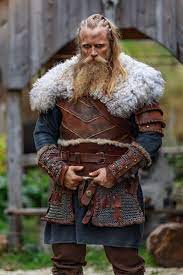
“You think I am trapped here between my men and your men?” Guthrum growled. “You have no idea how trapped I am.” He took another chair and slammed it against the wall and broke it. “I am trapped between Heaven and Hell.” He unbuckled his sword and threw it after the chair before he fell to his knees and wept.

Elgar nudged Alfred, and Alfred got down beside the man and hugged him, which made him weep even harder. Elgar whispered to Osfirth and Gwyn, “Well, my work here is done.”

In good old man fashion, Gwyn responded, “What?”

~~~*~~~

Elgar helped Alfred pick out the locations for his thirty-three forts or Burghs that would defend Wessex against Mercian Danes or further intrusions. He helped Alfred design and build a fleet which could finally defend the coast of Wessex. Then he retired to his son’s house.

Alfred claimed Athelney Fort as an important place for the remembrance of the people of Wessex. It was from Athelney that Wessex, and maybe all of England was saved. And also, Alfred said, “Just in case.”

Eanwulf’s eldest son served Alfred faithfully as ealdorman of Somerset. The younger son got Watchet and took Elgar’s duty of the coastal watch. Elgar’s son finally got the house in Wedmore, so Elgar ended up living where Alfpryd did not want to go. Sadly, Alfpryd died several years earlier, but all their daughters made good marriages, so there was that.  Elgar’s daughter-in-law treated him like a dottering old fool. Elgar did not mind, though, he liked being pampered.

In his last year, Elgar had two visitors of note. The first was Pinoak who caught him up on the doings. Pinoak’s mother May passed away and Pinoak cried a little when he said his father Pinewood, and his great friend Deerrunner would not live much longer.

“It’s okay,” Elgar said and hugged the fairy. “We are all passing away, but life goes on. You just need to step up to lead. Your sister Heath, and your friend Marsham have moved to Northumbria where they are trying to keep an eye on Abraxas, the scoundrel. If you would not mind helping Reed keep an eyes on Alfred, all will be well.”

“I pray for my mother. Is that the right word? I pray that the source may find her time on this earth acceptable in his sight.”

“I am sure he will,” Elgar said. “And I pray for my old friends Gwyn and Osfirth, both of whom passed away recently.”

“I understand the king of Cornwall is looking at Osfirth’s son and thinking about getting Devon back. Osfirth’s son and Alfred are looking at Cornwall and agreed that if the man wants to start something, they will finish it.” Pinoak smiled. “As you once said, they may chase the man all the way to Land’s End. Alfred is talking about taking the rest of Devon and setting the border at the Tamar River. He is also saying Cornwall should be a client state, and maybe doesn’t need a king. Maybe an ealdorman would be better.”
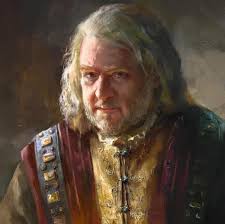
Elgar nodded. “That sounds about right.” He chuckled, but just a little.

The other visitor came just a few days before Elgar finally passed away. It was Abraxas, and the first words out of his mouth was typical. “I am finally going to be rid of you.”

“Careful,” Elgar responded. “Don’t piss me off as long as I am alive, and I would not recommend it after I am gone, either.”
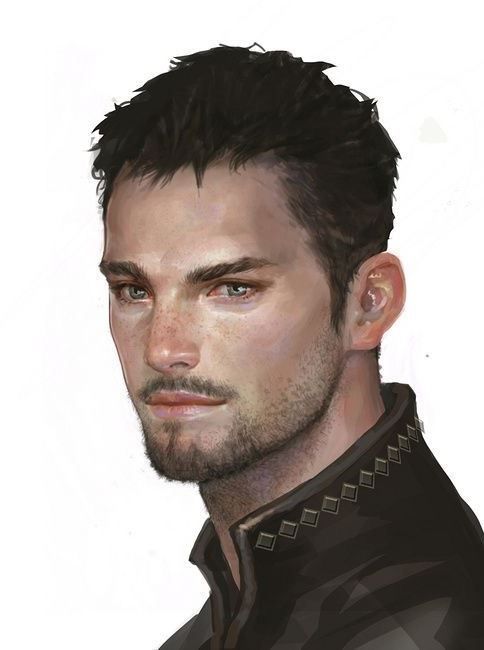
Abraxas stared at the ground for a moment before he confessed. “I can finally do what is in my mind to do.”

“It better not be trying to disturb history.”

“Not fair. Only you know what the future says.”

“Yes, and by the way, I was not happy that you put the fear into the Danes at Eddington. Alfred had things well in hand and did not need your help. I did not say anything sooner because that was the way things were supposed to go, so you guessed right for once… Don’t do it again.”

Abraxas looked at the ground again and looked like a child scolded. He vanished. He came to gloat but it did not work out that way.

Elgar thought it only fair to send a message to the future. Whoever I am in my next life, man or woman, sorry about that. I did get rid of the Flesh Eaters, not that they won’t be back, but sorry about leaving you with Abraxas. Maybe you will be lucky and be born on the other side of the world.
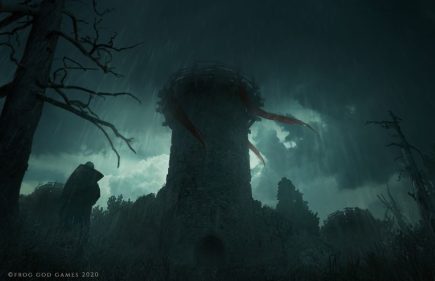
Medieval 5: Elgar 9 Odda and Ubba, part 1 of 2

When Alfred reached the fortress of Athelney, Elgar limped out to greet him. “No way the Danes will find you here,” Elgar said. “The island is mist covered on a regular basis, especially in the colder months, and you have to know where to put your feet to not be swallowed up by the quick mud or sunk in a pool of brackish water.”

He looked to see that his wife Alfpryd and his youngest daughter Alfflaed welcomed Alfred’s wife and children with open arms. Poor Elgar was fifty-eight, about as old as he sometimes lived in the old days. His legs were giving him trouble, but he was as ready as ever to fight, at least as much as he was able. He introduced the sons of his brother Eanwulf, the elder of which was technically the ealdorman of Somerset. Alfred knew them. Elgar also introduced his own son, still technically a teenager, though he seemed full grown enough. Then he showed off the fortress and sat Alfred down for some food and talk.

“Rest later,” Elgar said. “I don’t know what you may be thinking but your people are loyal and ready to fight when you give the word. I have talked with Osweald in Dorset and old man Odda in Devon. The man has to be near seventy, but Osfirth, who is my age, is in much better shape than I am, and Gwyn, who is on the Somerset coast is only a couple of years older than Osfirth and ready to fight. Osric is holding on in Hampshire, and Ethelwulf has Berkshire well in hand. Your thegans are firmly with you, not liking the idea of Danish overlords.”

“And how do you know this?”

“Spies. My spies who are loyal. Wulfhere is an outlier. He does not even speak for most of Wiltshire. I’m sorry I lost Tata, but his brother Ian of Eddington is ready to call up his men when you are ready.”

“Ian?” one man asked.

“My sister says it is the Old Anglish version of John from the Bible.”

“How about now,” Alfred said and raised his voice a little. “I am ready now.”

Elgar let the silence that followed the outburst play out before he shook his head. “No. You are not anywhere near ready, and I did not bring you here to this safe haven just for an overnight. We need several months at the least to plan our moves. We need the armies from the frontier shires of Somerset, Dorset, and Devon to meet up and move together. The men from Hampshire and any they can get from Sussex need to join together. Berkshire and I don’t expect much from Kent. They are having a hard enough time just holding their own, but certainly the men from Surrey need to Join Berkshire. That is three armies, and they need to move on the objective at the same time and arrive together.”

“Chippenham, and before Guthrum and Wulfhere move in the spring,” Alfred said.

“Not realistic,” Elgar said. “But we should be able to face the Great Heathen Army sometime in the spring, and in Wiltshire. In the meantime, let me show you what we can do to disrupt whatever plans they may be making. In the future, it is called guerilla warfare.

~~~*~~~

Elgar neglected to tell Alfred that he had gotten word of the backend assault on his people. Ubba, son of Ragnar Lodbrok was preparing to leave Dyfed in Wales and come ashore somewhere between the Parrett River and Pilton in Devon. He had arranged with Guthrum to pillage Devon down to Exeter, then follow the main road through southeastern Devon to the back end of Somerset at the Parrett River. From there, he could pillage Somerset or Dorset as he pleased. Of course, Ubba would decide for himself what he might do, and that might involve ravaging the coast to the Parrett River and then raiding up the river. He might ignore Devon altogether, or maybe give it back to the Cornish.

Eanwulf’s old friend Odda, near seventy years old, built the coastal watch from scratch back in the day. He got word that Ubba was coming and wanted to catch him on the shore. He personally took charge, and made the younger man, Osfirth set about gathering the fighting men of Devon so they could move as soon as they got word from Alfred. Of course, Osfirth, the younger man was near sixty himself.

Starting in Pilton, Odda followed the Danish sails down the coast toward Countisbury on the Somerset border. He had three hundred men gathered by the time he reached Countisbury and he imagined that might be twice what the Danes had. He had gotten used to raids of two hundred or maybe three hundred Danes and thought this would be the same. With another hundred raised in Countisbury, he would have half again the numbers of the Danes he expected. Then again, if the Danes landed in Somerset, he could bring his three hundred down the coast to Carhampton, as the case may be.

Osfirth and Gwyn had a better idea what they might be facing, or maybe they thought it through. Osfirth, as soon as he gathered the army of Devon, about eight hundred men, he moved north, stopping in Crediton and again at the western edge of Exmoor. He arrived one day after Ubba landed twenty-three ships and twelve hundred men. Odda, not having nearly the men to meet such a force, retreated to the town and the fort of Cynwit.

At the same time as the Danes turned their ships to the shore, Gwyn set out from Carhampton where he had gathered his three hundred of the Somerset coastal watch. Since he was getting his messages from a fairy, one of the ones assigned by Pinoak to watch the shore, it did not surprise him when he got told that Copperhand and a hundred dwarfs from the Polden Hills were following.

“I have no power to stop them following,” Gwyn told his commanders over supper. “I just hope they don’t get hurt. Elgar would not be happy.”

“I hope we don’t get hurt,” one of the commanders said, and the others laughed nervously.

Medieval 5: Elgar 8 The Struggle, part 1 of 3

Things finally heated up in 870. The Danes occupied Reading, a town on the border between Berkshire and Mercia. Both sides claimed the town, but presently, the Danes owned it. Athelred began to gather his army. The Danes waited. Given their failures in Wessex, this time they waited to see what Wessex would do first.

Ethelwulf, the ealdorman of Berkshire caught a foraging party sent out from Reading. The Danes were about half Ethelwulf’s numbers, but they fought well even if the outcome was inevitable. The battle took place near Englefield and Ethelwulf had a great victory there. King Athelred was greatly encouraged as he and his younger brother Alfred brought up the main portion of the army to join Ethelwulf and attack Reading. They hoped to drive out the Danes and remind the Danes that the West Saxons were not to be trifled with. It did not go as planned.

Athelred still did not know how to lay a town under siege, and he refused to listen to anyone like Elgar who knew how to do it properly. There were weak points and some actual holes in Athelred’s line of encirclement. The Danish commanders took advantage of that. They burst out of the gates and counterattacked. The West Saxon siege lines fell apart and Athelred’s army ran for their lives. Ethelwulf, the victor at Englefield just a few days earlier was killed. Athelred and Alfred escaped, but only with Elgar’s help.

Elgar took the two of them and much of the army by secret elf paths that the Danes would never find. They moved further in a sort time than humanly possible and soon got out of range of the Danish patrols. Athelred complained the whole time. Elgar simply replied, “Shut up,” and after a short time Alfred said the same thing.

The Danes wanted to follow up their victory at Reading. They arrived at Ashdown and divided their forces, planning to send half their army east toward Kent while the other half moved on Hampshire and the west. They were surprised when the West Saxon army arrived, mostly intact. Athelred copied the Danish formation, dividing his army between himself and Alfred. Then Athelred went to church, and some have thought he wanted to get God on his side.

“God knows the end from the beginning,” Elgar told Alfred. “He already knows who will win the battle. While it is good to submit to God and accept the outcome God decides, there is no way Athelred is going to bribe God or convince God to be on his side. I don’t think God is interested in taking sides when sinful men have a mind to kill each other. Our place is to fight just as hard as we can, to do our duty faithfully, but then to accept however the Lord decides to work things out. You cannot argue with God, and if he has decided one thing, you cannot change his mind. Faithfully do your part, do your duty with all of your might, but leave the outcome in God’s hands.”

Alfred understood. He prepared his half of the army to face the enemy and waited. He waited a long time, but Athelred never came out from his devotions, and finally Elgar’s men in green reported movement in the Danish lines. The Danes had camped along the ridge so they had the strong position. If they remained patient, the West Saxons would have had to charge uphill. But they got tired of waiting.

As the Danes came down, at least Alfred was ready. He charged, and Elgar had to use his little ones to keep the other Danish division from out flanking Alfred’s men. The division of Danes that faced Athelred’s men had to hastily fortify their camp against the uncanny marksmanship of the enemy. Meanwhile, Athelred continued to bargain with God.

Alfred won his battle. The Danes were defeated, and the other Danish division withdrew from the battlefield rather than remain to be picked off by arrows, one by one. It did not become a rout, but Alfred’s men, and the men from Athelred’s camp that joined them, continued to find pockets of the enemy that they chased well into the night. Athelred did not know where to go from there. He claimed a great victory, though he missed it, and because of that most of the Danish army survived.

The Danes first moved their army to the east rather than Hampshire and the heart of Wessex. They knew all about Weland and how he burned Winchester and that really angered the West Saxons. Besides, they hoped to pick up fresh men that currently held the northeast from London to Canterbury. Two weeks after Ashdown, Athelred and Alfred caught up with the Danes at the king’s estate of Basing. The battle was hard fought, but in the end the West Saxons had to withdraw. It was a victory for the Danes but a costly one as it turned out only the West Saxons got fresh men from Kent, Surrey, and Sussex; about two thousand.

Someone among the Danes figured out they were being followed and tracked. Elgar suspected Abraxas told them, but he decided not to find out. The Danes backed up. They went through Englefield and followed a zig-zag pattern up to Reading. They hoped to lose whoever was tracking them, but Pinoak and his fairy troop would never be fooled.

When the Danes got to Reading, they stayed for a month to lick their wounds. Athelred and the West Saxons did the same and appreciated the breather, but even Athelred understood the war was not over. At the end of February the Danes snuck out of the town under cover of darkness. Pinoak and his people were right there to watch. Athelred moved north while the Danes moved south and they met at a place called Meretun.

Meretun was another hard fought so-called victory for the Danes. They were losing for most of the day but managed to regroup at one point and pulled it out. The casualties on both sides were atrocious. Heahmund, the militant bishop of Sherborne died. He eventually got replaced by a man named Athelheah who seemed more concerned with the conduct of the church rather than the conduct of the army. Athelred was also badly wounded in the fighting. The Danes claimed the victory, but to be clear, the West Saxons pulled back when Athelred was wounded and could no longer fight.

He was carried all the way down the Dorchester Road to Wimborne where he finally gave up the fight and died of his wound. He was buried there, and that left Alfred as the last of the five sons of King Athelwulf. Athelred had married, and had two sons, but they were both infants. Alfred was young at twenty-three, but he was at least full grown and actually a bit older than Athelred had been when he took the crown.

While Alfred, Elgar, and Osweald of Dorset buried Athelred, the Danes thought to strike. Uncle Osric led the men of Hampshire, Wiltshire, and Berkshire to battle. Osric lost, but he did enough damage to the Danes to keep them from rampaging through the land. By the time Alfred arrived with men from Dorset and Somerset, he found the Danes at Wilton in Wiltshire. They managed to push well into Wessex, but they had failed to even reach Hampshire.

The battle was fierce. Once again it got counted as a Danish victory, but by then both sides were exhausted and hardly able to continue. It was an easy thing to arrange a meeting between the two sides. Alfred paid the Danes to go away, having the example of Burgred who paid off the Danes in Nottingham.

“Hopefully, this will give us enough time to rest and rebuild our forces for when they break their agreement,” Alfred explained.

Elgar, having turned fifty-one felt he was too old to argue. On the way home, he thought to stop in Athelney to check on the fortress there.

Medieval 5: Elgar 7 Second Chances, part 1 of 4

“Are you sure you don’t want me to go with you?” Elgar asked. The year was 853. Eanwulf’s six hundred men were gathered and ready to move out, though honestly this time it was closer to four hundred and eighty.

Eanwulf shook his head. “You went the last time. Pray that I have as much success as you had. Besides, all we are doing is helping Mercia against the Welsh and all the Welsh know how to do is attack like wild men, no line or formation of any kind.  As long as our line is solid, the outcome is decided before the two sides even meet.”

“I’ll keep an eye on things here in Somerset, and your sons,” Elgar said. but Eanwulf just shook his head again.

“We have kept the Danes from our land over these past five years since the Parrett River, and it was quiet for five years before that.”

“We have had a couple of raiding parties.”

“Small raids. Insignificant. And you handled them well,” Eanwulf smiled down from where he sat on his horse. “You just need to keep your eye on the coast and keep the Danes, the Welsh, the Irish pirates out of the Somerset and the rest will take care of itself.”

Elgar nodded for his brother and backed away from the horse. He stood for a while, watching Eanwulf and the army ride off in support of the king, then he mounted up and headed slowly back to Watchet on the coast. He had to think. The last report he got said the Flesh Eaters were beginning to eat the uncooperative Geats.  The Danes, Norwegians, and Swedes raised no objection. No doubt they all planned to move into Geat land once the Geats got removed. The morons did not realize that they might well be the next item on the menu.

Elgar felt he had to do something, but as usual, he was not sure what he could do.

Worse than eating the Geats, the Flesh Eaters appeared to be building a settlement in the mountains just south and west of Harjedalen in Scandinavia, roughly between Swedish and Norwegian lands. He feared they would start breeding soon enough, and then they would be very hard to get rid of. They produced children by the litter full.

Elgar stopped in Athelney, the fortress in the swamps. He remembered the path and how to get there safely through all the obstacles. He encouraged the monks there in the small abbey that held the island. He got workmen and their families to move to the island. They made a small hamlet and farmed the ealdorman’s land, what could be farmed. They also kept the fortress in prime condition. Elgar could not be sure, but somehow he felt the fortress at Athelney would come in handy at some point in the future.

“Wait and see,” he said to himself, and after a week, he finished the trip to watchet. He loved his wife, Aelfpryd. She was surprised and pleased at his attention and kindness toward her. She would be thirty soon enough and officially middle aged. But Elgar had been born to a middle aged mother, and despite his complaints about being raised by the girls, he imagined in the long run it had not hurt him. Aelfpryd might eventually have a son but even then, Elgar knew he could only love his daughters Wynn, Swip, Swith, and Flaed, though he might try to keep them from utterly spoiling the boy.

Aelfpryd found Elgar up on several nights. He stared at the moon as it grew to full size over those days, and when it was fully round, he commented to his wife.

“Round like a woman. I wonder what the moon may birth.”

“I’m not that old yet,” Aelfpryd responded, knowing what he was thinking. She stood beside him and slipped her arms lovingly around his middle while he continued to look at the sky. “We can still have a boy.”

Elgar looked at her. “Sadly, there are some that are not permitted to have children.” He turned again to look at the stars. “I feel in a way that I will be committing genocide, though it is not. There are still plenty out there. They still have plenty of opportunity to survive as a people.”

“You sound as if you are going away again.”

“I must,” Elgar said. “But only for a day. Maybe a week.”

“I will miss you when you are gone, and I will be waiting quietly for your return.” She planted a kiss on his cheek an turned to go inside to bed.

“Quietly? In a house full of girl? Ha!” He ran to get ahead of her. She let him win that race, but she would not let him steal all the covers.

~~~*~~~

Elgar met with the priest in Watchet for three whole days. It took him that long to confess himself and to give the priest an idea of who he was and what he was talking about. He was not sure why he went to the priest with his confession, but he had to talk to someone. He did not want to burden his family and friends and since confession was becoming a thing, the old priest got the call. After fifteen years since his first contact with the Flesh Eaters, Elgar was considering genocide. Fifteen years was more than enough time to leave the Earth, but before he acted rashly he needed a second opinion. In the end, the old priest did not really understand, but he said the thing Elgar needed to hear.

“In the beginning, everything was perfect. God said simply don’t eat the fruit of this one tree. That was all. But we did not believe him, or we did not trust him, or we wanted to see what would happen, or we wanted to decide for ourselves. We stepped off God’s path and into the bushes and thorns to hide ourselves. We really messed up, and what happened was we found there was no going back. We doomed ourselves by our disobedience, by our unbelief. Thank God that God did not abandon us to Hell. In the fullness of time, Jesus came and through him we have a second chance. God’s way is the way of love, joy, and peace. It is the way of Heaven and God will not mislead you. He has given us a guidebook to help direct our steps. Walk on God’s path, narrow as that path may be. Any alternative leads only to destruction, and there is a whole world full of alternatives. Just remember this. Everyone needs a second chance.”

“I will remember,” Elgar said, and he walked out the back door of the church He promptly traded places with the Nameless god and appeared in Scandinavia where the Flesh Eaters were building their colony. Of the nine hundred and eighty-seven Flesh Eaters on the mothership, twenty-six were female, but only thirteen were able to bear children. Of course, given that they had litters of three to five children at a time, it would not take many years to double that nine hundred number, and their numbers would increase exponentially after that.

The first thing he did was gather all of the Flesh Eaters from the settlement in the meadow where they parked their two transports, three fighter ships, and two three-man fighter-bombers. He made the Flesh Eaters stand still while he reduced the wooden structures they had built to sawdust to be blown away on the wind. He closed up the wombs of the females so they could not bear any children, though he made clear to them the restriction would be lifted once they left this planet. Then he transported the Flesh Eaters and all their ships to the supposed secret hiding place of the mothership.

Nameless had to think for a minute. Not everything was easy, even for a god. In this case, though, Nameless figured it should not be too difficult. In his mind’s eye, he reached back long before the Kairos was first born, hundreds of thousands of years to a different genesis planet, and he learned how to shape himself into a god of the Flesh Eaters, now no more than a distant myth in the Flesh Eater minds. Once satisfied, he called the captain, first officer, chief scientist, and chief military officer of the Flesh Eaters to appear before him. They all screamed and tried to hide themselves which is about what Nameless expected. Nameless spoke and made sure these flesh eaters heard.

“You have been told to leave this world. The time to gather your people is now over. You have been told not to eat the people. The Geats are people. No more eating them. Now, you must leave this world and not come back. This is your second chance. There will not be a third chance.”

He vanished from that place and appeared again in the back yard of the church. The priest came out and drew his breath in sharply on sight of a Flesh Eater god. Nameless quickly changed back to himself, then he traded places again with Elgar and the priest commented.

“I see what you mean, not of this world. I thought you were a demon.”

“They are not far from demons,” Elgar said. “They have a second chance and I hope and pray they will take it. I will be sorry when I have to kill them all.” He walked home, kissed his wife and his girls, and went to bed early.

Medieval 5: Elgar 4 Carhampton, the Sequel, part 1 of 2

King Ecgbert died in 839 and Athelwulf returned from Kent to take the crown of Wessex. It was not quite as easy as it sounds. Among the Anglo-Saxon kingdoms, there were always other claimants to the throne. But King Ecgbert did everything he could both before and after he returned from Hingston Downs to assure Athelwulf’s  ascension to the throne would be smooth and uncontested. If he succeeded, Athelwulf would be the first son to follow his father to the throne in nearly two hundred years.

Ecgbert took his son to Kingston upon Thames in Surrey, well within Athelwulf’s subkingdom of Kent, Sussex, and Surrey and they met the bishops of Winchester and Canterbury there. They granted land to the churches and certain rights concerning the disposition of the monasteries in their jurisdictions along with pledges to protect and defend the church under their watch.

Once the church was firmly on their side, he turned to the cultivation of his Ealdormen, his chief sub-rulers for the shires that made up Wessex. For the most part, he was content with the men he had overseeing the shires of the West Saxons, including the frontier shires with Eanric in Somerset and now Godric in Devon. His only questions were for Dorset where his friend Oslac could hardly get out of bed.

Oslac was pivotal to Ecgbert gaining the throne all those years ago. He carefully cultivated that friendship, even marrying his son to Oslac’s daughter, Osburh, who gave him grandsons. Now, Oslac’s brother Ethelhelm was running things in the shire. He was not doing a bad job of it, but he was not found anywhere near the battle. How unbecoming of a Saxon. At least Oslac’s son and Osburh’s younger brother, Osric, proved at Hingston Downs that he knew the value of a good sword. Still, Ethelhelm was old and had no sons, so Osric would probably take over once the old man died. He let it go. His most trusted men had no kingly ambitions, and that was what mattered.

His review of his Thegns took even less time. He spent his first twenty years on the throne getting rid of most of the men who might have challenged Athelwulf for the throne, that and fighting Mercia. He felt proud of his time as king and promptly died in 839, was buried at Winchester, and Athelwulf took the throne. Athelwulf appointed his own son, Athelstan to be sub-king of Kent, Surrey, Sussex, and with nominal rule over Essex in his place, and life stumbled on.

Godric of Devon was the first to pass away after the king. Ceorle took his place. Elgar called it a no-brainer. In 840, Elgar turned twenty and Alfpryd turned sixteen, and they could not wait given father’s condition. They married and Alfpryd had a daughter they called Alfwynn. Then Elgar’s father died, Eanwulf became the Ealdorman, and he moved his family from Wedmore back to Somerton where Wulfrun could help watch over Mother.

Both of Elgar’s sisters, the elder Eadburg of Wiltshire, with her husband Godderic of Edington, and the younger Eadswip of Dorset with Osric, son of the ealdorman traveled to Somerton to visit Mother and share in their grief. Eanwulf’s childhood friends, Ceorle and Odda showed up shortly after, and it felt briefly like old home week. Then Athelwulf arrived with Osburh and their two younger sons Athelbald and Athelburt, and their daughter, Athelswith who was the eldest of the three children.

Athelswith and pregnant Alfpryd hit it off, and his sister Eadswip stayed with them, much to Elgar’s chagrin.  Osburh got to meet Elgar who was otherwise ignored by the older men. Elgar took that moment to pick on his sister Eadswip, Osric’s wife.

“I’ve been surrounded by women my whole life,” Elgar complained.

“Is that a bad thing?” Eadswip asked.

Elgar realized he was in danger of saying the wrong thing as Athelswith, Osburh, Eadswip and Alfpryd all looked at him expecting an answer. He said, “As long as I can be surrounded by the woman I love, no. That is a good thing.” He gave Alfpryd a quick kiss and hastily retreated.

Athelwulf came to confirm Ceorle in Devon and Eanwulf in Somerset. He talked to Osric about Dorset and his uncle Ethelhelm. Osburh came mostly to visit with her brother Osric who she so rarely got to see. Sadly, they were both commiserating when word came that Oslac the Bedridden, as he came to be called, was the last of the old men to die.

Osburh and the king, with Eadswip and Osric hurried to Dorchester, stopping only briefly in Sherborne to visit the Bishop there. Ceorle and Odda had to get back to Devon. Ceorle said he worked things out with Odda where Odda would oversee the coast from the fort at Countisbury to Pilton as a kind of land grant to defend the coast against the Danes. “I won’t let you down,” Odda said, several times.

Godderic and Eadburg stayed with Mother for a short while, but Godderic was not a sociable person. He was nice, but he did not say much, and became totally tongue tied around the king. Fortunately, or maybe unfortunately, Eadburg did not mind talking for two, and then some. When they left to return to Eddington, Eanwulf came into the room where Alfpryd and Elgar were cuddling and Wulfrun and Mother worked on sewing something. Eanwulf let out a great sigh.

“Ah, silence,” he joked before he looked at Elgar and got serious. “Hard to believe you are old enough to be married,” he said and added, “Have you considered what I asked you?”

“What?” Alfpryd immediately needed to know, and Elgar told her.

“He says with him and Wulfrun and their children living here, soon there will not be room enough for us and our children as well. He has suggested a trade. Maybe we take the house in Wedmore. What do you think?” Alfpryd wrinkled her nose at the idea of Wedmore.

“Speaking of children,” Wulfrun said, and got up to go check on hers.

“Not before the baby,” Mother raised her voice. She did not want to miss seeing her grandchild.

Eanwulf threw his hands up and Elgar kissed his wife.

841 sped by with only one event of note. A small number of Danish ships, around a half-dozen, were reported to have landed on the Isle of Portland around the first of the year. Osric immediately raised the army of Dorset, about six hundred men, mostly from Dorchester, Wimborne, Wareham, and Swanage. Ethelhelm stopped him from getting men from the north, from Shaftesbury or Woodyates or the west from around Sherborne. He figured six ships could not be more than two hundred and fifty, or at most three hundred men and they had double without going so far afield.

“Besides,” Ethelhelm said, trying to sound fatherly. “This is what the king expects of us, to defend the border. He would hardly be pleased with us if we bother him with every petty bunch of heathens that park on our shore.” He honestly did not understand the danger, and he never imagined the report he got might be mistaken. In fact, there were thirteen ships and over five hundred Danes who looted, pillaged, and burned churches in Portland and all the way up to Weymouth.

The battle was fierce, not at all what Uncle Ethelhelm expected. When the Danish commander threw in his fifty kept in reserve, the thirty men on horseback of Osric had to dismount and join the fray to keep the line from falling apart. Even then, they might have lost if fifty locals had not come up behind the Danes, hungry for revenge. The Danes squeezed out from the trap and hurried back to their ships. They left some of their men to die, and the men from Dorset did not have the strength to chase the rest. The Danes sailed free with plenty of treasure. Their crews might have been slim, but they were not going to leave any good ships behind..

When all was over, Uncle Ethelhelm was dead and Osric became ealdorman of Dorset. It was not the way Osric expected that to happen.

In 842, Elgar and Eanwulf rode Somersetshire, and got to know many of the Thegns and elders who talked for the people in the towns, villages, and on the farms in Somerset. They were mostly pleased to hear Eanwulf planned to continue the policies of his father, even to retaining the same Reeve, which is to say, tax collector. They all knew Eanwulf, of course, or said they did. They did not know twenty-two-year old Elgar, but he managed to impress the ones that mattered.

Elgar took Gwyn and Osfirth with him and visited on the less populated west side of the Parrett River. Eanwulf, with a troop of men, took the more populated east and north where Muchelney, Glastonbury. Wells, Wedmore, and Bath were located.

Elgar started at Athelney, the Misty Island before he went upriver to the main road between Somerton and Exeter. He went down the road to the border with what was now Saxon Devon and traveled up the border all the way to the coast, even cutting through Exmoor. He took Reed the elf with him, well disguised as a human hunter. Reed knew the way through the swamps and brought them safely to the small bay between Countisbury and Carhampton. Then they went up the coast to the Parrett River and back up to Athelney to complete the circle. Granted, they did some zigzagging enroute, but honestly, there were not great numbers of people living on the west side of the Parrett. Most lived on the river, the road, the border below Exmoor, or the coast so their circle route got to most of them. Besides that, only about half of the people on his side of the river were Saxon people. Plenty were British, so Gwyn and Osfirth both got a workout.

When they got back to Somerton, Eanwulf asked again about where Elgar planned to live.

“What about Athelney?” Elgar said.

“You mean Moringa, the Noble Island as father called it,” Eanwulf sought clarification.

“That’s the place. Father built a great house there next to the monastery as a redoubt in case the Mercians ever pushed into Somerset. There are still caretakers there and the monks farm the property.”

“I’m not sure Father ever finished building there,” Eanwulf said, thinking of the cost.

“He finished,” Elgar responded. “I visited there just now to look. It is big, a virtual fort. Alfpryd and I can have a big family there.”

Eanwulf did not think for long before he shook his head. “The mists come up strong in that place. The island is too hard to get to. People can pass by the place without ever knowing it is there. And even if they know, the area is a real swamp, a quagmire of mud and muck, very dangerous unless you know the way. No. There is a reason Father bult a stronghold there against possible Mercian incursion into the territory.”

“Just a thought,” Elgar said. The idea was moot in any case. Alfpryd, at eighteen, was pregnant again, and Wulfrun, who was twenty-nine, was also pregnant.