Medieval 5: Genevieve 6 Internal Twists, part 3 of 3

In 797, Charles and the Franks got handed Barcelona, the greatest city on the Hispanic coast. The Wali of the city and the Emir of Cordova had a falling out. In that same year, Angele turned seventeen and married William’s son, Gaucelm. William, Leibulf, and Louis arranged it all, and Genevieve had no say in the matter. William and Genevieve practically had a falling out.

Louis, wisely stayed away, having heard about Genevieve from his father and not wanting to suffer the woman’s wrath. William came with his wife, Witburgis. He spent no time with Genevieve except in gatherings where he passed pleasantries. She did take Witburgis for while one afternoon so William could spend some time with Guerin, Mother Oda being there to supervise. But most of the time she wanted to yell at William.

Gaucelm clearly preferred the company of his Gothic lieutenant, Sanila. She could not tell if the boy was gay, or what. She instructed Angele that if the boy refused to give her children, she should come home and she would have the marriage annulled. No doubt William instructed his son to do right by the girl, but it remained to be seen what would happen. William elevated his son to be Count of Roussillon as a wedding present, so that was something, anyway.

Guerin, at the end of 797, turned five and was a handful. Genevieve and her son nearly had a falling out as well when Angele married. Oda stepped in at that point and mothered the boy, even as she had done almost since she arrived, and Genevieve let her. In fact, at some point the boy stopped calling her Aunt Oda and started calling her Mother Oda. Oda and Leibulf practically served as Guerin’s parents through 798 and thereafter. That proved fortunate, because the following year, 799, was a momentous year in a bad way.

In the west, The Emir of Cordova reconquered Barcelona for the Umayyads. Louis, called the Pious, had been made king of Aquitaine by his father Charles some years earlier. But being only twenty-one, he turned to William and Leibulf for help and advice, and they raised the armies. William got the men from Septimania who were adjusting to his oversight, and this time, the Basques fought with them instead of against them. In 800, they marched over the Pyrenees and laid siege to the city. They would winter there. The city did not surrender until 801, over a year later.

In the east, on April 25, 799 Pope Leo III was attacked by a mob who tried to poke out his eyes and tear out his tongue. The Swabian garrison left in Rome by Charlemagne succeeded in their duty and quickly rescued the Pope. They dispersed the mob and arrested the ones who appeared to be leading the attack. The excuse first given was that Leo was not from the right social class to hold the office. Later, they made up stories about adultery and perjury, but it very much became a kind of he-said-she-said situation without any real evidence on either side.

Charles received the Pope at his camp in Saxony. He called for the ringleaders of the mob to testify, but nothing was clear, so Charles wisely called for a council of the church to decide the matter. They would meet in a year, in November of 800.

Genevieve also felt called to go because something felt terribly wrong in the events as described to her. She knew from history how once the lynch mob got sufficiently stirred up and began to act, the real instigators would back away and watch, and act like innocent lambs if they should be questioned. They could easily lie and say they were shocked and dismayed at seeing what transpired. The leaders of the actual mob were simply the most fanatic men that bought completely into the scheme, but they were not necessarily the masterminds. She also knew that since the attack failed, the ones who started it all would still be there, able to stand back, evaluate their failure, and come up with a better plan for the next time. She would have to investigate the matter herself to make sure there was no next time.

Genevieve escorted the Bishops from Lyon, Vienna, Embrun, Arles, and Aix. They sailed from Marseille in September, and Genevieve would see Charles again. Before she left, she hugged Leibulf and Oda, and smothered seven-year-old Guerin with kisses, whether he liked it or not. She visited Olivia briefly in June and encouraged her to begin a correspondence with her sister Angele.

“I’m not sure Angele will write back. I was terrible to her when she was young. I wanted to kill the girl, though the Masters did not care about her.”

Genevieve looked serious. “Believe it or not, that is a common, human reaction to suddenly having a younger sibling getting all the attention you used to get. Of course, in your condition at the time, you probably thought about the killing more seriously than most, but you did not do it. I understand your feeling of being replaced by another girl, and one that was Otto’s actual child where you were not. Of course, being daughter of the king has to be worth something.”

“Mother. Hush. No one knows that except the Mother Superior, and she is sworn to secrecy. I have made friends, and that was hard enough as the daughter of the margrave. I will lose them all if they find out the truth.”

Genevieve found a few tears and hugged her daughter. “I am so glad you have friends.”

Genevieve wrote to Angele in August outlining her reason for the trip and her thinking. She waited to send the letter because she did not want to get a letter in return saying she was crazy to put herself in such danger. If the culprits imagined she was on to them, her own life might be forfeit. She knew that and promised herself she would be careful.

The journey was uneventful. She got regaled with theology day and night, but the bishops mostly spoke of the trip and the weather with her, until they nearly drove her crazy with small talk. She decided she would rather talk theology, and that improved the voyage, and at the same time it allowed her to speak in favor of Leo and against the completely unacceptable and unchristian actions of the others.

When they arrive in Rome, Genevieve had four whole weeks to get her notes in order and ferret out the truth. It took more like eight weeks, and the council was four weeks into their deliberations by the time she found the truth of it. She found Charles just before the council began. His fourth wife had died, and he was on his fourth mistress, or concubine, a big-breasted young girl named Regina. He acted at first a little perturbed at her presence, but he agreed to see her in private when she insisted.

“Charles,” she immediately scolded him. “You are fifty-five or six. I am forty-five with my beautiful blonde locks turning gray. I am not here for that. I came to find out what you and a whole basket full of bishops would not find out in a million years. I am tracking down the real culprits—the masterminds behind the plot against Leo. I am close. When I have the truth nailed down, I will let you know and you can come arrest them or do what you want with them.”

“Why did we have to discuss this in private?” he asked.

“Because people in the court have big ears, and people with big ears usually have big mouths, too. If word gets out that I am tracking down the bad guys, they might come after me.”

“Makes sense,” he said, and she turned to leave but he stopped her with his words. “How is Olivia?” Genevieve turned again to look at him. He looked uncharacteristically contrite. “You know, you are not included in any record of my antics. I made sure of that to give credence to Olivia being Otto’s daughter. Only we know better.”

Genevieve said, “She is good. She is happy. She has made friends.” she began to cry softly, scooted forward and hugged Charles before she wiped her eyes, turned, and walked out without another word.

M4 Margueritte: Potentius, part 1 of 3

Margueritte had her baby on December twenty-sixth, the same day it snowed for the first time that winter.  She had another girl, and they named her Grace, to match Jennifer’s little girl, Mercy but she thought her life was now finished.  Grace and Brittany being so close in age would mean interminable fights and rivalries over everything.  Brittany seemed excited and happy to have a sister, but Margueritte thought, just wait for it.  Martin seemed happy about another sister, but at the moment he got all of his father’s attention, so he seemed happy about most things.

In the middle of January, in the year of our Lord, 720, late in the afternoon, on a day that felt not quite so cold, Roland took Margueritte out on the new porch where they could sit quietly and look down the Paris Road.  Margueritte sat under several blankets, and took Roland’s hand, because it felt warmer than her gloves alone, and she explained what Wulfram and his men were doing before they left for the winter break.

“All the way back in the days of Chlothar, the first Chlothar, Clovis’ son, the Franks developed some lancers.  They were short lances, with no stirrups, so they were hardly better than spears on horseback, but a strong weapon at the time because no one else had such a thing.  They ran over the Burgundians in those days.  But as early as Dagobert the first, say about seventy years later, now about ninety, almost a hundred years ago, it got too expensive for every man on the farm to have a riding horse.  Horsemen had to be gotten from the men with property because that was the only place to get the Chargers.  The thing is, the men with property were not about to risk their assets, so the foot soldiers got to do all the fighting, again.  Charles has just about only foot soldiers.  Now, that has to change.  Stirrups, like the Muslims use, make all the difference.  We need heavy cavalry because that is what our enemies are going to get.  Now all those nobles need to put up or shut up.”

“Put up or shut up?” Roland asked.  “It is a great phrase, but I don’t know what you mean.”

“I mean, if they pledge to the king, that pledge should include fighting for the king.  Anyone who won’t fight should have their land taken away and given to someone who will fight.  We need the horsemen, the lances and stirrups, and nobles, based on their land and numbers, should be required to supply however many men and horsemen.”  Margueritte had little love for greedy cowards. “And another thing,” she said.  “Any man who tries to make a deal with the invaders thinking they can work things out to keep their land should be treated like the traitors they are.  Their family should lose everything, and as I said, it should be given to someone who is loyal to the king.”

“Interesting ideas,” Roland said off handed as he stood.  Margueritte looked where he was looking.  A rider appeared on the Paris Road.  The man and his horse puffed and looked half frozen.  Roland thought he might know the man despite the wrapping that barely showed his eyes.  As the man rode up, he proved that he certainly knew Roland.

“Sir Roland.”  The man got down.  He had a packet of papers.

“Childemund?” Roland asked.

“I am.”  The man unwrapped his face a little.

Margueritte threw her head back.  “Grimly,” she called.  The gnome had to appear.

“What?  I was warming up by the forge and Luckless was telling stories.  They were about Festuscato.  Want to hear one?”

“Hush,” Margueritte shushed him.  “Take this man’s half-frozen horse and get it warmed up, fed, brushed, whatever you think best.  And thank you.”

Grimly reached out for the horse’s reigns and the horse followed him off while Childemund commented.  “Small fellow.  I guess that’s why I didn’t see him when I rode up.”

Margueritte called again.  “Lolly.”  Lolly appeared on the porch, and this time it was hard to explain away.  “Lolly, this man needs some hot tea, and maybe some hot soup to warm him up.”

Lolly stuck her thumb out and looked like she might be measuring him for a painting.  “Looks more like Burgundy, or no.  One of those bottles sent from Bordeaux by your friend, Duke Odo.”

“Yes, well, start with the soup.”

Lolly nodded and turned to walk back to the Kitchen.  “Chicken soup is the thing before that cold sets in.”

Margueritte stood and took Roland’s arm.  She was still weak from childbirth.  “Come on.  We can get you warmed, and then we can read all about it.”

Childemund hesitated.  “Charles said I was to deliver the letters and get right back.”

“You will.  No reason why right back can’t be after you spend the night,” Margueritte said.

“But—”

“It’s no good,” Roland interrupted.  “You will get nowhere arguing with my wife.”

Childemund nodded and followed.  “Lady Margueritte,” he said.  “Charles told me all about you.”

“And some of it may even be true,” Roland said.

The sun would set soon, anyway, and it felt much warmer inside.

Once inside, the family gathered around the supper table, and Owien’s first question became, “Where’s Narbonne?”

Tomberlain commented.  “We should go there and kick some Muslim butt.”

“Mister Mature,” Elsbeth said, while Margo gave Tomberlain a pat of approval on his shoulder, and Margueritte spoke.

“Narbonne is in Septimania, Visigoth country, not Frank, but it is on this side of the Pyrenees Mountains, and from there the Caliph can mount a full-scale invasion.”

“They would need time to build their forces, though,” Childemund said between slurps of the best chicken soup ever made. “That would take three or four years, you think?

“Ready-made armies in Iberia,” Roland mumbled.  He read the correspondence and did not pay full attention.

“Narbonne got taken last year, I mean in 719,” Margueritte clarified.  “They will need 720 to cow the rest of Septimania.  I think the earliest they may invade Aquitaine would be about this time, 721.”

Roland put down the letter.  “That’s what Charles says, but he says they will go after Vascony first.”

“No need,” Margueritte said.  “Giselle.”  She called the au pair from the children’s table.

“No need, as my lady says,” Giselle responded, and took a moment to step to the table.  Margueritte knew she had been listening in.  “The Vascon Lords have signed certain agreements with the Emir of Cordoba.  Many are cowed, to use the Lady’s term.  We have heard nothing because there has been no invading army and no fighting, but even the Basques, the mountain dwellers, are not willing to start the fight.”

“How do you know this?” Margo asked.

“I am Vascon.  My family fled the land when the Muslim merchants came in and the beginnings of persecutions filled the air.  That is how we came to Paris by way of Orleans.  We have a small community there, but it is growing.”

“You’re a Vascon?” Margo jumped.  “And we were getting to be such good friends, too.”

“None of that,” Mother interjected before Margueritte could speak up.  “No reason to stop being good friends.”

Margo paused.  “I suppose not,” she said, but she did not sound convinced.  Prejudice was a hard thing to get over.

“So, Vascony is already taken, if not in name.”  Margueritte brought the discussion back to topic.  “I am sure the Muslims believe they can swallow the Duchy when they have some spare time.  So, no.  I see Aquitaine in 721, but January or February at the earliest, and more likely around the spring equinox.  The followers of Mohamet are used to a Mediterranean climate and North Africa.  They are probably not prepared for our cold winters and shorter growing season.”

“Not to mention our food.”  Childemund had a piece of bread in his hand and was sponging up the last bit of soup.  “This was magnificent.”

“All credit to the cook,” Lady Brianna smiled for him and offered him a piece of off-season apple pie, which he devoured.

“So, this is something Charles maybe needs to know,” Roland said, and looked at Margueritte.

“You write him,” Margueritte said, and to Roland’s puppy dog face, she added.  “I’ll help.”

“This means I will have to stick around for a couple of days,” Childemund interjected.

“My wife,” Roland pointed at Margueritte.

Childemund nodded.  “But in this case, it is your cook I can’t argue with.”

“I made the pie,” Margueritte said, casually.

“I made a pie once,” Elsbeth said.

“And when she finished, three days later, we had to scrub everything, even the overhang, overhead,” Margueritte responded.

“Even the nearby tree,” Tomberlain added.

Elsbeth screwed up her face and gave them both her best and loudest raspberries, and Owien tried hard not to laugh.

M4 Margueritte: Prince of the Franks, part 2 of 3

Margueritte imagined she would be at the inn for a couple of days.  She tried to make it as comfortable for everyone as she could.  The innkeepers were a nice older couple who spent most of their time doting on Martin like a couple of grandparents, and frankly were not good for much else.  Rotunda took over the kitchen.  Mother Mary kept the beds and everything else clean.  Sigisurd kept up with the crawling machine, having assigned herself the position of Nanny.  Even Relii did dishes, and Margueritte thought this was very different from the Storyteller’s day.  Three days at the Holiday Inn in his day and the women would be ordering the staff around, complaining about everything, and gossiping about everything else.  This seemed almost pleasant, and she wanted to get a good book and lay around the pool and would have if they knew what a pool was.

“But pools haven’t been invented yet,” she told Sigisurd, who learned to ignore her when she said things like that.

By the third night, Margueritte became a wreck for worry.  She felt sure she should have heard something by then.  She paced, did not feel hungry, stayed in her room, and refused supper.  Sigisurd shared a scrambled egg with Martin, but otherwise she said she was also not hungry.  Sleep came as a fitful thing, and in the morning, Margueritte felt no better.  Sigisurd had Martin on the little balcony just off the room.  She said Martin slept through the night but got up with the sun.

“Sorry if we woke you.  We just got up, but I tried to get him out here to let you sleep.”

“That’s all right,” Margueritte responded, as she got dressed.  “I don’t think I really slept all night.”  She considered calling for Tulip or Larchmont to see if she could learn about the battle, but she had been good so far, as she thought of it, and maybe she could wait a little longer.  “Let’s see what’s cooking.”

Margueritte picked up Martin and walked down the stairs, but on the last step she handed Martin right back to Sigisurd.

“What is the matter?” Sigisurd asked.  The old couple and Mother Mary were all at the table, probably from the night before, and there were signs of diarrhea and vomiting and bowls of what may have been soup.  Margueritte glanced at the door to the back kitchen but did not want to find Rotunda and maybe Relii back there. 

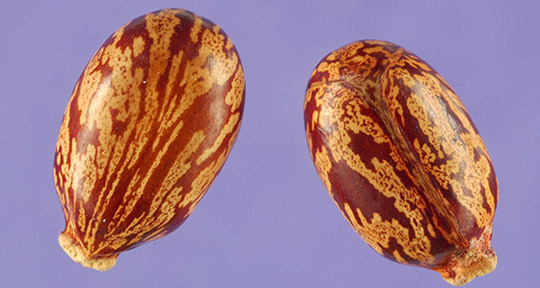
“Don’t touch anything,” Margueritte ordered and Sigisurd looked like she had no intention of touching anything.  Margueritte crept close and heard Mother Mary moan, but she still did not dare touch the woman.  Mary never opened her eyes, but she had something clenched in her hand, and her hand opened to reveal a bean of some sort.  Margueritte took out a handkerchief and picked it up.  She put it right back down and grabbed Sigisurd and dragged her and the baby to the door.

“What is it?” Sigisurd repeated herself.

“Castor bean,” Margueritte said, having heard that from Doctor Mishka all the way in the twentieth century.  “If Rotunda crushed them to add them in powder form to the soup, thinking they were like a spice.”  Margueritte shook her head.  “Castor oil doesn’t taste good, but the shell is deadly ricin.”

 “Deadly?”  They went outside.

“No known cure.”  Margueritte confirmed, and she let out a few tears for her friends and from fear.  Sigisurd tried not to join her, but Martin picked up on the sentiment and made his weepy face.  Margueritte took Martin and hugged him when they heard horses approaching.  Margueritte wiped her eyes to look but took a step back when she did not recognize the uniform.

“There she is.  How convenient.  Get her in the wagon.  Bring the girl and the baby.  Careful with the baby.  Tie them so they stay put.  There isn’t much time.  Move out.”  And Margueritte, Sigisurd and Martin got dragged off by strange soldiers with curious accents.

Margueritte knew these men were not Muslims, but they were not from Austrasia or Neustria either.  They were certainly not Frisian.  She imagined they might have been Burgundian, but she would have to wait and see.  Meanwhile, she considered the castor beans.  Those beans were not native to France, except maybe the Mediterranean coast, like around Septimania.  Otherwise, they had to be imported from Iberia or Africa.  That thought shouted Abd al-Makti loud and clear, but she admitted the evidence was circumstantial.  Then she had another thought.

“Oh, you’ll be safe here,” she mumbled with only a small touch of sarcasm.  She considered how easily she got captured by Ragenfrid’s men after the first battle outside Cologne.  She ran from the camp and exposed herself, so she figured it was her own fault.  But now, here she sat, a prisoner again, and this time she did nothing to give herself away. What is more, these men seemed to know just who they were looking for, and just where she could be found, though she was supposedly secretly hidden away in a small village inn.  Yet they knew exactly where she was.  

Margueritte considered her predicament.  Chivalry owned Great Britain, thanks to Arthur, and it had slowly begun to take over the mindset of the Franks as it worked its way into Christian Europe through the stories told about Arthur and his Round Table.  Margueritte thought that taking women hostages was not standard procedure, even at this early point in Medieval history.  “Something smells,” she said out loud.

Sigisurd checked Martin’s diaper.

###

Margueritte got forced to ride in the wagon for the first five days, and became black and blue all over, since the two men driving the wagon seemed talented at hitting every rock, hole and bump they could find.  More than once, Margueritte suggested those men should be flogged.  At least they untied her after the first day, so she and Sigisurd could take turns holding Martin.  Finally, she figured she complained loud and long enough to where the captain relented and let her walk.  The truth was, they had left Frankish lands and entered the domain of Odo, Duke of Aquitaine.  Also, they came to an old Roman road that appeared well kept, and the captain figured not knowing where she was, she had no choice but to be good, her being a woman.  Just for that, Margueritte had to fight mightily to keep herself from running off.