Medieval 5: Elgar 10 Guthrum and Alfred, part 2 of 2

Alfred sent out the word on April fifteenth to raise the army, what Elgar called tax day. The word was to gather at Egbert’s stone on May the first, or as Elgar yelled, “May day! May day!” Men came from all over Somerset, the largest army Somerset ever raised. Osfirth brought a thousand men from Devon alone. A large contingent came from inland Dorset, especially around Sherborne. Dorset and Hampshire did not strip their coastal defense, but the men from Hampshire, and Wiltshire for that matter were angered by the raids, and some in Wiltshire were doubly angry for being under Danish occupation.

Guthrum pulled his men in from Bath, Chisbury and the Malmesbury-Braydon area around Chippenham. He left his men in Wallingford and Oxford thinking to distract any army coming from further afield. Alfred, however, did not pick up many men came from eastern Berkshire, eastern Hampshire, Surrey, Kent, or Sussex, but in truth he did not need those men. With just the men who gathered between May first and fourth, Alfred’s men outnumbered the Danes three to two.

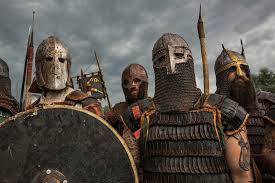
Alfred waited to make sure Guthrum came fully out into the field before he moved on the tenth. They met at Eddington where Elgar’s nephew Ian held the field with three hundred men on horseback. When the two great armies actually met, it was no contest. The Saxons routed the Danes at every turn. In the end, Guthrum had to take his decimated army back to Chippenham where Alfred followed and laid a near perfect siege.

Over the next two weeks, the eastern army out of eastern Berkshire, Surrey, Sussex, and Kent drove the Danes from Wallingford. The Danes in Oxford planned to fight until they saw the size of the opposing force. They agreed to peacefully abandon Oxford and return to London on Akeman Street and Watling Street so as not to disturb Berkshire and to stay away from Surrey. After those two weeks, when the eastern army showed up at Chippenham, Guthrum surrendered. Chippenham might have held out against the West Saxons for a couple of months, but Guthrum knew Alfred could just wait them out. Better to talk.

When Alfred, his ealdormen, and Elgar, Osfirth, and Gwyn representing the old men entered the room with Guthrum and his commanders, Alfred would only accept unconditional surrender.
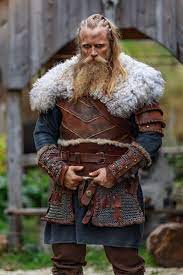
“You think I am trapped here between my men and your men?” Guthrum growled. “You have no idea how trapped I am.” He took another chair and slammed it against the wall and broke it. “I am trapped between Heaven and Hell.” He unbuckled his sword and threw it after the chair before he fell to his knees and wept.

Elgar nudged Alfred, and Alfred got down beside the man and hugged him, which made him weep even harder. Elgar whispered to Osfirth and Gwyn, “Well, my work here is done.”

In good old man fashion, Gwyn responded, “What?”

~~~*~~~

Elgar helped Alfred pick out the locations for his thirty-three forts or Burghs that would defend Wessex against Mercian Danes or further intrusions. He helped Alfred design and build a fleet which could finally defend the coast of Wessex. Then he retired to his son’s house.

Alfred claimed Athelney Fort as an important place for the remembrance of the people of Wessex. It was from Athelney that Wessex, and maybe all of England was saved. And also, Alfred said, “Just in case.”

Eanwulf’s eldest son served Alfred faithfully as ealdorman of Somerset. The younger son got Watchet and took Elgar’s duty of the coastal watch. Elgar’s son finally got the house in Wedmore, so Elgar ended up living where Alfpryd did not want to go. Sadly, Alfpryd died several years earlier, but all their daughters made good marriages, so there was that.  Elgar’s daughter-in-law treated him like a dottering old fool. Elgar did not mind, though, he liked being pampered.

In his last year, Elgar had two visitors of note. The first was Pinoak who caught him up on the doings. Pinoak’s mother May passed away and Pinoak cried a little when he said his father Pinewood, and his great friend Deerrunner would not live much longer.

“It’s okay,” Elgar said and hugged the fairy. “We are all passing away, but life goes on. You just need to step up to lead. Your sister Heath, and your friend Marsham have moved to Northumbria where they are trying to keep an eye on Abraxas, the scoundrel. If you would not mind helping Reed keep an eyes on Alfred, all will be well.”

“I pray for my mother. Is that the right word? I pray that the source may find her time on this earth acceptable in his sight.”

“I am sure he will,” Elgar said. “And I pray for my old friends Gwyn and Osfirth, both of whom passed away recently.”

“I understand the king of Cornwall is looking at Osfirth’s son and thinking about getting Devon back. Osfirth’s son and Alfred are looking at Cornwall and agreed that if the man wants to start something, they will finish it.” Pinoak smiled. “As you once said, they may chase the man all the way to Land’s End. Alfred is talking about taking the rest of Devon and setting the border at the Tamar River. He is also saying Cornwall should be a client state, and maybe doesn’t need a king. Maybe an ealdorman would be better.”
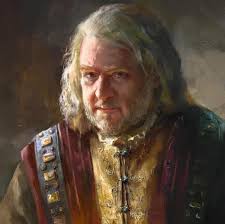
Elgar nodded. “That sounds about right.” He chuckled, but just a little.

The other visitor came just a few days before Elgar finally passed away. It was Abraxas, and the first words out of his mouth was typical. “I am finally going to be rid of you.”

“Careful,” Elgar responded. “Don’t piss me off as long as I am alive, and I would not recommend it after I am gone, either.”
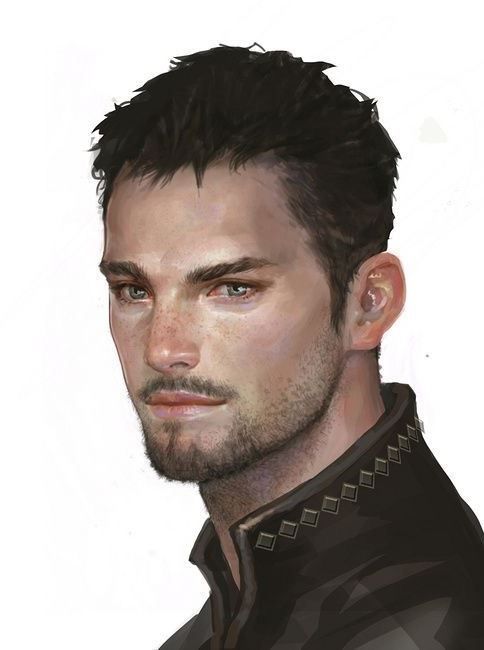
Abraxas stared at the ground for a moment before he confessed. “I can finally do what is in my mind to do.”

“It better not be trying to disturb history.”

“Not fair. Only you know what the future says.”

“Yes, and by the way, I was not happy that you put the fear into the Danes at Eddington. Alfred had things well in hand and did not need your help. I did not say anything sooner because that was the way things were supposed to go, so you guessed right for once… Don’t do it again.”

Abraxas looked at the ground again and looked like a child scolded. He vanished. He came to gloat but it did not work out that way.

Elgar thought it only fair to send a message to the future. Whoever I am in my next life, man or woman, sorry about that. I did get rid of the Flesh Eaters, not that they won’t be back, but sorry about leaving you with Abraxas. Maybe you will be lucky and be born on the other side of the world.
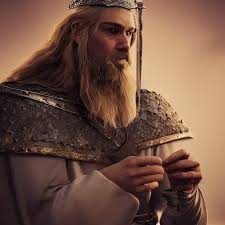
Medieval 5: Elgar 10 Guthrum and Alfred, part 1 of 2

As expected, Guthrum moved men into Chisbury, Wallingford, and Oxford, so along with his contingent in Bath he effectively controlled the northern half of Wiltshire and the western half of Berkshire. From there, he could raid Somerset, southern Wiltshire, northern Hampshire, once reaching all the way to Winchester, eastern Berkshire, and as far as Farnham in Surrey. While his ships continued to raid the coast, he expected Wessex to fall apart. All he did was make people mad.

His raiding parties were continually ambushed and came straggling back with nothing or did not come back at all. By April, it became hard to find men willing to go out from the protection of the towns. Guthrum’s men were frustrated, and not the least with Guthrum himself. The man did not seem to care what his army did. He locked himself away for days at a time and took his books with him because, unlike most of his army, he could read, being of the kingly line and having been educated in the court of the Danish king. He did not even seem surprised when he heard about the disaster in Devon and the death of Ubba. He simply returned to his room, slammed the door, and did not eat any supper.

When Guthrum first arrived in East Anglia with the Great Summer Army, late in the year of 871, he set himself to find out all he could about the people he faced, the Angles and Saxons as well as the Celtic people on the land. He read about the victories and defeats, especially the Danish failures in Northumbria and Wessex, and he gathered and talked to men who had been there. He knew Wessex would be hard to take and hold. He understood it took time to gather the army of Wessex and planned to move straight to the shore, at the root of the country where he could be supplied from the sea. He would work his way inland from there.

At the same time, and maybe it was inevitable, he wanted to understand who these people were. To that end, he got and read what sections of the Bible he could find. He spent days and weeks talking with the priests in East Anglia to get a firm Idea of what this faith was all about. He was a confirmed son of Thor, but this Christ began to eat at him.

When he argued with Halfdan Ragnarson and Halfdan took half of the army north to Northumbria, Guthrum warned him not to interfere with the work of the bishop in York and above all, leave Lindisfarne alone, not that he expected the man to listen. To be fair, Guthrum was not sure why he said that.

Guthrum burned his way to Wareham and got settled in the fortress there before Alfred could arrive with his army. Guthrum had taken hostages all across Wessex, but Alfred’s people had captured some of Guthrum’s men including a couple of ship’s captains from failed raids along the coast. It seemed reasonable to sit down and talk, at least about the exchange of hostages.

Guthrum learned that Alfred was building ships. They were presently in the east around Southampton, Portchester, and the Isle of Wight. Guthrum also noticed that unlike Athelred, Alfred was willing to listen to the men who knew about such things. The siege was well laid. Guthrum had no chance of breaking out of Wareham, much less raiding up into Hampshire or Wiltshire. And if the English were building ships, he knew his time in Wareham would be limited.

Alfred drew up a treaty to exchange hostages and where the Danes promised to leave Wessex, and Guthrum signed it. Guthrum talked to his English hostages, one of whom was a deacon that kept talking to him about the way of Christ, the importance of keeping one’s word and how it was the way of the strong to defend the weak and protect the innocents. It is fair to say Guthrum lashed out in anger when he killed the hostages and ran away to Exeter. For the first time, he fully understood what he did was wrong and worthy of hellfire.

Guthrum stayed in Exeter because of his indecision. Alfred followed and again laid siege to the town to force out the Danes, but Guthrum waited. He had relief ships on the way, a whole fleet of a hundred ships, and all the fighting men to go with them. When Alfred’s pitiful few ships arrived and blocked the Exe River, Guthrum scoffed. But when he learned that a storm in the Channel wrecked his relief fleet and scattered them all along the north coast of Francia, he yelled at his men and threw a chair across the room, breaking the chair.

“They could at least have had the decency to wreck on the shore of Wessex.

Once again Guthrum felt he had no choice but to sit down with Alfred and hammer out a peace treaty. This time, Alfred did not let him leave by sea. He forced Guthrum to march his men up the road nearly a hundred miles to Bath. There, the road would follow the border of Wiltshire and the Mercian client kingdom of Hwicce. Guthrum would be welcomed at any time to cross back into Mercia and leave Wessex alone.

Guthrum settled in Hwicce, including placing a contingent in Pucklechurch that could move on Bath when the time was right. Unfortunately for Guthrum, Hwicce was the most thoroughly Christian nation on the whole island with the believers making up almost one hundred percent of the population. For nearly a year, he could not go anywhere or talk to anyone without the word of God in Christ impacting his ears. He tried to focus on his mission, the conquest of Wessex, but he found it hard.

When Alfred came to Chippenham where he could keep his eye on the Danes in Hwicce, Guthrum thought of it as a gift. Turning the ealdorman of Wiltshire, Wulfhere, was not a hard thing. Dealing with Alfred’s spies took more finesse but it did not take long. He wanted to move on Chippenham over Christmas, but something told him to leave the Christian celebration alone. He broke another chair but waited.

When he finally moved on Chippenham, he was amazed Alfred escaped his hands. He quickly had men in Braydon and Malmesbury on the north end of the Avon River. His men met little resistance in Bath on the other end of the river. He decided for all his planning, Alfred must have been warned and escaped the city, but he had nowhere to go. He would soon be caught.

Guthrum sat in his room and stewed. He actually prayed but it took a long time for him to realize that was what he was doing. The Ubba disaster honestly did not surprise him. The lack of success of his raiding parties out of Wallingford, Chisbury, and Bath also did not surprise him. He figured out almost as fast as Alfred that they would have to meet on the battlefield and settle things once and for all. He fully expected that either he or Alfred would be killed, and that would end it.

Medieval 5: Elgar 9 Odda and Ubba, part 2 of 2

With the dawn, Ubba’s  commanders urged him to overrun the town, but at the same time, Ubba’s spies returned and reported. “They did not lay in any supplies and food. They don’t have any fresh water in the fort.”

Ubba turned to his commanders and smiled. “Why waste our men and blood? We have the gates blocked. We can wait a week and starve them out. Meanwhile, we can send out scouts to survey the area, west, south, and east. Let us see which way we can most easily move to enrich ourselves.”

“We had a good thing in Dyfed.” A man named Carlson complained. “Why did we come here?”

“Because.” Ubba retorted. “Guthrum has some five thousand men in his army. I am told Wessex can just about match that number. But an army cannot be in two places at once and right now they are focused on Guthrum. We can pick Devon clean and maybe Somerset, at least the western half of it and leave before Wessex can send any serious opposition. Then again, if Guthrum succeeds, we are safe here in the west end of Wessex to do as we please.”

“We have much to gain and little to lose if we play it smart.” One commander understood.

“Devon has not been in West Saxon hands for very long. They probably can’t raise much of an army. If we are patient, the men in this place will surrender when they get hungry enough and then Devon will be ours for the taking.” Ubba set about securing the siege on Countisbury and the fort while he selected the men to send out to scout and get a good grasp on the lay of the land. Those plans got interrupted when they saw men coming from the east.

Ubba’s men hurried to fortify that side of his camp. When he managed a count, he decided they only had three or four hundred men. “Probably the coastal watch from west Somerset,” Ubba said. “I don’t know how they knew we were here to come running, but it is a gift for us. We still have twice their number if you count them and the men in the fort together, and they are divided. It should not be hard to kill off one and then the other, and the coast of both Devon and Somerset will be ours for the taking.”

It sounded good in theory, but the dwarves picked up a second hundred coming through the Brendon Hills. Somehow, they got around Gwyn and his men and headed toward the coast and the twenty-three longships there. They had in mind first to make sure the Vikings had no means of escape. They figured with the ways east and west blocked by men, the Vikings only had the south as an escape route. They and their axes would happily chase the Vikings all the way to Dartmoor if necessary.

The Dwarfs with some judicious arrows from Pinoak’s people made short work of the hundred Danes Ubba left to guard the ships. Then they turned their axes on the ships themselves, though they mostly cut the anchors and shoved the ships out into the water. The water sprites in that area dragged the ships into the deep water where Ubba’s men could not get at them, and the dwarves were able to turn and face the Vikings in case Ubba sent his men to save the ships.

Ubba quickly turned his eyes toward the south, but he found no escape in that direction as the main force from Devon, about nine hundred men formed a wall and moved slowly forward. Ubba yelled. “Form up. Form the line. Make the wall. We can win this.”

“I hope,” Carlson mumbled.

Gwyn and Osfirth linked up and between them, they matched the Danes in numbers. it was a bit over twelve hundred Saxons and Celts versus a bit under twelve hundred Danes, and the Danes did not have time to set their order and keep any in reserve.

Copperhand yelled at the Vikings but he kept his dwarfs back from the men. Pinoak got the word that the Dwarves had come out of their place and what they were doing, and he told Elgar. Elgar yelled, but then he settled down and gave himself a massive headache, projecting his thoughts all that distance to Copperhand and whatever other dwarves might be listening.

You had your fun. You can stay back and prevent any Vikings that may try to escape down the shore or maybe try and swim to the ships, but let the men fight their own battle. Most of your people can’t tell the difference between Saxons and Danes, and if you start killing my Saxons I will be very angry.

Copperhand yelled back, but he kept two long ships intact as enticements to Ubba’s men, and in the course of the battle, there were some that made the attempt, so Copperhand and his got to chop up some Danes. They were not entirely disappointed.

Gwyn and Osfirth had mostly farmers and fishermen in their ranks. That just meant they had strong arms, backs, and legs. They could push a spear of swing a sword as well as any man, and hold their shields up all day long, but the Danes had mostly veterans of many battles. They had all the battle experience on their side and had learned some lessons the Saxons hardly imagined. Though the sides were about even in numbers, there seemed little doubt that the Danes would win the day, that is, until Odda moved.

Odda picked up another hundred men in Countisbury, plus he had a hundred or so men in green that he knew were Elgar’s people. They were in fact Pinoak’s fairies and a contingent of local fee, elves, gnomes, and such that manifested to help out. Odda knew if the Danes won the battle, he would be stuck with no food or water. He did not imagine he had any choice. He and his men charged out of the fort at the back of the Danes and hit them in the rear with five hundred new swords and arrows, The Danish line shattered.

Three men in their fifties ran with Odda and knocked him down. They knocked him down three times before the old man did not have the strength to get up again. He laid there in the grass and threatened the men. Those men understood, but they hovered around the seventy-year-old to protect him from the battle. In the end, Odda sat up and asked.

“How did we do?”

“Complete victory,” one of the men said. “Our losses were light. They lost their whole army. We have about four hundred prisoners.”

“Ubba?” Odda asked.

“Found. Dead,” the man said. Odda nodded, and two of the men helped him back to his feet.

************************

MONDAY

The story of Alfred and Guthrum comes to a different conclusion. Until then, Happy Reading

*

Medieval 5: Elgar 9 Odda and Ubba, part 1 of 2

When Alfred reached the fortress of Athelney, Elgar limped out to greet him. “No way the Danes will find you here,” Elgar said. “The island is mist covered on a regular basis, especially in the colder months, and you have to know where to put your feet to not be swallowed up by the quick mud or sunk in a pool of brackish water.”

He looked to see that his wife Alfpryd and his youngest daughter Alfflaed welcomed Alfred’s wife and children with open arms. Poor Elgar was fifty-eight, about as old as he sometimes lived in the old days. His legs were giving him trouble, but he was as ready as ever to fight, at least as much as he was able. He introduced the sons of his brother Eanwulf, the elder of which was technically the ealdorman of Somerset. Alfred knew them. Elgar also introduced his own son, still technically a teenager, though he seemed full grown enough. Then he showed off the fortress and sat Alfred down for some food and talk.

“Rest later,” Elgar said. “I don’t know what you may be thinking but your people are loyal and ready to fight when you give the word. I have talked with Osweald in Dorset and old man Odda in Devon. The man has to be near seventy, but Osfirth, who is my age, is in much better shape than I am, and Gwyn, who is on the Somerset coast is only a couple of years older than Osfirth and ready to fight. Osric is holding on in Hampshire, and Ethelwulf has Berkshire well in hand. Your thegans are firmly with you, not liking the idea of Danish overlords.”

“And how do you know this?”

“Spies. My spies who are loyal. Wulfhere is an outlier. He does not even speak for most of Wiltshire. I’m sorry I lost Tata, but his brother Ian of Eddington is ready to call up his men when you are ready.”

“Ian?” one man asked.

“My sister says it is the Old Anglish version of John from the Bible.”

“How about now,” Alfred said and raised his voice a little. “I am ready now.”

Elgar let the silence that followed the outburst play out before he shook his head. “No. You are not anywhere near ready, and I did not bring you here to this safe haven just for an overnight. We need several months at the least to plan our moves. We need the armies from the frontier shires of Somerset, Dorset, and Devon to meet up and move together. The men from Hampshire and any they can get from Sussex need to join together. Berkshire and I don’t expect much from Kent. They are having a hard enough time just holding their own, but certainly the men from Surrey need to Join Berkshire. That is three armies, and they need to move on the objective at the same time and arrive together.”

“Chippenham, and before Guthrum and Wulfhere move in the spring,” Alfred said.

“Not realistic,” Elgar said. “But we should be able to face the Great Heathen Army sometime in the spring, and in Wiltshire. In the meantime, let me show you what we can do to disrupt whatever plans they may be making. In the future, it is called guerilla warfare.

~~~*~~~

Elgar neglected to tell Alfred that he had gotten word of the backend assault on his people. Ubba, son of Ragnar Lodbrok was preparing to leave Dyfed in Wales and come ashore somewhere between the Parrett River and Pilton in Devon. He had arranged with Guthrum to pillage Devon down to Exeter, then follow the main road through southeastern Devon to the back end of Somerset at the Parrett River. From there, he could pillage Somerset or Dorset as he pleased. Of course, Ubba would decide for himself what he might do, and that might involve ravaging the coast to the Parrett River and then raiding up the river. He might ignore Devon altogether, or maybe give it back to the Cornish.

Eanwulf’s old friend Odda, near seventy years old, built the coastal watch from scratch back in the day. He got word that Ubba was coming and wanted to catch him on the shore. He personally took charge, and made the younger man, Osfirth set about gathering the fighting men of Devon so they could move as soon as they got word from Alfred. Of course, Osfirth, the younger man was near sixty himself.

Starting in Pilton, Odda followed the Danish sails down the coast toward Countisbury on the Somerset border. He had three hundred men gathered by the time he reached Countisbury and he imagined that might be twice what the Danes had. He had gotten used to raids of two hundred or maybe three hundred Danes and thought this would be the same. With another hundred raised in Countisbury, he would have half again the numbers of the Danes he expected. Then again, if the Danes landed in Somerset, he could bring his three hundred down the coast to Carhampton, as the case may be.

Osfirth and Gwyn had a better idea what they might be facing, or maybe they thought it through. Osfirth, as soon as he gathered the army of Devon, about eight hundred men, he moved north, stopping in Crediton and again at the western edge of Exmoor. He arrived one day after Ubba landed twenty-three ships and twelve hundred men. Odda, not having nearly the men to meet such a force, retreated to the town and the fort of Cynwit.

At the same time as the Danes turned their ships to the shore, Gwyn set out from Carhampton where he had gathered his three hundred of the Somerset coastal watch. Since he was getting his messages from a fairy, one of the ones assigned by Pinoak to watch the shore, it did not surprise him when he got told that Copperhand and a hundred dwarfs from the Polden Hills were following.

“I have no power to stop them following,” Gwyn told his commanders over supper. “I just hope they don’t get hurt. Elgar would not be happy.”

“I hope we don’t get hurt,” one of the commanders said, and the others laughed nervously.

Medieval 5: Elgar 8 The Struggle, part 3 of 3

Deerrunner turned from the window. “You best hurry. Wulfhere has ridden out to meet Guthrum. He has his men primed to stop you from leaving the fort, but our people have secured one gate.”

“My wife, Ealhswith, and the children.” Alfred looked worried.

“My son, Pinoak and the ladies that came into the fort to help Wulfhere entertain the king.” Pinewood explained. “They are all our ladies, and they have your wife and children well in hand. They will meet us at the gate. You just need to decide which men you can truly trust so they can escape with us.”

“Only those you are sure of,” Deerrunner said. “And if there is anything you need to fetch from your rooms.”

“My books,” Alfred said.

“Already packed,” Deerrunner assured him.

Two ox drawn wagons with women and children, and two dozen men rode out from the southern gate as the sun set. They followed good paths so the wagons had no trouble, and by sunrise they reached the River Avon. Alfred looked back.

“That’s not possible,” he said. “We can’t have traveled all that distance in one night, especially with ox-drawn wagons.”

“There are ways,” Pinewood told him. “Hidden ways, like the ways you went to escape Reading and the Danes sent after you.”

“Oh, yes,” Alfred remembered, and he helped load his wife and children on the rafts that were conveniently stationed by the riverside. He decided it was best not to question too much, but one thing he wanted to know. “Where are you taking me? Are we going to Bath?” He imagined from Bath he could keep a watch on the events in Wiltshire and find a way to drive out Guthrum and Wulfhere with him.

“No majesty,” Pinewood answered him. “Bath is already overrun with Danes. They gathered at Pucklechurch and waited until they got the signal, then they fell on the city before the city could prepare to defend themselves. There is still some fighting going on around the town, but it is minor. The Danes own that place.”

“What of Chisbury?” Alfred wondered how close to Winchester this conspiracy of his ealdorman went.

“Still Free, but probably not for long. I imagine Wallingford and Oxford will not be far behind and then the better half of Wiltshire and Berkshire will be in Danish hands. Once the line between Bath, Chisbury and Wallingford on the Thames is solid, he can raid as far away as Shaftsey, Eashing, Winchester, Wilton, and Axebridge. He may be able to push into Somerset as far as Glastonbury.”

“Meanwhile, the coast from Exeter to Hastings is continually raided by a whole fleet of ships, mostly out of East Anglia, Essex, and the Thames in Eastern Kent, but some also from York and Northumbria. The coastal watch is fighting back, but they lose the battles as many as they win.” Alfred tried not to mope.

When they reached the point in the river where the water flowed west toward the Severn Estuary, they found their horses mysteriously waiting for them. They rode down into the Selwood forest hoping to escape whatever patrols or foraging parties the Danes might send out from Bath. They almost did not make it.

Deerrunner, Pinewood, Alfred and his Thegans with plenty of men in green had to fight off one group so the women and children could be taken to safety. The dark came on soon enough and the fighting had to break off, but then some of the men got separated in the dark. Too bad for the Danes. The dark elves, that is, the goblins that gave Selwood a bit of a reputation routinely got left out when the fighting happened. They had plenty of pent up aggression that just waited for a Dane to be alone.

Alfred was also one that got separated and lost but he soon came to a cabin in the woods. That was fortunate because the goblins were not always the best at telling the difference between Saxons and Danes. Alfred hoped it was one of Elgar’s people. If not, then maybe a young woodcutter and his family. He hoped it was not a witch. It turned out to be an old Crone who let him in but warned him not to touch anything.

“My husband is out on escort duty. No telling how long that will last.”

“My name is Alfred,” Alfred admitted, trying to be friendly despite the heavy weight of worry that surrounded his thoughts.

“Oh? Good to meet you I suppose. My name is May, and I have an errand to run.” She looked him over and decided she had no choice. “I have wheat cakes in the oven, there. Try not to let them burn and don’t break anything while I am gone.” She left abruptly.

Alfred went to the door. He went out to his horse but left the door open. He unsaddled his horse and tied the animal by a trough he found that had water in it. He looked out into the dark, not having dared to move beyond the door light. There were too many strange sounds. He swore he saw two bright eyes staring at him from out of the dark.

“You have been a good horse,” he told his horse and patted him before he rushed back indoors to the firelight. He sat down at the table and wondered if there were any lamps or candles around that he could also light, but it was just a passing thought. Once he sat, all the tension from battle poured out of him and his muscles relaxed all at once. It was a wonder that he did not fall instantly asleep. Only his worry remained. He thought all might be lost.

The Channel coast was under constant assault. two hundred to five hundred to as many as eight hundred men in ships showed up almost anywhere, any time. The Bishop of Selsey in Sussex abandoned his post, and now the whole coast there has burned. Kent, Sussex, Hampshire, Dorset, and Devon are all on fire, and Alfred did not have a fleet of ships to stop them. He needed ships, and forts, strong points built around the countryside where people could flee in time of trouble. He also needed a good night’s sleep.

To Alfred’s credit, he woke up when he smelled something burning. He remembered and got the wheat cakes out of the oven when they were still salvageable, for the most part. Naturally, that was when May returned, with Pinewood. Pinewood stood back and let May upbraid the poor man. May eventually ran out of things to say and kissed Pinewood and slipped into the back room.

“My wife,” Pinewood said. “She said she found you wandering in the dark and called to you to save you from the spookies. She thought I might like to get you back in one piece.”

“Spookies?” Alfred asked, remembering the eyes staring at him in the dark.

“The goblins are out tonight but come. We will be safe enough to take you to the others.”

Alfred followed Pinewood outside and found his horse saddled and several men in green mounted and ready to ride. When they arrived in the elf camp, Alfred hugged and kissed his wife and two children before he fell over on the nearest bed. He did not stay awake long, but he did try to decide what was worse, being caught by goblins or Missus May’s scolding.  He decided the Danes were worse and he tried not to hope the goblins caught them.

Medieval 5: Elgar 8 The Struggle, part 2 of 3

Elgar had a bad feeling when he heard the Danes returned to Eastern Mercia to a place called Torksey where they wintered over 872-873. They built up their forces, drawing heavily on men from Northumbria and York as well as the Great Summer Army that landed in East Anglia in 871. By the time they reached Repton on the border of Danish East Mercia and Anglo-Saxon West Mercia, they were again the Great Heathen Army and ready to overrun the last of the Anglo-Saxon kingdoms on the Island.

In 874, they invaded West Mercia. They drove out the king and installed a puppet king that would do what he was told. Then they looked at what remained unconquered. The two Danish leaders argued. Guthrum of East Anglia was relatively new to the land. He saw what happened at Reading and said they did it all wrong.

“I was the one who did it,” Halfdan argued. “I’m telling you my grandfather Lodbrok and my father Ragnar both said don’t go to Wessex because you will lose. I warned the king, but he did not listen. Bagsecg got himself killed at Ashdown, the first serious engagement with the West Saxons, a battle they won.”

“But you won most of the subsequent engagements,” Guthrum pointed out.

“But hardly worth the winning,” Halfdan yelled. “They blocked us from going east to link up with the main part of your Summer Army. They blocked us from moving south into the heart of Wessex. They wore us out. We were lucky Athelred died and Alfred was willing to pay us off to go away. We could not have done much else.”

“You built your stronghold on the Mercian-Wessex border,” Guthrum said. “But I have noticed Wessex is a big place. It takes time for them to gather their forces. I propose building a stronghold deep within the kingdom, somewhere on the southern border where we can have access to ships and supplies.”

“Good luck with that,” Halfdan said, and he took half of the army back north to attack that half of Northumbria that remained in Anglo-Saxon hands. He thought he might test the Celts of Strathclyde, and maybe even the Picts.

In 874, Guthrum wintered in Cambridge in Mercia but near the East Anglia and Essex borders where he could build his forces, better plan his strategy, and arrange for those ships and supplies. The next year, he marched rapidly down the roads the Saxons so kindly provided and overran Wareham on the coast of Dorset.

Alfred and his army could not dislodge them, or it would take a long time since they had access to the sea and Alfred did not have a navy. He called up what ships he could but did not deploy them around Wareham. They were not ready. So Alfred elected to talk to Guthrum and the other leaders of the Viking army. They drew up an agreement concerning the exchange of hostages and safe passage for the Danes to leave Wessex and not come back. Money changed hands, but even as Alfred pulled back his forces, the Danes killed the hostages and snuck out of town in the night.

Guthrum and his army landed in Exeter and continued to raid along the whole Channel coast of Wessex. That was not what they agreed. By then, Alfred’s little navy was able to blockade the Viking ships in the Exeter estuary. Guthrum did not worry. He expected a relief fleet any day, but that fleet got wrecked and scattered by a storm in the Channel. Guthrum was forced to concede.

In 877, Guthrum and his army moved to Western Mercia and he rethought his strategy. He decided on a to pincer approach. If Halfdan, son of Ragnar would not do it, maybe Ubba, son of Ragnar could be enticed to come out of Wales.

~~~*~~~

Despite the fact that most of the previous invasion of Wessex took place in January, including the battles of Reading, Ashdown, and Basing, generally speaking both Vikings and Saxons did not bring their armies out in the cold and snow. Armies normally wintered in towns. They did not go sloshing around outdoors.

Alfred felt fairly safe celebrating Christmas and the new year in Chippenham, up in Wiltshire near the Mercian border. Wulfhere, the ealdorman of Wiltshire went overboard on the feast days since he was entertaining the king. That was nice, but mostly Alfred wanted to keep one eye on Guthrum and his army to see when the man moved. He really did not expect Guthrum to move until spring, but he wanted to be sure.

 “Gentlemen…and Ladies,” Wulfhere stood at the front of the hall and got everyone’s attention. “I apologize, but it seems I have some business to attend, messengers, nothing crucial but I have to absent myself from the merrymaking. Please carry on and enjoy the feast, and I will see you all tomorrow. Again, my apologies.” He smiled, signaled the musicians to continue, and left the hall.

Alfred wondered what could be so important. He watched Wulfhere go and caught sight of two older men in green headed toward his table. Elgar’s men, he remembered. The wild men who lived in the forests and swamps where most men did not go. They lived on the edge of society since Roman times, or maybe even earlier. He would find out what they wanted.

“My name is Pinewood. My companion is Deerrunner,” the old man said. Deerrunner looked around the room. “A word in private would be best.”

“You are Elgar’s people,” Alfred wanted to be sure.

Pinewood nodded. “Lord Elgar asked us to keep an eye out for you and keep one eye on the Danes. The Danes have come out from their place.”

“What?” Alfred joined Deerrunner in looking around before he spoke. “Come with me,” he said and led them to an annex room unoccupied at the present. Two of his thegans wanted to come with him, but he told them to wait.

“Tell me,” Alfred ordered.

“Best get your things and the men you can trust, if any,” Deerrunner said as he stepped to the one window in the room and looked down on the courtyard.

“Wulfhere has made a deal with Guthrum,” Pinewood said plainly. “Guthrum and his army are only hours away. They left Gloucester at nightfall and stayed on the roads. they moved twenty miles in the night, took ten hours in the morning to rest, and started again in the early afternoon. They should be here by midnight or in the dark of the morning hours.”

“What? Why am I just hearing of this? What happened to my spies?”

“Your spies have either been killed or bought.”

“What? What happened to Elgar’s nephew, Tata—Peter, from Eddington?”

“Tata lies among the slain,” Pinewood lowered his eyes and his face like a man who somehow failed at his task.

************************

MONDAY

Alfred escapes the trap but it is a long way to safety. Until next time, Happy Reading

*

Medieval 5: Elgar 8 The Struggle, part 1 of 3

Things finally heated up in 870. The Danes occupied Reading, a town on the border between Berkshire and Mercia. Both sides claimed the town, but presently, the Danes owned it. Athelred began to gather his army. The Danes waited. Given their failures in Wessex, this time they waited to see what Wessex would do first.

Ethelwulf, the ealdorman of Berkshire caught a foraging party sent out from Reading. The Danes were about half Ethelwulf’s numbers, but they fought well even if the outcome was inevitable. The battle took place near Englefield and Ethelwulf had a great victory there. King Athelred was greatly encouraged as he and his younger brother Alfred brought up the main portion of the army to join Ethelwulf and attack Reading. They hoped to drive out the Danes and remind the Danes that the West Saxons were not to be trifled with. It did not go as planned.

Athelred still did not know how to lay a town under siege, and he refused to listen to anyone like Elgar who knew how to do it properly. There were weak points and some actual holes in Athelred’s line of encirclement. The Danish commanders took advantage of that. They burst out of the gates and counterattacked. The West Saxon siege lines fell apart and Athelred’s army ran for their lives. Ethelwulf, the victor at Englefield just a few days earlier was killed. Athelred and Alfred escaped, but only with Elgar’s help.

Elgar took the two of them and much of the army by secret elf paths that the Danes would never find. They moved further in a sort time than humanly possible and soon got out of range of the Danish patrols. Athelred complained the whole time. Elgar simply replied, “Shut up,” and after a short time Alfred said the same thing.

The Danes wanted to follow up their victory at Reading. They arrived at Ashdown and divided their forces, planning to send half their army east toward Kent while the other half moved on Hampshire and the west. They were surprised when the West Saxon army arrived, mostly intact. Athelred copied the Danish formation, dividing his army between himself and Alfred. Then Athelred went to church, and some have thought he wanted to get God on his side.

“God knows the end from the beginning,” Elgar told Alfred. “He already knows who will win the battle. While it is good to submit to God and accept the outcome God decides, there is no way Athelred is going to bribe God or convince God to be on his side. I don’t think God is interested in taking sides when sinful men have a mind to kill each other. Our place is to fight just as hard as we can, to do our duty faithfully, but then to accept however the Lord decides to work things out. You cannot argue with God, and if he has decided one thing, you cannot change his mind. Faithfully do your part, do your duty with all of your might, but leave the outcome in God’s hands.”

Alfred understood. He prepared his half of the army to face the enemy and waited. He waited a long time, but Athelred never came out from his devotions, and finally Elgar’s men in green reported movement in the Danish lines. The Danes had camped along the ridge so they had the strong position. If they remained patient, the West Saxons would have had to charge uphill. But they got tired of waiting.

As the Danes came down, at least Alfred was ready. He charged, and Elgar had to use his little ones to keep the other Danish division from out flanking Alfred’s men. The division of Danes that faced Athelred’s men had to hastily fortify their camp against the uncanny marksmanship of the enemy. Meanwhile, Athelred continued to bargain with God.

Alfred won his battle. The Danes were defeated, and the other Danish division withdrew from the battlefield rather than remain to be picked off by arrows, one by one. It did not become a rout, but Alfred’s men, and the men from Athelred’s camp that joined them, continued to find pockets of the enemy that they chased well into the night. Athelred did not know where to go from there. He claimed a great victory, though he missed it, and because of that most of the Danish army survived.

The Danes first moved their army to the east rather than Hampshire and the heart of Wessex. They knew all about Weland and how he burned Winchester and that really angered the West Saxons. Besides, they hoped to pick up fresh men that currently held the northeast from London to Canterbury. Two weeks after Ashdown, Athelred and Alfred caught up with the Danes at the king’s estate of Basing. The battle was hard fought, but in the end the West Saxons had to withdraw. It was a victory for the Danes but a costly one as it turned out only the West Saxons got fresh men from Kent, Surrey, and Sussex; about two thousand.

Someone among the Danes figured out they were being followed and tracked. Elgar suspected Abraxas told them, but he decided not to find out. The Danes backed up. They went through Englefield and followed a zig-zag pattern up to Reading. They hoped to lose whoever was tracking them, but Pinoak and his fairy troop would never be fooled.

When the Danes got to Reading, they stayed for a month to lick their wounds. Athelred and the West Saxons did the same and appreciated the breather, but even Athelred understood the war was not over. At the end of February the Danes snuck out of the town under cover of darkness. Pinoak and his people were right there to watch. Athelred moved north while the Danes moved south and they met at a place called Meretun.

Meretun was another hard fought so-called victory for the Danes. They were losing for most of the day but managed to regroup at one point and pulled it out. The casualties on both sides were atrocious. Heahmund, the militant bishop of Sherborne died. He eventually got replaced by a man named Athelheah who seemed more concerned with the conduct of the church rather than the conduct of the army. Athelred was also badly wounded in the fighting. The Danes claimed the victory, but to be clear, the West Saxons pulled back when Athelred was wounded and could no longer fight.

He was carried all the way down the Dorchester Road to Wimborne where he finally gave up the fight and died of his wound. He was buried there, and that left Alfred as the last of the five sons of King Athelwulf. Athelred had married, and had two sons, but they were both infants. Alfred was young at twenty-three, but he was at least full grown and actually a bit older than Athelred had been when he took the crown.

While Alfred, Elgar, and Osweald of Dorset buried Athelred, the Danes thought to strike. Uncle Osric led the men of Hampshire, Wiltshire, and Berkshire to battle. Osric lost, but he did enough damage to the Danes to keep them from rampaging through the land. By the time Alfred arrived with men from Dorset and Somerset, he found the Danes at Wilton in Wiltshire. They managed to push well into Wessex, but they had failed to even reach Hampshire.

The battle was fierce. Once again it got counted as a Danish victory, but by then both sides were exhausted and hardly able to continue. It was an easy thing to arrange a meeting between the two sides. Alfred paid the Danes to go away, having the example of Burgred who paid off the Danes in Nottingham.

“Hopefully, this will give us enough time to rest and rebuild our forces for when they break their agreement,” Alfred explained.

Elgar, having turned fifty-one felt he was too old to argue. On the way home, he thought to stop in Athelney to check on the fortress there.

2024 Coming Attractions

Beginning MONDAY January 1, 2024

Kairos Medieval: Medieval Tales 

1) The story of Genevieve and Charlemagne. Genevieve only escapes her Cinderella life when her prince (Charles, King of the Franks) comes to town. Unfortunately, her stepmother’s “friends” haunt her days right up to Rome and the Christmas day coronation of Charles, the first Holy Roman Emperor.

2) The story of Thegn Elgar and Alfred the Great. Elgar (Eangar) fights for Somerset, for his Ealdorman father Eanric and later for his brother Eanwulf, and for the king. The Vikings are a terrible scourge who need to be driven from the English shores, and worse, the aliens Elgar calls Flesh Eaters don’t belong on this planet at all.

3) The stories of Kirstie the shield maiden of Strindlos in the Trondelag and Yasmina, Princess of Mecca and Medina, two young women whose stories are intertwined, almost like twins, though they are separated by more than thirty years.

Kirstie (Kristina) of Strindlos takes up her battle axe and sails with the Vikings, not for conquest, but because the god Abraxas is scattering terrible hags along the continental coast, looking for a safe way to return to the continent.

Meanwhile, Yasmina, her maid Aisha, and her faithful retainer al-Rahim also travel but across the sea of sand. They escape Mecca when the fanatic Qarmatians come calling. They are chased up the Hejaz, across the Negev and Sinai, and down into Egypt. They find temporary safety in Alexandria before the equally fanatic Fatimids arrive.

*

Interlude (TBA)

Somewhere between the two medieval books I hope to post either a novelette (6-10 weeks) if I ever get the thing finished, or maybe a few short stories, or possibly we can slip back into the BC for a different Kairos book like a story in the Americas (Ecuador, Columbia, and the Mojave) from roughly 3950-3450 BC or a story a bit closer to home, like between 1650 and 1250 BC among the gods, which would be the first stories of the goddess Amphitrite, Queen of the Sea, and the Nameless god of Asgard.

I am open to votes, but in any case, I want something between the two medieval books, just to have a break.

Kairos Medieval: Before Sunrise

This book will begin at the end of 2024 and post well into 2025, or it may begin as late as the ides of March 2025 depending on what the interlude story happens to be.

The book begins with the second stories of Kristina and Yasmina where they are forced to marry the wrong person, get out of that bad situation, and marry the right person, and the book ends with the story of Don Giovanni and his circus: The Greatest Show on Earth. (He stole that line from the future but he figures no one will sue him in the year Y1K).

Note

For those of you who read the two Kairos Medieval stories of Greta, the Wise Woman of Dacia, with her two partners in time, Festuscato, the Last Senator of Rome and Gerraint in the Days of King Arthur, and especially for those who went on to read the two Kairos Medieval books of Marguerite, where Festuscato and Gerraint finished their stories as well, it seemed only fair to post the last two books in the Kairos Medieval group. Notice I used the word group, not series.

I am reluctant to call them book 5 and book 6 in a series. I don’t want anyone to think they have to read books 1-4 to understand what is going on in books 5 and 6. I  am also reluctant to call them a series, for that matter, because it is not that kind of a series. Each lifetime of the Kairos is a story unto itself. Even when the story is split between two books as with Margueritte and Greta, I work hard to make each “half” a complete story with a beginning, middle, and end that comes to a satisfying conclusion and doesn’t leave cliffhangers.

So, if you read the stories of Greta and Margueritte, great. But if you didn’t read those stories that should not make any difference. Medieval Tales and Before Sunrise are stories unto themselves. I only hope you will enjoy them.

*

Avalon 8.5 Hiding from Them, part 1 of 6

After 820 A.D. Wessex

Kairos 103: Elgar, the Defender

Recording …

“Canterbury,” Lincoln blurted out the place name.  No telling what prompted him to make that guess.  They came out in the middle of a farm field, but no one was around to ask.  The farm looked abandoned, but when they got to the road, they found one man, a monk headed in their direction.

“Canterbury,” the man confirmed.  “Old Durovernum.”

“I see some smoke rising from the city,” Boston said.  “It looks like something got burned.”

“The Danes are burning the monastery.  I am the sole survivor.”  The monk sighed and looked ready to keep walking.  “I am going to Winchester, if I can.”

“Vikings?” Katie asked.

The monk paused to look up at her.  “They have been called that.”

“You have a name?” Alexis asked.

“Wilimbro,” the man said.  “Most men call me William the Lesser.”

“The lesser?” Lockhart asked.

“The other William was your size, though he had the temperament of a child.  He would never hurt anyone.”  William dropped a tear.

“Winchester?”  Lockhart turned to Boston and Lincoln who were conferring.

“That may be where the Kairos is,” Boston said.  “It is hard to pinpoint.”

“The map is not clear. We are starting to have more towns and villages showing on the map and it makes it hard to point to one,” Lincoln looked up.  “He is in that area.”

“Good enough,” Lockhart said and turned to William.  “You are welcome to ride with us.”

William nodded right away.  “Thank you.  The road is a dangerous place for one man on foot, even without the Danes—the Vikings.”

It took a bit for Nanette to bring up Tony’s horse.  “Tony doesn’t mind staying with the wagon,” she said.  “But he would like to know what the road is like.”

William nodded again.  “I have been twice to Winchester.  In better times.  The road between Canterbury and Winchester is good, well kept.  Your wagon looks sturdy.  You will be fine.”  He paused before he put his foot in the stirrup and mounted.  He smiled at the others.

“Footrests,” Lincoln called them, and they headed off down the road.

###

“Deerrunner, you look tired,” Elgar said.  “Sit and join us around the fire.”

Deerrunner looked at Osfirth, the German and Gwyn the Celt before he took a seat, and he sat on the log without mumbling about aching knees or anything, though he had some gray in his hair.  Elgar knew that elves only went gray in the last hundred years or so of their life.  Time moved on.

Apparently, Deerrunner was thinking much of the same thing.  “It has been more than three-hundred years since Gerraint traveled these roads.  That seems long enough for anyone.”

Elgar smiled, but he knew elves lived closer to a thousand years.  Deerrunner turned six hundred in Gerraint’s day. That would make him over nine hundred.

“You bring us news?” Gwyn had little patience.

Elgar shook his head.  “That is Pinewood’s job.”  He looked up.  “Where is Lord Pinewood?”

“Here, Lord,” Pinewood said, as the fairy came from the woods, big sized, wearing the green jerkin and gray hooded cloak of a hunter.  Deerrunner also dressed in green, but he also wore a glamour to make him appear human.  The pointed ears would have raised too many questions, and Osfirth was a bit superstitious without that help.  Pinewood sat and Elgar turned on the old elf, or rather, the elder elf.

“So, Deerrunner.  Explain.”

Deerrunner picked up a stick and stirred the fire. “You have often said we should not get involved in strictly human battles, but Marsham and many of the young insisted on following.  I thought it only right to accompany them, to keep them out of trouble.”

“Good of you,” Elgar said.  “You mean, Letty’s son?”

“The same,” Deerrunner said, and added, “Three hundred years.” He reminded Elgar.

“My, how time flies,” Elgar said.

“I understand the exuberance of youth,’ Pinewood joined the conversation.  “I have the same problem with some of the young, er, hunters.”  He almost said fairies.

“By the way,” Deerrunner continued. “I understand Bogus and Piebald are around, and Old Dumfries is in the underground awaiting a call.”

“By the way,” Pinewood mirrored Deerrunner.  “Your friends, the Travelers from Avalon are on their way.”

Elgar rubbed his beard.  “That might be important.  Lately, they have been developing the bad habit of turning up when the trouble strikes.”

###

On that same evening, the travelers sat around a fire of their own.

“We made good time today,” Katie said.  “I estimate twenty-five or so miles.  If the road stays good, we might make Winchester in five days.”

“Or the usual seven to ten if the road turns, or we get stopped, or run into some kind of army, or Vikings,” Lincoln countered.

William waved his hand at the darkening sky.  “Your Vikings have taken the whole coast, the whole bay between Canterbury and London.  This was not a raiding party, but an army, a huge heathen army.  I heard they beat back the King of Mercia and pushed up the Thames. Who knows the truth of it or where they will land?”

Katie looked at Tony, but Tony just smiled and said nothing.  “So, fix a date?” Katie asked.

“850-851,” Lincoln said, and turned his eyes to the database.

“I want to hear about Elgar,” Boston said.

“We all do,” Sukki said, and Nanette even turned her eyes from Decker to listen.

Lincoln read a little more but opened up after a minute.  “Not much to tell.  A second son, about… fourteen years younger than his brother.  His father…now his brother, I suppose, is the Eorldomen or Alderman of Somerset.  Elgar does not stay home much, though he has several daughters.  As a Thane, a nobleman, he serves mostly as the king’s man.  His brother gives him Watchet, a town fortress on the Somerset coast and land west to the border of Devon, and east to the mouth of the Parret River and charges him to keep the Vikings out of Somerset.  But mostly he follows the kings, one after another.  From Ethelwulf, and all four sons down to Alfred.”

“Alfred?  The Great?”  Tony asked.

“That is what it says,” Lincoln confirmed.

“Who is Alfred the Great?” Lockhart asked.

Katie would have answered, but she looked at William and said, “The future.”

William got the hint.  “I heard the king’s wife, Osburh, had another son.  He can’t be two or three.  He might be Alfred.”  People nodded but continued to look at him.  “But for me, I have neglected my duties and my calling.  If you will excuse me, I have evening prayers.”  He stepped over to the horses, spread out his blanket and tuned out the world.
Katie quietly explained a bit about Alfred to Lockhart and the others, Lincoln filling in a few gaps in her knowledge.  Tony and Decker checked on the horses.  Tony said it was because he needed to keep an eye on Ghost.  The poor mule had worked long and hard and for a lot of miles.  Decker said he would go with him, because it was getting uncomfortable being so close to Nanette without actually touching her.  His resistance was breaking down.  Resistance is futile. He remembered hearing that somewhere.

Lockhart said, “Regular watch.”