Medieval 5: K and Y 16 Going Again, part 1 of 4

Kirstie

Kirstie got to do some serious thinking on the voyage home. It occurred to her that Abraxas would not be giving up. The church covered much of Europe, but there were still pockets of paganism and other religions vying for the people’s attention. The right Gael could go to Spain where Christianity and Islam struggled. Frisia, and Flanders would be easy targets with the right bloodline. He could try Brittany again like he did in Margueritte’s life, or maybe southern Francia around Septimania or Provence, like Arles, though she remembered he tried that once already. Denmark would be easy. He could send a Dane, an Angle, or a Jute to the Jutland peninsula. She worried herself to no end.

She knew better than to try to get Jarl to turn to the English shore, though she did ask him several times. She even suggested he could drop her off and leave her there. Jarl shook his head. “Inga, Mother Vrya, and maybe your giant and other friends might never forgive me.” At least he was talking to her pleasantly again.

“Maybe after you are home, like in a few months, like after the winter?” Kirstie suggested.

Jarl shook his head and Leif looked up because he was never far away and always listening. Jarl spoke plainly. “I am thinking about the town that was at the mouth of the Nid River. The Vanlil killed half the town, and most of the rest fled and settled in with family in other villages. There is plenty of good land there, cleared, and ready to plant. I’m thinking with what we made on this trip I may buy some of it. My younger brother and his young family could move there to keep it and live well.”

Leif interrupted. “I heard the king is offering to pay to repair the docks there, and the shipbuilders are talking about moving their drydocks to that place.”

“But they agreed to build Kare’s ship,” Kirstie said. She knew that much.

Jarl understood but countered her words. “It may be the last ship they build in Strindlos. The town at the Nid mouth is only a day away, and with help from the king, many may go there to rebuild the place. We have an advantage being as close as we are, but I figure we need to move soon and stake our claim before the others come.”

“Lots of people are talking that way,” Leif said. “Maybe the whole village will go there.”

“And, I expect the king will eventually rebuild his house, and probably with stone this time, like a fortress. That will cause even more people to go there to shelter under the protection of the king.” Jarl shook his head for Kirstie. “I have enough to keep me busy for at least the next year. I’m sorry. Besides, we did our hag, and good men died, and Rune did his and more died. I figure it is Harrold’s turn.”

Kirstie curled her lip at the idea of sailing with Harrold but nodded. She did not want to go anywhere on Harrold’s ship. The man upset her, burning churches and monasteries. But mostly, Kare would be aboard the ship, and she did not want to be in such close quarters with him for maybe months.

When they pulled into the dock at Strindlos, Inga came with Mother Vrya. Poor Mother Vrya looked like she was ageing rapidly. She walked with a cane. Hilda was there, with Kare’s friend Thoren of all people, and Alm came, but he kept a couple of steps back from the crowd. Husbands and sons hugged wives and mothers. Some wives and mothers wept when they found out some men died on this voyage. Honestly, Yrsa and Kirstie wanted to cry with them, but Mother Vrya indicated there was some urgency.

“Lind and Gruden came from the king. They heard some dwarfs came down from the mountain to work in the forges. No telling who talked, but they said that only the Kairos could get dwarfs to cooperate in anything. I would not have guessed Lind or especially Gruden even knew the word Kairos. Anyway, the blacksmith and his people admitted nothing. Chief Kerga said nothing, but they went to a few of the outlying farms and seemed to focus on yours.”

“Everyone there seemed human and normal enough,” Inga added. “They have no reason to suspect you except you being a shield maiden is most unusual. I told them your father was a navigator who died in Francia, and you learned navigation from him. That made you a valuable member of any crew. I think they bought it.”

“Are they still here?” Kirstie asked.

“No,” Mother Vrya said. “But they will be back. They spoke with Chief Kerga about moving the whole village to the mouth of the Nid.”

“Nidarosss. Nid mouth,” Kirstie named the town.

“The king wants the town re-founded,” Inga interjected.

“Kerga said he would think about it.”

Kirstie sent up a little prayer that she might live this life without being found by whomever was looking for her—servants of the masters, no doubt. She stopped to hug Hilda and glanced at Thoren whom she thought of as the nice one. “So, are you married yet?” she asked.

Hilda pretended shock, but Thoren said the truth. “Not yet.” He seemed happy about the prospect, and so did Hilda so Kirstie did not mind.

At the last, Kirstie turned to Alm. Yrsa had already run ahead and loved on him, so Alm was ready to speak when she arrived. Without any fanfare or anything to prepare her, the elf said, “Fiona is pregnant.” Kirstie was shocked, especially when he added, “Vortesvin.”

“Humans are not made to carry troll babies,” Kirstie protested. “What was she thinking?” Kirstie did not bother to ask what the troll was thinking. She started to walk toward home. Inga and Mother Vrya had their hands full with the grieving women. Yrsa and Alm began to follow Kirstie, but Kirstie nixed that. “Yrsa, you need to go to the big house and make sure we get a fair share each. Tell Captain Jarl and Leif I will haunt them if they don’t do right by the families that lost loved ones.”

Yrsa nodded, took Alm by the hand and led him to the big house. Kirstie walked alone on the road to her house until the very end when Buttercup caught her. Mariwood stayed back and looked pensive. “Lady don’t yell. Please. Pleasy-please. They are liking each other very much, and Vortesvin is good to the boys. Even Birdie likes the troll, and I never thought I would in a billion years, but so do I. Fiona is a nice lady and a friend. Please.”

“Humans are not built to carry troll babies,’ Kirstie repeated herself and pushed passed the fairies. She walked right passed the cooking fire and the ladies there, continued passed the cows where Vortesvin and two human disguised elves were fixing the fence, and she came to the trees where she stopped just inside the forest edge. She screamed just as loud and long as she could. Thanks to Njord’s gift she could take an inhumanly big breath. She screamed a long time. She felt sure that was not what Njord had in mind. She smiled and rubbed her throat when she came back out from the trees and said in a hoarse voice, “There. Now I feel better.”

Medieval 5: K and Y 11 Troubles Come in Threes, part 2 of 2

Kirstie

Kirstie got up one morning and felt anxious all over. She felt afraid she might get some bad news, but she could not think of what it might be. Hilda recovered well. The Witcher Women were happy. None of the elderly in the village were near dying. The world, or at least her part of it was at peace. The farm was in good hands. The sun was shining. Still, Kirstie felt anxious. Something or someone reminded her that trouble came in threes.

Kirstie countered that thought. “Kare is annoying and obnoxious, but he is no trouble. And everything worked out fine for Hilda.” Someone internally said third time is the charm, a word that someone else immediately contradicted with three strikes and you’re out. Kirstie did not have to wait long. She sensed the oncoming dwarfs before they arrived.

Kirstie went outside and glanced at Fiona who was in the cooking area, talking to Yrsa. Yrsa looked up, but Kirstie waved her hand in a way to say stay there and maybe keep Fiona busy. The dwarfs came through the woods and in his way, the dwarf chief Booturn started right up.

“So, we got the word through the trade lanes,” Booturn said before he even stopped moving. “There is a hag in the place they are calling Normandy because so many Northmen have settled there. Some have gone there from Danelaw and Northumbria since the Anglo-Saxons keep pressuring the Danes. Abraxas must have sent the hag with one of those Danelaw groups. The hag is in a village on the sea called Fiscannum. We don’t know if she has already invited Abraxas to come to the continent or not, but it won’t be long before that happens.”

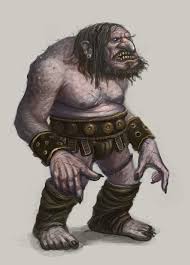
“Damn,” Kirstie said before she jumped. She was so anxious to hear the news, she did not pay close attention to who Booturn brought with him. Her eyes shot to the cooking area. Most of the dwarfs naturally went there first, being attracted to the food. She saw Vortesvin, the big ugly mountain troll there, but saw Fiona talking to the beast with a smile on her face. That was not what she expected. In fact, Fiona talked to the troll and ignored the dwarfs except to make sure they did not snitch any of the roast she was cooking.

“I belong to the Lady Kirstie,” she said.

“So do I,” Vortesvin answered and appeared to smile for her. Wonder of wonders, Fiona did not appear repulsed by the smile.

“I would not say you are one of her little ones,” Fiona said. “More like a big one if you ask me.” she reached out with her good hand and touched the monster on his upper arm which was about the size of her younger son.

“Yes, mum,” Vortesvin agreed. “But you are missing part of your arm, I see.”

“Yes, I am, and my name is Fiona.” Fiona said.

“I’m Vortesvin,” the troll said and reached out to gently touch Fiona’s arm.

Fiona kept her elbow covered so as not to offend. She watched the troll touch the spot and explained. “It got taken by an axe, and a man burned it in the fire until it stopped bleeding. It hurt something awful.”

“May I see it?” Vortesvin asked kindly.

Fiona nodded and unwrapped the cloth she kept tied around it and warned the troll. “It is terribly ugly to look at. About like you.” Fiona smiled. Kirstie saw it once, and that was enough. She nearly threw up.

“Lor, but that looks mean. It must have hurt badly.”

Fiona nodded, and Kirstie turned her eyes back to Booturn since she did not need to intervene around the cooking fire. “Normandy,” she said, and Booturn nodded. “Good thing you are here. The elves and fairies in the woods have been a great help around here, and I am sure you don’t want them to get all the credit and say they are better than the dwarfs.”

Booturn frowned. “What do you want?”

“Two things,” Kirstie said. “First, I want you to make a cup to fit on the end of Fiona’s arm. It should cover the ugly area but be made so she can take it off or put it on as she will.”

“A cup?”

“Like the cup that was made for Father Tyr of the one hand after the wolf Fenrus bit off his hand, but it doesn’t have to be gold or jeweled. Not lead, but Iron maybe, strong.” Kirstie said.

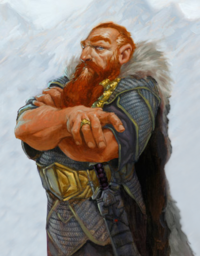
Booturn looked up at the mention of the god Tyr, like he forgot she was counted among the gods of old. He quickly removed his hat and listened closely. “With fingers?” he asked.

“Not long and heavy. Just a cup. But it might have a hook, or maybe two.” She showed with her two fingers. “But blunt, not sharp. Something so she can pick up a pot or hold things in place while she cuts the meat. You know.”

Booturn nodded.

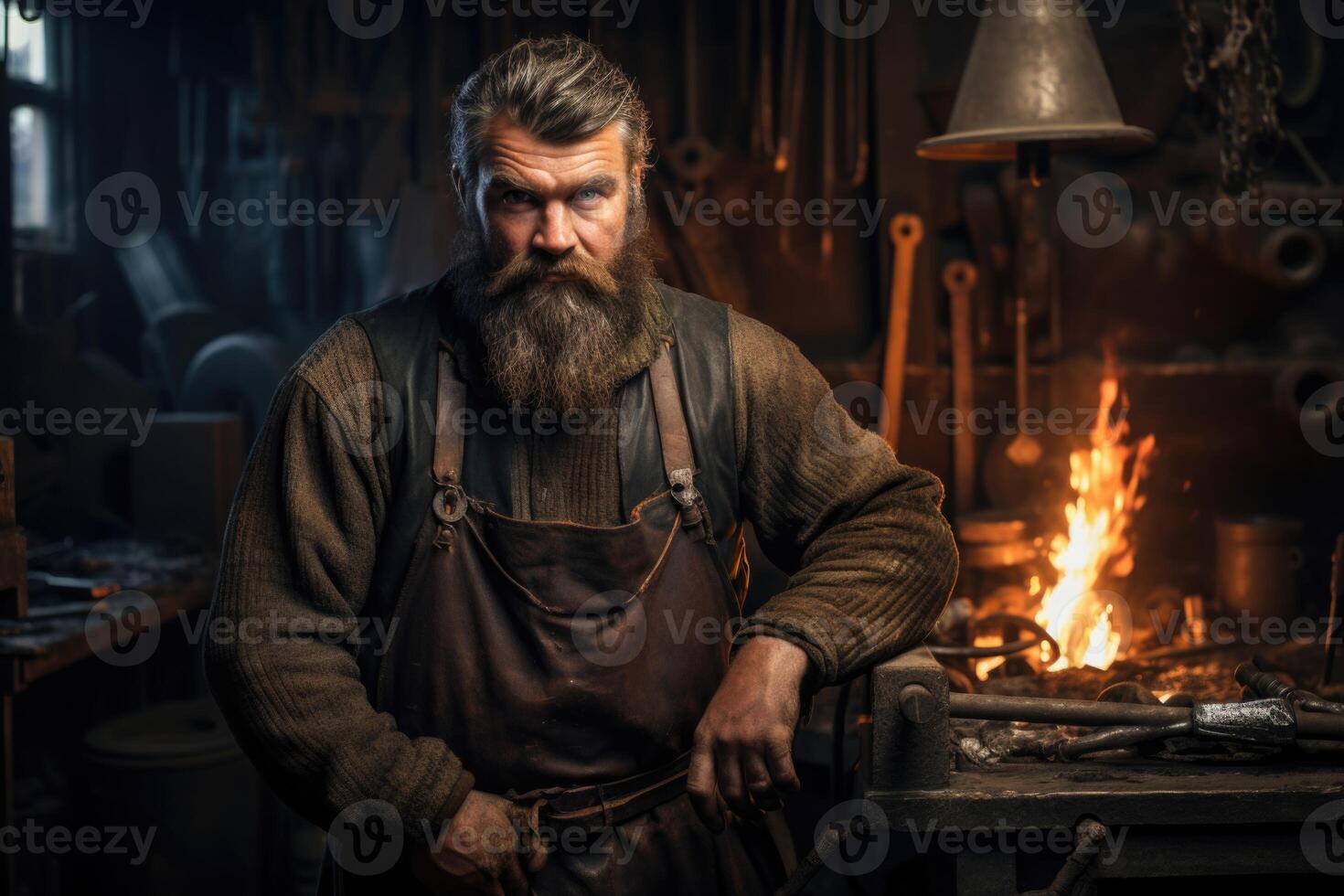
“I have seen your blacksmith shop in the village,” Booturn protested “That is some poor excuse for a furnace.”

Kirstie widened her eyes. She was not aware he had been to the village until he mentioned it. But now she knew that he and several others went to see what sort of weapons the humans were preparing for the battle at the king’s house. Nothing untoward happened so Kirstie was not needed to intervene at that time, so no need for her to know about it. But still… “Maybe you need to go and help Svend build a better furnace. He is a nice man, though. I don’t want you to scare him.”

“I might look again,” Booturn said in a noncommittal way. “What is the other thing?

“I need to borrow your wife for a few seasons. Maybe a few years if she does not mind.”

Booturn slowly smiled at the prospect of being like a bachelor for a few years. Kirstie could practically see the wheels turning in that warped dwarf mind. “I should ask what for.” he said.

“She is a seamstress but works with a loom and needle without a bunch of magic. The local elf ladies have been very kind to keep me, Fiona, and the boys clothed, but I want someone who can work with plain linen and knows how to card and spin wool, now that we have some sheep, and make things, more human things.”

“Human things?” Booturn raised his voice. “She would be insulted by that… but I know what you mean.”

Kirstie thought to explain. “With just one hand, Fiona has a hard time threading the needle and working the loom. Fiona is a good cook, and she can butcher the meat and pluck a chicken just fine, though the boys help. But she needs help with some of the more two handed and delicate tasks. I was thinking Birdie could help, and maybe share a few recipes.” She named Booturn’s wife and Booturn twisted his hat a little as he again remembered that Kirstie was his goddess. He got serious.

“I can see the cup with the fingers will need to be strong and attach in a way that will keep it in place.”

“Yes, please,” Kirstie said, and looked again toward the cooking fire. She saw the troll lean down and Fiona planted a kiss on the troll’s cheek. Wonder of wonders, she swore the troll turned red with embarrassment, but Fiona moved on.

Alm and the boys came around the corner of the barn and Fiona called to him. “Alm. We need to find something to feed our visitors. They must be hungry after their long trip down the mountain.”

The boys stared without the wow, as had become their way, but Alm threw his fists to his hips and gave the dwarfs a stern look. “A troll and a pocket full of dwarfs. They could eat everything on the farm and still be hungry.” The dwarfs nodded and smiled in agreement. Alm smiled for Yrsa as she came to stand beside him. She gave him a peck on the lips. He said, “If Yrsa and the boys fetch their bows and arrows, and maybe if Bucket and Toodles came with us, we might find something in the forest that we could shoot and eat.” Clearly, Alm knew these dwarfs, or some of them anyway.

The boys shouted and raced to get their things. Yrsa already had hers handy. She kept it in her elf slip, a small, invisible pocket not entirely in this world that only she could access. All the same, she chased the boys to make sure they did not break anything in their excitement.

Kirstie imagined Yrsa would make a great mom. She felt glad that everything seemed to be working out so well. She watched as Fiona turned again to Vortesvin. “You are a troll?”

“Mostly.” Vortesvin said and looked down at the ground for fear of how she might react. “My mother was some ogre. They say I got her nose.”

Kirstie watched Fiona return to her cooking and almost smile. “I don’t mind,” Fiona said, and Kirstie thought she better not eavesdrop anymore.

“Booturn,” Kirstie said and glanced at the sky. “We need to go to the village center before it gets any later. I need to introduce you to Svend the blacksmith. Bring Buckles and Tiny. We will see if he is willing to let you help him and maybe teach him a few things about working in metals.”

It turned out Svend had been praying for just this thing. Apparently, he caught sight of the dwarfs when they checked out his shop several years earlier. His apprentice and two workers were wary and not entirely happy, but Kirstie understood that was mostly because the dwarfs were strangers and not necessarily because they were dwarfs.

Booturn explained to Svend about the cup they needed to make. Svend had met Fiona, the whole village had by then, and they found her to be a kind and good person. Svend thought a cup would be a wonderful idea.

Buckles spoke right to task. “We will need to line the cup with fairy weave, much as I hate depending on the elves for the cloth.”

“Fairy weave?” Svend asked.

“Made by the elves of the wood. It has magical properties,” Booturn told him, and Kirstie thought he deserved a better explanation.

“It does not stain, always stays fresh and clean, and it absorbs sweat and will push the moisture out, so it always stays dry. It will keep her arm warm in the winter and cool in the summer, so the cup will not be a burden.

“Not iron though,” Tiny said and pulled on his beard. “We don’t want it to rust up in a few years.”

“Need a better furnace for real steel,” Buckles agreed. “One that can get really hot.”

“Hot as hell,” Tiny agreed and Kirstie explained again, though Svend was not a Christian to exactly understand.

“That is just an expression. He isn’t literally talking about hell.” Svend imagined Hella’s place for the dead, but he accepted the expression as just that. Kirstie turned to Booturn. “I need to find a ride to Normandy. I am sure you will work things out equitably.” She turned back to Svend. “If the dwarfs give you any trouble, just let me know when I get back. And don’t let them eat all your food. They are always hungry, so if you feed them… Well, just don’t let them eat you out of house and home.” She turned back to Booturn. “Make sure you take good care of Fiona and the boys. I’ll want my farm to be there and prospering when I get back.”

“Don’t you worry,” Booturn spoke loudly, “We will take care of everything while you are gone.”

Kirstie mumbled softly as she walked away. “That’s what I’m afraid of.”

Medieval 5: K and Y 10 Home Again, part 3 of 3

Kirstie

Kirstie turned to Fiona and the boys and said, “Your home is there near the barn. The boys can roll out of bed in the morning and get straight to work. The kitchen fire is the bricked in area there, between the houses. There is a brick oven and everything. The fences they are still building.” A couple of workmen stood around by the barn. One waved. “That is where the sheep will go. The pigs are there. The cows on the other side. And there are chickens in the barn. Also, the fields are mostly over there, and by my house there is a garden. The boys are welcome to pull the weeds.”

“It all looks lovely,” Fiona said. “I’ll just get the boys settled and get right on the cooking fire. We won’t disappoint you, Lady, but if it is all the same, respectfully, I would rather you finish what you were saying before we move in.” Of course, once the conversation started, Kirstie and Inga forgot to whisper, and Fiona could not help hearing the whole thing. Kirstie did not mind. She answered Inga.

“There are some special lifetimes I mentioned in the past that I can call on to take me to the place I need to go, like Nameless, or Danna, the Celtic mother goddess. But my main job, if you will, is to keep history on track. I can’t imagine anything more dangerous to history than letting a bunch of wild sprites loose on the world. I am supposed to make things come out the way they are written, and I get reborn in the place where the trouble is most likely to change the future unless I can prevent it.”

“How do you know the way things are supposed to come out?” Fiona asked, and added, “Begging your pardon.”

“I have future lives,” Kirstie said. Fiona did not really understand, but Inga nodded. She had seen Elgar and Mother Greta with her own eyes. They came from the past, but Inga saw no reason why Kirstie could not borrow a life from the future in the same way. Then she remembered Doctor Mishka. Kirstie thought to clarify if she could. “My many lives are not entirely isolated from one another. Of course, nothing happens exactly the way it eventually gets written down, but the gist and general thrust of history is clear. And it is equally clear when something threatens that, like Abraxas and his hags attempting to gain him worshipers and followers so he can return to the continent and mess up everything. Eventually, I will have to sail off again.”

“I will still worry about you,” Inga said.

Kirstie hugged the woman but turned to Fiona. “There are elves of the light that live in the woods nearby. There are dwarfs in the mountain there.” She pointed. “But they keep mostly to themselves. And there is a whole fairy troop in a glen not far from here. One or more of them might show up at my front door at almost any time.”

“I saw a fairy once,” Fiona said. “If you have a cow that is giving, we can leave a bowl of milk out for them as an offering.”

“That won’t be necessary,” Kirstie said. “If they want some milk, they know they only need to ask, and I would be glad to give it to them.”

Fiona looked uncertain. She always tried to placate the spirits lest they do her some mischief. Inga encouraged the woman. “As my fairy friend Buttercup explained to me, Kirstie is their goddess. They would not dare do anything that might make Kirstie angry at them.”

“If you say,” Fiona curtseyed a little to Inga. She turned to Kirstie and curtsied again. “Lady.” Kirstie saw this one-handed woman, this thrall, had more grace in her moves than Kirstie managed. She vowed to practice her curtsey.

Kirstie had a thought. Right there, she called to her regular clothes and let her armor and weapons return to the place they came from. Fiona looked surprised, and her eyes got big, but she said nothing. Oswald behind her said, “Wow,” And Edwin nodded in agreement, but Kirstie needed to verbalize her thought.

“My friend Hilda is as fully human as they come, and she has no contact with the little spirits on the earth. She does not even know about them. She is married to Troels, and she is six months pregnant. She could use the help since her mother and father are not rich and very busy on their own farm. I would be happy if you stayed here and helped me manage this place. I imagine I will be sailing off on another trading expedition in the near future, and I would like someone I can trust, and boys not afraid of work, to keep this place in good order while I am gone. But I understand having little ones about can be unsettling. If you want to stay, that would be great. But if you would rather, I can arrange to set you up in town where Hilda lives, and you can work for her. I would not mind if you chose to do that.”

Fiona did not hesitate. “If it is all the same, I think working this lovely farm would be fine. The boys and I have never had a home of our own.”

Kirstie nodded, but thought the woman needed another chance to decide, so she called Buttercup. Of course, Mariwood appeared with her since they were holding hands. It took a second before Mariwood bowed to Kirstie and Buttercup curtseyed most gracefully in mid-air. It took just long enough for Oswald to say “Wow” even louder than before, and this time Edwin echoed the “Wow”.

“Lady,” Mariwood spoke for the both of them.

“Mariwood and Buttercup,” Kirstie said. “Allow me to introduce Fiona from Northumbria and her two sons Oswald and Edwin. They may be living here to help me with the farm.”

Mariwood and Buttercup turned to the woman, keeping well out of the reach of the boy’s hands, and they repeated the bow and curtsy one more time.

“A pleasure,” Mariwood said.

“Lady,” Buttercup repeated, and Fiona smiled at being referred to as a lady, but she never blinked.

“I hope I may stay,” Fiona said.

“Oh, that would be wonderful,” Buttercup said, and Kirstie took that as a good sign. Fairies were very intuitive about who to trust and who should not be trusted.

Fiona appeared to blink and said, “I saw a fairy once in my place by the manor on the river Aire not far from where it joins the Ouse. Perhaps you know him?”

“I am sorry, Ms. Fiona,” Mariwood said, thinking about it. “That is a long way from here and I cannot say to whom you may be referring.”

Buttercup also spoke. “I can think of only one man right now. Mariwood is my heart. I have a very small heart, you know.”

“What about your friend, Inga?” Kirstie said. “She has been missing you.”

Buttercup spun around to face Inga. She hovered, looked down, and turned her toe in the air like a little girl might turn her toe in the dirt. “I’m sorry.”

“It is all right, little one,” Inga said. “I am glad you are happy.”

Buttercup let out her most radiant smile. “I am happy,” she said and flew up to hug Inga, or at least she hugged Inga’s nose, one cheek, and an ear. It was as far around Inga’s face as her little arms could stretch.

“Mariwood and Buttercup.” Fiona tried the names on her tongue. “They seem very nice.”

“Most people are nice if you give them a chance,” Kirstie said, and invited Fiona and the boys to see their new home.

************************

MONDAY

Kirstie remembers that trouble comes in threes. Then Kirstie and Yasmina both discover it is time to go. Until then, Happy Reading

*

Medieval 5: K and Y 10 Home Again, part 1 of 3

Kirstie

As soon as they arrived at the house, Yrsa ran off to the woods, presumably to see her father. She came back a week later with an elf named Alm and declared that she was married. At the same time, Mariwood and Buttercup never seemed to be apart, and never came around when Kirstie might need them. Kirstie sighed and first thought she might like to have a boyfriend, but not Kare. Certainly not that jerk.

The elves of the wood took good care of her home while she was away. They brought in the harvest and sold most of it, using Inga as an intermediary. They kept the pigs. Her sow had a litter of six while she was away, and Kirstie swore the piglets ate everything they could reach. Kirstie looked at her pregnant friend Hilda and said Hilda was getting fat like her pig. Hilda probably put on a bit too much weight, but Hilda just smiled and chewed.

The elves of the wood also took care of her three cows. One calved shortly after she got home, and that was good. The cow provided plenty of milk which the elves turned mostly into cheese to preserve it. Kirstie had no complaints, but at the same time, she understood that it was not fair to depend on the elves of the woods. That was a great kindness to her, but that was not their job. She needed to live in her human village and work out her own place in her human world, and the elves needed to do their own work in the spiritual world.

Inga came to visit often enough, and she generally got her hair braided when she visited. “Otherwise, my hair tends to frizz and stick out in every direction it can,” she complained before she added. “Although, having it wild and frizzy works for Buttercup, if I should see the fairy again.”

Kirstie nodded to things, generally. “Mine is thick and stays straight with no curl at all.” They started toward the village. Kirstie had an errand and dressed in her armor, though the weapons were not so prevalent, and she asked, “Why is it women always want the kind of hair that they don’t have?”

“Women want everything that they don’t have,” Inga said and smiled. “So, you are a woman now?”

Kirstie nodded. “Close enough at fifteen.”

Inga smiled. “I still see you as the wild child I used to chase around the village, trying to keep you out of trouble.”

Kirstie kept on nodding. “I’m still wild. And still growing.” She wanted to complain. “I’m fifteen but already tall for a woman, taller than some men.”

“Maybe you will get as tall as Kare. Then, as you say, you can tell him to stuff it.”

Kirstie grinned before she frowned. “I had a nightmare about him. But what about you? You must be twenty-one or two. Isn’t there anyone you are interested in? You are pretty enough. I am sure any man in the village would be glad to have you to wife.”

Inga looked at Kirstie and shook her head softly. “Mother Vrya keeps me very busy. Besides, I will have to be there when Hilda has her baby.”

“I’m worried about her eating so much,” Kirstie said. “She does not have to put on so much weight. She will never get it off again.”

Inga agreed. “I have talked to her about that, but she says she is eating because she is so happy. It makes her happy.”

“There is an excuse if I ever heard one,” Kirstie responded. “Women eat because they are happy, and they eat because they are sad. I would guess the only time women will stop eating might be if they stopped feeling anything at all.”

“That will never happen,” Inga said.

“Never happen,” Kirstie agreed.

They walked toward the docks and Inga asked a question. “So, what is this journey you are taking? The spring has arrived. Shouldn’t you be worried about getting your fields planted?”

Kirstie shook her head. “My sheep are due to arrive and my friends in the woods have agreed to watch them, but that is really asking too much of them. Rune, Frode, and my friend Thorsten all said they would send men to get the fields planted, but I need to make a better arrangement. The men I hired are building a two-room servant’s home. They have expanded the pig pen to accommodate all the piglets for when they grow, and turned old Bjorn the Bear’s sleeping quarters into a real chicken coop. They are also building two large fenced in areas beside the barn. on either side, one for the sheep and one for the cows. I hope this trip will find something more permanent so when the word comes, and I have to sail off, I can know my home will be cared for.”

“You will be sailing again?”

“It is only a matter of time. I don’t expect Abraxas to give up.”

They stopped by the docks. “I worry about you, you know.”

“Feeling all motherly?” Kirstie smiled.

“No. Yes. But I worry about these hags as you describe them. I saw the body of Chief Birger after the King’s house. A bear could not have done a better job of ripping the poor man to shreds.” Inga looked around and lowered her voice. “Buttercup explained to me how you are a goddess to the spirits of the earth. I understood better when you went away, and Elgar came from the past to stand in your place. Elgar lived in the past, did he not?” Kirstie nodded, so she continued. “But I do not like the idea of you fighting one of the gods. That thought frightens me to no end.”

Kirstie kept the smile, though it was perhaps not so pointed. “Especially since in this life I am just an ordinary human.”

Inga almost smiled herself. “Graced and empowered by Njord and Fryer, and who knows who else.”

“No one else at this time. The gods have all gone over to the other side, and this Abraxas needs to join them. He has been given two chances. First, the Nameless god threw him out of all the lands of Aesgard. And second, the gods agreed. Junior Amun threw him out of the Middle East and from the ancient lands of Karnak and Luxor in Egypt and North Africa. Amphitrite, queen of the seas threw him out of her waters, including the Atlantic and every sea connected to the ocean, and as the last Olympian, she threw him out of the lands of Olympus. Danna, the mother goddess of the Celts threw him off the continent, so he only has the big islands in the west for his home. He must stop interfering with the natural course and development of the human race, and he is supposed to find the courage to give up this life and go over to the other side. He is not supposed to be trying to find ways to come here or come back to the continent. He should not be making hags to do his dirty work.”

“He must die?” Inga tried to understand.

Kirstie nodded. She did not mind telling the volve in training. “It is like dying. He must let go of his flesh and blood and return to being the pure spirit he actually is.”

Inga shook her head, so Kirstie explained as well as she could.

“A pure spirit has no eyes to see nor ears to hear. It has no hands to touch the earth. The sun still shines. The wind still blows, but the gods no longer have the ability to see or feel what they are doing. They are directed now by the Most High God, the source of all.” Kirstie pulled out her little cross and held it tightly in her hand. “Maybe God will be gracious to help me find the help I need.”

Inga could nod for that. “Good luck,” she said, and Kirstie hugged her motherly friend and climbed aboard the Red Herring, a karve ready to sail north into the fjord. The next day, the Red Herring returned with nails and other goods for the village, and Kirstie returned with Fiona, a woman in her mid-thirties, and her two sons named after the saints in Northumbria, Oswald and Edwin.

Medieval 5: K and Y 7 Buying a Ride, part 1 of 2

Kirstie

Kirstie got word through the elf and fairy grapevine that a hag was seen in Saxony, around Bremen on the Weser River. She imagined she guessed right. She would have to direct Rune’s ship to the Frisian shore and up the Weser to find the hag and put her out of business.

She looked at her hands and thought about the fire and the water that killed the hag of the Vanlil. She could start a fire by merely pointing at the wood and thinking about it. She could project a light from her hands, like two flashlights on a dark night, and could make herself glow in the dark if she wanted. Then, she could shoot the fire from her hands, or put the heat and light together, like some alien heat-ray. She only tried that once, but the result was a pile of ash where a tree once stood. Kirstie remembered when Fryer visited her, he turned a whole copse of trees into ash just by his mere presence.

She also thought about Njord’s visit. It did not seem like much at the time, but since then she found she could stay underwater for an indefinite amount of time. It was like she was breathing underwater, and she could see and even hear underwater just like she was on land. That was about the best she could describe it. What is more, she always felt warm in the water, even when it had ice by the shore. On cold and blustery winter days, she often threw herself into the ice water of the fjord to warm up. She could swim fast as a dolphin, almost like flying through the water, and she could call to any fish that were nearby. She could actually tell the fish to jump into her boat, so she always had a good catch of fish and without having to cast a net or fishing line. It felt strange that she could do these things, but she figured they were gifts and more than she needed. She knew that basically she needed the fire and the water to kill whatever hag she encountered. Kirstie pictured herself setting the hag on fire with the fire in her hands and then putting it out with the water she carried inside. That would do it, and it would be enough, as Grandfather Njord and Father Fryer said.

When Kirstie turned thirteen, she first wondered why the Norwegian hag went all the way to Jamtaland in the first place. She must have been a Norwegian from Northumbria in the British Isles; the only place Abraxas was permitted to go. She must have done a kind of reverse immigration, but she could have landed at Hof or Upphaugr on the coast in the first place and worked on the people there to invite Abraxas to come across the sea to their homes. Why travel all the way to Jamtaland where she had to invade and fight her way to the sea?

Kirstie imagined she figured it out when she thought of the hag in Bremen, and when she remembered Margueritte, a life she lived in Brittany some two hundred years earlier. Margueritte fought her own hag and found the hag gained power over the people when the celts and their druids were confronted with Father Aden and his Christians. The people became confused and no longer certain what to believe. That was when the hag stepped in with word of Abraxas, a god of the ancients, but a living god to be worshiped.

The people of Hof and all the Trondelag worshiped the gods of the Aesir and had no confusion in their mind. Likewise, the Vanlil—the Jamts worshiped the Vanir. but then they took in many Aesir worshiping exiles who claimed that some of the Vanir had become Aesir. That happened as a result of a war in the lifetime of Faya, daughter of Fryer. Kirstie remembered being Faya briefly when Fryer came to visit. Faya, as an outsider, found a way to make peace and bring the two waring houses of the gods together. That happened ages and ages ago, but the Vanlil, just now learning about that, must have thrown their minds into confusion, not knowing what to believe. They became fodder for the hag and the worship of an actual living god, Abraxas.

Kirstie thought about the hag in Saxony. There were certainly plenty of Saxons in the British Isles for Abraxas to choose from. He no doubt sent the woman back to Saxony, but then she needed to find a place where the people still clung to the old gods and the old traditions but were being confronted with the Christian world. The Storyteller life she lived in the future told her about how Charlemagne slaughtered some four thousand five hundred Saxons between Verden and Bremen. The Saxons there were in rebellion against the empire and thus against the Christian faith the empire promoted. Now, all these years later, more confusion. Another opportunity for Abraxas. Kirstie remembered Margueritte’s friend, Boniface did great work among the Saxons and Frisians alike, but sometimes and in some places the old ways died slowly.

That must be it, she thought to herself. He needs to find a people who don’t know where to turn so he can offer stability if they turn to him. Sadly, that did not help her get to where she needed to be. But then she turned fourteen, and Rune and Frode returned from a second trip. Captain Harrold sailed into the docks a week earlier and the people mourned for the crew members he lost. When Rune came home, several men deserted his ship to sail with Captain Harrold Harroldson, including Kare and Thoren.

Captain Stenson and Frode finally came to visit Kirstie in her house, not exactly carrying their hats in their hands, but near enough. She had ale and snacks prepared and sat them in her living area. “The ale is from the special recipe of Bjorn the Bear. Tell me what you think. I know he enjoyed it while he lived.”

“Bjorn the Bear?” Frode asked, knowing the name well.

“He taught me to handle my weapons, especially the battleaxe. I understand he was an expert who killed many men.”

Captain Stenson drew a long face. “I do not doubt you know how to defend yourself. Bjorn the Bear was an expert, as you say.” He looked around the room before he thought of what to add. “But it will take more than just knowing how to defend yourself to sail in a longship.”

************************

MONDAY

Kirstie needs to secure her ride and then get to Saxony to confront the hag. Until Monday, Happy Reading

*

Medieval 5: K and Y 2 Gifts of the Gods, part 2 of 3

Kirstie

Inga kept an eye on Kirstie over the next three days. Kirstie did not appear changed in any noticeable way. She seemed to be grieving and Mother Vrya said that was healthy. Sometimes she wandered the village streets, watching the vendors in the marketplace. She mostly avoided both Hilda and Liv for the first couple of days. Sometimes she watched the boat builders. They were building a karve for the village to trade with other villages up and down the fjord. They were also nearly finished building a longship for Rune Stenson who had gathered a crew to sail with him to distant ports.

On the third day, she finally visited Hilda in her home in the afternoon. She stayed long enough to have supper with Hilda and her family, and Hilda’s father Haken walked Kirstie home in the dark, what with Vanlil and other enemies about. On the fourth day, Inga saw Kirstie head for town and thought nothing of it, but Kirstie felt the need to be alone for a while, so she veered off the path as soon as she was out of sight. It did not take long to make her way to the long field.

Kirstie wanted to go home, but she did not want to go. She stood for a long time looking in the direction of home, but eventually she moved to the edge of the trees. Something called to her, and she had to find out what. When she touched a tree, it began to burn.

Kirstie quickly pulled her hand back and stared. The burning tree was not her doing. She wondered what could cause a perfectly good tree to suddenly catch fire like some form of spontaneous combustion. She blinked and a whole section of woods right in front of her turned to ash, hardly having time to burn. The light came with the heat and Kirstie blinked, shielded her eyes, and complained.

“Please. Whoever you are. Can you tone it down a little? My fair skin is going to turn red as a lobster.” He did. It was one of the gods as she suspected. The light and heat lessened, and the man appeared, but up close he had a ghost-like quality she could not describe except to say he never fully manifested. She recognized him right away.

“Fryer,” she said, before she added, “Father.” Fryer had been her father, the father of Beauty who in Beauty’s language was called Faya. That was nearly five thousand years ago. Then Kirstie had a thought. Fryer was Njord’s son, so she should not have been surprised to see him. She wondered if Fryja the goddess of love and war was around. Fryja was Fryer’s twin sister, daughter of Njord. “What are you doing here?” she asked the same question she asked Njord.

“I am not really here,” he gave the same answer. “I am just a beam of sunlight able to break through the canopy and touch the forest floor.”

“My night owl,” Kirstie said, remembering something of Faya’s life. “My al-Rahim. My guardian.”

“My daughter,” he said. “A different daughter, but all the same. I have a gift for you.” Kirstie said nothing. She did this before. She closed her eyes and opened her mouth. “No, no,” Fryer said, and he took her hands. Kirstie caught fire. She flashed bright as the sun, and then the fire receded. The flames quickly became less as the man spoke. “I am sorry I was not a very good father to you.”

“Oh, no,” Kirstie said. “You were a wonderful father. You watched over me and kept me safe when no one else could, and I love you very much.” Without realizing it, Kirstie went away, and Faya came all the way through time from the deep past to stand in her place. She hugged her father, and Fryer tried to be as solid as he could so he could return her hug.

Faya pulled back, smiled for him, and went back into the past, letting Kirstie come home. Kirstie had a question. “What did you give me?”

“Enough,” Fryer said softly and lowered his voice against listening ears. “You must set the fire and put it out with the water to break the empowerment. They should fall apart.”

“Like the Wizard of Oz.” Kirstie giggled. “Fire the scarecrow and splash the mop bucket in her face. I’m melting. I’m melting.”

Fryer caught the images and grinned. “Something like that. But now you must listen.” He gave her a second to settle down and focus. “After you were my daughter all those millennia ago, I learned some about how you function. Time does not normally open for you early, and you learn you are the Kairos only after you reach puberty, or later. That way you make a firm foundation of who you are in each life before you become aware of the others. You really are too young for this.” He shook his head.

“I’m ten.” Kirstie stood up as straight and tall as she could. “I’m old enough. Besides, I already know about Yasmina, Mother Greta, and the good Doctor Mishka.”

Fryer nodded. “Rarely, maybe sometimes you open to other lifetimes earlier. Necessity is the driving force, and right now the Kairos is needed. First you must learn to call for your armor and weapons. The fairy properties in the material are such that it will always fit you no matter your shape and size.” He taught her right there how to call for her armor and how to call again for her regular clothes, which was important to know. She only made one side comment.

“Those weapons are heavy.”

“I am sure you will master them in time, though I hope you will not need them,” Fryer said. “But now, I am able to tell you this, that the exiled men and the Vanlil will meet in a week at most and assault the king’s house and the town on the Nid River. Kairos, you only have a week. You know if the exiled chiefs and men are able to retake the Trondelag area and kick out the king and the king’s men, history will be impacted, badly. And more than that, the hag that is driving the Vanlil—the Jamts from Jamtaland—will have gained a foothold to the sea, and Abraxas will be able to return to the northlands.” He paused to place a gentle hand against Kirstie’s young cheek. “I am sorry I cannot be there for you. It is up to you to do what you will.” He smiled, though he looked sad. “There are little ones near if you wish to call on their help. You know, I agree with some of the others. This is too much responsibility for one person, even with a hundred lifetimes to call on.”

That small place in the forest flashed as bright and hot as the sun for an instant. Kirstie did not even blink this time. She thought of calling to her father, Faya’s father, that he might stay a little longer. She did not want to be alone, but she said nothing. She had too many things to think about.

Kirstie walked slowly back to Mother Vrya’s; her mind preoccupied so she hardly looked at where she put her feet. What did she need to fire first and put out with the water? The Wicked Witch? What water? Those weapons were heavy, but that armor was cool… awesome… far out.” She heard a male voice in her head. “We don’t say far out anymore.” Kirstie nodded and continued with her own thoughts. What did he mean little ones? “Hey,” she said out loud as she arrived at Mother Vrya’s where Inga was stacking some freshly cut logs for the fire.

Inga stopped to look at Kirstie, but Inga said nothing, so Kirstie mumbled, “Let me help.” She was still thinking about shining bright as the sun and the fire in her hands. In fact, she looked at her hands as she picked up a bundle of sticks and the wood caught fire. Inga shouted, but Kirstie just looked at her hand holding the burning wood. She lifted her other hand and saw it burst into flames. Then she came to herself. “Sorry,” she said in a very unconcerned voice which stopped Inga in her tracks. She was coming to knock the burning wood out of Kirstie’s hand and try to put out her hands, but the hands stopped burning. “Sorry,” Kirstie said again, but when she opened her mouth, a stream of water came pouring out from her insides. It put out the bundle, soaking the wood, but it also splashed on Inga, soaking her all down the front.

“Sorry. Sorry,” Kirstie said again. “Maybe I should go inside.”

Inga nodded and dripped before she raised her voice. “Don’t set the house on fire.”

Medieval 5: Elgar 10 Guthrum and Alfred, part 2 of 2

Alfred sent out the word on April fifteenth to raise the army, what Elgar called tax day. The word was to gather at Egbert’s stone on May the first, or as Elgar yelled, “May day! May day!” Men came from all over Somerset, the largest army Somerset ever raised. Osfirth brought a thousand men from Devon alone. A large contingent came from inland Dorset, especially around Sherborne. Dorset and Hampshire did not strip their coastal defense, but the men from Hampshire, and Wiltshire for that matter were angered by the raids, and some in Wiltshire were doubly angry for being under Danish occupation.

Guthrum pulled his men in from Bath, Chisbury and the Malmesbury-Braydon area around Chippenham. He left his men in Wallingford and Oxford thinking to distract any army coming from further afield. Alfred, however, did not pick up many men came from eastern Berkshire, eastern Hampshire, Surrey, Kent, or Sussex, but in truth he did not need those men. With just the men who gathered between May first and fourth, Alfred’s men outnumbered the Danes three to two.

Alfred waited to make sure Guthrum came fully out into the field before he moved on the tenth. They met at Eddington where Elgar’s nephew Ian held the field with three hundred men on horseback. When the two great armies actually met, it was no contest. The Saxons routed the Danes at every turn. In the end, Guthrum had to take his decimated army back to Chippenham where Alfred followed and laid a near perfect siege.

Over the next two weeks, the eastern army out of eastern Berkshire, Surrey, Sussex, and Kent drove the Danes from Wallingford. The Danes in Oxford planned to fight until they saw the size of the opposing force. They agreed to peacefully abandon Oxford and return to London on Akeman Street and Watling Street so as not to disturb Berkshire and to stay away from Surrey. After those two weeks, when the eastern army showed up at Chippenham, Guthrum surrendered. Chippenham might have held out against the West Saxons for a couple of months, but Guthrum knew Alfred could just wait them out. Better to talk.

When Alfred, his ealdormen, and Elgar, Osfirth, and Gwyn representing the old men entered the room with Guthrum and his commanders, Alfred would only accept unconditional surrender.

“You think I am trapped here between my men and your men?” Guthrum growled. “You have no idea how trapped I am.” He took another chair and slammed it against the wall and broke it. “I am trapped between Heaven and Hell.” He unbuckled his sword and threw it after the chair before he fell to his knees and wept.

Elgar nudged Alfred, and Alfred got down beside the man and hugged him, which made him weep even harder. Elgar whispered to Osfirth and Gwyn, “Well, my work here is done.”

In good old man fashion, Gwyn responded, “What?”

~~~*~~~

Elgar helped Alfred pick out the locations for his thirty-three forts or Burghs that would defend Wessex against Mercian Danes or further intrusions. He helped Alfred design and build a fleet which could finally defend the coast of Wessex. Then he retired to his son’s house.

Alfred claimed Athelney Fort as an important place for the remembrance of the people of Wessex. It was from Athelney that Wessex, and maybe all of England was saved. And also, Alfred said, “Just in case.”

Eanwulf’s eldest son served Alfred faithfully as ealdorman of Somerset. The younger son got Watchet and took Elgar’s duty of the coastal watch. Elgar’s son finally got the house in Wedmore, so Elgar ended up living where Alfpryd did not want to go. Sadly, Alfpryd died several years earlier, but all their daughters made good marriages, so there was that.  Elgar’s daughter-in-law treated him like a dottering old fool. Elgar did not mind, though, he liked being pampered.

In his last year, Elgar had two visitors of note. The first was Pinoak who caught him up on the doings. Pinoak’s mother May passed away and Pinoak cried a little when he said his father Pinewood, and his great friend Deerrunner would not live much longer.

“It’s okay,” Elgar said and hugged the fairy. “We are all passing away, but life goes on. You just need to step up to lead. Your sister Heath, and your friend Marsham have moved to Northumbria where they are trying to keep an eye on Abraxas, the scoundrel. If you would not mind helping Reed keep an eyes on Alfred, all will be well.”

“I pray for my mother. Is that the right word? I pray that the source may find her time on this earth acceptable in his sight.”

“I am sure he will,” Elgar said. “And I pray for my old friends Gwyn and Osfirth, both of whom passed away recently.”

“I understand the king of Cornwall is looking at Osfirth’s son and thinking about getting Devon back. Osfirth’s son and Alfred are looking at Cornwall and agreed that if the man wants to start something, they will finish it.” Pinoak smiled. “As you once said, they may chase the man all the way to Land’s End. Alfred is talking about taking the rest of Devon and setting the border at the Tamar River. He is also saying Cornwall should be a client state, and maybe doesn’t need a king. Maybe an ealdorman would be better.”

Elgar nodded. “That sounds about right.” He chuckled, but just a little.

The other visitor came just a few days before Elgar finally passed away. It was Abraxas, and the first words out of his mouth was typical. “I am finally going to be rid of you.”

“Careful,” Elgar responded. “Don’t piss me off as long as I am alive, and I would not recommend it after I am gone, either.”

Abraxas stared at the ground for a moment before he confessed. “I can finally do what is in my mind to do.”

“It better not be trying to disturb history.”

“Not fair. Only you know what the future says.”

“Yes, and by the way, I was not happy that you put the fear into the Danes at Eddington. Alfred had things well in hand and did not need your help. I did not say anything sooner because that was the way things were supposed to go, so you guessed right for once… Don’t do it again.”

Abraxas looked at the ground again and looked like a child scolded. He vanished. He came to gloat but it did not work out that way.

Elgar thought it only fair to send a message to the future. Whoever I am in my next life, man or woman, sorry about that. I did get rid of the Flesh Eaters, not that they won’t be back, but sorry about leaving you with Abraxas. Maybe you will be lucky and be born on the other side of the world.

Medieval 5: Elgar 7 Second Chances, part 4 of 4

Abraxas stood on the shore of Northumbria and watched, briefly. He did not want Flesh Eaters around to mess up whatever plans he had in mind. He reduced the two fighters to dust. He put a hole in the bomber so it crashed into the sea. Finally, he destroyed the shuttle’s engines and it exploded before it hit the water. No doubt Abraxas felt very pleased with himself. Elgar was not happy. He got his friends Osfirth of Devon and Gwyn to take the men home.

“I will no doubt catch up with you before you get there. In fact, this might not take long at all.”

“Where are you going?” Gwyn asked.

“Flesh Eaters?” Osfirth wondered.

“The last of the Flesh Eaters,” Elgar answered. “Get the men home safe and don’t let Athelred or Burgred screw that up too.”

“This was a long way to go for nothing,” Osfirth agreed.

“Not for nothing,” Elgar said. “We got the Danes to leave East Mercia for good.”

“If their word is worth anything,” Gwyn agreed.

Elgar traded places with Danna, the mother goddess of the Celtic gods, but she kept up a glamour of Elgar so Gwyn and Osfirth did not notice. They noticed when she vanished, but Gwyn merely nodded and Osfirth only shrieked a little.

~~~*~~~

Danna dropped the glamour and appeared on the shore of Northumbria. She compelled Abraxas to be there. He appeared startled. It was something she knew she could do as long as he remained in her jurisdiction, and presently he could not go anywhere else. He figured it out soon enough before he shrieked a bit more than Osfirth and made sure his feet did not touch any of the water. In Margueritte’s day, Abraxas was banned by various gods from any land where he might have staked a claim. He was supposed to be giving up his bit of flesh and blood and going over to the other side with the rest of the ancient gods. He had been given several chances but had yet to find the courage.

“Amphitrite took the water away from you,” Danna said. “All water, fresh or salt. on this earth. You said at the time you would die. You are made of fire and water, you said, and without the water you would burn up, but I see you are still here.”

“Still stuck on this one rock as the only place that is safe,” he groused. “I have had to survive on beer and wine.”

“No,” Danna answered. “You can drink fruit juice, apple juice, or milk if you would rather.” Abraxas made a face of disgust. “Besides, you can always go to the other rock, Ireland, and complain over there.”

Abraxas shook his head. “That whole island is full of Irish…and your children who should not be there.”

“My disobedient children are not your concern, except to say they are leaving the human race alone and not interfering with history. The day of the gods is over. The new way has come. You will not be permitted to have worshipers or whatever you may be thinking. And creating hags as personal slaves is cruelty to the human race on many levels. Presently, since the water is death to you, there is no point in getting you to clean up your mess.” Danna frowned. He ignored her. “You were told to stay away from the space aliens.” She did not scold him, but she was tempted. She took a breath and called. “Manannan.” She did not compel her children, grandchildren, or whatever, that is, those who called her Mother. But it was polite to come when Mother called.

The sea began to boil. Big breakers crashed against the rocks and the foam splattered everywhere. Abraxas jumped further back, but he was unable to leave the area entirely because Danna compelled him to stay. The British Isles were part of the ancient land where she had the final authority on this earth.

A tall, skinny, slightly green-skinned man covered in seaweed rose out of the water. Anger was etched across his face and he showed death in his eyes but it was all directed toward Abraxas who took another step back.

“Mac Lir, attend,” Danna said. “Our guest has scattered a Flesh Eater shuttle, bomber, and two fighters across the North Sea. No Flesh Eaters are allowed to survive and it all must be cleaned up so no part of it will be found in the future. You know what to do. Take it to Lady Alice on Avalon and place it where she tells you. I am sure Vingevourt, king of the water sprites of the North Sea will help.”

Manannan stopped giving Abraxas the evil eye and turned to Danna. “Why me?” he asked.

“Because as long as you have refused to join your brothers and sisters and go over to the other side, some effort will continue to be required of you from time to time. Gilla de, be a good boy and clean up this mess.”

Manannan nodded his head slightly, said, “Mother,” and vanished. Danna turned to face Abraxas and let out some of the steam that built up inside her.

“You have been given more than enough chances to find the courage to go over to the other side. You have been reduced to these islands. To place your foot anywhere else on this earth will be death to you, and it is your own doing. You have been told repeatedly not to interfere with people or the development of the human race or with the new way. The old way has gone. The day of the god is ended. Get that message. And you have been told over and over to stay away from space aliens or any non-human people. I swear, you are like my little ones. They hear well enough but the minute my back is turned they go right back to what they were doing that got them in trouble.”

Abraxas stared at her like a scolded child, but he said nothing, so she finished her thought.

“Take care, lest you find even these islands taken from you and you have only the Second Heavens to wander filled with regret.” she waved her hand releasing him from the compulsion to attend her and he instantly vanished. Danna shook her head and went to several places in the islands and on the continent to watch and mind her own business. It took a week before Elgar returned to Osfirth, Gwyn, and his men marching across Berkshire, about halfway home.

Medieval 5: Elgar 5 The Parrett River, part 2 of 2

Eanwulf and Osric had no more questions, but the Bishop of Sherborne had one. “Why don’t we just put all our men in the line and crush them?”

“We tried that twice,” Elgar responded. “It doesn’t work.”

In the morning, fourteen hundred Danes lined up against fifteen hundred Saxon and British troops. Lodbrok kept four hundred men in the earthen works. He planned to have a hundred hold the works for a fallback position while he used the other three hundred in reserve to throw into the line as needed. Eanwulf and Osric kept back their two hundred, but the men looked antsy. When the fighting started, it would take some real effort to keep them from running forward to join the melee.

Elgar took his hundred and twenty horsemen to the ridge where they could look down on the fight. They picked up twenty men who came with Osric and Eanwulf and wanted in on the action. The Bishop also came with a few men on horseback, but they were mostly monks and priests and looked ready to run away if things went badly. Elgar found Pinoak and thirty fairies on the rise. They kindly appeared full sized, dressed in hunter green, and they studied the Danes as they came out to line up for the battle.

“The line is four thick with spears in the second and third rows. They appear to be very good at making a shield wall. Our side will find it difficult to penetrate that wall, but I don’t think the Danes will have as much trouble with ours. Our soldiers are not as practiced, and any openings they leave will be exploited by the Danes. Also, see? We are forming a line five men thick, so our line is not as long as theirs. They may be able to curl around our line on both ends and push in from our flank.

Elgar understood and answered for all the men who were listening. “We need to strike where they curl and push them toward the river.”

While his men got in position to attack, the lines met. Eanwulf and Osric had the numbers, but they did not line up in a way that took advantage of that. In fact, it became clear to Elgar why the Saxons lost twice at Carhampton.

It took Lodbrok a few minutes after the lines met before he threw in his three hundred where they could take advantage of what he saw. One hundred went to reinforce the center of the Danish line, but he divided his other two hundred and sent them to take advantage of the curl. He also knew about the battles at Carhampton and did not think much of the Saxon foot soldiers.

When the Danish three hundred arrived, the Saxon line held, but barely. Elgar had Pinoak message Pinewood and Deerrunner to send the two hundred reserve Saxons to attack the end of the line by the river while he got his horsemen to attack the near end. Even Eanwulf and Osric understood once it was pointed out to them.

Meanwhile, Elgar noted what was happening in the Danish earth works. Marsham and his elves and mostly the men from Combwich came out behind the works and used their hunting arrows to great effect. The Danes had nothing to hide behind as the makeshift mud and stone wall stood at their backs. Then Elgar could not worry about that as his cavalry charged down the slight rise, spears pointed toward the backs of the Danes.

The Danes at the back of the line tried to turn their shields against the horsemen, but being on horseback allowed the Saxons and British to ride around the sloppy shield wall and still hit the unprotected Danes in the rear. It did not take long before the Danes on that end began to pull back. The impact of the Saxon reserves on the other end was not as dramatic, but the two hundred men stopped the one hundred Danes from pushing in on that flank, and in fact began to push in on the Danish end where the Danish shield wall petered out.

Where the horsemen struck, the Danes began to pull back from the fighting. It took a little longer, but on the other side one bright Danish commander recognized that they were out maneuvered. They also began to pull back. Lodbrok recognized that these Saxons were smarter than the ones at Carhampton. He tried to push the center forward with the hope of splitting the Saxon line in two, but all he got was killed for his effort. Once Lodbrok was dead, the Danes abandoned the line. Even there, they showed discipline and order which was not a Saxon trait. Some stayed and sacrificed themselves to hold the Saxons back while most escaped. They quickly recognized their earth works had been abandoned by the men who were left to hold it, so they had nowhere to go but back to their ships.

When the ships began to sail, Elgar slipped from the horsemen and headed toward the Danish earthworks. He picked up Marsham who grabbed a horse and Pinoak who appeared full sized and on a horse, though it was only a glamour. They rode carefully up the hill and through the trees to where the Flesh Eater shuttle parked. They did not expect what they found.

Pieces of Flesh Eaters were scattered all around the area. A hag-beast was on its hairy knees, a sign of worship, in front of a young man with a black goatee, slick black hair, and pitch black eyes. Elgar shouted the young man’s name, and it was not kindly spoken.

“Abraxas! What did you do? Dealing with space aliens is not your job. You do not belong here.”

Abraxas shouted back. “This is the only place I have left to me.” He calmed himself. “I am shaping my place to my liking. It does not serve my purposes to have Flesh Eaters in my front yard.”

Elgar also calmed his voice. “I don’t want them here either. But you need to let me decide how best to get them gone.” He repeated. “This is not your job.”

“My job is to decide and rule,” Abraxas responded, and Elgar saw the stubbornness in the god’s eyes. He felt it prudent to trade places with Danna, the mother goddess, and let her look into those eyes.

“Fire the hag,” Danna said. “I will toss it into the sea.”

Before Marsham and Pinoak could call up their magic, Abraxas vanished, and he took his hag with him. Danna groused and waved her hand. The shuttle weapons were disabled, and the weapons and Flesh Eater equipment on the ground disappeared, to reappear on the appropriate island in the archipelago of Avalon. She waved again, and a twenty-foot deep hole appeared. All the flesh-eater pieces went in the hole and the hole got covered with one big rock and plenty of dirt, the top layer of which instantly grew grass, flowers, and a bush so it was indistinguishable from the rest of the clearing. She left the shuttle there, knowing the Flesh Eater mother ship would eventually be along to retrieve it.

Elgar came back and groused a bit. He turned his horse and carefully rode back down through the trees. As he rode toward Combwich, he heard his dwarfs doing some grousing of their own. Copperhand the dwarf chief complained. “Only three Danes braved the water of the ford. Three! That was hardly worth coming out from the Polden Hills.”

“Maybe next time,” Elgar answered. “We had no way of knowing. You might have faced a hundred or more and been overwhelmed. Thank you for taking care of the three.”

Copperhand mumbled some unrepeatable words and took his people back to the hills.

Marsham, Pinoak, Pinewood, and Deerrunner all vanished back into the wilderness when Eanwulf, Osric, and the bishop rode into Combwich to watch the last of the Danish sails slip into the bay and the Bristol Channel. The three men congratulated each other. Elgar, not in a good mood, put a damper on the celebration.

“We have wounded to tend and dead men to bury.”

Medieval 5: Genevieve 5 External Attacks, part 5 of 5

Leibulf helped her return to her tent. For some reason, she was hungry and tired, which was unexpected because she just spent the last six days resting in a kind of suspension. She should just be one moment of time from when she stood in the back room in Aix-en-Provence. Margueritte did all the living and working over the last six days. All the same, she was tired and hungry.

When Leibulf left her there, all she could think about was Margueritte’s question. Who would be so evil as to let pirates into the city? She heard from Amphitrite. I could go and look if you want. She did want.

Amphitrite identified the culprit before she arrived in the city, and her arrival in the city was instantaneous. She found a woman—a nun, or one dressed like a nun standing by the river gate waiting patiently for the pirates to arrive. Amphitrite hardly had to probe the woman’s mind to know who was behind it. Abraxas, the so-called god who refused to go over to the other side at the dissolution of the gods, empowered this woman to be his hag. She traveled from Northumbria in the British Isles to Aachen, Charlemagne’s capitol, with the scholar Alcuin. She left the scholars and priests behind and traveled all the way to Provence on her own, not that a monstrous hag would have any trouble reaching her destination.

Abraxas was currently confined to the British Isles. He knew returning to the continent would be his death, but apparently he believed if the people invited him to come, that would negate the restriction and allow for his safe return. Abraxas was counting on the idea that there were still Moslem sympathies in Provence. When the people became confused between Moslem and Catholic beliefs, so they no longer knew what to believe, the hag could move in with word of Abraxas, a living god, and with enough converts he might get that invitation.

“Not going to happen,” Amphitrite decided before another lifetime of the Kairos interrupted her. Danna, the Celtic mother goddess said, This is my place. I am the one who put the restriction on Abraxas’ movements and confined him to my islands. I will deal with the hag. Amphitrite agreed and traded places with the mother goddess. Danna turned up her nose. The hag stood by the river gate surrounded by the bits and pieces of humans, all that remained of the gate guards.

Danna dressed herself in a plain dress and toned down the signs of her goddess nature to practically nothing, so she appeared as an ordinary woman, albeit an inhumanly beautiful one. She also gathered a half-dozen city guards to her side for appearance sake. They were window dressing, as she stood near the gate and shouted to the woman. “Servant of Abraxas. Why are you here?”

The nun who was not a nun looked up and looked surprised before she smiled wickedly and responded. “Since you know who I am, whoever you are, you should know your little soldiers cannot stop me. No weapon forged by man can hurt me.” With that said, she began to change from an old nun into a hairy seven-foot-tall monster who roared as a challenge to the soldiers.

“They cannot harm you,” Danna agreed. “But I can finish you. You do not belong here. Abraxas knows he cannot come back to the continent. To do so will be his death.”

“Who are you to say what will be?” the monster asked.

“I am the Kairos, the Traveler in time, the Watcher over history. You might not know me, but Abraxas knows me and he knows what I say is truth.” Danna sprayed the beast with the fires of her earth, and the monster’s roar strengthened. The monster burned, but it did not hurt the beast. The beast actually grew another foot taler and became stronger but then Danna lifted the beast with her mere thoughts and tossed the hag into the river. The hag screamed of death as the fire, suddenly put out, broke whatever bond of life existed between her and Abraxas, the would-be god. The monster melted in the water. She liquified, turning back into a liquid remembrance of the woman-nun, and floated off in the current toward the sea.

Danna turned to the soldiers who stared, mouths open, but did not know what to say. “Tell the city that Margrave Otto was successful. The pirates are defeated and will not come here.” She vanished and reappeared in Genevie’s tent where Genevieve came back to contemplate what just happened. One day she would have to deal with Abraxas. The world did not need to be filled with hags—monstrous servants of Abraxas.

Genevieve decided to lie down. She had a restful and peaceful sleep for an hour and woke refreshed, though still hungry. After another hour of nothing more than sitting and waiting, Genevieve heard some noise in the camp. She thought she better see what was happening. She stood, slowly, and with a sight groan, put one hand on her belly, and waddled back toward the river. It was nearly noon, and she wondered if someone might be cooking. She smelled beef.

Leibulf found her and came running. It looked like the boy made some effort to clean himself up. He took her arm to help her walk over the uneven ground and brought her to Otto who was talking with a young, tall, dark-haired man who was explaining something.

“We came down the Rhone but turned off at Avenio. We followed the river road along the Durance until the turnoff for Aquae. We probably missed you by a day.”

“We got preoccupied,” Genevieve interrupted and turned to Otto. “I smell beef, and maybe lamb cooking. I’m hungry. You wouldn’t think so since I have been sleeping for the last six days, but is it time for lunch? You need to feed us, you know.” She took Otto’s arm and looked up at tall, dark, and handsome while she patted her belly. “Baby,” she said, and looked down at her balloon. The man appeared to suddenly understand.

“My wife, Genevieve,” Otto said. “William of Gellone,” he introduced the man who could not help speaking.

“You came all this way, and to a battlefield, in your condition, if you will forgive me asking?”

Otto and Leibulf both looked at Genevieve who shook her head to say no. “That is rather difficult to explain,” she answered. “You need to trust me. It was no hardship, for me to be here, I mean.” She looked at Leibulf. “Margueritte says she had some hardship.” Leibulf grinned and nodded.

“Well,” William did not know what to say, exactly, so he continued with his story. “We came to Massilia on the next day, but by the time we arrived, you had already gone. The sea was still burning a bit here and there, by the way. We found out where you were headed, and why. I made the decision to gather the ships to follow by sea. We arrived in time to catch the pirates on the riverbank. We caught the rest as they came racing to our side, begging to be taken prisoner.” He paused and looked at Otto. “What did you do to those men? I have never seen men, much less pirates act that way.”

“Ask my wife.” Otto grinned and looked at Genevieve.

Genevieve did not mind telling. She decided she liked this strapping young man, and he would likely believe her since he had witnessed the results. “The gnomes and fairies started with the arrows, and they don’t miss much. Then Leodek, the dwarf chief with a hundred dwarfs, a few ogres, and a mountain troll, attacked with their big clubs, hammers, and very sharp axes. I would hesitate to see that battlefield. Probably pieces of pirate spread all over the field.” She paused and let a few tears form in her eyes. “And seventeen of my little ones are dead or dying. I am grateful to the dwarfs. We were caught on the wrong side of the river. But I am so mad at them at the same time. Leodek has wisely started the march back to the Alpilles.” She sniffed and wiped her eyes. “Now, I am hungry. Can we eat?” She blew her nose on Leibulf’s shirt sleeve.

Leibulf turned her toward the cooking fire. Otto and William followed. William kept speaking. “I brought some five hundred men from Aachen. I sent a hundred in three ships to assist your Captain Hector in Telo Martius. I hope things are well there. I left a hundred in Massilia to guard your prisoners while your men cleared the port from the burning hulks of Saracen ships, and I hurried here with the rest in five more ships to see if we could catch the pirates before they reached Arles. We arrived in the morning after they began to move up the river. We caught the ones left with the ships, mostly on the shore. Of course, we had no idea they had a small army of pirates. I never knew there were so many pirates, or at least I never heard of so many gathered in one place.”

They arrived at the cooking fire and found the most well-done piece for Genevieve to chew on while the rest of the beast cooked. Otto asked. “So, where are you headed?”

“Rome,” William answered. “Most of the men will relieve the troop left to guard the Pope. Cousin Charles raised mostly Swabians for that duty so he could keep his better trained Franks in his own lines.”

“Cousin Charles?” Genevieve asked.

“Distant. Not too close.”

Genevieve nodded that she understood. She showed a small smile and looked down at her lunch.

“So, you are a relief column,” Otto said.

“I am glad you came to our relief,” Genevieve added, and William returned her smile.

“And will you be staying in Rome?” Otto asked, not exactly happy with the eyes being shared between William and Genevieve.

“No,” William said and turned to focus more on Otto. “We are escorting a Northumbrian and his monks to see the Pope. They are concerned about a place called York and want it made an Archbishopric and the man confirmed in the seat. When his interview is finished, I will be escorting him back to Aachen.”

“Alcuin!” Genevieve suddenly shrieked. “Charles needs to keep the man in his palace to teach his children and the court. I need to write to Charles right away. Parma. That name is in my mind. He needs to meet Charles there. You need to keep Alcuin there until Charles can meet him.”

“They have already met,” William said softly.

“Seriously,” Genevieve continued. “Charles needs to keep the man. He is a teacher, you know. He teaches liberal arts. Both trivium and quadrivium. Oh, it is very important. You need to do what you can to make that happen. It is important.”

“Parma?” Otto asked.

“It is a town or small city or something in Lombardy, or Tuscany or somewhere in Italy, north of Rome. Seriously.” Genevieve paused to hear what William might say. He surprised her.

“I know who you are,” William said abruptly, imitating Genevieve’s outburst. “Charles calls you his guardian angel.”

Genevieve smiled and looked down at her lunch.