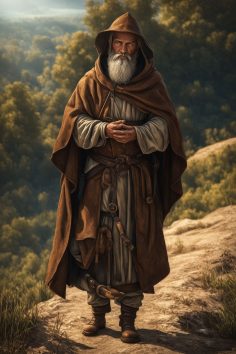
Kairos Medieval 6: K and Y 1 Married Life, part 1 of 3

Kirstie

After 883 A. D. Trondelag, Norway

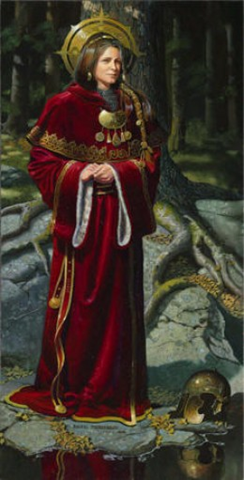
Kairos 104 Lady Kristina of Strindlos

When Kirstie and Yrsa left Father McAndrews and the monks behind and got to the shore of Lindisfarne, they found Captain Harrold’s longship was the last one there. Kirstie took one long look back at the abbey, the chapel, and the village she spared from the Viking rampage. Five shiploads of men eventually came to her side to defend the Holy Island against those who wanted to loot and pillage the island. It was enough to turn the looters away. The island was spared.

Kirstie was especially glad that three of the Viking crews that came to her side included all the men from her home village of Strindlos. Most of those men were her friends and neighbors. True, Captain Harrold Harroldson was the last and he came to her side reluctantly. He seemed convinced the abbey had chests full of gold and silver, and he would not be talked out of it, but his men, the men of Strindlos, outvoted him with their feet. Harrold came, but as he passed her by, he could not resist pointing his finger and mumbling threats about getting even.

When Kirstie and Yrsa clambered aboard Captain Harrold’s ship, Kare yelled at them. “How dare you prevent us from ruining the place. Now King Cnut of York won’t pay us, like he promised. We could have gotten all the silver from the church and been paid besides. We could be rich.”

Kirstie yelled right back. “Me and Yrsa standing alone against four hundred men. You should be glad I’m alive.”

Kare’s friend Thoren spoke in a much calmer voice. “Harrold wanted to leave you here. He wanted to abandon you to your fate among the Northumbrians.”

Kare still yelled. “I said I was not leaving without you. He said I could stay and die with you for all he cared.”

Thoren interrupted again. “Skipari Toke reminded him that Chief Kerga and Mother Vrya would be very unhappy if he left you here.”

Kare nodded, softened his voice a little, and pointed at Thoren. “Not to mention all the strange ones that live around your farm. That will have to change when we get married.”

“That will not change.” Kirstie shouted while she stored her things beneath her seat. She did not say she and Kare would not be married. Kirstie felt there was something inevitable about Kare and her, even if she hated the idea. Kare had been hounding her and threatening to marry her since she was a child. Sadly, she could not imagine a happy life with Kare. Right at the moment, she did not even want to look at the man.
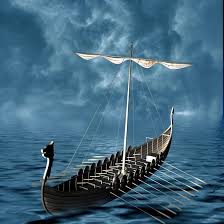
Toke, the skipari made them all take their seats. Kirstie was glad for that, even if Kare sat right behind her. She grabbed her oar, and soon enough they rowed out into deeper water.

Kirstie looked toward the back of the ship, as all rowers did. She watched Captain Harrold at the steering board where he faced the front and could direct the rowers with simple commands. They turned around to head out to sea and Kirstie got a good last look at the island they were leaving behind. She saw ships, primarily fishing ships filled with men sailing by Saint Cuthbert’s Island to reach the main island on the other side of Heugh Hill. Before they got completely out of sight, she saw men on the hill staring back at them. She wondered if Wilam was among them before she scolded herself for believing Wilam felt anything at all for her.

She rescued Wilam with all the crews in Normandy and saw that they got paid. But she just met him. She hardly talked to him. He was just one member of one of the crews. He sailed with Captain Olaf. Brant Svenson was his skipari. But she imagined he was mostly just happy to be freed from his cage. She had no reason to suppose he had any interest in her one way or another.

True, she met him a second time in the Northumbrian village of Ellingham. She warned him about the Norsemen ready to attack Ellingham so he could evacuate the village, but really, he was just grateful. They talked a bit before she had to go, but not about anything important. As soon as Brant Svenson came with two horses, he rode off quick enough. He was just being grateful, she told herself again. It was not anything personal. She decided she should not let her personal feelings run away with her.

Kare said something over her shoulder from behind, but she chose not to hear him.

They rowed the two hours to one of the smaller of the Farne Islands that looked out on the North Sea, well out of sight from the mainland. Harrold brought the ship to the rocky shoreline where they put down the anchor and came ashore.

Kirstie noticed for the first time that they had a few goats tied at the back of the boat, along with a big keg of either wine or beer. Probably beer or mead, she decided. Harrold must have sent a few men to scout ahead on the holy island and maybe they picked up a sampling of what they found.

Kirstie ignored the goats. She had to hurry to Harrold to make her peace offering. He kindly stopped to listen to what she had to say. “I have a present for you, as long as there is peace between us,” she said. “The priest on Lindisfarne gave me this.” She pulled out the small golden cross. “He said it belonged to his mother. It is gold and probably the only gold on the whole island. I am offering it to you as very small compensation for preventing you from pillaging the abbey and the town.” She clutched it and thought through a prayer in her mind before she opened her hand and held it out to the man. “Let there be peace between us.”

Harrold took the little golden cross and looked at it closely before he put it in a pocket of his own. He nodded and said something she did not expect. “Do you know why Toke is my skipari?” Kirstie shook he head. “I can trust him. The men respect him, and he is honest because he is a Godr, a priest of Aesgard. He served in the temple in Varnes. That is where I found him back when you were a baby, and he has sailed with me since that day, which is why you might not know he is a priest.” Harrold turned his head to see one of the goats unloaded from the ship. “I am willing to make peace, but only after the ceremony.”

“What ceremony?” Kirstie asked, and suddenly two plus two added up to about seventeen in her head. “No,” she raised her voice. “I did not agree to this, and I am not agreeing to this.”
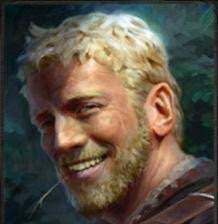
“Your agreement does not matter,” Harrold said. “You father is not alive to decide. As a captain in the town and on behalf of the whole community of Strindlos, I am making the decision. You will be married and settle down and stop interfering with the men of the Trondelag.”

“Captain Jarl and Captain Rune, and Chief Kerga will not agree with you. Mother Vrya will speak against you.”

“They are not here,” he said and brushed passed her with a final thought. “You might want to put on your blue dress.”

Kirstie let out a scream before she began to cry and Yrsa came to hold her. She thought about Wilam first thing, but she did not know what to think about Wilam. She honestly had no reason to suppose he had feelings for her. She thought about Kare. She thought about him since she was thirteen. She always figured she would end up married to him, but this was not what she had in mind. Of course, in her culture marriages were arranged, though usually by the father. Sometimes men and women did not even know each other before they married. It was up to the couple to make it work. With Kare, Kirstie figured it would be up to her to make it work.


The Last American

Dirk held up the handgun and checked to see if it was still in working order. It had been a long time since he held a gun in his hand, legally.

“Say Mister Parker, what are we supposed to do with these?” Billy waved his gun around like a fourth of July sparkler. Dirk grabbed the young man’s hand, snatched the gun and checked to be sure the safety got engaged.

“You are to leave the safety on at all times, no matter what.” He pointed to the lever.

“No matter what.” Billy echoed what he heard, nodded, and stopped moving when he got the gun back in his hands. He stared at the weapon like it might be something strange and alien.

“Listen up!” Maggie called and waved her arms to bring the group together.

“I wonder how she got permission for these,” Dirk mumbled. He stuck his weapon in his jacket pocket and walked to the near side of the parking lot where everybody started to gather. Maggie stood part-way up some steps so she could be seen and heard by all.

Billy dutifully stared at his gun while he walked, but he looked up briefly to speak. “Permit, you think. Government don’t let anyone have guns anymore.”

“Union.” Dirk suggested. Maggie remained boss of the local, not that they had an election in a while, or any jobs for that matter.

“Listen up!” Maggie yelled at the stragglers. “Now, he slipped by us at LaGuardia, but we followed hot on his butt to this old factory. His vehicle crashed on the other side where Pete and Charley have the doors covered. He may be hurt, so when you go in, be careful because he might fight back like some wounded animal, you hear me?” People nodded. “The guns are only a precaution, for self-defense.”

“My ass,” one man hollered and a few of the people around him laughed.

“Damn it, Barry. I mean it!” Maggie looked like she meant it. “I want his ass alive and hauled into court where it belongs.”

“Yes, Ma’am.” Barry nodded and pretended to be properly humble.

Maggie frowned before she started to divide the group into pairs. “Call out if you find him.” Maggie said it over and over. She handed Dirk an old cell phone and assigned him and Billy to the second floor, west wing. “Call if you find him.”

Dirk nodded, and shoved Billy up the outside steps.

“What do you think our chances are?” Billy asked when they stopped on the platform just outside the door.

Dirk paused. “Not bad, actually. I used to work in this factory before it got shut down some thirty years ago.” He looked back and forth to get his bearings. “Offices were on the second floor, west wing.”

“I thought you were a social studies teacher.” Some surprise could be heard in Billy’s voice.

“I went back to school.” Dirk focused again on his companion. “Something you should think about doing.” He opened the door and shoved the young man to get him inside. He followed and waited for the heavy metal fire door to clunk shut behind him. Of course, he got tossed out of the school system after twenty years because he insisted on teaching real, undistorted history instead of the social agenda crap the government insisted on.

“Propaganda,” Dirk mumbled the word.

“What?” Billy asked. Dirk looked at the young man and shook his head at the spin and lies that must fill that poor oatmeal in his noggin.

“Quiet.” He placed a hand on Billy’s shoulder. “Remember, we are going to capture the man, not hurt him.” Cordell Thomas had been a good man, even if he shut down the factory and moved the jobs overseas. Dirk remembered how the man used to walk the factory floor all those years ago, and he remembered Mister Thomas going out of his way, on several occasions, when some poor schlump employee got faced with a sudden difficulty, like a medical emergency. Dirk might have been mad about the shutdown. Hell, he still got mad about giving his job to some poor underpaid Asian, but he understood it had been a business decision, and the blame belonged on the heads of the board and the stockholders as much as on the man. It didn’t make Cordell Thomas a bad man.

“Mister Parker?” Billy looked impatient

“Hush.” Dirk took his hand back from Billy’s shoulder to put a finger to his lips. He waved and Billy followed.

Dirk led his companion carefully through the dim light that came in through the few dirty windows in that part of the factory, while his mind recalled the days of his youth. He always saw himself as a line foreman when he got older. On good days, he considered going into sales and working his way up the ladder. Sometimes he dreamed of managing the whole factory. He planned to have a good life; but people could still dream back then. Nowadays, it didn’t matter what job a man worked, or even if he worked at all. Everyone got the same basic pay and public benefits. They called it fair that way.

Dirk heard a sound in the corner of the conference room. Billy whipped out his gun and pulled the trigger. “Click, click, click.” Dirk saw by the light that came in through the open door that it was only a rat scurrying around the corner. Dirk frowned at the young man beside him and ripped the gun from the youngster’s hands.

“Dipstick,” he mumbled.

“I was startled. I got scared.” Dirk could see that in Billy’s eyes.

“Cordell Thomas won’t hurt you.” Dirk attempted to reassure his companion. “He isn’t that kind of man.” He checked to make sure the safety stayed on and handed the gun back to Billy with instructions. “Stick this in your jacket pocket and leave it there.”

Billy nodded as they left the conference room.

They searched the long room where all the secretaries and bookkeepers used to work and got all the way to the receptionist’s desk before they saw anything. They found a union thug at the bottom of the stairs where the door opened out on to the executive parking lot, but the man merely waved.

“I guess he’s not up here,” Billy said. His voice sounded a bit loud. Then Billy’s stomach grumbled, and he checked the time. “Gov-lunch doesn’t open for two hours,” he complained. “I could go home for some noodle soup, but I don’t like using up my allotment like that, you know what I mean?” He looked up at Dirk and stopped babbling when it became clear that Dirk had something in mind.

Dirk turned slowly and waved for Billy to follow him back along the row of desks. They had one more door, one more hall, and one more office to check. Dirk left it for last because it had been the manager’s office, and in the back of his mind, he still respected the place. He also suspected if Cordell Thomas would be found anywhere in the building, it would be in that office.

Sure enough, the big old office safe behind the desk stood wide open and Mister Thomas sat at the desk, staring at the greenbacks in his hands. He had stacks of them, mostly hundreds, and while they were not worth nearly as much as they were back in the day when the American dollar had been the world standard, they were still worth something.

“Hello?” Mister Thomas looked up like he had been expecting them.

“Hold it right there,” Billy hollered. He dropped to one knee, placed his hands on the desk, held his weapon firmly like he had seen on the detective shows. He pointed it at the man by the safe. For the third time that morning, Dirk took the gun from Billy’s hands, and this time he stuck it in his own pocket. He also slapped Billy on the back of the head, hard.

Mister Thomas turned toward his captors and Dirk got a good look at the old man. He still had most of his hair, but it had turned stark white, and stuck up in every direction, like a man who removed a hat and then pulled a sweater over his head without taking the time to find a brush. The man’s eyebrows looked grown out as well and sat heavily over sad looking eyes. The rest of the man’s face just looked old and wrinkled, but Dirk recognized the man and he acknowledged in his heart the time they had shared together.

“Dirk.” Mister Thomas recognized his captor as well. He held up a hand to forestall interruptions until he came out with the name. “Dirk Parker. I remember you.”

“Yes sir, Mister Thomas.”

“Look at all of this.” Mister Thomas showed a few stacks of money and looked at it like he might be remembering an old friend. “There is more than enough here,” he said. “We could share it.”

“Nomph!” Billy found Dirk’s hand clamped across his mouth.

Dirk took out the phone and spoke slowly. “He’s here, second floor, manager’s office in the west wing.” He put the phone down while the old man stood still. His sweaty palms held tight to several bundles of money and he continued to smile, and hope. The responses came in on the phone.

“Good work. On the way.” That was Maggie.

“Is he still alive?” Pete asked.

“Dirk, old buddy. I knew it was smart to get you to help, you having worked here and all.” Charley praised him. Charley and Maggie were Dirk’s neighbors, union people who still had some special privileges in the world of fairness, even if they didn’t have jobs. Dirk looked at his gun and set it with Billy’s gun on the edge of the desk.

When he looked up, he saw Cordell Thomas once again. The man still held out the money, but he no longer smiled. Dirk betrayed no emotion. He knew money would never be the answer to life, but he understood that it had been a better life when everyone had at least some of their own.

“Why did you come back. Mister Thomas?” Dirk asked.

Cordell Thomas withdrew his hands and the money. He looked offended. He straightened his old body until he was as tall as he could be, and he put on his best “boss” face.

“This is my country, too,” he said.

Dirk just shook his head. “I’m not even sure this is my country anymore.” Mister Thomas deflated like a hot air balloon and the two men stood in silence, waiting for the inevitable, until Billy spoke up. The young man’s voice sounded softer than it had all day, and it sounded more respectful, now having seen the sad, old man behind the myth.

“What is he wanted for, anyway?”

“Tax evasion.” Dirk answered just as softly. “Even if he paid all his taxes, they would still convict him of evasion in order take whatever money the man has left.”

Cordell Thomas merely nodded his agreement with that assessment as they heard people in the outer hall. Maggie and two union thugs came in and the thugs grabbed the old man far more roughly than necessary. The poor man limped and appeared to be in pain. Dirk noticed the man’s suit pants were torn at the knee and the jacket had a big gash on the right elbow. It looked like Mister Thomas’ knee might be bleeding, and Dirk guessed it happened when the man crashed his vehicle into the front gate.

“Hey, Charley.” Maggie got on her phone. “There’s a bunch of old money up here. You better get a couple of boys to make sure it all gets picked up for evidence.” Maggie remained a true believer.

Dirk set his phone on the desk beside the guns, and he had a comment. “The last free market capitalist. The last rich man in America.”

“Damn right.” Maggie swore. “Now we are all equal.” She stomped off after Mister Thomas and her goons, and Dirk followed to the secretary’s room and thought that Maggie appeared a little more equal than some. He revised his thinking and mumbled while he walked.

“Yeah, all equally destitute.”

“Hey, Mister Parker.” Billy touched Dirk’s arm. He followed right on Dirk’s tail. “Is that true? Did you really mean that? Was he the last rich guy in the country?”

Dirk just nodded and watched as Billy sat heavily in a chair and put his hands to his head. This would be hard for the young man to process and square with everything he had learned growing up. Dirk waited patiently until Billy became able to speak.

“So, what are we going to do now?” Poor Billy looked as sad and defeated as Mister Thomas. He had spent his whole life hating the rich and wanting to get even and make everything fair. No wonder he looked lost, but Dirk could not let it go at that. He had to correct his young comrade’s words.

“You mean, who do we hate and blame now, and who is going to pay for it all?” Dirk pulled out a contraband cigar and contrary to all laws, he lit it in the office room. He did not care. He felt very alone, like a stranger in his own back yard.

************************

MONDAY: Kairos Medieval book 6 Before Sunrise

Happy Reading

Table of Contents

Kirstie

After 883 A. D. Trondelag, Norway

Kairos 104 Lady Kristina of Strindlos


+ Yasmina

After 914 A. D. The Hejaz and North Africa

Kairos 105 Princess of Mecca and Medina


1 Married Life

2 Home

3 Helpful Decisions

4 Happy Soon

5 Divorce

6 Sickness and the Cure

7 Unexpected Guests

8 Shame On Us

9 The Journey Begins

10 Trouble at Home

11 The Chase

12 Follow

13 To the New World

14 And Back Again

15 Side Trips

16 Good Men

17 The Rainbow

18 Aesgard to Avalon

19 To Abraxas

20 End and Beginning


Giovanni

After 979 A. D. Venice, Italy, and the Holy Roman Empire

Kairos 106 Don Vincenzo Giovanni, Ringmaster


1 Friends and Strangers

2 Women and Questions

3 Down and Out

4 Old and New

5 Search and Rescue

6 A Morning Visit

7 Sabotage

8 Women and Answers

9 Three Ring Circus

10 Flesh Eaters, Witches, Apes

11 And the Wolv

12 Lost and Found

************

I hope you enjoyed the three short stories posted on this blog, and I hope you enjoy Medieval 6: Before Sunrise. Meanwhile, please consider buying a book and leaving a review to help support the author. It is like a go-fund-me page but you get something in return. Happy Reading

Amazon: https://www.amazon.com/stores/M-G-Kizzia/author/B00C0JOS9I

Smashwords: https://www.smashwords.com/profile/view/MGKizzia

*

The Unjust King

Once there was a young man and a young woman who married. Their families were good, hard working people and managed to set them up with a plot of land, a nice little home, a rickety old wagon and a small flock of sheep. The couple thought little about the future because they were in their twenties, but they worked hard to grow grain and tend their sheep, and in due season they preserved what food they could and sheered the sheep to card and spin the wool to make cloth. And they were happy.

After ten years, the couple got a brand-new wagon to replace the rickety old one and they rode to town. On the edge of town, they met a young mother with a red headed baby girl. “You must work hard for the sake of your child,” the wife said.

The young mother responded. “I care nothing about material things, and I will not waste my life working for them. I am free to do as I please. But say, I have no wagon. Give me yours.”

The King decided and spoke to the couple. “You have land for food and a nice home and a small flock of sheep for cloth. This young mother has no such things. What is more, you have a second wagon. Everyone is entitled to a wagon.” So, he took the new wagon from the couple and gave it to the young mother because she had none.

The couple walked sadly into town where they saw the physician and were told they would not be able to have children. They cried, and the wife first thought about tomorrow. “What will we do without children when the cold winds of age take us?” The husband had no answer. They walked home that day and they were very unhappy because now they were in their thirties and had saved little for the future.

So, they worked extra hard to grow grain and tend their sheep, and in due season they preserved what food they could and sheered the sheep to card and spin the wool to make cloth.

After ten years, the husband had an idea. “Let us take all the food we have preserved though our marriage and sell it in town. We can buy a second piece of land and while we are still young, we can grow twice what we grow and preserve it all. In the future we can sell the land back to another and have plenty to see us through the cold winds of age.” So, they loaded up their preserves in their rickety old wagon and rode to town.

On the edge of town, they were stopped by the mother and her red headed daughter. She said, “I care nothing for material things and will not waste my life working for them. I am free to do as I please. But say, I have no food. Give me some of your preserves.”

The King decided and spoke to the couple. “You have land for food and a nice home and a small flock of sheep for cloth. This mother has none of those things. She has only a wagon. But everyone is entitled to food.” So, he took half of the preserves from the couple and gave it to the mother and her red headed daughter because they had none.

The couple rode sadly into town where they saw the land dealer. They bought some land with what they had left. They could not buy very much land or very good land, but it was all they could afford. And the wife thought more about the future. “This poor land will have to be cleared and worked hard before it can be planted. That may take a long time. Who will do it?”

The husband answered. “I will do it in my spare time while I am still young enough to do it.” They rode home that day hopeful, because though they were in their forties and now had their own aging parents to care for, they still had hope for the future.”

So, they worked extra-extra hard to grow grain and tend their sheep, and in due season they preserved what food they could and sheered the sheep to card and spin the wool to make cloth. In their spare time, after tending to their parents, the husband and wife cleared their second land and readied it to plant.

After ten years, the land was ready. And though they no longer had to worry about their parents, they were both worn out. “Who will plant this second field now?” the wife asked.

“I no longer have the strength to plant and maintain two fields,” the husband confessed. “But I have had another thought. Let us take the cloth we have made through our marriage and sell it in town. We can buy all we need to build a second house on the second land. Then we can find a young couple in need and let them live in the second house for the promise of helping us in our age. We can become like a family. We can be like their parents and they can be like our children.” So, they loaded up the cloth in their very rickety old wagon and rode to town.

On the edge of town, they were stopped by the mother and her full grown red headed daughter. She said, “I care nothing for material things and will not waste my life working for them. I am free to do as I please. But say, I have no cloth to replace the rags we wear. Give me some of your cloth.”

The King decided and spoke to the couple. “You have land for food and a nice home and a small flock of sheep for cloth. This mother and her daughter have none of those things. They only have a wagon and a bit of food. But everyone is entitled to cloth.” So, he took half of the cloth from the couple and gave it to the mother and her red headed daughter because they had none.

The couple rode quietly into town where they saw the home builders. They bought some lumber and nails with what they had left. It would not be a very big house, but it was all they could afford. And the wife thought more about the future. “We had to spend all we had on the material for the house. Now we have nothing left to hire laborers. Who will build our second house?”

The husband answered. “I will do it in my spare time before I am too old to do it.” They rode home that day still and quiet, because they were in their fifties and thinking the time of their old age drawing near.”

Still, they worked extra hard to grow grain and tend their sheep, and in due season they preserved what food they could and sheered the sheep to card and spin the wool to make cloth. In their spare time, husband and wife worked on their second house to make it as good as they could.

After ten years, the house got finished and they began to look for a suitable couple. They walked to town because their very rickety old wagon had finally gone to dust. On the edge of town, they were stopped by the woman and her red headed daughter who now had a baby girl of her own. The daughter with the red hair spoke.

“I care nothing about material things and will not waste my life working for them.  I am free to do as I please. But say, I have heard that you now have two houses. I have nowhere to shelter my mother and daughter. Give me one of your houses.”

The King decided. “You have land for food and a nice home and a small flock of sheep for cloth. This mother and her daughter and granddaughter have none of those things. They only have a wagon and a bit of food and a bit of cloth. But everyone is entitled to shelter.” So he took the second house and the second land from the couple and gave it to the mother and her red headed daughter and granddaughter because they had none.

The couple went home in despair, because now they were in their sixties and had the aches in the joints and pains everywhere and no longer had the strength of their youth. “What will we do now?” the wife asked. The husband had no answer.

Even so, they worked hard to grow grain and tend their sheep, and in due season they preserved what food they could and sheered the sheep to card and spin the wool to make cloth for as long as they could.

After ten years, the time came for taxes. By then the couple had consumed or sold all of their preserves, all of the sheep, all of their cloth and the field lay fallow. They were in their seventies. But because they could not pay their taxes, the King took their land and nice house. He put a young couple in the house and told them, “The red headed mother in the second house cannot work because she must care for her aging mother and young girl. Therefore, you must give them half of what you grow. Everyone is entitled to help when they need it.” And the young couple did not complain because they did not know any better.

As for the old couple, they went to the street and died ragged, homeless, and hungry in the cold winds of age.

************************

Tomorrow (Wednesday) The third politically incorrect story The Last American. don’t miss it.

Beginning on MONDAY September 2, The second part of the stories of Kirstie, the Viking Shield Maiden and Yasmina, Princess of the Hejaz in the Kairos Medieval book 6 Before Sunrise. Enjoy.

Right Now: you can look up my author name M. G. Kizzia at your favorite retailer or follow the links below and find all of my ebooks reasonably priced. Reviews are appreciated and Happy Reading.

Amazon: https://www.amazon.com/stores/M-G-Kizzia/author/B00C0JOS9I

Smashwords: https://www.smashwords.com/profile/view/MGKizzia

*

The Three Raids of Summer

Mister Elmer Mot had a problem with ants. It seemed to him he had a problem with most things since Mildred died, but at the moment, he had ants on the porch. He walked up and down the creaking wooden planks, a can of ant killer in his hand, and sprayed every crawling pest he could find. The nest had to be somewhere under the porch, but presently he felt too old and decrepit to crawl down there and do the job properly, so he sprayed and sprayed until the wood got soaked and the can became empty. And it is only June, he thought.

Elmer looked up at the sky and the early morning, rising sun. He always got up early when he worked, but now that he had retired, he imagined he might sleep in. It did not work out that way. He told himself he woke with the sun because that had been his habit for so many years, but the truth was he did not sleep well since he lost Mildred. He and Mildred barely spoke over the last ten years, but he missed her all the same.

Elmer sat heavily in a chair after he brushed it clean of dead ants and he watched the sun rise. He also watched the two cars pull up quietly in front of the Cape Cod house that sat a bit down the street to his left—in the direction of the rising sun. He leaned forward and looked toward the end of the street where it met highway 115. He squinted against the sun, but he saw the two police cars there, clearly parked, looking like lions at rest. He supposed he had not noticed them before because he got busy with the ants. Then again, it did not look to him that they were doing anything in particular.

Elmer sometimes saw two police cars parked side by side in the bank parking lot next to the supermarket. But those officers usually rested window to window and carried on a lively conversation. These two cars were bumper to bumper like they were waiting for a speeder to roar by on 115, or at least waiting for something.

His eyes got drawn back to the Cape Cod when he saw the people exit the cars on the street. There were six of them and three disappeared down the sides of the house. The other three headed for the front door, a woman in a black suit out front followed by two men who were also in suits. Elmer simply watched. He knew it should be none of his business, but he watched all the same.

A man came to the front door and they barely had time for a hello before the front door slammed shut. The two men pushed in front of the woman and pushed the door back open. They ran into the house. Elmer still watched, though there was nothing to see.

After a moment he heard a man’s voice, yelling. Elmer could not make out the words, but it sounded like angry yelling and then something like pleading. The police cars moved and pulled up to the house parked by the curb, facing the wrong way on the street.

“Daddy!” Elmer heard that scream, clearly. It sounded like a little girl being trapped in a corner. He watched a plain looking woman get out of the back of one of the police cars. The officers got out with her, and then, sure enough, the black suited woman came out of the house, a child in her hands. The woman in the yard rushed forward, but stopped short and went to her knees, her arms outstretched. The black suited woman put the child down and the child ran into the woman’s arms. Her mother, Elmer thought.

A moment later, a man got brought out of the house by the two men in suits. He walked in handcuffs and got handed over to one police officer who shoved him rudely into the back of one of the police cars. Elmer shook his head and stood as well as his old knees allowed. He saw a few ants on the side table when he picked up his empty spray can. He felt tempted to hit the ants with the can, but he knew that would not be wise.

Elmer paused at his front door. He wondered why people can’t be happy with what they have. Heck, he and Mildred did not much like each other those last ten years or so, but he still missed her.

~~~*~~~

It was late July and the battle on the porch had turned from ants to flies. Elmer drove slowly out of the supermarket parking lot and made his way down 115 toward home. He had a brand-new flyswatter and got anxious to try it out. When he reached his driveway, he saw the police, this time at the little ranch house directly across the street, the house that always smelled like rotten eggs. He wondered what it might be all about, and briefly wondered if he would be able to get into his driveway. He turned on his blinker, and a policeman waved him through.

While he sat in his car to let his knees rest, he watched the police surround the house. It looked like the swat team, or something like that. They even had a police van. Several officers walked up to the front door and banged on the wood. They must have knocked with a club because Elmer heard the sharp raps, even with his car windows rolled up.

Elmer got out of the car as his knees allowed. He wanted a better look than he got in his rear-view mirror. He went straight up to the porch with his new flyswatter and remarked softly that of course there were no flies present. But that felt okay, because he had his eyes on the house across the street.

The police busted in the front door and at the same time, Elmer heard a gunshot. He knew that sound from the war, and there were three more shots in response. Then everything got quiet for a time, and the officers outside began to shuffle around like they did not have the patience to stand still.

Finally, a young man and a young woman were brought out if cuffs. The police also brought out several gallon zip bags with white powder, and Elmer understood it as drugs. He briefly wondered why people wanted to hurt others with things like drugs. He stood and turned toward his house. Maybe he and Mildred did not like each other much those last ten years, but they never went out of their way to hurt each other.

Elmer left the flyswatter on the side table because if he put it away somewhere in the house, he knew he would never find it again. He turned his head for one last look at the ranch across the street as he heard the sound of the ambulance off in the distance. He shook his head.

The political season started heating up and Elmer dreaded the commercials. They were escalating to nasty levels, but he thought he might see if he could find an old movie on the television. He decided to find a good, old tear-jerker. He did not like those kinds of movies much, but Mildred liked them.

~~~*~~~

Come the end of August, Elmer heard a big commotion outside his kitchen window just before sundown. The world by then had turned from flies to mosquitoes, but they did not bother him much. He imagined his old, leathery skin was not very appetizing.

When Elmer stepped out on his front porch, he saw the street filled with cars. The people from all those cars appeared to be focused on the big old Victorian on the corner, in the direction of the setting sun. Men and women had all sorts of guns and equipment and were hunkered down behind the cars, like soldiers expecting a firefight. Some of the men and women wore black vests that sported FBI in big white letters on the back. Elmer remembered the war and recognized that this had to be a major operation.

The people moved quickly as soon as the helicopter came overhead. Elmer saw a number of his neighbors who lived around the Victorian. They were in the street, behind a rope, and staring as intently as he stared. Doors on the first floor of the Victorian got broken down, windows got smashed, and then something happened that made Elmer’s old heart skip a beat. The Victorian exploded, and FBI people got thrown in every direction.

Elmer ducked, though it did not appear to be a big explosion. The house collapsed, and the houses on either side got plenty of splinters, but that seemed about it. The FBI, of course, ducked behind their cars and went running even before the dust cleared.

Elmer saw the fire engine roar up from 115, followed by the ambulance and the television news truck, and he hurried back inside. He would not answer the doorbell if it rang. He did not want to be on the TV news, and besides, he could watch well enough from his kitchen window, whatever there was to see.

Terrorists, he found out later, once he had a chance to sit in his chair and turn on the news. First, he had cleaned and put away the dishes, and wiped the counters just the way Mildred liked. Then he sat and gave his knees a well-deserved rest.

It turned out to be a terrorist cell, and curiously three of four alleged terrorists survived the explosion. Elmer wondered why they called them alleged. And he wondered why do some people feel the need to kill other people? What can be that important? Why do people want to hurt others? Why can’t people just be happy with what they have?

A political commercial came on and Elmer made up his mind. He would vote for the person who promised he could live whatever days remained to him in peace and quiet. Mildred would want peace and quiet too.

************************

One brief note:

Beginning on MONDAY September second we will continue with the Kairos Medieval stories, Book 6 Before Sunrise. The book starts with the second part of the stories of Kirstie (and Yasmina) before the story of Don Giovanni… Meanwhile:

Avalon, the prequel, the pilot Episode, and the first six written seasons are available for purchase at your favorite e-book retailer. the final 3 sesons (7, 8, and 9) will be out soon. look for M. G. Kizzia or follow the links below find all of my available books.

Amazon: https://www.amazon.com/stores/M-G-Kizzia/author/B00C0JOS9

Smashwords: https://www.smashwords.com/profile/view/MGKizzia

Please remember, reviews are always appreciated. Thank you and Happy Reading

*

Medieval 5: K and Y 20 Misdirection, part 3 of 3

Kirstie

Kirstie cleaned her sword on the spring grass before she sent it home to Avalon. She checked her shield and battleaxe. The shield was beat up but repairable. The axe was in good shape but would need sharpening. She sent them and the sheath for the sword to Avalon as well. She found Excalibur on Avalon in her mind’s eye. It was the sword made in ancient days for the young Diogenes of Pella and used so well by Arthur. She called it to sit at her back. It felt a bit heavy, but it was what she had. Then she looked up.

Half of the men had crossed the field and come to stand on Kirstie’s side of the field. She saw Rune and Jarl, Bo Erikson, and one of the captains she did not know well They all brought their crews to her side. Gunhild waved to her. She looked back and saw Toke start across the field. She heard Harrold yell.

“Where do you think you are going?”

Toke answered in a very flat voice hardly loud enough for Kirstie to hear. “I can see how this is going. I don’t want to be on the losing side.”

Most of Harrold’s crew from Strindlos followed Toke. After all, Kirstie was one of theirs, and for some, a good friend and neighbor. The rest followed Harrold when he stomped across the field swearing loudly most of the way. He paused long enough to point a finger at Kirstie and yell. “Don’t think you are getting away with this.”

Odger said nothing. He took his crew down the bank to the sea, boarded his ship and set sail. After a few minutes, the other captain that Kirstie did not know well did the same thing. Finally, Ulf’s crew, being the last crew on that side of the field, followed.

The men that came to join Kirstie seemed happy, most of them, that at least they would not have to fight anyone, but Kirstie had a thought and raised her voice. “The tide will go out soon and there is an army waiting to cross the bridge. We need to be gone before they get here.”

Rune and Jarl started it. Soon, all the men were headed back to their ships. They generally waved and smiled for Kirstie, not wanting to get too close to the giant. Frode braved it, and Gunhild. They hugged Kirstie. Thoren and Kare stopped out of Vortsvin’s reach, and Kare yelled at her. She ruined everything. She yelled back for a minute before she pointed out that he should at least be happy that she is still alive. He did not listen, so neither did she.

Thoren interrupted when they seemed to run out of thing to say. “We need to go.”

Kirstie looked at him and said, “I’ll catch up.”

Thoren tapped Kare on the shoulder, and Kare turned to follow his friend, apparently thinking deep thoughts.

Kirstie saw Yrsa caught up with her, and Father McAndrews stopped to talk to the giant. Vortesvin had his hat in his hands and kept calling the priest “Your Holiness.” Kirstie thought it best to interrupt.

“Vortesvin,” she called.

“Yes, Lady. Excuse me.” Vortesvin stepped to Kirstie who shook her right hand to get the circulation back in the hand, and she moaned a bit as her shoulders and back were going to ache with her legs, or for that matter, all of her. She figured for the moment the adrenaline was still pumping.

Kirstie spoke softly. “Thank you for being here and keeping me safe. You need to go home now. Tell Fiona and the boys I will be home as soon as I can and tell the same to Inga if you see her.” She patted the troll on the shoulder, about as high as she could reach, and Vortesvin disappeared. Immediately, Abraxas appeared in a flash of light.

“You cheat,” he said, almost before he became fully manifest. “What?” he added when he saw the look on her face. Kirstie just killed a man. She was in no mood to kill again, or even deal with this monster. She traded places with Danna, the mother goddess of the Celtic gods on whose land they stood. Abraxas flinched, but he did not run away, not that he could have gotten away. Danna suspected he had something in mind, but she could only deal with that when it happened.

“Morrigu, your mother, and Janus, your father are both waiting for you on the other side,” Danna said.

“How do you know what is on the other side?” Abraxas complained, sounding a bit like a child.

“Boys,” Danna called. Gwyn came from his hermitage in Tara and Manannan came from the sea. They appeared on either side of Abraxas where they could hold him in check. Danna already glued Abraxas’ feet to the earth so he could not escape. It did not take long to figure out what she would do. “I banish you from my islands, so now you are banished from all the earth. Anywhere you set your feet on the ground, or the waters will be death for you.”

“What about these two,” he complained. “Why are they still here?”

“My disobedient children are not your concern,” Danna answered. “But let me say that they are not trying to turn the human race to worship them. They are not trying to build a new dynasty of gods. They are not making hags to threaten and terrify the people. You don’t seem to understand that the day of the gods is over. The old way is gone, and the new way has come. I trust they will go over to the other side in due time. I do not trust you. I have given you three chances to do the right thing, and three times you have failed.”

“Who made you the decider of all things?” He sounded bitter.

“The source through the council of all the ancient gods gave me the responsibility to watch over history, and you are seriously messing it up. So, now you no longer have a place in Europe, North Africa, or the Middle East, and there is nowhere else on this earth that you have a claim. Even so, I will not take your life. You can wander through the Second Heavens until you find the courage to do what you should have done ages ago. Visit the ruins of Olympus, the land of your father. Visit the broken-down halls of Aesgard, the land of your mother. Only, do not return to the earth under penalty of death. It is so,” she said and waved her hand, and Abraxas vanished.

“Mother,” Manannan nodded to her and vanished.

“Mother.” Gwyn stepped up and gave her a hug.

“Is this a touch of gray hair I see? Are you eating right and getting enough sleep?”

“Mother, the daughters of Macreedy are sticklers about such things and after these last few hundred years, I can’t fool them like I used to.” He sighed.

Danna asked, “When?” She touched Gwyn’s radiant cheek before she let him go.

Gwyn backed up. “As you said. In due time.” he vanished, and Danna let Kirstie come back, aching muscles and all, and she spoke right away. “I question the wisdom of that. I may regret letting Abraxas live. He submitted to his judgement too easily. He must have something up his sleeve. He presented himself for judgement.”

“One day, when the trumpet sounds, we will all present ourselves for judgment.” Father McAndrews stepped to Kirstie’s side with his eyes still focused on where the ancient gods stood. “The god of the sea and the bright and shining Gwyn ap Nudd.”

“That was one of his names,” Kirstie nodded.

“And the one who called himself the god of fire and water.”

“Abraxas.”

“And you are Gentle Annie, Anu, the mother of the gods?”

“I was once, but that was ages and ages ago. In this life and this world, I am a mere mortal girl, or woman.”

“One gifted beyond what you deserve.” Father McAndrews smiled for her and handed her a little gold cross on a metal chain. “To replace your little wooden one.”

Kirstie nodded and hugged the man. “You know I won’t be allowed to keep this. Captain Harrold will steal it as compensation for making him miss the treasures of Lindisfarne.”

“But this is not from Lindisfarne. You can tell him. It was my mother’s.”

Kirstie looked at the cross while Yrsa spoke. “Good thing it is not bigger. More gold would tempt Captain Harrold to turn around and come right back here looking for more.”

One of the monks who inched up in Father McAndrew’s tail spoke. “The only treasure we have at Lindisfarne is the Gospel of Jesus Christ.”

“And that is the finest treasure in all the universe, only my people don’t know it,” Kirstie said, and slipped the cross and chain into a small purse she had hidden inside her armor where it looked indistinguishable from the rest of her outfit.

Father McAndrews hugged Yrsa and returned Kirstie’s hug. “We all have our divinely appointed path to follow. I can see that yours is a hard one, but all the same, I would say you are a fine young woman.”

“And one who must go,” Kirstie said. “But you must visit my home. We are in need of the good news of salvation. We need to hear about God and the forgiveness in Jesus. Come to the great fjord in Trondelag, and my home Strindlos. Kerga is Chief. Bring him a gift. It is tradition. Mother Vrya is the Volva, a healer, storyteller, and sage whose advice is sought by chiefs from all around the fjord. Mother Vrya. Chief Kerga. Strindlos. I will look for you.”

Kirstie was ready to go, but Yrsa added a complication. “Look for Wilam of Ellingham. He is a navigator and Brant Svenson is the skipari. They sail with the merchant Captain Olaf out of Bamburgh. They may be willing to brave the Norwegian shore. In fact, you may find Wilam with the men of Ross even now sailing to the island. Despite moving in the early hours before dawn, our longships were seen. Good thing Lady Kirstie convinced our people to leave. Otherwise, this holy island would have become a battleground. Wilam of Ellingham. Brant Svenson. Captain Olaf out of Bamburgh.”

“Go with God,” Kirstie started walking. She wanted to yell at Yrsa, but she could not get the words passed her smile that came from thinking about it.

END

************************

MONDAY – TUESDAY – and WEDNESDAY

A brief respite: three short stories that are all wonderfully politically incorrect. Of course, in this current cultural climate that makes the stories unmarketable, but they are worth reading. I hope you enjoy them and Happy Reading

*

Medieval 5: K and Y 20 Misdirection, part 2 of 3

Yasmina

Yasmina shivered. The killing of Captain Ulf was not something she wanted to dwell on, but it was something she pictured over and over. She could not help it. She looked at the pirate captain and shivered some more.

It had been a hard journey. Yasmina thought once they got to sea, she might better understand why Kirstie enjoyed sailing so much. Instead, she got seasick and stayed queasy the whole trip. If any of the pirates had in mind to take advantage of her, her sickness dissuaded them.

When they went ashore, surrounded by pirates, Yasmina continued to feel like she was swaying for a short while. Aisha took her arm and that helped some. Yasmina could not help the comment on her companion’s appearance. “You look all motherly.”

“I feel like my cousin, Kirstie’s friend. Motherly, but ready to fight like a she bear to defend you and keep you safe.”

Al-Rahim nodded to the sentiment but said nothing. He said little on the trip aboard the pirate ship. He said little since he surrendered. He walked beside them or in front, but he looked like a tiger, declawed. His weapons were all missing. The pirates were excited about getting paid when they delivered the girl.

Yasmina looked around as they walked. It all looked like new construction. The dock looked brand new. The palace they came to looked unfinished. She saw workmen down the way arguing over the length of the timbers. “Where are we?” she finally asked.

“Mahdiya, the new capital of the Fatimids,” al-Rahim whispered. “You see the soldiers. They are young and still full of revolutionary fervor. You see the palace guards are well turned out. And… I am sorry. I managed to keep you out of the hands of the Isma’ili fanatic Qarmatians only to land you in the hands of the Isma’ili fanatic Fatimids.”

“No,” Yasmina said and reached out to touch al-Rahim’s arm. “The story is not over yet.” She had a different comment for Aisha. “We escaped the Wicked Witch of the East only to land in the hands of the Wicked Witch of the West.” Of course, Aisha did not understand what she was saying, but she could imagine. “I wonder if a bucket of water will melt them,” Yasmina added to herself, and then got lost in her thoughts while they were taken inside and told where to wait.

Several hours later, without having had so much as a snack, they were allowed into the audience chamber of the Caliph. Al-Mahdi, the old, gray-haired Fatimid Caliph sat on an ostentatious throne on a raised platform at the end of the room. Throughout history, the Kairos thought such raised platforms were normally so the king, or whoever, could see all the people in the room. In this case, Yasmina got the impression this platform was designed so all the people in the room could see the magnificent Caliph.

Yasmina thought it was good of Islam to ban idolatry and remove all the statues that used to be worshiped. The old way had gone. Unfortunately, most people had a hard time focusing their worship on an Allah-God who is presented as a nebulous, invisible, all-wise, all-powerful, out there spiritual something. Instead, most people tended to replace the stone statues with living people they can relate to. Christians worship Jesus, though with reason. Muslims are no less subject to this, and many tend to worship Mohammed whether they realize it or not. This Fatimid Caliph seemed to be saying the people should worship him, which is the worst sort of idolatry.

Al-Rahim and Aisha went to their knees, and Yasmina offered a bow before she stood there and studied the old man, even as he appeared to be studying her. She looked at the middle-aged man who sat lower on a much simpler chair near the Caliph’s right hand. She figured that must be the son and designated heir, al-Qa’im. There were men to the Caliph’s left, nearby. Advisors, no doubt. And two young men stood near al-Qa’im. Yasmina guessed they were al-Qa’im’s sons. She also noticed the movement behind the lattice work wall off to that same side. The women, Yasmina understood. She imagined the Mahdi’s wife and al-Qa’im’s wife were there to watch, and she wondered about the power dynamics in the harem. Then her attention got taken as al-Mahdi spoke.

“Jafar,” he said. “Have you succeeded?”

The pirate captain got up from his knees and answered. “Indeed, I have. May I present the daughter of the governor of Alexandria, Badroul.”

“She is not,” al-Rahim interrupted and stood. Yasmina noticed some shuffling around behind the lattice wall. Someone wanted a good look at the handsome older man. “Your captain grabbed the wrong girl.”

Al-Mahdi frowned at the pirate while the pirate jumped. “What? Who is she?”

“I am Mohammad al-Rahim, captain of the royal harem guard of Mecca. I serve the women, wives, and concubines of the Lord Sharif of Mecca, Medina, and the Hejaz. May I present Yasmina, the daughter and sole surviving heir of my lord, and by the blood of Ali, the rightful ruler of the holy cities and all of the Hejaz.” People gasped and whispered all around the room. Of course, there was a question whether or not a woman could own and rule any land, but al-Rahim presented her that way and figured the legal questions would come later. He raised his voice to continue over the murmuring crowd.

“When the heretic Qarmatians came into the city under the pretense of being peaceful pilgrims, by her father’s command, I spirited the princess away from Mecca and after a year of travel, we came at last to Alexandria where we might have stayed for a time and rested while we made plans to retake the homeland and liberate the holy cities. Unfortunately, your bungling pirates came in search of the governor’s daughter and kidnapped the wrong girl.”

The pirate captain fell to his knees and trembled, “Please…” he began to beg, but the Caliph waved off his concern and al-Rahim finished his story.

“Thinking further on our situation, I believe it is fortuitus, one may say by the hand of Allah we have come to stand before the great Caliph of the Fatimid. I believe you may grant us sanctuary and may even support our efforts to liberate the holy cities of Mecca and Medina, and above all, protect us against the Qarmatians who have followed the princess every step of the way, even threatening the governor of Egypt to turn her over or they planned to come and fetch her.”

“May I ask,” al-Qa’im interrupted, but looked at his father as if needing permission to speak. Al-Mahdi made no objection. “May I ask why the Qarmatians should be anxious to come and get the princess?” Al-Mahdi frowned at his son, like the answer should be obvious.

“Indeed,” al-Rahim said. “Tahir al-Jannabi wished to marry her to one of his sons so he might have a legitimate claim on the holy cities and the land of the Hejaz.”

Al-Mahdi paused to stroke his beard, like something interesting occurred to him. Al Qa’im looked at his father as the old man spoke. “Child. Do not be afraid. We are like family. You are descended from Ali as we look to his wife Fatimah, daughter of the prophet. It has been many generations since that time. Our relation is now distant, but we are family all the same.” The Caliph sat up a little straighter. “Child, you should not be afraid to show your face to family. Come, lower your veil.”

Excuses, excuses, Yasmina thought. The Caliph just wants to see what goods he is getting before he makes a pronouncement. She lowered her veil and looked at the old man, the son, and the two grandsons, thinking, the advisors are not family.

The Mahdi nodded when he saw her face, like he expected to find a beauty beneath the veil. Al-Qa’im smiled at what he saw. One young man appeared to like what he saw well enough. The other young man showed signs of lust on his face. Yasmina heard more shuffling behind the Lattice wall but only Aisha with her elf ears could hear what the women were saying.

“She is very pretty, and she looks kind.”

“I think she will make a fine wife for al-Hakim.”

“Mother! The Caliph has not even invited her to stay, and you are already marrying him to my son?”

“Of course, that will depend on the figure beneath the robe, but if her face is any indication, I say she will work out well. As for the Caliph, there are ways of convincing my husband to do the right thing. Trust me, I have an idea of what he is thinking. It may not take much convincing.”

“Sadly, I don’t think it will matter. My son does not seem to be interested in girls.”

“Al-Mansur looks interested. We will have to watch that.”

“Al-Mansur is interested in all the girls. He is of the age where he can hardly contain himself.”

“Yes. I had hoped some of him would rub off on al-Hakim.”

“Sadly, no.”

“Too bad that fine looking captain is not a man.”

“Mother!”

The Mahdi spoke. “Let the captain be housed with the harem guards. Let the princess keep her maid, and give her the finest rooms, and feed them, they must be hungry and tired after their long trip. Kahlid, see that they receive proper instruction in the faith.” He waved them off and they got escorted out of the room. Yasmina never did find out what happened to the pirates.

Medieval 5: K and Y 20 Misdirection, part 1 of 3

Kirstie

Yrsa woke Kirstie after roughly six hours of sleep. The late spring sun looked ready to rise, and Kirstie asked first thing, “Has the island been evacuated?”

Yrsa had to pause and sense her surroundings before she answered. “I don’t think so. There seem to be humans in a big room not far from here, yelling. I can feel the anger and upset from here, but I can’t hear their words, exactly, so I can’t tell you what it is about.”

Kirstie stood and touched her dress. “Fresh and clean, and no wrinkles,” she said, and the dress complied. “Too bad I can’t make my body do the same thing.” Yrsa nodded, but Kirstie felt it was not exactly fair. Yrsa always looked fresh and clean. “So, we go and find out,” she said, though she could guess. She walked into the run-down church, really a chapel overlooked by the ruins, and arrived in time to hear what the abbot said.

“But we are a small community. We have no riches. Most of our land has been taken from us, and we no longer have any influence on anyone. Why would anyone come here looking for gold and silver? I have prayed about this, and the Lord has assured me this holy island will not be despoiled for as long as I am here. Why would you come now and tell such mean and awful lies, and stir up so much trouble among the people?”

“He is not lying,” Yrsa said.

Father McAndrews mumbled something followed by a whispered “Forgive me.”

“Well then,” Kirstie shouted, interrupting the men, and gaining all of their attention. “I have my work cut out for me.” Kirstie called and became clothed in her armor and weapons. The men in the chapel shouted in response, except Father McAndrews who appeared to nod. Yrsa changed more subtly to her leather but pulled her bow seemingly out of thin air. “Come on, Yrsa. We have to see if we can stop almost four hundred men from despoiling this place.” Kirstie stopped in the doorway. “No promises on my part.”

Father McAndrews spoke. “I pray that those who are with you are more than those who are against you.”

“Good choice,” Kirstie said, and they left the building.

Kirstie contacted Fardlevan as soon as they were outside. She asked him to keep track of the progress of the longships. He said they were not far offshore and headed straight for the rise between the chapel and the old end rock. They would have to come uphill to reach the monastery and the ruins, but with more than three hundred and fifty men, they had ten times the number of men, women, and children left on the entire island, and of the thirty-five humans that refused to escape to the mainland in the nighttime low tide, twenty were unarmed monks and the rest were relatively unarmed fishermen..

Kirstie sat on the edge of the rise where the chapel stood. She found the remains of a wall in that place and sat atop the wall to wait. In front of her, between her and the sea, a flat and open space reached all the way to the small cliff and rocky shoreline. The Viking ships landed carefully along the rocky shore, and most dropped their anchors to steady the longships. a few men were left on each ship, but most came to shore and climbed the short cliff easily enough.

Kirstie got down from the wall to face them, and Yrsa joined her. Kirstie pulled her battleax, set the handle on the ground, and gripped the top of the axe with both hands, like one might hold a cane. Then she waited and growled a little.

When the men came to field, they saw her, and some stopped to look at their captains and skipari. Ulf, Harrold, Odger, and the two captains Kirstie did not know well did not stop. Rune, Jarl, and Bo Erikson paused. Kirstie concentrated. She did not want to burn Yrsa. She did not want to burn the men if she could help it. “Close your eyes,” she told Yrsa, and let a touch of the sun the god Fryer gave her out from her pores. She tried to direct it toward the front and not toward Yrsa.

The men across the way all yelled and shouted. They covered their eyes and felt what little heat did go with the light. Some sounded angry. Some sounded afraid. But they all stopped moving forward which is what Kirstie wanted. She quickly yelled as she stopped the light, hoping at least the ones who mattered would hear.

“You will not desecrate this holy island. These few monks have lost their property. They are barely able to grow enough for their daily bread. They have no gold and no silver. You have come here for nothing. Turn around and leave this place and leave these holy men alone or suffer the wrath of God.”

The angry men responded. “That won’t satisfy Cnut. We won’t get paid. You are lying.”

Captain Ulf raised his voice. “Which god?” Everyone grew silent.

“God almighty, father of our Lord Jesus the Christ,” she answered.

“And are you champion of this lord and god?” Ulf asked.

“We are here,” Kirstie heard behind her. Father McAndrews and three of the monks came to stand with her and Yrsa.

Kirstie turned her head and quietly commanded, “Stay here.” She stepped ten paces from the wall and shouted. “And you, Captain Ulf from Steinker, are you champion for these men or are you afraid and a coward?”

Plenty of eyes turned to Ulf and saw him spit. He came out from the group and stepped forward to meet her. “You insult me. Now I will have to kill you.” Njal the giant followed his captain a few steps behind.

As Kirstie stepped forward to meet Ulf in the middle of the open field, she mocked the man. “You need to fight two against one? That is hardly fair, even for a coward.”

Ulf looked back when he stopped to face Kirstie. “Stay out of it,” he told Njal before he spoke to Kirstie. “Njal is my second, just to make sure you don’t cheat.”

“So, I get a second,” Kirstie said.

“You have your girl.”

Kirstie shook her head. “To make things more even,” she said and called, “Vortesvin.” The troll appeared behind her and took a few moments to orient himself to where he was and what was happening. Vortesvin came still covered in his glamour of humanity, so he looked like an eight and a half foot true giant, not like Njal who was merely a tall man. Vortesvin came in work clothes complete with a floppy straw hat, and he only carried a hoe, but he was not only a foot and a half taller than Njal, he looked much wider as well, with muscles like the incredible Hulk. Njal took two steps back and likely considered turning around and running away.

“Vortesvin. You are not to interfere. You are here to observe, and make sure Ulf does not cheat, and see that Njal does not interfere either. If Ulf cheats or Njal interferes, you have my permission to rip them to shreds.”

“Yes, Lady.” The slight growl in the words of Vortesvin did not help Njal one bit, or Ulf for that matter.

Kirstie pulled her shield from her back, raised her battleax, and stood at the ready. Ulf pulled his sword and did not bother with his shield, like he thought this would not take long. He came at her with three quick strokes and forced her back. She swung her axe at his head, and he jumped back. She swung at his legs, and he jumped back again. He got mad and came at her, but she blocked his sword with her shield and swung again for his neck. He avoided the hit, but she scraped his shoulder and tore the leather. If this had been a more modern duel, first blood would have ended it in Kirstie’s favor, but this was not really a duel. Someone would die.

Ulf stepped back to think. Maybe this won’t be so easy, and he pulled his shield. Both combatants paused as an arrow flew passed. Someone in the line of men cried out. He was one of Ulf’s crew. He grabbed his chest where Yrsa’s arrow pierced his heart. His own arrow left the bow but did not travel far as he dropped the bow and fell over, dead.

“Cheater,” Kirstie said, and Ulf roared and rushed her, landing blow after blow. It hurt her left arm to fend off the sword with her shield. Kirstie got a couple of blows against the man which kept him from simply overpowering her, but sometimes he used his shield like a club, and she kept backing up because of it. Finally, she swung a hard blow to the top of his head, but he got his shield up in a way that caught the blade. Her axe busted the metal border and stuck fast in the top of the boss. Ulf grinned and yanked the axe right out of Kirstie’s hand. It smarted something terrible.

The axe flew to the ground, and after a moment to examine his broken and cracked shield, he threw the shield after the axe. He got both hands on his sword where he could take advantage of his superior strength. He grinned at her. He thought he had her, but Kirstie called, and her sword, salvation, vacated the sheath and flew to her hand. Ulf paused in wonder, but it was what Kirstie needed. She moved her shield to her right arm and gripped her sword with her left hand.

Ulf came at her, swinging wildly. Again, she backed up and turned toward his sword side, so he kept having to turn to get at her. She did use her shield as a club a couple of times to make him back up. She was told not to do that. It would tire her out much too quickly, but she had no choice. He was relentless, and while she tried to respond with her own sword, she eventually had her sword knocked from her weak left hand.

Finally, she tripped, or got pushed, or blocked his blow in just the wrong way. Her shield slipped from her arm as she landed on her back. His expression turned to gloating. He turned his sword to point down on her. He planned to pin her to the ground like a bug. He stood over her, but he forgot. Kirstie called the sword to her hand, and as he struck down, she shoved her sword up into his middle even as she twisted and sat up, so his blow missed her completely.

Ulf’s eyes got big. Kirstie used her foot against the man’s chest to pull her sword from his middle. She pulled some of the man’s insides with it, and he fell on his back to bleed out.

Medieval 5: K and Y 19 Taken by Strangers, part 3 of 3

Yasmina

Francesco nodded like he would not back down on that point. “I have heard Maruf refer to you as the Khidr, which he claims to be a holy angel and most wise servant of God. I believe it. He says you even know what is to come in the days ahead.”

“Not exactly,” she admitted and finally looked away again, like she might be studying her feet. “The Greek word is Kairos, event-time. I know something about the future, but mostly centuries from now. I have no more idea what tomorrow may bring than any other person.”

Francesco looked at her, closely. She glanced at him but quickly turned her face down again. “So, you do not deny it,” he said, in a most serious tone.

“It is not what you think,” she said.

“I think I would like to see you again, and maybe many times.”

Yasmina nodded but thought to ask him a question, since he seemed reluctant to speak about himself. “Tell me about your home. Amalfi is in Italy?”

“Yes,” he said. “And it is beautiful, on a beautiful bay of the blue sea, surrounded by beautiful green tree covered hills.”

“You said beautiful three times.”

“So, I know what I am talking about when I use that word.”

“What of the people?”

“They are like you, kind and friendly,” he said. “I think you would fit in well there, I mean, if you should ever come to visit.”

“Merchants?”

“Mostly,” he admitted. “We are surrounded by Eastern Roman lands, but we are an independent city not subject to imperial dictates out of Constantinople. This has allowed us to become rich through trade. We trade much in Alexandria, and a few places here in Egypt. My family was one of the first to open trade with the Fatimids in the west. So, you see, we are not strangers to Arabs in our midst, though I am sure none as beautiful as yourself. Eh?”

He asked because Aisha came over from the place where she watched. Al-Rahim watched on the other side. Aisha spoke. “Suffar has excused himself from the presence of the governor. I cannot read what he has in mind to do, but it will not be good.” Aisha went back to her watch post and Francesco looked at Yasmina with a questioning look.

“Suffar is a wicked sorcerer,” Yasmina said. “And he hates me because he says I am filling Badroul’s mind with thoughts contrary to those he wishes her to think. Honestly, I am trying to help her grow up and think for herself. I think Suffar wants to brainwash the poor girl so when she comes of age, she will marry his son. I have met the son. That would be a terrible thing to do to any young girl.”

“There, do you see?” Francesco smiled for her. “You care about people. You think of others. I think secretly, you must be an angel.”

Yasmina looked down again, but she found her hand reach up to her veil. She lowered the veil and turned to him sounding uncertain. “What do you think?”

Francesco gasped before he put his hands on her shoulders. He mumbled, “My imagination is not as good as I thought.” He kissed her. Yasmina’s eyes went wide before she closed them and kissed him back. It was different. It was good. It was very good. She felt warm and very positive. Whatever differences they had they could work them out. She thought many such things and really did not think anything at all.

Something started happening down the path where al-Rahim watched. It took a second for her mind to catch up to the sound. “You must go. Hurry.”

Francesco did not look like he could move. Al-Din came from the bushes as Yasmina replaced her veil. Badroul came, unveiled, and looking flushed. No doubt they were kissing. Yasmina wondered if they talked or just kissed the whole half-hour.

“Come,” Francesco said and grabbed al-Din by the arm. They hurried to the tree, climbed up and went over the wall.

“Stay here,” Yasmina told the girl. “Hide in the bushes until I tell you it is safe.” Badroul stepped behind a bush and squatted down. Aisha came up in her leather, a knife in her hand. Al-Rahim came from the other direction with blood on his sword. A dozen men came on his heels. They looked like pirates, and the worst sort of ugly ones.

Al-Rahim crossed swords with two of them. Aisha cut one man in the arm and parried a sword aimed at Yasmina. The sword went awry, but Aisha lost her knife.

Yasmina jumped in front and called for her armor in the face of the men. Some stopped and backed up. Something primal rose up inside her at the same time. A spear got aimed at Aisha and lightning flashed from Yasmina’s hand. The spearman instantly became a pile of ash. All of the pirates stopped and backed up. One of them, possibly the leader spoke.

“He did not say she was a witch.”

Al-Rahim pulled Yasmina back behind him. He had his scimitar out and it dripped pirate blood. Aisha found a second knife, but neither could prevent Yasmina’s mouth from speaking.

“You hurt my maid, or my retainer, and you will not live the night,” she yelled.

Aisha put her hand out to hold Yasmina back. Al-Rahim took one step to be fully in front of Yasmina. There were still a dozen pirates or more, and several of them had out bows and arrows. Al-Rahim bowed to the inevitable. “We will go with you peacefully, but if one of you so much as touches the princess, you will not live another minute.”

The pirate who appeared to be in charge said, “Deal. We won’t get paid until we deliver the goods, undamaged as instructed. If anyone touches her before delivery, I will personally chop their head off. I want to get paid.”

Al-Rahim cleaned his scimitar with a cloth that hung from his belt but as he sheathed it, the pirate leader said, “We will have your weapons.” Al-Rahim nodded and handed over his scimitar, long sword, and knife. Aisha’s knives apparently disappeared. Yasmina’s weapons all went away with her armor. She stood clothed again in her tent-like dress complete with hood and veil.

“Ready,” Aisha reported. She had changed her clothing from leather back to her own dress and did something to change her appearance. She now looked like a middle-aged maid with some extra weight. It was self-defense. She tried to make herself as unattractive to the pirates as she could.

“Lead the way,” al-Rahim said.

“Where are we going, anyway?” Yasmina asked.

The head man did not answer her. The pirates took them right out the front door. Yasmina saw Suffar the Vizir standing in the shadows, watching. No surprise. He wanted to get rid of her so he could concentrate on Badroul without her interference.

************************

MONDAY

Both Yasmina and Kirstie go where they would rather not go in Misdirection Until then, Happy Reading.

*

Medieval 5: K and Y 19 Taken by Strangers, part 2 of 3

Kirstie

Yrsa kept her elf ears wide open. She reported that she did not hear anyone say anything to suggest they were seen. Soon enough they got swallowed by the dusk and all but disappeared, a mere speck on the water. Father McAndrews said they were in danger of striking rocks until they got beyond the islands altogether, but Kirstie had something in mind. The women stopped rowing and pulled up the oars.

“Fardlevan,” she called, and realized the water sprite must have been following them as he jumped straight to the edge of the boat and saluted. “Fardlevan, this is Father McAndrews of Lindisfarne. Fardlevan, the water sprite of the Farne Islands.”

“Pleased to meet you,” Fardlevan said, pleasantly. “I’ve watched the good father go back and forth from the island of the monkeys and this island lots of times. I guessed the poor father can’t make up his mind.”

“No… Well, sort of. I’ve thought about taking up the hermitage, but I don’t feel the lord is calling me to that. I’m just not sure what call there is on my life now that I have aged a bit.”

“Aged like a good wine, maybe,” Yrsa said as she finally just about got the water out of the bottom of the boat.

“They are monks, not monkeys,” Kirstie corrected the sprite. “And we need to get to the Holy Island to warn the people there. The Vikings are coming in the morning to steal, kill, and destroy.”

“That sounds bad for the poor mudders who live on the interruption in my beautiful sea,” Fardlevan sounded distressed. “They live such short lives as it is.”

Kirstie agreed and asked. “Can you help us get there safely, help us avoid the rocks and all?”

“Better,” Fardlevan perked up. “We can take you there. Keep your oar things in the boat and we can make a current and carry you through the deep water to the shore.” The sprite jumped back into the water and in a moment, the boat began to move. It soon got dark enough so they could not honestly see where they were going, but Yrsa and Kirstie trusted the sprite completely so Father McAndrews hardly knew what to say.

“The sea and the sky are my friends,” Kirstie told him again.

“Still, it would be nice to see where we are going,” Father McAndrews said and looked out into the growing darkness.

Yrsa let out a yawn and said, “We are far enough away from the men and putting an island between us and them. A little fairy light should not give us away.” She rubbed her hands together and produced a fairy light that she let float in the air. She pushed it out in front of the boat. It did not light up the whole area, but it stayed a few feet up in the air and out front so they could see where they were headed.

Kirstie had to concentrate before she began to glow like moonlight. She kept as much heat out of her light as she could. Father McAndrews hardly blinked when Kirstie said she was filled with a piece of the sun, but she could tone it down. “I am a fire starter,” she reminded the man.

He just nodded. “And your maid?”

Kirstie thought about saying Yrsa was also gifted at some point. It was why they ended up together, or basically, a lie, but Yrsa spoke first.

“I’m an elf,” Yrsa admitted. “A light elf not made to wander around in the nighttime.” She let out another small yawn.

Father McAndrews did not look surprised. “But you are mostly human.”

“I am completely human,” Kirstie said sharply before she softened her voice. “I have just been gifted way beyond what I deserve.”

Father McAndrews smiled. “I was right the first time. You two are much like angels, anyway.” He turned to watch their progress. Two hours later they docked at the abbey on Lindisfarne and Kirstie thanked her water sprites for their good help.

Men, mostly monks came to the dock, having seen the lights. Yrsa extinguished her fairy light right away and said now she was really tired. Kirstie took a minute to figure out how to turn off her glow and agreed with Yrsa. “Is there a place to sleep?” she asked. “They won’t be here for at least six hours. They will probably come with the high tide when the walkway is covered with water.”

The men on the dock, some with weapons did not know what to say. Kirstie and Yrsa were dressed in their blue and green dresses, and Father McAndrews scolded the men for even having weapons. He got their attention when he said, “The Vikings will be here first thing in the morning. Any who wish to leave better hurry while the walkway is safe and while they can. But first, we need to see these angels housed and left to sleep, and then I need to see the abbot, so someone needs to be brave enough to wake him.”

“If the ladies will follow me,” one monk said. His fellow monk carried a torch.

Kirstie nodded her agreement, though she could hardly be seen in the torchlight. She considered what she could do to prevent a bloodbath. Nothing she could think of. She would have to decide what to do when she saw where they men intended to land, and when she learned if there were people foolish enough to not leave when they had the chance. “Good night sweet prince, and flights of angels sing thee to thy rest,” Kirstie said to Father McAndrews, and she joined Yrsa in following the two monks. The cobblestone walkway from the docks was rough and not well kept. The monks knew where to put their feet, but Kirstie and Yrsa needed to watch their feet. Kirstie made her flashlight hands to help, and only one of the monks let out a sound of surprise. Kirstie figured the other was the silent type.

They soon came to a room with several cots. The women did not say anything. They made beelines to the cots, laid down, pulled up blankets, and turned their backs on the monks. The monks hardly got the door closed before they were both asleep.

Yasmina

Al-Din and Francesco snuck into the garden to see the girls. Badroul could barely contain her excitement. She never did anything so naughty before. Yasmina looked at it differently. She knew if the boys got caught, they would lose their heads.

“Badroul,” al-Din whispered too loud. Abu the Jinn assured the boys that the guards, Suffar, and the governor would all be busy with other tasks and not have their eyes on the girls. The garden wall was not a hard climb. “Badroul.”

“Hush,” Yasmina said. “The guards are busy, not deaf.”

Badroul flew into al-Din’s arms. Their kisses were the tentative kisses of youth, but they got the hugging part down pretty well.

“You didn’t fly into my arms,” Francesco objected.

“You are still a stranger to me,” Yasmina responded, though she reached for the man’s hand and took him to a bench mostly hidden by the bushes. She looked down the whole time, even when they sat, side by side. He never took his eyes off her. Yasmina felt some anger at herself. She was not this shy. She forced herself to look the man in the eye and he responded.

“I know that you are a beautiful young woman.”

“You can’t see more than my eyes. How do you know what I look like?”

“I have a good imagination,” he said. “Back home, there are nuns who walk around in tent-like clothing such as yours, and they often cover their faces. Young boys have learned to use their imagination. It is a terrible, sinful thing to do, but all the boys do it. It can’t be helped. Beyond that,” he said and briefly looked away. “They say the eyes are the window to the soul and I can see the beauty inside your eyes. I believe that is the important part.”

Yasmina kept wanting to turn her head away. Her face wanted to redden, but she steeled herself and answered him. “Is that how the Romans conquered the world, through flattery?”

“No, that was hard work. The thing that made it worthwhile was occasionally finding things worth flattering.”

Yasmina smiled beneath her veil but got serious. “Can we come back to reality now? I still don’t know you.”

“But I know you,” Francesco said. “I have seen you around the home of Ala al-Din, my friend. I have seen how well you treat the servants and slaves, how you care for your horse, and how gentle, kind, and loving you are. There is much more to you, I am sure, but I believe it can only be good.”

“Ha!” Yasmina scoffed, but she nearly laughed.

Medieval 5: K and Y 19 Taken by Strangers, part 1 of 3

Kirstie

In the morning, when the sun rose and Father McAndrews and the girls finished their Haddock with a bread and water breakfast, the girls hugged the old man, promised not to give him away, and headed back toward the ships. Kirstie offered a thought.

“Even if we end up staying here for a week, he should be all right with the smoked fish we left for him.”

“And the full water bucket,” Yrsa said, and then she added, “Have you thought about what you are going to do about you-know-who?”

Kirstie looked at her friend and shook her head. “Danna, the mother goddess says she is ready when the time comes, but I don’t see what else I can do. He has had three chances to do the right thing and go over to the other side, and three times he has refused. He seems determined to be worshiped and bring humanity back under the old way of the gods, his gods. This cannot be. The old way has gone, and the new way has come.”

Yrsa nodded slightly but said nothing.

“Kirstie!” Kare, of all people, saw her first and ran to her. He grabbed her and sort of hugged her before he angrily grabbed her by the upper arm and dragged her into the camp. “We were worried about you out there in the rain and the dark. We searched for you until it got too dark to see and the rain came hard. Where did you go? What did you do all night?” He showed concern, but anger as well, like how dare she run off without him right there to watch her.

“You must be hungry,” Thoren said, but Kirstie shook her head.

“Kirstie called a fish from the sea,” Yrsa said. “We found a place to shelter, and she made a fire so we could cook the fish. We are fine.”

All Kirstie could think was at least Kare knew how to hug.

“Come on,” Kare said. “Captains Ulf and Odger came in early this morning, and he has called the captains together for a meeting.” Kirstie arrived in time to hear something very disturbing.

“Cnut remains a believer in the old ways, and he is fighting against this Christian business as much as against the kings in the land. He knows Lindisfarne is responsible for reaching the people with the Christ. He wants it utterly destroyed. He wants to finish the job Halfdan Ragnarsson started twenty-five years ago. I figure after twenty-five years the monks have had plenty of time to refill their coffers with plenty of gold and silver, and that will be ours to take.”

“So, to understand,” Harrold said. “You are telling us now that Cnut is not concerned about Bamburgh. Lindisfarne has been the target all along, only you are just now telling us.”

“No. The raiding was an important first part of the deal, but I figured we needed to keep one eye focused on the king’s city in case he did send the army after us. Now I figure all eyes will be focused south from here and no one will be looking north toward the monastery, so ruining the place should be easy.”

“And Cnut won’t pay us unless we destroy the monastery. Is that so?” Jarl said.

“Basically,” Ulf said, but he said it in a way like he was surprised anyone might object. “Look, there is no rush. Let my crew rest today and tend their wounds. We can sail to the island in the morning and still take them completely by surprise.”

No one said any more. Kirstie and Yrsa backed away. Unfortunately, Kare and Thoren stayed right with them.

Kirstie whispered. “We have to get free and get Father McAndrews. We have to warn the people of Lindisfarne.”

“Thank you, Lady. I was thinking the same thing but did not know if I should say it.”

They began to make plans.

Near the end of the day, Kare left their little camp to talk to Harrold. Thoren stayed by the fire to watch the girls, but Kirstie imagined she would have no other chance. “Now,” she whispered and stood.

“Where are you going?” Thoren asked.

“To relieve myself?” Kirstie said.

Thoren looked closely at their faces and said something Kirstie did not expect. “You better hurry before Kare gets back.” They hurried.

“He knew we were leaving the camp” Yrsa said.

“Not necessarily,” Kirstie tried to object.

“He knew we were leaving the camp,” Yrsa repeated. “I would say he knew we had found a way to get to Lindisfarne and warn the people, and he let us go to do that.”

“So, like he said, let’s hurry.” Kirstie thought Thoren was a better man than Kare. She did not mind the man marrying Hilda.

When they reached the shore and cave, and explained what was happening, Father McAndrews panicked a little. He calmed when he said the journey in his little boat only took a couple of hours.

“So, no need to rush,” Kirstie said. “They won’t move out until tomorrow morning. We can have supper first and you can pack before we go. Where is the boat?”

Father McAndrews took them to the edge of the cave and pointed down. “There. in the hollow space between that big rock and the cliff. It is covered against the rain and any breakers big enough to wash over the big rock, but that only happens in the worst of storms. Last night was not so bad.”

Kirstie nodded. She built up the fire while Yrsa fixed the second haddock, the smaller one. Small was fine since they would not be saving any for breakfast. Somehow, she managed to remove the smokey flavor, so it tasted like fresh caught.

“How did you do that,” Father McAndrews asked.

“Secret old family recipe,” Yrsa answered, and Father McAndrews did not pry.

When they had eaten, Father McAndrews said they better hurry. “The sun will set in an hour and we want to be well out of these islands by then. There are rocks in many places to avoid and I have to be able to see the landmarks.”

Kirstie shook her head. “Better we leave after dark, so we won’t be spotted by our people.”

“That would be dangerous,” Father McAndrews countered.

“Have faith,” Kirstie said, and they waited until it was nearly dark, and only moved because they heard men talking and shouting, scrounging around on the clifftop.

“Quiet and careful,” Kirstie said and went first down the rocks that made something like a very steep and narrow stairway. They uncovered the boat when they heard the men overhead get louder. They got the boat in the water when one man shouted. They found the cave.

Kirstie and Yrsa sat side by side and each took an oar. They would not let the old man row. Kirstie said he had to stay in the bow and spot their direction, to tell them left or right to avoid the rocks. Getting out into the sea between the islands took some effort, but the father had been correct in his assessment. The waves below the cave were not nearly as strong or high as elsewhere, though the boat still bobbed up and down like a cork.