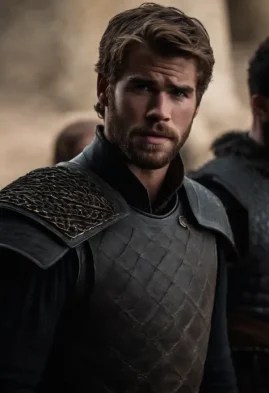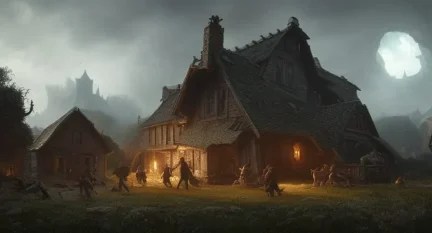
Medieval 6: Giovanni 3 Down and Out, part 1 of 2

In October of 997, in Verona, when the circus was on its way home, Giovanni turned eighteen. For one moment he felt all grown up, but then his father got sick and he felt lost.

Corriden stepped up to take the ringmaster’s place. Giovanni did not think that was a good idea. Corriden was the strongman and as stubborn, some would say as strong in his mind as he was with his muscles. He had no flexibility. If Berlio the Magician and his wife-assistant Priscilla were not ready, he would announce the man anyway if he was next. Then everyone would have to wait until Berlio got ready. It would drag the show. In fact, the whole show dragged because Corriden did not understand that the ringmaster had to be quick on his feet. Sometimes a joke would be enough. Sometimes the harlequin, who was sort of the chief clown, was an integral part of keeping the momentum flowing. He might come and do some handsprings, or maybe tell the joke. Sometimes all the clowns could help out. They had a couple of short routines they could use as filler. Sometimes, the ringmaster could skip the magician for Constantine, the tightrope walker and then after Constantine have Berlio perform. But no. Corriden had his set order and his little papers with the written introductions that he read like a true hack actor and that was that. Worst of all, he thought it all went well.

After Verona, even the ones who supported Corriden, and initially that seemed like most of the circus, thought it best to let the younger Giovanni give it a try. Giovanni stole another line from the future to go with the Greatest Show on Earth line. He said into the megaphone, “Ladies and gentlemen, and children of all ages. Welcome to the Don Giovanni Circus, the Greatest Show on Earth. We begin with the traditional and magnificent circus parade.” The music began. Everyone in the circus paraded except the cooks who had to watch the fires. Everyone walked decked out in their fanciest, frilliest, most colorful outfits including the horses and the dogs. That day, the people had confidence and put on their best performances. They said the younger Giovanni was a natural.

Corriden griped and yelled a lot, but the only thing Giovanni cared about was his father. Don Giovanni senior did not get better. In fact he got worse.

When they got back to Venice, they got the best doctor in town to come and look at him, but the doctor was as stumped as the doctor in Verona, and the doctor in Padua. He said, “Maybe it is due to something he ate.”

Giovanni did not buy that explanation. “It has been too long. If it was something he ate it would have passed through his system by now.”

“Perhaps,” the doctor said. “But I don’t know what else it might be.”

“It seems more like slow poison,” Giovanni voiced his suspicion. “Do you know any drugs that could be used that way?”

The doctor paused and looked at his patient. “Some drugs. Some natural things, too, like certain flowers and such. The problem is we have no way of identifying what it might be, so we have no idea what the cure might be.”

Giovanni thanked the doctor when the cook came in with some broth and said he must eat so he can to keep up his strength. Giovanni also thanked the cook before he pulled up a chair. He spoon fed his father what his father was willing to slurp down, but Father finally waved off more. He spoke. His voice sounded weak. This was not the father who yelled at ten-year-old Vincenzo to clean the stables.

“You go,” he said. “You need to live your life and not worry about me. I think I will sleep for a while.”

Giovanni nodded in general agreement, but he worried. “Titania has been by a hundred times and says she wants to sit by your door in case you need anything.”

Father smiled, almost chuckled, and mumbled, “The bearded fat lady.”

“And Baklovani the wolfman has been by almost as much.”

Father nodded a little. “They are good people. Never forget that. Deep down they are good people.”

Giovanni knew that. “I’ll go and let you rest.” He walked out the door and saw Titania hovering around the cooking tent. He called to her. “Titania. I’m going out to stretch my legs a bit. Would you mind keeping one eye open in case Father needs something.”

“Yes I will,” she said in the sweetest little voice which no one would ever guess would come out of such a big woman, especially one with a beard.

“Did he eat the broth?” the cook asked.

“Some of it,” Giovanni said, and turned away. He decided he needed some comfort at the moment. Madam Delfin lived in the first town up the road, the one with the docks where the ships from Venice came in. She was twice his age, but her husband died and she inherited it all, having no children. She was always good for a tussle, but she had a motherly streak about her at times which made it a shame that she had no children. The thought crossed Giovanni’s mind that maybe he needed Madam Delfin to mother him a bit and tell him everything would be all right.

Roughly four in the morning, he heard Damien, one of Corriden’s hangers-on yelling his name in the streets. He got up, and though Madam Delfin tried to hold on to him, he made it to the window.

“Damien,” he yelled. The man rode to beneath the window.

“It is your father,” Damien shouted. “Someone broke into the house and your father got stabbed. They ransacked the house. Hurry.”

Giovanni turned but got grabbed. Madam Delfin got in one last kiss before she let him go. He threw on his clothes, ran down and saddled his horse in no time. He rode like a wild man, even when he turned off the road and into the swamp.

The house was a wreck. They would not let him see his father at first. He was dead, stabbed several times, and Giovanni cried before he got angry. He went to the desk and opened the bottom drawer. The money was gone. He looked up at Baklovani and Constantine the tightrope walker before he shrugged. He removed the false back to the drawer and saw the money was gone from there as well.

“Unless Father took the money out from there for some reason,” he mumbled.

After he put the desk back together, he cried some more, maybe until sunrise.
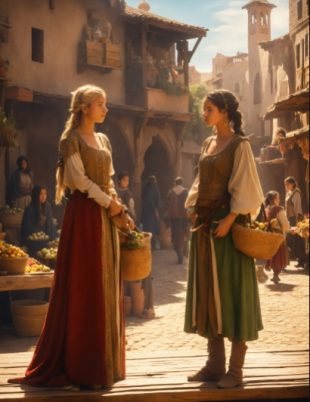
Medieval 6: Giovanni 2 Women and Questions, part 1 of 1

Giovanni discovered girls as early as twelve. Being Don Giovanni III, master of the circus got them curious. By thirteen, his smooth and confident manner got them interested. He was not much older before they started rolling in the hay.

The circus wintered in the swampland on the mainland of Venice granted to Don Giovanni the first, along with his knighthood. The Doge said he would rather have those strange circus people in the swamps than an enemy army. Around April something, the Circus began its season. They had what young Giovanni called dress rehearsals in Padua before they hit some small towns in the Po River Valley. They practiced in the small towns and villages in both the circus tent and the smaller tent they called the tent of wonders that Giovanni secretly called the freak show. Then they crossed the river to Modena where they set up the big tent. It was the last chance to practice the big show before they got to Bologna, the first city since Padua. From there they went to Ravena, and all the way down the east coast of Italy to Fermo where they crossed the hills to Spoleto. They were in fine form when somewhere near the first week of July they crossed over to Rome. They stayed in Rome for a week and gave as many as five performances in the big tent, but mostly people rested up for the second half of the season. They did not perform on Sunday, of course, though they often traveled on Sunday.

The first half of the season took about three months. They rested and performed about forty-five days and they traveled about forty-five days leaving early in the morning and traveling until two, or sometimes three, unless of course it was pouring rain. They tried to make up to fifteen miles in a day, about two and a half miles per hour, though it seemed for every day they made fifteen, there was another day where they barely made five so they averaged about ten. In the villages and small towns they tried to open the tent of wonders at four and put on the smaller show in the circus tent at five. If warranted, on those summer days when the sun stayed up late, they might put on a second show in the tent of wonders where they might include some small acts, like the juggler, fire eater, or clowns that the people might have missed in the circus tent. Then the circus people got up and had an early breakfast, packed everything, and left an hour or maybe two after sunup. In the big towns and cities they often stayed three or four days. The big tent went up and they might perform two or three shows in the big tent at five. On those days, the tent of wonders would open at two and give a second showing at four, and the circus tent would have a show at three where the people got a taste of what would be in the big show, and they were encouraged not to miss it.

The second half of the season, the big half with sixty days of travel and sixty days in the towns and cities brought them up the west coast. They went to Pisa, Genoa, Turin if there was time, and Milan. From Milan they followed a familiar path that made everyone think of home. It was Milan, Brescia, Verona, Vicenza, Padua again, and back to Venice. They usually got home at the end of October or the first week in November and performed one last week, two or three performances for the people of Venice before the cold weather kicked in.

From young Giovanni’s perspective, he learned to take advantage of all that moving about. To be sure, he imagined himself as worse than a sailor. He had a girl or two in every city, and some in the countryside as well. Most of them were peasants but some of them were quite wealthy and well-to-do ladies who could not resist him and the chance to be naughty.

On one bright and crisp winter day in Venice, he was just coming back from just such a rendezvous with a fine lady when he ran into the last person he expected. He got up on some steps because the young man rode in the streets, an unusual thing in Venice. The young man looked surrounded by soldiers and some men who looked like they served the Doge. Giovanni halfheartedly waved, but it was enough to catch the young man’s eye. The man smiled broadly and yelled.

“Don Giovanni.”

This is not what Giovanni wanted. The whole crowd turned to look at him, especially the women who certainly thought something. Giovanni quickly pushed through the crowd before he could be grabbed by any of the women or stabbed by any of the men. He did not mind hugging the young man who had gotten down from his horse, and he named him.

“Otto. Good to see you again.”

He took a step back and they both remembered the secret circus handshake, and Otto laughed and spouted. “You were right. The Greatest Show on Earth. It was incredible. When can I come again?”

“Winter quarters right now,” Giovanni admitted. “The season starts in April and runs through the first week or so in November. Then everyone rests about four months, and comes up with new acts, new ideas, new tricks, and such for the next season. We start again in April.”

Otto nodded, like it was a serious discussion. It was a practiced look, no doubt, when he got surrounded by older men who were presumably wiser men. “I have only three questions… make that four. First, how did your father ever come up with the idea of a circus?”

“It was my grandfather. The Doge, a couple of Doges back, was so impressed, he knighted my grandfather in perpetuity and gave him the swampland on the mainland. Better than an enemy army in the swamp, he said. We have a house, big barn and stables, workshop, tents, and wagons everywhere, plenty of farm animals, and a small fishing village on the coast that keeps us all fed. Not much to speak of, all things considered, and certainly not land that anyone else would want.”

“But the circus?”

“Ah,” Giovanni drew out the word. “The circus, like the old Roman circus which was a place of entertainment. There are people everywhere that have talents. Some are peculiar talents. Some are peculiar people. They have traveled around like beggars since Roman times, performing in towns and villages for the few pennies that get thrown their way. It is a hard way to make a living, especially since the road is a dangerous place to be. My grandfather got the idea of gathering many of these performers together and putting on a great show. They could actually charge money to see the show, a more certain and regular income for everyone, and a whole train of people to travel, so less likely to run afoul of the typical thieves and robbers most travelers have to watch out for.”

“Brilliant,” Otto said. “I imagined something like that.” He looked around. The soldiers were keeping back and keeping the crowd back, but one old man came up to listen in. Two oddly familiar looking men, one short and one big, followed but kept back a couple of extra steps. The old gentleman kindly did not interrupt at first, so Otto continued.

“So, second. Have you seen any more ships flying around in the sky?”

“Shh…” Giovanni hushed Otto and quieted his voice. “That is something that is best not made public. I went and spoke to the Flesh Eaters, and did not get eaten, thank God. There are twelve of them. That was what they call a shuttle, like the longboat on a sailing ship men use to escape when the ship is sunk in battle. Their ship got destroyed in a battle and they escaped on the shuttle. They just needed a place to hide for a while, though it has been seven years now and that should be long enough. They promised to not eat any people while they are hiding, so that is a good thing, but they don’t exactly pay for the cows, horses, pigs, and sheep they take.” Giovanni shrugged.

Otto nodded and hushed himself. “So, I hear you are getting quite a reputation with the ladies.” He grinned like he was talking about something risqué, which he was.

“The younger Giovanni is a scoundrel of the worst sort,” the older man finally interrupted. “Makes me want to put a guard around my daughter.”

“But what are you doing here?” Giovanni changed the subject.

“Most of the army is around Rome, but I wanted to renew the Empire’s friendship and trade agreements with Pietro II Orseolo. Part of the agreement involves me marrying Petro II’s niece, Lord Stephano’s daughter.”

“That’s me,” the older man said. “Lord Stephano.” He gave Giovanni his hardest practiced stare, but Giovanni was not fazed by it as his focus stayed on what Otto just said. Giovanni even raised his voice a little.

“Otto. You are sixteen. I’m seventeen but nowhere near ready to marry. What are you thinking?”

“It is the way alliances are made,” he said with just the right touch of sadness.

“It isn’t right, especially for the girl who has no say in the matter.”

“It is the way it is done,” Lord Stephano said.

“Doesn’t make it right,” Giovanni responded with a sharp look at Lord Stephano who did not appear to disagree with him entirely. “Fathers want their daughters to be happy, not stuck in a situation they might not like. At least with you, I know you will make the effort, but still… Did you at least get a look at her.”

“We looked at each other from a distance. I did not seem to impress her.”

“She is but fourteen years old. The marriage will not happen at this time,” Lord Stephano interrupted.

“How about you?” Giovanni asked.

Otto wrinkled his lips like he had to be careful with his words. “I am not sure she is my type, but maybe when we get to know each other…”

Giovanni nodded before he shook his head and smiled. “All women seem to be my type.”

“So we have heard.” Lord Stephano said and suggested with his hands that Otto needed to get back to his horse and on to his destination. The short man and big man brought up their four horses.

Giovanni interrupted. “But wait. The circus. The ship.” He pointed to the sky. “And the women. You said there were four things.”

Otto turned toward his horse but spoke over his shoulder. “Did you get your elephant?”

“Not yet, but I am working on it,” Giovanni answered. “When I get one, I’ll bring it to you so you can see it for yourself.”

“I’m looking forward to it,” Otto said as he mounted and the troop of horses moved carefully through the streets and headed for the palace, or maybe to the shipyard where they could take the horses aboard for transport back to the mainland.

************************

MONDAY

There is a death in the family and Corriden wants to take over the circus. Corriden takes most of the circus with him, but the Kairos has friends. Until then, Happy Reading

*

Medieval 6: Giovanni 1 Friends and Strangers part 2 of 2

Early that evening, Giovanni hid around the food wagon which he decided should be called a chuck wagon. Along with all the food, the wagon carried a big portable oven to cook bread and pastries, a double sized grill to cook fish, chicken, and sausages, plenty of pots and pans for soups, stews, and other fried foods, and plenty of wood for the fire. The chuck wagon got hauled by a pair of oxen that were young and strong enough to pull all that weight.

The cook and her assistants cooked and grilled in plain sight of their visitors, which is what the circus called the people who came to be entertained and paid with coppers, and sometimes silver coins. The cooks sat at one end of the midway, next to the big tent. The small tent they called the tent of wonders sat across the midway from the food. Those two framed the entrance to the big tent when the big tent got set up in the bigger towns and cities. The so-called circus tent sat at the other end of the midway. It was a tent about the size of the center ring in the Big tent so big enough to give a very short version of the show. It was the only show they gave in the small towns and villages where they did not even put up the big tent, but it got designed as both a show in itself and also a taste of what the people might see in the big show, in the big tent. Between the tent of wonders and the food at one end, and the circus tent at the far end, the midway ran full of glitter, flags, banners, bright colors, and games on both sides as well as some special tents, like the tent for the fortune teller. Everything cost a penny or two, but nothing was very expensive.

The circus, as Giovanni’s father explained, was supposed to be for the common people, the ones who did not have many, if any coins to spare. “It is a way for the ordinary people to get a break from their dreary, ordinary lives. A bit of exciting, exotic, different entertainment that they can talk about and remember in the many months ahead, and especially through the long winter months.” Father said, “I like to think of it as a way to help make their lives worth living.”

Giovanni paused to wonder if he liked to hang out near the food because he was becoming a teenager, or at least a preteen at ten years old. He smiled and nodded. He liked food.

He paused again and thought about Otto, and changed it to his friend, Otto. As can happen with young people, in the moment they met they became friends and would remain friends in all the years to come no matter what time or distance separated them. He hoped Otto liked the show. He imagined Otto was a count or baron of some sort. That would not matter to them. He also imagined Otto would have important things to do, and especially when he got older. But at least he should not have to clean the stables. Giovanni grinned but stopped abruptly when he heard a voice.

“And you also have important things to do.” It was a man’s voice. Giovanni quickly looked around, thinking his hiding spot got discovered. No one was there.

“Who are you?” he asked, but softly so as not to reveal where he was.

“You,” the man said. “I am Nameless, but that does not matter. What matters is you cannot let a Flesh Eater ship fly off to the north without checking it out. This is a genesis planet, and they have no business even being here. If they need sanctuary for a time or need to make repairs, they might visit, but there are rules they must follow. They must be told. Best if they are not even seen by the human population. And for these Flesh Eaters, they must be told and underlined that they are certainly not allowed to eat any people.”

Giovanni paused again before he answered in his whisper. “I understood most of that.”

He heard Nameless sigh in his mind before Nameless spoke again. “As happens far too often, you really are too young for this. Your personality, or I should say your personhood is not yet fully formed. The last thing you need is a bunch of other persons messing up your future and the way you see yourself and the world. I will try to make this like a dream experience that might fade for a time. When you are of age, it will come back to you, but in the meanwhile…”

Nameless stopped speaking and appeared in that spot in place of Giovanni. Where Giovanni went was a question, but for the moment, the Nameless god the grandson of the Alfader Odin, had work to do. He vanished from that place having got an instant reading on where the Flesh Eaters came down. He reappeared in a forest of Bavaria, near the Danube, between Augsburg and Ulm.

One of the Flesh Eaters saw him right away and pulled his gun. As Nameless walked to the edge of the camp, the Flesh Eater fired. The weapon did not even slow Nameless down, and as he raised his hand, the Flesh Eater handgun appeared to hover just beyond that hand. Nameless closed his hand, making a fist, and the handgun crumpled into a little ball of metal before it dropped to the ground.

The Flesh Eaters came in a twelve-person shuttle that parked in the clearing; its engines shut down. Nameless felt it best to speak to all the Flesh Eaters at once so later they could not say they did not hear or were not told or did not know. He waved his hand and they all appeared in front of him. Several shrieked, and Nameless nodded. Twelve humans instantly transported that way would make a similar sound.

“This planet is marked do not go in your navigation system. You do not belong here. You cannot park here.” Nameless smiled at that last phrase. He had been saying that for more than five thousand years.

“We have no choice,” the Flesh Eater chief found the courage to speak when Nameless toned down his awesome nature to almost nothing. “We are survivors. Our ship was destroyed in a great battle. Our shuttle is badly damaged. We noted this world is also marked as a sanctuary planet. We came here to hide in case the enemy tries to follow us. We have sent out a distress call, but we do not know if there are any of our kind left alive to rescue us.”
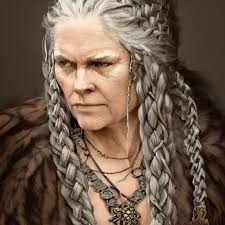
Nameless noted that the twelve were all males. At least he should not have to worry about them multiplying. “I cannot say about the possibility of rescue or not, but I can say there are rules you must follow in this place. If you break the rules, I will know. You came here to hide in hope of rescue. Very well, then you must also hide from the people of this world. It would be best if you and your ship are not ever seen by the people. Also, you must not eat the people.” He paused and waved his hand over the group to make it so before he told them. “If you eat a person, it will be poison to you and you will die. You may eat of the animals of this world, but never the people. Is that clear?”

Several Flesh Eaters quickly jutted out their tongues and ground their teeth which Nameless understood as something like a human nod of agreement.

He finished. “Killing or interfering with the natural course of development of the people is not allowed. Do not abuse your time of sanctuary, and you may live. Better yet, repair your craft and find another world to hide. Is that clear?”

This time, most of the tongues came out and most of the teeth showed.

“Good,” Nameless vanished. He reappeared in Giovanni’s place by the cooking wagon where he traded places with a different life, Amun Junior, the son of Amun and Ishtar from Egypt and the Middle East. He let his consciousness travel all the way to India where he found a man and his son who performed some tricks with an elephant. Not at this time, he thought. But maybe if the son got older and got a baby elephant he could train from birth. He put that thought in the boy’s head and stood behind the chuck wagon in time for Giovanni’s father to come around the corner looking for him.

“Vincenzo,” the man called before he stopped and stared at the stranger. “Who are you, and what are you doing by the food wagon.”

“I am your son,” he said. “I just borrowed his time and place to run an errand. Listen.” The elder Giovanni found he could not do anything but listen. “Your son is still too young and impressionable for this. It would be best if you did not talk about me. I will be like a dream to him. You can talk when he is eighteen, but not before. Is that clear?” He said is that clear because that was the phrase Nameless used. He really was the same person after all, no matter how many different people he might be throughout time.

Junior nodded and vanished. Giovanni appeared right where he had been sitting. He sat up suddenly and rubbed his eyes. “I must have fallen asleep,” he said, before he added, “What is that great smell?”

Giovanni Senior stared at the spot where Junior vanished before he shook himself and turned to his son. “Cook is baking some honey cakes for supper. Aren’t you supposed to be feeding the oxen?”

“Oh yeah,” Giovanni said. “I’ll get right to it.” He would have run off, but the elder Giovanni slipped his arm around his boy and walked him to the animal pen. The elder thought about what he just saw and had no idea what that was or how to interpret it. The younger one thought about the elephant and smiled.

Medieval 6: Giovanni 1 Friends and Strangers part 1 of 2

After 979 A. D. Venice, Italy, and the Holy Roman Empire

Kairos 106 Don Vincenzo Giovanni, Ringmaster

“Hey, kid. Over here.” Giovanni hid between a wagon and the back of the Circus tent. The kid came quickly and ducked down. He said something Giovanni did not understand, like he was speaking a foreign language. Giovanni simply nodded and pushed the back of the boy’s head to keep it down as the acrobats went by shouting for Otto, whoever that was.

Giovanni dressed in his Sunday best, though his clothes were not the best. He got forced into a bath and made to dress. They were giving a command performance that afternoon. Giovanni was not sure who it was for unless the pope or some cardinals or archbishops got some time off from their prayers. Rome was full of self-important people with big egos who liked to be in charge.

He looked at his companion. The boy was dressed in fancy, expensive clothes. Real Fancy. Maybe he was part of the group for the command performance. “Otto?” he guessed and asked the boy. To his surprise he understood what the boy said in response. It came as a bit of a shock to Giovanni because up until that point he had no idea how to speak German.

“Mother wants us to go in and sit and wait for the show to start, but I want to see the mermaid, and the wolfman, and the lion. My god, there is a lion.”

“You will see them in the show,” Giovanni said. “Well, not the mermaid, but all the others. I’m Don Giovanni. This is my circus.”

“No. You are too young, like me. I’m nine.”

Giovanni lifted his chin. “I’m ten. But, okay. It is my father’s circus, but someday it will be mine. The Don Giovanni Circus will be the greatest show on earth. Someday, I am going to get an elephant.”

“What’s an elephant?”

Giovanni considered describing the beast, but he concluded with, “You’ll see when I get one.”

Otto nodded and had another thought. “I would like another one of those hot cakes.”

“Honey cakes. Full of sweets. Bad for the teeth.”

Otto stuck his head up to look, but Giovanni quickly pulled him back down. A big man stepped around the corner of the tent and looked toward the wagon but did not see the boys. They were well hidden but might be caught if they did not keep quiet. Giovanni whispered.

“That’s Corriden, the strongman. He is mean and greedy. He has a big mouth and likes to be in charge.”

Even as Giovanni whispered, Corriden opened his big mouth while two more men came running up. “Porto, check the midway again. Damien, check around the animal pens. I’ll try the circus tent.” The men split up and went off in different directions and Otto spoke again, completely changing the subject.

“We came here to see my father. He died in Italy. We went to the grave, to churches, said prayers and went to masses, and talked to all kinds of important grownups.”

“Sorry about your dad.”

Otto shrugged. “I was three. I hardly remember him.” The boys looked at each other and Giovanni decided Otto needed cheering up.

“My mom died when I was about three,” Giovanni said. “It was hard for a while.”

“Sorry about your mom.”

“You know, everyone in the circus has faced some terrible tragedy or other. Some people run away to the circus to grieve, or to hide from people who want to harm them, or something. What people share at the circus stays at the circus. But in your case, I believe you qualify to learn the secret circus handshake.” They shook hands. They cupped their fingers and shook. Giovanni fist bumped the top of Otto’s fist and had to wait a second for Otto to fist bump the top of his fist. They slapped hands and pointed at each other, and Giovanni wiggled his fingers.

Otto smiled and went through the motions again on his own. Giovanni heard a voice. His father called.

“Vincenzo.”

He did not sound mad, just perturbed.

A woman said, “What is that? In the sky.”

Otto and Giovanni both looked, and Giovanni stood and yelled. “No. Elgar already did that,” he complained. “Every time I think it is over between you two, you come back. Just stop it!” He picked up a pebble and threw it at the Flesh Eater ship that hovered over Rome before it shot off to the north. Of course, the ship was twenty-thousand feet up, way beyond where his pitiful little pebbles could reach.

“What was that?” Otto asked as he stood.

“Flesh Eaters,” Giovanni spit. “They are people who are exactly like they are called. They eat people.”

“How do they fly like that? What kind of a ship was that? Is that part of the circus?”

“No. Not part of the circus. It’s complicated. Maybe if we had an hour, I could explain the basic ideas.”

“Otto. Come here.” The old woman with the cane spoke sharply. Giovanni’s dad stood beside her with a mix between a frown and a smile on his face and his fists on his hips.

“Vincenzo,” he called and then turned to the old woman. “If Otto was with my son he was in the safest place in the world he could be, though my son does tend to misbehave.” He turned to Giovanni. “Aren’t you supposed to be cleaning out the horse stalls?”

Giovanni found his tongue automatically slip back into his native Venetian. “I was just taking a break. My friend Otto and I needed a rest from all the grownups.” He looked. The old woman evidently spoke the language and understood. He turned to Otto and spoke German again. “Your mother?” He asked because mother did not sound right.

“Grandmother,” Otto said. “Adelaide of Italy.”

“Otto,” the woman spoke and leaned heavily on her cane. “Your mother is very worried. You should not run off like that. Come. The circus is about to start.” She slipped her arm around the boy as if to say he was not going to escape again. He looked sad at being caught, but he perked up when Giovanni spoke.

“You are going to really love the show.” He noticed the soldiers standing in the background, watching the woman and the boy, and Giovanni’s father. “The Greatest Show on Earth!” He spouted, and with a look at his father he softened his voice. “Going,” he said, but he could not resist one shout back as he ran off. “Catch you later.”

Otto looked in Giovanni’s direction and waved. “Later.”

Medieval 6: K and Y 20 End and Beginning, part 2 of 2

Yasmina

Yasmina wandered through the meadow where the wildflowers grew, and the bees came to collect the pollen to make their honey. It was not exactly the sculpted garden she grew up in, or the imitation garden in Fustat, the Princess garden in Alexandria, or the newly planted and manicured garden she practically lived in when she was held prisoner in the palace in Madhiya, but it would do. In some ways, the meadow was better. It was natural. The flowers, many different kinds, grew wherever they found a place, or more accurately, where the local fairies encouraged them.

The nearest fairy troop live in the hills some distance away, but she spied one every now and then. In exchange for a bit of honey, they kept the flowers growing big and strong for the bees. Of course, the people saw them as little birds, if they even noticed, but Yasmina could see beneath the glamours, and even see the gnomes who mostly worked invisible and insubstantial, if she cared to look.

Aisha fell in love with a local elf and joined a troop that lived in the distant woods where only a few human farms interrupted the verdant wilderness. Of course, Aisha and her husband Castaneis visited once or twice a year, “Just to check up and make sure all was well.” Yasmina was happy for her friend.

Also, once or twice per year, or at least every other year, Norsemen began to come to the port of Amalfi to trade. Amalfi was easier to reach than sailing all the way to Byzantium. The Rus had trade down the rivers blocked to competition, especially since they took Kyiv a couple of years ago. The Normans in particular had to come the long way around, through the so-called Pillars of Hercules. Still, Amalfi was closer and less taxing than Constantinople.

They brought furs like ermine and beaver, and sometimes amber and ivory to trade for silks, fragrances, glassware, and wine that would fetch a fortune back home in the north. It was all due to Captain Frodesson, Oswald the elder, and Edwin the dog. By 945, southern Italy had regular and friendly trade with the north, in particular the Normans, as they came to be called. Yasmina understood the general thrust of history. It would be fifty years before the Normans came to settle southern Italy, piece by piece. She would be gone by then, but her children and grandchildren, and maybe great-grandchildren would be part of that.

Yasmina sometimes got called on to settle things when there was a dispute, since she got credited with setting up the Norse trade in the first place. Those disputes were usually minor and easily resolved. It was a different story when Islamic ships came to the port. Yasmina got called on then, too, and sometimes those disputes were not so minor.

Yasmina herself donned her armor three times over the last ten years to fight off Muslims that tried to establish settlements in southern Italy. She fought alongside Naples, Salerno, Capua, the Byzantines, and plenty of princes, dukes, and counts from here or there. She was instrumental in keeping Italy Muslim free. Al-Rahim taught her well. She knew Islamic ways, weapons, tactics, and what the Muslims in general and in particular the Isma’ili fanatics were capable of. Francesco got knighted after one victory. They did not knight women. She did get a thank you note from the Pope, but that was it.

It was not that she turned away from her faith, but she knew if Italy became divided, her children would never have peace. As Kirstie often said, trade was better, and trade works, or as her Kairos self said in many lifetimes, peace was better than war. And she knew the way Muslims and Christians viewed the world and everything in it was incompatible. There might always be war between the two, sad as that would be for the human race, but at least she could help keep her corner of this world from all that bloodshed.

Yasmina had some pieces of the Koran which she diligently read. She kept her Islamic traditions in Italy, and celebrated all the festivals, at least as well as she could. It was hard to fast on Ramadan when the children came along, and especially when Francesco’s mother cooked a huge meal for the whole family after church on Sunday. Mama Rosita lived in a castle-sized house, but then the woman had eleven children, so the room was needed. Francesco was the third child, the second son.

Interestingly enough, Francesco’s father, uncles, and all the boys, brothers and cousins accepted her right away. A few were jealous of Francesco. Yasmina was very pretty. It took the women longer to get adjusted to this foreign girl. Mama Rosita and Francesco’s older sister, Maria were especially stubborn. They finally softened when Yasmina had sons. Peter was first. Antonio, a well-used family name, came two years later. They did not fully accept her, though, until she had a daughter, Sophia, and she wore a small crucifix around her neck and went faithfully to mass on Sunday besides, and she kept her head and hair covered, even if she rarely wore a veil in Italy. She worked hard to fit in with the family and the people of the town because, quite the contrary to Yasmina’s upbringing where she was ignored by her mother and father as often as not, and she only had the grandfatherly al-Rahim to care for her before Aisha arrived, in Amalfi family was the most important thing. Children mattered, so Yasmina had some adjusting to do, but in the end she decided she liked it that way.

Francesco was not the most faithful husband in the world. He loved Yasmina passionately when he was around, and she was all he wanted. But he traveled. He was part of a family of tradesmen—Italian tradesmen. And when he traveled, he often sought comfort in the arms of a local woman. Yasmina did not feel terrible about that. The women in the family understood that was normal, healthy behavior for the men. If he did not dally, like Don Giovanni, they would have thought something was wrong with him. Then again, Yasmina did not have to worry about Francesco having concubines, or a harem where she might be demoted to second or third wife, so there was that. As long as he came home and loved her when he was home, she would not rock that boat.

“Sophia,” she called to her three-year-old and the girl came up holding some wildflowers she had picked, and she smiled for her mother. Yasmina returned the smile as she took her daughter’s hand and started down the path toward home. She thought about how Kirstie ended the days of Abraxas. She completed her work in the world. In fact, Yasmina smiled for the last three days, and considered visiting Avalon herself and how wonderful that would be, but by the time she got home, Kirstie got home.

Yasmina began to cry and stayed a moment on the front porch of her home. When Kirstie found armed men in the streets, she had to sit down right there in a chair on the porch. She could hardly focus on what was going on around her. She felt as though her whole being was absorbed by events that happened thirty-one years ago in another land—in another world. The boys came out on hearing their mother. Aisha who came for a visit followed. Francesco and Castaneis were just coming up the road.

“Liv!” Yasmina shouted for no reason anyone could see. Even Sophia and the boys could not get her attention.

“Two for two,” she mumbled before she shouted, “My scimitar.” The weapon appeared at her feet. Big Sister Maria who also came for a visit raised her eyebrows at that and looked again at Yasmina like maybe something was wrong with the girl.

“No!” Yasmina banged into the arms of the porch chair she sat upon. The arm of the chair cracked, and Yasmina grabbed her own arm, and then rubbed her side. Her arm was not broken, and her ribs were not crushed, but she felt the blow like the pain was her own.

“Now. Do it now,” Yasmina cried out, and her own hand looked for a second like it was on fire before water came from her mouth, like she filled her mouth with water and then spit it out. Yasmina sighed. The job was done. It was enough.

Yasmina knew as surely as Kirstie knew that the big house in Strindlos would burn to the ground. Chief Kerga was dead. Mother Vrya was dead. Whoever remained in the village would move. The farms in the north would be attached to Varnes. The farms in the west would connect with Nidaross and Strindlos would be no more. In the future, Nidaross would be dedicated. The Jarl of the Trondelag would build there, not a fortress, but a strong house, and Strindlos would become a memory.

Yasmina wanted to cry, but her eyes went wide instead. “Gruden,” she said and practically growled. Kirstie could not twist out of the way. Yasmina tried to twist for her, but she could not. Yasmina pushed with her hand, Kirstie’s hand that still worked. She felt the sting in her belly but felt satisfied that Gruden was a dead man. Then Yasmina slid out of the chair and collapsed to the floor.

Francesco picked her up and carried her inside, to her bed. “Wilam,” she called him. She cried. She wailed, “I died.” Then she felt something she could never explain. She was not nothing. She was not something. She became like the wind, or perhaps like light, and for one brief moment she felt all the warmth and peace of her mother’s womb before the memory stopped.

Yasmina cried all afternoon and into the night. In the morning she felt a wreck, but she got up, hugged her children, gave Francesco a kiss, and began her daily routine. She said only one thing of note that morning. “Kirstie died. Now it is up to me. She did not live beyond my age so what I do from here is all new. I hope it is a good story.” Then she did not want to talk about it.

************************

MONDAY

The last of the Kairos Medieval stories, the story of Don Vincenzo Giovanni, Ringmaster and his adventures in Venice, Italy, and the Holy Roman Empire just in time for Y1K. Don’t miss it. Happy Reading

*

Medieval 6: K and Y 20 End and Beginning, part 1 of 2

Kirstie

Benches and tables had been turned over all around the big house. Chairs were broken and tables were moved every which way. Kirstie thought the big room was empty at first, but she heard a sound in the corner of the dais opposite the door and saw some movement behind a table.

“Hello?” she called.

Wilam went to the door, while Inga and Erik stared at the wreckage. “A battle?” Erik asked, not really knowing. Inga shrugged as if to say she did not know, but she added a thought.

“No bodies.”

Wilam wisely peeked before he opened the door. He saw armed men in the street and marketplace, and there appeared to be bodies outside. He shut the door carefully and returned to report to the others but found Kirstie up on the dais.

“Hello,” Kirstie said, pushing a turned over chair from her path.

“Kirstie?” the word came back, a girl’s voice.

“Hilda?” It sounded like her childhood friend. she helped move the table as Hilda stood from where she hid.” What happened?” Kirstie asked as she took her friend’s hand and helped her come to join the others. Hilda began to weep so her words came out in bits and pieces.

“Liv’s men from Varnes… The king’s men… Other men… Kare.” Hilda tried to sniff and pull her thoughts together when Inga reached out and held her. “They came to the house. Thoren took the boys to your house, to Yrsa and Lyall. He said he would get help, but I think he feared the men might be at your house. He told me to go to the Witcher Women across the way. He said I should be safe there.” She began to weep again in earnest. “The women were all dead… They killed Mother Vrya…”

Kirstie picked up the story for Wilam and Erik as Inga began to cry with Hilda. “I’m guessing they went to the Witcher Women before invading Hilda’s home. She probably ran here looking for a safe shelter when they gathered on the road to attack our house.” She reached out to touch Wilam’s arm while she fought her own tears.

“What about the men in town? Where is Chief Kerga? Where are the village elders and the captains and their crews? There are bodies outside, and armed men I don’t recognize in the streets.”

Kirstie nodded and sniffed herself. “The men are at sea or living in Nidaross. They may be the king’s men, but you know the king did not send them. You, me, and the king were fighting the Swedes just a month ago, and the good men of the Trondelag are probably still there, fighting. Kare probably recruited all around the fjord. Don’t be surprised if Bieger, Lind, and Gruden are around. As for Liv… I don’t know what to think. She was a strange one when we were growing up.”

“Liv,” Hilda interrupted. “Liv is here, and her men.”

Kirstie nodded. “She got more strange as the years went on. I don’t know how she became the owner and captain of her own ship.” Kirstie shook her head.

They heard the noise from the outside. It sounded like it was increasing in volume and intensity. Kirstie and Wilam had to look. The elves and fairies of the woods had arrived and were driving back the so-called king’s men. Kirstie saw that Booturn brought a whole company of dwarfs with him, and they were attacking with hammers and axes. Vortesvin ran at the men and the king’s men scattered and ran away from the big troll.

“In here. Quick,” they heard, and Kirstie shouted as she and Wilam closed and barred the door.

“Liv.” Kirstie spat at the door. “Inga, take Hilda to the storeroom and lock yourselves in. There is one window if you need to get out.”

Inga did not argue, but Hilda kept staring, open mouthed, and was slow to respond. Kirstie called for her armor and weapons and found a couple of additions to her ensemble. Yasmina’s small cavalry-shield and scimitar appeared in her hands. She quickly handed the small shield to Erik who stood beside Wilam. Wilam pulled his sword and grabbed a broken chair to serve as his shield. Erik still had the mace he took from the castle wall in Avalon.

Something banged on the front door, hard. Kirstie looked to be sure Inga and Hilda got out when a dozen men burst out of the storeroom. Kerga, Alm, and Thoren led the way. Then the front door got ripped off the hinges. A twelve-foot hag stepped into the room, ducking her head a bit under the ceiling. Plenty of men followed her.

“How can there be a hag?” Kirstie asked. “And one as big as the one in America which was six girls combined.”

The hag answered. “You killed my father!” It was Liv. Kirstie imagined she should have been more surprised, but somehow, she knew all along. She wondered instead how Liv could be a hag without the power of Abraxas behind her. Then she got too busy to think.

She dragged the scimitar across the throat of the man that came at her. It happened by reflex. She nearly cut the man’s head off. It was Lind. She mumbled, “Two for two,” and let go of the weapon. The scimitar vanished and her battleaxe flew to her hand.

Chief Kerga and two others went at the hag. Kirstie tried to yell, “No.” but it was too late. She tried to run and help, but the Liv-hag caught her with a backhand that sent her across the room. Her shield cracked, her arm broke, and her ribs caved in all from that one blow. She could only lay there and watch.

Wilam killed Bieger. Thoren, Alm, and the others drove the king’s men back outside, but then stayed near the door. They did not want the elves or dwarfs to mistake them for the enemy. Wilam stood out front knowing the little ones would recognize him and he could turn them away. Alm stood with him.

With the room mostly empty, Liv turned on the broken body of Kirstie at her feet. “You killed my father,” Liv repeated, and Kirstie thought with cool dispassion.

Of course. Liv is a demigod, daughter of the evil Abraxas. She thought of what both Grandfather Njord and Father Fryer said when they gave her the gifts of water and fire. It will be enough. She could only try.

Kirstie sat herself up, her back to the wall. She raised her good hand and poured the fire of the sun on the hag. She gave it every ounce of fire she had in her. The hag reveled in the flames and grew to eighteen, maybe twenty feet. Kirstie dispassionately thought this was the last gasp of the titans whose blood still ran in the gods of old.

Liv roared as she busted through the ceiling and roof of the big house. Great timbers came crashing down to the floor, and one wall busted free of the structure. She roared like the sound of a hundred lions. The building caught fire and it spread rapidly, but Kirstie could not help that. She simply opened her mouth.

A fountain of water flowed from her mouth. It quickly became a stream of water, and in the end a roaring river, more than the biggest firehoses combined. It completely covered the burning hag. In the future, Kirstie swore she heard a loud Snap or Crack when the glue that held the hag together busted altogether. Kirstie remembered the Grendel. She fully expected Liv would not melt exactly like the others. She would retain some of her size and shape, but she would surely be dead. It was enough.

Kirstie smiled, knowing that this was definitely the last. She looked around at the building and knew she did not have more water to put out the burning wood. The big house would burn rapidly to the ground with her in it. She did not mind. She felt certain she was dying.

She saw movement. It looked like a man with a sword at the ready. She recognized him when he got close and spat his name, though she could hardly talk. “Gruden.”

“Kairos,” he responded, and grinned. “The Masters have determined that if I can kill you before your time, that will disrupt your rebirths and end them. Then you will not be around to stand in the way of their plans, and they can ruin the world as they please.”

Kirstie shook her head. It did not work that way. The God who knows the end from the beginning would know ahead of time the precise moment of her death. That would be her proper time, no matter what the Masters did.

Gruden stepped up to her, sword in hand, pointed down at her middle. She did this once with Captain Ulf on the field below Lindisfarne, only that time she sat up and turned so Ulf missed her. Now, she could hardly move. Her entire left side felt numb.

Gruden looked ready to strike. Kirstie called for her long knife, Defender. The knife vacated its sheath and flew to her hand, so when Gruden came down with his sword and pierced her in the middle, her knife went up into the man’s chest, cutting him in the heart, using the man’s own motion toward her to make up for her failing strength.

Kirstie knew she would not survive the cut in her belly. She would soon bleed out her life. But Gruden’s eyes went wide with surprise when Defender cut him deeply. He fell and died quickly.

Wilam braved the flames and the collapsing big house. He found her readily enough. The sword fell out from the weight of the handle. It made the cut worse, but that hardly mattered. Wilam lifted her and carried her outside to lay her down gently.

Kirstie wanted to tell him she loved him. She wanted to say, sell the properties if you can, though she imagined the survivors would move to Nidaross and abandon Strindlos. Strindlos, without Chief Kerga and without Mother Vrya and without the meeting hall to designate the center of the village would become a ghost town, like the village never existed. She wanted to tell him to take the children to Northumbria to his family and live there, but she could not breathe. Her lungs were punctured and collapsed, so she opted just to kiss him until she passed out.

Medieval 6: K and Y 9 The Journey Begins, part 1 of 2

Kirstie

Kirstie packed her things. She dressed Soren to travel, and Hilda said Hodur would cry and miss his friend. She hugged Erik and told him to stay out of trouble. She also told him to take care of his mother and brother while his father Thoren was away.

“And if you need anything, food or anything,” she told the boy. “You find Inga or Yrsa and let them know right away. They will help you with whatever you need.” Erik nodded, but Kirstie was not sure he exactly understood, so she asked Alm to have someone keep an eye on the situation. There was no telling how long Kare might stay away now that she divorced him. And that meant it might be a long time before Thoren came home.

“Don’t worry about the farm or the tenants,” Alm said. “You have good people in your tenancies, and Thomas and Gustavs are doing a good job running the farm. Gustavs is content. He says if he did not have the work to keep him busy, he might join a monastery. He is a true believer. As for Thomas, I may talk to Sten, Captain Harroldson’s man up by the Varnes River. He has a young thrall that cooks and cleans and all that sort of thing. Her name is Lyall, from the border of Strathclyde and Pictish lands. She is very unhappy where she is, so maybe Sten might sell her for a reasonable price.”

Kirstie smiled at the thought of Thomas and a girl being in love. “Whatever you think is best,” she said. She knew her little ones were very perceptive in the ways of love. It came from hanging out with Mother Freyja over so many centuries. Mother Freyja loved on the little ones even before she had her Nameless son.

Yrsa stepped up dressed in her leather, a knife at her side. “Ready to sail,” she reported.

“No. Wait.” Kirstie responded. “We are going to meet Wilam’s family. This is not a dangerous mission. No need for you to go.”

Yrsa looked at Alm, but Alm’s expression did not change. Yrsa spoke. “You have a four-year-old and a new husband. You can use the help. Besides, it is practice for when Alm and I have a son.” She looked at Alm again and he smiled at that suggestion.

“But we will be gone a whole year. We won’t be back until next spring.”

“I know, but Alm and I have hundreds of years to live together. We are not short livers like human mortals. Besides, I got my muscles ready for rowing.” She lifted her hand to show off her skinny little arm.

“This is a two-decker ship. I don’t know how much rowing they do.” Kirstie put her hands up in surrender. She really could use the help.

Yasmina

It took some honest effort on Yasmina’s part to drag al-Din out of the pit of depression he had fallen into, but finally, one evening over a campfire, al-Din opened up enough to explain what happened.

“It was my servant girl,” he said. “She is a very kind and good person, always trying to do good for others. She is what my Christian friend, Francesco would call a real saint. You remember Francesco?”

“Yes,” Yasmina said in a small voice. She had thought of him regularly over the last four years of her “captivity” as she now thought of her time in the palace of Mahdiya. She felt bad for al-Hakim. He had been a nice boy despite being a servant of the Masters. But, yes, she remembered Francesco. She remembered his kiss. She thought she might like to see him again. She thought she better pay attention.

“So, the merchant offered new lamps for old ones, and it never occurred to her how senseless that was.”

“Not senseless,” Yasmina objected. “The old lamps—many are solid copper. Most new lamps are cheap tin with a copper coating to make them look good, though they are cheap. Good copper is worth way more, so not entirely senseless.”

“Huh,” al-Din said. “I never considered that.”

“So anyway…” Aisha wanted on with the story.

“So, she traded the lamp of the Jinn for a new tin one. She did not know. All she knew was the dirty old lamp was impossible to clean.”

“That was Suffar,” Yasmina said.

“What?”

“According to the story a thousand years from now, the lamp dealer was Suffar, the Sultan’s Vizir disguised as a poor tradesman.”

“What’s a Sultan?” Aisha asked to the side, but Yasmina waved off the question.

“That makes sense,” al-Din said. “Because Suffar ended up with the lamp and he ordered the Jinn to get rid of me. You see, I asked twice if Badroul would marry me, and twice she said yes. The first time the governor said she was still too young. The second time, he said he would think about it. But I know Suffar asked on behalf of his son and I believe the governor told him the same thing, that he would think about it.”

Al-Rahim spoke up. “I have not had the pleasure, nor the headaches, but I believe it is a natural reaction for a father to dislike their daughter’s boyfriends. I suspect he will always say no until the daughter says she is going to marry the boy anyway, so he might as well say yes.”

“What about me?” Yasmina asked. “I’m like a daughter, or a granddaughter anyway. I give you headaches.”

Al-Rahim nodded. “You are right about that.”

“So anyway, I think Suffar had the idea that the Jinn would kill me by accident or by design. But what he did was whisper in the governor’s ear that I would be a good addition to the diplomatic group. Considering my interest in his daughter, I suspect he did not take much convincing.”

“What about the diplomatic mission? Did someone honestly believe the Mahdi would be interested in peace?” Al-Rahim asked since he did not get the straight story.

“As I understand it,” al-Din answered. “The Caliph sent a letter to the governor of Egypt that said make peace with the Fatimids. The governor of Egypt sent a letter to the governor of Alexandria saying, make peace. The governor of Alexandria told his advisor, go and make peace, and I got caught up in the mission.”

“And what will you do when you get home?” Yasmina asked, kindly changing the subject before al-Din once again turned morose.

Al-Din looked at her with blank, staring eyes before he made his pronouncement. “I will marry that girl no matter what.”

“Hope,” Yasmina said. “Hang on to that. As long as there is life, there is hope.”

Al-Din smiled briefly before he turned it on her. “But what about you? What will you do?”

“My needs are simple,” Yasmina said. “All I want is a safe place, a place I can call home. So far, every place I have been has failed to provide that.”

“Aren’t you afraid of running out of options?” Al-Din asked.

“No way,” she answered. “We have a whole world to explore, and I can’t imagine living long enough to explore it all, at least not in this lifetime.”

Medieval 6: K and Y 8 Shame On Us, part 2 of 2

Wilam said thanks to Alm and Yrsa for being there for Kirstie. Hilda was also there, but it was mostly to pick up Hodur and Soren and take them to her place for the night. No telling where Erik went. Wilam also said thanks to Thomas and Gustavs, whom he had met. They seemed extra happy, Kirstie figured, not the least for being relieved of Kare. There were also small presents from her tenants, Tove and her young family, and Helga’s family.

Wilam met Mariwood and Buttercup who stayed big the whole time they were there out of deference to the humans. He also met Booturn and Buckles who went with Birdie and Missus Kettle, and who came dressed as dwarfs and did not care about the humans. They had more food and drink which Booturn said was fit for human consumption, the drink being Bjorn the Bear’s recipe. Also, Inga and Brant Svenson were there, sort of a couple. It was a feast on top of the feast, but after a couple of hours, Wilam and Kirstie slipped away to their room.

 Around nine o’clock, Wilam and Kirstie got up. Kirstie felt uncomfortable about something, and after assuring Wilam that she was not uncomfortable with him, she lay there in the quiet trying to puzzle it out. Wilam pointed out that someone was in the main room, talking. They found Inga and Brant Svenson still there. They must have stayed when all the others left.

“Wilam,” Brant said, and smiled. “Inga tells me it is a Norse tradition that people stay by the couple to make sure they are undisturbed on their wedding night.”

“We are undisturbed,” Wilam said, but I think Kirstie is having some kind of premonition. No idea what about.”

Kirstie confessed to Inga that she imagined that whatever troubled Avalon also troubled her; but it was not that. It was more than that, like something else. “I did not feel troubled by Avalon all week. It just never occurred to me. Soren got well, and I got well all at once, the minute Wilam showed up. But now, something is wrong somewhere. If not Avalon, then where?”

“I feel the trouble myself, now that you mention it.” Inga said, and that seemed all Kirstie needed to trigger her actions. She stepped back into her room and to her closet.

“What’s up?” Brant wondered.

Kirstie looked at her armor. She kept it with her rather than sending it back to Avalon as usual. She felt afraid, even then, that if she called to it, it might be slow to respond. She decided not to risk it and stripped to dress the old-fashioned way. Inga kindly averted Brant’s eyes.

“She’s not my little girl anymore,” Inga said while she kept Brant from peeking.

Wilam asked, “Where’s the fire?” Always ready for adventure, it was one of the things Kirstie liked about him.

“I’m not sure,” she said, but with her weapons in place she felt ready for it.

“I’m not sure either,” Inga agreed. Kirstie and Inga looked at each other for a minute while the men stared. They agreed to go to the big house. Kirstie was not certain if the trouble would be found there, but it seemed a logical place to start.

They stepped outside to find someone peeping through the window. Young Erik escaped from being stuck with the babies, Soren and Hodur. He was out much later than he should have been. Hilda was probably worried about him. He started to turn, to run away, but stopped and spoke instead.

“Where are you going?” he asked, with a bright smile but some embarrassment at having been caught.

“Just looking for trouble,” Kirstie answered and smiled her reassurance. She didn’t mind, even if he peeked through the window while she changed. She simply did not have that sense of prudishness common among some. Instead, she would have felt sorry for him if he had not looked. “Come along,” she told him on a whim. Wilam responded by putting his arm around the boy and bringing him to the front of the line.

“Captain,” the boy said, sheepishly. He appeared a bit awed by a real longship captain, though Wilam was the navigator, not the captain. At eight years old, Erik already angled for a place in someone’s ship. He wanted that nailed down before he got old enough.

“We must hurry.” Inga was the only one paying attention to the task at hand. The rest of them seemed more like they were out for a moonlight stroll. They hurried at her word.

The big house looked still lit up from the all-day feast. They saw a big man, running away from the building at all speed. He showed clearly against the bright windows of the house for a minute, but rapidly vanished into the dark. By the time they arrived, the drama was over. They found broken furniture in several places and a broken man sitting against the wall. He bled profusely from his stomach and his left hand did little to stop it. His right hand hung limply at his side.

“Father McAndrews!” Inga jumped to his side. She was the Volva in training, after all, and no doubt would fill Mother Vrya’s place soon enough. She quickly checked the wound and just as quickly concluded. “There is nothing I can do.” Inga pleaded in Kirstie’s direction.

“Erik.” Wilam got the boy’s attention. “Go find the strangers, Lind and Gruden. Just find out where they are and come back here immediately.” Wilam looked at Inga, questioning, because he did not want to put the boy in danger. All she could do was wave without looking up. Kirstie and Inga were too busy. “Go.” He scooted the boy out the door.

“Wilam.” Brant paused. “No, I had better fetch the young priest, and Kerga. You don’t know the village well at all.”

“Nor you,” Wilam said.

Inga stood, shaking her head for the man on the ground and for Brant. “No,” she said. “I’ll go. Your arm may be needed if the murderers come back.” She hid her tears as she gave Brant a quick peck on the cheek and left.

“I failed.” Father McAndrews became conscious. “I fought. I raised my hand to them. Lord, forgive me. I failed.”

“You did not!” Kirstie shot at him as she tied the old priest’s shirt securely around his middle in a vain attempt to stop the bleeding. “You did not fail. Jesus never said turn the other cheek to the devil. He said resist the devil and he will flee.”

“They did not flee.” The Priest took her hand. “They are merely men, not demons. They lured me here with the promise that they would hear my testimony, and I suspected they were lying. And even knowing this, I struck back. I failed.”

“Whether men or demons I will not argue.” Kirstie said, even more softly. “But do not worry. Our lord already paid the penalty for all of our failures.” She would not argue with the priest any further.

“Yes,” he said and suddenly smiled. “It is right I should enter heaven in total dependance on the Savior.” He closed his eyes.

Wilam gently lifted Kirstie by the shoulders. “Inga’s back with young Damien.” Brant spoke from the window. “And Erik at a run. Good boy.”

“They left.” Erik interrupted everyone and then took a long breath because he was winded. Father Damien knelt by his mentor. Inga said Kerga was coming in a minute but slow to react to the news. “They sailed off just now on the evening tide,” Erik finished his report. “I saw them untie the boat.”

A crack like thunder shook the big room, and everyone shielded his or her eyes for a minute against the great light.

“The old priest?” Wilam wondered.

“No.” Inga pointed when the light became bearable. They saw a shimmering figure, a woman, floating near the ceiling, a couple of feet off the ground, looking around as if trying to orient herself to new surroundings. Kirstie recognized her, or rather, her Nameless self far in the past saw her through Kirstie’s eyes and gave her a name.

“Mother Freyja.” She called the goddess and the attention of the goddess focused on her. Freyja continued to shimmer and float in an eerie ghost-like way, and Kirstie alone knew it was because she was a ghost. She, and the other Gods of Aesgard and Vanheim passed over to the other side ages ago.

“Kirstie, my daughter.” The ghost spoke. The others stared while the goddess continued. “You are my son even when you are my daughter.”

“Mother Freyja.” Kirstie interrupted before the others could start asking questions. “Father McAndrews.” She pointed.

“No, my heart,” Freyja responded. “My Nameless son knows the laws of the gods. Rule number one is that mortals die, and number two is the gods must not change rule one, even for favorites.” Kirstie dropped her head. She knew Freyja was right.

“But now, listen closely because I do not know how much time I will have to speak,” the goddess continued. “Your soul, Avalon, has been far more plagued than you imagine. It has been hidden from you. That was part of the problem, yet it may also help you in the time to come. The one of fire and water found my secret way between Aesgard and Avalon, but your father found him and drove him back to the golden streets of Aesgard. My love now guards the way. But soon you must go the way of the heart and with my son within, you will not go alone. Send my love to me.”

“Mother.” Kirstie spoke loudly because the goddess started to fade. “Freyja, what do you mean, the way of the heart?” Freyja smiled a smile so warm and loving the people could hardly take it all in. Every heart felt warmed, and everyone there thought for the first time they knew what love was. Something like golden sparkles came from the goddess and settled on Kirstie’s head. Then Freyja looked sad, and everyone gasped to see that love vanish. A small tear fell from the eyes of the goddess before she left. Kirstie reached down to the floor and picked up the teardrop of solid gold.

“What is this?” Kerga burst into the big house.

“He’s gone.” Father Damien spoke of Father McAndrews at almost the same time.

“A shame on our homes and hospitality,” Inga said.

“Wilam, take me home,” Kirstie pleaded, and he did. Kirstie suddenly felt very sad, but she did not cry.

************************

MONDAY

The Journey Begins. Kirstie is headed toward Northumbria, and Yasmina is headed out into the desert still looking for a safe place to call home. MONDAY. Happy Reading

*

Medieval 6: K and Y 8 Shame On Us, part 1 of 2

The week with Wilam went by very fast. Lind and Gruden left for the west toward the villages at the entrance to the fjord on that first day, even as Wilam arrived. That helped Kirstie relax and put her in a good mood all week. She said yes without hesitation when Wilam asked her to marry him. He already won Soren’s heart so there was nothing to stand between them.

Father McAndrews spent most of the week in the big house talking with Chief Kerga, the village elders, the captains, and their officers. He spent one whole day visiting the Witcher Women, and much of that day was spent one on one with Mother Vrya. The two older people found they had much in common not the least being the muscle aches in the morning and the onset of arthritis.

On the sixth day, which was Friday, first thing in the morning, Father McAndrews performed the wedding for Kirstie and Wilam, Father Damien assisting. The whole village turned out. It was a lovely ceremony, and the first that some of the village heard about this faith. Kirstie was wonderfully happy, so naturally, life struck back at her in three ways.

The first was more of an annoyance. Liv came back from Varnes., and she appeared to have turned into a dark-eyed, raven-haired beauty. Hilda and Kirstie almost did not recognize her. Liv turned eighteen and said she came to reclaim her family property. She came as a single woman, but with three thralls in tow; men who looked more like bodyguards than farm workers. Honestly, Kirstie imagined no free man would want to get too close to Liv’s bad attitude. Wilam scolded her for thinking such a thing about her childhood friend. Fortunately, Liv proved Kirstie’s thoughts.

Liv did not come to the wedding, but she came after for the feasting. Even while she hugged Kirstie and said congratulations, she said there was no way she would ever marry. She said her lover would have to be a god. Hilda asked if she had anyone in mind and Liv looked at her like Hilda must have left her brains home that day. Kirstie understood. No one would ever measure up to Liv’s standards. She hoped that was all Liv was saying.

Kirstie and Wilam walked home around two in the afternoon, The feasting would go on well into the night, but Kirstie started feeling nervous. It was not something she ever felt with Kare. She really wanted to make Wilam happy, but after four years of build-up in his mind, she was afraid she would disappoint him.

“Relax,” he said. “I’m in no hurry now that we are married. We have years ahead of us to make everything just the way we like. It doesn’t have to happen in one night.”

Kirstie hugged him and loved him more, and let her worries turn in another direction. Mother Vrya and Chief Kerga, and probably Inga and Brant Svenson all ran interference because Lind and Gruden returned to Strindlos that afternoon. It was one of the reasons Inga suggested she take Wilam home in the early afternoon. In the morning, Lind and Gruden planned to sail off to the north end of the fjord, but for the present, they seemed to be determined to get in the way of her happy day. She mentioned something cryptic to Wilam, but he understood her enough by then to ask who they were and why they mattered.

“They are the king’s men, King Harald Fairhair,” she said. “They came here ten years ago in search of the one who led the people against the invasion of the Vanlil, the Jamts.”

“Elgar, your Saxon,” Wilam said.

Kirstie nodded. “And the young girl that came with him but was never seen at the same time as him. That was me.”

“Why would they want you, him or you?”

Kirstie just nodded and continued. “They came just before you came, looking for the girl that stood in defense of Lindisfarne four years earlier. They heard the story of the giant that stood with the girl. I have no doubt they heard about the giant I had working on my farm, though he has gone home now, but it pointed the finger at me. Of course, it can’t have been the same giant that stood with the woman at Lindisfarne, so it might have been a coincidence, but I am sure they suspect me.”

“A giant?” Wilam asked.

“He was a troll, disguised to look more or less human,” Kirstie said.

Wilam took a deep breath. “A troll. I hope you bear with me. Some of this is going to take some getting used to.”

Kirstie smiled for him. “Don’t worry. I’ll make it easy for you. They will all love you like I do.”

Wilam nodded. “All the spirits, the ones who came to tell me you were standing alone against four hundred terrible Vikings; they all seemed nice. I can only imagine it is terribly hard being responsible for all of them. How many are there, anyway?”

“Far more than I care to count,” Kirstie said. “But the point is, Lind and Gruden have their eyes on me at this point. They have no proof, but I am sure they are looking for witnesses and evidence to pin me to the to the crimes.”

“What crimes?”

“None, except crimes against the Masters.” Kirstie stopped and took Wilam’s hand. She faced him so he understood how important this was. “There are men… and women in history who have repeat lives in the future.”

“Like you?” Wilam interrupted. “That is what Inga told me. She said you lived many times in the past and you will live again in the future, and you can become those people in a time of need. I did not exactly understand, but that is what she said. I did see you disappear, and the beautiful lady came to your place in Normandy. She certainly did some remarkable things.”

“In this life I am not quite so remarkable. I’m just Kirstie, your wife.”

“I guess that woman was who Father McAndrews was talking about when he said something similar aboard the ship. He said you disappeared and the mother goddess of all the Celts came and stood in your place. After she was done, she vanished, and you returned.”

“A fair description,” Kirstie said. “But no, the servants of the Masters are not like me. I have lived and will live more than a hundred times all in a row and without a break in all that time. The servants of the masters have maybe three, or at most five lifetimes strategically placed to interfere with history and the development of the human race. I sometimes believe the Masters must be demons from Hell, so you can imagine what their servants go for; to steal, kill, and destroy.”

“And lie,” Wilam added, and it made Kirstie smile.

“Some of my little ones are expert liars, and it doesn’t seem to matter how much I tell them that is not a good thing.” Kirstie coughed and removed the smile. “Anyway, whatever life I am living, sometimes I am the only one standing in the way of the Masters achieving their goal of ruling over all the humans in this world and, I believe, bringing humanity to destruction.”

“Lind and Gurden?”

“Gruden. Yes. They can only be working for the Masters and looking for the Kairos, which is what the ancient gods called me.” Kirstie lowered her head. It was a lot to take in and it said their life together might not always be a peaceful one, but then in her day and age, especially among the Vikings, no life was necessarily peaceful.

Wilam put on his serious face. “And I thought hunting down hags was going to be dangerous enough.”

“Hopefully, there will not be any more hags. Abraxas, the would-be-god that created them has been banished from the earth.” He looked curious, so she explained. “He is wandering around the second heavens thinking about giving up his flesh and blood and going over to the other side, that is dying, which he should have done nine hundred years ago.”

“In the time of the Christ?”

“Yes. When the Master of the Masters was overcome, the Lord of this world was defeated. That was when the ancient gods went over to the other side.”

“But not all.”

“Nearly all. But let me add, the one thing the Maters are most against is the spread of the faith in Christ. It is the one real thing that stands in the way of the Masters evil vision for humanity.”

“I…” Wilam paused and nodded slowly. “I think I understand. So, Lind and Gruden…”

“I would rather have them waste their time looking for me than scheming to start a war or assassinate some ruler or some such thing.”

“So, maybe we need to make it more difficult to find you.” he said, and this time she felt curious. “We haven’t talked about where we will live.”

“This is my home,” Kirstie said defensively.

“And a fine home it will be, but while Lind and Gruden are poking around, maybe I can convince you to come and meet my family.”

“Your mother?” Kirstie asked. He nodded, and she hoped he did not see her trepidation at that prospect. She still held his hand, so she took him inside her house.

The house was full of people, and they all yelled, “Surprise.”

Medieval 6: K and Y 7 Unexpected Guests, part 2 of 2

Kirstie

Wilam was the navigator of his ship, answerable only to the affable Olaf, his Captain. His crewmates were mostly second and third generation Danes in the Danelaw, but like most Vikings, they were traders and explorers. Despite the bad press, even the hardcore Vikings only fought when they had to, though they also conquered when the land was good, and the opportunity presented itself. The Volga River fell into Viking hands all the way to Riga, and Normandy became a slice taken out of the Frankish coast, though hardly a safe place to be.

“Never fear, Kirstie.” Brant Svenson, Captain Olaf’s Skipari—his first officer got her attention. “We won’t keep him busy for long.” Kirstie smiled. Svenson was a good man. Kirstie appreciated him thinking of her.

“And Inga is with Soren at the moment,” Kirstie said, mentioning his weakness.

“Yes, it has been a while since I’ve seen that son of yours.” He smiled because they both knew what he meant.

“Come,” Wilam said, suddenly backing up and taking Kirstie’s hand. “There is someone who has come a long way to see you.” He pulled her to the ship where an old man started to climb slowly to the docks.

“I say, Wilam. The dock seems to be moving more than the ship.” The man muttered. Kirstie saw his face.

“Father McAndrews,” she said quietly. She curtsied ever so slightly and crossed herself for good measure.

“What? No, it can’t be.” The priest said. “But you were dressed as the warrior of the Lord the last time I saw you. You are dressed like a woman now and a wife?”

“I am, and mother,” she said, and he surprised her by giving her a hug. “But why have you left Lindisfarne?” she asked. “There is no trouble, I hope. Why are you here?”

“Relax.” He smiled. “All is well at home, and I have come to tell your people about the Christ, as you invited me to do so many years ago.”

Kirstie swallowed. The phrase loose lips sink ships came to mind. “Very courageous of you, but I’m afraid you will find hard going in this part of the world.”

“Courageous? Not nearly as courageous as a little girl alone standing down an entire army of greedy, hungry heathen determined to sack and pillage the monastery.”

“I had men that came over to my side. I was hardly alone, and the heathen were hardly more than a mob,” she said.

“That is not how the bards tell it.” He smiled. “But as for hard going, I am sixty-four years old, and have lived a good, long time. I will be content if I can teach patience to young Father Damien.” He turned his head and looked as Father Damien dropped and kicked a bundle of clothes, and all but cursed besides. His arms were full. He clearly tried to take too much at once.

“I heard that.” The young man looked at them.

“You were supposed to hear.” Father McAndrews said, kindly. Wilam took that moment to jump aboard ship. The crew started to get impatient and wanted to come ashore, but of course, they could not come until the captain gave his permission. “Now, tell me.” Father McAndrews lowered his voice. “How is Yrsa, your maid as you call her, and her husband? I remember she is married. And dare I ask, how is Gentle Annie, the angel you became? Is she all right and still watching over you?”

Kirstie was about to say Yrsa is fine, but she was not sure about herself because of the way she felt, that something was terribly wrong on Avalon; but she did not get to talk. Mother Vrya pushed up in front and spoke first.

“That is the one thing you must not speak of.” She paused to call Wilam. “Come here.”

“Yes, Mother.” Wilam said, and not one of the men snickered. The Volva deserved the respect she got.

“But that was so long ago.” The priest said. Mother Vrya tapped the cane she walked with on his toes to get his attention.

“Listen,” she said, and the Priest listened while Wilam joined them again. It occurred to Kirstie that this was the whole reason Mother Vrya was present. Her intuition must have been plaguing her all morning. “There are two men here looking for Kirstie, whom they call the Kairos. We in Strindlos will not betray her. The men intend only evil. Do you know what I mean by evil?” she asked the good Father.

“Indeed,” he responded. He listened intently now.

“Talk of Elgar and the others is strictly forbidden until they leave, and if they ask, you will lie, you know nothing, do you understand?”

“I do not lie.” Father McAndrews looked straight into Mother Vrya’s eyes so she could see for herself that even then he told the truth. “But I know how to keep a sacred trust. Father Damien.” He turned to get his young companion’s attention but kept his voice low. “All talk about the woman in question and her… companions we spoke of on the voyage is henceforth confidential. Keep it as a confession.”

The young man stopped and looked. He clearly had questions but nodded. “As a confession,” he said.

“That means he will suffer torture and death before discussing it. Will that do?” Father McAndrews got blunt. Mother Vrya looked again in the old man’s eyes; a man even older than herself.

“Yes,” she said. “I see you understand many things.”

“Not nearly enough.” The priest admitted.

“Nor I.” Mother Vrya confessed before turning to Wilam. “You play stupid,” she said. “And tell your crew if they loose their tongues, they will lose them, and if the girl is harmed because of their loose tongue, they will lose their manhood as well.” It was as brutal a warning as Kirstie ever heard uttered, and the fact that it came out of sweet, nurturing, little old Mother Vrya shocked her a little. She turned her head to look for the two men in question. The big one was Gruden, or some name like that, and the little one was Lind or something. She remembered better seeing them before. She should remember them now since the days of Yasmina. Kirstie barely had time to find them in the oncoming crowd when Mother Vrya grabbed her by the elbow and made her walk.

“It is not safe for you to be near those men. They can sense things. I can tell.” Mother Vrya spoke quietly and calmly like the spring day it was.

“Captain Olaf.” Kirstie blurted out. They missed him passing by them on the dock. “What if he says something?”

“I caught him before he reached the others,” Mother Vrya said. And they got silent as they came within earshot of the crowd. Captain Olaf and the Village chief, Kerga led the pack.

“I’m dropping them. They are yours, like it or not. They paid for no return passage.” Olaf said in his fat, old voice.

“So?” Kerga did not understand.

Olaf guffawed. “Now you’ll have to put up with their prattle.”

“What do they prattle about?” Kerga guessed.

“They are Christian monks who speak about the one, true god. That is not a bad thing, but they could take a breath. There are other things in this world worth talking about.” Olaf said, and Vrya and Kirstie walked on.

“Tell me of this one,” Mother Vrya said as soon as it was safe.

Kirstie knew who she was talking about. “One of the ones from Lindisfarne that I spoke of years ago. A Christian priest and a young priest with him that I do not know.” Kirstie grabbed Mother Vrya’s hand and exacted a sudden role reversal, speaking as if she was the mother and Vrya was the child. “You must listen to these men and learn. What they say is utterly true and it will save us all in the end. There is no other way.” Her words were not very clear, but Mother Vrya accepted what she said, and even accepted the role reversal.

“I will listen,” she said. “I will learn, though it would have been better to hear this truth from a woman.”

Kirstie smiled before she rolled her eyes. “Not in this lifetime.” She snickered and Mother Vrya understood very well.

“Some other day, perhaps,” she said.

“Someday,” Kirstie said. “But for us, we must make the best of it and accept the tools the greatness of life sends us.”

“And if Life has chosen men to speak to us, we will listen,” Mother Vrya concluded.