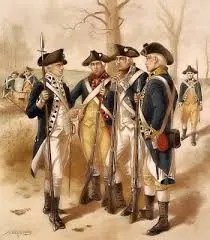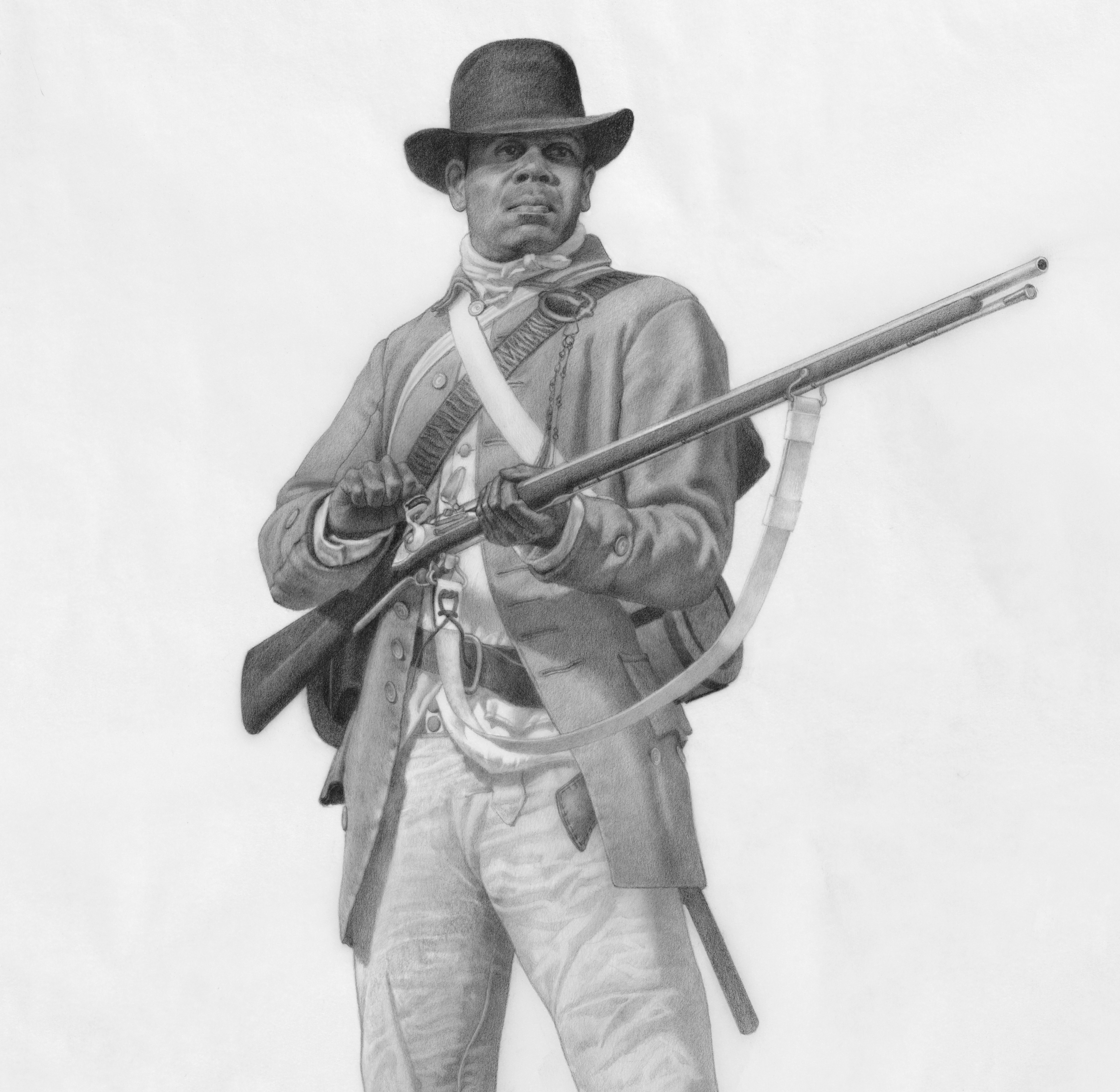
Avalon 9.9 California Dreaming, part 1 of 6

After 1889 A.D. Hollywood

Kairos lifetime 120: Nadia Iliana Kolchenkov, Doctor Mishka

Recording …

Tommy let the cows out at sunrise.  He got in the loft and started dumping hay to the floor, hay that he would later shove into the stalls.  He held tight to the pitchfork and groused about having to clean the stalls first.  He thought, If Grandpa ever died, Dad would inherit the farm.  Tommy would get it when Dad passed away, but that might be years from now.  Then, he might have a son to follow him and clean the stalls for him if Nancy ever said yes.  He threw a fork full of hay to the ground and picked up another when he saw a shimmering in the air right in the middle of the barn floor.  A woman, a very good-looking young woman in an old timey dress appeared out of thin air.  He accidentally dumped some hay on her head.  She looked up at him and smiled as seven more people, all dressed in old fashioned clothes, came from nowhere.

Tommy dropped the pitchfork, raced down the ladder, and ran out the barn door shouting like he had seen a ghost.  “Dad.  Mom.  Dad.  Grandpa. Help!”

Sukki turned to Katie.  “It looks like the same barn, sort of,” she said, and got out her amulet to check their direction.  Katie got her own amulet out.  Katie had the experimental version.  Sukki had the new and improved model.  But both paused, played with the setting, and looked at each other strangely.

“It can’t be the same barn,” Lincoln said.

“New and improved,” Lockhart suggested.

“It may be the same barn,” Elder Stow said as he stared at his scanner.

“Smells like the same barn,” Decker said, and Tony chuckled while Nanette and Sukki grinned.

“That would be three times we left one time zone and entered a new time zone without moving—with the time gate in the exact same place,” Lincoln said.

“Third time’s the charm,” Lockhart quipped.

“Three strikes you’re out,” Lincoln countered.

“People.”  Katie raised her voice to get everyone’s attention.  “We have a problem here.  Sukki and I had to maximize the range just to pick up the time gate. It is moving away from us, rapidly, a long way west of here.” She pointed in the correct direction, and several looked, but they could only see barn.

“The time gate we just came through zoomed off to the west as soon as it deactivated,” Sukki said.

“Like maybe it is heading to California which would be a thousand miles away,” Katie added.

Elder Stow fiddled with his scanner.  “At maximum range, I am not seeing the time gate at all. Maybe if I… Wait…”

The barn door swung open.  A man in his late forties stood there in the early morning sun, and he did not look happy.  “What are you people doing in my barn?”

“Just passing through,” Lockhart said and tried to smile but the twenty-something-year-old man behind the older man’s shoulder interrupted.

“They just appeared out of nowhere…”

“Hold on Tommy,” the middle-aged man said.  “How did you get in there without anyone seeing you?  Where did you come from?”

“We came from 1875,” Lockhart admitted.  “What year is it now.”

“1934,” an old voice said from behind.  “Early May.  Look out, Tommy,” the voice said, and an old man pushed forward and smiled for the travelers.  “Got any more strange looking soldiers?”

“God, I hope not,” Lincoln mumbled.

“Don’t tell me,” Katie stepped up beside Lockhart.  “Bjorn?”

The old man nodded. “I was younger than Tommy when you came through in 1875.  I’m almost seventy-three now, but I never quit hoping you would come back.”  He laughed, drooled a bit, and held on to his dentures.  “This is my son, William, er, Bill, and my grandson Tommy.  I’m sorry I don’t remember your names, exactly.”

“Katie and Robert Lockhart, and our daughter Sukki.  Mister and Missus Decker.  Anthony Carter, Benjamin Lincoln, and Elder Stow.” Katie felt genuinely happy even as Lincoln mumbled.

“I guess it is the same barn.”

“Good to see you after all these years,” Katie finished.

“But I show the years,” Bjorn said.  “You don’t look a day older than the last time I saw you.”

“Not true,” Lincoln spoke up.  “We are all one day older.  We faced the soldiers, got a night’s sleep, and came through first thing in the morning like we promised.  It is the next day for us.”

“We didn’t know we would end up here,” Lockhart said.

“Had any breakfast?” Bjorn asked.  “Come on up to the house.  My daughter-in-law Betty is a great cook.  Don’t tell her I said that.  And we will feed you for free seeing as you already paid hotel rates for the night.”  He laughed and held on to his teeth again.

“Dad.  Who are these people?  Where did they come from?”  Bill sounded perplexed.

“They appeared out of nowhere, like Tommy said.”  Bjorn answered as he walked, or more accurately, hobbled up to the house.  “You should listen to your son once in a while.”

During breakfast, Lincoln whispered to Lockhart and Katie that Doctor Mishka was in Los Angeles in 1934.  “Hollywood, actually.”

Lockhart looked confused by the sudden great distance between the time gates, but Katie explained what she thought she understood.  “We left the horse and buggy days far behind and entered the days of diesel engines, cars, trucks, trains, ships, and even airplanes.  My guess would be Doctor Mishka took off from maybe Denver airport and flew back to Los Angeles right after or as we came through the time gate.  The distance ordinary people travel has massively increased.  I think maybe the distance between time gates has compensated.”

“But from here to Los Angeles is a long way. An equal distance from Los Angeles west will put us out in the middle of the Pacific Ocean,” Lincoln complained.

“No, Lincoln,” Katie said.  “I think the distance was here to Denver and maybe Las Vegas as the next time gate. But with the airplane, the gate moved quickly to a new location, that’s all.”

“Still probably out in the Pacific,” Lincoln griped.

Lockhart nodded but said, “Let’s find the good doctor first and see what she has in mind.”  They left it at that.

After a ride to town in the back of a farm truck with Lockhart, Katie, and Sukki squeezed into the back seat of the 1929 Hudson Sedan, they said goodbye to their friend, Bjorn, and saddled up to the ticket window in the Union Pacific Station.  Lincoln grumbled that it cost him so much for eight tickets and eight beds.  He claimed to have hardly anything left for when they got to San Francisco and had to take another train—a Southern Pacific train to Los Angeles.  Lockhart reminded him Marshal Casidy put money on account with Wells Fargo. Maybe they could get some money there.

“Two days and two nights on the train for eight people,” Tony said.  “That price is not too inflated after another thirty years since our day in 1905.”

“I imagine the price has even gone down since the crash of twenty-nine,” Decker suggested.  He had changed his fairy weave clothes into his marine dress uniform, thinking a black naval officer would raise less questions in the dining car than a black farmer.  Nanette still dressed like a farm girl, but she would change her clothes as they saw more examples of appropriate attire.

Lockhart agreed.  “Probably not as many people riding the trains now after the crash.”

“But father,” Sukki got Lockhart’s attention and smiled at the word father.  “Why didn’t we take the direct train to Los Angeles?”

“Big stopover in Salt Lake City—something like six hours, and there is nothing to do there other than desert heat and listening to the Mormon Tabernacle Choir.”

“We could swim in the Salt Lake,” Katie said, but Lockhart shook his head.

“In May?  Besides.  Dry you out and make your skin all wizzly.”

Katie took Sukki by the arm and explained like a real mom to a daughter.  “There are things to do in San Francisco like the wharf and seeing the Redwoods.  Our train is scheduled to arrive at nine or ten in the morning and the other train has regular runs between Oakland and Los Angeles.  We can catch the train to LA anytime we are ready and get to Los Angeles about the same time we would have arrived on the direct route, and at about the same cost.”

“Ugh,” Lincoln said, having overheard about the cost.

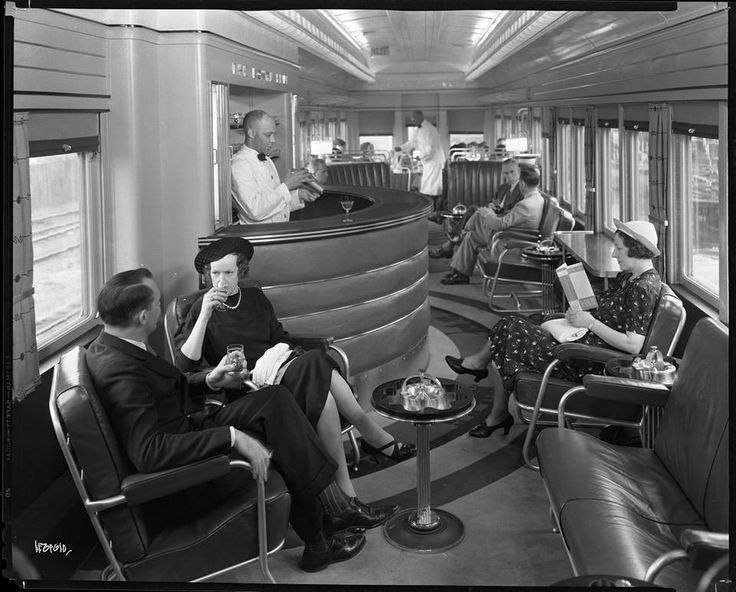
When they started out, Sukki insisted on a window seat.  That did not last for long, because they all went down to the lounge car as soon as their rooms were settled.  They took two couch-like benches that faced each other and talked as well as they could, sometimes raising their voices against the constant click-clack of the train, until the smoke in the lounge became unbearable.  The spring heatwave was also a factor that did not help matters.  One of the stewards turned up the air conditioning, but that just stirred the puffs of smoke from the other passengers, so it did not help much.

“Things improved after they air condition these cars,” Lincoln said.  “At least we are not attacked by smoke and cinders from the engine through open windows.

Katie waved him off and turned to Tony, Nanette, and Sukki.  “So how did you like riding in a car, or truck as the case may be?”

Elder Stow answered.  “Bouncy.  A good antigrav unit would work wonders.”

“Wonderful,” Sukki said with a great big smile. “But the train is even better—even better than the steamboat.”  She turned her eyes again to the outside to watch the cows fly past.

Lockhart looked curious, but Katie explained.  “This is all new to her.”  Of course, he knew that.

“I must say,” Tony said.  “I never expected to see so many automobiles all over the road, and on concrete streets. That must have cost plenty.  Even New York has bricks or blocks in most places.”

“Pavement,” Lincoln said.  “In the sixties they used to sing about the whole world being paved over.”

“And concrete sidewalks,” Nanette added.  “I’m used to wooden ones, like when we first came to Omaha back in 1875.”

“Nineteen thirty-four is a bit after your time,” Katie said, and Decker took the floor.

“Yeah.  How are we going to get back to 1914 where we belong?  We have already passed that date.”

Katie looked at Lockhart and Lockhart said, “We discussed that.”

Katie took over.  “This is the point where Doctor Mishka is presently living, and the time gates can only lead to the next time zone at whatever time that is.  At least, we think that is the case.  I think Tony, Nanette, and the others were picked up at a random time through the Heart of Time and out of sync or whatever with the time gates.  You may have to go with us to the future and then to Avalon to go back through the Heart of Time to your proper time period.”

“Lady Alice can do that,” Lockhart said.  “And from what little I know of her, having met her a couple of times, I would guess she would be glad to do it.”
“Oh, yes,” Decker said.  “I had completely forgotten about Alice and the Heart of Time.  I think I shoved that whole business out of my mind.”  He grinned.  “PTSE.  Post-Traumatic Stress Experience, you know.”

“Great,” Lincoln said, the sarcasm echoing in his voice.  “Now I’m going to worry about getting home and having to deal with PTSD from this trip.”

“No, you’re not,” Nanette said.  “You just want to get home to Alexis, and you are going to be grumpy until we get there.”  Lockhart laughed softly as Nanette continued.  “I’m worried about seeing too much of the future and messing it up after I get home.”

Decker shook his head and took her hand.  “I was born and raised in the future,” he said, and looked at Elder Stow.  “I have also learned a few things on this journey.  Number one is don’t change history.  When we get to 1914, I can keep my mouth shut.”

Lincoln looked up.  “And number two is don’t let the servants of the Masters change history, either.  But I am worried.  When we get home, unless they have some technology or something they should not have, how will we even recognize the Masters?”

No one had an answer for that one.
Avalon 9.8 The Wild West, part 6 of 6

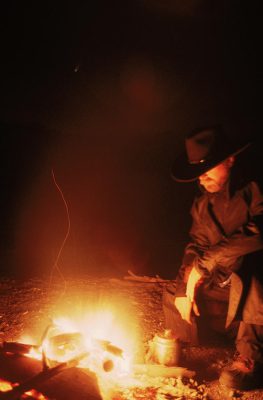
That night, the travelers, Marshal Casidy, and his magnificent seven all camped around a bonfire in an open field.  Marshal Casidy spoke.  “So, the Kiowa left two days ago, which is why there is room right now in the field.  The steamboat came this afternoon, and we got your tickets.  By the way, here is a bit of funding for the trip south.  I’ll be staying here for at least a week so you should have no trouble reaching the next time gate.  Sign here.”

“What am I signing?” Lincoln asked.

“Wells Fargo account.  No reason we can’t get fifty years of interest.”  Marshal Casidy paused before he suggested, “Alice says she thinks she knows where you are going.  Maybe California.”

“Maybe?” Lincoln said and signed before he took the coins and put them in his bag that could make the time jumps without immediately rotting.  “Thanks.  Our larder was wearing a bit thin.”

“No telling where we will end up,” Tony said.  “But gold and silver hold their value pretty well.  The face on the coin does not seem to matter so much.”

“So,” Marshal Casidy turned to Sukki.  “Have you at least settled things about where you will go in the future.

“Yes,” Lockhart said.

“Yes,” Katie said and held out one hand.  She scooted over a bit and Sukki grinned and got up to sit between the two.

“Sekhmet and Artie used to sit just like this,” she said with a happy grin.

“It is a relief,” Elder Stow said.  “Knowing that she will be well cared for.”

“Elder Stow,” Captain Barnes spoke up.  “I understand the time travel, though I would love to see how this time gate business works.”

“Not me,” Mini said.

“Make her shriek,” Gordon said, and Sergeant Reynolds chuckled.

Captain Barnes went on.  “I also understand why these men in black were chosen to make the trip.  I get the two marines to provide protection and such along the way.  And Sukki.  I understand they found you in the deep past.”  Sukki nodded and nibbled on her buffalo steak.  “And Nanette and Tony fell into the past from 1905, just thirty-five years in the future.”

“More like forty-nine years by the time we get there,” Tony said, and Captain Barnes nodded to say he understood.

“But Elder Stow.  Where did you come from and how is it that you have these incredible things like your weapon, your screen device, and your scanner.  I imagine you have more incredible things we have not yet seen. Do all people in the future have such things?”

Everyone looked at Elder Stow, and the travelers were going to leave it entirely up to him what he revealed.  He hardly hesitated.  “I am one of those Gott-Druk with super advanced technology you have heard about, though the things I carry around are mere toys such as a ship’s officer might carry.”

“You look human,” Commander Roker, the Ahluzarian said, and Captain Barnes nodded like he was about to say that.

Elder Stow removed his glamour and appeared as the full-blooded Neanderthal that he was.  Then he said, “I am human.  It is one of the main things I learned on this journey.  I am not Homo Sapiens.  I am Homo Neanderthalensis.  We are both humans, and as much as it sounds terrible, personally, we even share some DNA.  I came to this world to remove the Homo Sapiens so my people could reclaim their homeland.  I had a terribly ingrained prejudice against all Homo Sapiens.  But I have learned that in every way that matters, we are not different.  And I have learned that my Gott-Druk home is a good place that we have made excellent.  And I have learned that this world now belongs to the Homo Sapiens, and that is how it should be.  We have done much in our journey to remove things that do not belong here and keep history on track, and that has been important work.  And I have learned that there is a time and place for everything under Heaven.”  Elder Stow put his glamour back on.

“Good thing,” Doc said.  “I know some medical school people back east that would love to cut you open to see how you work.”

“They might find that hard to do,” Decker said, and Nanette smiled and took his arm.

Silence followed until Marshal Casidy clapped his hands.  “Now for the good news.  The Storyteller has returned home.”

The travelers got excited except for Lincoln who said, “Figures. We are only two steps from home now.  Big help.”  He tried to keep his sarcasm to a minimum.

Marshal Casidy waved his hands for quiet.  “The Storyteller has gone back to his life with no memory of his adventures—he has some memory problems.  The golem that was filling in and doing a mediocre-poor job of it has returned to Avalon.”

“What’s the bad news,” Lincoln asked.

Marshal Casidy frowned.  “The bad news is while putting the pieces back together there were some time displacements.  No, don’t ask me what a time displacement is.  I just made up the term, but basically since things got off kilter when he vanished, there was some time leakage when he returned.  Things, basically future things, kind of slipped back a bit.  Alice will straighten it out, eventually, but you might encounter something unexpected when you visit Doctor Mishka.”

“What?  You can’t just zap us home now?” Lockhart asked.

“Don’t dare,” Marshal Casidy said.  “Not until the time displacements are corrected.  Sorry.”

“So, tomorrow we take the steamboat downriver for two hundred and some miles to the next time gate,” Katie summarized.

Lockhart nodded, but added, “And then without horses we have to find Doctor Mishka on foot.”

“Yes, sorry.  But there should be trains, and maybe even cars and busses, depending on when and where you arrive.” Marshal Casidy tried to smile an encouraging smile.  “I’m sorry, but the horses belong here, and we have given you all the coin money we have and all that we got from the horse trader after we bought your tickets for the steamboat.”

“That’s okay,” Lincoln said, surprising all the travelers.  “I would hate to come all this way and skip Doctor Mishka.  She might never forgive me.”

People agreed and wandered off to bed.

###

In the morning, the travelers waved good-bye.  People, including Colonel Decker, changed their fairy weave to regular civilian clothes. Katie admitted she made a couple of less petticoats than recommended and thickened her dress against the cold instead.

It got cold on the river.  Having a cabin did not help much, but at least the river remained relatively free of ice and snow.  Having a cabin near the boiler stacks helped a bit more, but most of the heat from the boilers got vented through the salon that the travelers rightly called the saloon.  Most of the cabin passengers spent most of their time eating and drinking in the salon and trying to keep warm.

On the second day, one of the passengers came racing into the salon yelling about something strange in the sky.  A few of the passengers bundled up to go see. Katie, Lockhart, and Elder Stow also went to take a look.  The passengers suggested a strange cloud formation, and one said a balloon of some kind.

“A weather balloon,” Lockhart said and chuckled.  They watched it move back and forth like it got suddenly lost and tried to get its bearings.

Clearly, it was a ship of some kind, and Elder Stow said as much when he admitted, “I have never seen the like.”  He got out his scanner, but before he could get a good reading, the ship vanished into thin air.  Somehow, the travelers imagined it did not just turn invisible.

“Time displacement,” Katie named it, and they went back inside where it was warm.

It took three days, with a couple of stops, to reach Omaha, and those who got off on the Nebraska side headed for the train.  The transcontinental railroad went from there all the way to San Francisco.  Crossing the Rockies in winter was not a good idea, but most were not going that far, and the few hoped to reach California before the January snows filled the passes. Some crossed the river to Council Bluffs Iowa looking for the train to Chicago and back east.  Some stayed on board the ship to continue south.  The steamship would eventually land in Saint Louis.

The weather had warmed as they traveled south, so it was not so bad when they cinched up their backpacks and headed out of town.  No one asked them where they were going, so it was a pleasant walk until the end.  They found the time gate in a barn owned by a Mister E. B. Johnson.  The man seemed kind enough, but his wife was greedy.  They had three mostly grown sons who all came to the front porch to see the strangers.  The travelers stopped outside the house and asked if they could spend the night in the barn.  The sun started to set.  Katie tried to be friendly and asked where the couple came from.

“Norway,” the man said.  “I came all the way here and built my farm with my own two hands.”    I am Erik Johnson, my wife is Britta, and my sons are Dag, Anders, and Bjorn is our youngest.”  He looked at the sky as his wife spoke.

“You can stay in the barn out of the wind and snow or rain, whatever we get, but you will have to pay for the night.”

“Where are you headed?” the man asked, to keep things friendly.

“The year twenty-fifteen,” Lockhart said with a straight face.

“Nineteen-fourteen,” Decker said.  He took Nanette’s hand and patted Tony on the shoulder.  Lockhart, Katie, Lincoln, and Sukki looked at the man.  They wondered where Decker and Nanette would end up.  Apparently, they had settled the matter.

Elder Stow spoke more plainly.  “We don’t know what year it will be when we arrive.  We are time travelers.”

The wife opened her eyes wide and spoke to her husband in Norwegian not imagining the travelers would understand.  “These people are crazy.  I don’t want crazy people around my farm.”

Katie interrupted perfectly in the same language.  “Time travel is not as crazy as you think.  We visited Norway once back in the days of the Vikings.  They were a rough and greedy people, but they were kind to us.”

Lincoln stepped forward.  “Here is eight dollars. It is not exactly hotel accommodations, but that is a dollar for each of us and should be more than enough for a night in a barn.  We will be gone in the morning before you know it.”

Bjorn, fourteen or fifteen years old, shouted, “Cool!” or the 1875 version of the word.  “You have many guns.  Did you fight any red Indians?  I sometimes dream a whole tribe of Indians comes charging out of the woods there.”

No one answered when they heard shouting in the nearby woods.  Men in very odd-looking uniforms came tumbling out of the woods like they were indeed charging the enemy.  The uniforms looked splotched in red and gray, an odd sort of camouflage, and the helmets had shaded visors down the front, like astronaut helmets, so faces could not be seen.  The travelers drew their guns.  Sukki raised her hands and Nanette raised her wand, but the men stopped suddenly and looked around like they were just as surprised at the change of location as the others were surprised at their sudden appearance.  As fast as they arrived, the soldiers faded and vanished, and Elder Stow thought a word was advisable.

“Be careful what you wish for young man,” he said, and the travelers hurried to the barn, while the man, his wife and three sons went into the house to lock themselves in.  The family got scared, and the husband thought he might tell the travelers to find shelter elsewhere, but the wife was not about to refund the eight dollars.

************************

MONDAY

Welcome to Hollywood in the 30s and to polio. The travelers have to cross half the continent to get there. Fortunately, they can take the train. Until then, Happy Reading


*

Avalon 9.8 The Wild West, part 4 of 6

As they headed out the next morning, Katie rode with Sukki between her and Elder Stow. Lockhart had some questions for Captain Barnes.  “So, when did this alien ship crash in the Potomac?”

“March fourth, 1865, in the evening after President Lincoln spoke. We have spent the last ten years tracking alien prisoners all across the country, in Canada, and Mexico.”

“And you have had no help from the Kargill police—the what-you-call-them.” Lockhart was unsure of the name.

Captain Barnes nodded.  “Ahluzarians. Yes actually.  We have an Ahluzarian with us.  Commander Roker.  He went with Marshal Casidy, Rodrigo the Apache, Mini Taggert, she is a sharpshooter and real cowgirl from Missouri, and a fur trapper and Indian guide out of Western Canada named Gordon Smythe.  Gordon was a great help in Oregon.  Interesting.  Marshal Casidy has taken to calling the seven of us the Magnificent Seven, but he has not explained what he means by that.”  Captain Barnes stopped talking and leaned over, assuming Lockhart knew what that meant.  Lockhart chose not to explain the reference.

“Go on,” Lockhart said.

“Well.  According to Commander Roker’s records of the prisoner manifest, we have neutralized all but one.  This last one, though is especially difficult.  It is a shape shifter, and having been on this planet for ten years, it has become expert in appearing human.”

“I don’t get it,” Lockhart admitted.  “I was there when the Kairos told the Kargill directly that this planet was off limits to visitors, and the Kargill agreed.  Any Kargill ships had to avoid this solar system altogether.”

“By the Kairos you mean Marshal Casidy?  The Marshal has not explained that well, though I have met Doctor Mishka, the Princess, and others.”

“Yes,” Lockhart confirmed and thought for a second.  “Two time zones before this one.  He was living as a woman, Lady Elizabeth…Stewart something…she was Scottish, during the English civil war.”
“Two hundred years before our own civil war,” Captain Barnes said, but he did not sound certain.

“Yes,” Lockhart said.  “But what was a Kargill ship doing so close to Earth?  Go on.”

“Ah,” Captain Barnes mouthed.  “As I understand it, there was an altercation on the normal route.  Something with the Reichgo, and the prisoner ship and escort got diverted in this direction.”

“You say prison ship, not a penal ship?”

“No,” Captain Barnes shook his head.  “They were not taking one or more difficult populations to resettle elsewhere.  This ship carried individuals that for whatever reason refused to settle down or were criminals of some sort.  They were being escorted to a prison planet—a nasty place with no atmosphere on the surface, and no way off.  A few have been recaptured and are in holding cells.  We have had to kill most of them, sorry to say.”

“Holding cells on the escort ship?”

“No, on a newly called ship,” Captain Barnes said.  “The original escort ship was destroyed in the crash, though Marshal Casidy was able to save, shrink, and time-lock the main gun from the ship.  He hid it in President Lincoln’s office where no one could get it without the time key.”

“I’ve seen it,” Lockhart said.  “We borrow it in the future.  Go on.”

“Well.  He won’t even tell the Kargill the time technology involved.”

“What destroyed the escort ship?” Lockhart asked.

“Uncertain,” Captain Barnes said honestly, but in a way that suggested he had some thoughts.  “I talked to Mister Smith.  He is a Zalanid and the Kargill’s liaison with us and others around the globe.  Have you met him?”  Lockhart nodded.  “Well, he said circumstantial evidence points to the Gott-Druk, a people who began on this planet and who have a technology superior to the Kargill, though I cannot imagine such a thing.”

Lockhart looked back at Elder Stow.  He rode on Sukki’s other side so Katie and Elder Stow had the girl well boxed in.  Lockhart nearly said something, but changed his word to, “Neanderthals.  It is what we call them in the future.  Apparently, this planet has produced a lot of intelligent species—people over the last four or five billion years.  That is why this is a Genesis planet, because conditions are right—or maybe I should say God has used this earth as one of a dozen planets in the whole Milky Way to create intelligent life.”

“Genesis, as in God created the heavens and the earth?”

“Yes.  But I have been told that story, our human story as written for us, started somewhere between 14,000 and 16,000 B. C. when a moon bumped into the artic and the last ice age melted suddenly.  The whole earth got flooded and the atmosphere got enough dust, ash, and debris in it to blot out the sun.”

“The earth was formless and empty, darkness was over the deep, and the Spirit of God hovered over the waters.”

“That is very good. I can’t quote that.”

“My name is Jacob Barnes,” Captain Barnes said. “My mother was Jewish.”

Lockhart smiled and continued.  “Anyway, the Neanderthals were one of several human-like groups that got taken off planet at that time or before that time.  They were given a different world around a different sun somewhere out there in the night sky.  There were a few small pockets of us humans who were protected in the catastrophe, and once the earth settled down, they, I should say we were allowed to replant the planet.”

“Noah,” Captain Barnes guessed.

“No,” Lockhart said.  “That came later.  Once the earth got reestablished, some of the ice returned and there was another sudden meltdown. Katie calls it the Dry-us, or Dry-adds, or something.  Then, lesser meltdowns continued for some time, on and off.  The earth was pretty unstable, wobbling less and less but continuing for about ten thousand years or so.  Exposed land got flooded in various places.  Us humans had a hard time of it.”

“But God promised not to wipe out the human race again.  He made the rainbow covenant with Noah.”

“He did, but then that man, Nimrod, gathered lots of survivors and built a tower to human glory.”

“Babel.”  Captain Barnes understood.

“The tower fell.  People got scattered.  Languages got confused with people in their little groups all over the globe.  But the earth by that time was more like we know it today.”

“When was that?”

“About 4,500 B. C.  That was when the Kairos was first born as cute twins, one male and one female.”

“Twins?”

“Two bodies, one person.  I still don’t understand how that worked, but that was where we came into the story and started our journey home.”

Captain Barnes whistled to think of what these travelers may have seen.

“So, you are Jewish?”

“What?”  Captain Barnes had to focus.  “Mostly.  My father is Church of God.  He got caught up in all that Millerite madness when he was young in the 1840s.”

“Whatever that is—was,” Lockhart shook his head.  “But, so now, the Neanderthals or Gott-Druk have had thousands of years to advance themselves.  Counting from the time of Babel, we are some ten thousand years behind them in the technology department, and not having the same language and culture among us has not helped in some ways.”  Lockhart looked back again and decided he would not single out Elder Stow at that time.

Captain Barnes rode quietly for a time before he spoke again.  “Maybe the Gott-Druk shot down the prison ship and the escort ship.  But why would they do that?”

Lockhart shook his head, but then talked freely knowing this information would eventually enter the Men in Black records if it was not there already.  “Since being taken to new home planets, most species—people have settled into a good life.  The Gott-Druk, for some reason, have always had a small minority that want to return here, to earth, and retake what they consider their ancestral homeland.  That has been a real headache at times.”

“I can imagine.”

Lockhart continued.  “I would guess the Gott-Druk hoped so many alien criminals would badly disrupt and maybe cause the death of millions, thereby paving the way for their return.  I am a bit surprised they crashed here, though.  I would have thought Europe.”

“Europe?” Captain Barnes asked with the single word.

“I’ve been told Europe, the Middle East, and western and some Central Asia is the extent of their homeland.  The Far East, India and Southeast Asia belonged to the Elenar.  There were others, but those two were using soft metals and the Elenar may have discovered bronze when the Agdaline first came looking to trade for grain.  That might have been around 18,000 B. C.  It was an Agdaline moon that careened off the earth and brought about the destruction.  They were experimenting with anti-gravity, trying to develop faster-than-light travel, when they tore the atmosphere off their own planet.  They had to search for a new home.  It was all a big mess.”

“Agdaline?”

“A long story,” Lockhart said.  He realized he had questions but ended up talking most of the time.  That was the way it sometimes worked.  He decided maybe Katie could do some of the talking.  “What say we stop for lunch?” Captain Barnes agreed.

Lockhart went to kiss his wife and hug his new daughter, then they had a good lunch and Katie did plenty of talking, with Tony and Lincoln interjecting thoughts now and then.  Nanette and Sukki said little, both showing their shyness in front of three relative strangers.  Decker only made a couple of side comments to Sergeant Reynolds, who laughed.  Elder Stow said practically nothing, even when the discussion turned briefly to the Gott-Druk shooting down the prison ship and the escort ship, but that did not surprise the travelers.  He appeared to have things on his mind, and the travelers politely left him to his thoughts.

Avalon 9.8 The Wild West, part 3 of 6

The travelers pushed themselves a bit in the cold and got to Fort Sully on the Missouri river around noon on the sixth day.  When they crossed the river to the fort, trading post, and camp dwellings that grew around the fort, they officially left Indian territory for the first time since entering that time zone.  Certainly, there were plenty of Indians in the camp, mostly Crow.  But there was also a montage of people outside the gates.  Some were would-be prospectors preparing to head out for the Black Hills.  Some were farmers and ranchers itching for Indian land to open up, so they could make their fortune, as they saw it.  Some were merchants and traders looking for new markets, a few having closed operations since traffic on the Oregon trail was not what it used to be now that the transcontinental railroad started operations.  Then there were three oddballs who headed straight for the travelers.  Marshal Casidy was not among them.

“You must be Robert Lockhart, future director of the Men in Black,” the front man said.  “I’m Captain Jacob Barnes, secret service.  It is secret, you know.  And you must be Major Harper.”

“Harper-Lockhart,” Katie said as she shook the man’s hand with a glance at Lockhart.

Captain Barnes smiled.  “Of course.  My companions are Doctor Wilhelm Brandt from Pennsylvania and Sergeant Tom Reynolds, formerly of the Confederate States of America.”

Katie took it upon herself to introduce the others.  Army Brevet Lieutenant Colonel Benjamin Lincoln.  United States Marine Brevet Lieutenant Anthony Carter.  They both work for the Men in Black.  Marine Lieutenant Colonel Decker who thinks for himself, and his wife, Nanette.  Sukki and her adopted father Elder Stow.”

Captain Barnes leaned in.  “Sukki Stow?”

“For now,” Sukki said, and looked at Elder Stow for a moment with big, sad eyes.

“It’s all right,” Elder Stow said, kindly.  “We have discussed things.”

Katie wondered what they discussed, but Captain Barnes was not finished.  “And you are all from the future?”

“Me?” Sukki pointed at herself.  “I was born about fourteen or fifteen thousand years ago.”

“The future, yes,” Lockhart interrupted.  “There are some questions you should not ask.”

“I like your uniforms,” Sergeant Reynolds said.  “They would make Rodrigo go cross-eyed.”

“Rodrigo?” Lincoln asked.

“Our Apache friend,” Doctor Brandt said.  “He is from Arizona, or California, or Mexico.  He is not sure.  And you can call me Doc.”  He sounded very friendly.

“So, where did Marshal Casidy go?” Lockhart had a limit on pleasantries.

“Well…” Captain Barnes said and paused.  There were cavalry soldiers coming to the fort, about a hundred led by a flamboyant dresser.  As they drew near, the commander and two aids came to the gathering and dismounted.

“Captain Barnes,” the man said.  “I see you have added more crazies to your troop.  I thought after Marshal Casidy left we might restore some common sense to the fort.”

“We will leave soon, and you can have peace and quiet,” Barnes said, coming somewhat to attention.  The man ignored Captain Barnes and went straight to the blonde.

“Colonel George A. Custer,” the man introduced himself, reached for Katie’s hand, and leaned in as if wanting to kiss her hand.  “What is that you are wearing?”

Katie snapped to attention and introduced herself with a salute which made Custer withdraw a little.  “Major Katherine Harper-Lockhart, United States Marines, sir.  May I present my husband, Robert.”

Lockhart stuck his hand out with a comment. “He is not quite as tall as me.  I thought he would be at least ten feet tall.”

Custer looked shocked, but then he smiled and shook a finger at Lockhart while he shook hands.  “Barnes.  Explain.” Custer said.

“These marines and special agents are under direct orders from the president.  They are looking for Marshal Casidy with updates on his orders and expecting trouble.  We will be leaving this afternoon for Fort Randall.”

“Indians,” Custer said with a nod.  “They are always trouble.”  He turned to leave but paused. “Marines from the great lakes region?”

“No sir,” Katie said.  “Washington.  The Potomac.”

“Long way,” Custer said, and walked into the fort followed by his aids and the horses.

Katie breathed.  Tony, who stood more or less at attention that whole time let out a great sigh.  Nanette moved, like she stood still the whole time as well.  Doc asked, “What?”

“I didn’t say anything about the future,” Lockhart said.

“Me neither,” Lincoln said, and then almost messed up.  “1876 is just next year.”

“The man has to drip soup from that mustache, bad,” Decker said.

People gave him funny looks, but Sergeant Reynolds laughed.  “I think you are all right for one of them,” the Sergeant said.

“What?  A black man?”

“No.  An officer.”

Decker nodded and both turned to the side and spit at the same time which got a reaction out of Nanette.  “Decker!”

“Doc.  Sergeant,” Captain Barnes said.  “Let’s get the horses and get going before Colonel Crazy thinks of something.”

Two hours later, the group spied another small herd of buffalo.  Kate complained.  “I hate killing these things.  They go all but extinct in the not-too-distant future.”  Decker fired and one of the animals dropped.

“I know,” he said.  “But right now, there is not much choice for us or the natives.”

“I know,” Katie understood.

“Maybe we can help you feel better,” Captain Barnes said.  Doc, Sergeant Reynolds, and Tony all rode out to the kill.  It turned out Sergeant Reynolds had wood out of which he hastily made a travois to drag the beast.  Another half-hour along and they came to a Native village.  “Crow people,” Captain Barnes explained.  “Mostly the women and children that they do not bring too close to the fort.  You see, they have some warriors to protect the camp.”  Those warriors were presently surrounding the travelers but waited to see what they did with the buffalo.

Sergeant Reynolds got his wood back. Doc and Decker expertly cut a big rump steak, and then Lockhart said nice and loud in the Crow tongue.  “The rest is yours.  We will be staying with you tonight if you don’t mind.”  When no Crow objected, he added, “Make camp.  Standard watch.” not that he needed to say it out loud.

Since coming into that time zone where scrub grass stretched for miles with hardly a sign of a tree, the travelers picked up wood to carry with them when they found some.  They would have to pick up some on the next day, but for the present they had plenty and did not need to depend on the Crow for their fire.  Once things were cooking, Nanette and Sukki, with Lincoln and Elder Stow helping, brought plenty of elf bread to share with those women and children.  The Crow were grateful.

Then it got dark, and Katie grabbed Lockhart and took Sukki aside to ask her the question she had bottled up inside. “What did you mean when you said you were Elder Stow’s daughter for now?”

Sukki immediately looked at the dirt and worried her hands.  “I checked.  I read about it in the database.  Lincoln has been teaching me to read English, and Tony has helped.  We only have two more jumps to get to where we belong, except it is not where I belong, exactly.  I have seen the human world.  I am living human—I am human, now.  Elder Stow has been a wonderful father, but I don’t belong there, on the Gott-Druk world.  I can’t go there.  Even with the help of the goddess to understand the math and science it would be too strange for me now.  You are the mother and father of the group.  If you don’t mind…”  Her voice trailed off into the dark.

Even Lockhart understood the cryptic message.  “You want to go with us.”

Sukki looked up with hope and tears mixed in her eyes.

“We can raise another daughter,” Katie said to Lockhart.

“She is a bit old to officially adopt, isn’t she?”

“I lied,” Sukki said quickly and a bit too loud.  “I lied, when you found me,” she said more softly, looking down and worrying her hands again.  “I was fourteen at first.  Elder Stow knows.  I had to tell him, but I was afraid you would treat me like a child.  I’m seventeen now, and Lincoln says that eighteen is full grown enough.  My sisters Nanette and Boston knew I was the youngest sister, even if they did not know how young.  Please.  Can I go with you?”

“Of course you can,” Katie said and reached out to hug the girl who let some of those tears fall.  “And when we get home, we can even make it all legal and forever.”

“I’ll be good.”

Katie smiled.  “Just be a good daughter.”

Lockhart reached over and put his big arms around both girls.  “Daughter number three.  The family is growing.”

“Good,” they heard the word come from the dark.  Elder Stow walked to where they could see him clearly.  “I know eavesdropping is not acceptable behavior, but we Gott-Druk do not keep secrets in our family group.  It is not natural for us.  I struggled keeping Sukki’s age a secret for all this time.”

“You don’t mind if we take her and adopt her?” Lockhart said, letting go of the hug.

“Mind?  I am happy for her and for you.  I know you will love her and care for her like your own. I have seen you do so with Sekhmet and Artie.  But Gott-Druk or human, all we want for our daughters is that they be happy and secure in their days. Is this not so?”

Lockhart surprised everyone as he reached out and hugged Elder Stow briefly.  Then Katie and Sukki both hugged the Neanderthal, and Sukki began to cry, but they were happy tears.  When they returned to the campfire and the others, Captain Barnes had some information to share.

“There you are.  Good.  So, we stopped the Masters from giving Oregon territory to the British Canadians and stopped the Mexicans from sending the army to reclaim California and the southwest, not to mention Texas, which would have started a new Mexican war.  Then a servant of the Masters handed Custer a lump of gold and made sure it got in all the papers, and Marshal Casidy says that is something we cannot stop.  Marshal Casidy killed that man, but it was too late.  But wait.  You haven’t heard the most important thing…”

Doc interrupted.  “A prison ship full of alien monsters crashed in the Potomac during Lincoln’s second inauguration, and we have been chasing bug-eyed monsters all over the place.”

Captain Barnes nodded and pointed at the Doc.  Katie smiled and said, “Lincoln calls them Jell-O-blobs, not bug-eyed monsters.”  Lincoln agreed.

************************

MONDAY

Of course, it is not as easy as simply catching up with the Kairos, Marshal Casidy. There are aliens and then time displacements to worry about as well. Until Monday, Happy Reading.

*

Avalon 9.8 The Wild West, part 2 of 6

The travelers moved carefully down the side of the hill.  They had to watch for ice spots.  The sky looked gray, like it might rain, or maybe snow, though it did not feel cold enough for snow.  The scene they faced at the bottom of the hill looked wild and Tony imagined some snow might cool things off.  A few buildings were being built along a muddy street, though nothing looked finished.  Mostly, he saw tents and mud and men shouting, running, and some shooting off guns in the air.  It appeared to be a celebration of some sort, and one where people might get hurt if they weren’t careful.

One man on the edge of the madness grabbed a horse and rode up to face the travelers, who had stopped to stare at the madness below.

“Welcome to Deadwood,” the man shouted as he reigned to a halt.  “We don’t get many new people from Indian land in the western hills.  People who go prospecting in that direction tend to end up dead.”  He smiled and pulled a rock from his jacket pocket.  “I don’t suppose you saw any rocks like this in your travels.”  He sounded hopeful.

“We are not prospectors,” Lockhart responded.  “Name’s Lockhart.  We are looking for Marshal Casidy if he came this way.”  The man seemed to know something, but Sukki took that moment to push forward.

“My father.  I’ve been checking all day. It looks like Marshal Casidy finally stopped moving away from us.”

“Yes, you see,” the man said.  “The marshal was here and shot a man right there in the main street.  There.  You see?  He was followed by a strange crew and most of the people had the good sense not to bother him.  They asked a few questions, located the man they were after, and shot him dead in the middle of the day.  High noon, the marshal said.  Gunfights are supposed to happen at high noon, but after that he moved on.”

“I detect some Irish in your words,” Katie said.

“True enough.  Jack O’Riley.”  The man tipped his hat.  “Me and my partner, Wolfgang Schmidt, who goes by Wolf Smith, was working on the Union Pacific until 1869 when they finished the line.  Then me and my boyos did not know what to do with ourselves until we heard they found gold in these hills.  Well, times being hard as they were, we thought we would take a chance.  We came here hardly able to pay for lunch, but they found gold in the waters in the gulch and now me and Wolf got a claim on Whitewood Creek.  Wolf is working the claim right now.”  Jack grinned and rubbed his hands together as the travelers finished the downhill ride to town.

“Find much so far?” Katie asked.

“Well, missy,” the man said.  “Let me say I can afford lunch.”

A group of men on horseback came out from town and met them at the bottom of the hill.  Jack pushed forward and spoke fast.  “No, Frank.  I already asked about western Indian lands, but they ain’t prospectors.  They are friends of Marshal Casidy and I think we would all do well to let them be.”

“McCall,” Frank shouted.  “Keep it in your holster.”

“I can’t,” McCall said, but as he drew his gun, the gun squirted out of his hand and fell in the mud.  Some of the men laughed, but McCall shouted.  He got down, walked around the front of his horse, and felt a shove in his back.  He promptly fell face forward into the mud, which made everyone laugh harder.

Nanette slipped her wand back into the little leather holder she had cut on her saddlebag.  She looked all innocent, but she got it out earlier when Lincoln told her 1875 was when the other earth reached the half-way point.  He said the creative and variable energy, what she called magic energy, should leak sufficiently into our universe for her to be able to do magic things.  Lincoln did not really understand about magic things, but she did.  So, she got out her wand and played, or maybe experimented for the last couple of days.  She was not able to do much yet, but telekinetic magic was easiest for her, and it was something she would be able to do for the rest of her life.  The other earth would stay in range for the next three hundred years.

“McCall,” Frank spoke sternly to the man.  “These people are not responsible for the death of your friend.  Leave them alone.”  He looked at the travelers.  “The trail to the east starts over there.  Casidy went that way.”  He looked at the sky.  “I recommend you leave first thing in the morning.”  Frank turned his horse and rode back into town, his men with him.  McCall got up, wiped himself off a bit, picked up his mud-soaked gun, mounted, and followed.

“Come,” Jack said.  “There is a small camp at the end of the trail where new people stay until they can find a spot in the growing town.  I know the back way.”

“So, who is Frank?” Lockhart asked.

“Frank Bullock,” Jack said.  “He owns a cattle ranch over toward the Cheyenne River.  It is all on Indian land and illegal, but he appears to be getting away with it.  He charges a fee to cross his land.  Anyone coming from Fort Sully or Fort Thompson pays the fee. Then he brings a few head of cattle to Deadwood about every month.  He gets top price for the meat, usually paid in gold.  Then he usually loses most of his money gambling.  He acts like he is in charge when he is around, but he always comes with a bunch of ranch hands, so people don’t argue with him much.  Fortunately, he only stays in town for a few days, and as soon as he leaves people go back to doing whatever they want to do.”

At the back of the line, Tony mentioned to Decker and Nanette.  “I was just thinking about our teeth.  We have been very lucky that we haven’t needed to see a dentist this whole time.”

“I’m sure they have a barbershop-dentist in town,” Decker said with a grin.  “Give you a shave and pull your teeth at the same time.”

“Shut-up,” Lincoln said and put his hands to his ears.  “Now my teeth are going to start hurting.”

Nanette and Decker both laughed.  Tony put his hand to his mouth.

That evening, Elder Stow put his invisible screen around their tents and horses and gave everyone discs so they could slip in and out of the camp without trouble.  Katie, Nanette, and Sukki, visited several families in the camp.  They came with gifts of elf crackers that they turned into hot, steaming loaves of elf bread.  The bread was much appreciated.

Decker, Tony, Lincoln, and Lockhart went into town.  They needed supplies and fully intended to pay premium prices for their food.  Lincoln found the prices quite reasonable, but that was compared to twenty-first century prices.  He was amazed at what all he could get for a hundred-year-old British gold guinea.

When they returned to the camp, Tony said he was disappointed. No one got murdered.  “The reputation of Deadwood was a murder a day.”

“We must have missed it,” Lockhart said.

“We were almost it,” Lincoln said.  “Lucky Nanette had her wand out.”

Decker smiled.  “Yes.  I like that girl.”

Elder Stow kept his screens up all night, but no one bothered them. When they left the next morning, Elder Stow set his scanner alarm to go off if anyone got within three hundred yards.  No one troubled them, though they all half-expected some down-on-their-luck miners might want to see how many more gold guineas these people might have.

Decker made them pause when they got well out of town.  He changed his and Major Harper-Lockhart’s clothing from what they were wearing to marine cammies with their insignia of rank clearly displayed.

“I am not putting my hair up in a bun every day,” Katie objected.

“I need a haircut,” Decker admitted.  “I won’t quibble.”

Tony asked what he could do.  Decker looked at the man and made a command decision.  “You will get a different uniform when you get home, but I would have to guess from pictures I have seen.  For now, you can wear cammies with us.”  He got Katie’s old lieutenant bars and pinned them on.  “Consider this a temporary field promotion and pull your gut in when you stand at attention.”

“Yes sir,” Tony said.

They got out their Patton sabers to wear at their sides.  “Lincoln, are you going to join us?  I was told you were a colonel once.  When we started this journey, I was told if Lockhart had an accident, you were in charge.”

“No thank you,” Lincoln said.  “It was lieutenant colonel, and it was a temporary army brevet position against South American drug runners.  I commanded a company of Panamanians for about ten minutes.”  All the same, he changed his dress to army fatigues, wore his saber, and otherwise covered himself in a trench coat.

Lockhart gladly gave his saber to Tony, and otherwise the civilians made no substantial changes to their dress.  It would all be covered in any case by long coats in what was now early December weather in South Dakota.

Avalon 9.8 The Wild West, part 1 of 6

After 1823 A.D. Dakota Territory

Kairos lifetime 119: Marshal Casidy

Recording …

“Gunfire,” Lockhart said.  The bullet tore up the dirt several yards in front of them.  The shooter was not evident given the gentle rises in the landscape.  Decker and Katie already had their rifles out and their scopes attached to the rifles.  A herd of fifty or so buffalo grazed on the last grass of an Indian summer.  The travelers guessed it was late in November, but they were not sure what year.  The buffalo grazed six hundred yards away down small decline from their position.  People were thinking lunch, but everyone paused when they saw native warriors top the rise they headed toward.

“Wait,” Elder Stow shouted.  “Hold your fire.”  It was not easy when two more bullets came in their direction.  Elder Stow turned on his screen device and got down to stabilize the device just in case the natives rammed their horses into the wall like a cavalry charge.  “It is still set on a Decker wall, but you can see I put a touch of color in the wall so it would not be entirely invisible.”  The wall had a very light blue sheen, hard to see against a blue sky, but noticeable enough.  Unfortunately, it also showed where the sides of the wall stopped, a danger if the natives decided to ride around the edges.

The natives stopped firing when they recognized the travelers sat quietly and did not fire back.  They stopped when they came up to the wall and one got down to touch the shimmering blue screen.  The man stabbed at the wall with his knife, but to no avail.  “It is solid,” he told the others.

“The buffalo remain on our side of the wall,” the chief native said, but by then the travelers had moved up to the other side of the wall.  Elder Stow set the wall in place and the screen device automatically adjusted the distance as he drew near.

“We mean you no harm,” Katie spoke first before Lockhart took over.

“We are simple travelers, and we cannot rest until we get home, a place very far from here…”

“Where is home?” the chief asked.

“Oregon is that way. You are headed in the wrong direction.” the man on his feet yelled.

“Yellow knife,” the chief scolded the man, but spoke softly.  Yellow knife got back on his horse.  “Where is home?” the chief asked again.

“A hundred and fifty years in the future,” Lockhart guessed and responded with a straight face as he asked, “What year is this?”

“1875,” the chief said.  “You will be a hundred and fifty years old when you get there?”

“No,” Lockhart responded.  “There is a way, but we must get to the right place to jump forward in time.  We have two more jumps to make.”

The chief shook his head, but Decker asked something the chief understood. “You are hunting buffalo?  How many do you need?”

The chief looked at the small herd.  It grazed well beyond bowshot, and beyond rifle shot as well.  “Two,” he said.

“Major,” Decker got Katie’s attention.  Katie moved around the travelers to where she could get a clear shot at the beasts.  As soon as she was in the clear, Decker shot the first, putting one down with one bullet.  Katie fired second and a second beast went down.  The buffalo began to move away, but Decker got off a third shot.  The big bull began to stagger like a drunken man, until Katie fired, and the beast dropped.  “Three,” Decker said.  “We like to eat, too.”

The chief came right up to the wall and touched it to be sure it was still there.  Decker appeared to shoot right through the wall.  “It is a one-sided wall,” Lincoln mumbled before Lockhart spoke.

“Go and collect your supper.”

The chief turned to his warriors and gave orders.  More than half rode out to gather in the bounty while Tony asked a question.  “You are Sioux?”

“Cheyenne,” the chief said.  “I am Wooden Leg, but we are headed toward a great camp of many Cheyenne, Sioux, Arapaho, and others.  You will come with us, and we will feast.  You may speak with the medicine men, White Bull of the Cheyenne, and Sitting Bull of the Hunkpapa.”

“Elder Stow,” Lockhart said.  “You can turn off the Decker wall.”

“My Father,” Elder Stow acknowledged that he heard, and the wall went off.

“One thing,” Lincoln said.  “All of our things are sacred to the future, including the rifles and guns.  They are not for sharing with the people in this time and place.”

“You don’t know how to use them and may accidentally hurt one of your own people if you try,” Lockhart added.  “It is for your own safety.”

Wooden Leg put one hand out to be sure the wall had vanished.  He judged the sincerity in Lockhart’s face and yelled, “Yellow Knife.”

Yellow Knife looked defiant for a couple of seconds before he dropped his eyes and agreed.  “I will not touch the things of these white people.”

“Excuse me?” Nanette said.

Wooden Leg and Yellow knife both smiled, and Yellow Knife added, “And black people.”

The native camp proved to be something like a small city.  Three or four thousand natives gathered for what they called the Sun Dance.  People from many different tribes and nations would pledge peace and look for ways to stop the settlers from taking more land.  By late in 1875, settlers had moved into the Black Hills which was supposed to be Indian territory.  Sadly, war to drive out the settlers seemed the only option.

Sitting Bull and White Bull stood with other chiefs outside a big tent.  It appeared as if the travelers were expected.  An area had already been cleared for the travelers to set their tents.  The travelers got down and Katie, Lockhart, and Lincoln stepped forward to face the chiefs.  Wooden Leg went around to stand with the other chiefs while Sitting Bull and White Bull stepped forward.  Sitting Bull spoke in reasonably clear English.

“Marshal Casidy the Texican has continued on his journey.”  He pointed to the east.

“How did you know we were looking for Marshal Casidy?” Lincoln asked before they could stop his mouth.

“He came here a week ago and said you might arrive.  He spoke of you as people of great power and wisdom, though he guessed you might not arrive until next year.”

“1876?” Lockhart asked and glanced at Lincoln.

“Later,” Lincoln said, having gotten the message, he shut his mouth.

“I see the buffalo soldier and his woman,” White Bull said.

“He is not a soldier.  He is a marine, as am I,” Katie said and smiled.

“You are many, many miles from the great water,” Sitting Bull answered with a smile.

White Bull interrupted.  “We have a warrior woman in the camp.”  He said that like maybe he was not impressed by the woman, but as he looked back, a young woman pushed her way in front of the chiefs and came up to face Katie.

“You are one,” the woman said in the tongue of the Northern Cheyenne.

“Second in all the world after Zoe, our goddess,” Katie admitted, speaking in the same language.  The woman fell to her knees, but Katie reached out and helped the woman back to her feet. “Elect,” she said.  “We don’t do that.  We are sisters who defend the home and children, not rulers in this world.”

The woman stood but kept her eyes lowered.  “I have no children.”

“Are there no children of the Cheyenne or Sioux?  Are there no white or black children who need protecting when the men start killing each other?  Are there no innocent women who need your help?  Our place is to protect the innocent when the men go to hunt.  It would be better if the men learned to make peace, but that might be like asking the sun not to rise.  When there is war, we have work to do to save and protect as many innocent lives as we can.”

“I understand,” the young woman said and lifted her eyes while Katie hugged her.

“At least let there always be peace between the sisters,” Katie added.

White Bull shut his mouth and Sitting Bull smiled and spoke.  “Make your camp.  Stay tonight before you continue your journey.  We will build the fire of the sun and smoke for peace between us.”

Lockhart said, “Smoking is bad for my lungs, but for peace I will gladly smoke.”

White Bull nodded.  “Maybe the sun will bless us for not being as foolish as some think we are.”  He looked at Katie and the young woman who both grinned at him with the same grin.

Avalon 9.7 Revolution, part 6 of 6

Twenty Mohawk in the war party parked their canoes on the riverbank, covering them with leaves and fallen branches.  They moved from the riverbank as soon as they heard the shooting.  The house where General George Washington was located was not far from the river.  When they got to the edge of the trees, they planned to charge the house.  They whooped and screamed and ran forward where they bounced off an invisible wall.  Several arrows reached the house from the trees before the arrows also broke against the wall.

Elder Stow came to the ground at the riverside of the house.  He still had his screen device set from the last encounter with the Mohawk.  And it was a Decker wall, which meant he could shoot through it while the Mohawk could not touch him.  He thought about the Masters.  That made him uncertain, but not that uncertain.  He opened his weapon to the widest angle and fired.  The natives, grass, and trees all burned for a considerable distance.  He checked his scanner.  He saw one living Mohawk crouched behind a burning tree near the river.

At the same time, Sukki raised her hands, and the tears came up into her eyes.  One blast of her power, and all but three of the British and Loyalist attackers turned to ash.  Isaac, Hannah, and Mister Lee all dropped their jaws to see it.

Dragoons came from the artificer’s camp, swords drawn, ready for action.  Nanette began to run to the remaining three men from the other direction, so Isaac and William Lee followed her.  Hannah went over to hug a weeping Sukki.

“Hush,” Hannah said.  “I had a grandmother who was a juju woman, but she had no power like that.”

“I’m sorry,” Sukki said through her tears.  “I hate the killing.”

“We all do,” Hannah agreed with her and kindly squeezed the girl.

Out front, Katie, Decker, Lockhart, Lincoln, Tony, Colonel Morgan, Lieutenant Brinkman and Colonel Meade all fired on the enemy from the prone position.  Major Gibbs and the unidentified general moved Washington back inside, backed up by the two guards who appeared to be willing to take a bullet in the back rather than let the general be hit again.  They made it inside without incident, Washington complaining that it was only a scratch.  Major Gibbs and his two men then fired from the widows of the house.

Decker and Katie cleared the road with some automatic rifle fire.  After that, they all fired on any man who was foolish enough to stick his head up.

“William Talbert,” Colonel Morgan identified the enemy.

“Not anymore,” Decker said, to suggest he took care of that problem.

Someone shouted from behind a tree.  “We need to keep them busy so the others can finish the job.”  The people out front could only guess who the others might be.  They all figured the job was to kill Washington.  Decker and Katie each took one side of the tree the yelling man stood behind, and they shredded the tree with automatic rifle fire.  The man bellowed like a buffalo.

In a short while, Washington’s guards came pouring out of their camp and had the men surrounded.  Five surrendered as the black-haired beauty and her friend walked up from the carriage.

“Michelle?” Lincoln had to ask.

“Michelle Marie,” Michelle Marie said.  “And may I present the Marquis de Lafayette.”

“A pleasure,” Lafayette said, shaking hands as the unidentified general came from the house.

“Nathanael?” Michelle Marie asked without spelling out the question.

“The general is fine,” Nathanael said.  “It is but a scratch as he said.  He is more upset that his jacket sleeve is torn.”

“Nathanael Greene?” Katie guessed.

“Oui,” Michelle Marie said with a smile and more introductions and handshaking.

“Katie,” a call came from the side of the house where the kitchen was located.  Nanette came beside a man held by two dismounted dragoons.  Nanette kept trying to talk to the man, but the man kept silent.  “It’s William,” Nanette shouted before they arrived.  “He won’t talk to me.”  Sukki and the household staff followed Nanette, and a half-dozen dismounted dragoons followed them.

“Lock him with the others,” Major Gibbs ordered, and the dragoons saluted in their fashion while Katie spoke.

“He is a British Sergeant out of uniform.  By the rules of war that make him a spy and assassin, as are the others.”

Colonel Morgan shook his head. “The others claimed to be Green Mountain Boys.  They will be tried as traitors and assassins.”

“What is burning?” Decker interrupted everyone.  People smelled the fire at the same time.  Men rushed to get buckets of water from the river.  It was a small group of trees by the riverside.  The fire would not spread far in the snow, but the men were worried to make sure the house did not catch fire.

When Elder Stow turned his screens off, the smoke pushed toward the river, but it would not be long before the others smelled it and saw the fire.  Elder Stow flew to the Mohawk by the tree.  The man had been burned, but not badly, even if the tree was a total loss.

The man screamed when Elder Stow landed.  He went at Elder Stow with a knife, but Elder Stow anticipated this and caught the man’s knife hand around the wrist.  Elder Stow was not the short old man he appeared.  He was a Gott-Druk, which is to say a Neanderthal.  He was nearly as strong as a gorilla.  He twisted the man’s wrist and the knife fell.  Then he grabbed the man by the throat, lifted him easily off the ground, and flew him to the other side of the river.

“You are on the wrong side,” Elder Stow said.  “But be that as it may, you must tell your people American officers are off limits.  You should let the British and Americans settle their own differences and keep your people home and safe.  Soon enough, things will be decided, and you will want to make peace with the victors.  Go.  Tell your people and do not come here again.”

Elder Stow backed up from the man, and at first, the man wept for his hand that hung limp, though he may have also wept for being able to breathe again.  Soon enough, the man left the river behind and headed north, and Elder Stow let him go.

Elder Stow turned to look at the devastation he caused.  Men were coming to the river with buckets for water to at least contain the fire.  He thought it best to turn invisible before he flew back to rejoin the others.  He found them gathered around Ghost the mule who lay on the ground, an arrow in his thigh.  Major Gibbs directed the water bucket traffic.  Colonel Meade gagged at the sight of lumps of charcoal that used to be men.  He went back inside with Lafayette to check on General Washington.  Nathanael Greene turned away and joined the travelers with Colonel Morgan and Lieutenant Brinkman.  The travelers were mostly in tears as a dragoon came to the group.

“What are we going to do without Ghost to carry our things?” Sukki asked as the dragoon spoke loudly to two of his men.

“Fetch the animal doctor,” he ordered, and the two dragoons ran back to their horses.  “It does not look life threatening,” the dragoon added for the travelers.  “The mule should survive.”

“But he will be no good for our journey,” Tony said, and sniffed, and many faces turned to look at Michelle Marie.  She turned instead to speak to the dragoon.

“Captain Lewis.  I need six volunteers from your cavalry troop, men from Maryland and Virginia who know the roads.  These travelers need an escort to the next time gate, and I don’t want to argue about it.”

Captain Lewis looked at General Greene, but the general just nodded.  “Besides being the camp mascot, she gives orders like a general on the battlefield.” General Greene grinned and Michelle Marie returned a snooty look.

“I’m sure we can spare a mule,” Colonel Morgan offered.

“No good,” Katie said.  “If it went through the time gate, it would age maybe sixty years instantly and we would have nothing but a pile of bones in the next time zone.”

Lockhart sighed and spoke to Decker.  “Looks like we are back to where we started when we first got the horses.  We will each have to carry our own supplies.  I think the satchels are still mostly good.”  Decker nodded.

Michelle Marie added.  “I will take Ghost to the Lancaster home in Norristown.  He will live out his days in peace.  Meanwhile, you will have to go.  The chances of you saying something par hasard, is too great.”

“But we just got here,” Sukki said as Elder Stow stepped up and put one arm around her shoulder to comfort the girl.

“But what about the Masters?” Elder Stow asked.

“We don’t know if any of these men were servants of the Masters, or just British spies and paid assassins.  The British have plenty of reason to want to see General Washington dead without help from the Masters.”

Sergeant William and William Talbert both said things that might indicate a future connection,” Decker said as he hugged Nanette.  “But nothing for sure.”

“Circumstantial,” Lockhart added.  “But that kind of makes it hard to know in the future.”

“You just do the right thing,” Michelle Marie said.  “Stop the paid assassins and let the Masters sort things out, which reminds me.  Poor Michael Henry will not get his money back on the mule.”

“Michael Henry?” Nanette asked.

“Marshal Casidy,” Michelle Marie said with a great big smile.  “Where you are going next.”

************************

MONDAY

Episode 9.8 The Wild West. the travelers have a time trying to catch up with Marshal Casidy. While they move through the Black Hills, Dakota territory, they run into plenty of natives and gunmen around Deadwood. Until Monday, Happy Reading.

*

Avalon 9.7 Revolution, part 5 of 6

As it turned out, the travelers and the rifle company arrived just ahead of the barges.  Several hundred hungry men stood on the banks of the river ready to unload the supplies when they docked.  The supply wagons stopped to unload at the artificers.  The wagons would be taken by the teamsters to the blacksmith shops for repairs before being sent back to Reading for another load.  The artificers included everything from candlemakers to gunsmiths.

“The actual engineers for the army,” Tony called them, though most of the eyes and ears of the travelers were on a squad of well-turned-out dragoons who spoke with Colonel Morgan.

“This way,” Colonel Morgan gathered the travelers.  “Lieutenant Brinkman will accompany you while I report to the general. He will keep the guards and others from asking too many questions.  Meanwhile, I am sending my officers with the men to set a temporary camp between the guard and Sullivan’s Brigade, across the road from a rifle pit where they can practice if they can’t stand still.”  They did not go far, crossing only a shallow, ice-covered stream before they got down near a house.  They saw two guards on the porch and more dragoons who watched them carefully, so they appreciated Lieutenant Brinkman’s presence.

Colonel Morgan spoke again to Katie and Lockhart.  “Lieutenant Colonel Hamilton and the rest of the men fetched from the northern department should arrive in two or three days.  With the artillery, we should be up to full strength, but it looks to me there are too many ragged and naked men to give a good account. I would not be surprised if half of the men deserted in the next two months of winter.  Please excuse me.  I have to report.”  He walked up to the house and the guards let him inside.

“The patriots will stay,” Lincoln said, hopefully.  Then he turned with the others to look more closely at their surroundings.  From that place, they could see much of the camp, and Katie and Tony talked.

“The housing is being built by the soldiers themselves,” Katie said.  “You can see, most of it is unfinished, but it gives the men something to do to keep their minds off the cold and their empty bellies.”

“It is a much bigger camp than I imagined,” Lockhart admitted.

“As I recall, there are eleven to fourteen thousand men in the camp, or more,” Katie said.  “A few claim the actual number is around twenty thousand.”

Tony pointed out several things to Decker and Lincoln as well.  “They are building forts, like redoubts against being overrun by the enemy.”

“I see most of their artillery is on that small hill,” Decker said.

“Mount Joy,” Lincoln named the hill and got out the database to be sure.

“They are also digging entrenchments in case the British try something,” Tony finished his thought and pointed to several places where the men were working.

“They should not put all of their artillery in one spot,” Decker said, seemingly stuck on that idea.  “Hills are great to screen the camp against enemy spies and all, but they should have men up all along that ridge.  The hills are only good if you keep the enemy off the high ground.  Once you surrender the high ground, the valley risks becoming a death valley.”

“I’ll make a note,” Lieutenant Brinkman said.  “But I am sure the general has piquets in the hills.”  He pointed to the ridge behind the small hill.

While they waited, Sukki and Nanette wandered over to the cooking fires which were outside the main house beside the road.  Elder Stow went with them to watch them.  They found a black couple there cooking enough for a regiment.

“Hannah.  Get your bread out of the oven.  The roast has to go in.” The woman nodded and went to do that very thing while the man stepped up to the visitors.  He looked at Nanette, Sukki, Elder Stow, and once more at Nanette before he spoke to Elder Stow.  “How may I help you?”  He looked surprised when Nanette answered.

“I am Nanette, Missus Lieutenant Colonel Milton Decker.  This is my sister Sukki and her adopted father, Elder Stow.”

“Isaac Till and my wife Hannah.”  The man smiled and pointed at the woman.  The woman, Hannah, acknowledged everyone with a nod while she carried the steaming hot bread inside the house.

“Are you cooking for the whole command staff?” Sukki asked as she saw Hannah come back out carrying a large cut of beef in a roasting pan.

“General Washington and his staff.”  Isaac nodded while a second black man stepped up.  This man looked exceptionally clean and well dressed.

“Isaac.  The general would like some tea.”

“Of course, Mister Lee,” Isaac said, and turned to the visitors.  “I always keep the kettle near hot for tea.”  He moved the kettle to a hotter spot on the fire and got a pot and some tea leaves from a small tent.

“I see you have met some of our visitors,” Mister Lee said and turned to the three travelers with a smile.

“Nanette Decker, my sister Sukki and her adopted father Elder Stow,” Nanette spoke up and stuck out her hand.

“William Lee, a pleasure,” the man said and shook that hand.  “General Washington’s left-hand man.”

“Not the right-hand man?” Nanette asked.

Mister Lee shook his head.  “That would be Colonel Meade, his aid-de-camp.”

“Of course,” Elder Stow said, and at that moment, Colonel Meade was introducing himself and Major Gibbs, commander of General Washington’s guards, to Katie and Lockhart.  Katie even offered a small salute.

“My wife is a major in the Marine Corps,” Lockhart said.

“And you?” Major Gibbs asked, not liking the idea of being the same rank as a woman.

“Assistant Director of the Men in Black,” Lockhart admitted.  The men stared at him with eyes that seemed to understand something.  Lockhart decided to take the next step.  “We are from the year 2010.  We have a quicker way to get home than living through the next two hundred and thirty years, though it will likely be the end of 2015, or early 2016 by the time we get there.  That is all I can say about that.”

Colonel Meade looked at the sky and mumbled.  “That is one complication we do not need right now.”  He looked again at Lockhart.  “We have enough trouble right now getting the men properly sheltered, dressed, and fed.”

Katie kicked the snow at her feet.  It was honestly half snow and half mud.  “It is not as cold here as history remembers,” she said.

“Cold enough,” Major Gibbs said.  “But we were helped greatly a couple of days ago when Missus Lancaster and the women of Philadelphia rode in with ten wagons of shirts and other clothing.  The wagons all had a false bottom, and she got the shirts out right under the nose of the British.”

Colonel Meade added a note. “The general has written to Henry Laurens and the Continental Congress for help.  I hope they do something soon.”

“Missus Lancaster,” Lockhart said.  “Michelle Marie?”  He wanted to be sure who they were talking about.

Major Gibbs nodded and Colonel Meade spoke.  “She calls herself the camp mascot.  She travels around to the various brigade camps with her violin and her voice.  She is a great help with morale.”

Lockhart and Katie nodded as they got interrupted.  A carriage came up the road that ran beside the creek.  A black-haired, green-eyed beauty stuck her head out of the carriage window and waved.  “Lockhart,” she shouted.  When she pulled her head back inside, the man she rode with asked.

« Amis à vous ? »

« Oui.  J’ai beaucoup d’amis, » she answered.

Before the carriage could arrive, Colonel Morgan and General Washington came out the door with another general officer not readily recognizable.  A rifle fired from down the road toward the guard camp.  The bullet creased General Washington’s arm and he fell to the ground.

Colonel Morgan and Lieutenant Brinkman ran to their horses to arm themselves.  Katie and Decker grabbed their rifles, their horses not yet being in a panic.  Lockhart and Tony pulled their revolvers, and Lockhart grabbed his shotgun before the two of them shooed the horses toward the side of the house by the river to get them out of the way.

“Stay down,” Katie ordered Colonel Meade who knelt by his general with the other unidentified general.

“Stay down,” Decker echoed, as the two guards on the door ran up to the general, their eyes down the road, trying to identify who fired that shot.  They all heard yelling as some men not far away got behind the trees and the bushes left along the road or laid prone on the road itself to make themselves as small a target as possible.

Out by the kitchen, Isaac grabbed the rifle he had leaning against the tree there.  He had to load it, which took time.  A dozen men dressed like workers came from the artificer camp carrying rifles sporting bayonets.  Nanette recognized one of the men.

“William,” she yelled, even as she reached into her purse.  She had taken to carrying the medical bag the way Alexis had, but unlike Alexis, she was not against using the Beretta Boston gave her.

Elder Stow immediately pulled up his scanner to look at the house and grounds.

The workmen, who were either British soldiers or loyalists opened fire from the road.  Nanette fired twice.  William Lee and Hannah both came out of the kitchen preparation room and had weapons that they fired.  Isaac fired last.  None of the people in the kitchen area got hit, but one British man went down, and another caught a bullet in his arm.

“Sukki, help out,” Elder Stow ordered as he took to the air.  They were being attacked from all sides, but the ones out front or by the kitchen did not know about the ones coming up from the river.

Avalon 9.7 Revolution, part 4 of 6

Nanette and Sukki watched the British and Loyalist prisoners closely.  Colonel Morgan got a wagon and mule from the locals who were grateful for Captain Price’s timely intervention.  The colonel put the prisoner wagon behind the riders and scouts, at the front of the line of foot soldiers.  Two lieutenants paced the wagon on either side while Sukki, and sometimes Nanette dropped back to help make sure the prisoners had no plans to escape.  Sukki, being warned by Decker and Nanette, also made sure the prisoners had no contact with William Talbert and his gang.  Nanette, having served for years as administrative assistant to a college professor, got curious.

“So, William, did you know the determination of the colonies to break free and be independent?”

“Mostly,” one soldier said.

“Rabble,” another soldier said, but William shook his head.

“Our officers were rather vague about that.  They suggested some unhappy people were in rebellion, like riots in the streets.  We were sent to calm things down.  We were not prepared for armed rebellion.”

The colonial Lieutenant Novak who rode on that side of the wagon butted into the conversation. “What did you expect?  We work hard and face all the danger on this frontier, trying to make a good home and life for our wives and children, only to have the English take most of it in taxes.  We have no representative in the court of English justice to argue our case.  We are like slaves while Parliament grows rich.”

“Everyone serves the nation in one way or another,” William said.  “We are all subjects of the king.”

“Maybe we would rather not have a king and his greedy ministers over us,” Lieutenant Novak responded.  “Maybe we would rather chart our own course and keep the fruits of our labor.”

“You are not slaves.  Ask your slave girl, here.”

“We do not have the same rights as an Englishman,” Lieutenant Novak raised his voice, and his odd accent came out.

“Gentlemen,” Nanette interrupted before the argument got out of hand.  “Lieutenant Novak.  William.  First of all, I am a free woman, and have been free for three generations.  I am an historian, and my husband is a colonel in the marine corps.  I know nothing about actual slavery.  And second, I understand you have disagreements enough to start a war, but now is not the time to fight.  There is no reason why this should not be a pleasant journey.”

Both men got quiet for a minute before William had a question. “Novak?  Are you Polish or something?”

“Czech,” Lieutenant Novak responded.  “Many of my cousins are peace-loving Moravians.  I was an early settler in Lancaster, in the colony of Pennsylvania, and I found I had to defend my home from wild natives.  The town is built up now and not so dangerous a place, so I thought to lend my support to the patriot cause.  Colonel Morgan needed riflemen, so here I am.”

“You are Czech,” William said.  “You are not even English.  Why do you think you should be subject to the rights of an Englishman?”

“Czech, Polish, German, Dutch, English, and Irish.  I have an Italian neighbor.  A good man.  In this place, we all came here willing to live under the English crown as free and equal men.  We did not expect to live under the English thumb.”

“Lieutenant,” Nanette scolded the man and turned back to William.  “As I understand it, taxation without representation is a big issue.  Benjamin Franklin argued with the English Parliament for years over the lack of colonial representation.”

“Franklin was supposed to be killed by now,” William said, and one of the other red coats knocked him to get him quiet.  Nanette would have to think about that.

When they got to Reading, they took another day to relax before they escorted a train of supply wagons to Valley Forge.  Some of the supplies would be floated on barges down the Schuylkill River.  Colonel Morgan assigned Captain Price’s company to go with the barges that would likely arrive first, though not by much because of the ice in the river.

While in Reading, Colonel Morgan transferred his prisoners to holding cells where some other British prisoners already stayed.  Nanette said good-bye to William and then went to Tony to get his opinion.  Something bothered her, and eventually, they took it to Katie and Lockhart where the others all listened in.

“He did not say he hated Mister Franklin, or he wished he would die, or he wanted to kill him.  He said Franklin was supposed to be killed by now, like he knew something was supposed to happen, but the plan did not succeed for some reason.”

“The Masters?” Lockhart immediately jumped to the conclusion.

“Maybe not,” Katie said.  “Franklin spent some time in England making some members of Parliament uncomfortable.  One of those men may have simply wanted to remove the source of discomfort.”

“Wait,” Lincoln interrupted.  He pulled out the database. “There was an attempt on Franklin’s life.  Young Michelle Marie was with her father on a French diplomatic mission in London at the time.  Michelle Marie—the Kairos saved Franklin’s life.  It is where they met.  When she came to America, she stayed with Franklin in Philadelphia.  He introduced her to William Lancaster, her husband.”

“So, there has already been an attempt on Benjamin Franklin’s life,” Nanette said.

“And probably others as well,” Tony said, and looked at Lincoln.  Lincoln nodded but said no more.

“So, the Masters?” Elder Stow picked up Lockhart’s assumption.

Katie still shook her head.  “William Barnes may have been drawn into the assassination plot, or maybe he just heard about it.  That does not prove a connection to the Masters.”

“Circumstantial evidence,” Lockhart called it.

“There is William Talbert,” Decker said and repeated what they had heard.  “He used the term firefight which is a modern term.  I checked with the colonial officers.  They understood the term well enough but never heard it before.”

“And the Mohawk,” Katie added.  “The ones who appeared to know Talbert and waved off his riflemen.”

“But it is all circumstantial evidence, as Lockhart said.” Tony looked again at Lincoln, but Lincoln was not forthcoming with any more information.

“So, how do we tell who is a servant of the Masters, and who is simply a loyal servant of the English king?” Sukki asked.

No one had an answer, but Decker added a thought.  “William Talbert might not be working for the Masters, but he is friends with the Mohawk who are on the British side, so he needs watching.”

###

Michelle Marie stopped at the British lines.  A cheeky young lieutenant wanted to examine her wagons.  He said they looked at all the wagons leaving Philadelphia, and she had ten wagons besides her carriage.  He also wanted to know her business, so she slapped him as she swore at his rude behavior, in French of course.  Apparently, the young lieutenant and some of the soldiers who stopped to watch knew enough French to get the gist of it.  The men tried not to laugh.  Michelle Marie switched to English.

“I have my pass, signed by General Howe himself.  I had to suffer through a dinner party with the general and von Knyphausen just two days ago.  I hate the military and all the killing.  I am still suffering from indigestion.”  She caught some movement out of her eye.  One of the soldiers looked ready to climb up on the first wagon.  “Hey!  You there. Don’t you climb up there.  My spinning wheel is there, cushioned by all that cotton.  It was a gift from King Louis the Fourteenth and is nearly a hundred years old.  If you so much as scratch it, you will pay for it with more than your life.” That made all the soldiers pause.

Two other women, one older and one maybe sixteen came out of the carriage to stand and stare at the soldiers.  The lieutenant got stubborn.  “I need to know your business for leaving Philadelphia or you need to turn around and go back to the city.”

Michelle Marie gave the young man a mean look.  “I am building a house in Norristown, on the river.  It is by the land of Isaac Norris, in a place they call Bridgeport, and I am leaving all of you soldiers and this stupid war behind me.  Right now, I have a colonel and his whole entourage living in my house in town, and I want no part of it.  I am taking all the furniture that his soldiers do not need, like my spinning wheel.  Should I go back and tell the colonel he cannot have my house because some young lieutenant would not let me leave the city?  Maybe I should complain directly to General Howe.  Maybe I should write a letter to my friend George.”

“George?” the lieutenant asked.

Michelle Marie poked a finger in the young man’s chest.  “Your king, my friend.”

The lieutenant took a step back as several red coated men rode up to the post. One of the men, a Major spoke.  “Marchioness.  What seems to be the problem?”  On recognizing Michelle Marie as a member of the nobility, the lieutenant took another step back.

“This stubborn lieutenant is doing his duty, but I have assured him we pose no threat.  I am simply taking my furniture to my new home in Bridgeport so your colonel can have my house in town, and I don’t want his soldiers crawling all over my things and scratching them or breaking them.”

“Let her and her servants go,” the major ordered without hesitation, knowing that the generals liked her and the colonel in the Lancaster house loved her fiery spirit, though perhaps like a daughter.

Michelle Marie stepped up to the lieutenant and stared hard in his eyes.  The man stood at attention, prepared for the worst.  She pinched the cheek she slapped and smiled.  “He is a cute one,” she said, and the Major chuckled.  “Molly. Mother Lancaster.  Back in the carriage.”  Michelle Marie ordered and turned to shout to the wagon men and women.  “We go.”  As she stepped up into the carriage she added, “Drive on.”

Avalon 9.7 Revolution, part 3 of 6

It took half the night to ferry the men and horses across the Hudson.  Colonel Morgan chose to spend the next day in Kingston, and some of his riflemen even helped the locals with their rebuilding projects.  The British did a pretty thorough job of burning the town.

The travelers did not mind, apart from the cold and snow.  Ghost and the horses certainly did not mind a day off.  The horses and soldiers were fed well in Kingston.  The travelers discovered that some of the people who were on the British side, or at least uncertain about the revolution came to the American side when their homes were burned.

“Most people are fickle and don’t care until they are shocked and dismayed when it becomes personal,” Decker said.

“A bit cynical,” Tony said, but Decker shrugged.

The following morning the travelers and colonials started down the long road to the Delaware River.  Colonel Morgan again explained himself.

“We keep the Gunk between us and the British.  We take the road to Homans Eddy and cross over on the ferry.  Once in Pennsylvania, we move away from the Delaware and head south to Valley Forge.”

“Move away from the river?” Katie asked.

Colonel Morgan nodded.  “Since the British took Philadelphia, they took ownership of the Delaware to the Delaware Bay where they can ship in plenty of supplies and reinforcements.  My reports say in the meanwhile, they have been sending companies up the Delaware as far as Trenton, maybe further.”

“The Gunk?” Lockhart asked.

“Shawangunk Mountains,” Colonel Morgan answered.

“Shawangunk Ridge,” Lincoln called it at the same time.

Lockhart still shrugged.

Colonel Morgan folded his map.  “I think the British scouting up and down the river is what convinced Congress to let General Washington camp at Valley Forge.  They hope he will minimize the damage the British may do to the Pennsylvania countryside over the winter and spring.”  Colonel Morgan stepped to his horse.  Lunch was over.

Twenty-five miles was a good day as the column traveled up and down through the south end of the Catskills.  When they reached Homans Eddy, they were surprised to hear gunfire across the river in the few buildings there.

“Homans Eddy got so-called because it is where the river narrows,” Colonel Morgan told Tony, Nanette, and Sukki.  “It gets narrow, but deep.  There is some ice along the riverbanks, but not anything I would step on.  I can see the landing where the ferry arrives, but it is obviously not running at present.”

They got interrupted by Captain Price and the Green Mountain Boys followed him.  One of William Talbert’s men fired his rifle.  The captain spoke while the rifle went off.

“Colonel.  Is there a way we can cross the river?  It sounds like a firefight over there.”

“No, but the river is narrow enough here.  Get some men up in those trees and shoot at anything in red, or any loyalist, if you can tell who is who.  You can keep your company here for the rest of the day and see if you can find a way across.  There are some farms, I think the Homan farm and maybe a small settlement downstream on the New York side. They might help you cross over.  You know the route through Pennsylvania.  We may meet up there.  I’ll take the regiment north and cross at Skinner’s Falls tomorrow morning.  We will likely stay there the rest of the day in case you follow us, but on the following day we will leave whether you are there or not.  Even if you have to come behind us to Skinner’s Falls, your company without the wagons and women should be able to catch up to us on the north-south turnpike.”

The captain agreed, but then William Talbert offered a thought.  “My men and I can stay, and you can keep your command together.  General Washington is not expecting us, and we could use the target practice.”

“No.”  Colonel Morgan’s word was loud and clear.  “Get your men back in the formation.  We are headed north.”  He signaled one of his officers and checked the sun to gauge the time.  “Get the men started up the river road toward the Skinner place.  I’ll catch up shortly.”

Decker and Nanette listened in with Sukki and Tony, and as soon William Talbert moved out of earshot, Decker got the colonel’s attention.  “You don’t want to get rid of Talbert and his crew?” he asked.

Colonel Morgan shook his head.  “I don’t honestly trust him.  Half of his men are Canadians down from Quebec.  I am not convinced they would shoot the right people.”

Decker nodded and handed the Colonel his scope so the man could get a closer look at what was going on across the river.  “No,” Decker said in as strong a way as Colonel Morgan’s word.  “You cannot borrow it for Captain Price or your men.  Lockhart says we are not supposed to get involved.  I pointed out that Katie got us involved with the Mohawk, but Lockhart said that was to prevent unnecessary killing.  There is nothing we can do about people who are already shooting at each other.”

“Fair enough,’ Colonel Morgan said and went to Captain Price to set a few more ground rules before he got the travelers to catch up with the column.  “I do want to get there before dark, if we can,” he said.

They arranged with the Skinner family to cross the river in the morning.  It took all morning and cost one of the two gold sovereigns Lincoln had squirreled away—a gift from Lars.  They made camp and waited the rest of the day, but when Captain Price did not arrive that day or in the night, they packed up and left on that next morning.

They stayed as close to the river as they could and got all the way down to Homans Eddy on the Pennsylvania side.  They discovered Captain Price managed a river crossing downstream from a village of sorts.  He came up behind the red coats, native Seneca, and loyalists.  The defenders were militia, but some militia men were persuaded by the half-dozen red coated British and stayed out of it.  Most of the attackers were loyalists, ten from much further west, and three Seneca guides and scouts.  The Patriots, about twenty good townsfolk, had a barricade that stretched between a house and the Church.  They were hard pressed.  The loyalists had the big barn and farmhouse in the south, and they appeared to be mostly hunters and fur trappers hardened by life on the frontier.  With their natives, the frontier marksmen were slowly gaining the upper hand.  The advent of Captain Price’s company of riflemen tipped the scales in the Patriot favor, and the fighting was soon over.

“I have four red coats, two loyalists, and three Seneca tied up in the church,” Captain Price reported.

“Good, good,” Colonel Morgan said, and asked, “What do you plan to do with them?”

Captain Price opened his mouth, but quickly caught on.  “I intend to turn them over to my commanding officer to determine their deposition.”

Colonel Morgan nodded.  “An admiral idea.  The natives we can release if they promise to not raise arms against the colonies again.  The red coats and loyalists we will take with us to turn over to my commanding officer.”

“Most of the loyalists ran away into the wilderness when we arrived,” Captain Price admitted.

“Understood,” Colonel Morgan said.  “Less baggage for us to carry.”

“I can keep my scanner on to see if they turn up as we move on to the valley of the forge,” Elder Stow said.

“Valley Forge is the name of the town,” Tony corrected the Gott-Druk.

Colonel Morgan simply nodded.  “Much appreciated, but I would be surprised if they stopped running this side of Fort Duquesne.”

“I understand now why you wanted to move away from the Delaware River,” Lockhart said.

Colonel Morgan nodded.  “Red coats on the river.  It does not take much to stir up trouble among the citizenry.  About a third of the population in some places seems determined to stay out of it, but nearly half are patriots or support the patriot cause.  The rest, maybe a quarter or twenty percent of the people have sympathy if not loyalty to the King, and some of them will fight with the British.  Every town on or near the river is a potential hornet’s nest and the British seem determined to whack that nest.

************************

MONDAY

There is trouble at Valley Forge. Washington’s headquarters is attacked from all sides. Until Monday, Happy Reading.

*