Medieval 5: Elgar 7 Second Chances, part 4 of 4

Abraxas stood on the shore of Northumbria and watched, briefly. He did not want Flesh Eaters around to mess up whatever plans he had in mind. He reduced the two fighters to dust. He put a hole in the bomber so it crashed into the sea. Finally, he destroyed the shuttle’s engines and it exploded before it hit the water. No doubt Abraxas felt very pleased with himself. Elgar was not happy. He got his friends Osfirth of Devon and Gwyn to take the men home.

“I will no doubt catch up with you before you get there. In fact, this might not take long at all.”

“Where are you going?” Gwyn asked.

“Flesh Eaters?” Osfirth wondered.

“The last of the Flesh Eaters,” Elgar answered. “Get the men home safe and don’t let Athelred or Burgred screw that up too.”

“This was a long way to go for nothing,” Osfirth agreed.

“Not for nothing,” Elgar said. “We got the Danes to leave East Mercia for good.”

“If their word is worth anything,” Gwyn agreed.

Elgar traded places with Danna, the mother goddess of the Celtic gods, but she kept up a glamour of Elgar so Gwyn and Osfirth did not notice. They noticed when she vanished, but Gwyn merely nodded and Osfirth only shrieked a little.

~~~*~~~

Danna dropped the glamour and appeared on the shore of Northumbria. She compelled Abraxas to be there. He appeared startled. It was something she knew she could do as long as he remained in her jurisdiction, and presently he could not go anywhere else. He figured it out soon enough before he shrieked a bit more than Osfirth and made sure his feet did not touch any of the water. In Margueritte’s day, Abraxas was banned by various gods from any land where he might have staked a claim. He was supposed to be giving up his bit of flesh and blood and going over to the other side with the rest of the ancient gods. He had been given several chances but had yet to find the courage.

“Amphitrite took the water away from you,” Danna said. “All water, fresh or salt. on this earth. You said at the time you would die. You are made of fire and water, you said, and without the water you would burn up, but I see you are still here.”
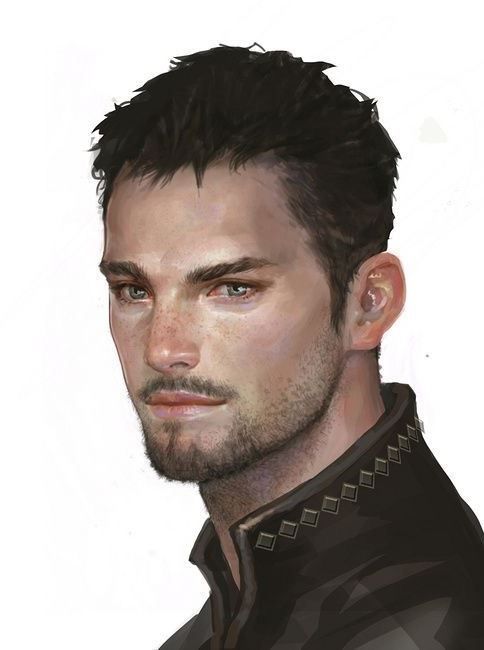
“Still stuck on this one rock as the only place that is safe,” he groused. “I have had to survive on beer and wine.”

“No,” Danna answered. “You can drink fruit juice, apple juice, or milk if you would rather.” Abraxas made a face of disgust. “Besides, you can always go to the other rock, Ireland, and complain over there.”

Abraxas shook his head. “That whole island is full of Irish…and your children who should not be there.”

“My disobedient children are not your concern, except to say they are leaving the human race alone and not interfering with history. The day of the gods is over. The new way has come. You will not be permitted to have worshipers or whatever you may be thinking. And creating hags as personal slaves is cruelty to the human race on many levels. Presently, since the water is death to you, there is no point in getting you to clean up your mess.” Danna frowned. He ignored her. “You were told to stay away from the space aliens.” She did not scold him, but she was tempted. She took a breath and called. “Manannan.” She did not compel her children, grandchildren, or whatever, that is, those who called her Mother. But it was polite to come when Mother called.

The sea began to boil. Big breakers crashed against the rocks and the foam splattered everywhere. Abraxas jumped further back, but he was unable to leave the area entirely because Danna compelled him to stay. The British Isles were part of the ancient land where she had the final authority on this earth.

A tall, skinny, slightly green-skinned man covered in seaweed rose out of the water. Anger was etched across his face and he showed death in his eyes but it was all directed toward Abraxas who took another step back.

“Mac Lir, attend,” Danna said. “Our guest has scattered a Flesh Eater shuttle, bomber, and two fighters across the North Sea. No Flesh Eaters are allowed to survive and it all must be cleaned up so no part of it will be found in the future. You know what to do. Take it to Lady Alice on Avalon and place it where she tells you. I am sure Vingevourt, king of the water sprites of the North Sea will help.”

Manannan stopped giving Abraxas the evil eye and turned to Danna. “Why me?” he asked.

“Because as long as you have refused to join your brothers and sisters and go over to the other side, some effort will continue to be required of you from time to time. Gilla de, be a good boy and clean up this mess.”

Manannan nodded his head slightly, said, “Mother,” and vanished. Danna turned to face Abraxas and let out some of the steam that built up inside her.

“You have been given more than enough chances to find the courage to go over to the other side. You have been reduced to these islands. To place your foot anywhere else on this earth will be death to you, and it is your own doing. You have been told repeatedly not to interfere with people or the development of the human race or with the new way. The old way has gone. The day of the god is ended. Get that message. And you have been told over and over to stay away from space aliens or any non-human people. I swear, you are like my little ones. They hear well enough but the minute my back is turned they go right back to what they were doing that got them in trouble.”

Abraxas stared at her like a scolded child, but he said nothing, so she finished her thought.

“Take care, lest you find even these islands taken from you and you have only the Second Heavens to wander filled with regret.” she waved her hand releasing him from the compulsion to attend her and he instantly vanished. Danna shook her head and went to several places in the islands and on the continent to watch and mind her own business. It took a week before Elgar returned to Osfirth, Gwyn, and his men marching across Berkshire, about halfway home.

Medieval 5: Elgar 7 Second Chances, part 3 of 4

Athelbald died from his mysterious disease in July of 860 and the kingdom passed to his brother Athelberht of Kent. Once the way back to the capital was clear, Judith returned to Winchester, packed her bags, and went home to her father in West Francia. She was not about to be married again to yet another brother. Athelberht, like Athelbald had not married and had no children, so he was eligible to fall into Judith’s web, but Judith was done with that, and done with Wessex. In her mind, the whole kingdom was stupid and stubborn, and she would never be allowed to rule or gather all the power to herself. Even so, despite her bad attitude, she had matured over the years and now felt she could handle her father’s court and look for a more reasonable solution to meeting her desires.

Alfred was thirteen by then, and he corresponded with Elgar. Elgar got him books to read. Athelred was seventeen, so still too young to rule anywhere. The result was Athelberht moved to Winchester but took the throne of Kent with him. He integrated the nine shires for the first time and ruled the whole as the kingdom of Wessex. As it turned out, he had four years to rebuild Winchester and sew the pieces of the kingdom together.

 For Berkshire, he selected a thegan who carried his father’s name, Ethelwulf. The man had Mercian roots, but Berkshire had been under the Mercian thumb for a time so the rest of the king’s men in the shire raised no objections. Besides, since the army of Wessex helped Mercia keep the Welsh in line, Mercia had come to accept Wessex as something of an overlord, so a man of Mercian background seemed no problem.

For Hampshire, Athelberht looked to Osric in Dorset. Osric straddled the fence when Athelbald and his father Athelwulf argued about the Wessex throne, but Athelberht took it as his position. Athelberht refused to take sides. In truth, Osric kept switching sides based on what was most advantageous to him. In any case, Athelberht appointed Osric as ealdorman of Hampshire and let Osric’s son, Osweald take Dorset. Besides, Athelberht’s mother was Osric’s sister, so Athelberht imagined Uncle Osric would do right by him.

Elgar talked to Eanwulf and Bishop Ealhstan of Sherborne and asked them to support, encourage, and teach young Osweald to do a good job in Dorset. Eanwulf did nothing. Ealhstan figured Osweald was like Athelbald, easy to manipulate. Nothing Elgar could do about that. At least Osric did not abandon his son.

Athelberht succeeded in his tasks over the years he ruled. The eastern shires of Kent, Surrey, and Sussex were fully integrated into the larger kingdom of Wessex. Winchester and the whole land of Hampshire were rebuilt and strengthened against the Danes. Everything was settled by 864 when the east coast of Kent became ravaged by the Danes, almost a repeat of what happened fourteen years earlier in 850. Dover, Canterbury, Rochester, and London were raided, and everything east and north of Watling Street fell to Danish hands.  This was a year before the landing in East Anglia by what modern scholars call the Great Heathen Army. Some might suggest the actual invasion of England started in 864.

Two other things of note happened in 864. First, the Flesh Eater fighters and three person bombers strafed the major population centers in Wessex, from Kingston on Thames to Carhampton in Somerset. Some buildings burned, some collapsed, and some people died. It was not devastating, but like warning shots to not resist or fight back without suffering consequences. Second, Athelberht was wounded in one fly-over. He limped for a number of months, well into the new year, before he lost his leg. He seemed to do well enough after that for a one legged man, but six months or so down the road the leg got infected. Gangrene. He died sometime at the end of August, early September of 865, and was buried in Sherborne next to Athelbald. That left twenty-two-year-old Athelred to be king.

By the grace of God, as Elgar’s priest said, the Viking Great Army first turned north in 866 after they got settled and got their bearings. The death of Ragnar Lodbrok being thrown into a snake pit needed to be answered. The Danes devastated Northumbria and installed a puppet king in York. Then they turned on Mercia and ravaged eastern Mercia, wintering in 867-868 in Nottingham. In 869 they returned to conquer East Anglia and killed King Edmund who held the line against them when they first arrived. This left Wessex isolated with only western Mercia free and still in the hands of Athelred’s and Alfred’s sister whose husband, King Burgred of Mercia, still had some say over the land. With all that, the Danes were not ready to try Wessex again until late in 870. Thus far, the Danes had not been successful in Wessex. That gave Athelred time to reach out to his thegans and ealdormen and settle matters in the kingdom while gathering his forces. It also gave Elgar time to act.

When the Flesh Eater fighter ship flew over Watchet, Elgar knew he had to do something. The fighter dive bombed the town several times but did little damage before it moved on down the coast. The fortress, which was Elgar’s home, and the church were untouched. That allowed him the opportunity to speak with the priest again before he acted foolishly. He found things changed a bit.

“I am having a hard time holding on to Mercy and Forgiveness,” the priest admitted. “Two of the church widows were caught in the open and burned. How these creatures can fly and rain fire from the sky is beyond my understanding, but with such great power there is supposed to be great responsibility.”

“People,” Elgar said. “They are not human people like us, but they are people, not creatures. And you make me afraid to act at all.”

“I don’t understand.”

“I am one of those great powers that must act with great responsibility,” Elgar said plainly.

“Yes, I understand that much,” the priest responded. “But you have given these strange people sufficient chances, have you not?” Elgar nodded, so the priest concluded. “In Christ we have forgiveness of sin and the promise of Heaven. He will not hold our actions against us in eternity. But in the here and now, that does not leave us off being responsible for our actions, and often we must suffer the consequences.”

Elgar nodded again. “The law says for every action there is an equal and opposite reaction. To put it in Biblical terms, as you sew, so shall you reap.”

“I would think so,” the priest said.

As soon as the Vikings began to land in East Anglia where they cowed King Edmund and gathered horses and equipment for their invasion, Elgar moved. He asked Lady Alice of Avalon to reach out into space. She found three Ape ships in a patrol group not that many light years away. She fed them the coordinates and informed them of the Flesh Eater ship located on the Genesis moon where they did not belong. Those Ape ships started out right away, but it would be well over a year before they arrived.

In place of his brother Eanwulf, who was ill, Elgar went with King Athelred, and twenty-five hundred men of Wessex to help King Burgred of Mercia route the Danish army that wintered in Nottingham. They intended to drive the Danes from Mercia altogether and thus liberate the eastern half of the land. Sadly, Burgred was not a military man and Athelred knew nothing about how to lay a successful siege. The two king together could not force the Danes to budge. It seemed to Elgar that the Danes were laughing at them. Elgar was twice Athelred’s age, but somehow they were back to the days where they did not listen to anything Elgar had to say. Burgred’s wife, Athelswith, Athelred’s older sister painted Elgar as the baby of the family. That is how Burgred saw him, so Athelred agreed with his sister. In the end, King Burgred paid the Dane to leave and stay away. The Danes waited until the weather cleared before they pulled out and headed back to York.

Only one thing of note happened at that time. Ealhstan, Bishop of Sherborne died in a skirmish with the Danes. No one knew how he managed to be in the area when the Danes came out to forage for food. He was generally a person who ran away when the fighting started, but he got himself killed and a man named Heahmund, a bit of a militant bishop, so quite the opposite of the coward took over.

Just as well, Elgar thought. He had his hands full with what was happening in space. The three Ape ships arrived and immediately engaged with the Flesh Eater ship somewhere out toward Mars. The battle was not so swift. The ships maneuvered all over space to get a clean shot on their enemy. Two Ape ships prevented the Flesh Eater ship from escaping into the asteroid belt. one of the Ape ships was destroyed, but the Flesh Eater ship had its screens taken down. It tried to escape, but the third Ape ship caught it and it exploded, spreading dead Flesh Eaters all across that section of space. One Ape ship was gone. One Ape ship was seriously damaged, but the third ship survived well enough to where they could guide their damaged ship to a place where they could repair.

Unfortunately, the Apes did not see the Flesh Eater shuttle head for Earth, escorted by two fighter ships and a three person fighter-bomber. Double unfortunately, someone else did see that shuttle. At first it headed toward the coast of Norway, but at the last minute it skirted across the North Sea like flying under the radar and headed toward the Scottish highlands. The shuttle had all thirteen fertile females and several litters of infants. As promised, once they left earth their fertility was restored, even if they only went as far as the moon.

************************

MONDAY

The Kairos confronts Abraxas and cleans up the last of the Flesh Eater mess. After that, things with the Danish army begin to heat up. Until then, Happy Reading


*

Medieval 5: Elgar 7 Second Chances, part 2 of 4

While King Athelwulf, Eanwulf, and Osric were off helping the Mercians beat down the Welsh, the king’s wife, Osburh caught a cold. As sometimes happened in those days, she died before Athelwulf got home. The king went into a time of seclusion. For some months, they could hardly get a word out of him.  Eventually, he would only speak to the priests and so perhaps it was no surprise when after two years he decided to make the pilgrimage to Rome. He took his younger sons, Athelred and Alfred with him.

Athelwulf’s eldest surviving son, Athelbald took the reins of the kingdom, though he was not the sharpest knife. Athelwulf made his next eldest son, Athelberht, subking over Kent, Surrey, and Sussex, though Athelbald did not allow Athelberht the same grace to rule that his father allowed him. Eanwulf and Osric liked having Athelbald in charge. He was easy to manipulate. And they supported Athelbald when Athelwulf returned and found his throne occupied.

While in Rome, Athelred and Alfred were tutored under the watchful eye of the pope. Alfred took to the learning and reading like the proverbial duck to water, in particular the histories, though he was only nine years old. He became fascinated to learn how Rome built such a mighty empire and organized itself to last a thousand years. He read about the saints and martyrs who struggled and sacrificed so much for the gospel and to convert the heathen. He read and received instruction about many things, and even at that young age, he recognized how the people of Wessex and the church in Wessex were hampered by the inability to read and the lack of books worth reading. He took a vow against his enemy, ignorance.

Athelred, by contrast, had little interest in the lessons. It is not that he was lazy, but his interests went more toward the martial arts. He did not mind learning about Caesar and hearing all about the battles. His was more of a romantic view of empire, of battles and conquest, not necessarily ruling. All the same, their father Athelwulf had both young boys invested in a way that proved their worthiness to rule. Athelwulf figured when he died, the older boys could not shave the younger one’s heads and stick them in a monastery somewhere to be forgotten.

When they left Rome after a year, they returned to the Carolingian court of Charles the Bald. Alfred, now ten, brought his trunk full of books. Athelred, fourteen, carried a sword with which his father hoped he would not cut himself.

Charles the Bald spent those days building alliances with outside kings and rulers as a balance against his own nobility that did not like him very much. Athelwulf, king of Wessex, certainly fit the bill. No one can say how Charles’ twelve-year-old daughter Judith came into the negotiations except to say Judith was a witch who had no intention of becoming a nun. She was beginning to chaff under the strict rules of her parents and wanted out. At her young age she had no business considering marriage, but it was all she could think of to escape. Besides, she figured the old man would not give her any trouble. He still loved his first wife, Osburh, and he would not live that long. She prepared herself to make sure of that.

When the family returned to Wessex, they found the throne taken and Athelbald would not be giving it up. Much to Athelwulf’s disappointment, his old friends Eanwulf of Somerset with Ealhstan, Bishop of Sherborne supported Athelbald, while Osric of Dorset sat on the fence between the two. Athelwulf, who was already not feeling well, was reluctant to start a civil war. He had the support of Hampshire, Wiltshire, and Berkshire, so he made a deal with his son. Athelbald took the western provinces of Somerset, Dorset, and Devon where Eanwulf’s friend Odda took the reins after his other friend Ceorle died in the 851 battle against the Danes. Athelwulf kept the central shires under his hand. Basically, Athelbald got the bishop of Sherborne while Athelwulf kept the bishop of Winchester. Athelberht in Kent, who refused to take sides, kept the bishop of Canterbury while the bishop of London was still technically claimed by Mercia, and by the Danes.

The agreement only lasted about a year. Athelwulf got sick and died just after the new year, 858, in Sussex, where he was buried. Athelbald moved back to Winchester and to the throne of Wessex. Then he did one thing that Elgar, Eanwulf, Osric, and the Bishop of Sherborne all agreed and advised against. He married Judith, now fifteen, his father’s widow. He did not know she was a witch.

It certainly was not Judith’s intention to be saddled with the son, but she saw no other way to power. At one time, she imagined after she got rid of the old man she might take the crown for herself, but that would never fly with these rude and ignorant Saxons. They called her queen, but in Saxon terms, the queen was no more than the king’s wife. Judith ruled through Athelbald for two and a half years, but it soon became too taxing to continue. The man was terminally stupid, and stubborn once he got a thought in his head. She controlled things well enough to get what she wanted, but he got on her every nerve. Athelbald was already sick with the same mysterious disease that killed his father when the Vikings under Weland burned Winchester. That happened in 860.

Charles the Bald originally contracted with the Viking Weland to drive out some other Norsemen that were threatening Paris from the north shore of Francia. Weland sort of succeeded. He gathered his army and put those Norsemen under siege until they paid him an ungodly amount of gold to go away. He thought this was a good thing. He heard about Athelwulf in Rome, how he lavished gold everywhere he went. He thought Wessex was just across the Channel. He imagined if he brought his army there, they might also pay him off to go away.

To his credit, Weland got all the way to the walls of Winchester before the army of Wessex gathered. He burned parts of the town, but he did not take the town before three times his numbers came from outside the city to confront him. Weland could not run fast enough. They fought, and Weland lost badly before he made it to his ships and escaped. The people of Wessex did not pay him off. They just got mad, and it was a mistake that got echoed in the halls of Denmark and Norway. The Vikings lost badly at the Parrett River. They lost again in 851 near Kingston in Surrey. Now, Weland had to tuck his tail and run. The message was don’t mess with Wessex.

Without knowing it, Weland did three things that might have proved troublesome in the future. His army managed to kill two ealdormen, the leaders in Berkshire and Hampshire. Poor Wulfheard of Hampshire was the father of Eanwulf’s wife, so he was family in a sense. And he had no sons, so the position stayed vacant for a while. For the hat trick, Weland’s army drove Athelbald from the city and nearly caught him in a skirmish outside the city walls. Athelbald received a cut in his arm which was not life threatening, but he was already weak from being sick.

Athelbald ran to Sherborne, to where he imagined his friends lived. The Bishop, Ealhstan, received him as the king, but he did not show any great friendship. Eanwulf did not even bother to visit. Instead, he sent Elgar.

Elgar spent the last seven years at home where his wife finally gave him a son to go with his four daughters. He felt it was about time since he turned forty in 860. In those seven years, he only drove off two Viking raids, and he figured one landed on his shore by accident. He guessed they were headed toward Glywysing in Wales and got turned around in the storm. It would have been nice to think he spent those years in peace and quiet, but no such luck.

Some of that time got spent receiving reports about the would-be god Abraxas. The god settled in Northumbria, on the opposite side of the island from where Elgar was located in Somerset. Marsham the elf and Pinoak’s fairy sister, Heath, both moved into the area where they could watch the god closely. Both married into the local elf tribe and fairy troop and settled in to do their duty. Abraxas seemed to be moving quietly around the area, though he brought in more Danes and Norsemen than Elgar imagined was healthy. Elgar guessed Abraxas wanted the pagan Vikings and English Christians to clash in their culture and faith and cause uncertainty in many minds. Elgar concluded that Abraxas could take advantage of that uncertainty. He would have to watch it.

The rest of the time, he kept one eye on the Flesh Eaters who abandoned the Earth only to land on the moon. From there, they regularly sent shuttles back to earth to pick up whole herds of animals, sometimes including cattle and sheep, and the occasional farmer and rancher. More concerning was the three-person bombers being used as scout ships and to deliver Flesh Eater counselors to the Danish throne.

Elgar’s elf spies suspected the Flesh Eaters were using their mind control devices on certain chiefs, counselors, and elders throughout Scandinavia. It was impossible to tell, or prove, because the elves knew nothing about that level of advanced technology, and the men behaved perfectly normally, as far as the elves could tell, even if their instructions came from the moon.

Elgar hoped the Flesh Eaters left Earth and were only hiding out on the moon until things settled down in deep space. Once the battles between the Apes and Flesh Eaters quieted down out among the stars, Elgar hoped these local Flesh Eaters would leave the solar system altogether. He was willing to let them visit and gather food as long as that food consisted of deer, cattle, sheep and the like. He was not happy about the occasional rancher or farmer they took with the herds, but at least they stopped eating the Geats on a regular basis.

Elgar talked to Reed, his house elf, the one who gathered all the information brought in by the elf and fairy spy networks. “Hopefully, when the fireworks in deep space settle down, these Flesh Eaters will leave altogether.”

“Hopefully,” Reed agreed, but all they could do was watch and wait. “It has been fifteen or sixteen years. How long will this war in space continue?”

“Eighteen years since the Apes found the Flesh Eater home world,” Elgar said and shook his head. He thought to explain what he could. “It takes a week, or two with bad winds, to travel from Denmark to England. But in space, the stars they travel to are not necessarily next to each other. To sail from Copenhagen all the way around to the Mediterranean to raid in Provence, Italy, or get to Constantinople takes months, maybe a year or two. In space, the distances are vast. Even at faster than light speed, it can take months or years just to get to an Ape colony or Flesh Eater colony. The actual fighting does not last long. It is the travel to get to the battlefield that takes forever. It is not much different on Earth. Armies gather, and most of the time is spent just getting there.”

Reed nodded that he understood.

Medieval 5: Elgar 7 Second Chances, part 1 of 4

“Are you sure you don’t want me to go with you?” Elgar asked. The year was 853. Eanwulf’s six hundred men were gathered and ready to move out, though honestly this time it was closer to four hundred and eighty.

Eanwulf shook his head. “You went the last time. Pray that I have as much success as you had. Besides, all we are doing is helping Mercia against the Welsh and all the Welsh know how to do is attack like wild men, no line or formation of any kind.  As long as our line is solid, the outcome is decided before the two sides even meet.”

“I’ll keep an eye on things here in Somerset, and your sons,” Elgar said. but Eanwulf just shook his head again.

“We have kept the Danes from our land over these past five years since the Parrett River, and it was quiet for five years before that.”

“We have had a couple of raiding parties.”

“Small raids. Insignificant. And you handled them well,” Eanwulf smiled down from where he sat on his horse. “You just need to keep your eye on the coast and keep the Danes, the Welsh, the Irish pirates out of the Somerset and the rest will take care of itself.”

Elgar nodded for his brother and backed away from the horse. He stood for a while, watching Eanwulf and the army ride off in support of the king, then he mounted up and headed slowly back to Watchet on the coast. He had to think. The last report he got said the Flesh Eaters were beginning to eat the uncooperative Geats.  The Danes, Norwegians, and Swedes raised no objection. No doubt they all planned to move into Geat land once the Geats got removed. The morons did not realize that they might well be the next item on the menu.

Elgar felt he had to do something, but as usual, he was not sure what he could do.

Worse than eating the Geats, the Flesh Eaters appeared to be building a settlement in the mountains just south and west of Harjedalen in Scandinavia, roughly between Swedish and Norwegian lands. He feared they would start breeding soon enough, and then they would be very hard to get rid of. They produced children by the litter full.

Elgar stopped in Athelney, the fortress in the swamps. He remembered the path and how to get there safely through all the obstacles. He encouraged the monks there in the small abbey that held the island. He got workmen and their families to move to the island. They made a small hamlet and farmed the ealdorman’s land, what could be farmed. They also kept the fortress in prime condition. Elgar could not be sure, but somehow he felt the fortress at Athelney would come in handy at some point in the future.

“Wait and see,” he said to himself, and after a week, he finished the trip to watchet. He loved his wife, Aelfpryd. She was surprised and pleased at his attention and kindness toward her. She would be thirty soon enough and officially middle aged. But Elgar had been born to a middle aged mother, and despite his complaints about being raised by the girls, he imagined in the long run it had not hurt him. Aelfpryd might eventually have a son but even then, Elgar knew he could only love his daughters Wynn, Swip, Swith, and Flaed, though he might try to keep them from utterly spoiling the boy.

Aelfpryd found Elgar up on several nights. He stared at the moon as it grew to full size over those days, and when it was fully round, he commented to his wife.

“Round like a woman. I wonder what the moon may birth.”

“I’m not that old yet,” Aelfpryd responded, knowing what he was thinking. She stood beside him and slipped her arms lovingly around his middle while he continued to look at the sky. “We can still have a boy.”

Elgar looked at her. “Sadly, there are some that are not permitted to have children.” He turned again to look at the stars. “I feel in a way that I will be committing genocide, though it is not. There are still plenty out there. They still have plenty of opportunity to survive as a people.”

“You sound as if you are going away again.”

“I must,” Elgar said. “But only for a day. Maybe a week.”

“I will miss you when you are gone, and I will be waiting quietly for your return.” She planted a kiss on his cheek an turned to go inside to bed.

“Quietly? In a house full of girl? Ha!” He ran to get ahead of her. She let him win that race, but she would not let him steal all the covers.

~~~*~~~

Elgar met with the priest in Watchet for three whole days. It took him that long to confess himself and to give the priest an idea of who he was and what he was talking about. He was not sure why he went to the priest with his confession, but he had to talk to someone. He did not want to burden his family and friends and since confession was becoming a thing, the old priest got the call. After fifteen years since his first contact with the Flesh Eaters, Elgar was considering genocide. Fifteen years was more than enough time to leave the Earth, but before he acted rashly he needed a second opinion. In the end, the old priest did not really understand, but he said the thing Elgar needed to hear.

“In the beginning, everything was perfect. God said simply don’t eat the fruit of this one tree. That was all. But we did not believe him, or we did not trust him, or we wanted to see what would happen, or we wanted to decide for ourselves. We stepped off God’s path and into the bushes and thorns to hide ourselves. We really messed up, and what happened was we found there was no going back. We doomed ourselves by our disobedience, by our unbelief. Thank God that God did not abandon us to Hell. In the fullness of time, Jesus came and through him we have a second chance. God’s way is the way of love, joy, and peace. It is the way of Heaven and God will not mislead you. He has given us a guidebook to help direct our steps. Walk on God’s path, narrow as that path may be. Any alternative leads only to destruction, and there is a whole world full of alternatives. Just remember this. Everyone needs a second chance.”

“I will remember,” Elgar said, and he walked out the back door of the church He promptly traded places with the Nameless god and appeared in Scandinavia where the Flesh Eaters were building their colony. Of the nine hundred and eighty-seven Flesh Eaters on the mothership, twenty-six were female, but only thirteen were able to bear children. Of course, given that they had litters of three to five children at a time, it would not take many years to double that nine hundred number, and their numbers would increase exponentially after that.

The first thing he did was gather all of the Flesh Eaters from the settlement in the meadow where they parked their two transports, three fighter ships, and two three-man fighter-bombers. He made the Flesh Eaters stand still while he reduced the wooden structures they had built to sawdust to be blown away on the wind. He closed up the wombs of the females so they could not bear any children, though he made clear to them the restriction would be lifted once they left this planet. Then he transported the Flesh Eaters and all their ships to the supposed secret hiding place of the mothership.

Nameless had to think for a minute. Not everything was easy, even for a god. In this case, though, Nameless figured it should not be too difficult. In his mind’s eye, he reached back long before the Kairos was first born, hundreds of thousands of years to a different genesis planet, and he learned how to shape himself into a god of the Flesh Eaters, now no more than a distant myth in the Flesh Eater minds. Once satisfied, he called the captain, first officer, chief scientist, and chief military officer of the Flesh Eaters to appear before him. They all screamed and tried to hide themselves which is about what Nameless expected. Nameless spoke and made sure these flesh eaters heard.

“You have been told to leave this world. The time to gather your people is now over. You have been told not to eat the people. The Geats are people. No more eating them. Now, you must leave this world and not come back. This is your second chance. There will not be a third chance.”

He vanished from that place and appeared again in the back yard of the church. The priest came out and drew his breath in sharply on sight of a Flesh Eater god. Nameless quickly changed back to himself, then he traded places again with Elgar and the priest commented.

“I see what you mean, not of this world. I thought you were a demon.”

“They are not far from demons,” Elgar said. “They have a second chance and I hope and pray they will take it. I will be sorry when I have to kill them all.” He walked home, kissed his wife and his girls, and went to bed early.

Medieval 5: Elgar 6 Wessex, Take Notes, 1 part.

In the year 850, the first wave of the Danish invasion of England began off the coast of Kent where King Athelwulf’s son, Athelstan, ruled as sub-king over Kent, Sussex, and Surrey. With his ealdorman from Kent, Athelstan defeated a Danish fleet. It was a pyrrhic victory. Athelstan died shortly after the battle, and a few months later, an ungodly number of Norse ships landed in the Thames estuary. Kent no longer had the ships to hold them off. The Danes sacked Canterbury, besieged Rochester, and overran London.  This was no simple raiding party.

When London fell to the Norsemen, King Berhtwulf of Mercia brought out his army. Berhtwulf lost. The army of Mercia was devastated and they appealed to Wessex for help. Kent, which at that time was nominally part of Wessex, also appealed to King Athelwulf. As soon as the Norsemen overran London, even before the Danes pushed up the Thames, Athelwulf sent out a call to arms. He only hoped men would come in number to at least match the reported five thousand Danes. It would have been more Danes, but Ragnar, the son of Lodbrok wanted no part in the invasion of Wessex. He took part of the army north to invade Northumbria instead.

Elgar gathered his three hundred and accepted an additional hundred from Odda in north Devon. When they joined Eanwulf’s six hundred that made a thousand men out of Somerset. The whole sub-kingdom in the east, Kent, Sussex, and Surrey only added a thousand to the number, though to be fair, Kent was already struggling for control of Rochester, Faversham, Canterbury, and Dover. For the most part, everything east and north of Watling Street was in Danish hands.

The rest of the army, the three thousand had to come from what had always been the heart of Wessex: Hampshire, Berkshire, Wiltshire, Dorset, and the Isle of Wight. Athelwulf and his Ealdormen managed it but they needed the three hundred Ceorle was able to bring from Devon to do it. They only hoped the Danes did not come up with any surprising, uncounted men at the last minute.

Elgar, now age thirty, led the men of Somerset. Eanwulf stayed home with his wife, Wulfram, who was pregnant in her mid-thirties and having a hard time of it. She was confined to her bed on doctor’s orders and Eanwulf was afraid to leave her for fear that he might lose her. It worked out, even when Elgar appointed his friends Osfirth the Saxon and Gwyn the Celt as his chief lieutenants.  They were also over thirty and a majority of the army was younger, war being a young man’s game. Besides, the older men in the army, in particular those who fought at the Parrett River knew it was Elgar who engineered the victory. Men did not mind following a winner. It gave them confidence that they would get home alive.

King Athelwulf was not entirely happy that Eanwulf stayed home, but Osric of Dorset convinced the king that he got the better of the deal getting Elgar in Eanwulf’s place. He told the king, “We matched the Danes the way they fight and our good men beat their good men.” That was not exactly true, but it sounded good.

The Danes built their line between a forest and a bend in the river so the West Saxons could not use their horsemen to strike their flank or rear. Clearly, some of the leaders of the Danes had been at the Parrett River and saw how affective a cavalry charge could be. Elgar prepared for that. He filled the forest with his men in green, all excellent archers. Then he struck the Danish line in a way to turn them, so their backs would be toward the woods. It sort of worked. Mostly the men on the riverside got pushed back, creating a space between the lines and the river.

This time, the Danes also had about two hundred horsemen. No doubt they stole the horses on their way through Kent, London, and up the Thames. They were learning. The men of Wessex also had about two hundred men on horseback, but Elgar only counted a hundred and forty worth anything. Most of the rest were servants, monks, and priests not there to fight. Elgar had to charge his men to fight the Danish horsemen in the first real cavalry fight almost since Roman times. The Saxons got the worst of it, being outnumbered, but they did keep the Danes from crashing into the Saxon line in payback for what happened at the Parrett River.

Once the back of the Danish line came within range of the woods, they began to be devastated by Elgar’s archers. They would not last long if something was not done. The Danish commander had to send his reserves into the woods to rout out the enemy there, but not many of them would come back out of the woods. There were dwarfs there, and even some dark elves in the shadows just itching to use their axes on the enemy, and the archers disappeared only to reappear as soon as the Danish reserves passed them by.

After that, the Danes very quickly began to surrender. King Athelwulf with his son Athelbald and his ealdormen deserve the credit for restraining their men, a bunch of wild Saxons filled with blood lust.

Osfirth rode up to Elgar and pointed across the river. It took a minute to see what Osfirth was pointing at. He just caught it when Gwyn rode up and turned his eyes in the direction Osfirth pointed. Then everyone looking in that same general direction caught it as the Flesh Eater mothership rose up from where it parked and no doubt watched the battle. It did not hover for long before it shot off to the east, toward Kent, East Anglia, or across the water to Danish lands. It happened so fast less men saw it than one might think.

“If you blinked, you missed it,” Gwyn mouthed the old expression.

“Where do you think they are going?” Osfirth asked.

Elgar shrugged. Reed, Pinoak, and Marsham would all find out and report.

The men of Wessex marched many prisoners to Kingston on the Thames where they would hammer out a peace treaty with the Danes. Thus, the first wave of invasion by the Norsemen petered out, though many Danes stayed in the land and settled in places like Mercia, Essex and East Anglia, and southern Northumbria, in the old kingdoms of Lindsey and Deria around York.

As it turned out, the Northumbrians also found a way to victory. Ragnar Lodbrok and his men ravaged the countryside for a time, but eventually the Northumbrians built an army that won the day. Ragnar was captured and legend says he was thrown into a pit of snakes. The legend also says he issued threats even as he died. He swore he had sons who would avenge him, but the Anglo-Saxon kingdoms would have to wait for that. In fact, they had to wait fifteen years for those sons to get old enough to make good on that threat.

~~~*~~~

Elgar went home to Watchet and his girls where he worried less about the Norsemen and more about the Flesh Eaters and what they were planning. They had been good, relatively speaking. They were not eating many people, but rather using people to further their aims of bringing the world into their orbit where they could feast at their leisure. They were experimenting, and the Norsemen were their guineapigs.

“The men around Rochester in Kent were fitted with mind control devices,” Pinoak reported. “It did not work out too well.”

Elgar understood. “Men controlled in that way, or by some enchantment, don’t respond well to changing situations. They are slow to react and in a battle situation that is a quick way to die.”

Pinoak also understood. “I believe the Flesh Eaters may abandon that idea. They brought their mothership to watch and take readings to see the results.”

“I saw,” Elgar said and turned to Marsham. “So, Northumbria…”

“Nothing I could do to stop it,” Marsham said right off. “Warthog was determined to get in on the action.”

“The son of Piebald the dwarf,” Elgar frowned.

“The same,” Marsham said. “And Hassel and Heath brought their troop to observe, but I know they got in some target practice.”

“My sister, Heath,” Pinoak said proudly before he got quiet seeing that Elgar was not pleased.

“And some of your own elf troop came up from the Coquet River, don’t tell me… They could not help themselves.”

“Lord,” Marsham said and looked down like one prepared to be punished.

“You all know the rule,” Elgar thought hard and projected his thoughts so he could include Warthog and Hassel in the message though they were miles from the Somerset coast. “You are not to mingle with humans or get involved in human squabbles or wars without permission. Lucky for you, history has accounted for this, though creating a snake pit so the humans could throw the Danish leader into the pit was unnecessarily cruel. Don’t do it again.” He cut the message and mumbled to himself. “It’s like Serket all over again.”

“Lord, your brother’s friend Ceorle, ealdorman of Devon was killed in the cavalry struggle,” Reed said to change the subject.

Elgar nodded. “Odda has been given the job. I talked with him and with Osfirth. Osfirth has been trained in the coastal watch and he has agreed to take Odda’s place between Countisbury and Pilton so Odda can move to Exeter. I am going to miss Osfirth on the Parrett River, but I have good men in Combwich since we drove out the Danes from that place, and he will have Gwyn in Carhampton as his neighbor, so all should work out well.”

“You hope,” Reed said.

“That is all we can do,” Elgar said. “Keep me informed as far as the Flesh Eaters are concerned. If they don’t soon figure out that the human race will never unite and submit to being eaten and leave this world of their own accord, I may have to pay them a visit and force the issue.” He paused and thought a moment before he added, “I especially want to know if they start breeding. We don’t need them to start a colony here.”

He walked into his house and thought he should bring Genevieve to talk to his wife and daughters. She could at least follow along with all that prattle.

“Hey!” Genevieve protested.

************************

MONDAY

Second chances matter, and the sons of King Athelwulf begin to show some promise. Untl Monday, Happy Reading.

*

Medieval 5: Elgar 5 The Parrett River, part 2 of 2

Eanwulf and Osric had no more questions, but the Bishop of Sherborne had one. “Why don’t we just put all our men in the line and crush them?”

“We tried that twice,” Elgar responded. “It doesn’t work.”

In the morning, fourteen hundred Danes lined up against fifteen hundred Saxon and British troops. Lodbrok kept four hundred men in the earthen works. He planned to have a hundred hold the works for a fallback position while he used the other three hundred in reserve to throw into the line as needed. Eanwulf and Osric kept back their two hundred, but the men looked antsy. When the fighting started, it would take some real effort to keep them from running forward to join the melee.

Elgar took his hundred and twenty horsemen to the ridge where they could look down on the fight. They picked up twenty men who came with Osric and Eanwulf and wanted in on the action. The Bishop also came with a few men on horseback, but they were mostly monks and priests and looked ready to run away if things went badly. Elgar found Pinoak and thirty fairies on the rise. They kindly appeared full sized, dressed in hunter green, and they studied the Danes as they came out to line up for the battle.

“The line is four thick with spears in the second and third rows. They appear to be very good at making a shield wall. Our side will find it difficult to penetrate that wall, but I don’t think the Danes will have as much trouble with ours. Our soldiers are not as practiced, and any openings they leave will be exploited by the Danes. Also, see? We are forming a line five men thick, so our line is not as long as theirs. They may be able to curl around our line on both ends and push in from our flank.

Elgar understood and answered for all the men who were listening. “We need to strike where they curl and push them toward the river.”

While his men got in position to attack, the lines met. Eanwulf and Osric had the numbers, but they did not line up in a way that took advantage of that. In fact, it became clear to Elgar why the Saxons lost twice at Carhampton.

It took Lodbrok a few minutes after the lines met before he threw in his three hundred where they could take advantage of what he saw. One hundred went to reinforce the center of the Danish line, but he divided his other two hundred and sent them to take advantage of the curl. He also knew about the battles at Carhampton and did not think much of the Saxon foot soldiers.

When the Danish three hundred arrived, the Saxon line held, but barely. Elgar had Pinoak message Pinewood and Deerrunner to send the two hundred reserve Saxons to attack the end of the line by the river while he got his horsemen to attack the near end. Even Eanwulf and Osric understood once it was pointed out to them.

Meanwhile, Elgar noted what was happening in the Danish earth works. Marsham and his elves and mostly the men from Combwich came out behind the works and used their hunting arrows to great effect. The Danes had nothing to hide behind as the makeshift mud and stone wall stood at their backs. Then Elgar could not worry about that as his cavalry charged down the slight rise, spears pointed toward the backs of the Danes.

The Danes at the back of the line tried to turn their shields against the horsemen, but being on horseback allowed the Saxons and British to ride around the sloppy shield wall and still hit the unprotected Danes in the rear. It did not take long before the Danes on that end began to pull back. The impact of the Saxon reserves on the other end was not as dramatic, but the two hundred men stopped the one hundred Danes from pushing in on that flank, and in fact began to push in on the Danish end where the Danish shield wall petered out.

Where the horsemen struck, the Danes began to pull back from the fighting. It took a little longer, but on the other side one bright Danish commander recognized that they were out maneuvered. They also began to pull back. Lodbrok recognized that these Saxons were smarter than the ones at Carhampton. He tried to push the center forward with the hope of splitting the Saxon line in two, but all he got was killed for his effort. Once Lodbrok was dead, the Danes abandoned the line. Even there, they showed discipline and order which was not a Saxon trait. Some stayed and sacrificed themselves to hold the Saxons back while most escaped. They quickly recognized their earth works had been abandoned by the men who were left to hold it, so they had nowhere to go but back to their ships.

When the ships began to sail, Elgar slipped from the horsemen and headed toward the Danish earthworks. He picked up Marsham who grabbed a horse and Pinoak who appeared full sized and on a horse, though it was only a glamour. They rode carefully up the hill and through the trees to where the Flesh Eater shuttle parked. They did not expect what they found.

Pieces of Flesh Eaters were scattered all around the area. A hag-beast was on its hairy knees, a sign of worship, in front of a young man with a black goatee, slick black hair, and pitch black eyes. Elgar shouted the young man’s name, and it was not kindly spoken.

“Abraxas! What did you do? Dealing with space aliens is not your job. You do not belong here.”

Abraxas shouted back. “This is the only place I have left to me.” He calmed himself. “I am shaping my place to my liking. It does not serve my purposes to have Flesh Eaters in my front yard.”

Elgar also calmed his voice. “I don’t want them here either. But you need to let me decide how best to get them gone.” He repeated. “This is not your job.”

“My job is to decide and rule,” Abraxas responded, and Elgar saw the stubbornness in the god’s eyes. He felt it prudent to trade places with Danna, the mother goddess, and let her look into those eyes.

“Fire the hag,” Danna said. “I will toss it into the sea.”

Before Marsham and Pinoak could call up their magic, Abraxas vanished, and he took his hag with him. Danna groused and waved her hand. The shuttle weapons were disabled, and the weapons and Flesh Eater equipment on the ground disappeared, to reappear on the appropriate island in the archipelago of Avalon. She waved again, and a twenty-foot deep hole appeared. All the flesh-eater pieces went in the hole and the hole got covered with one big rock and plenty of dirt, the top layer of which instantly grew grass, flowers, and a bush so it was indistinguishable from the rest of the clearing. She left the shuttle there, knowing the Flesh Eater mother ship would eventually be along to retrieve it.

Elgar came back and groused a bit. He turned his horse and carefully rode back down through the trees. As he rode toward Combwich, he heard his dwarfs doing some grousing of their own. Copperhand the dwarf chief complained. “Only three Danes braved the water of the ford. Three! That was hardly worth coming out from the Polden Hills.”

“Maybe next time,” Elgar answered. “We had no way of knowing. You might have faced a hundred or more and been overwhelmed. Thank you for taking care of the three.”

Copperhand mumbled some unrepeatable words and took his people back to the hills.

Marsham, Pinoak, Pinewood, and Deerrunner all vanished back into the wilderness when Eanwulf, Osric, and the bishop rode into Combwich to watch the last of the Danish sails slip into the bay and the Bristol Channel. The three men congratulated each other. Elgar, not in a good mood, put a damper on the celebration.

“We have wounded to tend and dead men to bury.”

Medieval 5: Elgar 5 The Parrett River, part 1 of 2

Osfirth and Gwyn had the men of the coastal watch, nearly three hundred, spread through the woods around the Danes where the Danes were building earthworks against the expected enemy. One hundred of the three hundred were on horseback so they could be moved rapidly to different sections of the line and hopefully appear like more than they really were. Their job, with Deerrunner and Pinewood and their people all dressed in hunter green, was to keep the eighteen-hundred Danes in forty-two longships bottled up in the Parrett River mouth where it ran to the bay in the Bristol Channel. The old Romano-British hamlet of Combwich was held by the Danes at the back of the Danish line, where they also controlled the ford they might use at low tide, if needed.

The Danes built an earthen work wall as a redoubt against the Saxons, especially if they came up with those men in green cloaks who were remarkable archers. The leader of the Danes was no fool. Lodbrok barely survived Hingston Down and lost nearly half his men. He respected the Saxons on horseback, as well as the men in green. He would strengthen his position and wait for the Saxon foot soldiers to come whom he did not respect at all.

Some believe the Danish invasion of the Anglo-Saxon kingdoms began with the arrival of the Great Heathen Army in 865, and especially after the Great Summer Army reinforced them in 871, but most believe it started earlier, in 850 when the exaggerated number of 350 longboats arrived at the estuary of the Thames, and with the advent of Ragnar Lodbrok. But the truth is the landing on the Parrett River in 848 was the test case. The Danes, and Lodbrok’s son learned some things there and came away with respect at least for the army of Wessex, a lesson that got underlined in 851, in Surrey. That allowed King Alfred, years later, to pay off the Danes and negotiate a withdrawal from Wessex Territory which gave Alfred enough breathing room to eventually win the war. But that came later. In 848, about the time Alfred was born, the Heathen Danes came to the Parrett River, and something else came with them.

“Flesh Eaters,” Elgar named them.

“They are not even making an effort to hide,” Marsham said.

“They have an invisible shield around them, er, screens,” Reed explained. “I can sense them and the others who have been watching have mentioned it. It is strong enough to stop arrows and javelins and can even stop men and horses from getting at them.

Elgar pushed up to look from behind the bush. “You know, we had five years of peace and quiet. Too bad it could not last.”

“I understand your wife had another girl.” Pinoak, Pinewood’s son said.

Elgar rolled his eyes. “We had a son, but he died at two months when I was down in Carhampton checking on the fleet of longboats that eventually turned north toward Gwent and Cardiff. Nothing anyone could do.” Elgar sighed. “We had the girl after that. Alfflaed. So now I have four little Alfs. Wynn, Swip, Swith, and Flaed, that is Joy, Strong, Swift, and Beauty.”

Marsham interrupted with a thought. “They are an ugly people.” Elgar almost made a quip about Marsham insulting his daughters, but he knew what Marsham meant. He was talking about the Flesh Eaters.

Elgar examined the Flesh Eaters as well as he could from his distance and finally figured out what looked so wrong. “Their heads are too big for their bodies. Their bodies are skinny as an elf if you will pardon the expression. It is a wonder their little necks can hold up such big heads. And their mouths are too big for their big faces. They have almost no noses between the eyes. Just mouths.”

“And their tongues keep shooting out like a snake,” Pinoak added. “Why is that?”

“Smelling what is in the air,” Reed told him.

“Little noses,” Elgar thought to explain a bit. “Much of their sense of smell is in their tongues, as you said, like a snake. They can smell when there is blood nearby. They suck the blood first before they eat the flesh. I’m surprised they have not smelled me.”

“No, Lord,” Reed answered. “We are downwind.”

Elgar nodded as he said, “We should go before the Danes find us here behind their line.”

They returned to their horses that were tied in a small wood where they hopefully would not be found. They rode along a narrow path just over the rise in the land where the Danes would not see them, and got back to their own line without trouble, but Elgar had a thought.

“Pinoak. You need to keep your young fairies on the rise in case Lodbrok figures out we can get around behind his earth works and sends men to get around behind our line instead.”

“Lord,” Pinoak agreed and flew off to organize the watch. Marsham and Reed reported back to Deerrunner, but Reed shared a thought first.

“Copperhand and his dwarfs from the Polden Hills are not happy at being left out of the battle order.”

Elgar nodded but said, “I need them on the other side of the river so when we drive the Danes in that direction, they will be able to stop the Danes from escaping across the water. Copperhand and his people need to stay away from the longboats, but they can take any men foolish enough to try and swim the river.”

Elgar and the men of the watch kept the Danes in Combwich for three days before Eanwulf and Osric showed up with the army. Eanwulf and Osric brought six hundred men each and plenty of wagons to supply the men. The Bishop of Sherborne came along with an additional three hundred men, and mostly soldiers this time, not just monks and priests. With Elgar’s men from the coast, they matched the Danish numbers, but no more. Only Elgar’s nearly two hundred men in green gave the Saxon side the advantage, but Eanwulf and Osric knew them as men from the wilderness, excellent hunters with a bow, but not inclined to go face to face with the Danes.

It was late in the afternoon and the Bishop wanted to attack right away. Fortunately, common sense prevailed when Elgar spoke. “Your men are tired. They need a good night’s rest and good food in the morning so they have the strength to fight for as long as it takes. The heathen men will not attack until they send out scouts and spies to get an estimate of our numbers. They will wait the night and prepare for an attack in the morning.” Then Elgar put his brother on the spot. “Have you found men willing to hold back in reserve when the lines first meet?”

Eanwulf frowned and looked at Osric who added his frown. “We have each ordered a hundred men to wait. That is two hundred and the best we can do. You know, it is unnatural for good men to wait when the fighting begins.”

Elgar understood. “But twice we have seen it is what the Danes will do, and twice at Carhampton they have broken our line with their fresh men. Unless we have men to strengthen our line when the Danes send in their reserves, we will just find our line broken a third time.”

“I understand,” Osric said. “And how many of your three hundred will you be holding back?”

Elgar had to think how to say it. “My men know their homes and families are in the most immediate danger if the Danes gain a foothold in this place. They will not hold back but will fight like berserkers, but then, I have something special in mind. They know the land and have spotted a weakness in the Danish formation. I plan to take the hundred men on horse along the ridge above the Danes and fall on their flank—their side and back corner at the right time, much like we did at Hingston Down. I also have some men in green, hunters, who have agreed to drive the Heathen men from Combwich, and with whatever men they can get from the village come up behind the Danes with their arrows.

“That will still leave the river as a way of escape,” Eanwulf was thinking.

Elgar shook his head. “Any who swim the river will not survive on the other side. Trust me on that. Their only hope will be to go back to their ships and leave this land. Assuming everything goes to plan. Your job will be to hold the line. If our line collapses before we are in position to attack, this won’t work. Let Lodbrok throw his reserves in first and wait. That will be the most difficult time but keep the line. Deerrunner and Pinewood both have a good sense of how this works having seen it work in many battles. Wait and push in on the river side with the reserves when we are ready.”

“On the river side?” Osric asked. “Won’t that make the other side weak, especially if they are ready to pull back.”

“It will,” Elgar said. “But that is the side where we will hit them with our cavalry. Hopefully the Danes will be thrown into confusion and that should encourage our men to hold. That is the plan, anyway.”

Medieval 5: Elgar 4 Carhampton, the Sequel, part 2 of 2

Alfpryd had twin girls she named Alfswip and Alfswith, she said to honor her friends, Athelswith and Elgar’s sister, Eadswip. Elgar complained with the thought Doctor Mishka put in his head, though he was very glad the doctor had been there to help. Twins were not easy.

“I’ll never be able to tell them apart,” he said before he came up with his own complaint. “And about the names…”

“Now, we agreed,” Alfpryd interrupted. “I name the girls and you name the boys. Besides, Reed and Violet like the names.”

“I’m not surprised,” he said. They were elves and probably inclined to like any name that began with the word Elf, or Alf. Violet served as Alfpryd’s maid, and her husband, Reed, kept Elgar updated on the progress of the Flesh Eaters. “What does Poppy think?” Poppy was the local fairy Elgar sometimes mistakenly called Edelweiss.

“Poppy loves Alfwynn, and says she loves Alfswip and Alfswith already, and they are just babies.”

Elgar nodded. “You are such a lucky woman.”

“I know. I love my husband so much.”

“I meant, that you are loved by so many. Even the very spirits of the earth love you.” he gave her a kiss and left the room so she could rest. He found Reed waiting for him.

“What news?” he asked, and Reed understood his mood and skipped the niceties.

“The Flesh Eaters appear to have completed their survey of the earth and the civilizations presently that cover the globe. I feared briefly that they might settle in northern Tang, but the Tang have become like the Eastern Romans, past their prime. Likewise, the Hoy Romans and the Caliphate are falling apart due to internal squabbles. The Flesh Eaters have chosen the place where the warrior culture has become paramount even though unity has not yet been achieved.”

“The Danes,” Elgar understood. “My friends in the future, or whoever is controlling my rebirths, tends to put me where I am most needed.”

Reed nodded. “They hope to unify Danish and Norwegian lands very soon. Then they can work on uniting with the Swedish and Finish lands, and eventually the Baltic and Rus lands. That would make a substantial, young, vital, and ambitious empire that might conquer the world.”

“You think they are after world domination?”

“That has been much discussed among those who are watching. They have only one mothership and nothing in the way of support vessels. They do not have the resources to conquer the lands themselves and do not appear to have access to more ships and more Flesh Eaters. They may be renegades of some sort. Coming to a planet clearly marked Do Not Go suggests that possibility, though many say the Flesh Eaters would not care about that. But they are either renegades or their fleets and Flesh Eating people are occupied elsewhere and unable to help.”

Elgar shook his head and relayed what once he heard from Alice of Avalon. “Their home planet has been discovered by the Apes. There is a massive war going on in space right now.”

“As some suspected,” Reed said. “In any case, the Flesh Eaters here appear to have settled on the Danes as their servant intermediaries. Once the world is under control, without the Flesh Eaters having to fight and risk their own lives, then the Flesh Eaters can rule over all from behind the curtain and feast on human flesh for many, many centuries to come without fear of the humans rising up and rebelling against them. They are beginning to experiment with mind control devices but are several years, maybe a couple of decades from being ready.”

“Keep me informed,” Elgar said, with his thanks. “I suspect the reason I was born here is because England will be the test case. I imagine the Danes will first invade this island with the idea of conquest before they invade the continent. I think that will be the case even if Denmark and Germany share an easy land border.”

“First, the divided kingdoms of the Anglo-Saxons. Then the more powerful Franks and Germans. Then third, the Eastern Romans and divided Muslims. Then I don’t see anyone stopping them.” Reed concluded.

“Unless the Turks and Mongols miraculously pull themselves together a couple of hundred years ahead of schedule.”

“Turks and Mongols?” Reed asked.

Elgar waved him off. “Forget I said that.”

Reed nodded.

843 was a busy year. First the twins were born. Then Wulfrun reached her last month and everyone seemed happy when they got interrupted. Odda sent word from the Devon coast that a large number of Danish ships were seen sailing for Carhampton. Riders were sent out, but Wulfrun delivered a boy before the army gathered. Athelwulf hurried with four hundred men from Hampshire. He only had fifty on horseback, however, because he decided the expense of a full hundred was not worth it. Osric brought six hundred from Dorset, this time some coming from the north and from Sherborne. Eanwulf had his six hundred, but most came from the north where he rode. Few came from the west side of the Parrett, or from the Devon border area. Eanwulf was disappointed with his brother. Elgar simply complained.

“At this rate, the Danes will not only burn down the churches, they will have time to build big pagan shrines in their place.”

The king, Eanwulf, and Osric ignored the young man, as usual. When they arrived at Carhampton and camped in the same place King Ecgbert camped seven years earlier, they found a surprise waiting for them. A hundred and fifty men gathered from the coastal towns and another fifty from in and around Exmoor jointed them. They said what they were told was correct. If the Danes got a foothold on the coast, their homes would be the next to be burned. Apart from the two hundred men from Somerset, they also found a hundred brought by Odda from the coast of Saxon Devon.

“We have to stick together,” Odda told Eanwulf. “Otherwise, Devon may be next.”

Those three hundred men kept the sixteen hundred Danes in Carhampton bottled up for a month while they waited for the army to arrive.

“We have the numbers,” King Athelwulf thought, and proceeded to make the same mistake his father made. He threw his full force of roughly eighteen hundred foot soldiers, mostly farmers and tradesmen at the Danish line of twelve hundred. The Danes fought bravely and held the line for a long time, but when cracks began to appear in the Danish line, the Danish commander threw his fresh four hundred reserves in and that was enough to cause the exhausted Saxons to crumble. The Saxons had nothing in reserve.

Elgar looked around the camp. They had about a hundred and thirty men on horseback at most, and some of those were monks and priests surrounding the Bishop of Sherborne. They did not have enough men to attack the enemy. About all they could do was stand about and look mean to prevent the retreat of the Saxons from turning into a rout.

The Saxons fell back to their camp. They would fight again if they had to in order to prevent the Danes from breaking out of the town and into Somerset, but unless they needed to fight, they preferred to lick their wounds. The Danes, for their part, probably decided it was not worth the sacrifice to push inland. Instead, they gathered what treasures they stole and headed back out to sea.

Elgar yelled at his brother, and Osric was there to hear. Fortunately, the king was not there. “You have twice seen how the Heathens fight. You have seen how they hold some men back from the fight and when our men are exhausted, even if they are winning, the Danes throw their fresh men into the line and twice they have broken us. Twice we have come without horsemen, and twice we have been lucky the Danes have had no men on horseback. If they had, our men would have run for their lives and been cut down one after another. You saw how affective it was when our horsemen charged the Danes at Hingston Downs, and when we circled around and came up behind the Celts, we forced them to surrender and they had nowhere to run. Twice now at Carhampton we have handed the victory to the enemy by our foolish tactics. Learn something, for God’s sake.”

Elgar stomped off to his tent and did not wait for a response.

One result of the second battle of Carhampton was Elgar got promoted by his brother, and he was forced to move. “From the Parrett river north to the Severn Estuary, most of the coast is marshland and not suitable to bring many ships to shore,” Eanwulf said. “I surveyed the area in this last year when we went about. But from the Parrett River to the border of Devon, even on the coast of Exmoor, there are many places to land, especially the long, skinny, shallow draft ships of the Danes. I am making you the Dux of the coast from the Parrett River to the border with Devon to five miles inland so you will have the towns and villages there to watch the coast. I expect you to keep the heathens out of Somerset. Maybe you should live at Carhampton since the Danes seem to like that place.”

Elgar shook his head and hardly had to think about it. “Watchet,” he said. “The old Celtic fort there needs work since Grandfather Edgar tore it down, but it is near the center of the coast. From there, we can hold the Danes in check until you can get there with the army. We can set up a coastal watch like Odda has set in North Devon, and we can drive off simple raiding parties. But any substantial landing, you better back me up with the army or this won’t work.”

Eanwulf did not like to have to be bothered with that, but he agreed because he knew his little brother was right. “And maybe Osric and the men of Dorset can help. I think Osric’s uncle was right. The king does not need to be disturbed with every Danish landing. That is what he expects us to take care of to keep the kingdom safe.”

Great in theory, Elgar thought, but if the Saxons don’t learn anything, they will lose every time on the battlefield. They need cavalry, and to keep some fresh men in reserve to reinforce the line where it may be weakening. Saxon brute force might have been enough against the Welsh, but not against the Danes.

************************

MONDAY

The Danes come in force to the Parrett River, as predicted, and the Flesh Eaters come to watch. Until Monday, Happy Reading.

*

Medieval 5: Elgar 4 Carhampton, the Sequel, part 1 of 2

King Ecgbert died in 839 and Athelwulf returned from Kent to take the crown of Wessex. It was not quite as easy as it sounds. Among the Anglo-Saxon kingdoms, there were always other claimants to the throne. But King Ecgbert did everything he could both before and after he returned from Hingston Downs to assure Athelwulf’s  ascension to the throne would be smooth and uncontested. If he succeeded, Athelwulf would be the first son to follow his father to the throne in nearly two hundred years.

Ecgbert took his son to Kingston upon Thames in Surrey, well within Athelwulf’s subkingdom of Kent, Sussex, and Surrey and they met the bishops of Winchester and Canterbury there. They granted land to the churches and certain rights concerning the disposition of the monasteries in their jurisdictions along with pledges to protect and defend the church under their watch.

Once the church was firmly on their side, he turned to the cultivation of his Ealdormen, his chief sub-rulers for the shires that made up Wessex. For the most part, he was content with the men he had overseeing the shires of the West Saxons, including the frontier shires with Eanric in Somerset and now Godric in Devon. His only questions were for Dorset where his friend Oslac could hardly get out of bed.

Oslac was pivotal to Ecgbert gaining the throne all those years ago. He carefully cultivated that friendship, even marrying his son to Oslac’s daughter, Osburh, who gave him grandsons. Now, Oslac’s brother Ethelhelm was running things in the shire. He was not doing a bad job of it, but he was not found anywhere near the battle. How unbecoming of a Saxon. At least Oslac’s son and Osburh’s younger brother, Osric, proved at Hingston Downs that he knew the value of a good sword. Still, Ethelhelm was old and had no sons, so Osric would probably take over once the old man died. He let it go. His most trusted men had no kingly ambitions, and that was what mattered.

His review of his Thegns took even less time. He spent his first twenty years on the throne getting rid of most of the men who might have challenged Athelwulf for the throne, that and fighting Mercia. He felt proud of his time as king and promptly died in 839, was buried at Winchester, and Athelwulf took the throne. Athelwulf appointed his own son, Athelstan to be sub-king of Kent, Surrey, Sussex, and with nominal rule over Essex in his place, and life stumbled on.

Godric of Devon was the first to pass away after the king. Ceorle took his place. Elgar called it a no-brainer. In 840, Elgar turned twenty and Alfpryd turned sixteen, and they could not wait given father’s condition. They married and Alfpryd had a daughter they called Alfwynn. Then Elgar’s father died, Eanwulf became the Ealdorman, and he moved his family from Wedmore back to Somerton where Wulfrun could help watch over Mother.

Both of Elgar’s sisters, the elder Eadburg of Wiltshire, with her husband Godderic of Edington, and the younger Eadswip of Dorset with Osric, son of the ealdorman traveled to Somerton to visit Mother and share in their grief. Eanwulf’s childhood friends, Ceorle and Odda showed up shortly after, and it felt briefly like old home week. Then Athelwulf arrived with Osburh and their two younger sons Athelbald and Athelburt, and their daughter, Athelswith who was the eldest of the three children.

Athelswith and pregnant Alfpryd hit it off, and his sister Eadswip stayed with them, much to Elgar’s chagrin.  Osburh got to meet Elgar who was otherwise ignored by the older men. Elgar took that moment to pick on his sister Eadswip, Osric’s wife.

“I’ve been surrounded by women my whole life,” Elgar complained.

“Is that a bad thing?” Eadswip asked.

Elgar realized he was in danger of saying the wrong thing as Athelswith, Osburh, Eadswip and Alfpryd all looked at him expecting an answer. He said, “As long as I can be surrounded by the woman I love, no. That is a good thing.” He gave Alfpryd a quick kiss and hastily retreated.

Athelwulf came to confirm Ceorle in Devon and Eanwulf in Somerset. He talked to Osric about Dorset and his uncle Ethelhelm. Osburh came mostly to visit with her brother Osric who she so rarely got to see. Sadly, they were both commiserating when word came that Oslac the Bedridden, as he came to be called, was the last of the old men to die.

Osburh and the king, with Eadswip and Osric hurried to Dorchester, stopping only briefly in Sherborne to visit the Bishop there. Ceorle and Odda had to get back to Devon. Ceorle said he worked things out with Odda where Odda would oversee the coast from the fort at Countisbury to Pilton as a kind of land grant to defend the coast against the Danes. “I won’t let you down,” Odda said, several times.

Godderic and Eadburg stayed with Mother for a short while, but Godderic was not a sociable person. He was nice, but he did not say much, and became totally tongue tied around the king. Fortunately, or maybe unfortunately, Eadburg did not mind talking for two, and then some. When they left to return to Eddington, Eanwulf came into the room where Alfpryd and Elgar were cuddling and Wulfrun and Mother worked on sewing something. Eanwulf let out a great sigh.

“Ah, silence,” he joked before he looked at Elgar and got serious. “Hard to believe you are old enough to be married,” he said and added, “Have you considered what I asked you?”

“What?” Alfpryd immediately needed to know, and Elgar told her.

“He says with him and Wulfrun and their children living here, soon there will not be room enough for us and our children as well. He has suggested a trade. Maybe we take the house in Wedmore. What do you think?” Alfpryd wrinkled her nose at the idea of Wedmore.

“Speaking of children,” Wulfrun said, and got up to go check on hers.

“Not before the baby,” Mother raised her voice. She did not want to miss seeing her grandchild.

Eanwulf threw his hands up and Elgar kissed his wife.

841 sped by with only one event of note. A small number of Danish ships, around a half-dozen, were reported to have landed on the Isle of Portland around the first of the year. Osric immediately raised the army of Dorset, about six hundred men, mostly from Dorchester, Wimborne, Wareham, and Swanage. Ethelhelm stopped him from getting men from the north, from Shaftesbury or Woodyates or the west from around Sherborne. He figured six ships could not be more than two hundred and fifty, or at most three hundred men and they had double without going so far afield.

“Besides,” Ethelhelm said, trying to sound fatherly. “This is what the king expects of us, to defend the border. He would hardly be pleased with us if we bother him with every petty bunch of heathens that park on our shore.” He honestly did not understand the danger, and he never imagined the report he got might be mistaken. In fact, there were thirteen ships and over five hundred Danes who looted, pillaged, and burned churches in Portland and all the way up to Weymouth.

The battle was fierce, not at all what Uncle Ethelhelm expected. When the Danish commander threw in his fifty kept in reserve, the thirty men on horseback of Osric had to dismount and join the fray to keep the line from falling apart. Even then, they might have lost if fifty locals had not come up behind the Danes, hungry for revenge. The Danes squeezed out from the trap and hurried back to their ships. They left some of their men to die, and the men from Dorset did not have the strength to chase the rest. The Danes sailed free with plenty of treasure. Their crews might have been slim, but they were not going to leave any good ships behind..

When all was over, Uncle Ethelhelm was dead and Osric became ealdorman of Dorset. It was not the way Osric expected that to happen.

In 842, Elgar and Eanwulf rode Somersetshire, and got to know many of the Thegns and elders who talked for the people in the towns, villages, and on the farms in Somerset. They were mostly pleased to hear Eanwulf planned to continue the policies of his father, even to retaining the same Reeve, which is to say, tax collector. They all knew Eanwulf, of course, or said they did. They did not know twenty-two-year old Elgar, but he managed to impress the ones that mattered.

Elgar took Gwyn and Osfirth with him and visited on the less populated west side of the Parrett River. Eanwulf, with a troop of men, took the more populated east and north where Muchelney, Glastonbury. Wells, Wedmore, and Bath were located.

Elgar started at Athelney, the Misty Island before he went upriver to the main road between Somerton and Exeter. He went down the road to the border with what was now Saxon Devon and traveled up the border all the way to the coast, even cutting through Exmoor. He took Reed the elf with him, well disguised as a human hunter. Reed knew the way through the swamps and brought them safely to the small bay between Countisbury and Carhampton. Then they went up the coast to the Parrett River and back up to Athelney to complete the circle. Granted, they did some zigzagging enroute, but honestly, there were not great numbers of people living on the west side of the Parrett. Most lived on the river, the road, the border below Exmoor, or the coast so their circle route got to most of them. Besides that, only about half of the people on his side of the river were Saxon people. Plenty were British, so Gwyn and Osfirth both got a workout.

When they got back to Somerton, Eanwulf asked again about where Elgar planned to live.

“What about Athelney?” Elgar said.

“You mean Moringa, the Noble Island as father called it,” Eanwulf sought clarification.

“That’s the place. Father built a great house there next to the monastery as a redoubt in case the Mercians ever pushed into Somerset. There are still caretakers there and the monks farm the property.”

“I’m not sure Father ever finished building there,” Eanwulf said, thinking of the cost.

“He finished,” Elgar responded. “I visited there just now to look. It is big, a virtual fort. Alfpryd and I can have a big family there.”

Eanwulf did not think for long before he shook his head. “The mists come up strong in that place. The island is too hard to get to. People can pass by the place without ever knowing it is there. And even if they know, the area is a real swamp, a quagmire of mud and muck, very dangerous unless you know the way. No. There is a reason Father bult a stronghold there against possible Mercian incursion into the territory.”

“Just a thought,” Elgar said. The idea was moot in any case. Alfpryd, at eighteen, was pregnant again, and Wulfrun, who was twenty-nine, was also pregnant.

Medieval 5: Elgar 3 Hingston Downs, part 3 of 3

Early the next morning, Elgar met with Deerrunner and a dozen elves who agreed to lead the army through the moors. “I looked at the map last night,” Elgar said. “I figure the Celts are about a day ahead of us.”

“About that,” Deerrunner said.

“Secret elf paths are fine,” Elgar continued. Such paths could take people from here to there in less time than humanly possible. “But I want to catch up, not get ahead of them. If we catch them in the downs on the other side of the moors, well before the Tamar River, that would be fine. Men in this world often have to fight, but better they have solid ground under their feet.”

Deerrunner said, “I understand, catch but not surpass.” and he added, “Pinewood and his people will be keeping an eye on the Celtic army. They can slow them down a bit if necessary, like finding an unexpected marshy area where they have to backtrack and go around. He will keep us apprised of their progress so they will not get too far ahead of us and we will not get ahead of them.”

“Good. Don’t forget we have wagons full of supplies so we need a solid route level enough to bring them through,” Elgar said. Deerrunner understood, so Elgar went to saddle his horse while Eanwulf, Osric, and Athelwulf showed up to cross-examine the elves one more time. Elgar was not worried. Eanwulf already met Deerrunner and would vouch that he was one of the three that came to tell them about the Celts and Danes in the first place. That spoke much in Deerrunner’s favor. Deerrunner would reassure them for the rest of it and introduce his “cousins” who were all disguised to look like grubby men who lived in the wild and who would not say much more than yes sir and no sir.

It took only two days to cross Dartmoor. They never had to backtrack, and there always seemed a safe way for the wagons and horses. They had to work some to get up and down the granite hills, but that was expected. It would have been suspicious if the elf guides made it too easy.

In the early morning, the West Saxons arrived in the Tamar River valley. They came out from Dartmoor at the Tavy River where it was wide and shallow and easy to cross. King Mordaf and the Celts stopped there for the night and were still there for some reason. In fact, Lodbrok the Dane caught up with the king and they were in a heated argument about the man being paid for nothing.

Lodbrok easily overran Plymouth and Saltash in a day, left half of his men there and traveled upriver with four or five hundred men searching for the elusive abbey where he hoped to find gold and silver and precious relics of the saints that the people might pay to safeguard. He got to the hamlet of Tavistoke and found Mordaf instead of a payday. Lodbrok just agreed to abandon his quest for the non-existent abbey and return to Saltash. He  agreed to leave Cornwall alone but he did not tell the king that he planned to go back down the river to ravage Saltash and Plymouth for everything he could get before he left. All of that became moot when the West Saxons arrived.

The army of Dumnonia hastily formed ranks. Mordaf had some good officers even if all he could do was complain. “How can they be here? How can they possibly be here?”

Lodbrok hurried back to his men who were camped well below the hamlet, out of sight, and closer to the Tamar River. He considered staying out of it, but then he considered if he helped the Celts in the right way, he might get the two armies to ruin each other. That would make the coasts of Cornwall, Devon, Somerset, and Dorset, and possibly even Hampshire accessible to raiding, and the kings might not have the manpower to stop him.

King Ecgbert and his son Athelwulf got the ealdormen to set their men in battle order. Eanwulf stayed close to his father and made Osric of Dorset, his brother-in-law fight beside him. Wulfheard of Hampshire took the other end of the line where he readied his men and the men from Berkshire and Wiltshire. It was twenty-three hundred from Wessex against eighteen hundred from mostly Cornwall. The outcome was not in doubt, especially since King Ecgbert had an additional three hundred men in his so-called cavalry.

Lodbrok the Dane waited for the two armies to meet in the middle before he hoped to hit the Saxons on their flank and totally disrupt their line. He thought his men were hidden well enough to be a complete surprise. He did not fool the little ones.

The Danes stood up to charge and immediately they began to fall to elf and fairy arrows. The Danes stopped before they started and tried to form a shield wall against the deadly projectiles. Elgar’s eyes were drawn to the area. He grabbed a spear, shouted, and began to ride in that direction with his friends and a few of the guards that rode with him.

Eanwulf saw and yelled, “Where are you going?” Then he, Osric, and Athelwulf all saw the Danes, and in no time, the big half of Ecgbert’s cavalry were headed in the same direction.  Elgar was concerned that some of his little ones might be hurt or even killed. Eanwulf, Osric, and Athelwulf knew what four hundred plus men crashing into the side of an army could do. They might collapse the whole line.

When the Danes got the shield wall up against the archers, the gnomes and dwarfs popped out of the grass both directly in front and behind the Danes. They were much better at hiding in the grass than the Danes could ever hope to be, and the little ones had their bows, long knives, and axes ready and sharpened. The shield wall quickly fell apart and the Danes began to run back toward the river. By the time the cavalry arrived, that battle was already over. Elgar knew the dwarfs and some others would chase the Danes all the way to the water. They would catch some, and pity on the ones they caught. But meanwhile, Eanwulf and then Athelwulf had the same idea.

“Circle around to hit the Celts in the rear,” they shouted, and the men followed them, though they did not have to hit the rear very hard. Mordaf was already beginning the surrender. What most of the cavalry ended up doing was chasing those Celts who imagined they could race to the Tamar River and swim to safety on the banks of the Cornwall side. A few succeeded, but most were caught or killed before they reached the water.

King Ecgbert brought King Mordaf to a table he had set up in the field and King Mordaf explained. “These are the Hingston Downs, though the village of that name is some distance from here.”

“Lovely land,” King Ecgbert said. “You can keep it, and Dartmoor with the big mosquitoes.” He had little patience in his old age. He called for a map that showed the western end of Somerset, Devon without too many details, and almost nothing of Cornwall. “Here is the new border,” he said and started at Pilton, and making sure the city was on his side of the line, he drew a line down the Taw river, cut across the land to the Exe, again making sure that he got both Crediton and Exeter, and ended the line at the Exe River delta. “I get the north and east of Devon for my trouble. You can keep the west and south.”

“And the big mosquitoes,” King Mordaf mumbled.

“By all means. keep as many of them as you want.” King Ecgbert smiled and King Mordaf recognized that he had no choice. King Ecgbert softened a little. “I was reminded just recently that there is no reason why two Christian kings should not sit down and peacefully work out their differences. So, let’s talk about compensation.”

King Mordaf did find some backbone and raised some objections when the amount and frequency of the payments came up, but they eventually worked it out when King Ecgbert reminded the man that he ought to pay at least as much as he paid those heathen men to fight for him. “Unbecoming of a Christian king,” King Ecgbert concluded.

When they got back to Exeter, the king found that Godric had things well in hand. the king congratulated the man and right then made him Ealdorman of Devon, handed hm the map, and went home because he was tired. Elgar figured Godric would not live long, but neither would the king, or his own father for that matter. They were of the generation that was dying out. Oslac of Dorset was already on his deathbed. Eanwulf, Osric, probably Ceorle, and King Athelwulf would soon be taking over. That reminded Elgar of something, and he asked Deerrunner.

“So, where is your son, Marsham?”

“He is over in Northumbria tracking the Flesh Eater ship. The Flesh Eaters have been watching the humans fight each other. They may have been involved in triggering the civil wars in Francia. They also sent a shuttle across the sea to Danish lands. They are most certainly planning something.”

“Thanks,” Elgar said with all the sarcasm he could muster. “I had forgotten about them.” Deerrunner let out the kind of elf grin that would cause humans to be frightened and wonder what the elf might be thinking. It just made Elgar frown and change his thoughts. He would much rather think about Osfirth’s sister, Alfpryd.