Medieval 5: Elgar 2 Things Worth Knowing, part 2 of 2

“Elgar,” Eanwulf came around the corner. “I should have guessed you would be here. Where is Gifu Two and her puppies?”

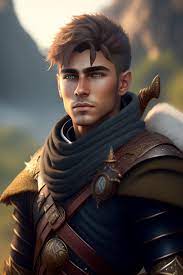
Elgar shrugged. “Out chasing rabbits?” He guessed as his eyes got suddenly captured by another sight. Two old men dressed in hunter green and one young man dressed in light armor, like a soldier or thegn might wear, walked lazily across the field toward the house. Elgar thought he recognized them, but he was not sure, never having seen the older ones with gray hair, and maybe never having seen the younger one at all. But he had a good guess. He thought to ask Eanwulf a different question. “How are Ceorle and Odda? Aren’t they living over by Carhampton, since the Danes tried us there, I mean. I thought Father put them there to watch the coast.”

“Fine,” Eanwulf said. Elgar looked at his brother while Eanwulf focused on the men in the distance, like he was also wondering who they were.

“So, why are they here?”

Eanwulf shook his head, like he did not know the men in the distance and turned for the moment to his younger brother. “How did you know they are here?”

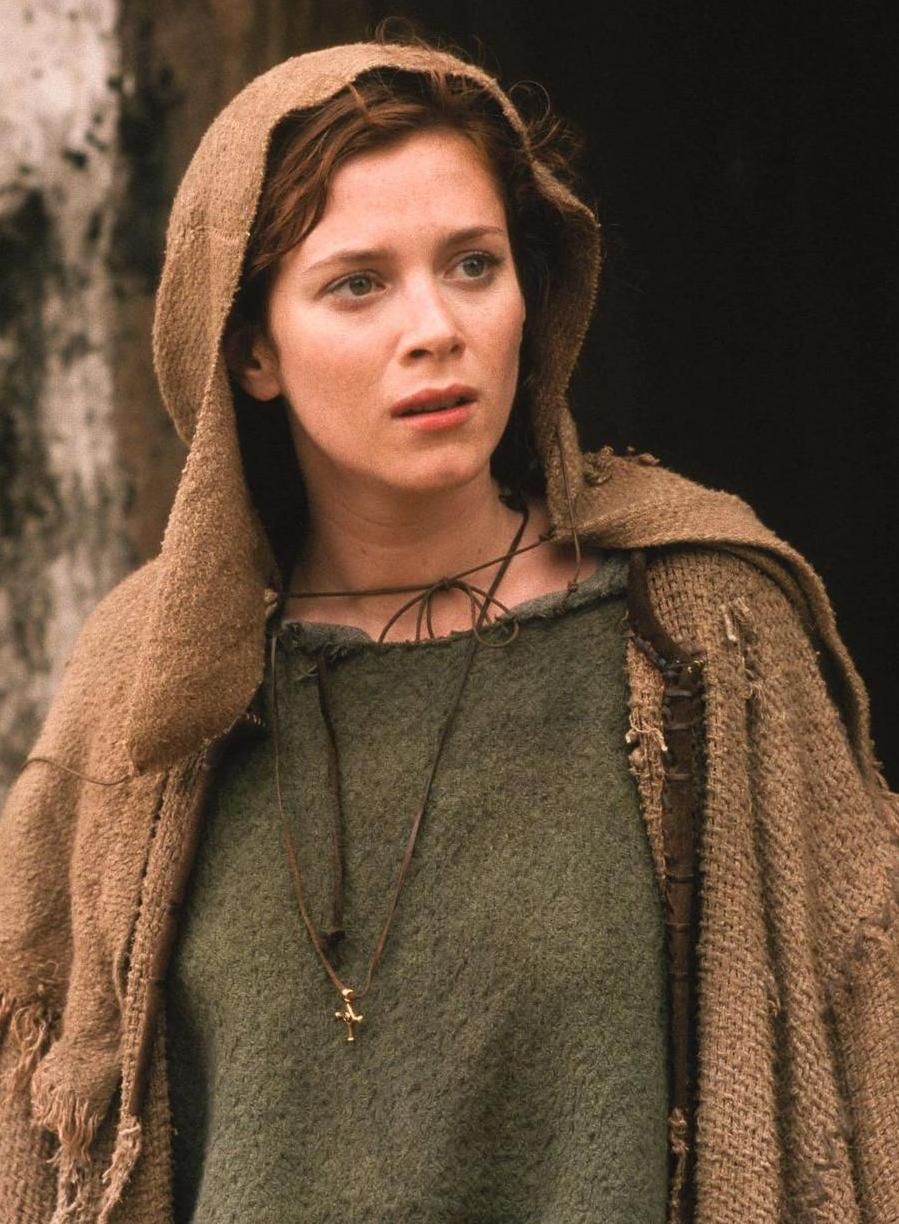
“I saw them in town,” Elgar admitted as he took a moment to wipe the dirt from his hands. “They started in on the tease the baby brother routine. I gave them the slip.” In truth, he ran into the stables to retrieve his horse, but they followed him in. He had no choice but to trade places through time with Margueritte. He was thinking about Festuscato when Festuscato ran into the stables to escape the Visigoth prison. He remembered Margueritte came into his place and dressed as a washerwoman, a Roman-Celtic servant in the house. When Elgar went away, Margueritte came, and she came dressed as that servant in her best washerwoman outfit, just as he remembered her.

She was too young and pretty for Ceorle and Odda not to notice her. They asked her a question, and she responded in her Welsh-rooted language from Brittany as they spoke it roughly a hundred and forty years ago. It was not that she could not understand the question or answer it in their own language, which was Elgar’s native tongue, but she figured her response in the Gaelic tongue completed the disguise.
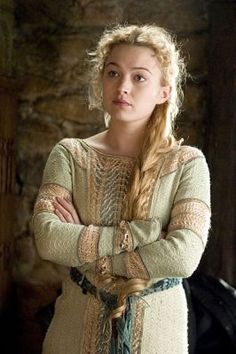
“Not that they would recognize me as a woman,” Elgar scoffed in her thoughts. “You don’t even look like me.”

The men smiled for Margueritte and she returned their smile, an automatic response, but then they left saying it was not worth rooting around in the hay to find the boy. The urge to tease Elgar had left them.

When they left, Margueritte sat down and asked, “Are you okay?”

She traded places back with Elgar and he answered, “I’m not sure.” This was the first time he ever traded places with a past life, or any life. This was also when he first really understood something about Avalon and Alice, and specifically how to call things from Avalon, like fairy weave washerwoman outfits, and that included calling the armor and weapons of the Kairos as needed. He looked up and saw a gnome working in the stables, making up for the poor work of the lazy stableboy. The gnome bowed.

“My Lord Kairos. It is most good to know you.”

Elgar grimaced and waved off the gnome with the words, “Don’t tell anyone,” but he knew it was too late. Every gnome would hear about it in almost no time, and soon every little one in Wessex would know. Sometimes he had to do things that were better done incognito. The little ones did not need to automatically know which human might be their god or goddess. It was better that way for as long as it lasted. They would mind themselves around the humans for fear that they might play a trick on exactly the wrong human.

“But we have never been able to keep that knowledge from the little ones for long.” Elgar heard from the Storyteller for the first time just that afternoon.

Elgar acknowledged he was probably right. He mounted his horse and rode home, thinking, what did he know about elves, dwarfs, and sprites of every shape and size. He would not think much of himself as a god, but then he figured a fallible, stumbling dolt who got killed once in a while was probably the only kind of god the little ones would accept, and put up with. He began to search through the lifetimes of the Kairos that he knew, not for information, but just to get to know them, to know himself. He stabled his horse when he got home, picked up a handful of pebbles and went to sit at the side of the barn where they could not see him from the house. He needed to think.

So now Eanwulf found him, and Eanwulf grinned while all these thoughts raced through Elgar’s mind. Ceorle was a couple of years older than Eanwulf, being around thirty-four. Odda was a couple of years younger, maybe not quite thirty. They were both part of Eanwulf’s gang, as Elgar thought of them. They were also married and had young children, like his brother. Eanwulf had two girls ages seven and three and a one-year-old boy. He had another boy between the seven and three-year-old, but that boy only lived two months.

“But what are Ceorle and Odda doing here?” Elgar could not contain his curiosity.

Eanwulf nodded like he did not mind answering that question. “They are concerned about the people moving into Devon. The pace has picked up since Carhampton got attacked. Devon is relatively good farmland. Somerset, especially around Exmoor, is full of fens, marshes, and floods. Even the dry land, the islands, and hills, while they may be fertile soil, they are full of rocks and hard to plow. So far, it has been mostly peaceful migrations into Devon. The West Welsh have made room all the way to the Taw River and down to Crediton, which I could show you on the map. But with the pace of families moving to Devon increasing, Ceorle and Odda are afraid hostilities may break out. They are going to need some guidance as to how to handle it. Personally, I think hostilities are inevitable.”
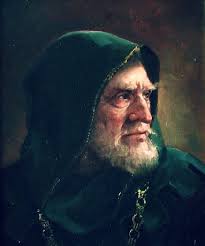
“And you would be right, young prince.” One old man spoke to Eanwulf. The two old men and the young soldier arrived without Eanwulf noticing. “There will be hostilities.”

The other old man spoke. “What your father is likely right now explaining to the two young lords from Carhampton is families have been moving into southeast Devon as well and filling the whole eastern portion right up to the River Exe and the city of Exeter. Most of them have not come from Somerset, but from Dorset, Hampshire, Wiltshire, and as far away as Berkshire. I believe some in Wiltshire and Berkshire have become tired of living on the Mercian border where the armies come and fight.”

The first old man spoke again. “That is what we have come to warn you about. The king in Cornwall has decided that now is the time to take back the ancient lands of Dumnonia. He is raising an army to push the Saxons out of Devon and all the way back to the Parrett River if he can.”

“King Ecgbert is old now and not likely to fight like a young man, and your father is not much younger,” the second one said.

“On his own, Mordaf of Cornwall would not have a great chance for success, but he has made an alliance with the Danes such as you faced at Carhampton. Lodbrok the Dane has thirty-five ships and fourteen hundred men. A thousand will land at the mouth of the Exe River below Exeter. The rest will sail to Pilton at the estuary of the Taw. Those men will nearly double the strength of the Celts.”

“Why would they divide their men?” Elgar asked, and Eanwulf looked at his little brother like Elgar asked a good question for once in his life.

The first old man continued. “The Danes and Dumnonians in the north will gather at Countisbury and attack the coast to the Parrett, beginning at Carhampton. They hope to sweep the coast clean before they push down into Somerset. King Mordaf of Cornwall and Lodbrok the Dane will meet in Exeter and follow the path of the old Roman road that was laid between Exeter and Caerleon. They also plan to stop at the Parrett ford where they hope to negotiate a treaty and set the Parrett as a boundary between Celtic and Saxon lands.”

“How do you know this is so?” Eanwulf asked the obvious question.

“Our people have fought for the British since the days of Gerraint in the time of Arthur, the Pendragon. But now that you Saxons have come to the faith and support the church, we have stayed out of the fighting. The Saxons and the Celts you call the West Welsh are now part of the same family, even if you don’t see yourselves that way. But the Danes are something different. They are heathen men who need to be driven back to their own place and made to know that they are not welcome here.”

“We know what the court of Dumnonia and Cornwall have planned. Trust us,” the second old man said, and Elgar thought he better introduce the men to his brother before they went any further.
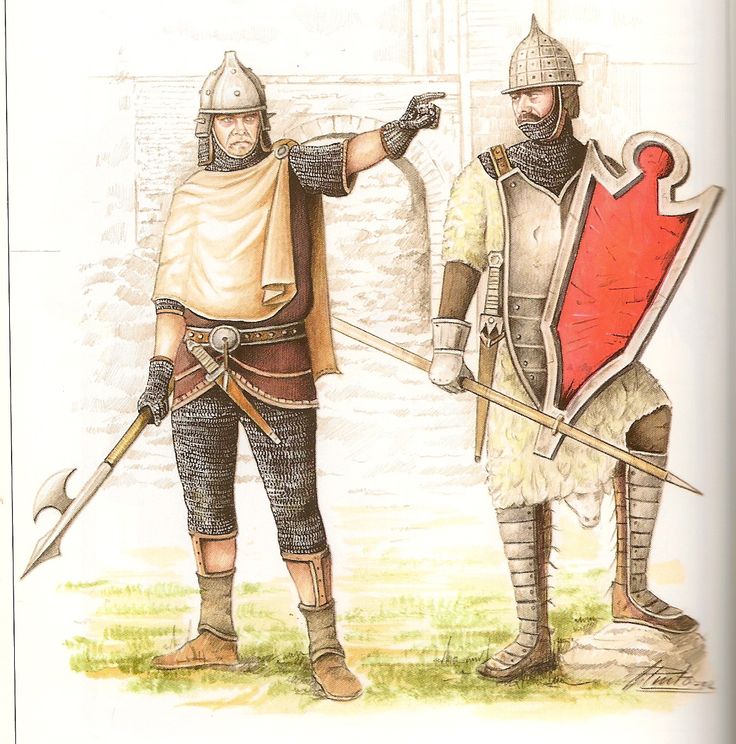
“Deerrunner,” he said of the first old man and pointed to the young soldier. “His son, Marsham. Their people live in the wilds and marshes of Somerset, Dorset, and Devon. We have met before.” He turned to the other old man. “And Pinewood and his people are found in the woods as far away as Dartmoor and Selwood. They keep mostly to themselves. Only great trouble brings them from their place.”

“You have met?” Eanwulf asked, and Elgar nodded as Eanwulf, still not entirely trusting these men, asked for clarification. “So, tell me this. Why are you telling us this? Why would Mordaf come out of his place at this time, besides the pact with the Danes?”

“It is as we told you. Mordaf has even used the words now or never.” Deerrunner turned to Elgar as he spoke. “Your father is old, is he not?”

Elgar nodded again and said, “He yells a lot.”

“King Ecgbert is in his last days, and the ealdorman of Dorset has taken to his bed.” Deerrunner turned to Eanwulf. “Mordaf does not dare wait until young Athelwulf, Osric, and yourself bring in young blood and revitalize Wessex.”

“Besides,” Pinewood added. “We do not want the heathen Danes in our land any more than you. We will help you fight the Danes.”

Eanwulf finally nodded like his brother. He rubbed his beard and decided. “You need to come up to the house and tell father all that you have told me.”

They did that very thing, and in the morning, riders went out from Somerton to Dorset, to Wiltshire, and to the king in Hampshire at Winchester.

Medieval 5: Elgar 2 Things Worth Knowing, part 1 of 2

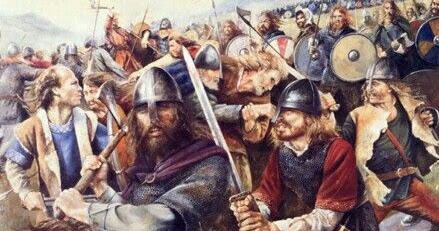
Two years later, Elgar and his friends turned eighteen and felt grown up, even if they were still kept back from the face to face fighting the men on foot engaged in. They were not kept back simply because of their ages, however. They were on horseback, and all the horsemen were kept back, including the King’s retinue which he had beefed up to a hundred men. The king learned all about the importance of cavalry during his time in exile at the court of Charlemagne. He did not think that would matter so much in his Anglo-Saxon kingdom given the fens and marshes, the number of thick forests, and the many hills and rock-strewn highlands. He got reminded at Carhampton how valuable horsemen could be, even given the obstacles. Thus, between his beefed-up retinue and his thegns (king’s men) including his ealdormen and their sons and guards, he had over three hundred men on horse that he kept back until he determined how best to deploy them.

The year was 838, and both the king and Father were getting rather old to be out fighting a war. Athelwulf, the king’s son came over from Kent, and Eanwulf led the men from the north, from Bath and around Wedmore. They were both in their early to mid-thirties and helped carry the load for the old men, but to be honest, they did not listen very well. They certainly did not listen to Elgar.

The Celtic king in Cornwall, who still held most of the authority in Devon, thought he had a chance to take back some land where the Saxon settlers had encroached on his territory. He thought if he made a pact with the Danes, together they could secure Devon and might even drive the West Saxons back to the Parrett River. It was a slim but real hope, provided that in the end the Danes did not turn on the Celts and bite the hand of Cornwall. It was a risk.

Of course, the West Saxons knew none of this before Elgar’s father sent out the call to arms, and that did not happen until after two strange events occurred on the same day. The first event was brief and brought Genevieve to mind.

Elgar sat quietly in his usual spot by the barn, only making sure first that he was not sitting in the mud. He learned that much. He had a pile of pebbles that he tossed one at a time into a small pool of water that had filled a depression a few yards away. He had much to think about, and he named them in his mind.

He thought about the Princess, the premier hunter and archer in her generation, and the Storyteller, who was always available to look things up concerning the history of Elgar’s time and place, what he could find of it. They go together for some reason, he thought, and threw one pebble into the pool.

Diogenes, the best warrior, cavalry commander, and chief of spies for Alexander the Great, seemed partnered in the same way with Doctor Mishka, the doctor who struggled through two world wars. He had not had any need to call on the good doctor thus far in his life, and hoped he never would, but that seemed unlikely given the culture he lived in and the advent of the Danes. He tossed another pebble to splash in the water.

He sighed, and heard Mishka speak through time and into his mind. “We go with our strengths,” she said, and Elgar nodded as he tossed another pebble.

For some reason, those four seemed to be available to every lifetime. He figured it was because the Storyteller was tasked with keeping track of his many lifetimes and the Princess was his partner in time. He did not know what else to call it. Partners in time. Likewise, Mishka and Diogenes were also partners and genetic reflections of the Princess and the Storyteller, so it was like they came with the package.

Beyond that, there were four others to complete the set. Alice of Avalon. She went with the Captain in the far future. Elgar thought, maybe Alice stood right beside him and infinitely far away at the same time. She lived in Avalon, in the Second Heavens, that dividing line between Earth and the Throne of God. Avalon was that mysterious island in the sea of eternity where the Kairos made a home for all the little spirits on the earth, a place where they could rest from their labors. He shook his head at the mystery of it all and considered Martok and Gallena. They were the last two. They were two alien lifetimes he did not like to think about. They lived so far in the future he could hardly imagine it.

Elgar pulled his thoughts back to his own time. He wondered who his partner in time might be. He decided it had to be Genevieve of Breisach, Margravine of Provence, his immediate past life. He smiled at a couple of memories before he found himself drawn back a bit earlier when there were several in the most recent past with only a couple of gaps in his memory between the boys and the girls. The boys that he lived back-to-back were Festuscato, the last senator of Rome, and he called himself. He was the one who put the sword in the stone. And Gerraint, son of Erbin, King of Cornwall, who was there when Arthur pulled the sword out of the stone. He threw another pebble into the water, but this one did not make much of a splash.

The girls were Greta, a healer in her own way, from the mysterious land of Dacia, a place where haunted forests were the rule, and Margueritte, a friend of Charles Martel. Genevieve came immediately after Margueritte, and she was a friend of Le Martel’s grandson, Charlemagne. Genevieve was more than just a friend of Charlemagne, but Elgar did not want to think about that. He much preferred to think of his friend Osfirth’s little sister, Alfpryd, even if she was just fourteen and hardly old enough to think of in that way. But she was nice. She was developing nicely, and in a couple of years she might be the kind of girl he might like to marry. He smiled again and then backtracked with another pebble in the water. Not that he planned on getting married any time soon. Maybe when she is sixteen, he thought, and his eighteen-year-old imagination ran away with him.

“Ha!” Genevieve’s laugh echoed in his head. “You have no business giving me a hard time. At least I was seventeen.”

“Do you mind?” He snapped at her. “I would appreciate some privacy when I’m thinking my sinful and utterly human thoughts.”

“I am sure,” she responded.

Elgar picked up the last few pebbles and planned to throw them all at once, but something in the sky caught his eye. He squinted, before the thing zoomed up close and stopped to hover close enough to read some symbols on the outside of the craft, and he thought, Please be Apes. He thought about the visitors in Genevieve’s day, and repeated, Please be Apes. The Apes were kind and friendly and cooperative and vegetarian.

He heard a voice in his head, probably Alice of Avalon. “They are not apes.”

“Then maybe some other species, some new and different people, one not given to conquest or wanting to eat the human race…”

“Flesh Eaters,” Alice named them.

“Damn!” Elgar cursed with several words and threw his handful of pebbles at the craft, though it was impossibly far away. He thought, at least the Danes don’t want to eat us. The Flesh Eater ship flew off rapidly to the east before Elgar heard his brother’s call.

************************

MONDAY

Eanwulf, Elgar’s brother catches up with him and they watch men coming from the distance. They bring bad news. Until Monday,

*

Medieval 5: Elgar 1 Baby of the Family, part 2 of 2

Edgar and his young son Eanric succeeded in overcoming the last Welsh stronghold in Somerset, the fortress of Watchet. King Beorhtric made Edgar ealdorman of an undefined Somerset because he was already doing the job of defining and defending the border with Hwicce to the north and Devon to the south. Beorhtric spent all of his time trying to hold on to his crown in the face of Mercian aggression. He honestly had little time to spend worrying about the western frontier.

When King Beorhtric died and Ecgbert returned from Gaul and the court of Charlemagne to take the crown of Wessex, his attention was all against Mercia and focused east on Kent where his father Ealhmund used to be king. He readily confirmed Beorhtric’s charters making the bishop of Sherborne responsible for the faith west of the Selwood, Oslac as ealdorman of Dorset, and Edgar as ealdorman of the still loosely defined Somerset shire. Edgar did not live long after that, but Ecgbert confirmed the son, Eanric, Elgar’s father, and made it, or at least suggested that the title might be hereditary as long as the family gave good service on what was considered the frontier.

When Elgar turned five, his older brother Eanwulf accompanied father who joined his men of the marshes to the army of the king. King Ecgbert crushed the Mercians at that time and Eanwulf got to know the slightly older son of the king, Athelwulf. They got along and became friends. The following year, Athelwulf led the army into Kent where he threw out the Mercian appointed king and took the crown. Athelwulf became the subking under his father Ecgbert and ruled in the east, in Kent, Sussex, and Surrey.

Most Saxons in Somerset were freemen and most owned a bit of property, which they farmed. That was fine in times of peace, but to be clear, Anglo-Saxon culture was a warrior culture. The men learned and knew how to fight, and they taught their sons to follow after them, and to be sure, the British people who were still free and still owned their land followed the Saxons in learning the art of war even as they followed the Saxons in battle. When the Danes came to Anglo-Saxon land in the 800s, they came to fight, raid, and eventually to invade and conquer. Some think the Anglo-Saxon kings and ealdormen fought at a disadvantage because their armies were full of conscripted farmers and tradesmen, but in truth, when the Saxons got to the battlefield and it was time to fight, they knew the business and fought like warriors. They could go just as berserk as any Viking on the field. It would be years, another century or two before the Anglo-Saxon warriors became full time Anglo-Saxon farmers.

With the power of Mercia broken, King Ecgbert and his son, Athelwulf got the kingdom of East Anglia, or at least Essex and the kingdom of Northumbria to acknowledge Ecgbert’s status as overlord of all the Anglo-Saxon kingdoms but apparently, that did not translate into the larger world because certainly the Danes saw England as a land divided among several squabbling kingdoms who did not have the unity to stand against being raided and eventually invaded. That was one of the things Elgar had to face when he came of age. In fact, it began when he turned sixteen.

“Father. Where are we going?” Sixteen-year-old Elgar rode behind his father, beside his two friends from Somerton. Osfirth, the Saxon was just fifteen. Gwyn, the Brit would turn seventeen first. They all wanted to know where they were headed because they rode to the northwest, toward the coast and Exmoor, the wilds of the shire, a direction Elgar and his friends never went. There were stories about strange things that happened in the wilds of Exmoor.

Eanwulf, who rode beside father, turned his head back to answer them. “Carhampton. It is a nice town. I’ve visited once when Father had me run the border and check on the defenses there. It is where my friend Odda lives. You remember Odda?”

Elgar nodded. Odda was one of the younger ones in Eanwulf’s gang. He must have married and moved to the border, or Father moved him to watch the border. Elgar had more questions. “But why are we and the king and this whole army going there? Have the Welsh broken the border?”

“Danes,” he said. “Danes have landed there and taken the town. We need to take it back and push them out of our land.”

That was all the boys were going to get out of their elders. They had to wait until they got there, but when they arrived, they were not permitted anywhere near the actual battle for the town. They were kept back with the king’s company where they could not see much, but what they could see allowed Elgar to give color commentary.

“You can see there are more Danes present than were expected. This is not just a raiding party like we have heard about. No one expected them to come out from behind the stockade and face the army. But I can see the sides are about even. The king brought his personal retinue and picked up a few from Wiltshire and Hampshire, maybe Sherborne while on the way to Somerton, but most of the army is from Somerset and maybe Dorset, and many did come out, but they did not expect to face so many Danes.”

“Not so,” Osfirth objected to Elgar’s assessment. “I think we have more than they have.” He had his hand up and pointed with his finger like he was counting.

“No, look beyond the two lines.”

“Where?” Gwyn asked and craned his neck.

“There, by the gate,” Elgar answered. “There are about a hundred, maybe two hundred men there not in the line.”

“Why are they not in  the line?” Osfirth asked. “Are they afraid to fight?”

Elgar looked at Osfirth like he went stupid. “They would not come all this way from Daneland unless they intended to fight. No. They are holding some men in reserve so when the lines begin to break and our line is all tired out, they will charge in, fresh troops anxious for the kill and it will probably be enough to completely break our line.”

All eyes turned to the battle as the lines met. The king’s men who listened in to what Elgar was saying paid close attention. One even said, “Now,” when the Danish line seemed to falter. The Danish commander waited a bit longer, until the Danish line straightened itself out again. He trusted his men. He had good men. Then he pressed in with the fresh troops, and as Elgar predicted, the West Saxon line fell apart.

The king and father Eanric were able to save plenty of their men. Unlike some such engagements, the Danes did not pursue their defeated foe. Elgar noted that they did not have the horses or horsemen to do that. Instead, they went back into the city while the king and Eanric set a camp two-days distance from the enemy and sent out riders to gather more men.

Elgar got called into the king’s camp to tell what he surmised about the battle. Some guardsmen overheard him and told the king. Father and Eanwulf were both there standing among the officials, looking stern, the same basic look on each of their faces. Elgar almost laughed to see it, but he kept his composure and stuck to what he saw and what he figured. He had not yet worked out the ideas of a coastal watch or strengthening of the ports and the walls around coastal cities and towns such as Genevieve did, or the idea of a rapid deployment force like the one Gerraint worked out with Percival and King Arthur. He stuck with what he perceived concerning the battle and felt glad his father and big brother did not say anything negative.

Elgar and his friends were sent home after that, but it did not matter.  The Danes must have assumed the West Saxons would be back and in much greater numbers, so they collected their loot and returned to sea. There were other fish to fry.

Medieval 5: Elgar 1 Baby of the Family, part 1 of 2

Elgar

After 820 A. D. Wessex, England

Kairos 103 Thegan Elgar of Somerset

At four years old, nearly five, Elgar sat by the barn contentedly making a mess in the mud when a monster of a dog came roaring around the corner of the barn, barking, growling, and showing all of her teeth. Elgar tried to make himself even smaller than he was, but he looked behind him. A rabbit perked up its head and scurried away as fast as it could hop.

“Gifu!” Elgar yelled at the dog several times before the dog decided the rabbit was not worth the chase. It trotted back and plopped down beside the boy and Elgar slung one arm around the beast. “I’m glad you are watching out for me,” he told the dog. “Mother is inside, and my sisters are learning stuff about cooking and sewing and all that stuff.”

Gifu licked his face before she let out a little bark and stood up. Elgar looked behind again and thought he might stand up as well. The big boys were coming up to the house. Elgar wiped the mud from his hands and stared at his brother. Eanwulf and his friends, Ceorle, Odda, and the rest were all around eighteen, and they looked like men in Elgar’s eyes but he was getting tired of everyone treating him like a baby. He picked up his wooden toy sword and pointed it at his brother.

“Defend yourself,” he said.

Eanwulf threw his hands up and made a pretend scared face. “Oh, I surrender,” he said, and his friends laughed. He got serious for a second. “Isn’t it time for supper? You better not track mud into the house.” He turned to say goodbye to his friends. they went into the barn and got their horses for the ride home.

“Where are you going?” Elgar took that moment to ask. “You and Father?”

Eanwulf looked at his little brother, the wooden sword in Elgar’s hand, and smiled. “Mercia,” he said. “The king is taking us into Mercia to fight old King Beornwulf of Mercia.”

“But you just got back from Devon,” Elgar complained.

“The West Welsh needed to be put in their place,” Eanwulf agreed.

“But Mother and the girls…” Elgar paused and looked at Gifu who sat patiently beside the boys and panted. Eanwulf waved to his friends as they rode off before he turned Elgar to walk up to the house.

“What about Mother?” he asked.

“They treat me like a baby when you and father are not here,” Elgar admitted.

Eanwulf’s smile grew, and he let out a small laugh. He looked down at his brother like his brother was a baby, and Elgar thought to change the subject.

“You better not get killed.”

“Not planning on getting killed. Why?”

“I don’t want to be ealdorman. Not ever,” Elgar answered.

Eanwulf laughed again, and made Elgar take his muddy boots off before going inside. Father met them at the door and spoke to his elder son. “Eat up. We leave in the morning.”

Elgar got trapped by his sisters. “You are a mess,” Thirteen-year-old Eadburg scolded him, like she was his mother. She took one of Elgar’s hands. “You need a bath right after supper.” That was something Elgar was not looking forward to.

“Did you roll in the mud?” eleven-year-old Eadswip clicked her tongue and took the other hand. They practically carried him to the table and sat him in the highchair he hated where he had to sit still and wait for the servants to bring the supper. He considered wiggling and being uncooperative, but that would just get him in trouble with Mother. Mother thought it was lovely the way his sisters took care of the baby. Mother called it lovely. Elgar thought of it as repugnant. Even if he was not old enough to know the word, repugnant, that was what it was.

Father named him Eangar, using the Ean from his own name, Eanric, and the gar from his grandfather, Garric, and his own father, Edgar. But his mother called him Elgar and so did his sisters, and in time, so did the rest of the family and friends so father got outvoted.

When Elgar was old enough to make some friends of his own in Somerton, where he lived, he got some respite from being mothered to death by his older sisters. He did not escape their attention, however, until his older sister, Eadburg, married a thegn from Eddington in Wiltshire when she turned nineteen, and his other sister, Eadswip married Osric, son of Oslac, the ealdorman of Dorset in the next year when she turned eighteen. Osric got the job when his uncle, Oslac’s brother Ealdorman Ethelhelm, being childless, was killed by Danes in Portland early in the 840s. Elgar was twelve when Eadswip married. He felt relieved, though he did actually miss his sisters once in a while.

Mother was getting old. Elgar had been a surprise and unexpected child in her middle age, which in those days was around thirty-five. By the time the girls married, she turned forty-seven. Most of the time, the house was quiet and peaceful, but only because Father was away most of the time. When he came home, nothing was ever right. He yelled a lot. Fortunately, he still treated Elgar like a child, so Elgar was not the recipient of most of the yelling. He did occasionally yell that the boy’s name was Eangar, but everyone imagined that was just because he wanted something to complain about and not something to take personally.

Eanwulf escaped the house when he married two years before Eadburg married. Wulfrun was the daughter of Wulfheard, ealdorman of Hampshire. Eanwulf was twenty-four. Wulfrun was seventeen, and they joked about having a child and naming it Wulfwulf. They moved to Wedmore where they built a fine house on a very large farm and were happy. Their farm, like all the property around Somerton, was worked by some Saxon, but mostly British tenants, serfs in all but name, even as it had been worked since Roman times.

In some ways, things changed drastically when great-great-grandfather, King Cynewulf overran the southern end of Somerset, but in some ways things stayed the same. The big farms, the many islands, and the noble properties came under new Saxon ownership, though a few British families who joined the Saxons in the fight against their West Welsh cousins were allowed to keep their land. Some places, like Glastonbury and Muchelney were given to the church and the new bishop in Sherborne, but in all of the Somer Country, the British peasants continued to live and work the land as they had for generations, so much stayed the same.

Garric, one of Cynewulf’s sons who would never be king, spent his life driving the West Welsh from the hillforts around Exmoor at the east end of the fens and marshes that made up Somerset. He strengthened the border with Devon and established Carhampton, a watch town on the coast fortified to protect against West Welsh raids coming over the hills. The next town down the coast, Countisbury, remained firmly in West Welsh hands at that time. This was in the days when Beorhtric was king, back in the days when sons did not follow their fathers to the throne. Living a life on the front lines and in battle was not the way to live a long life, but Garric had a son, Edgar who took up the cause when his father died, and his son, Elgar’s father Eanric followed after him.

Medieval 5: Genevieve 7 Happily Ever After, part 4 of 4

Genevieve’s Latin was reasonably better than most of the people, but not great. Leibulf and her children were much better at the language because they had a teacher. In fact, most of the children of the nobility were reasonably versed in Latin by then thanks to Alcuin and the palace school Charles made. Teachers came from there, and at least the nobles had their sons, and often their daughters educated. The common people, however, were already losing the tongue if they had not already lost it.

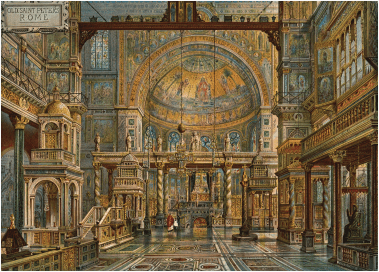
Genevieve looked around. Attendance was picking up, but she had other things to worry about other than the people not being able to honestly hear or understand the gospel. She prayed and thought. She did a lot of praying. Surely, the masters would not let something as momentous as the coronation of Charles happen. The Holy Roman Empire, for all its faults and failings and all its wars, brought a level of general peace and security to Central Europe and it allowed the church to grow strong. The Masters would not want that. But where is the enemy?

Genevieve looked up when she heard some commotion outside. She looked back. Charles had arrived. She looked to her right at the aisle he would march down to get to his front row seat, but she only saw church goers and penitents there, all except the remarkably beautiful young woman beside her. The woman sat still and looked down at her lap like she was contemplating something serious.

“Rose,” Genevieve spoke softly to the woman because it was one of her fairies and she knew the woman’s name.

“Lady.” Rose spoke very softly and never looked up.

“Are the fairies of the gardens of Saint Peter’s volunteering to help?”

“Yes, Lady. We know who you are looking for and we are looking everywhere.”

“No need to look everywhere,” Genevieve said. “Antonio is probably somewhere around the church today waiting for the chance to attack Charles, only I don’t know where. He is probably disguised and ready to strike, but everyone in this place seems ordinary enough, and we have a ring of guards all around the church. No one can get in or out without being seen. I don’t understand where he might be, only I can’t imagine he is not here.”

Rose pointed up and tapped her chin with her finger. “There is one inside your ring of guards, but he is not here, in the church, so maybe he doesn’t count.”

“What do you mean?” Genevieve asked. She was fighting back tears of desperation at that point, ready to grasp at anything.

“Just a workman,” Rose said. “He said there were a few loose shingles on the roof and he went up there to nail them down. He is on the roof.”

Genevieve sat still for a minute before she shouted. “Open Windows.” She stood, ran to the front of the church and outside, calling her armor at the same time so she would not trip over her dress. Rose could not move that fast until she reverted to fairy form. Then she raced out ahead.

Charles stood in the doorway and watched her rush outside. He stopped two soldiers from following her. “She is on a hunt. Pray for her success,” he said, and began the long, slow march to the other end of the Basilica.

“This way,” Rose shouted and led the way. They found a guard there near a rope that hung down from the gabled roof.

“Who is up there?” Genevieve yelled.

“Just a workman,” the guard said. “Hammering down a couple of shingles.”

“Do you hear hammering?” Genevieve yelled louder, grabbed the rope, and began to climb. It was too much for her at forty-five years old. She traded places with a young man named Elgar, someone she did not even know yet. He got all the way up to the gabled roof, and it was a long way down from there. Elgar looked down once at the stone walkway far below and swallowed. He traded places with Diogenes of Pella, Alexander the Great’s chief of spies, because Diogenes knew all about sneaking up on an enemy and not being seen.

“Of course, on a wide open roof there won’t be much sneaking,” he mumbled. He did his best.

Antonio, and Diogenes did not doubt who it was, kept his head covered with a hood, dyed his hair yellow, dirtied his face, and gave himself a scar that appeared to go through one eye and down his cheek. He dressed like a workman, and a poor one at that, but the crossbow he cupped in his hand as he looked through the open window looked like an expensive and excellent weapon.

The angle of the roof was not too bad. Diogenes got closer to his man than he expected. Antonio concentrated on the scene down below. Charles walked slowly and reverently up the aisle, a perfect target except he was flanked by too many priests and soldiers to get a clear shot. When Diogenes got noticed, Antonio quickly fired. He was aiming for Charles’ chest. The shaft caught a priest in the throat.

Antonio turned and swung the crossbow at Diogenes. Diogenes pulled his sword and caught the cross part of the bow. He pulled the weapon from Antonio’s hand and sent it through the window where it fell and clattered on the floor below. Diogenes had to let go of his sword to catch his balance. The whole roof was slippery and slick with patches of ice, and the sword slipped down and off the edge.

Antonio wiggled a little like he was not quite steady. Both men reached for the rope, but neither got it. They nearly bumped heads. Diogenes grabbed for the windowsill as Antonio threw his knife. It scraped Diogenes’ arm and made Diogenes back up from the window. Diogenes began to swing his arms wildly in an effort to regain his balance. He nearly swore but traded places with the Princess instead.

The Princess did not immediately feel like she was slipping, though she was. She felt stable enough to let her foot kiss Antonio’s face. A flock of fairies flew in the man’s face, following the foot, and Antonio threw his hands up to protect himself even as he slammed to his back and began to slide down the roof. He tried and failed to get a grip on the shingles. The rope was too far away. He rolled on his side a couple of times before he shot off the end of the roof. He went out of sight headed for the cobblestone walkway below.

At the same time, the Princess tried the wild arm swinging, but ended up falling on her rump, hard. She moaned and traded places again with Genevieve who twisted her ankle as she rolled to her belly. She managed to avoid rolling further but also began to slide down the roof. The rope was unreachable. She counted her life over but was glad at least that she finished her work. When she shot off the edge of the roof, however, the fairies caught her and brought her to a gentle landing.

Her two guards were climbing the rope, nearly at the roof edge, and Gottard was there about to follow them. But it was over.

Gottard said to her as he offered his hand to help her up, “He will give his angels watch over you lest you dash your foot against a stone.”

Genevieve curled her lip, waved off his hand, and rubbed her hurting ankle before she crawled to Antonio. He appeared to have broken his neck. He certainly broke his back. Charles and his soldiers raced up. Antonio still had a spark of life, and he tried to talk.

“The Masters don’t want…” Genevieve hit the man in the mouth so the message never got delivered, and the man died.

“Antonio,” Charles guessed, or maybe he saw through the disguise and recognized the man from his memory.

“Antonio,” Genevieve nodded and mothered her poor hand before she moaned because of her ankle.

Charles reached down and picked her up. She put her arms around his neck for stability, but he began to kiss her, passionately. He slowly let her slide to the ground to stand on one foot while he squeezed her tight. She kissed him right back. When they finally separated, she had something to say.

“History does not need to know what happened here. You need to not write about this or let anyone write about the dark one, Blondy, Baldy, or Signore Lupen. You especially need to leave me out of it. The Masters know they failed, but it is better that they do not know the details, especially about me. I am best not to be mentioned at all, ever.”

“You hear her Einhard?”

“I hear,” one of the young men said.

“Can I take you inside?” Charles asked kindly.

Genevieve almost said yes, but at the last decided otherwise. “I have been here praying and worshiping since eight this morning. I need to go home, all the way home. My maids are packing for the trip back to Provence as soon as we can get a ship to take us.” She poked Charles in the chest. “You, mister, need to go hear what the Pope has to say. And it is like I told you back when you invaded Italy. When you beat the Lombards into submission, you take the crown. Don’t leave it lying around for someone else to take. Now, that is all I am going to say. Boys.”

Her two guards came right up and each put an arm around her waist. She threw her arms over their shoulders. “We are going back to Provence where I will limp around like Otto for the next twenty years and then die peacefully in my sleep and that will be the end of it.

And she did. Of course, that was not the end of it. Among other things, in her last days she had a terrible nightmare about Flesh Eaters invading her happy home. She had to learn to use that sword and use it against Flesh Eaters and Saracens alike. No, not Saracens. Vikings. And she would be a he. His hands would use that sword. She knew she was never the same sex three times in a row. She had been Margueritte, and now Genevieve. Next time she would have to be a man, strange as that might seem. That was as far as her thoughts went. When she died, she found herself floating around in a mother’s womb, slowly growing into a new person of the Kairos.

************************

MONDAY

For the second story in this medieval tome we go to Wessex, Ano Domini 820 and the Story of Elgar, king’s man from Somerset. Until Monday, Happy Reading

*

Medieval 5: Genevieve 7 Happily Ever After, part 3 of 4

The inn sat on one of the back roads out of the city. It also sat right near one set of docks on the river where the riverboats and a couple of old fishing boats could come and go. Clearly, the men gave themselves every advantage if they needed a quick escape. Gottard got the men to surround the building so there would be no escape, then they went in the front door. It turned out Antonio had stepped out on an errand, but Berlio was there, drinking with his buddies.

Genevieve shouted. “Put your hands up. You are under arrest.”

Three of the men complied, but the rest ran for other doors and into the back room. They all got taken except Baldy. He tipped the table, spilling all the beer in the direction of the guards whose natural inclination was to back up and not get soaked. He sent a knife straight at Genevieve. Genevieve fearing for Edelweiss found the primal energy of being the goddess of the little ones rumble in her insides. The knife vanished and appeared behind her where it stuck fast in the wall.

Berlio found two arrows in his middle. He looked surprised before he fell down, dead.

It all happened so fast, the guards did not all get in the doorway. Margo and Nelly quickly put their bows away. Gottard watched, being concerned about the women in the room, but it looked to Gottard like the bows just vanished. “I believe you,” he mumbled.

“Damn,” Genevieve added her own mumble before she turned to Gottard, who seemed to be in charge even if he wasn’t the officer on duty. “Let three men be disguised as ordinary customers and stay here just in case Antonio returns. I don’t expect he will, but if he does, they can grab him before he escapes. And they better not get drunk.”

Gottard agreed and selected the men before he went outside to see to their prisoners. The officer went with him. Genevieve mumbled once more, “Back to the drawing board,” but this time it was not so easy. She figured Antonio would lock himself away somewhere to make his own plans. Sure enough, even the sky sprites could find no sign of him.

Genevieve hugged and cried with Margo, Nelly, and Edelweiss before she sent them home to their families. She said she would call them if she had further need, but for the present there was no reason they had to stick around in Rome.

Genevieve reported back to Charles what happened. When she mentioned Baldy, his eyes got big and he asked, “Who does that leave?”

“Antonio, the son, but no one has seen him and I fear what he may have in mind to do.”

“I guess this proves Pope Leo is innocent of the charges brought against him,” he said.

“No,” Genevieve countered. “But it does say the attack on him was not spontaneous and due to whatever he may have done. I suppose he could swear an oath of innocence.”

“That might do it,” Charles said, thoughtfully.

“But my concern is for you,” Genevieve continued. “I was thinking the attack on the Pope may have been to get you to Rome. I mean, if they ruined or killed the Pope, that would be fine, but mainly they wanted you in their familiar ground and maybe less guarded than normal.”

Charles nodded. “I’ll take the warning seriously. I am sure, as my guardian angel, you will find the son. Meanwhile, you will have to excuse me.”

Genevieve grinned. “Can’t wait to get to your big-breasted… friend? What’s her name, Regina?”

Charles looked at her in all seriousness. “All I need to do is look at you or hear your voice and I get excited.”

“We were young and that was a different world,” she said. He nodded and left the room. She left in the opposite direction.

The weeks sped by. Genevieve wrote a happy birthday letter to her son, Guerin, though she knew it would not get there until spring. On December twenty-third, the Pope swore his oath of innocence and the men responsible, mostly Antonio and Berlio’s henchmen, were exiled. Then, Genevieve fretted through all of Christmas Eve.

She had an audience with Pope Leo, and he hardly talked about any theology at all. It was entirely politics including his distaste for the woman Empress Irene of Athens of the Eastern Roman Empire. He said a woman had no business ruling over the nations, and then he apologized to Genevieve, her being a woman. He showed her the gold and bejeweled crown with which he planned to crown Charles on Christmas day. He said Charles and the Franks had retaken the west and proved themselves to be more than capable as the defenders of Rome. The eastern empire could hardly defend themselves. She said Charles is not going to like that.

“We don’t always get what we want,” he responded. “Sometimes we just have to do our best with the responsibilities that are thrust upon us. I learned that in just these last couple of years.”

She understood, but then she fretted for the rest of the day. She went to bed early. The day had been cold and wet with rain. The night would bring some frost and ice in places. It was cold enough so the ice might melt slowly. Not exactly a white Christmas, Genevieve thought. More of a slippery Christmas.

She woke up early on Christmas day and sat straight up in bed. “Crown. Christmas.” she shouted, and her maids all stirred and got up with her. She felt convinced Antonio would make his move on Christmas when Charles got crowned. She was not sure if it would happen before, during, or after the coronation, but she felt certain it would happen.

Genevieve got her maids to start packing for home and hurried to find Gottard. Two guards from Captain Hector’s troop followed her, but that was a given whenever she went out. She discovered Gottard and his men had been assigned to provide outside security around Saint Peter’s Basilica. Cold duty, but apparently Charles took her warning seriously. When she arrived at the church, Gottard met her at the door.

“The Pope and his entourage have arrived, but not many worshipers yet,” Gottard told her. It was about eight in the morning and time for the second Mass of the day.

“Have your men all seen the picture of the man we are looking for?” she asked, and Gottard nodded. “Good. We have five doors. We need a man at each, and one man at each window and door around the building, even if the doors are locked against intruders. You need to send one—two men with excellent memories for faces to check the Pope’s people from cardinal down to servants.” She took a breath and Gottard took advantage of the brief respite.

“Ruppert,” he called one man and the man looked up. “Go and fetch the rest of the troop. We have ground to cover.”

“Trouble?”

“Not yet, and I hope there won’t be any, but we have to be prepared.” He raised his voice again. “Girard, fetch Clemenc. I have a special assignment for you two.”

Genevieve thought that whole time, wondering how Antonio might gain access without passing by any guards. When Clemenc and Girard arrived, they both acknowledged Genevieve. “Margravine.” They bowed, being a couple of the men from Breisach.

That brought Genevieve out of her introspection and she started again. “You both remember the face of Antonio, the man we are looking for?” She hardly gave them a chance to nod. “Well, I was thinking he may have used makeup or something to disguise himself. That may be why we have not found him. He may have made himself look older, you know, with wrinkles and such. Maybe a bigger nose. He might be dressed like anything from a cardinal to a slave. You have to really look hard. And Gottard, he may have disguised himself and dressed in a wig to make himself look like an old woman. Everyone is suspect. Go on.” She waved them off and entered the church, her two guards on her heels.

 Gottard explained things to his guards and then took the newly arrived men on a march around the Basilica to place one or more at the doors and windows and he spaced them out to see each other so no one could sneak by them.

Genevieve checked everyone who had arrived early for Christmas Mass. The Pope would be speaking at noon, but Mass was said, sometimes with a short homily, about every hour since sunup. Charles might come at eleven, or anyway, in time to celebrate the Noon Mass and hear the Pope speak.

She sat down to pray.

Medieval 5: Genevieve 7 Happily Ever After, part 2 of 4

“Lady,” Margo got her attention. “Edelweiss might help. She was always very good at picking out the people with evil intent a mile away.”

“The old gang back together,” Genevieve said as she, Margo, and Nelly all smiled at each other. “Edelweiss,” she called, and the fairy appeared hovering in midair and confused until she saw Margo and Nelly, and then saw Genevieve and she let out a small gasp, not that anyone heard her over the men. The officer let out another shriek over top. Gottard gasped with some volume, though he may have guessed from his youth after Genevieve told him Margo and Nelly were elves. One of the two guards screamed, loudest of all, and ran out of the room. Genevieve’s two guards that came with her and waited out front came crashing in.

“Lot of good you guys are,” Genevieve scolded her guards as she tapped her shoulder where Edelweiss came to hide in her hair.

Her two guards looked briefly at each other before one spoke. “We figured if you were hitting the officer on duty, we would rather not interfere.”

Genevieve did not pursue that line of thinking. Instead, she explained their predicament to Edelweiss, The fairy hardly had to think about it before she said, “Maybe my father or mother have seen them recently.”

Genevieve sighed and called Lord Evergreen. He did not know what they might look like, but he did know a fairy named Cherry who knew a fairy named Acacia who lived near the Lupen farm and might know what they look like. Lord Evergreen explained. “We tracked them when they came and went from your home and that way we found out where they live.”

Genevieve understood but she thought the small room was getting full. Fortunately, fairies did not take up much room. She called Cherry and Acacia, both, so they would not totally freak out. After explaining the situation, Acacia said he knew exactly what they looked like. “Can you picture them?” Genevieve asked and Acacia nodded. “Wait,” she said and went to the one window in the little room. “Sky babies come down. I need you.” she called to the clouds. It took a minute or two, but two sprites of the air, Teether and Soove, came floating up to the window.

“We are here,” said Teether.

“Ready to help,” said Soove.

Genevieve nodded and told Acacia to picture Antonio in his mind. He did, and she duplicated his thought in the minds of her cloud babies before she projected the picture on to a piece of blank velum on the officer’s desk. It came out looking like a poor photograph but clear enough. She found another piece of velum and said, “Now, Berlio.” She repeated her steps and turned to her sprites. “Spread these pictures to all the sprites of the air over Rome, please. We need these men found, and when they are found, come and tell me.”

“We will,” said Soove.

“Most certainly,” said Teether.

“Thank you Lord Acacia, Lord Cherry, Lord Evergreen. Hopefully, this will be the end of it.”

“Let us know if you need any further assistance,” Lord Evergreen said.

“Glad to help,” Lord Cherry added as Genevieve clapped her hands once and the three fairies vanished.

Edelweiss spoke up at last. “Lady, your golden hair has turned all gray.”

“And my perfect skin is getting all old and wrinkly.” Genevieve responded, and every man in the room said that was not so. She imagined that was kind of them.

The officer in the room finally found his voice again when he examined the pictures imposed on the velum in front of him. “I don’t know how you did that, but with these, my men could find the men within the week.”

“Yes,” Genevieve agreed. “But we don’t want them alerted. We want to surprise them and catch them unprepared. If they get the idea we are looking for them, they might leave the city altogether, do their planning elsewhere, and wait until they are ready to come back and start killing people.”

“People?” Gottard asked. “Who besides the Pope?”

“Charles,” Genevieve told him plainly. “Charles has always been the main target. The attack on the Pope might have been a ruse to get Charles to come here. We already stopped the dark one, Blondy, and Signore Lupen from assassination attempts. Baldy and Antonio the son are the only two left.”

Gottard nodded. “I know who you mean.”

Genevieve told them they had to wait, though the room was getting rather stuffy. While they waited, she turned to the guards, pausing to note the one who showed enough courage to stay in the room before staring down her own guards. “You boys did not appear to be surprised by anything so far. Why is that?”

The two looked at each other before the same one spoke that spoke before. “Captain Hector told us all about it and then threatened us to keep our mouths shut. He said he wanted to prepare us just in case something like this came up. I must say, though, seeing it in person is different than hearing about it.”

“Did a hundred dwarfs, ogres, and trolls tear over two hundred pirates to pieces?” The other guard asked suddenly. He sounded like an excited teenager.

“Only three ogres and a mountain troll,” Genevieve said. “And they did not get them all. Of course, the pirates that escaped begged to be taken prisoner, so you can imagine.” Suddenly, a ding went off in Genevieve’s head. She smiled, put up a finger to indicate they should wait, and turned back to the window. Teether and Soove returned, not that anyone else but Genevieve would know it was the same two as before.

“They are in an inn,” said Teether.

“An inn by the river,” said Soove.

“The sign has a fish,” said Teether.

“Maybe a dolphin,” said Soove.

“They got six men with them,” said Teether.

“Six bad men,” said Soove.

“Thank you,” Genevieve interrupted lest they go on for a while. She turned her head to the officer but Gottard spoke first.

“I know the place.”

Genevieve returned to look out the window. “Thank you Teether. Thank you Soove. It was very good of you. You have been a big help. Now you can go back to your very important business, and I will remember you. Good-bye.”

“Good-bye, so long, see you later…” They kept up the litany until they got out of ear shot.

“So we go,” Genevieve said. “Bring the men from Breisach. I want the place surrounded before we move in so none of them escape.”

“Should we fetch Captain Hector and the men?” one of her guards asked.

“No,” Genevieve said. “We have no authority in this city. We need to let the garrison here make the arrests. Your job is to assist Margo and Nelly in guarding my person.”

“What is my job?” Edelweiss asked nice and loud.

“Your job is to stay on my shoulder, not pull on my hair, and be cute.”

“I can do that.”

Medieval 5: Genevieve 7 Happily Ever After, part 1 of 4

Genevieve interviewed a hundred people that were present at the time the Pope got attacked. Most claimed to be in the crowd that lined the street and were reluctant to admit anything more, but they did not mind when she gave them a chance to cast the blame on others. No doubt they claimed their unruly neighbors were right there in the thick of the rioters, whether that was true or not.

She got the ringleaders of the mob to interrogate, and only added a few names when the Council released the names of who they planned to interview. From her notes, she found the name Antonio came up three times, and the name Berlio came up seven times. Somehow, she suspected, and that was probably in the back of her mind and probably the reason she came. Signore Lupen’s son Antonio and Berlio, alias Baldy were in the middle of it.

It took two weeks at that point to figure out where they were staying. She had three maids with her, women that later in the Middle Ages would be called ladies in waiting, but they were all young humans so of little value in detective work. Likewise, Old Captain Hector, now in his mid to late fifties and who probably should have retired, was not a great help. His ten soldiers made good guards but they did not have the run of a city that they knew nothing about.

Genevieve checked. A small group of fairies lived around Saint Peter’s and visited Rome’s churches and open spaces where the flowers grew. There were gnomes of a sort that could be found scattered around, even as they might be found around any human city, town, village, or habitation, but they mostly worked invisible and only occasionally had fun getting the dogs in the evening into a barking and howling contest. The elves, light and dark, and the dwarfs in between all abandoned the city ages ago. The sprites still swam in the water of the Tiber, and the sky sprites still floated overhead, but between them, only the sprites in the sky might be able to see a couple of men on the ground if they knew what to look for.

Eventually, Genevieve figure she had no other choice. She visited Charles’ garrison of Swabians and wondered how she could explain it to them. She got surprised when she stepped into the office of the officer on duty. An old sergeant immediately recognized her and came to offer his most sincere bow.

“Genevieve, Countess, how may we serve you?”

Genevieve looked at the officer behind the desk but spoke to the sergeant. “Do I know you?”

“Not likely,” the man said. “I am Gottard from Breisach, and I was the miller’s son. I remember growing up and watching you grow up. I knew your stepmother and both stepsisters, Gisela and Ursula, and I remember how sorry I was and how angry I got sometimes at the way they treated you, if I may say so.”

Genevieve’s face brightened. “A friend from home,” she exclaimed, and hugged the man.

“There are seven of us from Breisach, but the others are too young to remember,” he said.

“And what news from home, because I have heard nothing in years?”

“Ah,” he drew out the sound like he had to think. “I came here some five years ago but let me see. Your stepmother passed away a few years before I came. I am sorry if you did not know. They said her heart stopped. But both of your stepsisters married. Ursula married a freeman, the son of a knight down in your stepmother’s old home ground around Hapsburg. When I met him that one time, he did not seem to me to be the brightest light, but I heard they have three children, so I assume they are not unhappy. Your younger stepsister, Gisela, married a good man and has taken the house and the title for herself, since your stepmother passed away. They have two sons, and the farm now has some animals and is much improved. Gisela is tolerable as a countess, much better than your cruel stepmother, if you will forgive me saying so.”

“Forgiven,” Genevieve said, but by then the officer in charge had enough.

“Who are you? What are you doing here?” He stood and looked mean and put his hands hard on the desk. “This is a military barracks where women don’t belong. Gottard, this is not a social club.”

“Me?” Genevieve looked coy. “I am the Margravine of Provence, and I have just come from speaking with Charles. I am going to need you and your men to arrest some men when I find where they are.”

The officer sat down and swallowed. “What men? Where?” he asked in a completely different tone.

“They are the men who planned the attack on the Pope, and I am sure you will want to get them locked away.” Genevieve turned to the Sergeant. “Do you remember Signore Lupen’s son, Antonio, and his worker Berlio, the bald one?”

“Yes,” Gottard said. He hardly had to think about it. “But it has been years since I saw them. I am sure they have aged since then, even as I have. They might be hard to recognize.”

“We have all aged,” Genevieve said. “And hard to recognize was just as I was thinking, but you recognized me quick enough.”

“That was easy,” he said. “You are as beautiful as ever. And may I ask how are your maids, Nelly and Margo?”

Genevieve smiled at the sudden memory of Gottard as a young man trying to get Nelly’s attention. She remembered having to tell the young man that they were elves and not available to court, whether he believed her or not. She said they could only be appreciated from afar. “They have not aged one bit, as far as that goes,” she said. “Elves, you know.” She called out in her way, and Margo and Nelly appeared in the midst of them. The officer kindly only screamed a little.

“I believe you,” Gottard said as he got a good look at the two elves in the room with him.

“Sorry to disturb you,” Genevieve said, as two guards came rushing into the room wondering what was the matter. Margo and Nelly put on their old glamours of humanity once they got their bearings and realized where they were, and Nelly smiled for Gottard, whom she recognized. “I have to find a couple of men, Baldy and Antonio. The thing is, I assume they have aged so I am not sure what they look like now,” she told them.

Margo responded. “It would help to know where we are.”

“Rome,” Genevieve answered. “We are in Rome.”

“Going to be hard to pick out two people among so many even if we know what they look like,” Nelly said and smiled again for Gottard.

Genevieve stepped between them. “Don’t get any ideas.” She turned on Nelly. “Don’t go there. That will make me very cross, and that is not why you are here.”

“Yes lady,” Nelly dropped her eyes and Genevieve turned on Gottard.

“I was just thinking they have not aged one bit,” he said.

“Be sure that is all you are thinking,” Genevieve responded.

************************

MONDAY

Genevieve searches for that elusive happily ever after, but first she has to find the masterminds of the assassins. Until then Happy Reading.

*

Medieval 5: Genevieve 6 Internal Twists, part 3 of 3

In 797, Charles and the Franks got handed Barcelona, the greatest city on the Hispanic coast. The Wali of the city and the Emir of Cordova had a falling out. In that same year, Angele turned seventeen and married William’s son, Gaucelm. William, Leibulf, and Louis arranged it all, and Genevieve had no say in the matter. William and Genevieve practically had a falling out.

Louis, wisely stayed away, having heard about Genevieve from his father and not wanting to suffer the woman’s wrath. William came with his wife, Witburgis. He spent no time with Genevieve except in gatherings where he passed pleasantries. She did take Witburgis for while one afternoon so William could spend some time with Guerin, Mother Oda being there to supervise. But most of the time she wanted to yell at William.

Gaucelm clearly preferred the company of his Gothic lieutenant, Sanila. She could not tell if the boy was gay, or what. She instructed Angele that if the boy refused to give her children, she should come home and she would have the marriage annulled. No doubt William instructed his son to do right by the girl, but it remained to be seen what would happen. William elevated his son to be Count of Roussillon as a wedding present, so that was something, anyway.

Guerin, at the end of 797, turned five and was a handful. Genevieve and her son nearly had a falling out as well when Angele married. Oda stepped in at that point and mothered the boy, even as she had done almost since she arrived, and Genevieve let her. In fact, at some point the boy stopped calling her Aunt Oda and started calling her Mother Oda. Oda and Leibulf practically served as Guerin’s parents through 798 and thereafter. That proved fortunate, because the following year, 799, was a momentous year in a bad way.

In the west, The Emir of Cordova reconquered Barcelona for the Umayyads. Louis, called the Pious, had been made king of Aquitaine by his father Charles some years earlier. But being only twenty-one, he turned to William and Leibulf for help and advice, and they raised the armies. William got the men from Septimania who were adjusting to his oversight, and this time, the Basques fought with them instead of against them. In 800, they marched over the Pyrenees and laid siege to the city. They would winter there. The city did not surrender until 801, over a year later.

In the east, on April 25, 799 Pope Leo III was attacked by a mob who tried to poke out his eyes and tear out his tongue. The Swabian garrison left in Rome by Charlemagne succeeded in their duty and quickly rescued the Pope. They dispersed the mob and arrested the ones who appeared to be leading the attack. The excuse first given was that Leo was not from the right social class to hold the office. Later, they made up stories about adultery and perjury, but it very much became a kind of he-said-she-said situation without any real evidence on either side.

Charles received the Pope at his camp in Saxony. He called for the ringleaders of the mob to testify, but nothing was clear, so Charles wisely called for a council of the church to decide the matter. They would meet in a year, in November of 800.

Genevieve also felt called to go because something felt terribly wrong in the events as described to her. She knew from history how once the lynch mob got sufficiently stirred up and began to act, the real instigators would back away and watch, and act like innocent lambs if they should be questioned. They could easily lie and say they were shocked and dismayed at seeing what transpired. The leaders of the actual mob were simply the most fanatic men that bought completely into the scheme, but they were not necessarily the masterminds. She also knew that since the attack failed, the ones who started it all would still be there, able to stand back, evaluate their failure, and come up with a better plan for the next time. She would have to investigate the matter herself to make sure there was no next time.

Genevieve escorted the Bishops from Lyon, Vienna, Embrun, Arles, and Aix. They sailed from Marseille in September, and Genevieve would see Charles again. Before she left, she hugged Leibulf and Oda, and smothered seven-year-old Guerin with kisses, whether he liked it or not. She visited Olivia briefly in June and encouraged her to begin a correspondence with her sister Angele.

“I’m not sure Angele will write back. I was terrible to her when she was young. I wanted to kill the girl, though the Masters did not care about her.”

Genevieve looked serious. “Believe it or not, that is a common, human reaction to suddenly having a younger sibling getting all the attention you used to get. Of course, in your condition at the time, you probably thought about the killing more seriously than most, but you did not do it. I understand your feeling of being replaced by another girl, and one that was Otto’s actual child where you were not. Of course, being daughter of the king has to be worth something.”

“Mother. Hush. No one knows that except the Mother Superior, and she is sworn to secrecy. I have made friends, and that was hard enough as the daughter of the margrave. I will lose them all if they find out the truth.”

Genevieve found a few tears and hugged her daughter. “I am so glad you have friends.”

Genevieve wrote to Angele in August outlining her reason for the trip and her thinking. She waited to send the letter because she did not want to get a letter in return saying she was crazy to put herself in such danger. If the culprits imagined she was on to them, her own life might be forfeit. She knew that and promised herself she would be careful.

The journey was uneventful. She got regaled with theology day and night, but the bishops mostly spoke of the trip and the weather with her, until they nearly drove her crazy with small talk. She decided she would rather talk theology, and that improved the voyage, and at the same time it allowed her to speak in favor of Leo and against the completely unacceptable and unchristian actions of the others.

When they arrive in Rome, Genevieve had four whole weeks to get her notes in order and ferret out the truth. It took more like eight weeks, and the council was four weeks into their deliberations by the time she found the truth of it. She found Charles just before the council began. His fourth wife had died, and he was on his fourth mistress, or concubine, a big-breasted young girl named Regina. He acted at first a little perturbed at her presence, but he agreed to see her in private when she insisted.

“Charles,” she immediately scolded him. “You are fifty-five or six. I am forty-five with my beautiful blonde locks turning gray. I am not here for that. I came to find out what you and a whole basket full of bishops would not find out in a million years. I am tracking down the real culprits—the masterminds behind the plot against Leo. I am close. When I have the truth nailed down, I will let you know and you can come arrest them or do what you want with them.”

“Why did we have to discuss this in private?” he asked.

“Because people in the court have big ears, and people with big ears usually have big mouths, too. If word gets out that I am tracking down the bad guys, they might come after me.”

“Makes sense,” he said, and she turned to leave but he stopped her with his words. “How is Olivia?” Genevieve turned again to look at him. He looked uncharacteristically contrite. “You know, you are not included in any record of my antics. I made sure of that to give credence to Olivia being Otto’s daughter. Only we know better.”

Genevieve said, “She is good. She is happy. She has made friends.” she began to cry softly, scooted forward and hugged Charles before she wiped her eyes, turned, and walked out without another word.

Medieval 5: Genevieve 6 Internal Twists, part 2 of 3

Barely one year later, the Count of Toulouse was fighting in Vasconia and got captured by Adalric, the Basque duke. Arrangements were made to set the count free, but the count made certain concessions to the Basques for his liberty. Charles was not having that. He replaced the count with his own cousin, William, and made him a margrave with say over the counts in Septimania and all the coast to the Spanish March. By 790, William, the new Count of Toulouse, was raising an army to invade Vasconia.

Leibulf raised the army of Provence for his first time at twenty-five years of age. He would support William in Vasconia. Otto, who was completely bed ridden by then, wished him well. Genevieve and Angele could only watch as he rode off with his army to join William. Among others who joined them were the counts of Bordeaux, Clermont, and Septimania. They did not exactly have an overwhelming force, but they won their battle. Adalric was exiled from the land and Vasconia was subdued. Charles was much happier with that outcome.

Leibulf came home in 791 with a surprise. He married a girl named Oda. He was twenty-six. She was eighteen, roughly Olivia’s age, or a little older, and from Nimes which was practically next door to Arles. Apparently, they had been seeing each other on and off since she turned sixteen. Genevieve thought he made those regular trips to Arles to check on his property there and was surprised. Leibulf confessed he did not tell her sooner for fear of how she might tease him.

“I never would,” Genevieve told him, but she might have. She did not hold it against him.

Leibulf brought Oda to Aix so she could meet his father. He had a bad feeling that his father was not long for this world. He was right, but first Genevieve got a letter from William.

William praised Leibulf on the battlefield, though it was brief praise, and he concluded that Genevieve must have taught him well. He said he wanted to check up on her one last time before his duties in Toulouse took all of his time and attention. He wanted to visit with Leibulf and pay his respects to Otto, but his wife took sick with the pneumonia and passed away a month ago. Charles and the family already had a new wife picked out for him, and there is no avoiding it, he said, but he insisted that first he needed time to grieve. He escaped to Orange with the excuse of closing up his old home. He planned to stay in Orange until the spring bloomed. He knew it was asking too much, that she travel in the winter, but he would really like to see her again if at all possible.

Genevieve carried the letter around for two weeks, and Otto passed away. The house mourned, and all of Provence sent their condolences. It took two more weeks before he was buried. The Archbishop of Arles did the funeral and the Bishop of Aix assisted. The days dragged on, but basically, nothing much changed. Genevieve ruled in Provence, but Leibulf was beginning to take more and more responsibility. He sat down and wrote a large bequest to Lerins Abbey in his father’s name. He thought of his sister, Olivia, and wrote a note at the bottom, And for the convent in Cannes. The support of Lerins became a regular thing for Leibulf over the years, and his wife Oda went right along with him. She dearly loved Leibulf and he loved her right back.

Genevieve was happy about that, but she wrote to William and then packed her bag. She said she just wanted to get away for a bit, and Leibulf did not blame her. Captain Hector, now with some gray hair, took the duty upon himself to escort the Margravine with thirty soldiers to Orange where they arrived on the sixth of March. William greeted Genevieve warmly, and they spent two weeks together. They hugged and cried, and after two weeks, true to his word, on the spring equinox William reluctantly returned to Toulouse to marry.

Genevieve explained to Captain Hector. “He is my age, thirty-seven, soon to be thirty-eight. You are what, forty-eight?”

“About that.”

“For some reason William and I understand each other in ways it is hard to explain. Anyway, the loss of his wife, Cunegonde, was very hard for him. I think he is ready now to remarry. I only wish him well.”

“And what of you?”

Genevieve paused to think before she spoke, an unusual thing for her, but a habit she was developing as she aged. “The loss of Otto is hard, but I think in part it is because I spent so much time focusing on him over these last few years, especially when he got to where he could hardly get out of bed. I knew—we all knew it was only a matter of time, but it still came as a shock when it happened. I grieve for Otto. We had twenty good years together, but for me… Now, I don’t know what to do with myself. Now, I am left at a complete loss. Poor Leibulf has had to take over much of the running of the county since more and more of my time got spent on my husband. Poor Leibulf got the job whether he was ready for it or not. But for me, I don’t know. I imagine I will end up in some convent and fade away. Maybe I will go to be with Olivia.”

“Not so,” Hector responded. “I feel you still have much to do, and I felt that way since before I knew about your other lives and all your little ones that follow you around like lost puppies. The people of Provence could not love you more if you were their queen. They will grieve terribly when you fade away.”

“And you?”

This time, Captain Hector paused before answering. “I have loved you since the first moment I saw you. I will not deny that.” He stiffened his face and rode with his eyes straight ahead, not willing to look at her.

Genevieve chose not to respond to that. She knew it was so, but Hector was married and had five children, the eldest of which was a newly appointed member of the guard. She would never go there and spoke again only after a time of silence.

“Well,” she said. “William has moved on, and I have no doubt he will do great things under Charles’ son, Louis. He can be Louis’ Uncle Bernard and keep him pointed in the right direction. And I will go home and help Leibulf if he needs help, and encourage Oda to always love her husband, and find a suitable husband, eventually, for Angele, and let that be the end to it.”

Of course, that was not the end to it. Six weeks later, the midwife confirmed that she was pregnant. Leibulf kindly always accepted the child as his father Otto’s child, even if that meant Genevieve had the first eleven-month pregnancy in history. Leibulf would not hear otherwise, and Oda went right along with him. In some sense, Leibulf and Oda adopted the baby, and all the more as Genevieve aged and it looked like Leibulf and Oda would not have any children of their own.

Angele did not care about any of that. She was twelve and enamored with the whole idea of a baby.

Genevieve had a son, Guerin, a week before Christmas. She never wrote to William to tell him, though he eventually figured it out. Charles never questioned her. When he came through to confirm Leibulf in the position of Margrave of Provence, he said he was glad for her, though she complained that she was too old to have a baby. All the same, he was glad she had a son, and he played with the baby like a doting father. He never asked who the father might be, and she never told him.