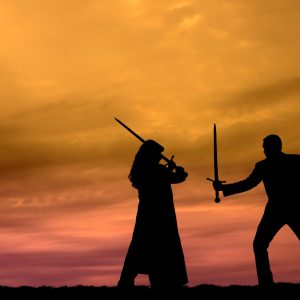
Avalon 9.10 July Crisis, part 1 of 4

1914 A.D. Heidelberg

Kairos lifetime 120: Nadia Iliana Kolchenkov, Doctor Mishka

Recording …

Decker stepped out of the time gate onto a grassy knoll.  There did not appear to be anyone around.  A large, flat, field covered the ground just below him.  He saw a wagon track road that came part way into the field and stopped.  He imagined it might have been a farm field in the not-too-distant past.  Beyond that, the trees went rapidly down the hill to a wide river.  At the bottom, he saw an old stone bridge that crossed the river, and on the other bank, a city that had to be Heidelberg.

“Warm,” Nanette said as she came through the time gate.  She pulled off her shawl and stuffed it into the pack she wore at her side that doubled for her purse.  It used to be their all-important medical purse that Alexis once carried, but Doctor Mishka took most of their things.  She still had some elf bred crackers, a ball of fairy weave she could shape into a blanket and a tent, her wand, and hidden under a flap of cloth on the bottom, the Beretta that used to belong to Boston.  Nanette paused to sniff the air.  This felt like summer.  Definitely not Southern California in the spring.

Tony came through tugging on his breeches.  “This uniform has too many buckles,” he said.

“You will get used to it,” Decker responded.  He and Tony visited the marine base in the Los Angeles area and saw examples of the combat fatigues worn by marine officers in the Great War.  They imitated the look with their fairy weave clothing, but all the accessories would take some getting used to.

“Why are we here so far from the city?” Nanette asked.  “I thought Doctor Mishka, a younger version would meet us here.”  She checked the sun.  It was perhaps nine in the morning.

Decker did not respond.  He merely pointed.  A mule-drawn wagon and three people on horseback came onto the field.  They stopped where the road stopped, turned the wagon around, and the riders tied their horses to the side of the wagon.  One of the riders appeared to be a woman, and the three on the hill began to move down to intercept them.

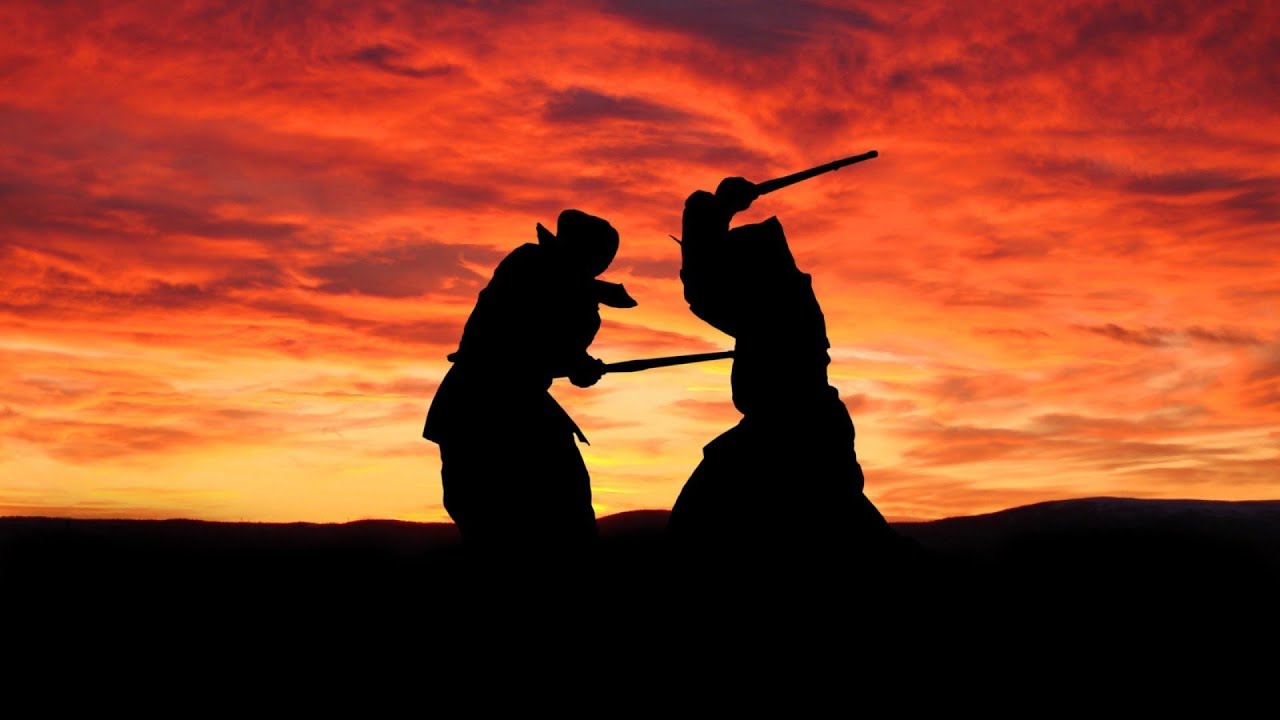
Down below, one rider got between the woman and the back of the wagon.  “Nadia—Mishka.  You don’t have to do this.  You can still back out of the duel, and no one would blame you.”

Mishka stopped and looked at the man.  “Karl Frederic von Stassen has been put in charge of the women’s clinic since I finally got transferred to the surgical team.  But the man is a pervert.  He fondles and abuses the women put under his care. Someone needs to teach him manners, and since the men are all cowards, that leaves it up to me.”  She put her hand out to indicate the man should move out of the way, but he did not move.

The other man came up behind Mishka.  “Von Stassen is an excellent swordsman, and no stranger to the duel.  They say he has killed three men and injured a dozen more.”

“I do not doubt that.  The man is an ass.  I would imagine he has been in two dozen duels.  But this time, he has gone too far.  Move Walter.”  The man blocking the back of the wagon moved, reluctantly.

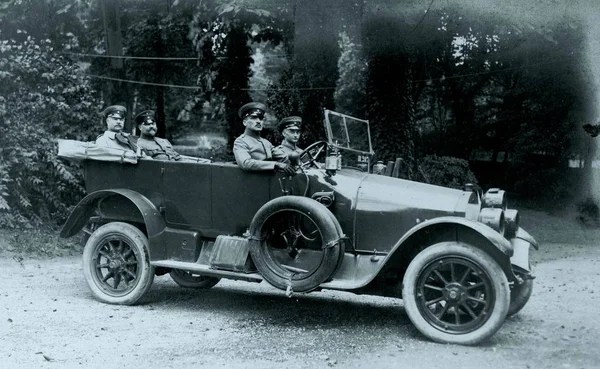
Everyone paused to look when a motor coach came to the field, followed by five men on horseback who talked and laughed like they had no concerns in the world.  At the same time, Decker, Nanette, and Tony came to the field.  Nanette called and waved, and Mishka returned the wave and a smile.

Doctor Mishka checked her hair bun and made sure every strand stayed in place.  She raised her hood, which obscured her appearance and covered her hair completely.  Then she welcomed the marines and Missus Decker.

“Colonel,” she called to the group.  “Allow me to introduce my friends Doctor Walter Wagner, my driver Klaus, and my second Graf Stefan von Hoffmann.”  She turned to the other side.  “Lieutenant Colonel Decker and his adjutant, Lieutenant Anthony Carter are United States Marines.  Nanette is Missus Lieutenant Colonel Decker.”  Mishka smiled at them, and it made Nanette smile.  The men shook hands and passed pleasantries before Stefan interrupted with a question while Mishka got a straight saber out of the back of the wagon and got a helmet with leather that fell to her shoulders and a mask that covered her mouth and nose, leaving only her blue eyes exposed. Otherwise, she stood in slacks and a loose-fitting blouse like the man across the way.

“First blood?”

Mishka merely nodded and turned to Nanette and the marines, thus turning her back on all the others.  While Stefan and Walter walked out to meet von Stassen’s second and make sure the rules were understood, she faced the Americans.

“A duel?” Decker asked.

Mishka nodded and traded places with the Princess and lowered her mask.  The Princess was an inch shorter, but no one would notice the small difference.  Her eyes were still blue, though not exactly the same shade as Mishka’s eyes.  Of course, her face and features were noticeably different, being a different person in the many lives of the Kairos, and her hair changed from Mishka’s medium brown to a very light golden brown that looked almost blonde in the morning sun, but her hair had also been put in a bun so the helmet and mask would completely disguise who she was.

“This won’t take long,” she said in Greek that the travelers could understand perfectly.  She risked a glance behind her.  The man swung his sword in wide and wild arcs to test the movement and flexibility of the weapon.  He had obviously been trained, though not too well.  She did not doubt he killed a man and injured some.  But she had years of one on one to the death—battlefield experience he could not imagine.  “I’ll try not to hurt him too badly.”

“I could just shoot him,” Decker suggested.

The Princess grinned and swung her own sword a few times. She looked down the edges to the point.  It was a good weapon, and sharp.  She traded once again with Doctor Mishka, turned to face her opponent, and walked to the center.  She found the sword in her left hand.  She left it there.  The Princess was a lefty.

“You wear a helmet?” Van Stassen’s second asked, though they had supposedly already discussed this.

“A concession to this woman,” Mishka said.  “I do not expect my opponent to hold back, and with the mask and this loose clothing, he can pretend he is fighting a man.  He does not need to see my face.”

Van Stassen seemed unconcerned about that.  He looked more than confident he would draw blood on the woman easily enough.  She called him a coward all over the university and accused him of rape and other things van Stassen’s superiors did not need to know about.  She needed to shut up.  He imagined he might even strike a killing blow.  She was welcome to wear a helmet and mask.  It would not help her and might even make it easier for him to kill her, accidentally of course.

Avalon 9.9 California Dreaming, part 6 of 6

Tony, Nanette, and Sukki were ready to get out of the hospital as soon as the sun rose on the next day.  Tony finished his book and started pacing, waiting for the others to show up.  Nanette and Sukki relaxed in their room. Apparently, they stayed up most of the night talking about one thing or another.

The travelers agreed to stay a week to ten days so the police could catalogue all the destruction they caused, even if they were not the ones who actually caused it.  It involved a couple of interviews and lots of police paperwork that made Lockhart laugh.

“I used to have to fill out things like that, in triplicate.”

They actually stayed two weeks so they could see the premier of the movie their friends were in.  Lockhart and Katie took Sukki to the movies three or four times before that.  They introduced her to popcorn and introduced Tony and Nanette to talking pictures.  When they saw one in technicolor, they all felt amazed.

The couple got the travelers tickets to the premier.  They had a wonderful time. The man said the critics liked the movie well enough in the screening.  The woman said, now they would see if the audience liked it as well.

The next day, Mishka took them all to a sound stage.  Lincoln remarked that they had not been bothered by a time displacement since the time in the alien woods.

“And I don’t think you will,” Mishka said.  Doctor Mishka brought them all to an isolated area where they had lights but no cameras.  She said the stage was not being used that day, and she had already warned the security guards that she would be borrowing it for the day, and she did not want to be interrupted.”

“Polio research or training?” the head of security asked.

“I will be experimenting, so keep everyone away,” she answered.

David and Gabriella were both there to watch and run interference if they did get interrupted.  When the travelers said they were ready, Mishka spoke as briefly as she could.  She reminded Lockhart and Lincoln that the Storyteller, her next life, had memory problems.  Mnemosyne, the goddess of memory messed things up in the ancient days when he traveled to the days of the Princess.”  Lockhart interrupted for those who did not know, and he realized of those present, only he and Lincoln knew, so he explained a little.

“Unless something of historical importance is happening, the Kairos does not know he has other lifetimes or anything about the Men in Black or anything else.  As far as he knows, he is just living an ordinary, normal life.  It must be hard, though, because the memory block is not perfect.  Past and future things keep leaking through.  That must make it very hard to function as a normal person.  When I first met him in Michigan, he only remembered the Princess, and that was not so bad.  When I met him again some years later, when the Vordan came to Earth, he got overwhelmed with the sudden influx of the memories from too many lives.  He almost became incapacitated. “
“Yes,” Mishka said.  “But he cannot tell you what you need to hear unless you screw up and become yourselves a threat to history.  I am hoping this advanced warning will prevent that.”  She continued with her speech until Katie interrupted.

“I was thinking about my identification that Gabriella so kindly typed.  I do have a doctorate in Ancient and Medieval cultures and technologies, but I would be afraid at this point to teach those classes because, frankly, I have learned better with some, maybe many things over the past five years.  I think I need to stick to my desk at the pentagon and maybe build a small department to go out on archeological digs, especially.  Someone needs to make sure the things people dig up are safe for human consumption.”

“We used to have a person who did that, but she retired recently,” Lockhart said.  “We haven’t filled that position.”

“Then it is settled…” Katie began, speaking primarily to Lockhart.

“Ahem.”  Mishka took back the conversation.  “That may work,” Mishka said.  “Alien lifeforms are not proven until Jennifer flies a science team to the asteroid belt, and even that comes back as grainy videos and digital information that plenty of people claim is all fake.  Keeping alien artifacts from disturbing the natural course and progress of the human race over the next hundred and fifty years or so will be important.  Alien technology discovered before humanity is ready for such things can skew everything.  But to continue…”

Mishka got to a point where she finally said something practical.  “Now, I don’t know if this is going to work.  Me being in the same room with the time gate is difficult enough.  It has not been long since I figured out how to do that, and the technique is a bit shaky.  Projecting the appropriate gate from the Heart of Time on Avalon to this studio stage is another thing entirely, but here goes.”  Doctor Mishka closed her eyes and held up her hands.  Something rumbled.  For a few seconds, it felt like a real California earthquake.  A great flash of light made people blink and turn away, and they heard Mishka pushed back to fall on her rump.  “Ouch,” she said, before the gate stabilized.  “Let us hope the next two are not so dramatic,” she added.

“Just the one gate,” David said.  “She hoped to have three gates side by side which is why she wanted such a big, enclosed space.”

“Hush,” Doctor Mishka quieted everyone.  She nodded and appeared to be listening intently before she spoke.  “We will have to do this one at a time,” she said.  “This gate is 1914.  We will do Elder Stow next and then the regular gate to 2015 if we can bring it here.”

Lockhart, Katie, and Lincoln all looked at each other, and Katie asked.  “What do you mean Elder Stow next?”

Lincoln added, “I assumed he came from 2010 like the rest of us.”

“Ah, no,” Elder Stow said.  “In the past, especially the deep past, your time and mine seemed so close together, and so far away, it hardly mattered.  I am sorry.  As the time drew closer, I felt I should say something, but it never seemed the right time.  You see, my two children and I were picked up in 1932, a couple of years before now.  I am ashamed to say my Father and Mother started working with a certain fellow in Germany.  I have heard you speak of the man and some of what he does or did.  I am sorry.  I hope to rectify the situation when I get there.  I am sorry.”

“His return date is early 1941,” Mishka said.  “We have discussed it, thoroughly.  It would not be right for him, at this time, to interrupt what has already happened from his life perspective.  Changing events now might well alter the future, and that is what we are trying to avoid.  He might even get shunted off into a parallel earth and have no way back to this reality.  And unlike regular attempts at time travel, the math of energy expenditures and such, that I really don’t understand but Martok understands, he will not automatically be drawn back into his correct time at some point.  In fact, he might accidentally fall through a time gate on Earth or out there somewhere, and find himself who-knows-where, in the middle of some atomic war.  He won’t age the number of years difference or get younger because he will still be out of sync with his own time zone.  It would be a mess—a potential mess.”

“Take a breath,” Decker said.

Mishka smiled.  “I haven’t done that since Heidelberg.  You people are so nice, I feel like a talker again for the first time in years.”

“In any case,” Elder Stow spoke to finish the story.  It came out like a confession. “My companions and I were set down in the days of Danna, the Celtic goddess.  We saw the chaos going on there and quickly scooted back in time.  It took a bit to figure out we were going backwards, not forwards in time, and I thought that perhaps we could go back to the time of the flood and somehow hold on to our place and land on the Earth.  I saw three times when my Gott-Druk people returned to the Earth with no good intentions.  In Tetamon’s day, the Elenar were present, and I felt even the first time through that somehow my people were on the wrong side.  I found us again in Wlvn’s day, but the Gott-Druk there, the meat eaters… Even I felt they needed to die.  The third time, we passed through Odelion’s island peacefully.  We got all the way to Saphira’s time, but the huntress caught us and explained that the time gates ended at the Tower of Babel.  The Heart of Time began at that time.  The gates did not extend all the way to the flood.”

“So, you gave up that dream,” Sukki said.

“Not the dream, but that way of achieving the dream, certainly.  We turned around and came forward, and found our people, where a scout ship landed on the small island in Odelion’s day.  That whole trip took us about four years.  You understand, we did not move as quickly or efficiently as all of us moved coming forward in time.  We did not have horses, among other things.  It took months of negotiations to settle matters and make a plan.  I knew about the Kairos by then, and knew he had to be removed from the equation.  We went to do that very thing and you people showed up, and the Elenar showed up.  My children died, and when you left the island, I followed with every intention of killing you.”  Elder Stow sighed.  “But I have learned some things on this journey as I have said.  One is that forgiveness is a good thing.  I sleep better and the food does not grumble in my stomach.  We Gott-Druk should let go of our grudges.  Stupid and stubborn is not the way to grow fat and full of wisdom.  Another thing is touch.  Hugs are good.”  He reached out and hugged Sukki, and everyone else.

“So,” Decker said rather loudly since he was not really a hugger.  “Having all hugged, we are ready to go.  Any idea what we will face when we get there?”

“Heidelberg,” Doctor Mishka said.  “I was in residency at the University Hospital.  You will see.  Go on.”

There were more hugs and some tears, but Decker, Nanette, and Tony went, disappearing in time.

************************

MONDAY

Episode 10 July Crisis will be four posts long: Monday, Tuesday, Wednesday, AND Thursday. In fact, episodes 11 and 12 will also be four posts long, so don’t miss the Thursday posts. Thus, the last three episodes in book 9, the end of the Avalon series, are shorter, but, well, you will see. In the meanwhile, Happy Reading

*

Avalon 9.9 California Dreaming, part 5 of 6

Gabriella drove in her Red Cross uniform, her purse sat beside her on the front bench seat.  It held her all-important medical identification.  “I have a Hollywood perfected identification that says I work for the Board of Health, Los Angeles County.  We shouldn’t have too much trouble getting into places.  You have your Identifications?  Doctor Mishka called me late last night and had me type them up.  Did I spell the names right?”

“Yes,” Katie said.  Her I. D. said Doctor Katherine Lockhart, Professor of Antiquities, Georgetown University.  She fit or could fake the description well enough but thought about the name.  Though married for a couple of years, she had not had much occasion to use her married name.  She needed to remember that she was no longer a Harper.  She was a Lockhart now.  She looked back at her husband in the back seat who read his card out loud, and slowly.

“Robert Lockhart, Federal Marshal.  I got promoted.”  Katie laughed.

“Oh,” Gabriella said and looked worried. “I forgot.  You are not actors.”

Lockhart assured the woman.  “Years on a Michigan police force and military police in Saigon has to be worth something.”

Gabriella hoped that would work.

Katie left her rifle in the car, hidden under the front bench seat.  Lockhart left his shotgun under a blanket in the back.  Katie still wore the same dress she wore the day before.  Fairy weave could be freshened with a word.  She slipped her handgun into her purse where it would be out of sight.  Lockhart wore his sidearm, and with his federal identification he did not worry about it, but he had a big suit jacket that he buttoned, and that covered the whole thing apart from the slight bulge at his side.  Gabriella ignored the issue of the guns.  She was used to seeing all sorts of things on the studio lot.

They parked across the street and saw no building that said medical lab.  Nothing said doctor’s office, or rehab facility, or any such thing.

“14158,” Katie read the address, and they looked at the numbers on the buildings, when they could find numbers.  Gabriella finally found it on a door between the bookstore and the coffee shop.  The number was on the glass, small, unobtrusive, and with no other identification.  There appeared to be only stairs on the other side of the door.

Lockhart backed up.  “The lab looks like it is upstairs, if this is it.”

Gabriella tried the door, but it was locked.

Katie tried the box beside the door which she thought was an intercom system like she might find downstairs in an apartment building.  She buzzed the upstairs, but no one answered.  She tried again, and Gabriella saw someone coming down.  Two men came to the door.  One looked professional.  The other also dressed in a suit but honestly looked like a thug.

“No soliciting,” the thug said.

Gabriella got out her fake Identification and said plenty loud. “Board of Health.  Open up.”

The thug looked at the professional looking man behind him.  The man had been staring at Lockhart and Katie when his eyes got suddenly big, and he seemed to recognize them.  “Travelers.  Kill them,” he panicked, shouted, and turned to race back up the stairs.  The thug went for his gun tucked neatly away in his shoulder holster, but Lockhart drew first and fired.  The thug collapsed as Gabriella screamed softly.  Lockhart was for chasing the other man up the stairs, but Katie, and the dead thug got in the way.

“To the car,” Katie said.  “We need backup.”  Lockhart understood and he grabbed Gabriella by the arm to get her moving.  They ran back to the car as Katie got on her wristwatch communicator and reported to the others even as gunfire came from the upper windows.

###

When the call came in, David said he knew the street and where he was going.  They zipped through a few back streets along the way, turned a corner, and found themselves in a very strange looking forest.  David let out a shout.  “Where did this come from?”

“This does not look like any forest I have become familiar with on Earth,” Elder Stow spoke up from the back seat.

“I don’t think we are on Earth,” Lincoln said.  The trees had purple leaves and the undergrowth looked all red and purple as well in the dim light.

A dozen helmeted soldiers came from the trees.  The one out front removed her helmet and came to David’s side because David rolled down his window.  Lincoln refused, like the glass might make an affective barrier against the weapons these soldiers carried.  He got startled when the woman spoke.

“Lincoln!  Elder Stow!  What are you doing here?  This is 2300, and not even on Earth.”

“I said that.” Lincoln agreed and pointed.

“General,” one of the soldiers called for the woman’s attention.  The soldier also pointed.  Not ten yards away, the forest came to an abrupt halt.  A picture of Los Angeles came into focus.  Men were firing out of the second story windows, some with Tommy Guns.  Three people looked trapped around some parked cars, trying to return fire, and pedestrians were screaming and running in every direction.

Lincoln saw a man on the street.  “Doctor Malory,” he shouted.  “The one smoking the cigar.”  The man tried to get into the coffee shop door, but a woman with a baby carriage stood there screaming, blocking the entrance, and not moving.

“Taggert,” The woman general called, but the man was right there.  He clicked a few things on his rifle and fired, a red streak shot across the way, from one world and one time period, to the other.  Doctor Malory went down.  Someone from the year 2300 killed a man in 1930 Los Angeles.

“It’s Amber,” the woman said and leaned into the open window.  “Too bad your database doesn’t have future information so you can’t look me up.  Good to see you again, and Elder Stow.”  She saluted slightly, pulled her head from the car, and shouted.  “Alice!”

The two time zones slowly straightened out.  Lincoln heard Taggert.  “What is a cigar?”  Then the alien forest vanished along with Amber and her soldiers.  Lincoln, David, and Elder Stow found themselves in an alleyway.  Lockhart and Katie were to their left, and Decker had pulled up to their right.

Elder Stow popped out of the car, his weapon in hand.  He set it while sitting in the car, watching the upper windows of the building spray the cars with bullets.  He stepped forward and fired, a wide angle shot that crashed through the windows and through the plaster to cover the upper floor with his Lockhart-dubbed heat ray.  The fire from the upper floor stopped instantly, even as two police cars roared up, followed shortly by a firetruck.  Good thing.  The upper floor was on fire in several places.  The front end of the roof collapsed from lack of support, but the smoke leaked out everywhere.

“Back in the car,” David shouted.  Lincoln and Elder Stow complied, and David backed out of the alleyway to the street behind.  He started right off down the road and got lost in traffic.  “I imagine you don’t want the police asking too many questions.”

“No.  Thanks.  How did you know?”

David nodded.  “Both Gabriella and I are Men in Black, west coast, headquarters in San Francisco.  We have offices in Chicago, Dallas, and Washington.  Also, Ottawa and Mexico City.  That about covers North America, but you know, most of us after basic training work regular jobs and just keep our eyes open.  Most never get called on or needed, but with Doctor Mishka, I’m getting used to weird.  You know, weird?”

“Yes, son,” Elder Stow said.  “We know weird very well.”

###

It took a bit of explaining, but the word Polio explained a lot.  Mishka made a couple of phone calls and Lockhart, Katie, and Decker became official overnight.  Mishka did not tell Decker that he was already officially on the military roles of the Marine Corps, and as a full bird colonel.

The dead might have been a problem if the witnesses hadn’t seen a power ray come from the woods that no longer existed.  The police themselves saw the power ray that came from the alley and destroyed the whole front end of the second floor.  Everyone on the second floor died and the guns even melted.  There did not seem to be much equipment there to identify, but Mishka did identify most and concluded they were working on gain of function.

Doctor Stinson escaped out the back.  “But we got Malory.  That is two out of three.  I just need to put people on alert coast to coast to keep their eyes open for Stinson.  I will probably have to go wherever there is an outbreak until someone can come up with a vaccine.”

“But you have a pill that can immunize and cure the disease,” Lincoln said in near protest.

“The one thing we don’t do is alter history,” Mishka responded.  “And we try to stop the Masters from altering history as well.”

Decker, Lockhart, Elder Stow, and Katie all nodded, and Decker spoke.  “We already covered that.”

Avalon 9.9 California Dreaming, part 4 of 6

“Polio,” Lincoln complained. “I got the polio vaccine as a kid.”

“We did, but they didn’t” Decker said.

“I see the antibodies,” Elder Stow said.  “I’m not sure, but I don’t believe you can even spread the disease.  I don’t see the same reaction in Sukki, Tony, or Nanette.  They are carriers.”

Nurse David took a step back.  “It can be transmitted through feces and sometimes saliva,” he said.  “Mishka went to Orange County because there is a polio outbreak there and it appears to be spreading to Los Angeles.”  He picked up the phone and made a call.  It took them an hour to locate Doctor Mishka.

“The Masters,” Doctor Mishka said, plainly.  “I got one in the 1930 outbreak and shut down their gain-of-function lab, but two of the doctors got away.”

“Doctor Malory?” Lockhart asked.  “It has been a week since our arrival in this time zone.”

“Yes, Malory and Doctor Stinson.  I tracked one to the other side of the Rockies, then flew back quickly to LA when I got a call. I thought they would be here where the outbreak started, but no such luck.  Get the three to Los Angeles General and get them into beds.  I’ll be there as soon as I can.”

“Los Angeles General?” Lockhart asked and David nodded.  “Meet you at the hospital.”

“Tell them they will be uncomfortable for a while but do not worry.  I can replicate the appropriate antibodies to kill the disease before complications set in.”

She hung up and Lockhart turned to Katie. “I hope we did not infect that nice couple.  Those movies are great.”

David took the phone and called the ambulance.

By nine o’clock that evening, Doctor Mishka had not yet arrived.  The nurse started saying things like the patients are resting comfortably and they should go home.  “There will not be much change before morning.”  Lockhart and Decker said they were staying.  Elder Stow and Katie agreed.  They sent Lincoln to fetch supper, so they were all fed and only needed to find a comfortable chair where they could get some sleep.

Mishka showed up at midnight and went straight to Elder Stow.  “Scanner.”  She stuck out her hand.  He gave it to her but squinted as he did.  “The lab must be in Los Angeles.  Doctors Stinson and Malory have to be here as well at this point.  Hopefully, we will catch them at the lab.”  She sat quietly and worked, quickly trading places with Martok the Bospori so he could work directly on the device.

“That is remarkable the way you do that,” Katie said.  “It is like you become a completely different person, even if you are the same person on the inside.”

“Still me,” Martok said in his deep alien voice.  “It is just me in a life that has not even been born yet.”  He grinned.

“You know,” Lockhart said.  “It used to bother me when he said things like that.  Now it just feels like old news.”

“There,” Martok said, and traded back to Doctor Mishka.  She turned on the scanner and frowned.  There were at least a hundred places in the city, any one of which might be the lab.  “Looks like we have our work cut out for us.”  She looked at Elder Stow.  He touched something on the scanner.

“Now they are recorded, and you can call them up anytime,” he said.

She nodded and turned to Katie and Decker.  “Let’s go see our patients before the disease worsens.”

“Shouldn’t they sleep?” Katie asked.  Mishka did not answer, and she did not stop walking.

When they got in the room where Tony slept, he woke right up and moaned a little before he sat up.  Doctor Mishka held out her hand and said the word, “Bag.”  A medical bag, such as doctors used to carry in the thirties appeared in her hand and she rummaged through it to find what she wanted.  The jar had any number of pills in it.  She got one and gave it to Tony with a glass of water and instructions.  “Stay here and rest tomorrow.  You can get back on your feet the following day.”

“Boring,” Tony complained.  Lockhart handed him the book he picked up in the lobby. It was Dashiell Hammett’s The Thin Man.

“I never read the book,” Lockhart admitted.  “Tell me if it is any good.”

Nanette and Sukki shared the room next door.  They claimed to be sisters, but the nurses put up a stink.  At first, the staff wanted to separate the black woman and put her in a completely different ward, but this was the only ward still set up for polio patients since the last outbreak four years earlier.  Fortunately, it was not presently full, so they let the sisters room together.  Unfortunately, the ward would be overflowing once the current outbreak took hold.

Nanette and Sukki got the same pills and instructions.  They did not complain.  Now that Sukki would be going with Katie and Lockhart and Nanette would be going to 1914, a hundred years earlier, the sisters wanted to spend some time together, even if Boston could not be with them.

When they returned to the waiting area, Doctor Mishka made the rest of them take a pill, except Elder Stow.  “I do not expect the immunization of the gods to diminish for as long as you live, but the influenza mutation we call polio is relatively new.  Some variants go back to fifteen hundred BC, but modern Polio is since about 1650-1700, about Elizabeth’s day and the founding of the modern Men in Black organization.”

“Is it alien?” Lincoln asked.

“No,” Doctor Mishka said.  “Pox is alien.  Chicken pox, smallpox, monkey pox.  But Earth is quite capable of developing hostile bacteria and viruses.  Polio is essentially an influenza mutation.  We had the Spanish Flu.  Polio is less deadly but more debilitating.  I believe there is covid in your future.  All viruses.”

“Why is Elder Stow exempt?” Katie asked.

“He had a more advanced vaccine.  I know.  You all had the polio vaccines, unlike our patients, but yours is not so strong.  It requires booster shots.  Consider this pill your booster.  Now, I want you all to go home and rest.  I would invite you all to my home to rest, but my son is getting into fights in school and my husband is due home.”

“What—”

“He is a long-haul truck driver, a far cry from being a retired army major in the war. You see, he was a German major.  Now, sadly, it is beginning to look like war again on the horizon and he is making noises about going home to Prussia.”  Doctor Mishka shook her head.  “We were enemies in the war.  He got wounded, and, well, sometimes things don’t work out like you expect.  Go get rooms near the studio.  I will meet you there first thing in the morning.”

###

First thing in studio land meant sunrise.  The lighting was often best at that time of day.  They met outside the gate so they could walk in together.  Doctor Mishka got Gabriella, the in-house LPN and part time medical secretary to type up the list of places and addresses with two carbon copies.  It took about an hour.  The list carried over to the second page, so she stapled them together.  Doctor Mishka went through the list and circled a third of the places, with addresses in red.  She circled another third in regular black pencil.  Lockhart and Katie got the ones circled in pencil, and Gabriella would drive, though Lockhart said he knew how to drive a stick shift.  Elder Stow and Lincoln went with her RN, David.  Decker came with Mishka, and she sounded like she had some things to discuss with the man before she let him go to 1914.

“Like no betting on sporting events where I already know the outcome.”

“Back to the Future,” Lockhart said with a smile.

“Something like that,” Mishka said, and added, “If you find Stinson or Malory, or the lab, call out on your watch communicators.  We should not be out of range from each other.”

“I keep forgetting we have these things,” Lincoln said.

“We all do,” Lockhart agreed.

After that, it did not take long to begin the search.

###

David, Lincoln, and Elder Stow crossed the first one off their list.  David did not imagine they would find a gain of function lab at the university, but Lincoln said you never know.  In his day, most of the true research departments in the country were university related.

Elder Stow did say, “They are making good progress on radiation and uranium testing.  I did not imagine it this early.  In ten years, they might split the atom.”

“1945,” Lincoln said, and then paused.  How could Elder Stow not know this?

###

“It was a longshot,” Doctor Mishka said as she returned to her car and banged on the car roof.  “Beverly Hills High School has some interesting equipment for a high school.”

“I got plenty of stares,” Decker said.  “Hard to concentrate when you have people looking over your shoulder.”

“Some of these kids have probably never seen a black person before in their whole lives, except maybe the servants,” Mishka said, and when she got in the driver’s side, she waited for Decker to get in before she continued.  “Good thing you went full military dress uniform, Colonel.  Otherwise, I doubt they would have let you passed the door.”

“It is what I wore on the train from Omaha.  Don’t tell anyone I said this, but I can accept the fact that these people are not really racist, they are just ignorant.  I am willing to accommodate some to avoid the hassles that come with ignorance.”

“Very well put,” Mishka said as she started out toward the next stop on the list.  “You know you will have to do a lot of accommodating in 1914.  That is just fifty years post-slavery.  People are just not that fast to learn.”

“I understand.”

Avalon 9.9 California Dreaming, part 3 of 6

Come two o’clock, the eight travelers followed the couple through the gate.  “They are making some H. G. Wells time travel movie,” the man told the security guard.  “They need some costume shots at the last minute.  That is why you don’t have them down on your list.”

The security guard did have something.  “I have a note for Mister and Major Lockhart.  The doctor said she returned early from her out-of-town conference because she had an emergency call to the Orange County Hospital.  I don’t know the emergency, but she may be gone for a while.  Make yourselves at home.”

“Major Lockhart?” the man asked Lockhart, but Lockhart pointed at Katie.

“My wife is a major in the marine corps.  In the future, you know.”

The woman looked happy.  “I love this modern world.”

The man pointed at the woman.  “Montana farm girl.”  He paused to see that he was talking to Decker.  “And a black marine colonel.”

“I love it,” the woman shouted.

“She’s a Democrat,” the man confided to Decker, rightly assuming that Decker was a Republican.  Decker laughed.  “So, Mister Lockhart, you aren’t playing a military officer?”

“Men in Black.  Assistant director.”  When the man had no idea what he meant, he added, “I hunt aliens.”

The man shook his head.  “You try to pitch this to Thalberg, and he will have you ejected from the lot.  Mayer won’t go for it either unless you have some dancing girls.”

“Selznik?” the woman asked.

“Not even him.  Too complicated.  You need a good plot, like by Dashiell Hammett, and stay away from the little green men and mermaids.  No one will ever believe it if you make a film with mermaids.”

At the moment, Katie was explaining to Sukki that the street they walked down was not honestly made of buildings.  “They are mostly false fronts just painted to look real.”  She paused when she saw three workmen trying to raise a grand piano with ropes and pulleys.  She imagined the second floor of the building was just another false front, but maybe not.  Of course, Sukki wanted to go over to the building to look in the window and see what Katie meant by false front.

One of the workers moved to warn her away from that spot and Katie grabbed her to keep her from walking under the piano.  Having the piano fall on her head was one cliché they did not need to do.

Everything changed all at once.

The lot looked suddenly like a war zone, changing around them, and the couple, and the workman who let out a shout like an enraged elephant, went with the travelers.  Red and bright white energy beams shot back and forth across the street ahead of them, where the buildings, real buildings, looked like they had been bombed to rubble.

“Everyone get down.”

“Everyone down.”

“Get down,”

They all scrambled behind a wall into what looked like it had once been a kitchen.  The travelers pulled their guns and got ready to defend the group, but they did not know who to shoot, or whose side they should be on.

Four human looking men jogged up to get behind the same wall.  One stayed by what used to be a window, but the other three faced the travelers and their guests.  They all touched something on their shoulders and the full head and face coverings they wore retracted revealing one old man, one woman with short hair, and one young black man who spoke.

“Who are you people?  This whole area was supposed to be evacuated before the fighting began.”

“Who are we fighting?” Decker asked.

“We are time travelers who stumbled into your battle,” Lockhart said.

“My ancestor was said to be a time traveler,” the black man said and stared hard at Decker.

“Time travel is mathematically impossible, sir,” the woman said.

“The Duba are coming,” the man by the window shouted.

Helmets went back on, and the soldiers ran to the wall.  The travelers joined them as Elder Stow shouted.

“Decker Wall established.”

Something like octopuses in armor came floating across the street, firing their white heat weapons.  Those energy strikes began to bounce off Elder Stow’s wall, before the octopuses themselves came to the wall and could go no further.  The corresponding fire from the humans, including the travelers, had no such restriction.  The octopuses did not seem to know enough to retreat when their charge stalled.  They started to be killed, and it did not take long to finish them.

The young black man lowered his helmet again and said something like a shout at Decker and Nanette, but the voice got cut off and everyone found themselves back on the studio lot.

“Time displacement,” Katie called it, as the workman made that elephant sound.  They heard another call.

“People.  Photographer.”  Someone did not sound happy.

“You might sell that idea,” the woman spoke up first.

“I smell a story there,” the man agreed.

“People.  We can’t do a photo shoot without my actors,” the shout came from down the way.

“Hark.”  The man posed with a hand to his ear.  “I hear the call of the publicity train.  Track twenty-five.  All aboard.”

The woman pulled herself together.  “That building with the red cross on it.  That is the doctor’s office,” she pointed and turned to shout.  “Coming.”  She turned one last time to Nanette.  “Your guns are real, aren’t they?”

Nanette nodded and Tony said, “Time travel is not always safe.”

The man nodded.  “Anywhere else in the world would be a big problem, but in Hollywood, people assume everything is a prop.  Come along Missus C.”

They walked off together, the woman saying something in the man’s ear.  The travelers turned to the doctor’s office, but Sukki had to pause.  That movement through time shook something up, even if they did not move at all and the future time area moved to them.  She threw up by the door.  Nanette swallowed her own bile.  Tony watched, like he was just thinking the same thing.

“Quick,” Katie said.  “Let’s get her inside.”

A man met them in the waiting room and directed Sukki and Katie to the bathroom.  Tony collapsed to a chair and said he felt tired, and he had a headache.  Nanette agreed with him, but also held her stomach.  Decker helped her to sit.

“David Brine.  I’m Doctor Mishka’s nurse,” the man said as he felt Nanette’s forehead, looking for fever.  He moved to Tony and asked, “Any sore throat?  Any trouble breathing?”

“A little,” Tony said.

“How about you?” David asked Lockhart, Decker, Elder Stow, and Lincoln.  “Any influenza-like symptoms?”  Lockhart and Decker shook their heads.  Lincoln, a bit of a hypochondriac, looked like he might develop symptoms if he thought about it too much.  Elder Stow already had his scanner out and the diagnosis attachment. With that, he could analyze things down to the atomic level.  In this case, he could search Tony, Nanette, and Sukki for hostile bacteria or viruses.

“I thought we were immunized against everything,” Lincoln complained.

“We are,” Lockhart answered.  “But Sukki was made human when we picked up Tony and Nanette.  I don’t know how much protection those three received before we moved out of range of the gods.”

Katie came out with Sukki who looked flush and needed to sit, and Katie added, “I remember Constantinople.  That doctor thought we would carry and spread the plague.”

“Doctor Malory,” Lincoln and Decker said at the same time to identify the suspect in 1934.

Elder Stow turned his scanner on Lockhart and then Lincoln before he spoke.  “We are all infected.”  He checked Decker and Katie.  “You call it Poliovirus.”

************************

MONDAY

Polio stops the travelers in their tracks. They try to find the  source of the outbreak and run into another serious time displacement. Until Monday, Happy Reading.

*

Avalon 9.9 California Dreaming, part 2 of 6

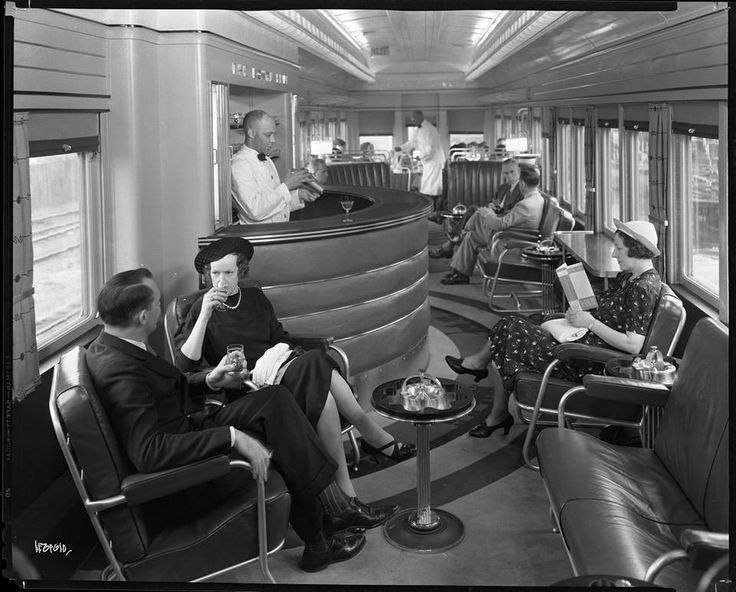
The travelers spent most of the two days on the train in the lounge car despite the smoke.  One person, Doctor Malory seemed determined to drive everyone out of the car with his cigars.  One woman complained, but the stewards told her there was nothing they could do.  Doctor Malory appeared to have the run of the train, and he sat alone at a two-person table right next to the back-to-back four-person tables where the travelers ate breakfast, lunch, and dinner. That might not have been so bad, but he kept his cigar lit the whole time he was eating.  The food was excellent, served on the finest china on cloth-covered tables, but the smoke kind of ruined it.

Doctor Malory finished each meal with a leisurely drink.  Gin and juice in the morning, scotch whiskey after lunch and brandy after supper.  He never left the table until after the travelers left, so there was never any time to really talk.  Doctor Malory watched them the whole time, and while the travelers quickly learned to ignored him, realizing that he was probably bored, traveling alone, and while they might have felt a bit sorry for him, no one was about to ask the man to join them.

When they arrived at the Oakland California station, they felt like they had enough of trains for a while.  They took the Union Pacific transit across the bay to San Francisco where they agreed to stay the day and take the train to Los Angeles in the morning.

First thing, they found the Wells Fargo Bank where Marshal Casidy deposited some money on account back in 1875.  He had both Lincoln and Lockhart sign signature cards at the time.  After fifty-five years of interest, the account had grown to quite a sum.  Once Lincoln was able to prove his identity with his signature, it was an easy thing to take out five hundred dollars, a substantial enough sum in the 1934 depression.  Everyone got ten dollars to spend on whatever they wanted, and they booked four rooms in a posh hotel where Sukki roomed with Lockhart and Katie, Decker and Nanette had a room to themselves, Lincoln and Tony agreed to share a room, and Elder Stow got his own room because on the train he snored so badly.

They went sightseeing.

They rode the cable cars, saw the giant redwoods, and went to fisherman’s wharf which in 1934 had mostly fishermen.  “Put-puts,” Katie told Sukki and pointed at the little green boats.
“That was what my father called them when I was twelve. They have small engines, though I see some are still rigged with sails.  By the time I came here at age twelve, they had mostly been replaced with bigger boats with diesel engines. He said at first the bay filled up with put-puts, and now I see he was right.”

Lockhart and Katie delighted in introducing Sukki to saltwater taffy, and then they all got some fudge, chocolate, of course, and after that Sukki said she was never going to eat anything except chocolate.  Elder Stow chuckled.

In the morning, they had a surprise.  When they went down to the dining room for breakfast, they found Doctor Malory sitting there, watching.  They politely said hello before they asked for a table, or rather two tables that were not near the man and his cigars.  Then they took the ferry back to Oakland and got to the station where they had a forty-five-minute wait before the train left for Los Angeles.

While they waited, Sukki complained that she did not feel too well.  Nanette and Tony agreed with her.

“Too much rich food?” Katie guessed and looked at Lockhart.  “Her system is not used to that.”

“Maybe Doctor Malory’s cigars,” Lincoln suggested.

“Maybe just too much sugar,” Lockhart shrugged.

The trip to Los Angeles went smoothly, and only Lincoln thought they would run into Doctor Malory in the city.  Lockhart said the man did seem to be following them.  Decker agreed, but his attention focused on Nanette who had an upset stomach.

 They got hotel rooms for that night and first thing in the morning, they headed off to one of the big fenced-in Hollywood studios where they had to figure out how to get through the gate.  Security in those places was tight.  The studios figured every two-bit kid from Kansas wanted to be in moving pictures, so they did not let anyone in except those on the list.  Lockhart sent word to Doctor Mishka.  Lincoln looked up her real name, Doctor Nadia Iliana Kolchenkov-Richter.  Richter was the name of the German Major she married after the first world war.

They had a long wait.

Lincoln and Tony got them all rooms in a nearby hotel where they paid for a week in advance.  Lincoln and Tony agreed.  The price for four rooms for a week was highway robbery.  The others watched while people went in and out of the gate all morning.  Fortunately, there was a restaurant nearby with outdoor seating.  They took two outside tables at eleven and continued to sip their tea and coffee until two in the afternoon.

Katie thought she saw Buster Keaton, or one of those silent film stars, but she could not be sure because the man kept smiling and laughing.  She could not remember ever seeing Keaton smile.  Later, she imagined one man looked like Clark Gable, or maybe Spencer Tracy.  They looked so young.  Lincoln swore that one young man was Carry Grant, but Katie was not sure he was around that early.  At last, around one o’clock when the waiters made noises about them needing to move on, they saw a couple that Lockhart recognized.  He went to say something, and Katie and Lincoln followed.

“Wonderful to meet you,” he said.  “I’m Robert Lockhart.  My wife, Katie, and friend Ben Lincoln.  I just wanted to say I love your movies.  I’ve seen all of them.”  He stopped himself when he realized what he did.

The woman grinned but the man nearly choked on his drink.  “All?”

“Sorry,” Katie apologized for the group.  “My husband probably should not have said anything.”

The man and woman looked at each other, and the woman spoke.  “We just escaped from a photo shoot.  Our movie will be released in two weeks.”

“Late lunch,” the man said.  “So, tell me, swami, how many of these movies do we make?”

Lockhart looked at Katie, who looked at Lincoln, who said, “More than one more.”  Lincoln did not fully answer the question.  He stayed too busy grinning at Lockhart who blew it and feeling good knowing that he was not the only screw-up in the group.

Lockhart sighed.  “Honestly.  We were just talking about time travel.  I should not have said what I said.”

The man pointed to the group.  “I imagined you were actors, what with the guns and all.  Some western?  What is with the black naval officer?”  Most of the holsters had a western-like look.  The woman got it.

“Time travel?  Oh, Nicky.  Our movie gets to have children.”

“Wait a minute Missus C.,” the man said sternly.  “Time travel?  You come from the future looking for autographs?”  He was joking

“Not really,” Lockhart said and turned to Katie.

She sighed to match Lockhart’s sigh and had a thought.  “We are trying to get in touch with Doctor Richter—Doctor Mishka, but the studio is locked down tighter than Fort Knox.”

“Doctor Mishka,” the woman said, excited.  “I made a silent with her once.  She made a lot of silent movies, just bit parts, when they needed a fill-in.  The studio wanted to give her a contract, but she turned them down.  She said she was already contracted with the studio, as the studio doctor and she did not mind filling in here and there to keep the productions rolling, but she did not want her face plastered all over the world.”  She turned to the man.  “You remember the good doctor.”  She turned back to Katie.  “He hurt his leg during the filming, and she fixed him right up, good as new.”

The man put his hand out as if covering the woman’s mouth, without reaching across the table to actually cover her mouth.  The woman jolted but shut her mouth and gave him her snooty look.  The man said, “Time travelers, like H. G. Wells?  I don’t go for much of that science fiction stuff.”

“Me neither,” Lockhart said, honestly enough.

The man and woman appeared to speak to each other with their eyes alone.  Finally, the woman nodded, and the man spoke.  “Give us a chance to have lunch and we will take you through the gate and to the doctor’s office.”

“Thank you,” Katie said, as Lincoln shelled out two five-dollar bill tips for the impatient waiters with a request for more coffee.

Avalon 9.9 California Dreaming, part 1 of 6

After 1889 A.D. Hollywood

Kairos lifetime 120: Nadia Iliana Kolchenkov, Doctor Mishka

Recording …

Tommy let the cows out at sunrise.  He got in the loft and started dumping hay to the floor, hay that he would later shove into the stalls.  He held tight to the pitchfork and groused about having to clean the stalls first.  He thought, If Grandpa ever died, Dad would inherit the farm.  Tommy would get it when Dad passed away, but that might be years from now.  Then, he might have a son to follow him and clean the stalls for him if Nancy ever said yes.  He threw a fork full of hay to the ground and picked up another when he saw a shimmering in the air right in the middle of the barn floor.  A woman, a very good-looking young woman in an old timey dress appeared out of thin air.  He accidentally dumped some hay on her head.  She looked up at him and smiled as seven more people, all dressed in old fashioned clothes, came from nowhere.

Tommy dropped the pitchfork, raced down the ladder, and ran out the barn door shouting like he had seen a ghost.  “Dad.  Mom.  Dad.  Grandpa. Help!”

Sukki turned to Katie.  “It looks like the same barn, sort of,” she said, and got out her amulet to check their direction.  Katie got her own amulet out.  Katie had the experimental version.  Sukki had the new and improved model.  But both paused, played with the setting, and looked at each other strangely.

“It can’t be the same barn,” Lincoln said.

“New and improved,” Lockhart suggested.

“It may be the same barn,” Elder Stow said as he stared at his scanner.

“Smells like the same barn,” Decker said, and Tony chuckled while Nanette and Sukki grinned.

“That would be three times we left one time zone and entered a new time zone without moving—with the time gate in the exact same place,” Lincoln said.

“Third time’s the charm,” Lockhart quipped.

“Three strikes you’re out,” Lincoln countered.

“People.”  Katie raised her voice to get everyone’s attention.  “We have a problem here.  Sukki and I had to maximize the range just to pick up the time gate. It is moving away from us, rapidly, a long way west of here.” She pointed in the correct direction, and several looked, but they could only see barn.

“The time gate we just came through zoomed off to the west as soon as it deactivated,” Sukki said.

“Like maybe it is heading to California which would be a thousand miles away,” Katie added.

Elder Stow fiddled with his scanner.  “At maximum range, I am not seeing the time gate at all. Maybe if I… Wait…”

The barn door swung open.  A man in his late forties stood there in the early morning sun, and he did not look happy.  “What are you people doing in my barn?”

“Just passing through,” Lockhart said and tried to smile but the twenty-something-year-old man behind the older man’s shoulder interrupted.

“They just appeared out of nowhere…”

“Hold on Tommy,” the middle-aged man said.  “How did you get in there without anyone seeing you?  Where did you come from?”

“We came from 1875,” Lockhart admitted.  “What year is it now.”

“1934,” an old voice said from behind.  “Early May.  Look out, Tommy,” the voice said, and an old man pushed forward and smiled for the travelers.  “Got any more strange looking soldiers?”

“God, I hope not,” Lincoln mumbled.

“Don’t tell me,” Katie stepped up beside Lockhart.  “Bjorn?”

The old man nodded. “I was younger than Tommy when you came through in 1875.  I’m almost seventy-three now, but I never quit hoping you would come back.”  He laughed, drooled a bit, and held on to his dentures.  “This is my son, William, er, Bill, and my grandson Tommy.  I’m sorry I don’t remember your names, exactly.”

“Katie and Robert Lockhart, and our daughter Sukki.  Mister and Missus Decker.  Anthony Carter, Benjamin Lincoln, and Elder Stow.” Katie felt genuinely happy even as Lincoln mumbled.

“I guess it is the same barn.”

“Good to see you after all these years,” Katie finished.

“But I show the years,” Bjorn said.  “You don’t look a day older than the last time I saw you.”

“Not true,” Lincoln spoke up.  “We are all one day older.  We faced the soldiers, got a night’s sleep, and came through first thing in the morning like we promised.  It is the next day for us.”

“We didn’t know we would end up here,” Lockhart said.

“Had any breakfast?” Bjorn asked.  “Come on up to the house.  My daughter-in-law Betty is a great cook.  Don’t tell her I said that.  And we will feed you for free seeing as you already paid hotel rates for the night.”  He laughed and held on to his teeth again.

“Dad.  Who are these people?  Where did they come from?”  Bill sounded perplexed.

“They appeared out of nowhere, like Tommy said.”  Bjorn answered as he walked, or more accurately, hobbled up to the house.  “You should listen to your son once in a while.”

During breakfast, Lincoln whispered to Lockhart and Katie that Doctor Mishka was in Los Angeles in 1934.  “Hollywood, actually.”

Lockhart looked confused by the sudden great distance between the time gates, but Katie explained what she thought she understood.  “We left the horse and buggy days far behind and entered the days of diesel engines, cars, trucks, trains, ships, and even airplanes.  My guess would be Doctor Mishka took off from maybe Denver airport and flew back to Los Angeles right after or as we came through the time gate.  The distance ordinary people travel has massively increased.  I think maybe the distance between time gates has compensated.”

“But from here to Los Angeles is a long way. An equal distance from Los Angeles west will put us out in the middle of the Pacific Ocean,” Lincoln complained.

“No, Lincoln,” Katie said.  “I think the distance was here to Denver and maybe Las Vegas as the next time gate. But with the airplane, the gate moved quickly to a new location, that’s all.”

“Still probably out in the Pacific,” Lincoln griped.

Lockhart nodded but said, “Let’s find the good doctor first and see what she has in mind.”  They left it at that.

After a ride to town in the back of a farm truck with Lockhart, Katie, and Sukki squeezed into the back seat of the 1929 Hudson Sedan, they said goodbye to their friend, Bjorn, and saddled up to the ticket window in the Union Pacific Station.  Lincoln grumbled that it cost him so much for eight tickets and eight beds.  He claimed to have hardly anything left for when they got to San Francisco and had to take another train—a Southern Pacific train to Los Angeles.  Lockhart reminded him Marshal Casidy put money on account with Wells Fargo. Maybe they could get some money there.

“Two days and two nights on the train for eight people,” Tony said.  “That price is not too inflated after another thirty years since our day in 1905.”

“I imagine the price has even gone down since the crash of twenty-nine,” Decker suggested.  He had changed his fairy weave clothes into his marine dress uniform, thinking a black naval officer would raise less questions in the dining car than a black farmer.  Nanette still dressed like a farm girl, but she would change her clothes as they saw more examples of appropriate attire.

Lockhart agreed.  “Probably not as many people riding the trains now after the crash.”

“But father,” Sukki got Lockhart’s attention and smiled at the word father.  “Why didn’t we take the direct train to Los Angeles?”

“Big stopover in Salt Lake City—something like six hours, and there is nothing to do there other than desert heat and listening to the Mormon Tabernacle Choir.”

“We could swim in the Salt Lake,” Katie said, but Lockhart shook his head.

“In May?  Besides.  Dry you out and make your skin all wizzly.”

Katie took Sukki by the arm and explained like a real mom to a daughter.  “There are things to do in San Francisco like the wharf and seeing the Redwoods.  Our train is scheduled to arrive at nine or ten in the morning and the other train has regular runs between Oakland and Los Angeles.  We can catch the train to LA anytime we are ready and get to Los Angeles about the same time we would have arrived on the direct route, and at about the same cost.”

“Ugh,” Lincoln said, having overheard about the cost.

When they started out, Sukki insisted on a window seat.  That did not last for long, because they all went down to the lounge car as soon as their rooms were settled.  They took two couch-like benches that faced each other and talked as well as they could, sometimes raising their voices against the constant click-clack of the train, until the smoke in the lounge became unbearable.  The spring heatwave was also a factor that did not help matters.  One of the stewards turned up the air conditioning, but that just stirred the puffs of smoke from the other passengers, so it did not help much.

“Things improved after they air condition these cars,” Lincoln said.  “At least we are not attacked by smoke and cinders from the engine through open windows.

Katie waved him off and turned to Tony, Nanette, and Sukki.  “So how did you like riding in a car, or truck as the case may be?”

Elder Stow answered.  “Bouncy.  A good antigrav unit would work wonders.”

“Wonderful,” Sukki said with a great big smile. “But the train is even better—even better than the steamboat.”  She turned her eyes again to the outside to watch the cows fly past.

Lockhart looked curious, but Katie explained.  “This is all new to her.”  Of course, he knew that.

“I must say,” Tony said.  “I never expected to see so many automobiles all over the road, and on concrete streets. That must have cost plenty.  Even New York has bricks or blocks in most places.”

“Pavement,” Lincoln said.  “In the sixties they used to sing about the whole world being paved over.”

“And concrete sidewalks,” Nanette added.  “I’m used to wooden ones, like when we first came to Omaha back in 1875.”

“Nineteen thirty-four is a bit after your time,” Katie said, and Decker took the floor.

“Yeah.  How are we going to get back to 1914 where we belong?  We have already passed that date.”

Katie looked at Lockhart and Lockhart said, “We discussed that.”

Katie took over.  “This is the point where Doctor Mishka is presently living, and the time gates can only lead to the next time zone at whatever time that is.  At least, we think that is the case.  I think Tony, Nanette, and the others were picked up at a random time through the Heart of Time and out of sync or whatever with the time gates.  You may have to go with us to the future and then to Avalon to go back through the Heart of Time to your proper time period.”

“Lady Alice can do that,” Lockhart said.  “And from what little I know of her, having met her a couple of times, I would guess she would be glad to do it.”

“Oh, yes,” Decker said.  “I had completely forgotten about Alice and the Heart of Time.  I think I shoved that whole business out of my mind.”  He grinned.  “PTSE.  Post-Traumatic Stress Experience, you know.”

“Great,” Lincoln said, the sarcasm echoing in his voice.  “Now I’m going to worry about getting home and having to deal with PTSD from this trip.”

“No, you’re not,” Nanette said.  “You just want to get home to Alexis, and you are going to be grumpy until we get there.”  Lockhart laughed softly as Nanette continued.  “I’m worried about seeing too much of the future and messing it up after I get home.”

Decker shook his head and took her hand.  “I was born and raised in the future,” he said, and looked at Elder Stow.  “I have also learned a few things on this journey.  Number one is don’t change history.  When we get to 1914, I can keep my mouth shut.”

Lincoln looked up.  “And number two is don’t let the servants of the Masters change history, either.  But I am worried.  When we get home, unless they have some technology or something they should not have, how will we even recognize the Masters?”

No one had an answer for that one.

Avalon 9.8 The Wild West, part 6 of 6

That night, the travelers, Marshal Casidy, and his magnificent seven all camped around a bonfire in an open field.  Marshal Casidy spoke.  “So, the Kiowa left two days ago, which is why there is room right now in the field.  The steamboat came this afternoon, and we got your tickets.  By the way, here is a bit of funding for the trip south.  I’ll be staying here for at least a week so you should have no trouble reaching the next time gate.  Sign here.”

“What am I signing?” Lincoln asked.

“Wells Fargo account.  No reason we can’t get fifty years of interest.”  Marshal Casidy paused before he suggested, “Alice says she thinks she knows where you are going.  Maybe California.”

“Maybe?” Lincoln said and signed before he took the coins and put them in his bag that could make the time jumps without immediately rotting.  “Thanks.  Our larder was wearing a bit thin.”

“No telling where we will end up,” Tony said.  “But gold and silver hold their value pretty well.  The face on the coin does not seem to matter so much.”

“So,” Marshal Casidy turned to Sukki.  “Have you at least settled things about where you will go in the future.

“Yes,” Lockhart said.

“Yes,” Katie said and held out one hand.  She scooted over a bit and Sukki grinned and got up to sit between the two.

“Sekhmet and Artie used to sit just like this,” she said with a happy grin.

“It is a relief,” Elder Stow said.  “Knowing that she will be well cared for.”

“Elder Stow,” Captain Barnes spoke up.  “I understand the time travel, though I would love to see how this time gate business works.”

“Not me,” Mini said.

“Make her shriek,” Gordon said, and Sergeant Reynolds chuckled.

Captain Barnes went on.  “I also understand why these men in black were chosen to make the trip.  I get the two marines to provide protection and such along the way.  And Sukki.  I understand they found you in the deep past.”  Sukki nodded and nibbled on her buffalo steak.  “And Nanette and Tony fell into the past from 1905, just thirty-five years in the future.”

“More like forty-nine years by the time we get there,” Tony said, and Captain Barnes nodded to say he understood.

“But Elder Stow.  Where did you come from and how is it that you have these incredible things like your weapon, your screen device, and your scanner.  I imagine you have more incredible things we have not yet seen. Do all people in the future have such things?”

Everyone looked at Elder Stow, and the travelers were going to leave it entirely up to him what he revealed.  He hardly hesitated.  “I am one of those Gott-Druk with super advanced technology you have heard about, though the things I carry around are mere toys such as a ship’s officer might carry.”

“You look human,” Commander Roker, the Ahluzarian said, and Captain Barnes nodded like he was about to say that.

Elder Stow removed his glamour and appeared as the full-blooded Neanderthal that he was.  Then he said, “I am human.  It is one of the main things I learned on this journey.  I am not Homo Sapiens.  I am Homo Neanderthalensis.  We are both humans, and as much as it sounds terrible, personally, we even share some DNA.  I came to this world to remove the Homo Sapiens so my people could reclaim their homeland.  I had a terribly ingrained prejudice against all Homo Sapiens.  But I have learned that in every way that matters, we are not different.  And I have learned that my Gott-Druk home is a good place that we have made excellent.  And I have learned that this world now belongs to the Homo Sapiens, and that is how it should be.  We have done much in our journey to remove things that do not belong here and keep history on track, and that has been important work.  And I have learned that there is a time and place for everything under Heaven.”  Elder Stow put his glamour back on.

“Good thing,” Doc said.  “I know some medical school people back east that would love to cut you open to see how you work.”

“They might find that hard to do,” Decker said, and Nanette smiled and took his arm.

Silence followed until Marshal Casidy clapped his hands.  “Now for the good news.  The Storyteller has returned home.”

The travelers got excited except for Lincoln who said, “Figures. We are only two steps from home now.  Big help.”  He tried to keep his sarcasm to a minimum.

Marshal Casidy waved his hands for quiet.  “The Storyteller has gone back to his life with no memory of his adventures—he has some memory problems.  The golem that was filling in and doing a mediocre-poor job of it has returned to Avalon.”

“What’s the bad news,” Lincoln asked.

Marshal Casidy frowned.  “The bad news is while putting the pieces back together there were some time displacements.  No, don’t ask me what a time displacement is.  I just made up the term, but basically since things got off kilter when he vanished, there was some time leakage when he returned.  Things, basically future things, kind of slipped back a bit.  Alice will straighten it out, eventually, but you might encounter something unexpected when you visit Doctor Mishka.”

“What?  You can’t just zap us home now?” Lockhart asked.

“Don’t dare,” Marshal Casidy said.  “Not until the time displacements are corrected.  Sorry.”

“So, tomorrow we take the steamboat downriver for two hundred and some miles to the next time gate,” Katie summarized.

Lockhart nodded, but added, “And then without horses we have to find Doctor Mishka on foot.”

“Yes, sorry.  But there should be trains, and maybe even cars and busses, depending on when and where you arrive.” Marshal Casidy tried to smile an encouraging smile.  “I’m sorry, but the horses belong here, and we have given you all the coin money we have and all that we got from the horse trader after we bought your tickets for the steamboat.”

“That’s okay,” Lincoln said, surprising all the travelers.  “I would hate to come all this way and skip Doctor Mishka.  She might never forgive me.”

People agreed and wandered off to bed.

###

In the morning, the travelers waved good-bye.  People, including Colonel Decker, changed their fairy weave to regular civilian clothes. Katie admitted she made a couple of less petticoats than recommended and thickened her dress against the cold instead.

It got cold on the river.  Having a cabin did not help much, but at least the river remained relatively free of ice and snow.  Having a cabin near the boiler stacks helped a bit more, but most of the heat from the boilers got vented through the salon that the travelers rightly called the saloon.  Most of the cabin passengers spent most of their time eating and drinking in the salon and trying to keep warm.

On the second day, one of the passengers came racing into the salon yelling about something strange in the sky.  A few of the passengers bundled up to go see. Katie, Lockhart, and Elder Stow also went to take a look.  The passengers suggested a strange cloud formation, and one said a balloon of some kind.

“A weather balloon,” Lockhart said and chuckled.  They watched it move back and forth like it got suddenly lost and tried to get its bearings.

Clearly, it was a ship of some kind, and Elder Stow said as much when he admitted, “I have never seen the like.”  He got out his scanner, but before he could get a good reading, the ship vanished into thin air.  Somehow, the travelers imagined it did not just turn invisible.

“Time displacement,” Katie named it, and they went back inside where it was warm.

It took three days, with a couple of stops, to reach Omaha, and those who got off on the Nebraska side headed for the train.  The transcontinental railroad went from there all the way to San Francisco.  Crossing the Rockies in winter was not a good idea, but most were not going that far, and the few hoped to reach California before the January snows filled the passes. Some crossed the river to Council Bluffs Iowa looking for the train to Chicago and back east.  Some stayed on board the ship to continue south.  The steamship would eventually land in Saint Louis.

The weather had warmed as they traveled south, so it was not so bad when they cinched up their backpacks and headed out of town.  No one asked them where they were going, so it was a pleasant walk until the end.  They found the time gate in a barn owned by a Mister E. B. Johnson.  The man seemed kind enough, but his wife was greedy.  They had three mostly grown sons who all came to the front porch to see the strangers.  The travelers stopped outside the house and asked if they could spend the night in the barn.  The sun started to set.  Katie tried to be friendly and asked where the couple came from.

“Norway,” the man said.  “I came all the way here and built my farm with my own two hands.”    I am Erik Johnson, my wife is Britta, and my sons are Dag, Anders, and Bjorn is our youngest.”  He looked at the sky as his wife spoke.

“You can stay in the barn out of the wind and snow or rain, whatever we get, but you will have to pay for the night.”

“Where are you headed?” the man asked, to keep things friendly.

“The year twenty-fifteen,” Lockhart said with a straight face.

“Nineteen-fourteen,” Decker said.  He took Nanette’s hand and patted Tony on the shoulder.  Lockhart, Katie, Lincoln, and Sukki looked at the man.  They wondered where Decker and Nanette would end up.  Apparently, they had settled the matter.

Elder Stow spoke more plainly.  “We don’t know what year it will be when we arrive.  We are time travelers.”

The wife opened her eyes wide and spoke to her husband in Norwegian not imagining the travelers would understand.  “These people are crazy.  I don’t want crazy people around my farm.”

Katie interrupted perfectly in the same language.  “Time travel is not as crazy as you think.  We visited Norway once back in the days of the Vikings.  They were a rough and greedy people, but they were kind to us.”

Lincoln stepped forward.  “Here is eight dollars. It is not exactly hotel accommodations, but that is a dollar for each of us and should be more than enough for a night in a barn.  We will be gone in the morning before you know it.”

Bjorn, fourteen or fifteen years old, shouted, “Cool!” or the 1875 version of the word.  “You have many guns.  Did you fight any red Indians?  I sometimes dream a whole tribe of Indians comes charging out of the woods there.”

No one answered when they heard shouting in the nearby woods.  Men in very odd-looking uniforms came tumbling out of the woods like they were indeed charging the enemy.  The uniforms looked splotched in red and gray, an odd sort of camouflage, and the helmets had shaded visors down the front, like astronaut helmets, so faces could not be seen.  The travelers drew their guns.  Sukki raised her hands and Nanette raised her wand, but the men stopped suddenly and looked around like they were just as surprised at the change of location as the others were surprised at their sudden appearance.  As fast as they arrived, the soldiers faded and vanished, and Elder Stow thought a word was advisable.

“Be careful what you wish for young man,” he said, and the travelers hurried to the barn, while the man, his wife and three sons went into the house to lock themselves in.  The family got scared, and the husband thought he might tell the travelers to find shelter elsewhere, but the wife was not about to refund the eight dollars.

************************

MONDAY

Welcome to Hollywood in the 30s and to polio. The travelers have to cross half the continent to get there. Fortunately, they can take the train. Until then, Happy Reading


*

Avalon 9.8 The Wild West, part 5 of 6

They just about finished lunch and repacked their things when they heard rifle fire.  Lincoln whined first.  “Not again.”  Roughly thirty natives came over a ridge to attack the group.  Elder Stow yelled.

“Hold your fire.  Hold your fire.  I turned the screens on around the camp when we stopped for lunch.  The bullets cannot reach us.”  He stepped forward and pulled his own weapon.  He still had it set to a wide angle. He adjusted something and fired.  All of the natives and some of the horses fell straight to the dirt.  The horses that did not fall, mostly the ones in the back of the group, staggered about like drunks.  Elder stow spoke up.  “It doesn’t do to have thirty horses ram into the screens.  They can’t penetrate, but it shakes up the device and might loosen something.”  He looked at the fallen natives and excused himself.  “Just stunned and temporarily unconscious, I hope.”

“Arapaho,” Doc named the tribe and Captain Barnes confirmed that.

“With the Cheyenne and Sioux, they are most against the settlement of the west.”

“Elder Stow, can you make a Decker wall to separate us?” Lockhart asked.

“Eventually,” Elder Stow said.

Lockhart understood.  “Then can we get close enough to talk to them when they come around?”  Elder Stow could do that easily enough.

“Everyone, finish packing up first,” Decker said, and they did.

When they got close enough to the Arapaho to talk, they first heard shouting and rapid-fire conversations among the natives.  Lockhart interrupted in the same language.  “We are just passing through and mean you no harm.  The Sun Dance is in that direction.  We were just there about two weeks ago.  Sitting Bull of the Sioux and White Bull of the Cheyenne are both there, with many Arapaho chiefs. “

“The Medicine Men are our friends.” Katie added.

“We see you have strong medicine,” one of the warriors said, pointing to the screens that Elder Stow had colored with that slight blue tint.  Several warriors who had come around touched the screens and saw that they were solid.

“Go in peace,” Lockhart said.  “We will leave and head south.  We are going to fort…”

“Randall,” Lincoln said.

“…We will be out of your way very soon.”  Lockhart smiled.

“Smoke the pipe of peace when you get there and mention us.  Tell them we are praying for peace,” Katie added.

The man nodded and got his men mounted again, shaky as they were.  They made a wide birth around the screens and headed off to the north.

“I hope they don’t attack the Crow camp,” Katie added, but Captain Barnes shook his head.

“There is a ford not far from here,” he said.  “I’ve seen the map.  But notice, Colonel Custer did not bother to warn us that there was an Indian raiding party in the area.  I swear, that man is a real corporal.”

“Corporal?”  It was Lockhart’s turn for one-word questions.

“War slang,” Sergeant Reynolds spoke up. “It means a real screw-up and all-around ass who unfortunately outranks you.”

“We can go,” Elder Stow reported and turned off the screens as he clipped his screen device back into place.

Three days later, they arrived at Fort Randall around three in the afternoon.  It snowed a little on the second day, and the weather stayed chilly, especially in the wind, but it never turned bad.  The fort itself sat right against the river.  They had to pay to get ferried across to the south side.  Fortunately, the ferry was made to transport cavalry.

They found Marshal Casidy and the others in a saloon by the fort.  The little town, hardly a village, had a few stores and some homes, but not much else.  Decker had to ask what the soldiers did for fun around there.  One of the soldiers, a black man sitting on the steps, whittling, answered.

“Whittle and eat buffalo hash three times a day.”  He did not sound happy.  “At least some got wives and children.”  Decker smiled for the man as he followed the others.  The man raised his voice.  “That is not for our kind.  That is officers only.”

Decker knew what the man meant.

Marshal Casidy hugged Sukki while people got introduced and pulled three tables together.  Then Marshal Casidy spoke.  “Good thing you got here.  Elder Stow, your scanner if you please.”  He held out his hand.

Elder Stow got it but held it close to his person.  “You are not going to break it again, are you?”

“Just tune it,” Marshal Casidy said with a shake of his head.  “I need to locate the shape shifter.  He has eluded us all the way to Oregon and back. I need to find him before he leaves town.”

Elder Stow reluctantly handed over the device and Marshal Casidy went to work.  After a moment, he traded places through time with Martok the Bosposi, and without a pause in whatever he was doing.  The travelers did not blink.  Most of the local Men in Black looked around to see who might be watching.  The room was mostly empty at that time of day.  Mini Taggert shrieked.

“Michel Henry, you promised to give fair warning when you did that.”

“You’ll get used to it,” Katie encouraged the woman.

“No.  Never.” Mini responded.

“She screams pretty good too,” Gordon said in a slight British accent and with a big grin.  Mini hit him in the arm, and not softly, but that just made him and Sergeant Reynolds laugh.

Marshal Casidy returned to his own time and place fairly soon, then while Marshal Casidy worked, of course Captain Williams and two lieutenants had to come into the saloon and came right to the table.  “Marshal Casidy,” he said in a voice where the steam appeared ready to come out of his ears. “It is bad enough the Colonel let you and your gang into this establishment, including a red Indian as long as he sat quietly at a civilized table, but who are these others, and negroes no less.  Buffalo soldiers are not allowed in this place, and what is that you are wearing.  You will go on report for being out of uniform.”

Captain Barnes stood and stuck out his hand.  “Captain Jacob Barnes, special agent to President Grant.  My companions are Doctor Wilhelm Brandt and Sergeant Tom Reynolds.  They work for me.  These others are Robert Lockhart, my boss.  Lieutenant Colonel Decker, Major Harper-Lockhart, and Lieutenant Carter are on loan from the United States Marines.  Army Lieutenant Colonel Benjamin Lincoln is on special assignment from Washington.  Nanette is Colonel Decker’s wife.  Sukki is daughter of Mister and Major Lockhart. And Elder Stow is on a mission so secret even I don’t know the full extent of what he is doing, and I have top secret clearance from the president himself.  Now, is there a problem here?”

Captain Williams had already backed down and started shaking his head, but fortunate for him, he did not have to say anything as Marshal Casidy stood and shouted.  “Aha!  I got him.”

He walked to the door, and everyone followed him.  He walked slowly down the street, eyes on the scanner, until he came to the horse trader’s fence.  There were twenty horses in the fenced in area waiting for branding and training to be cavalry mounts.

“Now that does not make sense,” Marshal Casidy said.

“Allow me,” Elder Stow took back his instrument and called up a holographic image of the scene.  Marshal Casidy shouted on seeing the sight.

“It’s a horse.  Don’t let it change.”

Gordon threw his tomahawk first.  Captain Barnes and Mini were masters of the fast draw and Decker never let go of his rifle.  Three bullets struck and prevented the horse from hiding behind the others as it staggered.  Sukki raised her hand as Commander Roker, no slouch in the quick draw department, let out two streams of power that reduced the horse to slag and ash. Then Gordon’s tomahawk arrived.

“Damn,” Gordon said.  “Thought I had this one.”  He went to retrieve his weapon and Rodrigo and the Doc followed.

“Dead.”  Rodrigo pronounced judgment.

“As you say, sincerely dead,” the Doc added.

Katie turned to Captain Williams.  “Close your mouth.”  The man clacked his teeth together.

Avalon 9.8 The Wild West, part 4 of 6

As they headed out the next morning, Katie rode with Sukki between her and Elder Stow. Lockhart had some questions for Captain Barnes.  “So, when did this alien ship crash in the Potomac?”

“March fourth, 1865, in the evening after President Lincoln spoke. We have spent the last ten years tracking alien prisoners all across the country, in Canada, and Mexico.”

“And you have had no help from the Kargill police—the what-you-call-them.” Lockhart was unsure of the name.

Captain Barnes nodded.  “Ahluzarians. Yes actually.  We have an Ahluzarian with us.  Commander Roker.  He went with Marshal Casidy, Rodrigo the Apache, Mini Taggert, she is a sharpshooter and real cowgirl from Missouri, and a fur trapper and Indian guide out of Western Canada named Gordon Smythe.  Gordon was a great help in Oregon.  Interesting.  Marshal Casidy has taken to calling the seven of us the Magnificent Seven, but he has not explained what he means by that.”  Captain Barnes stopped talking and leaned over, assuming Lockhart knew what that meant.  Lockhart chose not to explain the reference.

“Go on,” Lockhart said.

“Well.  According to Commander Roker’s records of the prisoner manifest, we have neutralized all but one.  This last one, though is especially difficult.  It is a shape shifter, and having been on this planet for ten years, it has become expert in appearing human.”

“I don’t get it,” Lockhart admitted.  “I was there when the Kairos told the Kargill directly that this planet was off limits to visitors, and the Kargill agreed.  Any Kargill ships had to avoid this solar system altogether.”

“By the Kairos you mean Marshal Casidy?  The Marshal has not explained that well, though I have met Doctor Mishka, the Princess, and others.”

“Yes,” Lockhart confirmed and thought for a second.  “Two time zones before this one.  He was living as a woman, Lady Elizabeth…Stewart something…she was Scottish, during the English civil war.”

“Two hundred years before our own civil war,” Captain Barnes said, but he did not sound certain.

“Yes,” Lockhart said.  “But what was a Kargill ship doing so close to Earth?  Go on.”

“Ah,” Captain Barnes mouthed.  “As I understand it, there was an altercation on the normal route.  Something with the Reichgo, and the prisoner ship and escort got diverted in this direction.”

“You say prison ship, not a penal ship?”

“No,” Captain Barnes shook his head.  “They were not taking one or more difficult populations to resettle elsewhere.  This ship carried individuals that for whatever reason refused to settle down or were criminals of some sort.  They were being escorted to a prison planet—a nasty place with no atmosphere on the surface, and no way off.  A few have been recaptured and are in holding cells.  We have had to kill most of them, sorry to say.”

“Holding cells on the escort ship?”

“No, on a newly called ship,” Captain Barnes said.  “The original escort ship was destroyed in the crash, though Marshal Casidy was able to save, shrink, and time-lock the main gun from the ship.  He hid it in President Lincoln’s office where no one could get it without the time key.”

“I’ve seen it,” Lockhart said.  “We borrow it in the future.  Go on.”

“Well.  He won’t even tell the Kargill the time technology involved.”

“What destroyed the escort ship?” Lockhart asked.

“Uncertain,” Captain Barnes said honestly, but in a way that suggested he had some thoughts.  “I talked to Mister Smith.  He is a Zalanid and the Kargill’s liaison with us and others around the globe.  Have you met him?”  Lockhart nodded.  “Well, he said circumstantial evidence points to the Gott-Druk, a people who began on this planet and who have a technology superior to the Kargill, though I cannot imagine such a thing.”

Lockhart looked back at Elder Stow.  He rode on Sukki’s other side so Katie and Elder Stow had the girl well boxed in.  Lockhart nearly said something, but changed his word to, “Neanderthals.  It is what we call them in the future.  Apparently, this planet has produced a lot of intelligent species—people over the last four or five billion years.  That is why this is a Genesis planet, because conditions are right—or maybe I should say God has used this earth as one of a dozen planets in the whole Milky Way to create intelligent life.”

“Genesis, as in God created the heavens and the earth?”

“Yes.  But I have been told that story, our human story as written for us, started somewhere between 14,000 and 16,000 B. C. when a moon bumped into the artic and the last ice age melted suddenly.  The whole earth got flooded and the atmosphere got enough dust, ash, and debris in it to blot out the sun.”

“The earth was formless and empty, darkness was over the deep, and the Spirit of God hovered over the waters.”

“That is very good. I can’t quote that.”

“My name is Jacob Barnes,” Captain Barnes said. “My mother was Jewish.”

Lockhart smiled and continued.  “Anyway, the Neanderthals were one of several human-like groups that got taken off planet at that time or before that time.  They were given a different world around a different sun somewhere out there in the night sky.  There were a few small pockets of us humans who were protected in the catastrophe, and once the earth settled down, they, I should say we were allowed to replant the planet.”

“Noah,” Captain Barnes guessed.

“No,” Lockhart said.  “That came later.  Once the earth got reestablished, some of the ice returned and there was another sudden meltdown. Katie calls it the Dry-us, or Dry-adds, or something.  Then, lesser meltdowns continued for some time, on and off.  The earth was pretty unstable, wobbling less and less but continuing for about ten thousand years or so.  Exposed land got flooded in various places.  Us humans had a hard time of it.”

“But God promised not to wipe out the human race again.  He made the rainbow covenant with Noah.”

“He did, but then that man, Nimrod, gathered lots of survivors and built a tower to human glory.”

“Babel.”  Captain Barnes understood.

“The tower fell.  People got scattered.  Languages got confused with people in their little groups all over the globe.  But the earth by that time was more like we know it today.”

“When was that?”

“About 4,500 B. C.  That was when the Kairos was first born as cute twins, one male and one female.”

“Twins?”

“Two bodies, one person.  I still don’t understand how that worked, but that was where we came into the story and started our journey home.”

Captain Barnes whistled to think of what these travelers may have seen.

“So, you are Jewish?”

“What?”  Captain Barnes had to focus.  “Mostly.  My father is Church of God.  He got caught up in all that Millerite madness when he was young in the 1840s.”

“Whatever that is—was,” Lockhart shook his head.  “But, so now, the Neanderthals or Gott-Druk have had thousands of years to advance themselves.  Counting from the time of Babel, we are some ten thousand years behind them in the technology department, and not having the same language and culture among us has not helped in some ways.”  Lockhart looked back again and decided he would not single out Elder Stow at that time.

Captain Barnes rode quietly for a time before he spoke again.  “Maybe the Gott-Druk shot down the prison ship and the escort ship.  But why would they do that?”

Lockhart shook his head, but then talked freely knowing this information would eventually enter the Men in Black records if it was not there already.  “Since being taken to new home planets, most species—people have settled into a good life.  The Gott-Druk, for some reason, have always had a small minority that want to return here, to earth, and retake what they consider their ancestral homeland.  That has been a real headache at times.”

“I can imagine.”

Lockhart continued.  “I would guess the Gott-Druk hoped so many alien criminals would badly disrupt and maybe cause the death of millions, thereby paving the way for their return.  I am a bit surprised they crashed here, though.  I would have thought Europe.”

“Europe?” Captain Barnes asked with the single word.

“I’ve been told Europe, the Middle East, and western and some Central Asia is the extent of their homeland.  The Far East, India and Southeast Asia belonged to the Elenar.  There were others, but those two were using soft metals and the Elenar may have discovered bronze when the Agdaline first came looking to trade for grain.  That might have been around 18,000 B. C.  It was an Agdaline moon that careened off the earth and brought about the destruction.  They were experimenting with anti-gravity, trying to develop faster-than-light travel, when they tore the atmosphere off their own planet.  They had to search for a new home.  It was all a big mess.”

“Agdaline?”

“A long story,” Lockhart said.  He realized he had questions but ended up talking most of the time.  That was the way it sometimes worked.  He decided maybe Katie could do some of the talking.  “What say we stop for lunch?” Captain Barnes agreed.

Lockhart went to kiss his wife and hug his new daughter, then they had a good lunch and Katie did plenty of talking, with Tony and Lincoln interjecting thoughts now and then.  Nanette and Sukki said little, both showing their shyness in front of three relative strangers.  Decker only made a couple of side comments to Sergeant Reynolds, who laughed.  Elder Stow said practically nothing, even when the discussion turned briefly to the Gott-Druk shooting down the prison ship and the escort ship, but that did not surprise the travelers.  He appeared to have things on his mind, and the travelers politely left him to his thoughts.