Medieval 5: Genevieve 2 Prince Charming, part 2 of 4

The old man paused and stared at her. His mouth wanted to say, “Do I know you?” but instead it said, “We are looking for Count Lothar von Stefan. Is this his house. Are you a servant in the house?”

Genevieve shook her head. “My father died on the battlefield when I was eight. You are Bernard, brother of King Pepin and Uncle to King Charles. I remember you when I was four. You came here at that time searching to strengthen the army to assault Septimania.”

“You were the girl,” Bernard said, suddenly, like he remembered something. “You were only this big.” He smiled and reached his hand down as close to the ground as he could without getting down from his horse. “You have a remarkable memory.” He paused before he added, “And I am sorry about your father. I guess I knew that, but I had forgotten.”

“I live here now with my stepmother and two stepsisters,” Genevieve spoke plainly. “But you are welcome to come up to the house and warm yourselves by the fire.”

“Not your mother?”

Genevieve shook her head again. “She died when I was four. One reason you came here.”

“Of course. I am sorry,” Bernard said, sincerely, as he remembered better.

“I was very young. I am seventeen now. Please come up to the house and I will see what there is in the larder. Maybe Matthild can make some hot tea to warm you.”

“We don’t want to be a bother,” Bernard said, which surprised some of his men. Usually, armies just took what they needed, and if the man or woman was important, they sometimes said thank you, but that was it.

“No bother,” she responded, though to be honest, she could not wait to see Mother Ingrid’s face, not to mention the faces of Gisela and Ursula. “Is Charles with you?” She knew it was cheeky to talk about the king in that manner, but Margueritte sat very strong in her mind at the moment. She remembered Bernard, who was actually King Pepin’s much younger half-brother, having a different mother. “How old is Charles now?” she asked before Bernard could answer since he got busy dismounting. She remembered, or Margueritte remembered Bernard as a young man of twenty or so, standing near Pepin at his father’s funeral. Charlemagne would not even be born for another seven years.

“Yes. He is twenty-seven and nearby. We were sent ahead to search out possible lodgings. We need a place to gather troops in the spring and the Rhine Valley has been fruitful this last year.”

“There are a couple of inns in town and one overlooks the river. The Rhine is slow moving this time of year. Too much ice still in the north. Of course, it may flood in a month, but I don’t think so. We had a cold but mostly dry winter.”

“Thank you for the information. Obviously, we would not want to put you ladies out of your winter home.”

Genevieve stopped on the front steps and faced the man. “You would not want the home in any case. It has been nine years since my father died, and there has not been a man around to keep the place. The winter wind whistles through the walls and the furniture is all worn out. Things do wear out with age, you know.” She nudged the man with her voice and smiled for him.

Bernard rubbed his shoulder and smiled in return. “That is something I know all too well.”

Genevieve laughed, and added, “You may not recall, but when you were last here I remember the snotty-nosed twelve-year-old boy who used to sing off key. It was annoying. I was just wondering if he matured since then.”

Bernard grinned. “Still can’t carry a tune,” he said.

Genevieve smiled, took Bernard’s arm, and brought Bernard inside. She found Mother Ingrid waiting, a most curious expression on her face. Genevieve simply smiled in return. “Mother. May I present Sir Bernard, brother of King Pepin and uncle of Charles, King of the Franks.”

“Lady von Stefan,” Bernard started right in. “Though I am years late, I am sorry about the loss of your husband. He was a good and faithful man to the king and to all the nation.”

Mother Ingrid’s eyes got big like she was barely able to breathe, “Thank you,” before Gisela and Ursula came running into the room. They went and got all gussied-up and used far too much makeup as usual.

“We have guests!”

“We have company!”

Some of the younger men who had been eyeing Genevieve closely came in and did not show the same interest in the stepsisters. In fact, they tried not to make eye contact, because the sisters certainly showed interest in the men.

Mother Ingrid pulled herself together fairly quickly. “Matthild,” she shouted to the old woman in the kitchen who stuck her head out the door. “Put the kettle on. Let us make some tea for our guests.” She turned back to give Genevieve a hard stare and said “Eggs?” Then she added a bunch of other things to the list before she finished with, “And tell Otl to bring the horses into the barn where they can shelter from the cold.” She smiled for Bernard in a way that made Genevieve want to gag.

“Yes, Mother,” Genevieve said without emotion. She smiled a more natural smile for Bernard and stuck her hand out to her stepmother. She would need more money to pay for the extra things Mother wanted. Their credit was running rather thin.

“I am not made of money,” Mother Ingrid complained and headed back to the bureau where she kept her small stash, but Bernard interrupted.

“Er… Let me help,” he said and pulled more than enough coins out of a small purse that hung from his belt. Genevieve accepted them and smiled a bit more.

“It is hard to make ends meet without a man around the house,” she said, and leaned up to kiss Bernard on the cheek. “I’ll bring you the change.” Bernard turned a bit red and returned her smile. “You are as nice as I remembered,” Genevieve added, before she glanced at her stepmother and scooted out the door.

Inside, Mother Ingrid invited her guests to sit and relax, but Bernard was not finished.

“Robert. See what you can do to help in the kitchen.” Mother Ingrid opened her mouth but Bernard held his hand up to stop her protest. “Robert is a fine cook. Don’t let the soldier’s uniform fool you. We need a good cut roasting for Charles when he gets here.” The man nodded and left the room.

“The king is coming here?” Mother Ingrid asked.

“The king? The king!” Gisela and Ursula got excited which caused Bernard to shake his head.

“That might not be a good idea.” He paused to think. “His new wife is pregnant or just delivered. We had to leave her behind to come this way. We have selected Basel as the best, most central place to gather the army this spring, so we will only be passing through Breisach, you might say. You have daughters.” Bernard paused and shook his head. “Charles is very good at logistics, that is the assembly, care, and feeding of an army, and he is very good on the battlefield, especially in selecting and surrounding himself with excellent generals. But when he is not fighting, or doing army things, he has few other interests. He likes to read and learn about new things. He likes roasted meat, and he likes, shall we say, female companionship. He is very charming. Since his wife is not here. You have daughters…”

“No need to be embarrassed,” Mother Ingrid said with a sly grin. “Gisela is fifteen. Ursula is eighteen. Both virgin daughters, and they would be happy to entertain the king.”

“Mother!” At least Gisela understood what her mother was suggesting.

Ursula simply said, “The king?”

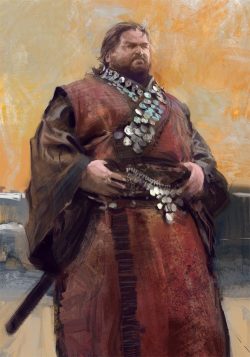
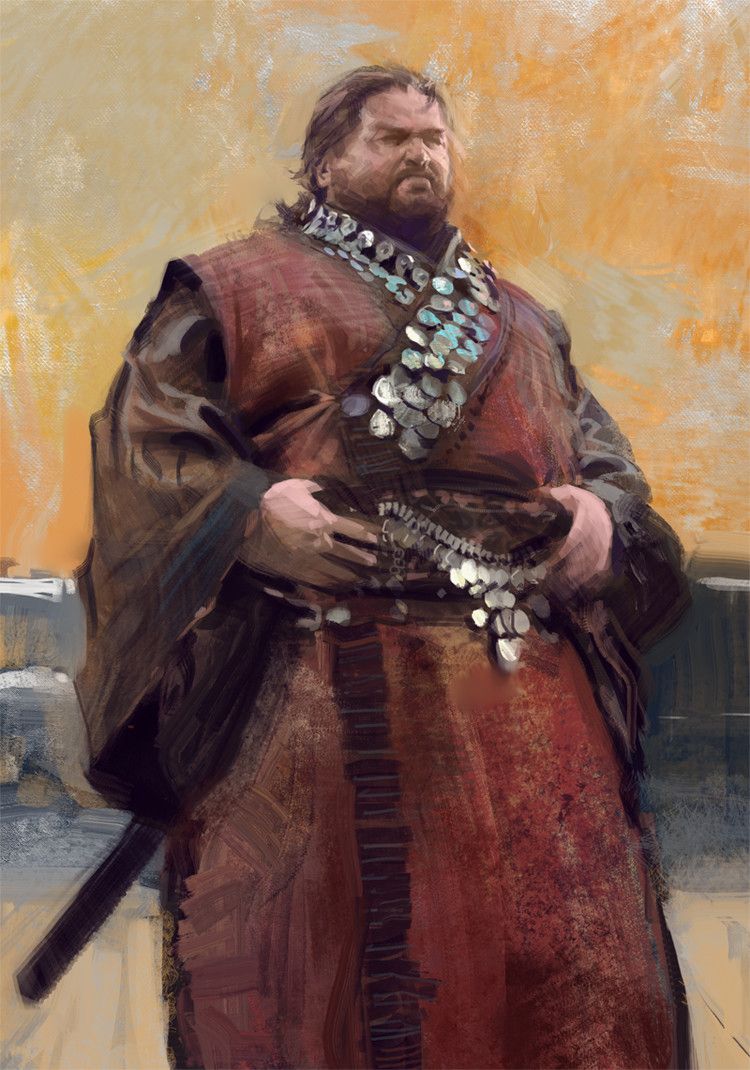
Outside, Genevieve arrived at the gate where Otl was talking to a handful of soldiers, just arrived. They looked like Francia’s finest, well turned out for ordinary soldiers. One in particular stood out from the rest, literally. He was a half-foot taller than his companions. Genevieve shaded her eyes as she looked up.

“They are growing them tall in Francia, I see.”

The man gave her a nice smile. “You are as tall as my soldiers. That is pretty tall for a woman.”

“My father was tall, like you.”

“Was? I’m sorry,” the man said with actual sympathy in his voice.

Genevieve nodded. “He died fighting for King Pepin, some years ago. I was eight, so nothing recent. But you. How did you get so tall?”

The man shrugged. “My father was short. In fact, some called him the Short. He also died several years ago, so nothing recent here, too. My name is Charles.”

“Genevieve,” Genevieve said. “My father was also a believer in the stories of the olden days, “When right was right and wrong was wrong”, he would say. “No one doubted who the good guys were back then. Not like today when politics gets everything all jumbled up. I think he wanted a son he could name Arthur after King Arthur, but he had a daughter, so I got Genevieve.” She shrugged very much like Charles who laughed a little and kept smiling for her.

“Lady,” Otl interrupted. Genevieve had to break her eye lock with the tall young man to answer the old servant. He spoke quickly. “Baggins and Littlewood have brought a whole deer for Matthild to roast. Your mother Ingrid will just have to accept that, though I imagine she won’t complain much, given the company. Meanwhile, I thought I might bring the horses into the barn and rub them down. They look like they have been ridden some distance today and should get out of the weather, if we get some rain.”

All eyes went to the sky. It did look to be clouding over.

“Good idea. My thanks,” Charles said, and he told two of the soldiers to help the old man, while Genevieve remembered her errand.

“That would be fine,” she told Otl. “I have to walk to town and get eggs and a few things Mother Ingrid wants to impress our guests, not that they will be impressed given the shabby state of the house and our things.” She started toward town and Charles stepped in right behind her, his other two soldiers following.

“Where are you going?” Genevieve asked.

Medieval 5: Genevieve 2 Prince Charming, part 1 of 4

The year 772 was an exceptionally good year. The fall harvest from the farm paid very well. Genevieve tried not to imagine her elf and fairy friends had anything to do with that, but they might have. “So, the army is buying up all the food,” Genevieve surmised.

“Who cares,” Gisela said.

“As long as we get the money,” Ursula said. “I need a new dress.” She looked at her mother.

“I wonder who they are going to war with,” Genevieve said out loud.

“Not our concern,” Mother Ingrid responded before she had a second thought. “Unless they come this way.” She seemed to be thinking hard. “Clean up the kitchen,” she told Genevieve and wandered off to do some heavy thinking.

In the end, Mother Ingrid hired an older couple who were in fact gnomes, or house elves, or brownies of some sort depending on who was describing them, not that Mother Ingrid or the girls ever suspected. Honestly, it was all Genevieve could get based on what Mother Ingrid was willing to pay. The old man, Otl would clean up the barn and the grounds. The old woman, Matthild would keep the kitchen and cook. Genevieve still had the housecleaning and the laundry and such, but the old woman helped a bit and that was some relief. In truth, the old man and the old woman were especially kind to Genevieve, at least when Mother Ingrid and the girls were not around, but that was easy because Genevieve, despite everything, had grown into a kind and caring person—very Cinderella-like.

Around the beginning of March in the following year of 773, Genevieve, in good Cinderella fashion, was cleaning out the big kitchen fireplace which backed up to the fireplace in the sitting room. They used the same chimney. The kitchen fireplace was nearly always lit for cooking purposes, but when there was no fire in either, as was the case when Genevieve had to clean them out, what was said in one room would echo into the other, not loudly, but discernable if you were in the actual fireplace. Mother Ingrid could easily be heard.

“Genevieve will be eighteen soon enough, and there are some in town who will make sure she takes full possession of the house and property.”

“But Mother,” Ursula whined. “What does that mean for us?”

“It means no more shopping,” Gisela answered. “No more jewels, or clothes, or fine things for us.”

“Oh,” Ursula let out a small wail. She sounded like she did not like that idea. “But Mother, if we were married we could have husbands who could provide for us.”

“If I could find you husbands… I thought to place you in an advantageous position but that is not going to happen…” Mother Ingrid did not explain.

“Maybe if Genevieve married.” Gisela was thinking. “Maybe her husband could take her away and we could have this place for ourselves.”

“No!” Mother Ingrid practically shouted. “I have had three proposals for Genevieve’s hand, two knights and one baron, and I turned them all down. I even tried to say the eldest needs to marry first and turn the baron to Ursula, but he wanted no part of that.”

“But Mother.” Gisela had some brains but she tended to get stuck on her own idea. “If Genevieve married…”

“No,” Mother Ingrid said more softly in her calm-the-distraught-child voice. “Genevieve would have a son and lay claim to all this county forever. No. She will die an old maid as far as I am concerned, and before twenty-one, if possible.”

“Why twenty-one?” Ursula asked. It sounded like Ursula was trying to think. The poor girl would just give herself a headache.

“Because, even if she inherits the manor house at eighteen, I still control the tenant properties, the income, and taxes until she is twenty-one. She may have to have an accident before she takes it all,” Mother Ingrid said, without spelling out what kind of accident she had in mind.

Genevieve heard footsteps away from the fireplace and rushed to the water basin where she could clean her face and hands up to the elbows. She pushed her blonde locks behind her ears and grabbed a cloth and the wood oil jug and hurried to the dining room. “Genevieve,” she heard Mother Ingrid yell up the stairs assuming Genevieve was up there making the beds.

Genevieve glanced at the kitchen door where she saw Matthild stick her head into the dining room. She had come back in from doing the morning dishes and mouthed the words, “I’ll finish the fireplace.” Genevieve nodded her thanks as an impatient Mother Ingrid called again.

“Genevieve.”

“Here, Mother,” Genevieve responded sweetly and came from the dining room door into the entrance hall.

Mother Ingrid paused to look at the sitting room and back at the dining room as if judging the distance and wondering if maybe Genevieve overheard. She pretended Genevieve had not heard, and Genevieve betrayed no emotions to indicate otherwise. “You need to go into town and get a dozen eggs,” Mother Ingrid said and went back into the sitting room without another thought.

Genevieve brushed herself off and took her shawl from the hook. It was not the warmest shawl, just better than nothing. She looked down at her slippers. Boots would be nice for slushing through the snow that still clung to the roadway, but she did not have any boots. She borrowed Gisela’s big boots once and got in big trouble. She imagined her feet would be half-frozen by the time she got to town.

Genevieve followed Mother Ingrid into the sitting room and stuck her hand out. She said nothing. Mother Ingrid all but growled but went to the bureau in the corner where she kept a few coins in the top drawer. No one knew where Mother Ingrid kept her main stash of money.

“That is all there is,” she said as she put a few pitiful pennies in Genevieve’s hand. “You need to bargain better.”

Genevieve kept her hand out and frowned at the meagre funds. She would be lucky to get two eggs for that little. She put the coins in the pocket of her dress and went to the door without argument. She would figure something out, or she would get a beating.

Genevieve waded through the thin layer of snow to the front gate and only once shrugged her shawl up tighter around her neck. Her mind focused on what she heard. She would never be allowed to marry. She would never be allowed to have children of her own. She stiffened her lips, not just from the cold, and her shoulders began to droop but pulled back up against the wind. Her warmest outfit was not much help when the cold wind blew. She stopped at the gate when a group of men rode up and stopped on the other side of the fence. The old man out front made a comment.

“This is the place. I am fairly sure. It was thirteen years ago, you understand.”

Genevieve looked up and looked closely at the face. There seemed something familiar about the face, and Margueritte, her immediate past life blurted out the name. “Bernard.”

************************

MONDAY

King Charles (Charlemagne) arrives and surprises Genevieve. Until then, Happy Reading

*

Medieval 5: Genevieve 1 Cinderella, part 2 of 2

Signore Lupen first came when Genevieve turned nine. He came when she was eleven, and again when she was thirteen. Each time, he stayed during the month of May and each time Genevieve’s position in the house grew more and more difficult. On the last visit, when she turned fifteen, she was the only servant left in the house. She had to cook and clean and got very little sleep and little to eat that month because their visitors came early that year, in April, the slim month, and Genevieve feared they might stay through June. She imagined she would not survive that long. They would work her to death. It was bad enough when they left around the third of May. She was so exhausted she hardly knew what she was doing.

Genevieve escaped the house and ran through the meadow at the back of the hill. She went into the little woods at the bottom to hide from whatever eyes might peer down from the house above. She found a clearing there and collapsed to the ground on top of all the old leaves and pine needles, and she wept, bitterly, being unable to do anything else.

Edelweiss, the fairy found her first. “Why are you crying?”

“Oh, Edelweiss.” It was all Genevieve could get out at first.

The fairy came close, a curious expression on her little face. “You know my name?”

Genevieve tried to sit up and wipe her eyes, but the tears would not stop that easily. She just nodded before she heard two more voices in the woods.

“Little one.”

“What did you find?”

The fairy flew up to face the two young elf maids that came to the edge of the clearing. “The young lady Genevieve,” Edelweiss said. “She won’t stop crying.”

“Margota and Nellinis.” Genevieve called to the two elf maids and waved them to join her but could not say anything more just yet.

“She knows us?” Margota wondered.

“We know you. How do you know us?” Nellinis asked.

The elf maids came close and sat near her. They found a few empathetic tears though they did not know what they were crying about, and Genevieve’s tears were mostly from exhaustion in any case. Soon enough, Genevieve took a deep breath and settled herself to talk.

“It is Signore Lupen and his son, especially the son, Antonio,” she said.

“Mister Lupen,” Nellinis responded with a frown. Genevieve looked up as she explained. “He is no more a knight than I am.”

Margota said, “He is from Lombard lands. Up here, the Franks and Germanic people have no way of checking. He can claim whatever he wants.”

Nellinis added, “I am sure with a title he expects better treatment than he would get as plain old Mister Lupen the merchant.”

Genevieve shook her head, but she was not surprised. “Anyway,” she said. “I feel there is something wrong with him, and his son, especially the son. His three hired men, the dark one, Blondy and Baldy might just be mean and ugly, it is hard to say, but Signore Lupen—Mister Lupen… There is some seriously wrong there.”

“The dark one?” Edelweiss asked as she settled on Margota’s shoulder to participate.

“Dark hair and dark eyes, never a smile, and always standing in the shadows,” Genevieve described the man. “They have names, but I know them as Darky, Blondy, and Baldy.”

“Good names,” Nellinis decided.

“Anyway,” Genevieve said again. “There is something twisted, something wicked about the Lupens, father and son, only I can’t put my finger on what that is.”

The elf maids nodded, and Edelweiss probably did as well, but she was small, covered by Margota’s hair, and hard to see, so she spoke instead. “My mother told me when they come I need to keep an eye on you to make sure you stay safe.”

“Your Mother Heartsease,” Genevieve said.

“That’s the one,” Edelweiss agreed. “My mother is from the mountains and gave me my name, Edelweiss. Sadly, there are no edelweiss flowers around here, but my father agreed with the name.”

“Your Father Evergreen,” Genevieve said.

“That’s the one,” Edelweiss agreed. “He said your mother died mysteriously and your father married a lady he hardly knew, and then he died. Father worried about you, but he never said why.”

“And you two? Margota and Nellinis—Margo and Nelly. Why are you here?”

Margo and Nelly looked at each other, and Margo confessed. “Lord Alpine had the same feeling as Lord Evergreen. He said there was something special about you, a good kind of special, and given the way your mother and father got killed under questionable circumstances, he said you needed to be watched.”

Nelly added, “We’ve been coming here regularly since you turned six and that Lady moved into the house, and especially when Mister Lupen came here.”

“You feel it too.” Genevieve plainly said it and did not ask it as a question. Nelly and Margo both nodded, and probably Edelweiss as well, but it was hard to see.

“It is difficult getting close to the house when Mister Lupen and his son are here. It feels like the very air around the home is dark and wicked,” Margo explained.

Genevieve agreed, but then they dropped that subject and spent the next hour sharing as all young women do, and becoming friends, as all young women should. After that, Genevieve shared that Wednesday was shopping day, though they all knew that already. After lunch, Mother Ingrid always took Ursula and Gisela to town to look at all the pretty things. Margo, Nelly, and Edelweiss agreed to come to the house Wednesday afternoon and help Genevieve with her work and be her friends. And when they could, they would meet her on the way to town when she got sent on various errands. Genevieve cried again, but just a little, and this time they were happy tears knowing she would not be alone forever.

Kairos Medieval 5: Genevieve 1 Cinderella, part 1 of 2

Genevieve

After 755 The Rhine to Provence

Kairos 102: Genevieve of Breisach

It is curious how things work out, like the number of times the lives of the Kairos have paralleled certain fairy tales; and it is not because the Kairos has a special relationship with the little spirits of the air, fire, water, and the earth, including the fairies. It is just the way things sometimes work out.

Once upon a time, the Kairos Faya, the word for Beauty in her language, actually fell in love with a beast and also pricked her finger on a sewing needle. She fell asleep and there were thorns and everything until she was awakened by a kiss. Of course, in those very ancient days the gods of Asgard and Vanheim were at war and Faya got caught up in it. And her beast was actually the king of the Were people you know, like werewolves, werebears, and such, but why quibble about the details? The story did take place on the Transylvanian Plateau, so there is that.

Likewise, Greta, the wise woman of Dacia under the Roman Empire, had to travel through the haunted forest to stop another war. Greta and her younger brother Hans first found the old woman, Mother Hulda, who lived alone in the cabin by the woods. The woman had been shredded by a wolf who had such big eyes and teeth. Of course, in this case, it was an actual werewolf, you understand, not one of the Were people. Greta and Hansel went into the woods to do their thing with the hag and the really big oven before they got separated. Greta, a platinum blonde, found another cabin deep in the woods. Yes, the cabin was empty, so she ate some food left on the table, being half-starved, broke one of the chairs—just because—and got caught napping in the loft. You understand, Papa, Mama, and their son were not actually bears; but they were members of the local Celtic Bear Clan, so maybe that counts.

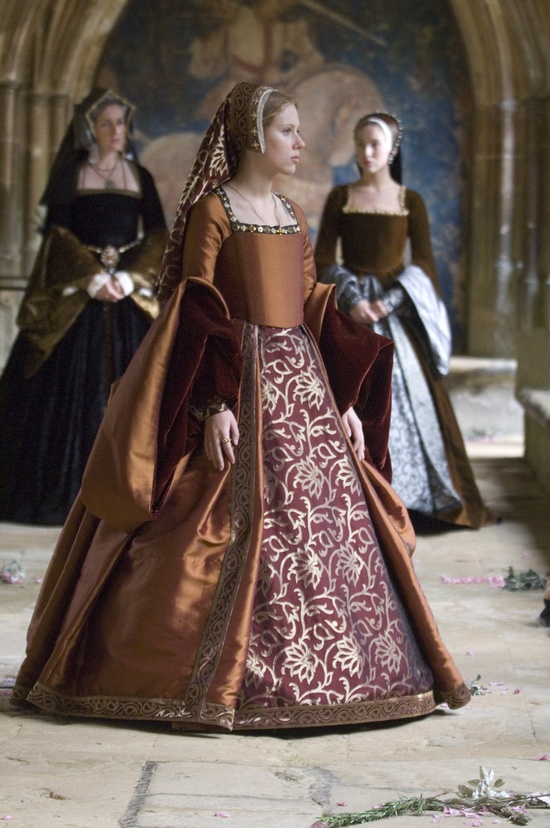
In the case of Genevieve, another blonde, she was the firstborn of a petty Frankish noble. Her mother, an Alemani, seemed a kind and gentle soul from what Genevieve remembered of her. The man went happily to war which was sometimes safer in those days than staying home. His happiness abruptly ended when Genevieve’s mother died giving birth to Genevieve’s baby brother. Genevieve was four. What could the man do? He had obligations to fight for Pepin, King of the Franks. He had been given land in the town of Breisach, on the Burgundian border, where he had to watch the Bavarians in the east and the Swabians in the south, the Thuringians in the north, and sometimes the Burgundians at his back. He was a soldier. What did he know about babies? But that was not the end of his sorrows.

Two years later, Genevieve’s baby brother died of complications from the flu. That was the way life went in those days. The man came home from war unscathed while his wife and son died in the house. It put the poor man in a difficult place. He knew nothing about raising a girl.

As you may have already guessed, about the time Genevieve turned six, her father married a widow who had two daughters of her own, one who was seven and one who was four. He imagined the three girls would be good sisters together, and his new wife would mother them and raise them to be ladies. He went happily back to his war and promptly died on the battlefield. I did not mean to suggest that war was a safe place to be.

Poor Genevieve.

You know the story well enough. Mother Ingrid spent all the money lavishing gifts on her daughters and spoiling them rotten. Genevieve got the leftovers and hand-me-downs, which she soon had to learn to take in because her sisters got fat. One by one, the servants in the house had to be let go, and Genevieve was forced to do the work the servants once did, until she became like a servant in her own house. And make no mistake. Even though Mother Ingrid claimed the house on the hill and all of the property in the county, the house was Genevieve’s. Father made sure of that before he left. Mother Ingrid and her daughters, Gisela, and Ursula had no claim. It was something like a prenuptial agreement Mother Ingrid signed, and it got kept in the town hall, in the hall of records where Mother Ingrid could not get at it. And just to be sure, the Church had a copy.

The house was a big house, too. It sat on the hill at edge of town with some property attached, including a barn and stables, now empty, of course, because Mother Ingrid sold off the horses and livestock long ago. They had farmland well away from town that tenants, something like serfs farmed. That produced a reasonable yearly income every summer and fall. Genevieve, which meant Mother Ingrid, also had the right to levy certain taxes in the county which came in over the summer. The household generally had plenty, or at least enough until about mid-March. After that, Mother Ingrid’s cry became, “Wait until May. The tax money will start coming in May. Things will get better when the summer arrives.” That was not always the case, but Mother Ingrid did go over the tax accounts carefully. At least the man who collected the taxes did not cheat them.

For seven years, life became more and more difficult for Genevieve, and the worst of it was when they had visitors, or rather one visitor who came four times over those years. Signore Lupen’s family in Lombardy and Mother Ingrid’s family in the alps apparently knew each other. Signore Lupen was a merchant of some sort and since Mother Ingrid had gained some position, he wanted to take advantage of that by opening up a new market. To be honest, Genevieve never did understand what goods the man marketed outside of some Tuscan wine which he freely supplied to the house. He stayed at the house, usually for a month, and treated Genevieve like the lowest of servants, making constant demands and criticizing everything she did. Mother Ingrid just laughed at the criticism.

The man was like the worst sort of uncle, and worse than that, he always came with three workmen, all ugly and mean, that left their barge and big wagon on the Rhine and stayed in the barn. She had to clean the place and feed them, too, and they were never nice to her. Worst of all, Signore Lupen always brought his son with him. The boy, Antonio, was a year older than Ursula, or two years older than Genevieve. He treated her worst of all. He touched her once, and she screamed. He hit her twice, though he swore he only slapped her. He shoved her once hard enough to push her to the floor and almost down the stairs. And he always got away with it.

Books to Read

FREE BOOKS

Smashwords year end sale is gong on right now and TIME is running out. Many of the books are free between December 15 – January 1 including my Avalon books. Don’t miss out!

The prequel Invasion of Memories, The Pilot Episode, and Seasons 1-6 are all free.

The direct link makes it easy for you to fill your cart with all my free ebooks.

Help yourself and Happy Reading

************************

************************

Introduction to the Avalon Series

The travelers came to Avalon in the Second Heavens so they could be transported instantly through the Heart of Time to the beginning of history.  They went on a rescue mission, but things did not go as planned.  The Kairos—the Storyteller, had to jump into the void before history and became lost in eternity.  Now, to get home, the travelers must return the slow way, following the Amulet of Avalon that points the way from one time gate to the next.  They cross dangerous time zones that center around the many lives of the Kairos, the Traveler in time, the Watcher over history, a person who never lives a quiet life.

They have unlimited vitamins and elf crackers for their health, and unlimited bullets which are needed far too often.  They ride mustangs brought back from the old west, and wear fairy weave clothing that they can shape and change with a word in order to blend into the local culture.   By a special gift of the Kairos, they can understand and be understood no matter the local language.  Inevitably, they have to deal with thieves, brigands, armies and empires, gods and monsters, spirits and creatures, space aliens and the great unknown.  They try hard not to disturb history along the way.  That is not so easy.

To be sure, all they want is to get home in one piece, but they are not the only ones lost in time.  Some people lost in time might want to follow them, or even go with them.  Other people are not so friendly, and not everything lost in time is a person.  Some want to fight the travelers.  Some want to hunt them.

************************


************************

After a year of reworking the books and their presentation, I hope to have the Winds of Time trilogy up on Amazon and D2D/Smashwords (B&N, KOBO, Apple, etc.) soon, at least in E-book form for you at less than $5 (USD) per book. This trilogy follows the first 18 lifetimes of the Kairos, what you might call childhood or how it all began.

Also, the final three books in the Avalon Series: 7 Wraith, 8 Aliens, and 9 The Masters  will be up when the covers and formatting is complete. Look for them all under the author’s name M. G. Kizzia or by the title (for example Avalon, Season One Travelers (Pilot Episode Included) or Avalon, the prequel: Invasion of Memories). Well, they are not too hard to find.

One request. If you have enjoyed the Avalon stories that have appeared for free on this website, I would appreciate if you took a couple of minutes to leave a review on Amazon, Smashwords, or wherever you shop. Thank you.

*

2024 Coming Attractions

Beginning MONDAY January 1, 2024

Kairos Medieval: Medieval Tales 

1) The story of Genevieve and Charlemagne. Genevieve only escapes her Cinderella life when her prince (Charles, King of the Franks) comes to town. Unfortunately, her stepmother’s “friends” haunt her days right up to Rome and the Christmas day coronation of Charles, the first Holy Roman Emperor.

2) The story of Thegn Elgar and Alfred the Great. Elgar (Eangar) fights for Somerset, for his Ealdorman father Eanric and later for his brother Eanwulf, and for the king. The Vikings are a terrible scourge who need to be driven from the English shores, and worse, the aliens Elgar calls Flesh Eaters don’t belong on this planet at all.

3) The stories of Kirstie the shield maiden of Strindlos in the Trondelag and Yasmina, Princess of Mecca and Medina, two young women whose stories are intertwined, almost like twins, though they are separated by more than thirty years.

Kirstie (Kristina) of Strindlos takes up her battle axe and sails with the Vikings, not for conquest, but because the god Abraxas is scattering terrible hags along the continental coast, looking for a safe way to return to the continent.

Meanwhile, Yasmina, her maid Aisha, and her faithful retainer al-Rahim also travel but across the sea of sand. They escape Mecca when the fanatic Qarmatians come calling. They are chased up the Hejaz, across the Negev and Sinai, and down into Egypt. They find temporary safety in Alexandria before the equally fanatic Fatimids arrive.

*

Interlude (TBA)

Somewhere between the two medieval books I hope to post either a novelette (6-10 weeks) if I ever get the thing finished, or maybe a few short stories, or possibly we can slip back into the BC for a different Kairos book like a story in the Americas (Ecuador, Columbia, and the Mojave) from roughly 3950-3450 BC or a story a bit closer to home, like between 1650 and 1250 BC among the gods, which would be the first stories of the goddess Amphitrite, Queen of the Sea, and the Nameless god of Asgard.

I am open to votes, but in any case, I want something between the two medieval books, just to have a break.

Kairos Medieval: Before Sunrise

This book will begin at the end of 2024 and post well into 2025, or it may begin as late as the ides of March 2025 depending on what the interlude story happens to be.

The book begins with the second stories of Kristina and Yasmina where they are forced to marry the wrong person, get out of that bad situation, and marry the right person, and the book ends with the story of Don Giovanni and his circus: The Greatest Show on Earth. (He stole that line from the future but he figures no one will sue him in the year Y1K).

Note

For those of you who read the two Kairos Medieval stories of Greta, the Wise Woman of Dacia, with her two partners in time, Festuscato, the Last Senator of Rome and Gerraint in the Days of King Arthur, and especially for those who went on to read the two Kairos Medieval books of Marguerite, where Festuscato and Gerraint finished their stories as well, it seemed only fair to post the last two books in the Kairos Medieval group. Notice I used the word group, not series.

I am reluctant to call them book 5 and book 6 in a series. I don’t want anyone to think they have to read books 1-4 to understand what is going on in books 5 and 6. I  am also reluctant to call them a series, for that matter, because it is not that kind of a series. Each lifetime of the Kairos is a story unto itself. Even when the story is split between two books as with Margueritte and Greta, I work hard to make each “half” a complete story with a beginning, middle, and end that comes to a satisfying conclusion and doesn’t leave cliffhangers.

So, if you read the stories of Greta and Margueritte, great. But if you didn’t read those stories that should not make any difference. Medieval Tales and Before Sunrise are stories unto themselves. I only hope you will enjoy them.

*

A Holiday Journey 21

Chris had to sit down.  He sat on the front pew, then moved over to give Santa room to sit.  He looked at his hands and sat in silence for what felt like a long time, though it was actually not long at all.

“You are asking me if I want to take over being Santa?” Chris asked.  “For the next two hundred years?”

“Eleven o’clock,” Santa said, and nodded, and pointed at the stained-glass window at the front of the church.  He sat beside Chris and continued.  “I apologize. Given the modern mass media, the image and traditions of Santa have been pretty well set in stone.  You probably won’t have much ability to shift things, at least at first.  But Santa needs some new blood.  Traditions can grow stale.  The first shepherd, Joel, said he soon realized different people would develop different traditions and celebrations, but he said that was a good thing.  When the Eastern Orthodox and Roman Catholic churches split, Sinterklaas made it work—even when the Romans tried to drag the celebration back to December sixth, he made it work.  As long as the Christ child remained the reason for the season, as they say.”

“That idea has struggled of late,” Chris said.

“You can read about it in the Christmas book,” Santa said, and pointed to a big, open book on a stand, up front, opposite the podium.  “My predecessors have long speculated whether at twelve o’clock there will be a twelfth Santa, or if that may be when the Christ returns.” Santa shrugged.  “I’m sorry I won’t be here to see it, but you can tell me how it turns out when you get there… So?”

“Well… I lost my job.  I lost my apartment.  I would have lost Lilly if she hadn’t been kidnapped… Times being what they are… Yes,” Chris said.  “But I hope I don’t screw it up.”

Santa patted Chris on the shoulder.  “Just do your best.  In the end, that is all that any of us can do.”  He paused, and they both looked up.

A light appeared around the altar, and grew until Chris and Santa could not keep their eyes open.  Both men trembled in the presence of what was holy.  The light soon settled into the image of a person, but that felt worse in a way.  That person was not only holy, that person was also pure and good in a way no human could be.

“It is settled.” the Christmas Angel said, but kindly made it sound like a question.

“Yes,” Santa stood.

“Good,” the Christmas Angel said, and appeared to smile.  A woman called.

“Santa. Victor.”

“Coming, dear,” Santa responded, as a ghostly image of an old woman appeared to come to the edge of the light.  Santa did not hesitate to step into the light, and as he did, both his and her images faded until they disappeared altogether.

Chris lowered his head, and the angel spoke again.  “Tell me.”

“Lord,” Chris began, and found some tears in his eyes.  They were tears for his hard life, his family that went before him, for all of the people around the world that still lived without hope.  He thought one good day per year was not too much to ask.  One day where people remembered the Lord and did good for one another would be the least the fallen human race could do.  “I don’t think I can do this alone,” Chris said.  “I need Merry, and Lilly, and all the others.”

Chris did not see the angel smile ever so slightly as the angel vanished once again in the light.  Chris just sat on the pew, and felt all the love, joy, and peace rush into his heart. Then he did cry.


Cue: White Christmas

A Holiday Journey, The London Symphony Orchestra

conducted by Don Jackson.  Ó℗CD Guy Music Inc., 2001


The front door flew open when the angel fully vanished.  Chris wiped his eyes as he heard a voice shout, “Uncle Chris!” He turned and saw Merry, who ran, but stopped a few feet away.  Plum and Roy stayed in the door, but removed their hats.  He saw a fairy land beside Merry, and change from a little, fluttering person, to a fully adult woman, more beautiful than an ordinary human woman ought to be.  And he felt something like a little bug, hugging his cheek and nose.

“Woah,” Chris said.  He had to be careful, but he grabbed the fairy around her legs and gently pulled her off his face.

“Lilly,” the fairy woman spoke.  “You need to come here and get big so your Uncle Chris can see you.”

“Yes mother,” Lilly said, and she did that very thing, and smiled briefly at Merry, who smiled right back at her.

Chris looked at Lilly, furrowed his brow and frowned a bit, but everyone could see the love in that frown.  “You ran away without telling me,” he said, gruffly.

“Uncle Chris…” Lilly did not know what to say, but Merry stepped forward and cut off her childish excuses.

“My fault,” Merry confessed.  “She is a half-fairy, a half Christmas fairy.”  Merry looked at Chris with big, sad eyes.  “Lilly was suffocating in the entirely human world, cut off from the magic that flows in her blood.  That was why she got sick, and especially bad in the Christmas season.  She is very young, and ageing more like a fairy, too. She is nearly seven, but measures small; more like a four-year-old…”  Merry let her voice trail off as she realized she was making excuses, herself.

Chris dropped to one knee and held open his arms to his little girl.  “Merry Christmas,” he said, and Lilly rushed into his hug. She returned his Merry Christmas.

Chris stood, took Lilly’s hand, and stepped up to Serissa, who did not know what to expect, but finally lowered her eyes.  Chris just smiled all the more.  He caught Serissa in a hug and repeated, “Merry Christmas,” and added, “Sister.”

Serissa found some happy tears and returned, “Merry Christmas.”

As Chris stepped back, he said, “Saying the words is right and good, but I think people should give Christmas hugs, too.”  He looked at Roy and Plum.

Roy leaned over and hugged Plum, and said, “Merry Christmas.”

“Same,” Plum said, and returned the hug, briefly, before he pulled back, brushed off his coat like restoring his dignity, and said, “We have some special deliveries tonight, it being actual Christmas Eve.  There are not many, but they are the hard and dangerous ones Santa always insisted on handling.  I don’t know what you want to do.” Plum struggled hard to hold his tongue after that.

Chris nodded, but said, “First things first.”  He turned to Merry.

“I have been made human,” Merry said, and added, “It is different.”

“You don’t mind not being an elf anymore?” Chris asked.
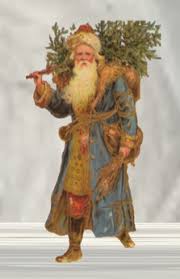
Merry shook her head and lowered her eyes like Serissa.  “It is what I prayed for.”

“Good,” Chris said in a voice straight and clear, without the least hint of what he might be thinking.  He came out with it.  “Will you marry me, Merry?”

“Yes,” she said, dropped one tear, and looked up at him in time to be wrapped up in his arms.  Chris kissed her, and she returned everything in her heart.  They would say Merry Christmas in a minute, or perhaps a few minutes.


Cue: closing credits …

Cue: Here We Come a Wassailing

A Holiday Journey, The London Symphony Orchestra

conducted by Don Jackson.  Ó℗CD Guy Music Inc., 2001


END

************************

MONDAY

MERRY CHRISTMAS


*

A Holiday Journey 20

*

Cue: Carol of the Bells

A Holiday Journey, The London Symphony Orchestra

conducted by Don Jackson.  Ó℗CD Guy Music Inc., 2001


“Christopher Shepherd,” Santa said Chris’ name as he slowly rose and walked down the center aisle.  “And you have seen the window.”

“Yes.” Chris did not know what to say. “Santa?” he repeated, and the old man nodded as he took Chris’ arm and gently led him to the altar.

“You can see the window better from here,” Santa said, and he turned his attention to point at the morning sun that streamed through the stained glass. “But, you see, there have been ten Santas since the birth of our Lord and Savior.”

“Ten Santas?”  Chris saw the window neatly divided into twelve slots, so it looked like a clock. Ten of those slots had pictures of people.  The eleven o’clock and twelve o’clock slots remained plain glass.

“Well, they haven’t all been called Santa, you know.  Let’s see.  I first met Kris on a trip to New York.  Mine was a merchant family, out of eastern Pennsylvania.  Christmas Eve, 1806, or 7… maybe 1805.  It was a long time ago.  Anyway, I explained the quaint Dutch traditions associated with Christmas to a young fellow by the name of Irving—that was his last name. Washington Irving.  I met him again in England about ten years later…” He waved off that train of thought and pointed again at the window.

“The first, the one o’clock picture, shows the first shepherd.  He was over sixty when the Lord was born.  A remarkable thing, to be so old in that day and time. He was out watching his sheep at night, and so on, you know, and the angel came to him, the Christmas angel. He filled Joel—that was his name—with the Spirit of Christmas on that night.  Love, joy, peace, generosity, celebration, and all.”

“Joel was a shepherd?”

Santa nodded.  “The first Christmas shepherd.”

“The first Santa?”

Santa nodded again.  “From that day, wherever Joel went, the Spirit of Christmas went with him and touched so many lives.  He was there when the church started.  He went with the apostles to Greece. He eventually made it to Rome, where he picked up a young man to help him in his journey.  He cut through Gaul and went into the Germanys where the J of his name got pronounced like a Y.

“Yoel?”

“Yule, as it came to be called.  He got burned at the stake.  That happened around 140. You see, in bearing the Spirit of Christmas, he ended up living over two hundred years, kind of like Abraham, I guess.  But before he died, he passed on the Spirit of Christmas to his young Latin friend.  You see? Two o’clock.”

Santa pointed again, and Chris kept his eyes on the clock window.

“That young Roman considered what it meant to carry the Spirit of new birth, the celebration of the Lord’s birth.  In the Latin, it would be the name Natalis, but in Gaul, he compressed the idea and came up with Noel, in honor of his mentor, Joel.  Pater Noel, actually, once he got a few years on him and grew his beard, which turned white enough.  He carried the Spirit of Christmas for two hundred and four years before he passed it on to the original Saint Nikolas, back in the Middle East.  That was in 343.”

Chris shook his head.  “I read about Saint Nicholas.  He died in 343.”

“Natural causes,” Santa said, and nodded with a small smile.  “There is a book that chronicles all of this. You can read about it, later.  He did not actually die, in fact, he took the job, and kept it well enough to put his imprint on the whole enterprise, at least the name Nicholas.  After two hundred years, when he was actually two hundred and seventy something, he came across a half-frozen man and his daughter in the Slavic wilderness.  He gave the man the Spirit of Christmas and took his place in freezing to death.”

“Four o’clock,” Chris pointed.  “I was wondering who the girl was.”

“Snowflake.  Still an important part of Slavic and Russian Orthodox celebrations.”

“Did she carry the Spirit as well?” Chris asked.

Santa did not exactly answer.  “Honestly, as the faith and Christmas celebrations spread, the job became too much for one person.  Ded Moraz was his name, and he chose to live in the far, frosted north.”

“The North Pole?”

“Well…near enough.  He was the first to enlist the elves to the task.  That happened in the Scandinavian north, the land of the reindeer.”

Chris nodded, but he had a serious question.  “And that demon at five o’clock?”  He thought of Courtney.

“Another Nicholas, as he took the name.  Krampus was his demon.  From roughly 750 to 960.  Each bearer of the Spirit of Christmas serves about two hundred years.  Each Santa, if you will, from that point on, also had a demon of some sort to follows them around.  They frighten the naughty children, but you know, though they are powerless in Santa’s presence.  Kris said it kept him human, and I don’t disagree.  It is remarkable what Santa can do.  Faithfulness, humility and self-control are probably the most important traits to hold on to.”

“I can see that,” Chris said.  Santa paused to look in Chris’ eyes.  He said nothing, but after a moment he nodded and went back to the window.

“Six o’clock is the Dutchman, Sinterklaas, and his servant, Zwarte Piet. Servant, not slave, is the best way to refer to that.  Those were the dark ages, from about 960 to 1171.  In those days, the Roman Church tried to disconnect the celebration from the birth of the Lord and drag it back to December sixth, the supposed death day of the first Nikolas.  I don’t know what demon in Rome suggested such a thing, but it became a struggle. In the end, about 1171, a bishop, I won’t say which, beheaded Sinterklaas.”

“Burned at the stake, frozen to death, beheaded,” Chris said.

“I know,” Santa agreed.  “It is not an easy job.  In the Middle Ages, mostly in Europe, though just hinting of spreading world-wide, Sir Christmas, an honest to goodness knight, took the job.  He had a retinue of helpers by then, and the elves and fairies of Christmas as well.  He needed the help.  And in 1383, the one who followed, an Englishman, kept to the theme.  Father Christmas was what they called him.  He saw the celebration up to the days of reformation.

“The reformation.  That must have been a difficult time to hold things together,” Chris surmised.  “Christmas itself might have splintered into dozens of separate traditions.”

“There are dozens of separate traditions,” Santa said.  “Some still celebrate December sixth.  Some celebrate on January sixth—the day the wise men presumably arrived bearing gifts.  It is hard to keep track of, but the Spirit of Christmas, the love, joy, peace on earth, the giving and caring for one another and celebrating the time of the Word made flesh remains.”

Chris nodded.

“I will say, Father Christmas and Henry the VIII did not get along well.  But anyway, in 1601, the reformers wanted to move away from the Catholic tradition.  Sinterklaas had already dealt with the east-west schism, when the catholic and orthodox churches split.  This became like that, except the reformers were more nation-state or even congregational based, one of the main reforms being against a central, human authority. But that led to so many different churches—so many denominations.”  Santa shook his head, like the whole thing gave him a headache.

“Father Christmas found a German, since that was where most of the trouble centered. A Lutheran, Kris, with a beautiful young blonde daughter that he called his angel.  She took on the persona of an angel, sort of.  The Christkind.  Kris Kringle was his name, but some still referred to him as Nicholas.  I get Nicholas at times, or Saint Nick, sometimes. Can’t be helped.”

“I see you and Missus Clause up there at ten o’clock.”

“Yes.” Santa paused to pull out a handkerchief and sniff before he blew his nose.  “Pennsylvania Dutch, originally.  Clausen. Plenty of German roots, too.  She bravely went with me when the shop went bust. We headed to Indiana territory to make a new beginning.  We got caught in a snowstorm.  That was where Kris found us.  I forgot all about meeting him in New York that one time.  He offered me the job, and well… With the shop gone, and the Shawnee about to go on the warpath… Times being what they were, I accepted the job.”  Santa smiled and let out a little of his famous ho, ho, ho.  “I heard that once in a movie.”

“I know the movie,” Chris returned the smile.  “But that is more of a Halloween movie than a Christmas movie.”

Santa frowned.  “You know, I am not entirely happy with some of the ways I have been portrayed.  But honestly, each Santa, in turn, has had some impact on that portrayal—in the human psyche.  Nicholas, long white beard, living in the frozen north, and so on.  Then, there have been some exaggerations cooked up in the human mind.  Can’t be helped.  I hope you realize I don’t actually travel around the entire world in a single night, bringing presents to all the good boys and girls.”

“Oh?”

“Oh, there is a workshop, and we make toys, but we also make plenty of ordinary things as well.  Shoes, coats, soap and clothes.  We package lots of food, mostly dried and canned, though some cookies and candy. Toothbrushes have been a big one these last fifty years or so.  Mostly, they get put in boxes and delivered to the poor and needy through others. Goodwill, Salvation Army, Samaritan’s Purse, and churches; thousands of churches all over the world.  I have delivered some few, special needs now and then, but mostly the elves take care of passing on our work to where it is needed.”

“Elves that appear human,” Chris understood, and had a revelation. “Those two soldiers in 1914, with the Christmas cookies.  They were disguised elves.”  His eyes got big.  “That old priest in the Catholic church was you.”

“Yes,” Santa admitted, before he looked down at his boots, what he could see over his belly. “And Plum and Roy.  Sorry about them.”

“They are all right,” Chris answered.  “Plum just talks too much without any watch on his tongue, and Roy doesn’t say enough.”

“Yes,” Santa let out that little smile.  “That about sums them up.”

“And Merry?” Chris said, but it was a question.

“That little girl… I mean, that lovely young woman.  She thought I was getting too old, which I am.  She wanted to bring you here to help me in my old age.  That was very kind and thoughtful of her.  But you know, once an elf gets attached, they are very hard to remove.”  Chris stared at the wall for a moment, and Santa looked at him, squarely.   “You know, if you marry her, she will stop being an elf and become human.”  Chris did not know that, and thought maybe that would be asking too much, but Santa took his arm again, as he did at the beginning.  “How about we let her decide that,” he said, and Chris nodded, before he swallowed his feelings and spoke.

“But now, Lilly.  Did you have to kidnap her?  Where is she?”

Santa held up his hands to stave off Chris’ anger.  “She is here, and fine.  She is with her mother, Serissa.”

“Serissa? She is alive?”

“Serissa. She is the Christmas Rose, a fairy.” Santa paused to let that knowledge sink in.  Chris’ eyes got big as he remembered several strange events in Lilly’s young life.

“I want to see her.  I need to see her.”

Santa still had his hands up to make Chris pause.  “First things first.  Do you want the job?”

A Holiday Journey 19

Chris pushed as fast as he could through the brambles and bushes at ground level. He could hardly see where to place his feet, but Lilly was in trouble.  The sky remained storm dark, and it seemed doubly dark under the trees.  The only grace seemed most of the snow got caught in the branches above.

“Lilly,” Chris called.  He heard a deep, guttural growl off to his right, and headed toward it instead of away from it.  “Lilly.” Suddenly, he imagined that maybe the missing reindeer was all part of the game.  He tried again. “Roy.  Plum. Merry.”  He stopped just inside a small clearing.  Something like a street light, or the moon come down through the clouds could be seen overhead.  A creature, or person that looked too much like Courtney for comfort, stood on the edge of the trees, ten feet off.  She had Lilly, with a hand or claw over Lilly’s mouth.  Her other claw held a knife pointed at Lilly’s throat, and she spoke in a harsh, chilling version of Courtney’s voice.

“Your elf maid has deserted you.”

“Hardly,” Chris responded, pulling up all the courage he had. “She has gone to help save the animals, and I support her in doing good for others.”  He dared not move closer for fear of what might happen to Lilly.

Courtney turned down her blood-red lips, not liking that answer.  She showed her fangs.  “Making love to an elf is a disgusting idea.”  Courtney shivered, like one repulsed by the idea of so much as touching such a person.

Chris laughed, a real “Ha, ha, ha,” and only a small bit of nervousness could be heard in the laugh.  Most of it sounded genuinely amused.  “But Courtney, I thought you were into all that social justice stuff.  Origin, skin color, even species should not matter. You know, love wins.”

“Are you prepared to have pointy-eared freaks for children?”

“I have found the world full of every kind of people, and many of them try to be good, even if they often fail.  True, there are some bad ones, and that is sad, but we pray for them.”

“A pointless exercise, praying to some sky-god.”  Courtney shuffled what looked like cloven hooves in the snow.

“But this is Christmas Eve,” Chris continued.  “Far from being pointless, this is the night the promise of love became real in a baby.  Love won on this night, and you lost.  You have no power here.”

“No.” Courtney grabbed Lilly more securely and scratched her cheek.

“Love, joy, peace, patience, goodness, gentle-kindness, faithfulness, humility, and self-control.  All these things are real.  They are not only real, but on this night, they came to live in the heart of all who believe.  You have no place in such a heart.”

“No.”

“Lights,” Chris called.  He figured out what those moving lights were.  “Lights, I need you.”

One by one, the fairies of light abandoned the great tree in the wilderness and attended to Chris.  It miraculously stopped snowing in the little clearing, and the Courtney-beast looked up and around, dread written across her face.  As the fairies arrived, the light in the clearing increased until it became almot too bright to see.

“I will pray for you,” Chris said, as he closed his eyes.

“No,” Courtney screamed and vanished with Lilly still struggling against the claw.

Chris lay down in the snow, not sure if what he saw had been real or a dream.  He felt his head spin.  He spent all week worried about Lilly, and now he could not be sure what just happened.  He felt exhausted, and did not pay close attention to what he was doing.  He knew the devil was real, but had no power over the people of faith.  Faith, hope, and love, he thought.  But the greatest of these is love.  He fell asleep, and the fairies kept careful watch in the night.


Cue: Dance of the Sugar Plum Fairies from “The Nutcracker”

A Holiday Journey, The London Symphony Orchestra

conducted by Don Jackson.  Ó℗CD Guy Music Inc., 2001


When Chris woke, the sun just began to brighten the horizon.  He found a blanket beneath him, and another on top of him.  He felt warm enough, glad the snow did not fall on his face all night.  He figured the others must have returned and found him in the night.

“Merry?”

She did not answer, so he sat up and found himself alone on the edge of a clearing. He stood, picked up both blankets, and draped them around his shoulders.  He looked around, in every direction, twice.  He must have gotten turned around in the dark.  He looked as hard as he could through the trees, but saw no sign of the others, and no sign of the big Christmas tree.  He thought to wait.  As a child, he got told he should stay where he was until the others found him. He folded a blanket and set it on the ground beneath a tree so he could sit and watch the sun rise.

“Today is Sunday,” he said to himself.  “It is the real Christmas Eve back home.”  He did not want to think of home.  Without Lilly, he had no home.

“Eighteen-eleven,” he said out loud.  “From 2017, that makes two hundred and six years.”  He did not understand.  Why did they have to travel into the past?  Why did they move fifty-plus years at a time?  Was there some significance to those times?  He could only remember the Christmas villages his grandmother used to collect.  He remembered the Yuletide diner from the nineteen-sixties village.  He recalled some of the eighteen-sixties dickens village. London Towne, if he recalled correctly. World War I in the trenches made no connection, however, and eighteen-eleven in the wilderness of Indiana territory with a giant Christmas tree in the middle of nowhere made even less sense.

“Merry,” Chris tried one more time before he got up.  It started getting too cold to continue to sit.  He had to start walking to warm up.  He considered walking the edge of the clearing, to stay where he was, but he decided that would be stupid, and boring.  He opted to pick a direction and see what he could find. He had thought through his movement through the trees in the night, and tried to pick a way that would lead him back to the great tree, but he had little hope that he might choose the right way.

“Merry.” He called now and then as he pushed through the undergrowth and occasionally growled at the thorns and burrs. “Plum.  Roy.” he sometimes added, and sometimes he walked in silence.  He was not sure what sort of Indians inhabited Indiana territory, but it would not be good to run into a hunting party, or worse, a war party of some sort.  One more push, and he came out on a two-rut road, a wagon trail of some sort that vanished quickly among the trees behind him, but cut well through the trees ahead. The snow looked thick on the road, but it would do, if his toes did not freeze off.

“Merry,” he called one more time before he started off down the road.  He hummed and whistled some Christmas songs, to occupy his thoughts, it being Christmas Eve for real, back home.  He remembered it was Sunday, so he changed his humming to his favorite Christmas carols, including O Little Town of Bethlehem, as he climbed a small hill where the trees finally gave out.

On top of the hill, he saw a village up ahead—a small town at the bottom of the hill. It looked to be built mostly of log cabins, though he did see a few slat-wood houses.  He did not see any people there, but he figured about ten o’clock on Sunday, and they all might be in church.  After all, 1811 in pioneer territory, he thought.  He saw a steeple in the distance, and headed for it.

Chris whistled Silent Night as he wound through what looked like a deserted town and came at last to the steps of the church.  He did not hear anything inside or outside the church, and found that curious. He looked up at the great circular stained glass window, but could not make out exactly what it was supposed to depict.  He tried the front door, and found it unlocked.

“At last,” he whispered to himself.  “A church that doesn’t lock its doors on the Sunday before Christmas.”

The church had a small altar with candles burning in front, two steps up, and a single small pulpit, more of a podium off to the side.  It had a center aisle between a mere dozen pews—half-a-dozen on each side.  All were empty except for the very front pew, where a very old man with a long white beard appeared to be praying, with his hands clasped, and his head lowered.

Chris did not want to interrupt, so he looked quietly around the room where there was little to see, and at last, raised his head to look at the circle of stained glass from the inside.  It looked like a clock, with twelve spaces.  He imagined the twelve days of Christmas, but the eleventh and twelfth spaces appeared empty, being plain glass.  The other ten spaces had pictures of people.  He recognized the ten o’clock space being Santa and Missus Claus.  He spun around to look again at the old man in the front pew.  That man lifted his head and began to stand, moaning a little as he had to make his knees work.

“You made it,” the old man said.

“Santa?”

************************

FREE BOOKS

Smashwords year end sale is gong on right now. Many of the books are free between December 15 – January 1 including my Avalon books.

The prequel Invasion of Memories, The Pilot Episode, and Seasons 1-6 are all free.

The direct link makes it easy for you to fill your cart with all my free ebooks.

Help yourself and Happy Reading

*