Medieval 6: K and Y 13 To the New World, part 3 of 3

Yasmina

Men came to the edge to look, and one big, ugly young man near her age stepped to the edge and let out a lustful smile, like he could see what lay hidden inside her abaya and niqab where only her eyes showed. “Nidaros, in Norway, a land so far to the north, even the bears turn white in the snow, if you know what snow is.” He chuckled. “I am William Brantsson, and you are?”

“I am Princess Yasmina of Mecca and Medina,” she said over al-Rahim’s and Aisha’s protests. “William is not a Norwegian name. How did you come by it?”

“My mother. Inga the Volva of Trondelag.’

“Is Inga still alive?” Yasmina asked.

“Yes,” the man said, and his expression turned to pure curiosity.

“And is Buttercup still her friend? And how are Yrsa and Alm?”

“How can… How do you…”

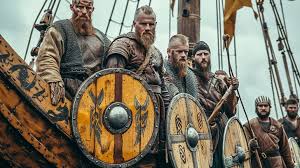
“William,” a gruff voice interrupted the conversation. Three older men, near fifty came to the railing, and the one in the middle spoke. “I am Captain Knud Frodeson. What can we do for you?”

“You and all your men can help,” Yasmina said. She smiled, though they could not see it. She smiled harder when she recognized the two old men that stood beside the captain, and then the pressure on her became too great to resist. Yasmina went away, and Kirstie took her place and came dressed in her well-known armor, her shield and battleaxe at her back. Kirstie was a good four inches taller than Yasmina and her eyes were bright blue as against Yasmina light brown eyes. The rest had not been noticeable under all of Yasmina’s clothing, but Kirstie knew she still had Yasmina’s smile in place.

“Knud,” she said. “Are you still raising puppies? Oswald and Edwin, is your mother still alive? How is your brother, Sibelius?”

“Lady Kristina of Strindlos.” Knud shouted. “You don’t look a day older than when I saw you.”

“It is Oswald the Elder now,” the old man said of himself. “And Edwin the Dog.” he pointed and the old man on the end appeared to be crying. “Mother passed away some years ago.”

“I am sorry to hear that,” Kirstie said.

Knud got hold of his voice. “But how can you be here? what happened to that young girl?”

Kirstie did not answer them. She said, simply. “Bring your men and weapons. We may have to defend the docks and your ship.” She turned and reached out to kiss al-Rahim’s cheek. Unlike Yasmina, she did not have to get on her toes to do it. “Thank you for taking good care of me,” she added and took Aisha’s hand. “And your cousin says thank you, and she never thought of making herself appear older, obvious as that is.”

“Maybe you didn’t need older,” Aisha said. “Yasmina needs as much older as she can get.”

Kirstie listened to Yasmina protesting in her head before she agreed with the elf.

The next stop for Kirstie, even as the Vikings began to come to the dock, was the longboat from the Amalfi ship. This time al-Din shouted first.

“Francesco!”

“Al-Din,” Francesco responded, and he hurried to get to the dock. “I’ve been looking for you for more than a year. I was beginning to think what the governor said was true, that you met your end among the Fatimids. You know, I went there a few years ago searching for Yasmina. I opened trade with the Fatimids for all the Amalfitani. I have been up the coast, all the way to Syria and beyond, to Roman territory, but I have heard nothing of her.”

Kirstie paused in her conversation with William Brantsson to respond. “I was held captive in the palace in Mahdiya. I was forced to marry al-Hakim, the Mahdi’s grandson. Sadly, or maybe fortunately, he had no interest in marriage, at least to a girl. I had to kill him because he was serving the Masters. I suppose that makes me a widow.”

“Who is this person?” Francesco asked al-Din.

Al-Din smiled hugely because he thought he understood. “Yasmina, except she is not Yasmina at the moment. She is…”

“Lady Kristina of Strindlos,” Aisha said with an equally big smile.

“Stop it,” Francesco said. “I have searched for Yasmina for these past four years, and though I have not found her, I will not be giving up.”

“Why is that?” Kirstie asked, even if she knew it was cheating.

“Because I want to tell her that I love her, though we hardly spent a week together. She sets my soul on fire. I kissed her once and I will not rest until I can kiss her again and every day for the rest of our lives. I may get old and die looking for her, but so be it.” He made a determined face. Kirstie thought he looked a bit silly, but Yasmina protested and said he looked wonderful. Meanwhile, the pressure in the other direction became too great and Kirstie traded again with Yasmina. She stayed in her armor, though the battleaxe and shield got replaced by a smaller shield such as a horseman might hold, and a sword, while Yasmina’s scimitar appeared at her side. She also came with her cloak, hood up, but her veil down so Francesco could see her face, and she spoke, not what Kirstie would say, but from her own heart.

“Did you mean it?”

Francesco gawked at the transition, but only for a moment before he stepped forward and took her in his arms. They kissed for the next few minutes and that settled matters nicely for the both of them.

Al-Rahim spoke to the Amalfi skipper. “Bring your fighting men to the dock. We may have to defend your ships and crew, depending on how things turn.”

At that moment, a young Arab came up with a young woman in tow. The woman shuffled along with her feet and never looked up. A middle-aged man came from the other direction, and he had his sword drawn. Al-Rahim turned to the swordsman first because he knew the man.

“Zayd the Christian.”

“Mubarak is dead,” Zayd said. “Some went to the house and Abu ibn Suffar is reported to be dead. I cannot confirm that, but many will be along shortly.”

Aisha hardly glanced at the Young Arab man, because she knew the girl from their time in the governor’s palace. She spoke because Yasmina was busy. “Sharin. Speak to me.”

Sharin finally looked up when she heard her name, and she breathed a great sigh of relief. “Oh, lady Aisha. I didn’t know it was you.”

“Here is the need,” Aisha spoke sharply like a commander on the battlefield, or in the kitchen as the case may be. “We need to get a few men, Princess Yasmina, and myself in to see the governor when he is not near Suffar or the Jinn. Perhaps in Princess Badroul’s chambers, if that can be arranged.”

“Oh, Lady. Men in the chamber of the Princess will be killed,” Sharin said.

“Only her Fiancé. There is precedent, as long as Captain al-Rahim and Ziri, Yasmina’s harem guard are there to chaperone, and maybe if you know a friendly guard in Badroul’s harem, that might help.”

“Sharin hardly had to think. “Harun and al-Asad are still here. They survived the pirates, though Harun limps. They have been assigned to the guards. They may help.”

Yasmina took a breath. “Harun and al-Asad are alive,” she said, and went right back at it with Francesco.

“It will take some time to arrange,” Sharin stated while her face showed that she was thinking about exactly how to arrange things. “Come to the princess garden gate in two hours.”

Francesco took a breath. “We can climb over where the tree is again,” he said, and returned to his preoccupation.

“We may need the two hours to calm these two down,” Aisha said and looked at the men who were all standing around, grinning at the couple.

“Come along Nasr,” Sharin said. She grabbed the young Arab’s hand to drag him behind her, and he did not seem to mind at all.

Yasmina pulled her head back for a minute to see. She said an aside to William Brantsson. “Like your mother once said, it must be in the air.” she paused long enough to think pressing up against poor Francesco with her chain mail could not be very comfortable. She thought of Kirstie’s blue dress, having just been Kirstie, and called to it. The dress instantly replaced her armor and weapons. It left her head and hair completely uncovered and showed a bit of her arms above the wrist and her shoulders. It even showed a bit down the front, which made Yasmina feel completely naked, but Francesco liked it. He almost fell over to look at her, but she held on to him so they could squeeze together and go for round two.

Medieval 6: K and Y 13 To the New World, part 2 of 3

Yasmina

Two women in full length, straight cut abayas made of black died Egyptian linen, and wearing full length niqabs so only their eyes were revealed came and knocked on the door to inquire about al-Din, the owner of the house. An old man, a retainer of some sort stood beside them, and a young man in traveling clothes complete with a veil of his own did most of the talking.

“We have come from Burqah in the west at the invitation of Ala al-Din to partake of his gracious hospitality as he offered in his many letters. My lord is in waiting to see the governor, and he sent his daughter and her maid ahead so that they might be refreshed. Is this not the house of al-Din?” Ali asked.

Al-Rahim determined that both Ali and Sulayman had both the brains and the courage that their leader Omar lacked. He ordered Omar to be in charge and told Sulayman privately to watch the horses and watch al-Din, and to keep al-Din’s face covered against being recognized and keep him out of trouble.

Ziri, the last Berber with them put on the appearance of a typical Bedouin guide. He was the one who went ahead through their long journey and spoke with the Berbers and Bedouin they encountered along the way to secure food for the people and fodder for the horses. They stopped at many farms and paid generously for what they received. Al-Rahim made sure he packed plenty of silver in the saddle bags for the journey. But often Ziri, or when he was still with them, Gwafa would do the talking. Now, in Alexandria, Ali got to do the talking. Ziri’s Arabic had a definite western accent. Al-Rahim’s was near enough perfect, but he and Yasmina had a slight accent and their being from the Hejaz might be noticed in certain word choices and phrases.

“Alas,” the man actually said the word as several other servant men and women came up behind him to listen. “Our young master al-Din went on a mission to the west, to the Fatimid fanatics. He has been declared dead by the governor and the property has been given to the governor’s vizir, al-Suffar. He is now the owner of this house, and his son now rules in al-Din’s place.”

“You do not sound happy about that,” Aisha spoke out of turn.

The man paused to look around at who was listening in. “No, no. We are all happy here,” he said without any conviction. “But Abu ibn Suffar does not like visitors. Please go away.” He sounded like he wanted to say, “Please run and save yourselves.”

“What happened to Princess Badroul, his true love?” Yasmina spoke before the man could close the door.

The man looked around again before he answered in a whisper. “Al-Suffar wishes her to marry his son, but she has resisted. She claims she will not marry until she hears for certain whether al-Din is dead or alive. The pressure to marry is great. I fear the governor may force his daughter. But that would be terrible for the girl. Abu is… sometimes…” He decided not to finish his sentence. “Good day,” he said and shut the door.

“So, we go to the palace and confront the governor,” al-Rahim suggested, but looked at Yasmina for confirmation.

“We will,” she agreed. “But first we need some inside information. Suffar is likely at that palace, and we want to get the governor alone and out of the influence of Suffar or the traitorous Jinn. She began to walk toward the docks on a whim, wondering if a friendly merchant might supply them with some information. She honestly thought of Francesco, but she hardly expected to find him.

Yasmina did not expect to get entirely accurate information, but she did find one of al-Din’s merchant captains, and he willingly shared what he knew. “The governor is hardly more than Suffar’s puppet. I heard rumors that a mighty Jinn is the power behind Suffar’s sudden rise to power, and I believe it has to be something like that. The man, Suffar, is as cruel and selfish as any I have ever seen. Now that young al-Din is gone, it is insufferable to work for the man, and his son is even worse. You were lucky to catch me in port. I have been considering sailing away and not coming back, but taking myself, my crew, and my ship to work for someone else.”

Yasmina remembered that Suffar was a sorcerer of a sort. But she concluded that the Jinn was the key to everything. “Well,” she said. “I can at least assure you of one thing.” she smiled for the captain as she called. “Aladdin.”

“Princess?” Al-Rahim questioned Yasmina’s decision s al-Din stumbled forward. The captain looked, fell to one knee, and praised Allah and the prophet for bringing the master home. Yasmina explained to al-Rahim.

“We need allies, back-up. Maybe an army of sailors and merchants who would rather work for al-Din. Captain Hazem al-Zahir is the first, and I bet he knows who to contact among al-Din’s people.”

The man stood at al-Din’s insistence, and al-Din hugged the man which both surprised the captain and put a look of determination on the man’s face. “I know exactly who to gather. Al-Suffar has elevated the three worst men to oversee the business. One runs the dock. One runs the house. And one, Mubarak, runs the stables and warehouse where the caravans gather.” He turned to call his nearby crew to come to him so he could send them to fetch the good men ready to rebel.

“The same Mubarak?” Yasmina asked Aisha. The elf had to pause and look at the sky before she produced an answer.

“I believe so.”

Yasmina smiled. “It’s a small world,” she said, and then looked at Aisha with a touch of fear in her eyes.

“Don’t worry,” Aisha said. “I won’t start singing.”

“Princess,” al-Rahim got her attention and pointed. “It appears the Amalfi are coming into the port.”

“Maybe they will help,” al-Din said. He had excellent trade relations with the Amalfitani through his friend Francesco d’Amalfi.

“Francesco?” Yasmina could not keep the desire from her voice.

“It may be,” Aisha said. There weren’t any imps, elves, dwarfs, or fee handy in the water to check for her. She grew up in the Hejaz, as did Yasmina. Aisha had some minimal contact with the sprites in the red sea, but she did not know any in the Mediterranean. She was a spirit of the earth and not automatically connected to the spirits in the water, air, or fire, so all she could do was shrug.

“Wait here,” Captain Hazem got her attention. He looked to the sky to judge the time. “Three hours and we will be back with plenty of men.”

Yasmina interrupted the man. “What I need is someone who has contacts inside the palace. We need to get al-Din alone with the governor where Suffar and the Jinn cannot interfere. It would be best to settle matters peacefully if we can.”

Hazem nodded as he stroked his beard. “I’ll see who I can find. Meanwhile, Ibrahim here will stay with you until we get back.” The man smiled and bowed to al-Din. Captain Hazem bellowed his orders and the crew split off in several direction to disappear in the crowd around the docks.

Yasmina’s eyes shot back to the Amalfi ship dropping anchor in the bay. She hoped it might be Francesco but she had no reason to suppose it was, or that the man ever even thought of her. He was Italian, hot-blooded, and probably had a girl in every port. She sighed and then caught sight of a ship pulled right up to the dock, and it was the last ship she ever expected to see. She stood from the chest she had been sitting on and walked straight to the ship. Of course, Aisha and all the men had to follow her.

“Princess?” Al-Rahim asked where she was going, but Yasmina did not answer. It was an actual Viking Longship, and she just had to know.

“Norsemen. Where are you from?” She asked in Kirstie’s Norwegian language.

Medieval 6: K and Y 13 To the New World, part 1 of 3

Kirstie

The storm came quickly. Kirstie, who was presently tuned into the sprites of the water and the air got the impression that the ship stayed on the edge of the storm. The wind and waves pushed them toward North America as it slowly turned to swipe the southern point of Greenland. The water sprites made something like a stream in the sea that kept them moving in the right direction, though it was hard to tell given the way they went up great hills of water and zoomed down the other side. The crew certainly had no control over their vessel.

The rain pelted them all day and night. In the morning, Wilam thought the rain slackened off, but Kirstie knew that was wishful thinking. She could sense where the tail edge of the storm was located and knew when they finally broke free of it about two that afternoon.

Everyone weathered the storm, and they lost no one overboard, but there were any number of cuts and bruises as men banged into the wall, the deck, the railing, the mast, and seemingly whatever else they could find. One man busted his arm on his own rower’s bench down below. One man, one of the three on the steering board that held on for twenty-four hours, got thrown from the board at the last and cracked his head against the stern dragon’s tail, giving himself a concussion.

No injury was life threatening, so after a hot meal of fried fish and being warmed by some particularly strong mead that Olaf had down in the hold, they raised the sail and continued their pursuit.

Traventor reported that they lost about half a day on the Viking ship, but that ship, once they hit the coast of Labrador, began to sail slowly to the south along the coast looking for something. Traventor said they could make up the half day by cutting the corner and heading for where they anticipated the Viking ship would be. Kirstie hoped they could catch sight of the ship once they hit the Labrador coast, but they were still too far away for that.

Yrsa got Kirstie’s attention when she reported that she was picking up something like a spiritual broadcast. The hag was reaching out to the tribes as she went by, looking for a people that would be amenable to her word about Abraxas. Abraxas might have been banished from the earth, and everywhere on the earth that he had some connection. But Kirstie understood if he forged a new connection with people unknown to him, he might yet come back to earth and ruin everything.

History has no record of Abraxas being worshiped in the new world. He has no more place here than in the old world.

Captain Olaf’s ship had a small mizzenmast for a second sail. Even though his ship was heavier and sat deeper in the water, it could almost match the speed of the longship. It could not maneuver as well, and when they had to get out the oars it lagged behind, but as long as they had the sails up and a good wind the Viking longship would not get further away.

“The hag needs to find a people confronted with two different worldviews and confused about what to believe,” Kirstie said to Yrsa, Wilam, and Brant. “She seems to be reaching out to the tribes along the shore, looking for the right set of dynamics.”

“She is looking for people with no faith that she can fill with faith in Abraxas?” Brant asked.

“No. I think it is more people whose view of the world seemed rock solid and are suddenly confronted with something that tears down that view. It is people who have always believed, but now don’t know what to believe. That is where she can gain converts, and with enough believers, she can invite Abraxas to return to the earth and start all over again.”

Kirstie imagined she knew where the hag would end up. When the Vikings came to Belle Isle and turned into the strait, she felt sure they would park a L’Anse aux Meadows on Newfoundland. That was where the future said the Vikings built a settlement. She figured they were about fifty or eighty years too soon, but maybe the stories would pass on and one or more of the men might help guide Eric the Red or Leif Ericson in the future.

In fact, the Viking ship hardly slowed when it entered the strait. It sailed all the way down to the Gulf of St. Lawrence, and for a day, Kirstie feared they might sail up the river, but they turned. They reentered the Atlantic, turned again, and sailed down the coast of Nova Scotia.

Captain Olaf’s ship had some difficulty following that course. When they reached what would someday be called the Cabot Strait, the wind turned completely against them. They had to row their way back out into the Atlantic, and that lost them another day.

Captain Ulfsson’s ship left Nova Scotia and skipped over the Gulf of Maine, making a beeline for Cape Cod. Still not finding what they were looking for, they sailed around the islands off the coast and headed into Long Island Sound. When they reached the East River, they pulled up to the eastern shore of Manhattan and went to work.

The island was divided between Iroquois speakers and Algonquin speakers. The struggle for dominance was as much cultural and psychological as physical warfare. It was the earliest version of West Side Story with the Jets and the Sharks struggling to control the neighborhood. Most of the innocents on the island got caught up in the struggle, and frankly did not know what to do.

It did not take long for the hag to gather people to her side. A demonstration of power and the promise of having a god with us was all it took. Many came willingly, wanting an end to the struggles. Some did not believe, but they soon moved out of the way. The Iroquois fled to the Bronx or abandoned the struggle altogether and tried to navigate the paths between the Lenape and Mahican tribes to get back to Mohawk land. The Algonquins crossed over to Brooklyn where they had a strong base, made strong by the twelve-foot giant, Anenak, who lived and all but ruled there.

When Olaf’s s ship arrived in the East River, Kirstie had them row first to Brooklyn. It would be dangerous, but they would need allies against the hag if the Lenape were willing. They were met on the shore by an armed party, and the giant. At least they were not met with arrows.

The captains, their officers with Kirstie and Yrsa came ashore and walked a short way to where the natives stood armed and ready. Wilam whispered. “Thank you, Yrsa, for contacting the light elves in this region and gathering the information we need.”

“And they are watching the hag and Ulfsson’s crew?” Brant wanted to be sure.

“They are, but we have our own problems first,” Wilam answered, and just missed grabbing Kirstie’s arm because of the distraction of the question. Kirstie, as was her way, rushed out in front of the captains and the officers, Yrsa on her tail, and she shouted.

“Giant. Why are you here? The only giants remaining in the north are around the great lakes or scattered across the distant mountains. Anenak, do you not fear the wasting disease being around so many ordinary humans?”

“Who are you to know about the wasting? Are you the one I was told was coming, or is there another?” he asked, even as an elf-like man came to appear beside the giant. Many Algonquin warriors stepped back from the sight, and the captains and their men looked uncomfortable. The man did not exactly look like an elf. He looked like what the Kairos sometimes called a new world elf. He went to his knees in front of Kirstie.

“I am the only one in this time and place,” Kirstie said. “But why are you not with the last of your kind?” she asked.

The giant conceded and told his story. “When I was a child some four hundred years ago, my mother told me the tale of Yazu the Great and his companion, the young mortal girl Huyana not Ugly. They came from the west, far and far. They came to destroy the serpents who walked and talked. The battle was fierce, and in the end, Yazu the Great destroyed the last of the serpents, though he gave his life to do it. The serpents who walked and talked were removed from this world to never return, and Huyana not Ugly buried Yazu in a great mound of all honor. I do not know the truth of this tale, but when the last of my tribe became taken by the wasting, I escaped and thought to come to this place and see if I might find the mound of honor. I have not found it, and now I wonder if the tale is true or just a story.”

“That was ages and ages ago,” Kirstie said. “But it is true. The great evil was utterly destroyed. I know this,” Kirstie said, and reached into the deep past for a life she once lived. She traded places with the young woman. “I know this because long ago I was called Huyana.” She opted to leave the not ugly off her name.

Anenak went to his knees and found a few tears. The natives did not know what to think, but they lowered their weapons, and some of them also went to their knees.

Huyana felt the dizziness come upon her and thought it prudent to trade places with Kirstie again, and Kirstie spoke. “Anenak, my friend. In this life I am called Kirstie, and this time I have come from the east, far and far. There is a new evil that must be utterly destroyed. They are women who become monsters of great power and who speak to the mind about a god that must not be. We chased them across the endless water and came to this place where they plan to do their evil magic. Will you go with us to end this threat to all people?”

Anenak agreed and many of the warriors agreed with him. After all, it was their land and their people at risk.

“Lord Chestnut” she spoke to the elf on his knees. “Please rise. You must ride with us on the ship and explain to the captains how Ulfsson and his crew are preparing to defend themselves.”

Anenak, bring your warriors across the river and we will meet you on the shore and go together.

“They are building a fort by the lake,” Lord Chestnut told the captains as they went to the lifeboat, returned to the ship, and went to the other side.

************************

MONDAY

Yasmina reaches Alexandria only to run into trouble but there is both a ship from Amalfi pulling into the docks and the last ship she ever expected to see and hopefully both crews might help. Until Monday, Happy Reading

*

Medieval 6: K and Y 12 Follow, part 2 of 2

Kirstie

“But, Mary Katherine,” Wilam said.

Kirstie set aside her worry about Soren to comfort her husband. “We don’t know which woman is the hag,” she said. “It might not be Mary Katherine.”

“But I fear that it is,” Wilam answered. “I was not there to watch over her like a good big brother. She became a teen and I lived with Brant’s family in Lucker. When she married at sixteen, I was at sea. I never met her husband. I asked, but no one could give me a good description of the man.”

“He had a name?”

“Adam,” Wilam said. “She called him the first man. No one knows where he went when he disappeared, but after that, Mary Katherine became different. She brooded, never said much, and never showed interest in other people, girls or boys.”

“And where were you? At sea for the whole month?”

“No, actually. I got home just two days before I found you in Ellingham.”

Kirstie shook her head and said, “I found you.”

Wilam smiled but stayed serious. “He left the day before I arrived. Said he had some business to attend to, but he never came back, and nobody has any idea what business he may have been talking about.”

“And two days later you found me?” Wilam nodded, and Kirstie had to think it through. Two days before she found Wilam in Ellington, they were gathering in the inlet above Howick. Someone helped them when the workers on that farm all left just before the body of Vikings arrived to cross their fields. And Captain Ulf. He seemed to know all about her connection to the spiritual world and all the sprites she had responsibility for. He knew more than Harrold, her own captain from her own village. Granted, Harrold was not there for the Vanlil invasion. He did not see the hag that came with the invaders. But still, Harrold must have heard all the stories, and yet Ulf was the one who knew she could get directions to Ellingham that would avoid all the farms and villages along the way. Abraxas showed up on Lindisfarne right after she killed Ulf, and he called her a cheater. Why should he care about one more mean Viking? He might have wanted her to be killed, but the circumstantial evidence pointed to Abraxas being more involved in that whole enterprise. Ulf was the one who got them to invade Lindisfarne.

Kirstie looked at Wilam but said nothing. Mary Katherine getting married, and the timing of her husband’s disappearance coincided to Abraxas meddling and appearance on the Holy Island too closely for coincidence. If Abraxas was Adam, Mary Katherine could very well be the hag they were after.

“Nolsoy Island on the right,” Brant said, interrupting the couple. “The port of Havn is dead ahead.”

“Yrsa?” Kirstie said as she and Wilam got up and went to the railing.

“I’m looking,” Yrsa responded, but it was an hour yet before they were close enough for even an elf to see anything. It turned out she did not have to report. When they got close, Odger’s longship came out from the port and turned north to try and escape out the top side of Nolsoy Island. Fortunately, Olaf sent Captain Otto to come around the island and approach Havn from the north. Otto moved his ship to block the way and managed to maneuver to force the longship toward the island. Odger had to fight if he wanted to break free, and it got bloody.

In those days, ship to ship battles were fought on the decks of the ships, often grappled together. Otto’s ship, like Olaf’s was built on the Viking model, slim and fast, but like Olaf, he had a below deck. His main deck stood higher in the water than a typical Viking longship, especially when there was not much in the hold. It was from the high ground that Otto’s crew threw several hooks to the Viking ship, to fasten the two ships together. Then the crews went at it. Odger had forty-eight in his Viking crew. Otto had sixty-three, many of whom were men from Lucker and Ellingham, who were still angry enough to want revenge. So the sides were about even. Odger’s men were killers.

The third and final belly boat pulled into Havn to unload their goods, but Olaf sailed north in the wake of the longship and came upon the battle. They rowed to the ships and lowered their anchor on the far side of the Viking longship, far enough to not be caught up in the flames. The longship was on fire. Otto’s ship looked like the place the fire started and it would sink soon enough.

Several men, those that could, swam to Olaf’s ship. They risked serious hypothermia in those waters, even in August. Otto’s longboat came around the back of Otto’s ship. There were some fifteen men squeezed into the boat, and about half of them looked wounded.

Brant took six men in Olaf’s longboat to risk the flames. They gathered another six wounded men before the fire threatened to engulf them. Back aboard, they watched the two ships sink. There was nothing more they could do for any men there who were not yet dead.

Captain Otto made it to Olaf’s ship with a cut in his arm. Greta sewed up lots of deep cuts that day, while Brant turned the ship around and headed for the port. Greta also questioned the few Vikings who were wounded but she did not get any good information until she found Captain Odger’s Skipari.

“Njal is not the captain of the other ship,” the man said. “Gottard Ulfsson has taken the place of his father and says he is sailing to America so he can start again. I do not know where America is except it is west. Far to the west.”

“And the hag is on Ulfsson’s ship?” Greta wanted to be certain they did not drop the hag in the Faroe Islands to begin her work there.

“She is. She is the one who said they must go to America. I thought that was the ancient name for Brittany. I have seen it on some ancient maps.”

“Similar,” Greta said just before the man passed away.

Six young women got taken from Ellingham. Mary Katherine at twenty was the eldest. Mildgyd, Hild, Heather, Cyneburg, and Elizabeth followed, with Elizabeth being just thirteen. Most of the crew imagined they were taken to be thralls, but Kirstie, and a few others, namely the leaders of this expedition understood. If Ulfsson said they were beginning again, they would need some women to do that. The men on his ship could not count on capturing enough native women to make that happen.

“Mary Katherine is the hag,” Wilam said for the hundredth time as they pulled out of the harbor in Reykjavik. They were a day behind Ulfsson, and they did not appear to be getting any closer.

“You don’t know that.” Kirstie tried to sound certain, though all the circumstantial evidence pointed to Mary Katherine. “And if she is, you are not responsible for that. She is a grown woman, able to make her own choices, and has to deal with the consequences of her own actions.”

Wilam heard her, but he still looked at her like he felt responsible no matter what she said. “She is, and now I will have to kill her.”

“That is not your responsibility either.” Kirstie did not say it was her job, but she thought it real hard.

When they reached Greenland, the water sprites who directed their voyage brought them to a native village along the southern coast, or what was left of it. Ulfsson landed there, as the water sprites followed Ulfsson’s path, but nothing remained of the people in that place. The men, including Captain Olaf and Captain Otto hoped that some of the people escaped.

“Maybe there is another village not too far inland,” Captain Olaf suggested.

It looked like a massacre. And some of the men in that place were shredded, clearly the work of the hag.

“We can assume they took whatever food and water these villagers had,” Brant said. “They will eat while we go hungry.”

“Maybe we need to stop and see what we can gather from the wilderness.”

“No,” Kirstie said. “We push on. The water sprites can supply us with fresh water, and we can fish.”

“How so?” Captain Olaf wondered.

Kirstie turned to face the water and shouted to the sea. “I need three salmon, three mature cod, and three mature redfish.” They waited, but eventually three salmon, four codfish and seven golden redfish leaped out of the water and landed on the deck. Men gathered the fish and began to clean them for the fire while Kirstie said, “Thank you.”

“I count seven redfish,” Wilam pointed out.

“So? Fish don’t count well,” Kirstie said, and she called to Vingevourt.

Vingevourt came with a friend. “This is Traventor, Lord of the Labrador Sea. I must return to the North Sea and to my work, but he will take you from here, and he has important news.”

“Lady,” Traventor bowed. “I have spoken with your children in the clouds. The hag has called on some unknown power and called great winds from the north. It will race down the straight between the lands and strike the sea when you are half-way across. The rain will come with it, and there is no stopping it.”

“Sky babies,” Kirstie immediately called to the clouds. “Come to me my children.” Two small clouds separated from the already darkening clouds overhead.

“The storm is coming,” the clouds spoke.

“We cannot stop it.”

Traventor also spoke. “The waves will grow big as is their way.”

Kirstie nodded. “I do not ask you to stop the storm, but can you turn it some toward the land we came from.? And Traventor, can the sprites in the waves keep this ship steady and on course?”

“We will do all we can,” the clouds spoke again.

“May it be enough.”

“We can keep you from tipping over or sinking,” Traventor said. “We may even move you faster than you have been moving if the cyclone cooperates. If not, we will try to keep you from falling behind. But you better hold on.”

Kirstie thanked them and the sprites went back to their business while Kirstie turned to Captain Olaf. “Prepare for storm running,” she said. “We better tie ourselves down.”

Brant, Captain Otto, and Captain Olaf all tried not to panic as the sky darkened.

Medieval 6: K and Y 12 Follow, part 1 of 2

Kirstie

“Lady?” Yrsa stepped up alongside Kirstie and Wilam as they looked at the approaching islands. Kirstie looked worried. “Lady?” Yrsa prompted again.

Kirstie shook her head to bring her thoughts back to the task at hand. “I’m sorry. My mind is worried about Soren. I have never been away from him for so long.”

“Don’t worry,” Wilam assured her with a hug. “He has three grandparents to spoil him, if we include Brant’s mother, and three uncles to keep him entertained.”

“Birdie and Missus Kettle will watch over him,” Yrsa said. “Soren has known the dwarf wives since birth and loves them well.”

“I know all that,” Kirstie said, and added in a small voice, “But I miss him.”

Captain Olaf stepped up to the railing and commented, not quite catching up to the conversation. “I’m also sorry we missed them in Aberdeen. Catching all three there would have simplified things.”

“I thought we might catch all three of them,” Kirstie agreed. “But it is almost like they knew we were coming,”

“Yes,” Wilam agreed with his wife. “We will have to ask the one here in the Orkneys how they knew and slipped out to sea just before we arrived.”

Captain Olaf offered a suggestion. “They were not likely welcomed in Aberdeen and may have left before they got arrested. It might have been coincidence that we just missed them.”

“Well,” Wilam said. “At least we lost one of our slow belly boats in Aberdeen because they had trade there. We will lose another one here.”

“Well.” Captain Olaf said the same word and in much the same way. “Captain Otto has a ship like my own and many crew from Lucker. We both have some fill-in crew from Lucker and Ellingham. There will be at least two ships to the end of the journey, wherever that takes us.”

Wilam and Kirstie nodded. Yrsa kept her eyes on the port, as Brant directed the rowers and guided the ship into the bay where they would drop anchor and take a longboat to the dock.

Yrsa began to report what she saw with her good elf eyes. “It is Kare’s ship. They are making no preparations to hurry away. There are many officials in the port. They appear to be waiting for our arrival. It looks like Kare and the men of Strindlos and Nidaros are being watched.”

They stopped and dropped the anchor. Captain Olaf ordered the lifeboat to be lowered. Captain Otto stopped close to them, and he lowered his own lifeboat. The belly boat that had timber to trade for the Orkneys angled in toward the dock. The other belly boat that said they could take their trade to the Shetland Islands, or even the Faroe Islands if they had to go that far kept back from the others in a place where they could watch.

“There are men on the dock that look like soldiers,” Yrsa warned as they squeezed ten people into the lifeboat.

When the two lifeboats reached the dock, Captain Olaf went straight into merchant mode. “Torf-Einarr, my old friend. How good it is to see you again.”

Einarr Rognvaldsson, Earl of the Orkneys grunted. “Olaf.” He kept his eyes on the women who came to the dock. Olaf went with it.

“May I present Lady Kristina of Strindlos, the Maid of Lindisfarne, and her faithful companion, Yrsa.”

Einarr looked at the two in their comfortable dresses and smiled. He imagined the story he heard had to be terribly exaggerated.

Kirstie caught the look and called for her armor. It instantly replaced her dress and came with all the weapons attached, including her battleaxe. Yrsa quietly changed her dress to her leather and pulled her bow almost as fast.

Einarr’s eyes went from unbelief to shock, and he mumbled, “Your husband is waiting for you.”

“Wilam is my husband,” Kirstie said, patting Wilam on his chest. “I divorced Kare the jerk two years ago.” She marched right passed the Earl and his guard so she could yell at Kare to his face. “You idiot!”

“As soon as I found out you were following us, I stopped to wait for you. I swear,” he said.

“Men of Strindlos,” she said, looking around at the faces behind Kare, many of whom she knew. “And Nidaros,” she added for the rest. “I am ashamed of you all. You are acting like a bunch of Vanlil. It was not that many years ago we drove off the Vanlil that wanted to loot our homes and kill our women and children, and now you have gone and done it! Thoren, I am especially ashamed of you.”

Thoren stepped up. “I refused to participate. There were five of us. We kept the ship while the rest went.”

Kirstie nodded that she heard, but she noticed Einarr stepped up to listen to the exchange. “Kare. Captain Riggson has agreed to make room for our stuff once he unloads the timber he brought. You need to return everything you pirated.”

“Too late. It has all been confiscated.” Kare looked at the earl.

Kirstie turned her eyes and Torf-Einarr spoke softly. “I will keep some, but I can return some and maybe compensate a bit for what I keep.”

Kirstie knew that he would return a pittance and offer a token of compensation, but it was better than nothing. She turned back to address Kare’s crew and drew on some information her Storyteller hastily researched. “The earl here spent his first years as ruler driving the pirates away from his islands. Now you have played the pirate and you are in his hands. You should listen to what I told the captains of Strindlos. Trade works. We have a great forest full of Norwegian lumber, and animals whose furs and hides would be much appreciated by these… Orcadians. Fair and free trade makes for happy people on both sides of the North Sea.” She turned to the earl. “And happy people are not rebellious people and will defend their happy homes from invaders.” Einarr gave her a slight nod as he thought about it.

She turned again to Kare. “I am sure the earl here, or his merchants would pay a fair price for some lumber and quality furs. It would require some work and would not make you instantly rich, but you can make a good living and not worry about someone wanting to chop your head off for piracy.” She shrugged, like it was not her choice. “Personally, I would send you home with nothing. Poorer but hopefully wiser. But it is not up to me.” She turned her back on them.

“Kirstie,” Kare pleaded, and Kirstie turned back, but only to say one more thing. “Thoren, with the earl’s permission, you and your five that refused to participate in the raid on the villages can ride with us, if you want.”

Thoren looked at Kare. He looked at the earl. Then he looked at Kirstie and shook his head. “I think we may negotiate and work something out. I also believe it is important not to abandon one’s captain and crew.”

“I’ll tell Hilda you love her,” Kirstie said.

“Hilda?” Einarr asked, enjoying the drama.

“His wife,” Kirstie said.

“My wife,” Thoren said at the same time.

Kirstie turned back around and did not even flinch when Kare called her again. She called to her dress and her armor vanished. She hugged Wilam as soon as she could. “I’m sorry you had to see that,” she whispered. “I was forced into the marriage. I tried, but he was just horrible. I thank God for you every day.”

Wilam just smiled at her.

“Ahem,” Captain Olaf got their attention. “I’ve arranged with the harbor master to supply food for the three ships for a voyage of unknown duration. It is getting expensive.”

“I will pay you what I have. Money doesn’t matter. I have a family now, including a younger brother. I always wanted a younger brother.” She smiled at Wilam, but he spoke.

“Nonsense. The people of Lucker and Ellingham will pay your expenses.”

“Some of the men will not be happy that these are being let go,” Captain Otto interrupted. “Some would like to see these men hung for what they did.”

“I understand,” Kirstie said. “And they may well be hung or give their heads to the axe. The thing is it is out of our hands. The Jarl of Orkney will decide their fate.”

Captain Otto indicated that he understood, and added, “I have got a promise from the clerk to send a full accounting of the goods and any coins the earl may return or pay. It is not that I don’t trust Riggson, but he has been known to scoop some off the top as a transportation fee.”

“Delivery fee,” Kirstie said. “Not entirely unreasonable.”

“So, only one question.” Captain Olaf patted his ample old belly. “Where do we go from here?”

Kirstie nodded. “Vingevourt,” she called. He came right away and reported without being asked.

“The two ships anchored in the Shetlands for two days. They resupplied, whatever that means. Then the one with the women and the hag headed for the Faroe Islands, and the other headed toward the Norwegian shore, but just about an hour ago, the one headed for Norway turned around and also headed for the Faroe Islands. The second ship is at least a full day behind the first.”

“Odger,” Kirstie guessed. “He knew he could not go home to Vigg but imagined he might hide out somewhere in Norway where I could not find him. It took a day to realize I would find him no matter what. The elves or dwarfs would find out and tell me, wherever he went.”

“We can cut the corner by skipping the Shetland Islands and heading straight for the Faroe Islands. When can we leave?” Captain Otto asked Olaf.

“As soon as we resupply. First thing in the morning, on the morning tide,” Olaf answered.

“Lord Vingevourt,” Kirstie began, but Wilam interrupted.

“The one ship has a hag aboard?” Wilam caught the word. “Are you sure?”

“Yes indeed,” Vingevourt said in all seriousness. “A most terrible monster. I remember Lord Festuscato faced the hag prototype, the one named the Grendel, the son of the werewolf.”

“Festuscato?” Wilam looked at Kirstie.

“Me. Five hundred years ago.” She tried to whisper in Wilam’s ear.

“Grendel,” Captain Otto asked. “Beowulf?”

“That’s the one,” Vingevourt said. “But Beowulf did not finish the monster or the mother…”

“Wait. That part does not need to be told,” Kirstie said out loud. “It is a long story. Anyway, Lord Vingevourt, we will leave in the morning. With some speed, we might catch the one ship in port and the other just arriving.” She turned to the captains. “I hope we can arrive about the same time as Odger.”

“We will help,” Vingevourt said.

“Thank you for all your help,” Kirstie said. “And thank all of your sprites.”

“Our pleasure,” Vingevourt said, and the words sounded truly gleeful. He fell back off the edge of the dock and a couple of men reached out instinctively, like they were going to keep him from falling into the water before they realized what they were doing. Vingevourt disappeared in the waves.

Medieval 6: K and Y 11 The Chase, part 2 of 2

Kirstie

Kirstie took his hand and led him down to the beach where the last of the Viking ships, Kare’s ship was still visible in the distance. The men had come to the rocks with the horses, but only a few followed Wilam and Kirstie down to the beach. They heard the call, and it was strangely soft and loud and somehow echoed across the sea. “Vingevourt.”

It took a few seconds before a good hundred little blobs of sea took shape and invaded the shore, not like a wave breaking, but like an invasion of Jellyfish-like gingerbread men. The humans took many steps back, but Kirstie spoke to the king of the water sprites of the North Sea.

“We need to follow the three Viking ships that just left this shore. Can you track them and help our ships follow in their wake.”

“We can do that, easy,” Vingevourt answered, and he answered in such an excited, sweet baby-like voice some of the men who backed up moved forward again.

“We will be leaving from Bamburgh in two days. Can you meet us there to help guide us? That will give the Viking ships a two-day head start, but we don’t want to lose them.”

“Oh, don’t worry. We know every ship and shore in the sea, and we will be right on top of them all the way. Would you like us to slow them down until you get there?”

“Not at this time. Just lead the way and let us know when they stop in a port, and where they are.”

“Why sure. Not a problem. Meet you in two days.” The jelly babies turned back to the sea.

“Goodbye,” Wilam said, smiled, and waved.

“Goodbye. Bye. See ya later. Bye.” the sprites all answered.

Kirstie turned to Wilam and hugged him. “My water babies are so cute.” she breathed, and Wilam did not disagree with her.

“Beg pardon,” Brant interrupted them. “You don’t have a ship to follow them.”

“Well?” Wilam said. “We just have to wake Captain Olaf from his August sleep.”

Brant nodded and said, “I’m not waking him. But one ship on three is not very good odds.”

One of the elders spoke up. “Captain Otto will sail with you. He is coming with the men on foot. I’ll explain it to him, and I am sure there will be others.”

Kirstie just smiled up at Wilam. “We have time to get Soren settled before we sail, but you will have to lead my horse while I hang on. Talking in my head with my little ones always gives this mortal woman a headache.”

Wilam kissed her on the top of her head. “I’ll take it slow.”

Yasmina

Al-Rahim insisted. He took Ziri and Gwafa into town and secured rooms in a hostel. They would have a home cooked meal and warm beds and would not have to set tents in the wilderness for a change, but Al-Rahim would go first to make sure it was safe. They all knew it was risky, but the princess had been very good camping all those weeks without complaint. Now that they reached the no man’s land, where the Fatimid and Egypt both staked a claim but neither side actually controlled, al-Rahim thought they might get away with a visit to a village if it was small enough and out of the way enough.

Ziri and Gwafa stayed in the one road that ran through the center of the village, looking for enemy soldiers, possible hostiles, or any people that might be interested enough in the news and current events where they might contrive some way to betray them for a reward. Such things were not always easy to spot, but the village looked peaceful enough.

Al-Din and his three men stayed in the wilderness with Yasmina and Aisha. They hid behind a small rise in the landscape. Al-Din, Yasmina, and Aisha climbed up to the top of the rise but could not honestly see much, except Aisha who had elf eyes.

“There are men and camels in the distance coming to the village,” Aisha said.

“A caravan? Merchants or soldiers?” Yasmina asked.

“How can you see that? All I see is some distant dust,” al-Din said.

“Caravan,” Aisha concluded. “But Berbers of some sort.” That meant they might be friendly, and they might not. The Fatimids filled their army with Berber soldiers.

“A rider,” al-Din pointed and turned to his men. They were the last of the guard sent by the governor of Alexandria on the diplomatic mission to the Fatimids. They agreed to work for al-Din, at least until they got back to Alexandria and got paid. “A rider,” he shouted to the men. “I think it is Ziri. Omar, go check it out.”

Omar mounted his horse, sort of saluted, but he did not say anything. The others watched as the riders met and saw them wave to join them. Yasmina slid down the back of the rise. Aisha walked it with no problem. Al-Din tried to walk, but stumbled and in the end, rolled the last few feet.

When they mounted their horses, Yasmina spoke to everyone. “Remember, I am Jasmine, my maid is Yrsa…” She pointed at al-Din. “And you are Aladdin, my cousin. Now, like we planned.”

Omar waited to ride beside al-Din. Yasmina and Aisha rode behind, and the last two guards, Ali and Sulayman, brought up the rear. Ziri rode out front and brought them to the hostel before he explained.

“Captain Al-Rahim overpaid to secure two rooms. The other three in the hostel are reserved for the caravan chiefs that are expected to arrive soon. The man says they come through about once per month and sometimes take all the rooms, but sometimes only the chiefs take rooms and the rest camp in the street.” Ziri shrugged. “We get the street, but we will be by the door in case we are needed. The man said they are friendly merchants, so we will see.”

“You better set your tents,” Aisha told the men. “I saw camels in the distance. They will be here shortly.”

Aisha, al-Din, and Yasmina all went inside. Then they had to sit at a table and wait for three hours until the caravan arrived, and the merchants got settled. It was late when the food came, and al-Rahim had to make some threatening noises to make sure the boys outside got fed, which he had paid for in advance.

The chiefs of the caravan seemed nice, but standoffish. After they ate, they went straight to their rooms, but there did seem to be a bunch of Berbers coming and going throughout the evening.

Al-Rahim felt suspicious from the beginning. He set up a watch on the inside balcony outside of their two rooms. Each of the guards stood vigilant for two hours in the night. Al Rahim himself stayed in al-Din’s room and imagined they would be safe enough, but around midnight he got up and ordered the men to saddle the horses and pack everything to leave. Omar, the head of al-Din’s three guards thought he was being paranoid, but the men complied and then had to sleep outside in the open.

Gwafa was on watch when an old woman came to him from one of the merchant rooms. “Please,” she said. “Tafir is an old man, and he will hurt himself. Please, could you help us? It will only take a minute.”

Gwafa looked at the curtains covering the two doors and thought it should be all right. He stepped down to the room and the woman opened the curtain. As he went in, he found two men there. One covered his mouth, though he let out a muffled cry when the other stabbed him in his chest. The two wrestled Gwafa to the ground and stabbed him several times before he stopped moving. When they went to the balcony, two other men met them.

Aisha woke as soon as Gwafa cried out through the hand over his mouth. She woke Yasmina, banged the pommel of her knife against the wall to wake al-Rahim and hopefully al-Din, and woke Yasmina again who did not want to get up.

“Dress,” she said, and brandished her knife which got Yasmina’s attention. Yasmina yawned but called to her armor and weapons when she heard the men in the hall. The men came in quiet and carefully, thinking the women were still asleep. One got Aisha’s knife. The other got sliced across the chest with Yasmina’s scimitar. Yasmina stared at what she did with dumb, uncomprehending eyes while Aisha finished the man.

Al-Rahim poked his head into the room and said, “Hurry.” They hurried, Yasmina still carrying her scimitar in her hand. When they got outside in the dark, they heard noises and a couple of screams from overhead. Aisha grabbed Yasmina’s scimitar and wiped it clean on her sleeve. She reached to put it back in the sheath, but Yasmina said, “Go home,” and the scimitar and sheath both vanished.

Aisha got Yasmina up on her horse while al-Rahim did the same for al-Din. We have to ride. Now!” Al-Rahim shouted and started down the road, right through the middle of the Berber caravan camp.

“Gwafa?” Ziri asked.

“Not coming,” Aisha said, and it was the last thing any of them said as they rode hard. One arrow came in their direction, but it fell way short. Al-Rahim pulled up on a bump in the road to look back. He could hardly see well, even with the nearly full moon and all the stars out.

“Hopefully, they will not follow,” he said.

“We could go off the road,” Omar suggested.

Al-Rahim shook his head. “This is their land. They know the countryside and we don’t.” He looked at Yasmina and Aisha, both of whom yawned, Yasmina because she got so rudely awakened and Aisha because she was what Kirstie would call a light elf, and not made for the dark hours. “Our only hope is to continue on this back road until we come to the coastal highway. Hopefully we can lose them there.”

“If they follow,” Ziri said.

“You could go this way,” someone by Yasmina’s feet spoke which made Yasmina shriek and pull up her foot. She almost fell off the horse. When she squinted down, she identified the little one and yelled.

“Creeper!”

“Oh, yeah,” he said, like he forgot. “Boo.”

“Not funny,” she said before she changed her mind. “Slightly funny.”

“Me and my gang have been following you,” Creeper spoke up. “I figure right now you could use some help getting away where they can’t follow you.”

“Do you think?” Al-Din practiced his sarcasm.

“Is it safe?” Omar asked.

“Which way?” Al-Rahim had no problem following the imp.

“Come,” Creeper responded to the old man and led them by elf ways and secret paths that put some real distance between them and any pursuers they might have.

************************

MONDAY

*

Medieval 6: K and Y 11 The Chase, part 1 of 2

Kirstie

Gathering men proved difficult. Most of those who were alive were too old or too young, or they were too busy grieving their losses and being afraid. Some wanted revenge, so they did gather some, about twenty-five or so. Most could not ride, even if they had the horses, so they were stuck moving on foot, just like the Vikings. Kirstie could only hope that the mules and oxen pulling the Viking wagons would slow them down enough so they could be caught.

Wilam caught up with Kirstie in the village center. “I sent a man on Brant’s horse to Lucker to see if he can raise more men. I told him the route, being the road to the coast, so they can find us. Are you sure they will stick to the road?”

Kirstie nodded. “Fairly sure. They have wagons. They know from the last time that the nearest fortress is hours away, and the nearest Manor house with soldiers is also a long way. They are not worried about an army from Bamburgh. They figure they will be gone before men can be fetched from Bamburgh.”

“The coastal watch might catch them,” one man suggested, but Kirstie shot down that idea.

“The coastal watch might call up forty men or so after a couple of hours, but we are talking at least three shiploads of Vikings. That is maybe a hundred and forty warriors. Even the coastal watch would have to wait for reinforcements, and by then the Vikings will be long gone.”

“So why are we going after them with just twenty-five men?” One man raised his voice and several men sounded like they might back out of going.

Kirstie had to get up on the steps to talk to all the men. She called to her battleaxe and her shield. They came to her back and her sword automatically shifted to her hip to make room, and she yelled. “I once stood down four hundred men by myself on the island of Lindisfarne. We will be the reinforcements for the coastal watch, plus men will come from Lucker to join us. If we move now, we can catch them before they go to sea. Are we ready?”

Most men mumbled, “Yes,” and “I guess so.” But when Kirstie started down the road, the men fell in behind. One hustled to her side and smiled.

“You are the woman of legend,” he said. “I heard the story as the bards tell it. We all have.”

Kirstie looked up at Wilam on horseback to see if he was listening in. She told the man, “You shouldn’t believe everything you hear.”

When they got about half-way to the coast, they had to stop. A rider caught up with them. They waited for some thirty-five men to join them. Brant came with them, and he apparently got his horse back. They had sixty men at that point, and twenty were on horseback, so Kirstie called the horsemen to her. She had an idea.

“Is there a back way to the coast that does not run along this main highway?”

“Several,” the men said. “But they wind more through farms and such and take longer to get there.”

“But not so long on horseback as on foot.”

“No. Not so long.” The men agreed.

“And how many of you know the coast and the people who still live there? Do you know the coastal watch people?” Most of them knew someone. “So here is what I recommend. Ride ahead. We will start marching again, but you ride ahead until you spot the Vikings on the road. Then ride around them and raise the coastal watch and as many others as you can get to come out and block the road just before the coast. Don’t let them get on the north-south coastal road or they will elude us. But send at least two or three men back to us to let us know how far away we are and whether we need to hurry.”

“We will have them surrounded,” Wilam said.

“Not exactly,” Kirstie answered. “They might still outnumber us. But we should have the road blocked in hopefully a strong defensive position and might negotiate to get back the hostages. And if they try to escape by cutting across country, they will have to abandon their wagons.”

“Right,” Brant said and gave the horsemen no choice. They mounted and rode off at all speed, and Kirstie started the rest of the group moving again. about an hour later, three men came riding up to report. The Vikings were about an hour ahead. The coastal watch had the road blocked, and if they hurried, they could trap them on the road.

They hurried, but when they arrived at the expected place, they found only the men from the coast there. The Vikings had vanished.

Brant, Wilam, and two men rode out from the other side. The coastal men spoke to the leaders from Ellingham and Lucker, and Kirstie. Kirstie had to yell to be heard.

“Is there a cutoff?” the men paused and Kirstie spoke. “Is there a trail or path that cuts the corner from this road to the coastal road?” The men looked at each other, and one of the coastal watch said there was.

“But it is not easy to find. How could they even know about it?”

“Hostages,” Brant figured it out, and the men instantly understood.

“We might still be able to catch them,” Kirstie said. She looked at the men on horseback and yelled at the one she recognized. “Hrothgar, give me your horse. You need to hurry these men as much as you can.”

Hrothgar looked like he did not want to do that. He looked at his big brother, Brant, but Wilam just scowled and said, “You heard my wife. Hurry up.”

Hrothgar got down reluctantly, and Kirstie mounted the horse. She knew how to do that much. Then she traded places again with the Princess and rode off quickly before the men could get a good look at her. The rest of the men on horseback, now about thirty, took a few minutes to catch up. The other ninety or so men on foot would come along more slowly.

The Vikings got to the coastal road before the horsemen arrived. It took another half hour to find the place where the longships were hidden. The Vikings were loading their ships and abandoning the mules and wagons. One man and two horses took arrows from the dozen that shot out from the rocky ridge overlooking the inlet and the ships. The riders had to pull back and get down behind some trees.

“Damn,” Kirstie swore in English and followed up with several words from several languages unknown to the men that were there. They all understood the sentiment. Some men had bows, but the distance was too great for their arrows. It meant the men in the rocks could not reach them with any more arrows either, so it became a standoff.

While Brant and a couple of elders tried to figure out how to get around and dislodge the men in the rocks. the Princess stepped aside to close her eyes and reach out with her thoughts. She found all sorts of little ones watching the events transpire, but they were not in any better position to disrupt the Vikings than the men. The young elf lord Marsham had a group up from the southern coast that lived near the mouth of the Coquet River. Dwarfs under the leadership of Warthog, son of Piebald were marching down from the Cheviot Hills. A fairy troop under Hassel and Lady Heath, daughter of May and Pinewood from the Till River were the first to arrive.

Hassel got there first and moved without asking permission. His troop, which the Vikings probably took to be a flock of birds, came to the rocks, got big, and shot half of the Vikings before they could abandon their position. The other half went down when they tried to run away. Before the fairies could move on the ships, Kirstie, who had come back to her own life sent the mental message that the fairies needed to stop and come to her. She became very afraid that they might be injured if they pressed too hard. Even as she feared, a blast of fire like from a flamethrower came from the ships and covered the rocks. The fairies got small and ducked down in the cracks and crevasses, but even so, a few got burned, though none badly.

Kirsti moved carefully toward the rocks where she could look down on the ships. Wilam, Brant and a few of the men followed her, though most of the men kept back with the horses, being spooked by the flames that temporarily covered the rocks.

When Kirstie arrived, she heard from Marsham who also just arrived. “We are not in a good position to charge the ships. They appear to be getting ready to sail.” Even as he thought, one of the ships pulled away from the landing, abandoning the wagons and mules on the rocky shore.

“No,” Kirstie spoke out loud. “And Hassel and Heath are not permitted to go there, either.”

“You better save some for us.” Kirstie heard from Warthog, though he was still some distance away.

“No one is getting a chance,” she spoke out loud. “They are already setting sail. Warthog, you might as well go home. You too Marsham. Thank you for your concern. Maybe next time. Warthog, maybe next time. We were not quick enough this time.”

Kirstie heard Warthog’s colorful language in her head. It sounded much more colorful than her own brief swearing session. “When I get home, I’ll tell Booturn what you said.” Warthog chose not to answer her.

Marsham apologized. “We came as quickly as we could.”

“I know you did” Kirstie continued to talk out loud. The men, other than Brant and Wilam, looked at her with curious faces. “Thank you. Just give a hug to your mother, Letty when you get home.”

“Lady,” Hassel and Heath came to face her, and Hassel looked prepared to get yelled at.

“No,” Kirstie said, even as the fairies came into focus and several of the men backed off. “No yelling. Thank you for rousting out the Vikings. We were too slow getting here. If we caught them on the road and you and Marsham blocked the way to their ships, we might have held them long enough for the men on foot to arrive, and… and Warthog. But they escaped, and now we have to follow them. And Heath, thank you for coming with your husband. You know, I miss your parents. I’m sorry I never saw them with these eyes.”

“Lord,” Hassel acknowledged Wilam.

“Lady,” Heath curtsied in mid-air, and it was about perfect.

Kirstie mumbled, “That is how it is done.”

Wilam turned to her and asked. “What do you mean follow them?”

Medieval 6: K and Y 10 Trouble at Home, part 2 of 2

Kirstie

Kirstie looked at Yrsa who sat on the floor with Soren. He looked ready to take a nap.

“Go on,” Yrsa said. “Soren and I will be fine.”

Wilam and Kirstie stepped outside and saw their things piled up in front of the door. They paused long enough to take their things inside as Wilam told Yrsa. “The wagon driver abandoned us.”

“I don’t blame him,” Yrsa said. “A Viking raid can be frightening.”

“No telling who might still be around,” Wilam said as the couple turned to head into the village center.

Kirstie shook her head. “They are all on the road back to the coast with whatever they took from the town. You can be sure none of them are around where they might be caught and killed.”

Wilam understood that. He also looked at the faces of the dead, but they were mostly faces he grew up around. It appeared that roughly three locals died for every one Viking, and this was a village of former mostly Danish Vikings who settled on the land. Brant’s father was a Norseman, but it amounted to the same thing. Still, the invaders took a three to one toll. They must have surprised the village, like at dawn when people were asleep or just waking up.

“Wilam.” They were found. A young man ran to them. Kirstie guessed it was Hrothgar, Brant’s baby brother. “Father is over here,” he said and led them to the entrance of the longhouse. The man was dead, and several others died around him. Several Viking raiders died in the entrance to the longhouse as well.

“Father Sven,” Wilam touched the man, but he was gone.

“Father made me go inside,” Hrothgar said. “He said I would be the backup in case the raiders got passed him and into the building.” He paused and let out some tears. “I didn’t know what to do. It was all so frightening and sudden.”

“Come on,” Wilam said, kindly. “We must go home. Eadmund does not have long to live.”

“Eadmund?” Hrothgar said, and he took off running.

“Wilam.” an older man stopped them from following Hrothgar. “I hid behind the grocer’s shop. I heard them talking. They are going to Ellingham before they return to their ships.”

Wilam said nothing. He looked in the direction of his home, grabbed Kirstie’s hand and they ran to the house.

Wilam and Brant’s horses were still out in front of Brant’s house, saddled, and ready to ride. “Hurry,” Wilam said, but Kirstie did not know how to ride a horse. She was just thinking of getting some and learning. She had not actually done it yet, but she did have one option. The Princess was practically born on horseback.

“Ready,” Kirstie said and traded places through time with the Princess. She came in her armor, her sword at her back and her long knife across the small of her back. She leapt up on the horse, but then had to let Wilam take the lead. They rode flat out for the hour and arrived at a farm where the Vikings were just leaving. Wilam got down to run into the house. The Princess stood on her horse’s back and let an arrow fly. Her arrow was hardly a perfect shot, but she caught one of the Vikings in the leg.

Kirstie came back as soon as the Princess dismounted. She followed Wilam into the house. She saw the two boys, Ecgberht and Godric, down by the barn where they hid. Wilam’s Stepfather Espen sat in the kitchen with a deep wound in his side. His mother, Wilburg looked covered in blood. She had a broken arm and cried as she tried to stop Espen from bleeding to death.

“Look out,” Greta said. Wilam recognized her and pulled his mother aside. Greta spread an ointment to numb the pain in the man’s side, and also some ointment on the man’s knee where he had been cut. The knee looked crushed. She got her thread back out and immediately began to stitch the side closed while she spoke. “I don’t know if anything vital had been cut. All I can do is close the wound and hope that it heals.” When she finished, she looked at the knee, clicked her tongue, and looked at the man who was awake and not in too much pain because of the anesthetic ointment.

“What?” he asked.

Greta turned to Wilam’s mother. Her broken arm was easy to set, a clean break, and she found some wood to make a temporary splint and some cloth to make a sling. She spoke to Espen.

“If you are stubborn enough to survive, you will limp after this, but you must stay off your leg for a month or you will not survive.” She had a different ointment with some antibiotic properties she spread against infection, and she set what bones in his knee that she could and wrapped the leg and his side with the cleanest cloth she could find in the house, but it would be up to the man to rest and stay off his leg and not lift anything that might stress his side.

“Your wife?” Espen pointed at Greta.

“Not exactly,” Wilam said. “Sort of,” he said, which confused his mother and father. Greta thought it best to go outside before she let Kirstie come back. When she did, she called to the boys down by the barn. They were already running to the house, and when they arrived, they yelled.

“They took Mary Katherine. They took Mary Kathrine.”

Wilam wanted to mount up immediately and chase the Vikings, but Kirstie would not let him. “You will just get yourself killed,” she said. “Let the Princess track them. You and me alone will not help matters. We need an army.”

Wilam wanted to argue, though he knew she was not wrong. He turned to his brothers. “Ecgberht, get out the wagon and hitch up the mule. Godric, help. Kirstie and I will ride carefully to town to see what has transpired. If the Vikings have left, we may stop to gather some men to help. You need to get Mother and Father in the wagon with plenty of blankets to cushion their injuries and head for Lucker. Go to the Svenson house and stay there until I come for you.

“Why can’t we stay here?” Mother Wilburg asked.

“You and Father are in no condition to take care of yourselves, and neither is Brant’s mother. Brant’s father is gone. The Vikings attacked Lucker first before coming here. Hrothgar survived and with Ecgberht and Godric you will be surrounded by boys who can protect you if the Vikings return. I don’t know about supper. None of you should be cooking and such.” Wilam paused to look at Kirstie.

“Birdie and Missus Kettle,” Kirstie decided. She clapped her hands and the two dwarf wives appeared. Kirstie explained the special assignment and also explained about the wounds, then Wilam and Kirstie, or rather the Princess mounted up and went to town. The Vikings apparently stole some wagons. They piled up all their stolen loot from Lucker and Ellingham and drove the wagons toward the sea.

The trail should be easy to follow,” the Princess said. “But we need men to go with us. Just the two of us will not do any good.”

Medieval 6: K and Y 10 Trouble at Home, part 1 of 2

Kirstie

Captain Olaf’s crew rowed plenty between the towns. The sail only got set a few times. They had to watch out for the small islands and rocks that stuck out from the sea like pretend islands. But then the crew got plenty of rest when the captain and his officers bargained in port. Even so, they were glad when the sail went up and they headed for home. Of course, the closer they got the more nervous Kirstie became.

Wilam laughed.

Kirstie, Wilam, Soren, and Yrsa stayed in Bamburgh for a week while Captain Olaf met with the buyers for his grain, hides, and furs. He did not get as much as he wanted for his grain, but he got more than expected for the furs, so it evened out. The captain set aside enough for the next trip. His crew got paid out of the profit. It came to so much per week depending on the position aboard ship, and a small bonus for a successful trip. No one would get rich, but it paid better than breaking your back on a farm plot all year, and most of the crew agreed to the fall sailing. Captain Olaf only had to fill a few spots before he would be ready to go on the first of September.

“We have sailed the fall route for ten years,” he told Kirstie. “Flanders, Brittany where they have apples in the fall, Wessex, and Kent. By December first at the latest we should be in East Anglia. Then we may stop in Lindsay and should be home for the hard part of winter. January and February we all relax and gather on the first of March. Spring and summer we used to trade in the north. Edinburgh, Aberdeen, Orkney, and Shetland Islands, and sometimes the Hebrides if we get a delivery contract. We went twice to the Faroe Islands, and once all the way to Iceland.”

“Greenland?” Kirstie asked.

Captain Olaf squinted to think. “No. Where is Greenland?”

Kirstie imagined she was ahead of herself. “So, what prompted you to attempt the waters of those terrible Vikings?”

“We had an invitation, a name, and a reason to go,” Captain Olaf admitted. “Trade in Scotland and the Islands has gotten crowded with ships. It is hard to make a living competing with so many. But Norway. No one has dared the Norse lands for more than a hundred years. If we can be the first to establish several ports for trade, we might not get rich, but we can make a good living. A few more trips like this last one and I might even buy a second ship.”

“And you don’t mind me taking Wilam at this time?” Kirsti asked.

“You go on,” Captain Olaf said. “I first sailed as a navigator and my skills are not that rusty. Besides, I think I could sail the Flanders route with my eyes closed. Take the four weeks of August, just send Brant back to me by the first of September and we will do fine.”

Kirstie planted a kiss on the old man’s cheek and got in the wagon Wilam rented. She took Soren from Yrsa’s arms and loved on the boy, and then tried hard not to complain when the wagon driver hit every rock and pothole he could find. Of course, Wilam and Brant rode on horseback which Kirstie thought was hardly fair, but then she could not exactly take Soren safely on the back of a horse and he was getting too big and heavy for her backpack.

“Mrs. Mom,” she called herself, along with “Mrs. Ouch.”

Lucker was primarily a Danish settlement built up when Halfdan Ragnarsson came storming through the area in 875-876. Wilam was actually born to an Anglish woman in January or February of 878 which made him five years older than Kirstie and raised some question about the timing as to when Halfdan actually went to Dublin. Brant was five years older than Wilam, being born in 873, shortly after the time the people of Northumbria threw off their Danish puppet ruler, Ecgberht I in favor of King Ricsige. King Ricsige only ruled three years before Wilam’s father, Halfdan came in 875 and threw him out.

“Politics, politics,” Kirstie said without explaining.

When they came upon Lucker in the early afternoon, they hurried. They saw smoke, and several homes and buildings, including the church burning brightly. It took no time at all to figure out what happened. Brant and Wilam headed straight for Brant’s home. Kirstie and the wagon stopped in the central square. There were dead bodies around the square, some local men, and some women along with a few Vikings bodies.

Kirstie got down and examined the faces. There were not many Vikings, but she did not have to see many to name the culprits. Njal the Giant, Odger from Vigg, and Kare. At least one of the dead men was from Strindlos. “They waited four years,” Kirstie cried to Yrsa. “They came back because they got away with it so easily on the first trip.” Kirstie got angry thinking about it. “They can’t have docked in the same cove by Howick, but they can’t be far to the coast.”

“Maybe they were seen,” Yrsa suggested.

Kirstie shook her head as Wilam rode up. “Come on, we need your help. Mother Greta maybe,” he said, indicating that there were injuries. Kirstie and Yrsa with Soren mounted the wagon right away and the wagon driver followed Wilam. The house looked fine but inside, Brant’s younger brother was laid out on the bed, his mother sat in the kitchen where she collapsed into a chair. She had a deep cut in her leg. One Viking body blocked the door. Kirstie recognized the body as one of Captain Odger’s men.

Kirstie kissed Wilam’s cheek and traded places through time with Mother Greta. She paused in the doorway to look at Eadmund before she sewed up Brant’s mother’s leg using the self-dissolving thread Doctor Mishka had in her medical bag.

“But what of Eadmund?” Brant asked in his concern. Eadmund, all of twenty-four, a bit more than a year younger than Wilam laid out on the bed and did not moan too much as he passed in and out of consciousness. Sadly, Mother Greta shook her head for Eadmund as she worked on Brant’s Mother’s leg.

“I’m sorry,” Greta said. “There is nothing I can do for him. He won’t suffer for long.”

“Eadmund,” Brant’s mother cried out before she began to cry. She wanted to see him but Greta would not let her walk to him. Brant carried her and set her in a chair by Eadmund’s bed.

Wilam and the wagon driver picked up the Viking in the doorway and threw the body in the street. Men would come and collect the body soon enough. Wilam came back in to sit with Kirstie in the kitchen. He told about growing up next door to Brant. It was not news to Kirstie but talking kept Wilam’s mind occupied and not focused on death.

Halfdan set my mother up in the house next door and charged Brant’s father with watching over her. I was born, and she lived alone for three years before Eadgyd and Sven, Brant’s mother and father introduced her to Espen. Espen became my stepfather when I was about Soren’s age. My mother had a girl, Mary Katherine when I was five, nearly six. She is a year younger than you, twenty, I think. My brothers are Ecgberht, he is seventeen, and Godric is fourteen.

“And Mary Katherine is not married,” Kirstie wanted to get the story straight.

“She was,” Wilam said. “She married a man I never met when she was sixteen, but he disappeared after a month, and we haven’t heard from him since.”

Kirstie felt sorry for Mary Katherine but thought to change the subject. “You moved?” Kirstie asked, knowing Wilam lived in Ellingham, the English town about an hour away. Of course, she already knew all of this, but Wilam seemed to need to talk, so she encouraged him.

“Yes. My father got a chance to buy a good farm outside of Ellingham when I was fifteen. I told him I was not interested in farming. Brant was going to sea and that sounded much more adventurous.”

“Yes, about that…”

“Oh, that is easy to explain. Captain Olaf got the chance to buy his ship, but he needed a crew and decided not any men would do. He came to Lucker to recruit among the old Danish sailors that once owned the North Sea. Brant was eighteen when he first went to sea, being the son of a sailor. That was twelve or thirteen years ago. I was thirteen and missed him, especially two years later when we moved to Ellingham. So, I told my father I was not interested in farming and he, with my mother’s permission, let me move in with Brant’s family where Brant’s father Sven first taught me about navigation. He said Brant and Eadmund did not have the eyes or patience for charts and stars. He also said if I was serious about wanting to go to sea, I had to develop the skill to make myself a valuable crewmember.”

“When did you sail?” Kirstie asked. “I was fourteen when I guided Rune’s longship to Bremen.”

“I was seventeen before Captain Olaf agreed to take me.”

“Wilam,” Brant interrupted them from the other room. “Father and Hrothgar went out and Father left Eadmund here to protect the house. There has been no word from them. I don’t want to leave Eadmund and Mother alone. Would you see what you can find out?”

“Of course,” Wilam said.

************************

Monday

The trouble reaches Wilam’s home and they will have to chase the kidnappers. until then, Happy Reading.

*

Medieval 6: K and Y 9 The Journey Begins, part 2 of 2

Kirstie

Kirstie leaned over the rail when they went by Stadr in the narrow place. She shouted, “We’re going hag hunting.”

The captain had the decency to yell back, “Lykke til,” which was good luck.

When they reached Solvi at the end of the fjord, Kirstie repeated her performance. The men there just laughed and waved.

After they reached the North Sea, Captain Olaf turned the ship to the southwest and did not start right away for the English shore. Kirstie asked, and Wilam showed her the goods still in the hold. They were neatly divided into three equal parts, and that took them to three stops which turned into four stops on the Norwegian shore.

“We did contact a number of villages along the way to find you, you know,” Wilam explained. “At least three of those expressed interest in possible trade.”

“Good thing Yrsa and I speak Norse like a native, and without Brant’s Danish accent.”

Wilam nodded, but he was not sure if Captain Olaf would let her get near the bargaining.

They stopped at Husastadir just over the border into the province called Raumsdalr. The people there gave them good directions to Trondelag when they were coming two years earlier in search of Strindlos. They seemed nice enough, and they bargained in good faith. Captain Olaf got plenty of the furs and grain he wanted, and the people seemed happy with their ironworks.

“It is a good day when both sides get what they want,” Captain Olaf said. “We may come back here again.”

They made a wide swing out to sea to avoid some place and came back into Borgund, a town on a small island off the coast of Norway in South Moeri. The people there were not so nice. They encouraged Captain Olaf when he passed through, but now they wanted the goods for practically nothing. Kirstie could not help herself. She stepped into the middle of it since the local men came aboard the ship to bargain.

“You should deal more honestly with these men if you ever hope to see them again. You know full well the value of these goods.”

The big man looked at her with all the disdain some men have for any woman who steps into his business. “And you are?”

“Lady Kristina from Strindlos in the Trondelag.”

“The witch from Lindisfarne.” One man tried to whisper.

“You killed Captain Ulf Hakenson?” the big man asked.

Kirstie said simply and calmly, “He was on the wrong side.”

One of the elders stepped in front of the big man. “We might double our offer if you come again. We can use more of the same if you have more. The quality of your goods speak for themselves.”

Captain Olaf took the offer. “For a reasonable payment we can certainly bring more, say, in two years’ time? We already have contracts for next spring and summer unless I can manage a second ship.”

“Two years is better than never,” Brant added.

The elder looked at his people, but no one objected. “We will look for you in two years,” he said and did his best to smile. They, in fact, got one and a half the original offer, not double, but Captain Olaf knew better than to complain. Instead, when they sailed off, he said, “Maybe two years.”

The next stop was in the village of Birdla, another settlement on an island just off the coast in Firdafylki—Firdir province. The people there were nice, but poor. They said the weather had not cooperated in the last year, so their crops were slim. Also, the winter was long, so they were not able to hunt much on the mainland. Captain Olaf felt sorry for them, but Kirstie assured him. “The fish are plentiful, even in the winter. They are hardly starving.” The captain nodded and said they might try again in another year.

The last stop was Dinganes, the village at the entrance to the Sogn fjord. Captain Olaf had hoped they did not have to stop there. When they came there before, they had heard that Sogn was a great fjord that went inland for miles. The people in Nordaland said Strindlos might be located there if it was on a great fjord. They sailed up the fjord a short distance and came to Heyangr where the village elders confiscated a portion of their goods for what they called a safe passage fee, though at the same time they confessed that Strindlos was not anywhere on the fjord. They left there and headed back to sea only to be stopped by the people of Dinganes. Those people were not surprised by the way the elders in Heyangr acted. They did not trade for much or have much to trade with, but they were the first to suggest Trondelag was in North Moeri and surely Strindlos would be there.

It turned out Dinganes had enough to buy the last bit of trade the ship carried, so it worked out. They even said they would be interested in more if they should come their way again. They said what they could not take, the town of Gulaping would certainly take. Gulaping was located just south of Dinganes on the same peninsula. It was where the Althing met.

Captain Olaf nodded, smiled, and waved as they headed back out to sea. Then he asked what an Althing was.

“A gathering of the village chiefs and representatives from the whole province,” Kirstie said. “They gather now and then to settle property disputes, village boundaries, hunting and fishing rights and act as a high court for the province. It is really a better way of settling disputes than yelling and fighting.”

“Peace is better than war,” Yrsa said, and Kirstie lifted up her son so he could wave good-bye.

Yasmina

“Lady,” Aisha got Yasmina’s attention. “Aren’t you afraid if we go back to Alexandria, they will find you? People know you were there before being taken to the Fatimid court. You are familiar with the place. And now that you have escaped from the Fatimids, they might expect you to go there, or Fustat, or Petra where you have been before in case you made plans only did not have time or the opportunity to carry them out.”

Yasmina looked at her companion. “Al-Rahim mentioned the same thing, but he said something about a dog returning to its vomit, for which I thanked him. Lovely picture. But I figure we don’t have any choice. We can’t go west through the heart of Berber and Fatimid territory. To what end? So we end up in the hands of the Caliph of Cordoba? That does not sound like a winning strategy. Then we can’t go south into true Africa. We would no doubt be taken as slaves for one tribe or another. Then, east is Egypt and the Qarmatians that we ran away from in the first place.”

“Yes, but Alexandria?”

“We have contacts there through al-Din. We have access to ships through him. If we can help him settle his affairs positively, we can take a ship into the Mediterranean. Then all the Isma’ili fanatics on both sides, east and west, and whoever else may be seeking us will have no way of knowing where we have gone. Then we can truly have a fresh start.”

Aisha rode in silence for a minute while she considered their position. Finally, she said, “Good luck with that.”

Yasmina nodded. “The best laid plans of mice and men gang aft a-gley.”