R6 Greta: Going, Regardless, part 2 of 3

Dacia seemed a melting pot of people.  Her own heritage, a mixture of Thracian Gatae and Germanic Venedi.  Some Dacians had roots in the Sarmatian people and the Scythians that ruled the steppes.  Others came from Panonia, Moesia, or still thought of Greece or Macedonia as the homeland of their ancestors.  Then there were thousands of Romans that were encouraged to move into the province.  More came every year: retired legionnaires, merchants of all sorts, and rich men in the mountains where imported Dalmatian miners dug out the precious gold and silver, and the iron that made Rome’s strong right arm.  In these seven years, especially after the last rebellion, the empire settled thousands of auxiliaries along the border and to protect the roads where they built forts and fortified towns and villages.  These auxiliaries came in from all over the empire, from as far away as Syria, North Africa, Gaul and Britannia.  And these all spoke Latin where they could not otherwise communicate with one another.  That tongue, a kind of lingua-franca of the province, began to affect all the other tongues and would one day lay at the foundation of the language they would call Romanian.  Greta knew something of the far future.  Too bad she could only guess what tomorrow might bring.

“Lady.”  Mavis insisted until Greta accepted the cloak, graciously.  She could still see the wagons slowly dragging down the road, but at that distance she could no longer make out where the Roman cavalry ended and the auxiliaries took over, much less see Darius or her father.

Greta pulled her wind-driven light blond locks out of her mouth and eyes and turned to follow the line of the ancient forest that ran as far north as her eyes could see.  The Celts lived in the forest, and on the far western side of the mountains, in the hills that ran down from the Transylvanian plateau. Most of the Celtic land lay technically beyond the boundary, so officially outside of Roman control. Likewise, there were many Dacians, her own people, who lived outside the official Roman border.  Most of the Dacians, like her people, were part Germanic, part Thracian-Greek, part Scythian and Sarmatian.  Then there were dangerous Germanic tribes pressing on the border of the empire, like the Quadi, the Macromanni, the Bastarne and further afield there were Vandals and Goths.  There were also Scythian descendants outside the province of Dacia, great tribes like the Lazyges, Roxolani, Costoboci and Carpi.  And they all hated each other, fought and struggled for land, and distrusted and did unspeakable things to strangers.  Greta decided she had to be mad contemplating the journey she had in mind.

Greta stretched out her senses.  She knew the Romans were building a wall of men against all of the outside pressures that threatened to overrun the peace.  Sadly, the Romans, and the XIII Gemina Legion safely behind their walls at Apulum, were not paying nearly enough attention to the struggles within the province.  The melting pot of Dacia was going to boil over and the only question was when.

“Tomorrow and the next hundred years are always a mystery,” Greta said, mostly to herself.

“As you say, Lady,” Mavis dutifully answered, as they stepped off the battlements and made their way back to the Governor’s residence.

Greta hoped the outsider Dacians she would run into would be people she could relate to, people who might be able to guide her in the way she needed to go.  Hans and Berry, Fae and Hobknot were not only gone for two years, it felt like they were taken right out of the world altogether.  She could not touch them with her mind’s eye, not even Hobknot, a pure blood hobgoblin.  It felt unnatural.  All she knew was they were not dead.  They were hidden, invisible, like they were prisoners of a great power, or maybe protected by a great power, but in any case, she would have to go and fetch them.

“Mother!” Greta called as she came into the house. Mavis took her cloak and Greta walked to the great hall where they took their meals and held all those boring state dinners.  “Mother?” Greta’s mother sat there, feeding mush to two-year-old Marta.  Four-year-old Gaius sat on the floor, playing with blocks and the children’s nurse, Selamine watched.  Greta paused to give her son a kiss while mother spoke.

“Did the men get off?  I worry about your father making such a long trip.  Six months away is a long time, even if it is important, as he said.”  Greta interrupted her mother by kissing her on the cheek before Mother finished her thought.  “He is not so young now, you know, and the leg where he was wounded throbs sometimes, and he does not walk well.”
“Mama,” Marta threw her hands up for some of those kisses and knocked the spoon.  The mush dribbled to the floor.

Greta kissed her baby with her whole heart, but made her stay in the chair to finish her mush.  At the same time, her mouth spoke of other things.  “Now that the men have gone, I must go as well.  I am overdue in my own responsibilities.  I have my own journey to make.”

“How so?”  Mother asked. “Your place is here, with your children.”

“I am the woman of the ways for all of Dacia. Marcus Aurelius himself proclaimed me the wise woman for the Romans, and I have been named a druid among the Gaelic people of the forest.  I have neglected my duties for far too long.”

“Nonsense,” Mother said, and shared a look with Selamine. “Mother Hulda never left her home by the woods.  For the last fifteen years, pilgrims came to her doorstep.  People came to her to learn how to be midwives and healers. Chiefs came to her for counsel. Ordinary people made the pilgrimage to her home to receive the words of her wisdom.  You know this well from the many years you spent with her, and now the people seek you here.  This is your place, at home with your children.”

Greta shook her head.  “No mother.  The Emperor himself charged me with responsibility for Drakka and all of the lives that I begged him to spare after the last rebellion.  I have neglected this responsibility.  I must check on Drakka and Liselle.  I must go see Bragi, Karina and their children.”  Bragi was Greta’s older brother, and Mother changed her thoughts as fast as a fairy.

“You are going to see Bragi and the grandchildren? Can I go with you?”

“Not this time,” Greta smiled, and offered her mother another kiss on the cheek.  “But Bragi and Karina are not branded.  Perhaps I can bring them and the children to come and visit you here.”

“Johannes.”  Mother called for the house butler before she turned again to her daughter.  “Does Darius know you are leaving Ravenshold? Does your father know?”

“I will be meeting them in Porolissum when they arrive in the north in a few months,” Greta said what she hoped would be true.
“Lady?”  Johannes arrived and bowed to the wife of the high chief and to Greta, the mistress of the house.

Mother put the bowl and spoon on the table as she spoke.  “Marta needs cleaning, and so does the floor.  Selamine, please take the children out to the green where they can play with their friends.”

“Very good,” Johannes and Selamine spoke more or less together while Mother framed her thoughts.

Gaius shouted, “Yea!” and knocked over the blocks. Greta took the cloth and dipped it in the bowl of water to wipe Marta’s mouth.  Marta knew the routine and held out her hands, fingers spread

“But Greta,” Mother had one more word.  “Porolissum is on the border and it is dangerous and full of dangerous men.  There was a reason the rebels were given a choice, to lose their heads or be branded and guard the border, because the border is dangerous.”

“Exactly why I must go see Procurator Spato and Captain Ardacles to arrange an escort.”  Greta kissed her children once more and stepped out of the great hall before Mother could think of any more objections.

R6 Greta: Going, Regardless, part 1 of 3

Greta sat up in bed when she heard a woman’s voice. “Stay away.  Don’t come here.”

“Who is calling?” Greta asked.  It did not sound like her mother’s voice.    She looked once around her darkened room.  She saw no one there at all.  Even Darius was missing.  In the back of her mind, she knew this had to be a dream, but she felt helpless to wake.  Perhaps it came from all the stress of preparing for Darius and her father’s six-month trip around the province.  Then again, Greta secretly prepared for her own trip, and she had to do so without letting on to anyone.  That seemed stressful by definition.

“You must stay away,” the woman’s voice echoed in the night.

Greta went out from her room and wandered through the house, calling, “Hello.  Who is there? Is anyone there?”  The whole house appeared empty and dark.

“Hello,” the woman called.  “Over here.”  The voice sounded spooky with echoes, but it came from the Great Hall.  Greta went into the big room slowly and carefully. It appeared as dark and empty as the rest of the house.  Only a sliver of light from the fingernail moon slanted across the floor.

“Hello?”  Greta called again and the response came from only a few feet away.

“Here you are,” the woman said, and Greta saw her, and gasped, because she had seen this woman before, only she could not say where.

“Who are you?” Greta asked, and she looked close. The woman had long black hair that curled over her shoulders.  She had eyes that glowed with the color of the moonlight, and she appeared to be wearing a nightgown made of silk, see-through.  It hid nothing.  The woman’s breasts were full and firm, her waist slim, and her hips where her hands rested were well made to carry her long legs.  Greta gasped at the woman’s beauty and felt very small and plain.

Greta blinked and they ended up back in her bedroom, and Greta realized she wore much the same slinky, silky night dress.  She fought the urge to look in the full-length brass mirror.

“I love your hair,” the woman said.  “Your yellow-white hair sets off your soft brown eyes.  I would call them beige, sparkling eyes.  And the way you have your hair cut.  It just fits your cute little round face.”

“Who are you?”  Greta felt very wary.  She felt strongly that she had seen this woman before, at least in her dreams, and of late they had not been pleasant dreams.

“Mithrasis,” the woman said, and stepped closer.  “And I think if you came for me I might be able to work something out.”  She moved her hands across Greta’s breasts, a quick caress, and snaked her arms around Greta’s back until they encircled her and pulled her in tight.  Then the woman pressed her lips to Greta’s lips in a lover’s kiss.  Greta’s eyes went wide and she wriggled her hands up to push the woman away.  As Mithrasis staggered two steps back, Greta wiped her mouth, but Mithrasis laughed.

“Such a pity,” Mithrasis said.  “So, we are back to stay away.  If you want to live, stay away.”

“I will be coming, to get Hans and Berry, Fae and Hobknot, and I will bring them safely home.”

“Then I will stop you.  I will probably have to kill you.  True, the geis of the gods is still on you, Traveler, so it will have to be done carefully, but there are ways.”

“I might die,” Greta admitted.  “I am a person of small magic.”  She certainly had nowhere near the magic of Mithrasis to invade a person’s dream with such a real presence.

“Killing you would be a terrible waste.” Mithrasis winked and let out a sly grin. “Let me know if you change your mind and decide to share my bed, but otherwise, stay away.”  Mithrasis began to glow until the light became so bright, Greta had to shut and cover her eyes.  Then she sat up in bed.

Darius mumbled and put his hand out to touch her, but he did not wake.  Greta spit on the floor and wiped her mouth again.  She thought, another few months and she will have been married for seven years. She would be twenty-four soon enough, and she still loved her husband.  She slid down under the covers and took his arm.  She made him turn a little to his side and draped the arm over her waist.  She snuggled and put her hand over his arm and on to his back.  Then she got close to his face where she could hear and feel his long, slow, sleepy breaths.

Mithrasis could not be the witch Greta first thought. She had to be a goddess, and as such she did not belong there. The time of the gods ended some hundred and fifty years ago, but a few did refuse to go over to the other side.  Greta should have been afraid to disobey a goddess, but as the Kairos, she had been counted among the gods for thousands of years.  That was why Mithrasis needed to be careful. For a god, to kill the Kairos became an instant ticket to Hell, at least back when the gods were around and in charge of such things.

Greta shifted her head on the pillow and blew the hair away that had fallen into her mouth.  Mithras, she thought.  The great mascot of the Roman army.  But he was a male.  Who was this Mithrasis woman?  She tried to put it out of her mind, except she thought that she really had no interest in that direction.  She thought about Darius and fell happily asleep before she woke him to show him how much she loved him.  He would have been happy to oblige her.  He would be going away soon and he would be gone for months.

###

Greta stood on the battlements of the city and watched her husband and father ride off to the south, accompanied by a whole troop of Roman cavalry and auxiliaries.  They would spend near two months touring the Danube and the land grants given to the faithful families after the last rebellion.  It turned to early October, and they wanted a good feel for the harvest.  The emperor himself wrote demanding as much, and Marcus Aurelius, the emperor’s son, added a note at the bottom of the letter.  “Darius, my old friend,” it said.  “Winters have been hard in Italy of late.  You need to be sure every speck of grain that is due to Rome is sent. Pax.”  So, Darius headed south and Greta’s father, the high chief of the Dacians, went with him.

They would spend the heart of the winter at Romula, the capital of Dacia Inferior, before they headed north all the way to Porolissum in the spring.  Porolissum was where the rebels who were not given to the headsman’s axe were branded and told to guard the border at all costs.

This October, 151 A. D., as Greta thought of it, became the seventh and last year Darius would be imperial governor of the province of Dacia, after which he promised to retire.  This also became the seventh year of Greta’s father being high chief of the Dacians, a dubious position the Romans allowed for the sake of peace—and there had been peace for seven years.  But now Darius would retire, and her father started getting old and his strength started failing, and after they were gone, who knew what the future might hold.  Greta smelled rebellion on the wind, and not like last time where a few hundred disgruntled young men took up arms around the capital.  This smelled to Greta like the whole province might go up in flames.

“My Lady.”  Mavis, Greta’s handmaid, stood dutifully close and held Greta’s cloak in her arms.  It still felt early in the fall, but the wind came up and felt cold.  Greta waved her off.  She had too much on her mind and a simple cloak would not help against the chill she felt in the air.

R6 Greta: The Quest, part 3 of 3

Two years passed, and Greta headed toward the great hall, late to the table, as usual.  Gaius and Marta were in bed, asleep at last, and their nurse, Selamine, sat by the fire, sewing, but ever vigilant.  Greta’s husband already sat in the great hall entertaining her mother and father, no doubt telling some tall tales about the adventures of Mother Greta, and the others at the dinner party were likely smiling and approving of the stories.  That felt fine with Greta, because truth be told, apart from the children, she lived a rather quiet life.  Of course, the children could be a handful, but Mother Greta did not mind that so much.

Greta put her hand to her tummy as she walked. She heard the growl in her belly, but it felt more from an upset stomach than from hunger.  She threw up that morning and wondered if she might be pregnant with baby number three.  It certainly felt possible.  Darius kept her busy in bed of late.  But then, he would be going away, she thought.  He would be gone more than six months, touring the province with her father, the high chief of the Dacians.  Greta smiled and thought he did not mind giving her something to remember him by and think of him on those long fall days and cold winter nights.

“Sorry I’m late,” Greta apologized, as she stepped into the Hall.  Darius and her mother and father stood, so the rest of the table stood.

“Quite all right,” Greta’s father assured her.

“How are the children?” Greta’s mother asked at the same time.

“Here.”  Darius pulled out her chair, and Greta offered him a peck on the lips as she sat, because she felt like it.  She kept thinking of children and babies and loved him very much at the moment.

“Vaden was just telling us about the wolf man and poor Mother Hulda.”  Darius reached for her hand when he sat and he showed pleading in his eyes where the others could not see.  Father started showing his age, telling a story he had told a thousand times, and one that Darius knew perfectly well without having to be told.  “I just said we had a visit today from a man who claimed to be a member of the Wolf Clan.  Celtic, you know.”

Greta stifled her grin.  A man from the Wolf Clan triggered the memory and story of the werewolf.  She accepted Darius’ hand, but the moment they touched her eyes rolled up and she staggered in her seat, caught up in a vision.

Greta saw the ship, a space ship screaming through the sky.  She felt impressed with the notion that it had to be a Humanoid ship, but she had no idea what kind.  It might have been an escape pod with one to six passengers.  It might have been an entire battleship with more than a thousand crew members, or anything in between.  All she saw was a white fire burning in the atmosphere, and she only saw that for a moment before it crashed into a forest, and slid.  It tore great, old trees from their roots, crushed young saplings and set the whole woods on fire.  Greta felt the heat and felt the ground shake before the scene shifted.

It became sometime later, though how much later she could not say.  Nothing looked familiar and she saw no evidence of burning trees, and no ash. There appeared to her a wall built of great blocks of stone, five blocks high at the highest spot, but only two or three blocks high in most places.  It looked like a temple, fallen down, a complete ruin of some very ancient structure.  She saw Berry, and Hans running to hold her because Berry screamed, utterly terrified, and Greta screamed for her.  “Berry!”

Greta’s eyes shifted to where Berry looked.  She saw a wide gap in the stone wall, and she saw a Wolv in the gap.  The creature came from the space ship, a demon creature, a psycho-killer, always hungry for flesh.  The Wolv stood seven feet tall on its hind legs.  Its eyes looked bloodshot and its mouth sported daggers for teeth.  Its front finger-like claws gripped tight to an energy weapon.  The Wolv wore a wristband that Greta knew projected a personal shield against enemy weapons, and it wore a vest which had pockets full of other technological wonders. It probably had a communication device, but it did not need one.  It lifted its head and let out a great howl that echoed through the woods beyond the stone wall, and it followed the howl with a drooling growl.  Other Wolv started coming, but this one could not wait. It turned its head to the side so it could study its prey with one big, glaring eye before it tried to leap through the gap.  Some force pushed it back, and it roared in frustration.  Greta saw another Wolv jump to the top of the wall, but it could not come any closer.  It punched on the invisible force field.  It clawed at it, but remained ineffective.

The Wolv paused as a great shadow passed overhead. Greta heard a deep-throated Caw that echoed in her head like a monster crow or a Roc, but then the shadow passed and Greta’s eyes turned to her ward.

“Berry?” Greta breathed the name as she watched Berry calm when Berry and Hans realized they were safe, for the moment.  The Wolv in the doorway tried its weapon.  It reflected back from the invisible shield and nearly struck the Wolv.  That made the Wolv roar again and pound on the invisible shield, but it would not be able to shred the people it saw within claw’s reach.  Others began to join in the chorus of growls and howls. The sound came from all around, but the Wolv came no closer.

“Berry?”  Greta still felt concerned when she fluttered her eyelids and opened her eyes.  Darius stared at her, and her father looked concerned.

“Give her some room to breathe,” Greta’s mother said, and pushed the men back.  They all knew she had visions.  She grew up having them, but wisely, she did not always tell the others what she saw. In this case, she thought in the privacy of her mind that she would have to go and fetch Berry, Hans, Fae and Hobknot. Two years on their quest felt like long enough, and if they were now trapped somewhere far to the north, well, she would just have to go set them free.  She thought of a whole ship full of Wolv and shivered.  She would have to go north in any case.  The Earth had no business being overrun by Humanoid shock troops.  She would have to send the Wolv packing, back out into space, or at least minimize the damage they might do.  As the Kairos, the Traveler in Time, the Watcher over History, it was her job. She turned her eyes from the vision as she turned her head away from her family.

Greta wondered if there were other lives she lived or would live in the future that might help her in her quest, especially in dealing with the Wolv.  All she could imagine at the moment were her partners in time; Festuscato, the Roman Senator, the person she would be three hundred years in the future; and Gerraint, a Knight of the Round Table, the life she would live after Festuscato. They were no help.  She would never put her strictly human lives in such danger, and the Wolv were the epitome of danger.  Besides, back when she was a child she learned from Gerraint that each life she lived had to fight his or her own battles.  Well, just for that, she thought, Festuscato and Gerraint ought to have to go on their own journeys; especially Gerraint.  Squire Uwaine was going to pitch a fit if Gerraint didn’t take him somewhere, soon.

************************

MONDAY

Greta is going to have to go and fetch her family from the land of the lost, no matter the Wolv, no matter the warning.

*

R6 Greta: The Quest, part 2 of 3

“Hobknot.”  Greta called him and gently compelled him to come to be sure he did not run away and hide for the next fifty years.  “You are also the eldest,” she said.  “And a little one with a good, sensible brain.  Use it.  I expect you to think clearly if the way gets muddled, and speak sense, even if the way appears nonsense.”  Greta took off the ring of Avalon.  It had the seal of the Kairos.  She put it on Hobknot’s thumb and it fitted itself snugly there so it would not come off. “I am trusting you to speak in my name. Just make sure it would be words I would actually say.  I want you helped, not hindered along the way.”

“Hear that, all of you?” Hobknot said, proudly. “My lady says you got to listen now when I talk sense.  I speak for the lady.”

“Fae.”  She called her over.  “Don’t let it go to his head.”

“Never worry,” Fae said.  “If his head swells up, I’ll just knock him down and sit on him until the swelling goes away, I will.”

“Listen everyone,” Greta said.  “Don’t forget Fae knows truth from lies.  Listen to her carefully, especially when she warns that someone is lying.”

“I wish I was there when the messenger came,” Fae said. Greta agreed.

“Fae, dear.  I made a small bag for you.  It has salves, physics, bandages and potions in it.  Everything is labeled, and since you served your people for seventy years as their druid, I know that you know the good they may do.”

“Thanks, my lady,” Fae said, as Greta fitted the bag over her shoulder.

“I do not know your future,” she told her.  “I don’t know what all you will face.  I had to guess what you might need.  There are no miracles in the bag.”  Greta felt very inadequate.

“Quite all right, Lady.”  Fae answered graciously.  “You would think after all of those years I would have thought of this for myself, but I didn’t.  So, you see? I had nothing, but now I have everything.”

“Hans.”  She made him repeat his three words again.

“But what do they mean?”  Hans asked.

“Stop.  Do no harm. Friend.”  Greta told him.  “They are Agdaline words.  Very hard for the human tongue.”  Greta paused to look at the fading stars above.  She supposed they did not need to know who the Agdaline were, nor that those strange people never expected their little pets to get loose, get big, and go wild. She spoke again.  “They are Dragon-speak,” she said.  “They are in the ancient tongue to which all dragons are bound to obey,” she said, hopefully.  Sometimes when dragons went wild, they got mighty slow in the obedience department. Still, it had been bred into the beasts. It was genetic, and even if they only paused on hearing the words, it might be enough time to let the quest get to safety.

Hans said the words once more and Greta felt satisfied that he said them well enough.  Agdaline was not easy.  Then she gave Hans a gift.

“Here,” she said.  “Take good care of it.  It is the sword of Avalon.”

“You have more than one sword?”  Hans looked surprised, though when he thought about it, he decided he should not have been surprised.

“I have had several,” Greta said.  “My very first got broken when Sekhmet took it and started to wipe out every living thing in Egypt.  Then I lost one up the nose of the wolf.”

“The wolf?” Berry asked.  She slid closer to Hans.

“Fenrus.”  Greta nodded like no big deal.  “Loki’s son. Then there is Wyrd, and Salvation, swords that you know.  This one is special.  It usually hangs over the fireplace at home and has not been used very much since the days of Alexander the Great.”

“Why is it special?”  Fae asked.

“It was made by little ones, not actually by the gods, but under contract, if you know what I mean.  The same crew that made Thor’s hammer.”

“Does it have a name?” Hans asked.

Greta nodded again.  “Excalibur,” she named it.

Hans drew it out and even in the dim light of the dawn, it glowed and glistened, almost as if it had a fire of its’ own.  “Wow.”

“Don’t cut yourself,” Greta intoned.

“We must go,” Berry said, stepped up and took Greta’s hands.  Berry had become a strikingly beautiful human woman.

“You are very young,” Greta said.  “As is Hans.”

“Older than you when you stepped into the haunted forest,” Berry reminded her.

“Yes, but I had encouragement and help that you do not have.  I am only twenty-two even now, but in a special way, I may be the oldest person presently on this earth.  You, on the other hand, have only your hope, faith, and wits to guide you.”

“We will find him,” Berry said and squeezed Greta’s hands.  She firmly believed what she said.

“And I believe you too.”  Greta smiled for her.  “But here, let me give you my heart.”  Greta wore a small, Celtic cross on a simple gold chain.  She had two made four years earlier in anticipation. Vasen, the old priest of Odin never took his off, and now she gave hers to Berry.  “Let my God be your God.  Look to the source to guide you and be your shield.  He is an ever-present help in time of trouble.”  Berry placed it around her own neck and then hugged Greta.

“I love you Mother,” Berry said.

“Oh look,” Greta interrupted and placed Berry’s hand on her tummy.  “Little Marta is saying good luck.”

“I feel her moving,” Berry said with delight. Her eyes went straight to Hans. He did not catch it, but then everyone crowded in close.

“Tight in there,” Greta said.  “Not much room to move around.”  Greta looked once more at the four.  “Go on,” she said, “before I change my mind.”  She turned without looking again and went into the inn to rest. Alesander sat waiting for her there, and Darius sat with him.  She had not told Darius, but somehow, he found out.  He always did.

“Will Berry be all right?” he asked.  He had become like a father to her, and Greta smiled because she knew he would be a good father to all of their children.

“I pray that she will,” Greta said.  “But who can know the future.  It isn’t written yet, more or less.”

Darius hugged her and they kissed and hugged some more while Greta’s eyes caught sight of a Celt who walked straight up to the Dacian innkeeper.  The Celt held out his hand and the innkeeper grasped it in a strange handshake while the Celt said, “Pater.”  Greta knew they were Mithraites, members of that ultra-secretive cult, and something in her heart turned cold, but then Darius finished with his hug.

“And you.”  He stared into her eyes and his eyes were dancing with joy.  “You should not be running off this close to delivery. I worry about our son.”

“Daughter,” Greta said, and tried to shake the image of coldness from her heart.  “And there is another month yet, at least.”

“And how is my son today.’  Darius spoke to the baby.

“Daughter, Marta,” Greta said.

“Son, Marcus,” Darius said, and Greta let him have the last word because she knew a month or so later she would have a little girl, and she did.

R6 Greta: The Quest, part 1 of 3

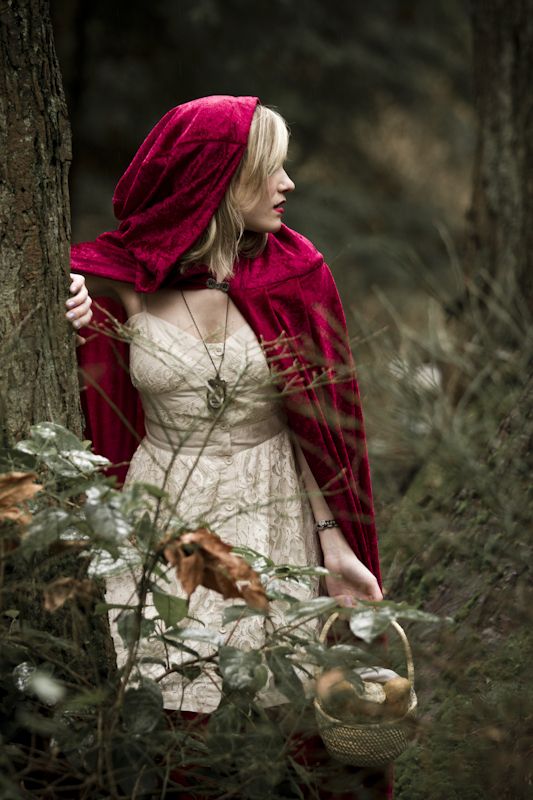
Only four years married, and Greta already started sneaking away from the house in the dark.  Her husband Darius, the roman governor of the province of Dacia would go looking for her, but by the time he found her, she should be finished with her task and on the road home.  Greta pulled the hood of her cloak over her face.  She was the woman of the ways for the Dacians, called a druid among the Celts, and the wise woman of Dacia for the Romans as declared by Marcus Aurelius himself. It was a triple whammy which meant she could not hide in a crowd, any crowd.  But this task felt important, so she covered herself as well as she could with her red cloak and hood, and tried to go unseen through the early hours before dawn.  She feared Darius might try to stop the others if he found out what they were planning. He would certainly try to stop Greta if she had any thoughts about going with them.

Greta had no such thoughts.  She just entered her eighth month with child number two.  A daughter to go with her son.  She smiled about that the whole way, and to her credit, she only once thought the others could have timed things better.  She also tried concentrating on what was to come as her faithful Centurion Alesander led the ox cart along the new forest road. He would follow her to hell if that was where she was going.

They arrived late in the afternoon at the Celtic village of the Bear Clan.  Greta rested at Mayor Baran’s house, as was her custom.  Several men came to pay their respects, but Baran’s wife turned the rest away.  The woman knew full well what the eighth month could be like.

In the wee hours before dawn, Greta got up and went out to the new stables beside the new inn.  The Dacian who ran the place made a home brewed ale which seemed very popular with his Gaelic patrons.  This was a good thing, Greta thought.  Dacians, Celts, and Romans needed to mingle and not be so divided.

She made herself as comfortable as she could on a small stool.  She waited, but she did not have to wait long.  She heard a bang.

“Shhh! Quiet.”  She heard a woman’s voice, one that Greta knew very well.

“Oh shush yourself, you old biddy,” the response came out of the dark.

“Old goat,” the woman came right back.  “I hope that was your head and it knocked some sense into you.”

“It was my toe,” the man responded.  “And if it wasn’t hurting I would use it to kick your butt.”

“Quiet, both of you,” a young woman spoke.  “If you two don’t stop making love we’ll never get anywhere.”  She called it right, and Greta heard a young man laugh.

“Ahem!”  Greta cleared her throat.  “Over here,” she said.  She just turned twenty-two, a young mother in her prime.  She could have easily gone to them, eighth month or not, but why?  Let them find her.  “Over here,” she repeated.  They knew her voice, too.

Berry and Fae were the first to come out of the shadows.  They came timidly, holding hands as sisters should.  The odd thing was no one looking at them would imagine they were sisters, much less twins.  Berry looked to be seventeen, and though fully human, she still reflected the beauty of the fairy blood she once bore.  Fae now had all of the fairy blood, the inheritance of their half-blood father, which made her much smaller, but a fine-looking dwarf woman in her way, and a bit of an imp besides, a match for Hobknot, the grumpy old hobgoblin of the hardwood.  She was seventy years old.  They both were, but that is a very long story.

Hans and Hobknot came behind with Hobknot’s mouth running.  “I told you it was no good sneaking off.”

“And I told you I was not going without saying goodbye to my sister,” Hans said.  “But I was not worried.  I knew I would see her.”

“Oh, you did?”  Greta got up slowly.  “Hansel.” She reached out and Hans came quickly to help her to her feet.  She hugged him and whispered three words in his ear.  She made him repeat the words over and over until he could say them perfectly.  Meanwhile, she hugged all of the others, including Hobknot who turned a perfect red and covered his face with his hands in case she thought of giving him a kiss.

“So, where is your father?” Greta asked Fae and Berry.

“She knows,” Berry said with surprise.

“Of course she knows,” Fae said with certainty.

“From the dragon village we go north.”  Berry spoke as if repeating a lesson.  “We must go over the Toothless Mountain and beyond the Way of the Winds.  Through the pass called the Ogre’s Jaw which is the only way through the Rumbling Ridge. Down the other side, we go through the Forest of Fire and pass the Lake of Gold which must be on our left hand. We must go through the Swamp of Sorrows until we reach the river called Heartbreak.  From there we travel down the river beyond the Giant Rock and the Troll’s Eyes until we see the Mouth of the Dragon.  The Mouth will take us under the Heart of the Goddess by the Road of Dreams and at last, at the end of the road, we will find the Broken Dome of the Ancient Master.  It is there that a secret door leads to the Land of the Lost, and our father is there, still living among the lost.

“North over the Transylvanian Alps and plateau to the Ukraine.  How far, then?  To Kiev? All the way to Moscva?” Greta translated.  “Sounds exciting, and complicated,” she said.  “You will remember all that?”

“Oh, yes, Mother Greta.  I will not forget,” Berry said.

“We will remember,” Fae insisted.  “We seek our father’s blessing on our marriages.”

“You and Hobknot,” Greta teased, and Hobknot spun around several times in embarrassment before he settled on a spot with his back to them all.  He turned scarlet.

“You didn’t have to tell her that part,” Hobknot protested.  “Make me sound like a love-sick puppy.”

“But you are.”  Fae, Berry and Hans all said more or less the same thing in near unison and then laughed.

Preview: R6 Greta: To Grandfather’s House We Go

A simple introduction:

The Kairos and Rome book 6: The Power of Persuasion

R6) Greta: To Grandfather’s House We Go   20 weeks of posts

Greta’s ward, Berry, and her sister Fae, along with Greta’s brother and Fae’s husband go north, looking for Berry and Fae’s father to bless their marriages.  They get trapped in the land of the lost, and the shattered pieces of the old god Mithras stand against Greta when she sets herself for a rescue mission.  Soon enough, the Iranian (Mithraic) tribes in the wilderness come to knock on Dacia’s door, which doesn’t have enough strength to stand against them.  And the Roman ranks are full of Mithraites.

Do enjoy… But it occurs to me that some might not understand who the main character (Greta) is, and how this person might appear, at any moment, to be another, completely different person.  Allow me to introduce you to…

The Kairos

A Greek word meaning opportunity, the right time, a propitious moment, event time, or as the Kairos defines it, history.  It is the name the old titan Cronos gave to the polyploidy being he struggled to bring to life as a complete male and a complete female.  Knowing his time would soon be over, he imagined this complex “one being in two persons” would be his replacement.  When Cronos died at the hands of his children, the mere counting of days ended, and with the birth of the Kairos, history—event time began.

The Kairos might be called the god of history, though the Kairos prefers the term watcher over history, because unlike the gods of old, he or she is not immortal.  Instead, the Kairos normally lives as an ordinary mortal, male or female, sort of taking turns, and as such is subject to all the frailties of the species, while at the same time, being captured by the very events where he or she must inevitably act.

Not allowed to fully die, the being or spirit of the Kairos is taken at death and reborn somewhere else on the planet, where some important historical juncture looms on the horizon.  On bad days, the Kairos complains about being no more than a cosmic experiment in time and genetics.  On good days, the Kairos averts a disaster.

Taken out of the hands of the most ancient gods, and placed in the hands of persons unknown; it is her or his job to see that history turns out the way it has been written.  With access to future lifetimes, as well as past lives, the Kairos knows the way things are supposed to go.  But getting it to turn out right is not ever easy.  Fortunately, the Kairos is able to borrow lives from the past or future that often have the skills and knowledge to meet whatever might arise.  No guarantees, of course.

SO

Enjoy the 20 weeks of story.  Posting on Monday, Tuesday, and Wednesday of each week, a complete chapter, divided into 3 digestible daily bites.  Beginning next Monday, June 24, 2019.  Until then, Happy Reading.

*

R6 Festuscato: 10 Londugnum, part 2 of 2

Festuscato and Mirowen, with Mousden holding on, rode side by side over the many days it took to get to Londugnum, as the Brits called it.  Luckless on his pony and Seamus on horseback followed.  Bran rode beside Dibs and said almost less than he said when they first met. Julius and his men, along with the four horsemen, agreed to stay and defend the Pendragon; but Dibs’ men felt obliged to follow their commander now that he came back from his special assignment in Ireland, and Dibs was technically still guarding that Imperial rogue, Festuscato Cassius Agitus, Vir Ilistrus and Comes Britannia.  Dibs could not be sure if the imperial governor remained under house arrest, but if he was, Dibs understood that concept needed to be liberally interpreted to let Festuscato do his job.

Once in town, Festuscato rented out an inn by the port. The men slept downstairs in the common room.  Dibs and the travelers got rooms upstairs.  The first thing Festuscato did was find a young woman who kept him happy in the night.  The second thing he did was run into a man he did not expect to see.

“Gregor,” The man reintroduced himself.  He stood a big blond Saxon, almost Bran size, but older, and he had and eye-patch over his missing eye.  “I heard about your errand, and I waited your return from Ireland. Patience does not fit my temperament, you know, but here you are at last, and here I am.”

“You waited?”

“Aye.  I got the Dane on a short leash and can fetch him on short notice, then we get a ship and take him home, no?”

Festuscato only thought for one second before he took Gregor outside for some private conversation.  When he came back into the inn, Mirowen met him at the door.

“I don’t like the plan,” she said bluntly, but they had a bigger interruption to deal with.  Festuscato, Dibs and Gaius ran into their long-lost childhood friend, Felix. Last they heard, he started selling silk in Rome.  Apparently, he ran afoul of some rich patron and had to run.  He made it all the way to Frankish territory where he bought a ship, most likely with the lady’s money, and he had now been reduced to dealing in wool.  Reduced was how he described it.

“A long way from silk,” he admitted over a tankard of ale, but the others encouraged him, and Gaius even suggested he talk to the church.  If his stuff was any good, the church was always interested in quality cloth, even better if he still had some contact with the silk merchants.  Felix thought that might be possible.

###

One week later, a big British belly boat slipped out of Londugnum on the evening tide.  Dibs found a note that said, “Sorry.  Not this time.  I’ll be in Tournai in a few years.  Meet me there.  First I have a side trip, another delivery, then a good look around.  Blessings on Gaius and keep Felix honest with the church. From Tournai, I plan to return to Rome, so be prepared.”  Festuscato just reviewed some fond memories of his childhood friends when he got interrupted.

“Common sense says we should turn around,” Mirowen said, when she stepped up to the tiller.  The three sailors they hired to help them sail the ship took the longboat and deserted in the estuary.  Festuscato kept the ship headed toward the deep water.

“I assume they could not handle the company,” Festuscato said.

Mirowen nodded.  “An elf, a dwarf and a pixie do make a strange crew.”

“No.”  Festuscato shook his head.  “I was taking about Seamus, the Priest.”  Mirowen scoffed, but Festuscato had not finished.  “Honestly, at sea there is not much to do, as long as we keep the wind pointed in the right direction to keep the sails full.  I may ask for a little elf magic if things go contrary, but otherwise, what is there to worry about?”

“How about docking the ship without crashing it into the dock?”

“We will build that bridge when we come to it. Meanwhile, Bran, Gregor, and Hrugen all claim to know about sailing.  You and Seamus can tend the cargo, the important thing being the horses. Luckless can repair about anything, and Mousden can keep his eyes open up top.  Trust me.  I can follow the stars and the sun well enough.  We will be in Copenhagen before you know it, isn’t that right Hrugen?”

The Dane coiled a rope nearby and listened in.

“We must make for Heorot, hall of Hrothgar, King of the Danes.  Did I tell you about the monster?”

“Figures,” Mirowen said before Mousden screamed from above.  Apparently, he was listening in, too.

************************

Tomorrow: A preview of Greta’s continuing saga: To Grandfather’s House We Go.

*

R6 Festuscato: 10 Londugnum, part 1 of 2

Festuscato, Bran, Julius, King Ban, Cador of Cornwall, and the Welshmen, Hywel and Ogryvan, walked the battlefield, remembering and honoring the dead.  Constans walked with them and tried to pay attention, but Vortigen sounded like a fly in his ear and kept distracting him.  Gaius and Seamus, along with two local priests, and a host of monks and nuns from the nearest monastery, also walked the battlefield, but they were giving the last rites and directing the soldiers to cart off those who had a chance of survival.

Festuscato kept one eye out for Gorund, but the Saxon was not to be found.  All the same, he imagined Gorund would not be a problem after this slaughter.  In fact, the Saxons overall should be quiet for a number of years.  There would be peace for a time, and Festuscato felt the need to point that out over supper.  He stood to speak.

“Take the time of peace to strengthen the ties between you.  Do not go back to your isolation and personal problems.  Visit one another, now that you have gotten to know each other, and support each other as you support the Pendragon and this place of sanctuary. The Irish, the Saxons, the Picts and the rest want to keep you weak and divided, but united you can beat back the tide of chaos that is overwhelming Rome.  With apologies to Constantine, I say use the Pendragon.  He is not there for any one of you, but for all of you together.  It is in his own best interests to judge fairly and not show favoritism.  The judgment might not go in your favor, but it is not his desire to piss you off.”

The chiefs and lords around the table understood well enough, so Festuscato added a last note.  “And do not fail to send your men out when the call comes.  Do not think they keep fighting far away from home, for other lords in other lands, because they will be fighting to keep the border secure, and that will keep your land secure even if you do not live on the border. Also, if the day comes when the call goes out because your lands are in danger, there will be plenty of fighters loyal to other lords and from other lands who will come and fight for you.” Point made, Festuscato sat down, and in the morning at dawn, he and his friends left town.

###

“I won’t see you again,” Constantine surmised.

“To be honest, the longer I stay in Greater Britain at this point, the more I risk screwing up history.”  Festuscato spoke straight forward, but only Mirowen understood because of years of long conversations when Festuscato was young. “But I tell you what.  Give Ivy a kiss when she has another son.”

“Ivy is pregnant?  Why would Constans not tell me?”

“Oh, I don’t know if she is pregnant, but given those two being so much in love, I figure it is only a matter of time.” Constantine smiled, and as Festuscato pulled away to ride off, Mirowen at his side, he whispered to her.  “I like to leave them smiling.”

R6 Festuscato: 9 For Peace, part 3 of 3

They arrived in the woods and held the men back so the chiefs and lords could get a good look.  Saxons covered the grass below the fort, looking as numerous as the blades of grass themselves.  Festuscato wondered how Pinewood came up with the number of five thousand, unless he counted everyone.  It mostly looked like a lot, and several men whistled softly at the sight.  It looked for the moment that the Saxons were stymied by Cadbury Hill.  They had to overcome the three or four terraces that ran all the way around the hill before they could get to the fort itself.  Presently they had no easy way up, but the Saxons had catapults and slings so it would only be a matter of time before the wall came tumbling down.

Festuscato grabbed a handful of grass and let it fall. He felt the wind in his face, and it felt strong, but he knew in Somerset it could be changeable.  He looked at the grass which felt dry, perhaps dangerously dry, and tall where it still stood despite the Saxon footprint. As far as Festuscato knew, it had not rained in the three weeks since he had been back on the island.  He called to his little ones.  Yes, they could keep the wind at ground level blowing in the right direction and could easily set fire to the grass.  He explained what he wanted them to do, and then divided his men.

He had five hundred horse and added five hundred foot men to the count.  He sent them through the trees to the head of the open fields.  Their job would be to prevent any Saxons from escaping, especially horsemen.  The other fifteen hundred men had bows, or prepared themselves with long spears to protect the bowmen.  When things started, they would happen fast.

“Not a very good siege to leave these woods unprotected,” Mirowen commented.

“It isn’t a siege,” Festuscato said.  “They figure the Welsh are busy fighting the Irish, and York and North Britain are too far away to bother, and even if York sends some men, they still have the advantage in numbers.  Obviously, they have their men concentrated in these fields because they have brought the necessary equipment to smash down the walls. Once that onager, that primitive trebuchet makes a big enough hole in the wall, a concentrated charge with massive numbers of men will get the Saxons inside well enough.”

“And now?” Dibs asked.  He knew what an onager was.

“Now I want the siege engines burned along with as many Saxons as possible.  I expect the Saxons to try and escape out from the line of fire.  So we have a thousand men, half on horseback to hunt them down.  I expect most to make for these woods, and we might not survive such an attack, but we should take most of them with us, and the ones who break through will find Dumdiddle and his dwarfs waiting.  I expect some will try to jump the line of fire, but they won’t live long.”  He did not repeat the part about their not surviving, and no one asked, so he gave the signal to begin.

A long line of fire rose up on the other side of the fields and started to move across the field like disciplined soldiers on parade. The Saxons fought the flames, but fire sprites kept it burning and the wind stayed relentless, blowing smoke in the Saxon faces.  When the fighting got fierce on the edge of the woods with all those Saxons that slowly decided to try to escape, Festuscato got word that Constantine and Cador of Cornwall were ready to come out of the fort and attack the Saxons head-on if Festuscato could stop the moving fire.  He did, and sent word to his foot soldiers on the end of the fields to hit the Saxons from behind when those Saxons turned to fight off the men from the fort.  The elves stayed behind the fire line, so any Saxons who tried to jump the fire would be picked off.   Festuscato brought up his dwarfs to hold the trees while he organized a charge of his own.

When the men with the dragon tunics and the men with the lion of Cornwall tunics poured from the fort, the Saxons turned to meet the threat, as expected   The fire hemmed them in, but there remained plenty of room to fight.  When the five hundred fell on the Saxon rear, the Saxons were shaken. When Festuscato lead a thousand men from the woods to hit the Saxon flank and push the enemy into the fire, the Saxon resistance fell apart.  Some tried to force past the five hundred and escape south, back to Sussex, but the Welsh and British horsemen tracked them and caught many.  Others still found the woods their best bet, if they could make it past the dwarfs.  Not many escaped, but some did.  When the Saxons found enemies pressing in on every side, one great line of Saxons jumped the fire at once with the plan to make for the far woods and turn south under cover.  Some got passed the elfish archers, but only by sheer numbers, and they got tracked by Pinewood and his fairies in the late afternoon, and the goblins and trolls after dark.

Only dribs and drabs of Saxons returned to Saxon lands tell the tales, and they were tales to frighten the children, tales of the Roman and his sorcery, of elfin magic and demon terrors in the night. One tale that made it back to Saxony on the continent, and from there up into Danish lands and across the water to the Swedes and Geats was the tale of miraculous dwarfish armor, magical, made with such skill and cunning no sword or ax could break it.  In truth, six dwarfs caught sixty Saxons trying to escape through a gully near the fort.  Six Saxons survived and four made it home alive.  Of course, the tale got stretched, in a literal sense, and expanded until the chain of armor came with a whole trove of cursed treasure, but that came later.  In the near term, the chain of Weland showed up again, but that is a different story.

In truth, Luckless found his Uncle Weland in a pool of blood.  The unbroken chain did not protect everything.  Weland was missing a hand and a foot and leaking from innumerable cuts around his face and neck.  “The jinx of the family,” he breathed out his recognition of his nephew.  “Make your way well in the world.  I never believed in that unlucky stuff.  Here, take the chain.  It may protect you and bring you luck.”  That was all he said when he died, and Luckless cried in the night and said his Uncle was the only one who ever believed in him, and what was he going to do now?

************************

MONDAY

R6 Festuscato: 10 Londugnum:  After the battle is cleaned up, and the people of Britain, Wales, and Cornwall are convinced that this Pendragon idea might work after all, Festuscato and his crew escape to London…and then, from London.  Until Monday, Happy Reading

*

R6 Festuscato: 9 For Peace, part 2 of 3

Danna spanked Talesin so hard he took to the air, involuntarily, and landed somewhere out in the channel.  “Now, Addaon,” she smiled for the boy.  “Never forget.  That was your sire, but Dyrnwch is your father.  Always honor your father.”

“Dyrnwch is my father.  I will not forget,” Addaon said, and he added, “Mother.”

Danna put her hand to the boy’s cheek again, and patted it softly.  “Good boy. Marry and have children of your own, and I cannot say if I will see you again.”  She turned away and shouted and clapped her hands.  “Rhiannon.”

“Now what?”  Rhiannon appeared.  “I was just about to take Clugh for a good wing stretchy.”

“I know,” Danna said.  “You can do that here.  Do you see those towers, building?”

“Of course.”

“I would appreciate it if you and Clugh practiced setting them on fire.”

“Yes.  But there are men there.  Aren’t you afraid we might be teaching him the wrong sort of lesson?”

“Perhaps.  But you know Festuscato.  He crosses one bridge at a time.”

Rhiannon nodded.  “He makes it up as he goes along.  By the way, I heard Talesin scream all the way in Amorica.”

“He broke the rules, a thing you should consider as long as you still have work to do.”

Rhiannon changed the subject by peeking around Danna. “Addaon.  Hello brother.  I think I will call you brother A.”

“Hello?”  Addaon got the word out in the face of the goddess, but he did not sound to certain, as Rhiannon vanished and Danna let Festuscato come home.

“All right,” Festuscato shouted and saw the various Lords of Wales were dismounted and waiting patiently.  They all saw what happened, but Danna made sure they did not hear, and she made sure Addaon knew they did not hear.  “Ogryvan,” Festuscato called.  They were hearing now.  “When the dragon attacks, the rest of us will attack this end of the Irish line. Ogryvan, I want you and your men to take the town.  Try to kill only the Irish, and there is nothing wrong with driving them to their ships and letting them cut loose.  Do not burn the Irish ships.  Anwyn should be allowed to keep them as a small payment for his troubles.  Okay?”

Ogryvan nodded.

“Bryn and Dyrnwch, you and your men take the point. You men from the coasts need to back them up.  The idea is when the Irish run away from the dragon, the rest should be running away from us, and when the two groups run into each other, hopefully, in the confusion, they will surrender.  Allow them to surrender.  We don’t want an all-out war with the Irish.  We just want to hurt them enough so they don’t try this again.  Got it?”

Men nodded, and Bran whispered.

“Good plan.  Good luck.  They are not trained Romans.”

Festuscato heard a scream come all the way from the back of the woods.  “Dragon! What do you mean you smell dragon!”

“I was kind of hoping the clerics would keep Mousden quiet.  I forgot about the dwarf’s nose,” Mirowen said.

“You better go see to them,” Festuscato told her, and she gave him a dirty look for using that as an excuse to keep her out of it, but she took her horse and went without arguing.  “Mount up,” Festuscato yelled, and it took only moments before they charged the Irish line.

Things did not go as expected, which was expected. Ogryvan’s men took no prisoners and burned the Irish ships, the docks, several fishing boats and one merchantman from Lyoness which happened to be in port when all of this started.  Ogryvan apologized, profusely, but could not hide his pleasure.  When Festuscato pointed out that Ogryvan would have to pay for the fishing boats and merchant ship, he lost his smile.

“Of course, you can appeal to the Pendragon, but I would not expect sympathy from the lords gathered there.”

It took more than expected to get the Irish to give up their position and collapse the line, and when they gave up ground, they did not run in panic but pulled back, slowly.  Bran lost his horse to an arrow early on, but that proved worse for the Irish as he showed what an artist he was with that big sword of his.  Dibs and the monks Cedrych and Madog joined him as he led a company of men along the wall of the fort where the horses could not go. Meanwhile, men ran well enough from the dragon, but Clugh got distracted by all that motion and fried a number of men. Rhiannon tried to keep her baby to task, but did not begrudge him some fun since getting the Irish to run was the plan.

In the end, there were plenty of Irish soldiers who tried to escape to the woods.  Half of their ships were a number of miles away in a cove the Saxons would use in Gerraint’s day.  Festuscato knew the escapees would never make it to their ships, and indeed, the guards they left around the ships would not survive the night, and he felt bad about putting his little ones in danger, but he also felt bad about the fact that his little ones interpreted orders in whatever way felt convenient.  He knew surrender would not be convenient.

The only thing Festuscato insisted on was finding Sean Fen.  It turned out to be easy.  The man had been killed by an arrow the day before Festuscato arrived, and he said so in the letter of condolence he wrote to MacNeill.  Then they had to get everyone to Cadbury, because the Saxons were definitely moving, an army of about five thousand strong.  Fortunately, there were twelve hundred men coming down from the north, from York and Fort Guinnon and Edinburgh, and Festuscato thought if he timed it right, he could meet up with them somewhere around Bath.  With his little ones added in, he might move three thousand to meet the Saxon threat, and hopefully south Britain, Cadbury and Cornwall could make up the number difference.