
Osfirth and Gwyn had the men of the coastal watch, nearly three hundred, spread through the woods around the Danes where the Danes were building earthworks against the expected enemy. One hundred of the three hundred were on horseback so they could be moved rapidly to different sections of the line and hopefully appear like more than they really were. Their job, with Deerrunner and Pinewood and their people all dressed in hunter green, was to keep the eighteen-hundred Danes in forty-two longships bottled up in the Parrett River mouth where it ran to the bay in the Bristol Channel. The old Romano-British hamlet of Combwich was held by the Danes at the back of the Danish line, where they also controlled the ford they might use at low tide, if needed.
The Danes built an earthen work wall as a redoubt against the Saxons, especially if they came up with those men in green cloaks who were remarkable archers. The leader of the Danes was no fool. Lodbrok barely survived Hingston Down and lost nearly half his men. He respected the Saxons on horseback, as well as the men in green. He would strengthen his position and wait for the Saxon foot soldiers to come whom he did not respect at all.
Some believe the Danish invasion of the Anglo-Saxon kingdoms began with the arrival of the Great Heathen Army in 865, and especially after the Great Summer Army reinforced them in 871, but most believe it started earlier, in 850 when the exaggerated number of 350 longboats arrived at the estuary of the Thames, and with the advent of Ragnar Lodbrok. But the truth is the landing on the Parrett River in 848 was the test case. The Danes, and Lodbrok’s son learned some things there and came away with respect at least for the army of Wessex, a lesson that got underlined in 851, in Surrey. That allowed King Alfred, years later, to pay off the Danes and negotiate a withdrawal from Wessex Territory which gave Alfred enough breathing room to eventually win the war. But that came later. In 848, about the time Alfred was born, the Heathen Danes came to the Parrett River, and something else came with them.
“Flesh Eaters,” Elgar named them.
“They are not even making an effort to hide,” Marsham said.
“They have an invisible shield around them, er, screens,” Reed explained. “I can sense them and the others who have been watching have mentioned it. It is strong enough to stop arrows and javelins and can even stop men and horses from getting at them.
Elgar pushed up to look from behind the bush. “You know, we had five years of peace and quiet. Too bad it could not last.”
“I understand your wife had another girl.” Pinoak, Pinewood’s son said.
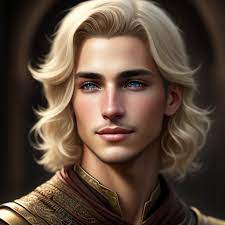 Elgar rolled his eyes. “We had a son, but he died at two months when I was down in Carhampton checking on the fleet of longboats that eventually turned north toward Gwent and Cardiff. Nothing anyone could do.” Elgar sighed. “We had the girl after that. Alfflaed. So now I have four little Alfs. Wynn, Swip, Swith, and Flaed, that is Joy, Strong, Swift, and Beauty.”
Marsham interrupted with a thought. “They are an ugly people.” Elgar almost made a quip about Marsham insulting his daughters, but he knew what Marsham meant. He was talking about the Flesh Eaters.
Elgar examined the Flesh Eaters as well as he could from his distance and finally figured out what looked so wrong. “Their heads are too big for their bodies. Their bodies are skinny as an elf if you will pardon the expression. It is a wonder their little necks can hold up such big heads. And their mouths are too big for their big faces. They have almost no noses between the eyes. Just mouths.”
“And their tongues keep shooting out like a snake,” Pinoak added. “Why is that?”
“Smelling what is in the air,” Reed told him.
“Little noses,” Elgar thought to explain a bit. “Much of their sense of smell is in their tongues, as you said, like a snake. They can smell when there is blood nearby. They suck the blood first before they eat the flesh. I’m surprised they have not smelled me.”
“No, Lord,” Reed answered. “We are downwind.”
Elgar nodded as he said, “We should go before the Danes find us here behind their line.”
They returned to their horses that were tied in a small wood where they hopefully would not be found. They rode along a narrow path just over the rise in the land where the Danes would not see them, and got back to their own line without trouble, but Elgar had a thought.
“Pinoak. You need to keep your young fairies on the rise in case Lodbrok figures out we can get around behind his earth works and sends men to get around behind our line instead.”
“Lord,” Pinoak agreed and flew off to organize the watch. Marsham and Reed reported back to Deerrunner, but Reed shared a thought first.
“Copperhand and his dwarfs from the Polden Hills are not happy at being left out of the battle order.”
Elgar nodded but said, “I need them on the other side of the river so when we drive the Danes in that direction, they will be able to stop the Danes from escaping across the water. Copperhand and his people need to stay away from the longboats, but they can take any men foolish enough to try and swim the river.”
Elgar and the men of the watch kept the Danes in Combwich for three days before Eanwulf and Osric showed up with the army. Eanwulf and Osric brought six hundred men each and plenty of wagons to supply the men. The Bishop of Sherborne came along with an additional three hundred men, and mostly soldiers this time, not just monks and priests. With Elgar’s men from the coast, they matched the Danish numbers, but no more. Only Elgar’s nearly two hundred men in green gave the Saxon side the advantage, but Eanwulf and Osric knew them as men from the wilderness, excellent hunters with a bow, but not inclined to go face to face with the Danes.
It was late in the afternoon and the Bishop wanted to attack right away. Fortunately, common sense prevailed when Elgar spoke. “Your men are tired. They need a good night’s rest and good food in the morning so they have the strength to fight for as long as it takes. The heathen men will not attack until they send out scouts and spies to get an estimate of our numbers. They will wait the night and prepare for an attack in the morning.” Then Elgar put his brother on the spot. “Have you found men willing to hold back in reserve when the lines first meet?”
 Eanwulf frowned and looked at Osric who added his frown. “We have each ordered a hundred men to wait. That is two hundred and the best we can do. You know, it is unnatural for good men to wait when the fighting begins.”
Elgar understood. “But twice we have seen it is what the Danes will do, and twice at Carhampton they have broken our line with their fresh men. Unless we have men to strengthen our line when the Danes send in their reserves, we will just find our line broken a third time.”
“I understand,” Osric said. “And how many of your three hundred will you be holding back?”
Elgar had to think how to say it. “My men know their homes and families are in the most immediate danger if the Danes gain a foothold in this place. They will not hold back but will fight like berserkers, but then, I have something special in mind. They know the land and have spotted a weakness in the Danish formation. I plan to take the hundred men on horse along the ridge above the Danes and fall on their flank—their side and back corner at the right time, much like we did at Hingston Down. I also have some men in green, hunters, who have agreed to drive the Heathen men from Combwich, and with whatever men they can get from the village come up behind the Danes with their arrows.
“That will still leave the river as a way of escape,” Eanwulf was thinking.
Elgar shook his head. “Any who swim the river will not survive on the other side. Trust me on that. Their only hope will be to go back to their ships and leave this land. Assuming everything goes to plan. Your job will be to hold the line. If our line collapses before we are in position to attack, this won’t work. Let Lodbrok throw his reserves in first and wait. That will be the most difficult time but keep the line. Deerrunner and Pinewood both have a good sense of how this works having seen it work in many battles. Wait and push in on the river side with the reserves when we are ready.”
“On the river side?” Osric asked. “Won’t that make the other side weak, especially if they are ready to pull back.”
“It will,” Elgar said. “But that is the side where we will hit them with our cavalry. Hopefully the Danes will be thrown into confusion and that should encourage our men to hold. That is the plan, anyway.”
 Storyteller Tales & Thoughts