
“Elgar,” Eanwulf came around the corner. “I should have guessed you would be here. Where is Gifu Two and her puppies?”
Elgar shrugged. “Out chasing rabbits?” He guessed as his eyes got suddenly captured by another sight. Two old men dressed in hunter green and one young man dressed in light armor, like a soldier or thegn might wear, walked lazily across the field toward the house. Elgar thought he recognized them, but he was not sure, never having seen the older ones with gray hair, and maybe never having seen the younger one at all. But he had a good guess. He thought to ask Eanwulf a different question. “How are Ceorle and Odda? Aren’t they living over by Carhampton, since the Danes tried us there, I mean. I thought Father put them there to watch the coast.”
“Fine,” Eanwulf said. Elgar looked at his brother while Eanwulf focused on the men in the distance, like he was also wondering who they were.
“So, why are they here?”
Eanwulf shook his head, like he did not know the men in the distance and turned for the moment to his younger brother. “How did you know they are here?”
“I saw them in town,” Elgar admitted as he took a moment to wipe the dirt from his hands. “They started in on the tease the baby brother routine. I gave them the slip.” In truth, he ran into the stables to retrieve his horse, but they followed him in. He had no choice but to trade places through time with Margueritte. He was thinking about Festuscato when Festuscato ran into the stables to escape the Visigoth prison. He remembered Margueritte came into his place and dressed as a washerwoman, a Roman-Celtic servant in the house. When Elgar went away, Margueritte came, and she came dressed as that servant in her best washerwoman outfit, just as he remembered her.
She was too young and pretty for Ceorle and Odda not to notice her. They asked her a question, and she responded in her Welsh-rooted language from Brittany as they spoke it roughly a hundred and forty years ago. It was not that she could not understand the question or answer it in their own language, which was Elgar’s native tongue, but she figured her response in the Gaelic tongue completed the disguise.
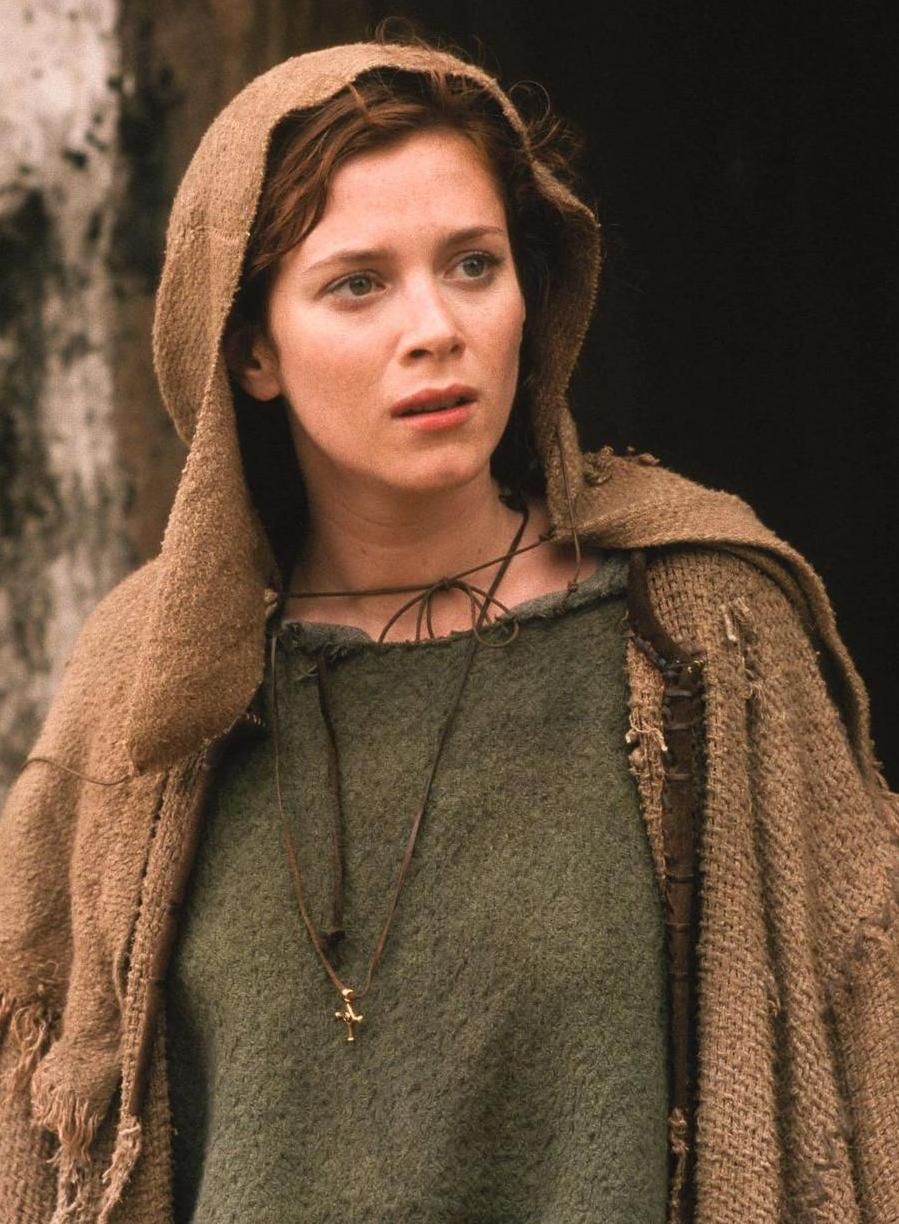 “Not that they would recognize me as a woman,” Elgar scoffed in her thoughts. “You don’t even look like me.”
The men smiled for Margueritte and she returned their smile, an automatic response, but then they left saying it was not worth rooting around in the hay to find the boy. The urge to tease Elgar had left them.
When they left, Margueritte sat down and asked, “Are you okay?”
She traded places back with Elgar and he answered, “I’m not sure.” This was the first time he ever traded places with a past life, or any life. This was also when he first really understood something about Avalon and Alice, and specifically how to call things from Avalon, like fairy weave washerwoman outfits, and that included calling the armor and weapons of the Kairos as needed. He looked up and saw a gnome working in the stables, making up for the poor work of the lazy stableboy. The gnome bowed.
“My Lord Kairos. It is most good to know you.”
Elgar grimaced and waved off the gnome with the words, “Don’t tell anyone,” but he knew it was too late. Every gnome would hear about it in almost no time, and soon every little one in Wessex would know. Sometimes he had to do things that were better done incognito. The little ones did not need to automatically know which human might be their god or goddess. It was better that way for as long as it lasted. They would mind themselves around the humans for fear that they might play a trick on exactly the wrong human.
“But we have never been able to keep that knowledge from the little ones for long.” Elgar heard from the Storyteller for the first time just that afternoon.
Elgar acknowledged he was probably right. He mounted his horse and rode home, thinking, what did he know about elves, dwarfs, and sprites of every shape and size. He would not think much of himself as a god, but then he figured a fallible, stumbling dolt who got killed once in a while was probably the only kind of god the little ones would accept, and put up with. He began to search through the lifetimes of the Kairos that he knew, not for information, but just to get to know them, to know himself. He stabled his horse when he got home, picked up a handful of pebbles and went to sit at the side of the barn where they could not see him from the house. He needed to think.
So now Eanwulf found him, and Eanwulf grinned while all these thoughts raced through Elgar’s mind. Ceorle was a couple of years older than Eanwulf, being around thirty-four. Odda was a couple of years younger, maybe not quite thirty. They were both part of Eanwulf’s gang, as Elgar thought of them. They were also married and had young children, like his brother. Eanwulf had two girls ages seven and three and a one-year-old boy. He had another boy between the seven and three-year-old, but that boy only lived two months.
“But what are Ceorle and Odda doing here?” Elgar could not contain his curiosity.
Eanwulf nodded like he did not mind answering that question. “They are concerned about the people moving into Devon. The pace has picked up since Carhampton got attacked. Devon is relatively good farmland. Somerset, especially around Exmoor, is full of fens, marshes, and floods. Even the dry land, the islands, and hills, while they may be fertile soil, they are full of rocks and hard to plow. So far, it has been mostly peaceful migrations into Devon. The West Welsh have made room all the way to the Taw River and down to Crediton, which I could show you on the map. But with the pace of families moving to Devon increasing, Ceorle and Odda are afraid hostilities may break out. They are going to need some guidance as to how to handle it. Personally, I think hostilities are inevitable.”
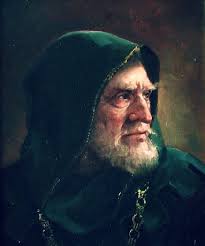 “And you would be right, young prince.” One old man spoke to Eanwulf. The two old men and the young soldier arrived without Eanwulf noticing. “There will be hostilities.”
The other old man spoke. “What your father is likely right now explaining to the two young lords from Carhampton is families have been moving into southeast Devon as well and filling the whole eastern portion right up to the River Exe and the city of Exeter. Most of them have not come from Somerset, but from Dorset, Hampshire, Wiltshire, and as far away as Berkshire. I believe some in Wiltshire and Berkshire have become tired of living on the Mercian border where the armies come and fight.”
The first old man spoke again. “That is what we have come to warn you about. The king in Cornwall has decided that now is the time to take back the ancient lands of Dumnonia. He is raising an army to push the Saxons out of Devon and all the way back to the Parrett River if he can.”
“King Ecgbert is old now and not likely to fight like a young man, and your father is not much younger,” the second one said.
“On his own, Mordaf of Cornwall would not have a great chance for success, but he has made an alliance with the Danes such as you faced at Carhampton. Lodbrok the Dane has thirty-five ships and fourteen hundred men. A thousand will land at the mouth of the Exe River below Exeter. The rest will sail to Pilton at the estuary of the Taw. Those men will nearly double the strength of the Celts.”
“Why would they divide their men?” Elgar asked, and Eanwulf looked at his little brother like Elgar asked a good question for once in his life.
The first old man continued. “The Danes and Dumnonians in the north will gather at Countisbury and attack the coast to the Parrett, beginning at Carhampton. They hope to sweep the coast clean before they push down into Somerset. King Mordaf of Cornwall and Lodbrok the Dane will meet in Exeter and follow the path of the old Roman road that was laid between Exeter and Caerleon. They also plan to stop at the Parrett ford where they hope to negotiate a treaty and set the Parrett as a boundary between Celtic and Saxon lands.”
“How do you know this is so?” Eanwulf asked the obvious question.
“Our people have fought for the British since the days of Gerraint in the time of Arthur, the Pendragon. But now that you Saxons have come to the faith and support the church, we have stayed out of the fighting. The Saxons and the Celts you call the West Welsh are now part of the same family, even if you don’t see yourselves that way. But the Danes are something different. They are heathen men who need to be driven back to their own place and made to know that they are not welcome here.”
“We know what the court of Dumnonia and Cornwall have planned. Trust us,” the second old man said, and Elgar thought he better introduce the men to his brother before they went any further.
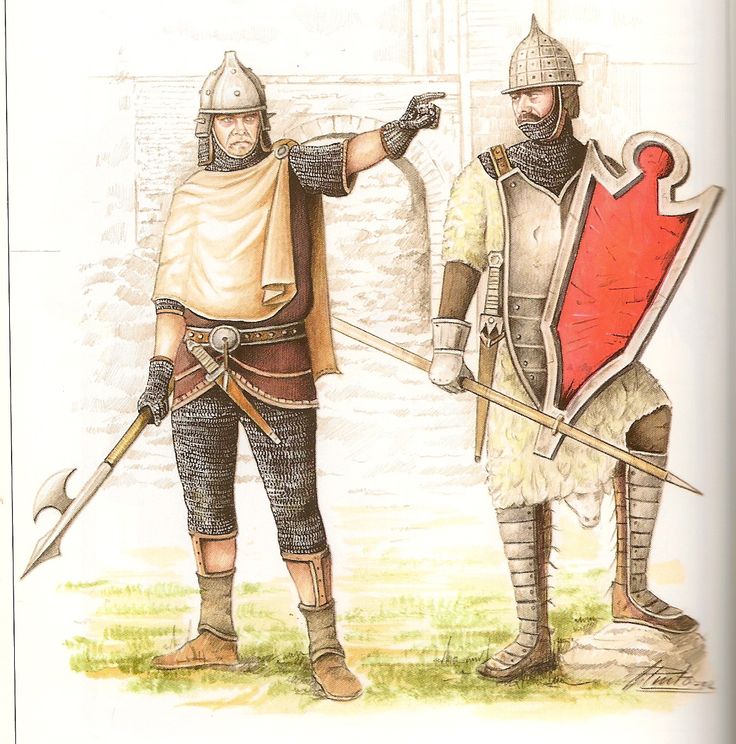 “Deerrunner,” he said of the first old man and pointed to the young soldier. “His son, Marsham. Their people live in the wilds and marshes of Somerset, Dorset, and Devon. We have met before.” He turned to the other old man. “And Pinewood and his people are found in the woods as far away as Dartmoor and Selwood. They keep mostly to themselves. Only great trouble brings them from their place.”
“You have met?” Eanwulf asked, and Elgar nodded as Eanwulf, still not entirely trusting these men, asked for clarification. “So, tell me this. Why are you telling us this? Why would Mordaf come out of his place at this time, besides the pact with the Danes?”
“It is as we told you. Mordaf has even used the words now or never.” Deerrunner turned to Elgar as he spoke. “Your father is old, is he not?”
Elgar nodded again and said, “He yells a lot.”
“King Ecgbert is in his last days, and the ealdorman of Dorset has taken to his bed.” Deerrunner turned to Eanwulf. “Mordaf does not dare wait until young Athelwulf, Osric, and yourself bring in young blood and revitalize Wessex.”
“Besides,” Pinewood added. “We do not want the heathen Danes in our land any more than you. We will help you fight the Danes.”
Eanwulf finally nodded like his brother. He rubbed his beard and decided. “You need to come up to the house and tell father all that you have told me.”
They did that very thing, and in the morning, riders went out from Somerton to Dorset, to Wiltshire, and to the king in Hampshire at Winchester.
 Storyteller Tales & Thoughts