Elgar
After 820 A. D. Wessex, England
Kairos 103 Thegan Elgar of Somerset
At four years old, nearly five, Elgar sat by the barn contentedly making a mess in the mud when a monster of a dog came roaring around the corner of the barn, barking, growling, and showing all of her teeth. Elgar tried to make himself even smaller than he was, but he looked behind him. A rabbit perked up its head and scurried away as fast as it could hop.
“Gifu!” Elgar yelled at the dog several times before the dog decided the rabbit was not worth the chase. It trotted back and plopped down beside the boy and Elgar slung one arm around the beast. “I’m glad you are watching out for me,” he told the dog. “Mother is inside, and my sisters are learning stuff about cooking and sewing and all that stuff.”
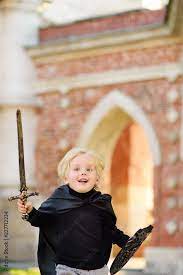
Gifu licked his face before she let out a little bark and stood up. Elgar looked behind again and thought he might stand up as well. The big boys were coming up to the house. Elgar wiped the mud from his hands and stared at his brother. Eanwulf and his friends, Ceorle, Odda, and the rest were all around eighteen, and they looked like men in Elgar’s eyes but he was getting tired of everyone treating him like a baby. He picked up his wooden toy sword and pointed it at his brother.
“Defend yourself,” he said.
Eanwulf threw his hands up and made a pretend scared face. “Oh, I surrender,” he said, and his friends laughed. He got serious for a second. “Isn’t it time for supper? You better not track mud into the house.” He turned to say goodbye to his friends. they went into the barn and got their horses for the ride home.
“Where are you going?” Elgar took that moment to ask. “You and Father?”
Eanwulf looked at his little brother, the wooden sword in Elgar’s hand, and smiled. “Mercia,” he said. “The king is taking us into Mercia to fight old King Beornwulf of Mercia.”
“But you just got back from Devon,” Elgar complained.
“The West Welsh needed to be put in their place,” Eanwulf agreed.
“But Mother and the girls…” Elgar paused and looked at Gifu who sat patiently beside the boys and panted. Eanwulf waved to his friends as they rode off before he turned Elgar to walk up to the house.
“What about Mother?” he asked.
“They treat me like a baby when you and father are not here,” Elgar admitted.
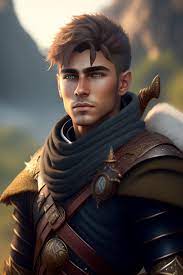 Eanwulf’s smile grew, and he let out a small laugh. He looked down at his brother like his brother was a baby, and Elgar thought to change the subject.
“You better not get killed.”
“Not planning on getting killed. Why?”
“I don’t want to be ealdorman. Not ever,” Elgar answered.
Eanwulf laughed again, and made Elgar take his muddy boots off before going inside. Father met them at the door and spoke to his elder son. “Eat up. We leave in the morning.”
Elgar got trapped by his sisters. “You are a mess,” Thirteen-year-old Eadburg scolded him, like she was his mother. She took one of Elgar’s hands. “You need a bath right after supper.” That was something Elgar was not looking forward to.
“Did you roll in the mud?” eleven-year-old Eadswip clicked her tongue and took the other hand. They practically carried him to the table and sat him in the highchair he hated where he had to sit still and wait for the servants to bring the supper. He considered wiggling and being uncooperative, but that would just get him in trouble with Mother. Mother thought it was lovely the way his sisters took care of the baby. Mother called it lovely. Elgar thought of it as repugnant. Even if he was not old enough to know the word, repugnant, that was what it was.
Father named him Eangar, using the Ean from his own name, Eanric, and the gar from his grandfather, Garric, and his own father, Edgar. But his mother called him Elgar and so did his sisters, and in time, so did the rest of the family and friends so father got outvoted.
When Elgar was old enough to make some friends of his own in Somerton, where he lived, he got some respite from being mothered to death by his older sisters. He did not escape their attention, however, until his older sister, Eadburg, married a thegn from Eddington in Wiltshire when she turned nineteen, and his other sister, Eadswip married Osric, son of Oslac, the ealdorman of Dorset in the next year when she turned eighteen. Osric got the job when his uncle, Oslac’s brother Ealdorman Ethelhelm, being childless, was killed by Danes in Portland early in the 840s. Elgar was twelve when Eadswip married. He felt relieved, though he did actually miss his sisters once in a while.
Mother was getting old. Elgar had been a surprise and unexpected child in her middle age, which in those days was around thirty-five. By the time the girls married, she turned forty-seven. Most of the time, the house was quiet and peaceful, but only because Father was away most of the time. When he came home, nothing was ever right. He yelled a lot. Fortunately, he still treated Elgar like a child, so Elgar was not the recipient of most of the yelling. He did occasionally yell that the boy’s name was Eangar, but everyone imagined that was just because he wanted something to complain about and not something to take personally.
Eanwulf escaped the house when he married two years before Eadburg married. Wulfrun was the daughter of Wulfheard, ealdorman of Hampshire. Eanwulf was twenty-four. Wulfrun was seventeen, and they joked about having a child and naming it Wulfwulf. They moved to Wedmore where they built a fine house on a very large farm and were happy. Their farm, like all the property around Somerton, was worked by some Saxon, but mostly British tenants, serfs in all but name, even as it had been worked since Roman times.
In some ways, things changed drastically when great-great-grandfather, King Cynewulf overran the southern end of Somerset, but in some ways things stayed the same. The big farms, the many islands, and the noble properties came under new Saxon ownership, though a few British families who joined the Saxons in the fight against their West Welsh cousins were allowed to keep their land. Some places, like Glastonbury and Muchelney were given to the church and the new bishop in Sherborne, but in all of the Somer Country, the British peasants continued to live and work the land as they had for generations, so much stayed the same.
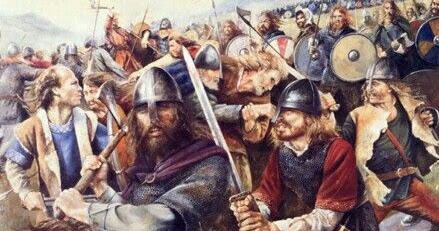 Garric, one of Cynewulf’s sons who would never be king, spent his life driving the West Welsh from the hillforts around Exmoor at the east end of the fens and marshes that made up Somerset. He strengthened the border with Devon and established Carhampton, a watch town on the coast fortified to protect against West Welsh raids coming over the hills. The next town down the coast, Countisbury, remained firmly in West Welsh hands at that time. This was in the days when Beorhtric was king, back in the days when sons did not follow their fathers to the throne. Living a life on the front lines and in battle was not the way to live a long life, but Garric had a son, Edgar who took up the cause when his father died, and his son, Elgar’s father Eanric followed after him.
 Storyteller Tales & Thoughts