Things were going along so well by the late fall, when the first snows fell, Arthur thought to take a trip out of York. He went guarded by five hundred men, so the journey moved rather slow, but he needed to get out, not the least from under Meryddin’s gaze. Curiously, it was Meryddin who suggested the visits.
Arthur visited Loth first, and Loth made a grand show of welcoming him. Loth declared how pleased he felt that things with the Scots appeared to be settling peacefully, and without bloodshed—though there were a few minor incidents. Arthur accepted Loth’s praise, but he did not stay long. Seeing Gwenhwyfach and Medrawt made him uncomfortable.
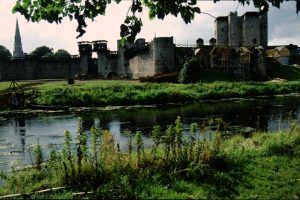
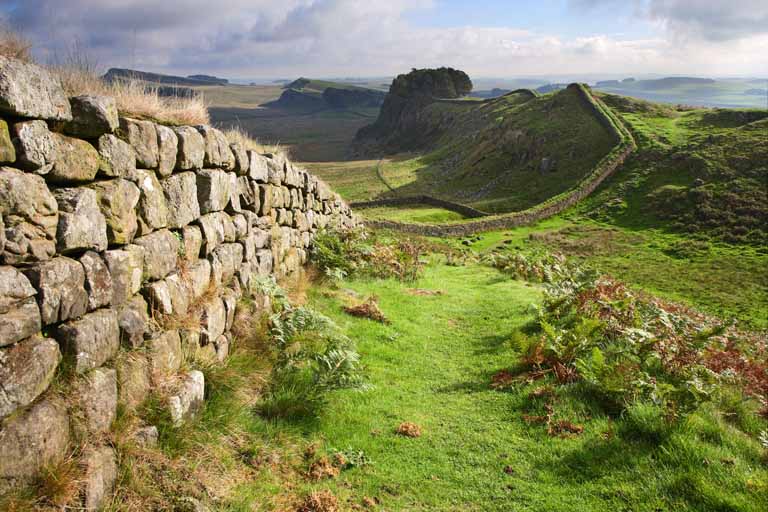
He brought his five hundred along the wall itself until he reached Kai’s home in the Fort called Guinnon. Kai said he felt uncertain about what might really be happening among the Scots. He said there seemed to be something else going on besides the families peacefully emigrating into Britain. Arthur did not want to hear that, but Kai’s worry proved valid when they awoke one morning to find the fort surrounded by several thousand Scottish warriors. Arthur had telegraphed where he headed by moving along the wall, and the Scots concluded if they could get rid of Arthur, Britain, or at least north Britain might be theirs for the taking.
Kai had three hundred men stationed regularly at the fort, and with Arthur’s five hundred, that made a considerable force. But eight hundred men was not exactly a fair match against several thousand, even if the eight hundred had fort walls to hide behind. Arthur knew he got in a bind. His army remained scattered all over the countryside in small groups. There were an additional eight hundred foot soldiers at York he could call on, but he had no way of sending them word of his predicament.
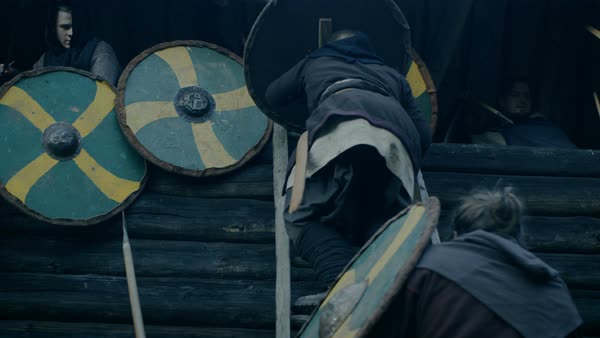 The assault on the fort that first day was not serious. The Scottish commander tested their defenses, and the Scots were soundly beaten back. After that, it looked like the Scots appeared in no hurry. They must have figured they had a couple of weeks before word of what was happening reached York, and probably a couple of weeks after that before all of Arthur’s men could be gathered.
As it turned out, on that first morning, Lord Pinewood found Gerraint with his troops traveling slowly up a back road. Gerraint immediately sent fairy messengers to all the other troop commanders and to Captain Croydon in York. He made a command decision not to gather all the troops back at York and then make a long march to Fort Guinnon. He told everyone to ride to Arthur’s relief as soon as possible. He feared the time might be short.
Peredur and his troops were the first to arrive, and they made a dash for the front gate. They found too many Scots outside the gate. Peredur got part way to his goal and stalled. It would have been worse if Arthur had not seen. He hobbled together two hundred men and made a dash out of the gate to come to Peredur’s relief. It became enough to break the hold around Peredur’s men, but the sheer numbers of Scots soon began to tell, even if they were initially caught by surprise. Peredur and his men were able to make a break for the open countryside and escape. Arthur had to withdraw again behind the strong fort walls. But Peredur lost nearly a quarter of his men, and they accomplished nothing.
The Scots did not chase Peredur out into the wilderness. The Scottish commander may have concluded that one of Arthur’s wandering groups got closer than his scouts reported, but the numbers of any given group would be small. They would watch, but not worry about it.
Pelenor arrived and found Peredur licking his wounds. “We need to wait for one or two others,” Pelenor concluded. “Let’s watch first and see what their plans are, and then see if we can disrupt them.” So, they set in to watch while the Scots felled lumber and built great siege towers they could push up to the wall.
 The towers were built in the woods where they could remain hidden from the fort, but Peredur and Pelenor watched closely. Peredur argued for a quick strike to set the towers on fire before they could be used. Pelenor insisted in this late fall mud the contraptions would never reach the walls before they bogged down or fell apart. They were still watching when Tristam arrived and almost rode to the relief of the fort before they could stop him. Since Peredur’s attack on the front gate, the Scots had entrenched their position and would have shredded Tristam’s men.
Tristam also argued in favor of destroying the towers before they could be completed, and Pelenor conceded to being out voted. They were just in the process of drawing up plans when Gerraint arrived and changed the plans again.
“You are focused on the wrong thing,” he said. “We need to strike at the workers and drive them off, but leave the towers standing as a temptation for more men to come and continue the work. Then we hit them again. They suffer enough casualties and they won’t be able to convince enough men to finish the job.”
“I see that working twice, maybe.” Tristam said. “Then they will post a large guard on the work.”
“So we burn the towers on the second strike,” Pelenor said.
“Yes,” Peredur agreed. “But Gerraint has a point. Our effort needs to be focused on disrupting the army, not their building project.”
They argued for a time before they were set, and in the process, they realized that the main force of the enemy collected outside the small, back gate rather than the front. Gerraint offered the obvious conclusion.
“They strike the front gate at dawn with enough men to draw the fort defenders to the front. When the fighting gets fierce, they bring up their main force with the towers to the back and break in against light resistance.”
“Like a fox,” Pelenor said. “But considering where they are building the towers, I have no doubt what you say is true.”
 Arthur was not about to be fooled, especially after word arrived via fairy messenger. He could see the Scots gathering by the front gate, but he could not really tell what might be happening out back. He might have been taken in by the ruse if Gerraint had not warned him. Even so, he realistically had to split his forces, with half up front to repel the attack there. He felt sure, given the overwhelming numbers of Scots, all eight hundred might not be enough to repel the frontal assault, much less the bigger assault on his rear.
Lord Pinewood came to the fort with his fairy archers, flying over the wall in the dark, and that became some relief for Arthur. But Pinewood told Arthur he had been commanded only to watch the walls on the sides, the one overlooking the farm fields and the one overlooking the village, long since burned to the ground. He was not allowed to participate in the fight at the front and back gates, and had strict instructions to leave if the Scots broke in.
“I’m grateful for whatever you do,” Arthur said. He understood. He did not want to see the fairies killed any more than Gerraint.
Pinewood had not finished. “Of course, a square has a front side and a back side too, you know.” Arthur wisely said nothing.
When the expected dawn came, and it felt hard to tell because the sky turned so grey and overcast, the attack got delayed. Out back, the Scots managed to save three of the seven towers they were building and decided that was enough. Three thousand men were chomping at the bit, wondering what might be wrong up front.
Up front, the commanders of the attack were being pinned down by elf archers. Percival had prevailed on Gerraint’s fairy messenger to seek out Deerrunner and his troop to meet them at the fort. He picked up Bedwyr on the way, and with Ederyn only a half day behind, he only hoped to arrive in time. The only trouble was two of every three men were foot soldiers. When Ederyn caught up with a forced march, that gave Percival three hundred on horseback. The six hundred foot soldiers would need rest, even those not on the forced march, but Percival became determined to waste no more time. He and Bedwyr rode off into the night. They imagined the footmen might arrive sometime late the next day.
Deerrunner managed to pin down the commanders for the frontal assault. No amount of circling around was able to fool the elves, though the Scots did not know who they were. The Scots  imagined they were some of the men who harassed the tower construction and sent a troop of horse men to roust them out. But the horsemen were slain with inhuman skill, the elves rarely needing more than one arrow to finish the job, and the Scots still could not move.
Somehow, word went out to the line officers, and the attack began, but things did not go as well for the Scots at the front gate as they might have gone. The fort, built like many forts in the day, had stone six feet high and whole logs rising another ten feet above that with a walkway on the back, also wood, four feet from the top.
The Scots had three catapults, not the small, portable ones Arthur and Gerraint so cleverly devised, but good old fashioned clunkers. They might have done some real damage heaving stones into the fort. They might have been a real problem heaving stones against the wooden part of the wall. But the Scots were so impressed with the damage and terror caused by Arthur’s pitch and tar mix, they tried to do the same. They did not have Arthur’s formula for the oil and grease mess that spattered fire and could not be put out with water, but they did their best with pine branches full of tars and resins. Most shots hit the wall, whether intended or not, and they did set sections of the wall aflame.



 Storyteller Tales & Thoughts